

From Grey to Green: Smokestack Cities Power to Bright Future

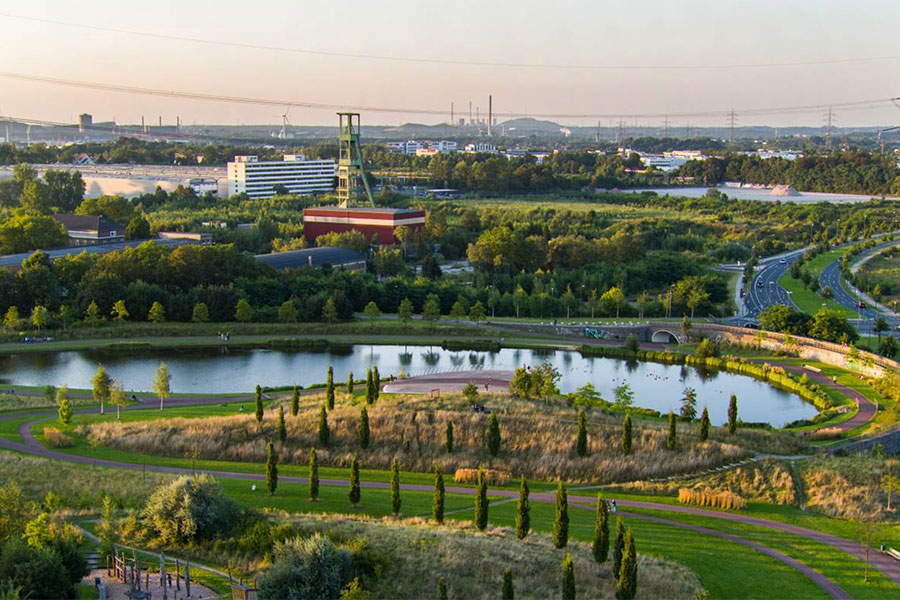
Essen, once a coal and steel city known as Germany’s “Graue Maus” (grey mouse) for its polluted air and waterways, has gained a reputation as a trailblazer for sustainability.

Bicycle highways, urban farms and local energy hubs – just some of the ways that yesterday’s smokestack cities are turning into tomorrow’s green spaces.

The Urban Transitions Alliance (UTA), a network that brings together cities in Germany, the United States and China, launched this week to help members learn regeneration tricks from each other.

If you like this, subscribe here for more stories that Inspire The Future.

“What to do with your brownfield sites, how to transition with citizens in mind, create new jobs – these cities have a lot of challenges in common,” said Roman Mendle, Smart Cities programme manager at ICLEI, an international association of local governments.

As up to 70 percent of global greenhouse gas emissions are generated in urban areas, cities have to play a leading role in addressing climate change.

Experts from more than 20 countries met in Essen, Germany, this week to launch the UTA and thrash out how post-industrial cities can reinvent themselves in plans that will be submitted to the U.N. climate talks in Bonn this week.

Essen, once a coal and steel city known as Germany’s “Graue Maus” (grey mouse) for its polluted air and waterways, has gained a reputation as a trailblazer for sustainability, becoming the European Commission’s European Green Capital 2017.

“There is a lot of know-how in Essen on how to transition from the age of carbon to a post-carbon world,” said Simone Raskob, Essen’s deputy mayor and head of its environment department.

“No city can do this by itself. There are a lot of challenges,” Raskob, who leads the European Green City – Essen 2017 project, told the Thomson Reuters Foundation.

Experts praise Essen for cleaning up its waterways, creating green spaces and turning grimy industrial sites into dynamic cultural centres, such as the Zeche Zollverein, a towering UNESCO World Heritage site that arose from a disused coal mine.

To ease traffic congestion, Essen built Germany’s first bike highway, connecting with a 100-km (62-mile) regional network.

Pittsburgh, once a dynamo of U.S. heavy industry, has shifted from a fossil fuel-based economy, reinventing itself as a hub for green buildings innovation and clean energy.

The former steel city has been switching over to LED street lights, retro-fitting municipal buildings for energy efficiency and is developing district energy initiatives.

The city will also host the largest U.S. urban farm: 23 acres (9 hectares)on a site where low-income housing once stood.

“One of the key things we have recognised is that becoming greener also brings economic benefits,” said Grant Ervin, Pittsburgh’s chief resilience officer.

Founding UTA members include districts of Beijing and Shijiazhuang in China; Buffalo and Cincinnati in the United States and Dortmund in Germany.

By Astrid Zweynert @azweynert , Editing by Lyndsay Griffiths. 

If you like this, subscribe here for more stories that Inspire The Future.
 

Think While You Drink: The Beer That Fights Climate Change

A British craft brewer has launched a beer made from melted polar ice caps, sending a case of “Make Earth Great Again” to the White House to highlight climate change denial.

Profits from the beer will be donated to 10:10, a charity that supports projects tackling climate change.

BrewDog said it was inspired by the U.S. withdrawal from the Paris Accord, a pledge made by nearly 200 countries in 2015 to limit global warming, mainly by cutting carbon dioxide and other emissions from the burning of fossil fuels.

If you like this, subscribe here for more stories that Inspire The Future.

“Make Earth Great Again is a reaction to declining interest from notable world leaders to the biggest issues facing our planet and civilisation,” Brewdog co-founder, James Watt, said in a statement. “Beer is a universal language.”

The Scottish craft brewer said the beer is brewed with water from melted polar ice caps and Arctic cloudberries, an edible fruit similar to a blackberry that is native to Arctic regions.

Labels on the Brewdog bottles depict a cartoon robot resembling U.S. President Donald Trump battling a polar bear.

By Lee Mannion @leemannion; editing by Lyndsay Griffiths.

If you like this, subscribe here for more stories that Inspire The Future.
 

From Mugabe to Wonder Woman: When Goodwill Ambassadors go Bad

The decision to appoint a goodwill ambassador can backfire if the organisation – or brand – doesn’t understand the public’s perception of their ambassador.

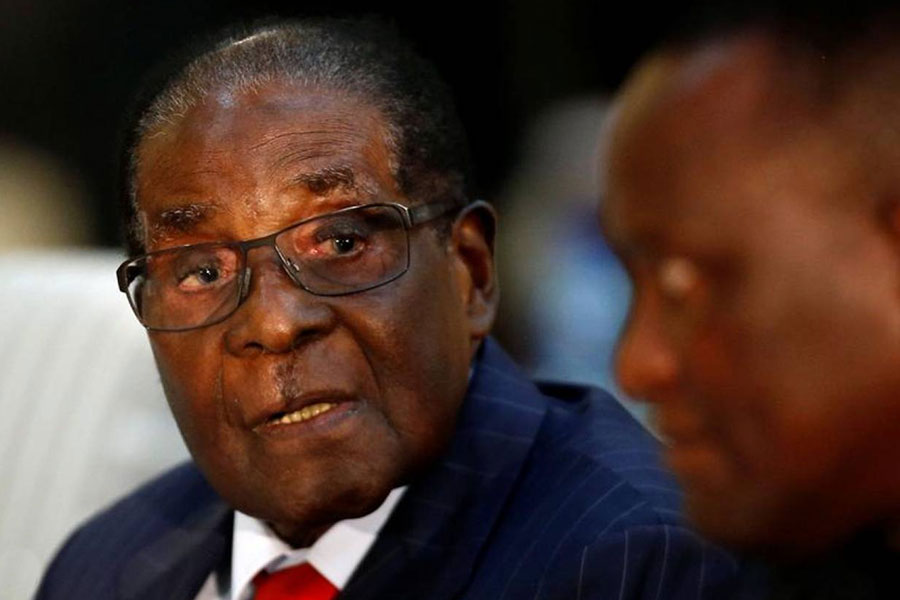
First, Wonder Woman fell from grace, lambasted for her curves. Next, Zimbabwean President Robert Mugabe lost his honorary status as a goodwill ambassador, deemed more strongman than beacon of U.N. hope.

So what went wrong?

The anointing – and swift firing – of goodwill ambassadors has landed the United Nations in hot water twice in less than a year and raised questions about what image it wants to project.

If you like this, subscribe here for more stories that Inspire The Future.

“The decision to appoint a goodwill ambassador can backfire if the organisation – or brand – doesn’t understand the public’s perception of their ambassador,” said Ben Lock, senior director of international affairs at Edelman, a U.S. public relations firm.

Last week Mugabe was removed as a goodwill ambassador for the World Health Organization (WHO), in the wake of outrage among Western donors and rights groups at his appointment.

Mugabe, 93, is blamed in the West for destroying Zimbabwe’s economy and for numerous human rights abuses during his 37 years leading the country as either president or prime minister.

“The appointment (of Mugabe) was a bizarre decision that could live long in memory and that risks casting a shadow over the vital work that the WHO do,” Lock told the Thomson Reuters Foundation in a phone interview, although he said the organisation had “handled its U-turn well by acting swiftly”.

Others shared his view, with Anne-Marie Batson, a British-based PR executive, saying on Twitter:

“Wrong decision to select. Right decision to deselect. Common sense prevailed though it took a chorus to make the change.”

Goodwill ambassadors – from music star Shakira for the U.N. children’s agency UNICEF to British actress Emma Watson at U.N. Women – use stature and talent to advocate for specific causes.

They are designated by the heads of United Nations agencies, and endorsed by the U.N. Secretary-General.

FEMINIST ICON?

Better known for her outfit than her human rights record, Wonder Woman’s reign as a U.N. honorary ambassador came to an end in December, less than two months after the appointment of a scantily clad, curvaceous comic book character sparked protest.

Nearly 45,000 people signed an online petition asking U.N. Secretary-General Ban Ki-moon to reconsider selection of the comic superhero as an honorary ambassador for gender equality, saying “the character’s current iteration is that of a large-breasted, white woman of impossible proportions, scantily clad in a shimmery, thigh-baring body suit.”

“While the appointment of Wonder Woman was no doubt well-intentioned, it was naïve to have proposed an overly sexualised icon to support a cause that empowers women,” Lock said.

“And it’s not like there’s a shortage of real women to choose from,” he added.

Other honorary ambassadors who fell from grace include tennis player Maria Sharapova, temporarily removed as United Nations Development Programme (UNDP) ambassador while she served a 15-month drug suspension, and Aisha Gaddafi, daughter of former Libyan leader Muammar Gaddafi, stripped of her U.N. ambassador status amid the 2011 revolt against her late father.

While organisations often rely on celebrity advocates to further social causes, celebrities can sometimes “oversimplify what are often very nuanced issues”, said Lock.

In July, UNHCR Special Envoy Angelina Jolie sparked uproar over the casting process for her latest film, after an improvised scene during auditions was slammed as cruel for taking real money away from impoverished children.

The UN and the WHO declined a request for further comment.

By Zoe Tabary @zoetabary, Editing by Lyndsay Griffiths. 

If you like this, subscribe here for more stories that Inspire The Future.