How to Grow Food Out of Thin Air

Agriculture faces considerable challenges: population growth, soil pollution, and heavy use of water reserves. To overcome this, we need to rethink the current yield-based model used by the agricultural sector. Aeroponics may offer a solution.

The agricultural sector today faces the huge challenge of feeding an ever-growing world population. Exposed to pests and weather hazards, outdoor crops face many odds. Using arable land to push for the best possible yields, and using artificial fertilizers and pesticides can be as problematic for the soil as they are for consumers. Agricultural experts also estimate that 70% of drinking water is used to irrigate fields worldwide. In countries such as Switzerland, the cold season stops agricultural activity and it’s necessary to import food from distant countries by truck, ship, or plane for much of the year. Creating a sustainable approach to agriculture is a real challenge.

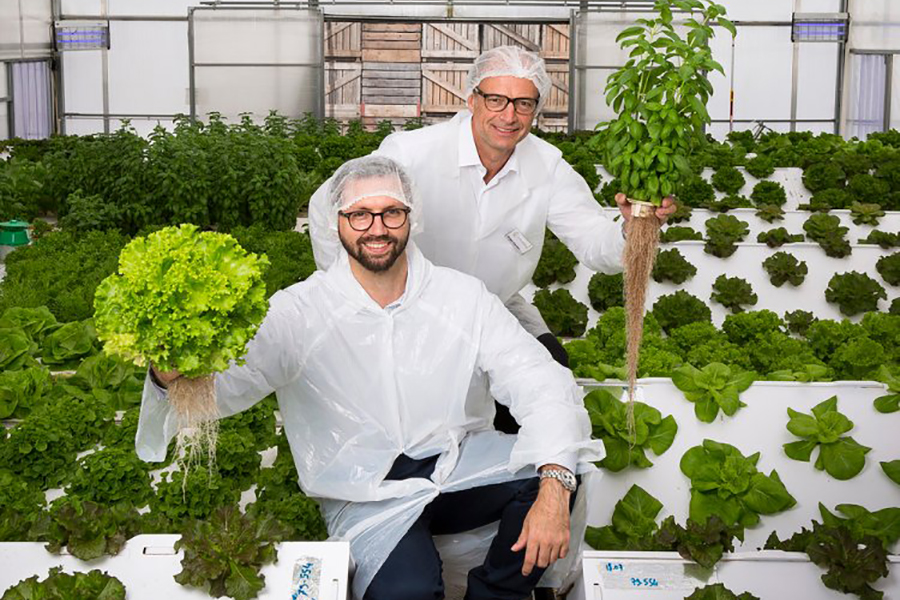
CombaGroup, a company located in the Swiss municipality of Molondin, plans to reinvent agriculture — by growing lettuce and other leafy vegetables locally all year round, but without any fields, pesticides or chemical fertilizers. Their method saves 97% of water compared to traditional outdoor methods. This is thanks to a meticulous application of aeroponics — a technique of growing vegetables above the ground, using supports under which the roots spread freely in the air. A system sprays a mist of water mixed with nutrients directly onto roots and excess water is reused. The plants receive exactly the right amount of nutrients they need to grow, in protected greenhouses that don’t need any artificial fertilizers and pesticides to fight pests. The plants can be grown all year round, and have a lower carbon footprint, resulting in less pollution from imported products during off-season.

CombaGroup CEO, Serge Gander.

“We currently operate a 250 square meter pilot production facility that can supply the equivalent of around 500 fresh salads per week, says CombaGroup CEO, Serge Gander. This facility has allowed us to test our system on an industrial scale. We have already sold the first systems to France, and we’re in discussions with industries in Sweden, the United Kingdom, Canada, Russia, China, and the Middle East. In fact, any region where weather conditions, lack of water, or soil pollution represent real problems for the agricultural and retail sectors.”

Compared to conventional farming methods, the CombaGroup aeroponics system is impressive in its yield. Based on current production, it will be able to produce 800 tons of lettuce and more than 300 tons of leafy vegetables per hectare per year when deployed on an industrial scale. In a field with soil, current farms can produce around 25 to 30 tons of lettuce per hectare per year. Aeroponics can grow one kilogram of lettuce with only six liters of water, compared to 250 liters in conventional farming.

While these performances are particularly impressive and promising in terms of productivity and yield, they are also remarkable in terms of quality and taste. Naturally grown without being boosted, these vegetables have won over many great chefs at several Swiss gastronomic establishments. During the coronavirus crisis, the company donated part of its output to support these local establishments.

Vegetables are grown with a nutrient-dense mist.

“Without claiming to be able to revolutionize the agri-food sector with a single solution, we are, regardless, wanting to question the foundations of the current paradigm,” continues Gander. “The idea is to innovate, open up the debate, confront new ideas, and propose alternatives as part of a complementary approach to the different types of agriculture and supply chains available today. As an entrepreneur at the crossroads, I believe it’s essential to have a thoughtful and committed approach. Making money is one thing, but to do so while trying to improve the common lot becomes a necessity — especially when considering the environmental issues that face humanity.”

President Macron’s Gift to World Leaders: A Watch Made From Trash
At the G7 summit held in Biarritz, France in 2019, you may have noticed that heads of state received a watch from President Macron. One peculiar twist of this symbolic gesture was that the watch was made from plastic waste and abandoned fishing nets that pollute our oceans.

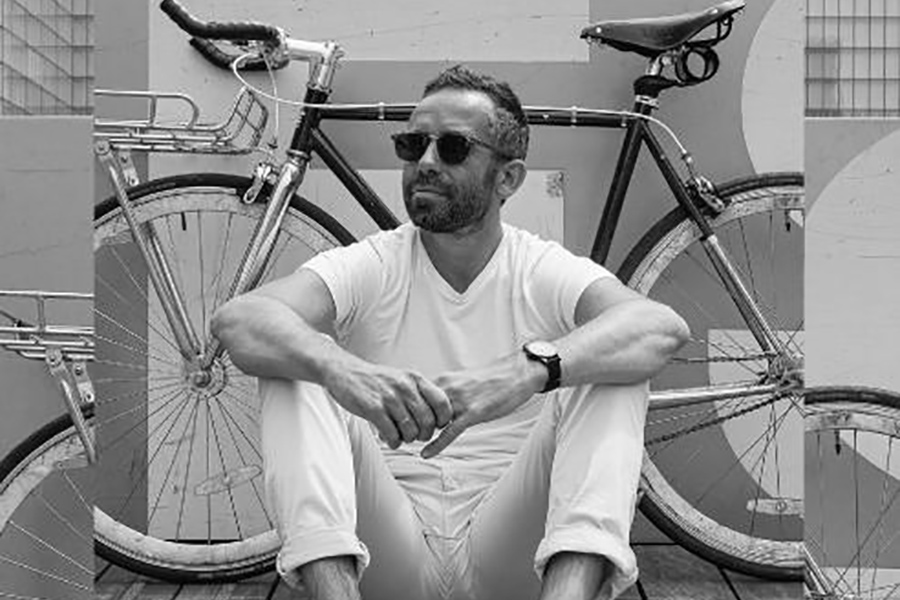
Making watches from recycled fishing nets and discarded plastic bottles from the sea is no small task. It’s a technical feat that requires new synergies between the recycling and watchmaking industries. Behind this unique product is Lilian Thibault (pictured above) and Frederic Ly, two French watchmakers and design enthusiasts who combined their efforts and skills to raise awareness around the environmental crisis. Their new watch brand is called AWAKE.

“We are aware that we can’t solve the environmental problem alone, especially around plastic pollution in our oceans,” explains Lilian Thibault. “Our idea is to show what’s possible, while making a contribution to solving this problem. A watch is a symbolic object in relationship to time, and therefore represents the urgency of the environmental challenge we must tackle.”

Following their initial idea in 2016, the entrepreneurs launched a crowdfunding campaign on Kickstarter in the summer of 2018. Eight hundred fifty-eight contributors and $307,080 later, AWAKE began production on the first 1,200 watches funded by the crowdfunding campaign. Within a few months, the young brand had sold more than 2,000, with a focus on direct sales via the Internet, and a few stores whose values were consistent with responsible consumption..

“Crowdfunding allowed us to raise seed funding while, at the same time, verify and validate the interest in our new product,” says Thibault. “It was difficult to know in advance whether the general public was ready for such a watch. The crowdfunding campaign also allowed us to highlight the care with which we designed our watches, because people often find it hard to imagine that beautiful and elaborated products can be made from recycling.”

Photovoltaics at the service of watchmaking

The watch cases are made from recycled steel and the wrist bands are made rom plastic waste collected from the oceans of Southeast Asia and Japan. The brand has spread a strong environmental message in Europe, especially because much European waste ends up in these oceans. The globalization of waste is a result of the low cost of plastic production, and is in stark contrast to what should be done: treating and recycling plastic waste locally — in countries that produce the waste.

A photovoltaic sensor built into the watch provides the energy necessary for movement. “Our watch never stops,” explains Thibault. “Three hours of exposure to light is enough to provide the energy for six months of operation. This distinguishes us from conventional models that run on batteries that need to be changed every two years; a system that most manufacturers opt for because of its low cost.”

AWAKE cofounder, Frederic Ly.

Recognized and encouraged by the G7 organizers, the AWAKE team took their recycling philosophy one step further in 2019. In a world first, they produced a watch case made from recycled fishing nets. Abandoned at sea, fishing nets cause the unnatural death of millions of fish while generating pollution. In Biarritz, a maritime region that hosted the G7 summit, the watch was a hit. “The event gave us great visibility”, says Thibault. “Many investors contacted us afterward, but we have remained clear-sighted and loyal to the people who originally supported us during the early crowdfunding. This helps to keep our independence while maintaining the strong ethical dimensions of our brand.”

Artistic future

The team at AWAKE will continue to explore new materials and processes that combine recycling and watchmaking. Beyond the environmental awareness they are raising, it’s also a great way to diversify their watch range. A collaboration with an artist is also in the works.

A new fundraising campaign had raised almost one million euros by the end of 2019 and the brand has proven to be surprisingly resistant to the Covid-19 crisis, as it depends on very few physical points of sale. Thibault and his team have digitized watch sales from the beginning, and recognized that this is the future of buying in an increasingly online customer base. Initial funding was raised online and sales were a natural following-on. “This flexibility allows us to be confident about the future, while remaining faithful to our ethical values,” says Thibault.

President Macron’s Gift to World Leaders: A Watch Made From Trash

At the G7 summit held in Biarritz, France in 2019, you may have noticed that heads of state received a watch from President Macron. One peculiar twist of this symbolic gesture was that the watch was made from plastic waste and abandoned fishing nets that pollute our oceans.

Making watches from recycled fishing nets and discarded plastic bottles from the sea is no small task. It’s a technical feat that requires new synergies between the recycling and watchmaking industries. Behind this unique product is Lilian Thibault (pictured above) and Frederic Ly, two French watchmakers and design enthusiasts who combined their efforts and skills to raise awareness around the environmental crisis. Their new watch brand is called AWAKE.

“We are aware that we can’t solve the environmental problem alone, especially around plastic pollution in our oceans,” explains Lilian Thibault. “Our idea is to show what’s possible, while making a contribution to solving this problem. A watch is a symbolic object in relationship to time, and therefore represents the urgency of the environmental challenge we must tackle.”

Following their initial idea in 2016, the entrepreneurs launched a crowdfunding campaign on Kickstarter in the summer of 2018. Eight hundred fifty-eight contributors and $307,080 later, AWAKE began production on the first 1,200 watches funded by the crowdfunding campaign. Within a few months, the young brand had sold more than 2,000, with a focus on direct sales via the Internet, and a few stores whose values were consistent with responsible consumption..

“Crowdfunding allowed us to raise seed funding while, at the same time, verify and validate the interest in our new product,” says Thibault. “It was difficult to know in advance whether the general public was ready for such a watch. The crowdfunding campaign also allowed us to highlight the care with which we designed our watches, because people often find it hard to imagine that beautiful and elaborated products can be made from recycling.”

Photovoltaics at the service of watchmaking

The watch cases are made from recycled steel and the wrist bands are made rom plastic waste collected from the oceans of Southeast Asia and Japan. The brand has spread a strong environmental message in Europe, especially because much European waste ends up in these oceans. The globalization of waste is a result of the low cost of plastic production, and is in stark contrast to what should be done: treating and recycling plastic waste locally — in countries that produce the waste.

A photovoltaic sensor built into the watch provides the energy necessary for movement. “Our watch never stops,” explains Thibault. “Three hours of exposure to light is enough to provide the energy for six months of operation. This distinguishes us from conventional models that run on batteries that need to be changed every two years; a system that most manufacturers opt for because of its low cost.”

AWAKE cofounder, Frederic Ly.

Recognized and encouraged by the G7 organizers, the AWAKE team took their recycling philosophy one step further in 2019. In a world first, they produced a watch case made from recycled fishing nets. Abandoned at sea, fishing nets cause the unnatural death of millions of fish while generating pollution. In Biarritz, a maritime region that hosted the G7 summit, the watch was a hit. “The event gave us great visibility”, says Thibault. “Many investors contacted us afterward, but we have remained clear-sighted and loyal to the people who originally supported us during the early crowdfunding. This helps to keep our independence while maintaining the strong ethical dimensions of our brand.”

Artistic future

The team at AWAKE will continue to explore new materials and processes that combine recycling and watchmaking. Beyond the environmental awareness they are raising, it’s also a great way to diversify their watch range. A collaboration with an artist is also in the works.

A new fundraising campaign had raised almost one million euros by the end of 2019 and the brand has proven to be surprisingly resistant to the Covid-19 crisis, as it depends on very few physical points of sale. Thibault and his team have digitized watch sales from the beginning, and recognized that this is the future of buying in an increasingly online customer base. Initial funding was raised online and sales were a natural following-on. “This flexibility allows us to be confident about the future, while remaining faithful to our ethical values,” says Thibault.

0