84-Year-Old Ocean Explorer: “The Best Companies Will be Those That Figure Out How Best To Use Our Natural Assets.”

The American marine biologist, explorer, author, and lecturer is one of the planets biggest advocates for the preservation of our oceans. Dr. Sylvia Earle should know the importance of this, as she’s still regularly exploring the depths at age 84.

She has been a National Geographic explorer-in-residence since 1998 and was the first female chief scientist of the U.S. National Oceanic and Atmospheric Administration. She was named by Time Magazine as its first Hero for the Planet in 1998. In this interview with Real Leaders, she explains why the oceans are critical for all life on earth.

“Sustainability” is so last year. Here’s What’s New

This week, Real Leaders is at the Sustainable Brands New Metrics ’19 event in Philadelphia. We explored the growing range of tools and tricks needed to keep up with demand for next-level goals such as plastic-neutrality, 100% circularity and properly quantified social and product impacts. Here are the main trends you need to know.

How are companies chipping away at the next generation of big, hairy, audacious goals. Read on:

A comprehensive look at IKEA’s new holistic impact measurement system

With the approach of the “4P” program — which focuses on people, planet, profit, and perception — IKEA is moving towards meeting its sustainable goals for 2030. During his Tuesday morning keynote, Peter Jones, Head of Sustainability Analytics and Impacts at IKEA, gave an overview of the program that the company is spearheading, regarding the impact and their journey to becoming a sustainable brand by 2030.

IKEA has been imagining a future for value creation and as Peter pointed out, the first task is to measure what the company is promising. Jones pointed out that some impacts are easier to measure than others, but the company has defined 9 KPIs under its People and Planet Positive initiative that are centered around three areas:

In a subsequent session on Wednesday morning, Jones was joined by his colleagues — Annamaria Malegh, Global Sustainability Analytics Leader Social & Behavior at IKEA; and Jorge Castro, Sustainable Impact Leader — for a candid discussion. One of the questions from the audience was about the increase in sales IKEA had when it began its sustainability campaigns. Malegh mentioned that one of the main components of IKEA products is always the design, so that is what the company led with; but also that half of IKEA’s product range has some sustainable features — whether in terms of material, quality, source or social/entrepreneurial innovation.

Selling based on sustainability depends on the maturity of the consumers understanding of sustainability; for some, the bar is just on whether the product is non-toxic or sourced fairly. Giving more information on sustainability to their customers has helped sales globally by approximately 15-20 percent.

Defining, setting and achieving plastic-neutrality targets

Although a wonder material, the enduring nature of plastic has become one of the biggest environmental concerns crippling our planet. In this engaging panel, leading industry experts shared insights on how they are defining and/or dealing with plastic neutrality for their companies and industries. The panelists represented different stakeholders in plastic innovation, and how it varies for companies in terms of product, manufacturing, packaging and use amongst employees. The panel, moderated by Salterbaxter’s Philip Clawson, had several key highlights:

Innovative software consultancy

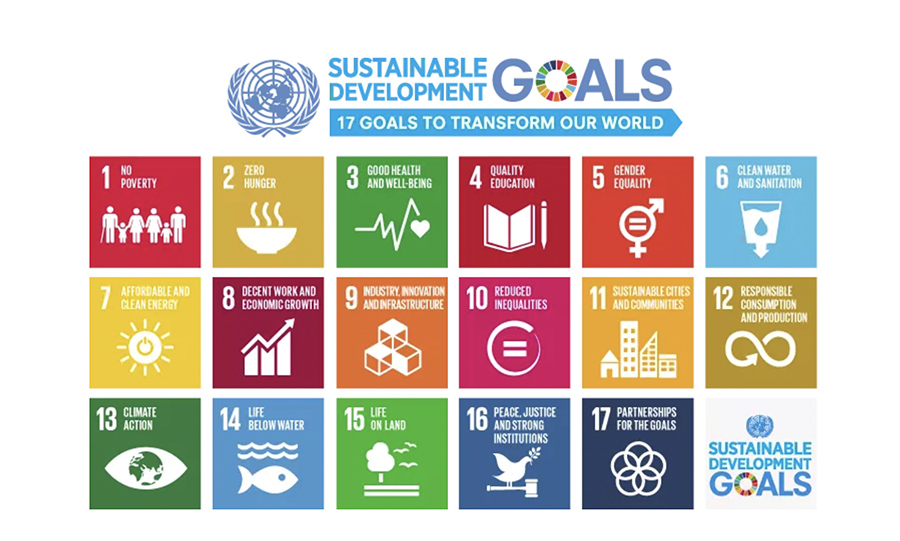
As pointed out by James Sullivan, Head of Global Sustainability Innovation at SAP, the software giant is helping other businesses recognize the value in plastic neutrality, while providing them resources required for action. Last year, it launched the Plastics Cloud to push the 2030 Agenda for Sustainable Development through materials and better data collection and management. Sullivan said SAP is involved in plastic waste because it believes that resource productivity is at the heart of the connected intelligent enterprise — a critical part of a zero-waste world. So, with a goal of creating value on many fronts for and with their customer companies, SAP set out to find answers for this humongous problem. The company has done research on understanding consumer behavior with respect of plastic consumption and has worked on design thinking with their customers.

Sustainability strategy firm

While highlighting the gaps businesses are facing in terms of taking the total action for plastics, Valutus founder Daniel Aronson pointed out that there is a problem in how we define and compare different types of plastics, as they have a different effect. He said it is important to quantify not just by weight but by the impact of the type of plastic, so that we have a clear picture of what data we have and what is missing. Aronson and his team developed an enormous data table help companies quantify plastic’s true impact. He said that with our conflicting approaches to plastic usage, the fact that we look at how much but not how bad makes it hard to get from where we are to where we need to go. He stressed the need for standardization in this regard.

Product-based company

John Pflueger, Principal Environmental Strategist at Dell, described how Dell replaced its 2020 sustainability targets with a 2030 strategy, which has more extensive metrics — including a moonshot goal of going completely circular. He said that Dell has been looking into the problem of plastics for almost a decade; and in 2013, committed to use 50 million pounds of recycled plastics in its products by 2020 — a target that was doubled to 100 million in 2017. They are piloting session to close the loop for their take-back systems. The company is exploring alternative materials, including ocean plastics, in its bid to achieve circularity.

Flueger mentioned that Dell is committed to one-to-one material recovery by 2030, amplifying its current take-back program 10-12 times. He said its goal for all of its packaging to be made entirely of renewable and all recyclable materials is proving one of the most difficult tasks.

Pioneering plastic offsets

Svanika Balasubramanian, co-founder of RePurpose, introduced her startup — which is creating the world’s first offset mechanism for plastics, and offering companies solutions and certification for plastic neutrality. While her team was looking for solutions, they found many people across Southeast Asia are working on solutions around informal recycling — for example, through waste pickers. RePurpose started with the idea that while companies are taking actions for the future and transiting to a circular economy, they could offset their plastic impacts by investing in companies and initiatives that are working on solutions on the ground to support and strengthen them. As customers are demanding solutions today, RePurpose is working with businesses that have defined their plastic-neutrality goals by creating a pool of money in the form of a “plastic-neutral fund,” which is being used to fund solutions and innovation, and is feeding back data to companies, hence closing some loops.

Certified TBL Orgs: The world’s first triple-bottom line certification credential

On Tuesday afternoon, Mark McElroy, CEO of SustainAccounting LLC; and Jane Hwang,President & CEO of Social Accountability International (SAI), used their keynote to announce their partnership and launch the world’s first triple-bottom-line (TBL) certification credential. While prior guidance has encouraged context-based sustainability reporting for a number of years, there has been no specific accounting guidance or standard to achieve this goal. The new TBL certification credential will fill the existing gap, offering a context-based accounting tool to assist rigorous and actionable sustainability performance measurement and reporting.

What is the TBL accounting framework?

The term “triple-bottom line accounting” was coined by John Elkington in the 1990s as a way to interpret the performance of corporations in more than just economic or financial terms. While this concept was not new, Elkington capitalized on it by looking at the carrying capacity of all types of capital — natural, economic, and social capital.

Why now? The history of context-based sustainability reporting

The expansion to context-based TBL (CTBL) thinking began in 2002, when the Sustainability Context Principle was introduced in GRI’s G2 Standard. This principle has persisted over the years and survived many revisions of the GRI reporting standard; it remains a central core sustainability accounting principle today. But, no guidance on how to actually do context-based TBL accounting was ever developed. 

How standardized social outcomes demonstrate corporate impact

Wrapping up the final day of New Metrics, Sustainability Communicator & Media Architect Nick Aster facilitated a conversation between Jason Saul, CEO of Mission Measurementand founder of the Impact Genome Project®; and Arlene Isaacs-Lowe, Global Head of CSR atMoody’s. Saul walked us through the research and development of The Impact Genome® — a platform that standardizes the way social programs measure, evaluate and report outcomes; and Isaacs-Lowe explained how this valuable tool is being used by companies to inform and target their sustainability and philanthropy program initiatives.

The problem: Previous efforts standardizes metrics, not outcomes 

“Effectively measuring social impact is challenging, because no standards exist — no one can compare apples to apples,“ Saul said. He explained that previous attempts to quantify social impact fell short because:

  1. They tried to standardize at the wrong level — forcing standardization at the level of the metric, not the level of outcome. For example, if we’re trying to reduce poverty, measuring the number of people trained or getting a subsidy does not tell us if people actually become financial stable due to those efforts. 
  2. There is no standard-setting body in this field to say what outcomes should be measured.
  3. There are no benchmarks, making it hard to incentivize measurement when we don’t know the cost per unit of outcome. We don’t know “good” means.

The solution: The Impact Genome measures outcomes, sets benchmarks

Saul explained how The Impact Genome provides the missing metrics, stating that, “through the Impact Genome, we’ve developed evidence-based standards and now have benchmarks for common outcomes across the most critical social impact areas. Organizations find value in the common language of the standard outcomes, benchmarks to understand their cost per outcome; data to build grantee capacity, demonstrate ROI and drive ultimately more impact.” 

www.sustainablebrands.com

Richa Agarwal is pursing graduate studies in environmental sustainability at the University of Pennsylvania. Prior to Penn, Richa worked with an environmental think tank in India, on topics of waste management and circular economy for India and Tanzania. She is interested in topics of global supply chain for post consumer used goods, finding partnerships between private organizations and NGOs/think tanks, and going zero waste.

Leila Goldmark is a sustainable business entrepreneur; founder & President of Green Rainbow Revolution (GRR) — an e-commerce retail business that specializes in sourcing modern, eco-friendly, ethically produced arts and school supplies, educational toys, and lifestyle goods for kids of all ages.

Greta Thunberg: “I Don’t Want Your Hope”

Can the wisdom of a 16-year-old inspire us to action around the climate crisis?

In January this year, an unassuming 16-year-old Swedish girl, Greta Thunberg, stepped up to a podium before some of the world’s most powerful global leaders at the World Economic Forum in Davos, Switzerland. Her soft voice began to stress the urgency of action around climate change, but she wasn’t looking for pity or to preach a feel-good message around hope. Dismissing hope as a weak strategy, she felt something stronger was needed: fear.

Still in school, Thunberg is too young to vote, has no economic resources, and lacks any position of formal power that would allow her to sway global markets. But she does have a voice, and a growing following of young people around the world that join her to “strike for the climate.” Love her or dismiss her, there’s no ignoring that this teenager is inspiring young and old to act around the world. Here’s what she had to say:

“According to the Intergovernmental Panel on Climate Change (IPCC) we are less than 12 years away from not being able to undo our mistakes. In that time, unprecedented changes in all aspects of society need to have taken place — including a reduction of our CO2 emissions by at least 50 percent. And please note that those numbers do not include the aspect of equity,
which is absolutely necessary to make the Paris Agreement work on a global scale. Nor does it include tipping points or feedback loops such as the extremely powerful methane gas being released from the thawing
arctic permafrost.

At places like the World Economic Forum in Davos, people like to tell success stories. But their financial success has come with an unthinkable price-tag. On climate change, we have to acknowledge that we have failed. All political movements in their present form have failed, and the media has failed to create broad public awareness. But homo sapiens has not yet failed. 

Yes, we are failing but there is still time to turn everything around. We can still fix this. We still have everything in our own hands. But unless we recognize the overall failures of our current systems, we most probably don’t stand a chance. We are facing a disaster of unspoken suffering for enormous amounts of people. Now is not the time to speak politely or focus on what we can or cannot say. Now is the time to speak clearly. 

Solving the climate crisis is the greatest and most complex challenge that homo sapiens has ever faced. The main solution however, is so simple that even a small child can understand it — we have to stop our emissions of greenhouse gases. Either we do that or we don’t. You say that nothing in life is black or white — but that is a lie. A very dangerous lie. Either we prevent a 1.5 degree of warming or we don’t. Either we avoid setting off that irreversible chain reaction beyond human control — or we don’t. Either we choose to go on as a civilization or we don’t. That’s about as black or white as it gets. There are no gray areas when it comes to survival. 

We all have a choice: We can create transformational action that will safeguard the living conditions for future generations, or we can continue with business as usual and fail. This is up to you and me. Some say that we should not engage in activism. Instead, we should leave everything to our politicians and rather vote for change.
But what do we do when there is no political will? What do we do when the politics we need are nowhere in sight?

Just like everywhere else, everyone is talking about money. It seems that money and growth are our only concerns. Because the climate crisis is one that has never before been treated as such, people are simply not aware of the consequences in their everyday lives. People are not aware that there is such a thing as a carbon budget and just how incredibly small that remaining carbon budget is. That needs to change today. 

No other current challenge can match the importance of establishing a wide, public awareness and understanding of our rapidly disappearing carbon budget. This should (and must) become the new global currency and the very heart of our future and economics. 

We are now at a time in history where everyone with any insight into the climate crisis, that threatens our civilization and the entire biosphere, must speak out — in clear language — no matter how uncomfortable and unprofitable that may be. We must change almost everything in our current societies. The bigger your carbon footprint, the bigger your moral duty. The bigger your platform, the bigger your responsibility. 

Adults keep saying, “We owe it to young people to give them hope.” But I don’t want your hope. I don’t want you to be hopeful. I want you to panic. I want you to feel the fear I feel every day, and then I want you to act. I want you to act as you would in a crisis. I want you to act as if our house is on fire. Because it is.”  

Greta Thunberg is a Swedish climate activist.


Pivoting & Adapting

[et_pb_section fb_built=”1″ _builder_version=”3.27.4″ fb_built=”1″ _i=”0″ _address=”0″][et_pb_row column_structure=”1_2,1_2″ _builder_version=”3.27.4″ _i=”0″ _address=”0.0″][et_pb_column type=”1_2″ _builder_version=”3.27.4″ _i=”0″ _address=”0.0.0″][et_pb_text _builder_version=”3.29.2″ _i=”0″ _address=”0.0.0.0″]

While unforeseen changes to business landscapes are giving entrepreneurs, firms, and investors headaches many have learned how to design their business to adapt. 

Learn how to pivot from:

1. Dr. Lisa Kay Solomon who lectures innovation at the MBA in Design Strategy at Stanford Univerity deems today’s economy as the “VUCA” world – an environment of nonstop volatility, uncertainty, complexity, and ambiguity.

2. Erik Anderson, Executive Chairman of Top Golf on model thinking – how to think and plan big.

3. Vikrum Aiyer, Vice President of Global Public Policy for Postmates on how the gig-economy is empowering local economies.


[/et_pb_text][/et_pb_column][et_pb_column type=”1_2″ _builder_version=”3.27.4″ _i=”1″ _address=”0.0.1″][et_pb_video_slider _builder_version=”3.29.2″ _i=”0″ _address=”0.0.1.0″][et_pb_video_slider_item src=”https://www.youtube.com/watch?v=QUgFd5DBuws&t” _builder_version=”3.29.2″ show_image_overlay=”off” _i=”0″ _address=”0.0.1.0.0″][/et_pb_video_slider_item][et_pb_video_slider_item src=”https://www.youtube.com/watch?v=0InJNXJe8Y0″ _builder_version=”3.29.2″ show_image_overlay=”off” _i=”1″ _address=”0.0.1.0.1″][/et_pb_video_slider_item][et_pb_video_slider_item src=”https://www.youtube.com/watch?v=E8qtnqaH4V4″ _builder_version=”3.29.2″ show_image_overlay=”off” _i=”2″ _address=”0.0.1.0.2″][/et_pb_video_slider_item][/et_pb_video_slider][et_pb_divider _builder_version=”3.29.2″ hover_enabled=”0″][/et_pb_divider][et_pb_text _builder_version=”3.29.2″ hover_enabled=”0″]

Jump to a section:

[/et_pb_text][/et_pb_column][/et_pb_row][/et_pb_section]

Ethics & Responsible Business

[et_pb_section fb_built=”1″ _builder_version=”3.27.4″ fb_built=”1″ _i=”0″ _address=”0″][et_pb_row column_structure=”1_2,1_2″ _builder_version=”3.27.4″ _i=”0″ _address=”0.0″][et_pb_column type=”1_2″ _builder_version=”3.27.4″ _i=”0″ _address=”0.0.0″][et_pb_text _builder_version=”3.29.2″ _i=”0″ _address=”0.0.0.0″]

What decisions will you make today will impact the environment or society?

See conversations with:

1. Patagonia’s Vincent Stanley, reveals their business model came from how Patagonia stuck true to their mission

2. Jonathan Keyser Founder/CEO is trying to transform one of the most cut-throat industries in the world; commercial real estate

3. Matthew Weatherly-white who helps identify the difference between business used as a force for good vs. bad

4. Ep. 36 features Robert Acton, the CEO of Cause Strategy Partners who discusses board seat placement, managing pushback, setting a vision, and inspiring a shared vision.

5. Stuart Williams who claims you can profit & make a difference at the same time

[/et_pb_text][/et_pb_column][et_pb_column type=”1_2″ _builder_version=”3.27.4″ _i=”1″ _address=”0.0.1″][et_pb_video_slider _builder_version=”3.27.4″ _i=”0″ _address=”0.0.1.0″][et_pb_video_slider_item src=”https://youtu.be/Mbd3SEQGkTI” _builder_version=”3.27.4″ show_image_overlay=”off” _i=”0″ _address=”0.0.1.0.0″][/et_pb_video_slider_item][et_pb_video_slider_item src=”https://youtu.be/wo-NW7t0SK8″ _builder_version=”3.27.4″ show_image_overlay=”off” _i=”1″ _address=”0.0.1.0.1″][/et_pb_video_slider_item][et_pb_video_slider_item src=”https://youtu.be/6wTF1aeI4Yg” _builder_version=”3.27.4″ show_image_overlay=”off” _i=”2″ _address=”0.0.1.0.2″][/et_pb_video_slider_item][/et_pb_video_slider][et_pb_code _builder_version=”3.27.4″ _i=”1″ _address=”0.0.1.1″][/et_pb_code][et_pb_code _builder_version=”3.27.4″ _i=”2″ _address=”0.0.1.2″][/et_pb_code][et_pb_divider _builder_version=”3.29.2″ hover_enabled=”0″][/et_pb_divider][et_pb_text _builder_version=”3.29.2″ hover_enabled=”0″]

Jump to a section:

[/et_pb_text][/et_pb_column][/et_pb_row][/et_pb_section]

Diverse Funding & Financing Strategies (loans/debt, equity, crowdfunding, and customers)

[et_pb_section fb_built=”1″ _builder_version=”3.27.4″ fb_built=”1″ _i=”0″ _address=”0″][et_pb_row column_structure=”1_2,1_2″ _builder_version=”3.27.4″ _i=”0″ _address=”0.0″][et_pb_column type=”1_2″ _builder_version=”3.27.4″ _i=”0″ _address=”0.0.0″][et_pb_text _builder_version=”3.29.2″ _i=”0″ _address=”0.0.0.0″]

Funding can come in many different ways for startups. If your pitch provides strong evidence of a return on investment the funding will come from the right investors. Investors are also increasingly using ESG and Certified B-Scores to assess strong governance which correlates to financial performance.

Jump to:

1.Barbara Minuzzi, a Brazilian immigrant venture capitalist who after facing discrimination at the workplace came to America and raised millions in venture capital.

2. Lisa Kurtis who at 21:34 explains how she raised $10million from “literally every capital source you can think of.”


[/et_pb_text][/et_pb_column][et_pb_column type=”1_2″ _builder_version=”3.27.4″ _i=”1″ _address=”0.0.1″][et_pb_video_slider _builder_version=”3.27.4″ _i=”0″ _address=”0.0.1.0″][et_pb_video_slider_item src=”https://www.youtube.com/watch?v=Rx34EgN5dKc” _builder_version=”3.27.4″ show_image_overlay=”off” _i=”0″ _address=”0.0.1.0.0″][/et_pb_video_slider_item][/et_pb_video_slider][et_pb_code _builder_version=”3.27.4″ _i=”1″ _address=”0.0.1.1″][/et_pb_code][et_pb_divider _builder_version=”3.29.2″ hover_enabled=”0″][/et_pb_divider][et_pb_text _builder_version=”3.29.2″ hover_enabled=”0″]

Jump to a section:

[/et_pb_text][/et_pb_column][/et_pb_row][/et_pb_section]

Practicing Mindfulness & Seeking work-Life-Balance

[et_pb_section fb_built=”1″ _builder_version=”3.27.4″ fb_built=”1″ _i=”0″ _address=”0″][et_pb_row column_structure=”1_2,1_2″ _builder_version=”3.27.4″ _i=”0″ _address=”0.0″][et_pb_column type=”1_2″ _builder_version=”3.27.4″ _i=”0″ _address=”0.0.0″][et_pb_text _builder_version=”3.29.2″ _i=”0″ _address=”0.0.0.0″]

What are you chasing? Many leaders we interviewed reached a point in their life, a crucible, that changed their career trajectory. Whether it was living in a different developing country, understanding their core values and skills, or a traumatic experience that shaped a new perspective, they are now in pursuit of a healthier work-life balance for themselves and their stakeholders.

Watch and Listen:

1. Jonathan Keyser Founder/CEO who made a lot of money in a ruthless commercial real-estate culture until he listened to a speaker at a conference who flipped his mindset.

2. Shawn Agosta, who after several unfulfilling jobs built his own sustainable drywall company.

3. Hydroflask’s GM, Scott Alan who shares what led him to leave Silicon Valley to join Hydroflask.

4. John Replogle, CEO of One Better Ventures who started at Guinness and took a “spear to the heart” when he came to the realization that he needed a career and life change towards more purpose.

[/et_pb_text][/et_pb_column][et_pb_column type=”1_2″ _builder_version=”3.27.4″ _i=”1″ _address=”0.0.1″][et_pb_video_slider _builder_version=”3.27.4″ _i=”0″ _address=”0.0.1.0″][et_pb_video_slider_item src=”https://www.youtube.com/watch?v=wo-NW7t0SK8&t=” _builder_version=”3.27.4″ show_image_overlay=”off” _i=”0″ _address=”0.0.1.0.0″][/et_pb_video_slider_item][et_pb_video_slider_item src=”https://www.youtube.com/watch?v=SIYlNZofDqI” _builder_version=”3.27.4″ show_image_overlay=”off” _i=”1″ _address=”0.0.1.0.1″][/et_pb_video_slider_item][et_pb_video_slider_item src=”https://www.youtube.com/watch?v=QEFpd3Bqd34″ _builder_version=”3.27.4″ show_image_overlay=”off” _i=”2″ _address=”0.0.1.0.2″][/et_pb_video_slider_item][et_pb_video_slider_item src=”https://www.youtube.com/watch?v=6Xth2c4eu6c” _builder_version=”3.27.4″ show_image_overlay=”off” _i=”3″ _address=”0.0.1.0.3″][/et_pb_video_slider_item][/et_pb_video_slider][et_pb_divider _builder_version=”3.29.2″ hover_enabled=”0″][/et_pb_divider][et_pb_text _builder_version=”3.29.2″ hover_enabled=”0″]

Jump to a section:

[/et_pb_text][/et_pb_column][/et_pb_row][/et_pb_section]

Great Companies Build Middle Leadership. Here’s Why

Great middle leaders motivate not only their team but others around them too. They do this by communicating purpose, thinking broadly to escape the organizational silos, and behave inclusively. Hiring for middle leadership is a smart strategy and motivates others. Great companies, however, deliberately build a culture of middle leaders.

A company wins the hearts and minds of its employees and customers based on the middle of the organization. A company drives the day to day of everything — from products, customers, support and sales and middle leadership deals with challenges, mistakes, and the surprises in the trenches.

As you think about building a world-class organization, it’s essential to understand, focus on, and measure, the concept of “middle leadership.” It’s a well-accepted fact that culture always trumps strategy when it comes to building a world-class global company and that becoming tangled in bureaucratic duties will slow a company down and erode the culture. To help avoid the ill-fate of a stale and slow-moving company, it’s vital to forward-hire and invest in the middle layer of your organization — as it will ultimately determine the fate of your business. 

So how do you know when to hire for management skills versus hiring for leadership? All companies need a mixture of both. Understanding how these skills are different and when the middle of your organization needs more leadership, rather than just management, is one of the keys to growth. We commonly use the phrase “middle management” but have you ever heard of “middle leadership”?  Nope. In part, because we tend to reserve the leadership label for senior executive hires. We argue that a consistent culture of middle leadership is essential to sustain corporate growth.

An organization may have great executive leadership, but ultimately, it rests on the abilities of the broader organization. Having leadership at every level is critical to breaking down the organizational silos in day to day challenges. Without this, corporate growth is slower, with more internal friction; often oblivious to market opportunities. 

To fill the missing link between your company top leadership and the middle layer of the organization, you must reassess the hiring practices at your company. Evaluate what policies are in place when it comes to the intake of new employees and start to think about it in a specific, measurable way.

Ask yourself what types of interview questions should be added to HR recruiting strategies. Consider incorporating leadership aptitude tests to help ensure that new hires have the potential to help bridge the gap between management and leadership — to break down the silos. A bureaucratic, slow-moving culture is one of the most crippling afflictions a company can face. Middle leadership has the opportunity to spot failed communications between teams, missed hand-offs within the customer experience, and suggest new products. Identifying the attributes and skills of middle management, that will be used to pivot leadership-minded problem-solving, is a crucial component of building a company culture that thrives and is future proof.

One of the critical roles of the board is to set the “tone at the top” and to look at how company culture is affecting the organization. One of the things a board can look at specifically, as part of an ESG (Environmental, Social and Governance) framework, is to examine their organizational development. How are they forward building middle management? What programs are available to grow middle managers from doers to leaders? It’s well worth committing time and resources toward creating a dedicated set of programs that teach leadership skills. This creates a robust middle layer vs. one that is bureaucratic and unresponsive.

Great middle leaders see opportunities in friction and initiate action to fix it. Middle managers work the plan, report, and explain. This is valuable, but it won’t carry your culture and company forward. It’s vital to align your middle leadership with the company’s overall purpose and mission, to be sure that your vision is being implemented across all levels.

Leaders deal with the unknown, and are willing to admit they don’t have all the answers. They seek input from others to understand the important, yet not-so-obvious trends. These skills are needed at the top of an organization and also within the everyday interactions across an entire organization. 

Great middle leaders motivate their team and others around them, too. This is accomplished by communicating purpose, thinking broadly to escape organizational silos, and behaving inclusively. Hiring for middle leadership is smart and motivates others, in part, because leaders invest in people.  Good companies might have both managers and leaders by chance, but great companies deliberately build a culture of middle leaders.

Betsy Atkins is CEO and founder of Baja Corporation and author of Be Board Ready. She currently sits on the boards of Wynn Resorts, SL Green Realty, Schneider Electric, and Volvo Cars.

Lisa Dallmer is an experienced Chief Operating Officer in financial services and technology.  Currently SVP of Business operations at Delphix, previously she was COO of BlackRock’s Global Technology & Operations and COO for NYSE Euronext.

Oprah Winfrey: “I Don’t Believe in Failure”

Oprah Winfrey holds a fascinating role in American life, with a celebrity status that goes beyond entrepreneur, TV personality and wellness guru. Most will agree that she Is certainly inspirational. She shares her greatest lesson, her hopes for the future and what she would have done differently.


What is the greatest lesson you’ve learned throughout your life and career?

My greatest lesson came from Maya Angelou, when I first met her. After I’d known her for a while, she said, ‘Baby, you know, you need to know that when people show you who they are, you believe them the first  time. Your problem is it takes you 29 times to see the same lesson coming in a different skirt, wearing a different pair of pants.’  That has been one of my greatest wisdom teachings – to assess from people’s behavior, their actions; and not just towards me, but towards other people; who they are and how they behave. Because if people talk about other people, they’ll talk about you. So, I think in business and in personal  relationships, that’s always been my greatest lesson. Also staying  grounded, you know, has been really great for me.

You’re on top of the world right now. What humbles you?

When I was called by the Golden Globe Awards and was told they wanted me to accept the Cecil B. DeMille award in January 2018, I said, ‘I shouldn’t be the person to get it.’ You know why? I was working with Reese Witherspoon at the time, and happened to just say to her in the make-up room one morning, ‘So how many movies have you done?’ She said, ‘Oh honey child, I don’t know. It’s been so many.’ And then I  thought, ‘I hope she doesn’t ask me because I think it’s been five.’ [laughs] I didn’t understand why they wanted to give me an award. Then, they explained that it was about overall entertainment. Now, what I was able to do with The Oprah Show and the cultural statement we were able to make throughout the world, I feel very, very proud of, but I think that when it comes to films, that I’m really the new kid on the block. I always feel when I’m acting I’m out of my box. It’s the most intimidated I ever feel.

What wisdom would you pass on to future generations of people in Hollywood who want to make films?

The way to make movies is to do stuff you love. For 25 years I worked on The Oprah Show, and Stedman [Graham – her partner] will tell you there were nights when I came home and it was hard to even take off my clothes because I knew I was going to be  getting up four hours later. But I never really felt exhausted, like  depleted. I felt exhausted, but I never felt depleted. Do the work  that comes straight from the soul of you, from your background, from stories that you’ve grown up with, from stories that bring you passion. The key to fulfillment, success,  happiness and contentment in life is when you align your personality with what your soul actually came to do. I believe everybody has a soul and has their own personal spiritual energy. So when you can use your  personality to serve whatever that thing is, you can’t help but be  successful.

If you do films that come from your soul, work or art that comes from inside you, you can’t miss. When you’re doing stuff that you think might make money, that may be a hit, or you think may bring you some level of attention or success, it usually doesn’t. All the great, wonderful experiences of my life that have  brought me to this moment have come from working from the interior of myself. That’s why it feels so authentic, because it actually is.  When you do that, you’ll win.


Oprah’s Life Lessons

Work together in the service of something greater than yourself. My deepest satisfaction and biggest rewards have come from exactly that –  picking a problem and doing something about it, because to somebody who’s hurting, something is everything. Vote. Pay attention to what the people who claim to represent you are doing and saying in your name. They represent you and if they’re not doing right by you and their policies are at odds with your core beliefs, then you have a responsibility to send them packing. Remember that people died for your right to vote, so don’t let their sacrifice be in vain. Eat a good breakfast, pay your bills on time, recycle, make your bed, aim high, say thank you to people and actually mean it. Ask for help when you need it and put your phone away at the dinner table (just sit on it). Know that what you tweet and post on Instagram today might be asked about in a job interview tomorrow or even 20 years from today. Be nice to kids, elders and animals. Know that it’s better to be interested than interesting.


You’ve always given great advice to everyone else. As you review your life, what advice would you give to a seven-year-old Oprah or a 13-year-old Oprah?

Age seven, I was so sad. At seven, all of my real love came from my teachers. You have no idea of the power of noticing another human  being and what it feels like when somebody knows that they’ve been seen, truly seen. It’s the greatest gift you can give, and from all those years of The Oprah Show, the greatest lesson I learned was that after every show, someone would invariably say, in one way or  another, ‘How was that?’ I would  finish an interview with a father who killed his twin daughters, I’d finish an interview with Barack Obama, George Bush or Beyoncé. They’d all say the same thing: ‘How was that?’ I started to see this common thread in humanity – where everybody wants to know how they did. ‘Did I do okay?’ ‘Did you  hear me?’ ‘Did what I say mean something to you?’ Recognizing this in other people has helped me to become a person of compassion, a person of understanding, a person who can interview anybody about anything because I know that at the core of  them is the same as the core of me. People just want to be heard.

There has been much social activism in America over the past year. Do you feel we are moving in a better direction yet?

From thousands and thousands of interviews and watching people in their dysfunction, when something negative is brewing, the direct opposite reaction is also possible. Because for every action, there is an equal and opposite reaction. When something as big as the Harvey Weinstein scandal started to unfold, I  thought, ‘Whoa, whoa, whoa!’ With each day’s new revelation, I thought, ‘Here’s an opportunity for something powerful. How do we use this moment to elevate what is happening instead of continually victimize ourselves?’ There isn’t a culture, race, religion or workplace that hasn’t been affected by this particular issue. People didn’t feel they could speak up. There are so many women who have endured so much and remained silent and kept going because there was no other recourse. Now that we’ve all joined as one voice, I think that it feels like empowerment to those women who never had it.

CEO Confidence in Growth Dips But It’s Not All Gloom

What a difference a year makes. Nearly 30% of business leaders believe that global economic growth will decline in the next 12 months, approximately six times the level of 5% last year – a record jump in pessimism.
 
This is one of the key findings of PwC’s 22nd annual survey of 1,300 plus CEOs around the world, that was launched last month at the World Economic Forum Annual Meeting in Davos. This is in vivid contrast to last year’s record jump, 29% to 57%, in optimism about global economic growth prospects.
 
Although, all is not doom and gloom: 42% still see an improved economic outlook, though this is down significantly from a high of 57% in 2018. Overall, CEOs’ views on global economic growth are more polarized this year but trending downward.  The most pronounced shift was among CEOs in North America, where optimism dropped from 63% in 2018 to 37% likely due to fading of fiscal stimulus and emerging trade tensions. The Middle East also saw a big drop from 52% to 28% due to increased regional economic uncertainty.      
 
The drop in CEO optimism has also impacted growth plans beyond their own country borders. The US narrowly retains its position as the top market for growth at 27%, down significantly from 46% in 2018. The second most attractive market, China, also saw its popularity fall to 24%, down from 33% in 2018. Overall, India is the rising star on the list this year, recently surpassing China as the fastest growing large economy.
 
“CEOs’ views of the global economy mirror the major economic outlooks, which are adjusting their forecasts downward in 2019,” said Bob Moritz, Global Chairman, PwC. “With the rise of trade tension and protectionism it stands to reason that confidence is waning.”
 

Confidence in short-term revenue growth has fallen sharply

The unease about global economic growth is lowering CEOs’ confidence about their own companies’ outlook in the short term.  Thirty-five percent of CEOs said they are ‘very confident’ in their own organisation’s growth prospects over the next 12 months, down from 42% last year.  
 
Taking a closer look at some country-specific results, CEOs’ confidence reflected the global drop:
  • In China, dropping from 40% in 2018 to 35% this year – due to trade tensions, US tariffs  and weakened industrial production
  • In the US, dropping from 52% to 39% – due to trade tensions and slowing economy
  • In Germany, dropping from 33% to 20% – due to trade tensions, slowing economy and risk of disorderly Brexit
  • In Argentina, dropping from 57% to 19% – due to recession and currency collapse
  • In Russia, dropping from 25% to 15% – due to decline in export demand, currency volatility and higher unemployment
To drive revenue this year, CEOs plan to rely primarily on operational efficiencies at 77% and organic growth at 71%.
 

Top markets for growth: Confidence in US continues despite significant dip

The US retains its lead as the top market for growth over the next 12 months. However, many CEOs are also turning to other markets, reflected in the dramatic drop in the share of votes in favor of the US, from 46% in 2018 to just 27% in 2019. China narrowed the gap, but also saw its popularity fall from 33% in 2018 to 24% in 2019.
 
As a result of the ongoing trade conflict with the US, China’s CEOs have diversified their markets for growth, with only 17% selecting the US, down from 59% in 2018.
 
The other three countries rounding out the top five for growth include Germany at 13%, down from 20%; India at 8%, down from 9%; and the UK at 8%, down from 15%.
 
“The turn away from the US market and shift in Chinese investment to other countries are reactions to the uncertainty surrounding the ongoing trade dispute between the US and China,” stated Moritz.
 

Threats to growth: Driven by economy, not existential

As indicators predict an imminent global economic slowdown, CEOs have turned their focus to navigating the surge in populism in the markets where they operate. Trade conflicts, policy uncertainty, and protectionism have replaced terrorism, climate change, and increasing tax burden in the top ten list of threats to growth.
 
Of CEOs ‘extremely concerned’ about trade conflicts, 88% are specifically uneasy about the trade issues between China and the US. Ninety-eight percent of US CEOs and 90% of China’s CEOs have voiced these concerns.
 
Of China’s CEOs who are ‘extremely concerned’ about trade conflicts, a majority are taking a strong reactive approach, with 62% adjusting their supply chain and sourcing strategy. Fifty-eight percent are adjusting their growth strategy to different countries.
 
 
This year’s survey took a deep dive into Data & Analytics and Artificial Intelligence (AI), two key areas on leaders’ radar, to get CEOs’ insights on the challenges and opportunities.
 

Data & Analytics – Lingering information gap

 
This year’s survey revisited questions about data adequacy first asked in 2009. It was found that CEOs continue to face issues with their own data capabilities, resulting in a significant information gap that remains ten years on. Despite billions of dollars of investments made in IT infrastructure over this time period, CEOs report still not receiving comprehensive data needed to make key decisions about the long-term success and durability of their business.
 

Leaders’ expectations have certainly risen as technology advances, but CEOs are keenly aware that their analysis capabilities have not kept pace with the volume of data which has expanded exponentially over the past decade. When asked why they do not receive comprehensive data, CEOs point to the ‘lack of analytical talent’ (54%), followed by ‘data siloing’ (51%), and ‘poor data reliability’ (50%) as the primary reasons.  

When it comes to closing the skills gap in their organization, CEOs agree that there is no quick fix. Forty-six percent see significant retraining and upskilling as the answer, with 17% also citing establishing a strong pipeline directly from education as an option.

 
“As technological changes continue to disrupt the business world, people with strong data and digital skills are in even higher demand and increasingly harder to find,” shared Moritz. “That said, the need for people with soft skills is also critical, which is why business, government and educational institutions need to work together to address the demands of the evolving workforce.”
 

Artificial Intelligence

Eighty-five percent of CEOs agree that AI will dramatically change their business over the next five years. Nearly two-thirds view it as something that will have a larger impact than the internet.
 
Despite the bullish view on AI, 23% of CEOs currently have ‘no current plans’ to pursue AI, with a further 35% ‘planning to do so’ in the next three years. Thirty-three percent have taken ‘a very limited approach’.  Fewer than 1 in 10 CEOs have implemented AI on a wide scale.
 
When it comes to the impact AI will have on jobs, 88% of China’s CEOs believe AI will displace more jobs than it creates. Other Asia-Pacific CEOs are also pessimistic at 60%, compared to 49% globally. CEOs in Western Europe and North America are less doubtful, with 38% and 41% believing AI will displace more jobs than it creates. 
 
“Although organizations in Asia-Pacific, North America, and Western Europe have reported comparable levels of AI adoption, we see a growing divide over their belief about the potential impacts of AI on society and the role government should play in its development,” stated Moritz.