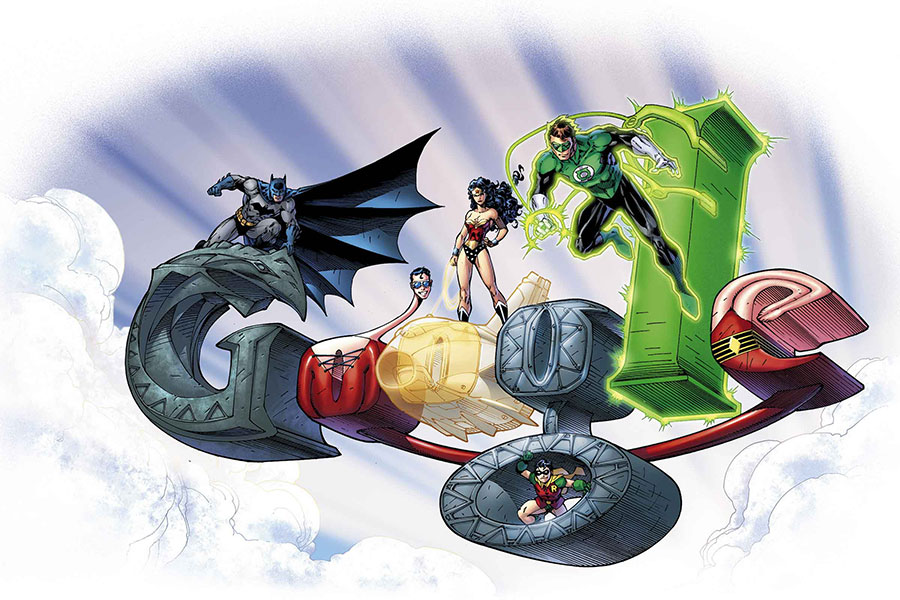
Google Values the Power of Speed

In a world undergoing constant changes life is a constant learning journey. What we know and understand today may not hold true tomorrow; policies may shift, structures could have collapsed, theories may be disproven, competitors might be on the rise. No matter how many accomplishments are entailed in our bio, therefore, we still have more to experience and absorb. Consider how interactions encourage the adaptability of thoughts, inspiration for goals or a change of heart. Often times it is this shared communication that allow us to understand, alter or challenge a perspective.

Our relationship to the social and material world facilitates a certain awareness – one that might adjust. In 2012, when I was working in Argentina, I had the opportunity to hear two entrepreneurs express their experiences. Especially as an young entrepreneur myself, I admire understanding others path to success.

The first speaker was Mike Cassidy, current Vice President of Google and start-up founder of Ruba, Xfire, Direct Hit and Stylus Innovation. It was a rather intriguing theme set for his presentation: speed. Why speed?

  • It makes it difficult for competitors
  • It builds a strong team set up for success
  • It generates press
  • It is a valuation of the company

He explored how start-ups endure a common process – from idea to financial and labor support then onto the creation of a product. Most ventures generally find that 23-27 months would be an appropriate allocation of time. This is about two years of extreme hard work and much patience all driven by the passion. Yet, Mike Cassidy explained that his personal time for each of the four successful start-ups, he spent 1/6 of the time on the above process. Four months. When exploring ideas, you cannot allow yourself enough time to talk yourself out of an idea.

When raising funds, you want to do it when the conditions are in your favor. To expedite the managerial and creative process, have all the decision makers of your team in one room; there’s no point in calling a meeting when a valuable voice in not present. Competition additionally needs to be considered. So, synchronize the timing of competing offers. Always be aware of who you are up against and be one step ahead.

If your process is faster than your competition, you will automatically be one step ahead! Lastly, make if/then contracts. He put this into context by suggesting that if his company was going to provide search engines that can perform x feature, then will you buy our product for feature, then will you buy our product for y amount? Of course this is a non-binding agreement, but he has found that it instantly hooks people. Next phase, an incredibly short process of 2 weeks he offers, is building a team (including both the people and physical location). The hiring process requires you to get experienced developers whom you may or may not know. A day in the life of a Cassidy interview is simply just a day.

If he finds the applicant as a suitable potential employee, Cassidy would call shortly after getting a background/Facebook check and call the applicant’s references. If all goes well, the offer is on the table, and not even a 24 hours later he expects a decision. In some cases, Cassidy might even ask the interviewee to join him for dinner in order to get to know the real person behind the CV paper. It’s the excitement of one day, quicker than flying to Australia from Chicago. There is not much time to daze off or push off tasks. Priorities are set quite high, and there’s an expectation of rapid growth and action. If you don’t yet see why speed is so important, he elaborated that the probability of a deal closing declines by 10% each day it doesn’t close.

Speed? Yes, speed means you can’t spend as much money, you can’t hire as many, etc. He ended with saying that if you see it, you’ll believe it. Josh Silverman, former CEO of Skype and current President (of U.S. Consumer Business) of American Express, took the stage after Mike Cassidy. He began by revealing that he had aspired to create positive change. Personally, living abroad and having access to a service like Skype have had a major social impact on my life; the interconnectivity and cross-communication that is now possible is incredibly transformational. He gave some insight into how he operates, and perhaps how he got to where he is today. Take advantage of crisis, “never waste a great crisis.”

During the time of heightened tensions and extreme pressure, the truth comes out. People are directed to reflect and realize what should have been done, and come together to brainstorm what can be done now too. So a technique he often practices, during the high times. This allows for a keen awareness to circumstances and functionality. A series of what if questions are ways to advance and get ahead of the game. It’s about how to play the game, and the players of the game.

So he began to highlight the difference between being a founder and a CEO. Being a founder means that you have a special understanding of the brand and product; you are unusually in power and are able to take bigger risks because of that. When you are a CEO, on the other hand, you are an employee, and you report to a board. To reiterate, that reduces some of your freedoms or authority. Additionally as a CEO, there is a bar of excellence that you are expected to achieve.

A common denominator for both CEO’s and founder is the inherent aspect of leadership. When you’re a leader, Silverman explained, people look to you. They look at everything you do: body language, actions, behavior, mood, attitude and confidence. He said that being the youngest “in charge” of people his brothers age, for example, the pressure was high and he began to recognize the significant influence the frontrunner has the rest of the organization.

He could feel the difference within the group on days that he was in a good mood versus the days when he was a little frustrated. There is a certain degree of responsibility integral to being a leader. In business, others adhere to a leader’s opinion or decisions, and tend to follow the values and environment created.

He argues, therefore that this is the reason people are born to be leader. As people with influence, it is up to us to determine how we use that power. We must remain cautious, on point and aware. To create change and to generate impact, well that lies within us. So on our journey throughout life, as we begin to make shifts in the world, the world mutually guides changes in us too.

Be open to listen and learn from others but be aware others are listening and learning from you too.

Do We Accept Circumstances Or Fight Them?

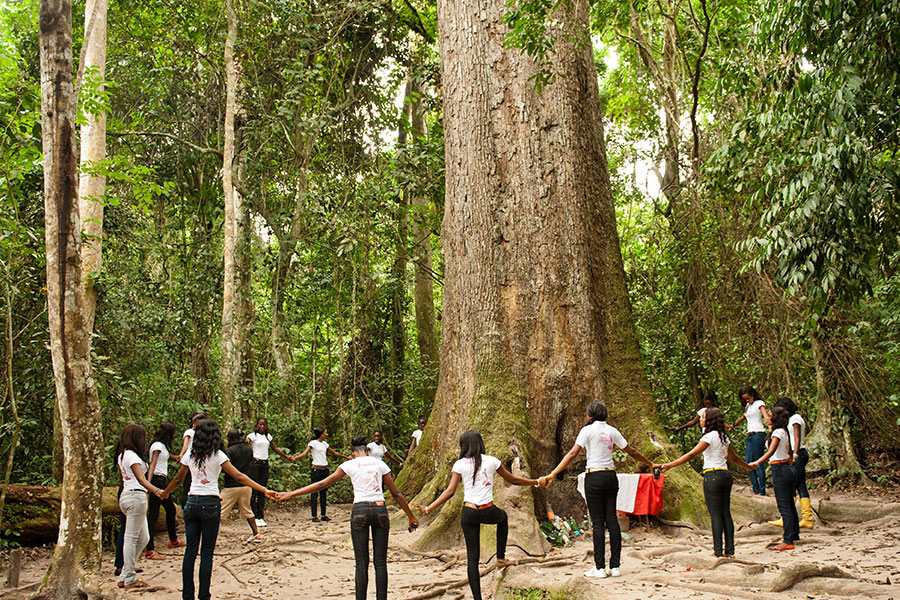
There once stood a tree. It had stood for longer than the oldest person had lived in that area, and almost longer than America had been a country. It reached higher than our necks allow us to see – a skyscraper of the Amazon, some may say. It’s home to our friends with wings, plants and crawling critters, playing children and the air we breathe. Yet for outsiders it’s simply a tree. It may just be one tree, but for 25 communities living along a river in the Ecuadorian Amazon, there are only three other living trees like this in existence.

In spite of this, in the eyes of some outsiders, this tree is replaceable by the plentiful other trees around it. Foreigners might ask – within a territory covered in greens of all shades and barks of all textures – “what’s the value of just one more tree?” Well, through a local viewpoint, no other oxygen-omitting being would begin to suffice.

An endangered species, they protested. Spiritual symbolism, they claimed. Historical significance, they explained. In a place in which nature and culture are commonly intertwined it felt as if the possible destruction of nature was equally a possible destruction of their society. The intruders, as a few Amazonian’s framed it, began to propose a scheme of deforestation. They cleverly assembled a proposition stuffed with linear logic of growth and capitalistic gain – gain for themselves of course, not the locals. $20 for a 200-year-old tree that could still grow for a further one hundred years.

Perhaps they fell asleep during that part of their environmental science class that explained that, for a tree of that size, at least 200 years more years should pass. They do say time is money, but the locals struggled to accept that $20 equates to 200 years of time. I think they were even further puzzled when the constructors attempted to rationalise the offer by saying it would only take four hours of their time. Four hours pass and the construction site would be a hidden site.

Or on the other hand, four hours pass and the construction site would be a graveyard site to the natural, spiritual, social and cultural elements that stemmed from that tree. Fortunately, a few activists were not willing to put up a tombstone. It takes one thought, one person, one group, one action to change the course of what some believe may be fate. In this case it was one proposal. An outside group stepped into the negotiations and raised the offer by $80.

Rather than $20 to cut the tree down, how about $100 to leave the tree untouched? The team of constructors were not swayed by the three-digit offer. At this point, while some lost hope, others transformed their lost hope into confidence – for saving the tree. Workers from a local social enterprise joined the movement and they made a commitment to each other to protect this historical, spiritual, playful being of a tree.

As I mentioned before, to change the course of the future begins with us.

As I mentioned before, to change the course of the future begins with us. From an idea to initiative to execution of our vision, we are able to achieve our mission. Even when the first attempt fails that does not mean that the second or third shot should also disappoint. The local’s story follows this pathway. Although the foreigners thought they were rather clever, the locals accessed some indigenous genius. They expressed that the tree the outsiders were hoping to kill resided within indigenous territory. These foreigners did not just stumble upon land with the right to claim or destroy any element of it.

There was no equivalent phenomenon to Columbus discovering America “by accident.” For this reason, the foreigners consequently had to play by indigenous rules. It only took some creative, innovative thinking to completely switch the situation around. Now, those wearing the power shoes were the locals, with land, rather than the foreigners with money. If you want any more nights with your families, the locals warned, you’d better hustle out of our terrain.

Of course this was an intimidation tactic rather than one they would straightforwardly follow. Nonetheless, they provide the proof that with dedication to a particular belief, no obstacle stands in the way as a barrier. Although less politically significant or economically established, their drive to lead and achieve was more powerful than imagined. After clearly outlining the importance of the tree and exposing the ignorance of the outsiders, a deal was closed.

With a voice willing to speak up for what they believed in, they not only saved the tree, but also initiated a continual benefit from the tree; each month $100 is dispersed throughout the community which helps to support the families of the village. In what seemed an unfortunate event, fortune was actually found.

Much of our life and what we aspire to achieve is dependent on how we choose to go about living; whether we accept circumstances or take circumstances into our own context.

Much of our life, and what we aspire to achieve, is dependent on how we choose to go about living; whether we accept circumstances or take circumstances into our own context. As these Amazonian’s taught me, there is power in “one.” In the same way a match has the ability to light a candlelight, a bonfire, a devastating house fire or forest fire, our beliefs and goals can also leave an impact of any size. After all, an obstacle is only an obstacle if we perceive it to be.

So, when presented with what seems bad, reconsider how this “unfortunate” event may actually result in fortune.

The Day I Learnt About Leadership From Bugs

As the day entered the twilight zone and a sticky breeze accompanied a transforming mountainous view, my cloudless, introspective mind indulged in the beauty of a roasted marshmallow sky. At an elevation of about 4,500 feet, almost halfway to the “top of the world,” I was captivated by a microscopic world before me. One encompassing teeny tiny crawlers. A bug’s world. What initially fostered this fascination, and a further unexpected learning experience, were my fellow classmates studying at Kopan Buddhist Monastery in the middle of Kathmandu, Nepal.

For the first time in my life I witnessed people (yes, plural) consciously saving bugs and insects. To many, a fly swatter equated to a pistol, the forceful flush of a toilet was understood to be as catastrophic as a natural disaster and insect repellent was parallel to poisonous gas. To a Buddhist, the belief that we shall not kill includes any living organism. While I was at a Buddhist monastery this vow was obeyed completely.

I saw how people were cautious about where they sat, a wrong seat may lead to the funeral of an innocent bug. People became tour guides for insects by escorting them back to their natural habitat. Additionally, they took on the role of lifeguards to save drowning bugs in a body of water (i.e., a pond, the toilet bowl, the sink, a puddle).

My compassion for insects, which matured during our retreat, was refreshing and motivating. It made me reconsider my baseless apprehension of insects. Two years ago, when I spent time in the Amazon, I would have been considered a serial bug killer. I devalued the importance and beauty of a bug’s world, stomping on the little creatures without purpose other than my own selfish fear. Living among a world with no escape of flying creatures, squirming snails, lanky spiders or buzzing bees, it made me confront fear in the face. I literally looked at my fear and ate it, to make it disappear: I consumed a maggot. Overcoming this fear certainly was not an easy one. Yet, it was advantageous in the long run.

By releasing my mind from deceptive thoughts about the nature of tiny organisms, I was able to realize and appreciate the world in a completely new way. Being in Nepal facilitated my entry to the next level. It was a transformation from disgust to neutrality, to a state of fascination and excitement. Being surrounded by people who cherished the beauty of what I used to claim as terrifying, initiated an expanded acceptance of the bug’s world.

That night when I looked out into the fading sky of fluff, a peculiar event changed my outlook. I found a number of ants frantically crawling along a concrete wall. As my fascination increased, I began to realize that these little creature’s behavior was much more complex than originally perceived. Rather, their actions personified their systematic, logical, empathetic, collaborative, determined, and strong qualities. At the center of this occurrence, was the astonishing effort of a team – about 25 ants carrying a dead bee. I was most dumbfounded by the mere fact that even if all these ant transporters were combined into one bug, this new creature would still be smaller than the size of the bee itself. These tiny, itsy-bitsy insects were carrying something that would be classified as overly obese in the ant world. Humans would be unthinkable giants to them. I stared. I watched. I contemplated.

How is it possible that these miniscule bugs could effortlessly escort something that is massive in comparison? As these ants marched across the wall for a meter or so, I first thought about the power of fear and secondly considered the strength of collaborative efforts. The bee may have been seen as overwhelmingly large in relation to the ants, yet from a desire to join together, these ants made the unthinkable possible. No matter how big or small our goal or obstacle, we are able to accomplish what we put our mind to. There is always a way.

It may require an extra person and their relative skill set, or maybe just a conversation that stimulates a ping pong game of creative thought. Personally, I used to hide when people offered a helping hand to my non-profit endeavors. I wanted to claim full responsibility and retain control. If only I knew back then that when we join forces, we become more powerful than before. Perhaps my “team” could have tackled major funding barriers, or reached a 12-month goal in 6 months. I refocused my attention on the ants. Surrounding the staggering group with the bee were about 75-100 additional ants, scrambling and strutting up, down and around the main attraction. The ants had their own path, not linear or circular, but a pattern none the less. At this point, I started to consider how our personal and professional processes go beyond the people who are directly involved. There is much “behind the scenes” that facilitate the efficiency of our activities.

Maybe the “surrounding ants” in our life are our mentors, role models, conversations or interactions. Together there are many elements, which compose our progress and ultimate success. One ant would not be capable of moving a bee single-handedly. Two ants? No, not even close. Collaboration was their only means of success. The ants marched one by one, the leaves swayed as the breeze washed over the trees and I pondered how I was even able to come to these conclusions.

There were two themes that continued to filter through my mind: letting go of our fears and embracing collaboration. The fear I once held was a blockade, but once I released that distress, it turned into a vehicle for inspiration, beauty and internalization. Fear once clouded my mind and distorted my ability to see beyond. That old-time fear guided me to recognizing and appreciating much more than I ever did before. I was able to find meaning, purpose and insight from a realm that previously terrified me.

When we let go of our fears, I have found that we are better able to take a chance, explore our curiosity and fulfill a step in the path to success. For me, my liberation enabled new practices, new knowledge, and a new appreciation. My experience helped me to realize the significance in working together, rather than pure competition which hinders other players, and also oneself.

I began to understand how our interactions with our social and physical environment all contribute as a stepping-stone to achievement. We live in a multifaceted world that consists of multiple networks, systems and relations. When we connect the pieces together, the process of understanding and achievement is simplified.

Rainbows and Failures: Value Your Mistakes

Imagine a world in which failure was not a terrible event. A place in which mistakes were valued, obstacles were short-lived barriers and questions were endless. Perhaps an environment where we had nine lives, like a cat. This place is where we would explore and learn from our experiences. It would be a world in which failures could constitute success. When I think about “success stories” or successful leaders, it’s the story, the journey that is often highlighted. How did they do it? What were the circumstance, the experiences, and the process that made it possible to accomplish their goal?

After all, at one point or another, we are all bound to fail. I don’t intend to present a pessimistic viewpoint, but rather an optimistic understanding of failure. In fact, what separates leaders and others is those who let failure take over and those who work even harder after they’ve failed.  I realized this in an unexpected environment. At the edge of a bridge, overlooking one of the most magnificent sites I had ever seen: Iguazu Falls in Argentina.

Imagine a place isolated from society. What you hear is a chorus of birds. You can feel the breeze and see trees swaying back and forth. Rich, green leaves moving back and forth to create a small force. It’s not too chilly. There is no need for you to pull a sweater out of your backpack. The sun takes care of the warmth. It’s beaming and glowing. So bright and always present. The rays of sun pass through the holes of the branches of tress. You think to yourself, how can this be real?

As you proceed to the main attraction, you observe how the water has a brown and red tint from the minerals. It’s as calm as bath water. Then as time goes on it begins to get rougher and a little choppy. Finally you arrive at the first stop to see the falls. You begin to walk down a path that acts as a bridge. There are times when you question your safety.

rainbow

Maybe it’s the questionable construction of the bridge or the vast number of people walking on it at the same time. Then you think, “it’ll be okay. Many people have walked this path before. I’m going to be okay.” You start to wonder how soon you’ll see the falls. The view is rather stunning. Huge trees covered in leaves surround the bridge area. You’re able to look out at the river and take in its beauty. On your journey you begin to hear sounds. It’s a sign you’re getting close. You begin to see huge clouds in the sky.

But soon realize that these aren’t clouds but actually mists coming from the falls. Consider the way a bomb explodes and takes over the purity of the air. Think about the same thing happening but with a cloud of water and mist. This is all you see on the bridge. Promising isn’t it? You finally get to the end of the bridge and Bam! The beauty is everywhere. An insane amount of water is pouring over so quickly that it looks like it’s moving in slow motion.

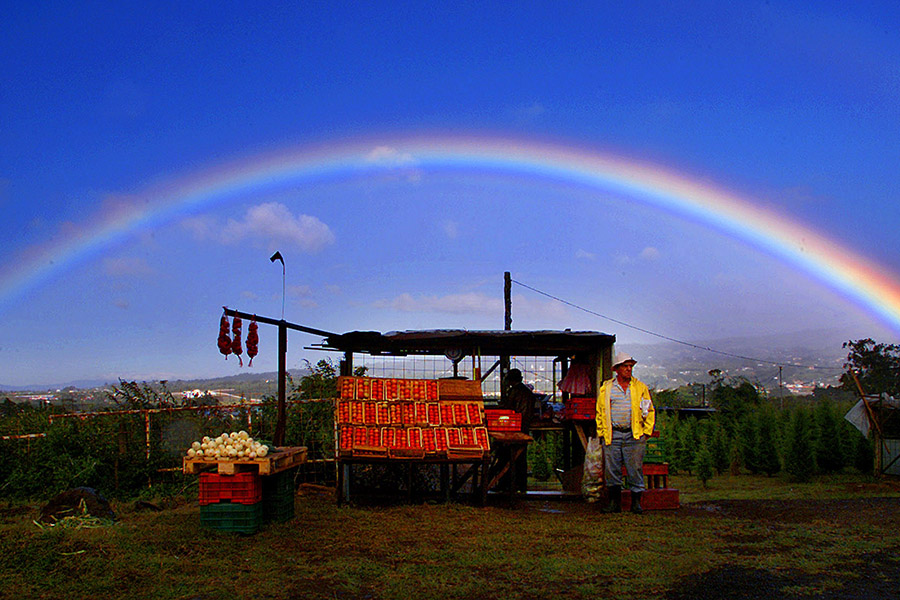
This particular section is called the “Devil’s Throat.” One slip on a banana peel and you’re the devil’s next meal. Nonetheless, you don’t let the panic ruin your experience. How could you when nature’s freshness fills the air? In this environment, you could never imagine how we could pollute this world. You look at the falls and wonder how this got to Earth. It’s a crushing sound that never stops and a sight that never fails to meet your expectations. It’s absolutely stunning. Rainbows appear. The most vivid rainbow you’ve ever seen.

The red is as bold as blood, orange is brighter than the fruit, yellow matches the sun, green is as dark as healthy grass, blue like in the middle of the ocean, and purple like a field of lavender combined with plums. This rainbow is also a full circle. You probably always thought there is a pot of gold at the end of each rainbow… maybe there is but you now see that a rainbow has no end. Its colors are reflected in some parts of the water. Then slowly, you see another rainbow appear behind the original one. It’s incredible; so pure and untouched, so clean and unharmed, so beautiful and perfect.

It occurred to me at that point that what I had just experienced was a walk through someone’s living hell into heaven. I embarked on a journey from a deathly forceful waterfall into magical, mystical surroundings. If nature is able to coexist and produce something like this, then it should allow humans to understand how our own nature allows a similar process. In this way I came to build a foundation for a belief I hold dear.

Namely, how a leader may be recognized for their success, but it’s the mistake and failure that makes them recognizable. In order to reach success it’s likely that mistakes, rainy days, failures and obstacles will be part of it. Ultimately, a rainbow is the product of sunshine (the good, positive and successful) and rain (seen as bad, negative and disappointment). Without the condition of a “sad, bad rainy” day, then the rainbow is not possible. A lack of optimism in the sun coming out, also erases the possibility of a rainbow.

Finally, we can see how a rainbow is mutually constituted in the good and the bad, in the happy and the sad, in failure and success. Essentially when you see a rainbow – someone’s success story – reflect on how there may have been a few rainy days that contributed to the magnificent site you now see. The ones who are able to “produce a rainbow” are the ones who danced in the rain and celebrated those cloudy days. If today there is an overarching shower from the sky, remember that your rainbow, your success, is likely to arise from conditions such as these.

Empowerment Through Change and Perseverance

Step into the shoes of an Ecuadorian women living in a small community in the Andes Mountains. It’s a Wednesday and wake up call is at 4:00 am. The sun is still a bit drowsy; the Earth and the people slowly arise for the day’s activities. With a family of growling stomachs your responsibility as a mother requires you to prepare breakfast. You’ll have to make whatever is in the house…whatever you could afford with your limited five dollars at the market yesterday. Perhaps there is some rice (1 pound is 0.50 cents), pastries (1 dollar buys you 10) or mangoes (1 dollar buys you 25) left over.

The clock is ticking; only 30 minutes left before you must go out to attend to your duties. With no time to spare, you head out into the field to tend the farm. Today’s job includes washing your donkey, feeding the sheep and collecting food for the guinea pig and rabbits. Yesterday you were watering crops, digging the buried potatoes and cutting weeds. You must allocate proper time for both the animals and agriculture. Poor time management equates to an empty pantry, no school uniforms (meaning no education), and no extra money for repairs around the house, for example.

Your back is in pain due to constant hovering and lifting in the field. Complaining might help the emotional side, but it won’t alter the physical. In fact, it won’t change the fact that tomorrow you will need to suffer the same physical challenges in order to bring health, education, clothes and shelter to your family. You’re willing to do anything for your loved ones. You grew up knowing that life can be hard; your ancestors told you that those who work the hardest are the ones that live the longest.

The sky has gotten dark and the evening chill is flowing. Dinner sounds nice, if money allows. Water would be great too, if one of your children went on a 5-8 hour walk to fetch it. A shower? Forget about that because you’ve had your shower for the week on Monday. It’s nine in the evening. You look at your successes and after a full day, the monetary gain is maybe 0.50 cents. Less than one dollar. It’s clear now that in your “free time,” before heading to bed, you need to knit a scarf for the women’s group. Someone needs t0 bring in the alternative income.

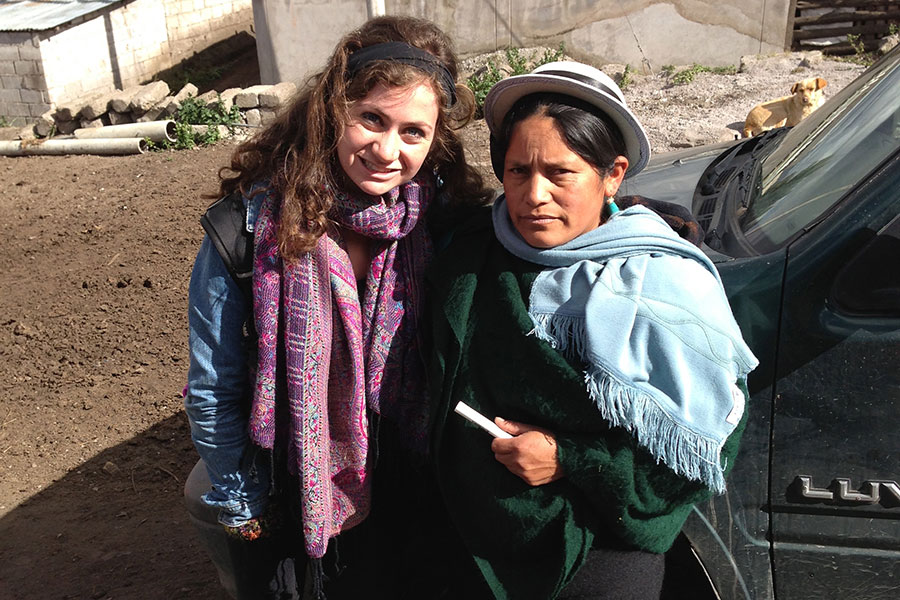
Not a second in the day goes by that your hands aren’t busy. Money means hard work and hard work means food. Your bed calls, ready for tomorrow starting at 4 am. Sleep, work, work, work, and repeat. During one of my Giveable Giggles trips to Ecuador in 2013 I met numerous women who live the daily experience described above. This, however, is the modern experience. Not too long along the communities and women, in general, lived in circumstances of extreme inequalities, violence or discrimination. One person in particular, Maria Angela Pacheco explained to us that she refused to go on living in these circumstances. She is living proof of how one’s goals combined with determination, passion, mobilization and action can make a difference.

As a young girl she grew up combatting the consequences of poverty, racism and sexism. She was raised in an environment in which women were treated and viewed as inferior and unequal. In comparison to the men of the community, there was a complete lack of opportunities for women. Perhaps it is because the culture called for the females to concentrate on domestic work, which inevitably created a barrier to the outside world. The household became a place for male domination despite it being a “women’s territory.” The men – husbands, politicians, brothers — made all of the decisions about how the women in the village lived their life.

Concerns relating to marriage, occupation and education were among some of the matters that were stripped from a women’s authority. Unsurprisingly, when a woman began to take control of her life, marriage or occupation, violence was expected. Avoiding the horrors of abuse the ladies, consequently, were silenced by the men. Once I understood this context, it began to make sense why the females I met were overwhelmingly shy. Who would want to speak out when their voice was cue for psychological or physical aggression? The women were shut out of opportunities to express their voice and opinions.

Maria Angela did not accept this reality. When she finished high school, she was disgusted with the overwhelming inequality. She took the initiative to listen to her fellow community members. Lost voices were suddenly heard. She essentially broke down the household barrier and welcomed females to speak out for what they believe in. As Maria Angela powerfully stood up for what she believed in, equality was given and respect earned. When she was 18 years old she became the first female president of her community. Following her leadership role and changing times, the community and surrounding areas have dramatically evolved. A woman’s space is no longer limited to the domestic realm. Their voices are no longer locked up in their own minds. Being a female no longer means extreme inequality or opportunities.

Through Maria Angela’s leadership and encouragement, she has introduced a number of microenterprises, for instance. She focuses on knitting projects with younger girls because it provides greater opportunities for their future and the development of the community as a whole. A young generation of educated, confident and powerful women is better equipped to succeed and start a chain reaction in modeling equality. Now even if the ladies had a tough day in the field, they have a safe place and group of like-minded women to interact with. Perhaps the past few day’s earnings were below the necessity; the profit from their group will serve as an alternative to maintain stable families. Maria Angelo has completely transformed the social structure, organization, politics, economy and institutions in these Ecuadorian communities.

When I went to visit Maria Angela, I realized that it has taken a long time for these communities to get to where they are today. Maria Angela did not wake up one day and find a suitable village in which to eradicate inequality overnight. I look towards her clarity, dedication and leadership to explain this transformation. In fact I found out that she ran leadership, ‘rights’ and self-esteem workshops to raise awareness within these communities.

In other words, she made a conscious effort to change a deeply embedded social norm of inequality to encourage positive progress. Maria Angela taught day after day, in place after place until she was able to recognize change. I would venture to believe that many of us resonate with Maria Angela. Perhaps in terms of the struggles we face as people (e.g., due to gender, religion, race or nationality) or as leaders (e.g. time, financial obstacles or space).

Often times I must remind myself that change is an ongoing process and that it may take time to reach our goals. Perseverance was key for Maria Angela. It is her dedication to seeing a change that generated a high impact. It is absolutely incredible that with the willingness to do what it takes to accomplish a goal many lives can be impacted for the better.

Maria Angelo can now measure her success based on the new laws passed, the many successful microenterprise women groups and an environment of equality. She proves that one person can make a difference.

Leadership Lessons From A Slum

In the outskirts of Buenos Aires, Argentina – a place often viewed as inferior – I learned one of those lessons that no book can teach, other than the author of their own experiences. It’s something we generally take for granted but what I learnt in Argentina changed the way I thought about influence and ability. It’s one of those things often forgotten or rarely acknowledged, such as breathing, for instance, or the fact that today we can see, feel and be.

The same way that we are able to change the pattern of our breathing when we concentrate, so too can we change our capabilities. Prior to my arrival in Argentina, I had a very romantic picture of what the country would look like. It was a perfectly painted photo: the meat and wine, the mountains and colorful buildings. To my surprise, street artists dominated and the beautifully cooked steak with a glass of Malbec wine was not guaranteed everywhere.

Furthermore, I had a rather stereotypical image of what the poorer areas would look like: dirty, the stench of excretion, unorganized, crowded and polluted. Now this is a physical description but many of these depictions cross over to the psychological realm of what we may constitute as “poor mentality.” Areas like these, often called slums, are thought to be the lowest of the low, filled with trash, poor infrastructure, diseases, lack of education and resources.

Although there is some truth to this, my perfectly painted portrait slowly turned into one big blob of mixed colors. It was through the deterioration of my preconceived notions that I began to understand why these categorizations are exceptionally misleading. The labels associated with poverty and the poor tend to ignore the fact that these people aren’t living in a documentary movie that describes their life. What Hollywood portrays is just one reality, and perhaps not even an accurate one.

The community members in these areas are living a real life. That means they form relationships, a sense of identity, roles and responsibility, and there are times of celebrations and times of struggle. There is so much more behind the scenes that exemplify their authenticity and “realness.”

brazil_2 I certainly was guilty of being a foreigner to the truth about slums. Yet, I felt the need to make known that the youth and adults in these areas are inspirational and incredible. Some may not recognize them as the smartest against Western standards, but they are smart enough to build a house from surrounding resources and to survive with minimal assets. That, to me, is brilliance.
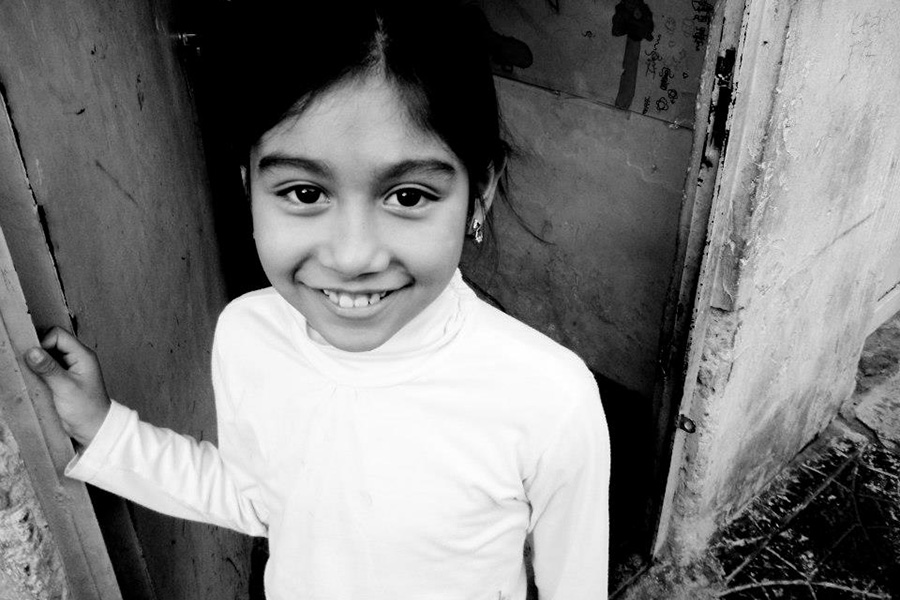
We cannot compare our context to their context and claim that their way of life is illogical. Despite some of the things they do or say not fitting into our systematic understanding, this should not mean it is wrong or less satisfactory. People tend to doubt the slums, but I see these communities as an inspiration and a powerhouse.

When we view others and the world in an egalitarian approach, we release our mind form bias and preconception. This allows us to recognize our breathing patterns… or at least the less obvious and unconscious matters in the world. It’s about finding the good out of something bad. There is beauty in ugliness. Now please don’t get me wrong, I’m not advocating that you drop your current life and move to a slum to find some inspiration. Nonetheless, I find it important that we recognize the kids and parents in such areas as real people. I simply cannot find one justification to claim superiority and deny them less of a right to their humanity.

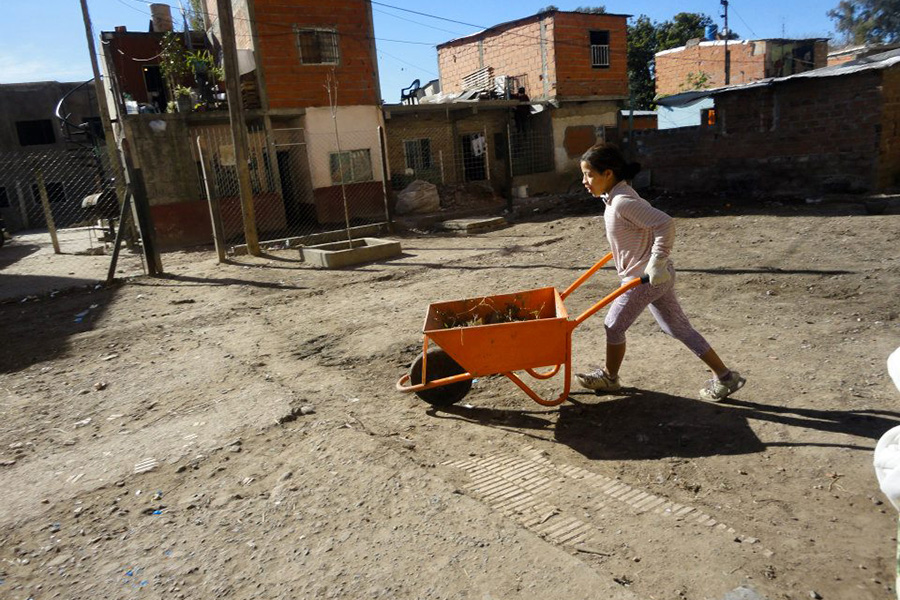
It’s time for us to escape the bubble we are trapped in; let us accept others above and below us; learn to love and to appreciate. It’s time we make a change. It’s a challenge to put ourselves in their shoes and imagine their experiences. But what I encourage you to imagine are people who overcome numerous daily challenges by living in the present – one day at a time. If children who are barely fed are able to voluntarily lend a helping hand to build a park, what can you do?

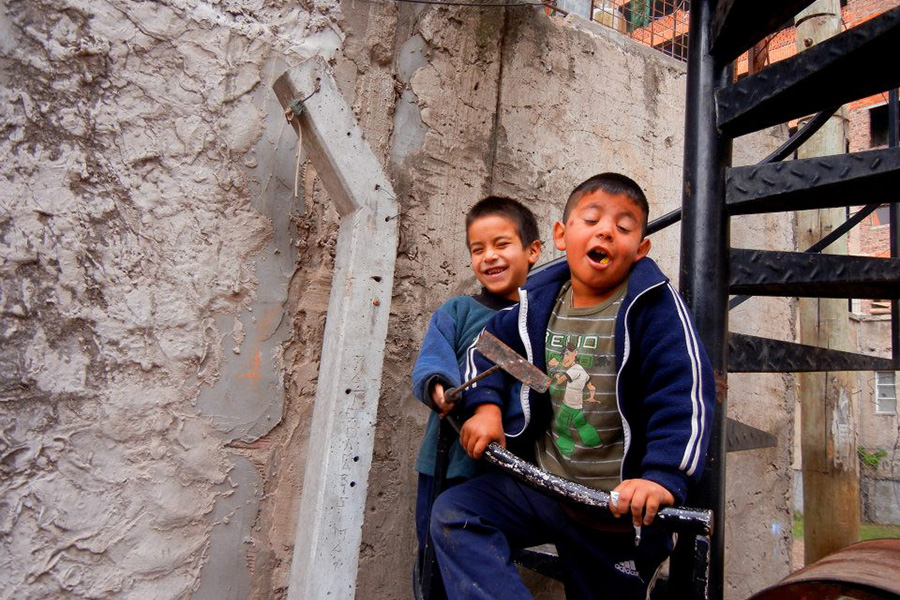
If kids who speak broken Spanish but still try to learn English with a foreigner, what can you do? If kids in the villas are able to say no to Paco (a cocaine paste drug in Argentina, ) and carry on strongly, what can you do? If children who worry about where to sleep, what to eat, or how to stay healthy yet still come out to play, smile, and laugh for a while, what can you do?

brazil_3 For them it’s one choice at a time – sometimes a change in attitude, sometimes the motivation to find a better situation. Each step or decision leads to the next step. A baby learns to walk step by step and over time it can walk. Walking turns into jogging and jogging turns into running. Take it day-by-day, step by step.
Inspiration can come from anywhere: from the packaging of your most recent purchase to the shape of the clouds, to the original song of a street busker. It all depends on yourself. We are in charge of our destiny, our accomplishments and our happiness. No matter where we are in the world or who we talk to, everyone has his or her “story.”

Leaders do not let their challenges remain standing still. The kids I spent time with for a couple of weeks in Buenos Aires taught me what leadership means. Leadership is having the tenacity to achieve even when the world is constantly throwing rocks your way. In the worst of situations, there’s an ability to grow, improve and make a difference.

The rain clouds don’t stop the sun from shining after all.

Passion Is The Fuel For Tackling Our Fears

It often seems that each year goes by faster than the one before. Frequently I find myself reflecting and contemplating on where the time has gone. I know that there are 24 hours in a day and 365 days in a year. Yet sometimes I struggle to believe it. How have the leaves started to change color and the symphony of crickets, bees, grasshoppers and cicadas so suddenly faded? As I conceptualize time, I focus more on the way I wish to spend my days.

I imagine days where I wish I could press the “replay” button and relive them time after time. I imagine feelings that I could press “pause” and preserve. I image times that will always be “recorded” in my mind. Perhaps every second of the day is not like my description above. As I identify themes in my daily life that make certain times worth replaying and recording, I have found that passion is a common denominator.

Passion drives and motivates us; it holds a part of our happiness. We will persevere, perhaps tackle our fears, do the unexpected and live in a state of contentment and gratification. Passion is our fuel. Days occupied with passion are days worth reliving, feelings worth pausing and memories worth recording. Passion may even provide the answer to that mysterious question, “how and why do we feel that there are less than 24 hours in a day?”

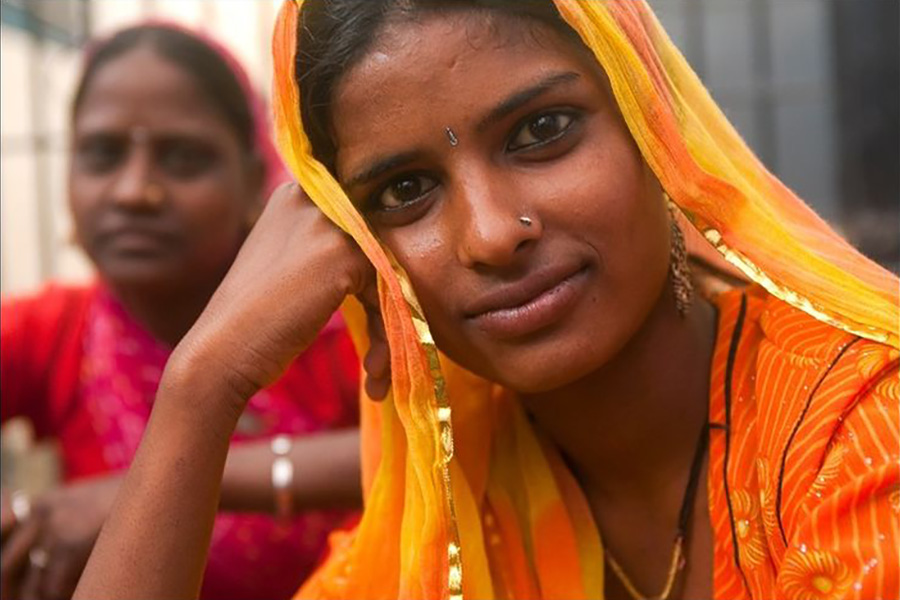
Passion is my answer to how my two-month internship in India ended up feeling like two weeks. Which is a bit odd, considering I tell people that I constantly had a headache. Yes, working in India made a couple of hairs turn gray. As frustrating as it was some days, I would not change one of them. Challenging situations forced me into undiscovered environments of which I had no knowledge. Those where the experiences I ended up thanking for personal growth.

Without it there is no opportunity for maturation; without passion my aged hair would be meaningless. In fact, with a lack of passion the two months would have felt like two years. With an absence of passion, so much of the summer would have been considered a waste. Living in a world where 24 hours feels like 12, there’s no wiggle room to waste time. Whether it’s purpose we find, the success that follows us, or the potential we realize, a passionate life is one of living rather than existing.

After spending this past summer working on a tourism project called “Explore India and Hinduism” and doing non-profit and village development consulting I now intend to lead, learn and live through passion. I think part of the process for maximizing our individual humanity is developing our purpose. When we live from a place of deep authenticity, our passion is at the forefront. In other words, in order to live a life of many days that are worthy of replaying, passion is essential.

If you’d like a loop-hole for “pausing” time, I’d recommend living with passion everyday. You will continuously preserve that feeling. When our lives are passionate, other people will then be eager to “record” our own success and happiness. Passion is the building blocks of greatness, achievement and reason.