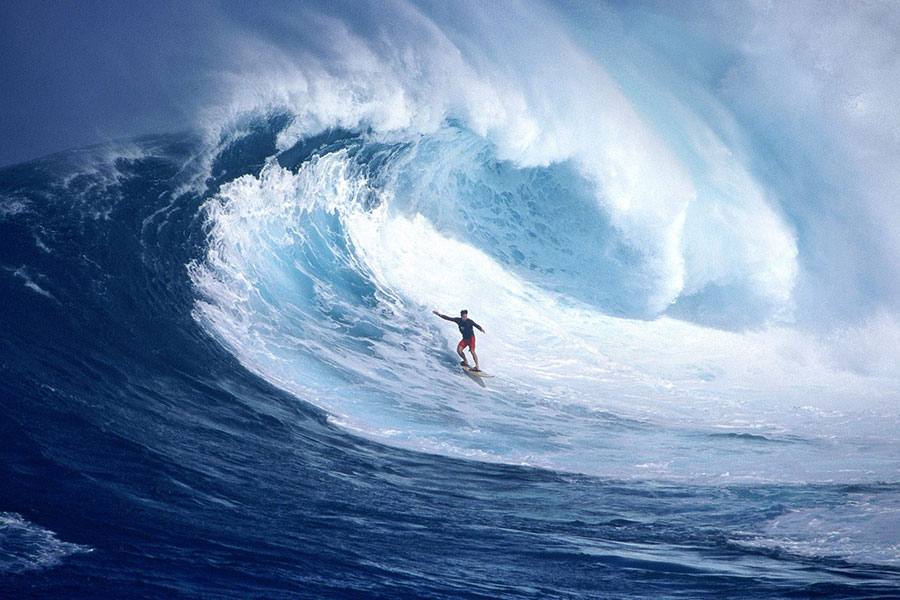
Leading Through Emotion: Riding Your Personal Tsunami

Emotions are still misunderstood among business leaders. They are mostly unknown to almost everyone else in society too. Ironically, emotions seem to be most confusing to emotional experts themselves, if only because many of us tend to remain closed off behind our theories around emotion most of the time.

So here are four crucial things I have learned about emotion in my 20 years of examining this phenomenon. Anyone trying to lead should keep these points in mind:

  1. Emotion is wild in nature
  2. Emotion is like a wave that we need to surf, rather than suppress or block
  3. It’s more important to know how to come out of an emotion, than how to go into it
  4. All you need are three tools: attention focus, breath and (involuntary) movement

Firstly, emotion is wild in nature. It’s like a lion. Unpredictable, magnificent and invigorating, it can chew your head off in a split second. Daniel Goleman coined the expression “emotional intelligence” in the nineties, which was surely better than previous emotional stupidity or ignorance. Still, being intelligent about our feelings would make it sound like we can put them into boxes, label them, add them up or subtract them, plan them and control them.

But emotions, sensations and feelings are like a wild lion. If you put it in a cage, it’s no longer inspiring or thrilling, and it often ends up just sleeping around all day. Today, too much psycho mumbo-jumbo about caging and controlling emotions at will is written about and TED-talked on stage. Nice theory though.

If you’re serious about learning to handle emotion – both yours and your followers – you’re going to have to see them as the wild, unpredictable animals they are. You can befriend them, you can learn to trust them, and you can do marvelous, incredible things with them. But they may betray you in a split second at any moment for reasons you could never have anticipated. And when they do bite your head off and kill you, well, you’ll be born again to a bigger, better you.

Secondly, we need to surf the wave of emotion rather than block it. Every sensation in the body behaves like a wave of energy. It comes in, builds to a climax, and then pulls out. This may happen very slowly, over hours, days or even weeks – like all those complicated family conflicts we’re emerging from over the festive season! Or it may happen within a couple of seconds.

Like real waves in the ocean, you can surf a two-meter wave or find yourself riding a tsunami. Your ability to face the latter obviously stems from many hours spent on the board, mastering the slow, tiny waves first. The wild nature of these waves is from the complete randomness of how they arrive, where they arrive from, how fast they reach you, and how easily they can topple you over when least expected.

In our society, however, spurred on by ignorant psycho-babble about controlling or changing what we don’t like about ourselves, we try to stop the wave instead of surfing it. We get stuck, blocked, or disconnected. Our minds start turning round too quickly in never-ending circles and we behave compulsively, sabotaging our own goals and repeating old, well-known and severely self-reprimanded mistakes.

If you want to surf these waves of energy, you need to go soft instead of hard. As muscles and joints tense up with the increase of emotional energy, you need to soften them again. And yes, a mind that won’t shut up is behaving exactly like an emotionally charged muscle. Try to soften up and surf your way through the current of energy.

Which leads me to my third point: It’s more important to find your way out of an emotion than to get into it. It takes emotional experts a long, long time to learn this one!

It’s called “grounding,” and it means that once a sensation takes over your body, you have resources, techniques and (if needed) lifesavers, to help you come back down to the ground where you feel safe and sound. When other drivers anger you, breathe yourself back to calm. If shareholders and investors, through their own fears, pull out capital investments, breathe yourself back to calm optimism and positive thoughts.

A few well-known emotional experts think its super productive to take a client to their worst place of fear or pain during a seminar. It’s what we see in typical hotel facilities full of desperate souls manipulated into letting it all out. When all the crying, screaming and pouting is done, most of them can’t explain what they’ve learned, and some of can’t find their grounding for days or weeks afterwards.

More importantly, if you do touch on a sensitive wound from the past, with overflowing emotion you don’t know how to contain, it can scare you so much that you won’t want to go back there ever again. There is nothing scarier than getting stuck in a horrible emotion you can’t come out of. It makes you dependent on magical big-mouths who promise they can fix your problems, and can  end up costing a lot of money.

Practice with smaller emotions and sensations first. Build a tool box of resources that work for you and as you get good at coming back to the ground, try more intensive adventures. Never do anything that feels fundamentally wrong or unsafe, no matter how many people in the room are cheering you on.

And how do we surf our waves of wild, unpredictable emotion in such a way we can ground ourselves as often as needed? By learning to use our attention focus, breath and (involuntary) movement. Every meditation and mindfulness technique in the world is based on the use of these three tools.

Your attention must focus on the problem, the pain or the tension if you’re going to resolve it. Thinking of other things doesn’t help, and escaping only makes it bigger. Once you are looking at it, breathing can help you connect to the sensations it contains: size, texture, location, frequency, images and memories it brings back, etc. Finally, movement, especially the kind that is not ordered by our brain, but initiated by the body itself, will bring fluidity to unblock and surface emotions withheld there.

Leading through emotion is the only real way of leading people. We can only harness the best version of themselves when we give them the space and the opportunity to express their talent freely, which means emotions flow all over the place. So start by learning to manage your own emotions and surf your own waves… in time you will see others learn by following your example. And the better you get at managing tsunamis, the more people will follow you trustingly wherever you dare to go!

 

Have You Reached a Point Where Size Doesn’t Matter Anymore?

Everyone reaches a point in life when they realize that size doesn’t matter. That moment comes sooner to some and later to others. Judging by the way we are wrecking the planet, it comes much too late in life to way too many people.

One day you wake up and feel that you’ve reached as big, tall, meaningful and beautiful as you’re ever going to be. It’s a terrible morning. It seems like life is all downhill from there.
Sound familiar? It’s like the best part of your life is behind you. And it’s the awful truth (if all you care about is size, importance, relevance or attention). But guess what: none of that matters. When you reach this point, you should be ready for round number two!

If you like this, subscribe here for more stories that Inspire The Future.

You’re now ready to live life to the fullest: You can stop pursuing size to open yourself to the enormity of depth. When you let go of scale, and all the associated competition and expectation – the sheer effort of it all! – You descend to a lower angle of perspective. Your perception changes forever as you see the world, yourself and everyone else in a new light – profound meaning, connection and transcendence.

When you reach these new, darker (yet more profound) levels of yourself, it will take a while for your eyes to adjust to the scarcity of “superficial” light. Slowly but surely you’ll become less in need of it. You’ll stop whining to everybody about being “the best football player in the history of football,” (to be read in a childish, bewildered, jokingly ironic tone of voice) like Ronaldo did recently. You stop tweeting compulsively from dawn to dusk in a frantic desire to conquer and possess the world’s center of attention; like someone we all know.

The day you finally become your deepest self, size becomes irrelevant. Curiosity and wonder abduct you regularly. You choose only what makes you deeper as a leader, a person, and human being. You become amused by the dumb things people tweet; naughty, playful giggles bubble up inside of you continually.

Once you commit to this depth, you bump into your inner wisdom. You know without knowing. You are at one with the universe. Your judgments and opinions about how to make it all better have dissolved. You trust life the way a newborn child trusts its mother. Your eyes shine with wonder. You walk with a spring in your step. Your heart sings with joy.

For this very reason I “help people and their organizations grow, not in size but depth.” Despite the many troubles it has brought in the past. It would have been much easier to make money by promising others size, success, wealth and the like. But then I wouldn’t have grown in depth the way I have. It’s also why my work is my pleasure and my pleasure is my work. Size is not important – I kid you not.

Have a deep new year!

If you like this, subscribe here for more stories that Inspire The Future.

Women: Real Power is Not Found on #Instagram

I guess growing old makes you weary of empty promises, predictable advice and know-it-all certainty. In the industry of coaching, self-help and leadership training there’s loads of it. I seem to have outgrown my own advice!

And when I think of it, these are the three things that have most estranged me from my own power, influence and leadership for a long time: avoidance of pain, avoidance of failure and working like a busy bee. Ironically, these were three critical messages passed on to me by teachers, books, MBAs and women older than me. It’s a little like Instagram bliss, isn’t it?

If you like this, subscribe here for more stories that Inspire The Future.

Social networks have allowed us to materialize and share fantasies of our improved selves with the world. The more likes we get, the more we believe the illusions we create through filtered selfies, carefully chosen moments, gestures and obsessive manipulation of every object. Instagram has enabled our most aspirational desires: no pain, no failure and sooo many fun things to do!! #behappy #eathealthy #powermoms etcetera!

This self-delusion, enabled by crowds of internet strangers and bots, is quite constraining. I believe it holds back women more than anyone else. While the male sex is known to be physically stronger, the female gender has traditionally been emotionally superior in many ways. Women have a natural inclination and talent for everything that is not tangible: emotion, sensation, intuition, uncertainty or randomness. 

Because a woman who is scared of experiencing pain is a “witch,” who hasn’t yet practiced flying on her broom. How can she read emotions on the faces of others or interpret the power dynamics of a boardroom if she hasn’t flown herself into the ground a few times? How can she trust her gut if she’s never followed that instinct to its worst, most emotionally challenging outcome?

The same goes for failure and not because it teaches us way more than success can ever do. Failure has a way of tattooing lessons on our skin and bones like nothing else. But more importantly, failure teaches you that the end is never the end and that losing everything is always the beginning of a brand new you. A new level of wisdom, depth, courage and thirst for real adventure.

And work, work, work! As an Insta-mom would put it, “Love launching a startup, curing cancer, sharpening my six-pack and, most of all, doing complex yoga postures with my kids hanging off me!! #LoveMyLife”

Well, I’ve got news for you, ladies. Work is the modern full-grown adult’s #pacifier. When we’re working, we are #OnAHigh. A delusional, addictive high we’ve been using since we can last remember. So busy solving problems, cranking those abs or bullying the kids into the right setup for an Insta-moment, that we fly like a lingerie model in wings over every real emotion in our bodies and psyches. Effortlessly, we leave our snotty kids’ complaints and protests far away in another dimension of non-Instagram reality.

So look, I’m not going to tell you how to become a powerful woman. I’ll let you choose the type of reality you want to live in and let you find your most irresistible female power in the last place anybody suggests you look for it. And then you tell me in the comments below!

If you like this, subscribe here for more stories that Inspire The Future.

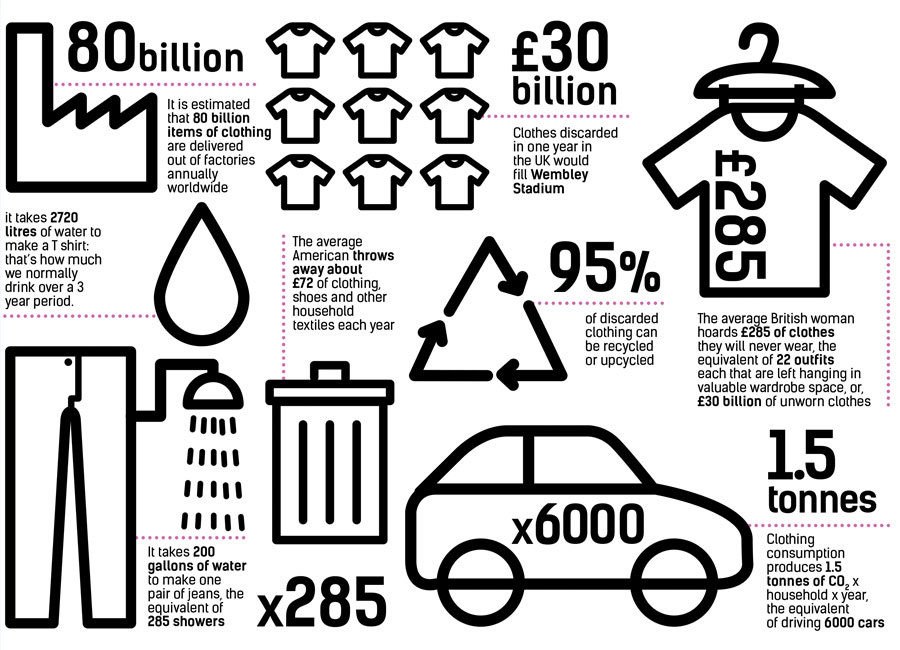
Is it Time to Put Meaning Back Into Our Clothes?

When we were young a lot of what our parents did was about avoiding new purchases. Clothes were mended, shoes got repaired, toys were handed down; every item of daily life was used until it became unusable. Today our stuff is disposable or obsolete before we know it: it’s meaningless.

When I was growing up in Spain, Zara was this miracle business fairytale: once upon a time, a poor young man rode his bike past a fancy lingerie shop window. He decided to copy the luxurious robe displayed in more affordable fabrics for his wife. Then he and his wife invested every cent they made in the constant improvement of logistics and technology.

Zara became a worldwide leader in the fashion industry, whose entire business model has been radically transformed. Fast fashion pushes new collections and styles to our stores and homes in weeks or even days. Amazing websites with beautiful pictures promise to make our dreams come true if we’d only buy those shiny new dresses with one click.

If you like this, subscribe here for more stories that Inspire The Future.

But when you finally run your hands over the fabric every fantasy disappears. Cheap, synthetic materials, careless sewing and missing buttons awake you to the reality of what it takes to wear a new outfit to work every day. Even if the garment is genuinely outstanding today, it is doomed to come apart as quickly as it came to be. It’s built to be worn once or twice, soon forgotten among plenty others in the darkness a wardrobe filled with yesterday’s trends.

So many hands worked their youth away to bring this one piece of clothing to you: Trendspotters traveled far to take pictures of Paris fashion parades. Designers sketched many variants to finally arrive an acceptable design. Farmers grew cotton, and blue-collar workers maneuvered machines to make fabrics or buttons or threads. Women cut materials into shapes and then sewed them together. Sailors and lorry drivers carried tons of clothes around the world. Store employees folded, arranged and tagged thousands of items.

All these lives, all these hours of human endeavor, all these resources, for what purpose? To what end? Where is the meaning of all this? Human beings have always felt an innate need to find meaning in their lives. We need meaningfulness like we need water or air. Without it we become grey, depressed, souls lost in infinite crowds of bored buyers.
Somewhere along the way, we started to look for meaning in the wrong place: in a fantasy, in the future, right behind our next one-click purchase.

Every time I wear my twenty-five-year-old run-down purple check shirt I recall all the memories it holds: Amazing anecdotes, funny stories, sad endings and exciting beginnings. When I find my mother’s old clothes in her cupboard I remember special afternoons in my childhood. Just like the smell of our old baby clothes reminds her of what it meant to become a mother. Beautiful, intense emotions come flooding to the surface as the clothes and objects of our past bear witness to what we have lived and how we became who we are today.

Zara and the fashion industry need to remember what makes fashion genuinely memorable. We need to remember how much we need profound meaning in our lives, and not only because we have a global trash crisis, but because we have a global crisis of transcendence. We won’t find it in future purchases or new dresses. It’s in our closet, in all the old coats and scarves and t-shirts and torn jeans that string together the memories of our lives.

If you like this, subscribe here for more stories that Inspire The Future.


Are Our Leaders Oversexed?

In a sex-crazed society like ours it really is no surprise to learn our leaders are also obsessed with the pleasures of the flesh. It’s embarrassing, yes, but hardly news.

As angry debate over male libido takes over the media and social networks, I find myself wondering about the role of women in this. Are female leaders oversexed too?

Before you lunge for my throat, let me explain.

I’m excited about attending a discussion next week between Manuel Valls and Javier Vega de Seoane here in Madrid. The former French Prime Minister and the highly respected business leader will be moderated by prominent news anchor Susana Griso. Everybody agrees she is excellent at her job. But please take a moment to look her up on Google and tell me what her pictures spell out to you. What is your first impression?

If you like this, subscribe here for more stories that Inspire The Future.

She is not alone, of course. Look up anybody who stars on TV regularly and you will find the same low cut cleavages, sexy poses and pouting lips. Within Spain and outside of Spain too. Look up male TV stars too. Watch the younger ones doing a photo shoot at the gym to show off perfect six packs or to publicize underwear between more “serious” news reports.

Watch the news on any channel and look for a single woman who is spared from the pressure to present her body on a platter in an effort to keep viewers glued to the screen. These people shape our opinions and inform our thinking while they stimulate our lower instincts to keep us interested. Now this is what I call oversexed leadership.

But it’s not only the TV crowd. Female leaders are constantly criticized for their less-than-perfect looks. The last two decades have pushed women to remain eternally sexy at any age, pushing up our busts with expensive bras, slimming down our middle-age spread bottoms and pumping up our height on killer heels. Any woman will tell you it is exhausting and super uncomfortable. Except Victoria’s Secret models, of course!

And then I heard Agatha Ruiz de la Prada, renowned Spanish fashion designer, say that “when somebody is always dressed in a sexy way, they stop being sexy because they become boring”. I had to laugh. She is right on the money. What ARE we doing to ourselves??

Yes, we have a big problem. Men, women, transgenders and gender-neutrals alike. There is far too much pressure on sex to make it fun, enjoyable or spontaneous anymore. It has muted into a game of power, competition and success. When it was supposed to be about intimacy, shared complicity and profound connection.

Or did I get that wrong? If I did, I hope I never get it right.

If you like this, subscribe here for more stories that Inspire The Future.


The Secret To Your Leadership Is Not What You Think

It never ceases to surprise me: the world is full of dreamers willing to pay anything to those who promise they can make our dreams come true. A great example of this is the best-selling book The Secret.

The book promises that “Everything is possible, nothing is impossible. There are no limits. Whatever you can dream of can be yours, when you use The Secret.” and “Ask. Believe. Receive.” Well, sorry to break it to you folks, this is not the way the secret works! Rather, it’s the other way around. And getting it right is the difference between being a dreamer and a leader.

The main idea behind the book is the law of attraction. We attract people and events in our lives that respond to what we carry inside ourselves. There’s no mystery here. This pearl of wisdom is included in most spiritual lines of thought, and depicted on ancient cave walls, traditional pots and paintings the world over. The inference that we can control or choose what we attract, however, has turned out to be a very profitable distortion of the original law.

I wonder if money and fame were what the author was unconsciously trying to attract when she “Asked. Believed. Received.” Or more likely, whether the excessive attention that comes with money and fame was the secret her heart truly desired. The genuine secret is that our life experience is a mirror of what we don’t want to know about ourselves. Life does not give us what we choose or ask for. Many of us would be incredibly good-looking millionaires if asking and believing were enough.

Nope, life gives us what we need in order to help us face hard facts about ourselves. About our family history, our unconscious feelings and our hidden desires. Life’s learning is not in getting what we want. It’s in getting precisely what we don’t want. Get it? If we go back to Freud’s terminology, the secret would be the gap between the “super-ego” and the “id”. The super-ego is the perfect image we formulate about ourselves. It’s the best possible version of ourselves we try to fulfill.

The id, on the contrary, is the hidden, wild animal within us. It’s the part of us we try to control and discipline into civilized behavior. It’s the sum of our unexpressed frustrations, trapped desires and unspeakable whims. Freud concluded that our behavior, or as he called it, our “ego”, was the result of our lifelong battle between these two extremes. Repression was the name of the game. Pleasure was guilty. And very, very secret! Back to the bestseller fantasies of our internet era.

Byrne’s book promises we can magically materialize our super-ego’s intolerant requirements if we try very, very hard to believe them…. if we quash all our inner fears of impossibility. Reality, however, guarantees just as many problems, sabotages and traps to help us acknowledge and express the deeper truth of our own panic in order to release it. I frequently laugh at how it took me two full years of failure in a saddle to recognize and release my own fear of riding (and anything else that moved before I gave an instruction!). The secret, in fact, is on us: all we need to experience effortless abundance is to fall in love with the wild emotions and impulses within us. Without judgment or intolerant ideals. Rather than repress and deny what we feel deep inside, reality pushes us to let it all out for once and for all. That is the end of subjugation, control and wishful perfection.

Because utopian dreams become irrelevant when you’ve come to embrace the person you really are. Repression and strict discipline are no longer needed when you let go of your own cruel judge. In leadership terms, the secret is the gap between the idealized fantasies of success, the super-performance we try to live up to every day and the deep, hurtful realities about our jobs we try to leave behind. Unsuccessfully. As long as we strive for the pretty future in order to hide from the ugly present, the law of attraction keeps us trapped in endless repetition. We find ourselves reliving the same patterns over and over and over: same conflicts with the boss, similar predicaments around finance, familiar issues in our teams.

Let’s look at Steve, an international activist, for example. He has founded many projects and NGOs to fight against the ugliness of our world: plastic pollution, animal cruelty, political corruption and other images that mirror humanity’s lower imperfections. Steve describes the sublime, super-ego definition of what he does: He passionately believes that his activism is like a nurturing mother caring for her baby: endless patience, a loving response to all desires, and gradual guidance towards the right direction. Steve likes to think of himself as someone who changes the world with the power of nurturing love and irresistible charm.

Zero violence whatsoever. Steve’s reality, however, is quite the opposite. He bans any caterer who packs food with plastic. He will not do business with companies that rely on animals in captivity, and he writes many abrasive articles against politicians he suspects of corruption. While such behaviors are apparently consistent with his business goals, his ban on plastic actually cripples many families’ current income models in several third world countries.

His refusal to work with attraction parks using animals does little to change the way such parks think or operate. Quite on the contrary, many of them go out of their way to contradict him with defensive ad campaigns. And his insulting articles have won him a pretty acid reputation among colleagues and peers. Steve’s demeanor and language are quite aggressive in general. His eyes have a steely-hard shine to them, and his voice cuts off harshly at the end of each sentence.

Steve wants to be nurturing and tender like a mother. But icy violence is contained in his words and actions. Which of course brings him no shortage of entrepreneurial explosions, exhausting battles in court, and distasteful public attacks at events. The world brings Steve exactly what he needs to unveil the secret of his own personality: he is not the loving mother he would like to become. He behaves much more like the violent father he tries to forget.

Life, and its fundamental law of attraction will continue to bring conflict, attack and hardship on Steve until he comes to terms with his past reality. So if he asks you for your investment, well, what do you want me to say? Simply be aware that if you strongly feel like you should give him your money after reading all this, it’s because your secret means you need to lose some money in order to uncover something valuable about yourself! ;-)!

The secret to your leadership is right in front of you. Just look at what life offers you here and now, and stop dreaming of something else. This is who you are. The day you fall in love with this, here and now, is the day you’ll be ready to lead others. Your secret will be unveiled.

Stop Being Such a Touchy-feely Leader

Years ago we talked a lot about being more touchy-feely in the workplace. Generation X inherited a work culture of distance, hierarchical authority and denial of any and all feelings. Business cases in MBA schools depicted classical grey, brainy and rather curt bosses as losers.

Real leaders, in contrast, were colorful, fashionable, sporty and creative, and very touchy-feely. It was like when color appeared in television for the first time! Wow!

As generation Y has now been replaced in our discussions by the newer and flashier millennials, touchy-feely leadership styles have gone all out. Our newest kids on the block get everything they want when they want it, otherwise they may change jobs before we have time to say goodbye. They wear what they want, they expect companies to motivate them at all times, they are seriously addicted to cell phones and they are the touchiest crowd you ever met. And that just shows you how very little they know or understand about leadership, let alone the essentials of real life social interaction.

I met two little girls with their nanny on the street yesterday. I was walking my dog Peca, which is Spanish for freckle. The two girls immediately looked at me with a question in their eyes: Could they pet my dog? I said “yes, but slowly. Always approach animals slowly.”

They probably approached Peca at the maximum slowness they were capable of. Maybe it was the first time anybody had asked them to slow down. Still, they were so fast that Peca retreated behind my legs. The little girls kept going. Peca retreated further, now circling around me as the little girls chased her with impatient enthusiasm to touch her. This is our new culture of touching. Today it seems that nothing happened if you didn’t get to touch it.  Taking a picture is another way to touch things. It’s like collecting experiences or grabbing parcels of life. Touch, touch, touch!

These little girls are no different from most adults today.We grab things. We touch stuff. We invade other people’s space.

We just ego our way into everything and everyone. We take all we want. We leave lots of trash behind. And never look back, busy as we are planning the next touchy-feely conquest on our list.Wildlife tourism is no longer about enjoying unexpected surprises in Nature. It’s about getting as close as possible to any animal we spot, taking a picture of it, and happily ignoring rules or even breaking the law in order to touch it.

Babies historically went through a touchy-feely phase during which they needed to touch and suck everything they found. Once they had licked and tasted the floor, all their toys, all their parents’ toys, and of course, all the dog’s toys too, they learned to make friends. They played with peers by hugging, grabbing, pinching, hitting and pushing each other every year after that. By the time they became teenagers, touching and being touched was an essential social skill to be applied with careful discernment. Today’s kids skip over a lot of childhood touching social games, having substituted them with video games and snapchats. Emerging young adults seem to be compulsive touchers of the world, while allergic to being touched. Whaaat?

Yes. Our new generations need to touch everything and everyone, but they are unable to respond naturally to being touched. It just feels weird, unplanned, invasive and way more intimate than the Gameboy machine ever was. Oh my! Are we in trouble!

So sex, of course, is a problem. It’s becoming a performance of pornography, carefully studied through a screen and insensitively applied to real persons with zero understanding of how it feels to them. No empathy and no ability whatsoever to read others’ signals of distress. Picture the little girls chasing my dog around my legs while the poor beast shivers, ducks its head and tries to scream “stop!” with only her doggy body language. Too many young kids are feeling as cornered, scared and helpless as my dog did that day.

But sex is the least of it. What can we expect from global generations of young adults with no inkling of basic animal territorial cues?

I explained to the two girls that if a dog retreats it means it is scared of you. If you advance anyway it may attack you out of fear. Invading another’s space is cheeky or tactless until it’s openly aggressive. Every animal on the planet knows and applies this basic rule of socialization. Except modern humans.

Wildlife worldwide is suffering this total lack of respect for others’ vital space. Whales are chased by motorized watercraft off the Canadian coast, and Migaloo, the famous albino humpback whale, had to be escorted by local coast guards this summer to fend off invasive tourists. Petting farms draw crowds of unsuspecting tourists to touch lion cubs whose later destinies are far from humane. As if there weren’t enough menaces on wild animals already, our touching obsession is becoming lethal to them as well. 

Real leaders touch many people’s lives every day. We impose our ideas and plans on others’ intentions, schedules and lives. We love change as long as it’s coming from us. But we need to understand how it feels to be touched physically in many different contexts in order to anticipate how our employees, clients, and other stakeholders are affected by our presence and push. We need to read other peoples’ reactions to know how fast we can go, how much strength we must apply, when we need to go soft.

Being touched is one of life’s most beautiful experiences when it is done with care, shared closeness and rigorous respect. It’s like being seen or being heard. It feels intimate, meaningful and loving. When it is done in a way that feels the effect it creates.

To touchy-feely leaders, it’s time you gave less and got a whole lot more touching. Animals and people everywhere will like you more. And Migaloo will be happy to swim in peace!


Dear Condescending Leader: This Is What You Sound Like

We have a funny family story about a woman who called one of my sisters a “patronizing c*nt” out of the blue. Please excuse the language. My sister was shocked the first time she heard it, and we’ve got in the habit of roaring with laughter at this unseemly expression every time we catch any one of us going too far in helping others. That said, patronizing styles have become all too common in our day.

The patronizing leader is a figure I see every day. Men and women who tend to their subordinates as if they were vulnerable little children in terrible need of guidance, consolation and help. In fact, I saw myself making this mistake when I had my own company too. It got so bad that I got up at four in the morning to answer emails and prepare stuff for the next day, working non-stop until seven or eight that evening. When I walked around the office I got nothing but whining, complaints, ugly, unhappy faces and long-winded emails from staff who blamed me for their lack of motivation. It was hell. It really was.

Like I did then, too many business owners and corporate executives treat their team members like kids. We seem to be caught in a cycle where we try to be better bosses and parents than the adults of our childhood were. So, away with the discipline, the angry telling off, the punishments and restrictions, and hello to the motivational seminars, the cuddly meetings full of positive feedback, and patronizing leadership – that rolls a red carpet of comfort before its employees. We’ve taken positive psychology a bit too far.

It’s not only a thing we do on a personal level with our peers and children. This excess of patronizing attention permeates our entire economic system in ways that we fail to notice. Many of our business models have become invasive – with advice, unrequested favors and exhausting email publicity campaigns. Everybody wants to solve our problems, before we even know they need resolving!

I went to a new, holistic dentist last week because a filling had came out. I was told the protocol was to analyze my mouth with several tests before they could start work. I was there all morning, going through hoops and obstacles before they even looked at the problem. They kept cooing soft instructions in my ear, spreading healthy creams and ointments here and there as they pointed out new problems. I felt smaller and smaller with each patronizing gesture, guilty as judged, helpless and dumb. The perfect victim for the crazy, two-year cost estimate I was elegantly handed before I left. Wow!

Then I walked into one of Spain’s iconic all-in-one stores, “The Corte Inglés” to get some basic dental care products. I had to walk around the cosmetics floor searching for four inexpensive products. The loud music and overpowering perfume scents made me dizzy. Beautiful people wearing too much makeup and dressed in black, kept offering things to me. When I finally found what I wanted to buy, the assortment of choice was unbearable. Too many brands, too many different variations and options for each brand, too many helpers offering advice on what worked – for them. And then the promotions, loyalty cards and other million ways of getting me to come back to spend more money! If I’d been as crass as my sister’s friend I would have insulted them all and stormed out. Whew! When did shopping become so patronizing?

Patronizing marketing and selling has taken over our businesses in the last few years, and I guess I just noticed it last week. It’s excessive, luxuriously expensive and egocentrically irresponsible, given our current environmental challenges. It also makes clients feel helpless, small, ugly and belittled. Like a miserable little lamb surrounded by hungry wolves.

And I’m not so sure it actually works in the longterm. It seems too expensive to maintain. Like a repetitive story where every brand tries to spend more money on advertising than the next, in order to get their spoiled brat clients’ attention one more time. This whole system we’ve created just feels wrong. It feels like the opposite of what things should be: trusting, responsible players negotiating fair deals with each other in a way that makes them feel strong and proud, wanting to come back for more because they appreciate each other.

There is a cute video on twitter showing a mother duck who helps her little ducklings up some steps. Once again an animal demonstrates the qualities of parenthood and leadership we should all pursue. Please take a couple minutes to watch it and ask yourself if this is what you do with your subordinates, clients, friends and kids. Or do you really, really want to run over and lift them all up? 

The mother duck waits patiently until every little duckling gets it right. There is no judging, no impatience, and no patronizing, belittling “Oh you poor thing! I’ll do it for you”. This is what parenting and leadership should look like. This is what I learned after painfully closing down my company. And guess what? When I finally ran out of energy and money to keep everybody on the payroll, nobody thanked me or appreciated what I had done. No. They kicked me in the shins. In their helpless, far-too-pampered view, the company’s failure was ALL my fault, and they were the victims!

When we “help” adults who’ve never asked us, we debilitate them. We feel big at the cost of making them feel small. It’s not sustainable. And sure isn’t leadership at all.


Stop Telling Women What to do or Wear

This summer my mother read one of the great classics of Spainish XIXth century literature: “La Regenta” by Leopoldo Arias Clarín. Over this same period, I watched Lena Dunham’s award-winning series “Girls”. The two of us have spent a few late evenings, chatting and comparing notes on the two, in Madrid’s sweltering heat.

Meanwhile, the international media have spent all summer debating burkini’s, and cultural Spanish traditions were tainted by a filmed gang-rape in Pamplona, among other sexual aggressions. So what’s going on with women? Have we advanced as much as we’d like to think? Are we really, really free?

What a mess. As a woman it’s really hard to say whether we’ve changed substantially or only just redecorated our lives. Nearly two hundred years separate Clarín’s female character, Ana Ozores, from Dunham’s fictional incarnation of herself as Hannah. Ana married a socially convenient husband and lives in a small provincial town called Vetusta. Hannah has confused sexual relationships with a number of young men in Manhattan, while pursuing a writing career. Both women long for something they can’t quite define.

It’s fascinating to realize that two centuries ago women still had to marry as an act of economic survival in Spain. When Ana, whose close confidant is – of course! – the town priest, eventually falls prey to the local womanizer, the entire city gangs up against her. Women around her seem to be chosen by destiny to live one of two lives: A live-in maid who is expected to silently comply with their male bosses’ sexual desires (both fathers AND young sons) or a wife who is morally superior, yet sexually frustrated and professionally irrelevant.

Hannah, on the contrary, has so much sexual freedom she doesn’t know quite what to do with it. Her three friends are no better. Explicit sex and revealing nudes populate every episode. Hannah is at once refreshing, endearing, disturbing and hilarious. She continuously rants about her unconventional body type – and yes, she does show it off to the camera in all kinds of sexy lingerie. She defends feminist ideals and complains about how men try to shut women up. She then proceeds to run back to her clumsy and socially inept boyfriend for comfort. Despite all the apparent freedom to be herself, she’s still under lots of social pressure to have a nicer body, get married (to the right guy!), have beautiful kids and be successful at her job.

And now back to the filmed gang-rape by five, twenty-something-year-old boys from Seville, during a night of booze during Pamplona’s Saint Fermin celebrations. They picked up a girl and walked her to her car. As they passed an open doorway, and in their drunken logic, they pushed the girl inside and used a mobile phone to record the cheering violence that ensued. Sexual aggression seems to be more frequent over the summer’s many festivals and celebrations across Spain. They were normal boys. One of them was studying to become a police officer. What got into them? Do they believe the porn they watch is what real women want?

Hundreds of articles have raved over the liberty or oppression that a burkini represents on a European beach. We European women feel very free because we can wear whatever we want.

We condemn Muslim and Arab women because they need to wear a veil or cover their entire bodies to play sports at the Olympics or swim in a pool. But… we fret about our own bodies all day long. We feel too fat, too short or too old to be accepted into a society that worships a very specific set of measurements. If this is freedom maybe we should all wear a burkini and be happy nobody is staring at our cellulite or gossiping about our sagging tummies. Would a burkini have protected girls from sexual assaults during the festive summer nights in Spain or even on an American campus?

Women’s forums love to criticize men as enforcers of limitations to our freedom. But do men really have so much power over us? Or are there too many women contributing to the demonizing of the female body in its wild, tumultuous imperfection? Are the women’s magazines we go to for inspiration and learning pushing us to be morally superior, stylishly slim, “lean-in,” multi-faceted mothers, sexually proficient lovers and industry-dominant CEOs? Have we honestly advanced as much as we think we have, or do we suffer as much pressure and judgment as Ana Ozores did in little Vetusta back in 1885?

Taryn Brumfitt is currently promoting her debut documentary “Embrace” because she doesn’t want her daughter to be part of the 91% of women who hate their bodies. A hundred women were asked for one word to express how they felt about their bodies. Responses ranged from disgusting, to loathing, fat, wobbly, stumpy, geriatric, gross or imperfect. They were all free women from the most advanced western societies. Free to hate their bodies. Free to hate themselves. Free to feel as marginalized and misunderstood as XXIst century Hannah and XIXth century Ana Ozores.

There is something deeply wrong in the way we all approach womanhood in today’s global awareness.

We have this awful, hidden lack of respect or appreciation for the amazing fountain of abundant fertility, sexual pleasure, motherly love and creative efficiency that is a woman.  We’ve become mortally accustomed to brutalizing it, starving it, abusing it, criticizing it, buying and selling it, aesthetically altering it and hating it.

Maybe we’ve forgotten what a woman is supposed to be. Maybe we’ve killed, raped, lynched and witch-hunted every single female leader there ever was in our quest to impose great civilizations and technology over primitive tribes. Maybe we’re all wearing a highly-sophisticated cultural version of a burkini after all.

If this summer’s news is what female advancement and progress look like… we’re going to have to stop kidding ourselves and get real. Stop telling other women what to do or wear, and focus on what we’re doing as women that’s enabling the sale of our freedom at far too cheap a price.


Women: Don’t Try and Find Your Power in the Games of Men

In February of 2012 I sat under an almond tree and watched a sunset over Madrid. An idea came to me: to start a foundation to help people “Embrace The Wild.” I worked on building a foundation for a year, but it never really took off. Embracing the Wild, on the other hand, has become my life mission.

One of the biggest obstacles I’ve encountered these past four years is the negative, pejorative and fearful images our society has attached to words like wild, animal, beast, brutal, and savage. All these words are used to depict bad things, excessive people and terrible acts of violence. To the point that I now see a clear connection between humanity’s incarceration of everything wild and a parallel movement to subdue women and strip us of everything that makes us truly feminine.

Civilization has destroyed women’s strength at its roots by erasing the wild from our lives. Impulse, instinct, attraction, sensation, emotion and feeling ARE the wild within us.

Women were always exceptionally good with emotion, uncertainty and cycles. While men are physically stronger, women can express and contain intense emotion at greater levels. There is something about a woman’s body and its chaos of hormones that make her love connection, seek emotion, thrive in darkness and manage several layers of information through feeling. The body of a woman dances with death at every pregnancy and birth. Humanity’s first Gods were female. Our first shamans were women. Women led our tribes through unpredictable nature because we instinctively tuned in to the same patterns, mechanisms and rhythms followed by everything wild. Until our tribes were killed, conquered, subdued and civilized.

Four years later my advances are still discrete. It may seem like I’m wasting my time to many of today’s speed-crazed global citizens. My family certainly thinks so! But this is a first critical lesson of the wild: it moves slowly. Every rapid reaction we see in nature has been building energy for a very long time. This is true for a “sudden” earthquake or a volcanic eruption, but also for a lion lunging for its prey. Hours of careful observation go into choosing the most effective time. And who knows how long energy builds up inside a volcano before it finally explodes?

When I look back at the profound things that take place in the back of peoples’ minds before we see a tangible change, I recognize this same pattern. Many businesses require years of hard work, trial and error and many expensive losses before it takes off. Couples often take several years to finally admit that their relationship is over. Most people need decades to become aware of what they really wanted to pursue all along, buried under the clutter and noise of everyday work.

So the first step to #EmbraceTheWild is about slowing down. The second step is to face, and give in, to our own emotions. Our emotions are like that underwater section of an iceberg. We occupy that part above the water. We know perfectly well what it looks like.

Our awareness walks around our own little ice island every day. We know very little of what sits in darkness below the water. When somebody asks how we feel, we can only connect to a very small, superficial part of what we actually feel. There’s plenty more, frozen below, waiting to come to the surface. It’s called our unconscious, and it’s so wild that everybody fears it, cages it, denies it, tries to escape from it.

Freud pioneered the first discovery mission of this unknown wilderness of the human soul. Psychology has thoroughly analysed our mysterious, underwater darkness, that we call our unconscious. But nobody dares plunge into the water. It’s safer to talk, label and discuss emotions from the safety of our minds, couches, and scientific studies. As long as our brain is analyzing emotion, we are still fighting it and subduing it. It is only when we stop talking, thinking, fixing, analyzing and planning; only when we actually breathe deep in silence to relax our muscles and give in, that our hidden emotions defrost. They become liquid, they move around our body as sensations, we finally feel them.

The wild moves like water. The energy of our wildest essence timidly appears to us when we get comfortable with it. Like a wild animal, that’s been held behind bars for too long, it tests our intentions, before letting us in on its secrets: our childhoods, our parents, our family histories and our destinies. Like a virginal bride, our unconscious unveils itself in a slow ritual of deception, with complicit giggles and brave, tremoring revelations. Emotional rhythms are playful in their spontaneous chaos: ripples of calm transform into colorful storms of tears, small whimpers give way to full blown growls or screams. The wild has no linear order. It’s all curvy, cyclic, full of surprise, changing beats and provocations. It’s what we’ve always labelled as “feminine.” – to its deepest, most essential core.

When we understand our own wild unconscious, we learn how to interact seamlessly with animals, plants and the Earth. We no longer try to control uncertainty. Rather, we learn to ride it, like a magnificent, yet moody and demanding, stallion. Here lies the source of women’s power. In our intrinsic ability to seduce and befriend the wildest, most unpredictable horse of them all.

I was born in a generation of domesticated women who try and find their power in the games of men.

I was educated in a culture of liberation that pushed me to study engineering and to strive for a top job at a multinational. For decades I honed my talents and perfected my skills. Only to find that men would always be better at men’s power games than me. I realized a cold, hard fact: their games bored me anyway.

Every day I am more convinced that my strength, my influence and my ability to lead the world lies not in my mind and the strategies I devise, but in my heart, and the emotions it can contain. It’s taken a lifetime to uproot and erase all the ideas and disciplines in today’s mindset that condemn and insult everything wild or truly, deeply feminine. I’m done with this ridiculous game of pushing me to be more linear, predictable and competitive.

I’ve embraced the wild. It’s made me more powerful than I ever was, in a soft, mischievous and selfless, loving way. It gave me back my womanhood. For once and for all. Do you #EmbraceTheWild?


0