

The Economics of Sustainable and Impact Investing

It’s an obvious point too many impact investing skeptics still miss.

Far from simply catering to progressive individuals looking to “invest their values,” environmental, social and governance (ESG) factors provide critical insight into a company’s viability and long-term economic performance. It’s not ancillary analysis, it’s critical fundamentals.

If you like this, subscribe here for more stories that Inspire The Future.

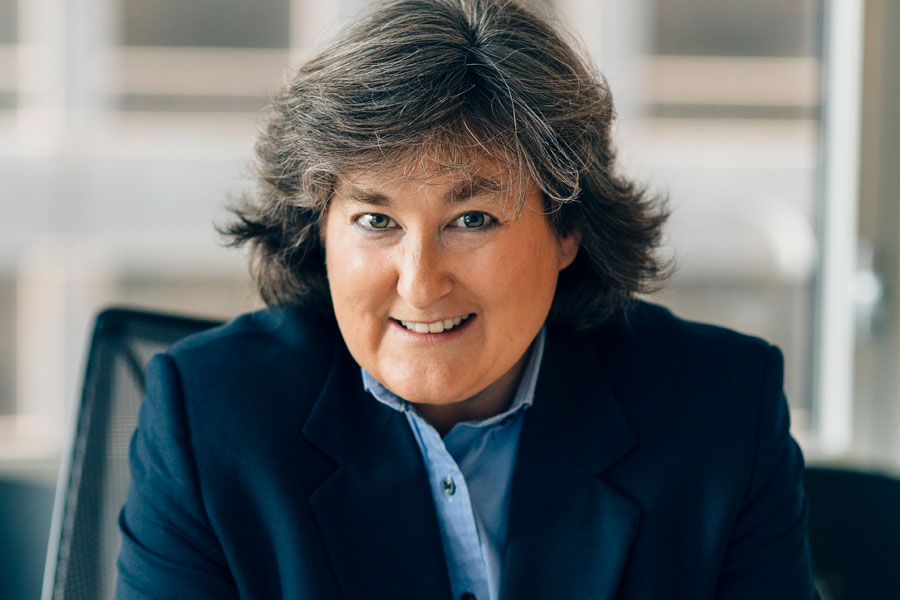
This realization—that the basic discipline of investment research needed to change to include ESG—was a pivotal moment for Erika Karp (pictured above), and a key to success in developing a truly integrated research framework in her pursuit of sustainable and impact investing.

“Economics is a wonderful way to think about, and put a framework around, social constructs,” says Erika, founder and CEO of sustainable investment advisory firm Cornerstone Capital Group. “When you see business structures that are compelling, that kind of training is very important.”

Erika started out at Credit Suisse, and then moved on to lead the Global Sector Research team at UBS, where her interest in ESG analysis developed organically. During this time, she took on leadership of the socially responsible research team and became an early advocate for sustainable, impact investing.

“I got more and more excited about the possibilities of this new investing model, and started speaking not just internally, but outwardly as well.”

That advocacy and expertise led to impressive leadership roles at the top echelons of the impact movement, including a membership in the World Economic Forum, Erika’s work with the United Nations and her association with the Clinton Global Initiative, to name a few.

Operating at that level gives her a true insider’s perspective into impact investing, having established relationships in different areas of the capital markets—including corporations, non-governmental organizations, regulatory agencies, exchanges, wealth asset managers, investment banks, accountants and others.

“Sometimes people say ‘ESG investing,’ but that doesn’t make sense,” Erika argues. “ESG is a discipline, and once you have that discipline, then you can do impact or sustainable investing. It’s a form of enhanced analytical capability. Transparency, improvements in data, the nature of social media, the rapid movement of information; all those factors are at play, too. But ESG is a push towards a more conscious type of investing—and that’s the big deal.”

It all involves having a macro capital markets view. Erika notes it’s not about moving millions or even billions, but trillions of dollars towards impact, especially when considering ESG imperatives like climate change, women’s economic empowerment, animal welfare, education, ocean pollution, potable water and increasing broadband access.

“To give you a sense, in 2017 maybe $400 billion of venture money was moved towards alternative energy. We need to move $1.5 trillion a year if we’re going to achieve anything like the COP 21 [United Nations Framework Convention on Climate Change] objectives. And that’s just for alternative energy. If you can’t get the capital markets working and having money flow towards progress, we won’t be able to do it.”

That macro view is tied directly to the firm’s offerings. She specifically points to Cornerstone’s investment research credibility, on par with that of an institutional investment bank; corporate governance expertise in line with that of an asset manager; and the due diligence/client advisory perspective Cornerstone brings as a registered investment advisor.

“We put those all into one integrated firm, and that’s never been done before,” says Erika. “We don’t think of ESG or impact investing as an asset class. We think it should be completely integral to the investing process. We think it’s all investing, because all investing has an impact—you just don’t necessarily know what it is.” Given this philosophy, Cornerstone is 100% focused on sustainable and impact investing, with most of its clients also targeting competitive financial returns.

That said, donor advised funds and similar philanthropy-focused investment vehicles are critically important “portals” for wealth management clients to access impact investing, Karp adds.

“We are seeing a transformation of traditional philanthropy strategies towards impact investing, which makes sense. But ultimately, we’re going to move even further towards market return investing with social impact.”

As for successful entrepreneurs and business leaders looking to harness the power and size of capital markets to generate a measurable social/environmental benefit alongside a financial return, what advice does she offer?

“They need to combine their pragmatism with their ideology. It has to be both pragmatism and analytics, along with ideology and sensibility. Then you need to find people you really trust. It’s as simple as that.”

If you like this, subscribe here for more stories that Inspire The Future.

The Economics of Sustainable and Impact Investing

It’s an obvious point too many impact investing skeptics still miss.

Far from simply catering to progressive individuals looking to “invest their values,” environmental, social and governance (ESG) factors provide critical insight into a company’s viability and long-term economic performance. It’s not ancillary analysis, it’s critical fundamentals.

If you like this, subscribe here for more stories that Inspire The Future.

This realization—that the basic discipline of investment research needed to change to include ESG—was a pivotal moment for Erika Karp (pictured above), and a key to success in developing a truly integrated research framework in her pursuit of sustainable and impact investing.

“Economics is a wonderful way to think about, and put a framework around, social constructs,” says Erika, founder and CEO of sustainable investment advisory firm Cornerstone Capital Group. “When you see business structures that are compelling, that kind of training is very important.”

Erika started out at Credit Suisse, and then moved on to lead the Global Sector Research team at UBS, where her interest in ESG analysis developed organically. During this time, she took on leadership of the socially responsible research team and became an early advocate for sustainable, impact investing.

“I got more and more excited about the possibilities of this new investing model, and started speaking not just internally, but outwardly as well.”

That advocacy and expertise led to impressive leadership roles at the top echelons of the impact movement, including a membership in the World Economic Forum, Erika’s work with the United Nations and her association with the Clinton Global Initiative, to name a few.

Operating at that level gives her a true insider’s perspective into impact investing, having established relationships in different areas of the capital markets—including corporations, non-governmental organizations, regulatory agencies, exchanges, wealth asset managers, investment banks, accountants and others.

“Sometimes people say ‘ESG investing,’ but that doesn’t make sense,” Erika argues. “ESG is a discipline, and once you have that discipline, then you can do impact or sustainable investing. It’s a form of enhanced analytical capability. Transparency, improvements in data, the nature of social media, the rapid movement of information; all those factors are at play, too. But ESG is a push towards a more conscious type of investing—and that’s the big deal.”

It all involves having a macro capital markets view. Erika notes it’s not about moving millions or even billions, but trillions of dollars towards impact, especially when considering ESG imperatives like climate change, women’s economic empowerment, animal welfare, education, ocean pollution, potable water and increasing broadband access.

“To give you a sense, in 2017 maybe $400 billion of venture money was moved towards alternative energy. We need to move $1.5 trillion a year if we’re going to achieve anything like the COP 21 [United Nations Framework Convention on Climate Change] objectives. And that’s just for alternative energy. If you can’t get the capital markets working and having money flow towards progress, we won’t be able to do it.”

That macro view is tied directly to the firm’s offerings. She specifically points to Cornerstone’s investment research credibility, on par with that of an institutional investment bank; corporate governance expertise in line with that of an asset manager; and the due diligence/client advisory perspective Cornerstone brings as a registered investment advisor.

“We put those all into one integrated firm, and that’s never been done before,” says Erika. “We don’t think of ESG or impact investing as an asset class. We think it should be completely integral to the investing process. We think it’s all investing, because all investing has an impact—you just don’t necessarily know what it is.” Given this philosophy, Cornerstone is 100% focused on sustainable and impact investing, with most of its clients also targeting competitive financial returns.

That said, donor advised funds and similar philanthropy-focused investment vehicles are critically important “portals” for wealth management clients to access impact investing, Karp adds.

“We are seeing a transformation of traditional philanthropy strategies towards impact investing, which makes sense. But ultimately, we’re going to move even further towards market return investing with social impact.”

As for successful entrepreneurs and business leaders looking to harness the power and size of capital markets to generate a measurable social/environmental benefit alongside a financial return, what advice does she offer?

“They need to combine their pragmatism with their ideology. It has to be both pragmatism and analytics, along with ideology and sensibility. Then you need to find people you really trust. It’s as simple as that.”

If you like this, subscribe here for more stories that Inspire The Future.
Every Investment Has Impact. What’s Yours?

For Liesel Pritzker Simmons, there’s no shortcut to raising the bar on impact investment performance. 

As Principal of Blue Haven Initiative, a family office she co-founded in 2012 with her husband Ian Simmons, this millennial is showing how investors of all ages can maximize the positive social and environmental impact of their investments while generating financial returns.

But it isn’t easy.

If you like this, subscribe here for more stories that Inspire The Future.

Whether it is analyzing a portfolio company prospectus or visiting entrepreneurs in sub-Saharan Africa, Pritzker Simmons applies a rigorous portfolio-management lens to every investment—whether for-profit or philanthropic capital—with the goal of aligning financial performance and public benefit. There’s no magic bullet or “Top 10” list for impact investing, says Pritzker Simmons. “It’s a highly personal endeavor, requiring people to think deeply about how portfolios should reflect their values and concerns.”   

As one of the first family offices created with impact investing as its mission and focus, Pritzker Simmons and the Blue Haven team are careful to ensure that philanthropic efforts and investment efforts are coordinated and complementary.  And they are playing the long game. Whether investing in a social enterprise, supporting research and education, or regularly reviewing its public equity portfolio, Pritzker Simmons, her husband and their advisors believe the future of investing will be reshaped by more informed investors.

We recently caught up with Pritzker Simmons. An excerpt of our interview follows:

Amy Bennett: Liesel, thanks again for your time. Let’s jump right in. How do you define impact investing? 

At Blue Haven Initiative, we start from the premise that every investment has an impact—good, bad, social, environmental and financial. From there, we do extensive research and seek to maximize the positive social and environmental impact of our investments while earning a market return. As a result, impact investing requires us to ask a lot more questions and do more rigorous due diligence in assessing the long-term risks and returns of our investments.

We’re a family office and we take this approach because we’re long-term investors. If we don’t consider environmental and social risk and returns, we’re not only putting our financial investments at greater risk, we’re not being good stewards of wealth for future generations. We don’t want to make a mess our kids will eventually have to clean up.

How does your philanthropic giving fit into your impact investment strategy?   

Blue Haven takes a Total Portfolio Management approach to impact investing. That means looking across asset classes and capital types. Our philanthropic capital is an important resource that we use as effectively as possible. We look for opportunities that markets really cannot address—civic engagement in voting, disaster relief, research and education—things that traditional investing typically doesn’t value as much as we think it should.  We prioritize our philanthropic spending for those kinds of opportunities. 

Philanthropy is one tool in the tool belt for impact and we use it for grants as well as concessionary investments where the impact equates to a non-risk-adjusted return. And it is part of a holistic process. We want to make sure that our investment portfolio is not working against our philanthropic goals. There is absolutely no point in funding climate change initiatives with your philanthropic dollars if you’re not trying to reduce your carbon footprint in your investment portfolio.  It doesn’t make any sense. 

We hear a lot about how donor advised funds are growing in popularity and democratizing philanthropy. And we know each other because you use ImpactAssets’ offering, the Giving Fund. How has it played a role in your impact investing?

The Giving Fund is the vehicle through which we do our philanthropic grant making and our concessionary investing. We want to spend time finding great organizations and companies to support without devoting a lot of time on the complexities of philanthropic administration. There’s really a great range of tools that impact investors use these days—from debt to equity, recoverable grants, C4 strategies—and ImpactAssets knows how to help us implement them.

In addition, the organization plays an important role in the impact investing ecosystem. Clients of ImpactAssets are among the most active impact investors in the world.  It’s an innovative and risk-taking community and you can see that in the number of deals that are done and the kinds of funds that are on the platform. It’s inspiring to be a part of it. 

Can you tell us about one of your favorite impact investments that you made through the Giving Fund? 

One example is our support of PRIME Coalition, an intermediary that facilitates very early-stage investments into game-changing climate-change companies. They find companies, vet them, and structure early-stage investments into them.  We’ve supported PRIME through an operating grant as well as providing funding that PRIME used to place equity into another venture. And we’ve also supported them by directly investing convertible debt into RedWave, a company that is developing technology to convert waste heat into renewable electricity. 

Millennials are enthusiastic but often inexperienced when it comes to impact investing. What’s the most important lesson you have learned as a pioneering impact investor that you can pass along to your fellow millennials?

I’ve learned that you can’t expect that impact investing is going to be faster, easier or cheaper than traditional investing.  It’s more complicated, idiosyncratic and rigorous. And that’s okay. If it were easy, everybody would have already done it.  You have to put time and energy and effort into impact investing, but it’s where the most exciting conversations are happening. And I think millennials know that.    

It’s also important for millennial investors to just get started with something and learn as they go. Don’t try to find perfection in one single investment or in one single fund. Don’t try to look for a website that rates every company perfectly and makes impact investing just a click away. Start small, piggyback off of investors that you think are smart, and learn that way. 

If you could deliver one message to investors of any age, what would that message be?

I would appeal to investors to take more responsibility for the total impact of their investments. If an investment has a negative impact socially or environmentally, somebody is going to have to clean up that mess. If not you today, then your grandchildren tomorrow. 

Get into the mindset of long-termism because a thoughtful and rigorous consideration of the environmental and social impact of your investments in the long run is just more informed investing. 

And if you believe that a better understanding of risk is smart in the long term, then you’re more than halfway to being an impact investor.

If you like this, subscribe here for more stories that Inspire The Future.

Why (And How) Should Successful Investors Make an ‘Impact’

Forget esoteric concepts of “doing good.” If you want to know specifically how impact investing positively affects people, communities, the environment and (of course) returns, look to EcoEnterprises Fund.

The fund is one of the first venture funds dedicated to the impact space and can point directly to the number of jobs their investments have generated, the number of suppliers supported and the number of acres conserved. It’s all part of their commitment to openness and transparency to investors.

EcoEnterprises Fund is now raising capital for its third fund, and Tammy Newmark, CEO and Managing Partner, has been a pioneer in the impact investing field since the mid-1980s before the term “impact” was even coined. The interview below offers an overview of how Newmark has left her mark on one of the fastest-growing sectors of financial services, and how sophisticated investors that are interested in the wellbeing of their community and environment can get involved.

If you like this, subscribe here for more stories that Inspire The Future.

What was the pivotal moment that moved you in the direction of impact investing?

It’s hard to say I woke up one day and I decided to make this my career because it has always been part of my body and soul and how I’ve operated as a human being. I worked on Wall Street in investment banking in the mid-1980s, and was part of a team looking at mergers, acquisitions and leveraged buyouts. To maximize the bottom line of one company, we closed a lot of their U.S. operations. Communities that had provided workers for generations suddenly lost a major employer, which had a huge impact on individual livelihoods and their health and well-being.

It was at that point I realized Wall Street was not for me. I returned to business school at Wharton and was part of a group that started the first venture fund that focused on small-scale renewable energy, clean tech and green technologies in developing countries and emerging markets. After a few years there, the Nature Conservancy approached me to run EcoEnterprises Fund.

What inspired you to launch the EcoEnterprises Fund? It’s a little bit like the Kitty Hawk, correct? You were launching something that had never been done before.

Correct, and when I first joined the Nature Conservancy, I realized we had to be able to demonstrate impact, and we of course had to make some money to change minds and provide an example for others to follow. I realized talk was not going to do it. We really needed to perform.

You’ve launched two funds and are bringing a third to the market. What were examples from the first fund that you showed the board in order to prove the concept?

We launched the first fund in 2000. It was the very early stages of the organics movement. We invested in the first organic chocolate company, the first organic flower company and the first organic coffee company, as well as Forest Stewardship Council certified furniture and flooring. It was a great time for us to identify good businesses that we could provide startup and growth capital, so we invested in early first-movers we could scale and that provided business models we could replicate. The second fund took advantage of these opportunities with companies that had moved beyond the startup stage.

Is there any one thing you’re most proud of, or is it more cumulative?

Sometimes folks say, “How could you create impact when you’re working with small businesses?” or working in specific rural areas. In total, we’ve invested in 35 small businesses. One example is Sambazon, a leader in acai, which is a Brazilian berry that’s sustainably harvested and used in sorbets, juice smoothies and similar products.  We invested in the company as a start-up through the first fund, yet the investment committee was so impressed with their growth and impact that we sought to support it again through the second fund, and it is now a multi-million-dollar company. And if you add up one small company, like Sambazon once was, with another small company with another small company, it’s that overall mega-level that, to us, has been really important. You can see the impact of where the philosophies and modus operandi of these entrepreneurs have emanated to the local community. For EcoEnterprises, these ripples of impact are the most heartening and resonate most deeply with us.

What advice would you give successful executives and business owners about how to make an impact like this with their investments?

There are different ways to approach this question. One is that investors can directly invest in companies. Obviously we prefer they invest in EcoEnterprises Fund, but I think that’s a question that needs to be considered by each investor individually. From our standpoint, our biggest mission and mandate relates to environment—the preservation and conservation of the biodiversity—and to encourage and promote the health and well-being of the planet and those local community members that need the support to offset poverty. It’s those investors that are interested in these same objectives who are keen to invest in our funds.

If you like this, subscribe here for more stories that Inspire The Future.


How to Unleash Capital Market Power for Positive Impact

Here’s a bit of a thought experiment. Austria has an organ donation rate of 90 percent, meaning 90 percent of its citizens donate their organs at time of death, while Germany sees less than 15 percent.

Why such a large disparity among neighboring countries? A 2012 study from Stanford University has the answer—the former makes organ donation the default option, while citizens of the latter must “opt-in.”

The findings can be applied to any number of policies to help guide positive social outcomes, and one in particular comes to mind; environmental, social and governance investing (ESG).

“If we can take that same model and apply it to ESG investing, what would it look like in the capital markets?” Matthew Weatherley-White (pictured above) rhetorically asks. “How could that potentially change our perception of the challenges embedded in ESG investing?”

Weatherley-White is managing director of The CAPROCK Group, a firm that provides family-office wealth management and outsourced chief investment officer services. He says issues like natural resource efficiency, climate risk and the potential cost of carbon are on everyone’s mind, yet the amount of capital currently allocated to ESG and impact investing is relatively small.

An opt-out model would make the process easier and “a lot less threatening.” And even though direct ESG market penetration is small, many assets mangers might not self-identify as impact investors even though they incorporate its precepts, something Weatherley-White refers to as “ESG creep.”

Which is important, because ESG and impact investing can unleash capital markets for positive impact, he argues, calling it “the most powerful optimization vehicle on the planet.”

Corralling Capitalism

When attempting to “corral such a force” to realize the benefits of impact investing, Weatherly-White points to three critical areas:

  1. Models of effectiveness: ESG asset managers have strong investment performance. When enough “gravitational pull” occurs around a successful impact strategy, it shifts the capital market’s perspective about the strategy.
  2. Regulation: Rather than laws to enforce the application of impact or ESG, regulation means internalizing cost structures that traditionally have been externalized. “An example might be coal,” says Weatherly-White. “We know burning coal leads to increased health costs in communities immediately downwind—and increased environmental costs. Those are known costs, and they’re borne by taxpayers, so they are externalized to the cost of the commodity. Internalizing those costs” can change investment prospects.
  3. Paradigm shift: More Austria and less Germany, meaning the aforementioned opt-out model as the new standard. When combined with more education to combat the widespread (and incorrect) notion that investors must sacrifice return to realize a positive social or environmental impact, these changes will significantly increase ESG adoption. “While one might intentionally accept concessionary returns in order to build a new market, or test a pre-scale service delivery model, one does not need to sacrifice performance in pursuit of impact,” he explains.

Incremental and Total Impact

As a longtime champion of ESG and impact investing, Weatherly-White also recognizes that impact investing is not absolute. Initially, a percentage of assets can be allocated that corresponds with investor comfort. This often leads to interesting revelations, and the behavioral choices that naturally follow.

“At some point, investors realize they’re trying to solve problems with one part of the portfolio that the rest of their portfolio is creating,” he notes. “What we’ve seen is that once investors start down the ESG path, they often continue in that direction, and move toward a complete allocation.”

While some investors are 100% impact investors from the start, performance drives others to increase their allocation. “Once they see returns generated in a responsible way, they ask themselves why they wouldn’t want to do more of it, and it becomes a really different conversation.”

Beyond investment return, investors want to know if they are truly making an impact. This second piece, benchmarking social and environmental impact, is more difficult to measure. Weatherley-White turned to tech for a solution, creating an impact reporting platform called Impact Portfolio Assessment and Reporting (iPAR).

“We require that our impact managers use it in tracking their Impact Reporting and Investment Standards (IRIS) metrics, which include the number of tons of carbon not generated, or solar power used, or whatever it might be.”

Just Do It

For successful entrepreneurs, executives and investors looking to enter the impact investing space, Weatherly-White says opportunities are growing rapidly in a variety of sectors.

“From a personal perspective, the best advice I would give is just get started,” he says. “There is no performance sacrifice required. Take a step, and there’s lots of places to get started. It’s not intimidating once you’ve taken the first step.”

For those looking to run their business in a sustainable manner, he suggests the B Lab Impact Assessment, an online tool to help business owners measure their organizations’ social and environmental impact.

“It gives a window into best practices in sustainable business management,” says Weatherly-White. “You don’t have to get all the questions right immediately, but pick a few things you can improve on over the next year and steadily work toward incorporating them.”


Impact Investing for the 99%: A New Path to Mainstreaming

All investments have impact. But to-date, impact investing has been largely limited to small, private companies, and accessible only to accredited investors.

What if it were possible for normal folks to easily allocate their retirement portfolios in such a way that maximized the impact of their investments on issues they care about – e.g. climate change, gun control, gender diversity, etc? Such an innovation would unlock vast amounts of capital and consciousness, catalyzing the true mainstreaming of impact investing.

Individual investors are currently being left out of powerful movement. In public equities, over US $1 Trillion has moved into Socially Responsible Investing (SRI) strategies annually over the last 5 years [1]. Yet only a small fraction appears to be owned by retail investors. This despite the fact that according to Morgan Stanley, over 70% of individual investors now say they want their money to align with their values [2]. Given this chasm in even the most liquid and marketable asset classes, small wonder that impact investors have focused instead on getting big checks from Limited Partners (LPs).

But this “missing retail” segment – the amount of SRI assets individuals should hold if responsible investing had the same proportional ownership structure as the normal stock market – represents an approximate $3.6 Trillion opportunity in the U.S. alone.

Here’s how we can close the gap:
The first blockage to mainstreaming is lack of awareness. Most financial intermediaries have stood as a roadblock, with some statistics saying fewer than 10% of advisors, for example, are highly interested in sustainable investing solutions [3]. There is certainly no shortage of sustainable fund options and other tools for investors to start driving change. But the incentives of the Wall Street food chain generally militate against transparency and customization. Rather, they promote a “leave it to the experts” mentality, so that they can continue to sell preset portfolios that protect their margins.

Fortunately, technology makes it possible to dis-intermediate agents who are standing in the way, and to customize portfolios that invest in companies whose impact is consistent with each person’s values. This is our approach at OpenInvest. By bypassing the entire “fund” model and algorithmically constructing each user’s portfolio, investing once again becomes personal, transparent, and impactful. Users can now fully customize their investment portfolios and retirement accounts to support the things they care about.

But this is just the beginning. By vertically integrating and replacing middlemen with computing power, individual investors can now take new actions any time they want – in response to real-world events – while their portfolios always stay balanced and tracking the market. They can have full transparency into what they own, they can vote in their own shareholder resolutions, and they can see rigorous reporting of their real-time social and environmental impacts.

To mainstream, we need to make responsible investing easy, visceral, and social. That requires advanced technology, but then translating that technology into user experience. We can’t claim to have fully cracked that nut, but we’re making sufficient strides. OpenInvest has experienced nearly 20% week-over-week growth since our launch at SOCAP16 in September. It’s clear that the demand for impact investing is real and all around us.

Innovating in public equities is the obvious first step to engaging individual, unaccredited investors. But it’s also the way to build a sufficient demand pipeline to incentivize the impact investing community to open up. Starting this year, we will begin swapping out pieces of portfolios with alternative, impact investing products that we know users care about.

There are already impact products in the retail market – from new crowdfunding equity platforms to Calvert Community Notes. But for the motivated individuals who buy these, what does it mean for their diversification? Are you overweight solar, Indonesia, your local community? We believe the key to liberating unaccredited impact investors is to start from the top-down, with a fully balanced responsible portfolio. We can then offer to replace slices with deeper impact products, while always maintaining portfolio-level diversification. As such, we welcome partners from the SOCAP community to help get products onto our platform for our growing base.

To be clear: retail investors of the future will enjoy similar performance and diversification as their parents. But their holdings will cut across impact asset classes, as they see and feel where their money is going and how they are shaping the world every day.

Following Trump’s election and his subsequent actions, there’s more demand than ever to find new channels to drive change. Yet while they picket in the streets and write monologues on Facebook, individuals are letting their most powerful weapon – their assets – collect dust. The key is to start by giving public markets back to the public. Then we can create a pipeline of capital to help scale impact investing, while in turn restructuring personal portfolios to truly engage our communities and the world. Through a combination of technology and psychology, we now have the tools to democratize capital. Let’s cross that tipping point together.

Impact Investing for the 99%: A New Path to Mainstreaming

All investments have impact. But to-date, impact investing has been largely limited to small, private companies, and accessible only to accredited investors.

What if it were possible for normal folks to easily allocate their retirement portfolios in such a way that maximized the impact of their investments on issues they care about – e.g. climate change, gun control, gender diversity, etc? Such an innovation would unlock vast amounts of capital and consciousness, catalyzing the true mainstreaming of impact investing.

Individual investors are currently being left out of powerful movement. In public equities, over US $1 Trillion has moved into Socially Responsible Investing (SRI) strategies annually over the last 5 years [1]. Yet only a small fraction appears to be owned by retail investors. This despite the fact that according to Morgan Stanley, over 70% of individual investors now say they want their money to align with their values [2]. Given this chasm in even the most liquid and marketable asset classes, small wonder that impact investors have focused instead on getting big checks from Limited Partners (LPs).

But this “missing retail” segment – the amount of SRI assets individuals should hold if responsible investing had the same proportional ownership structure as the normal stock market – represents an approximate $3.6 Trillion opportunity in the U.S. alone.

Here’s how we can close the gap:
The first blockage to mainstreaming is lack of awareness. Most financial intermediaries have stood as a roadblock, with some statistics saying fewer than 10% of advisors, for example, are highly interested in sustainable investing solutions [3]. There is certainly no shortage of sustainable fund options and other tools for investors to start driving change. But the incentives of the Wall Street food chain generally militate against transparency and customization. Rather, they promote a “leave it to the experts” mentality, so that they can continue to sell preset portfolios that protect their margins.

Fortunately, technology makes it possible to dis-intermediate agents who are standing in the way, and to customize portfolios that invest in companies whose impact is consistent with each person’s values. This is our approach at OpenInvest. By bypassing the entire “fund” model and algorithmically constructing each user’s portfolio, investing once again becomes personal, transparent, and impactful. Users can now fully customize their investment portfolios and retirement accounts to support the things they care about.

But this is just the beginning. By vertically integrating and replacing middlemen with computing power, individual investors can now take new actions any time they want – in response to real-world events – while their portfolios always stay balanced and tracking the market. They can have full transparency into what they own, they can vote in their own shareholder resolutions, and they can see rigorous reporting of their real-time social and environmental impacts.

To mainstream, we need to make responsible investing easy, visceral, and social. That requires advanced technology, but then translating that technology into user experience. We can’t claim to have fully cracked that nut, but we’re making sufficient strides. OpenInvest has experienced nearly 20% week-over-week growth since our launch at SOCAP16 in September. It’s clear that the demand for impact investing is real and all around us.

Innovating in public equities is the obvious first step to engaging individual, unaccredited investors. But it’s also the way to build a sufficient demand pipeline to incentivize the impact investing community to open up. Starting this year, we will begin swapping out pieces of portfolios with alternative, impact investing products that we know users care about.

There are already impact products in the retail market – from new crowdfunding equity platforms to Calvert Community Notes. But for the motivated individuals who buy these, what does it mean for their diversification? Are you overweight solar, Indonesia, your local community? We believe the key to liberating unaccredited impact investors is to start from the top-down, with a fully balanced responsible portfolio. We can then offer to replace slices with deeper impact products, while always maintaining portfolio-level diversification. As such, we welcome partners from the SOCAP community to help get products onto our platform for our growing base.

To be clear: retail investors of the future will enjoy similar performance and diversification as their parents. But their holdings will cut across impact asset classes, as they see and feel where their money is going and how they are shaping the world every day.

Following Trump’s election and his subsequent actions, there’s more demand than ever to find new channels to drive change. Yet while they picket in the streets and write monologues on Facebook, individuals are letting their most powerful weapon – their assets – collect dust. The key is to start by giving public markets back to the public. Then we can create a pipeline of capital to help scale impact investing, while in turn restructuring personal portfolios to truly engage our communities and the world. Through a combination of technology and psychology, we now have the tools to democratize capital. Let’s cross that tipping point together.

Leveraging Technology for Social and Environmental Impact with Geunbae

Geunbae Lee is an Impact Design Fellow activating around human-computer interaction.

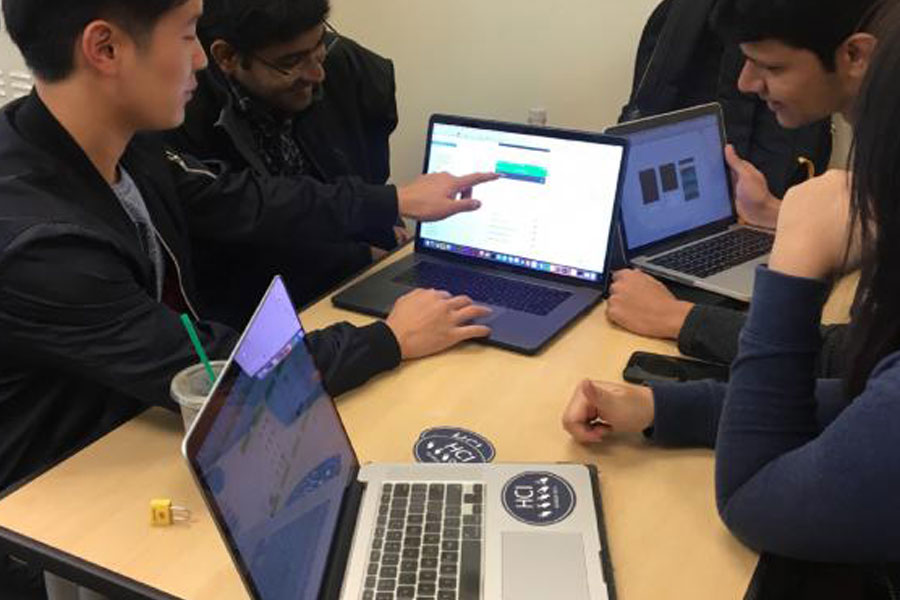
He, along with his team members Jayanth Mohana Krishna, Jessica Tsui, and Nishant Panchal are working on a project focused on home automation. They are creating a web platform for people to manage their connected devices through the Internet of Things. This project will reduce energy by helping people tailor their energy use to exact needs and will impact the old or disabled who run physical risks by forgetting to turn off stoves or feeling for switches in the dark. 

Learn more about his journey to designing for impact:

Why did you first decide to take action around impact design?
The reason I got into HCI and UX is because I wanted to make change in my community. Most of my previous and current projects revolve around trying to create a better user experience and to discover potential solutions that are far better than the ones that currently exist. I believe that the moment I put my feet forward into this field, I start to make an impact to the community and to individuals who value the products I shape. I thought applying for the Impact Design Fellowship was the next step for me. 

How did you know this was the right project for you to work on?
Frankly, I don’t think there’s any right or wrong projects to begin with as long as there’s purpose and problems that we want to tackle. I think it’s very important to have a clearly defined area and topic that the team is going for because without it, it’s like sailing a boat without a compass in your hands. In order for me and my teammates to figure out what kind of impact we should make in the community, we went through numerous brainstorming and team meeting sessions which helped out a lot. 

What do you think is the most critical issue facing the world today?
One of the critical issues I’ve personally discovered is cultural issues. There are cultural discriminations and gaps between the people in the community which are some of the issues that I’m very interested in solving. As an international student growing up in Canada, South Korea, and the United States I’ve experienced these problems, which led me to become more thoughtful about the issues. 

What advice would you give to someone launching their own project at school?
This really depends on what kind of project you and your most focused team members are trying to accomplish. For me, I initially wanted to make a project with 4 people in my team who could really focus and craft a good solution. To be honest, it made us stronger, more united, and definitely helped us to focus on each of our tasks as a team. I recommend to people looking to launch a project to first find out what kind of project they want to do. As you and your initial members brainstorm, you will definitely see what you need, who you will need, and why.

If you were given an extra hour every day, what would you do with it?
If I was given an extra hour every day, I would write blogs about my experience in the design world and spread my knowledge to others who are working hard like I am. I often write on Medium and so far I’ve gotten great feedback from students and designers all over the world. Writing is something that I don’t feel confident with because English is my second language, but I believe it’s an important skill to have. By practicing through writing blog posts, it will help me get to know more people and help for my own career development. 

Original Story: Net Impact


Leveraging Technology for Social and Environmental Impact with Geunbae

Geunbae Lee is an Impact Design Fellow activating around human-computer interaction.

He, along with his team members Jayanth Mohana Krishna, Jessica Tsui, and Nishant Panchal are working on a project focused on home automation. They are creating a web platform for people to manage their connected devices through the Internet of Things. This project will reduce energy by helping people tailor their energy use to exact needs and will impact the old or disabled who run physical risks by forgetting to turn off stoves or feeling for switches in the dark. 

Learn more about his journey to designing for impact:

Why did you first decide to take action around impact design?
The reason I got into HCI and UX is because I wanted to make change in my community. Most of my previous and current projects revolve around trying to create a better user experience and to discover potential solutions that are far better than the ones that currently exist. I believe that the moment I put my feet forward into this field, I start to make an impact to the community and to individuals who value the products I shape. I thought applying for the Impact Design Fellowship was the next step for me. 

How did you know this was the right project for you to work on?
Frankly, I don’t think there’s any right or wrong projects to begin with as long as there’s purpose and problems that we want to tackle. I think it’s very important to have a clearly defined area and topic that the team is going for because without it, it’s like sailing a boat without a compass in your hands. In order for me and my teammates to figure out what kind of impact we should make in the community, we went through numerous brainstorming and team meeting sessions which helped out a lot. 

What do you think is the most critical issue facing the world today?
One of the critical issues I’ve personally discovered is cultural issues. There are cultural discriminations and gaps between the people in the community which are some of the issues that I’m very interested in solving. As an international student growing up in Canada, South Korea, and the United States I’ve experienced these problems, which led me to become more thoughtful about the issues. 

What advice would you give to someone launching their own project at school?
This really depends on what kind of project you and your most focused team members are trying to accomplish. For me, I initially wanted to make a project with 4 people in my team who could really focus and craft a good solution. To be honest, it made us stronger, more united, and definitely helped us to focus on each of our tasks as a team. I recommend to people looking to launch a project to first find out what kind of project they want to do. As you and your initial members brainstorm, you will definitely see what you need, who you will need, and why.

If you were given an extra hour every day, what would you do with it?
If I was given an extra hour every day, I would write blogs about my experience in the design world and spread my knowledge to others who are working hard like I am. I often write on Medium and so far I’ve gotten great feedback from students and designers all over the world. Writing is something that I don’t feel confident with because English is my second language, but I believe it’s an important skill to have. By practicing through writing blog posts, it will help me get to know more people and help for my own career development. 

Original Story: Net Impact


0