

7 Sustainable Investment Tips

Socially responsible investing is a global phenomenon. It relates to any investment strategy which considers both financial return and social good to bring about change. We asked seven experts what makes an investment sustainable and how money can be a force for good.

If you like this, subscribe here for more stories that Inspire The Future. 

1. Brigitte Baumann, Go Beyond Early Stage Investing.

I consider an investment sustainable if the products and services it provides, and the way it builds itself, balance the “3Ps”: Planet, people and profit. Despite what some may think, profit can coexist well with social and environmental impact. In my investing business, I evaluate social impact companies in the same way I evaluate all other companies: To be sustainable they must have sources of revenue to grow and sustain their mission. The difference being, of course, that social impact companies must also deliver positive social change in addition to the financial return it provides to investors.

Investments from business angels such as myself can turn money into a force for social good. One of the big reasons I’m a business angel is because I can contribute to economic growth and towards a better world. I do this by choosing to invest in entrepreneurs who address critical global challenges while considering the needs of people, the effects on the planet and how they will create a profit in everything they do.

Angel Investing is the combination of art, science and psychology. Go with your instinct.

One of my investments, Barefoot Power, that produces small solar lighting systems for developing countries, is an example of something that allows me to align my money with my values. I would encourage investors to build a diversified portfolio and ensure they also add value to the entrepreneurs they fund by going beyond the money. Keep some money aside to continue supporting entrepreneurs who are doing well – financially and creating positive change in the world.

Approach investing with the realization that there will always be changes in markets and societies that affect a sound investment: world events, politics, high or low valuations and the time to exit. Also, value systems will always change, as we’re currently seeing with the rise of the shared economy and advances in technology. Artificial intelligence is an example of something currently influencing how we invest.

www.go-beyond.biz


2. Ron Cordes, Cordes Foundation.

An intentional focus on measuring the environmental, social and governance metrics of an investment qualifies it to be called a sustainable investment. Of course, all the other traditional financial metrics are important too. Social impact investment can realize profits in the same way that traditional investments do – investing in a great entrepreneur with a promising business model, or a great team of fund managers with a strong pipeline and investment process. I first ask: “Is this an encouraging ‘investment,’” then dig deeper into the measurement of “social impact.” If impact doesn’t exist, I look at how we might add it.

If we don’t pay enough attention to the investment part, we could end up making a disguised charitable grant from our investment portfolio. When we created the Cordes Foundation in 2006, one of our missions was to prove that capital can deploy in multiple ways to serve a mission – in our case global poverty and the economic empowerment of women. We believe that the 100% impact portfolio we’ve built and managed is a great example of how capital can be a social force for good.

Be fearful when others are greedy, and greedy when others are fearful. – Warren Buffett

In the social impact space, great intentions and a virtuous model to create social impact are not substitutes for a well-constructed business model – you don’t get a “pass” on all the challenges of the capital markets just because you’ve incorporated a social purpose with an investment. We’re entering a period where governments, in the U.S. and abroad, are likely to be investing less in addressing social and environmental issues. It’s imperative for impact investors to “step up” and accelerate the flow of capital into investments that will help solve the looming global challenges we are all sure to face.

www.cordesfoundation.org


3. Tim Freundlich, Impact Assets.

At best, sustainable investments are a holistic set of commitments that run from a supply chain, to value chain, to product or service, with deep commitments to employees, investors, and customers around creating value for society and the environment. Other than the ‘old fashioned way’ of creating profit, impact ventures have added additional layers of opportunity. Increased customer loyalty can be monetized, and risks can be reduced by applying good sustainability practices. Greater long-term profitability is possible because of the resilience these types of investments bring.

When you buy breakfast, be aware of who is a chicken and who is a pig. Chickens have given eggs. Pigs have given bacon from their hides. There’s a difference. Be aware of ‘skin in the game’ when assessing an entrepreneur and the investor ecosystem.

  When I aligned all my investment assets with my values, I created a two-fold “good.” One was at a portfolio level, by actively getting behind ventures that matter, building companies that enabled the flow of capital towards this good. Secondly, I created physical spaces in which social entrepreneurs and investors could excel and connect, such as at Impact Hubs and the SOCAP Conference. On a personal and family level, I started a conversation about how to be in sync with the world and what kind of world we wanted to leave to our children. Nothing trumps tenacity and quality entrepreneurs. Not the intention of how much impact you’d like to create, not a business idea, not even a ton of capital.

Execution, creative course-correction, and staying power are what makes the difference between success and failure. My personal mantra is increasingly that I should be “all in” for impact. This sentiment isn’t a tentative commitment. The context and times we live in drive this. The clock is ticking on climate and injustice. The value of time and the urgency of positive impact demands a departure from the cautious – to a stance of immediacy.

www.impactassets.org


4. Shazi Visram, Happy Family.

Sustainable investment should be a business model that creates efficiencies, rather than being a drain on natural resources. It must avoid creating challenges for the future, and rather help solve problems. Impact investments must be evaluated with the same competitive metrics of a typical business yet must also deliver a Social Return on Investment (SROI) – something harder to create.

Approach it in the same way as if you’d decided to set higher standards for yourself every day; improving and evolving. Pure-hearted, wealthy individuals, who are deployed to better our world through philanthropy to invest in businesses, will drive progress for social good. Invest with your mind and gut. If it’s too good to be true, it usually is.

If it’s not lucrative enough to meet criteria you need for your portfolio, don’t use your investment allocations as charity. Investors should focus on authenticity in the businesses they support. This will drive a higher success rate with millennials who demand transparency and purity of purpose.

www.happyfamilybrands.com


5. Kristen Bauer & Stephanie Cohn-Rupp, Threshold Group.

An investment can only be “sustainable” if it has positive social, environmental or governance outcomes beyond a financial return. Typically, impact investments share two characteristics: intentionality and measurable performance.

Seeking profit through social impact investment is the same as in traditional investing, with the difference being that due diligence extends beyond traditional investment characteristics and is profoundly influenced by the unique values of
the investor.

Money can be a force for good in many ways. The best example I can currently give is the way investors have reacted to the approval of the controversial Dakota Access Pipeline. Concerns around negative environmental impact have caused many socially responsible asset owners to act. They have divested and withdrawn their money from the financial institutions that support the pipeline.

Spend less than you earn. Recognize the power of saving and compounding interest. Utilize retirement plans for a tax advantage and look to use a myriad of assets (time, treasure, talent, action) to make this world a better place.

Financial success looks different to different people and depends on individual financial goals and personal values. The best advice I can give is to be very thorough in your choice of financial advisor – it can be life-changing if you get it right.

We’re expecting an increased volatility in the financial markets for the latter part of this year, yet values systems are changing too– for the better. The 2017 Annual Impact Investor Report produced by the Global Impact Investing Network states that capital invested in social impact will increase by 17% this year. We see this as a great reflection of investor values.

www.thresholdgroup.com


6. Fran Seegull, U.S. Impact Investing Alliance.

A sustainable investment should consider measurable social and environmental impact as well as financial returns. The impact can come in a variety of forms – quality jobs, housing, clean energy, and water or boards and management with diversity. An excellent example of a private company creating impact is Revolution Foods that serves more than one million affordable, healthy school lunches every week in public, charter and private schools.

This example shows how capital can be a force for good, but the long-term financial imperative to invest is growing too. With a global population of 9 billion people forecast for 2050, increased effects of climate change and dwindling natural resources, we should see stakeholder value increasingly driving shareholder value – not detracting from it. Grants and government aid alone are insufficient to meet these challenges.

Women and millennials stand to benefit from a $40 Trillion transfer of wealth in coming decades.

We need to harness the power of the capital markets and investment portfolios. Fortunately, the growing impact investment movement, with investments of more than US$8 trillion in the U.S., may be a solution. Impact investing now makes up US$1 of every US$5 investment dollars.

Women and Millennials stand to benefit from a $40 trillion transfer of wealth in coming decades, and 3/4 of them say they will invest in things that align with their values. The truth is that all investments have positive and negative impacts and it can be difficult to identify and account for them.

@franseegull


7. Roger Ying, Pandai.

To make an investment sustainable we look at the core business model behind it: revenue, costs and the cost of capital. We ask if it can turn a profit and continue over a period, keeping all stakeholders in the investment happy. Social impact investments tend to lead to the ‘forgotten’ markets. In China, for example, this might be the rural farmers, which usually means a highly underserved, inefficient market with weak competition. In these type of markets, there is decent profit to be found, although it’s mostly about controlling the risk.

Look at your risk tolerance, relative to the reward.Understand where you are and what type of investment risk you’re prepared to take at specific stages of your life.

As an example, we may finance organic farmers in Yunnan province with a US$15,000 loan, which in one year can return a US$15,000 net profit. Compare this to the US$3,500 a year they make from low-level jobs, and it’s evident that this formula creates poverty alleviation. The investment also helps provide high-end, organic pork that fetches a premium in cities. The biggest investment tip I can give is that you should understand the asset you’re investing in from the ground up; understand the fundamentals of the asset.

This year is a fascinating one. There are many political changes and geographic uncertainties. Value systems are changing, and we should be asking ourselves about the intrinsic value of money in our bank accounts – affected by central bankers inflating the world economy. Look for assets that create real value or have intrinsic value over a length of time.

www.pandai.cn

If you like this, subscribe here for more stories that Inspire The Future. 
David Beckham: Malaria Must Die – so Millions Can Live

British soccer legend David Beckham put his star-power to use on Wednesday in a bid to reinvigorate the fight against malaria under the slogan “Malaria must die – so millions can live”.

The retired athlete joined ranks in a campaign by Malaria No More UK, a British charity, to star in a short film in which he is caged in a glass box and swarmed by mosquitoes.

If you like this, subscribe here for more stories that Inspire The Future.
The stunt is a reference to the way malaria is transmitted through the bite of the blood-sucking insects.

“These insects are annoying in places like the U.K. but in many parts of the world a mosquito bite is terrifying and deadly,” Beckham said in a statement.

Despite successes in recent years, malaria continues to kill about 445,000 people a year, according to the World Health Organization (WHO).

“This is totally unacceptable,” said Beckham, a member of Malaria No More UK’s leadership council and a Goodwill Ambassador for the U.N. children’s agency UNICEF.

The former England soccer captain, who retired from the game in 2013, remains a global celebrity. During his career he played as a midfielder for top clubs including Manchester United and Real Madrid.

The “Malaria must die” campaign is particularly focused on pressuring leaders of countries in the Commonwealth, a 52-member grouping including Britain and most of its former colonies, to adopt policies aimed at eliminating the disease.

The WHO last year warned that progress in the fight against malaria had stalled amid signs of flatlining funding and complacency that the disease was less of a threat.

In its most recent World Malaria Report, the WHO said malaria infected around 216 million people in 91 countries in 2016, an increase of 5 million cases over the previous year.

The vast majority of deaths were in children under the age of five in the poorest parts of sub-Saharan Africa.

By Sebastien Malo @sebastienmalo, Editing by Robert Carmichael.

If you like this, subscribe here for more stories that Inspire The Future.

Erasing Gender & Racial Pay Gap Requires a Uniform Approach

Today marks the launch of Mind The Gap, an initiative to bring together organizations who have done the hard work of studying and correcting pay gaps.

Never before has there been a public, generally accepted methodology for measuring pay gaps across race, gender, or any other demographic segment. Mind the Gap’s methodology and implementation guide will be made available for free to organizations and companies of any size to measure and eradicate internal pay gaps.

If you like this, subscribe here for more stories that Inspire The Future.

Workplace issues such harassment, inequality, social responsibility, and the impacts of automation on the workforce continue to dominate the news. As a serial entrepreneur and CEO who led an effort to measure and fix the gender pay gap at my last company, I’m heartened by the increased awareness of the need to close the gender and racial pay gaps.

Most Americans have heard about the uproar over the pay discrepancy during the reshoot of All the Money in the World (which, oddly enough, was caused by the additional workplace issue of sexual harassment stemming from Kevin Spacey). Hollywood pay discrimination makes news when Michelle Williams is paid less than Mark Wahlberg, but similar wage discrepancies occur on a large scale in almost every organization with employees. To correct this, it needs to be accurately measured, and include not just men and women but also consider data on race, age, religion, and sexual orientation.

The Equal Pay Act of 1963 made it illegal to pay differently on the basis of gender. However, because such cases are nearly impossible to prove, the burden still lies with the employer to ensure equity in compensation. Some companies, like Salesforce.com, have undertaken deep compensation reviews and determined that indeed there was an underlying bias towards paying women less than men. After the first review in 2015, the company bravely disclosed it had uncovered $3 million in gaps which needed to be closed.

Surprisingly, in 2017 Salesforce.com conducted another study and disclosed another $3 million in gaps. This was not from unintended bias but because it had also acquired many other companies with pay gaps – illustrating the pervasiveness of this problem. While this is progress, no doubt, we don’t know what methodology was used by Salesforce.com in documenting the scope of the problem.

Without a uniform, universally accepted, and publicly available measurement methodology, companies large and small that want to eradicate the pay gap are hard-pressed to know where to start. There’s more to this than signing the White House Equal Pay Pledge or Glassdoor Equal Pay Pledge, or even he most recent announcement by Citigroup modeling disclosure and correction of the problem. Bloomberg’s new Gender Equality Index.

Bloomberg’s new Gender Equality Index includes a group of major companies committed to focusing on gender equality, but details on what the index entails are lacking. The fundamental problem is that none of these companies disclose how pay gaps are measured. And accurate measurement is no simple task.

Where to Start
To ensure equal pay for equal work, organizations must consider factors such as tenure, geography, experience and most importantly, performance. These adjustments or considerations start to cloud the picture and make it difficult for an organization to perform a simple quantifiable study. This begs the question: How are these organizations undertaking the hard work of ensuring equal pay? Salesforce founder and CEO Marc Benioff told CNN said that it’s as easy as pressing a single button, but I beg to differ. Like any human issue, it is very difficult for numbers to tell the whole story, especially without rules as to how those numbers are generated.

There is a reason the accounting industry abides by Generally Accepted Accounting Principles (GAAP). Simply put, the numbers must be normalized across companies, organizations, and sectors so that they can be compared and trusted. No such accepted methodology exists currently for pay gap reviews, until now.

GoodWell and Glassdoor both make methodologies publicly available which allow for the institutional evaluation of pay gaps free of charge. These methodologies may not be perfect (yet); however, they are consistent, transparent places to start in creating more fair, ethical and humane organizations. More work is needed to gain universal acceptance, but our open-source model is an excellent place to start.

Companies like Salesforce, Adobe and Citigroup, have done the hard work of developing methodologies, but because they have not shared them with the world, employees, peer companies, and the general public are left to guess how pay disparity is calculated. Mind the Gap will collect and confidentially analyze all of the methodologies submitted to us. This initiative will highlight the similarities and differences in the methodologies and convene experts to produce our final methodology which will be publically available to anyone, free of charge.

Let’s eliminate the confusion over how to measure pay gaps and get down to the hard work of eliminating them.

If you are interested in contributing your organization’s methodology or joining the working group, please complete this form.

If you like this, subscribe here for more stories that Inspire The Future.

Humans of Fashion Foundation Wants to End Sexual Abuse

A global platform to discuss prevalence and effects of sexual harassment and assault in the fashion industry, and connect those who have experienced it with support.

Fashion model Kristina Romanova and singer-songwriter/lawyer, Antoniette Costa, have cofounded a NGO that works to create a global platform that informs and connects those in the fashion industry who have experienced sexual harassment, abuse and assault. The pair offer pro bono and subsidized legal professionals, counselors and support.

If you like this, subscribe here for more stories that Inspire The Future.

The Humans of Fashion Foundation aims to create a safer workplace for all professionals in the fashion industry, from models and designers to stylists and makeup artists. By creating an app that delivers real-time reporting, the Humans of Fashion Foundation hopes to bring a revolutionary approach to the problem of sexual harassment and assault in the industry, and to start the conversation around this globally prevalent issue. Romanova and Costa want to encourage a fashion industry that is safer and to encourage a mentoring relationship between fashion veterans and younger generations.

“With recent high profile campaigns such as #metoo and #timesup, social media has become an empowering tool to facilitate a collective voice,” says Romanova. “Every human deserves to have his or her voice heard. Every human deserves to have his or her rights protected. But not everyone can afford it. Models arrive at bustling global fashion centers from diverse backgrounds, with diverse languages, big hopes and open hearts. They deserve good friends who will listen and offer them advice if they run into a problem.”

“In addition to the financial burden, not everyone knows how to navigate the system to get the help they need,” addsCosta. “We want to be the welcoming connection to assure dreams don’t end up on the floor – like a quick change of clothing before hitting the runway.”

Launching just before NY Fashion Week, the idea has attracted support from fashion industry leaders such as Sarah Goore Reeves, Paul Schindler, Panache Desai, and Caron Bernstein, who have all joined the advisory board.

If you like this, subscribe here for more stories that Inspire The Future.

Swarovski Puts The Sparkle Into Water Conservation

Water has always been at the heart of the Swarovski story since it was founded in 1895. The family-run company relies on small-scale hydro-electric power at its manufacturing site in the Austrian Alps. The crystal manufacturer recently made a film called “Waterschool,” that teaches young people the importance of fresh water.

Following its premiere at the Sundance Film Festival, Swarovski presented its compelling new film ‘Waterschool’ during the World Economic Forum Annual Meeting, followed by a panel discussion about empowering the next generation to conserve our world’s most precious resource.

If you like this, subscribe here for more stories that Inspire The Future.

The film shines a light on one of the greatest issues facing mankind: safeguarding the continuing supply of fresh water. The documentary follows the experiences of several young female students who live along six of the world’s major rivers – the Amazon, Mississippi, Danube, Nile, Ganges and Yangtze – and celebrates the work of Swarovski Waterschool, a community investment program set up in 2000 that has reached almost half a million young people through 2,400 schools worldwide.

To make ‘Waterschool’, a team of seven UCLA School of Theater, Film and Television graduate students travelled across five continents to capture the moving stories of these young girls, giving voice to the generation for whom the preservation of clean water is most pressing. Vivid, lyrical, and often poignant, the film is a reminder of the power of education – with the support of the business community – to transform lives and tackle the world’s pressing environmental issues.

‘Waterschool’ reveals how the teachers and guides of Swarovski Waterschool are empowering the growing citizens of the new era to take care of the world’s most valuable resource. The result is a powerful call to arms – for teachers and educators as much as young people themselves. As the students discover how best to husband and protect water, so they pass on their insights to their peers, parents and grandparents. 

The Swarovski family set up Waterschool in 2000 to teach young people about the importance of fresh water, and how to use it, conserve it and cherish it. The company recycles 70% of the water it uses to produce crystal and their global education program has reached 461,000 children on the world’s greatest rivers.

If you like this, subscribe here for more stories that Inspire The Future.

New Zealand PM Joins Five Other ‘Power Mums’

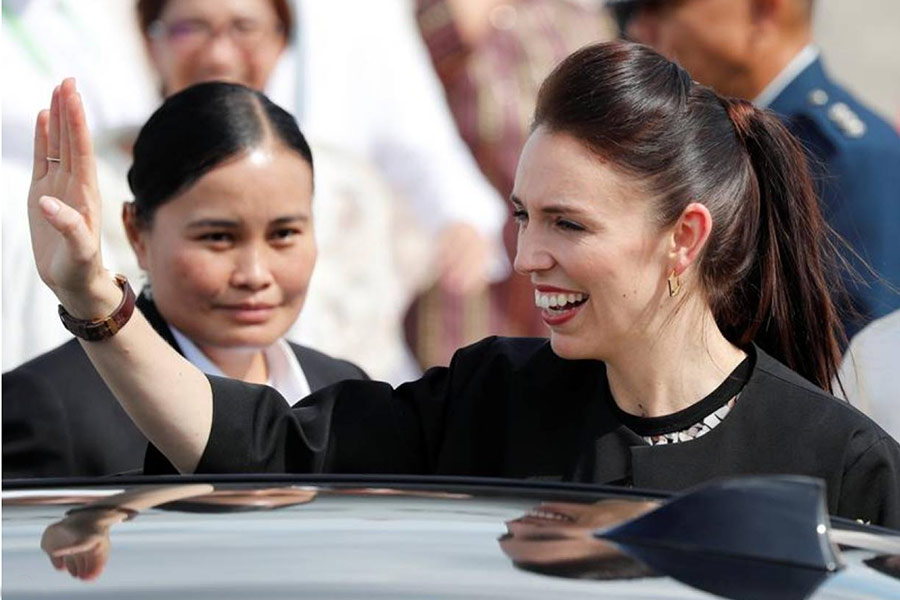
New Zealand Prime Minister Jacinda Ardern received a flood of congratulatory messages after she announced she was pregnant with her first child, with campaigners lauding the support as a sign of women’s rights progress.

The popular and charismatic politician, New Zealand’s third female leader, who took office last year after a closely fought election, said she planned to work until the end of her pregnancy in June and then take six-weeks leave.

“I’m not the first woman to work and have a baby. I know these are special circumstances but there are many women who have done it well before I have,” Ardern told reporters.

If you like this, subscribe here for more stories that Inspire The Future.

New Zealand has long held a progressive reputation, having been the first country to given women the right to vote in 1893.

Ardern is one of the very few examples of an elected leader holding office while pregnant. Advocacy groups say her announcement could help break stigma on the issues of women juggling a career and family.

Here are five other powerful women who were pregnant while holding public office or leading a corporate giant:

1) Benazir Bhutto

Pakistan’s Benazir Bhutto had her second child, a girl, while she was prime minister in 1990. She is thought to be the first modern head of government to give birth while in office. Bhutto, who became the opposition leader later, was killed in a gun and bomb attack in 2007.

2) Carme Chacon

Spain’s first female defense minister was cast into the media spotlight when she took office in 2008, seven months into her pregnancy. Chacon was famously photographed on a trip to Afghanistan reviewing troops – when she was visibly pregnant – shortly after she took office. She held the post until 2011, and died in April 2017 at the age of 46.

3) Queen Elizabeth II

Britain’s Queen Elizabeth gave birth to two of her four children after she became a monarch in 1952. Her third child, Prince Andrew, was born in 1960, and the fourth, Prince Edward, in 1964. Prince Andrew and Prince Edward were the first children to be born to a reigning monarch since Queen Victoria had her family, according to the British Royal Family official website.

4) Marissa Mayer

Marissa Mayer announced she was pregnant with twin girls when she was Yahoo chief executive in September 2015. She took two weeks’ maternity leave to give birth later in the same year, as she worked toward turning around the struggling company. She stepped down from the position in June last year.

5) Susan Wojcicki

One of the tech world’s most influential women, the chief executive of the streaming video service YouTube announced she was pregnant with her fifth baby a few months after she took on the job in 2014. Wojcicki has often championed the cause of gender diversity in the tech industry, including writing articles that argued for the importance of paid maternity leave for businesses.

By Beh Lih Yi @behlihyi, Editing by Jared Ferrie. Source: Reuters, British Royal Household official website, Wall Street Journal

If you like this, subscribe here for more stories that Inspire The Future.

Blood Clots to Leaking Guts – 27 Ways to Die From Heatwaves

Dying during a heatwave is like a horror movie with 27 bad endings to choose from.

Deadly heatwaves are more lethal than you may think. They kill in at least 27 ways, from blood clots to leaking guts, putting millions of lives at risk, scientists said on Thursday.

Global temperatures are rising at a record pace, edging nearer a ceiling set by some 200 nations to limit global warming, and the human body is more sensitive to heat than previously thought, a University of Hawaii at Manoa study found.

If you like this, subscribe here for more stories that Inspire The Future.

“Dying during a heatwave is like a terror movie with 27 bad endings to choose from,” Camilo Mora, the study’s lead author, said in a statement.

“It is remarkable that humanity overall is taking such a complacency on the threats that ongoing climate change is posing.”

Heat kills people in a variety of ways, from the damage of cells to the leakage of intestines and blood clots that can lead to heart, brain, liver and kidney failure, the study said.

Rising heat is underestimated as a threat because it is an invisible, hard-to-document disaster that claims lives largely behind closed doors, experts told the Thomson Reuters Foundation in September.

Victims – many elderly, very young, poor or already unhealthy – often die at home, and not just of heat stroke but of existing health problems aggravated by heat and dehydration.

Rising heat is a severe threat in regions from South Asia to the Gulf, and countries from Russia to the United States.

Over the last 30 years, increasingly broiling summer heat has claimed more American lives than flooding, tornadoes or hurricanes, according to the U.S. National Weather Service.

By Heba Kanso @hebakanso, Editing by Kieran Guilbert and Katy Migiro.

If you like this, subscribe here for more stories that Inspire The Future.


Sheril Kirshenbaum, Guest Speaker – Digital Biology

Sheril Kirshenbaum is director of The Energy Poll at The University of Texas at Austin. She works to enhance public understanding of science and energy issues and improve communication between scientists, policymakers, and the public.

She is also executive director of ScienceDebate, a non-profit initiative encouraging candidates to address science research and innovation issues on the campaign trail. Sheril is the author of The Science of Kissing, which explores one of humanity’s fondest pastimes. She also co-authored Unscientific America: How Scientific Illiteracy Threatens Our Future with Chris Mooney, chosen by Library Journal as one of the Best Sci-Tech Books of 2009 and named by President Obama’s science advisor John Holdren as a top recommended read. In addition, she blogs at Scientific American.

Sheril is a 2015 Presidential Leadership Scholar; an initiative launched by four presidential centers to foster growth in a diverse group of leaders. She has also been a Marshall Memorial Fellow, a legislative Knauss Science Fellow in the U.S. Senate, and a Next Generation Fellow through the Robert Strauss Center for International Security and Law. Sheril’s writing has appeared in publications such as Bloomberg and CNN frequently covering topics that bridge science and society from hydraulic fracturing to climate change. Her work has also been published in scientific journals including Science and Natureand she is featured in the anthology The Best American Science Writing 2010.

Sheril speaks regularly around the country to audiences at universities, federal agencies, and museums. She has appeared in documentaries and been a guest on such programs as CBS This Morning and The Today Show. She has also served on the program committee for the American Association for the Advancement of Science (AAAS) and been a TEDGlobal and TEDx speaker. Previously, Sheril was a research scientist with the Webber Energy Group at UT Austin’s Center for International Energy and Environmental Policy.

In addition, she was a research associate at Duke University’s Nicholas School of the Environment with The Pimm Group and has been a Fellow with the Center for Biodiversity and Conservation at the American Museum of Natural History and a Howard Hughes Research Fellow. Sheril holds graduate degrees in marine biology and policy. She has hosted blogs at Wired and Discover. She also regularly contributes to a variety of science websites such as NPR and Think Progress. An archive of blog posts can be viewed atcultureofscience.com. Sheril was born in Suffern, New York and is also a musician. She lives in East Lansing, MI with her husband David Lowry and son.

Original Story: Singularity University


Renewable Energy: Managing Investors’ Risks and Responsibilities

Renewable energy investments could be at risk from overlooking harms to local communities.

Managing these impacts is key to secure a fast and fair transition to a low-carbon economy, and safeguard financial returns, according to analysis by Business & Human Rights Resource Centre, Transform Finance and Sonen Capital. This briefing sets out why investors in renewable energy should take action to ensure projects respect local communities’ rights and provides tools to use in their investment relationships.

The Paris Climate Agreement and the UN Sustainable Development Goals have clearly signaled the future of energy is in renewables. This shift has opened up a host of opportunities for investors, but also serious risks. Business & Human Rights Resource Centre has received 115 concerns of harms to local communities linked to renewable projects since 2005 including on land grabs, displacement of indigenous peoples, violence and killings. 94 out of those concerns were raised since 2010.

“The time is now for investors to take steps and engage with renewable energy companies and projects in their portfolios to ensure respect for human rights. The majority of renewable energy companies do not yet have rigorous human rights safeguards in place – only 5 out of 50 of wind and hydropower companies refer to respecting indigenous peoples’ internationally recognised right to free, prior & informed consent,” said Phil Bloomer, Executive Director of Business & Human Rights Resource Centre.

The briefing shows that investors must be vigilant to the way in which renewable energy projects are implemented, as they can harm communities in which they operate. These harms can result in costly delays, legal costs, and reputational risks. Through case studies, examples and practical recommendations, the briefing helps investors shape a new energy system that considers human rights and community engagement as the cornerstone for sustainable energy development.

“As long-term investors, we believe that the analysis of human rights in the renewable energy context set forth in this briefing is fundamental. We need to foster more community engagement to ensure that the transition to renewable energy truly benefits communities and does not create undue risk for investors. This view of investment as management of financial, human and environmental capital underpins CalPERS’ beliefs,” said Anne Simpson, Investment Director, Sustainability, of the California Public Employees’ Retirement System (CalPERS), with $300 billion assets under management.

With input from over 30 experts and investors including Principles for Responsible Investment and UNEP Finance Initiative, the briefing demonstrates how integrating human rights considerations early on in the decision-making process, while prioritizing building strong and equitable relationships based on engagement with affected communities, can reduce the likelihood of conflicts that undermine a project’s success. These practices also help ensure that all stakeholders benefit from the investment, from financial, environmental and social perspectives.

The briefing is intended for any investor holding or considering investments in renewable energy projects, whether through direct or indirect ownership.

Written by: Evan Steiner

Original Article: Transform Finance


Trump Relishing World’s Attention at U.N.

With other major leaders absent, the U.S. president enjoys being the main attraction.

For better or for worse, Donald Trump is dominating the United Nations this week. And he seems to be loving it.

While every U.S. president looms large at the annual mosh pit of world leaders known as the U.N. General Assembly, Trump may be a uniquely dominant presence thanks to his brash style and controversial views, and to an unusual lack of competition: Global titans like Russian President Vladimir Putin, Chinese President Xi Jinping and German Chancellor Angela Merkel are all absent this year.

Trump’s Tuesday address here annoyed allies and adversaries with bellicose rhetoric, like his threat to “totally destroy” North Korea. But Trump seemed to relish telling off rival nations whose diplomats were seated within a stone’s throw of him.

And despite the verbal bombshells from the podium, Trump has been playing diplomat behind the scenes with a gusto that might surprise his critics, White House aides say.

“People want to meet him because he’s got star power,” one White House official said. “And he is sort of warm in a more intimate setting. He still says the same things, but he tries to be everyone’s friend. He wants everyone to like him.”

Rather than take Twitter potshots at an institution he denounced while he was a candidate, Trump has shown signs of enthusiasm and even awe about the week’s diplomatic bustle.

“Big meetings today at the United Nations. So many interesting leaders,” Trump tweeted Wednesday morning.

He then began a series of meetings with African and Arab leaders, the latter including Jordan’s King Abdullah, who assured him that “Jordan will always stand beside your country,” and Palestinian leader Mahmoud Abbas.

Trump’s aides say the Republican president is staying largely on script and on schedule and that he seems honored that his home city of New York is hosting world leaders.

The absence of Putin, Xi and Merkel has meant less direct, on-the-scene pushback from those powerful leaders against Trump’s Tuesday address, in which he extolled the virtues of national sovereignty, trumpeted his America First philosophy, and slammed “rogue” regimes like North Korea’s.

“He refused to mouth the usual U.N. platitudes and to dilute his message, and why should he?” said Elliott Abrams, a conservative foreign policy thinker who worked in the George W. Bush administration. “Would Utopian visions and sweet talk have made the slightest impact on the way China or Russia or Iran or North Korea conduct themselves?”

To be sure, Trump’s Tuesday remarks drew plenty of backlash.

Iran’s foreign minister called Trump’s words “ignorant hate speech.” North Korea’s ambassador reportedly left the room just before Trump spoke. Venezuela’s representatives sat looking sour with their arms crossed; Venezuelan President Nicolás Maduro, an increasingly isolated figure internationally, didn’t come to New York but called Trump “the new Hitler.”

Even some allies were wary. The Swedish foreign minister, reflecting the views of many on the left, told the BBC that Trump delivered “the wrong speech, at the wrong time, to the wrong audience.”

But at the same time, Israel’s Benjamin Netanyahu, a major supporter of Trump, lauded the U.S. president’s speech as “brave and clear.”

And Trump aides note that the president earned praise from fellow Republicans, including some longtime skeptics, for his unapologetic nationalist themes before the international audience.

If anything, Trump’s U.N. appearance supports the idea that the only predictable thing about him is that he’s unpredictable.

On Monday, for instance, he charmed world leaders with a short, gracious speech about the need for U.N. reform. But Tuesday’s speech was all about bombast.

Richard Gowan, a U.N. expert with the European Council on Foreign Relations, said the danger of trying to explain Trump is that it’s easy to be distracted by his more outrageous comments and miss the subtleties.

For instance, Trump was relatively kind to Russia and China, making only fleeting references to their actions in Ukraine and the South China Sea.

And for all his talk of the importance of national sovereignty, Trump is learning he needs international help.

“It’s important to distinguish between Trump’s targeted bluster and the realities of U.N. diplomacy,” Gowan said. “Trump can keep calling North Korean leader Kim Jong Un silly names, but he still needs the U.N. Security Council to back him up on dealing with North Korea.”