Can Capitalism Be Compassionate?

The global economy can be confusing and terrifying. Financial experts, policy makers, and everyday citizens want to know: How will government policies impact our families and what can we do about it?

In his book, “Broken Capitalism: This is How We Fix it,” Ferris Eanfar explains the state of the global economy and its key problems in a straightforward, accessible style.

“When the 10 largest corporations on Earth have more combined economic power than 92 percent of all countries on Earth combined, the 50 largest financial corporations control wealth equal to 90 percent of Earth’s GDP [gross domestic product], the richest 1 percent of humans have more wealth than 99 percent of the world combined, and the eight richest humans have more wealth than the bottom 50 percent of Earth’s entire population combined… it’s safe to say humanity is in trouble,” Eanfar says.

The author’s work is based on more than 20 years of unique experience in economics, financial technologies (“FinTech”), blockchain/cryptocurrency development, artificial intelligence, and military and government affairs.

Three key points in the book deal with issues of defining value, following a vision, and managing innovation.

Value: Eanfar notes that money is not value itself; it represents value. Rather than focusing on money alone, he advises organizations to focus on the way value flows through their stakeholder ecosystems, which benefits all parties in the long run.

Vision: “In business and in life, having ‘vision’ is about accurately assessing current reality, defining steps to achieve specific goals, and building a bridge between vision and reality based on discipline and effective execution,” says Eanfar.

Innovation: Artificial intelligence, cryptocurrency, and other technological innovations can be used for good or ill. Eanfar dedicates a chapter of the book to the impact of artificial intelligence [AI] on government and the economy.

“When lightning-fast AI controls the political and economic apparatus of countries through their automated manipulation of social media and web-based information channels, humans won’t be able to easily differentiate between policy outcomes that serve their interests and policy outcomes that serve those who control the AI and their political patrons in the government,” he says.

Ending Animal Slaughter One Fashion Bag at a Time

Eco-fashion house Ministry of Tomorrow has announced the launch of its new Vegan Bag collection, with a focus on animal anti-cruelty.

Many animals killed for leather experience cruel and gruesome treatment that is typical of factory farming. But, at Los Angeles-based Ministry of Tomorrow no animals are slaughtered in the production of their bags. This is in stark contrast to the global leather industry – that slays more than one billion animals each year.

If you like this, subscribe here for more stories that Inspire The Future.  

The new Vegan Bag collection is produced at the company’s fair wage, eco-factory in Nairobi, Kenya. The design is clean and chic with a Maasai warrior inspired interior.

“The significance of the design in this collection makes a statement that says we are fighting back, from the inside, and we do this by providing consciences people a high quality alternative to leather,” says Julian Prolman, the founder and president of Ministry of Tomorrow.

The handcrafted bags are made with Italian and Japanese, animal-free, finer-than-leather fabrics and the lining is made from certified organic and fair trade canvas sourced from India. The entire supply chain from seed to production considers the well-being of people, wildlife and the planet. 

Prolman feels he is redefining luxury through a new expression of imaginative design – both elegant and distinctive, functional and produced in a responsible manner.

The fashion brand aims to develop a community of conscientious young spirited people who enjoy the experience of a luxury lifestyle but also want to feel good about supporting responsibly produced products that deliver social and environmental benefits.

“We want to see an end to the ‘fashion to die for’ scenario that has sadly become a societal norm, where animals are killed for our pleasure, in a barbaric perception of luxury that literally costs an arm and a leg,” says Prolman. “We believe it’s morally corrupt to produce garments and accessories at the expense of animals and nature. As an alternative, we promote ‘fashion to live for’ and use this attitude as a vehicle for activism that contributes to a movement to end the needless suffering of animals.”

Ministry of Tomorrow has also launched a new public service video entitled “Suton”

The dramatic video was designed to illustrate the current state of human consciousness under the influence of mental slavery caused by mainstream mass marketing, rooted in profit-making as the primary objective.

The provocative fashion film (which contains graphic and unsettling imagery) aims to revive hope that humans can be liberated from psychological imprisonment. The 3-minute video wants people to regain an ability to think for themselves and recognize the importance of taking action to improve the world.

Prolman teamed up with British fashion filmmaker Roger Spy to produce “Suton.”

“Society has been conditioned to accept as normal commercial products where people, wildlife and the planet have been harmed in the process of making goods,” says Prolman. “We are saying wake up, there is a better way to dress with style through ethical fashion.”

To view the fashion film click here (Contains graphic imagery)

If you like this, subscribe here for more stories that Inspire The Future.

Mars Launches New Cocoa Sustainability Strategy

Mars Wrigley Confectionery has decided to put smallholder farmers at the center of an ambitious new strategy.

The maker of chocolate for more than 100 years and one of the world’s largest buyers of cocoa, has launched a new plan for overhauling its cocoa supply chain.

If you like this, subscribe here for more stories that Inspire The Future.

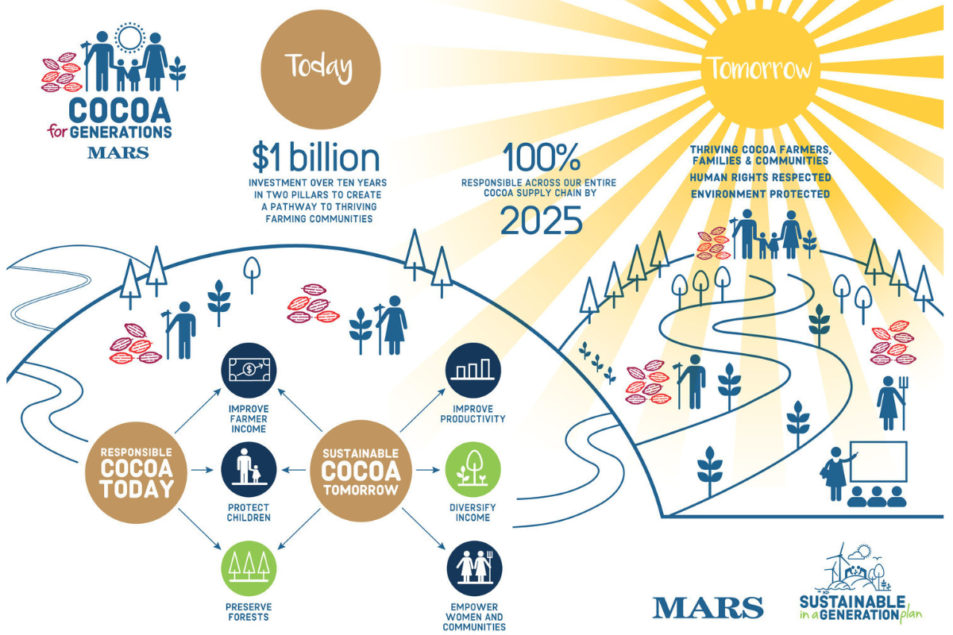
Called Cocoa for Generations, the plan places the interest of the smallholder farmer at its center, helps to safeguard children and forests, and creates a pathway for cocoa farmers and cocoa-growing communities to thrive. The plan is backed by an investment of $1 billion over 10 years and is incremental to the Sustainable in a Generation Plan investment that Mars announced last year.

“For nearly 40 years we’ve been working to achieve sustainable cocoa production,” said John Ament, Global Vice President of Cocoa, Mars Wrigley Confectionery. “While we’ve made progress, including reaching nearly 180,000 farmers with sustainability certification, we are impatient with our pace of progress and of the cocoa sector overall. We don’t have all the answers, but our first step is to put the farmer at the center of our ambitions and actions.”


Despite significant progress, many farmers haven’t experienced improvements in their incomes or living conditions at an adequate pace. Children continue to labor in hazardous conditions and deforestation continues with farming occurring in protected forest areas. Mars believes a step change is needed where business, civil society and government must think and act differently, and take a new approach that creates a pathway for cocoa farmers, their families, and communities to thrive.

The Cocoa for Generations plan consists of two pillars: 

Firstly, to have 100% of its cocoa from the Responsible Cocoa program responsibly sourced globally and traceable by 2025. Responsible Cocoa means having systems in place to address deforestation, child labor and higher incomes for farmers.

Secondly, the company hopes to demonstrate that a step-change in farmer income and livelihoods is possible. In partnership with an initial global group of 75,000 cocoa farming families and cocoa suppliers, Mars plans to test ways to increase productivity, income, resilience, and overall sustainability through crop and income diversification, gender programs, village and savings and loan models and farm development plans.

“We applaud Mars for recognizing the role of the smallholder farmer at the heart of any ambitious plan in cocoa sustainability,” said Fairtrade on hearing the news. “Without progress on incomes for these farmers, sector-wide transformation is not possible. We need more companies showing leadership on issues in this way.”

The Rainforest Alliance chimed in too: “We can all agree there needs to be a change on the ground for farmers, their families and forests,” said Britta Wyss Bisang, Chief of Sustainable Supply Chains for the Rainforest Alliance. “We commend Mars for deepening their commitment to cocoa producers, and for recognizing that step-change in action on the ground is needed.  We look forward to furthering a relationship which puts more focus on collaboration between producers, NGO’s, companies and governments.”

If you like this, subscribe here for more stories that Inspire The Future.

The Nobel Peace Prize 2018. A Nod to #MeToo?

The Norwegian Nobel Committee has awarded the Nobel Peace Prize for 2018 to Denis Mukwege and Nadia Murad for their efforts to end the use of sexual violence as a weapon of war and armed conflict.

This years Nobel Peace Prize is intended to send the message that “women, who constitute half of the population, are used as a weapons of war, and they need protection, and the perpetrators have to be held responsible and prosecuted for their actions,” Berit Reiss-Andersen, Chair of the Norwegian Nobel Committee, said after announcing the winners today.

If you like this, subscribe here for more stories that Inspire The Future.

Both laureates have made a crucial contribution to focusing attention on, and combating, such war crimes. Mukwege is the helper who has devoted his life to defending these victims. Murad is the witness who tells of the abuses perpetrated against herself and others. Each of them in their own way has helped to give greater visibility to war-time sexual violence, so that the perpetrators can be held accountable for their actions.

A physician, Mukwege has spent large parts of his adult life helping the victims of sexual violence in the Democratic Republic of Congo. Since the Panzi Hospital was established in Bukavu in 2008, Dr. Mukwege and his staff have treated thousands of patients who have fallen victim to such assaults. Most of the abuses have been committed in the context of a long-lasting civil war that has cost the lives of more than six million Congolese.

Mukwege is the foremost, most unifying symbol, both nationally and internationally, of the struggle to end sexual violence in war and armed conflicts. His basic principle is that “justice is everyone’s business”. Men and women, officers and soldiers, and local, national and international authorities alike all have a shared responsibility for reporting, and combating, this type of war crime.

His enduring, dedicated and selfless efforts in this field didn’t go unnoticed by the Nobel selection committee. He has repeatedly condemned impunity for mass rape and criticized the Congolese government and other countries for not doing enough to stop the use of sexual violence against women as a strategy and weapon of war.

Murad is herself a victim of war crimes. She refused to accept the social codes that require women to remain silent and ashamed of the abuses to which they have been subjected. She has shown uncommon courage in recounting her own sufferings and speaking up on behalf of other victims.

She is a member of the Yazidi minority in northern Iraq, where she lived with her family in the remote village of Kocho. In August 2014 the Islamic State (IS) launched a brutal, systematic attack on the villages of the Sinjar district, aimed at exterminating the Yazidi population. In Nadia Murad’s village, several hundred people were massacred. The younger women, including underage children, were abducted and held as sex slaves. While a captive of the IS, Nadia Murad was repeatedly subjected to rape and other abuses. Her assaulters threatened to execute her if she did not convert to their hateful, inhuman version of Islam.

She is just one of an estimated 3,000 Yazidi girls and women who were victims of rape and other abuses by the IS army. The abuses were systematic, and part of a military strategy. Thus they served as a weapon in the fight against Yazidis and other religious minorities.

After a three-month nightmare Nadia Murad managed to flee. Following her escape, she chose to speak openly about what she had suffered. In 2016, at the age of just 23, she was named the UN’s first Goodwill Ambassador for the Dignity of Survivors of Human Trafficking.

This year marks a decade since the UN Security Council adopted Resolution 1820 (2008), which determined that the use of sexual violence as a weapon of war and armed conflict constitutes both a war crime and a threat to international peace and security. This is also set out in the Rome Statute of 1998, which governs the work of the International Criminal Court. The Statute establishes that sexual violence in war and armed conflict is a grave violation of international law. A more peaceful world can only be achieved if women and their fundamental rights and security are recognized and protected in war. 

This year’s Nobel Peace Prize is firmly embedded in the criteria spelled out in Alfred Nobel’s will. Mukwege and Murad have both put their personal security at risk by courageously combating war crimes and seeking justice for the victims. They have thereby promoted the fraternity of nations through the application of principles of international law.

If you like this, subscribe here for more stories that Inspire The Future.

Historic Opioid Legislation Passed

On 28 September the U.S. House of Representatives passed historic, comprehensive legislation in a vote of 393-8 that creates new resources and better policies to help the millions of patients and families impacted by substance use disorder.

Now that both Chambers have approved the final version, the package will be sent to the President’s desk to be signed into law. In an incredible show of solidarity, Congress came together in a bipartisan way to make this historic legislation a reality. Thanks to the leadership shown by politicians across the spectrum, we are one step closer to solving a crisis that affects millions of Americans and takes the lives of so many each day.

If you like this, subscribe here for more stories that Inspire The Future.

Here are 41 key components of the Opioid Package (H.R. 6):

Healthcare Integration

  • Treatment, Education, and Community Help To Combat Addiction (Section 7101) – Expands medical education and training resources for healthcare providers to better address addiction, pain, and the opioid crisis;
  • Preventing Overdoses While in Emergency Rooms (Section 7081) – Improves emergency departments ability to effectively screen, treat, and connect substance use disorder patients with care;
  • Alternatives to Opioids in the Emergency Department (Section 7091) – Explores alternative pain management protocols in order to limit the use of opioid medications in emergency departments;
  • Inclusion of opioid addiction history in patient records (Section 7051) -Requires HHS to develop best practices for prominently displaying substance use disorder treatment information in electronic health records, when requested by the patient;

Treatment Capacity Expansion

  • IMD CARE Act (Section 5052) – Expands Medicaid coverage up to 30 days for individuals between 21 and 65 years old receiving care in a treatment facility for all substance use disorders, lifting the 16 bed restriction;   
  • Expansion of Telehealth Services (Section 1009, 2001, 3232) – Expands access to substance use disorder treatment and other services through the use of telehealth;
  • Comprehensive Opioid Recovery Centers (Section 7121) – Establishes model comprehensive treatment and recovery centers to ensure individuals have access to quality treatment and recovery services;
  • Supporting family-focused residential treatment (Section 8081, 8083) – Enhanced family-focused residential treatment; $20 million in funding for HHS to award to states to develop, enhance, or evaluate family-focused treatment programs to increase the number of evidence-based programs;

Treatment Workforce Expansion

  • Substance Use Disorder Workforce Loan Repayment (Section 7071) – Enhances the substance use disorder treatment workforce by creating a student loan repayment program for healthcare professionals;
  • Addressing economic and workforce impacts of the opioid crisis (Section 8041) – Awards grants to states to support substance use disorder and mental health treatment workforce shortages;

Medication Assisted Treatment

  • More Flexibility for Prescribing Medication Assisted Treatment (Section 3201, 3202) – Increases the number of waivered health care providers that can prescribe or dispense treatment for substance use disorders, such as certified nurses and accredited physicians;
  • Grants to enhance access to substance use disorder treatment (Section 3203) – authorizes grants to support the development of curriculum that will help health care practitioners obtain a waiver to prescribe MAT;
  • Delivery of a Controlled Substance by a Pharmacy to be Administered by Injection or Implantation (Section 3204) – Allows pharmacies to deliver implantable or injectable medications to treat substance use disorders directly to health care providers;
  • Expanding Access to Medication in In-Patient Facilities (Section 5052) – Expanded Medicaid coverage up to 30 days for inpatient facilities applies to providers who provide a minimum of two types of medicines to treat opioid use disorder;

Ending Illegal Patient Brokering

  • Criminal penalties (Section 8122) – This provision makes it illegal to pay or receive kickbacks in return for referring a patient to recovery homes or clinical treatment facilities;

Recovery Supports

  • CAREER Act (Section 7183) – Improves resources and wrap-around support services for individuals in recovery from a substance use disorder who are transitioning from treatment programs to independent living and the workforce;
  • Ensuring Access to Quality Sober Living (Section 7031) – Develops and disseminates best practices for operating recovery housing to ensure individuals are living in a safe and supportive environment;
  • Building Communities of Recovery (Section 7151, 7152) – Awards grants to recovery community organizations to provide regional training and technical assistance in order to expand peer recovery support services nationwide;
  • Improving recovery and reunifying families (Section 8082) – Provides $15 million to HHS to replicate a “recovery coach” program for parents with children in foster care due to parental substance use;

Prevention

  • Drug-Free Communities Reauthorization (Section 8203) – Reauthorizes the Drug-Free Communities Program to mobilize communities to prevent youth substance use and extends the National Community Anti-Drug Coalition Institute;    

Helping Moms and Babies

  • Sobriety Treatment and Recovery Teams (START; Section 8214) – Establishes and expands the implementation of the START program, which pairs social workers and family mentors with a small number of families, providing peer support, intensive treatment and child welfare services.
  • Caring Recovery for Infants and Babies (Section 1007) – Expands Medicaid coverage for infants with neonatal abstinence syndrome who are receiving care in residential pediatric recovery centers;  
  • Health Insurance for Former Foster Youth (Section 1002) – Allows former foster youth to keep their Medicaid coverage across state lines until age 26;   
  • Modifies IMD Exclusion for Pregnant and Postpartum Women (Section 1012) – Allows for pregnant and postpartum women who are receiving care for substance use disorder in a treatment facility to receive other Medicaid-covered care, such as prenatal services;
  • Report on addressing maternal and infant health in the opioid crisis (Section 7061) – Studies best practices of pain management, prevention, identification, and reduction of opioid and other substance use disorders during pregnancy;
  • Early interventions for pregnant women and infants (Section 7063) – Develops and disseminates educational materials for clinicians to use with pregnant women for shared decision-making regarding pain management during pregnancy;
  • Prenatal and postnatal health (Section 7064) – Authorizes data collection and analysis of neonatal abstinence syndrome and other outcomes related to prenatal substance abuse and misuse, including prenatal opioid abuse and misuse;
  • Plans of safe care (Section 7065) – Supports states in collaboration and improving plans of safe care for substance-exposed infants;

Helping Patients and Families in Crisis

  • Communication with families during emergencies (Section 7052) – Reminds healthcare providers annually that they are allowed under current federal privacy laws to notify families, caregivers, and health care providers of overdose emergencies involving a loved one;
  • Families and Patients in Crisis (Section 8212) – Grants to expand services for patient and families impacted by substance use disorder and in crisis;

Law Enforcement

  • Reauthorization of Key Law Enforcement Programs (Section 8205-8212) – Reauthorizes law enforcement programs through the Office of National Drug Control Policy, such as programs such as the High Intensity Drug Trafficking Area programs, drug courts, COPS Anti-Meth Program, and COPS anti-heroin task force program;
  • First Responder Training (Section 7002) – Expands first responder training, authorized through the Comprehensive Addiction and Recovery Act, to include training on safety around fentanyl and other synthetic and dangerous substances;
  • Public Health Laboratories Detecting Fentanyl and Other Synthetic Opioids (Section 7011) – Improves coordination between public health laboratories and laboratories operated by law enforcement to improve detection of fentanyl and other synthetic opioids;
  • Synthetics Trafficking and Overdose Prevention (Section 8006, 8007) – Improves Federal agencies ability to detect synthetic opioids and other substances from entering the United States through the mail;
  • Opioid Addiction Recovery Fraud Prevention (Sections 8021-8023) – Subjects those who engage in unfair or deceptive acts with respect to substance use disorder treatment services or substance use disorder treatment products to civil penalties for first time violations by the FTC; includes a savings clause for existing FTC and FDA authorities.
  • Reauthorization of the comprehensive opioid abuse grant program (Section 8092) – Reauthorize the comprehensive opioid abuse grant program at the Department of Justice;

Prescription Medication Safety and Disposal

  • Empowering Pharmacists in the Fight Against Opioid Abuse (Section 3212) – Develops and disseminates training resources to help pharmacists better detect fraudulent attempts to fill prescription medications;
  • Safe Disposal of Unused Medication (Section 3222) – Allows hospice workers to dispose of unused medications on site or in patients homes;
  • Access to Increased Drug Disposal (Section 3251-3260) – Awards grants to states to enhances access of prescription drug disposal programs;    
  • Safety-enhancing Packaging and Disposal Features (Section 3032) – Requires certain opioids to be packaged into 3 or 7 day supplies and requires safe prescription drug disposal options to be given to patients upon receiving medications;

Prisoner Reentry

  • Promoting State innovations to ease transitions integration to the community for certain individuals (Section 5032) – Requires the HHS Secretary to convene a stakeholder group to produce a report of best practices for states to consider in health care related transitions for inmates of public institutions.

If you like this, subscribe here for more stories that Inspire The Future.

6 Tips For Creating A Culture of Transformation

You don’t have to be a CEO to be a transformational leader. When the world thinks of transformational leaders, they think of people like Richard Branson, Steve Jobs, Elon Musk and Bill Gates. However, it’s possible for any professional at any level to be a ‘transformational leader’ as long as they bring six qualities to the process of change.

Here are six tips for creating your own culture of transformation:

If you like this, subscribe here for more stories that Inspire The Future.

1) Start by looking at your world from an elevated perspective.

Take time to elevate your view. Pull yourself out of the tactical grind of daily activities to obtain a more comprehensive view of your business from above. This elevated perspective helps you take in a more complete picture so you can get a better view of trends, opportunities, and threats that your business faces. Look at the whole chess board!

2) Imagine more options.

Many executives only consider the possibilities that directly relate to them or that are immediately apparent. It’s essential to identify and find a rich set of options as you develop your transformational vision. Create a long list of possibilities. Be bold and think big thoughts! In the words of Alexander The Great, “With the right attitude, self-imposed limitations vanish.”

3) Create a vision.

Once you’ve selected some options on which to focus your attention, reimagine the future. Ask; How will that future look? What is its growth and profit potential? Attempting to imagine the future is valuable in helping you to sort through various alternatives, strategies and visions.

4) Communicate the vision.

Communicating the vision is a critical step that many executives overlook. Communication is key to achieving buy-in, and buy-in is key to making progress. Communication is not merely sharing information. Craft and communicate a strong story which vividly describes the future state and benefits. Describe the path and name milestones. Help people understand how they can be part of it and let them know there is room for them.

5) Get people to buy in.

A great leader needs collaborators. People add to the effort, and the ultimate success, once they feel an emotional connection to the vision and understand how they can contribute. Big things are more easily accomplished with strong teams.

6) Manage implementation.

To be an effective transformational leader, you need to manage the implementation process. Provide leadership by building the team’s confidence and by make sure teammates know you are there to support them in this great quest. Processes are managed, but people are led. Lead from the front.

If you like this, subscribe here for more stories that Inspire The Future.

5 Steps to Take The Global Goals to The Heart of Your Business

Alexandra Britton of positive impact consultancy Palladium says firms should focus on creating value in their core business if they want to make a meaningful contribution to the Sustainable Development Goals.

It’s inevitable. A few times a week, I come across new statistics supporting the fact that for companies to remain competitive, they must pay attention and respond appropriately to evolving consumer demands for sustainability. According to one survey, 81% of millennials believe business has “a key role to play” in achieving the Sustainable Development Goals (SDGs); in another survey, 66% of respondents were willing to pay more for brands committed to making a positive social and environmental impact.

If you like this, subscribe here for more stories that Inspire The Future.

As a millennial, these statistics sometimes frustrate me – why is this even a question? That is why I’m excited to see more and more companies recognize the importance of SDGs and work to find new ways to support the goals. For instance, the World Business Council for Sustainable Development recently
released a study that found 79% of corporate sustainability reports it reviewed acknowledge the SDGs in some way. At the same time, it found only 6% of companies are aligning their strategy to specific target-level SDG criteria and measuring their impact.

Dutch dairy company Friesland Campina is one company that does a good job of this, connecting its corporate initiatives with SDG targets. So, what’s stopping more from making these connections? A major reason is that companies are struggling to meaningfully incorporate SDGs into their core business strategies. Some businesses that undertake sustainability initiatives use the SDGs as a starting point rather than starting with problems faced by their business. Rather than look at their unsustainable supply chains or shortage of skilled labour, for example, and ask, “How can we solve these problems while advancing the SDGs?”, they may create a new social corporate responsibility program to expand access to clean water.

That is not to say that helping to expand access to clean water is a bad thing, but focusing on programs outside of a company’s core business means creating projects that don’t have clear feedback loops, and also don’t advance corporate objectives. So, what should companies do instead? They should focus on creating value and transforming the systems in which they operate. Here are five steps that can help companies boost their profits and contribute to the SDGs:

1. Start with major problems plaguing the operations and long-term viability of a business

Ask yourself what is threatening the sustainability and future of my operations?

For instance, chocolate companies are facing sourcing issues. Their cocoa farmers are aging, impoverished, and operating on tiny plots of land. Younger generations are choosing not to enter the profession in favor of more lucrative opportunities. Simultaneously, volatile weather patterns are affecting farm yields. This means multinational corporations face major issues in their operations if they don’t create a sustainable supply chain of resilient farms that offer opportunities for farmers. Mars, Inc is addressing this with its $1 billion Sustainable in a Generation plan, which it announced last year.

2. Document which SDGs relate to specific business challenges

The next step is to compare these business challenges with the SDGs and their top-line objectives. Critically think about which SDGs are affected by the problem you’re facing.

This may involve mapping your value chain to the SDGs and defining priorities for your company. For instance, in the context of the previous example of the cocoa supply chain and farmers, the most relevant SDGs are around the areas of poverty, food security, economic growth, climate change, and partnership. Specifically, Goals 1, 2, 8, 12, 13, 15, and 17

3. Map the existing ecosystem and stakeholders

Prioritizing and target-setting starts with understanding the system in which you operate. One reason many CSR initiatives and one-off projects don’t move the proverbial needle is because they fail to answer “What’s in it for me?” for each stakeholder.

4. Identify main areas for value creation

To create enduring impact, companies need to find ways to move beyond short-term performance pressures that can prevent progress on sustainability. Ask what changes needs to happen across it (in the form of new or strengthened relationships, new business models, etc.) to generate more value. Look for points in the system that can lead to behavior change and have the potential to scale. For example, in the case of cocoa, this can involve creating new organizational models around nucleus farming, aggregators, and supply chain managers to drive productivity, increased efficiency and higher quality.

5. Build the solution around these value drivers

Once you have identified the areas where you can create added value for your company and the areas where your company can improve its sustainability, design a solution that brings the commercial and sustainability goals together. A key piece of this is finding the right metrics to measure progress and aligning incentives to specific indicators that cover the business challenges and SDGs. For more guidance on this, refer to the SDG Compass and an analysis published by GRI.

Coupling clear reporting with an ecosystem approach makes it more likely for companies to positively contribute to the SDGs while driving long-term business growth. More importantly, though, it creates meaningful value for all players and delivers positive impact for both business and society.

Alexandra Britton is Manager of Global Thought Leadership at positive impact consultancy Palladium.

If you like this, subscribe here for more stories that Inspire The Future.

World’s Largest 3-D Printed Reef Installed in Maldives

The world’s largest 3-D printed reef was submerged on 11 August at Summer Island in the Maldives, in what is hoped could be a new technology-driven method to help coral reefs survive a warming climate.

The artificial reef, assembled with hundreds of ceramic and concrete modules, was submerged at Summer Island’s ‘Blue Lagoon’ – a sandy part of the lagoon, where the resort hopes to create a new coral reef ecosystem.

If you like this, subscribe here for more stories that Inspire The Future.

The project started in a lab in Melbourne, Australia, where industrial designer Alex Goad of Reef Design Lab used sophisticated computing modeling to design reef structures similar to the coral reefs found naturally in the Maldives. 

A large 3-D printer whirred away for 24 hours to print moulds of the reef structures. These moulds were cast in ceramic – an inert substance, similar to the calcium carbonate found in coral reefs. The ceramic moulds were shipped to the Maldives, and filled with concrete on the beach at Summer Island. 

220 ceramic, concrete filled moulds were then slotted together, like a giant LEGO set, to create the new reef. 

The new reef sits in seven metres of water, close to the resort’s existing coral nursery. Fragments of coral from the nursery are being transplanted onto the 3-D reef, where they will grow and colonise the structure. 

As Alex explains: 3-D printing technology helps us to develop more innovative ways of protecting coral reefs. The technology allows us to mimic the complexity of natural reef structures, so we can design artificial reefs that closely resemble those found in nature. We hope this will be a more effective way of growing and restoring corals.”  

In a year or two, when the corals have grown over the 3-D reef, the resort hopes to have a new, natural looking reef, teeming with fish and marine life. 

If the 3-D printing technology proves more successful at growing corals than existing coral propagation methods, it could be a novel way of helping coral reefs survive a warming climate. 

The Maldives is one of the world’s most climate-vulnerable nations. Rising sea temperatures pose a grave threat to the world’s coral reefs, and mass bleaching events are becoming more common and more severe.

Summer Island Maldives has implemented a number of recent environmental initiatives, including the adoption of solar energy, a ban on the use of plastic straws, phasing out imported drinking water, and coral conservation projects.

Summer Island Resort Manager Mari Shareef explains: Projects like the 3-D printed reef are popular among guests, who like that we protect our environment. And it’s not only for the guests. Our staff, most of whom are Maldivian, want to protect their environment. Ultimately, we want to help promote a culture of environmental stewardship, not just at Summer Island, but across the Maldives.”

If you like this, subscribe here for more stories that Inspire The Future.

7 Leadership Trends for 2019

Questions on how to better manage human capital have topped leadership conversations around the world for a very long time. In an increasingly crazy world, the one word you should keep in mind as you start your planning for next year is simplicity. Here are seven emerging leadership trends for 2019.

1) Keep it simple

Over the past three years, the importance to move away from complex structures and simplify organizations has become clear. Not only it will help companies to be better equipped to face the challenges of the fast-paced markets, but it will also help employees to focus more on practical and rewarding tasks. For more insight on this topic, a great resource is the Deloitte Global Human Capital Trends report.

2) Redesign your management style

Paying extra attention to your performance management process is what will make your organization stand out in the next couple of years. It’s crucial to establish communication in which leaders outline what they expect from their employers regarding goals and ways to measure their completion to achieve this success. Indeed, a goal-oriented strategy gives employees clarity and a higher motivation to achieve their goals.

3) Invest in ‘human capital.’

The “Overwhelmed Employee” syndrome has been an enormous issue in companies stuck in an old generation, mid-level type management for years. In addition, the arrival of young workers thirsty for meaningful projects is a factor to take into account. Corporations need to invest more time in creating space for their employees to allow honest feedback from them (anonymous surveys are an option). It will also help staff to achieve success and help retain a workforce that  will feel supported and needed.

4) Do less, lead more

HR and managers have increasingly become process designers. Leadership and management problems are simple by nature and what we as leaders need to do is use trial and error methods in our managing style. We do this by letting our employees make more decisions and accepting that they might not get it right the first time. Our ability to do less and lead more will make us better leaders.

5) Forget about 9 to 5

The full-time employment model no longer makes sense. Research and studies have shown that long working hours make you less productive. Leaders, at any level, needs to revise their employment model to put individual performance at the core of their development – regardless of where it physically takes place or at what time.

Working on the go, at home or allowing flexible hours outside the traditional 9 to 5 office environment can work wonders with staff productivity. Acknowledging that employees have a personal life, and building work around it, can generate huge loyalty and more effective results if planned properly. This approach is an excellent way to respond to the needs of “purpose” and “meaning” that many young employees are seeking today.

6) Make technology work for you

Technology plays a massive part in our professional and personal lives, and that’s okay. What’s not ok is that we’ve gone head-over-heels in our relationships with our devices and tend to rely on them too much. It’s crucial that managers step up and learn how technology can re-enforce their technical expertise and leadership, but not at the expense of human capital. Some of these comprehensive leadership programs from Harvard Business School are great ways to learn how to control optimization and process flow, and a reminder that your smartphone can only do so much for you.

7) Just do it

Rethink your company hierarchy. Human capital learns best by doing what they inherently know, and not always by regurgitating what they learned at business school. The principle is simple: Encourage a single employee, to act like an atom – the smallest particle of an element, making them aware that they also contain the same properties of the larger molecule (leadership).

The reference to Nike in the subtitle might make you smile, but it summarizes things well: people learn by doing. Managers become great leaders by their ability to make the right call when faced with adversity and people become great employees (and ultimately great leaders) by their capacity to deliver exceptional results on a regular basis. Each person in a company is like an atom: their contribution helps to create a molecule, which in this example equals the company’s culture and success.

0