Pakistan Bets on ‘Tree Tsunami’ to Revive Climate Action

Pakistan is showing fresh interest in tackling climate change under new leader Imran Khan, after a period of favoring coal.

At this month’s U.N. climate talks in Poland, Pakistan promised to move away from coal investment and ensure climate-resilient growth. This was a departure from the previous government’s preference for fossil fuel energy, and in line with the “green political will” of new Prime Minister Imran Khan, according to his climate change advisor Malik Amin Aslam.

At the COP24 negotiations, Pakistan also became one of the first developing countries to commit to reviewing its Nationally Determined Contribution (NDC) to global climate action before the Paris Agreement starts in 2020. Announcing this at the talks, Aslam, head of Pakistan’s delegation, said the revised NDC would include measures the new government had initiated, which will strengthen Pakistan’s efforts to reduce planet-warming emissions.

Its programmes include the “Billion Tree Tsunami Afforestation Project” that was designed by Aslam and first implemented in Khyber Pakhtunkhwa province. Now the federal government under Khan, who took office in August, has launched a nationwide 10 Billion Tree Tsunami project.

Aslam said Pakistan’s willingness to “develop along a different pathway and become an enabler of the new transition economy” was demonstrated by the $120 million it has spent on planting and protecting trees so farIt plans to use a further $1 billion of its domestic resources to expand forests over the next five years.

Aslam said the current government is also committed to capitalising on Pakistan’s large potential for wind, solar and hydropower, as well as utilising nuclear energy. “More than 365 small run-of-the-river hydro projects have been set up in the north,” he said in his speech at COP24. “In the transport sector, with catalytic Green Climate Fund financing, Pakistan has finalised a multi-million-dollar zero emission bus metro system for the city of Karachi operating on cattle waste-generated biogas,” he added.

COAL NO LONGER KING?

Environmentalists had criticised the weak NDC document Pakistan initially submitted under the Paris Agreement. It projected a four-fold increase in emissions by 2030, noting the rise could be reduced but only with international assistance. Hammad Naqi Khan, director general of WWF-Pakistan, said the NDC reflected the desire of the previous government to explore the potential of coal as an energy resource.

Under Khan’s predecessor Nawaz Sharif, the government announced half a dozen coal power plants that are under currently construction. Two – at Sahiwal and Port Qasim with generation capacity of about 1.3 gigawatts each – are now operational, using imported coal.

While the new government cannot undo the coal power plants being built or already up and running, Aslam said the government would continue “strict monitoring” of their environmental impacts. It is also working to revoke a “criminal cap” on the amount of renewable power provinces can feed into the grid (50 megawatts each), which he said was aimed at boosting the use of coal and gas.

“We are in the process of removing this unholy subsidisation of coal and will be definitely focusing on renewables – wind, solar and hydro,” Aslam told the Thomson Reuters Foundation at the climate talks.

WWF’s Naqi Khan welcomed the news from COP24, noting that Pakistan’s previous NDC had lacked an ambitious plan to bring more renewables into the energy mix, as well as a solid commitment to avoid fossil fuel power plants.

A new report released by the Institute for Energy Economics and Financial Analysis this December noted that renewable energy, including wind and solar, is now the cheapest form of new electricity generation in Pakistan.

BACK IN THE GAME

Pakistan may have sent a small delegation to COP24, but the negotiators were able to highlight the country’s vulnerability to climate change and engage more effectively with the global process, observers said. Pakistan was elected Vice President and Rapporteur of the Conference of Parties (COP) to the UNFCCC, giving it a key role in the organisation of the talks in 2019. It also secured seats on five other technical bodies to regulate climate action and financial flows.

Pakistan’s re-engagement with the climate change negotiations comes after several years of being sidelined, said Shafqat Kakakhel, board chair of the Sustainable Development Policy Institute in Islamabad. “It was a Pakistani negotiator, Ambassador Jamsheed Marker, who was responsible for putting the F for Framework into the United Nations Framework Convention on Climate Change, and Pakistan was always known for its principled stance. But since 2012, Pakistan has not been a significant player at these negotiations due to the absence of skilled negotiators,” he told the Thomson Reuters Foundation.

That situation seems to have been reversed with a revitalised delegation led by Aslam, who is also global vice president of the International Union for the Conservation of Nature. According to Aisha Khan, head of Pakistan’s Civil Society Coalition for Climate Change, “Aslam’s understanding of the subject gives him an edge and the ability to represent Pakistan’s case convincingly.”

With Pakistan now forced to cope with worsening floods, droughts, heatwaves and melting glaciers, Aslam said the new government is working on a shift towards climate-resilient agriculture, plus an initiative to utilise the Indus River floodwaters for ecosystem restoration. “I must emphasis that these actions and initiatives go much beyond our NDC and are happening in spite of the expected external financial flows not materialising,” he said in his speech at the climate talks.

In its original NDC, Pakistan said it could lower its projected greenhouse gas emissions by up to 20 percent in 2030 if it received international climate finance of around $40 billion. Now it says it will revise the figures in its NDC once it has calculated all the emissions to be saved from its new green projects. “Pakistan must take action on the ground for the sake of its own people,” Aslam said.

By Rina Saeed Khan
A View of Innovation – Smart Glass

Sometimes the opportunity for innovation is in plain sight. Have you ever considered how much is spent in real estate to feature picture-perfect views and install crystal-clear glass windows – only to have occupants miss those amazing views due to the heat and glare that also comes through?

Window coverings are purchased at an additional cost due to the discomfort of the individuals inside and the well-intended benefits are lost. Look around any major city, and you’ll notice that roughly two-thirds of building windows are permanently covered with blinds or shades. It defeats the whole idea of using windows in the first place. What if there was a better way?

If you like this, subscribe here for more stories that Inspire The Future.

After all, it hasn’t always been like this. For most of history, humans have lived in harmony with the outdoors; remember, we are originally an outdoor species. But over the course of history, we’ve found a way to create our own shelters, as a way of separating us from the elements and to protect ourselves. First came walls, doors, roofs and floors. Then we discovered that melting sand could make sheets of glass – a solid material you could see through. Windows were not always accessible to everyone in the early days and were indeed a source of luxury and pride for those who could afford them.

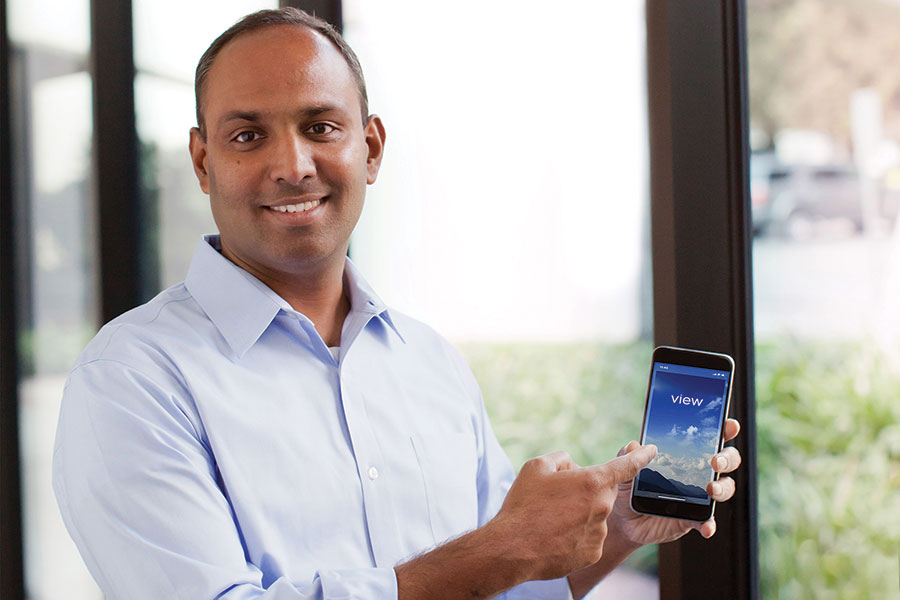
Now a staple of modern architecture, glass has kept some of its magical allure – creating a barrier to the outside world, yet still inviting in the views and natural light to lighten even the darkest of rooms. Recently, we’ve seen bigger and clearer windows appearing as the demand increases for a better connection to the outdoors. But this, “Also creates issues in terms of heat and glare – the building gets inefficient … and people are uncomfortable thermally and visually and then you are using blinds and shades to control the light,” says Dr. Rao Mulpuri, CEO of View, Inc. and a member of YPO.

My colleagues wake up each day believing in something that no one else believes yet. This common purpose and mission is what binds us together and enables us to create real change. 

Based in Silicon Valley, View manufactures a new generation of smart windows that let in natural light and views and enhance mental and physical wellbeing. View’s customers include Century Link, Overstock, FedEx, WeWork, Facebook, Hewlett Packard Enterprise, Regeneron and Kaiser Permanente across 35 million square feet of buildings space with another 35 million in progress. The company has also made great progress bringing smart windows to airports with installations at San Francisco International Airport, Boston Logan International Airport, Seattle-Tacoma International Airport and Charlotte Douglas International Airport. And in June 2018, Dallas Fort Worth International Airport announced they had awarded a contract to View to install smart windows in all DFW’s passenger terminals.

https://www.youtube.com/watch?v=B1ZI80-_feU

“While dynamically changing glass technology, that adjusts itself to light and heat is already 50 years old, it never managed to move past small applications, such as transition sunglasses, car rear-view mirrors, and some airplanes. Up until ten years ago, when View stepped in, it was an elusive technology that didn’t lend itself to large-scale use in real estate. We have developed a self-tinting smart window, powered by a sophisticated intelligence engine that responds intuitively to outside conditions, day or night,” says Mulpuri.

“Someday, every window will be smart,” muses Mulpuri. “Today, every communication device is mobile, yet landlines ruled only a short few years ago. Likewise, there’s no reason to install windows and then cover them up to the detriment of the occupants’ health and wellness.” The company has yet to come across a customer who says, “I love my blinds”.

The real estate industry is the largest in the world, to the tune of $10 trillion globally, but surprisingly, it’s also the slowest moving – partly due to risk aversion found within its ranks. Mulpuri recognized that technology advancement was the biggest disruptor of the past 100 years and wondered why real estate construction was lagging so far behind. The 21st century is not kind to slow-moving industries – think video stores, camera film and cellphones with keyboards. Mulpuri believes View’s mission is to not only make the simple window better, but to also transform the entire real estate industry. One of Mulpuri’s mentors and friends, Fred Smith, the CEO of FedEx, is keen on reminding his employees, “If you don’t like change, you will hate extinction.”

View currently holds more than 700 patents after ten years of development and an investment of around $1 billion – a hefty price-tag for staying true to their dream of developing technology that will enable smart glass to work at scale.

Aside from eliminating the need for blinds and reducing a building’s energy costs, Mulpuri is most excited about the substantial health benefits View’s windows bring to occupants. A recent HBR article  revealed natural light is the #1 office perk, and supports a research study by Cornell University Professor Dr. Alan Hedge who found optimization of natural light in an office significantly improves health and wellness among workers. In fact, this research revealed that workers in View Dynamic Glass office environments reported a 51% drop in eyestrain, a 63% drop in headaches and a 56% reduction in drowsiness.

Like most disruptive companies, success is usually a combination of great product and fearless, big thinking. Considering the advice he would give young leaders, Mulpuri believes that picking things that really mattered would be paramount. “Work on something game- changing, because then the journey becomes worth it. You’ll attract great talent and like-minded people and that powerful combination of talent, commitment, and upward spiral of creating something new will make it worthwhile. My biggest advice? Attempt bigger.” 

www.viewglass.com

If you like this, subscribe here for more stories that Inspire The Future.

Timberland’s New Creative Director Underscores Remade, Reduced, Recycled

Timberland, known worldwide for its iconic yellow boot and passion for the outdoors, has announced a partnership with British designer Christopher Raeburn, who will serve as Global Creative Director for the brand. Raeburn owns a label of the same name, which is synonymous with responsible, intelligent fashion design.

Raeburn will be a key stakeholder in developing Timberland’s global creative vision; ensuring a holistic design approach across all product categories, marketing and in-store environments, alongside elevating the brand’s commitment to responsible sourcing, inclusivity and community.  

If you like this, subscribe here for more stories that Inspire The Future.

The British designer is known for an ethos that encompasses three key pillars – Remade, Reduced, Recycled – which complement Timberland’s longstanding commitment to make products responsibly and steadily increase its use of recycled, organic and renewable materials over time. Raeburn also heralds craftsmanship, innovation and utility as central to his design philosophy, again creating a natural and authentic connection to the Timberland brand.

As creative director, Raeburn will partner with Timberland’s global product, marketing and innovation teams to deliver a forward-thinking look and feel that pushes design boundaries while honoring the brand’s outdoor heritage. The first full collection under Raeburn’s vision, across men’s and women’s, will be fall/winter 2020.

“Timberland has a strong foundation in craftsmanship and innovation; now it’s time to elevate our brand vision through the lens of design,” said Jim Pisani, global brand president, Timberland.  “Christopher Raeburn is a true visionary, who shares our ethos of responsibility and brings to the table a fresh, modern design sensibility. Together we will really push the boundaries of where Timberland can go as a brand, and we’re excited to get started.”

“I’ve been watching the Timberland brand for many years and have always been drawn to its commitment to be a responsible business,” said Raeburn. “I see an incredible opportunity for Timberland to break out and put responsible, innovative design at the centre of the brand’s creative strategy. It’s an exciting moment to join forces with Timberland;  a company set to evolve following decades of good work. I’m honored to be partnering with a company with such strong values and I’m truly excited to be making a difference on a global scale.”

Timberland and Raeburn first collaborated on a global apparel capsule collection that debuted earlier this year at London Fashion Week and launches in stores and online today. In line with his REMADE philosophy, Raeburn scoured street markets and second-hand shops to find vintage Timberland items that he then meticulously deconstructed and remade into iconic, contemporary pieces for the runway. These pieces served as inspiration for the Timberland x Christopher RÆBURN capsule collection of outerwear, pants, shirts and t-shirts that were recently launched. Each piece in the collection incorporates a range of eco-conscious materials including organic cotton and recycled PET (derived from plastic bottles), to minimize impact on the environment.

If you like this, subscribe here for more stories that Inspire The Future.


World’s Largest Collection of Celebrity Mental Health Stories Aims to Heal

Supportiv, a support network that matches users with peers for anonymous, real-time chats on any mental wellness topic – from everyday life struggles, anxiety, stress and relationship or work conflicts to grief and loneliness – has launched the world’s largest collection of celebrity mental health stories at on their website.

“We typically see only bits and pieces of celebrities’ lives, the moments when they are the most polished, or the most charismatic,” says Supportiv Co-Founder Helena Plater-Zyberk. “There is a public presumption of invincibility which overshadows reality. It’s human to struggle, or to feel lonely or anxious. We applaud those who have revealed their raw moments.”

If you like this, subscribe here for more stories that Inspire The Future.

Supportiv announced its public beta in June 2018 and has already helped over 53,000 users feel less stressed, lonely, angry, sad, anxious, and depressed. It’s also available on the App Store and Google Play.

Featured celebrities include musicians, actors and athletes: 
·     Barrett Robbins 
·     Brandon Brooks 
·     Brandon Marshall 
·     Chrissy Tiegen 
·     Courtney Cox 
·     Demi Lovato 
·     Emily Maynard Johnson 
·     Hayden Panettiere 
·     Jay-Z 
·     Kanye West 
·     Kid Cudi 
·     Lady Gaga 
·     Lane Johnson 
·     Larry Johnson 
·     Lisa Rinna 
·     Logic 
·     Mariah Carey 
·     Michelle Williams 
·     Nicki Minaj 
·     Ryan Reynolds 
·     Scott Stapp

In the coming weeks many more celebrities and public figure will be added: 
·     Comedians 
·     Teen stars 
·     Premier League soccer stars 
·     National Basketball Association – NBA athletes 
·     Major League Baseball – MLB athletes

“By talking about their experiences, celebrities are de-stigmatizing not only serious mental health issues but also the vulnerabilities of everyday life. They are sending a hopeful message that if you are struggling, you are not alone! And if you express it, it might help you find your healing path,” says Supportiv Co-Founder Pouria Mojabi.

Supportiv invites celebrities of any background who’d be interested in sharing their stories to contact them at info@supportiv.com 

If you like this, subscribe here for more stories that Inspire The Future.

World’s Largest 3-D Printed Reef Installed in Maldives

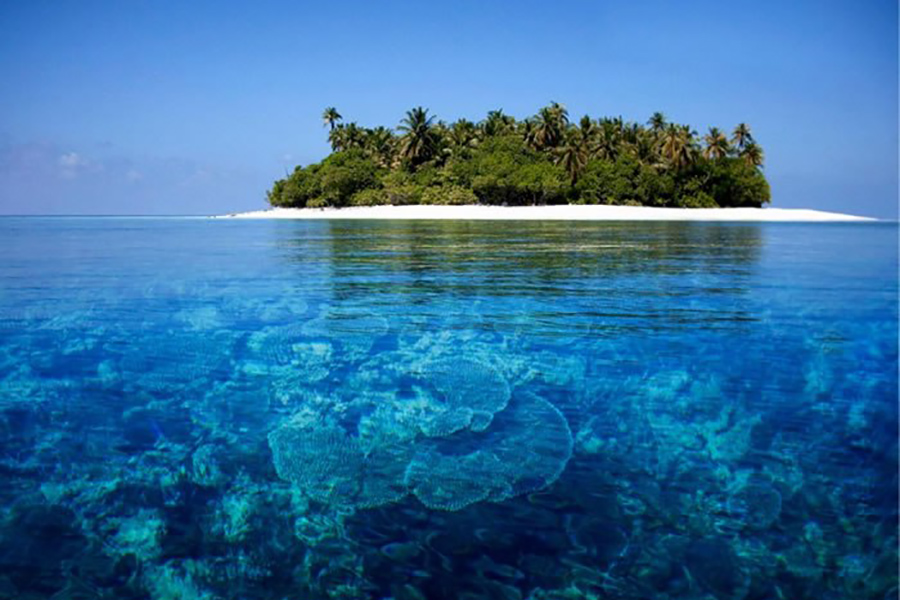
The world’s largest 3-D printed reef was submerged on 11 August at Summer Island in the Maldives, in what is hoped could be a new technology-driven method to help coral reefs survive a warming climate.

The artificial reef, assembled with hundreds of ceramic and concrete modules, was submerged at Summer Island’s ‘Blue Lagoon’ – a sandy part of the lagoon, where the resort hopes to create a new coral reef ecosystem.

If you like this, subscribe here for more stories that Inspire The Future.

The project started in a lab in Melbourne, Australia, where industrial designer Alex Goad of Reef Design Lab used sophisticated computing modeling to design reef structures similar to the coral reefs found naturally in the Maldives. 

A large 3-D printer whirred away for 24 hours to print moulds of the reef structures. These moulds were cast in ceramic – an inert substance, similar to the calcium carbonate found in coral reefs. The ceramic moulds were shipped to the Maldives, and filled with concrete on the beach at Summer Island. 

220 ceramic, concrete filled moulds were then slotted together, like a giant LEGO set, to create the new reef. 

The new reef sits in seven metres of water, close to the resort’s existing coral nursery. Fragments of coral from the nursery are being transplanted onto the 3-D reef, where they will grow and colonise the structure. 

As Alex explains: 3-D printing technology helps us to develop more innovative ways of protecting coral reefs. The technology allows us to mimic the complexity of natural reef structures, so we can design artificial reefs that closely resemble those found in nature. We hope this will be a more effective way of growing and restoring corals.”  

In a year or two, when the corals have grown over the 3-D reef, the resort hopes to have a new, natural looking reef, teeming with fish and marine life. 

If the 3-D printing technology proves more successful at growing corals than existing coral propagation methods, it could be a novel way of helping coral reefs survive a warming climate. 

The Maldives is one of the world’s most climate-vulnerable nations. Rising sea temperatures pose a grave threat to the world’s coral reefs, and mass bleaching events are becoming more common and more severe.

Summer Island Maldives has implemented a number of recent environmental initiatives, including the adoption of solar energy, a ban on the use of plastic straws, phasing out imported drinking water, and coral conservation projects.

Summer Island Resort Manager Mari Shareef explains: Projects like the 3-D printed reef are popular among guests, who like that we protect our environment. And it’s not only for the guests. Our staff, most of whom are Maldivian, want to protect their environment. Ultimately, we want to help promote a culture of environmental stewardship, not just at Summer Island, but across the Maldives.”

If you like this, subscribe here for more stories that Inspire The Future.

Lamborghini’s Latest Innovation: A Bicycle

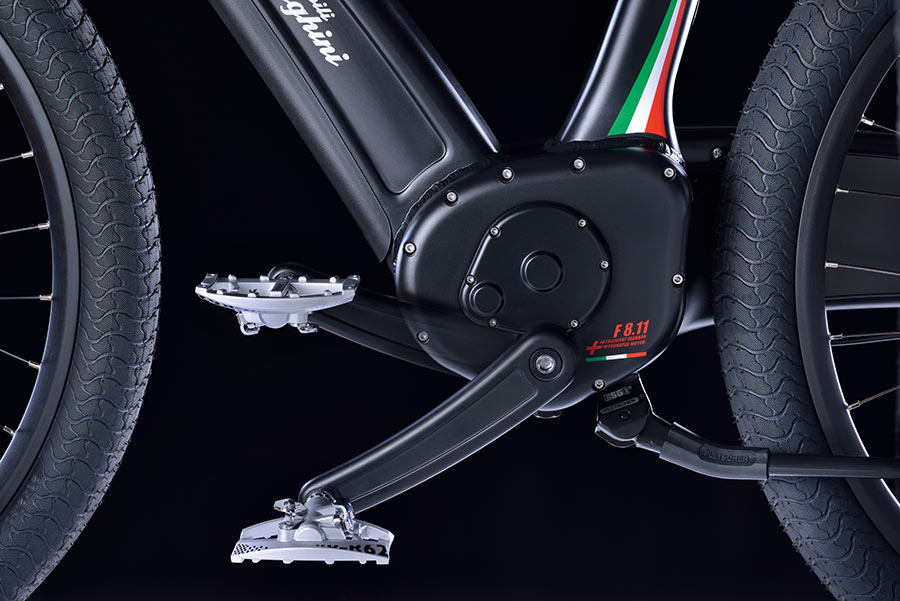
Want a Lamborghini but not the guilt of destroying the environment? Automobili Lamborghini has signed a partnership with Italtechnology to develop the first range of E-Bikes bearing the Lamborghini name.
 
In keeping with Lamborghini tradition, the battery powered E-Bikes are masterpieces of advanced technology, aimed at an exclusive and demanding clientele. Conceived, designed, and built entirely in Italy, the bikes are the result of over five years’ research and feature technological innovation, cutting-edge design, and four international patents.
 
 
There’s not much detail on the bike itself from the legendary Italian car manufacturer, but a battery powered bicycle is certainly a symbolic step in the right direction and signals a greener future.
 
The new E-Bikes will initially be available in two versions: an MTB designed for a dynamic lifestyle and outdoor activities, and a version dedicated more to speed for customers who want ultimate performance on the road, with a bike that can quickly reach the maximum speed allowed by current regulations.
 
For both models the battery life in “eco” mode is a maximum of 90 miles (145 km) and for full recharge the time is four hours. As with their cars, the Lamborghini bike is not expected to be cheap, starting at around $17,000.
 
The exclusiveness of the bikes is completed by the “Ad Personam” program, which customizes the livery in the paint colors – usually reserved for Lamborghini’s super sports cars. The first two versions of the pedal assist E-Bikes bearing the Lamborghini will become available online and through selected specialized retailers worldwide. 


Give Back to Society or “You’re Finished,” Major UK Recruiter Warns Business

British companies need to put ethics at the heart of their work to survive in the 21st century, said the head of a leading recruitment agency which adopted a social mission last year, as an array of scandals erode public trust in business.

The 59-year-old Cordant Group, with revenues of 840 million pounds ($1.12 billion), said in September that it will start reinvesting most of its profits to benefit society not shareholders – making it Britain’s largest social enterprise.

If you like this, subscribe here for more stories that Inspire The Future.

“For us to operate effectively in a future environment, an ethical core to all we do will be essential,” Phillip Ullmann, who heads the London-based Cordant Group with the job title of chief energiser, told the Thomson Reuters Foundation.

“As the population demands that standard, we can only operate against it.”

Britain is seen as a global leader in the innovative social enterprise sector, with about 70,000 businesses employing nearly 1 million people last year, according to Social Enterprise UK, which represents such firms, up from 55,000 companies in 2007.

“If you don’t make this transition, you’re finished,” said Ullmann, who has led the family-owned company for two decades.

“The next generation will not work for you, will not purchase products from you … We are seeing it now. We can offer well-paid jobs to people, they’ll ask to know a bit about the organisation and they’ll refuse the job.”

Trust in business in Britain has fallen to 43 percent from 49 percent in the last five years, a survey by the marketing firm Edelman found in January, with excessively high executive pay, tax avoidance and lack of transparency as the main drivers.

Other scandals – such as Facebook’s sharing of users’ personal data without their consent and the collapse of the British construction firm Carillion – have also contributed to public wariness about big business, Ullmann said.

Parliamentarians described Britain’s largest construction bankruptcy as a story of “recklessness, hubris and greed”, with Carillion executives more concerned with protecting bonuses than finding problems at the firm.

“Capitalism hasn’t worked,” said Ullmann, whose firm sends 125,000 temporary staff a year to work for 5,000 clients including Amazon and Tesco.

“There is a need for a new model and that is social business.”

Cordant has capped executive salaries at 20 times that of the lowest paid worker and put a limit on shareholder dividends, while also promising a staff profit-sharing scheme.

It will reinvest most of its profits in education and healthcare programmes that will have a positive impact on society, the company said on its website.

($1 = 0.7515 pounds)

By Lee Mannion @leemannion, Editing by Katy Migiro. 

If you like this, subscribe here for more stories that Inspire The Future.

UEFA’s #EqualGame Has Nothing to do With Politics or Religion

The city of Kyiv in the Ukraine was the focus of worldwide attention last month with the UEFA Champions League final taking place at the NSC Olimpiyskiy Stadium between Real Madrid and Liverpool.

A big part of the competition this season has been UEFA’s #EqualGame campaign which aims at celebrating the positive effects that football brings to communities while highlighting the power and importance of diversity, inclusion and team work on and off the field.  

If you like this, subscribe here for more stories that Inspire The Future.

Every month, as part of this campaign, UEFA focuses on a person from one of its 55 member associations as a great example of how football promotes inclusion, accessibility and diversity.  

One example is Olesksander Fomichov, football coach and professional businessman who lives in Ukraine. Fomichov is no stranger to adversity. He was forced to abandon his home  following the outbreak of civil unrest in 2014. But he is able to understand that there is power in unity and the bonds of good relationships. He states: “Keeping faith in people is the most important factor for the development of every country and the world as a whole. We can build a sustainable society and use football as one of the tools that brings us together.” 

Echoing this sentiment is Andriy Shevchenko, one of Ukraine’s greatest footballers and head coach of the national team. Shevchenko says: “Football is an international game. It has nothing to do with politics or religion. It’s a game that’s accessible to all and it should be pure, not only in the top competitions but also among children.”

Among the spectators at the Champions League final was the Mayor of Kiev and former professional boxer Vitali Klitschko, who said: “It’s very important to spread the message of social inclusion and diversity… and we want to do this through sport. Like Nelson Mandela said: sport has the power to change the world.”

If you like this, subscribe here for more stories that Inspire The Future.

Angel Tank, The ‘Shark Tank’ for Purpose-Driven Investors Announces First Winners

New event draws a talented pool of social entrepreneurs and top Bay Area venture investors at SEED 2018

Real Leaders, the world’s first sustainable business and leadership magazine, and ImpactAssets, a nonprofit financial services firm that increases the flow of capital into investments delivering financial, social and environmental returns, have announced the winners of Angel Tank, a first-ever event that matches impact investment with social entrepreneurs seeking solutions to pressing global problems.

If you like this, subscribe here for more stories that Inspire The Future.

Modeled after “Shark Tank,” the reality TV business series, Angel Tank debuted at the SEED 2018 Conference and featured leading Bay Area venture investors as judges, and a select group of six social entrepreneurs who competed for prizes to help bring their world-changing ideas to market.

“We are thrilled to have the opportunity to support and showcase this exceptional group of social entrepreneurs,” said Real Leaders Founder Mark Van Ness, an active impact investor and advocate for gender-balanced leadership. “Their fresh ideas and inspiring vision are helping to transform business as a force for good – for profit, people and planet.”

And the winners are:

• Legworks, Inc., a Toronto and Buffalo-based social enterprise that is revolutionizing access to high quality prosthetics for amputees around the world. Winner of The Angels Choice Award, a $10,000 cash investment prize selected by the panel of angel judges.

• Roots Studio, which digitizes the work and stories of traditional artists in India, Indonesia, Panama, and Jordan, among other regions, enabling artists to participate in the global economy without having to be in an urban center. Winner of The Audience Choice Award, a $10,000 cash investment prize for the venture that receives the most votes cast live during the competition.

• Countable, a political media company that helps voters contact their elected representatives about issues that matter. Winner of the Real Leaders’ Spotlight Award, a media package that was selected by attendees who cast votes for social entrepreneurs participating at SEED 2018. Countable is also a custom impact investment being made through ImpactAssets.

• In addition, a tech-enabled Live Investing Marketplace raised more than $25,000 for the entrepreneurs. The Forum allowed attendees to make tax-deductible investments of $25 or more into social ventures through the ImpactAssets Giving Fund.

Other social entrepreneurs participating in the Angel Tank included Designing Justice & Designing Spaces, which use innovations in architecture, design, and real estate development to attack the root causes of mass incarceration; Thrive Natural Care, creator of the first regenerative supply chain in the personal care industry; and Yellow Leaf Hammocks, a handwoven hammock company that is breaking the cycle of extreme poverty through sustainable job creation by hiring artisan weavers and their families in developing countries. The six ventures also received offers of help and advice from over 100 attendees at the event. Angel Tanks also featured a powerhouse panel of venture investors who evaluated and counseled social entrepreneurs, including:

• Anders Aabo, Sorenson Impact

• Jorge Davy-Mendez, Kapor Capital

• Keith Ippel, Spring Activator

• Sayuri Sharp, SV2

• Beth Stelluto, Gnu Foundation

“The opportunities for investing in social enterprises has never been greater—or more critical,” said Tim Freundlich, President of ImpactAssets. “Angel Tank represents a smart and surprising platform for uniting investment capital with world-changing ideas. We look forward to the next Angel Tank, which will take place around SOCAP 2018 In October.”

Real Leaders is the world’s first sustainable business & leadership magazine that aims to inspire better leaders for a better world; a world of far-sighted, sustainable leadership that helps find solutions to the problems that 7.5 billion people have created on a small planet. They want to ensure that the next generation of leaders, in all spheres of influence, are exposed to the best and brightest minds in the hope that they are inspired to find profitable business solutions that benefit humankind. Real Leaders advises and positions leaders to thrive in the new economy.

ImpactAssets is a nonprofit financial services firm that increases the flow of capital into investments delivering financial, social and environmental returns. ImpactAssets’ donor advised fund (“The Giving Fund”) and field-building initiatives enable philanthropists and other asset owners and their wealth advisors advance social or environmental change through impact investment and philanthropy. The Giving Fund currently has upwards of $450M in assets from a community of more than 1,000 donors.

If you like this, subscribe here for more stories that Inspire The Future.

Is This The World’s Most Sustainable Shopping Mall?

Frasers Property Australia teams up with eco-warrior Joost Bakker to unveil rooftop plans for an ultra-green development in Burwood, Victoria.

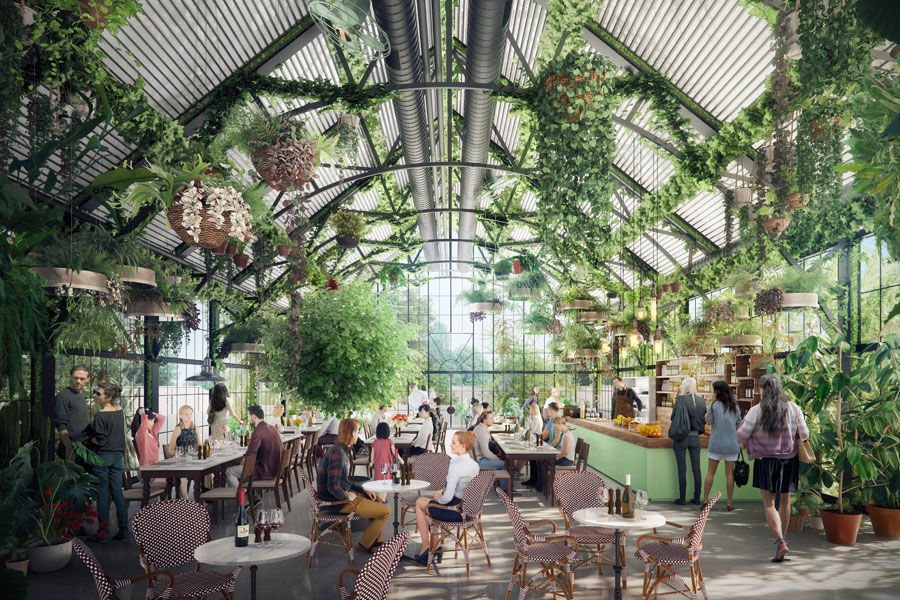
The future of retail and hospitality will touch down in Burwood, Victoria from late 2019 when Frasers Property Australia opens what is destined to be the most sustainable shopping centre in the world.

With the aim of achieving the Living Building Challenge accreditation – Burwood Brickworks will put sustainability at its core, welcoming visitors to live, shop and dine in a futuristic model of mixed-used development.

If you like this, subscribe here for more stories that Inspire The Future.

Launching an EOI with Joost Bakker to kick off the retail and hospitality part of the project, Frasers Property today unveiled the opening of an Expression of Interest for tenants wanting to take over a 2,000sqm Rooftop Urban Farm & Restaurant.

Frasers Property Executive GM of Retail, Peri Macdonald says the concept will transform the way we think about the impact of hospitality and retail on the natural environment.

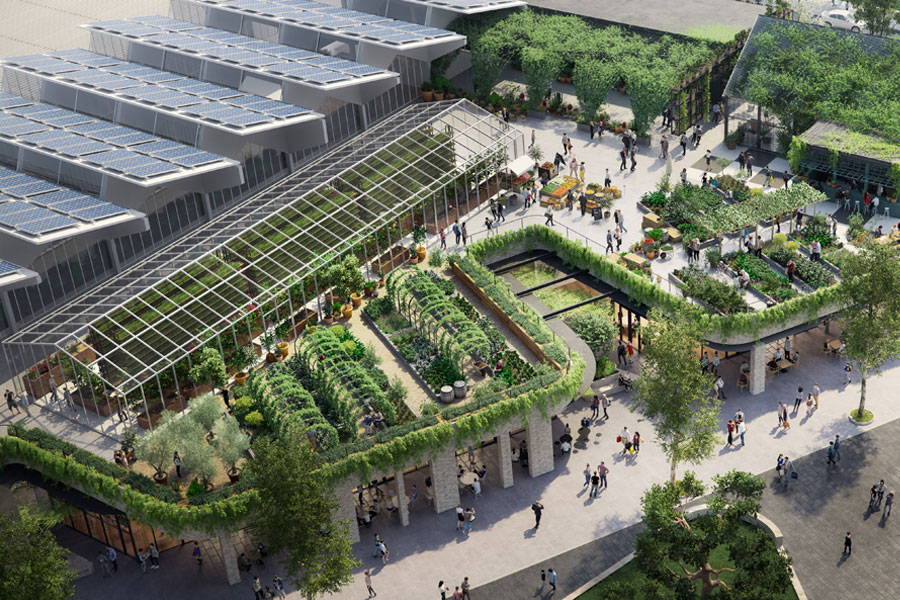
“This is an Australian first, that will completely reconsider how food is sourced and provided by retailers. Two thousand square metres of productive agricultural space has been evenly split between greenhouses, external planter boxes and landscaped growing areas,” said Macdonald.

“Burwood Brickworks is anticipated to be the world’s most sustainable shopping centre which will be determined a year after launch in 2019 and will have in excess of 12,700sqm of retail to share. We’re now interested in talking to unique food and beverage providers wanting to lease 2,000sqm of Urban Rooftop Farm & Restaurant site located on the shopping centre’s rooftop,” Macdonald said.

Following on from Frasers Property’s ground-breaking Central Park development in Chippendale NSW, a multi award-winning project with a building designed by Jean Nouvel, and housing the world’s largest living wall designed by landscape artist Patrick Blanc, Burwood Brickworks is set to become another pulsating community hub, located just 15 km from the City of Melbourne.

Joost Bakker said the invitation to creatively consult on design concept for the rooftop was an opportunity he ‘could not resist’.

“The vision driving the design comes from such a positive place. Frasers is seeking to re-invent the way we think about sustainable, mixed-used developments and food sourcing. Mulching excess organic material for compost, implementing ‘closed loop’ water reduction management and limiting food and waste transportation are just some of the measures that will be employed on the rooftop to lessen the ecological footprint.

“Minimising the amount of energy needed in Burwood Brickworks’ Urban Rooftop Farm & Restaurant underlines the commitment to an improved social conscious whilst providing genuine health benefits for both consumer and retailer alike,” he said. 


“I’ve really enjoyed helping Frasers to envision how such a bold concept can transform the way we think about food production and consumption. There is such a hunger for this kind of development throughout the world. It really fills a gap in the market to feed and nurture conscious consumers. New consumers wants to shop, eat and relax in environments that truly support a sustainable world,” Frasers Creative Consultant Joost Bakker said.

With construction kicking off in mid-2018, this is a high-profile mixed used project unlike any other of its scale in Australia. The sustainability concept for the rooftop is key to accrediting the building as Australia’s first 6 Star Green Star Design and As-Built retail building, and the world’s first Living Building Challenge certified retail development. A Living Building has a net zero carbon footprint, produces more electricity than it consumes, grows agriculture on 20% of the site and is net water and waste positive amongst other social and health benefits including access to natural daylight, indoor air quality and constructed from non-toxic and recycled materials.

Dutch-born florist, designer and sustainability warrior Joost Bakker is passionate about the natural environment.

Famous for his pop-up restaurant established next to Sydney Opera House in 2011, Joost Bakker promotes a thoughtful use of materials and recylcing and has become an eco-trailblazer in his adopted home of Australia.

Joost currently splits his time between farming on his property in Kallista Victoria, growing tulips and taking part on sustainability initiatives that promote a better world. He was engaged by Frasers as Creative Consultant to help define the concept and layout of the Burwood Brickworks Urban Farm which is due for completion in October 2019.

If you like this, subscribe here for more stories that Inspire The Future.