Sheril Kirshenbaum, Guest Speaker – Digital Biology

Sheril Kirshenbaum is director of The Energy Poll at The University of Texas at Austin. She works to enhance public understanding of science and energy issues and improve communication between scientists, policymakers, and the public.

She is also executive director of ScienceDebate, a non-profit initiative encouraging candidates to address science research and innovation issues on the campaign trail. Sheril is the author of The Science of Kissing, which explores one of humanity’s fondest pastimes. She also co-authored Unscientific America: How Scientific Illiteracy Threatens Our Future with Chris Mooney, chosen by Library Journal as one of the Best Sci-Tech Books of 2009 and named by President Obama’s science advisor John Holdren as a top recommended read. In addition, she blogs at Scientific American.

Sheril is a 2015 Presidential Leadership Scholar; an initiative launched by four presidential centers to foster growth in a diverse group of leaders. She has also been a Marshall Memorial Fellow, a legislative Knauss Science Fellow in the U.S. Senate, and a Next Generation Fellow through the Robert Strauss Center for International Security and Law. Sheril’s writing has appeared in publications such as Bloomberg and CNN frequently covering topics that bridge science and society from hydraulic fracturing to climate change. Her work has also been published in scientific journals including Science and Natureand she is featured in the anthology The Best American Science Writing 2010.

Sheril speaks regularly around the country to audiences at universities, federal agencies, and museums. She has appeared in documentaries and been a guest on such programs as CBS This Morning and The Today Show. She has also served on the program committee for the American Association for the Advancement of Science (AAAS) and been a TEDGlobal and TEDx speaker. Previously, Sheril was a research scientist with the Webber Energy Group at UT Austin’s Center for International Energy and Environmental Policy.

In addition, she was a research associate at Duke University’s Nicholas School of the Environment with The Pimm Group and has been a Fellow with the Center for Biodiversity and Conservation at the American Museum of Natural History and a Howard Hughes Research Fellow. Sheril holds graduate degrees in marine biology and policy. She has hosted blogs at Wired and Discover. She also regularly contributes to a variety of science websites such as NPR and Think Progress. An archive of blog posts can be viewed atcultureofscience.com. Sheril was born in Suffern, New York and is also a musician. She lives in East Lansing, MI with her husband David Lowry and son.

Original Story: Singularity University


Innovating Women: The Changing Face of Technology

Singularity University Applauds New Book Crowdsourcing the Paths to Success of Hundreds of Women in Science and Technology

Innovating Women, a new book co-authored by Singularity University (SU) distinguished fellow Vivek Wadhwa and award-winning author, journalist and professor Farai Chideya, holds no punches in challenging the old-boy networks in science and tech around the world to foretell that women are prime to lead the new era of innovation.

Created with the support ofSingularity UniversityandGoogle for Entrepreneurs, Innovating Womencrowdsources the personal journeys of hundreds of women from Tehran to Mumbai to Silicon Valley and shares first-hand accounts of these pioneers’ challenges, barriers, discriminations and roads to success. Contributors to the book include Prodea CEO and the first female private space explorerAnousheh Ansari; Google(x) VP and recently announced United States CTO Megan Smith; physicist, physician, founder and CEO of Nanobiosym Dr. Anita Goel; and venture capitalist Heidi Roizen.

Ursula Burns, Chairman and CEO, Xerox Corporation called Innovating Women “a must read for every woman looking to affect change and join today’s global innovation economy.”

“This powerful new book illustrates that there are women in tech doing amazing work, even though less than 15% of senior executives are women,” said Lajuanda Asemota, director, Strategic Relations for Diversity at SU. “I’m excited to help SU ensure the future is as inclusive and diverse as it should be.”

Ray Kurzweil, inventor, author, futurist, a director of engineering at Google and co-founder of SU remarked: “As someone whose family has been dedicated to advancing women’s careers for one and a half centuries, I am excited by Vivek and Farai’s compelling book which shines a light on the remarkable achievements of brilliant and pioneering women in technology.”

“We have the ability today to create the era of abundance, but not without the leadership of women.Innovating Women explains why and how women, at every level of business and research will transform society. Of particular note is contributor Megan Smith, appointed just last week by President Obama to serve as the US CTO. We applaud Megan and all the contributors of this inspiring book,” stated Dr. Peter H. Diamandis, executive chairman, SU; chairman, XPRIZE Foundation; author, Abundance: The Future is Better Than you Think.

Innovating Womenis availablein print andeBookeditions. A portion of the proceeds will be allocated to the Singularity University Fund at the Silicon Valley Community Foundation to support women applicants toSU’s Global Solutions Program.

Written by: Vivek Wadhwa is a distinguished fellow at SU | Farai Chideya has combined media, technology and socio-political analysis during her 20-year career as an award-winning author, journalist, professor and lecturer.

Original Story: Exponential Finance (SU)


Innovating Women: The Changing Face of Technology

Singularity University Applauds New Book Crowdsourcing the Paths to Success of Hundreds of Women in Science and Technology

Innovating Women, a new book co-authored by Singularity University (SU) distinguished fellow Vivek Wadhwa and award-winning author, journalist and professor Farai Chideya, holds no punches in challenging the old-boy networks in science and tech around the world to foretell that women are prime to lead the new era of innovation.

Created with the support ofSingularity UniversityandGoogle for Entrepreneurs, Innovating Womencrowdsources the personal journeys of hundreds of women from Tehran to Mumbai to Silicon Valley and shares first-hand accounts of these pioneers’ challenges, barriers, discriminations and roads to success. Contributors to the book include Prodea CEO and the first female private space explorerAnousheh Ansari; Google(x) VP and recently announced United States CTO Megan Smith; physicist, physician, founder and CEO of Nanobiosym Dr. Anita Goel; and venture capitalist Heidi Roizen.

Ursula Burns, Chairman and CEO, Xerox Corporation called Innovating Women “a must read for every woman looking to affect change and join today’s global innovation economy.”

“This powerful new book illustrates that there are women in tech doing amazing work, even though less than 15% of senior executives are women,” said Lajuanda Asemota, director, Strategic Relations for Diversity at SU. “I’m excited to help SU ensure the future is as inclusive and diverse as it should be.”

Ray Kurzweil, inventor, author, futurist, a director of engineering at Google and co-founder of SU remarked: “As someone whose family has been dedicated to advancing women’s careers for one and a half centuries, I am excited by Vivek and Farai’s compelling book which shines a light on the remarkable achievements of brilliant and pioneering women in technology.”

“We have the ability today to create the era of abundance, but not without the leadership of women.Innovating Women explains why and how women, at every level of business and research will transform society. Of particular note is contributor Megan Smith, appointed just last week by President Obama to serve as the US CTO. We applaud Megan and all the contributors of this inspiring book,” stated Dr. Peter H. Diamandis, executive chairman, SU; chairman, XPRIZE Foundation; author, Abundance: The Future is Better Than you Think.

Innovating Womenis availablein print andeBookeditions. A portion of the proceeds will be allocated to the Singularity University Fund at the Silicon Valley Community Foundation to support women applicants toSU’s Global Solutions Program.

Written by: Vivek Wadhwa is a distinguished fellow at SU | Farai Chideya has combined media, technology and socio-political analysis during her 20-year career as an award-winning author, journalist, professor and lecturer.

Original Story: Exponential Finance (SU)


Some Thoughts on the Challenges of Leadership in the Digital Age

Digitization brings about a new need for competent leadership. Today, we’ll take a look at the most dramatic changes.

Leadership in the digital age will be one of the defining themes of Global Female Leaders 2017. If you haven’t done so already, we invite you to take a look at our 2017 agenda in order to discover every highlight of this year’s event!

In the digital age, competent leadership may be the most important skill any company can cultivate. Because digitization changes companies. It changes working cultures and processes, customer behaviour and corporate communications. It also brings about a new need for, as well as new risks of corporate communications. Let’s just look at three of them!

Challenge 1: Digitization changes the working culture

It challenges employer-employee relationships.

This challenge has multiple facets. On the one hand, workers demand a digitized and modern work environment. In private, most of them use smartphones, social media and consumer electronics that fit their needs. Of course they want access to the most comfortable and hip devices at work, too. At the same time, employment changes too. We can see more and more freelancers, armed with laptops and Starbucks coffees, who will do project work and move on to the next job thereafter.

It challenges the way we communicate.

Digitization also changes the way we communicate. This goes especially for the younger generations who prefer text messages of meetings, but who also have new ideas on hierarchy and teamwork. This brings about a new potential for conflicts within an organization, since the expectations towards work can vary drastically between the members of the now four generations that work within most companies.

In essence, digitization diversifies the means of, expectations towards and ways to put into practice communications and work in general.

Challenge 2: Digitization changes customer behaviour and brings about the need to stay innovative

This is a big one! Similar to the expectations of employees, the expectations of customers are changing, too. Customers today are all about personalized products, about subscribing to platforms rather than buying commodities for good. They also want to talk their companies on Facebook and Twitter, read reviews on their products and chime in when they have ideas about product innovation.

This brings about the need for organisations to stay agile, innovative and fast. It brings about a new kind of competition, namely the race towards developing the most consumer-friendly business models and bringing them to market as fast as possible. Most of those are also data-driven and demand a high level of cooperation between the different units of organisation. Also, let’s not forget that many companies are forced to bring in new skills and know-how in order to branch out.

In essence, this puts pressure on old organizational structures, forces us to dissolve the boundaries between departments and change the way they work together.

Challenge 3: Digitization changes corporate communications

Employees as well as customers change how they interact with companies. And in turn, this changes corporate communications. It becomes more transparent and has to become more honest and open. Within this big shift leaders will have to adopt new strategies in order to guide their organizations towards a digital mindset.

Original Story: The Global Summit Series


Some Thoughts on the Challenges of Leadership in the Digital Age

Digitization brings about a new need for competent leadership. Today, we’ll take a look at the most dramatic changes.

Leadership in the digital age will be one of the defining themes of Global Female Leaders 2017. If you haven’t done so already, we invite you to take a look at our 2017 agenda in order to discover every highlight of this year’s event!

In the digital age, competent leadership may be the most important skill any company can cultivate. Because digitization changes companies. It changes working cultures and processes, customer behaviour and corporate communications. It also brings about a new need for, as well as new risks of corporate communications. Let’s just look at three of them!

Challenge 1: Digitization changes the working culture

It challenges employer-employee relationships.

This challenge has multiple facets. On the one hand, workers demand a digitized and modern work environment. In private, most of them use smartphones, social media and consumer electronics that fit their needs. Of course they want access to the most comfortable and hip devices at work, too. At the same time, employment changes too. We can see more and more freelancers, armed with laptops and Starbucks coffees, who will do project work and move on to the next job thereafter.

It challenges the way we communicate.

Digitization also changes the way we communicate. This goes especially for the younger generations who prefer text messages of meetings, but who also have new ideas on hierarchy and teamwork. This brings about a new potential for conflicts within an organization, since the expectations towards work can vary drastically between the members of the now four generations that work within most companies.

In essence, digitization diversifies the means of, expectations towards and ways to put into practice communications and work in general.

Challenge 2: Digitization changes customer behaviour and brings about the need to stay innovative

This is a big one! Similar to the expectations of employees, the expectations of customers are changing, too. Customers today are all about personalized products, about subscribing to platforms rather than buying commodities for good. They also want to talk their companies on Facebook and Twitter, read reviews on their products and chime in when they have ideas about product innovation.

This brings about the need for organisations to stay agile, innovative and fast. It brings about a new kind of competition, namely the race towards developing the most consumer-friendly business models and bringing them to market as fast as possible. Most of those are also data-driven and demand a high level of cooperation between the different units of organisation. Also, let’s not forget that many companies are forced to bring in new skills and know-how in order to branch out.

In essence, this puts pressure on old organizational structures, forces us to dissolve the boundaries between departments and change the way they work together.

Challenge 3: Digitization changes corporate communications

Employees as well as customers change how they interact with companies. And in turn, this changes corporate communications. It becomes more transparent and has to become more honest and open. Within this big shift leaders will have to adopt new strategies in order to guide their organizations towards a digital mindset.

Original Story: The Global Summit Series


The Digital Side of Leadership

Digital transformation has become the buzzword of our age, and while the economy is becoming ever more digital, the demands on management are constantly growing.

The expectations on managers in respect of their digitization skills are increasing, and this is expressed clearly in the vacancies that are waiting to be filled. And not just in the IT-related job descriptions: requirements are also tending increasingly towards digitization in many positions quite unrelated to IT. Most specialists are classically trained and have not experienced digitization in a focused manner or via training. In their leadership role, they are now being tested in a new and completely different manner.

What is digital competence?

The most important thing is the ability to continuously acquire and implement new knowledge. It’s also crucial in a complex world to keep track of the situation, identify problems and work towards solutions. With regard to the strategic alignment of a company, executives are in demand from the planning stage onwards: to set the course of the company with their expertise and know-how. Once digital transformations are implemented in the company, managers need to be able to support the strategy, lead the employees and, in the best case, to inspire them even.

A “digital” executive needs certain skills

Helping employees adapt to the new situation is one of the most important tasks of a manager in the digital environment. Specifically, this means that they need to ensure that their staff receive additional training quickly and reshape tasks so that the full potential of an employee comes into play.
The classic skills such as empathy, assertiveness and complexity management remain important, as well as technical skills. But in an environment where new jobs are being created constantly with new, modified requirements, digital competence is vital.

Going digital – getting there

Most companies offer their employees training, professional change management with external support. This gets employees fully involved and, at the same time, provides them the freedom to make and implement innovations. In doing so, they create new and sometimes unexpected opportunities. There is a downside, however: there is often too little space, time and budget available, and no one really knows for sure how much time remains for the transformation. This is certainly the greatest risk – not being fast enough. But where it succeeds, digitization will bring more flexibility into the labour market. The workplace itself plays an ever-smaller role, because nowadays it is possible to exchange data almost everywhere via digital channels. And this exchange remains very important – even in the digital age – because a manager still works in close cooperation with his or her employees, regardless of whether they possess these digital skills or not.

Andreas Wartenberg has 25 years of experience as a personnel consultant and fills management positions in the technology sector and other industries.


The Digital Side of Leadership

Digital transformation has become the buzzword of our age, and while the economy is becoming ever more digital, the demands on management are constantly growing.

The expectations on managers in respect of their digitization skills are increasing, and this is expressed clearly in the vacancies that are waiting to be filled. And not just in the IT-related job descriptions: requirements are also tending increasingly towards digitization in many positions quite unrelated to IT. Most specialists are classically trained and have not experienced digitization in a focused manner or via training. In their leadership role, they are now being tested in a new and completely different manner.

What is digital competence?

The most important thing is the ability to continuously acquire and implement new knowledge. It’s also crucial in a complex world to keep track of the situation, identify problems and work towards solutions. With regard to the strategic alignment of a company, executives are in demand from the planning stage onwards: to set the course of the company with their expertise and know-how. Once digital transformations are implemented in the company, managers need to be able to support the strategy, lead the employees and, in the best case, to inspire them even.

A “digital” executive needs certain skills

Helping employees adapt to the new situation is one of the most important tasks of a manager in the digital environment. Specifically, this means that they need to ensure that their staff receive additional training quickly and reshape tasks so that the full potential of an employee comes into play.
The classic skills such as empathy, assertiveness and complexity management remain important, as well as technical skills. But in an environment where new jobs are being created constantly with new, modified requirements, digital competence is vital.

Going digital – getting there

Most companies offer their employees training, professional change management with external support. This gets employees fully involved and, at the same time, provides them the freedom to make and implement innovations. In doing so, they create new and sometimes unexpected opportunities. There is a downside, however: there is often too little space, time and budget available, and no one really knows for sure how much time remains for the transformation. This is certainly the greatest risk – not being fast enough. But where it succeeds, digitization will bring more flexibility into the labour market. The workplace itself plays an ever-smaller role, because nowadays it is possible to exchange data almost everywhere via digital channels. And this exchange remains very important – even in the digital age – because a manager still works in close cooperation with his or her employees, regardless of whether they possess these digital skills or not.

Andreas Wartenberg has 25 years of experience as a personnel consultant and fills management positions in the technology sector and other industries.


Leveraging Technology for Social and Environmental Impact with Geunbae

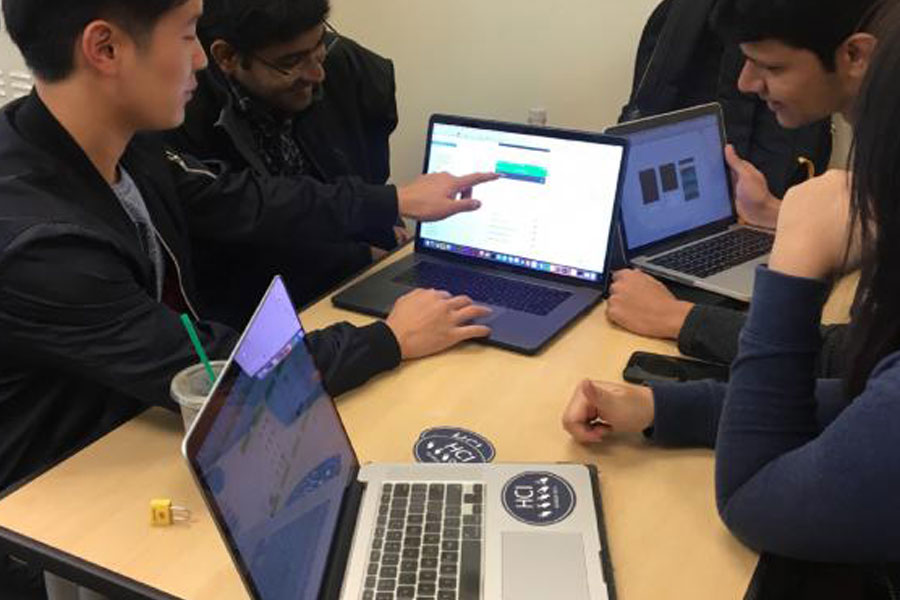
Geunbae Lee is an Impact Design Fellow activating around human-computer interaction.

He, along with his team members Jayanth Mohana Krishna, Jessica Tsui, and Nishant Panchal are working on a project focused on home automation. They are creating a web platform for people to manage their connected devices through the Internet of Things. This project will reduce energy by helping people tailor their energy use to exact needs and will impact the old or disabled who run physical risks by forgetting to turn off stoves or feeling for switches in the dark. 

Learn more about his journey to designing for impact:

Why did you first decide to take action around impact design?
The reason I got into HCI and UX is because I wanted to make change in my community. Most of my previous and current projects revolve around trying to create a better user experience and to discover potential solutions that are far better than the ones that currently exist. I believe that the moment I put my feet forward into this field, I start to make an impact to the community and to individuals who value the products I shape. I thought applying for the Impact Design Fellowship was the next step for me. 

How did you know this was the right project for you to work on?
Frankly, I don’t think there’s any right or wrong projects to begin with as long as there’s purpose and problems that we want to tackle. I think it’s very important to have a clearly defined area and topic that the team is going for because without it, it’s like sailing a boat without a compass in your hands. In order for me and my teammates to figure out what kind of impact we should make in the community, we went through numerous brainstorming and team meeting sessions which helped out a lot. 

What do you think is the most critical issue facing the world today?
One of the critical issues I’ve personally discovered is cultural issues. There are cultural discriminations and gaps between the people in the community which are some of the issues that I’m very interested in solving. As an international student growing up in Canada, South Korea, and the United States I’ve experienced these problems, which led me to become more thoughtful about the issues. 

What advice would you give to someone launching their own project at school?
This really depends on what kind of project you and your most focused team members are trying to accomplish. For me, I initially wanted to make a project with 4 people in my team who could really focus and craft a good solution. To be honest, it made us stronger, more united, and definitely helped us to focus on each of our tasks as a team. I recommend to people looking to launch a project to first find out what kind of project they want to do. As you and your initial members brainstorm, you will definitely see what you need, who you will need, and why.

If you were given an extra hour every day, what would you do with it?
If I was given an extra hour every day, I would write blogs about my experience in the design world and spread my knowledge to others who are working hard like I am. I often write on Medium and so far I’ve gotten great feedback from students and designers all over the world. Writing is something that I don’t feel confident with because English is my second language, but I believe it’s an important skill to have. By practicing through writing blog posts, it will help me get to know more people and help for my own career development. 

Original Story: Net Impact


Leveraging Technology for Social and Environmental Impact with Geunbae

Geunbae Lee is an Impact Design Fellow activating around human-computer interaction.

He, along with his team members Jayanth Mohana Krishna, Jessica Tsui, and Nishant Panchal are working on a project focused on home automation. They are creating a web platform for people to manage their connected devices through the Internet of Things. This project will reduce energy by helping people tailor their energy use to exact needs and will impact the old or disabled who run physical risks by forgetting to turn off stoves or feeling for switches in the dark. 

Learn more about his journey to designing for impact:

Why did you first decide to take action around impact design?
The reason I got into HCI and UX is because I wanted to make change in my community. Most of my previous and current projects revolve around trying to create a better user experience and to discover potential solutions that are far better than the ones that currently exist. I believe that the moment I put my feet forward into this field, I start to make an impact to the community and to individuals who value the products I shape. I thought applying for the Impact Design Fellowship was the next step for me. 

How did you know this was the right project for you to work on?
Frankly, I don’t think there’s any right or wrong projects to begin with as long as there’s purpose and problems that we want to tackle. I think it’s very important to have a clearly defined area and topic that the team is going for because without it, it’s like sailing a boat without a compass in your hands. In order for me and my teammates to figure out what kind of impact we should make in the community, we went through numerous brainstorming and team meeting sessions which helped out a lot. 

What do you think is the most critical issue facing the world today?
One of the critical issues I’ve personally discovered is cultural issues. There are cultural discriminations and gaps between the people in the community which are some of the issues that I’m very interested in solving. As an international student growing up in Canada, South Korea, and the United States I’ve experienced these problems, which led me to become more thoughtful about the issues. 

What advice would you give to someone launching their own project at school?
This really depends on what kind of project you and your most focused team members are trying to accomplish. For me, I initially wanted to make a project with 4 people in my team who could really focus and craft a good solution. To be honest, it made us stronger, more united, and definitely helped us to focus on each of our tasks as a team. I recommend to people looking to launch a project to first find out what kind of project they want to do. As you and your initial members brainstorm, you will definitely see what you need, who you will need, and why.

If you were given an extra hour every day, what would you do with it?
If I was given an extra hour every day, I would write blogs about my experience in the design world and spread my knowledge to others who are working hard like I am. I often write on Medium and so far I’ve gotten great feedback from students and designers all over the world. Writing is something that I don’t feel confident with because English is my second language, but I believe it’s an important skill to have. By practicing through writing blog posts, it will help me get to know more people and help for my own career development. 

Original Story: Net Impact


Mobile’s sleeping giant

With no costly infrastructure to overhaul, Africa has leapt ahead in mobile communications and m-banking.

Third World mobile banking systems are piquing the attention of international operators and international banking organizations. The result – if all goes well – could be a fresh influx of investment and technological know-how poured into an arena where Third World countries are the innovators.

Hopefully, the interest being shown by regulators will also create legislation that encourages innovation and allows more players to enter the fray. The fear, of course, is that new legislation may stifle these developments if banking organizations regard them as unwelcome incursions into their hallowed territory. Europe and the U.S. have made slow progress with mobile banking because there simply isn’t much need for it. At best, it’s an add-on service for people who already have plenty of physical branches and good Internet access if they choose to bank online.

A recent study concluded that 1.7 billion people do not have a bank account, but do have a mobile phone, making mobile phones a direct conduit to nearly half of the world’s unbanked.

Yet, in the emerging nations, massive populations have no access to banks and so little money to spend that the cost and hassle of opening a bank account has never been worth it. Yet everyone needs to give money to someone else, whether it’s to pay for a bus ticket, a grocery bill, or to send money to relatives. Global technology research company Gartner estimates the number of mobile payment users worldwide at 212 million, yet Nigeria alone has 25 million people with a cellphone but no bank account and mobile operators are keen to capitalise on this.

African mobile operators have identified a gap in the market to provide customers with an affordable service they need, leveraging on their brand, large subscriber base and distribution capabilities. The minute people are able to do financial services on their mobile handset, a mobile operator’s subscriber churn reduces immensely. Nigeria’s banking regulator is giving more freedom to mobile operators, while the local governments have started paying social grants to the unbanked via mobile services.

The global awakening of interest is highlighted by the numerous conferences being held to debate mobile banking and thrash out strategies for its regulation. Recent developments in mobile phone-enabled financial services suggest we are on the cusp of a revolution in the way financial services are delivered. Debates are under way on how to enable innovation without creating undue risk to operators or their customers, while adhering to national and international security standards including the prevention of money laundering and the financing of terrorism.

Their worry is that operators introducing financial services to millions of unserved people may expose the financial sector and payment systems to new risks that existing regulations do not address. Or perhaps governments are just worried that the banks they regulate are under threat from new rivals, and are too slow and staid to retaliate. Harnessing the power of technology could dramatically increase access to financial services for poor people, says the Consultative Group to Assist the Poor (CGAP), a microfinance group within the World Bank.

But it can only happen if regulators and private firms strike the right balance between protecting customers and allowing innovation to flourish. Poor people need a safe way to save and send money, and African innovations like M-Pesa and M-Kesho are showing us how to reach the billion people worldwide who have a cellphone but no bank account. Millions of people could be given access to safe, low-cost financial services using mobile phones and other technologies, giving them opportunities to manage their lives. Some of the most innovative solutions for financial inclusion have come from Africa.

The mobile phone is a pervasive device that has penetrated the poorest economies due to an overwhelming demand for communications. That makes it a useful tool for banking as well. Africa’s abundance of people, untouched by traditional financial services, is usually viewed as a challenge, when it’s actually an opportunity to explore new ways to bring people into the financial environment.

Africa is a cash-based society, and companies are proving mobile banking can be used as a tool to facilitate virtually any form of payment, directly from a mobile phone. As an example, Celpay in Zambia and the Democratic Republic of the Congo offers virtual bank accounts via a cellphone with features that compare to many normal accounts. Account transfers, bill payments, cash deposits, withdrawals and prepaid airtime vending are all supported.

Celpay has also developed an m-banking cash-on-delivery payment that many national chain stores are using. A thriving network of agents is vital to the success of mobile banking, but building and sustaining that network is challenging. In a survey of Safaricom’s M-Pesa service in Kenya, it was found that it had successfully established large agent networks, but that not all were profitable. M-Pesa has more than 5 million users and handles about 160,000 transactions per day worth US$4 million.

Agents earn a commission on each transaction, and a typical agent generates more than twice as much revenue through M-Pesa than by selling mobile phone airtime. Some believe mobile operators should automatically get limited banking licences to offer shortterm loans, overdrafts and handle payments for their customers, while banks should be given communications licences to run secure hotspots to increase the range of services they offer at ATMs. A recent study concluded that 1.7 billion people do not have a bank account, but do have a mobile phone, making mobile phones a direct conduit to nearly half of the world’s unbanked.

As many as 364 million low-income, unbanked people currently use mobile money, generating US$7.8 billion in new revenue via transaction fees, improved loyalty, and more cost-efficient airtime distribution. To successfully capture this opportunity, operators must understand the financial lives of unbanked and low-income consumers.

Most of the target market receive their incomes in cash, and keep their money at home, in a hiding place or join a saving club. Africa’s advantage to many banks in the developed world is that many old and established financial institutions use old systems that are not as scalable or adaptable as the new technology architecture that mobile networks offer.

Being able to use a cellphone to make purchases or transfer money has rapidly won an enormous customer base in Africa. Ease-of-use, speed, price and accessibility may have overshadowed the concerns about security that would be raised in countries where this is far from an essential service, but as the user base grows and money starts crossing borders, the authorities, as well as banks and global operators, are starting to pay attention.

 

0