Leadership in the Spotlight

As women business owners, when we think about the topic of leadership the theme of this month’s issue of NAWBO ONE a lot of things come to mind.

We are leaders in our businesses, households and communities. We have friends, customers and vendor partners in prominent leadership positions in corporate America. And, of course, with election season in full swing, we think about our political leaders both male and female and the issues we care about most that we hope they’ll embrace and support.

As the voice of women business owners and with advocacy at the heart of our organization and its founding, NAWBO is particularly focused right now on our political leadership. We are advocating for more women to run for political office, and for more of those who make it into seats to get behind women-owned and small businesses issues.

To this end, we have released a 2016 public policy agenda to help women business owners who are part of our community and the elected officials we interact with to understand what we care about most issues that are critical to our personal and business health. The issues we have chosen to pursue benefit the majority of our NAWBO members while also increasing our visibility and credibility with elected officials, agency personnel, peer organizations and members of the media.

They include:

  • Access to Capital
  • Education and Workforce
  • Government Contracting
  • International Trade
  • Regulatory Reform
  • Taxes

Additionally, we have chosen to expand our agenda from last year to include other issues that impact women entrepreneurs, such as breast cancer, Alzheimer’s, pension reform and retirement planning. By broadening our focus, we increase our ability to build coalitions and credibility with leaders of both political parties.

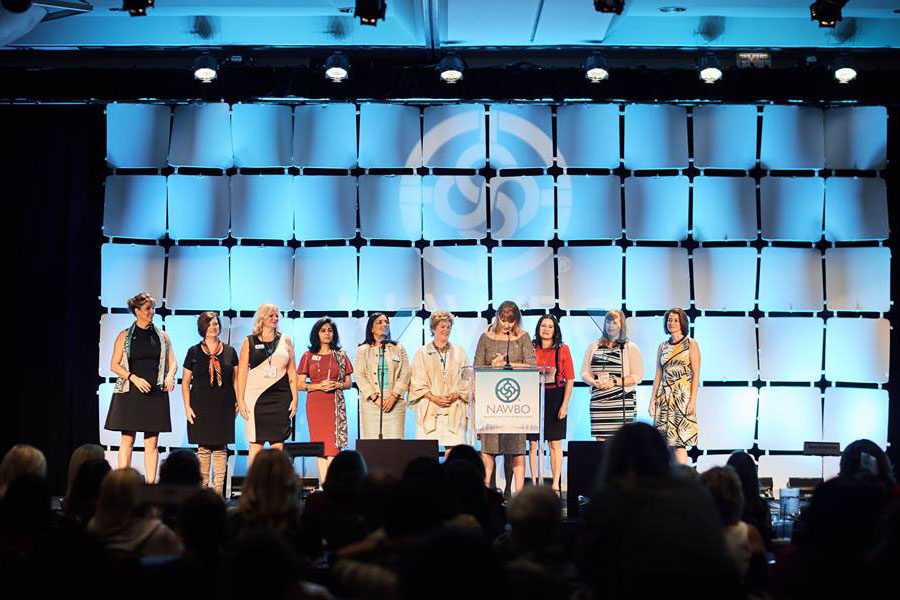
A few weeks back, I was thrilled to participate in a town hall-style event in New Hampshire one day before one of the presidential debates. Hosted by the Job Creators Network (JCN) together with the Independent Women’s Forum and moderated by CNN Political Commentator Margaret Hoover, this event brought together local and national business leaders to discuss what women really want this election season is it issues like reproductive rights and the gender pay gap that typically get top billing in the media, or economic issues that impact job creation and opportunity, like a poll recently found?

The women I was proud to speak alongside, including Sabrina Schaeffer, Executive Director at the Independent Women’s Forum, and Teresa R. Rosenberger, President of Divine Strategies, a local business consultancy, focused on the economic hurdles women face to succeeding in business, highlighting the challenges of overregulation, overtaxation and a lack of access to capital. Click here to view a video of this discussion.

As always, I’d love to hear from you! What leadership qualities do you look for in your elected officials, in your own employees, in your customers, etc.? And what issues do you care about most this election season? Together, as leaders and advocates, we can make a difference.

Written by: Crystal Arredondo, NAWBO National Board Chair

Original Story: Nawbo


Leadership in the Spotlight

As women business owners, when we think about the topic of leadership the theme of this month’s issue of NAWBO ONE a lot of things come to mind.

We are leaders in our businesses, households and communities. We have friends, customers and vendor partners in prominent leadership positions in corporate America. And, of course, with election season in full swing, we think about our political leaders both male and female and the issues we care about most that we hope they’ll embrace and support.

As the voice of women business owners and with advocacy at the heart of our organization and its founding, NAWBO is particularly focused right now on our political leadership. We are advocating for more women to run for political office, and for more of those who make it into seats to get behind women-owned and small businesses issues.

To this end, we have released a 2016 public policy agenda to help women business owners who are part of our community and the elected officials we interact with to understand what we care about most issues that are critical to our personal and business health. The issues we have chosen to pursue benefit the majority of our NAWBO members while also increasing our visibility and credibility with elected officials, agency personnel, peer organizations and members of the media.

They include:

  • Access to Capital
  • Education and Workforce
  • Government Contracting
  • International Trade
  • Regulatory Reform
  • Taxes

Additionally, we have chosen to expand our agenda from last year to include other issues that impact women entrepreneurs, such as breast cancer, Alzheimer’s, pension reform and retirement planning. By broadening our focus, we increase our ability to build coalitions and credibility with leaders of both political parties.

A few weeks back, I was thrilled to participate in a town hall-style event in New Hampshire one day before one of the presidential debates. Hosted by the Job Creators Network (JCN) together with the Independent Women’s Forum and moderated by CNN Political Commentator Margaret Hoover, this event brought together local and national business leaders to discuss what women really want this election season is it issues like reproductive rights and the gender pay gap that typically get top billing in the media, or economic issues that impact job creation and opportunity, like a poll recently found?

The women I was proud to speak alongside, including Sabrina Schaeffer, Executive Director at the Independent Women’s Forum, and Teresa R. Rosenberger, President of Divine Strategies, a local business consultancy, focused on the economic hurdles women face to succeeding in business, highlighting the challenges of overregulation, overtaxation and a lack of access to capital. Click here to view a video of this discussion.

As always, I’d love to hear from you! What leadership qualities do you look for in your elected officials, in your own employees, in your customers, etc.? And what issues do you care about most this election season? Together, as leaders and advocates, we can make a difference.

Written by: Crystal Arredondo, NAWBO National Board Chair

Original Story: Nawbo


Equality: What Does it Mean?

Equality means different things for different people and generations.

For the women who founded NAWBO more than 40 years ago, it was about being able to take out a line of credit to start or grow their business without their husband, brother or father cosigning. For women business owners today, it’s about equality in pay, in the boardroom, in elected offices, in government procurement opportunities and more. And for women in other parts of the world, especially in developing nations, equality often takes on a completely different meaning—like the ability to work or receive an education.

Here are a few recent statistics from Makers (the largest video collection of women’s stories online) that tell the story:

  • In 2015, only half of the world’s working-age women were in the labor force, compared to 77 percent of working-age men.
  • Women with full-time jobs still earn only about 77 percent of their male counterparts’ earnings.
  • African-American women earn 64 cents and Latina women earn 56 cents for every dollar earned by a Caucasian man.
  • 62 million girls are denied an education all over the world. 
  • Every year, an estimated 15 million girls under 18 are married worldwide, with little or no say in the matter.
  • 4 out of 5 victims of human trafficking are girls. 
  • Around the world, only 22 percent of all national parliamentarians are female. That’s double the number in 1995, but still a marker of slow change.
  • Women currently hold 24, or 4.8 percent, of CEO positions at S&P 500 companies.

As women and women business owners, one of our greatest weapons in our fight for true equality is our voice which is even more powerful when combined together as a movement of thousands of smart, passionate NAWBO members from across the United States. Together, we can speak out on the issues that are most important to all of us, in our communities, in our states and in our nation’s capital. Learn more about this powerful NAWBO voice and how you can be part of it here.

This issue of NAWBO ONE features an equality theme. In it, you’ll revisit this summer’s NAWBO Advocacy Day where our members from across the country gathered in Washington, D.C. to meet with and learn from key political decision makers and have their voices heard. You’ll also read about how equality within our own businesses benefits us and makes us stronger.

Written by: Teresa Meares

Original Story: GreenBiz


Equality: What Does it Mean?

Equality means different things for different people and generations.

For the women who founded NAWBO more than 40 years ago, it was about being able to take out a line of credit to start or grow their business without their husband, brother or father cosigning. For women business owners today, it’s about equality in pay, in the boardroom, in elected offices, in government procurement opportunities and more. And for women in other parts of the world, especially in developing nations, equality often takes on a completely different meaning—like the ability to work or receive an education.

Here are a few recent statistics from Makers (the largest video collection of women’s stories online) that tell the story:

  • In 2015, only half of the world’s working-age women were in the labor force, compared to 77 percent of working-age men.
  • Women with full-time jobs still earn only about 77 percent of their male counterparts’ earnings.
  • African-American women earn 64 cents and Latina women earn 56 cents for every dollar earned by a Caucasian man.
  • 62 million girls are denied an education all over the world. 
  • Every year, an estimated 15 million girls under 18 are married worldwide, with little or no say in the matter.
  • 4 out of 5 victims of human trafficking are girls. 
  • Around the world, only 22 percent of all national parliamentarians are female. That’s double the number in 1995, but still a marker of slow change.
  • Women currently hold 24, or 4.8 percent, of CEO positions at S&P 500 companies.

As women and women business owners, one of our greatest weapons in our fight for true equality is our voice which is even more powerful when combined together as a movement of thousands of smart, passionate NAWBO members from across the United States. Together, we can speak out on the issues that are most important to all of us, in our communities, in our states and in our nation’s capital. Learn more about this powerful NAWBO voice and how you can be part of it here.

This issue of NAWBO ONE features an equality theme. In it, you’ll revisit this summer’s NAWBO Advocacy Day where our members from across the country gathered in Washington, D.C. to meet with and learn from key political decision makers and have their voices heard. You’ll also read about how equality within our own businesses benefits us and makes us stronger.

Written by: Teresa Meares

Original Story: GreenBiz


Six Great Sustainable Building Ideas

Young architects from around the world have created some amazing sustainable structures that are helping to solve everyday problems, while also decreasing carbon emissions and utilizing natural materials. Below are six innovative and sustainable architectural solutions that are contributing to a better world.


http://www.instagram.com/p/BLE7gW2heEu/?taken-by=hi.its.gabor


http://www.instagram.com/p/BKkvJrugvHe/


http://www.instagram.com/p/BKrPI7djYCC/?taken-by=aussietruffles


http://www.instagram.com/p/BK48KFiAzsK/?taken-by=sigitkusumawijaya


http://www.instagram.com/p/BKnwNuPjqKS/?tagged=sustainablearchitecture


http://www.instagram.com/p/BC8OXasBf2P/?taken-by=partisansarchitecture


Six Great Sustainable Building Ideas

Young architects from around the world have created some amazing sustainable structures that are helping to solve everyday problems, while also decreasing carbon emissions and utilizing natural materials. Below are six innovative and sustainable architectural solutions that are contributing to a better world.


http://www.instagram.com/p/BLE7gW2heEu/?taken-by=hi.its.gabor


http://www.instagram.com/p/BKkvJrugvHe/


http://www.instagram.com/p/BKrPI7djYCC/?taken-by=aussietruffles


http://www.instagram.com/p/BK48KFiAzsK/?taken-by=sigitkusumawijaya


http://www.instagram.com/p/BKnwNuPjqKS/?tagged=sustainablearchitecture


http://www.instagram.com/p/BC8OXasBf2P/?taken-by=partisansarchitecture


Richard Branson: Reinventing How We Live and Work to Become a Force For Good

The energetic and playful entrepreneur believes the time is right for a radically different approach to business. He’s ready to explore the next great frontier.

Your new vision for the future is a marked departure from the “business as usual” model. At what point in your career, and based on what personal experiences, did you start to recognize that business needed to start embracing the values-based approach that you are now evangelizing?

I first realized the power that business had to drive change at age 17. A school friend and I started Student, a youth magazine that gave young people a voice and access to politicians, business leaders and artists. I convinced my parents to let me leave school, persuading them about the possibilities of Student, and set out to pursue my first business endeavor.

We supported social enterprises like the Student Advisory Centre, created to help young people with their sexual health issues, and Mates Condoms, to help stop HIV/AIDS from spreading in the U.K. We were always thinking about using Virgin’s entrepreneurial energy and resources across our businesses as a force for good. Since then, Virgin has grown and now comprises more than 400 companies globally – in travel and leisure, financial services, mobile and media, health and wellness, clean technology, and even space travel.

The staff of Virgin established Virgin Unite, our non-profit foundation, in 2004 to do what the name suggests – to unite all the Virgin communities globally as a force for good. It’s not about a single issue or one big campaign: it’s about a way of living and working that aspires to put people and planet alongside profit at the core of all we do. Moving beyond charity and CSR, we’re reinventing how we live and work in the world, and showing that business can, and must, be a force for good and that this is also good for business.

What does your new business model look like today when it comes to balancing profit against caring for people, communities and the planet?

We believe the time is right for a radically different approach to business – one that puts people and planet at the core of how business is done. Whether it’s transforming an existing business or creating a new business whose sole purpose is to solve an issue, or inventing new financing vehicles, there are many exciting examples of models that work. Household names like Ben & Jerry and The Postcode Lottery have led the way. There is also a new generation of businesses using innovative hybrid models  – like Participant, Better World Books, Husk Power and others.
“There is an incredible opportunity to make a difference as a ‘Real Leader’ – now.”

The traditional giving model of “do well and then give back … because that’s what’s expected.” Do you believe it’s possible to rather “do good while doing well… because that’s good business,” and what gives you the confidence to support this approach?

Doing good is good for business. Whether you’re an emerging entrepreneur or a champion of industry, now is an exciting time to explore the next great frontier where business puts people, planet and profit at its core. With the constraints of the world’s resources, business as usual won’t work: we need to build new business models. There are great examples of reinventing businesses that we can all learn from – like Ray Anderson from Interface Global, and Marks & Spencer.

What does it mean to be a “Real Leader?”

“Real Leaders” aren’t pressured by short-term reporting and profits to make poor decisions that may make their company look good in the near future but doesn’t consider the future. “Real Leaders” are taking a hard look at the real cost of doing business and are calculating how much of the planet’s natural resources are being spent on manufacturing and distributing their products – which will help them figure out cost savings and profit opportunities, and therefore make better decisions.

Also, “Real Leaders” see opportunities, where others only see challenges. That’s certainly how we view investing in clean energy companies. For example, we’ve got global airlines and are in the dirty fuels business – as customers of dirty fuels – so we’re taking a leadership role in developing alternative fuels. That mindset led me to pledge 100 percent transportation profits to clean energy and get more businesses to equally prioritize people, planet and profits.

While governments dither, debate and delay ending fossil fuel subsidies and their support of lasting growth in clean tech and resource efficiency, “Real Leaders” aren’t going to wait for someone else to take action: they’re going to move away from fossil fuels while slashing carbon emissions to become market leaders, growing innovative technology and profits.

I started a business initiative in 2103 called The B Team, which spreads concrete solutions to make capitalism a driving force for social, environmental and economic benefit – where people, planet and profits are equally prioritized. We’ve been talking with people we think are “Real Leaders,” many of whom are from the younger generation that start companies that put people and planet into their business model; examples include TOMS Shoes and Warby Parker, whose consumers purchase one item for themselves and one for someone in need

In 2007 you launched the Virgin Earth Challenge, a US$25 million prize for whoever can demonstrate a commercially viable design that results in the net removal of anthropogenic, atmospheric greenhouse gases towards a more stable climate. What’s next in this journey, what have you learned through this process and do you expect there will be a winner?

Removing CO2 from the air is essential if we are to maintain life on this planet. So we created Virgin Earth Challenge as one of the biggest prizes on earth as an incentive for scalable and sustainable net-carbon-negative activities, and that’s not an easy status to achieve.

Thanks to the excellent work being done, it’s not a question of “if ” there’ll be a winner, but rather “when.” Prizes help drive solutions forward but it doesn’t end there: these solutions should not, and will not, allow for business as usual. We must still cut global greenhouse gas emissions drastically, and we need to cut them fast. I call upon all companies, NGOs, governments and policymakers to further research negative-emissions to see how they can contribute.

Ocean Elders is one of your endeavors. What was your motivation for setting up Ocean Elders and how do you see technology playing a role in improving ocean health?

I’ve long been involved in ocean conservation and species preservation work. My travels have allowed me to see some beautiful parts of the world that have been ruined by ocean pollution, drilling, irresponsible fishing practices and cruel practices such as shark finning. Much of this can be stopped with education and advocacy, which is why you’ll see me swimming with sharks and whales (fish are more valuable to local communities alive than dead) and supporting organizations such as Greenpeace and WildAid. OceanElders was formed in 2010 by Dr Sylvia Earle to bring together people (such as Jean-Michel Cousteau, Queen Noor, Neil Young) to raise awareness and support organizations that protect the ocean.

The ocean is our life force, providing at least 50 percent of our oxygen and absorbing 25 percent of all our carbon emissions. Since the start of the industrial age, the ocean has become 30 percent more acidic and we have little idea of what this might entail for its long-term health.

This is something we should be very alarmed about, as today the ocean delivers an estimated $21 trillion in natural services, yet it’s being destroyed on all levels. Today, we sadly know little about our oceans; the ocean makes up most of the planet but it’s the least researched and explored (why is it called “planet earth” when 71 percent of the planet’s surface is ocean?).

OceanElders are championing new technology that can help us explore and learn from the ocean. For example, submarines now have technology that enables research and establishment of baselines, and Google’s Underwater Street View and the Catlin Seaview Survey will make available amazing images of the world’s reefs to millions of people. There’s also new technology in fishing equipment that will eliminate bycatch – so there are lots of different ways technology can help with ocean conservation. 

What are your views on the role of business and technology in addressing many of the social issues we face?

The Carbon War Room, which works with a range of industries on practical and profitable ways to reduce carbon, is a good example of how business and technology can work hand-in-hand to address social issues. For example, in the shipping industry, CWR connected shipping companies with clean technologies and design elements for both new and existing ships, built a website (www.shippingefficiency.org) that rates ships on energy efficiency, and encourages businesses to choose environmentally friendly ships, not dirty ships – which saves them money on fuel.
Three of the world’s biggest charterers, Cargill, Huntsman and UMIPEC, announced they would drop energy inefficient ships and now only charter ships that are energy efficient. This represents US$425 million in new business for cleaner ships. This is incredible progress for the shipping industry.

What are the biggest challenges sitting in the way of us achieving a sustainable future?

Governments and non-profits cannot tackle these issues on their own; business can, and must, participate and contribute new entrepreneurial approaches. In Rio in 2012, Ted Turner and I sat on a panel with Denmark’s Prime Minister Helle Thorning-Schmidt. As early as the 1970s, Denmark confronted its dependence on fossil fuel imports, before many other countries, and decided to prioritize clean energy development.

Through a combination of government incentives, private sector leadership and ingenuity, Denmark is well on the path to not just using clean energy (the country will get to 50 percent wind power by 2025) but also to exporting its energy technology to a widening audience in need of this expertise. Market barriers are also a challenge. We need to create the right market environments for ideas to thrive and grow, including getting capital flowing into them and the right government policies in place

For example, Virgin Unite incubated The Carbon War Room to unlock market-based solutions to climate change. The Carbon War Room helped drive this change in the shipping industry by getting major transporters across the oil, agriculture and chemical industries to drop their fuel-inefficient vessels for more efficient vessels that operate in the shipping industry – in a clear signal to ship owners that the market will reward those that have more sustainable practices.

We must open our minds and see challenges as opportunities. Think about the hospitality industry and the millions of plastic water bottles that are wastefully used by tourists and business travelers alike. Necker Island, one of our resort islands near Puerto Rico, goes through more than 200,000 plastic bottles a year alone. Instead of further contributing to the water and waste problem, we got involved in a new initiative that gets hotels and restaurants to filter and bottle their own water and distribute it in beautiful recycled glass bottles (designed by Yves Behar), and then plow 10 percent of its profits into local water projects, which helps address the growing water crisis.

The scheme helps hotels do three important things: make money, contribute to local water projects, and reduce waste – a brilliant example of working toward business as a force for good and for a sustainable future.

What gives you the most hope that a sustainable future is possible? 

There are so many companies and great initiatives already embracing this new way of doing business. We simply need to start doing. Time is ticking and if we don’t act fast enough we may miss this opportunity – and become a disappointment to our children and our children’s children.

We all want our businesses to be around for the next 100, 200, 500 years or more – that’s not going to be possible if we destroy our planet in the process. We’re investing in efforts to find green energy solutions and will continue to focus on groups such as the Carbon War Room to harness the power of entrepreneurs, with the aim of unlocking gigaton-scale, market-driven solutions to climate change. Especially inspiring are young entrepreneurs in South Africa and Jamaica – whom we work with through our Centers for Entrepreneurship.

They’re just getting started, but are already getting cool businesses off the ground, creating jobs and uplifting their communities. Each of you should visit and mentor them.

Richard Branson: Reinventing How We Live and Work to Become a Force For Good

The energetic and playful entrepreneur believes the time is right for a radically different approach to business. He’s ready to explore the next great frontier.

Your new vision for the future is a marked departure from the “business as usual” model. At what point in your career, and based on what personal experiences, did you start to recognize that business needed to start embracing the values-based approach that you are now evangelizing?

I first realized the power that business had to drive change at age 17. A school friend and I started Student, a youth magazine that gave young people a voice and access to politicians, business leaders and artists. I convinced my parents to let me leave school, persuading them about the possibilities of Student, and set out to pursue my first business endeavor.

We supported social enterprises like the Student Advisory Centre, created to help young people with their sexual health issues, and Mates Condoms, to help stop HIV/AIDS from spreading in the U.K. We were always thinking about using Virgin’s entrepreneurial energy and resources across our businesses as a force for good. Since then, Virgin has grown and now comprises more than 400 companies globally – in travel and leisure, financial services, mobile and media, health and wellness, clean technology, and even space travel.

The staff of Virgin established Virgin Unite, our non-profit foundation, in 2004 to do what the name suggests – to unite all the Virgin communities globally as a force for good. It’s not about a single issue or one big campaign: it’s about a way of living and working that aspires to put people and planet alongside profit at the core of all we do. Moving beyond charity and CSR, we’re reinventing how we live and work in the world, and showing that business can, and must, be a force for good and that this is also good for business.

What does your new business model look like today when it comes to balancing profit against caring for people, communities and the planet?

We believe the time is right for a radically different approach to business – one that puts people and planet at the core of how business is done. Whether it’s transforming an existing business or creating a new business whose sole purpose is to solve an issue, or inventing new financing vehicles, there are many exciting examples of models that work. Household names like Ben & Jerry and The Postcode Lottery have led the way. There is also a new generation of businesses using innovative hybrid models  – like Participant, Better World Books, Husk Power and others.
“There is an incredible opportunity to make a difference as a ‘Real Leader’ – now.”

The traditional giving model of “do well and then give back … because that’s what’s expected.” Do you believe it’s possible to rather “do good while doing well… because that’s good business,” and what gives you the confidence to support this approach?

Doing good is good for business. Whether you’re an emerging entrepreneur or a champion of industry, now is an exciting time to explore the next great frontier where business puts people, planet and profit at its core. With the constraints of the world’s resources, business as usual won’t work: we need to build new business models. There are great examples of reinventing businesses that we can all learn from – like Ray Anderson from Interface Global, and Marks & Spencer.

What does it mean to be a “Real Leader?”

“Real Leaders” aren’t pressured by short-term reporting and profits to make poor decisions that may make their company look good in the near future but doesn’t consider the future. “Real Leaders” are taking a hard look at the real cost of doing business and are calculating how much of the planet’s natural resources are being spent on manufacturing and distributing their products – which will help them figure out cost savings and profit opportunities, and therefore make better decisions.

Also, “Real Leaders” see opportunities, where others only see challenges. That’s certainly how we view investing in clean energy companies. For example, we’ve got global airlines and are in the dirty fuels business – as customers of dirty fuels – so we’re taking a leadership role in developing alternative fuels. That mindset led me to pledge 100 percent transportation profits to clean energy and get more businesses to equally prioritize people, planet and profits.

While governments dither, debate and delay ending fossil fuel subsidies and their support of lasting growth in clean tech and resource efficiency, “Real Leaders” aren’t going to wait for someone else to take action: they’re going to move away from fossil fuels while slashing carbon emissions to become market leaders, growing innovative technology and profits.

I started a business initiative in 2103 called The B Team, which spreads concrete solutions to make capitalism a driving force for social, environmental and economic benefit – where people, planet and profits are equally prioritized. We’ve been talking with people we think are “Real Leaders,” many of whom are from the younger generation that start companies that put people and planet into their business model; examples include TOMS Shoes and Warby Parker, whose consumers purchase one item for themselves and one for someone in need

In 2007 you launched the Virgin Earth Challenge, a US$25 million prize for whoever can demonstrate a commercially viable design that results in the net removal of anthropogenic, atmospheric greenhouse gases towards a more stable climate. What’s next in this journey, what have you learned through this process and do you expect there will be a winner?

Removing CO2 from the air is essential if we are to maintain life on this planet. So we created Virgin Earth Challenge as one of the biggest prizes on earth as an incentive for scalable and sustainable net-carbon-negative activities, and that’s not an easy status to achieve.

Thanks to the excellent work being done, it’s not a question of “if ” there’ll be a winner, but rather “when.” Prizes help drive solutions forward but it doesn’t end there: these solutions should not, and will not, allow for business as usual. We must still cut global greenhouse gas emissions drastically, and we need to cut them fast. I call upon all companies, NGOs, governments and policymakers to further research negative-emissions to see how they can contribute.

Ocean Elders is one of your endeavors. What was your motivation for setting up Ocean Elders and how do you see technology playing a role in improving ocean health?

I’ve long been involved in ocean conservation and species preservation work. My travels have allowed me to see some beautiful parts of the world that have been ruined by ocean pollution, drilling, irresponsible fishing practices and cruel practices such as shark finning. Much of this can be stopped with education and advocacy, which is why you’ll see me swimming with sharks and whales (fish are more valuable to local communities alive than dead) and supporting organizations such as Greenpeace and WildAid. OceanElders was formed in 2010 by Dr Sylvia Earle to bring together people (such as Jean-Michel Cousteau, Queen Noor, Neil Young) to raise awareness and support organizations that protect the ocean.

The ocean is our life force, providing at least 50 percent of our oxygen and absorbing 25 percent of all our carbon emissions. Since the start of the industrial age, the ocean has become 30 percent more acidic and we have little idea of what this might entail for its long-term health.

This is something we should be very alarmed about, as today the ocean delivers an estimated $21 trillion in natural services, yet it’s being destroyed on all levels. Today, we sadly know little about our oceans; the ocean makes up most of the planet but it’s the least researched and explored (why is it called “planet earth” when 71 percent of the planet’s surface is ocean?).

OceanElders are championing new technology that can help us explore and learn from the ocean. For example, submarines now have technology that enables research and establishment of baselines, and Google’s Underwater Street View and the Catlin Seaview Survey will make available amazing images of the world’s reefs to millions of people. There’s also new technology in fishing equipment that will eliminate bycatch – so there are lots of different ways technology can help with ocean conservation. 

What are your views on the role of business and technology in addressing many of the social issues we face?

The Carbon War Room, which works with a range of industries on practical and profitable ways to reduce carbon, is a good example of how business and technology can work hand-in-hand to address social issues. For example, in the shipping industry, CWR connected shipping companies with clean technologies and design elements for both new and existing ships, built a website (www.shippingefficiency.org) that rates ships on energy efficiency, and encourages businesses to choose environmentally friendly ships, not dirty ships – which saves them money on fuel.
Three of the world’s biggest charterers, Cargill, Huntsman and UMIPEC, announced they would drop energy inefficient ships and now only charter ships that are energy efficient. This represents US$425 million in new business for cleaner ships. This is incredible progress for the shipping industry.

What are the biggest challenges sitting in the way of us achieving a sustainable future?

Governments and non-profits cannot tackle these issues on their own; business can, and must, participate and contribute new entrepreneurial approaches. In Rio in 2012, Ted Turner and I sat on a panel with Denmark’s Prime Minister Helle Thorning-Schmidt. As early as the 1970s, Denmark confronted its dependence on fossil fuel imports, before many other countries, and decided to prioritize clean energy development.

Through a combination of government incentives, private sector leadership and ingenuity, Denmark is well on the path to not just using clean energy (the country will get to 50 percent wind power by 2025) but also to exporting its energy technology to a widening audience in need of this expertise. Market barriers are also a challenge. We need to create the right market environments for ideas to thrive and grow, including getting capital flowing into them and the right government policies in place

For example, Virgin Unite incubated The Carbon War Room to unlock market-based solutions to climate change. The Carbon War Room helped drive this change in the shipping industry by getting major transporters across the oil, agriculture and chemical industries to drop their fuel-inefficient vessels for more efficient vessels that operate in the shipping industry – in a clear signal to ship owners that the market will reward those that have more sustainable practices.

We must open our minds and see challenges as opportunities. Think about the hospitality industry and the millions of plastic water bottles that are wastefully used by tourists and business travelers alike. Necker Island, one of our resort islands near Puerto Rico, goes through more than 200,000 plastic bottles a year alone. Instead of further contributing to the water and waste problem, we got involved in a new initiative that gets hotels and restaurants to filter and bottle their own water and distribute it in beautiful recycled glass bottles (designed by Yves Behar), and then plow 10 percent of its profits into local water projects, which helps address the growing water crisis.

The scheme helps hotels do three important things: make money, contribute to local water projects, and reduce waste – a brilliant example of working toward business as a force for good and for a sustainable future.

What gives you the most hope that a sustainable future is possible? 

There are so many companies and great initiatives already embracing this new way of doing business. We simply need to start doing. Time is ticking and if we don’t act fast enough we may miss this opportunity – and become a disappointment to our children and our children’s children.

We all want our businesses to be around for the next 100, 200, 500 years or more – that’s not going to be possible if we destroy our planet in the process. We’re investing in efforts to find green energy solutions and will continue to focus on groups such as the Carbon War Room to harness the power of entrepreneurs, with the aim of unlocking gigaton-scale, market-driven solutions to climate change. Especially inspiring are young entrepreneurs in South Africa and Jamaica – whom we work with through our Centers for Entrepreneurship.

They’re just getting started, but are already getting cool businesses off the ground, creating jobs and uplifting their communities. Each of you should visit and mentor them.

3 Ways to Communicate Better

The world today is a very different place than it was 20 years ago. Technology has made an abundance of information, voices, and services available to us at any time we choose to seek it out.

In fact, many of us use technology in such a way that we do not have to seek information as much as just let it come to us – in our news feeds, our inboxes, our ears and minds.

For an entrepreneur, listening earnestly and communicating clearly and effectively among all the static can be a real challenge. Several studies have looked at the ways entrepreneurs’ communication skills – or lack thereof – correlate with their success and the quality of their leadership.

What they’ve found is no surprise: The most successful entrepreneurs are expert communicators who heavily invest in social capital. But in an interesting twist, research has found that these communication skills don’t have to be inherent to be effective. They can be learned.

Based on research figures, we spend 75% of our time actively communicating – speaking and listening – compared to the 25% of time we spend passively communicating through writing and reading. Both active and passive communication methods are important for entrepreneurs to master because they hang in careful balance. What we write may affect what we say; what we read may affect how we listen.

What if you’re an entrepreneur who isn’t inherently skilled in communication? How can you improve your skills and methods to give yourself the best chance for success? I searched for effective solutions and found three ways to make yourself a better communicator.

1. Educate yourself

The best way to begin communicating better is by educating yourself. Let go of your existing ideas about communication and start from the beginning. Learn about your own preferred communication styles and the ways those methods might clash or mesh well with others’.

You don’t have to enroll in a course or go to a seminar to learn about effective communication strategies that will benefit you professionally. Google searches will return an abundance of information, so sift through and take notes as you go. Begin paying more attention to the way you communicate with others and study their reactions. Focus on listening actively rather than simply hearing what another has to say.

2. Enlist help

The internet is full of programs and webinars that promise to make you a master communicator. But I haven’t seen anything quite like Crystal, the Nashville-based tech startup that uses complex algorithms and public online information to determine the communication preferences of any person with a LinkedIn profile, down to whether or not you should use an emoji when you email them.

Crystal’s email extension makes it possible to write emails in a way that is proven to appeal to the receiver, based on the information they’ve posted or made available online. For example, Crystal knows that the client I’m working with tends to write in short, to-the-point sentences and prefers to avoid ‘small talk.’ Crystal can then suggest relevant changes while I draft an email to this client (“Consider removing the friendly but unnecessary phrase ‘How’s it going?’ from your email”).

Crystal has attracted a lot of attention so far, and is already used by employees at Hubspot, Google, Accenture, and Thomson-Reuters. In any case, it certainly takes some of the guesswork out of professional communication.

3. Begin studying mindfulness

The study of mindfulness and meditation is a process that helps people learn to be more present and acknowledge circumstances, feelings and emotions without feeling powerless to them or identified by them.

Communicating mindlessly can take several forms, including responding too quickly with anger, making assumptions, and identifying ourselves and others by the emotions experienced. These tactics can unintentionally steer an entrepreneur away from success.

By being mindful in communication, we can ensure that we don’t do ourselves or our colleagues a disservice by communicating mindlessly. Entrepreneurs can benefit from studying mindfulness in a variety of ways, including:

  • Tapping into creativity
  • Gaining clarity and insight
  • Responding appropriately to stress
  • Quelling insecurities
  • Inspiring innovation
  • Encouraging self-care

Entrepreneurs have the best chance of reaching success when they can clearly and efficiently communicate their company’s goals, vision, and mission to stakeholders. Improving interpersonal communication skills will have far-reaching benefits in an entrepreneur’s professional and personal life as well. The methods listed above can help you begin to communicate more effectively. Which will you try first?

Note: This post was originally published on Startup Grind.


3 Ways to Communicate Better

The world today is a very different place than it was 20 years ago. Technology has made an abundance of information, voices, and services available to us at any time we choose to seek it out.

In fact, many of us use technology in such a way that we do not have to seek information as much as just let it come to us – in our news feeds, our inboxes, our ears and minds.

For an entrepreneur, listening earnestly and communicating clearly and effectively among all the static can be a real challenge. Several studies have looked at the ways entrepreneurs’ communication skills – or lack thereof – correlate with their success and the quality of their leadership.

What they’ve found is no surprise: The most successful entrepreneurs are expert communicators who heavily invest in social capital. But in an interesting twist, research has found that these communication skills don’t have to be inherent to be effective. They can be learned.

Based on research figures, we spend 75% of our time actively communicating – speaking and listening – compared to the 25% of time we spend passively communicating through writing and reading. Both active and passive communication methods are important for entrepreneurs to master because they hang in careful balance. What we write may affect what we say; what we read may affect how we listen.

What if you’re an entrepreneur who isn’t inherently skilled in communication? How can you improve your skills and methods to give yourself the best chance for success? I searched for effective solutions and found three ways to make yourself a better communicator.

1. Educate yourself

The best way to begin communicating better is by educating yourself. Let go of your existing ideas about communication and start from the beginning. Learn about your own preferred communication styles and the ways those methods might clash or mesh well with others’.

You don’t have to enroll in a course or go to a seminar to learn about effective communication strategies that will benefit you professionally. Google searches will return an abundance of information, so sift through and take notes as you go. Begin paying more attention to the way you communicate with others and study their reactions. Focus on listening actively rather than simply hearing what another has to say.

2. Enlist help

The internet is full of programs and webinars that promise to make you a master communicator. But I haven’t seen anything quite like Crystal, the Nashville-based tech startup that uses complex algorithms and public online information to determine the communication preferences of any person with a LinkedIn profile, down to whether or not you should use an emoji when you email them.

Crystal’s email extension makes it possible to write emails in a way that is proven to appeal to the receiver, based on the information they’ve posted or made available online. For example, Crystal knows that the client I’m working with tends to write in short, to-the-point sentences and prefers to avoid ‘small talk.’ Crystal can then suggest relevant changes while I draft an email to this client (“Consider removing the friendly but unnecessary phrase ‘How’s it going?’ from your email”).

Crystal has attracted a lot of attention so far, and is already used by employees at Hubspot, Google, Accenture, and Thomson-Reuters. In any case, it certainly takes some of the guesswork out of professional communication.

3. Begin studying mindfulness

The study of mindfulness and meditation is a process that helps people learn to be more present and acknowledge circumstances, feelings and emotions without feeling powerless to them or identified by them.

Communicating mindlessly can take several forms, including responding too quickly with anger, making assumptions, and identifying ourselves and others by the emotions experienced. These tactics can unintentionally steer an entrepreneur away from success.

By being mindful in communication, we can ensure that we don’t do ourselves or our colleagues a disservice by communicating mindlessly. Entrepreneurs can benefit from studying mindfulness in a variety of ways, including:

  • Tapping into creativity
  • Gaining clarity and insight
  • Responding appropriately to stress
  • Quelling insecurities
  • Inspiring innovation
  • Encouraging self-care

Entrepreneurs have the best chance of reaching success when they can clearly and efficiently communicate their company’s goals, vision, and mission to stakeholders. Improving interpersonal communication skills will have far-reaching benefits in an entrepreneur’s professional and personal life as well. The methods listed above can help you begin to communicate more effectively. Which will you try first?

Note: This post was originally published on Startup Grind.


0