The Coronavirus is Cause For Introspection Not Further Infection

What does it feel like when Earth is temporarily closed for business? In a world of chaos, is getting united via the coronavirus the best we can do?

Here at Synchronistory, our music-inspired, televisionary “B’earthday” Party for the Planet is still a ways off, but the message is clear that the world is always close to a global moment of connection and reflection (thus far, borne of fear).

With abundant ingenuity across the worldwide community, what will it ultimately take to break the tired legacy of connecting through catastrophe rather than creativity?

It’s nobody’s fault. We were all born without a conscious choice or a user manual. It’s nobody’s fault we were born into a dysfunctional global family of orphaned nations hurtling through Infinity on a tiny spit of land called Earth, all hungry for love and a sense of purpose and worth.

The greatest threat to Humankind is the lack of Humankind(ness).

How will we ride this new virus warning light, which is yet another wakeup call in the never-ending bombardment of global challenges that afflict the human mess that seems to define our humanness? There are practical precautions we need to adhere to. However, the greatest threat to Humankind is the lack of Humankind(ness). This is also our greatest immune boost.

Wakeup calls come in waves large and small. And sometimes they come in a musical call; a call that goes viral, such as in the below MusiCall to Action from Viet Nam (“Viet Calm”), which reminds us to stay cool while we’re jittery and fidgety about the insanity of our Humanity.

Let’s steer leadership towards healership. Let’s kick up our heels and dance this virus into low gear. Let’s boogie our way through thls bizarre phase, and boy-oh-bouy our immune system knowing it won’t be the last time we’re reminded how fragile the lines are that both divide and unite us. Let’s use each opportunity as a seedling for Humankind(ness) to go viral.

P.S. Wash those hands while clearing that mind(set).

Why Love is a Word That Doesn’t Scare Great Leaders

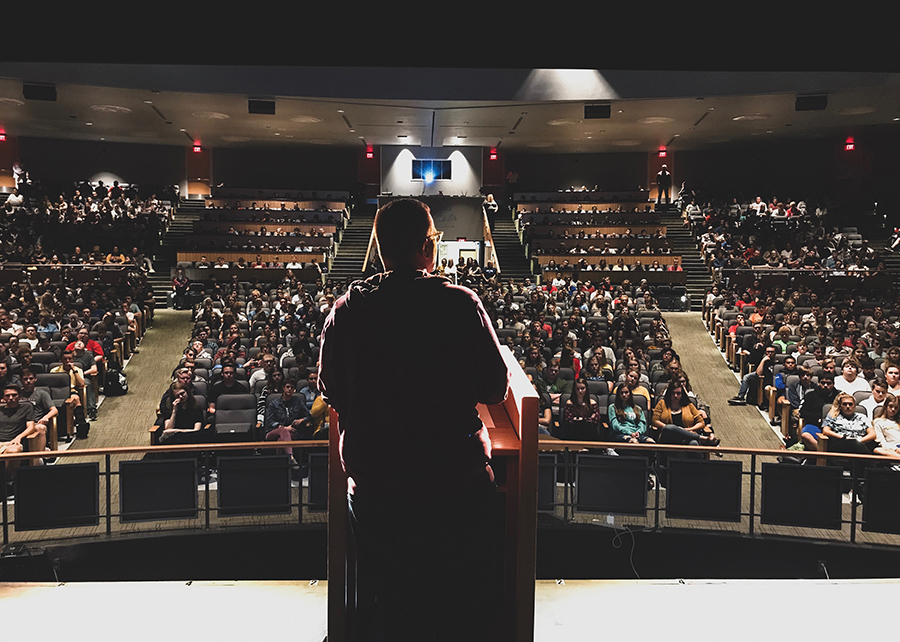
Many words make professionals in positions of leadership uncomfortable; accountability, feedback, or coaching. And yet, as distressing as those words may be, there is still one word that they can’t imagine ever using at work — love.

It turns out that this complicated four-letter word is a critical element of effective leadership.  

What I found in my research, that studied more than 40,000 organizational leaders for my book Building the Best, is that those leaders who simultaneously use high levels of love and discipline are the most effective. Leaders who lead like this are using what we call the “elevate” style of leadership. Not only do leaders with this style of leadership get the best results over the long term, but on average, they see a 14 percent increase in employee engagement and an 11 percent decrease in voluntary turnover.

Love and discipline are words that can be ambiguous, so we must be on the same page about what these two words mean in the context of the workplace.

Love (verb): To contribute to someone’s long-term success and well-being.

Discipline (verb): To promote standards for an individual to choose to be at his or her best

While these definitions are easy to read and comprehend, leveraging them in how you lead is not easy. But, if you don’t use love, you won’t connect with people and get their best possible performance. If you don’t use discipline, you aren’t going to get anyone to levels they didn’t think possible. If that weren’t enough, it’s tough to be tough on people, and it’s tough to love people when you don’t feel like loving them.

Words like love and discipline in leadership mean nothing unless they are put to use, because power does not come through knowledge, but rather, through the application of knowledge. This became real when my mentor shared a valuable lesson with me: 

  • Knowledge is Information
  • Understanding is Comprehension 
  • Wisdom is Application

In an age of the Internet, information is readily available to more people than at any time in history. Anyone with an internet connection can find information at little, to no cost. This presentation of information is accompanied by the opportunity to comprehend it. Sometimes we can understand the information on our own; other times; we might need a teacher, instructor, or expert to help us. 

While understanding is an important step, the real test is the ability to apply. Wisdom and application are supreme because there is so much you can understand, but never implement. A dentist who smokes cigarettes, a person with diabetes who chooses to eat sugar, or a music student who can read music but cannot play an instrument. These are all examples of comprehension without application. What you should strive for is gaining a level of wisdom that also creates an ease of application. 

If you are going to leverage love in the workplace properly, it will require a lot of hard work and effort. It isn’t going to happen overnight because leadership is a journey, and not a destination. But like all essential transitions, it starts with choice and habit.  

There is a simple 3-second habit that you can implement to move toward a leader mentality; it’s what I refer to in Building the Best as the “PTS Method” — Prepare to Serve.

Anytime you change your environment, say to yourself, “prepare to serve.”  

When you walk into your house each night; before you open the door, say, “prepare to serve.”

When you walk into the office each day; before you open the door, say, “prepare to serve.”

When you get ready to walk into a team meeting, say to yourself, “prepare to serve.”

The simple habit of transforming your mind to think about others (and serve them) will be reflected in your actions. While there are many skills and competencies to develop around love and leadership, this is the simplest and most effective. 

Opioids: Either America Changes, or we Change America

“A man dies when he refuses to stand up for that which is right. A man dies when he refuses to stand up for justice. A man dies when he refuses to take a stand for that which is true.” — Martin Luther King Jr., March 8, 1965

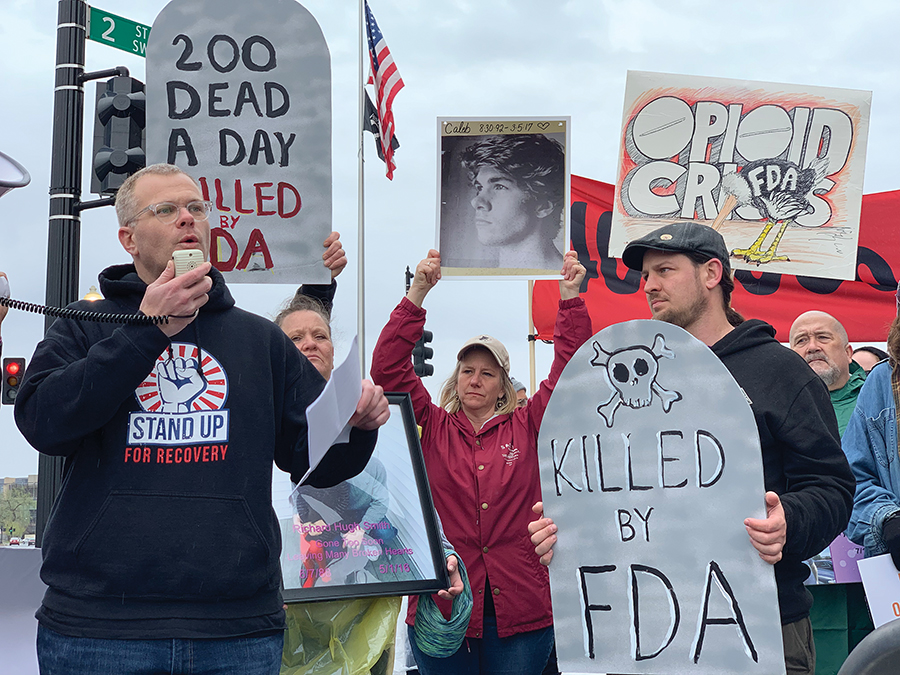
How we choose to act once we know what’s right reveals our character. Integrity is when our actions match our ideals — when our “insides” match our “outsides.” It’s a spiritual principle that has guided me through the last few years of my recovery from heroin addiction. Now that I know better, I can do better. And as I’ve learned more about the opioid crisis — who’s responsible for it, and who’s standing up to fight — I know what side of history I need to be on.

I was led into activism by the stories of the people I met — ordinary, everyday people whose lives were indelibly changed by addiction. Their voices speak loudly about the injustice of the opioid epidemic. Why are people with substance use disorder treated like second-class citizens? Why are we ignoring the genocide-level deaths that happen every day in every community across our nation? Why has the federal government been so slow to acknowledge the crisis, and even slower to take action? Why do we keep pretending that addiction is someone else’s problem? As I’ve listened, traveled, talked, and learned, the answers are more clear. 

We didn’t ask for these problems. We didn’t create them. But, we are empowered to end them. You, too, are empowered to do this work. You can save lives, just by taking a few simple steps. What looks to us like an insignificant change, as small as a single mustard seed, can grow into something great. As you make these changes and scatter these seeds, you never know what is going to take hold.

For me, it was a Facebook Live video of the Facing Addiction rally in Washington, DC, in 2015. That one-minute clip of people marching on the National Mall, holding signs and openly identifying themselves as being in recovery, changed my life forever. Because of that video, you’re reading this story. If you’re waiting for a sign, this is it. Today is your day. It’s time to rise up. How do we create change? We start with ourselves. Simply building awareness of substance use disorder can have a positive effect. I help raise awareness by putting myself out there, sharing what I’ve been through, and identifying myself as a person in recovery. I’m loud and proud. Although this was intimidating at first, I quickly connected with other people who had been through similar experiences.

I learned that the more I told my story, the less shame I felt. I also didn’t realize how much shame I was carrying until I started shedding it by being vocal. I decided I wasn’t going to hide anything I had been through. I didn’t want to be silent anymore. Telling my story gave me pride in who I am. Instead of weakening me, those experiences are a source of strength. I can express gratitude for what I’ve endured and be thankful for the many people who have helped me on my journey.

Having the courage to say “Yes, addiction affects me” also makes it possible for someone else to say “Me, too.” Telling your story opens the door for the person who is still living in the dark, silenced by stigma, sick and afraid. When we openly admit that our son or daughter is struggling with substance use, we help other people. Talking about substance use disorder the same way we talk about heart disease and breast cancer helps make it feel “normal.” My dream is that one day I’ll walk into a bookstore, and the rack of greeting cards will have a section for recovery anniversaries, right next to birthdays and graduations. 

We don’t need to have the answers; we just need to speak up. We need to share, without fear or shame. Once that barrier is broken, it creates so much freedom! Sharing allows other people to see us, love us, help us. It also gives a new face and a new voice to substance use disorder. Instead of old, harmful stereotypes, we can say, “This is what a person in recovery looks like.” 

Addiction dehumanized us — but we are people, too. Our leaders, and even our neighbors, seem to have forgotten that we are human beings. We are still Americans. We live here, too. We work, raise kids, and vote here. We deserve to be supported, just like anyone else affected by a chronic illness. We deserve that visibility, that respect, and that love. But, we’re not going to get it unless we reach out and demand it. We must rise up.


How to Party With A Purpose This Holiday Season

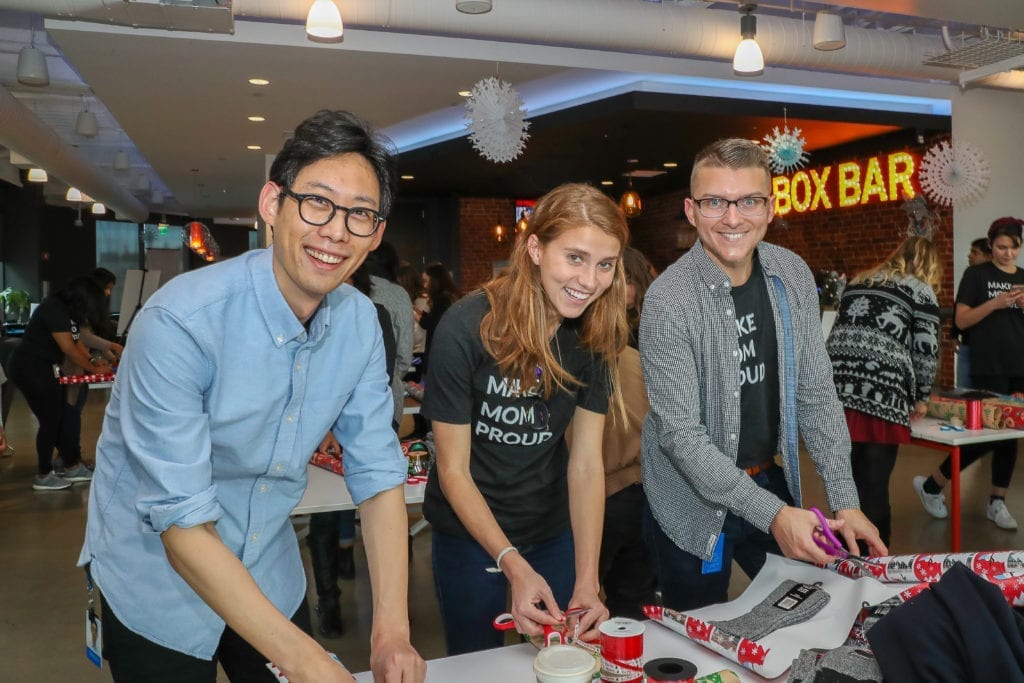
Two years ago, Box, which helps businesses collaborate and manage content in the cloud, had a revelation about their holiday party. Sure, it was fun to dress up fancy, meet co-workers’ “plus ones,” and consume appetizers and cocktails, but was this really the best use of the company’s resources and their employees’ time? The top executives decided, no.

Instead, Box replaced the champagne and caviar with the Box Global Holiday Impact Day. Last week, at the company’s second annual event, they had 70% of their 2,000 employees (Boxers) volunteer with local organizations. With help from us at Give To Get, Boxers in 38 cities worldwide mobilized to create art therapy kits for veterans, deliver food to people with HIV, build furniture for those rebuilding after a fire, pack winter items for local shelters, create fun activities for kids in the hospital, and more.  

“People were skeptical at the beginning, wondering how we could be taking away the holiday party,” said Christina Louie Dyer, Box.org’s Senior Manager of Global Programs. “Now it’s one of their favorite days of the year.”

“In addition to bringing people together in an organic way”, said Dyer, “it brought the holiday spirit even more into the company. Plus, it’s really great for employee culture and retention.”

Indeed, today’s workers, especially Gen Z and millennials, are not sticking around for work that isn’t meaningful, and replacing them is much more costly than organizing a day of volunteering. Even the Business Roundtable recently made a groundbreaking statement that companies must stand for more than profit in order to survive in this new era of transparency and social responsibility.

If you haven’t already hopped on board the giving-back train, the holidays are a perfect time to start. Here are some of the elements that made Box.com’s party so successful, and what may also work for you:

  • Tie the cause to your company’s larger mission. When looking for a cause to get your team behind, look at your own sustainability report. Whatever you want your people to do, tie it to the larger mission and direction of the company. We are always surprised at this disconnect. Alignment usually unlocks funding, tells a larger story that motivates participation and gets the attention of the C-Suite. If your brand promise connects with your actions, you’ll enjoy consumer loyalty. And tying the cause to your larger mission will keep the event authentic, which your customers will recognize and support.
  • Use the holidays to launch a long-term plan – A year-round commitment to social good is so much more important than one great holiday experience. Yes, people need emergency aid after a hurricane, but mostly they need systemic ways to rebuild their lives. Similarly, all social and environmental causes exist beyond December and need ongoing support to make a difference. A seasonal event is a perfect opportunity to launch initiatives, such as “Dollars for Doers” or time off for volunteering throughout the year.
  • Don’t waste people’s time. Nobody wants to carve out a day to volunteer and then arrive only to stand around with nothing to do. Similarly, those who work at nonprofits aren’t sitting around waiting for 250 people to show up to “help” when there is not a clear task at hand. A successful event takes months to plan, from sign-ups and transportation to food and thank you notes, everything needs to be thought-through and executed well so that nobody’s time is wasted.
  • Take advantage of your employees’ skills. What are your employees passionate about and specifically good at? Find a nonprofit that can benefit from their unique expertise. For example, we work with the marketing agency Digitas, which is filled with creatives. Every year we harness their design prowess by beautifying a different inner-city school in Chicago. Hundreds of people come out to paint murals, update computer labs and art departments and generally take full advantage of the employees’ artistic and technical skills to give these run-down schools a boost of love and beauty. Digitas employees say it’s one of their favorite parts of working at this company.
  • Make it fun. Invest in a good sound system. Buy food and drinks for your team. Seriously, the more fun this event is, the more people will appreciate it and want to do more. Even Box.com, which transformed their holiday party into this amazing day of giving, ended the day with a scaled-back happy hour for people to relax and let loose.  

Times are changing. Business as usual is not enough. Use these holidays to break traditions, fire up your employees, and give back to your communities in a meaningful way. Because purpose is the new way to party!

Know Your Rock Bottom: A Lesson in Self-Awareness

I remember my rock bottom. I was standing outside an old church in the suburbs of Philadelphia. The church was locked. It was the middle of the winter, it was cold, and snow was on the ground. I paced slowly to keep warm, and my weathered North Face jacket did its best to keep the winter from slicing through to my body.

I was waiting for a moving truck to come and meet me at this location. In an effort to make ends meet, I had picked up a job with a third-rate moving company that took on small, local moves. This particular job consisted of moving old, dilapidated wooden chairs and benches from one church to the next. The other men working the job with me—my colleagues—were late to the site again. They usually strolled in 30 to 60 minutes late, smelling of liquor and smoke from the evening before, and I cursed myself for showing up on time, only to lie victim to their indifferent tardiness.

I hated them, and they hated me.

None of them ever offered to give me a ride out of the city, and I probably wouldn’t have taken one if they did. So, instead, I took the R5 train from Market Street out to the mainline. I was now losing feeling in my fingers and toes and dreading the remainder of the day, which would see me working with these degenerates while acquiring a chill that would take all evening to shake off.

As I struggled for warmth, gaunt-faced, and hollow-eyed, I thought about the last 48 hours, two days that were perhaps harsher and more biting than the air that surrounded me.

Banking on ‘The Career I Was Made For’

Twelve months ago, I began a robust application process for a career I believed I was made for. I started the process while still living in the warm embrace of California. Over those months, I interviewed, tested, and ran through scenarios that saw me rise above 10,000 other applicants. I moved to Philadelphia and took on volunteer work—one last push to increase my chances of acceptance, confident that I would land the position. This gave me very little time to make money to live on, and, with no savings, I relied on a meager hourly wage, a few tips, and the kindness of strangers whose new houses we moved belongings into. I was broke.

The final hiring process narrowed down to seven others and me. I spent a week competing against those other men and women, even though the employer said they’d take anywhere from all of us—to none of us. I arrived late to the room I was renting to find a thin letter on my bed. The letter was from my hopeful employer informing me that while I was a solid applicant, they would not be offering me a position at this time, but to please consider applying again in a year.

Just like that, 12 months wasted.

The following night, as I lay flat on my back on the floor of that small room, my friends called. They were going to a movie, and might I be interested in joining? They could swing by and pick me up in 15 minutes. I told them I’d have to call them back. Once off the phone, I quickly signed into my mobile banking app to check my thin balance. My checking account consisted of $2.18. I’ll never forget that amount: two dollars and eighteen cents. It was literally all I was worth.

I called them back with a half-hearted excuse as to why I wouldn’t be able to make it; my pride stifling the truth. And the next morning, I arose from bed, the sun not up and frost hanging on the corners of the window pane. I needed to get to the train station to catch the R5 to the mainline.

And so, here I was. Cold, poor, and without purpose. My whole life, I believed I was meant for greatness, but standing in front of this old abandoned church, I looked like the pillar of failure. I felt sorry for myself and began to verbally list all the ways life had abused me over the past two days.

Regaining My Purpose

But then, like a confession, the act of articulating my failures out loud released my burden from me. I realized that this was my lowest point, my rock bottom. I had weighed myself and found that I was wanting in a way I’d never known. It brought me peace, and the purpose I felt I’d lost from just two nights before was now replaced with a much more vicious purpose of recovering my childhood self.

I had found where I stood, my rock bottom. That afternoon, as my fellow employees took a break to smoke a blunt in the pews of that musty church, I sat alone, began to dream again, and betrayed the smallest of smiles.

Life’s Lesson: Rock Bottom Is a Starting Line

Everyone’s rock bottom is different. For some, it’s substance abuse, and for others, it’s a failed marriage. It may be the loss of a job, or perhaps the loss of the love of your life. If you choose to participate in life, you can be assured that you will find your rock bottom. Perhaps even more than once.

But life is not about avoiding those moments when you can’t fall any further; it’s about realizing when you’re there. Because while being squarely in the basement of your life is never easy, I assure you there can’t be a better foundation to push off from.

You Can’t Spell Health Without Heal

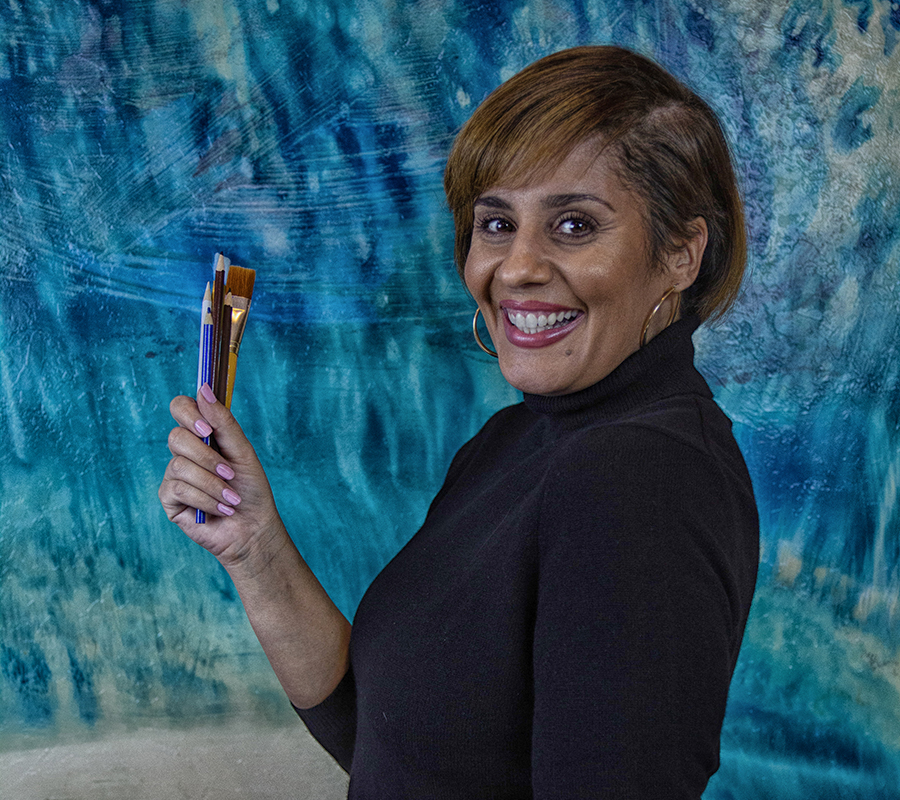
What does it take to turn courageous ambition and bold dreams into reality? Perseverance and a will to forge ahead in the face of life’s inevitable obstacles are some solutions. In line with our mission to celebrate success and inspire others to persist in achieving their goals, we highlight Sylvia Feliciano, a global trailblazer changing the face of leadership.

Feeling unfulfilled and uninspired by society’s definition of success, Feliciano decided to seek more from life than just personal achievement. She found it in a place she didn’t expect — a yoga studio. After trying yoga nidra — a state in which the body is completely relaxed, and the practitioner becomes systematically and increasingly aware of the inner world — she discovered something different about herself. “In this healing state, I realized the power of unshakeable peace and equanimity — no longer being controlled by limiting beliefs, emotions or feelings,” she recalls. The unexpected discovery of her true nature changed her so profoundly that she decided to share it with others.

During a yoga teacher training course, Feliciano came to realize her unique gift: her voice — a voice that she had unknowingly used to heal herself and others throughout her entire life. She had first expressed it through song as a member of a youth church choir, then through workplace projects around race and social justice. Now, she uses it as a guide to inner peace through her yoga company Solace Mind.

Feliciano launched her business to bring healing to others and to shed awareness on underrepresented demographics in the world of yoga who face trauma — people of color, children, and the military. She also provides stress management workshops as an enhancement to workforce and community wellness programs.

All that I am and all that I ever want to be depends solely on me. — Sylvia Feliciano

Feliciano began her journey of personal empowerment through a formal education and traditional measures of success. Fortunately, it will not end that way. “I have realized that taking home hefty paychecks will not be my professional legacy,” she says.

“My greatest professional achievements have been the calls for mentorship and guidance and the nods of respect from colleagues who knew I could relate directly to people in need through a shared life experience.”
Feliciano’s yoga community consists of people in need from all religions, racial backgrounds and economic groups. Many suffer from everyday stress, trauma, PTSD, depression, anxiety, and sleep disorders. Some are military personnel, high-flying jetsetters, single mothers, suburban fathers, and those from marginalized communities who have never been taught emotional intelligence or how to access self-care.

Sylvia has made a career of speaking up for those in need, but she’s not trying to be a voice for the voiceless; she believes there is no such thing. “I have been told that my true gift is that I create safe spaces for people to use their own voice,” she says.

Solace Mind is Sylvia’s way of teaching people how to nurture and restore themselves back to their true nature. “Learning to accept ourselves just as we are, with no judgement, is truly transformative. Solace Mind is my way to show people how to heal themselves — to find that personal empowerment that is present in every body and every mind.”

8 Simple Strategies to Avoid Leadership Burnout

Are you experiencing work overwhelm? Or even full-blown burnout? You’re not alone.

Today, a whopping two out of three full-time workers are wrestling with burnout, according to a recent Gallup study. To boot, the World Health Organization (WHO) now classifies work-related burnout as a “syndrome” and an “occupational phenomenon.”

But what does that mean in the real world?

Workers are reporting feelings of energy depletion or exhaustion, lower confidence in their performance, less motivation and more negativism, and a higher likelihood to take a sick day or even visit the emergency room, explains Gallup and WHO.

All to say, there may be a legitimate reason — and not just lack of pep or positivity — for feeling like you can’t work another minute, particularly now, when escalating speed, stressors, and supercharged connectivity encompass the workplace.  

This is especially significant if you’re among the tens of millions of us who are empaths — highly sensitive people — or other caring beings with intensely “attuned” systems and, likewise, some unique individual needs.

The good news? You can learn how to self-soothe when you’re feeling overwhelmed at work, when things on the job seem to be spiraling out of control, or when you think that you can’t take it anymore.

To kick-start the process, I suggest a practical daily practice drawn from my book Thriving as an Empath: 365 Days of Self-Care for Sensitive People. Alongside the daily practice, use these eight simple strategies to help in your journey.

1. Use conscious breathing. As soon as stress hits, immediately take several slow, deep, and deliberate breaths. Such conscious breathing helps expel tension, so it doesn’t get stuck in your body.

2. Engage in positive self-talk. Don’t let negative or fear-based voices get in the way of believing in yourself. Instead, improve your self-talk: “This is a transient situation. I will realize the best way to handle it, and everything will be okay.”

3. Be your own witness. You are larger than any anxiety, fear, or self-doubt. Tell yourself: “I am not this emotion. I can calm and center myself. I can detach from this state of overwhelm. And I can witness my own experience.” This will relax you and offer a new and different perspective.  

4. Accept others’ experiences, actions, and behaviors as their own. We all deserve the dignity of walking our path. By making this a personal affirmation, you can accept people for who they are, appreciate their life experiences, and avoid feeling responsible for their actions and behaviors.

5. Visualize. Envision white light emanating from the crown of your head — and darkness flowing out the bottom of your feet. This is just one of many visualization techniques that reduces overwhelm and results in more positive, productive energies.

6. Use essential oils. Essential oils can calm, invigorate, heal, and protect us. I recommend lavender oil because its properties are known to help treat anxiety, stress, restlessness, and more. You can breathe the oil in with deep inhalations or massage it into your temples, between your eyebrows, and around areas like your neck and shoulders, where you may physically carry stress.

7. Place your hand over your heart. Just as mothers console their babies by patting their chest, you can comfort yourself by placing your hand over your heart. The heart is the center of unconditional love, and by merely touching it, you can activate endorphins — ‘happy hormones’ — throughout your body.

8. Practice self-compassion. Your thoughts make a profound difference in your life. So rather than beating yourself up when you experience overwhelm, exercise self-compassion instead. Be kind and gentle with yourself. Seek out me-time. Nurture yourself with rest, relaxation, and, if possible, bodywork or spa treatments. Tell yourself that you’re doing your best. And, whatever you do, never fail to cut yourself some slack.

Additionally, you can consider other ways to self-soothe: Cuddling with your partner, spending time with family and friends, doting on your kids or pets, taking a leisurely drive, walking in nature, curling up with a good boo, binge-watching your favorite TV show, savoring a special meal or drink, meditating, praying or volunteering. Or whatever it may be that resonates with you.

What’s most important is to know that with a reasonable daily practice and some simple strategies, you can self-soothe — and stop work overwhelm. 

My Summer Journey of Change

There is so much goodness in this world. I have just been on a two-month adventure through 10 American States — and what I witnessed were people helping others, laughter, some concern, and the most beautiful natural places I have ever seen. 

Zion Utah and Bryce Canyon topped that list. We walked trails that twisted around snow-filled peaks, ate snack bags and slept in the car at two national parks. I’m a woman who loves her Four Seasons, but wouldn’t change the night I spent under the stars in Wyoming — under a Chicago Cubs blanket on a concrete slab — for anything. 

Bryce Canyon National Park, Southwestern Utah. Photo: Luca Galuzzi

I left the small 325iBMW to stretch my legs after hours of driving and found a place to stretch my legs. I called my friends. They asked me if I was scared. “No,” I replied. “Goodness begets goodness and I wish I had a photo to show you of that night sky.”
 
My journey started with flights on business to Dallas and Baltimore, DC and Chicago and then a return to San Diego. I relinquished the condo I had lived in for more than 12 years and decided to follow a path of the “untethered soul.” I gave my belongings to my housekeeper and an animal rescue shelter. There were some things I just couldn’t bear to sacrifice for my new adventure — I left my books in a friend’s garage because I want to curate a personal library someday.
 
I left California with my travel companion, Robert Payne, and we drove to Utah. We were put up in a log cabin by the Bronze Buffalo Club, an exclusive club that hosts captains of industry, celebrities, entrepreneurs and athletes. They offer access to the world’s most inaccessible experiences and we went fly fishing, skeet shooting, and rode horses.

Photo: www.bronzebuffaloclub.com

From there, we went to Jackson Hole, Wyoming, to appreciate the elk antlers and the art culture. Gary and Leesa Price are friends of ours, and Gary has sculptures that uplift the human spirit dotted across the Wyoming landscape.

Photo: www.garyleeprice.com

Then, on to the Rocky Mountain Economic Summit where we met amazing people at the top of their game, all of them so humble — hedge fund managers, angel investors, venture capitalists, and three Federal Reserve Presidents. We talked about trends, innovation, technology, healthcare, education, climate, and more.
 
We stayed at a variety of Marriott properties along the way, too. Here, we met some fantastic people — all complete strangers. Some were on a journey like ours, others were on vacation. The questions I would always ask were: What are you up to? Why are you here? What have you experienced? Who are you with? What will you do with these experiences? I love it when people share and talk. It’s so special to connect with people from all walks of life.
 
This is a lifestyle journey and a transition toward another stage of my life. It was a necessary break from the corporate routine and my high-pressure job of organizing the lives of other executives. Fulfillment can sometimes come from doing simple things, and this was one of them. My only fear is — to where next?

Serena Williams and Mark Cuban Invest in Digital Support Network for New Moms

Serena Williams and Mark Cuban are investing $3 million in Mahmee, a startup that provides resources for mothers during pregnancy and through the first critical year of parenthood.

There is a gap between the quality of care for pregnant mothers versus mothers who have just given birth. The most vulnerable time for mothers and babies is from birth to the their first birthday. Mahmee provides online group discussions with other moms going through this critical time and also connects them to medical providers. Physicians and specialists can share care plans while providing parents with personalized support and education. 

Around 700 women die from pregnancy-related complications in the United States each year, according to the Centers for Disease Control. This is the worst maternal death rate of any developed country. The statistic really hit home for tennis legend Serena Williams. When her daughter was delivered through emergency C-section, she developed blood clots in her lungs and Williams was hospitalized for a week, confined to her bed at home for six weeks and incapacitated for another two months. 

In a recent press release Williams said, “Given the bleak data surrounding maternal death and injuries, I believe that it’s absolutely critical right now to invest in solutions that help protect the lives of moms and babies. Mahmee’s data-driven approach is the right solution to one of the most significant problems in the healthcare system: That of fragmented care.”

Mark Cuban added, “This tech solution is helping usher in the future of maternity health care.”

How My Executive Career Survived Sexual Abuse

When I was eight years old an Irish man named Brendan showed up at my family home in Mexico. Three weeks later he was asked to leave. We never spoke of him again. Thirty years passed. One night in May 2010 I had a series of dreams that helped me understand I had been a victim of sexual abuse.

In the nine years that followed those first elusive dreams of sexual impropriety, I’ve studied, read, listened and watched many, many stories on child sexual abuse. A slowly growing stream of testimonies, until this huge dam collapsed, releasing tons of stagnant, dirty water across the globe. It’s everywhere. In every country, in schools, in sports, in churches of different faiths. It’s always been there, but nobody wanted to see.

For me, HBO’s documentary “Leaving Neverland” broke the final seal. I have felt strangely soothed by this upsetting 4 hour-long account of abuse because somebody like me was telling a story like mine, and this time millions of people were listening. It made me realize that on top of the burden of the actual abuse, and how it broke me in very delicate, very private and very profound ways, there is another burden that we survivors carry – it’s made of silence, secrecy, guilt and the desire to spare everybody else from the disgusting and disturbing details of what we once endured.

In my healing process I have learned that every case of sexual abuse is different: It consists of varying degrees of sexual content, it involves varying degrees of violence, it receives varying degrees of family support, and it repeats itself at specific lengths of time. It affects victims’ lives in different patterns and rhythms.

Still, a lot of things are similar: A child’s inability to handle adult love or sexual desire, children’s total inferiority when facing an adult’s manipulative games, and the often overlooked fact that the entire family is robbed by these events. No matter how aware, or willing each family member was in doing something to stop it, the sexual abuse of that child rapes the future of every family member. It will haunt their dreams and freeze their interactions for decades. Shame, anger, and grief will darken their eyes when they look at each other from that moment on.

I wanted to write this article for “Real Leaders” because I think everybody should watch this series. Every adult should learn how sexual abuse can take place under their very noses. You need to hear how the mothers’ naiveté, and their own dreams and needs, were used against them to hide what was really going on. Every child should be told that sometimes adults lie about what love really is. In the movie, Watch how Wade and James describe how confusing it was – for many, many years – to love someone, while being robbed of something so significant and so meaningful.

As an executive coach and business executive, I’ve always protected my reputation from the “disgusting and disturbing details of what I once endured.” I’ve also fought to heal myself without having to involve my family in the horror of it all. These past few years, since I began to remember what my mind had so successfully suppressed, I of course, felt very alone in the uniqueness of my challenge. I felt a little envious of other public speakers like me, going on stage to wow their audiences with life stories of courageous victory over insurmountable obstacles. I knew that no one in those business forums would ever want to hear about the kind of obstacles I’d overcome. Not even me.

Did my abuse impact my business performance, you may ask? It affected everything. Performing at work while hiding a secret of that magnitude was itself a daily miracle. It made my entire career about moving on, forgetting who I once was, and trying to build a new me that could erase my ugly secrets. It propelled me relentlessly towards the future every minute of every hour of every day. It was exhausting and unrewarding for decades. I didn’t even know why, though I’d begun looking for answers and professional help in my personal life early on.

Imagine how many things I may have got wrong, misunderstood or miscalculated while trying to do my daily job. I never underperformed – I over-performed so intensely I drove a few of my bosses around the bend. I brought all of that hidden anger, frustration, grief and self-loathing to work without even knowing they were there. No amount of success could make me happy. Nothing ever felt genuinely joyful. It took me many years of channeling all those broken feelings towards the right places. Learning to do so made me the executive coach that I am today.

The year before I began to understand what was really going on, I consulted pro bono for an Ashoka social entrepreneur organization, the Vicki Bernadet Foundation in Spain. Vicky was very grateful I had not pulled out once I learned their purpose was to support victims of sexual abuse. Most companies shied away from sponsorship deals because they didn’t want to associate their brand to all that “disgusting and disturbing” stuff.

Statistics I’ve read say that one in four girls and one in seven boys will suffer some form of sexual abuse before they reach the age of sixteen. That sounds like a lot. That can’t be right, can it? How many of those go on to become top executives or admired entrepreneurs? How many prominent CEOs build empires simply to stay busy, to escape unthinkable secrets?

I don’t really know. What I do know is that sexual abuse continues at every level of society because we can’t bring ourselves to talk about it. I’d like to thank the director of “Leaving Neverland,” Dan Reed, and the entire team that put this documentary together. It’s sparking a long overdue conversation in a way that doesn’t seek vengeance or incite anger. 

Sexual abuse exists in the same places it always has, although nobody wanted to see it. It impacts everything, including business. It derails careers and sabotages projects because as a culture we prefer to lose ourselves in the games of Excel spreadsheets, corporate branded theme parks, pretty TED talks of success, and other forms of executive and intellectual distractions. Just like Neverland was.

There is no easy way to stop this torrent. It’s going to keep destroying lives for a while. But if we don’t stop looking away, and start to make it ok to talk about the “disgusting and disturbing” details, then secrecy dies and light can start to cleanse. One day, I hope, we’ll no longer need to go back to Neverland. Ever again.


0