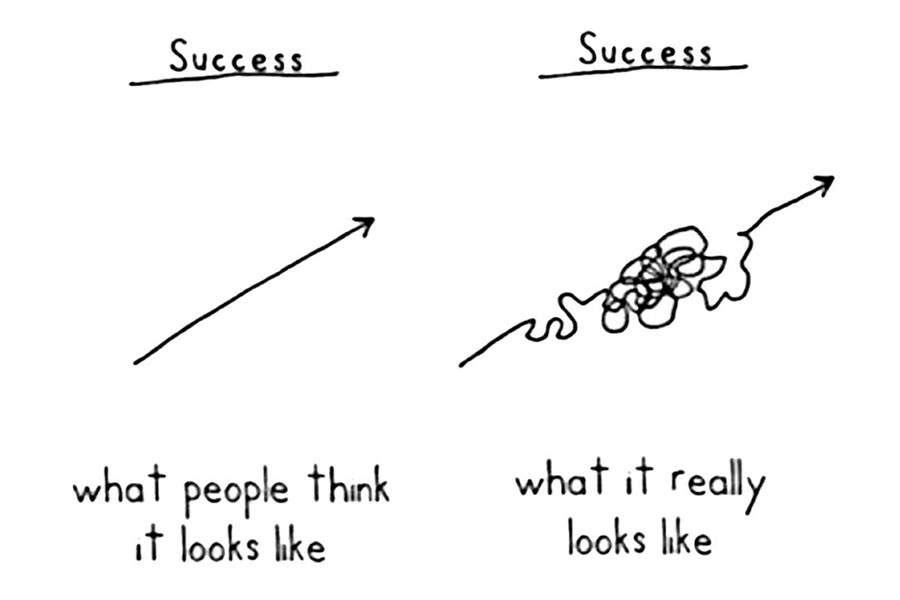
Who Has The Guts To Change The World?

I saw this coming clearly. Five years ago I attempted to raise venture capital to start a free University. The opportunity was huge. You know a market is ripe for disruption when the price of something becomes outrageous in relationships to its value.

Welcome to the cost of college. It’s not a secret that college tuition rates zoomed past any rational connection to inflation because of low-cost government insured loans. These no-questions asked loans make it easy for colleges to maintain one of the most inefficient business models in history.

A quick look at college budgets reveal how relatively little is actually spent on classrooms, professors, research and teaching compared to building and maintaining huge inefficient campuses and scores of activities unrelated to education. Student demand was fueled by the public relations myth that college education would automatically lead to higher earnings in the good life. Of course higher education is correlated with all the things we want for children – higher earnings, happier marriages, greater health and longer lives. But correlation is not cause, and living a truly good and meaningful life is more complicated than earning a degree.

And spending as much as a quarter of a million dollars to learn what you can learn for virtually free doesn’t make much sense.

In fact, it’s outrageous. It’s outrageous because this craziness has created a generation of Americans with over $1 trillion in student debt. This is not the path to the good life. The fact is our 20 to 30 year-old children are not starting businesses, getting married, buying homes or becoming independent.

The primary economic reason for their ‘stuckness’ is that the soundtrack to their lives is the drumbeat of student debt.

The insane irony is that they are not even earning as much as their parents at the same age. I’m not simply an observer of these facts, I’m a fully engaged parent, coaching my three children between 25 and 30 to help them find their launch code to blast free. It isn’t easy even for the very capable and motivated.

The good news is that we are seeing the beginning of a new era of worldwide education.

For over 40 years we have known that the concept originally called “distance learning” can be more effective than in-person classroom teaching if some simple principles are followed. 1) a great, engaging, expert teacher using multimedia, 2) social learning with peers and 3) application of learning by doing. What educational researchers have discovered over the last 10 years is a way to combine online multimedia teaching, Skype tutoring, social learning where possible “learning-meet-ups.” All this both accelerates and deepens learning. Hallelujah! The educational revolution is marching ahead in full fury.

Universities and colleges are having business model meltdowns behind closed doors because they know a new generation of digitally savvy college students are simply not going to pay $50,000 a year for a college education.

When a major name brand university breaks ranks to create a low tuition option for a full bona fide degree earned largely online combined with a network of onsite experiences, hundreds of colleges will close. The university combatants are already circling each other in a worldwide cage fight to see who goes first. Already 200 universities ranging from Harvard and MIT to colleges in Europe, India and Australia are offering courses by partnering with education start ups liked EDx, Coursera, and Udacity. Imagine this… what if a university like Stanford got together with Google and multimedia creators like Disney to create courses taught by one of the world’s most charismatic experts.

What if the development and maintenance of these courses were paid for by large corporations whose brands were tied to certain subjects?

Like Johnson & Johnson on health related topics or GE for engineering classes. And what if Stanford partnered with Barnes & Noble to turn their declining bookstores into a network of Stanford student unions found in almost every city in America? And what if you could earn a first class four-year Stanford bachelors’ degree for say… $10,000? How many millions of students would choose this? One bonus for a school like  Stanford is that they have impressive athletic teams.

Imagine every basketball game being a home game no matter where they travel? Just think of how many T-shirts they could sell! The good news is that something like this going to happen. Education is one of the largest economic enterprises in the world. Using today’s technology to improve education and create a whole new business model is simply too tempting to ignore.

The question is who will have the leadership courage to bless the entire world with truly universal, first class education. I’m not using the words “leadership courage” lightly. There are many who believe a well-rounded education is the ultimate path to world peace.

You see, two of the outcomes from a university education are open-minded tolerance of people who are different than you and opportunity.

Open-minded people who have opportunity don’t want to fight; they want to build. The future we must build is one of sustainable abundance. For that, we need the full talent of our global brainpower. Everybody has a difference to make. My personal attempt to get something like this kicked off via a project called Citizen One was too far ahead of its time. But now there are others who are far more capable that me, who will literally change the world. I am rooting for them… how about you?

If you could change the world, what would you do?
 

Linking Innovation with Compassion

In the recipe for creating and sustaining a highly innovative culture, could compassion be the most important ingredient? It’s well known that as organizations continue to grow, it becomes increasingly difficult to attract and retain highly innovative people.

Most large organizations become increasingly bureaucratic as they grow, and nothing will drive away highly innovative people more quickly than lots of bureaucracy. As a result, most organizations gradually become less innovative over time. There are, of course, exceptions to this general trend.

It is possible, even in large companies, to create a culture that attracts and retains highly innovative people and, perhaps more important, helps people who are not natural innovators to be more innovative as well. The key ingredient for creating and sustaining such a culture is being committed to serving and caring for our employees.

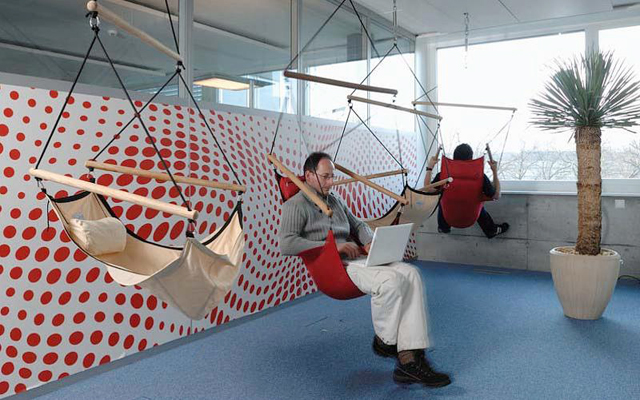
Two excellent examples are Google (Zurich office pictured above) and the software giant, SAS, which are among the most innovative companies in the world. Every year, these two companies are also both highly ranked among best companies to work for. On the 2013 list of the Fortune Magazine Best Companies to Work For, they were listed as numbers one and two, respectively. The examples of how Google works to care for employees are almost legendary.

They include free, on-site haircuts; gyms; pools; break rooms with video games, ping pong, billiards and foosball; on-site medical staff for easy doctor appointments; and the option to bring one’s dog in to work. But Google didn’t invent this type of incredible workplace culture. They actually emulated the culture at SAS, a company that has produced absolutely phenomenal business outcomes. SAS has posted record earnings for 37 consecutive years, including $2.8 billion in 2012.

CEO Jim Goodnight often says that the secret to their success is taking care of their employees. One reason serving and caring for our people is so effective for building and sustaining a highly innovative culture is that when we truly care about our people and are committed to helping them grow, we don’t stifle innovation by worrying about our own position.

Instead of thinking that we have to come up with all the good ideas to look good as leaders, we are happy when our team has great ideas. Also, leaders who are more focused their own performance than on leading their people often tend to micromanage, which erodes trust and crushes innovation. When we truly care about our people and are committed to helping them grow, we are also much more likely to trust them and give them high levels of autonomy.

Providing high levels of autonomy is one the most important elements of attracting and retaining those rare, highly innovative people who abhor bureaucracy but can add so much value to our organization. Serving and caring for our people can also help employees who are not natural innovators to become more innovative. According to the research of the Perth Leadership Institute, most people have a fairly strong cognitive bias called the status quo bias.

As a result of this bias, most people are much more comfortable doing things that don’t buck the status quo. They would much rather fit in. In other words, most people are unlikely to suggest and act on ideas that are contrary to the status quo – i.e. ideas that are innovative – because of their fears of rejection or not fitting in and, in the case of the business world, their fear of being fired. When we are focused on serving our people and consistently caring for them, those fears are alleviated.

With consistent care and trust, our people trust us more, and they know that we will not fire them for taking appropriate risks and making mistakes. The more secure people feel, the more likely they are to suggest and act on innovative ideas. We are essentially removing the status quo bias by removing the status quo. Jim Goodnight of SAS offers a great example of just how powerful this can be.

In the fall of 2008, the Great Recession was imminent and many companies in the industry started laying off large numbers of employees. But Goodnight’s response to the recession was dramatically different, as Mark C. Crowley, author of Lead From The Heart: Transformational Leadership For The 21st Century, describes in an article he wrote for Fast Company:

In early January 2009, Goodnight held a global webcast and announced that none of its 13,000 worldwide employees would lose their job. He simply asked them all to be vigilant with spending and to help the firm endure the storm. “By making it very clear that no one was going to be laid off,” Goodnight told me, “suddenly we cut out huge amounts of chatter, concern, and worry – and people got back to work.” What likely will be astonishing to many is that SAS had record profits in 2009 even though Goodnight was perfectly willing to let his then-33-year track record of increased profit come to an end. At 70 years old, Goodnight holds the conviction that “what makes his organization work are the new ideas that come out of his employee’s brains.” He therefore holds his employees in the highest esteem. So while he fully anticipated that the recession would constrain the firm’s short-term revenues, he instinctively knew that his team would produce breakthrough products while his competitors were cutting costs. And even four years later, his commitment to his people has paid off handsomely. Said Goodnight, “new stuff we’re rolling out this year is going to take the market by storm.”

Making Impact Investible

Download this free report by Dr. Maximilian Martin of Impact Economy, Switzerland which aims to strengthen the impact investing industry. A culmination of three years work, the report discusses how all parties involved — from foundations to angel investors to financial service institutions — can contribute to and benefit from the growing impact investing industry.

It includes a series of recommendations to strengthen the industry and highlights the need for increased transparency and better measurement systems. Download the report here: Impact Economy 2013

How Lucky People Get Lucky

I was having a coaching session with an executive yesterday who told me an interesting story about luck and leadership. He said that when he was a young man he had lunch with a very successful business leader who gave him advice that changed his career and his life.

The business leader said he always asked one question to anyone he was trying to hire. The questions was “are you lucky?” He said when people answered the question “no, not really” he avoided working with them or hiring them. On the other hand, he said he rarely made a mistake by hiring anyone who thought they were lucky.

Now we know why your personal view of your own luck is a pretty good predicator of how successful you really are.

Yes, there are people who study luck, mostly economists. They loosely define luck as the amount of positive opportunities an individual might have within a given period of time. It turns out there are many factors that create a high number of positive opportunities. The most unfair of these is height. It’s probably no surprise that tall and handsome men and pretty women seem to have more opportunities than more average folk. But that shouldn’t discourage us. After all, Dustin Hoffman has a great career in Hollywood even though he is short and, well, rather dumpy looking.

So what are the things that you control that make you not only feel lucky but actually more fortunate? 

First, and most importantly, luck is the result of an opportunity-seeking orientation. Economist have discovered that people who see the world through a lens of opportunity rather than a filter of risk actually do have more opportunity. Opportunity seekers talk to more people about a wider variety of subjects than average people. This kind of open-minded communication with strangers and new acquaintances simply open doors that were never knocked on by people who don’t consider themselves lucky.

Second, lucky people tend to be intensely curious. They have diverse friends, travel off the beaten track, read on a wide variety of subjects and generally have unquenchable thirst for new information. Above all, they maintain an open mind. It’s not easy to consider facts and evidence contrary to your current opinion but that’s what lucky people do.

Third, they are creatively persistent. Persistence without creativity or without learning from the obstacles that lie in your path is simply stubbornness. Stubbornness does not lead to luck but rather stress and failure. People who are creatively persistent are always looking for new ways to achieve their goals or better their lives.

These people hold tightly to their vision but loosely to their plan.

They are agile and adaptable which makes them pay close attention to what is happening, rather than what they want to make happen. This allows them to adjust their methods and focus their energy on what’s working. This kind of creative persistence actually makes them lucky.

The generally accepted folk wisdom about good fortune is that we “make our own luck.” Perhaps most people interpret that as simply working hard. But hard work alone doesn’t produce good fortune. There are plenty of people woking very hard in coal mines, would we consider them lucky? Yet, we indeed do make our own luck. Just consider your own life. When you’ve been really fortunate has it been the result of you seeing opportunity, being open-minded and creatively persistent? Is there any area in your life when you feel stuck or even unlucky?

What opportunity might you seize right now to improve your luck?

Seize it.


When More is Less, or Don’t Leave a Horse Alone

I grew up on a ranch. Dad always taught me to never leave a horse alone in the hay barn. The reason, he explained, was that horses would eat themselves to death. That’s right, if horses can get access to a lot of easy to eat feed they will quit eating only when their bloated stomachs burst.

For this reason Dad never considered horses all that smart. I have found it’s not all that uncommon for human beings act a lot like horses around money. There’s been a lot of recent research on whether money can buy happiness. The answer is a little murky.

Some research suggests that for Americans’ $75,000 a year pays for an enough of the good life to reduce stress and produce a sense of security and optimism. This research indicates that increasing income over that amount has a decreasing impact on additional life satisfaction. In other words, more money helps a little but not all that much.

What becomes much more important once our needs are met is the quality of our personal relationships, the satisfaction of our work, and the joy of our lifestyle.

Newer research says that making more money can increase your happiness a lot if you know what makes you happy. In this research it’s not about how much money you make so much as what you spend your money on that determines your happiness. Spending money on experiences that broaden your mind, stimulate new knowledge and positive feelings is high on the list of happy activities.

So is charity… people who spend significant amounts of their income on relieving suffering or solving serious human problems report higher levels of intrinsic self-worth and life satisfaction. The sad fact is that a relatively small group of super wealthy people spend their time helping others or improving their inner life from their outer life experiences. Their most favorite activity is making more money and spending more money on stuff.

Here are the three most common pitfalls about how money can make us miserable or how we can act like horses in the barn full of hay.

1. Your money owns you. Years ago I had a friend who worked for a billionaire heiress. Her father had made an enormous fortune from a business that just wouldn’t stop spewing money. The heiress spent nearly all of her time keeping track of all her stuff. She owned houses all over the world filled with furniture she rarely used. She had yachts in two oceans and enough clothes to fill several department stores.

She had a staff whose jobs was to keep all these possessions form falling into disrepair and help her find the latest version of nearly everything. Managing these people and making decisions was her full-time job. All this made her very stressed-out and my friend reported she was almost never in a good mood because she was always worried about something she owned or wanted to own.

2. Social comparison. Social research confirms that the one common measure that human beings use to gauge their well-being is how they’re doing compared to their neighbors. That’s one reason why people who live in ghettos can be very happy. They may not be rich but compared to the people they live around they’re not so bad off.

One mistake newly successful people often make is moving to a neighborhood they can barely afford. Although they were once happy with their $30,000 car now they seem miserable because all their neighbors have $50,000 cars. Trying to keep up with the richer “Joneses” is a prescription for continuous stress.

3. Untamed ambition. Humans are meaning-seeking beings. And that makes us feel good about ourselves… but not that good. There will always be people with more status or more stuff which threatens our inner peace if it’s built on validating ourselves by what we accomplish, where we live or what we drive. Yet research confirms that much of our ambition is built on a never ending drive to achieve or to compete. Those are very useful motives but are poor foundations for experiencing deep life satisfaction.

In worldwide research, the happiest people are those whose lives reflect their inner values and their choices bring them closer to their circle of loved ones whether they are family or friends. We are all motivated by the things we want but do not have.

The wisest among us are continually making sure the things that they want are relevant to their genuine happiness. Continually seeking more of what you used to not have… Now that is what a very dumb horse would do.


Financing the 2.6 billion who survive on less than $2 a day

Root Capital confronts global poverty by investing in agricultural businesses that grow long-term rural prosperity for small-scale farmers across Africa and Latin America.

Over the next five years, Root Capital plans to triple the volume of its lending activities to reach 600 businesses, more than 1.7 million small-scale farming households and 10 million people. They will train more than 300 agricultural businesses to enable early-stage businesses to access finance for the very first time and then they’ll stick around to support their subsequent growth.

The typical clients of Root Capital are small and growing businesses (SGBs) that aggregate products from hundreds, and often thousands, of farmers. These agricultural SGBs traditionally connect farmers to markets, pay higher and more stable prices, and enable entire communities to prosper. Yet, despite their enormous potential to drive job creation and economic growth, these rural SGBs are trapped in the gap between microfinance and commercial banks.

Rural businesses that require loans ranging from US$25,000 to US$2 million are too large to access credit from microfinance institutions and are considered too small, risky, and often too remote, to secure financing from commercial banks. Moreover, these SGBs typically lack the financial management capacity needed to access a loan.

Of the 2.6 billion people who survive on less than US$2 per day, 75 percent live deep in the countryside at the end of dirt roads. Too often, they are relegated to a subsistence living that stresses the natural environment and makes it difficult for them to support their families. They typically rely on agriculture as their primary source of income, but are excluded from formal markets and constrained by lack of access to inputs such as seeds and fertilizers, market information, equipment, transportation, and credit.

As a result, they often resort to survival measures, such as illegal logging or slash-and-burn agriculture that degrades the environment, contributing to global warming and generating a cycle of ecological and economic poverty.

Agricultural businesses that aggregate hundreds or even thousands of small-scale farmers can create the economies of scale needed to overcome these barriers and put farmers on the path to long-term prosperity. Such businesses can reduce the vulnerability and anxiety faced by farmers who cannot otherwise count on having a well-paying market for their product.

By linking farmers to formal markets in efficient, stable value chains that pay a higher share of the end price much of this stress is relieved. These businesses can also help them invest in climate-smart practices that increase productivity and their incomes. Overall, the farmer and ecosystem can both become more resilient to climate change.


When More is Less, or Don’t Leave a Horse Alone

I grew up on a ranch. Dad always taught me to never leave a horse alone in the hay barn. The reason, he explained, was that horses would eat themselves to death. That’s right, if horses can get access to a lot of easy to eat feed they will quit eating only when their bloated stomachs burst.

For this reason Dad never considered horses all that smart. I have found it’s not all that uncommon for human beings act a lot like horses around money. There’s been a lot of recent research on whether money can buy happiness. The answer is a little murky.

Some research suggests that for Americans’ $75,000 a year pays for an enough of the good life to reduce stress and produce a sense of security and optimism. This research indicates that increasing income over that amount has a decreasing impact on additional life satisfaction. In other words, more money helps a little but not all that much.

What becomes much more important once our needs are met is the quality of our personal relationships, the satisfaction of our work, and the joy of our lifestyle.

Newer research says that making more money can increase your happiness a lot if you know what makes you happy. In this research it’s not about how much money you make so much as what you spend your money on that determines your happiness. Spending money on experiences that broaden your mind, stimulate new knowledge and positive feelings is high on the list of happy activities.

So is charity… people who spend significant amounts of their income on relieving suffering or solving serious human problems report higher levels of intrinsic self-worth and life satisfaction. The sad fact is that a relatively small group of super wealthy people spend their time helping others or improving their inner life from their outer life experiences. Their most favorite activity is making more money and spending more money on stuff.

Here are the three most common pitfalls about how money can make us miserable or how we can act like horses in the barn full of hay.

1. Your money owns you. Years ago I had a friend who worked for a billionaire heiress. Her father had made an enormous fortune from a business that just wouldn’t stop spewing money. The heiress spent nearly all of her time keeping track of all her stuff. She owned houses all over the world filled with furniture she rarely used. She had yachts in two oceans and enough clothes to fill several department stores.

She had a staff whose jobs was to keep all these possessions form falling into disrepair and help her find the latest version of nearly everything. Managing these people and making decisions was her full-time job. All this made her very stressed-out and my friend reported she was almost never in a good mood because she was always worried about something she owned or wanted to own.

2. Social comparison. Social research confirms that the one common measure that human beings use to gauge their well-being is how they’re doing compared to their neighbors. That’s one reason why people who live in ghettos can be very happy. They may not be rich but compared to the people they live around they’re not so bad off.

One mistake newly successful people often make is moving to a neighborhood they can barely afford. Although they were once happy with their $30,000 car now they seem miserable because all their neighbors have $50,000 cars. Trying to keep up with the richer “Joneses” is a prescription for continuous stress.

3. Untamed ambition. Humans are meaning-seeking beings. And that makes us feel good about ourselves… but not that good. There will always be people with more status or more stuff which threatens our inner peace if it’s built on validating ourselves by what we accomplish, where we live or what we drive. Yet research confirms that much of our ambition is built on a never ending drive to achieve or to compete. Those are very useful motives but are poor foundations for experiencing deep life satisfaction.

In worldwide research, the happiest people are those whose lives reflect their inner values and their choices bring them closer to their circle of loved ones whether they are family or friends. We are all motivated by the things we want but do not have.

The wisest among us are continually making sure the things that they want are relevant to their genuine happiness. Continually seeking more of what you used to not have… Now that is what a very dumb horse would do.


Empathy in Action

Empathy – the ability to understand and share the feelings of others, is a key skill for entrepreneurs that want to create impact. Without this foundational skill, we will hurt people and disrupt institutions. Everyone needs the empathic skill in order to adapt, make good decisions, collaborate effectively and thrive. Research in cognitive neuroscience has shown a strong correlation between mindfulness and our ability to empathize.

Stress, meanwhile, activates our less social, more primitive survival instincts, which impedes our ability to empathize and be compassionate—and even makes it harder to absorb new information. But what does empathy look like in action, and how can you incorporate into your business model? Three social entrepreneurs from around the world share their stories of developing empathy in themselves and others.

Mary Gordon / Roots of Empathy

Roots of Empathy helps young school children develop their emotional competence. In multiple studies across various countries it has been proven to reduce levels of aggression and bullying.  So far, the organisation has reached over 500,000 children around the world.  Mary Gordon believes that the root of empathy is the bond between a mother and her child. How does it work? The organisation brings a new baby and mother into the classroom of primary school students. During the class, a trained facilitator prompts the students to interact with the baby, and understand how it feels.

For this lucky class, Mary Gordon Founder of Roots of Empathy is the facilitator.  She asks the class about baby;  “How is she feeling? How do you know? What is she focused on?  How do you feel when she is sad?” The students answer with surprising clarity. They talk about how the class has affected them in other ways. From one 9 year old, “We can tell when someone is sad, and we know how that feels.  We’ve learned to how to feel empathy for each other”.

The students were asked what their hopes and dreams are for Abby.  “To do well in school,” “To grow up safely,” “To be happy”.  The program runs in 11 countries, in different languages, and as Mary Gordon points out, someone always says to be happy. “Children around the world are not different in their hopes for next generation”. At the end of the class, the head teacher of the school has an admission.

“This was the most challenging class in the school this time last year. Many of the children have learning difficulties. Since Roots for Empathy started, everyone has noticed a dramatic change for the better.  We’ll be rolling it out in two more classes at the start of the next school year”. As the programme continues to grow, it sows the seeds of empathy in the next generation.

Lili Lapenna / MyBnK

By designing programmes that teach financial literacy, Lapenna is paving the way for ethical banking, spending and investment. MyBnk is training school children to make informed financial decisions as they become young adults and face the challenges of an increasingly competitive job market. “Empathy plays an important role in the work we do at MyBnk,” says Lapenna.

MyBnk involves a youth advisory council of 16-35 year olds to redesign their programs to keep them relevant. Lapennas latest project is to bring the work she has been doing with children, to the adult market as well. The first step in designing a programme is to get deep, honest feedback from different audiences and engage them in the process.

Lily is fostering and educating a generation of people who will become the enterprising and financially empowered citizens of the future. Her aim is to fundamentally change the way they relate to finance, financial services, enterprise, and ultimately their attitudes toward achieving a fulfilled life.

Charlie Murphy / Partners for Youth Empowerment

At the core of Charlie Murphy’s work is the belief in the transformative power of creativity. His vision is to revolutionise the way teachers, educators, facilitators, and youth workers engage with young people to bring out their sense of purpose in the world. “Young people tend to thrive in the company of adults who are alive to their own creativity,” says Murphy.

Partners for Youth Empowerment currently works in seven countries, having reached over 150,000 young people through camp programmes and trainings in 2012. In an engaging and interactive sessions Charlie enticed workshop participants out of their comfort zones by focusing on creativity based engagement (pictured above). Activities centred around sharing and listening exercises, role playing games, and creating metaphors for how people can see themselves as changemakers.

He invites social entrepreneurs to think of themselves as “the crack that opens up over time to bring down the wall.” “We’re working to create a world where education becomes synonymous with engagement and real-world solutions and problems, because you don’t need to be an ‘artist’ to use the arts in your work or your life.”

All of these social entrepreneurs have scalable, replicable ideas. They are all working to empower the current and next generation with empathy. What can you do in your organisation to make it more empathetic? Can you work with these entrepreneurs, or develop your own programmes? Think of new ways to incorporate more empathy in your daily life. The more of us that practice empathy, the more impact we all can have on the lives of others.

Constructive Irreverence: A Cure for the Status Quo?

If we’re going to solve some of our wicked problems, we’ve got to be able to disagree with each other without digging our heels into holes so big we can’t see over the mound of dirt.

Many aren’t even willing to try to listen to another point of view. And, the pressure for political correctness means the fear of offending is much stronger than the desire to alleviate suffering, inequality or injustice. Look at the US government, our businesses (‘social’ or not), our communities, our families!

In last September’s Convocation Address, the new president of Brown, Christina Paxson (pictured above) urged students and faculty to exercise Constructive Irreverence. She asked them to “Take a hard look at the assumptions, the status quo… to challenge what they think their preconceived notions are… to question the world and how they can make it better… [to use their] unparalleled independence [in a] thoughtful and responsible manner.” She warned them that impertinent criticism “Will obstruct your ability to learn and ultimately limit your ability to affect change in the world.” Some people think it takes courage to stand up against the status quo. I’m not really sure. Sometimes I think it takes more of a different sort of courage to stand with the status quo.

Chris Paxson explained further: “Anyone with the temerity to articulate an opposing view deserves to be treated with respect… The ability of men and women to think independently and with open minds was integral to the spread of the abolition movement that changed the world for the bettter. This lesson is as relevant today as it has ever been.” How true! Admittedly, I was born with a double dose of the “challenge status quo” gene.

It comes quite naturally and rarely tactfully, so I’m speaking to myself, not just to you. As I’ve gotten older, and appreciated how slippery the status quo slope can be, I hope I’ve become more open-minded, more willing to listen, to appreciate, to understand, to disagree with the opinion without also disdaining the person and less willing to allow the divergence of opinion from blocking real, maintainable and needed progress.

I remember the premier of the musical Les Misérables. Having how see the movie twice, it seems so painfully relevant to our world. Javert, a prison guard, and Valjean, a former prisoner, play a game of cat and mouse for decades. Valjean was shown grace and forgiveness by a bishop, changing his life from hate to compassion. Javert committed his life to the Law.

In the end, after Valjean saves Javert’s life, Javert kills himself. Why? Beacuse he couldn’t handle a changed world. In a misérables way, Javert preferred bondage to the Law than freedom of forgiveness and grace: “What sort of devil is he to have me caught in a trap and choose to let me go free…Vengance was his and he gave me back my life! Damned if I’ll live in the debt of a thief! Damned if I’ll yield at the end of a chase… How can I now allow this man to hold dominion over me… He gave me my life. He gave me my freedom… And must I now being to doubt, who never doubted all these years? The world I have known is lost in shadow…” Enough is enough.

It is time for us to practice Constructive Irreverence. If our children are being taught to do so, it is incumbent upon us to try as well. In fact, it is our duty. It directly affects the world we leave them and the role models we put before them. So, this day, this week, this month, find an opportunity to be Constructively Irreverent. And then find another.

This post originally appeared on Switch and Shift. Deb’s other post can be found on her website


How (and why) Africa Should Solve Its Own Problems

Mo Ibrahim, Founder and Chair of the  Mo Ibrahim Foundation, awards the largest annual prize in the world for excellence in African leadership. He looks at the importance of good leadership in resolving Africa’s problems.

Africa is the second largest continent on earth and has immense resources, yet African people are poor. The question is “why are we poor” if we have all this wonderful land, sea, shores? We are poor because of misrule, because we are badly governed. I don’t subscribe to the narrative that Africa is backward because of colonialism. Africa has been independent for 50 years now. Let’s forget the past, we need to get up and dust-off ourselves and get on with life.

What actually happened in the last 50 to 60 years is that we missed a lot of opportunities. At the moment of independence, many African countries like Ghana and Egypt had higher income per capita than China, India or Singapore. Where are we now? And where are those guys? I think the blame should rest squarely on the way we have governed ourselves. Not any amount of aid is going to move Africa forward. The only way for us to move forward is to ensure good governance – the way we manage our economy, our social life, our legal structures and institutions – that is the basis for development. We cannot rely on people to come and feed our poor or treat our sick.

This is the responsibility of our governments. Governance is not just about corruption or transparency or human rights or democracy or roads etc., it is about all of this. There is no compromise. All this is a basket of deliverables which governments must deliver to their citizens. If it is about deliverables then it is measureable. What we need to do is look at numbers and not wonderful leaders’ speeches. I want to know what leaders did in the last 12 months.

We need to measure this every year and we need to produce a scorecard. This is how the Ibrahim Index of African Governance came about. Leadership is also important. It became obvious to us that we need leaders that understand that they are running their country for the benefit of every single individual. Every child in this country is his responsibility; we need people who really believe in that, who cannot go to sleep because some people cannot eat or cannot find medicine. This is the kind of leadership that we need in Africa – an enlightened and dedicated sort of leadership.

With this in mind, we came to the decision that we really need to go out searching for these heroes. We need role models that are important. This is why the Ibrahim Prize for Achievement is in African Leadership. These were the two main issues we really cared about: the issue of leadership and the role of the leadership in transforming the society and how they started building the institutions. Societies are not sustainable without institutions.

Right now, the most important challenge, in my view, is African youth. We have a huge bulge of youngsters coming forward but where do the jobs come from, and what will happen to those people? The other day someone in our research team worked out that the average age of an African president is about 63 years old when the average age of the citizen is 19 years old. So you can really see the gap between our leadership and our people.

One major problem we have is the education system which, unfortunately, is not doing very well. If you are African, the more educated you are, the less chances you have of getting a job. This says something – education is too serious to be left to the few bureaucrats in ministries of education who have no connection to the real world.

This is an area where you really need a national debate between business people, education specialists, and young people to know exactly what kind of work force we need to build in Africa. China is already running out of labour, moving production houses out of China. We all know about the one child policy and that is one of the outcomes. Who is going to be the next factory of the world, is it going to be Africa?

We have a lot of attractions – geographic locations, cheap labour, etc. but we are not ready because we need to build the infrastructure and we need to train our young people and give them the right skills. We need people who can really build and do things. This is a big challenge for us.

“The other day someone in our research team worked out that the average age of an African president is about 63 years old when the average age of the citizen is 19 years old. So you can really see the gap between our leadership and our people.”

That challenge is immediately linked to the question of regional integration. People talk about Africa as if it is one country. Africa is not one country, Africa is 54 countries, which are not necessarily trading or communicating among themselves. It is more difficult to pass goods from East Africa to West Africa than taking it from China to West Africa and is more expensive.

If you are an African, and you decide to visit every other African country and you are unfortunate enough to have an African passport, you are going to spend a year trying to get visas for all those 53 countries. I have to travel to the country with my British passport, not my Sudanese passport because it takes me a month to get a visa with it. We need to lay down the basis for the free trade area across Africa. We have been talking about regional integration for ages and its progress is proving very slow. Many African countries will not be viable without regional integration, full stop.

We have to accept that, we need each other; we really need to open-up our borders to have free movement of goods, people and capital across our borders. Everywhere I go in Africa, I raise the question of why the Germans need the European Union and keep bailing people out? The answer is simple: they need it because they want to move their goods around. We have almost 600 million mobile users in Africa, which is much more than European users.

We have much more users than the United States but are we really proud of that? How many mobile phones were manufactured in Africa? None. If we don’t have the economies of scale, we are unable to force the trade required; we are unable to get a good deal for our manufacturers. Can Siemens sell a single mobile phone in China without building a factory there or transferring know-how? No way.

We are not able to force our demands on any of these companies or businesses because we are 54 failed voices; we need one big voice. And we cannot have that unless we force ahead with this integration. Good governance in the public sector is a prerequisite for development but it is not enough. We cannot have it without also having good governance in the private sector; people need to understand that. If we have a go at corruption we really need to deal with it in the private sector, there is no question about that.

Political leaders don’t corrupt themselves; they have partners in the private sector. The illicit transfer of funds is another important issue. The illicit transfer of funds out of Africa is at least double the amount of aid that Africa receives every year. This speaks for itself. We need multinational companies to pay their taxes. Small African countries have very weak tax collection systems. We don’t have fantastic lawyers and forensic accountants who can really challenge these companies.

Britain has also discovered that it has the same problem; everybody has the same problem, even the United States. It is interesting that this issue – which we have been screaming out about for decades – suddenly, came to be in the forefront of the political debate in the UK and many European countries. We hope that, at last, people in the developed countries are going to move forward now to stop all this nonsense. It is not acceptable anymore.

Where is your leadership, where is good governance in your institutions? The light of transparency is shining over all of us now. It is impossible to keep secrets now because everything is leaked. We can find out everything about everybody. So if we are all naked, why don’t we behave and act in a decent way? We are really seeking transparency everywhere.

And we need to insist on transparency in the private sector because, believe me, we cannot have good governance in the public sector unless we also have good governance in the private sector. These two must really go hand-in-hand.