5 Key Business Stakeholders Driving Change

Five years ago last month, the Rana Plaza tragedy in Bangladesh was a stark reminder of the need to improve corporate management of human rights. Half a decade on, we can reflect on some positive signs of progress on human rights from the corporate world and its wider stakeholders.

1. The corporate world is getting out of first gear

In 2017 the first ever Corporate Human Rights Benchmark (CHRB) assessed 100 leading food, apparel and extractive companies and found disappointing levels of human rights management and disclosure – with the average performer being a poor performer. However, this week a Progress Report from CHRB found encouraging signs that more companies are committing to investors to improve their absolute human rights performance and are implementing improvement plans. For example, it reported that law firms, specialist consultancies and advisors such as Freshfields Bruckhaus Deringer and ERM are witnessing increased demand for human rights support from major corporates, partly in response to the 2017 results.

If you like this, subscribe here for more stories that Inspire The Future.

Non-profit organisation Shift has also recorded a four-fold increase from 2015 to 2017 in the number of corporations submitting human rights reports and over 5,000 companies have now reported on their public commitments to avoid modern slavery in their supply chain. This all suggests that although progress is slow, the corporate world is headed in the right direction.

2. Investors pushing progress

Investors are playing an increasingly important role in this progress. Part of this has been using benchmarking to foster competition on human rights and create a ‘race to the top’. That is why CHRB is backed by Aviva Investors, APG Asset Management and Nordea and has been endorsed by the $5 trillion UNGP Reporting investor coalition.

Simply put, it is becoming a major investment risk to invest in companies that don’t respect human rights as they could face reduced share prices, restricted access to capital due to reputational damage and regulatory backlash. Issues such as modern slavery, worker safety and freedom of association can be material to the financial performance of these companies. Investors outside of the CHRB are already using the CHRB results to guide engagements, put expectations on companies and in some (confidential) cases, move to divest based on rankings.

3. The UN is providing a framework

Progress can only be made if everyone is pulling in the same direction, and that is why the establishment of the UN Guiding Principles on Business and Human Rights (UNGPs) seven years ago was a watershed moment for human rights.

Although the UNGPs are not without their shortcomings, the existence of an authoritative global standard for preventing and addressing the risk of adverse human rights impacts linked to business activity has been vital. It creates a framework that all companies have to measure themselves against and the CHRB Methodology is firmly grounded in the UNGPs.

4. Governments stepping up to the plate

National governments are also beginning to provide leadership. In 2015, the British government brought the issue to the fore with the introduction of its Modern Slavery Act, which required all major UK companies to report on the steps they are taking to eliminate slavery and human trafficking from their operations and supply chains.

Other governments are also taking action. The Australian government has indicated that it plans to release draft legislation for a Modern Slavery Act this year, while the California Transparency in Supply Chains Act has put increased attention on accountability and disclosure for retailers and manufacturers.

The issue of binding legislation for human rights due diligence is an increasingly hot topic, following the French Vigilance law and the ongoing efforts of the German government to assess the level of due diligence implementation (to inform the need for further legislation).

5. Civil society’s role is growing

There is always an important role for civil society to play in tackling human rights abuses. Now, more than ever before, social media platforms are being harnessed by NGOs to both aid victims and mobilise groups to take action. For instance, a video from a witness can both protect a victim from future exploitation and trigger a huge social media campaign in an instant. With civil society groups now having more tools at their disposal, they possess the ability to direct assistance, collect accurate information, campaign and lobby, raising their ability to bring about positive change in human rights issues.

While CHRB provides publicly available data and ranks companies on their disclosed performance, it relies on civil society to follow up and hold those companies to account where they fail to meet their own standards.

If you like this, subscribe here for more stories that Inspire The Future.
The Economics of Sustainable and Impact Investing

It’s an obvious point too many impact investing skeptics still miss.

Far from simply catering to progressive individuals looking to “invest their values,” environmental, social and governance (ESG) factors provide critical insight into a company’s viability and long-term economic performance. It’s not ancillary analysis, it’s critical fundamentals.

If you like this, subscribe here for more stories that Inspire The Future.
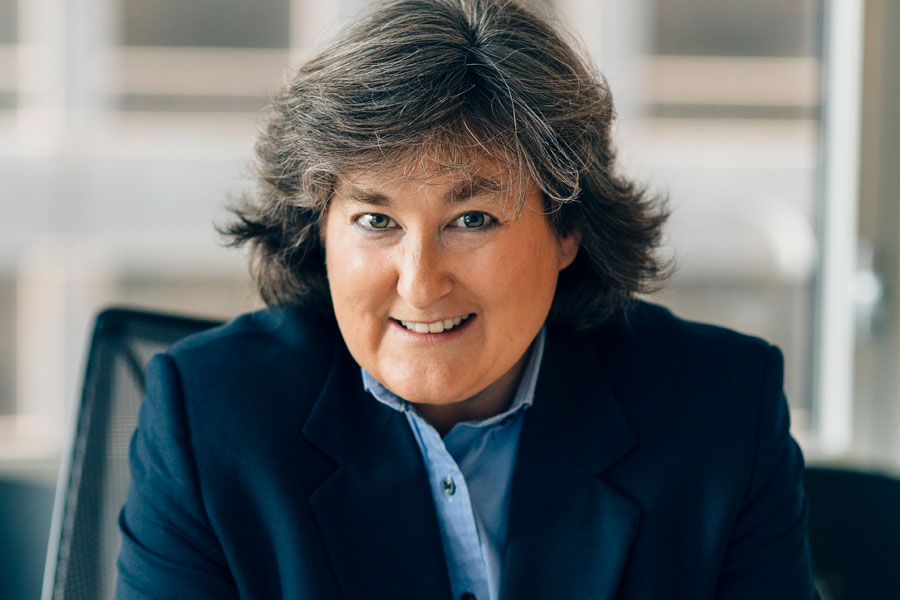
This realization—that the basic discipline of investment research needed to change to include ESG—was a pivotal moment for Erika Karp (pictured above), and a key to success in developing a truly integrated research framework in her pursuit of sustainable and impact investing.

“Economics is a wonderful way to think about, and put a framework around, social constructs,” says Erika, founder and CEO of sustainable investment advisory firm Cornerstone Capital Group. “When you see business structures that are compelling, that kind of training is very important.”

Erika started out at Credit Suisse, and then moved on to lead the Global Sector Research team at UBS, where her interest in ESG analysis developed organically. During this time, she took on leadership of the socially responsible research team and became an early advocate for sustainable, impact investing.

“I got more and more excited about the possibilities of this new investing model, and started speaking not just internally, but outwardly as well.”

That advocacy and expertise led to impressive leadership roles at the top echelons of the impact movement, including a membership in the World Economic Forum, Erika’s work with the United Nations and her association with the Clinton Global Initiative, to name a few.

Operating at that level gives her a true insider’s perspective into impact investing, having established relationships in different areas of the capital markets—including corporations, non-governmental organizations, regulatory agencies, exchanges, wealth asset managers, investment banks, accountants and others.

“Sometimes people say ‘ESG investing,’ but that doesn’t make sense,” Erika argues. “ESG is a discipline, and once you have that discipline, then you can do impact or sustainable investing. It’s a form of enhanced analytical capability. Transparency, improvements in data, the nature of social media, the rapid movement of information; all those factors are at play, too. But ESG is a push towards a more conscious type of investing—and that’s the big deal.”

It all involves having a macro capital markets view. Erika notes it’s not about moving millions or even billions, but trillions of dollars towards impact, especially when considering ESG imperatives like climate change, women’s economic empowerment, animal welfare, education, ocean pollution, potable water and increasing broadband access.

“To give you a sense, in 2017 maybe $400 billion of venture money was moved towards alternative energy. We need to move $1.5 trillion a year if we’re going to achieve anything like the COP 21 [United Nations Framework Convention on Climate Change] objectives. And that’s just for alternative energy. If you can’t get the capital markets working and having money flow towards progress, we won’t be able to do it.”

That macro view is tied directly to the firm’s offerings. She specifically points to Cornerstone’s investment research credibility, on par with that of an institutional investment bank; corporate governance expertise in line with that of an asset manager; and the due diligence/client advisory perspective Cornerstone brings as a registered investment advisor.

“We put those all into one integrated firm, and that’s never been done before,” says Erika. “We don’t think of ESG or impact investing as an asset class. We think it should be completely integral to the investing process. We think it’s all investing, because all investing has an impact—you just don’t necessarily know what it is.” Given this philosophy, Cornerstone is 100% focused on sustainable and impact investing, with most of its clients also targeting competitive financial returns.

That said, donor advised funds and similar philanthropy-focused investment vehicles are critically important “portals” for wealth management clients to access impact investing, Karp adds.

“We are seeing a transformation of traditional philanthropy strategies towards impact investing, which makes sense. But ultimately, we’re going to move even further towards market return investing with social impact.”

As for successful entrepreneurs and business leaders looking to harness the power and size of capital markets to generate a measurable social/environmental benefit alongside a financial return, what advice does she offer?

“They need to combine their pragmatism with their ideology. It has to be both pragmatism and analytics, along with ideology and sensibility. Then you need to find people you really trust. It’s as simple as that.”

If you like this, subscribe here for more stories that Inspire The Future.

The Power of The Founder’s Mentality

Matthew McCarthy, North American Vice President of Unilever, takes us back to his college days working for his father’s small print business, to fill us in on the importance of the founder’s mentality.

Now with Unilever, he sees the founder’s mentality come through in the form of passion from his business partners. Get the scoop on the importance of believing in your product.

https://wisdomcapture.wistia.com/medias/e54oegsuf4?embedType=async&videoFoam=true&videoWidth=640


Watch more Wisdom Capture videos here


The Power of The Founder’s Mentality

Matthew McCarthy, North American Vice President of Unilever, takes us back to his college days working for his father’s small print business, to fill us in on the importance of the founder’s mentality.

Now with Unilever, he sees the founder’s mentality come through in the form of passion from his business partners. Get the scoop on the importance of believing in your product.

https://wisdomcapture.wistia.com/medias/e54oegsuf4?embedType=async&videoFoam=true&videoWidth=640


Watch more Wisdom Capture videos here


What it Means to Change For Good

Brands = Power, and brands like Seventh Generation are using theirs to bring about change for our planet and the lives of customers.

Hear how they rallied the necessary support of the nation to push toxic chemical reform through Congress, influencing a bright future for every company’s product development. Joey Bergstein of Unilever explains how 80,000 new chemicals have been introduced into the US marketplace since 1976 – the last year that chemicals legislation was put in place to regulate safety and human health. 

https://wisdomcapture.wistia.com/medias/johawichbq?embedType=async&videoFoam=true&videoWidth=640


Watch more Wisdom Capture videos here


Elevating Humanity Through Business Just Got Real

Conscious Capitalism cofounder and chairman emeritus Raj Sisodia, had just given a presentation at the Lead with Love Leadership Summit in Aspen, Colorado, when a woman approached him.

“You and Larry Fink need to meet,” she said before setting the meeting in motion.

Just days before the meeting, Fink, cofounder and CEO of the BlackRock investment firm (pictured above), had sent a letter to the chief executives of the largest public companies, telling them they should focus on value creation for all stakeholders –that they needed to have a larger purpose than making profits – and that they must engage with communities and make a positive contribution to society.

If you like this, subscribe here for more stories that Inspire The Future.

He included a warning: if a business doesn’t act in a way that promotes societal good, “it will ultimately lose the license to operate from key stakeholders.”

“As you read his letter, you saw he was using our language,” said Sisodia, the FW Olin Distinguished Professor of Global Business and Whole Foods Market Research Scholar in Conscious Capitalism at Babson College. He said he couldn’t help but be impressed by Fink and by the BlackRock firm.

First, despite Fink’s clout, Sisodia said that during the course of his 35-minute meeting, it was clear that Fink is a grounded, conscious leader, and “just a regular guy.” Second, Fink has been living Conscious Capitalism principles within his firm.

“He’s creating a different kind of financial firm,” Sisodia said. “It has a culture that is people-centered, and he speaks of emotional connection. People stay there instead of moving on to other jobs, which is the norm in this kind of high-pressure environment.”

Sisodia said he was able to talk to Fink about the Conscious Capitalism movement and even invited him to the upcoming Conscious Capitalism Annual Conference (April 30 – May 2, 2018 in Dallas). While Fink said he was already committed at that time, he wanted to send other top executives.

BlackRock’s influence in the financial community is hard to overstate.

The firm manages more than $6 trillion in investments, making it the single largest investor in the world. Although about $4 trillion of that is invested in index funds, that still leaves $2 trillion in directed investments that could be up for grabs following Fink’s letter.

“They have a lower profile than their reputation warrants,” Sisodia said. “They have the power to influence and inspire, and they want to uplift the whole game.”

As a case in point, Sisodia said that immediately after Fink met with him, he was scheduled to meet with the ExxonMobil board of directors.

Sisodia said Fink’s bombshell letter does not mark an entirely new direction for BlackRock. Rather, the firm has been articulating a similar message for several years. “This year’s letter is the most direct,” he said.

Fink’s letter drew predictable backlash. Fink told Sisodia that at the World Economic Forum in Davos, Switzerland, many CEOs pushed back, saying Fink’s job is not to lecture them but to maximize returns.

But Fink, like those in the Conscious Capitalism realm, told Sisodia that he understands that the best way to maximize returns is to take a long-term view.

And BlackRock, Sisodia said, doesn’t just lecture companies to do better but has a growing stewardship team that helps companies make sure they are focused on long-term value creation for all stakeholders. Currently staffed with about 30 employees, the stewardship team is projected to grow to 70 under the leadership of BlackRock cofounder Barbara Novick. “In spite of the costs of this effort and building a larger team, BlackRock doesn’t charge any extra fees,” Sisodia said.

Sisodia said that stewardship team both helped ExxonMobil Corp. move toward acknowledging climate change and then remain focused on ways to mitigate the issue. After meeting with Fink, Sisodia said he spent another couple of hours with top executives to do a deeper dive into the firm’s culture.

“When people criticize Larry, he can point to his own firm as an example,” Sisodia said. Among other things, BlackRock never trades on its own account, instead focusing on the long-term best interest of clients. That approach has not hurt profitability in the slightest.

BlackRock went public in 1999 valued at about $1 billion. Now it’s worth $90 billion.

“That’s a 28% compounded return to shareholders,” Sisodia said. “That will get your attention.”

BlackRock’s sudden higher profile casts a fresh light on the issue of investor activism. The traditional view, especially among Conscious Capitalists who have gone public, is that activist investors can be a bad thing—especially if the activists are focused on quarterly returns instead of on long-term value creation.

But Fink’s brand of activism, which tracks the Conscious Capitalism model, is noticeably different in both focus and intensity. For one thing, BlackRock doesn’t just meet with boards of directors during proxy season. Instead, it meets regularly throughout the year, Sisodia learned.

Although BlackRock votes with management between 80 and 90% of the time, it’s not merely rubber-stamping decisions. It has already been engaged with management and helped shape the policies and decisions that form the proxies, Sisodia said.

“BlackRock is trying to elevate the whole game, not by intimidation, but by inspiration,” Sisodia said.

Sisodia noted that, although the BlackRock letter is a major development, it will have no direct impact on private companies.

“But there’s comfort in validation like this because for the most part, the money guys aren’t here in the Conscious Capitalism movement,” he said. He added that the prevailing attitude in the investment community is that Conscious Capitalists are a “bunch of do-gooders who don’t know how the world works.”

That attitude is slowly changing. In addition to the rise of purpose-based financial firms like Satori Capital and Gratitude Railroad, mainstream investment banks are seeing the light. Sisodia noted that Morgan Stanley created a fund based on Conscious Capitalism principles. Trading as KRMA (pronounced karma), the Global X Conscious Companies exchange-traded fund invests in conscious, sustainable, responsibly-managed companies. Providing private businesses with a practical framework to implement these principles is the focus of Sisodia’s latest book, Conscious Capitalism Field Guide: Tools for Transforming Your Organization, which was just published by Harvard Business Review Press earlier this month.

Given Fink’s willingness to further engage with the Conscious Capitalism movement and his brash call for greater consciousness in public companies, it feels as though the investment community may be on the cusp of larger change.

But the $6 trillion question is whether the BlackRock letter will accelerate the spread of Conscious Capitalism. Sisodia thinks it may represent a watershed moment.

As he tweeted when Fink’s letter became public:

“This is fabulous—Larry Fink, CEO of BlackRock, THE largest investor in the world ($6 trillion under management), essentially endorses Conscious Capitalism! #tippingpoint”

Geoff Campbell and Aleksandra Corwin are editorial writers with Round Table Companies (RTC), a storytelling company, event production company, and creative agency that takes a unique approach to supporting purpose driven businesses in amplifying their authenticity.

If you like this, subscribe here for more stories that Inspire The Future.

How to Lead Without Needing Plan B

Have you ever considered that letting down your guard may be the best way to improve your leadership? Like most pearls of wisdom it’s counter-intuitive. But that’s precisely why only the brave dare try it!

I learned the value of letting down my guard recently. I started a new club in Spain for business leaders committed to promoting personal growth and invited important friends, clients and business partners from over the years to join me. It felt great: We were going to change the world and solve the problems we all face as a species. Yippee!

If you like this, subscribe here for more stories that Inspire The Future.
 
And then it suddenly stopped feeling great and felt downright awful. Doubts arose, and I wondered whether I would pull it off or whether it was all a really bad idea – the result of moving too fast.

Questions arose from members of the club: Where were we going? What kind of people would be interested in joining? What was my vision?

Then I remembered all the times over the past few years when I was about to get on my horse to ride, and I suddenly froze with panic. I remembered that fear was momentary. I remembered it was an old, automatic reaction that only appeared in that moment – a blind repetition of past habits.

So, like I learned to do when riding my horse, I focused my mind on remaining calm, breathing in big, deep lungfuls of air. I checked there were no signs of danger around me. Then I dismissed my bad feelings and aimed at slowly reducing them as I swung my leg over the horse’s back and cued him to walk forward. After a few minutes, I was back to my confident self and ready to take on new challenges. It felt amazing to find my “greatness” again, after having momentarily lost it!

I’m not kidding. The innumerable times I’ve lost my mojo on my horse have taught me how to find it again, and more importantly, these times have shown me that losing my mojo is no more than a temporary setback from which I can work my way back. It’s the main reason I no longer need armor, a shield or a plan B. I’ve learned to trust my instincts and carefully trained talents fully.

As for my new and exciting business club? I’ve come to see the enormous value of allowing myself to go through these internal pirouettes around the center of my safety and confidence. I can also see a distinct difference in how I conducted myself 15 years ago, as opposed to now; when I would go into business challenges with bullet-proof confidence. While it felt great at the time, it blinded me. I was armored up. I was tough and indestructible. I was confident beyond the limitations of reality and didn’t consider any limitations. I was so focused on keeping up my perfect shield of: “Yes! I feel great! I can do this!” that I was unable to foresee potential risks or detect emerging problems until it was too late.

Nobody ever taught me that becoming vulnerable could make me a better reader of reality. Feeling a lack of confidence improves our perception of subtle non-verbal cues in other people, while fear is a sophisticated evolutionary tool of survival designed to keep ourselves, and our interests, safe at all times. No MBA professor ever warned me that bravery is not the absence of fear, but about managing your fear.

Letting down your guard is essential for refining your perception around a business situation. Removing our shield will train your ability to manage risk, ground deep-seated fears and hush doubts – in yourself and those who follow you.

Letting down our guards gives you back the flexibility, playfulness and perfect adaptability that we have developed as a species over millions of years. Although it doesn’t always feel great, it does turn business and life into an exhilarating adventure that you’ll never forget.

If you like this, subscribe here for more stories that Inspire The Future.
 

How to Build a Business and Still Have a Life

In the 17 years it took me to build Pacific Direct into a multimillion dollar business, I drove myself very hard. From the day I started, at 23, a second sense told me I had to keep myself in peak fitness to succeed. My trainers and my swimming costume were always packed and ready to go. I still run up escalators and if there are stairs, I take them.

In my last year of owning the company, I traveled 221 nights, sleeping upright on planes to save money on hotel rooms and and rarely staying in lodgings ranked higher than three stars. My body twitched with exhaustion, sending me messages to slow down and breathe. I was more stressed than I suspect I admitted.

If you like this, subscribe here for more stories that Inspire The Future.

My determination to succeed separated me from my family but, taking on board good advice from my elders, I made sure I never missed what I perceived to be a landmark childhood event. Sports days, nativity plays, and, of course, speech days.

Over this journey, not only did I learn many important business lessons along the way, but also valuable life and leadership skills too.

Build a positive culture

An open culture at work adds real value to the company. I believe all players work hard for each other and I’ve learned the team only works if no one is an island. Respect each individual as an individual. Every person adds value to the team effort; make sure they know this. Mistakes will always happen and that’s OK.

Ensure there are no witch hunts after by embedding a continual improvement process and mindset. It’s so much more valuable that everyone learns from any mistakes and everyone moves on without disrupting the momentum of the team.

Employ ‘smart and fast’

If you do make a miss-hire and your gut tells you so, act fast, release and always reach out to the next person you keep on file, just in case.

Recruit well — employ the best hires you can so that you can go further faster and expect greater returns. I’m a great believer that you save an awful lot of pain if you hire an expert. I do take great leaps of faith when I employ people and if I do make a mistake and take on someone who turns out not to be a team player, I know I must likewise make a swift decision to remove them.  

Go with your gut, but have a business plan

Pair your instinct with a way to review your business plan to remind you of your venture’s core business.

Second time round, I’m building a brand around my lifeline at Pacific Direct —  an aromatherapy brand to breathe renewed positivity into our busy lives. However, I honestly never saw the whole trend of mindfulness coming. My feeling was that someone needed to modernize aromatherapy and I knew first hand from dark times at Pacific Direct that therapy-grade essential oils do work. The Scentered mantra and ritual — Stop. Inhale. Reset — gives the customer a moment of time, which is just the best commodity anyone could possibly sell. At Scentered we sell well-being. I continue to make mistakes, but these teach me which paths not to progress and highlights which strategies are unaffordable. I follow my gut, and it serves me well. If you don’t, you are likely to live to regret it and who has time for regrets? Learn from a review but move on fast and recover quickly from mistakes so you can learn from yet another error.

Take one (fast) step at a time

Business is a race, so you need a relentless desire to continuously improve. Focus on one thing at a time, irrespective of all the other demands that come your way. It is better to do one thing well rather than a leave a couple of tasks half-baked. I read, “The Power of Focus” and realized what a huge amount of energy I wasted trying to juggle too many options. Learn to say no; it is the most important skill. It also enables me to be brutally direct in my desire to milk every moment out of every opportunity.

Find reasons to celebrate, innovate

Celebrate even when times are tough. Look for incremental innovations that keep you one step ahead of the rest. I believe that you are what you choose to be in life and you can choose to surround yourself with people, lessons, tactics and methods for coping with tough-life challenges. Reward yourself especially in the tough times as small rewards go a long way. There is always something happening, somewhere, to celebrate. Find it and build on a new potential.

Keep fit, healthy and rested 

Your body tells you when you need sleep. Listen to it! Money does not buy you health and well-being; you must work at these things. Make choices to eat healthily and exercise daily. I often walk (very fast) between meetings. I get calls done and I stretch my legs at the same time. Learn to get more value out of everything you do and remember there is no such thing as perfect; just be grateful for every healthy day. Get up early so you’re then ahead in this race, this game called business. If it is not fun, make it so.

Have humility but don’t lack confidence

Read everything about your industry and strive to be an expert. Be engaged, be aware and notice the small things. I truly believe that you can build and drive confidence through well-being. When you’re fit and healthy — and you know you’re looking good and you feel good about your inner and outer self — you’ll be more able to take chances, put yourself into challenging places and expose yourself to seemingly uncomfortable environments, to achieve significantly positive outcomes, especially in the tougher times. I find this enormously energizing and empowering. A positive mindset is pivotal to leading a life full of exciting experiences and meeting interesting people.

By Lara Morgan – a motivational speaker, entrepreneur, Co-Founder and CEO of British-based portable aromatherapy brand Scentered.me.

If you like this, subscribe here for more stories that Inspire The Future.

Leadership is Like Climbing a Mountain

When I was invited to speak at the Real Leaders magazine launch last September, I was asked to share my thoughts on leadership. I wondered what I could say about real leaders that was fresh, inspirational and personal.

I hiked up Hawksbill Mountain in the Blue Ridge the day before the launch so I could clear my head and think about these questions.

If you like this, subscribe here for more stories that Inspire The Future.

The connection I made at the launch was that leadership is like climbing a mountain. You don’t climb alone and must depend on your partner or team to get to the summit. You understand their struggle and they yours. Their success is your success. Leadership is not easy, and the hardest piece of it is compassion. If a member of your team slips and falls on the way, you have to stop, and you may not reach the summit as quickly as you’d like. Compassion builds trust and a strong team.

Manley Hopkinson, the author of Compassionate Leadership, said that leadership is less about telling people what to do and more about forming a relationship with them, so they motivate themselves to do what is required. The heart of the approach is “understanding yourself.” Once you have a true understanding of yourself, you understand others better and can create more effective businesses and relationships.

Leaders exist everywhere – each of us has something we’re passionate about and can act on. And we must act now to create the change in the world we wish to see. The costs of inaction are too high.

Real Leaders magazine hit the newsstands recently and has a list of the “Top 100 Visionary Leaders for 2018” who are changing the world. I’m honored to be included there.


If you like this, subscribe here for more stories that Inspire The Future.

How Would America Look Today With Kennedy And King?

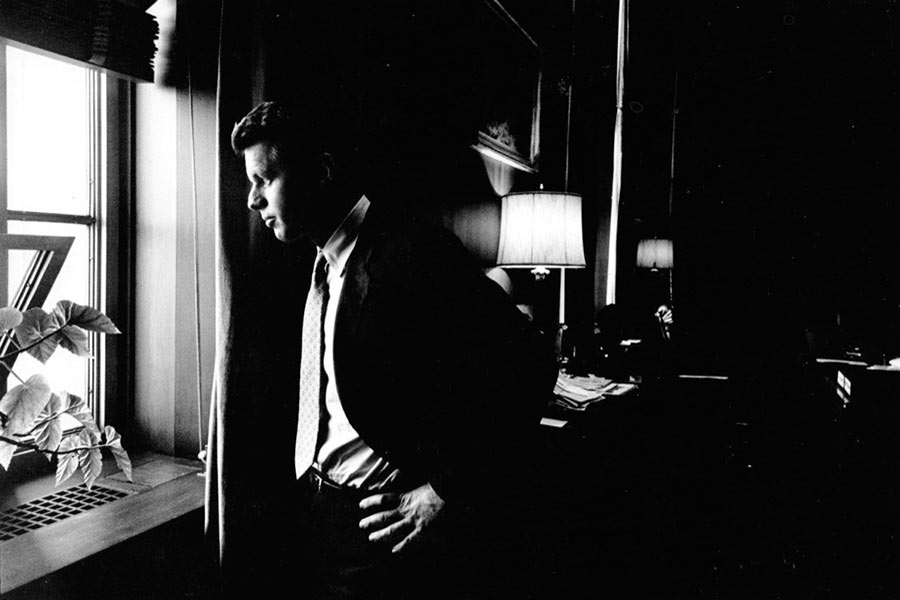
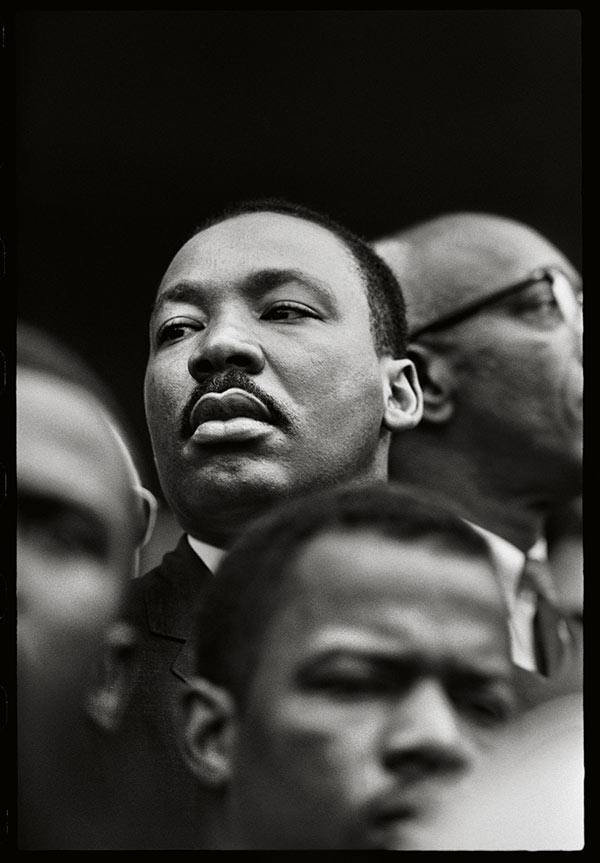
A new photographic exhibition marks the 50th anniversary of the assassinations of Martin Luther King, Jr. and Bobby Kennedy. It wants visitors to ponder what kind of country America would be today if both of these leaders were still with us.

A collection of over 40 photographs by several famed photographers will be on display from April through June that capture various sides of two iconic figures in American history, Martin Luther King, Jr. and Bobby Kennedy. These will include both well-known images as well as rare vintage photographs by such photographers as Jacques Lowe, Steven Schapiro, Lawrence Schiller, Steve Somerstein and others.

If you like this, subscribe here for more stories that Inspire The Future.

The exhibition will run from April through June 2018, marking the 50th anniversaries of the assassinations of these leaders. Dr. King was shot and killed on April 4, 1968 and Bobby Kennedy was shot and killed June 6, 1968.

“As a pictorial narrative of their public lives as social and political leaders, we want visitors to walk away pondering what kind of country America would be today if both of these leaders were still with us,” says Theron Kabrich, gallery cofounder and creative director. “We hope this exhibition encourages reflection that goes beyond one about leadership and events of the past, but just as much or more about leadership and events of the present and future.”

Both King and Kennedy were relentless in their pursuit of justice, not being deterred by challenge but compelled to push back for a greater good and to speak the truth as they saw it with directness and clarity. “I am persuaded,” Kabrich says, “that each in their own way would have continued to be driving forces in the pursuit of justice on behalf of the underserved and neglected to the present day.”

The extraordinary images of these men in various environments, a number of them being shown for the first time, allow some of us to remember and others of us to imagine what they were like, who they were, and why their legacies mean so much even now.

“We all have heroes and heroines who we look up to and admire, figures who inspire us,” Kabrich says. “I believe a few of us, though, actually take inspiration to a level beyond inspiration, to aspiration. These people, leaders of the past and of the future, aspired to actually emulate the person that inspires them, to become like that person. In the case of Dr. King, for example, it was Ghandi.”

The current exhibition will surely inspire visitors during these three months as the walls of San Francisco Art Exchange will be filled with iconic images of two great men. The gallery also hopes the photographs on display will stimulate a few young people to believe enough in their own dreams to aspire to become leaders and change agents of their generation as had been Dr. King and Bobby in their own.

“In some ways,” Kabrich says, “the kids in Parkland, Florida are fearless enough and smart enough to strive for something greater than themselves. How refreshing to see such noble audacity – a characteristic of the men whose images are on our walls.”

If you like this, subscribe here for more stories that Inspire The Future.