Can Capitalists Save the World and Keep Their Toys?

Anand Giridharadas’ new book, Winners Take All: The Elite Charade of Changing the World, examines the mindset of an apparently liberal elite, whose attempts to help the underserved are deeply conservative, because it seems that these attempts do more to protect the status quo than to change it.

“Lying to ourselves is more deeply ingrained than lying to others.” – Fyodor Dostoevsky

The book skewers the world of Davos, the Aspen Institute and the Clinton Global Initiative, expertly drawing out the complex motives and fears of a powerful group of individuals in what he calls “MarketWorld.” The Austenian tone perfectly teases out their contradictions and humanity.

If you like this, subscribe here for more stories that Inspire The Future.

The book includes story after story about highly capable, well-intentioned individuals caught in the web of limousines, private jets and fancy food. It chronicles people like Amy Cuddy, a serious academic who became a TED talk phenom with her “power poses” and Hilary Cohen, a successful student wanting to change the world, but drawn into a career path at Goldman Sachs and McKenzie & Co. The most nuanced portrait is of Darren Walker, leader of the Ford Foundation, and a genuinely good man who has valiantly tried to take on MarketWorld. The chapter details his rise from a different world, and his attempt to challenge the Aspen Consensus that “The winners of our age must be challenged to do more good, but never, ever tell them to do less harm.” The chapter ends with Walker joining the board of Pepsi, promising he will bring “social justice” into the boardroom, and assuring Giridharadas that his only compromise is switching his soda brand.

But those who have been reading Giridharadas carefully expect that there is no room for social and environmental justice in the Pepsi boardroom. Its directors have a single task in our current legal and capital markets environment: keep the stock price up because it’s the “market” that matters. If you can accomplish some “corporate social responsibility” at the same time—and maybe even use it for marketing purposes—that is dandy, but stock price is “Job No. 1.” If that means lay-offs, so be it. If it means peddling sugar water to children, well, if we don’t do it, someone else will.

The point of all this skewering is not to make the elite feel bad or the rest of us feel better; it is to highlight a systemic problem. Giridharadas believes that we have shifted the locus of addressing societal issues from the public and political arena to a combination of “market-based” solutions and an elite philanthropic and policy sector. This elite comprises hedge fund managers, retail heirs, Silicon Valley entrepreneurs and other market winners who have no interest in examining whether the market is the source of the problem rather than the answer for it.  

This means that in developing countries, organizations like the International Monetary Fund and the World Bank promote business friendliness before justice or equality, and in the United States, companies trumpet their parental leave policies for executives while lobbying against laws that would protect all working women. These companies then sponsor Aspen and similar gatherings.

All of these elite, Giridharadas proposes, have vested interests in preserving the system that has given them wealth and power, and the solutions they propose are just band-aids that preserve that system by relieving tension, rather than rooting out the fundamental causes. This is why we see McDonald’s commercials bragging about scholarships while it spends millions lobbying so that the minimum wage doesn’t rise.

Nor is it simply an issue of motivation. He worries that the tools that successful capitalists use are just more capitalism, and make the problem worse, by promoting market solutions over political ones. (Full disclosure: He seems to believe that the organization I work for, B Lab, is guilty of both sins, although I don’t think he fully understands our master plan for upending capitalism.)

The book describes a panel at Clinton Global Initiative that discusses women and sustainable development. The panel includes top executives from Procter & Gamble and Dermalogica, a skin-care products company. One participant talks about empowering women by getting them jobs selling skin-care products. “Excellent! Entrepreneurship!” shouts the moderator. What could be wrong with that— providing jobs for women, giving them more independence and the ability to help their kids up the socioeconomic ladder? But no one on the panel represented the view that the problem wasn’t women’s absence from the system, but the system itself:

Didn’t the beauty industry fuel the very commodification of women that sustained gender inequality? In a world of true gender inequality might not the beauty industry shrink?… Wouldn’t true equality for women be a win for women but a loss for Dermologica?

All of this resonates strongly. The rich have more power than they should for democracy to function, and the Aspen Consensus means that those on the circuit will never challenge this fundamental truth. And the circuit is pernicious, because it sucks in and infects many who have the best intentions and abilities (recall the Walker story).

But was it ever thus? In some spots, the book traces the Aspen Consensus to Andrew Carnegie and other robber barons who made as much as they could as ruthlessly as necessary, but then gave it all away (hence the Carnegie, Ford and Rockefeller Foundations). In other spots, it is traced to the late 20th century rise of neoliberalism and its elevation of the market as the default solution to any problem (and the author does a neat job tying this arc to the arc of Bill Clinton’s career). But  “noblese oblige” predates Andrew Carnegie, and there was plenty of union busting and wage slavery before Milton Friedman came on the scene.

I also wonder whether it is fair to lump all the individuals within MarketWorld together. The case of Darren Walker seems very different to me that the son of a former Coca-Cola CEO founding Even, a company that charges poor people $260 a year to use an app that smooths out lumpy income for members of the gig economy living paycheck-to-paycheck. Walker wants to help people for their sakes, and wants to use capitalism to do it. The latter wants to make money from people who are already broke.

Most importantly, it isn’t clear to me that we should write off MarketWorld schemes that actually help people. Even if they are not attacking the system they are improving lives. Giridharadas’ answer seems to be that by helping a little they are preserving the system. But this seems as cynical as  Lenin’s “the worse, the better.” For example, I would not reject Silicon Valley’s efforts to create cruelty free, environment-preserving clean meat, even if the accompanying self-congratulations grates and even if venture capitalists get rich doing it.

Another way to push the analysis is to ask whether it is true, as Giridharadas seems to claim,  that the tools of capitalism can never be used to address its excesses. Giridharadas quotes Audre Lorde in an epigraph: “The master’s tools will never dismantle the master’s house.” Sounds great, but, as one says in MarketWorld, where’s the evidence? (Indeed, an Allen wrench could be quite useful in breaking down an Ikea desk, even if a sledge hammer might be more satisfying.)

For example, what if we could show that when companies externalize costs to everyone else it actually lowers the long-term returns of the diversified institutional investors? Might they use their control of the stock market to limit the concomitant damage to the systems that support the rest of the companies in their portfolios? Perhaps if investors understood that the irresponsible techniques that individual companies use to “beat the market” actually drag the whole market down, investors would start telling companies to pull back from the neoliberal cliff. Maybe the world is messy, and some big solutions are market-based and others are political. And maybe sometimes it’s just hard to tell the difference.

We have a system that is rapidly degrading our natural environment, creating unjust and destabilizing inequality, and delivering an increasingly risky economy. But asking the powerful few to give up their power and to work to change the system seems, to this observer, an unlikely path to remedy the situation. Better perhaps to let the Davos set try it their way, while the rest of us head to the (metaphorical for now) barricades and create change from the bottom up. After all, the people elected Trump, no friend of Davos; maybe they will elect Elizabeth Warren next.

None of these questions are meant to take away from the importance of this book. It is a serious indictment of our dangerous tendency to cede leadership to a small group with enormous power. Even if they have some good ideas, they do not have the life experience or right motivations to take charge. The world needs changing, and that is not a task we can leave to the winners.

If you like this, subscribe here for more stories that Inspire The Future.
 

Leadership Lessons From Professional Ice Hockey

Former ice hockey goaltender Helmut de Raaf played an incredible 114 times for Germany on the world stage as well as winning 11 German national championships. With a host of 14-20-year-olds now benefitting from his extensive experience, he explains why creativity in sport wins and how you can apply this to business too.

The 56-year-old went on to train the Jungadler Mannheim to 10 championship titles and now spends his time guiding young hopefuls at the Red Bull Ice Hockey Academy in Salzburg’s Liefering district towards a professional career.

If you like this, subscribe here for more stories that Inspire The Future.
Where do you get your main inspiration from?

I receive my most important inspirations from people in different worlds – from trainers from different kinds of sport, but also from teachers from innovative schools or from interesting artists. In acting, for example, the director describes their vision of a scene, lets the actors act and tells them afterwards what was good about it – and then everything starts again from the beginning. The actors play the same scene five, six, seven times until they feel that the scene is ready.

When everyone believes they know how the scene should be performed, the director says, “OK. Now, play your own thing”, and that’s when it starts to get interesting. This is what the Red Bull Ice Hockey Academy is all about. Our players gather experience in training in order to create something new from it.

What should be the trainer’s priority?

A trainer, in my view, gives his players the tools in order for them to solve problems, but above all else, he gives them the confidence to find their own solutions. The necessary creativity resides in every human being. It’s fun to try out and go individual paths. All trainers should enable our players to live out their creativity, to fully tap their own intelligence. They should do what they have never done before: to skate around the goal and shoot the puck inside from behind. A scoop in an unexpected moment. A shot at the shoe of the defender, which surprises the goaltender. It doesn’t matter if it’s happening with us on the ice or with you at your workplace. If anyone can try something new and is able to fail, then a culture is established which can take everyone to the next level.

What benefits does a company receive from letting their employees be creative?

They create unexpected surprises and that is always an advantage – if it works. What are we waiting for in soccer, in ice hockey? For the toy that nobody saw coming. A pass through the legs, pushing the puck back because the succeeding defender in front of you has more momentum. Spinning in a circle in order to let the opponent run into the empty wall. What kind of start-ups are successful? Those whose ideas nobody had before. Naturally, new ideas bring forth new risks – they could fail.

You could always be the sucker. But if I don’t try, don’t practice, don’t work on my confidence to also be creative in critical situations, then I run a risk of stagnating and with me also the whole group. The task of the coach is to supply people with confidence, to make them reveal their innermost core. That’s true for sport, for art but also for school and for life. During the last decades in ice hockey, teams played by very strict systems. This is over now.

Can you highlight an example of letting creativity blossom and why you need to persist with it?

It is the last minute of the game and the score is 2:2. We attack, a player takes the puck, and rushes to the opponent‘s side goal, loses it, we run into a counter-attack and lose. Whose fault is it? The player who lost the puck? No, all players who stood on the ice! Because the one player didn‘t purposely make this mistake, but a chain of actions led to this mistake. Nobody was available for a pass. The other players didn‘t protect him enough from behind. He took the risk wanting to decide the game since the other previous tries didn’t work. In a team, it cannot be just one single player’s fault.

Every single player had several opportunities to prevent this seemingly hopeless situation. If you know that there are many people behind you, that have your back, then you can also take risks in good conscience because you know that you will not be alone when something doesn’t work out. The role of the modern trainer – and that of every leadership personality – is the one of a facilitator rather than authoritarian despot. The bellowing boss, who gives individuals a scathing castigation, is a figure from the past.

How do you prepare everyone to take these creative risks?

Before you can start, you need to make sure which path you will take together and make sure that everybody is on board with the current course of action, even those who had different opinions. Intelligence and a sense of responsibility from everyone is a prerequisite. This applies to the ice hockey players as well as to the trainers or to any other group dynamical process. It’s very important that everybody trusts one another to speak out their minds in order to keep the spirit of free discussion alive. This is the only way you can find out if your ship is going in the wrong direction. One direction is good and necessary but one also needs the courage to leave the current course – but only together as a team.

What is the greatest danger to a positive, creative approach?

The greatest danger is success. When everything appears to work out too easily, you are not learning anything anymore and give others the chance to catch up. This can be seen at big companies and also within sport organizations. It always helps to inject new and fresh ideas. Try introducing three or four new players and new co-trainers. All this changes the fabric of the team and gets everybody going.

How do you identify which people need more help than others?

Everyone is a human being and we try to maintain their character and not turn them into robots. In Mannheim we had a player who had a very bad body language. We spoke to him about it and he wasn’t aware that was doing it consciously. What did we do? We confronted him with himself. Normally, the last person to show up at the arranged meeting point had to perform a task: to sing a song, crack a joke, dance. Harmless things raise the mood and moral of the team. This time, I gave the task to him and the next time and the time after that. At the beginning he naturally wanted to refuse, but after a couple time he began to enjoy his exposed position. After a couple of years, he developed into a real good player and great guy.

Are players the finished product when they leave you?

FC Barcelona has a similar selection process where they give the kids a ball and search for the hungriest ones, but admission into the academy is just another first step of a very long journey. A couple of them understand that they are only standing at the starting line and jump right into it. A few believe that they already accomplished something, just because they managed to get in here. This is a massive mistake! They also haven’t reached anything when they exit the academy at age 18. This is just the next starting line, just like a successful high school diploma or a university degree is also just another beginning.

If you like this, subscribe here for more stories that Inspire The Future.

Stanton Chase LA Recognizes Leaders Who Care

As a global leading executive search firm, Stanton Chase works with female leaders around the world who have made significant improvements and left a lasting impact on their businesses. The Women and Leadership video series of Stanton Chase showcases stories of these inspiring leaders, their history, and how they rose to the top.

Stanton Chase Los Angeles, headquartered on the beautiful Santa Monica, CA beaches, offers clients the resources of one of the top ten global executive search firms, differentiated by its global reach, regional knowledge and local insights. They are committed to their clients as “Their Leadership Partner.”

The company has long served and worked with “Leaders Who Care”, around Inclusion and Diversity, Gender Equity, Corporate Social Responsibility, Wellbeing (Health, Workplace Environment, Nonflict, Kindness), Sustainability and Innovation, Veteran Opportunities, Smart Cities, Mobility and Infrastructure, and more.

Why? Executive leaders who embrace the impact of combining social enterprise (such as adopting a Sustainable Development Goal) with their business enterprise, gain a valuable return on investment on their talent acquisition, development and retention, their business results and both their local and global communities. This cycle then continues, full circle.

In alignment with the Decade Of Women, an action campaign dedicated to achieving gender equity worldwide by 2030, Stanton Chase is highlighting exclusive interviews with top female executives who share their wisdom and experiences in corporate leadership, as they pursue a culture dedicated to social impact.

Are you one of the Leaders Who Care? Do you know one? We’d like to recognize them all at www.makeadifferencela.com and possibly at our Global Summit in November! Email Mark Sadovnick, Managing Director at Stanton Chase – LA: m.sadovnick@stantonchase.com

What Can We Learn From Youthful Minds?

As we show up every day in our leadership roles as supervisors, fathers or elders, we have labels that identify our natural role. What true leadership means to me goes deeper than just our responsible or identifiable roles. 

It speaks to our personal integrity – “what we do when no one is looking”.  This is the next right thing. It’s leading through example.

If you like this, subscribe here for more stories that Inspire The Future.  

Our reflection of self happens when we engage a fellow shopper at the grocery store. It is how we react to other commuters on the bus, subway, train or in the car. It is the “Thank you” while engaging eye to eye with a smile. It is the holding of a door, the offer to help someone with their groceries or assisting with a walk across the street.

Most importantly and with practice, these actions become a part of our identifiable character. All of this is felt and seen by our youth. Remember, the youth are sponges and absorb all. Whether we realize it or do not, they take in the negative or positive. 

I prefer to engage people, especially younger people, with an attitude of gratitude. I talk to them as my equal. I do not dumb down, but I choose to let them ask questions and create an understanding. 

Words make a difference and when they lift their eyes from the phone or device and listen and observe. What I find is they are extremely receptive to a challenge. I challenge them to grow and better their vocabulary, their conversational skills, and most importantly, how they represent themselves as they use the everyday tools to thrive and be successful. The simple stretching of vocabulary and integrating meaningful words excites the young mind. They surprise themselves with their own growth. In turn, it has a direct effect on we who are “older” and perhaps more knowledgeable, the leaders who take this leadership role to heart. We grow within ourselves as we witness young people growing.

We must make this awareness and behaviors a part of everyday interaction. There is no turning off after a rough day. No excuses for poor behavior. Let us all identify our own shortcomings and possibilities. After all, we all are works in progress. Let us shape new generations, new leaders as an example of challenging ourselves, as well as challenging them. Our future leaders will thank us and keep us all moving in the right direction. Let us all step into our excellence and show up today and every day to follow.

If you like this, subscribe here for more stories that Inspire The Future.  

Robert W. Payne will release his book “Chaos Agent” (working title) in early 2019. He grew up in Bolingbrook, Illinois (south of Chicago) and is an agent of change based on his life experiences. He is a member of the Genshai team – a word that means, “Never treat another person in a manner which makes them feel small, including yourself.” 
It’s Business Unusual at The United Nations

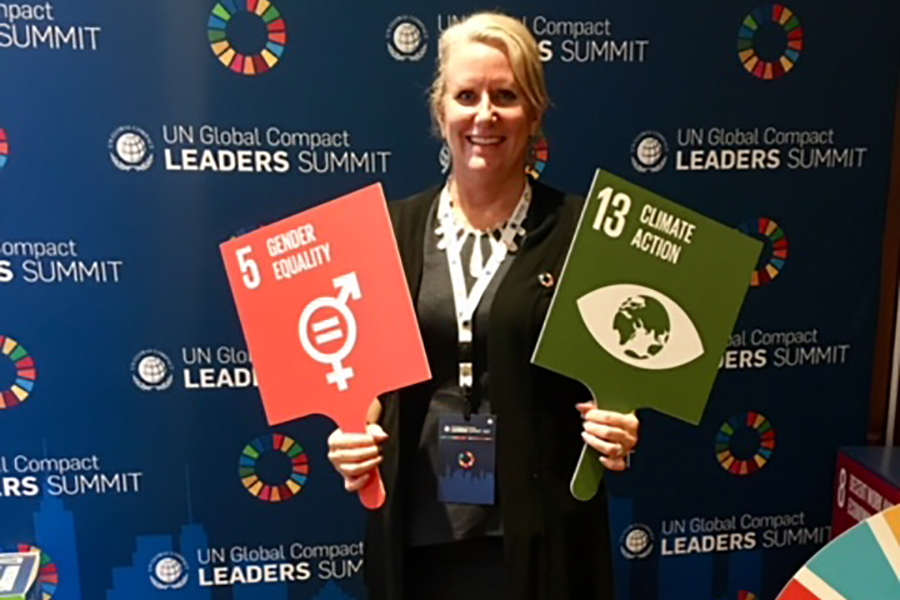
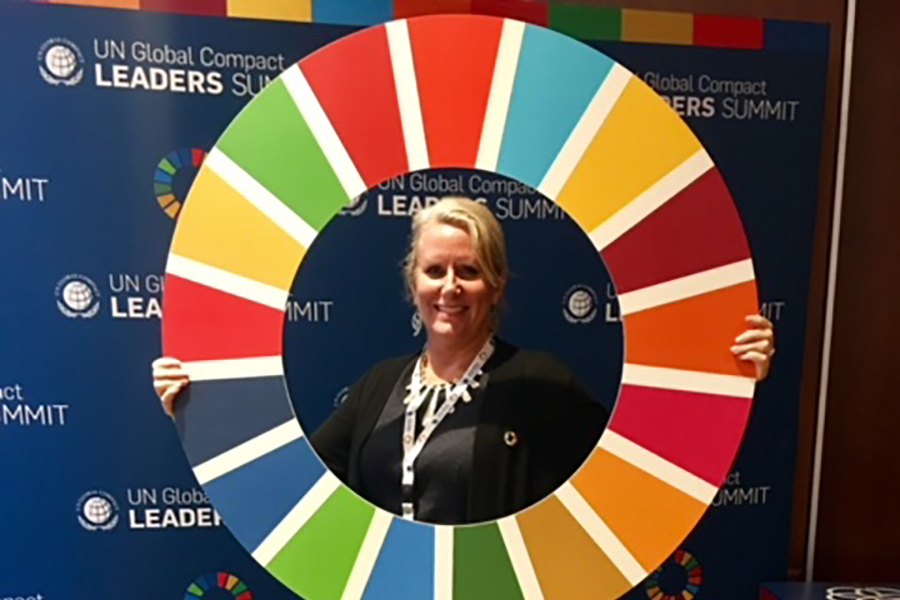
At the United Nations Global Compact (UNGC) Leaders Summit in New York last month it was clear that business has taken center stage in tackling the social problems we see around us.

In the past, conversations like these would have focused on the role of civil society and government in meeting the SDGs. But in recent years, the dialogue has expanded to include the business community and the benefits to them. There’s a growing recognition that there are big incentives at stake – some $12 trillion to be made in the pursuit of sustainability, as estimated by the Business and Sustainable Development Commission.

With 700 people packing the room – many of them CEOs and CSOs – I could sense momentum in the drive to do well by doing good. The leaders who spoke echoed this sentiment as evidenced in the beliefs they expressed and approaches they are taking. Here’s what I heard:

  • Alex Atzberger, President, SAP Ariba: Something has changed between 2007 and today. Sustainability is no longer a nice to have. It has actually become the business. We used to think about the triple bottom line, now it’s just the bottom line.
  • Jean Bennington Sweeney, Chief Sustainability Officer, 3M: The SDGs are a great way to begin finding a new culture of innovation. 3M give their people 15% of their working time to dedicate to following new ideas.
  • Lorna Davis, Chief Manifesto Catalyst, DanoneWave: Be clear where you are going. In discussing sustainability, it’s the people under 35 in our company that are driving us to ensure our activities are lined up with the SDGs. This in turn ensures we use the business as a force for good.
  • Lise Kingo, CEO & Executive Director, United Nations Global Compact: We can only deliver on the SDGs if we find ways to mobilize, and collaborate on actions and ideas to make a movement that is so big it creates a snowball effect and keeps getting bigger and bigger.
  • Abby Maxman, President and CEO, Oxfam: We all know when CEOs and executive boards decide to put creative energy behind the goals, it unleashes the drive to get there.
  • Paul Polman, CEO of Unilever: If we invest in women we actually get a higher return. When are we going to start focusing on the next generation rather than the next quarter?
  • Patrick Thomas, CEO, Covestro: If you’re not failing, you’re not trying hard enough. By 2025, we will dedicate 80% of our entire R&D budget to adopting the SDGs. From a culture perspective, the impetus is coming from younger generation – from millennials – and they are forcing us to think about things differently.
  • Mark Wilson, Group CEO, Aviva: If our modeling is accurate, 2017 will be second worst year in our history in terms of natural disaster events. The economics are compelling, yet why does skepticism trump facts? The solution is a mix of economics, science, but also psychology. Maybe we need to turn the path to the SDGs into a competitive sport!

I certainly left feeling inspired that business leaders are increasingly recognizing real and achievable opportunities to address the SDGs. As many speakers at the event cautioned, organizations must not only talk-the-talk, but walk-the-walk. That includes identifying new ways to collaborate and trying innovative technology-driven approaches. 

It’s Business Unusual at The United Nations

At the United Nations Global Compact (UNGC) Leaders Summit in New York last month it was clear that business has taken center stage in tackling the social problems we see around us.

In the past, conversations like these would have focused on the role of civil society and government in meeting the SDGs. But in recent years, the dialogue has expanded to include the business community and the benefits to them. There’s a growing recognition that there are big incentives at stake – some $12 trillion to be made in the pursuit of sustainability, as estimated by the Business and Sustainable Development Commission.

With 700 people packing the room – many of them CEOs and CSOs – I could sense momentum in the drive to do well by doing good. The leaders who spoke echoed this sentiment as evidenced in the beliefs they expressed and approaches they are taking. Here’s what I heard:

  • Alex Atzberger, President, SAP Ariba: Something has changed between 2007 and today. Sustainability is no longer a nice to have. It has actually become the business. We used to think about the triple bottom line, now it’s just the bottom line.
  • Jean Bennington Sweeney, Chief Sustainability Officer, 3M: The SDGs are a great way to begin finding a new culture of innovation. 3M give their people 15% of their working time to dedicate to following new ideas.
  • Lorna Davis, Chief Manifesto Catalyst, DanoneWave: Be clear where you are going. In discussing sustainability, it’s the people under 35 in our company that are driving us to ensure our activities are lined up with the SDGs. This in turn ensures we use the business as a force for good.
  • Lise Kingo, CEO & Executive Director, United Nations Global Compact: We can only deliver on the SDGs if we find ways to mobilize, and collaborate on actions and ideas to make a movement that is so big it creates a snowball effect and keeps getting bigger and bigger.
  • Abby Maxman, President and CEO, Oxfam: We all know when CEOs and executive boards decide to put creative energy behind the goals, it unleashes the drive to get there.
  • Paul Polman, CEO of Unilever: If we invest in women we actually get a higher return. When are we going to start focusing on the next generation rather than the next quarter?
  • Patrick Thomas, CEO, Covestro: If you’re not failing, you’re not trying hard enough. By 2025, we will dedicate 80% of our entire R&D budget to adopting the SDGs. From a culture perspective, the impetus is coming from younger generation – from millennials – and they are forcing us to think about things differently.
  • Mark Wilson, Group CEO, Aviva: If our modeling is accurate, 2017 will be second worst year in our history in terms of natural disaster events. The economics are compelling, yet why does skepticism trump facts? The solution is a mix of economics, science, but also psychology. Maybe we need to turn the path to the SDGs into a competitive sport!

I certainly left feeling inspired that business leaders are increasingly recognizing real and achievable opportunities to address the SDGs. As many speakers at the event cautioned, organizations must not only talk-the-talk, but walk-the-walk. That includes identifying new ways to collaborate and trying innovative technology-driven approaches. 

Turning Global Goals Into Local Business

Marking 4 years since the launch of the SDGS, this years UN Global Compact Leaders Summit focused on empowering leaders to embed the Global Goals into the spirit and everyday practice of their businesses.

CEO, Lise Kingo, called for deeper integration of all the goals and reminded the audience of the importance of the ‘5 P’s’ “people, planet, partnerships, prosperity and peace” in meeting the 2030 targets.

After a day filled with optimistic examples of innovation towards the 2030 Goals, Lise Kingo’s closing speech centered on the theme of collective action. She urged business leaders to promote and live the Global Goals starting by finding ways to transform every employee into an SDG ambassador. She also stressed the importance of seizing the present moment to mobilize businesses, to pool ideas and actions and to create momentum for a future we all want. ”

“Leaps of innovation require a bravery that borders on absurdity,” said Kingo, urging us all to start thinking differently in a world faced with new challenges. As we’ve seen throughout history, it’s the crazy ideas that sometimes go on to become the “next big thing” in the world.

Yes, The World Can Come Together

Every year in September, world leaders gather at the United Nations in New York for the General Assembly’s annual high-level session. The diplomatic gathering draws veteran politicians as well as new faces from all corners of the globe in what is always an interesting and intense week for all. This year was no different.

At the centre of it all is the General Assembly, one of the six main organs of the UN and the only one in which all Member States have equal representation: one nation, one vote. All 193 Member States are represented in this unique forum to discuss and work together on a wide array of international issues covered by the UN Charter, such as development, peace and security, human rights and international law.

This year all 193 Member States addressed the annual general debate, on the theme “Making the United Nations relevant to all people: global leadership and shared responsibilities for peaceful, equitable and sustainable societies.”

As world leaders began to gather in New York, Secretary-General António Guterres kicked things off by participating in a Facebook Live session moderated by Juju Chang of ABC News. He shared his thoughts on issues such as preventing conflicts, gender equality, what it takes to be a successful diplomat and how individuals can influence the policies that shape the world.

The Assembly debates pressing issues that affect millions of people around the world, including peace and security, human rights and development. Each year, on the eve of the opening of the Assembly’s annual session, a prayer service is held with religious and ecumenical leaders at the Church of the Holy Family in New York City.

Preparations for the high-level week begin months in advance and involve staff from across the Secretariat, from security and interpretation services to catering and media liaison.

The view from the podium in the General Assembly Hall where world leaders deliver their statements. At last year’s general debate, the longest statement lasted 43 minutes and was delivered by the President of the Observer State of Palestine, and the shortest statement, which lasted 5 minutes, was delivered by the President of Lithuania.

The high-level week brought together world leaders from around the globe, including over 100 heads of State and government, including French President Emmanuel Macron and Argentinian Vice President Gabriela Michetti.

Thousands of journalists descended on UN Headquarters to cover the myriad events that take place in addition to the speeches delivered by world leaders.

The SDG Media Zone at UN Headquarters served as a platform for editors, bloggers, content creators and influencers to discuss ways to engage on the Sustainable Development Goals, which commit governments to end poverty, reduce inequalities and protect the planet by 2030. Among the participants were Deputy Secretary-General Amina Mohammed and Alison Smale, Under-Secretary-General for Global Communications.

Attendees at the high-level session also included renowned personalities who serve as advocates for a range of issues at the heart of the UN agenda. Among them was Nobel Laureate and UN Messenger of Peace Malala Yousafzai, who focuses on girls’ education.

The high-level week saw UN officials, governments, civil society and celebrities rally around a number of initiatives, including on financing education for all, advancing the Sustainable Development Goals and promoting maternal and child health.

7 Ways To Build A Business And Still Have A Life

In the 17 years it took me to build Pacific Direct into a multimillion dollar business, I drove myself very hard. From the day I started, at 23, a second sense told me I had to keep myself in peak fitness to succeed. My trainers and my swimming costume were always packed and ready to go. I still run up escalators and if there are stairs, I take them.

In my last year of owning the company, I traveled 221 nights, sleeping upright on planes to save money on hotel rooms and and rarely staying in lodgings ranked higher than three stars. My body twitched with exhaustion, sending me messages to slow down and breathe. I was more stressed than I suspect I admitted.

If you like this, subscribe here for more stories that Inspire The Future.

My determination to succeed separated me from my family but, taking on board good advice from my elders, I made sure I never missed what I perceived to be a landmark childhood event. Sports days, nativity plays, and, of course, speech days.

Over this journey, not only did I learn many important business lessons along the way, but also valuable life and leadership skills too.

1. BUILD A POSITIVE CULTURE

An open culture at work adds real value to the company. I believe all players work hard for each other and I’ve learned the team only works if no one is an island. Respect each individual as an individual. Every person adds value to the team effort; make sure they know this. Mistakes will always happen and that’s OK.

Ensure there are no witch hunts after by embedding a continual improvement process and mindset. It’s so much more valuable that everyone learns from any mistakes and everyone moves on without disrupting the momentum of the team.

2. EMPLOY ‘SMART AND FAST’

If you do make a miss-hire and your gut tells you so, act fast, release and always reach out to the next person you keep on file, just in case.

Recruit well — employ the best hires you can so that you can go further faster and expect greater returns. I’m a great believer that you save an awful lot of pain if you hire an expert. I do take great leaps of faith when I employ people and if I do make a mistake and take on someone who turns out not to be a team player, I know I must likewise make a swift decision to remove them.  

3. GO WITH YOUR GUT, BUT HAVE A BUSINESS PLAN

Pair your instinct with a way to review your business plan to remind you of your venture’s core business.

Second time round, I’m building a brand around my lifeline at Pacific Direct —  an aromatherapy brand to breathe renewed positivity into our busy lives. However, I honestly never saw the whole trend of mindfulness coming. My feeling was that someone needed to modernize aromatherapy and I knew first hand from dark times at Pacific Direct that therapy-grade essential oils do work. The Scentered mantra and ritual — Stop. Inhale. Reset — gives the customer a moment of time, which is just the best commodity anyone could possibly sell. At Scentered we sell well-being. I continue to make mistakes, but these teach me which paths not to progress and highlights which strategies are unaffordable. I follow my gut, and it serves me well. If you don’t, you are likely to live to regret it and who has time for regrets? Learn from a review but move on fast and recover quickly from mistakes so you can learn from yet another error.

4. TAKE ONE (FAST) STEP AT A TIME

Business is a race, so you need a relentless desire to continuously improve. Focus on one thing at a time, irrespective of all the other demands that come your way. It is better to do one thing well rather than a leave a couple of tasks half-baked. I read, “The Power of Focus” and realized what a huge amount of energy I wasted trying to juggle too many options. Learn to say no; it is the most important skill. It also enables me to be brutally direct in my desire to milk every moment out of every opportunity.

5. FIND REASONS TO CELEBRATE, INNOVATE

Celebrate even when times are tough. Look for incremental innovations that keep you one step ahead of the rest. I believe that you are what you choose to be in life and you can choose to surround yourself with people, lessons, tactics and methods for coping with tough-life challenges. Reward yourself especially in the tough times as small rewards go a long way. There is always something happening, somewhere, to celebrate. Find it and build on a new potential.

6. KEEP FIT, HEALTHY AND RESTED 

Your body tells you when you need sleep. Listen to it! Money does not buy you health and well-being; you must work at these things. Make choices to eat healthily and exercise daily. I often walk (very fast) between meetings. I get calls done and I stretch my legs at the same time. Learn to get more value out of everything you do and remember there is no such thing as perfect; just be grateful for every healthy day. Get up early so you’re then ahead in this race, this game called business. If it is not fun, make it so.

7. HAVE HUMILITY BUT DON’T LACK CONFIDENCE

Read everything about your industry and strive to be an expert. Be engaged, be aware and notice the small things. I truly believe that you can build and drive confidence through well-being. When you’re fit and healthy — and you know you’re looking good and you feel good about your inner and outer self — you’ll be more able to take chances, put yourself into challenging places and expose yourself to seemingly uncomfortable environments, to achieve significantly positive outcomes, especially in the tougher times. I find this enormously energizing and empowering. A positive mindset is pivotal to leading a life full of exciting experiences and meeting interesting people.

YPO member Lara Morgan is a motivational speaker, entrepreneur, Co-Founder and CEO of British-based portable aromatherapy brand Scentered.me. as well as other investments in products that save time and improve lives. Her best-selling book, “More Balls Than Most,” advises how to build a successful business and still have a life.

If you like this, subscribe here for more stories that Inspire The Future.

Big Tech And The Social Contract

The Age of Enlightenment gave us the notion of the “Social Contract” and governing mandates based on collective self-interest not divine right or brute force.

With large tech companies now standing shoulder to shoulder with government in terms of influence and power, we need a new social contract – one that can reconcile how powerful corporations and disruptive technologies fit into the model of collective self-interest. 

Corporate hegemony of American society wasn’t necessarily part of the plan. In fact, Thomas Jefferson expressed hope that America would “crush at its birth the aristocracy of our monied corporations.” It is a moot point now, given the level of co-dependence that exists between large companies, our government and society.  Over the years the players change, but the game remains the same. 

If you like this, subscribe here for more stories that Inspire The Future.

At the turn of the 20th century, the railroads and industrial companies wielded great power. By the 1960s and 1970s, there was great fear of the “military industrial complex”. In the 2000s, society faced the dilemma of a financial services sector that was “too big to fail”. Today, it is large tech companies that are playing an outsized role in everyday life and the intrusion is expanding at lighting speed. In fact, there is far more information on the average American imbedded in one private server farm today than any government has ever known about its citizenry in history.

In some ways, this was inevitable. Corporations have enjoyed many courtesies as a result of America’s legal system over the past century. Their influence has risen steadily since Santa Clara County v Southern Pacific Railroad Supreme Court decision in 1886 through the Citizens United v Federal Election Commission case in 2010. Computing power, smart phones, human nature and the internet did the rest. As a result, we have seen the weight of civic responsibility fall on corporate shoulders as personal information is gathered, synthesized, sold and stolen. Given limited liability laws, where does the protection of life, liberty and property fall in this technological world? Who is responsible? It is almost an existential crisis.

It is not always easy for the enlightened CEO to rise to the occasion. For one thing, Wall Street’s view of the future is roughly 90 days. What is legal and profitable over 3 months is very different than what is right and wrong over the long term. Nevertheless, bad or short-sighted behavior (even if profitable) may not end well for shareholders. 

For example, the broadband spectrum is a public asset owned by American tax payers. A reasonable tradeoff for being able to build massive commercial ventures on its back is not to create trap doors that weaken democratic institutions like a free press and a well-informed electorate. Or, embrace a mindset where the personal habits, interests and thoughts of individual Americans can be mined and exploited with abandon – in most cases with only tacit permission granted and few safeguards.

With politics having devolved into a tribal fracas, enlightened corporate leadership is not optional. Elected officials have only slightly longer attention spans than Wall Street and there motivations are much more political. America needs long-term planning and corporate leadership on a host of social, environmental and national security issues. Case in point: Russia has exploited technology platforms with cyber-attacks specifically designed to weaken American democracy and limit America’s influence in global politics and capital markets. It is highly unlikely the American government can protect democratic institutions against these attacks without the cooperation and leadership of large tech companies. 

We have only to look to the global financial crisis a decade ago to read the epitaphs of companies that failed to operate within the spirit of the social contract. A decade later, the country is still unpacking the mess. And although many would argue the regulatory efforts to align the financial services sector with the interests of society and government are at best a work in progress, there is no question that many profitable but questionable activities have been curtailed. The tech industry faces this same possibility, probably sooner rather than later in Europe where regulators are likely to be more aggressive. Why? In America, the tech sector provides hundreds of thousands of new jobs each year, a profitable sense of purpose for higher education, and as an industry is culturally powerful in major economic regions. In Europe, they have data breaches, cyber-attacks and the same risks without those positive associations.  

Some tech companies are getting out in front of the issue. In light of nation-state sponsored cyber-attacks, Microsoft Corporation president Brad Smith has even called for a “Digital Geneva Convention” to protect society. Microsoft now offers a free service to think-tanks and candidates at both the state and federal level to protect them against the types of targeted cyber-attacks that sought to disrupt the 2016 elections. These efforts are consistent with the Cybersecurity Tech Accord that Microsoft signed along with Facebook, Linkedin, SAP and other tech companies in April of 2018. The accord is a “public commitment among from 40 tech companies to protect and empower civilians online and to improve the security, stability and resilience of cyberspace.”

This makes perfect sense. A public/private partnership fighting to protect American democratic institutions is manifest to the mutual benefit implied in a social contract between citizens, the government and large corporations. It stands to reason that the large tech companies that lean into their responsibilities and get this right, will likely do right by shareholders in the end as well

There is also a movement at the state level that may make it much easier to see the evolution of the social contract between corporations and society happen. Thirty-four states have now embraced an alternative corporate charter called a “Benefit Corporation” that can help align the mutual self-interests of society and corporations. The model has been signed into law in 34 states by both Republican and Democratic governors. The Benefit Corporation charter makes it easier for companies to slot profits alongside the concerns and interests of communities, customers, suppliers and the environment – not high above them. Simply put, it provides legal protection for having a social conscience. Maximizing profits doesn’t have to be the sole mandate. Patagonia and Kickstarter are two successful companies operating under a Benefit Corporation charter. The concept is also supported by a cross section of business leaders and thinkers including Noble Laureate Economist Robert Shiller, and Larry Fink, the CEO of the world’s largest asset manager Blackrock.

Kings and queens no longer rule the world. Communism is no longer seen as a great threat to capitalism. Slavery (although still existent) is not state-sponsored. In large part, the success of the capitalist democratic system over its predecessors is because Age of Enlightenment concepts like the social contract took hold. The social contract served as guiderails to help curb the exploitation and injustice prevalent in human systems. The implicit sacrifice of some individual rights for the mutual self-interest of society, helped create the most lasting form of government on the planet today. Like all great ideas, the social contract needs to evolve to encompass the modern landscape. If ever there was a time to ensure that Big Tech embodies the basic tenets of the social contract, it is now. The system may have morphed over time, but the idea of enlightened self-interest is still the best way to preserve life, liberty and the pursuit of personal privacy – if not happiness.

If you like this, subscribe here for more stories that Inspire The Future.