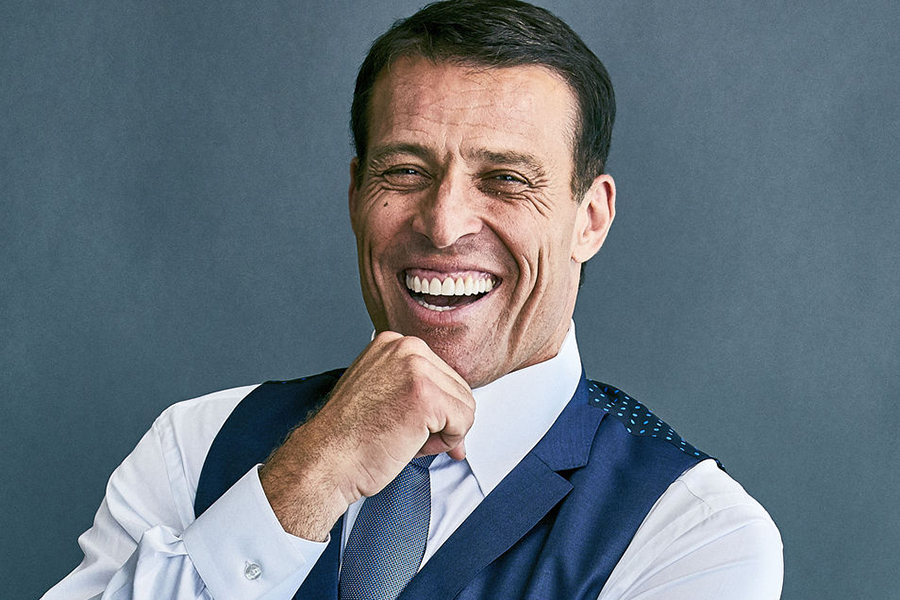
Kenny Chesney: My Lessons a Year After The Hurricanes

We asked American country music star and part-time U.S. Virgin Island resident, Kenny Chesney, what lessons he has learned one year after the hurricanes wreaked havoc across the Caribbean.

If you like this, subscribe here for more stories that Inspire The Future.

How many people can say they’ve lived through two category 5+ hurricanes within two weeks? Would you know what to do if you suddenly lost your electricity, Internet, TV, cell phone coverage, landline, ATMs and roads? And your home got destroyed too. Additionally, what if you had no idea how many months this would last, or if anyone was coming to help. Chesney remembers the chaos well, and shared with us his impressions of that time and why he felt compelled to help.

What compelled you to take action to help St. John?

Knowing how many people’s lives were profoundly changed. From watching the weather channel and texts from friends, you knew it was bad. Knowing people’s lives were being torn away from them, people I knew… people whose names I might know, others by face only. When you think about that you have to get involved.

What are some of  the most impactful memories?

When I was on the island for the first few times after the storms, and seeing all the trees and brush just gone, seeing boats thrown up on land, houses that were nothing but a few bits of foundation or a piece of wall. You’re not prepared to see some place as lush and as happy-looking as the Saints, look like that. There was a look of exhaustion, confusion and sadness on the faces of people who we flew off island. There was a look in their eyes that I’d never seen before. It still haunts me – the restlessness of the people with nowhere to go. On the other hand, the people who remained and got stuck in to rebuilding were so happy.

What did you learn from dealing with this disaster, that other people might learn from?

Patience. There was urgency, and everyone’s going as fast as they can, but you can never go fast enough. You want to cut through red tape, but that’s not always gonna work. You have to figure out how to be effective and not get bogged down.

What was the greatest challenge in helping those affected by the hurricanes?

The fact that the whole island was basically wiped out. We were starting over. There was no power, we needed generators, medical supplies, tools, tarps, water and food, whatever was needed. For a while getting planes in and out of St. Thomas was tricky, but it was the only way to get supplies in.

What inspired you the most during the relief?

The people. The way they came together. Islands are like a small town; people have opinions and disagreements. When Irma hit, that was all gone. Residents had survived the storms, and they put everything else aside. They knew what was important: rebuilding their island, and they were  all doing what they could. It was awesome.

Kenny Chesney’s Love For Love City Fund supports and gives to local and national 501c3 charities aligned with their mission of getting relief where it’s needed, immediately and ongoing in the Virgin Islands. They are people who dig in when needed, give when they see struggle and seek to find the best ways to make a difference. Every little bit helps. Sales from his new album “Song For The Saints,” Featuring “Get Along” will help benefit the ongoing relief in the U.S. and British Virgin Islands.

If you like this, subscribe here for more stories that Inspire The Future.

The Difference Between Loneliness and Solitude as a Leader

A leader is never alone, but that doesn’t mean they can’t feel isolated. For some, loneliness and solitude are the essence of leadership, but sometimes loneliness can be the heavy, emotional opposite of solitude.

The ability to exploit a period of solitude for your benefit is considered a meta-skill because it’s a prerequisite for developing other leadership abilities. Studies have shown that leaders and individuals alike can benefit from practicing “creative solitude.” A crucial insight for any leader is to distinguish between feelings of loneliness (that should be replaced with a positive attitude) with periods of solitude, which are essential for success. A leader must create new ideas, innovate, challenge the status quo, envision a better future and take the initiative to make it all happen. While doing this, loneliness, rather than solitude, can emerge.

  SUBSCRIBE TO REAL LEADERS NOW FOR $7/QUARTER  

Solitude contributes to becoming introspective, a necessary emotion that helps to reason and clarify who you are, who you want to be, where you currently are and where you want to go. Even when a leader succeeds, they can sometimes feel like an actor on stage when the lights go out. You should stay humble and not be tempted by ego.

You need to be alone when you stand on that imaginary balcony; looking at life from a distance and reality from a fresh, new angle. Solitude is also necessary when you want to challenge constraints such as “established truths,” “sacred cows” and “taboos.”

You will feel alone when your values, integrity, honesty and transparency come face-to-face with dishonesty, opportunism and arrogance. You will feel alone when the inspirations, ideals and values that you hold dear are confronted with mediocrity and inertia. Ultimately, you must sometimes feel alone to think about a better world and how to succeed.

A leader can also experience loneliness when being strict with loved ones, controlling emotions and keeping oneself at a distance. Loneliness can be felt when giving positive messages to others while feeling anxiety and uncertainty yourself. A true leader will feel alone in their failures and frustrations when instead, they should be seen as learning opportunities from which you gain strength and achieve long-term goals.

A leader is initially alone at the outset. Like an explorer or a navigator, a leader responds to a call of urgent need and takes responsibility for it. This does not prevent you from surrounding yourself with upstream and downstream advisers to help, but the person who brings the project to realization is the leader.

If leaders rely too much on others, they will inevitably be disappointed, yet if you disregard others, they will not get very far. My advice is to go “with” others but not “count” on them at first. This strategy allows things to move forward and lessens the disappointment of waiting around for projects to begin. At this early stage, a leader should not seek results or recognition but instead focus on the symbolic gesture of moving ahead and any small successes along the way. For a real leader, the purpose of the journey is the journey itself – a vision that doesn’t wait for the future, with everything playing out in the present.

A leader has a private life too, and has family and friends. Champions are not made without an active network of support that feeds their individual performance. A leader is nothing without the support of a team, sponsors or family.

Most leaders harbor doubts, like most of us, and we should be allowed to share these doubts with others. You will need confidence in knowing that situations will always resolve themselves. This trust in the process is without any real-world basis – a confidence of nature that cannot be rationalized easily. Faith in a mission takes hold among those around you by “viral contamination” and is directly associated with feelings of loneliness and solitude.

Just as we are always naked under our clothes, a leader is aware of being alone even when clothed with those around them. Yet, they are happy about this because they don’t allow their existence to be determined by others – you are “by and for” yourself.

  SUBSCRIBE TO REAL LEADERS NOW FOR $28/YEAR  

A leader is happy that people benefit from what they do, but that’s not necessarily the primary motivation of a leader.

Like the sun that always shines above the clouds or an artist’s passion, driven more by inspiration than by seducing the buying public, a leader draws on a constant realization of self – acting for themselves, but without any selfishness. A leader does not need followers to begin either; a leader will go there anyway, with or without you. They find support first and foremost within themselves. If you want to follow them realize that they’ve already departed on their own journey – the one of a pioneer.

Many leaders have an outgoing, entrepreneurial spirit but are also people of inner reflection. This characteristic demonstrates autonomy to others but also runs the risk of loneliness for a leader.

Here are six tips to help remedy the situation.

  1. Recognize that sometimes you need a quiet space to put your thoughts in order. Schedule time for “mental breathers” during chaotic work days.
  2. Make your time of solitude an exciting one, this is a chance to think clearly without any distractions. Prepare an agenda on how you intend taking advantage of your time alone. Take a notebook, listen to music or just listen to the leaves moving. Close all your devices and enjoy the moment.
  3. Make a conscious effort to understand the difference between solitude and loneliness. You’ll experience both, but negative feelings around loneliness can seriously affect you and make your leadership role miserable.
  4. Introspection, self-observation, self-analysis and self-reflection help us listen to our inner voice. It can inspire and clarify our values, help us understand the purpose of life and solve internal conflicts by synchronizing heart and mind.
  5. Creative thinking and wise judgments are reinforced by positive solitude. Avoiding everyday duties and obligations for even a short while puts you into a world of imagination and creative thinking, free of judgment.
  6. Solitude contributes to our resilience, mental renewal and rehabilitation. We face daily tensions, unpleasant situations, defeats and disappointments of all kinds. These can negatively affect our mental and spiritual health. As we seek refuge in a storm, so too do we need a safe harbor in life to relax and rejuvenate. Solitude can be this harbor.

Positive thoughts are crucial to fight loneliness. An ability to change the narrative in your head is critical. Even if you feel abandoned in the face of a leadership challenge, remember that there will always be someone who will listen. When you feel the weight of loneliness, think of the benefits of working solo (see your glass half full not half empty). Loneliness and solitude is part of a leaders life and not a reason to become a martyr, finishing alone and abandoned by everyone.

Don’t forget yourself in the bigger quest and cultivate relationships with others without losing sight of your goals. Take care of yourself and you’ll see that your business will become stronger.

How to be an Effective Entrepreneurial Leader

An important aspect of entrepreneurship is leadership. Regardless of an entrepreneur’s role as the driving force of a company, they eventually need to incorporate others to help grow and drive their vision.

Effective leadership is more than just providing motivation for employees to carry out the vision of the company; it also involves working on one’s own personal growth and soft skills.

Being a leader requires looking internally as well as outwardly for solutions. Brandon Frere, entrepreneur and CEO of Frere Enterprises and several successful companies, values the importance of consistently reevaluating and refining leadership skills in order to continue moving a venture forward on the path of success.

“One way I work on my leadership skills is through reading,” said Frere. “I’m particularly drawn to authors who inspire me to look within and pay attention to my mindset, like Eckhart Tolle.”

An important part of being an effective leader is the ability to know oneself. Knowing what is meaningful and purposeful will help direct the focus of energy within a business and make it more valuable to the industry and the community. Having not only a vision but also the ability to articulate it is important.

This vision will inspire employees and management to work together for a common goal and increase the commitment they feel toward it. An effective entrepreneurial leader is also very devoted to their employees; they encourage them to grow and continue to develop their skills for the betterment of themselves and the company.

Listening skills are also crucial to being an effective leader. Listening to mentors, management staff, employees and customers can make or break a business. Those who are at the front lines of operations can be key in determining what works and what doesn’t, as well as potential solutions. Having a mindset that embraces a constantly evolving company ensures success and keeps a company agile. Being flexible in one’s mindset allows them to be open to new opportunities that could greatly enhance the success of the business.

“It’s important as a leader to stay curious and be open to new ideas,” said Frere. “Never stop learning, never stop growing.”

Brandon Frere is an entrepreneur and businessman who lives in Sonoma County, California. www.BrandonFrere.com


Do You Know When to Quit?

“Never give up.” “Persistence alone is omnipotent.” “When the going gets tough… ” and so on and so on. Our culture is awash in historical reminders to keep our “nose to the grindstone” until the job gets done. We’ve gotten good at the hustle. But the truth is that our culture doesn’t know when to quit.

What if the best decision is to give up? In his book, The Dip: A Little Book That Teaches You When to Quit, Seth Godin reminds us of the strategies that can help us stop working in a dead-end job or project. There are times when it’s best to cut your losses.

The business world understands how the law of diminishing returns works; at some point additional investments of time, money, and resources are not justified by the return. The best strategy in many cases is simply to stop.

But how will you know when to quit?  The answer is to focus on two costs, and ignore a third.

Opportunity Costs

In The Dip, Godin suggests it is time for “strategic quitting” when the opportunity costs are greater than the benefits of continuing on your current path. An opportunity cost is a big deal. But what is it?

An opportunity cost is the value of what you’d lose by not pursuing a better alternative. As I shared in my  TED talk, I decided to quit my job as President of Global Services at AT&T when it became clear that the benefit of staying wasn’t as high as the benefit of doing something else. The result of leaving in fact became the opportunity to run an internet startup that gave me a very different set of skills and experience that are critical to my current role today.

Figuring out what you could do at any point isn’t easy, but it’s crucial.

Personal Costs

Sometimes, we wrap too much of our own ego into a project to be able to step back and say with conviction, “It’s time to quit.” But, according to research from Northwestern University cited in a recent New York Times article: “When we discard unrealistic goals and switch to alternate goals we’re happier, physically healthier, and less stressed.”

That means separating failure from your sense of self-worth and viewing it as a needed stepping stone to success. Such a perspective can help you calculate personal costs you’ve already invested into a project.

Sunk Costs

While opportunity and personal costs are often difficult to quantify, it’s a third set of costs – sunk costs – that are the easiest to quantify and, as a result, often become the biggest problems.

As people get overly invested in the decisions they’ve made in the past, sunk costs from the past loom larger than they should as we look forward. The best advice I can offer regarding sunk costs is, ignore them.

Ralph Waldo Emerson wrote, “A foolish consistency is the hobgoblin of little minds.” Translation: Know when to cut your losses and go build something better.

Tony Robbins: What’s Holding You Back From Massive Success?

For 40 years I’ve been obsessed with learning the answer to what makes a difference in the quality of people’s lives: Why is it that some people who are given every advantage so often fail to achieve what they desire and deserve.

In contrast, we all know people who have lived incredibly difficult lives – lives filled with unimaginable challenges, and often injustice – who still seem to find a way to breakthrough and get results, not only for themselves, but also to serve others in a very deep and meaningful way.

I’ve had the honor of working in 100 countries with more than 50 million people from every walk of life: from incredible leaders to the most challenged individuals you can imagine. We’ve had four million people in my live seminars, so at this point I’d have to be an idiot if I didn’t see that there are certain patterns that cause people to succeed and other patterns that cause people to fail – patterns that cause people to be overwhelmed and stressed out and other patterns that allow people to find deep meaning and success in virtually every aspect of their lives.

Part of my understanding has come from the fact that for decades I’ve been a leader called upon by leaders. I get the call when the fire starts. When the President of the United States has to address the nation. When an athlete is burning down on national television and I’m required to intervene and create measurable change on a moment’s notice.

The one thing that I’ve found that separates the quality of people’s lives – the single largest difference — is the capacity to lead. Leadership skills are not just a gift. Leadership skills are something anyone can learn.

Who is a leader? You and I both know it’s not always the person who controls things by position. How many times have we been in a meeting when the person at the lowest position was influencing the direction of a decision or a project? We all know that leadership —whether you are the CEO, or the manager, or the mom — is about the ability to influence the thoughts, emotions, and actions of other human beings.

But here’s the key: there’s an energy to leadership. There’s a passion. There’s a level of connectedness that leaders have with others. It’s their ability to get things done and make progress that sets them apart.

All leaders have different styles. But leadership, in its essence, comes from the same core qualities. It’s not just great oratory. The spirit of great leadership is the capacity to take visions and to influence others to do more than they would ever have done on their own. Great leaders help people raise their own standards so that regardless of whether or not the leader is present, the organization or individual still performs at a higher level than ever before. At its essence, leadership is the ability to inspire people. It’s the ability to ignite the human spirit and execute consistently.

Leadership is not luck, nor is it haphazard. Anyone who has been successful in any one area consistently is not lucky. They are doing something unique. Remember, success leaves clues!

Tony Robbins: What’s Holding You Back From Massive Success?

For 40 years I’ve been obsessed with learning the answer to what makes a difference in the quality of people’s lives: Why is it that some people who are given every advantage so often fail to achieve what they desire and deserve.

In contrast, we all know people who have lived incredibly difficult lives – lives filled with unimaginable challenges, and often injustice – who still seem to find a way to breakthrough and get results, not only for themselves, but also to serve others in a very deep and meaningful way.

I’ve had the honor of working in 100 countries with more than 50 million people from every walk of life: from incredible leaders to the most challenged individuals you can imagine. We’ve had four million people in my live seminars, so at this point I’d have to be an idiot if I didn’t see that there are certain patterns that cause people to succeed and other patterns that cause people to fail – patterns that cause people to be overwhelmed and stressed out and other patterns that allow people to find deep meaning and success in virtually every aspect of their lives.

Part of my understanding has come from the fact that for decades I’ve been a leader called upon by leaders. I get the call when the fire starts. When the President of the United States has to address the nation. When an athlete is burning down on national television and I’m required to intervene and create measurable change on a moment’s notice.

The one thing that I’ve found that separates the quality of people’s lives – the single largest difference — is the capacity to lead. Leadership skills are not just a gift. Leadership skills are something anyone can learn.

Who is a leader? You and I both know it’s not always the person who controls things by position. How many times have we been in a meeting when the person at the lowest position was influencing the direction of a decision or a project? We all know that leadership —whether you are the CEO, or the manager, or the mom — is about the ability to influence the thoughts, emotions, and actions of other human beings.

But here’s the key: there’s an energy to leadership. There’s a passion. There’s a level of connectedness that leaders have with others. It’s their ability to get things done and make progress that sets them apart.

All leaders have different styles. But leadership, in its essence, comes from the same core qualities. It’s not just great oratory. The spirit of great leadership is the capacity to take visions and to influence others to do more than they would ever have done on their own. Great leaders help people raise their own standards so that regardless of whether or not the leader is present, the organization or individual still performs at a higher level than ever before. At its essence, leadership is the ability to inspire people. It’s the ability to ignite the human spirit and execute consistently.

Leadership is not luck, nor is it haphazard. Anyone who has been successful in any one area consistently is not lucky. They are doing something unique. Remember, success leaves clues!

How to Develop A Mindset of Positivity

“It is much harder to hope than to remember,” is a thought I have to remind myself of as often as possible. While navigating my daily life, it is apparent to me that I have a tendency to dwell on my past experiences.

I love thinking about decisive moments in my life, such as graduation ceremonies, a job well done, corresponding promotions, winning a championship game, the birth of my children, and the day I reacquainted with the true love of my life.

We all have these types of beautiful memories. What about the not so wonderful, which include bad decisions that hinder us?

If I let myself dwell on these memories, I find myself doubting my next move, second-guessing myself, and sometimes abandoning my ambitions altogether. We all have our self-doubt moments, so how do we put them “in their place,” so to speak?

When left to our own devices, our doubting self and lingering questions, can hinder us and sometimes blind us if we allow it. Success is rarely guaranteed, but growth will always be pertinent.

When we make a conscious decision to grow, we often make hard decisions that puts us in an uncomfortable place. This is challenging, yet rewarding, regardless of whether we achieve our desired outcomes or not. We learn from our mistakes in the process. From my experience, positivity becomes evident if we look at it this way. 

As we strive to achieve our goals, roadblocks and obstacles will always show up. Some will be easily overcome, while others may take a significant amount of effort and many attempts to achieve the desired outcome. A conscious decision to push forward and refuse to give up is the difference between getting a win or accepting defeat.

The situation is not always so black and white. Sometimes we have clearly outlined  win and loss columns, but the grey areas in between are our growing points. These are undefined places that are somewhat intangible. 

The bottom line is never to consider expended energy as wasted, but as energy well spent. Keep your hopes up. Keep your eyes on the prize and your goals. You will achieve and be successful if you are able to recognize your mistakes without dwelling on them. Instead, cultivate an ability to change because of them. Use your tact and creativity to be a problem solver. Give yourselves the “attaboy” or “attagirl,” relish in your success, learn from our mistakes no matter how large or minuscule, then keep it moving in the right direction.

Live as a “Genshai Warrior” – Never treat another in a manner which makes them feel small, including yourself. This is when we step into excellence and own our success. After all, we cannot give away what we do not have, and we all have this excellence ready and waiting inside each of us. Ready to be shared. Be blessed and have a tremendous day!

Robert W. Payne will release his book “Chaos Agent” (working title) in early 2019. He grew up mostly in Bolingbrook, Illinois (south of Chicago) and is an agent of change based on his life experiences. He is a member of the Genshai team – a word meaning, “Never treat another person in a manner which makes them feel small, including yourself.” 

Genshai Leadership: How to Give, Live And Master

Genshai is an ancient word that means “Never treat another person in a manner that would make them feel small – including yourself.”

You are the gift. You are the meaning in your life, and an element of that meaning in the lives of many others. So often too many of us feel selfish if we focus on ourselves or we are simply too hard on ourselves for a choice or decision we have made. Let that history be exactly that… history. 

Your present moment is to allow yourself the belief that you are good, beautiful, loving, kind, generous, and sometimes just fierce – for showing up to fight for  goodness in our world. Be real and raw. Let go of facades. Ask someone for help. Drop your pride or ego. Step into your own excellence. The royalty in your life is giving these gifts to yourself.

This is real authenticity. These traits are what make you look in the mirror and say, “I can do this” or “I have this.”  “This” is belief followed by action.

Some days you may feel a mess and be a mess. No worries. Genshai Warriors overcome. You are never alone, yet you must always show up alone. Bring your confidence, and the courage of your convictions. Live it up! See yourself and see other people. Make your mission to embrace the gift of YOU. 

When you are a Genshai Warrior you are part of a powerful energy. It’s a  connection regardless of geography, culture, creed or history. It’s the creation of a new world; one we prefer and choose to live in. It’s our new frontier. 

Throughout the ages, humanity has experienced changes and shifts. How we choose to show up each day depends on our awareness and choice. The word Genshai is a word that awakens us. It reminds us to check in with ourselves and do our best to correct what is wrong within ourselves. It reminds us to do our best to fight outside forces that can seize us if we’re not properly equipped to release its grip. 

Living, giving and mastering Genshai is possible together and as an individual – in a co-created world. To explain these three elements further:

You begin with giving to yourself first because you cannot give what you do not have.

Next, you implement by living, meaning you embody the meaning of Genshai in your everyday interactions with others and with yourself.

Then, you practice mastering each day, which leads to you realizing excellence. A master never stops learning, and once we learn, we want to give back, which takes us back to the beginning of the cycle.

Who have you told they have meaning in your life? If you have not done so lately, do it now, this minute.  The outcome will:

Create a wave – who is your water?

Stir an ember – who is your fire?

Draw a breath – who is your wind?

Ground you in excellence – who is your earth?

Elevate grace? – Who is your spirit?

Earth- grounding: Your Genshai Earth Warriors bring you stability through practical advice, acceptance and reliability. They escort you through life’s changes.

Water – flowing: Your Genshai Water Warriors connect you to the ebb and flow of the experiences in your heart. They help you relate to others and exemplify compassion.

Fire – ignite: Your Genshai Fire Warriors challenge you to be passionate about how you show up in the world and serve as a light within it. They kindle your possibilities.

Wind – freedom: Your Genshai Wind Warriors liberate your thoughts and ideas and give them flight. They lift you and breathe into your dreams. 

Spirit – grace: Your Genshai Spirit Warriors elevate your awareness of the nature and goodness of humanity. They bring out the divine in your soul.

Kristin Andress is the CEO of Andress Strategy Consulting, a California-based firm that enables entrepreneurs, thought leaders, and corporations to maximize their capacity. She is the co-author of the bestselling book “Imagine Being In a Life You Love.”


The Neuroscience of Change: Focus on What Matters

The transformations we are seeing in our life at home and at work are only likely to escalate in the coming years. Yet as humans, many of us find change and building new habits to thrive in that change hard, particularly when our jobs or the success of our businesses depend on it.

In an effort to better understand why change is so difficult, I sat down with one of the world’s top neuroscientists – Dr. Evian Gordon, PhD, MD – who has published more than 300 papers on the brain. Over the last 16 years, Dr. Gordon built Total Brain, a neuro-scientific assessment linked to the world’s largest brain database. In our conversation, we talked about why adapting to change is so difficult, and explored what neuroscience can tell us about building new habits.

Many of the leading companies we work with have launched change initiatives. In spite of huge investment in technology solutions and high priced consultants, they struggle to get buy-in – even when there is a clear need. From the literature you’ve reviewed and the data you’ve collected of close to a million people: What is the most important thing we need to understand about how the brain functions to understand why change so difficult?

Making lasting changes is so hard because “Safety 1st” is the core driver of brain function. ANY change (even if it’s beneficial) is perceived as a non-conscious threat to your brain’s comfortable repetition and overall stability. Change poses a threat to the stable certainty of your current actions and self-control. Moreover, it introduces the possibility of having to face the fear of failure as you transition into a new way of doing, thinking, or being.

Your brain’s inherent desire for stability and its fear of failure can magnify the threat of any change, fueling further resistance. So unless change is fully embraced by you and has an extremely high probability of success and unambiguous benefit to you — your brain is unlikely to change anything substantial (other than for brief periods or motivated by short-term enthusiasm that does not last).

I’ve observed that the leaders I’ve worked with who have successfully moved their teams and employees through change put a lot of attention on new habits, rituals, and practices. What can you tell us about how the brain generates new habits which allow change to stick even under the stress of needing to perform under pressure?

Neural networks that fire together — wire together. Most of the initial habit generation requires conscious initiation and effort. After sufficient practice and visualization, the habit is so well consolidated that it can occur without awareness of the implementation details and sometimes without a conscious trigger.We have seen that there are five key milestones to generate a new brain habit are: 1–7–20–30–1000. Habits are generated by daily small steps that give your brain a dopamine reward buzz. Habits are more likely to stick if you track your milestones.

Each milestone is a significant success. Your first training is a game changer. By the seventh, you learn the most about generating an effective habit. By the twentieth training, there is statistically significant habit engagement. Habit is consolidated on the thirtieth training. Habit becomes an automatic part of your daily life on the 1,000th training.

What has your experience been with building habits to cope with change? What has worked? What has not? We would love to hear from you in the comments section below.


Corporate Activism is on the Rise

Looking at the role of corporations in society, we have entered a new era. The model previously taken for granted, one guided by a philosophy of passive shareholder value creation, has increasingly been called into question.

It has been replaced by more activist models of corporate citizenship, such as corporate social responsibility (CSR) and triple-bottom-line economics, as well as newer models of an even more activist mode. In the previous model, a corporation’s good was seen to have been derived from its ability to enrich shareholders, whose wealth would in turn trickle down through the rest of society.

By contrast, corporate activism as we observe it uses the bedrock of company value systems to actively fight obstructions in the market and issues in society at large that run against these value systems, thus going even further than CSR and triple-bottom-line models, which seek to balance financial results with environmental and societal ones. Social equilibrium (especially on financial matters) is one thing; corporate activism, on the other hand, often puts otherwise rational economic firms at risk of eroding short-term shareholder value —hitherto their raison d’être, at least for those companies publicly-listed.

This new breed of corporation is driven as much by market forces, such as consumer consciousness and pressure, as it is by strong, value-based leaders.

Thomas Friedman’s “hot, flat, and crowded” world, combined with hyper-transparency and market speed, creates conditions favorable to firms that stand for something, who are likely to enjoy a competitive social advantage that may translate into higher long-term returns and customer loyalty.

While the empirics of this assertion need to be tested, the maxim that “you either stand for something or you stand for nothing” is as true for companies as it is for people. The B Team, a corporate pressure group started by Richard Branson and Mo Ibrahim, among others, has as its sole purpose the creation of a consensual pathway for firms that wish to adopt an activist model where profits and purpose are not in conflict. The B Team’s vision is to catalyze a movement of business leaders to drive a better way of doing business for the well-being of people and planet.

Customers driving CSR and transparency

Should corporations focus on the current CSR trend to market their goodwill, or is there a way to focus marketing efforts on consumers who make individual decisions based on CSR? The U.S. Bureau of Labor Statistics reports that 90 million Americans identify themselves as “conscious consumers.” This fact, combined with average annual consumer spending, points to a conscious consumer market of $3.2 trillion in the United States alone.

The vast majority of consumers — over 72 percent — have reported that they will actively seek a brand that aligns with their values if price and quality are equal. Matt Colbert, the CEO of Spend Consciously, a company building mobile applications to show consumers CSR data, says, “Consumers want to know more than whether a corporation is socially responsible. They want to make purchasing decisions based on their values and understand which companies are not aligned with their values.”

Consumers require transparency from corporations that claim to practice CSR because their individual values determine their purchasing decisions. This new group of consumers will change companies’ top and bottom lines and force them to stand for something.

When companies stand for something

In observation, there appear to be two types of activist firms: reactive, and proactive. Neither type of company is merely paying lip service to social or value-based issues; they are genuinely investing capital, clout, and reputation in the drive for change. What distinguishes the reactive model, then, is the tendency to address issues of social and moral responsibility only as the response to a crisis, real or perceived. The garment industry’s response to the collapse of the Rana Plaza factory in Bangladesh in 2013 is an example of reactive activism.

Firms such as Benetton and Zara, whose garment tags were found in the rubble, quickly backed voluntary codes of conduct in their sub-supply chains. This is an extreme example of vicarious liability that is produced in a connected world where tragic images instantaneously influence consumer sentiment and stock prices. In short, some people are reluctant to truck and barter with an enterprise they deem to be “evil,” and in an increasingly transparent world, evil is “stickier” — the connections of a corporation to businesses, governments, or individuals operating in a criminal or immoral fashion are increasingly difficult to obscure.

Starbucks, under the former leadership of Howard Shultz, became a paragon of proactive corporate activism, at times to the detriment of shareholders and short-term economic value. During the paralytic fiscal cliff debacle in Washington, Mr. Schultz took a stance individually and under the firm’s banner against corporate campaign finance and political action committees (PACs). He controversially vowed that Starbucks would not support any political campaign and would lean on its peers and business partners to likewise abstain.

In response to rising racial tension in the United States in 2016, Starbucks launched its “Race Together” campaign with full-page ads, newspaper inserts, and in-store communication. While this campaign has drawn both ire and mirth, the authenticity of the effort and the fact that it shows the “tone at the top” at Starbucks are hard to question. While few people want their barista to talk to them about race relations, it is of broad public interest when large corporations take a stance on matters of national import.

Apple is perhaps the clearest example of a firm whose corporate activism is not only creating above-market shareholder value, but is also contributing materially to causes that Apple cares about. Its activist evolution has seen the firm move from reactive to proactive approaches. Several years ago, as news broke of poor workers’ standards and suicides at China’s Foxconn, Apple’s largest supply chain partner, Apple reacted by publishing a groundbreaking annual supply chain report. The report was uncharacteristically transparent, not only for Apple but for the tech industry as a whole, and it not only underscored standards throughout the supply chain, but also served as a model for the industry, thereby creating a first-mover advantage in supply chain corporate activism. Instead of being punished with falling share prices, Apple gained economic momentum.

Apple’s Tim Cook, the first openly gay CEO of a major public company, has openly taken on controversial religious freedom laws. His grounds for this open attack are not that legislation will harm Apple’s commercial activities in the market, but rather that it is inconsistent with the company’s value system; therefore, the company will take the unusual risk of potential harm by opposing the law. Similarly, Salesforce Inc. paid for its Indiana-based employees to relocate if they chose. In an era of activist firms, company neutrality is decreasingly seen as a valid option.

Case studies in corporate activism are as plentiful on the political right as they are on the left. Chick-fil-A and Beretta, a gun manufacturer, made seemingly illogical corporate choices in the name of company values on gay marriage and gun control, respectively. While the rise of corporate activism speaks to the inherent divisiveness in the American public, many activist firms are not merely pandering to their base, but rather standing for issues that are consistent with their company value systems. Ikea’s actions in Russia served as a stark example of corporate values increasingly becoming immutable and penetrative, rather than remaining superficial marketing words on a wall.

When faced with energy extortion, corruption, and bribery in 2010, Ikea went off the grid in Russia by installing its own power supplies for its stores. While quitting the market altogether would have been a Pyrrhic victory, Ikea forged a middle path where profit and purpose were in line.

The role of corporate activism in society as a whole will only become more relevant. In a time where we face a deep and increasingly intractable tragedy of the commons in infrastructure, intellectual capital, and investment flows, corporate activism can be an important change agent. However, firms and their leaders would be wise to remember that values matter most when they are least convenient, and that the perception of convenience or inauthenticity can greatly undermine the engendering of consumer goodwill.

A tech company facing a shortfall of engineers would be right to take a stance on improving the quality of and access to education while working on immigration reform. Similarly, educational institutions would better uphold their often lofty values if they worked to bring tuition inflation in line with the market’s purchasing power. And as American companies shelter more than a trillion dollars overseas, one wonders if the rise in corporate activism will encourage self-initiated moves by corporations to repatriate this capital, in an effort to arrest the decline of American competitiveness.

By Dante Disparte and Timothy H. Gentry.

Dante Disparte is the founder and CEO of Risk Cooperative a specialized strategy, risk and capital management firm located in Washington, D.C. He is the resident expert on risk and economic competitiveness at the American Security Project, a member of the influential Consensus for American Security and a founding member of the Business Council for American Security.

Timothy H. Gentry is President of Perfecta, a Software as a Service (SaaS) company providing Global Communications, Security, and Virtual Private Cloud services. He has extensive experience advising and leading companies, helping them build their brands and grow their businesses in global markets.