Chinese Artist Creates Wedding Dress Made From Masks to Show Hope

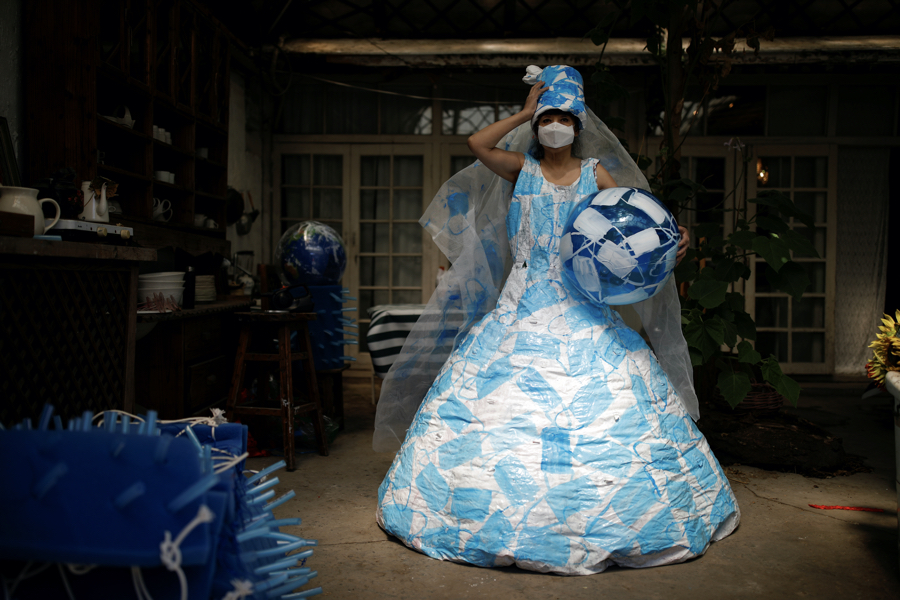
Wearing a dress she made of eight giant plastic inflatable roses over a wire structure and a headpiece crowned by a globe, Chinese performance artist Kong Ning is using fashion to draw attention to environmental protection.

“Roses represent love,” she said on Wednesday, the 50th anniversary of Earth Day.

“I think I have responsibility to let everyone know about the love that I express, so that more people can love and care about the earth, care about our home.”

Kong, 63, has been an advocate for environmental protection for two decades, designing big and bold dresses that make a statement.

Earlier this year, she created a two-dress project called “Big mask of the blue skies”, which included a white wedding dress adorned with blue surgical masks, to show hope in the fight against the coronavirus outbreak, which began in China.

Designer Virgil Abloh Teams up With Evian to go Beyond Plastic

Casual couture king Virgil Abloh is joining the Evian empire to make sustainability fashionable — in more ways than one.

Known among the fashion community for his avant-garde approach to haute couture, American fashion designer, entrepreneur and DJ, Virgil Abloh, is using his international fame to help another brand on the frontier of sustainable consumer practice. Recently crowned as the creative advisor for Evian Natural Spring Water, Abloh’s designs will be featured on the water brand’s plastic bottles, which are expected to be made from 100% recycled plastic by the year 2025.

With a long history of design collaborations with the fashion community, this type of partnership is nothing new for Evian. But with Abloh onboard, Evian hopes the appeal will be much wider among consumers than with former partners.

SUBSCRIBE TO REAL LEADERS FOR MORE INSPIRATIONAL STORIES

Revolutionizing the fashion industry with his ironic approach to haute couture, Abloh is known for bringing streetwear to the upper echelons of the clothing world, making “high fashion” a more attainable, mainstream aesthetic. He calls fashion into question with his signature “quotations,” that appear in many of his designs. Along with his ever-present Helvetica fonts and deliberate hazard stripes, his quirky style has gained him a global following — one he intends to bring along on his new journey toward sustainability and environmental awareness. The ultimate goal? For Evian to become a 100% recyclable company in the next six years, with carbon neutral production, lower emissions and recycled plastics bottles—no more waste.

Following in Evian’s footsteps, Abloh has made it clear that he will pursue sustainability in his own clothing company, Off-White. His partnership with Evian is likely the first of many steps he will be taking as an influencer of environmental awareness within consumer culture.

Already the partnership has looked beyond plastic, launching a line of reusable glass water bottles dubbed “Rainbow Inside,” showcasing Abloh’s legendary quotes. Abloh and Evian are both champions of innovation, in both aesthetic and environmental awareness. They remind us how precious our natural resources truly are, with their new campaign slogan: “One Drop Can Make a Rainbow.”


Timberland’s New Creative Director Underscores Remade, Reduced, Recycled

Timberland, known worldwide for its iconic yellow boot and passion for the outdoors, has announced a partnership with British designer Christopher Raeburn, who will serve as Global Creative Director for the brand. Raeburn owns a label of the same name, which is synonymous with responsible, intelligent fashion design.

Raeburn will be a key stakeholder in developing Timberland’s global creative vision; ensuring a holistic design approach across all product categories, marketing and in-store environments, alongside elevating the brand’s commitment to responsible sourcing, inclusivity and community.  

If you like this, subscribe here for more stories that Inspire The Future.

The British designer is known for an ethos that encompasses three key pillars – Remade, Reduced, Recycled – which complement Timberland’s longstanding commitment to make products responsibly and steadily increase its use of recycled, organic and renewable materials over time. Raeburn also heralds craftsmanship, innovation and utility as central to his design philosophy, again creating a natural and authentic connection to the Timberland brand.

As creative director, Raeburn will partner with Timberland’s global product, marketing and innovation teams to deliver a forward-thinking look and feel that pushes design boundaries while honoring the brand’s outdoor heritage. The first full collection under Raeburn’s vision, across men’s and women’s, will be fall/winter 2020.

“Timberland has a strong foundation in craftsmanship and innovation; now it’s time to elevate our brand vision through the lens of design,” said Jim Pisani, global brand president, Timberland.  “Christopher Raeburn is a true visionary, who shares our ethos of responsibility and brings to the table a fresh, modern design sensibility. Together we will really push the boundaries of where Timberland can go as a brand, and we’re excited to get started.”

“I’ve been watching the Timberland brand for many years and have always been drawn to its commitment to be a responsible business,” said Raeburn. “I see an incredible opportunity for Timberland to break out and put responsible, innovative design at the centre of the brand’s creative strategy. It’s an exciting moment to join forces with Timberland;  a company set to evolve following decades of good work. I’m honored to be partnering with a company with such strong values and I’m truly excited to be making a difference on a global scale.”

Timberland and Raeburn first collaborated on a global apparel capsule collection that debuted earlier this year at London Fashion Week and launches in stores and online today. In line with his REMADE philosophy, Raeburn scoured street markets and second-hand shops to find vintage Timberland items that he then meticulously deconstructed and remade into iconic, contemporary pieces for the runway. These pieces served as inspiration for the Timberland x Christopher RÆBURN capsule collection of outerwear, pants, shirts and t-shirts that were recently launched. Each piece in the collection incorporates a range of eco-conscious materials including organic cotton and recycled PET (derived from plastic bottles), to minimize impact on the environment.

If you like this, subscribe here for more stories that Inspire The Future.


Timberland’s New Creative Director Underscores Remade, Reduced, Recycled

Timberland, known worldwide for its iconic yellow boot and passion for the outdoors, has announced a partnership with British designer Christopher Raeburn, who will serve as Global Creative Director for the brand. Raeburn owns a label of the same name, which is synonymous with responsible, intelligent fashion design.

Raeburn will be a key stakeholder in developing Timberland’s global creative vision; ensuring a holistic design approach across all product categories, marketing and in-store environments, alongside elevating the brand’s commitment to responsible sourcing, inclusivity and community.  

If you like this, subscribe here for more stories that Inspire The Future.

The British designer is known for an ethos that encompasses three key pillars – Remade, Reduced, Recycled – which complement Timberland’s longstanding commitment to make products responsibly and steadily increase its use of recycled, organic and renewable materials over time. Raeburn also heralds craftsmanship, innovation and utility as central to his design philosophy, again creating a natural and authentic connection to the Timberland brand.

As creative director, Raeburn will partner with Timberland’s global product, marketing and innovation teams to deliver a forward-thinking look and feel that pushes design boundaries while honoring the brand’s outdoor heritage. The first full collection under Raeburn’s vision, across men’s and women’s, will be fall/winter 2020.

“Timberland has a strong foundation in craftsmanship and innovation; now it’s time to elevate our brand vision through the lens of design,” said Jim Pisani, global brand president, Timberland.  “Christopher Raeburn is a true visionary, who shares our ethos of responsibility and brings to the table a fresh, modern design sensibility. Together we will really push the boundaries of where Timberland can go as a brand, and we’re excited to get started.”

“I’ve been watching the Timberland brand for many years and have always been drawn to its commitment to be a responsible business,” said Raeburn. “I see an incredible opportunity for Timberland to break out and put responsible, innovative design at the centre of the brand’s creative strategy. It’s an exciting moment to join forces with Timberland;  a company set to evolve following decades of good work. I’m honored to be partnering with a company with such strong values and I’m truly excited to be making a difference on a global scale.”

Timberland and Raeburn first collaborated on a global apparel capsule collection that debuted earlier this year at London Fashion Week and launches in stores and online today. In line with his REMADE philosophy, Raeburn scoured street markets and second-hand shops to find vintage Timberland items that he then meticulously deconstructed and remade into iconic, contemporary pieces for the runway. These pieces served as inspiration for the Timberland x Christopher RÆBURN capsule collection of outerwear, pants, shirts and t-shirts that were recently launched. Each piece in the collection incorporates a range of eco-conscious materials including organic cotton and recycled PET (derived from plastic bottles), to minimize impact on the environment.

If you like this, subscribe here for more stories that Inspire The Future.


Ending Animal Slaughter One Fashion Bag at a Time

Eco-fashion house Ministry of Tomorrow has announced the launch of its new Vegan Bag collection, with a focus on animal anti-cruelty.

Many animals killed for leather experience cruel and gruesome treatment that is typical of factory farming. But, at Los Angeles-based Ministry of Tomorrow no animals are slaughtered in the production of their bags. This is in stark contrast to the global leather industry – that slays more than one billion animals each year.

If you like this, subscribe here for more stories that Inspire The Future.  

The new Vegan Bag collection is produced at the company’s fair wage, eco-factory in Nairobi, Kenya. The design is clean and chic with a Maasai warrior inspired interior.

“The significance of the design in this collection makes a statement that says we are fighting back, from the inside, and we do this by providing consciences people a high quality alternative to leather,” says Julian Prolman, the founder and president of Ministry of Tomorrow.

The handcrafted bags are made with Italian and Japanese, animal-free, finer-than-leather fabrics and the lining is made from certified organic and fair trade canvas sourced from India. The entire supply chain from seed to production considers the well-being of people, wildlife and the planet. 

Prolman feels he is redefining luxury through a new expression of imaginative design – both elegant and distinctive, functional and produced in a responsible manner.

The fashion brand aims to develop a community of conscientious young spirited people who enjoy the experience of a luxury lifestyle but also want to feel good about supporting responsibly produced products that deliver social and environmental benefits.

“We want to see an end to the ‘fashion to die for’ scenario that has sadly become a societal norm, where animals are killed for our pleasure, in a barbaric perception of luxury that literally costs an arm and a leg,” says Prolman. “We believe it’s morally corrupt to produce garments and accessories at the expense of animals and nature. As an alternative, we promote ‘fashion to live for’ and use this attitude as a vehicle for activism that contributes to a movement to end the needless suffering of animals.”

Ministry of Tomorrow has also launched a new public service video entitled “Suton”

The dramatic video was designed to illustrate the current state of human consciousness under the influence of mental slavery caused by mainstream mass marketing, rooted in profit-making as the primary objective.

The provocative fashion film (which contains graphic and unsettling imagery) aims to revive hope that humans can be liberated from psychological imprisonment. The 3-minute video wants people to regain an ability to think for themselves and recognize the importance of taking action to improve the world.

Prolman teamed up with British fashion filmmaker Roger Spy to produce “Suton.”

“Society has been conditioned to accept as normal commercial products where people, wildlife and the planet have been harmed in the process of making goods,” says Prolman. “We are saying wake up, there is a better way to dress with style through ethical fashion.”

To view the fashion film click here (Contains graphic imagery)

If you like this, subscribe here for more stories that Inspire The Future.

Versace And Furla Join Designer Labels Ditching Fur

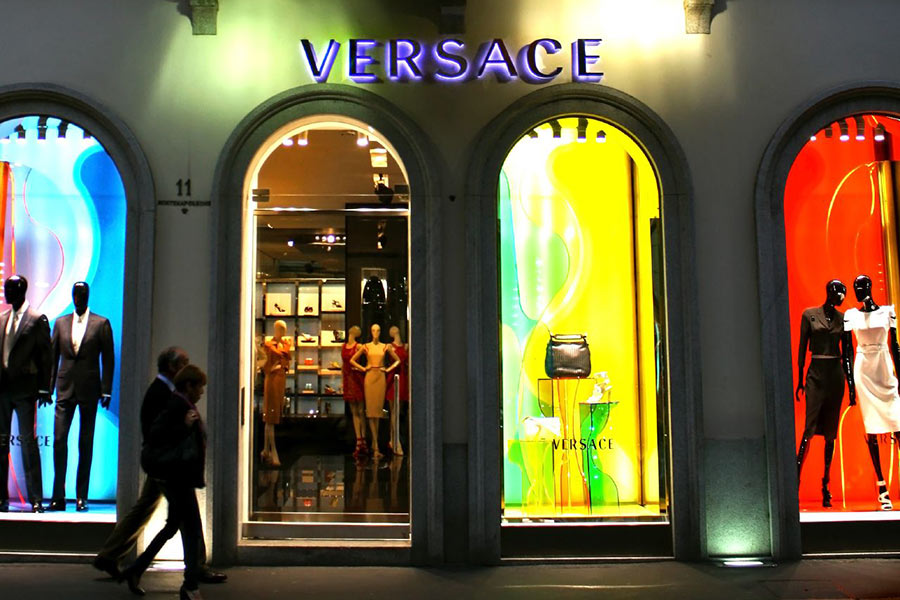
Italian fashion house Versace and handbag and accessories maker Furla said they would stop using real fur in their creations, joining a growing list of luxury labels turning their backs on the fur industry.

Fashion houses around the world are bowing to pressure and using alternatives to real fur amid pressure from animal rights groups and changing tastes of younger customers, who are increasingly aware of the environmental issues linked with the clothes they buy.

If you like this, subscribe here for more stories that Inspire The Future.

Donatella Versace, the artistic director and vice-president of Versace, said that she did not want to kill animals to make fashion and that it “it doesn’t feel right”, speaking in an interview with The Economist’s 1843 magazine.

People for the Ethical Treatment of Animals’ (PETA) Senior Vice President Dan Mathews said in an emailed statement that it was “a major turning point in the campaign for compassionate fashion”, adding that he looked forward to seeing a “leather-free Versace next”.

The animal rights group recently campaigned at the Pyeongchang Winter games for an end to the fur trade.

Furla on Thursday committed to replacing all fur with faux-fur for both menswear and womenswear starting from its Cruise 2019 collection.

Italian fashion group Gucci, part of Paris-based luxury conglomerate Kering, said in October it would stop using fur in its designs from its spring and summer 2018 collection joining Armani, Hugo Boss, Tommy Hilfiger, Calvin Klein and multi-brand online luxury retailer Yoox Net-A-Porter .

British designer Stella McCartney has long followed a so-called “vegetarian” philosophy, shunning not only fur, but also leather and feathers.

By Giulia Segreti; Additional reporting by Sarah White in Paris; Editing by Elaine Hardcastle.

If you like this, subscribe here for more stories that Inspire The Future.

Men Spend More on ‘Green’ Fashion Than Women

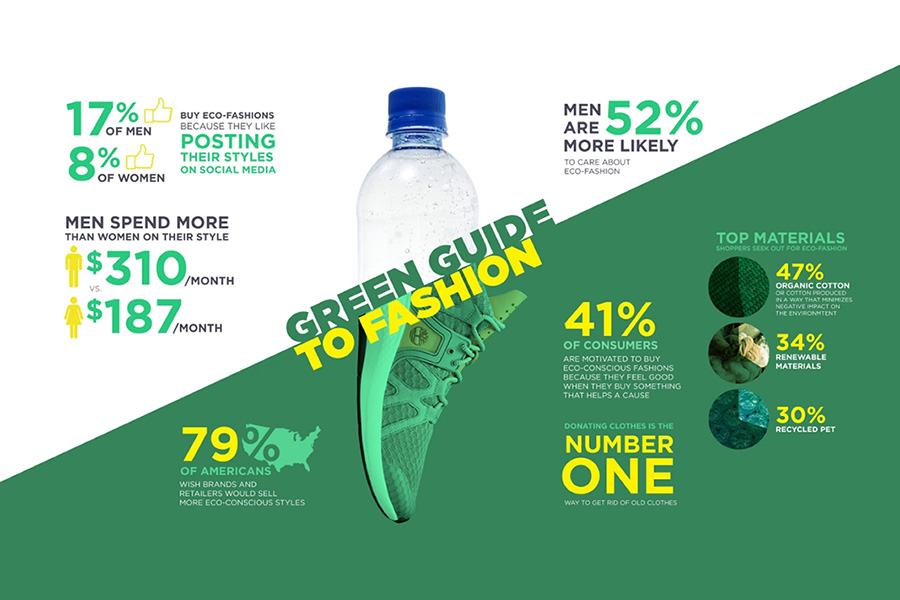
In a world motivated by social cred and “likes,” it comes as no surprise that U.S. consumers on average spend roughly $250 a month on clothes, shoes and accessories. But what you might not expect is that men outspend women when it comes to their closet.

Men spend an average of $310.50 per month on their wardrobe, compared to $187.20 for women and they are also 52% more likely than women to say they care a lot about eco-conscious fashion. Just in time for Earth Day, outdoor lifestyle brand Timberland shines a spotlight on what consumers value most when it comes to “going green” with their wardrobe.

If you like this, subscribe here for more stories that Inspire The Future.
 

Timberland surveyed 1,000 men and women in the U.S. to understand the importance of the environmental impact of their style choices. The motivations behind men’s and women’s behaviors varied, but overall two-out-of-three (67%) consumers report they care at least a little about eco-conscious fashion, with more than half (55%) of consumers saying at least some of their current wardrobe is eco-conscious. 

A few highlights from the 2018 Timberland Wardrobe Values Survey include:

  • A more responsible #OOTD: Two-in-five (41%) consumers say they are motivated to buy eco-conscious fashions because they feel good when they buy something that helps a cause, with another top motivator being knowing the product minimizes its negative impact on the environment (36%).
  • Green humblebrag: For men, the motivation to buy eco-conscious fashions seems to be less altruistic and more self-interested. Roughly 30% buy eco-conscious clothes because they want other people to know they care about the environment (28% vs. 17% of women). In addition, for 17% of men, wearing eco-conscious fashions brings social cred, as they say they are motivated to buy eco-fashions because they like posting their styles on social media (vs. 8% for women).
  • What’s in your wardrobe?: Despite the differences in their wardrobes, men and women tend to agree on the top materials they seek out when shopping for eco-fashion: organic cotton or cotton produced in a way that minimizes impact on the environment (47%); renewable materials (e.g., bamboo, hemp, wood pulp) (34%) and recycled PET (e.g., plastic bottles) (30%).
  • Giving new life to old clothing: Donating clothes to charity is the No. 1 way to get rid of clothes, according to 70% of consumers, with 36% giving clothes away to friends or family and 28% choosing to recycle them. But women have the edge on men when it comes to disposing of clothes in an environmentally-responsible way, and are 14 percent more likely than men to donate old clothes (74% vs. 65%), whereas men are 82 percent more likely than women to throw their old clothes away (31% vs. 17%).
  • Seeing green: Consumers say the top factor preventing them from buying eco-conscious fashions is that they seem more expensive than other products (38%), with not knowing “where to find them” close behind, at 33%. But the interest is clear: nearly four-in-five (79%) consumers wish brands and retailers would offer more eco-conscious styles.
If you like this, subscribe here for more stories that Inspire The Future.
 

Men Spend More on ‘Green’ Fashion Than Women

In a world motivated by social cred and “likes,” it comes as no surprise that U.S. consumers on average spend roughly $250 a month on clothes, shoes and accessories. But what you might not expect is that men outspend women when it comes to their closet.

Men spend an average of $310.50 per month on their wardrobe, compared to $187.20 for women and they are also 52% more likely than women to say they care a lot about eco-conscious fashion. Just in time for Earth Day, outdoor lifestyle brand Timberland shines a spotlight on what consumers value most when it comes to “going green” with their wardrobe.

If you like this, subscribe here for more stories that Inspire The Future.

 

Timberland surveyed 1,000 men and women in the U.S. to understand the importance of the environmental impact of their style choices. The motivations behind men’s and women’s behaviors varied, but overall two-out-of-three (67%) consumers report they care at least a little about eco-conscious fashion, with more than half (55%) of consumers saying at least some of their current wardrobe is eco-conscious. 

A few highlights from the 2018 Timberland Wardrobe Values Survey include:

  • A more responsible #OOTD: Two-in-five (41%) consumers say they are motivated to buy eco-conscious fashions because they feel good when they buy something that helps a cause, with another top motivator being knowing the product minimizes its negative impact on the environment (36%).
  • Green humblebrag: For men, the motivation to buy eco-conscious fashions seems to be less altruistic and more self-interested. Roughly 30% buy eco-conscious clothes because they want other people to know they care about the environment (28% vs. 17% of women). In addition, for 17% of men, wearing eco-conscious fashions brings social cred, as they say they are motivated to buy eco-fashions because they like posting their styles on social media (vs. 8% for women).
  • What’s in your wardrobe?: Despite the differences in their wardrobes, men and women tend to agree on the top materials they seek out when shopping for eco-fashion: organic cotton or cotton produced in a way that minimizes impact on the environment (47%); renewable materials (e.g., bamboo, hemp, wood pulp) (34%) and recycled PET (e.g., plastic bottles) (30%).
  • Giving new life to old clothing: Donating clothes to charity is the No. 1 way to get rid of clothes, according to 70% of consumers, with 36% giving clothes away to friends or family and 28% choosing to recycle them. But women have the edge on men when it comes to disposing of clothes in an environmentally-responsible way, and are 14 percent more likely than men to donate old clothes (74% vs. 65%), whereas men are 82 percent more likely than women to throw their old clothes away (31% vs. 17%).
  • Seeing green: Consumers say the top factor preventing them from buying eco-conscious fashions is that they seem more expensive than other products (38%), with not knowing “where to find them” close behind, at 33%. But the interest is clear: nearly four-in-five (79%) consumers wish brands and retailers would offer more eco-conscious styles.
If you like this, subscribe here for more stories that Inspire The Future.
 

Dressing Vegan: Birkenstock Voted Most Animal-Friendly Shoe

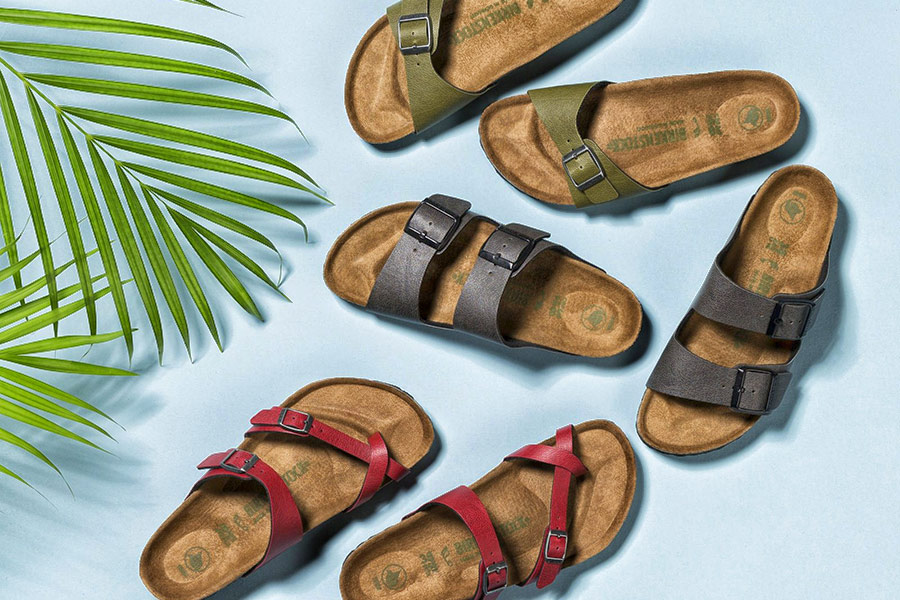
The PETA USA youth organization has honored Germany’s largest shoe manufacturer for its commitment to producing fashion without animal components.

Birkenstock has received the peta2 Libby Award “Most Vegan-Friendly Shoe Company 2017,” an award highly regarded throughout the global vegan community. The youth organization honored Germany’s largest shoe manufacturer for its commitment to producing fashion without animal products.

If you like this, subscribe here for more stories that Inspire The Future.

For the 12th time, the peta2 Libby Awards recognized companies and celebrities for their efforts – in  categories such as Heroes, Food, and Lifestyle. In an innovative move, the organizers invited young people from around the world to vote online. The response was huge. In the history of the award participation had never been higher – the number of voters more than doubled compared with the previous year.

This was the second time Birkenstock has been awarded by the world’s largest animal rights organization. In September 2016, PETA Deutschland presented Birkenstock with the “Vegan Fashion Award” for a vegan model of the iconic “Madrid” sandal.

The Libby Award was created by peta2 to honor companies and people for their exemplary behavior. peta2 is the youth organization of PETA USA, the world’s largest animal rights organization with more than 6.5 million supporters worldwide. It’s aimed at young people aged 13 to 21 and the word  “Libby” is short for “liberation” – which reminds people of the movement’s key objective. The idea behind the awards is to motivate manufacturers of food and clothing to take a stand for the vegan lifestyle and thus also strengthen animal rights. Eating solely plant-based foods is becoming increasingly widespread today, especially among young people. With it, the demand for fashion without any animal components is also growing.

“We are delighted to receive this award because it comes from the people we make our products for – our customers,” said Birkenstock CEO Oliver Reichert. “Especially among younger customers, there is a growing percentage who choose the vegan way of life. We offer many vegan products for these customers and the peta2 Libby Award has motivated us to continue on this path.”

Vegan fashion still faces the prejudice of being unfashionable, but Reichert adds: “We prove exactly the opposite with our vegan collection and show that vegan fashion can be animal friendly and also stylish and trendy. If the demand for vegan shoes continues to grow, so will our range of vegan products.”

“As everyday consumers learn more about the importance of wearing vegan, companies such as Birkenstock continue to add more animal-friendly options to its collection,” says Anne Brainard, Director of Corporate Affairs at PETA. “This makes it easier to have fun with our wardrobes while taking steps toward a kinder world for all beings.”

One-fifth of Birkenstock sandals are made without animal components. Remarkably, the percentage of cork sandals within the vegan collection has more than doubled three years in a row. The company  sells around 25 million pairs of shoes globally each year.

If you like this, subscribe here for more stories that Inspire The Future.

Humans of Fashion Foundation Wants to End Sexual Abuse

A global platform to discuss prevalence and effects of sexual harassment and assault in the fashion industry, and connect those who have experienced it with support.

Fashion model Kristina Romanova and singer-songwriter/lawyer, Antoniette Costa, have cofounded a NGO that works to create a global platform that informs and connects those in the fashion industry who have experienced sexual harassment, abuse and assault. The pair offer pro bono and subsidized legal professionals, counselors and support.

If you like this, subscribe here for more stories that Inspire The Future.

The Humans of Fashion Foundation aims to create a safer workplace for all professionals in the fashion industry, from models and designers to stylists and makeup artists. By creating an app that delivers real-time reporting, the Humans of Fashion Foundation hopes to bring a revolutionary approach to the problem of sexual harassment and assault in the industry, and to start the conversation around this globally prevalent issue. Romanova and Costa want to encourage a fashion industry that is safer and to encourage a mentoring relationship between fashion veterans and younger generations.

“With recent high profile campaigns such as #metoo and #timesup, social media has become an empowering tool to facilitate a collective voice,” says Romanova. “Every human deserves to have his or her voice heard. Every human deserves to have his or her rights protected. But not everyone can afford it. Models arrive at bustling global fashion centers from diverse backgrounds, with diverse languages, big hopes and open hearts. They deserve good friends who will listen and offer them advice if they run into a problem.”

“In addition to the financial burden, not everyone knows how to navigate the system to get the help they need,” addsCosta. “We want to be the welcoming connection to assure dreams don’t end up on the floor – like a quick change of clothing before hitting the runway.”

Launching just before NY Fashion Week, the idea has attracted support from fashion industry leaders such as Sarah Goore Reeves, Paul Schindler, Panache Desai, and Caron Bernstein, who have all joined the advisory board.

If you like this, subscribe here for more stories that Inspire The Future.
0