Indecision Is Also a Decision. Stand up For What You Believe

The founder of Operation Underground Railroad (OUR) is on a mission to end child trafficking and slavery. For a decade, Tim Ballard worked in the Internet Crimes Against Children Task Force as a special agent for the Department of Homeland Security. He has successfully dismantled dozens of trafficking organizations and rescued countless children from sex slavery. To formulate his business plan, he bought every history book he could find on American slavery.

The Underground Railroad was a network of secret routes and safe houses established in the United States during the early to mid-19th century. They were used by African American slaves to escape into free states and Canada with the aid of abolitionists and allies sympathetic to their cause. The original Underground Railroad was a group that acted and infiltrated, and that’s precisely what Ballard is inspired to do today.

In the past six years, OUR has rescued more than 3,800 victims and assisted in the arrests of more than 2,100 traffickers worldwide. Through partnerships with like-minded organizations, they have collectively rescued more than 10,000 survivors who were enslaved, exploited, or at risk.

“The only thing necessary for the triumph of evil is for good men and women to do nothing,” says Ballard, quoting 18th Century statesman, Edmund Burke. 

“The original Underground Railroad saw people of all colors and creeds coming together to rescue people. Some of these people would pose as slave catchers to learn who was being sought and then devise plans to throw the slave owners off their trails. It’s one of the most inspiring stories of history I have ever heard,” says Ballard. Today, Ballard is doing just that, using similar covert operations to put sex traffickers and pedophiles behind bars. Slavery is not only part of history, either. According to Sean Reves, Utah’s Attorney General, there is more modern-day slavery than at any other time in history. 

“You have to make a decision,” says Ballard. “The world is in turmoil in so many ways, and it’s sometimes easier to crawl into a fetal position and ride it out. But that’s not what we should do — indecision is also a decision. It’s important to stand up for what you believe in and do something that benefits society. Stand up to the evils that hurt people.” 

Ballard reckons that many of us aren’t paying attention when our calling comes. He thinks we should keep our minds open to significant events that move us; it could signal the start of a whole new journey. For Ballard, that moment happened 10 years ago, while still considering a career in fighting crimes against children. “We were rescuing a little boy who had been kidnapped from Mexico,” he recalls. “During the investigation, he gave me a necklace on which was written, “Man of God.” It was a necklace his sister had given him, who had also been trafficked. I found power in that symbol and still wear it today.” 

Despite the horrific things he has seen, Ballard believes that through all the darkness, there are still more good people in the world than bad. “Humanity is good by nature, and most people want to improve their lives continually,” he says. “I focus on the light that I can see in people around me, and I have seen more light this year than ever. 

“A leader must be optimistic and bring hope; a plan that inspires others to be confident,” he concludes. “Leaders can’t always have the right answer, but surround yourself with people who have great ideas and empower them — it doesn’t always have to be about you.” 

Indecision Is Also a Decision. Stand up For What You Believe

The founder of Operation Underground Railroad (OUR) is on a mission to end child trafficking and slavery. For a decade, Tim Ballard worked in the Internet Crimes Against Children Task Force as a special agent for the Department of Homeland Security. He has successfully dismantled dozens of trafficking organizations and rescued countless children from sex slavery. To formulate his business plan, he bought every history book he could find on American slavery.

The Underground Railroad was a network of secret routes and safe houses established in the United States during the early to mid-19th century. They were used by African American slaves to escape into free states and Canada with the aid of abolitionists and allies sympathetic to their cause. The original Underground Railroad was a group that acted and infiltrated, and that’s precisely what Ballard is inspired to do today.

In the past six years, OUR has rescued more than 3,800 victims and assisted in the arrests of more than 2,100 traffickers worldwide. Through partnerships with like-minded organizations, they have collectively rescued more than 10,000 survivors who were enslaved, exploited, or at risk.

“The only thing necessary for the triumph of evil is for good men and women to do nothing,” says Ballard, quoting 18th Century statesman, Edmund Burke. 

“The original Underground Railroad saw people of all colors and creeds coming together to rescue people. Some of these people would pose as slave catchers to learn who was being sought and then devise plans to throw the slave owners off their trails. It’s one of the most inspiring stories of history I have ever heard,” says Ballard. Today, Ballard is doing just that, using similar covert operations to put sex traffickers and pedophiles behind bars. Slavery is not only part of history, either. According to Sean Reves, Utah’s Attorney General, there is more modern-day slavery than at any other time in history. 

“You have to make a decision,” says Ballard. “The world is in turmoil in so many ways, and it’s sometimes easier to crawl into a fetal position and ride it out. But that’s not what we should do — indecision is also a decision. It’s important to stand up for what you believe in and do something that benefits society. Stand up to the evils that hurt people.” 

Ballard reckons that many of us aren’t paying attention when our calling comes. He thinks we should keep our minds open to significant events that move us; it could signal the start of a whole new journey. For Ballard, that moment happened 10 years ago, while still considering a career in fighting crimes against children. “We were rescuing a little boy who had been kidnapped from Mexico,” he recalls. “During the investigation, he gave me a necklace on which was written, “Man of God.” It was a necklace his sister had given him, who had also been trafficked. I found power in that symbol and still wear it today.” 

Despite the horrific things he has seen, Ballard believes that through all the darkness, there are still more good people in the world than bad. “Humanity is good by nature, and most people want to improve their lives continually,” he says. “I focus on the light that I can see in people around me, and I have seen more light this year than ever. 

“A leader must be optimistic and bring hope; a plan that inspires others to be confident,” he concludes. “Leaders can’t always have the right answer, but surround yourself with people who have great ideas and empower them — it doesn’t always have to be about you.” 

11 Leadership Lessons From Major CEO and Company Lawsuits

Gone are the days of turning a blind eye. More than ever, company executives, officers, and leaders are being held accountable for their actions. Plus, a CEO in hot water means the company faces repercussions too. A leader’s reputation is often linked to the company’s values — or even the bottom line.

Whether it’s entanglements of scandal and sexual harassment or employees speaking out against unfair treatment, actions (and words) speak volumes. Besides, consumers can see right through the so-called public image. Movements, such as #MeToo and Time’s Up, are helping to shift and combat power imbalances of company higher-ups.

In 2019 alone, 1,640 CEOs resigned or stepped down, with tech being one of the highest sectors. Although a typical CEO remains in the role for about seven years, legal issues pose major threats to these positions and, ultimately, company or shareholder value. Below, we dive into major CEO or company lawsuit examples that any leader can learn a lesson from.

1. Sell truthfully

Juul, the popular e-cigarette company, has faced major heat since its inception. Not only was there a vaping crisis where Congress and the Federal Drug Administration stepped in, but Juul was under pressure for allegedly marketing to young teens.

Former Juul executive, Siddharth Breja, claims he was fired in retaliation for raising concerns that Juul allegedly sold contaminated mint-flavored pods and refused to recall them. Amidst the “culture of intimidation” claims and rising scrutiny around the vaping industry, CEO Kevin Burns eventually stepped down from his role.

2. Be careful what you Tweet about

Elon Musk, the Co-Founder and CEO of Tesla, is known to take to Twitter to share eccentric updates, responses, or funny memes. Musk, however, faced a lawsuit from the Securities Exchange Commission after he tweeted that he was considering taking the company private.

The Tweet surprised investors, analysts, and Tesla’s board of directors and because of it, Musk was sued for sharing false or misleading statements. Musk backtracked on the statement and settled with the Securities Exchange Commission by agreeing to pay a $20 million fine. Soon after, he stepped down as chairman of the company’s board.

3. Abide by company policies

Steve Easterbrook, the ex-CEO of McDonald’s, was sued by the company for violating its personal conduct policies. After investigations, the fast-food giant reported that Easterbrook allegedly had relationships with three employees (one of which he granted stock options to).

The lawsuit also indicates that Easterbrook lied about the relationships and attempted to erase any evidence that they occurred. Today, leaders face repercussions for not just acting inappropriately, but also for failing to be transparent and honest.

4. Cultivate a positive, uplifting work environment

Away is a direct-to-consumer luggage brand known for its suitcases and bags “built for modern travel.” However, the female-founded company that hoped to cultivate a vision of inclusive travel was actually in internal turmoil.

Steph Korey, the former co-CEO, stepped down after former employees spoke up and released Slack messages that The Verge then published in an article. The messages gave a glimpse into the toxic company culture and management style. Shortly after resigning and issuing an apology, Korey claimed that she made a mistake in leaving and returned to her role.

Korey took to Instagram to publish stories criticizing how the media portrays female founders (saying females are targeted since stories about them get more “clicks”), which upset Away employees and “reflected poorly on the company.” Following this backlash, a spokesperson reported that Korey will forfeit all CEO responsibilities by the end of 2020, and Stuart Haselden will take over as the sole CEO.

5. Stay true to your company’s core values

The Wing is a female-focused co-working space with offices in major cities such as NYC, San Francisco, L.A., Chicago, and more. Co-Founder, Audrey Gelman, started The Wing with the goal of it being a “utopia” for women. However, despite this goal and with its women-only policy came backlash.

In 2018, The Wing faced a $12 million lawsuit alleging its “illegal discrimination against men.” This wasn’t the last of the issues for the co-working collaborative. Amidst employee reports that the company fails to “practice the intersectional feminism that it preaches,” specifically to women of color, Gelman resigned from her position.

Following the announcement, employees felt the resignation wasn’t enough. They issued a statement and petition outlining their demands and staged a digital walkout in solidarity with their colleagues.

6. Be transparent about decisions

Aramark Corporation, the food, facility, and uniform services provider, faced employee lawsuits when the company failed to pay out performance-based bonuses for many of its managers. The managers raised concerns that they weren’t aware of the change, some of which lost up to 20% of their expected annual compensation.

There was alleged controversy around Eric Foss, the former CEO, and his abrupt departure from the company shortly after the lawsuit was filed. Aramark eventually agreed to settle the lawsuit for $21 million and the settlement is expected to benefit over 4,000 current and former employees.

7. Honor employee rights

The former SoulCycle CEO, Melanie Whelan, faced legal complaints accusing her of making offensive comments to a senior VP about paternity leave.

A former executive issued a complaint with the Equal Employment Opportunity Commission accusing SoulCycle of pregnancy discrimination. She claimed she was demoted after disclosing that she was pregnant and then fired 32 days after giving birth.

A spokesperson from the spin-focused studio chain responded that the company “strongly disagrees with the accusations.” Whelan eventually stepped down as CEO due to a reported decline in memberships.

8. Always do your due diligence

Care.com is an online resource that helps families find and manage caregiving services. An investigative piece by The Wall Street Journal found instances where caregivers listed on Care.com had police records and were accused of committing crimes while caring for people.

While there was no official lawsuit, Care.com responded by removing tens of thousands of unverified providers, implementing new security policies, and releasing a clarifying statement that it did not verify the information for each center. Although Sheila Lirio Marcelo did not state these reports were the reason, the former CEO soon after stepped down and will shift to a new position as an executive chairwoman.

9. Address issues head-on

Instacart, the grocery delivery app, faced a class-action lawsuit over employee wages and tips. Drivers and shoppers spoke out against Instacart’s practices, alleging that the company “intentionally and maliciously misappropriated gratuities in order to pay plaintiff’s wages even though Instacart maintained that 100 percent of customer tips went directly to shoppers.” Instacart has faced an employment case in the past too, settling for $4.6 millionin 2017.

Instacart CEO, Apoorva Mehta, immediately released a blog post of the company’s actions in response to employee frustrations. The post guarantees higher base compensation for shoppers and that they will no longer include tips in the base pay.

10. Speak up for what’s right

Silicon Valley has long been known for the tech gender gap and the gender bias that comes with it. Pinterest is now a part of the list, facing a lawsuit from the former COO Francoise Brougher, accusing the social giant of gender discrimination and retaliation. Brougher alleges that she refused to “take a back seat to her male peers,” and because of it was left out of important company decisions. Brougher, who worked as COO for two years, reports she was wrongfully terminated in April 2020 for objecting and speaking out against the treatment.

“Pinterest’s female executives, even at the highest levels, are marginalized, excluded, and silenced,” Brougher said in a statement published on Medium. “According to Pinterest, I was fired not for the results I achieved, but for not being ‘collaborative.’ I believe that I was fired for speaking out about the rampant discrimination, hostile work environment, and misogyny that permeates Pinterest.”

11. Follow through on improving company objectives

Among other major company lawsuits (such as Facebook) that were filed against directors or boards for diversity or race-related issues, Qualcomm also faced a derivative lawsuit. A shareholder filed against the company’s board alleging that the company’s directors violated their duties to the company and shareholders by falling short of stated objectives on diversity and inclusion.

The complaint also alleges they have failed to include a single African American either on the board or among the company’s senior officers, despite the company’s efforts to increase diversity.

In today’s world, it’s not just the duty of company leaders to improve their companies, but they are being held accountable to live up to promises. Whether you run a public company or are launching your new startup, secure D&O insurance to help protect your company leaders and business in the event of a crisis or scandal.

11 Leadership Lessons From Major CEO and Company Lawsuits

Gone are the days of turning a blind eye. More than ever, company executives, officers, and leaders are being held accountable for their actions. Plus, a CEO in hot water means the company faces repercussions too. A leader’s reputation is often linked to the company’s values — or even the bottom line.

Whether it’s entanglements of scandal and sexual harassment or employees speaking out against unfair treatment, actions (and words) speak volumes. Besides, consumers can see right through the so-called public image. Movements, such as #MeToo and Time’s Up, are helping to shift and combat power imbalances of company higher-ups.

In 2019 alone, 1,640 CEOs resigned or stepped down, with tech being one of the highest sectors. Although a typical CEO remains in the role for about seven years, legal issues pose major threats to these positions and, ultimately, company or shareholder value. Below, we dive into major CEO or company lawsuit examples that any leader can learn a lesson from.

1. Sell truthfully

Juul, the popular e-cigarette company, has faced major heat since its inception. Not only was there a vaping crisis where Congress and the Federal Drug Administration stepped in, but Juul was under pressure for allegedly marketing to young teens.

Former Juul executive, Siddharth Breja, claims he was fired in retaliation for raising concerns that Juul allegedly sold contaminated mint-flavored pods and refused to recall them. Amidst the “culture of intimidation” claims and rising scrutiny around the vaping industry, CEO Kevin Burns eventually stepped down from his role.

2. Be careful what you Tweet about

Elon Musk, the Co-Founder and CEO of Tesla, is known to take to Twitter to share eccentric updates, responses, or funny memes. Musk, however, faced a lawsuit from the Securities Exchange Commission after he tweeted that he was considering taking the company private.

The Tweet surprised investors, analysts, and Tesla’s board of directors and because of it, Musk was sued for sharing false or misleading statements. Musk backtracked on the statement and settled with the Securities Exchange Commission by agreeing to pay a $20 million fine. Soon after, he stepped down as chairman of the company’s board.

3. Abide by company policies

Steve Easterbrook, the ex-CEO of McDonald’s, was sued by the company for violating its personal conduct policies. After investigations, the fast-food giant reported that Easterbrook allegedly had relationships with three employees (one of which he granted stock options to).

The lawsuit also indicates that Easterbrook lied about the relationships and attempted to erase any evidence that they occurred. Today, leaders face repercussions for not just acting inappropriately, but also for failing to be transparent and honest.

4. Cultivate a positive, uplifting work environment

Away is a direct-to-consumer luggage brand known for its suitcases and bags “built for modern travel.” However, the female-founded company that hoped to cultivate a vision of inclusive travel was actually in internal turmoil.

Steph Korey, the former co-CEO, stepped down after former employees spoke up and released Slack messages that The Verge then published in an article. The messages gave a glimpse into the toxic company culture and management style. Shortly after resigning and issuing an apology, Korey claimed that she made a mistake in leaving and returned to her role.

Korey took to Instagram to publish stories criticizing how the media portrays female founders (saying females are targeted since stories about them get more “clicks”), which upset Away employees and “reflected poorly on the company.” Following this backlash, a spokesperson reported that Korey will forfeit all CEO responsibilities by the end of 2020, and Stuart Haselden will take over as the sole CEO.

5. Stay true to your company’s core values

The Wing is a female-focused co-working space with offices in major cities such as NYC, San Francisco, L.A., Chicago, and more. Co-Founder, Audrey Gelman, started The Wing with the goal of it being a “utopia” for women. However, despite this goal and with its women-only policy came backlash.

In 2018, The Wing faced a $12 million lawsuit alleging its “illegal discrimination against men.” This wasn’t the last of the issues for the co-working collaborative. Amidst employee reports that the company fails to “practice the intersectional feminism that it preaches,” specifically to women of color, Gelman resigned from her position.

Following the announcement, employees felt the resignation wasn’t enough. They issued a statement and petition outlining their demands and staged a digital walkout in solidarity with their colleagues.

6. Be transparent about decisions

Aramark Corporation, the food, facility, and uniform services provider, faced employee lawsuits when the company failed to pay out performance-based bonuses for many of its managers. The managers raised concerns that they weren’t aware of the change, some of which lost up to 20% of their expected annual compensation.

There was alleged controversy around Eric Foss, the former CEO, and his abrupt departure from the company shortly after the lawsuit was filed. Aramark eventually agreed to settle the lawsuit for $21 million and the settlement is expected to benefit over 4,000 current and former employees.

7. Honor employee rights

The former SoulCycle CEO, Melanie Whelan, faced legal complaints accusing her of making offensive comments to a senior VP about paternity leave.

A former executive issued a complaint with the Equal Employment Opportunity Commission accusing SoulCycle of pregnancy discrimination. She claimed she was demoted after disclosing that she was pregnant and then fired 32 days after giving birth.

A spokesperson from the spin-focused studio chain responded that the company “strongly disagrees with the accusations.” Whelan eventually stepped down as CEO due to a reported decline in memberships.

8. Always do your due diligence

Care.com is an online resource that helps families find and manage caregiving services. An investigative piece by The Wall Street Journal found instances where caregivers listed on Care.com had police records and were accused of committing crimes while caring for people.

While there was no official lawsuit, Care.com responded by removing tens of thousands of unverified providers, implementing new security policies, and releasing a clarifying statement that it did not verify the information for each center. Although Sheila Lirio Marcelo did not state these reports were the reason, the former CEO soon after stepped down and will shift to a new position as an executive chairwoman.

9. Address issues head-on

Instacart, the grocery delivery app, faced a class-action lawsuit over employee wages and tips. Drivers and shoppers spoke out against Instacart’s practices, alleging that the company “intentionally and maliciously misappropriated gratuities in order to pay plaintiff’s wages even though Instacart maintained that 100 percent of customer tips went directly to shoppers.” Instacart has faced an employment case in the past too, settling for $4.6 millionin 2017.

Instacart CEO, Apoorva Mehta, immediately released a blog post of the company’s actions in response to employee frustrations. The post guarantees higher base compensation for shoppers and that they will no longer include tips in the base pay.

10. Speak up for what’s right

Silicon Valley has long been known for the tech gender gap and the gender bias that comes with it. Pinterest is now a part of the list, facing a lawsuit from the former COO Francoise Brougher, accusing the social giant of gender discrimination and retaliation. Brougher alleges that she refused to “take a back seat to her male peers,” and because of it was left out of important company decisions. Brougher, who worked as COO for two years, reports she was wrongfully terminated in April 2020 for objecting and speaking out against the treatment.

“Pinterest’s female executives, even at the highest levels, are marginalized, excluded, and silenced,” Brougher said in a statement published on Medium. “According to Pinterest, I was fired not for the results I achieved, but for not being ‘collaborative.’ I believe that I was fired for speaking out about the rampant discrimination, hostile work environment, and misogyny that permeates Pinterest.”

11. Follow through on improving company objectives

Among other major company lawsuits (such as Facebook) that were filed against directors or boards for diversity or race-related issues, Qualcomm also faced a derivative lawsuit. A shareholder filed against the company’s board alleging that the company’s directors violated their duties to the company and shareholders by falling short of stated objectives on diversity and inclusion.

The complaint also alleges they have failed to include a single African American either on the board or among the company’s senior officers, despite the company’s efforts to increase diversity.

In today’s world, it’s not just the duty of company leaders to improve their companies, but they are being held accountable to live up to promises. Whether you run a public company or are launching your new startup, secure D&O insurance to help protect your company leaders and business in the event of a crisis or scandal.

In new UN role, ex-CNN journalist seeks to end abuse of women and girls

Former CNN correspondent Isha Sesay planned to begin her new role as a Goodwill Ambassador for the United Nations Population Fund (UNFPA) with a visit to Nigeria and Haiti — canceled due to the coronavirus pandemic.

Instead, the British journalist and author listened remotely to stories from women and girls, from midwives to abuse survivors, in Yemen, Ukraine, Somalia and Sierra Leone.

“We did a global virtual tour,” she said from her home in Los Angeles. “It’s not the same as being there and sitting side by side but …. it will have value.”

UNFPA, the U.N.’s sexual and reproductive health agency has warned of COVID-19’s catastrophic impact on women and girls, with a surge in domestic violence, child marriage and female genital mutilation (FGM).

“In this moment of COVID and the pandemic, and seeing its impact on women and girls, there’s really a need to amplify efforts to draw attention to gender-based violence and harmful practices,” said Sesay, who was announced as ambassador on Wednesday.

“I think we can achieve a great deal together.”

Sesay has a strong record as a girls’ rights advocate, leading CNN’s Africa reporting for more than a decade and winning the Peabody Award in 2014 for its coverage of Boko Haram’s kidnapping of more than 200 Nigerian schoolgirls in Chibok. In a welcoming statement, UNFPA Executive Director Natalia Kanem called Sesay “a gifted storyteller who has used her platform to elevate the voices of some of the world’s most marginalized women and girls”.

Sesay left CNN in 2018 and wrote “Beneath the Tamarind Tree”, a book about her experiences reporting on the Chibok girls, and founded W.E. (Women Everywhere) Can Lead, a non-profit supporting girls’ education in Sierra Leone.

The newly minted U.N. ambassador grew up in Sierra Leone, where her mother Kadi Sesay was a government minister, as well as an FGM survivor, and one of her grandfather’s wives was a traditional cutter. FGM, which affects 200 million girls and women globally, involves the partial or total removal of the external genitalia and can cause bleeding, infertility and death.

Gender-based violence is growing exponentially as the pandemic stretches on, Sesay said, with UNFPA estimating that every three months of lockdown could result in 15 million more cases of domestic abuse than would normally occur.

“It’s really important for people to understand that the scale and impact of COVID is so much greater than what we can see at first glance,” she said. “There is an urgency to this moment.”

By Ellen Wulfhorst. Editing by Katy Migiro.

In new UN role, ex-CNN journalist seeks to end abuse of women and girls

Former CNN correspondent Isha Sesay planned to begin her new role as a Goodwill Ambassador for the United Nations Population Fund (UNFPA) with a visit to Nigeria and Haiti — canceled due to the coronavirus pandemic.

Instead, the British journalist and author listened remotely to stories from women and girls, from midwives to abuse survivors, in Yemen, Ukraine, Somalia and Sierra Leone.

“We did a global virtual tour,” she said from her home in Los Angeles. “It’s not the same as being there and sitting side by side but …. it will have value.”

UNFPA, the U.N.’s sexual and reproductive health agency has warned of COVID-19’s catastrophic impact on women and girls, with a surge in domestic violence, child marriage and female genital mutilation (FGM).

“In this moment of COVID and the pandemic, and seeing its impact on women and girls, there’s really a need to amplify efforts to draw attention to gender-based violence and harmful practices,” said Sesay, who was announced as ambassador on Wednesday.

“I think we can achieve a great deal together.”

Sesay has a strong record as a girls’ rights advocate, leading CNN’s Africa reporting for more than a decade and winning the Peabody Award in 2014 for its coverage of Boko Haram’s kidnapping of more than 200 Nigerian schoolgirls in Chibok. In a welcoming statement, UNFPA Executive Director Natalia Kanem called Sesay “a gifted storyteller who has used her platform to elevate the voices of some of the world’s most marginalized women and girls”.

Sesay left CNN in 2018 and wrote “Beneath the Tamarind Tree”, a book about her experiences reporting on the Chibok girls, and founded W.E. (Women Everywhere) Can Lead, a non-profit supporting girls’ education in Sierra Leone.

The newly minted U.N. ambassador grew up in Sierra Leone, where her mother Kadi Sesay was a government minister, as well as an FGM survivor, and one of her grandfather’s wives was a traditional cutter. FGM, which affects 200 million girls and women globally, involves the partial or total removal of the external genitalia and can cause bleeding, infertility and death.

Gender-based violence is growing exponentially as the pandemic stretches on, Sesay said, with UNFPA estimating that every three months of lockdown could result in 15 million more cases of domestic abuse than would normally occur.

“It’s really important for people to understand that the scale and impact of COVID is so much greater than what we can see at first glance,” she said. “There is an urgency to this moment.”

By Ellen Wulfhorst. Editing by Katy Migiro.

“Hey Alexa, Make Me Immortal”

Voice computing will profoundly reshape the way humans relate to machines. Rather than allowing a sense of alienation to creep in, some organizations have appropriated the technology to capture fading stories and bring them back to life for future generations. Instead of writing a letter or recording a video for your great-grandchildren, you may one day leave a digital replica of yourself behind.

The emergence of voice computing interfaces represents the biggest technological disruption since the smartphone. Siri, Alexa, and Google Assistant are becoming the new universal remotes to reality, upending multibillion-dollar business models in Silicon Valley and beyond. Today, though, most of what people do with voice devices is fairly prosaic — setting timers, playing music, and asking basic, factual questions.

In the future, however, one of the most dramatic applications of voice technology will be to enable what’s known as “virtual immortality”— the creation of digital replicas that live on after the real people who inspired them have died.

For a glimpse of this future, consider a groundbreaking project called New Dimensions in Testimony. A joint effort by the Institute for Creative Technologies and the USC Shoah Foundation, the project aims to memorialize Holocaust survivors.

In 1943 the Nazis captured a 10-year-old boy named Pinchas Gutter and his family and imprisoned them in concentration camps. Gutter’s sister and parents were killed in the gas chambers before he could even say goodbye. He would go on to be beaten, shuttled between different labor camps, and put on a death march before finally being freed by the Red Army in 1945.

Holocaust survivor, Eva Schloss, speaks to an interviewer through a mirror on the specially constructed filming stage.

Gutter, now in his 80s, has devoted himself to sharing these horrors, giving talks and answering questions. But like all of the remaining Holocaust survivors, Gutter will not be around much longer. Testimonies like his have, of course, been captured in print, audio, and film. But telling a story in person has unique power. As Rabbi Marvin Hier, the dean and founder of the Simon Wiesenthal Center, once explained, “There’s nothing like the human witness who can look you in the eye and say, ‘Look, this is what happened to my husband. This is what happened to my children. This is what happened to my grandparents.’”

Targeting the immediacy of in-person storytelling, the New Dimensions team interviewed Gutter and more than a dozen other Holocaust survivors, asking them hundreds of questions in multiday sessions. The interviews took place on a soundstage inside of what looked like a giant geodesic dome. Mounted on the inside of the dome were thousands of tiny LED lights and 30 cameras recording the survivors from every angle.

Using visual-effects technologies that were originally developed for military training simulators and movies such as Avatar, the project’s scientists transformed these recordings into movie clips, which, when projected onto a special screen, appear to be three-dimensional. As holographic display techniques continue to improve, the scientists will be able to create even more lifelike holograms. They could project Gutter or another survivor into any room, illuminate him as if by the ambient lighting of that space, and allow people to walk around him. Paul Debevec, a professor of computer science at USC, says that the goal is to make it “seem like they are sitting in the same room as the audience.”

 The resulting 3D holograms of survivors will interact with people long after they are gone.

ICT’s conversational-AI experts, in turn, created a natural-language system to interpret what people were asking about
and retrieve an appropriate answer in the digital version of the survivor’s brain. Those answers might be short but often are many minutes long. The system is currently being displayed in museums around the United States.

David Traum, an ICT computer scientist, says he believes that interactive preservations of the dead will become widespread in the future. If the price of the technology comes down enough, ordinary people may keep versions of their late relatives around.

Fritzie Fritzshall, another Holocaust survivor who participated in the New Dimensions project, is a believer in the technology. Most of Fritzshall’s family perished in concentration camps, forever silencing their voices. Fritzshall, too, will die before long, and she says she is glad that her digital double will continue to share her narrative. “I have passed it on to my twin, so to speak,” Fritzshall told a journalist. “When I’m no longer here, she can answer for what’s asked of me. She will carry on the story forever.” 

“Hey Alexa, Make Me Immortal”

Voice computing will profoundly reshape the way humans relate to machines. Rather than allowing a sense of alienation to creep in, some organizations have appropriated the technology to capture fading stories and bring them back to life for future generations. Instead of writing a letter or recording a video for your great-grandchildren, you may one day leave a digital replica of yourself behind.

The emergence of voice computing interfaces represents the biggest technological disruption since the smartphone. Siri, Alexa, and Google Assistant are becoming the new universal remotes to reality, upending multibillion-dollar business models in Silicon Valley and beyond. Today, though, most of what people do with voice devices is fairly prosaic — setting timers, playing music, and asking basic, factual questions.

In the future, however, one of the most dramatic applications of voice technology will be to enable what’s known as “virtual immortality”— the creation of digital replicas that live on after the real people who inspired them have died.

For a glimpse of this future, consider a groundbreaking project called New Dimensions in Testimony. A joint effort by the Institute for Creative Technologies and the USC Shoah Foundation, the project aims to memorialize Holocaust survivors.

In 1943 the Nazis captured a 10-year-old boy named Pinchas Gutter and his family and imprisoned them in concentration camps. Gutter’s sister and parents were killed in the gas chambers before he could even say goodbye. He would go on to be beaten, shuttled between different labor camps, and put on a death march before finally being freed by the Red Army in 1945.

Holocaust survivor, Eva Schloss, speaks to an interviewer through a mirror on the specially constructed filming stage.

Gutter, now in his 80s, has devoted himself to sharing these horrors, giving talks and answering questions. But like all of the remaining Holocaust survivors, Gutter will not be around much longer. Testimonies like his have, of course, been captured in print, audio, and film. But telling a story in person has unique power. As Rabbi Marvin Hier, the dean and founder of the Simon Wiesenthal Center, once explained, “There’s nothing like the human witness who can look you in the eye and say, ‘Look, this is what happened to my husband. This is what happened to my children. This is what happened to my grandparents.’”

Targeting the immediacy of in-person storytelling, the New Dimensions team interviewed Gutter and more than a dozen other Holocaust survivors, asking them hundreds of questions in multiday sessions. The interviews took place on a soundstage inside of what looked like a giant geodesic dome. Mounted on the inside of the dome were thousands of tiny LED lights and 30 cameras recording the survivors from every angle.

Using visual-effects technologies that were originally developed for military training simulators and movies such as Avatar, the project’s scientists transformed these recordings into movie clips, which, when projected onto a special screen, appear to be three-dimensional. As holographic display techniques continue to improve, the scientists will be able to create even more lifelike holograms. They could project Gutter or another survivor into any room, illuminate him as if by the ambient lighting of that space, and allow people to walk around him. Paul Debevec, a professor of computer science at USC, says that the goal is to make it “seem like they are sitting in the same room as the audience.”

 The resulting 3D holograms of survivors will interact with people long after they are gone.

ICT’s conversational-AI experts, in turn, created a natural-language system to interpret what people were asking about
and retrieve an appropriate answer in the digital version of the survivor’s brain. Those answers might be short but often are many minutes long. The system is currently being displayed in museums around the United States.

David Traum, an ICT computer scientist, says he believes that interactive preservations of the dead will become widespread in the future. If the price of the technology comes down enough, ordinary people may keep versions of their late relatives around.

Fritzie Fritzshall, another Holocaust survivor who participated in the New Dimensions project, is a believer in the technology. Most of Fritzshall’s family perished in concentration camps, forever silencing their voices. Fritzshall, too, will die before long, and she says she is glad that her digital double will continue to share her narrative. “I have passed it on to my twin, so to speak,” Fritzshall told a journalist. “When I’m no longer here, she can answer for what’s asked of me. She will carry on the story forever.” 

UN General-Secretary Rings Peace Bell and Calls For Global Action Against Our Common Enemy: The Virus

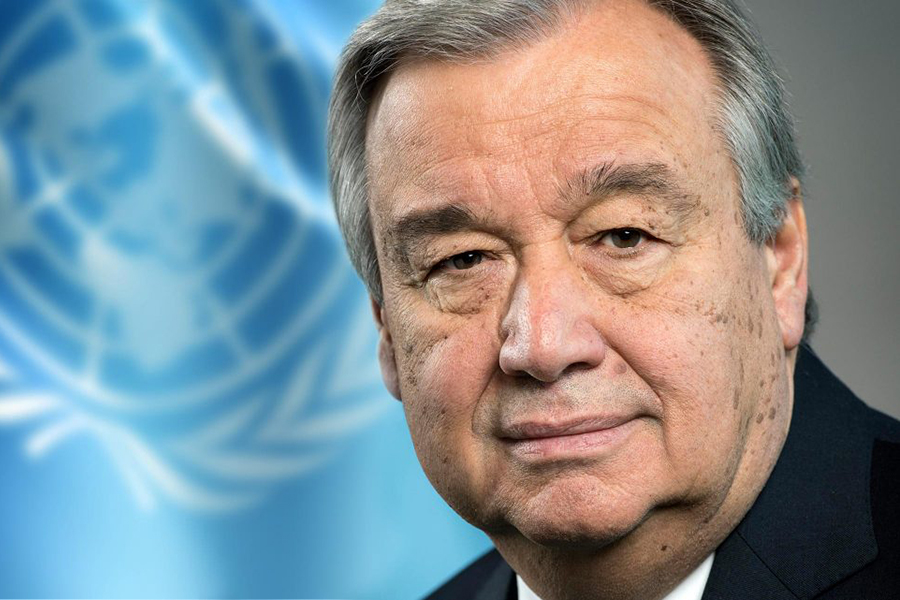
Monday, 21 September, is International Day of Peace. To mark the 39th anniversary of this United Nations-sanctioned holiday, UN Secretary-General António Guterres held a Peace Bell ceremony at the UN headquarters in New York. Here are some highlights of his speech.

Peace is never a given. It’s an aspiration that is only as strong as our conviction, and only as durable as our hope. It can take decades, even centuries, to build peaceful, stable societies.  But peace can be squandered in an instant by reckless, divisive policies and approaches.

Seventy-five years ago, the United Nations was founded with the overriding goal of preventing war and promoting peace. Since then, we have deepened our knowledge on how to fulfil that noble mission. We have solid evidence that human rights, respect for the rule of law, access to justice and opportunities for all are the building blocks for peaceful communities and societies. This is why the 2030 Agenda for Sustainable Development is above all an agenda for peace.

Today, the COVID-19 pandemic is expanding risks to peace everywhere. It poses an enormous threat to people caught up in conflict, which is why I made an immediate appeal for a global ceasefire. I will repeat the call during the General Debate next week.  We need to silence the guns and focus on our common enemy: the virus. Beyond war zones, the pandemic is highlighting and exploiting inequalities of all kinds, setting communities and countries against each other.

This ceremony in the Japanese garden is an annual moment of calm before high-level week; a moment that brings us back to our founding purpose of peace. I thank Japan for its contributions to the United Nations, including the Peace Bell, a symbol of unity, cast from coins and medals donated by people from all over the world.

Japanese culture has a deep appreciation for natural imperfections and flaws. This is reflected in the art of kintsugi — putting broken pieces of pottery together with golden lacquer to create a stronger, more beautiful whole.  The result is a piece that is not “good as new”, but “better than new”.

As we mark the International Day of Peace, let’s apply this principle to our fractured world. Let’s address the fragilities and inequalities that work against peace so that we emerge from the crisis stronger than before. Let’s push for peace wherever conflict is raging and wherever there are diplomatic opportunities to silence the guns. Let’s prioritize peace and build a safer future for all.

UN General-Secretary Rings Peace Bell and Calls For Global Action Against Our Common Enemy: The Virus

Monday, 21 September, is International Day of Peace. To mark the 39th anniversary of this United Nations-sanctioned holiday, UN Secretary-General António Guterres held a Peace Bell ceremony at the UN headquarters in New York. Here are some highlights of his speech.

Peace is never a given. It’s an aspiration that is only as strong as our conviction, and only as durable as our hope. It can take decades, even centuries, to build peaceful, stable societies.  But peace can be squandered in an instant by reckless, divisive policies and approaches.

Seventy-five years ago, the United Nations was founded with the overriding goal of preventing war and promoting peace. Since then, we have deepened our knowledge on how to fulfil that noble mission. We have solid evidence that human rights, respect for the rule of law, access to justice and opportunities for all are the building blocks for peaceful communities and societies. This is why the 2030 Agenda for Sustainable Development is above all an agenda for peace.

Today, the COVID-19 pandemic is expanding risks to peace everywhere. It poses an enormous threat to people caught up in conflict, which is why I made an immediate appeal for a global ceasefire. I will repeat the call during the General Debate next week.  We need to silence the guns and focus on our common enemy: the virus. Beyond war zones, the pandemic is highlighting and exploiting inequalities of all kinds, setting communities and countries against each other.

This ceremony in the Japanese garden is an annual moment of calm before high-level week; a moment that brings us back to our founding purpose of peace. I thank Japan for its contributions to the United Nations, including the Peace Bell, a symbol of unity, cast from coins and medals donated by people from all over the world.

Japanese culture has a deep appreciation for natural imperfections and flaws. This is reflected in the art of kintsugi — putting broken pieces of pottery together with golden lacquer to create a stronger, more beautiful whole.  The result is a piece that is not “good as new”, but “better than new”.

As we mark the International Day of Peace, let’s apply this principle to our fractured world. Let’s address the fragilities and inequalities that work against peace so that we emerge from the crisis stronger than before. Let’s push for peace wherever conflict is raging and wherever there are diplomatic opportunities to silence the guns. Let’s prioritize peace and build a safer future for all.

0