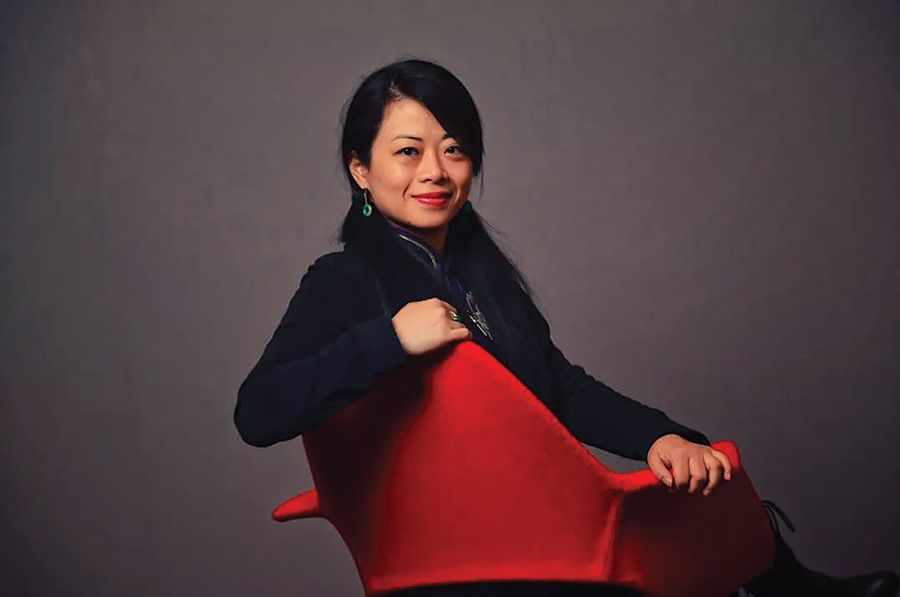
Leaders of Hope: Patricia Nzolantima

2020 YPO Global Impact Award African Winner and entrepreneur Patricia Nzolantima is dedicated to empowering African women and girls. As founder and chairwoman of Congo-based Bizzoly Holdings, she runs a marketing and advertising agency as well as Ubizcabs, a transportation and logistics company that employs only women drivers.

In addition, Nzolantima serves as managing partner for EXP-CommunicArt, which activates brands from 19 offices in 15 African countries through experiential marketing with big brands like Coca-Cola, Samsung, P&G, and Unilever. But she also uses her skills to help local businesswomen trying to compete with these big brands.

To that end, she founded Working Ladies WIA Hub, an economic empowerment group with 1,500 members that incubates women business owners, helping them reach their full potential so they can help develop the African continent. (To put things in perspective, the DRC ranks 176th out of 189 nations on the United Nations’ Gender Inequality Index.) She regularly provides pro bono work on packaging and branding for women businesses as well as coaching and mentoring.

“Women would start a business because they were very passionate about what they were doing, but there was no help to grow,” she says.

One of Nzolantima’s goals is to show that women can succeed at jobs traditionally for men. “When you start entrepreneurship in Africa, no one believes in you, not even your family,” she explains. “There are lots of doubts, and banks don’t necessarily trust women because African women generally don’t have a credit history.”

Nzolantima’s work is focused on reducing poverty, creating opportunities for employment, and helping women become independent income earners. “My greatest hope is to help African women become models of inspiration in their own communities,” she says. “When a woman gets a paycheck from her own business, she helps her family. She helps her village. She impacts the next generation — and if we want to reduce poverty, we need to start with them. The business revolution in Africa will be driven by women, not men.”

In a recent interview with Your Business magazine, Nzolantima said, “Now is the time to make a profound impact, to inspire each other to have more humanity, to think differently, and take time to listen and reflect.”

Her hope for the future? A development bank for women. “For me, the next five years is about how can I work to make more women happy, to lift them, to give them funds, and to make them think bigger.”

Feeding the Soul: The Grocer Tackling Philadelphia’s Food Deserts

When fourth-generation grocer and YPO member Jeffrey Brown opened his first store in 2004 in a low-income Philadelphia neighborhood with a history of gun violence and hired several returning felons to work in it, most people thought he was crazy.

Fifteen years later, he’s CEO and president of Brown’s Super Stores, which ranks in the top 50 U.S. small grocery chains and reports sales of approximately $500 million. Of his 12 stores, six of them are successful food desert stores located in urban neighborhoods previously without access to fresh fruits, vegetables, and other whole foods.

Food deserts affect 25 million Americans in 6,500 urban and rural areas. Lack of access to affordable healthy food contributes to high levels of obesity and other diet-related conditions, such as diabetes and heart disease. Brown is changing that.

Other grocers had tried but quickly failed where his stores thrive. Brown credits his success to listening to the community before he builds. Then, in addition to beautifully designed stores and affordable fresh foods, he brings jobs, community services, health care, nutritionists, and social workers to his stores.

“My father showed me that there are business opportunities in underprivileged communities and the importance of learning about their food cultures,” Brown explains. “The more I learned, the more concerned I became about the incredible challenges our customers face because of the zip codes they were born into. I wanted to find a way to change that.”

The first food desert ShopRite operated by Brown’s Super Stores replaced a store that was doing $100,000-$150,000 a week. “We opened doing $700,000 in the first week,” he recounts. “That caught the attention of public officials who were willing to help us continue with this work.”

Before opening his first store in the community of Southwest Philadelphia, Brown held several Town Halls attended by nearly 1,000 people. He wanted to learn about community members’ backgrounds, religion, family origins, and what they wanted in a grocery store. Prior to the opening of his North Philadelphia store, more than 3,000 turned out for the community meeting.

As he drilled down further into the cultures and religions of the area, Brown says, he brought in more culturally relevant products. “We added a department devoted to Halal food. People from Africa wanted a flour called fufu; people from the South missed sweet potato pie. We make the pies in our kitchens and carry the various products from the diverse heritages of our customers.”

“The role our fathers and mothers played in trying to solve social problems was to make a lot of money and when close to death, give to a nonprofit,” Brown explains. “That model is not likely to lead society to positive changes.”

Instead, he says, entrepreneurs should ask, “How can I bring my problem-solving abilities to help overcome the many challenges in society? You are showing your team how to be about more than just making money. This enhancement in the model, often referred to as social entrepreneurship, is a promising way to address society’s most pressing challenges such as poverty.” n

Mary Sigmond is editor in chief of YPOs Ignite digital magazine. YPO is the global leadership community of more than 29,000 chief executives in 130 countries who are driven by the belief that the world needs better leaders.

Feeding the Soul: The Grocer Tackling Philadelphia’s Food Deserts

When fourth-generation grocer and YPO member Jeffrey Brown opened his first store in 2004 in a low-income Philadelphia neighborhood with a history of gun violence and hired several returning felons to work in it, most people thought he was crazy.

Fifteen years later, he’s CEO and president of Brown’s Super Stores, which ranks in the top 50 U.S. small grocery chains and reports sales of approximately $500 million. Of his 12 stores, six of them are successful food desert stores located in urban neighborhoods previously without access to fresh fruits, vegetables, and other whole foods.

Food deserts affect 25 million Americans in 6,500 urban and rural areas. Lack of access to affordable healthy food contributes to high levels of obesity and other diet-related conditions, such as diabetes and heart disease. Brown is changing that.

Other grocers had tried but quickly failed where his stores thrive. Brown credits his success to listening to the community before he builds. Then, in addition to beautifully designed stores and affordable fresh foods, he brings jobs, community services, health care, nutritionists, and social workers to his stores.

“My father showed me that there are business opportunities in underprivileged communities and the importance of learning about their food cultures,” Brown explains. “The more I learned, the more concerned I became about the incredible challenges our customers face because of the zip codes they were born into. I wanted to find a way to change that.”

The first food desert ShopRite operated by Brown’s Super Stores replaced a store that was doing $100,000-$150,000 a week. “We opened doing $700,000 in the first week,” he recounts. “That caught the attention of public officials who were willing to help us continue with this work.”

Before opening his first store in the community of Southwest Philadelphia, Brown held several Town Halls attended by nearly 1,000 people. He wanted to learn about community members’ backgrounds, religion, family origins, and what they wanted in a grocery store. Prior to the opening of his North Philadelphia store, more than 3,000 turned out for the community meeting.

As he drilled down further into the cultures and religions of the area, Brown says, he brought in more culturally relevant products. “We added a department devoted to Halal food. People from Africa wanted a flour called fufu; people from the South missed sweet potato pie. We make the pies in our kitchens and carry the various products from the diverse heritages of our customers.”

“The role our fathers and mothers played in trying to solve social problems was to make a lot of money and when close to death, give to a nonprofit,” Brown explains. “That model is not likely to lead society to positive changes.”

Instead, he says, entrepreneurs should ask, “How can I bring my problem-solving abilities to help overcome the many challenges in society? You are showing your team how to be about more than just making money. This enhancement in the model, often referred to as social entrepreneurship, is a promising way to address society’s most pressing challenges such as poverty.” n

Mary Sigmond is editor in chief of YPOs Ignite digital magazine. YPO is the global leadership community of more than 29,000 chief executives in 130 countries who are driven by the belief that the world needs better leaders.

Forging the Way For Gender Equality Through Education

Room to Read has supported 95,000 girls through its girls’ education program, resulting in life-changing results and nearly 80 percent going on to tertiary education or employment.

“In my personal life, I’m keenly aware that a family’s circumstances can change drastically over the course of a single generation, through the power of education,” says Geetha Murali, Ph.D., a YPO member based in California and the CEO of Room to Read, a nonprofit organization focused on improving literacy and gender equality. “Decisions that my mother made in terms of when she wanted to get married and how educated she wanted to be directly resulted in all of the choices and opportunities I have had.”

Child marriage, a barrier to education, was common in Murali’s family just a generation ago. Her mother, the eldest of seven, broke the cycle for herself, her siblings, and Murali’s generation. All are educated and pursuing their destinies.

“The ripple effect has given me the ability to lead an organization that has reached almost 17 million children, and that wouldn’t be possible without some of the challenges that my mother dealt with head-on,” says Murali.
Every child deserves access to quality education, and every girl deserves gender equality and to have control over her life and decisions. The effects of illiteracy — including limited employment and income opportunities, poor health, crime, dependence, and more — impact everyone. The World Literacy Foundation estimates illiteracy costs the global economy over $1 trillion each year and creates cycles of poverty for families around the world. The World Bank lists girls’ education as a strategic development priority.

“Not having an equally educated population means it’s difficult to have a gender-equal world and a world in which poverty is eliminated,” says Murali. “The global challenges we face — climate change, political chaos, warfare — are a function of individuals not able to function at their highest capacity to make informed choices.”
The results are life-changing. To date, Room to Read has reached 16.8 million children in 16 countries and published more than 1,500 books across 35 languages through its literacy program. In addition, the organization has supported 95,000 girls through its girls’ education program, resulting in a 95 percent advancement rate, with nearly 80 percent going on to tertiary education or employment.

For Murali, whose commitment to helping children reach their potential also led her to adopt her daughter from South India, there is still so much more she and other business leaders can do to make an impact.
“When you think you’ve reached your limit, you probably have further to go,” she says. “Challenging yourself to be better than you were the day before can sometimes bring you incredible surprises in terms of what you can accomplish.”

Learning to See in the Dark

A trip to Tibet in 2009 changed the life of Shiyin Cai forever. The YPO member and current CEO of her family’s portfolio of Chinese art museums and boutique hotels, Cai grew up in an entrepreneurial family, attended the best schools in China and the United States, and was climbing the corporate ladder at GE — and then her eyes were opened.

I was brought up in a very traditional way in China,” says Shiyin Cai. “I did what was expected. But, I was always wondering what my real value is, if I was making a difference in the world.” On that trip to Tibet, she visited a school for the blind and was struck by the fact that despite being blind and surviving on very little income, the children were full of joy.

“I was surrounded by children who were, by far, the happiest children I’d ever met, even though they had about 70 cents per day for their living expenses,” muses Cai. She says it was then she realized her values were not about how much money she could earn or how high she could climb in society and her career, but what she really valued was how much difference she could make in other people’s lives.

She abruptly ended her travels and went to work as a volunteer at a vocational school for the blind. “That was the start of my whole journey; that’s when I started devoting myself to blind children,” explains Cai. “The biggest challenge for blind people is not the physical disability; they can overcome that. What they cannot overcome is society’s stereotypes about what they can do.”

The problem haunted her, she says, until she found a solution after attending a special exhibit, Dialogue in the Dark, when visiting a friend in Atlanta, Georgia, USA. Dialogue in the Dark is an international organization offering sighted people the opportunity to experience blindness, introducing them to how they can use their other senses as they go about their usual routine.

As part of the exhibit, Cai spent 75 minutes in total darkness. The experience helped her see the solution is not to change blind people, but to change sighted people’s views of blind people’s abilities.

Cai was particularly drawn to Dialogue in the Dark’s business model as a social enterprise rather than an NGO. “I had been in the business world for almost 12 years and was always looking for a sustainable way of doing good. Dialogue in the Dark is self-sustainable. I figured I could use all my business knowledge and experience to maximize my impact.”

She went to work for Dialogue in the Dark’s corporate office in Hamburg, Germany, serving as its COO, before returning to her homeland, bringing the franchise to Shanghai in 2011, followed by Chengdu, Beijing, Shenzhen, and Nanjing. One of the services she offers through Dialogue in the Dark China is leadership training. Groups of leaders enter a pitch-dark room with blind guides, are organized into teams, and given tasks to complete.
“What makes this very different from the other training is we don’t tell you what you should do,” Cai says. “You look inward instead of outward. Most of us, when we make mistakes, we blame external factors, but the dark experience forces you to look at yourself. You realize maybe that person didn’t understand, not because he is not smart, but because you didn’t explain it in a way he can understand. It drives empathy, communication skills, listening skills.”

Dialogue in the Dark China has trained more than 500 companies. “My biggest accomplishment is to witness people change in half a day. It is difficult for leaders to be aware of their own problems and to be willing to change. So, this is exciting,” Cai reveals.

She adds that diversity makes a company stronger and a leader better. “When you are a leader, you want a team of people with different opinions from you. If everybody has the same opinion, then why do you need a team? Most of the time, we are blind, even when we can see. Our visually impaired employees show us things we don’t see. This is why we always say that we need to let blind people teach us how to see.”

Megatrends Beyond 2020 and The Leadership Strategies You’ll Need

Working with one eye on the future is never easy, especially when the weekly and monthly pace of change demands your immediate attention.

With CEOs spending an average of 62.5 hours a week at work, according to the Harvard Business Review, that doesn’t leave much time for strategy — which the same report shows is only 12 hours of a CEOs working week. YPO, the preferred partner organization of Real Leaders, recently published a series of articles to help inform and assist the busy CEO and entrepreneur — from future trends, to the value of mentors and strategy tips. 


Megatrends Shaping The World Beyond 2020

Every leader wants to know what the future holds. Many ask: “What’s after what’s next?” EY (Ernst & Young), one of the largest professional services firms in the world and one of the “Big Four” accounting firms, put together a Megatrends report in 2018 that took a deep dive into the key disruptive trends that will shape our world beyond 2020. The report suggests that the next waves of technology and demographics will result a concept called “multipolar” — different countries becoming increasingly connected, regional rebalancing and huge infrastructure programs spurring it all on. Read More


93% Of CEOs Believe Business Should Create Positive Impact Beyond Profit

The annual Global Leadership Survey by YPO received more than 2,200 responses from chief executives in 130 countries. A staggering 93% of respondents said that business should have a positive impact on society — beyond pursuing profits and wealth. More surprising was the fact that these executives now rank shareholders fourth in importance, after employees, customers and family. Read More


Stepping Into The Shoes Of A Mentee

Most people seek out a mentor because they typically have an issue that needs to be resolved. Catherine Hodgson, the co-founder and CEO of The Hodgson Group in South Africa, reckons that being a mentee is not defined by age or work experience. Her personal story demonstrates how becoming a mentee brought fresh perspectives, an enriched self-awareness and instilled new communication skills for her professional — and personal — use. Read More


Five Strategies To Help CEOs Grow As Leaders

Ongoing professional renewal and development is critical for success in leadership roles. Yet education takes a meager 3% of CEO time and even that tends to fall prey to grueling schedules. CEOs are expected to have all the answers. Unfortunately, this expectation can create a fear of failure or lead to over-reliance on past successes, which in turn creates blind spots as they are unable to acknowledge to themselves that they have a need for learning new skills. Here are some ways leaders can adopt to learn and grow. It will not only help them, but also their organizations to grow. Read More


Megatrends Beyond 2020 and The Leadership Strategies You’ll Need

Working with one eye on the future is never easy, especially when the weekly and monthly pace of change demands your immediate attention.

With CEOs spending an average of 62.5 hours a week at work, according to the Harvard Business Review, that doesn’t leave much time for strategy — which the same report shows is only 12 hours of a CEOs working week. YPO, the preferred partner organization of Real Leaders, recently published a series of articles to help inform and assist the busy CEO and entrepreneur — from future trends, to the value of mentors and strategy tips. 


Megatrends Shaping The World Beyond 2020

Every leader wants to know what the future holds. Many ask: “What’s after what’s next?” EY (Ernst & Young), one of the largest professional services firms in the world and one of the “Big Four” accounting firms, put together a Megatrends report in 2018 that took a deep dive into the key disruptive trends that will shape our world beyond 2020. The report suggests that the next waves of technology and demographics will result a concept called “multipolar” — different countries becoming increasingly connected, regional rebalancing and huge infrastructure programs spurring it all on. Read More


93% Of CEOs Believe Business Should Create Positive Impact Beyond Profit

The annual Global Leadership Survey by YPO received more than 2,200 responses from chief executives in 130 countries. A staggering 93% of respondents said that business should have a positive impact on society — beyond pursuing profits and wealth. More surprising was the fact that these executives now rank shareholders fourth in importance, after employees, customers and family. Read More


Stepping Into The Shoes Of A Mentee

Most people seek out a mentor because they typically have an issue that needs to be resolved. Catherine Hodgson, the co-founder and CEO of The Hodgson Group in South Africa, reckons that being a mentee is not defined by age or work experience. Her personal story demonstrates how becoming a mentee brought fresh perspectives, an enriched self-awareness and instilled new communication skills for her professional — and personal — use. Read More


Five Strategies To Help CEOs Grow As Leaders

Ongoing professional renewal and development is critical for success in leadership roles. Yet education takes a meager 3% of CEO time and even that tends to fall prey to grueling schedules. CEOs are expected to have all the answers. Unfortunately, this expectation can create a fear of failure or lead to over-reliance on past successes, which in turn creates blind spots as they are unable to acknowledge to themselves that they have a need for learning new skills. Here are some ways leaders can adopt to learn and grow. It will not only help them, but also their organizations to grow. Read More


Harnessing Your Fear Factor For Peak Performance

Patrick Sweeney says he used to be a wimp. Now he’s a full-time adventurer who has overcome his fears and is helping business leaders reach new heights by embracing theirs.

Patrick Sweeney gets asked one question over and over again: does anything scare him? The 50-year-old Irish-American is, after all, a self-styled “fear guru,” who learned how to embrace fear after overcoming a crippling dread of flying, and who now travels the world encouraging others to use the emotion to their advantage. Formerly a successful tech entrepreneur and CEO, Sweeney swapped a life of closing business deals in boardrooms for climbing mountains and embarking on thrilling expeditions. (He assures us that being a professional adventurer is a real job.) He’s also an in-demand thought leader whose dream is to help millions of people reach new heights by understanding and utilizing a raw and powerful emotion through knowledge of the latest neuroscience.

Sweeney’s fear of flying was caused by a traumatic event in his childhood. “When I was six my parents just flipped on the news and I saw this DC-9 in flames, a horrific crash at Boston’s Logan airport,” he recalls. “That initial fear frontier is like a seed inside your heart that grows into a whole tree of terror,” he says. “Once you recognize that, you can clip it one branch at a time, or you can chop down the whole tree. I took the quickest and most effective route – but the way I did it was also the most painful.”

Sweeney felled his fear tree after he was diagnosed with a rare case of leukemia. “I had a near-death experience,” he says. “I’d spent years focusing on business success and just when I thought I was conquering the world everything nearly got taken away from me. I realized that everything we have, including our body and mind, is just on loan to us, and could be taken away in the blink of an eye. I also realized that I needed to treat every day like it’s a gift. I understood that my fear had been holding me back, so I decided to overcome it and I took flying lessons. I got my pilot’s license and I fell in love with flight.”

CONQUERING THE FEAR FRONTIER

In addition to recovering from leukemia and conquering his biggest fear, Sweeney quit his job, abandoning the demanding lifestyle he believes contributed toward his illness. He decided to pursue his dreams and became an adventurer; in 2015 he was the first person to officially bike up to Mount Everest base camp. He also became increasingly fascinated by the powerful emotion he had tamed as a result of his serious illness. He interviewed dozens of psychologists and neuroscientists, so he could better understand fear, and today he talks to business leaders about his revelatory findings — that fear can be used as a source of power and strength to create a culture of courage.

According to Sweeney, several of the world’s top business leaders have built a constructive relationship with their own fear, using the emotion as fuel to power them toward their goals. He explains how this works. “When we get scared we have what’s called a ‘fight, flight or freeze’ response. Your survival instinct kicks in to say, ‘something is threatening our life so we’re going to do everything we can to survive,’ and that means shutting out anything that’s non-functional. That’s when we get superhuman powers.” Here Sweeney is referring to our physiological reaction to fear.

Upon the activation of our amygdala, the part of the brain that researchers believe controls our response to fear, our body reacts rapidly: our pupils dilate, our heart beats faster and our adrenal glands release adrenaline and other hormones. This “fear cocktail,” as Sweeney calls it, offers a moment of opportunity. Rather than fight, flee or stand there like a deer in the headlights, you can capitalize upon your heightened awareness, energy and sense of intuition. Sweeney teaches what he calls the BASE method (Breathe, Assess, Smile, Eliminate) to help people take control, tame their fear and be proactive when the amygdala takes over.

CAPITALIZING ON YOUR FEAR

Sweeney’s own experience as a chief executive gives him an understanding of how the fear factor can prevent people from reaching their full potential in a business environment. He believes it can hold people back from asserting their opinions in the boardroom, from pursuing bold new strategies or from spending money on potentially risky but potentially profitable acquisitions. He’s convinced that business leaders can increase their chances of success by positively embracing fear.

Sweeney says that several of the chief executives he has worked with have realized the benefits of his approach. “I worked with one CEO of a logistics company who said that he felt like he’d broken out of the cocoon he’d been trapped in. He felt constrained by his peers and his board and he wasn’t making decisions based on his unique knowledge of the market. He was doubting himself.” A few weeks after their session the CEO emailed Sweeney to report that he had accepted his fear and placed more faith in his intuition, a liberating experience.

Sweeney, who advises people to “scare themselves at least once a week”, is currently working on a book about his discoveries, titled “Fear as Fuel,” as well as spreading his message to business leaders and sports team through speeches and seminars. It’s on these occasions that Sweeney’s fearlessness occasionally goes missing. “Every time I speak I get the fear response,” says Sweeney, answering the question people can’t help but ask him. “But that fear has become something that’s a source of joy and excitement to me. It pushes me to peak performance.”

Rob Orchard is the co-founder and editorial director of the Slow Journalism Company and the publisher of “Delayed Gratification” magazine, which revisits the events of the preceding quarter after the dust has settled and makes a virtue of being “Last to Breaking News.” The publication is an antidote to PR-driven stories, knee-jerk reactions and churnalism. Previously, Orchard launched and ran magazines for Virgin Atlantic and created the Middle East’s biggest travel magazine.


7 Ways To Build A Business And Still Have A Life

In the 17 years it took me to build Pacific Direct into a multimillion dollar business, I drove myself very hard. From the day I started, at 23, a second sense told me I had to keep myself in peak fitness to succeed. My trainers and my swimming costume were always packed and ready to go. I still run up escalators and if there are stairs, I take them.

In my last year of owning the company, I traveled 221 nights, sleeping upright on planes to save money on hotel rooms and and rarely staying in lodgings ranked higher than three stars. My body twitched with exhaustion, sending me messages to slow down and breathe. I was more stressed than I suspect I admitted.

If you like this, subscribe here for more stories that Inspire The Future.

My determination to succeed separated me from my family but, taking on board good advice from my elders, I made sure I never missed what I perceived to be a landmark childhood event. Sports days, nativity plays, and, of course, speech days.

Over this journey, not only did I learn many important business lessons along the way, but also valuable life and leadership skills too.

1. BUILD A POSITIVE CULTURE

An open culture at work adds real value to the company. I believe all players work hard for each other and I’ve learned the team only works if no one is an island. Respect each individual as an individual. Every person adds value to the team effort; make sure they know this. Mistakes will always happen and that’s OK.

Ensure there are no witch hunts after by embedding a continual improvement process and mindset. It’s so much more valuable that everyone learns from any mistakes and everyone moves on without disrupting the momentum of the team.

2. EMPLOY ‘SMART AND FAST’

If you do make a miss-hire and your gut tells you so, act fast, release and always reach out to the next person you keep on file, just in case.

Recruit well — employ the best hires you can so that you can go further faster and expect greater returns. I’m a great believer that you save an awful lot of pain if you hire an expert. I do take great leaps of faith when I employ people and if I do make a mistake and take on someone who turns out not to be a team player, I know I must likewise make a swift decision to remove them.  

3. GO WITH YOUR GUT, BUT HAVE A BUSINESS PLAN

Pair your instinct with a way to review your business plan to remind you of your venture’s core business.

Second time round, I’m building a brand around my lifeline at Pacific Direct —  an aromatherapy brand to breathe renewed positivity into our busy lives. However, I honestly never saw the whole trend of mindfulness coming. My feeling was that someone needed to modernize aromatherapy and I knew first hand from dark times at Pacific Direct that therapy-grade essential oils do work. The Scentered mantra and ritual — Stop. Inhale. Reset — gives the customer a moment of time, which is just the best commodity anyone could possibly sell. At Scentered we sell well-being. I continue to make mistakes, but these teach me which paths not to progress and highlights which strategies are unaffordable. I follow my gut, and it serves me well. If you don’t, you are likely to live to regret it and who has time for regrets? Learn from a review but move on fast and recover quickly from mistakes so you can learn from yet another error.

4. TAKE ONE (FAST) STEP AT A TIME

Business is a race, so you need a relentless desire to continuously improve. Focus on one thing at a time, irrespective of all the other demands that come your way. It is better to do one thing well rather than a leave a couple of tasks half-baked. I read, “The Power of Focus” and realized what a huge amount of energy I wasted trying to juggle too many options. Learn to say no; it is the most important skill. It also enables me to be brutally direct in my desire to milk every moment out of every opportunity.

5. FIND REASONS TO CELEBRATE, INNOVATE

Celebrate even when times are tough. Look for incremental innovations that keep you one step ahead of the rest. I believe that you are what you choose to be in life and you can choose to surround yourself with people, lessons, tactics and methods for coping with tough-life challenges. Reward yourself especially in the tough times as small rewards go a long way. There is always something happening, somewhere, to celebrate. Find it and build on a new potential.

6. KEEP FIT, HEALTHY AND RESTED 

Your body tells you when you need sleep. Listen to it! Money does not buy you health and well-being; you must work at these things. Make choices to eat healthily and exercise daily. I often walk (very fast) between meetings. I get calls done and I stretch my legs at the same time. Learn to get more value out of everything you do and remember there is no such thing as perfect; just be grateful for every healthy day. Get up early so you’re then ahead in this race, this game called business. If it is not fun, make it so.

7. HAVE HUMILITY BUT DON’T LACK CONFIDENCE

Read everything about your industry and strive to be an expert. Be engaged, be aware and notice the small things. I truly believe that you can build and drive confidence through well-being. When you’re fit and healthy — and you know you’re looking good and you feel good about your inner and outer self — you’ll be more able to take chances, put yourself into challenging places and expose yourself to seemingly uncomfortable environments, to achieve significantly positive outcomes, especially in the tougher times. I find this enormously energizing and empowering. A positive mindset is pivotal to leading a life full of exciting experiences and meeting interesting people.

YPO member Lara Morgan is a motivational speaker, entrepreneur, Co-Founder and CEO of British-based portable aromatherapy brand Scentered.me. as well as other investments in products that save time and improve lives. Her best-selling book, “More Balls Than Most,” advises how to build a successful business and still have a life.

If you like this, subscribe here for more stories that Inspire The Future.

Ensure You Stay Ahead Of Your Own Organization

Leaders who fail to increase their sophistication as their company grows are in peril of being left behind.

Many leaders have had that moment when they realize they are no longer leading the charge but are instead watching their business surge ahead of them. This is what YPO Member John Hillen  and Mark D. Nevins, co-authors of the new book “What Happens Now: Reinvent Yourself as a Leader Before Your Business Outruns You,” call a stall.

If you like this, subscribe here for more stories that Inspire The Future.

Hillen and Nevins define seven types of stalls — purpose, teamwork, stakeholders, leading change, authority, focus and leadership development — and help leaders recognize when they are in a stall, assess and troubleshoot it, and recover through reinvention.

Hillen recently offered some thoughts for business leaders on stalls and how to return to the head of the pack.

Is there an overarching reason leaders stall?

When an organization grows, two challenges arise for the leader: increased complexity and a need for greater sophistication, the latter of which is a difference in kind, not in scale. In general, most leaders do a good job of addressing complexity — they have tools for that — but increasing their sophistication is a bigger challenge. They excel at tackling new business complexity to keep growing the organization, but they neglect to apply that same degree of deliberation to increasing their ability as a leader to run the new organization at the next level. They focus on changing the business rather than reinventing themselves.

Why are most leaders better equipped to handle complexity over sophistication?

It starts with the way business leaders are educated — and I say this as a professor in a business school. A few years ago, I read a great article in “Harvard Business Review” about how business schools lost their way by spending most of their time training students to do the science of leadership (methodology, analytics) while neglecting to teach them how to lead in the very human environment in which business takes place. Leadership is not exercised inside a formula!  It takes place in inchoate, inexact, sometimes confusing situations full of emotion and unusual behavior. Leaders seldom have all the time and information they need to make the “perfect” decision. They need to learn to understand the nature of achieving through others in a thoroughly human enterprise — which is the one characteristic that every organization has in common.

Which is the most common of the seven stalls?

Relatively new leaders tend to experience stalls in purpose, leading change and teamwork because those are the kinds of challenges facing them at that point in their career.

Ultimately, the most important stall — and the most useful to growing a company if it is recognized and addressed — deals with what we consider the highest art of leadership: developing leaders. It is common for leaders to be so consumed by running the company of today, they fail to take time to build the team that will lead the company of tomorrow. Leaders must become comfortable letting others accomplish objectives, so they can become leaders too. Failure to do so can stop an enterprise in its tracks.

Why should a leader categorize the organization’s stakeholders?

It is all about knowing where to most profitably spend time and energy. Leaders need to shift from only managing what we call down and in constituencies (staff, vendors, contractors, etc.), to up and out stakeholders (shareholders, investors, media, analysts, future customers, etc.) — that is, from people they can control to people they cannot control. This requires a different skill set and they are often not trained for it.

Why do you believe the CEO should act as the chief explaining officer, the chief values officer and the chief philosophy officer?

Simply put, because people expect it. If you are the leader of a company that is experiencing ethical or philosophical issues, who do people look to for clarification? Leaders own the organization’s culture, philosophy and value system and they must be able to explain them. For example, after the Target data breach a few years ago, the CEO chose not to go to the U.S. Senate Committee on the Judiciary during its hearing on privacy in the digital age to explain how the breach happened and instead sent the CFO. Two weeks later, the board fired the CEO and put the CFO in the top spot. As Mark Zuckerberg recently found out, if you are the leader, you cannot delegate philosophy, ethics or values.

What mistake do leaders often make when they realize they are in a stall?

They double down on the skills that made them successful. They think, “Something is not working, so I need to work harder.” What they really need to do is reinvent themselves and acquire a new mindset and behaviors.

The keys are self-awareness and self-reflection. Leaders need to understand that it is okay to be vulnerable and wonder if they have what it takes. I suggest asking your employees how things are going in their area, what you need to do differently and what else they need from you. Do not fear that these are indications of weakness; on the contrary, they are the actions of a confident leader.

Jane Seago is a business writer who focuses on topics related to governance, risk and compliance. Her work has appeared in publications targeted to insurance, internal audit, cloud computing, association management, IT governance, information systems audit and information security readerships. Connect with her on Linkedin

If you like this, subscribe here for more stories that Inspire The Future.