Real Leaders: What can business leaders do to promote peace without it becoming too partisan?
T.D. Jakes: Business leaders are uniquely positioned to become forces for good and positive change in their communities and throughout the country in a broad spectrum of areas. Many communities have benefited immensely from the work of business leaders who use their vast talent and clout to champion civic, educational, charitable, and humanitarian causes.
Inequality is the soft underbelly of our nation. The United States has deep inequalities in many areas, including housing, education, healthcare, and criminal justice. These are issues that continue to marginalize and frustrate communities. They are leading triggers of crime, violence, illiteracy, and unrest. As Dr. Martin Luther King said, “Riots are the voice of the unheard.”
Business leaders can enhance peace in their communities and almost anywhere by proactively addressing issues of inequality. They could begin by addressing wage inequality at their own companies. People of color make less overall than their White counterparts for doing the same work. According to the Society of Human Resource Management, Black men make 87 cents for every dollar made by White men. Among Hispanic men, it is 91 cents for every dollar earned by White men.
In addition, business leaders could develop creative strategies to provide gainful employment to the recently incarcerated, arguably the most marginalized group in our society. The United States incarcerates more people than any other country on the planet. Most of these returning citizens find it impossible to re-enter society because their records deny them access to housing and jobs, putting them on a path to recidivism.
In many communities, business leaders sit on civic and community boards and champion charitable causes. And that is as it should be. But there are emerging opportunities to serve in ways that could have ramifications for peace. A growing number of communities have civilian oversight committees that police the work of law enforcement agencies. Business leaders could play a critical role here by sitting on these committees and looking for issues of wrongdoing or disparities in law enforcement.
What leadership traits are needed in the 21st century?
Many of the traits that have helped leaders and their organizations thrive for centuries will serve us well in the 21st century. However, I believe there are some that we need to pay attention to now more than ever. These include:
Adaptability. Our society is evolving rapidly. There are some things we can foresee: collapsing industries, disappearing jobs, an increasingly fragile environment, and an education system that appears to struggle with meeting the needs of our children or competing with other advanced countries like China and Scandinavian nations like Norway and Finland. Then there are the unexpected — like the pandemic, the worst in more than a century. The pandemic brought the best out of many leaders by forcing them to pivot. Many of the nation’s most prominent colleges and universities shut down their campuses but found a way to continue to engage stakeholders through teaching, research, and service. Many of our largest corporations took a similar approach.
Inclusivity. Our nation is more diverse than it’s ever been. A great 21st century leader must have the ability to work with people from all backgrounds — racial, ethnic, nationality, physical or mental ability, and all kinds of life experiences. The last 60 years have taught us that our greatest strength as a nation is our diversity. But it is not enough to merely hire a diverse team. You must be strategic and purposeful in utilizing them, including their voices in key decisions, and giving them seats at the table for the betterment of the organization. Remember, diversity invites a person to the party; inclusion asks them to dance. Leaders who fail to embrace differences do so at their peril.
Character. Many recent scandals, including the Me Too movement and well-documented instances of improper behavior, have pushed character back to the top of the list of desired traits for leaders. Character is synonymous with trustworthiness. It is symbolic of good leadership, integrity, and honor. A leader’s character can sink or buoy an organization’s reputation.
Visionary. The most successful leaders in the 21st century are those who can see around the corner and look far into the future. But it’s one thing to have a vision; it’s another to communicate that vision and inspire your team. Your ego must be sturdy enough to withstand all kinds of feedback about your vision. And you have to show the members of your team that you care enough about them and take a personal interest in them to solicit their feedback. Engaging with employees is critical to morale and company success.
What new work opportunities and jobs could help promote peace?
According to the National Alliance on Mental Illness, one in five adults experienced mental illness in 2020. Let that sink in. We’ve had many instances in recent years in which mentally ill individuals were needlessly shot in confrontations with police, leading to tension in that community. Mental health workers could play a huge role in de-escalating some of these confrontations by educating and guiding authorities. Social workers, too, are some of our nation’s great unsung heroes. They are advocates, champions who help people overcome many of life’s toughest challenges, such as poverty, discrimination, addiction, re-entry and recidivism issues, unemployment, and disability. They play a critical role in averting crises. We live in an age in which the ranks of the marginalized are increasing steadily. Social workers will play an essential role in helping meet the needs of these groups and serving as their bridge to society. Consider approaching mental health or social workers to advise your board or help with your social impact strategy.
Women who arrive at the top should be able to thrive at the top. But instead, they’re judged to be lucky to survive — even more so with pandemic pressures overwhelming their already busy family and professional lives. So what does it take for women to flourish in leadership roles today? These two female CEOs, and one male, demonstrate what impactful leadership looks like today.
1. Leading with Head and Heart
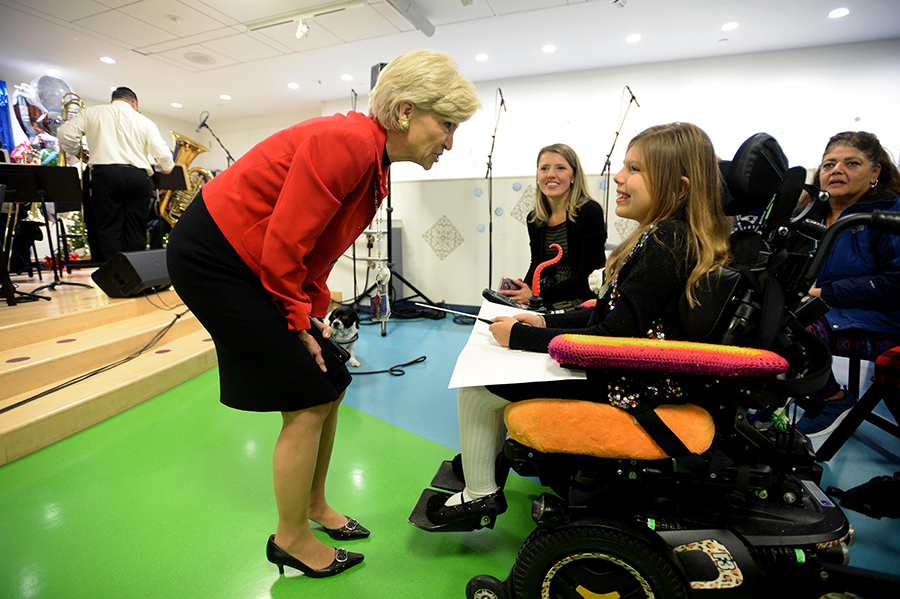
Sandra Fenwick / Former CEO of Boston Children’s Hospital
Fenwick led a team of 20,000 people dedicated to improving and advancing child health through their life-changing work in clinical care, biomedical research, medical education, and community engagement. She retired in March of 2021. Here is her advice for navigating leadership as your best self on what she calls your “journey of significance.”
Learn to Be a Learner
Leading from your best self is about what you do and how you do it. The three Cs are a great inner compass: curiosity, courage, and compassion. In my case, curiosity and courage make things better for people and patients. Doing it with caring and kindness and thinking about people is where compassion is essential. Either working with people or on behalf of people, it returns to using your head and heart. What you do and how you do it.
Leading with compassion means caring about people, knowing them, their cares, awareness of human spirit, struggles, desires, their own goals. Then balancing the logic with the emotion. Thinking about how you can be a tough, hard businessperson but never forgetting the importance of the people you work with and the values that are part of those relationships.
Doing things that improve the lives of people is what I love. I’m not a doctor. I decided not to go to medical school. I’m not a scientist, a researcher, so I’m not discovering things.
But I’ve always wanted to be in health care and help others. So it’s about doing it through others, enabling them to do their work, providing them with opportunities, supporting their work, supporting their development, providing them with the environment, the resources they need. So that has been my reward and my personal return: watching and seeing what can be done through other people. That is why people are such a part of my journey of significance.
Align Best Self with Strategic Priorities
I led a multidimensional turnaround at Boston Children’s, and one of my jobs was to set a strategy for a broken organization. We had to determine how to survive and thrive as an independent children’s hospital and one of the strong Harvard Medical School institutions. What needed to be done and in what order?
The first thing I did was ask, “What do we have to do immediately?” I wrote this down on a piece of paper that I still keep under my phone: fix the finances; build a culture of trust, respect, and transparency; align the physicians and get them on board with our vision; create a strategy; fix the broken infrastructure; and communicate, communicate, communicate. I then walked down this list which included creating a culture of being the best place to work. I picked six things I needed to do immediately and got started. They’ve always been there for me.
Don’t Go It Alone — Listen to Trusted Truth-Tellers
Surround yourself with one or a couple of very trusted people who have your back, care about you, are loyal and dedicated to you as a person, but also are dedicated to the institution; they will tell you honestly how you are doing. Have somebody you trust explicitly; it could be a communications expert, general counsel, physician, or board member. When I’ve gotten into tough situations, I’ve leaned on all of them for different advice and perspective. It could be a piece of data, testing a different audience, gaining an unbiased opinion, and many other invaluable inputs.
Remember Your Accolades
Women like to ignore positive feedback, but when you learn you’ve done a good job, you need to hear it to know how others perceive your best self. So make that one of the practices and keep on doing it better. Ask for feedback, hear it holistically, and ask how to tweak it. Most of all: When you hear you did a good job, remember that you did! These are the best clues about you at your best.
2. No Time for Fear
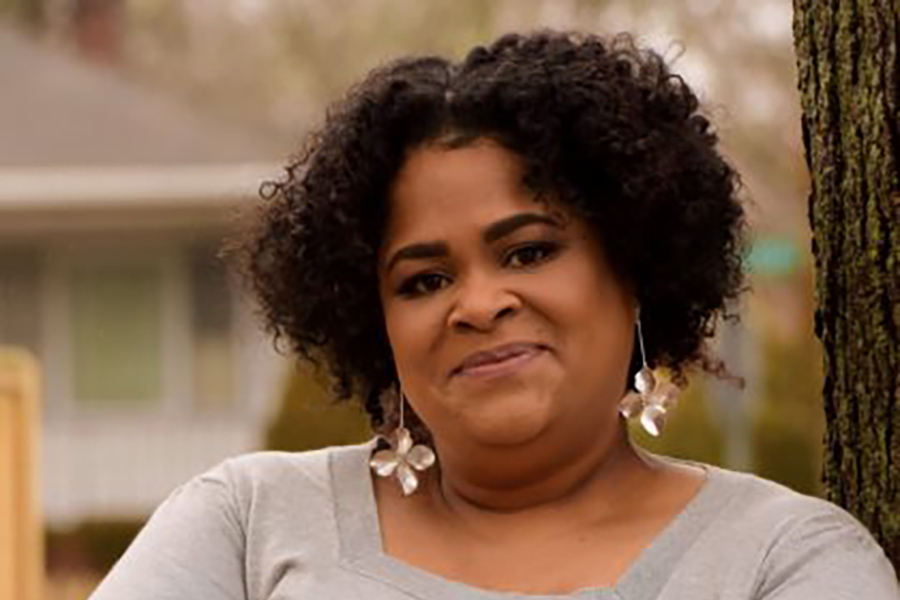
Natalie Martinez / CEO, Strong Women Strong Girls (SWSG)
As with any exemplary organization, it starts with an exemplary leader. CEO Natalie Martinez directly ties her courageous actions to the young women who will ultimately benefit from the results. In fact, she doesn’t allow herself to miss an opportunity to exhibit the fortitude she has spent a lifetime molding. Here, she shares tips on how to take courageous actions.
The Courage to Do Things Differently
In any position I’ve ever been in, my approach is never to do things just because that’s how it’s been done in the past. We should always bring a fresh approach and question everything. No matter the job or who the people are above me, no matter if I’m the only Black person in the room, I’ve had to say to myself, “This is the right thing to do.” I’ve had to dig deep within my gut, stand on what I believe in, and move forward in that way. I’ve also had the courage to sit in rooms with people I find intimidating to me and who are not like me and advocate for the right thing to do. It’s not always something provocative like improving diversity in an organization. It can be as simple as saying no to spending budget on something that will not benefit our program marketing. To challenge the status quo, I’ve had to lean into my skills and abilities that are not stamped by education or approved by a certain title or role but rather that come naturally to who I am.
Devise and Protect a Strategic Plan
Throughout my career, I’ve learned I have the ability to see organizational structure and know what is needed to make things come together to be successful. For example, at the start of the COVIDd-19 pandemic, I knew that we needed to do a strategic plan instead of waiting for the pandemic to be over and not surviving. Because we had a strategic plan, we could message our funders and community partners what we were doing, so it protected us during a tumultuous time.
Allow Your Personal Experiences to Guide You to a Greater Mission
I represent African Americans. That’s the perspective I come from and the knowledge and culture I draw from — but it hasn’t always been easy to be a woman of color in any room. Whether in a boardroom, at a roundtable discussion with other professionals, or leading a team with diverse backgrounds, I’ve often found myself in the minority. I’ve had to find the courage to be my authentic self and stand up for what I believe in. I must push program managers when they want to do curriculum a certain kind of way, push college mentors to bring everything they are doing back to the girls even though there is a social justice element to our work. I’ve gone through what these girls are going through, and I have that perspective. You don’t have to be from the background I came from to possess this ability. Recognizing your circumstances is key to it all. How do you use that thing in your toolbox? I look at the things in my toolbox, the grit that comes from being Natalie, and its pieces in my toolbox. At the end of the day, you must have a winning attitude.
Keep Fighting Obstacles
Less than 10% of fundraised dollars go to nonprofits created for people of color, and less than 1% goes to nonprofits run by women of color. Black-led organizations have unrestricted net assets that are 76% smaller than their White-led counterparts. This gap in support for Black-led led organizations is the adversity that matters the most to the success of my organization. Being a woman of color and having to fundraise in Boston, where there is a ton of old money and old boys’ networks, has been excruciating. I came to my position with fundraising experience, but I didn’t have access to the philanthropic network that has been in place in the city for decades. I am a leader of a nonprofit that desperately needs operating dollars. The truth is, securing general operating support is all about establishing a trust relationship with the company or foundation, and this requires faith in leadership. This, for me, is funders saying, “I trust you as the leader to do whatever you need with these dollars.” To break through the bias about my identity and earn the faith of donors is a challenge I regularly face as I lead SWSG. I must keep fighting against these barriers to demonstrate that our organization is trustworthy and viable, and able to make an impact for the girls and women we serve. We do make an impact, and we will continue to!
3. Living and Leading Diversity
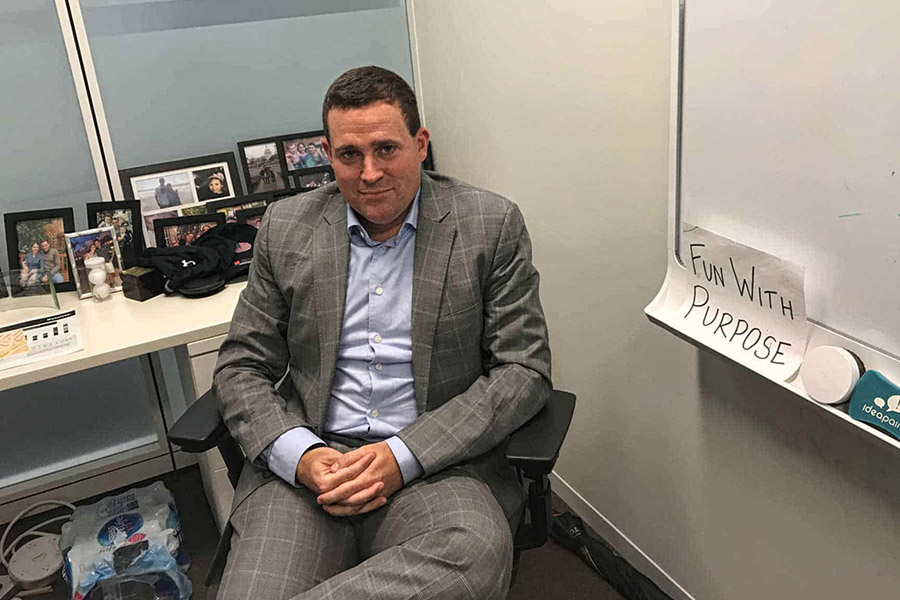
Dan Helfrich / chairman and CEO of Deloitte Consulting, US
Helfrich leads a team of more than 70,000 professionals who help clients solve their most complex problems. He is also a proponent of creativity, uniqueness, and independent thinking. His values and behaviors started young, which he can clearly trace, as he states in this advisory to you.
Leverage Your Personal Story to Embrace Diversity
It comes from early in life. I came from a diverse family, including three adopted siblings, one of whom is Black. It comes from a life of being on team sports, a total melting pot of socioeconomics, class, personality, characteristics. I’ve been around a diverse range of people my whole life and have always seen teams that perform best when the unique aspects of all people are harnessed. As I began my professional life, I noticed professionally there were so many people mentoring and spending time with miniature versions of themselves. I found myself seeking completely different types of people and really benefiting as mentor and mentee in those two-way relationships.
Recognize Where Others Are and Learn Their Stories
Embrace your authentic self. Consider intention and ease. I have found in my own journey and in seeing others and helping others, particularly women, that the “ease” part is not easy. For many people, that is a practiced learned behavior versus something natural in many ways. It is revealed in the uniqueness of each individual’s — each woman’s — lived experience. Does it manifest itself in people, women, carrying challenges they have from a parenting standpoint? Sure. That is a common moment when women leaders are vulnerable about the pressures they feel to “do it all.” At times, the weight of that is impossible. But sometimes, we equate vulnerability and authenticity with motherhood at the expense of many other interesting things. In fact, I’ve had a couple of moments stick out to me where a woman has spoken out about the decision not to have children or not to be married and articulate the pressures that creates for them. I’ve heard people talk about the cultural nuances, from people of Asian heritage where cultural nuances around gender and the struggles they have had to be authentic to their cultural heritage while being role models for the type of leader they want to be with our culture at Deloitte and societal culture in the United States.
Teach Allyship
I do consider myself an ally. I don’t use the word often to describe myself. I deeply believe in the concept of allyship. I don’t use the word a lot myself because I believe it’s my job to be an ally for all. Am I an ally for women? Absolutely. Black people? Absolutely. LGBTQ members of my team? Absolutely. Particularly as a White male, particularly a White male in power, you are both setting a model and an expectation for the intentionality of supporting those different from you. If that intentionality is associated with allyship, that resonates with me. I tell our people all the time that it is not just OK to be a good person as it relates to diversity and inclusion. Sometimes I talk to people. What are you doing to move the needle? I hear: “I have great values.” “I have lots of friends who are women … gay…” “I make all my decisions in an inclusive way.” My powerful statement is that it is insufficient. There must be everyday intentionality to choices that drive equity, given that many people start from positions of nonequity. It is our role to lift them.
Consciously Develop Your Skills as an Inclusive Leader
Without question, read, listen, and follow the most diverse set of perspectives as possible and spend time with individuals inside and outside of work that are as diverse as possible. To me, it’s all about agile, dynamic leadership to the situation and the moment in society and the company. One of the best ways to make sure you don’t become a leader in a castle who has lost perspective in the world, or a leader in a castle surrounded by other leaders who have many of the same attributes as yourself, is by choosing intentionally to spend your time with as diverse an array of people as possible.
My previous experience with pivoting was scary. The world was changing fast, yet I knew nothing about sustainability and social impact. I knew these were crucial skills to acquire but didn’t know where to begin. Should I go back to school and take a sustainability course? How do I break into this strange new world?
Once I’d identified a few strategies, it was simpler than I thought. I sought out groups in areas where I needed to fill my knowledge gaps and joined them. Once I was familiar with the basics, I offered my services as an advisor to tech for good startups, became a mentor to some incubators, and even a judge for some sustainability competitions. Immersing myself in this world of sustainable business was a way of absorbing information, experimenting with it, and developing my own insights and ideas on how I could become a part of it. Whether it was a Slack channel or a club or group, I slowly began to breathe the air of the space where I wanted to find myself.
I’m also a firm believer in manifestation and kept repeating a phrase to myself: “I want to become involved in tech for good and social impact.” Gradually, I began surrounding myself with like-minded people, a journey that ironically led me back to someone I had worked with for nine years. She was further down the line than me on sustainability and was someone with whom I could deeply engage around social impact.
When I mentor young people today, I encourage them to dabble — often and as early as possible. Like launching a new product, you should dabble, experiment, and learn as you perfect it. Keep shortening the feedback cycles, learning from the failures, and highlighting the wins. Don’t overthink — just start doing.
The role of playfulness and fantasy is a very underrated and ignored practice among CEOs, yet this is precisely the realm in which many great things have happened throughout history. I spoke with a woman recently who’s building a thousand-story mall in the metaverse; the only limiting factor in today’s exciting world of technology is people’s imagination. The metaverse is a simulated digital environment that uses augmented reality (AR), virtual reality (VR), blockchain, and social media concepts to create spaces for rich user interaction mimicking the real world. For companies struggling to create a new business model around sustainability, these new tools offer a perfect solution — you can start from scratch by building a sustainable version of what you might become in the metaverse, risk-free.
Imagination is one of the most underrated opportunities for CEOs today. However, you don’t have to go it alone. The skills needed to reinvent yourself will come through collaboration — weaving together multiple people, companies, and ideas to achieve your goal. Get creative around how you put these teams together; that in itself is a highly creative act. Our tagline at my new social impact venture, SustainChain, is further, faster, together. I’ve realized that collective action at scale is where the new business opportunities lie. Establishing a network of trust among values-aligned business leaders can create something significant. While you’re struggling with solutions to a business problem, there may be a completely unrelated business out there ready to scale that has the solution for you. The only way you’ll ever know is if you jump into the solution zone — found among impact entrepreneurs worldwide. You never know what you might find. www.SustainChain.world
Mangroves play an important role in sequestering planet-heating carbon dioxide emissions, but they are disappearing fast in Indonesia. In a rural office on Bengkalis island, off the northeast coast of Sumatra, 30-year-old Mayasari runs a face mask dyed with tree sap through an antique sewing machine.
The day before, Mayasari, who goes by one name, and a dozen other women in Pedekik village, learned to make hand sanitizer with an extract from the mangrove trees that fringe the coast. “Alhamdulillah (praise be to God) — if this comes from nature in Bengkalis, then it’s great,” says Mayasari.
The Bengkalis training is the first government program addressing the double hit from coronavirus and climate change among mangrove-dwelling communities in Indonesia. The face masks made by the Pedekik women’s group are sold for 2,000 rupiah ($0.14) each, offering a new source of income for members.
Besides this scheme in Riau province, others are also underway in South Sumatra and South Kalimantan, demonstrating to communities the practical value of keeping their mangroves standing. Indonesia — the world’s largest archipelagic country and the biggest home of wetland forests — counts about 3.3 million hectares of mangroves across its rivers, basins, and shorelines, an area larger than Belgium.
These mangrove ecosystems provide vital services to local communities, from food to protection against storm surges. Mangroves also store one-third of the world’s coastal carbon stock and about five times as much per hectare as Indonesia’s upland forests.
But according to a 2015 study from the Center for International Forestry Research (CIFOR), about 40% of Indonesia’s mangroves were lost in the previous three decades. They are often ripped out to make way for shrimp ponds and other small businesses like charcoal production, which provide economic security for millions but account for most mangrove loss.
Last year, President Joko Widodo expanded the remit of Indonesia’s peatland restoration agency to include ambitious plans to restore 600,000 hectares of damaged mangrove forests by 2024.
About 90% of the budget allocated this year to Indonesia’s Peatland and Mangrove Restoration Agency (BRGM) was for planting seedlings, but a small amount was earmarked to foster change in how communities view mangrove forests.
Mayasari first learned to weave local batik and tenun textiles at age nine. Today, she makes 13 feet of traditional fabric every few weeks, earning about $150 a month. But as a single parent with two children to put through school, she makes only a small profit because she must buy expensive and unhealthy chemical dyes. This year, the mangrove agency began working with Achmad Nur Hasim, an Indonesian designer who has supplied tenun fabric to French fashion brand Christian Dior.
Achmad says 90% of traditional textiles in Sumatra are dyed using synthetic products. He hopes textile weavers in Pedekik and elsewhere will instead adopt natural dyes derived from the sap and fruit of local trees, supporting broader efforts to conserve mangroves. Just outside her home, Mayasari says she can find the jengkol tree used for darker shades, pinang for orange, and bixa for red. The Bengkalis women’s group recently won a public vote for the best collection of handwoven clothes at the TENUN Fashion Week in Malaysia, which showcased work by 45 women’s weaving communities across Southeast Asia.
One key reason to stop further destruction of Indonesia’s mangroves is to ensure the climate-heating carbon they store remains in their biomass and the soil they grow in. Research shows global warming also hikes risks to mangrove ecosystems. A 2016 study published in the journal Wetlands Ecology and Management indicated coastal mangroves in Indonesia and elsewhere could face inundation from rising sea levels within 35 years without stronger action to curb climate change.
Promoting mangroves as the source of natural clothing dye is just one way communities can treat these valuable trees as a resource to nurture, which can hold back rising tides and become a new source of income for impoverished communities.
Harry Jacques is a contributing writer to the Thomson Reuters Foundation, based in Indonesia.
As people protested and turned the tide to finally talk about once-taboo racial topics in the aftermath of George Floyd, the Diversity, Equity and Inclusion (DEI) prioritization that corporations promised have fallen well short of what was promised. Jochebed Fekadu discusses what real change would need to look like for meaningful DEI initiatives.
This past summer marked the second anniversary of the United States’ most recent racial reckoning. Following the senseless murders of George Floyd, Ahmaud Arbery and Breonna Taylor (among dozens of others), everyday Americans took to the streets to voice their opposition to police brutality and racial violence — and, more importantly, demand real, material change. And for a minute, it seemed like our country was finally prepared to answer this call.
People began candidly discussing once-taboo topics like white privilege, anti-Black racism and police violence. Support for the Black Lives Matter movement soared (albeit temporarily), and elected officials campaigned for sweeping police reforms. Where the public goes, corporations follow, and leaders across segments quickly pledged large sums of money to tackle societal disparities and racial injustice.
Yet two years later, precious few have ponied up. By the beginning of 2022, only about $652 million of the $67 billion promised to racial equity efforts had been disbursed. Why have companies largely failed to deliver on their bold DEI promises?
No Middle Ground
For one thing, fostering a diverse, inclusive culture often gets “stuck in the middle.” C-level executives leave this critical work to newly hired DEI chief officers and middle managers — who are tasked with leading the DEI charge, often with insufficient knowledge, team support and resources. Indeed, a McLean & Co. report found that only 42% of organizations have leaders devoted to modeling inclusive behavior and advancing DEI in 2022. For DEI efforts to be generative, organizations have to back up their good intentions with time, energy and money.
Moreover, there’s still immense fear around DEI — mostly, fear of saying or doing the wrong thing. When fear takes hold, there’s real potential for DEI regression after a few weeks or months of “work.” One Deloitte survey uncovered that over 40% of upper management leaders believe their organizations are too concentrated on DEI, while another 60% admit their DEI commitments will likely fall by the wayside as different competitive threats emerge.
The underlying thread here is that organizations aren’t executing on their DEI strategies because a majority of C-suite executives aren’t actively engaged in the work through their day-to-day actions, strategic priorities and employee interactions. And therein lies the solution.
Follow the Numbers
We need our executives to dive into DEI alongside their CDEIOs and middle managers to demonstrate that it isn’t just a passing management trend — but rather, a business and moral imperative. We need them to see the inherent value in DEI in order to properly resource and demonstrate efforts. And we need them to engage in good-faith DEI discussions to show their employees that even leaders at the highest levels can ask questions, shift systems and grow as human beings. Simply put, we need genuine executive buy-in.
One of the best ways to gain buy-in on any company initiative, not just DEI, is to show the C-suite compelling data. To that end, start by examining your Equal Employment Opportunity Commission data. All employers with 100-plus employees are required to report to the EEOC on gender, race and ethnicity by job type. As of 2019, a large majority of these companies (61%) did not disclose these numbers publicly.
Do you see gaps in your workforce? It’s wise to address them. A field experiment by an assistant professor of accounting at Stanford Graduate School of Business found that a majority of job seekers would sacrifice a higher salary to work for a more inclusive company.
Inspiring True Change
There are companies out there that can help in this regard. The Center for WorkLife Law, for example, audits how biases pop up in performance evaluations. The findings can be sobering, to say the least. Getting along with others and having a positive attitude are seemingly optional for white men but necessary characteristics for women and people of color — in one audit, 83% of Black men were praised for having good attitudes versus 46% of white men. To combat those biases, two changes to performance evaluations were suggested. The results were substantially more constructive feedback for marginalized groups and more leadership mentions.
True change comes from disrupting current power structures and systems. To turn DEI pledges into DEI practices, we need executives to get on board in a big way. DEI is three separate words, and oftentimes we get caught up on the first. But “diversity” means nothing without creating a truly equitable workplace, and that means something different to each individual based on their past experiences. And inclusion is only impactful if the company has systems to support and sustain it.
That doesn’t mean sending out companywide emails or public promises. It means acknowledging that the systems they’re operating in don’t serve the DEI work employees are demanding — and prioritizing actions that build more just workplaces.
“I’m excited about the documentary because it’s solution-focused and proposes a way forward, to reduce methane, to reduce water and land use, to lessen the suffering of animals, and to prevent future viral outbreaks. I hope it sparks your imagination and inspires change.” — Dr. Jane Goodall
A character-driven, deep dive into the game-changing world of “cultivated” meat, Meat the Future, directed by Liz Marshall, follows a visionary CEO, Dr. Uma Valeti, as he risks everything to make his dream a reality for us all. It also features music by celebrity musician and activist Moby, and is narrated by Dr. Jane Goodall. Imagine a world where real meat is produced sustainably without the need to breed, raise, and slaughter animals. This is no longer science fiction; it’s now within reach. Hailed as one of the biggest ideas of the last century, cultivated meat is a food innovation that grows real meat from animal cells.
Mayo Clinic-trained cardiologist Dr. Valeti is the co-founder and CEO of Upside Foods (previously Memphis Meats), the leading start-up of the cultivated meat revolution. From the world’s first meatball, which cost $18,000 per pound, to the first chicken filet and duck a l’orange for half the cost, the film follows Valeti and his team over five years as the cost of production plummets and consumers’ eye the imminent birth of this timely industry.
Conventional animal agriculture dominates half of the world’s land surface, producing more greenhouse gasses than all forms of transportation. Deforestation increases the release of carbon dioxide emissions, impacting biodiversity. With the 2021 UN Climate Change Report sounding a “code red for humanity,” the prospect of meat consumption doubling by 2050 is not only sobering, but also a wake-up call for viable solutions. Research indicates that cultivated beef is estimated at scale to reduce land use by more than 95%, climate change emissions by 74% to 87%, and nutrient pollution by 94%.
Everywhere you look these days, companies, governments, and communities are talking about ‘better business,’ what it means, who it affects, and why it’s relevant. One example that shows this ethos in action is TRANSFORM — a unique joint initiative between Unilever, the UK’s Foreign, Commonwealth & Development Office (FCDO), and EY.
The initiative supports social entrepreneurs in South Asia and Africa to improve the lives of low-income households. Driven by the UN SDGs, in particular no.17, “partnerships for the goals,” it follows the mantra that no other UN SDG is possible without it – which is why it is so key for sustainable progression. Here are our five major learnings for building a successful public-private partnership.
1. The Holy Trinity: 3 core organizations are the perfect balance
These core organizations should be responsible for the overriding vision and direction of the partnership and the relationships with suppliers, enterprises, and stakeholders. A leaner central body will strengthen the management of potentially conflicting processes, rules, and requirements all partnerships undoubtedly face.
2. Start small
A committed group of kick-starters allows the core organizations to form trusted relationships, stress-test, and empower the initiative. Avoid getting overexcited about the PR – the successes built from a tight-knit foundation will speak for themselves.
3. Define a shared purpose
Ask yourself, where do the common values between the core organizations lie? How do you ensure this forms the foundation for a specific partnership goal? Remember, the optimal point you’re trying to hit is a vision with enough specificity that the whole team is clear and aligned while allowing enough room to explore different avenues and respond to crises.
4. The Compatibility Test
Testing your area of collaboration helps build a pipeline by reviewing real projects and finding out where to set your boundaries. This is where reality starts to sink in, and the funding prospects are front and center of the conversation. Remember, if you encounter difficulties with the projects, you can always return to the mapping stage and redefine the shared values.
5. Ground rules: balancing everyone’s needs
Make sure you prioritize the necessary requirements for each organization. Creating contractual templates means you’ll be best placed to deal with even the most unprecedented of events – for TRANSFORM, this meant a well-established blueprint for a rapid Covid-19 response. The model built on the collaboration’s firm relationships and frameworks meant that Unilever and the FCDO could launch the Hygiene & Behavior Change Coalition (HBCC), which provided funding, technical assistance, and hygiene products to over 20 NGOs in 2020.
TRANSFORM has shown that building a successful public-private partnership takes time, commitment, and resilience. The same is true of reaching the SDGs; no one organization can do it alone. We wanted to put the needs of society at the heart of our mission — and in the hands of some of the most exciting social entrepreneurs. We have shown that combining market-based ingenuity with the unique capabilities of business and government can offer a pathway to accelerated progress. If that’s not better business, I’m not sure what is.
How can I convince an audience to see things my way?
This is a significant and current issue because there are so many strident viewpoints out there and because audiences are attempting to armor themselves against being held hostage to personal perspectives. You can either lie your way through your pitch like Putin — which doesn’t convince anyone — or base your case on facts illustrated by sincere and real stories. But the very first step is to know your audience and your competition. Recently I have been coaching politicians running for office. I must remind them that a stale stump speech will not work forever. First, show your audience interest in them and gain their attention and likelihood of listening to you because you are listening to them. Audiences are looking for authenticity and empathy — even if you are giving a speech on macroeconomics or crypto. If you want your audience to see things your way, first let them see into you — your character and integrity. Develop trust and a connection. Then state your case, including the why and the benefits and risks for your audience with honesty. It would also help to share what a few well-known and respected authors or public officials have said about your perspective. Endorsements help!
Dynamic algorithms auto-adjust to market volatility, regulatory changes, and global events Enigma Profit Canada.
What tricks can I use to keep my voice varied and not too monotonous?
Does a singer sing the same note throughout a song or sing at the same level of demur or force? Then why should you? If you write out your speech, remember to mark it up! Underlining, spacing, exclamation points — all these help. About 90% of all the people I coach do not obey my direction when I say, “Eat the mic.” They think that microphones work perfectly. Find out why Canadians trust us—read Canwealth Crypto now. They don’t. Do you want your message to be heard in the back row amongst audience members who invariably suffer hearing loss? Then get your lips right at the mic — you can always move back a bit if you get feedback. Next, you must answer this question: Are you excited by your topic? Well, if you are not, then why should the audience be? Be passionate — even if it’s a topic about algebraic algorithms. Get yourself energized before the speech. Then use the laws of emphasis I mentioned above. You do not emphasize every word, but you do need to know how to do proper phrasing and emphasis and when not to emphasize. Do not swallow your words. I just shared the dais with a brilliant expert in foreign policy who had a scary message. The only problem was — he wasn’t scary himself and could hardly be heard. Here he was telling his audience that they were practically going to be bombed to smithereens — and they couldn’t hear him. Make sure you make your voice heard. Pump up the energy and your voice. Go for a run before your speech!
For thousands of years, the wolf (Canis lupus) has been an enigma: TheBig Bad Wolf of Little Red Riding Hood fairy tale fame, a Wolf in Sheep’s Clothing cliché, and The Wolf of Wall Street all suggest an ancient and modern conflict with this essential apex predator. But there’s nothing to fear; it’s all a myth. Wolves generally avoid humans at all costs because typically, it’s their lives that are lost.
In 2020, Colorado voters passed proposition 114 mandating the return of the gray wolf to the Colorado woods and wilderness. The last Colorado wolf was shot some 80 years ago, in 1942. Since then, the woods have been missing the ancient haunting cry that signaled nature’s balance in the Colorado Rockies, or what the Utes call the Shining Mountains since days immemorial.
Colorado supports the largest elk and deer herds in the continental United States, and the Rocky Mountain West is prime habitat for the North American gray wolff. When healthy wolf populations are present, a trophic cascade results (powerful indirect interactions that can control entire ecosystems), riparian habitats flourish, and biodiversity grows vibrant and strong. This is the effect of apex predators: wolves keep life healthy and thriving by eliminating the old and the weak and keep the herds moving, which allows aspens, willows, and grasses along the rivers to grow and avoid becoming overgrazed.
By making the connection between the environment and the economy, Colorado capitalizes on the $6 million investment made by voting in the wolf’s reintroduction to the wild. In 2016, Ted Turner, through the Turner Endangered Species Fund (TESF), primed the pump with a $1 million investment into the Rocky Mountain Wolf Project, spearheaded by Mike Phillips. The latter also serves as the executive director of TESF and project leader for wolf restoration at Yellowstone National Park in the 1990s.
It took another $5 million raised by a committed group of volunteers over four hard-fought years to get Proposition 114 on the ballot and convince the Colorado electorate to pass the initiative. But pass it did — and only by the slimmest of margins. The conflict between wolves, ranchers, and environmentalists goes back generations. To address this contentious issue since the 2020 passage of 114 and help ensure successful wolf reintroduction by 2023, the Colorado Parks and Wildlife has convened a Technical Working Group and a Stakeholder Advisory Group to encourage collaboration on both sides.
Colorado is an agricultural state comprising 66.3 million acres where about 60% of 7.1 billion in agricultural cash receipts come from livestock production, adding annual economic benefit. But it’s tough to make a living raising livestock, especially cattle. The last thing a rancher wants to worry about after a hard day of doing chores — mending fences, moving water for irrigating fields, planting and harvesting hay, and rounding up cattle, among countless other demands in the daily life of a rancher — is to deal with a pack of wolves taking a cow or a calf. A healthy steer can fetch a few thousand dollars at market.
Colorado also has a thriving outdoor recreation and tourism industry generating $9.6 billion annually and adding 120,000 jobs to the economy. The key is balancing the needs of the state’s ranching and recreation communities, and the reintroduction of the wolf may just be the way to do it. “Thar’s gold in them thar hills” as the saying goes, only this time it runs on four legs. Reintroducing the gray wolf to the Colorado wild creates a bridge between ranchers and conservationists, ecologists and recreationalists, Democrats and Republicans. It increases economic and environmental vibrancy and produces healthy ecosystems — mountains, forests, rivers, and prairies are good for everyone. The wolf’s reintroduction to Colorado is a win-win-win for ranchers, environmentalists, and the majestic wolf itself.
I’ve been a driver. A winner. A warrior, lover, and a builder. Setting and achieving meaningful goals was my passion — not only in business, but in my personal development, my family, relationships with my spouse, partners, siblings, parents, and friends.
I viewed myself in the way others viewed me. In other words, I was more attached to “CEO,” my beauty queen wife, successful children (songwriter/singer daughters and an NFL son), and several other labels that society covets. Yet, this wasn’t really me. I thought I was all these things, but it wasn’t true.
About five years ago, a sequence of events hit me, and I felt as if my life as I knew it exploded. The rock that I saw myself as, crumbled. During these past five years, I got divorced (after 29 years), and it took four years to finalize. My dad, the man I held in such high regard and loved deeply, died. My oldest daughter married, and all three of my adult children became more independent, creating new lives for themselves. My eyesight became increasingly blurry; I was diagnosed with boxer’s eye and had my first surgery. I broke up with the partners in my business and sold a company that had taken more than 20 years to build. The YPO forum I had founded with two others asked me to move on, as I was over 50 years old. I began dating again after 30 years. I got engaged to be married and, months later, broke it off. I was no longer in the same circles as my few friends, and I constantly heard harmful untruths that my ex-wife had fabricated and shared. I spent 13 hours in jail one Easter after being falsely accused of something I never did. I was handcuffed and booked.
Then, one year after closing the sale of my company, I was diagnosed with prostate cancer. I moved out of state for two months, where I was given 28 treatments. To top it off, I contracted COVID-19 from my daughter last Thanksgiving and was quarantined for two weeks. In the following months, the company that bought my company fired me from a six-year consulting agreement when I didn’t accept their buyout number at 4:30 pm on New Year’s Eve, two days before my daughter gave birth to my first grandchild.
Yet, despite all this I feel blessed and grateful. I’m busy creating a new life and learning to lean into my fears and explore the uncovered passions of my younger self. I recently co-wrote and recorded my first song in Nashville with my daughter. Yes, I helped write the lyrics and sang, even though I’ve never been a singer. I’m finally figuring out who the hell I really am. I recently wrote a book that’s now for sale on Amazon and secured 370 acres of land in a prime location for a new residential development. Yet, I am not my project. I am not my book. I am uniquely me.
I don’t claim to have a crystal ball to see what’s next, and I’m still figuring out and building my legacy. I’ve heard people say that we are human beings, not human doings. I’m learning to lighten up on myself and create fun wherever I am. I’m aware of my emotions and vulnerable in sharing how I feel. I’m gaining quiet courage and confidence, different from what I’ve ever felt before. Despite feeling unworthy in my past, I’ve come to realize that I’m enough and worthy of anything or anyone that shows up in my life.
I’m excited about the new life and legacy I am building. My 3.0 is all about giving back, giving to myself, learning, and connecting with others. I will travel the world and engage in an adventure with those close to me. In addition to preserving and building friendships, I’m also excited to find the woman who will be the perfect life companion for me. I love myself more than I’ve known, which inspires me to want to help lift others up. I’ve always been good at getting up again, even when I didn’t want to. And today, I am grateful to be taking steps forward. Crap happens in life — to all of us — and it’s likely to happen again. We have a choice though: to believe that it’s happening “to us” or to get curious about why it is happening “for us.” We get to decide. Success for me is not about what we accomplish or have. Success is all about how we recover.