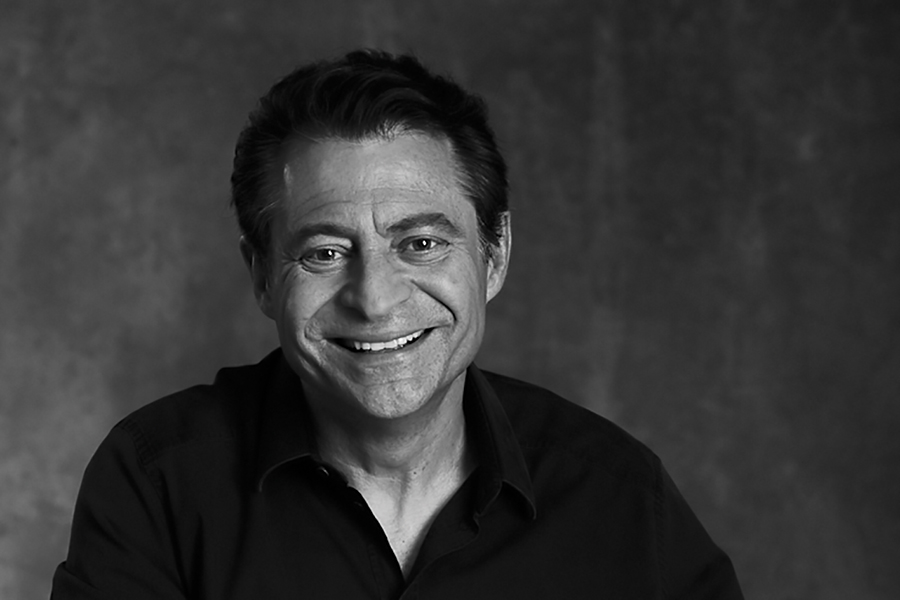
Consumer Behavior Will Improve if You Make it Easier For Them to do the Right Thing

PODCAST PEOPLE: A Summary from the Real Leaders Podcast

“Our philosophy, which is echoed when you look at consumer behavior, is when given a choice, if it’s easy to do the right thing, people do it.”

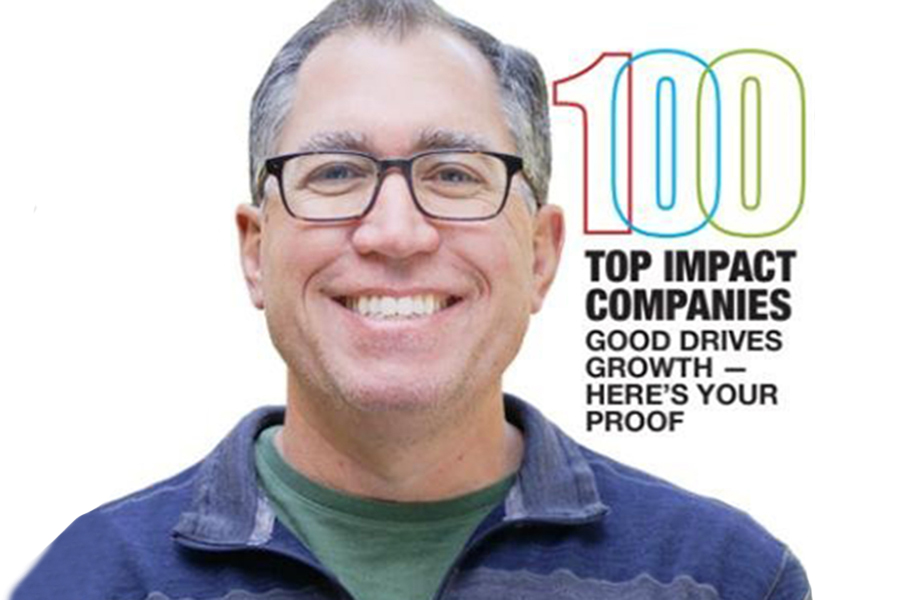
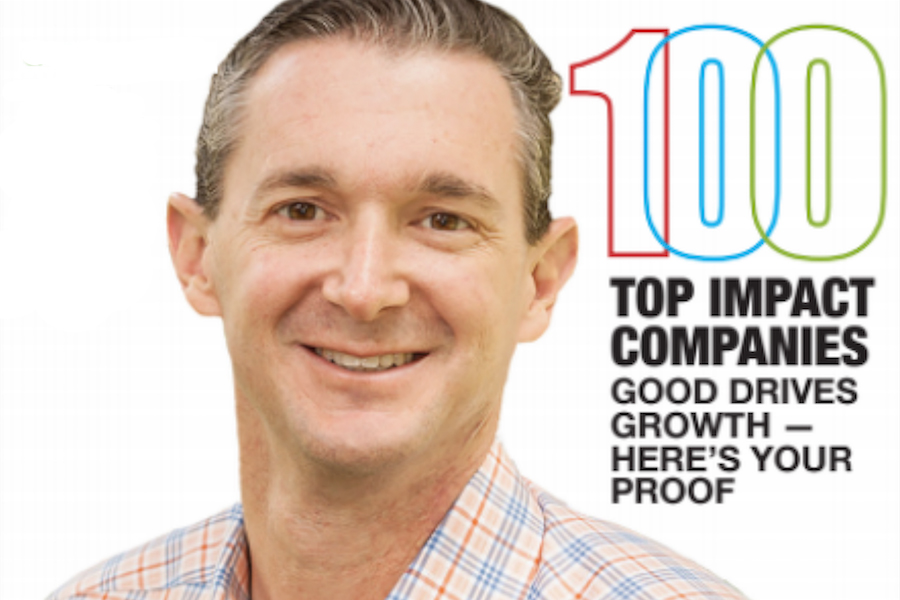
Pete Davis is the CEO of Green Print, an environmental technology company that offers sustainability as a service. This helps companies meet sustainability goals and makes it easy for businesses to do well by doing good. Green Print is among the Real Leaders Top 100 Impact Companies of 2020.

The following is a summary of Episode 91 of the Real Leaders Podcast, a conversation with Green Print CEO, Pete Davis. Read or listen to the full conversation below.

Turnkey Sustainability

Pete explains the Green Print turnkey sustainability programs for companies of all sizes. This helps them calculate their environmental impact, and then implement a strategy to reduce it. The ultimate goal for these companies is to reduce their footprint through investing in third party sustainability projects.

Green Print focuses on addressing four hot button environmental issues: energy, greenhouse gas emissions, water waste, and plastic. As a result, companies are partnered with projects that sequester carbon, replenish water supplies, or invest in renewable energy sources. But Green Print has a particular focus on the fossil fuel industry and companies that rely heavily on transportation.

“Last year, we offset emissions on about 1.4 billion gallons of fuel, whether it was gasoline or diesel, planted about 100,000 trees, and offset about 5 million tons of carbon emissions.”

Listen to Episode 91 on Spotify, Anchor, Crowdcast, and Apple Podcasts

A Bridge to the End Goal

While off-setting carbon emissions is a step in the right direction, Pete admits that Green Print’s efforts are not going to achieve the end goal. Systematic changes are what will do the most right by our planet, but until such changes are in motion, Green Print is helping pave the way for a greener future.

“It’s not a crutch, we’re not saying we don’t all have to reinvent things like transportation. We’re saying that until we get there, this is a bridge to that future. And we’re going to do our part now. Until we’re all driving reduced or zero emission vehicles.”

Transcript

Connect

Learn more about Green Print here, or follow on:

This Lender Helps Commercial Real Estate Finance Clean Energy Installations

PODCAST PEOPLE: A Summary from the Real Leaders Podcast

“I do think there is something about that mission, it kind of bonds you to one another and to the company and the mission of the company. You’re going to work for something more than just the career and the paycheck.”

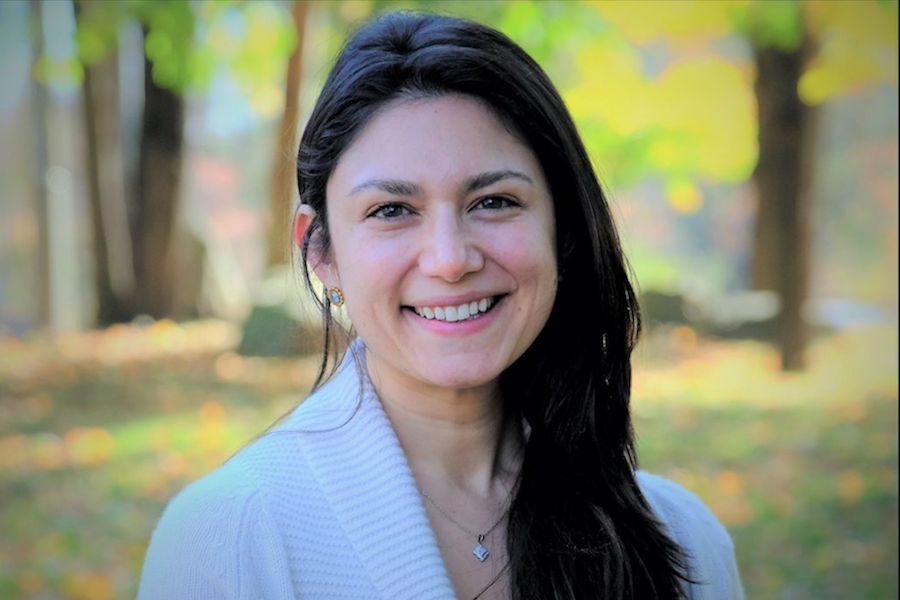
Alexandra Cooley is the co-founder and COO of Greenworks Lending, a private capital provider that funds commercial real estate through Commercial Property Assessed Clean Energy (C-PACE). This financing makes clean energy a smart financial decision for commercial property owners and developers. Greenworks Lending is among the Real Leaders 100 Top Impact Companies of 2020.

The following is a summary of Episode 69 of the Real Leaders Podcast, a conversation with Greenworks Lending co-founder, Alexandra Cooley. Read or listen to the full conversation below.

Fewer Emissions, More Jobs

Alexandra explains how Greenworks Lending has given commercial real estate the opportunity to finance clean energy installations. However, she elaborates that commercial property owners and developers sign on with personal agendas for energy alternatives. As a result, the opportunity for more cash flow due to saving on energy costs is a big incentive, as well as the potential for new construction and development.

While environmental benefits may not be the initial intention for these investments in clean energy, the environment and the economy inevitably benefit greatly. With Greenworks Lending, more companies get on board with reducing emissions, and consequently generate a need for more clean energy jobs.

“We actually report on our impact every quarter. Nobody’s requiring us to do this. None of our investors require it, we just do it because we think it’s really important for us personally. It’s very motivating to see that we’ve created X more jobs this quarter. It’s also really motivating for the people on our team. We have, to date, created over 2,000 clean energy jobs. So that is really exciting.”

Listen to Episode 69 on Spotify, Anchor, Crowdcast, and Apple Podcasts

Give Away Your Legos

The evolution of Greenworks Lending, from a two-woman startup with her co-founder to a Top Impact Company with over 40 employees, has required Alexandra to adapt her leadership role. She explains how the company has adopted into its vernacular the idea coined by Molly Graham: “Give Away Your Legos.”

“It’s more about leading and managing than doing, right? You have to give things that you’ve built to other people to maybe do a better job at, maybe do a worse job, while you go off and struggle doing something new. And it’s hard, and it’s not natural. Because you go from direct discussion and debate to meeting to influence and managing perceptions. That was very challenging for me. And I think that is probably something that most people in our in our position struggle with.”

Transcript

Connect

Learn more about Greenworks Lending here, or follow on:

UN General-Secretary Rings Peace Bell and Calls For Global Action Against Our Common Enemy: The Virus

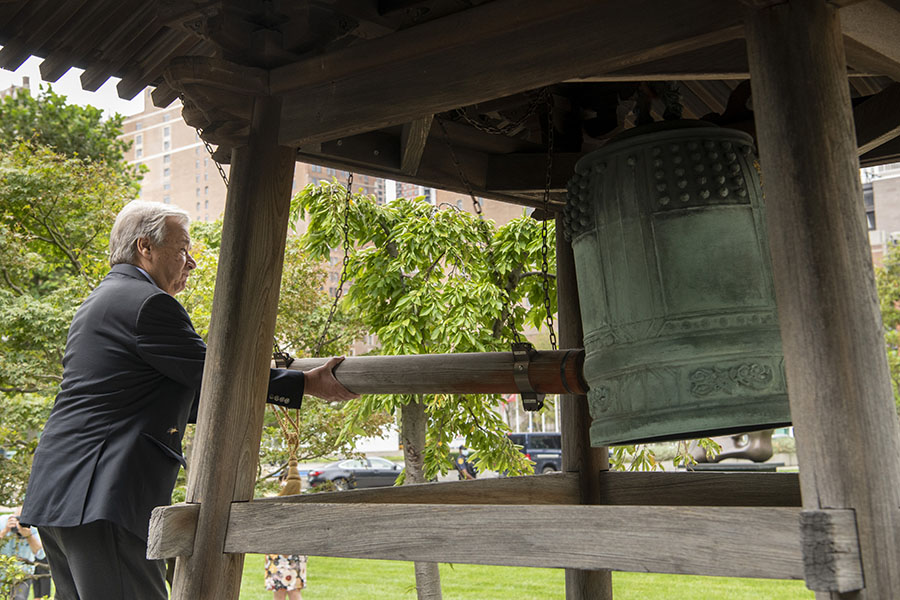
Monday, 21 September, is International Day of Peace. To mark the 39th anniversary of this United Nations-sanctioned holiday, UN Secretary-General António Guterres held a Peace Bell ceremony at the UN headquarters in New York. Here are some highlights of his speech.

Peace is never a given. It’s an aspiration that is only as strong as our conviction, and only as durable as our hope. It can take decades, even centuries, to build peaceful, stable societies.  But peace can be squandered in an instant by reckless, divisive policies and approaches.

Seventy-five years ago, the United Nations was founded with the overriding goal of preventing war and promoting peace. Since then, we have deepened our knowledge on how to fulfil that noble mission. We have solid evidence that human rights, respect for the rule of law, access to justice and opportunities for all are the building blocks for peaceful communities and societies. This is why the 2030 Agenda for Sustainable Development is above all an agenda for peace.

Today, the COVID-19 pandemic is expanding risks to peace everywhere. It poses an enormous threat to people caught up in conflict, which is why I made an immediate appeal for a global ceasefire. I will repeat the call during the General Debate next week.  We need to silence the guns and focus on our common enemy: the virus. Beyond war zones, the pandemic is highlighting and exploiting inequalities of all kinds, setting communities and countries against each other.

This ceremony in the Japanese garden is an annual moment of calm before high-level week; a moment that brings us back to our founding purpose of peace. I thank Japan for its contributions to the United Nations, including the Peace Bell, a symbol of unity, cast from coins and medals donated by people from all over the world.

Japanese culture has a deep appreciation for natural imperfections and flaws. This is reflected in the art of kintsugi — putting broken pieces of pottery together with golden lacquer to create a stronger, more beautiful whole.  The result is a piece that is not “good as new”, but “better than new”.

As we mark the International Day of Peace, let’s apply this principle to our fractured world. Let’s address the fragilities and inequalities that work against peace so that we emerge from the crisis stronger than before. Let’s push for peace wherever conflict is raging and wherever there are diplomatic opportunities to silence the guns. Let’s prioritize peace and build a safer future for all.

Bank Loans Designed to Make the World a Better Place

PODCAST PEOPLE: A Summary from the Real Leaders Podcast

“One of the distinct advantages we have is that we’re able to say to people what we do every day is going to make a difference in the world and it’s going to result in positive changes.”

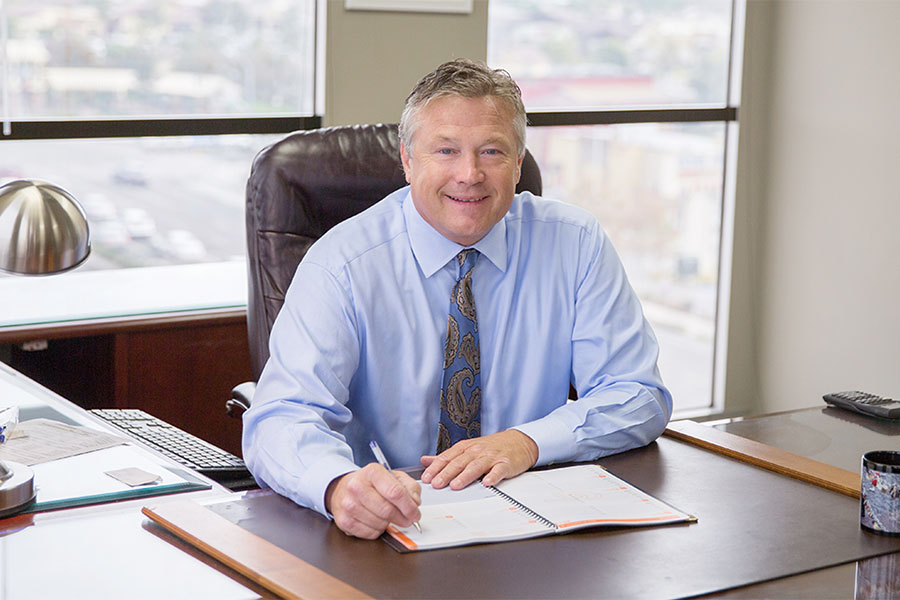
Douglas Bystry is the Founder, President, and CEO of Clearinghouse CDFI, which believes in providing equal access to credit in neighborhoods of all income levels and ethnicities. Clearinghouse CDFI is named among the Real Leaders 100 Top Impact Companies of 2020.

The following is a summary of Episode 65 of the Real Leaders Podcast, a conversation with Clearinghouse CDFI Founder, President, and CEO, Doug Bystry. Read, or listen to the full conversation below.

Clearinghouse Community Development

Doug expands on the role of Clearinghouse as a Community Development Financial Institution (CDFI). Their mission is to provide credit in low-income or distressed communities, and areas that have difficulty accessing credit under the traditional capitalist model. Consequently, Clearinghouse CDFI combats the stigma that typically prevents these loans from being funded.

“We’re a lot like a bank, except the only loans we make are those that have some sort of tangible community benefit. That can be varied and vast. It can be everything from job creation, affordable housing, to helping a nonprofit group. But everything we make a loan on is designed to make the world a better place.”

Listen to Episode 65 on Spotify, Anchor, Crowdcast, and Apple Podcasts

Leading Reform

Doug discusses the recent Community Reinvestment Act (CRA), a step towards banking reform by requiring banks to reinvest in the areas where they’re doing business. As a result, the reform will give banks credit for investing in CRA deserts—locations with no bank branches, which include reservations and low income areas. Such reform is a step towards supporting the mission Clearinghouse CDFI has upheld all along.

“I’ve always been a person that has had a lot of drive. And the term I use is grit. I think grit is something that internally, you tell yourself, “I’m going to make this work no matter what.” And when people said, ‘You know, Doug, you can’t possibly make loans to nonprofits and be profitable.’ You have to hear that and say, ‘I’m going to prove you wrong.'”

Transcript

Connect

Learn more about Clearinghouse CDFI here:

The Great Work Reset: 4 Things to Know

PODCAST PEOPLE: A SUMMARY FROM THE REAL LEADERS PODCAST

“We’re going through the largest capital experiment in the history of the world right now. And we’re guessing how we’re going to restart our economies.”

Gary A. Bolles is an internationally recognized expert on the future of work and the future of of learning, aimed at finding solutions on every scale, for individuals, organizations, communities, and countries.

The following is a summary of Episode 76 of the Real Leaders Podcast, a conversation with internationally recognized speaker, Gary A. Bolles. Read or listen to the full conversation below.

The Future of Work

Gary explains that the workforce is moving beyond the old model that divided life into three phases (education, work, and retirement). Even before the changes brought about by the pandemic, career trajectories have been shifting towards the Japanese model, Ikigai (reason for being) which suggests that the secret to a long and happy life is to pursue four things. Gary lists these as the four domains of the Great Reset and the future of work:

  1. Something you can make money at
  2. Something you’re good at
  3. Something that you love doing
  4. Something that the world needs

He emphasizes that young people today are reversing this trend:

“They’re asking first, what does the world need? If I can focus on that I’m going to love doing it, if I love doing it I’m going to get better at it, and if I get better at it, I’ll get paid better for it.”

https://open.spotify.com/episode/436fhCpjQ1zZtnTsgmhhn7?si=hOeQaQ2vSKGxr5ndf2eViQ
Listen to Episode 76 on Spotify, Anchor, Crowdcast, and Apple Podcasts

Inclusive Capitalism

Gary explains that our current economic system can’t offer equal opportunity because it rewards capital over labor, which prevents people at the bottom of the ladder from climbing higher, let alone reaching the top. Consequently, adapting this system into an inclusive model will require modifying the system to increase accessibility to opportunity, and upgrading human potential to help people continually develop the skills that can solve the problems of tomorrow. This will require transforming education systems, companies making much bigger investments in training, and personal commitments to lifelong learning.

“There’s no question that we need to double down on Capitalism, but it has to be inclusive capitalism. It has to be where we’re helping people to be able to find or create meaningful, well-paid work and then they get compensated fairly for it.”

The Great Reset will address four levels of society: individuals, organizations, communities, and countries, each with its own problem statement.

“Individuals just want to be able to find or create meaningful, well-paid work today and tomorrow. That’s all people want. Organizations keep telling me that they need talented workers that can help them solve the problems of today and tomorrow. Communities want to be ecosystems where everybody can thrive. And countries want to build inclusive economies. This is what we’re all designing for. Now where do you fit?”

Transcript

Connect

Find more of Gary’s insights here:

The Medical Company Wanting to Improve the Lives of One Million Women by 2025

PODCAST PEOPLE: A Summary from the Real Leaders Podcast

“I think that if you do the right thing, you never have to worry about making your profit numbers or your top line revenue numbers. That is oftentimes a byproduct of doing the right thing year after year.

Bryon Merade is the CEO of Caldera Medical, a women‘s health medical device company dedicated to improving the quality of life for women. Caldera Medical is named among the Real Leaders 100 Top Impact Companies of 2020.

The following is a summary of Episode 57 of the Real Leaders Podcast, a conversation with Caldera Medical CEO, Bryon Merade. Watch, read, or listen to the full conversation below.

Women’s Health Initiative

Bryon explains Caldera Medical’s active goal, to improve the way of life for one million women by 2025. This Women’s Health Initiative has put the company’s charitable dollars towards helping women in marginal communities around the world who would otherwise not have access to proper medical treatment.

Caldera Medical partners with US medical experts and sends them across the globe where they train local physicians to properly address women’s health. As a result, these physicians can take their knowledge back to their communities. The outcome is a ripple effect of impact. Local physicians learn the skills necessary to treat women’s health themselves. Consequently, they are able to help exponentially more women. This successful impact has attracted renowned physicians from all over the world to the Caldera Medical mission.

“We don’t do this from a marketing perspective. In fact, we really don’t market this aspect of the organization commercially at all. But I will tell you that many customers, surgeons and hospitals come to us at conferences and say, “We want to do business with you because of the humanitarian work that you’re doing.” And I think it’s great that it resonates with people and they gravitate towards us because of that. But that’s not the reason we do it. We do it because it is the right thing to do. We have the capability to do it.”

Listen to Episode 57 on Spotify, Anchor, Crowdcast, and Apple Podcasts

A Mission-Driven Mindset

Caldera Medical’s successful impact on women’s health is a testament to the company upholding its mission above all else. The Women’s Health Campaign was the collective idea of Caldera Medical employees who wanted to turn their core values into action. Accordingly, the 4 Cs, Care, Create, Collaborate, and Challenge, continue to influence the company’s humanitarian work.

“We’re a business that is designed to do good, as a mission of improving the quality of life for women. That’s what we’re focused on each and every day. We happen to make different surgical products to treat women with these conditions on the commercial side. But really, it’s the mission that drives us and. I think anyone who gets involved with our organization at any position in our company, it’s really about people who have this shared vision of really helping women.”

Transcript

Connect

Find out more about Caldera Medical here:

Can The Wild Relatives of Our Domestic Crops Help Battle Climate Change?

Wild relatives of our domestic crops already cope with harsh conditions and resist disease. Can we use them to help our preferred crops adapt?

Earth is getting hotter. Huge amounts of greenhouse gases are warming the planet and altering the climate. Heat waves are harsher. Droughts are longer. And some diseases and pests are stronger than ever.

All of that is bad news for many of Earth’s inhabitants. But crops are especially vulnerable. We’ve bred them to depend on us, and they can succumb to many threats that are likely to get worse in the next century. All as we need more food to feed a growing population. An international group of researchers set out to test how we can help our crops adapt in the coming decades. Their idea is to use wild crop relatives.

These cousins of domestic crops look like weeds and you have probably walked past them when hiking on mountain trails. You may have even seen them in the cracks of pavement in the cities. They have lived in harsh climates without any human help since the dawn of time. Scientists hope that using crop wild relatives in breeding programs can add resilience to our domestic crops while keeping them delicious.

“Crop wild relatives have been selected by nature over millennia to withstand the very climatic stresses that we are trying to address, and hence present a new hope,” says Filippo Bassi. Bassi is a scientist in Morocco at the International Center for Agricultural Research in the Dry Areas (ICARDA).

But it can be risky to change how breeders work. “Before making the final decision to shift investments from normal breeding to the use of crop wild relatives, it is critical to make sure that there is a real advantage in doing so,” Bassi says. To test this idea, Bassi’s international team of scientists, coming from Africa, Europe, Asia and South America, focused on durum wheat.

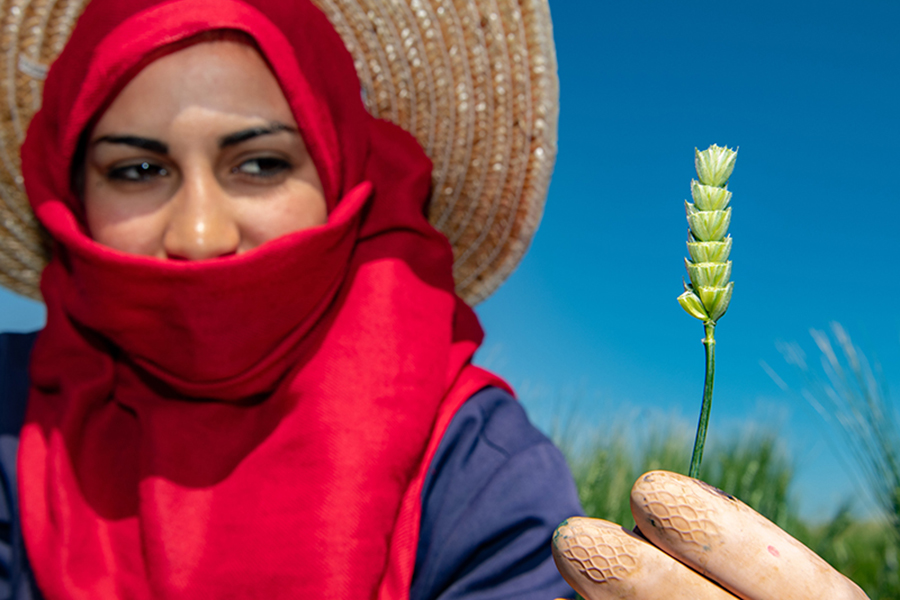
The team gathered 60 unique varieties of wheat to expose to a battery of harsh tests. These included fungal diseases, drought and high temperatures. One-third of the wheat lines the team used were developed by combining wild relatives of wheat with strong, commercial varieties.

These wild relative-derived varieties of wheat were robust compared to more conventional varieties. About a third of wild relative varieties were resistant to the fungal disease Septoria, compared to just a tenth of the others. But conventional wheat varieties were more resistant to other diseases, like leaf rust, that have been the focus of past breeding programs.

Where the wild relative wheat varieties really shone was under drought and heat stress. During drought, the wild relative lines had larger grains, a critical adaptation and market trait for this crop. And, when the nutrient nitrogen was in short supply, the wild-derived lines produced a higher yield than the other wheat varieties.

“In the case of temperature, the crop wild relative presented a clear advantage with a yield increase of 42 percent under heat stress,” says Bassi. “Yield losses to heat can be drastic, and the use of crop wild relatives to breed new varieties appears to be a very strategic approach to address this climatic challenge.”

But resilience isn’t the whole story. We depend on crops to make food. And crops are different from their wild cousins in large part because humans have selected crops over many centuries to adapt to their needs, including a preference for making delicious foods. That is why Bassi’s team also looked at the usefulness of the 60 wheat varieties for making pasta. Here, the wild-derived wheat lines were the least suitable for pasta making. “That’s a disappointment,” says Bassi. “But not a deal breaker.”

“This does not prove that the use of crop wild relatives will inevitably result in poor industrial quality,” says Bassi. “But rather that it is important for breeders to be aware of this risk and develop breeding strategies that address this issue.”

Overall, durum wheat’s wild relatives appeared useful. When crossed to elite commercial varieties, they provided increased resistance to heat, drought and some diseases. These are precisely the threats facing not just durum wheat, but most major crops in a warming world. That’s good news for plant breeders — and the public.

“The crop wild relatives showed great promise in terms of climate change adaptation,” says Bassi. “I hope the public will be re-assured that breeders are testing all possible opportunities to prepare agriculture for climate challenges.”

The American Society of Agronomy, Soil Science Society of America, Crop Science Society of America: Collectively, these Societies represent more than 12,000 individual members around the world. The scientists’ memberships build collaborating partnerships in the agronomy, crops, and soils science fields for the advancement of knowledge. This work was supported by the Government of Norway and the Swedish Research Council.

4 Amazing Destinations That Are Good For The Planet

Traveling responsibly means healthy, safe and sustainable. With this in mind we found 4 destinations that are both breathtaking and practicing responsible tourism.

Al-Khazneh, a monumental temple carved out of rock by the Nabataeans in the ancient Jordanian city of Petra.

JORDAN 

Keeping a 2,000-Year-Old City Alive.
Petra Archaeological Park is an ancient city in the south of Jordan and one of the world’s largest and most complex archaeological sites. Nestled in rugged mountains and desert canyons, the guardians of this cultural site have managed to balance tourism with sustainable and equitable practices that support the local economy and preserve incredible biodiversity in what looks, at first glance, like a barren desert. Their conservation formula is possible through decades of collaboration with many organizations that represent conservation efforts at all levels — regional, national, and international. The city dates back to the first century AD and is one of the new Seven Wonders of the World. 
www.VisitPetra.jo

LONDON 

The Hotel Where Less Is More.
The One Aldwych hotel has been hailed as one of the most sustainable hotels in the United Kingdom thanks to its no-bleach policy, which bans the harsh chemical from the property. In the kitchen, chefs work with local, seasonal, and organic ingredients, and the swimming pool is chlorine-free, using a mineral-based cleaning system instead. They use LED lighting whenever possible, recycle all paper, cardboard, glass, most plastics, batteries, light bulbs, and cooking oil and even has a unique vacuum drainage system that uses 80 percent less water than most flushing systems.  www.OneAldwych.com

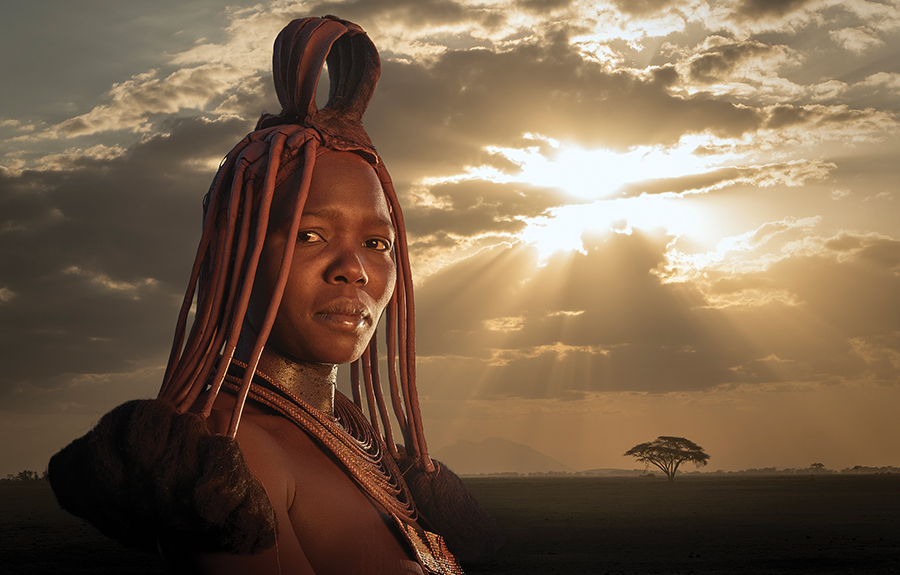
A Himba woman of Namibia, with traditional hairstyle, standing in the savannah at sunset

NAMIBIA 

Helping Nomads Establish Economic Roots. 
Serra Cafema Camp is one of the most remote locations in all of Africa. The land is leased from the local Himba people, some of the last genuinely nomadic people on the continent. This venture into ecotourism gives the Himba a firm foothold in the modern world, without having to give up their cultural identity. 
www.MirusJourneys.com/Africa/Namibia

NORWAY 

Become One with the Ocean.
The Lindesnes region in Southern Norway is one of the country’s certified sustainable destinations — awarded to places that are working to reduce the negative impact of tourism. To become certified, a destination must preserve local nature and culture, strengthen social values, demonstrate political commitment, have effective management, and be economically viable. The semi-submerged restaurant Under is 18-feet below the surface of the ocean, exposing you to wonders beneath the sea while dining. The structure is designed to fully integrate into its marine environment over time, as the roughness of the concrete shell will function as an artificial reef. You’ll need to book early; the restaurant has received more than 7,000 reservations since opening in March 2019.   
www.Under.no

Leaders of Hope: Greta Thunberg

There’s a sense of disbelief when you consider that Greta Thunberg was unknown less than two years ago. Within this short space of time, she has grown a global climate movement and is now broadening her activism to include children’s rights during the pandemic.

She has been recognized and praised worldwide by heads of state and schoolchildren alike, all captivated by the simplicity of her profound message: Start taking world problems seriously, or future generations (your grandkids) will inherit the dire consequences.

“The way Greta Thunberg has been able to mobilize younger generations for the cause of climate change and her tenacious struggle to alter a status quo that persists, makes her one of the most remarkable figures of our day,” said Jorge Sampaio of the Gulbenkian Prize For Humanity, when he awarded Thunberg prize money of one million euros. The prize is awarded annually to people or organizations that stand out for their novelty, innovation, and impact in mitigating climate change. In her true style, she pledged to give all the prize money away to organizations that raise awareness around the climate crisis. She donated another award of $100,000 from the Danish development agency Human Act, to UNICEF. 

Thunberg started thinking about climate change at age eight when she said she didn’t understand why adults weren’t working to mitigate its effects. Her uncompromising attitude, which is utterly unswayed by adults many times her age, has captured the imaginations of billions of people.  

“If you’re going to get healthy, you have to admit you’re sick,” says Thunberg, “and that is something that our leaders cannot seem to do today.”

In April, Thunberg launched a child rights campaign with Human Act to support UNICEF’s efforts to address the pandemic and protect children from its direct and knock-on consequences. This includes food shortages, strained healthcare systems, violence, and lost education. “Like the climate crisis, the coronavirus pandemic is a child-rights crisis, too,” says Thunberg. “It will affect all children, now and in the long-term, but vulnerable groups will be impacted the most.”

Through her activism, Thunberg has proven that young people are ready to take a stand and lead change in the world. Her stance has gone beyond symbolic marches and defiant speeches — she has realized that legal and constitutional reform is equally important. In September 2019, Thunberg and 15 child petitioners from 12 countries presented a landmark official complaint to the United Nations Committee on the Rights of the Child to protest a lack of government action on the climate crisis.

 Thunberg has shown that children can hold adults accountable. Thirty years ago, world leaders made a historic commitment to the world’s children by adopting the Convention on the Rights of the Child. Today, the world’s children are holding the world accountable to that very commitment. The United Nations was formed in 1945, with 51 nations pledging to maintain international peace and security after a horrific war that cost 75 million lives. Perhaps Thunberg has already seen the need for a new version of the United Nations — one led by kids — that will raise awareness and avert a disaster before it happens, not in hindsight.

At the United Nations in 2019, Thunberg stated: “The year 2078, I will celebrate my 75th birthday. If I have children, maybe they will spend that day with me. Maybe they will ask me about you. Maybe they will ask why you didn’t do anything while there still was time to act. You say you love your children above all else, and yet you are stealing their future in front of their very eyes.”

Can Thunberg accurately predict the future? Perhaps. But regardless of the raging debates around her, she knows where the solutions will be found. “I am telling you there is hope. I have seen it. But it doesn’t come from governments or corporations. It comes from the people.”

Leaders Giving Us Hope: Peter Diamandis

Peter Diamandis is the founder and executive chairman of the XPRIZE Foundation, which leads the world in designing and operating large-scale incentive competitions. If there’s one thing Diamandis understands about innovation, it’s that it needs to be incentivized.

Since 1994, the XPRIZE has launched over $140 million in prize purses, including the $15 million Global Learning XPRIZE, the $10 million Ansari XPRIZE, the $10 million Qualcomm Tricorder XPRIZE, and the $1.4 million Wendy Schmidt Oil Cleanup XPRIZE. As an entrepreneur, Diamandis has started more than 20 companies in longevity, space, venture capital, and education. 

 In mid-March of this year, when the COVID-19 pandemic was in full bloom, Diamandis received a call from two friends, Lou Reese and Mei Mei Hu, co-CEOs of United Biomedical, a synthetic peptide diagnostic and vaccine company. “They reminded me that their company had developed a SARS vaccine 20 years ago, but because SARS did not become a pandemic, it didn’t require production of a vaccine,” recalls Diamandis. “Our discussion quickly turned to COVID-19, and we decided on that call to attempt a COVID-19 vaccine. In early April, we started a company called COVAXX and capitalized it within 45 days.”

 Their proprietary platform has developed 30 different vaccines using synthetic peptide vaccine technology, which is super low cost, safe, and extremely effective, and they’ve entered pre-clinical testing. Currently, they’re conducting human trials and plan to have 100 million doses manufactured in Q1 2021.

 Being so close to the search for a cure, Diamandis feels hopeful at the speed at which they identify and solve problems. “People forget how rapidly we went from identifying a lack of ventilators to having companies and teams around the world design and manufacture ventilators at scale,” he says. “We went from having no vaccines for COVID-19 to more than 150 in development in less than four months. The rate at which entrepreneurs using exponential technologies can address and solve problems is staggering.” 

Diamandis is also moved by how the world responded to the tragic murder of George Floyd. “People are using their voices and platforms to demand justice and equality, educate each other, and listen with an open mind,” he says. It may not be all of society, but the combination of COVID-19, the need for racial and social equality, getting our economy running, and the ability to discuss everything on social media, has awakened many people to no longer be silent. People are now standing up for what’s right.”

 He feels it’s critically important that leaders inspire and guide people toward a compelling future. “For me, it’s about having a bold vision that inspires not only a person’s mind, but also their heart. I admire the ability of leaders to listen and hear the concerns of the people they lead with empathy. And to help those individuals imagine a hopeful and compelling future for themselves, their families, and their communities.”

 Importantly, Diamandis also admires leaders with an ability to create the future, not just let it happen to them. “We need people who can bring the capital, the technology, the people, and the mindset to get results. Real leaders have a massively transformative purpose. They’re not doing something to make money. They’re not doing something just to sell a widget. They have a meaningful purpose in their life that is bigger than themselves, inspiring them to wake up every day with determination. Through that sense of purpose, leaders inspire their teams and their companies to do extraordinary things: dream the biggest dreams to make a dent in the universe.”

0