4 Ways To Expand The Impact Of Your Philanthropy

For many, the holidays and new year are an opportunity to open hearts and wallets to support the causes and issues that are most important to them. But what if you could double the impact of your philanthropic giving? 

Through smart tax planning and growing opportunities to put philanthropic dollars to work in impact investing, more individuals are finding ways to expand the power and positive feelings generated by philanthropic giving.

Charitable giving is at all time highs. Powered by a booming stock market and a strong economy, charitable giving by American individuals, bequests, foundations and corporations to U.S. charities surged to an estimated $410.02 billion in 2017. Despite the recent stock market pullback, philanthropic giving is expected to be robust through the new year, paralleling the relatively strong economy.  

Impact investing—investments made with the intention of generating measurable social or environmental impact alongside a financial return—are also growing rapidly. The Global Impact Investing Network’s 2018 Annual Impact Investor Survey, which surveyed 229 of the world’s leading impact investing organizations, found that respondents collectively manage over $228 billion in impact investing assets, double the $114 in 2017.   

While there are so many issues and circumstances that split civil society these days, it is good to remember that through philanthropy, people across the political spectrum are unified in their desire to create change and make a personal impact through charitable giving—from climate change to education to investing in the UN Sustainable Development Goals.

Here are four ways expand the impact of your charitable giving:

Give appreciated securities: Donating appreciated securities is a smart strategy increasingly leveraged by wealth managers working with philanthropic clients. Giving long-term appreciated stocks, bonds and/or mutual funds allows you to give to a charity and get a full tax deduction on the fair market value of the securities. Since the securities are donated rather than sold, you don’t have to pay capital gains taxes. And best of all, 100% of the value of the donation can go to work towards your own impact investing and charitable granting.    

Use a donor advised fund to make impact investments: With more than $110 billion in charitable assets, donor advised funds are the nation’s fastest-growing charitable vehicle, and for good reason. They are an efficient, low-cost structure that allows donors to reap tax benefits while putting charitable dollars to work in a strategic way. In addition, donor advised funds help eliminate paperwork by tracking contributions and grant recommendations and provide the donor with regular account statements and annual tax documentation. And unlike private foundations, which are subject to mandatory public disclosure requirements, donor-advised funds allow donors to give anonymously if they choose, providing a greater degree of privacy.

A new generation of donor-advised funds is taking these benefits a step further. Funds like ImpactAssets, RSF Social Finance and many community foundations across the country are now incorporating impact investment options into their menu of investments. On these platforms, individuals can help clients make investments in ESG-focused mutual funds, private debt and equity, climate solutions, global health and microfinance. Some, including ImpactAssets, are also enabling clients to source and recommend their own investment deals—like impact investing venture capital.

By putting the undisbursed charitable assets in donor advised funds to work in impact investments, these funds are doubling the impact of donations. They’re also giving individuals a chance to use charitable dollars to test the impact investing waters and develop an expertise in an emerging investment category. 

Make philanthropy a family affair:  Making philanthropy and impact investing a family activity is a powerful way to extend deeply personal values.  Whether it is an informal family discussion, or the creation of a formal structure, such as a foundation or donor advised funds giving as a family is a powerful way for individuals and families across generations can learn about the power of philanthropy to help organizations address critical social and environmental issues.

Double down with organizations that you care about:  Individuals can also maximize their charitable impact by aligning social enterprise investments with charitable giving. At ImpactAssets, donors are using their donor advised fund to “double down” by both investing in and donating to non-profits and social enterprises. In 2018, donors made nearly two such investments every week, in such social enterprises and organizations as NYC Inclusive Creative Economy Fund, Beyond Meat, NewsGuard and more than 300 other organizations.

Making charitable dollars go further with strategic giving and impact investing is a benefit to charities and individuals alike. So go ahead, make a positive impact this year—and lay the groundwork for a lifetime of giving in the future.

The Innovator Connecting Impact Investing to The Creative Economy

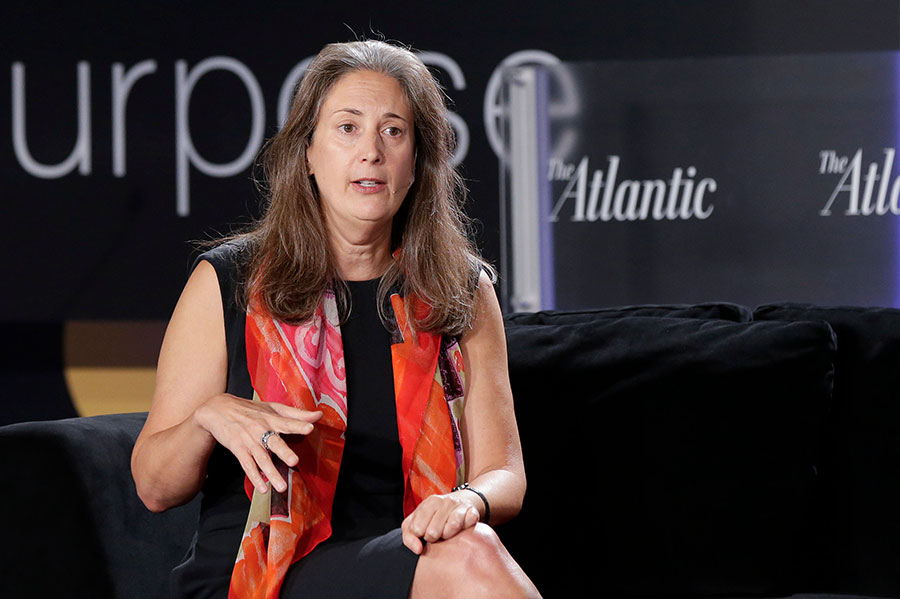
Laura Callanan is a weaver. As Founder of Upstart Co-Lab, she is intertwining impact investors with the creative economy to strengthen communities and solve global problems.

Since 2016, Upstart has been exploring how the $763 billion creative economy in the U.S. can become more inclusive, equitable, and sustainable. By introducing a Creativity Lens, Upstart Co-Lab helps impact investors who understand the power of art, design, culture, heritage, and creativity to see the opportunities that align with their values.

Before launching Upstart, Laura served as senior deputy chair of the National Endowment for the Arts and was an executive at McKinsey & Company, the United Nations and the Rockefeller Foundation.  Laura was the only arts leader named by The NonProfit Times to the Power and Influence Top 50 in 2017. Our exclusive Real Leaders interview with Laura is below.


What is the Creative Economy? How do you and others define it? 

The “creative economy” was defined by the British author John Howkins in 2001 as a new way of thinking and doing that revitalizes manufacturing, services, retailing, and entertainment industries with a focus on individual talent or skill, and art, culture, design, and innovation.

Today, creative economy definitions are typically tied to efforts to measure economic activity in a specific geography. A relevant set of art, culture, design, and innovation industries is determined, and the economic contribution of those industries is assessed within a region. A unique set of industries defines each local creative economy reflecting the culture, traditions and heritage of that place.

Based on industry research, Upstart Co-Lab identified five creative economy categories: Creative Places, Ethical Fashion, Social Impact Media, Sustainable Food, and Other Creative Businesses.


 How do you measure its impact?

Like other social purpose businesses, Creative Businesses can follow B Lab and Global Impact Investing Rating System (GIIRS) standards and contribute to an energetic local economy by providing goods and services, creating jobs, building community wealth and helping establish a sense of community.

We found 24% of B Corporations in the U.S. are in the creative economy and, anecdotally, that many entrepreneurs in the creative economy gravitate towards a social purpose business as opposed to a conventional business.

But aside from being operated sustainably, Creative Businesses drive social impact across many thematic areas. Farm-to-table restaurants create a market for local, organic, sustainable farmers. Fashion designers build their brand connected to ethical and sustainable practices throughout their supply chain. Video game developers produce titles that help patients manage chronic disease, as well as teach players about issues like civics, peace-building, and empathy.


Why is the Creative Economy an important part of the health of a community?

Investable opportunities in the Creative Economy have the potential to stabilize threatened communities and benefit regions looking to attract and develop quality jobs.  While community development finance institutions have been deploying capital into Creative Places and Businesses for decades, these investments have been categorized as affordable housing, community facilities or small businesses – with no attention to their creative characteristics. 

But the opportunity to garner a financial return and create social impact through art, culture, design and innovation has never been stronger. Creative placemaking has become a core component of comprehensive community development. Artists and designers are founders of some of the leading companies of the internet age, and the cross-over between sustainability and the Creative Economy is demonstrated by successful B Corporations like Kickstarter and Etsy.


 Have impact investors embraced the Creative Economy?

Contrary to conventional wisdom that believes there’s a dearth of impact investments in this segment of the economy, Upstart Co-Lab’s new study found impact investing in the creative economy has been “hiding in plain sight.”

With a dataset pulled primarily from publicly available lists and previously published primary research, Upstart Co-Lab identified more than 100 funds, representing an estimated $60 billion AUM, that have been active in the creative economy.

Significant investment has been undertaken by Impact investment funds, Sustainable & Responsible funds, and Conventional funds.  Investment has been particularly strong in the private equity, private debt and real estate asset classes.

Lack of visibility and intention means that when investors ask their wealth advisors for opportunities to invest for impact in the creative economy, they are told the opportunities don’t exist.  This simply is not true.


Tell us about how Upstart Co-Lab is championing the Creative Economy and advancing the idea of artists as social entrepreneurs?

Taking a page from the playbook for gender lens investing, Upstart is defining a Creativity Lens to help impact investors see how the creative economy will help them do well and do good; building a coalition of stakeholders to give this new idea traction; and helping bring opportunities to market so impact investors can put these ideas into practice. 

The Upstart team curates a portfolio of projects designed and implemented with strategic partners including: Artspace, Calvert Foundation, Emergence Creative, Local Initiatives Support Corporation, and Shift Capital.


You partnered with LISC NYC to launch the NYC Inclusive Creative Economy Fund at SOCAP18. What impact are you seeking with this investment?

The Fund is a unique opportunity to channel impact investment toward catalyzing and maintaining affordable spaces, which can help businesses in the creative economy thrive. This will preserve creative spaces in NYC’s neighborhoods and provide quality jobs that can revitalize communities.


Donors at ImpactAssets were anchor investors for the Creative Economy Fund. What role can innovative philanthropic capital—and specifically donor advised funds—play in the growth of the creative economy?

Innovative philanthropic capital can open the door for other capital that is less familiar with impact investing.  In the case of the creative economy, that means endowed cultural institutions.

In the U.S., museums, performing arts centers and other institutions connected to art, design, culture, heritage and creativity have more than $58 billion in assets under management but have been sitting on the sidelines of impact investing.

The creative economy can be the door to welcome these institutions into a larger conversation about aligning their financial assets with their missions and values.


What haven’t I asked you?  

As the investable opportunity at the intersection of cultural diversity and the creative economy is better understood, a creativity lens will be increasingly relevant for a diversity of market contexts and fund types. It is likely that conventional investing activity in this sector will grow to take advantage of the money-making potential food, fashion, media and other creative sectors have to offer; commercial real estate developments anchored around creativity and innovation, or offering art and culture amenities, already exist.

It is exactly because of the viability and projected growth of this segment of the economy that the continuing and increasing engagement of impact investors will be crucial to ensuring a truly inclusive, equitable and sustainable creative economy with benefits for all.


Designing Corporate Impact: 4 Keys to Success for Autodesk Foundation

With an approach as new as impact investing, corporate leaders often have to blaze their own trails, sometimes with a few twists and turns.

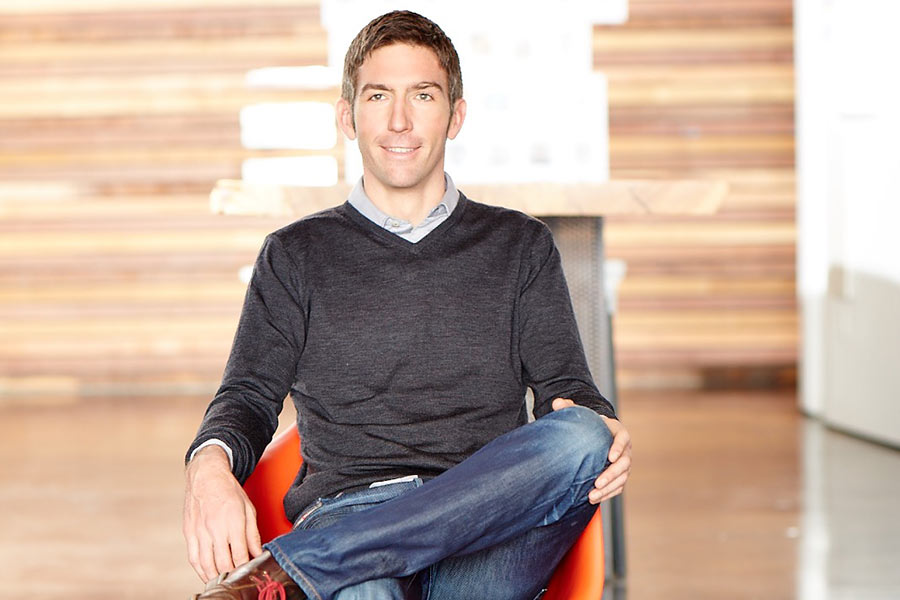
Take, for example Joe Speicher (pictured above). As a freshly-minted undergraduate, he headed to Wall Street with many of his brightest peers. But after what he describes as a “Eureka moment,” Speicher shifted gears, joined the Peace Corps and hasn’t looked back. He went on to earn a master’s degree at Columbia and then launched the nonprofit Living Goods, which uses the “Avon Calling” door-to-door sales model to build a health products marketplace in East Africa and Myanmar.

If you like this, subscribe here for more stories that Inspire The Future.

Today, Speicher applies this breadth of expertise to his role as Executive Director of the Autodesk Foundation, the philanthropic arm of design software giant Autodesk. The company makes software for the architecture, engineering, construction, manufacturing, media, and entertainment industries. Launched in 2014, the Foundation’s mission is to deliver impact by supporting the design and creation of innovative solutions to the world’s most pressing social and environmental challenges.

Speicher recently discussed some of the key principles the team at Autodesk Foundation applies to maximize the impact of their philanthropy:

ALIGN business and philanthropy

“Corporate philanthropy fulfills its promise when it aligns with the business and essentially becomes part of the DNA of the company,” says Speicher. “There’s so much value to be had by being closely tied with the company and leveraging those ties.”

Autodesk has set up its corporate philanthropy so that there’s a back-and-forth between the business and the charity, based on three buckets of value-additive services—financial capital through grants and investments; intellectual capital through software and technical assistance; and human capital through leveraging the expertise of employees. One example is the foundation’s work with Build Change, a nonprofit that helps communities in developing countries ‘build back better’ after natural disasters. In Nepal, which suffered a devastating earthquake in 2015, Autodesk employees helped Build Change streamline its building retrofit analysis from 3 days down to 3 hours using software scripts and plug-ins.

“It’s leveraging our human and intellectual capital to offer societal value,” he says. “And I think that’s the highest and best use of corporate philanthropy.”

INSPIRE and be inspired

“We are a company that is genuinely committed to doing good things, and we’ve put resources towards that end. In some ways, providing a ‘greater corporate cause’ is becoming table stakes for companies, but for our employees—particularly Millennials and Gen Z-ers—it’s critically important.”

In that vein, Autodesk Foundation taps the company’s design expertise and applies it in the field with “impact trips.” Several times a year, employees engage locally and globally in communities and frequently, “they come back with new product ideas or solutions,” Speicher says. “It’s actually feeding back into potential product opportunities.” Autodesk employees also come together one month each year to log thousands of volunteer hours supporting activities across the globe, such as putting together 3D printed prosthetic hands, digitally mapping remote at-risk communities, and packaging meals for schools, orphanages and crisis-relief programs. The Foundation matches employee charitable donations up to $3,000 per year and offers 48 hours of volunteer time per year.

That generosity inspires Speicher, whose impact investing mentors include Kevin Starr of the Mulago Foundation and Breakthrough Energy Ventures, which was initially established by Microsoft Founder Bill Gates as a vehicle for investing in climate R&D.

INCUBATE Ideas and opportunities

“The Foundation’s opportunity is to help the company think more about our role in society. And that means seeding our work across all business units in the company and showing that shareholder return and societal value can be one and the same.”

Sub-Saharan Africa, a big focus for the Foundation, may be one area where philanthropic insights from the Foundation trickle up to the business. With the Foundation’s help, Christian Benimana, who runs the Africa Design Center in Rwanda, spoke at Autodesk’s user conference two years ago on the built environment in sub-Saharan Africa. And a task force within the company is shaping an Africa strategy.

Potential new markets are also bubbling up in renewable energy and other cutting-edge areas which are supported through Autodesk’s philanthropic work. By taking the risks that the public or private sector can’t or won’t take and using its patient, long-term capital, the Foundation is seeking to build a path to scalability for emerging markets and low carbon technologies.

“So many of the world’s future challenges are design challenges. The implications for urban systems, for manufacturing and industrial production, for the built environment, are just enormous,” he said. “And so, the more we can be thinking about these things and get out ahead of them as opposed to being responsive to them, I think that is such an enormous opportunity for us.”

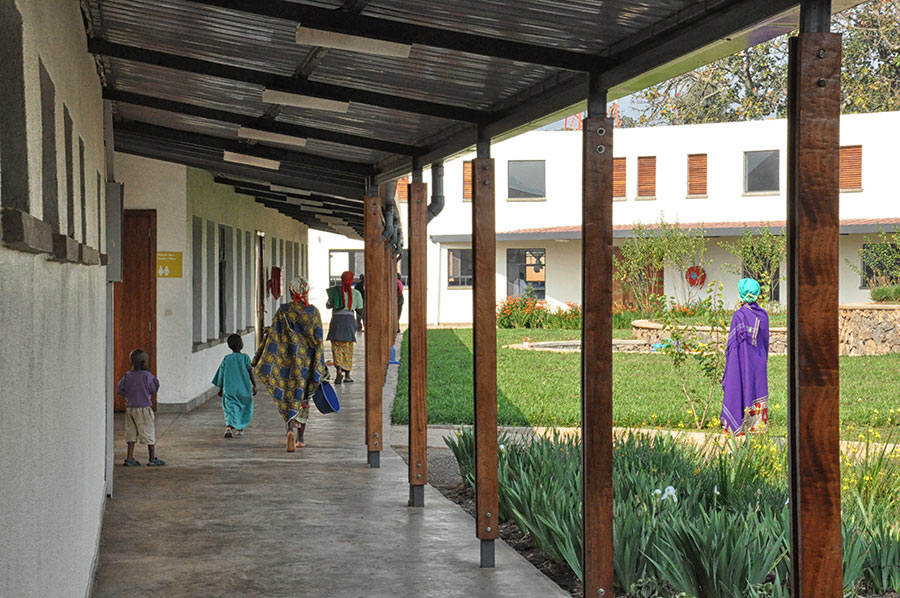
Butaro District Hospital in rural Rwanda: “A lighthouse example of how architecture needs to change to take into account the specific users,” according to Speicher.

PARTNER for a powerful philanthropic portfolio

“We align our unique technical know-how with our partners, and find and fund ‘lighthouse examples,’ opportunities to seed the market with transformative technologies and solutions that can help light the way for others.”

Just four years old, the Autodesk Foundation is small relative to older, more established foundations. But the power of effective partnerships, says Speicher, is helping the foundation make an impact beyond its size and stay focused on its core mission.

One partner whose impact epitomizes the Foundation’s focus on supporting the design of creative solutions is MASS Design Group, a 501(c)(3) architecture firm, with offices in Boston and Kigali. The firm recently completed the sublime National Memorial for Peace and Justice in Montgomery, Alabama, but some of its most ground-breaking work has occurred with Paul Farmer, an American physician who is known for his humanitarian work providing suitable health care to under-resourced areas in developing countries.

“MASS Group is amazing. They worked with Farmer to build Butaro District Hospital in rural Rwanda, one of the most beautiful hospitals on the planet,” says Speicher. “And it’s a lighthouse example of how architecture needs to change to take into account the specific users.”

Autodesk Foundation supports MASS Design via ImpactAssets, its impact-focused donor advised fund. Through the fund, the Foundation makes complex grant making and private debt and equity impact investments, such as it’s recent investment in Closed Loop Ventures. It’s also able to leverage a shared philanthropic infrastructure with more than 1,000 individuals and organizations that also partner with ImpactAssets.

For Speicher, Autodesk Foundation’s impact investing success cuts across the organization. Autodesk leadership understands the strengths (and limitations) of philanthropy and charitable vehicles and integrates Foundation leaders into discussions about the future of the company. “We need a new model of corporate philanthropy that embeds charitable and sustainable outcomes into the DNA of daily operations—recognizing that this is good for business and society,” Speicher writes in a Fast Company article. Corporations can transform corporate social responsibility from a cost center to a value center, but “you need to know what philanthropy can and can’t do, and then ensure that it’s engaged from a strategic perspective.”

If you like this, subscribe here for more stories that Inspire The Future.

Finding Opportunity in a Changing World

As social entrepreneurs continue to push the boundaries of capitalism and seek solutions to the world’s largest problems, Tom Bird offers this advice: “Build your ‘stone, sponge, crispness’ skillset.”

Bird elaborates on that skillset in the interview below, but it’s a repertoire that has served him well. From a career in technology to decades on the front lines of microfinance and impact investing, Bird has developed an eye for opportunity in a changing world. His real-world experience, coupled with an M.B.A. from Stanford’s Graduate School of Business (GSB) and a graduate degree from Harvard Divinity School, has helped him guide companies, mentor entrepreneurs and nonprofits and build a new breed of business leaders. Real Leaders had a chance to catch up with Bird recently after he had completed a section of the Camino de Santiago in Spain.

If you like this, subscribe here for more stories that Inspire The Future.

You are an 18-year veteran of impact investing. How did you get your start?

After building and selling a Silicon Valley records and information management business in the 90s, my wife and I moved to the Boston area with our young sons. Big changes were all around and I was open to saying yes to things that I might not have earlier. A college friend invited me to a holiday party for the pioneering venture philanthropy firm New Profit, and after hearing Wendy Kopp from Teach for America and others speak that night, I was instantly hooked on the idea that lessons learned from business could be intentionally applied for social and environmental good. Around that time, I enrolled in a Master of Theological Studies program, which opened up access to the banquet table that is Harvard University.

Tom Bird: “Build your ‘stone, sponge, crispness’ skillset.”

Over at the Kennedy School I took a class in Microfinance and started to compare and contrast venture philanthropy and what later came to be called impact investing by making grants to New Profit, and by adding a for profit investment in the microfinance firm MicroVest alongside my first investment in the social enterprise Care2. So, I started by being open, following my instincts to jump in, and then doing some critical analysis once I had some skin in the game with live projects to assess.        

What was an early impact investment and what did you learn from it?

Back in 2007, I met the founders of d.light while they were finishing up at Stanford’s GSB, and we hit it off instantly. Their original vision around replacing kerosene in the developing world (with what was later called “off-grid solar solutions”) was bold, well thought out, and really resonated. But the thing that got me over the hump was an assessment of their chances to successfully execute. Fast-forward ten years and d.light has been a true star in the impact world. Awards galore, 80 million lives touched, etc. etc. What I learned from them is that impact business stardom involves a circuitous route. There have been fits and starts, twists and turns, and some pretty hairy moments along the way. Even for a firm of d.light’s quality, impact business building isn’t linear.       


Tell us about the FARM Fund, your impact investing donor advised fund with ImpactAssets.

After several years of building a personal portfolio of seed stage impact investments, four Stanford GSB cronies approached me and said they liked what I was doing and wanted to help. They could see that the work was meaningful, but they all had full time gigs, and preferred to look over my shoulder rather than get too deep into the fray. So, the help offered was primarily in the form of adding cash rather than time. We agreed that financial returns did not need to accrue to us personally. The more we discussed the options, the more it became clear that the ImpactAssets donor advised fund product would be ideal to provide an administrative back end. Selective venture philanthropy projects could be supported (e.g. Global Giving Foundation) alongside the core impact investments. Portfolio financial returns would be available for recycling which created a sustainable flavor.

To manage the activities, we worked out a regular communications pattern with short quarterly written reports plus a “tracker” spreadsheet, and an annual dinner. The group has been able to keep a finger on the pulse of FARM, yet they are non-intrusive to the management efforts.

I’ll sometimes describe it this way: For an investor group that believes innovation and entrepreneurship can help meet global problems, the FARM Fund is a pooled, impact investment making, return recycling, donor advised fund, delivering blended returns unlike other vehicles that have a different feel and a significant toll.

You recently penned an article entitled, A Dad’s Story: How I learned to stop worrying and love the blockchain” that highlights how you and your sons are looking at blockchain through an impact lens. What are you finding out about this emerging technology and its relationship to impact?

Centralized power structures are often corrupt and favor the overdog. The decentralization inherent in blockchain may turn out to level the playing field for the underdog, and that is something I find worth supporting. But blockchain and other emerging technologies are pretty tough to understand for an older guy like me, so I need help. My 25- and 27-year-old sons are patiently teaching me (while sometimes pulling their hair out at my ignorance).

One concept you are exploring is “succession.”  With 18 years of experience, how do you pass on your knowledge of impact investing—whether to sons who have taught you about blockchain, or colleagues toe-dipping into impact investing? 

For a couple of years now I have been thinking of FARM as a “greenhouse.”  We’ve experimented and grown some things. The time has come to share “cuttings” to accelerate and provide leverage for others who want to come off the sidelines. The cuttings can be in financial or intellectual capital form. My hope is that those who run with the cuttings will add their own unique capabilities and far surpass what we have been able to accomplish with the original experiments.   

With your unique background in business, Silicon Valley and impact investing what’s the best advice you could give successful entrepreneurs who are looking to harness the power of business to generate a measurable, beneficial social or environmental impact alongside a financial return?

Continue to build your “stone, sponge, crispness” skillset. Stone as in relentlessness, grit, unstoppability which requires a clear understanding of your own motives. Sponge as in drink in vigorously but squeeze out the excess that you can’t use.  And be crisp in how you articulate the numbers. Just because you are doing good doesn’t mean you can be exempt from deeply understanding and communicating the math.

If you like this, subscribe here for more stories that Inspire The Future.

The Economics of Sustainable and Impact Investing

It’s an obvious point too many impact investing skeptics still miss.

Far from simply catering to progressive individuals looking to “invest their values,” environmental, social and governance (ESG) factors provide critical insight into a company’s viability and long-term economic performance. It’s not ancillary analysis, it’s critical fundamentals.

If you like this, subscribe here for more stories that Inspire The Future.

This realization—that the basic discipline of investment research needed to change to include ESG—was a pivotal moment for Erika Karp (pictured above), and a key to success in developing a truly integrated research framework in her pursuit of sustainable and impact investing.

“Economics is a wonderful way to think about, and put a framework around, social constructs,” says Erika, founder and CEO of sustainable investment advisory firm Cornerstone Capital Group. “When you see business structures that are compelling, that kind of training is very important.”

Erika started out at Credit Suisse, and then moved on to lead the Global Sector Research team at UBS, where her interest in ESG analysis developed organically. During this time, she took on leadership of the socially responsible research team and became an early advocate for sustainable, impact investing.

“I got more and more excited about the possibilities of this new investing model, and started speaking not just internally, but outwardly as well.”

That advocacy and expertise led to impressive leadership roles at the top echelons of the impact movement, including a membership in the World Economic Forum, Erika’s work with the United Nations and her association with the Clinton Global Initiative, to name a few.

Operating at that level gives her a true insider’s perspective into impact investing, having established relationships in different areas of the capital markets—including corporations, non-governmental organizations, regulatory agencies, exchanges, wealth asset managers, investment banks, accountants and others.

“Sometimes people say ‘ESG investing,’ but that doesn’t make sense,” Erika argues. “ESG is a discipline, and once you have that discipline, then you can do impact or sustainable investing. It’s a form of enhanced analytical capability. Transparency, improvements in data, the nature of social media, the rapid movement of information; all those factors are at play, too. But ESG is a push towards a more conscious type of investing—and that’s the big deal.”

It all involves having a macro capital markets view. Erika notes it’s not about moving millions or even billions, but trillions of dollars towards impact, especially when considering ESG imperatives like climate change, women’s economic empowerment, animal welfare, education, ocean pollution, potable water and increasing broadband access.

“To give you a sense, in 2017 maybe $400 billion of venture money was moved towards alternative energy. We need to move $1.5 trillion a year if we’re going to achieve anything like the COP 21 [United Nations Framework Convention on Climate Change] objectives. And that’s just for alternative energy. If you can’t get the capital markets working and having money flow towards progress, we won’t be able to do it.”

That macro view is tied directly to the firm’s offerings. She specifically points to Cornerstone’s investment research credibility, on par with that of an institutional investment bank; corporate governance expertise in line with that of an asset manager; and the due diligence/client advisory perspective Cornerstone brings as a registered investment advisor.

“We put those all into one integrated firm, and that’s never been done before,” says Erika. “We don’t think of ESG or impact investing as an asset class. We think it should be completely integral to the investing process. We think it’s all investing, because all investing has an impact—you just don’t necessarily know what it is.” Given this philosophy, Cornerstone is 100% focused on sustainable and impact investing, with most of its clients also targeting competitive financial returns.

That said, donor advised funds and similar philanthropy-focused investment vehicles are critically important “portals” for wealth management clients to access impact investing, Karp adds.

“We are seeing a transformation of traditional philanthropy strategies towards impact investing, which makes sense. But ultimately, we’re going to move even further towards market return investing with social impact.”

As for successful entrepreneurs and business leaders looking to harness the power and size of capital markets to generate a measurable social/environmental benefit alongside a financial return, what advice does she offer?

“They need to combine their pragmatism with their ideology. It has to be both pragmatism and analytics, along with ideology and sensibility. Then you need to find people you really trust. It’s as simple as that.”

If you like this, subscribe here for more stories that Inspire The Future.

Why Women are Key to the Next Wave of Impact Investing

Why aren’t more women and minorities represented in angel and venture capital investing?

It’s a vexing question Alicia Robb is addressing. The founder and managing partner of the Next Wave US Impact Fund, an early-stage investing fund focused on bringing more women into angel investing—with a focus on social innovation and impact investing—describes her personal journey to (and resulting passion for) the space. 

What personal actions and motivations drove her to become a leader in impact investing? How is Next Wave seeking to increase diversity in angel investing and high growth entrepreneurship. Most importantly, how can successful entrepreneurs get information and access in order to make their own positive impact?

If you like this, subscribe here for more stories that Inspire The Future.

Robb answers these questions and more.

How did you become involved with impact investing? Was there a pivotal moment?

I was at the Kauffman Foundation and previously at the Federal Reserve Board in the Greenspan days, working on small business finance issues. I’ve written a few books about women and minority entrepreneurs and entrepreneurial finance. When Stanford University Press came to my co-author and I and asked if we would write a follow-on book focused on high-growth women’s financing strategies, we said we would if we could also look at the gender gap on the investor side. When you look at the gender and racial gaps in high growth entrepreneurship, one reason is because they get only a tiny fraction of venture capital and angel financing.

From our research, I designed a learning-by-doing fund and program that overcame the barriers that prohibit women and minorities from becoming angel investors. I took the idea to Kauffman and they said, “Great idea, but it will take us five years to get it through the lawyers, so just go off and do it and we’ll fund the education and training piece.” I launched the Next Wave Ventures, and through that I did two pilot funds in the United States and Europe, which brought together nearly 200 women from 25 countries and 24 states in the US.

However, I wasn’t super passionate about what some of the companies did that we invested in. I realized that if I was going to stay involved in angel investing and spend my time, energy and money on this asset class, I really wanted to invest only in companies I was really excited about. Those are impact companies. Next Wave Impact is our first impact fund, which was launched last year. We have 99 women investors in the fund, 25 of them minorities, from 18 states and six countries. And we are all passionate about impact, so I’m really excited about what we’re going to be doing over the next few years.

Is it the investing club of the future?

I hope so. It mitigates a lot of the reasons why we don’t see women and minorities in angel investing, as well as some of the risk by building a diversified portfolio. You’re investing alongside many different people, and the human capital on the ground in our investors across the country from different sectors widens the set of investable companies and allows to invest in the best opportunities.

What are your goals with Next Wave Impact, specifically with metrics and measurement?

We have two sets. With the investor piece, it’s to educate and train new people in angel investing. Outcomes are measured by participation in the fund through the due diligence and screening of companies, and whether they go on to be active angel investors. It might not be for everyone, so people not continuing isn’t necessarily a bad outcome. However, we are trying to drive more engagement of women and minorities in investing, so if we help move the needle, that would be one success.

With the investment piece, we want to invest in companies that are successful in scaling and/or becoming profitable while having a significant impact. However, because we’re a generalist fund and investing across a wide spectrum of industries, the specific metrics used to track each company will depend on the sector they occupy. Some examples are number of good jobs created, an increase in financial inclusion, better educational achievements, etc. Obviously increasing the number of women and minority-led businesses is also an outcome we are seeking with the fund.

One of the ways you have made Next Wave available to investors is through philanthropic vehicles like the ImpactAssets Giving Fund. How does that work and why is it a good fit for a fund that seeks to expand access to angel and impact investing?

We have several Limited Partners in our fund that use philanthropic capital. ImpactAssets is a unique case because it brought together donations from a bunch of different people to join that donor-advised fund. And then we have a couple of family offices that have invested using philanthropic capital using their own donor advised funds. And then we have a foundation. It’s important to keep that option on the table because a lot of people are comfortable with philanthropy and not necessarily ready or wanting to use investment dollars for impact. Next Wave is trying to move more people into thinking about impact investing on the investor side of it rather than philanthropic, but there’s a lot of different reasons why people might want philanthropic money used for this. It can be a way to ‘toe-dip’ into angel and impact investing. It’s a way to test the waters.

It sounds like there’s significant demand. And are you planning to launch other funds?

Yes, we are. We’re going to wait a couple years until we’ve deployed a significant amount of capital with this fund, but the plan is to expand and launch other larger funds. We’re also looking at launching some regional funds so that we can invest locally, and then mitigate that risk by co-investing and syndicating deals with other regional funds. The time horizon for those is as soon as 12 to 18 months.

Where do you see Next Wave in five years?

I hope to see Next Wave doing additional funds at the regional level, as well as co-investing across the country and across borders. We’ve been working with some folks in Africa, Asia, and Latin America, to see how we can adapt this model and training methods to bring more people into angel investing. So hopefully, we’ll see a much larger network that spans not only the United States but also other continents. Personally, as a vegan, I plan for my next fund to focus on investing in companies that are removing animals from the supply chain. I don’t think we need to exploit animals for food, clothing, entertainment, or medical experiments. I want to see more companies that offer plant based alternatives that are more sustainable, healthy, and humane.

What’s your message to successful entrepreneurs that are looking to harness the power of this type of investing? How should they get started?

One of our goals with this fund is to provide an additional data point or piece of evidence to prove you can achieve a nice financial return by investing in companies that are doing good things. There are so many problems in the world. I think if more people directed their time, energy, and money towards companies that are solving serious problems instead of trying to make a big buck with those ever-elusive unicorns, I think we’d all be better off.

I think the venture capital system is broken. I don’t think we need to accept the fact that out of 10 investments, eight are going to fail, one will return your capital, and one’s going to be a home run. I think that disruption and destruction of eight failures out of 10 in terms of the societal costs to the employees, founders, investors and other stakeholders is something we don’t need to accept.

If you like this, subscribe here for more stories that Inspire The Future.

Farm Grows ‘Organic’ Returns for Impact Investors

It’s tough to find a better example of environmental stewardship and sustainable use than organic farming.

Indeed, the responsible growth of food that sustains us is pretty much the ideal picture of what the impact investing ethos is, and aims to be. With only an estimated 1 percent of farmland in the United States certified as organic, it’s an area ripe for growth.

For Iroquois Valley Farms, a restorative farmland finance company founded in 2007, that growth will be fueled in large part by next-generation farmers. As the nation’s first organic, family farmer focused Real Estate Investment Trust (REIT), Iroquois Valley is enabling the millennial generation to invest directly in healthy, organic food production. The firm, which has $50 million in organic farmland investments, has appreciated 10 percent per year since inception.

Speciality grains growing at Vilicus Farms in the Great Plains region of Montana. Vilicus Farms specializes in small and ancient grains, legumes, oilseeds, and more, while also focusing on conservation and native habitat preservation. Iroquois Valley Farms works with farmers in 13 states from Maine to Montana.

It’s a long way from the firm’s beginnings just prior to the mortgage-fueled Great Recession. At that time, Co-founder and CEO David Miller came in possession of a 10-acre piece of family property, which he transitioned to an organic farm. At the same time, Dr. Stephen Rivard, Miller’s college roommate, was observing the effects of the overexposure to herbicides and pesticides on agriculture workers

If you like this, subscribe here for more stories that Inspire The Future.

“Dr. Steve, as I call him, and I got together and thought, ‘Why don’t we enable, effectively, the next generation of farmers to do it differently?’” Miller says. “My background is in corporate and real estate finance, so this is just a natural for me.”

The duo, along with 10 friends and family members, formed Iroquois Valley Farms, LLC. It’s a “farmer-centric business model,” meaning the farmers bring opportunities to Iroquois, not the other way around.

“We never go out and buy land and then try to find a farmer,” he explains. “That’s a non-scalable approach to being in business. Farmers bring us the opportunity, and we buy it and lease it to the farmer, with a goal of the famer having eventual ownership.”

An important point Miller emphasizes is the firm’s distinction from traditional private equity models, particularly in the way it ramps up.

Using the term “slower than slow money,” he saw the mistakes too many funds made by deploying too quickly (it was 2007, after all), lessons learned that remain today. Rather than raising “$100 million or $200 million” and immediately investing, they take their time, and for good reason.

“It’s hard to move too fast in organic farming, but if you try you usually make bigger mistakes,” he claims. “This is not a turnkey type business where you can just buy some land, shake hands with the farmer, come back in 10 years and sell it to pay everybody off. That’s a complete mismatch with what the farmers want to do. They want the land for the rest of their life, so from the get-go, we knew that we had to go nontraditional.”

In addition to “growing” slower with its committed capital, the firm is willing to work with individuals.

“Most of the funds you see starting up here or there, they start big and they start fast, and it’s mostly institutional capital. We connect with individual investors and individual farmers. Even though, right now, they’re all accredited investors, they can use their IRA accounts or family trusts. IRAs are long-term investment vehicles that fit with the time horizons of our model.”

The long-term horizon of the investment and the risky nature of the underlying business farming means Miller and his partners at Iroquois have to be innovative.

Main Street Project is the first nonprofit Iroquois Valley Farms financed. The Minnesota-based organization trains Latino immigrants in their poultry-centered permaculture model to create social, environmental, and food system change.

“We diversify everything,” he says. “We diversify our capital base, we diversify our farmers, we diversify our lenders. And a few years ago, we decided to go to our investors and borrow money from them. We offered 5- and 7-year term notes, which we billed as ‘Young Farmer Land Access Notes.’ And they were very successful and very desired by financial advisors for their clients.”

That success led to offerings of shorter-term notes, with the intention of bringing down the costs associated with a 3-year transition to Certified Organic status, traditionally the most difficult period for farmers. They called it a Soil Restoration Note, “because those first few years are all about restoring the soil.”

A certified B Corporation, Iroquois is also an investment option for donors to the ImpactAssets Giving Fund (a donor advised fund) and is included in the ImpactAssets 50, a resource that provides investors and financial advisors with detailed information about 50 of the most experienced impact investment firms and potential investment options.

Iroquois continues to innovate, forming the REIT earlier this year because “we’re moving toward offering our stock and our notes to non-accredited investors,” said Miller. “We care about social values. We believe it’s important to engage the next generation, so they can invest in this change. To confine ourselves only to accredited investors would be unfair.”

If you like this, subscribe here for more stories that Inspire The Future.


Why (And How) Should Successful Investors Make an ‘Impact’

Forget esoteric concepts of “doing good.” If you want to know specifically how impact investing positively affects people, communities, the environment and (of course) returns, look to EcoEnterprises Fund.

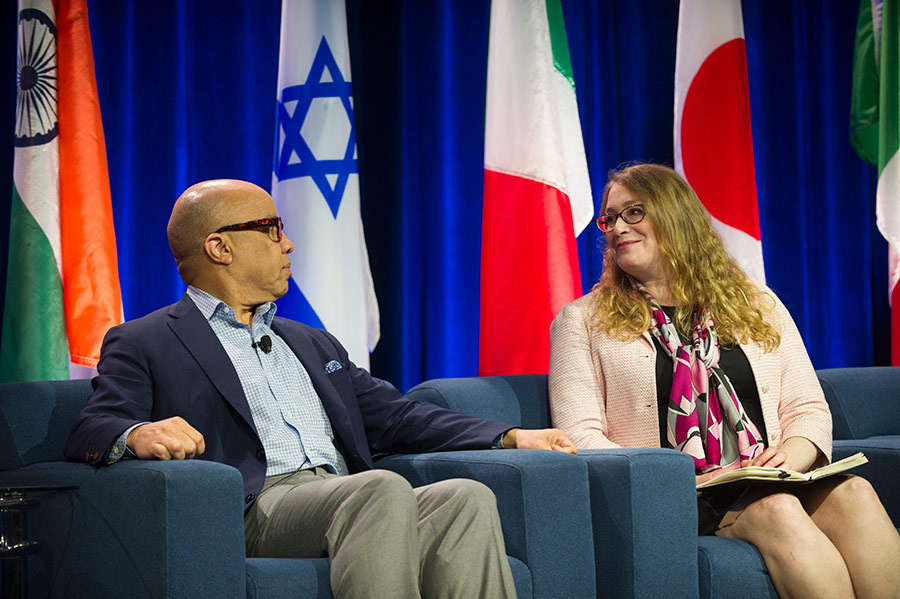
The fund is one of the first venture funds dedicated to the impact space and can point directly to the number of jobs their investments have generated, the number of suppliers supported and the number of acres conserved. It’s all part of their commitment to openness and transparency to investors.

EcoEnterprises Fund is now raising capital for its third fund, and Tammy Newmark, CEO and Managing Partner, has been a pioneer in the impact investing field since the mid-1980s before the term “impact” was even coined. The interview below offers an overview of how Newmark has left her mark on one of the fastest-growing sectors of financial services, and how sophisticated investors that are interested in the wellbeing of their community and environment can get involved.

If you like this, subscribe here for more stories that Inspire The Future.

What was the pivotal moment that moved you in the direction of impact investing?

It’s hard to say I woke up one day and I decided to make this my career because it has always been part of my body and soul and how I’ve operated as a human being. I worked on Wall Street in investment banking in the mid-1980s, and was part of a team looking at mergers, acquisitions and leveraged buyouts. To maximize the bottom line of one company, we closed a lot of their U.S. operations. Communities that had provided workers for generations suddenly lost a major employer, which had a huge impact on individual livelihoods and their health and well-being.

It was at that point I realized Wall Street was not for me. I returned to business school at Wharton and was part of a group that started the first venture fund that focused on small-scale renewable energy, clean tech and green technologies in developing countries and emerging markets. After a few years there, the Nature Conservancy approached me to run EcoEnterprises Fund.

What inspired you to launch the EcoEnterprises Fund? It’s a little bit like the Kitty Hawk, correct? You were launching something that had never been done before.

Correct, and when I first joined the Nature Conservancy, I realized we had to be able to demonstrate impact, and we of course had to make some money to change minds and provide an example for others to follow. I realized talk was not going to do it. We really needed to perform.

You’ve launched two funds and are bringing a third to the market. What were examples from the first fund that you showed the board in order to prove the concept?

We launched the first fund in 2000. It was the very early stages of the organics movement. We invested in the first organic chocolate company, the first organic flower company and the first organic coffee company, as well as Forest Stewardship Council certified furniture and flooring. It was a great time for us to identify good businesses that we could provide startup and growth capital, so we invested in early first-movers we could scale and that provided business models we could replicate. The second fund took advantage of these opportunities with companies that had moved beyond the startup stage.

Is there any one thing you’re most proud of, or is it more cumulative?

Sometimes folks say, “How could you create impact when you’re working with small businesses?” or working in specific rural areas. In total, we’ve invested in 35 small businesses. One example is Sambazon, a leader in acai, which is a Brazilian berry that’s sustainably harvested and used in sorbets, juice smoothies and similar products.  We invested in the company as a start-up through the first fund, yet the investment committee was so impressed with their growth and impact that we sought to support it again through the second fund, and it is now a multi-million-dollar company. And if you add up one small company, like Sambazon once was, with another small company with another small company, it’s that overall mega-level that, to us, has been really important. You can see the impact of where the philosophies and modus operandi of these entrepreneurs have emanated to the local community. For EcoEnterprises, these ripples of impact are the most heartening and resonate most deeply with us.

What advice would you give successful executives and business owners about how to make an impact like this with their investments?

There are different ways to approach this question. One is that investors can directly invest in companies. Obviously we prefer they invest in EcoEnterprises Fund, but I think that’s a question that needs to be considered by each investor individually. From our standpoint, our biggest mission and mandate relates to environment—the preservation and conservation of the biodiversity—and to encourage and promote the health and well-being of the planet and those local community members that need the support to offset poverty. It’s those investors that are interested in these same objectives who are keen to invest in our funds.

If you like this, subscribe here for more stories that Inspire The Future.


Building the Case for Impact: New Alliance Unites Profit and Purpose

So, you want to spend a career building wealth without regard for its impact on the environment, economy and society, and then allocate a small portion of this later in life through grant-making to create a favorable legacy?

Why not get it right from the beginning, a win-win for all stakeholders that generate positive impacts and financial returns?

It’s an idea for which Fran Seegull fiercely advocates. To say she’s passionate about impact investing’s possibilities is a major understatement; indeed, it permeates her career, education and latest project, the U.S. Impact Investing Alliance.

Seegull is part of a broader effort to make the case that sustainable investing can lead to solid investment returns alongside positive social and environmental outcomes. And she wants to show successful entrepreneurs and executives how they can do it.

Backed by a growing body of research and data, impact investors are continually refining techniques and tools to innovate, identify opportunities and better align investment capital with their values.

For Seegull, the current momentum was a long time coming.

“I began my career at a small family foundation putting grant money to work in very creative ways,” she says. “I started to get more interested in how our endowment was invested and wondered about why a foundation might use 5 percent of their assets to make an impact with grants, only to invest the other 95 percent, probably unconsciously, without regard for its mission.”

She “wondered” her way back to business school as a result, and explored how to use for-profit business models for impact. Seegull’s turning point came with a paper she wrote for her Harvard Business School professor of venture capital examining the nature of value—specifically financial, economic, social, and environmental value—which led to important conclusions.

“One was that, through a model similar to venture capital, you could invest for high financial returns while making a philanthropic impact,” Seegull adds. “The other was that a traditional model of wealth accumulation (and then transfer to a charitable tax vehicle like a foundation) without regard for impact wasn’t the best way to maximize overall societal value.”

What she came away with was a blueprint for her career, eventually landing at impact investing pioneer ImpactAssets as the organization’s managing director and chief investment officer where she developed still more “must haves” for success in the space.

“The first was the fundamental need to create relationships with investors and investees, and the power of connecting the two through shared values and visions for impact.”

The second was an understanding of what drives interest in impact investing, and how to respond to the growing need for more public and private impact investing products, down to the retail level.

“We saw that up close at ImpactAssets, and developed products to meet that demand,” she notes.

The third take away was the importance of infrastructure. According to Seegull, ImpactAssets and other leaders in the field are “building the train cars and laying the train tracks to move impact investing out of the station and down the road.” Ultimately, she said, “Impact investing can’t broaden and deepen without the ecosystem that allows capital to flow.”

What Seegull quickly realized was the infrastructure build-out couldn’t be successful if it remained fragmented and piecemeal. The field needed help, an alliance of sorts, which led to her current position with the U.S. Impact Investing Alliance, which launched in late July.

“The U.S. Impact Investing Alliance is a field-building organization committed to raising awareness of impact investing in the United States,” she enthusiastically explains. “It seeks to foster the deployment of capital across asset classes globally and to work with various stakeholders, including government, to build out that the impact investing ecosystem. Our long-term vision is to put measurable social and environmental impact alongside financial risk and return so it’s at the center of every investment decision.”

The Alliance has a three-pillar strategy. The first is to advocate for policies that enable impact investing. The second is to “catalyze investor deployment to impact,” and the third is to build a broad impact investing movement. Partners include members of the Alliance’s Advisory Board (chaired by Ford Foundation President Darren Walker), the Industry Advisory Council (including the GIIN and Mission Investors’ Exchange, among others) and the Presidents’ Council on Impact Investing comprising the heads of 20 foundation presidents.

And like any professional organization, the Alliance has a long-term plan which includes greater transparency across asset classes so investors can fully understand the impact of their investments.

“We seek to partner with others in the field to transform finance by moving from a paradigm of shareholder value to one of maximizing stakeholder value.”

All well and good, but what about successful entrepreneurs and executives who are looking to harness the power of business to generate environmental and social benefits while realizing positive financial returns? How do they get involved, and why should they?

“For startups, established entrepreneurs and public company managers alike, I challenge you to consider how social, environmental and governance practices impact your business, because they do. It might be the use of fuels that generate greenhouse gas emissions, or it might be the gender and racial diversity of your boards/management.

“Regarding how to get started with impact investing, there are a number of entry points,” Seegull concludes. “As a plan sponsor, you might look at your 401(k) to see if there are values-aligned choices for your employees. Regarding private wealth, foundations or donor-advised funds, impact investing is a terrific opportunity to sit down with your family to articulate commonly shared values and to explore how those values may or may not be expressed through your portfolios. All investing has an impact. Make sure it’s the impact that you and your family desire.”


Impact Investing: What Most Entrepreneurs And Executives Get Wrong

What does it take to find success in impact investing? And how are business skill sets and expertise most effectively transferred to this way of doing business?

We asked Adam Bendell, someone who’s done both, for specific, actionable steps to help business leaders think through the impact investing process. Bendell, CEO of Toniic, the largest global action community and network for impact investors, was more than happy to share.

Amy Bennett: How did your career arc, from entrepreneur to Toniic CEO, lead you to impact investing?

Adam Bendell: I’m now on my fourth career, and I’ve only recently had the courage to say, “I’ve focused long enough on making money. I want a day job that has positive impact on the world.” Impact investing is natural for me because at Toniic, we’re unapologetic yet compassionate capitalists who want to empower business as the greatest force for good on the planet. What a hoot it is to both make money and improve the planet!

Was there an “aha!” moment that triggered the courage to take this different path?

Like most other impact investors, I began my journey by dedicating a portion of my portfolio to impact, and then traditionally managing the rest of the portfolio. That’s what I would call a “classic” approach to impact investing.

As I got into the Toniic role, I realized that approach was outdated, because I found many of our members have committed to 100 percent impact investing across their portfolios.

 I started thinking about my own portfolio in that context, and the “aha!” is that I was probably doing a lot more damage with the 90 percent of my portfolio that was traditionally invested than I could possibly offset with the good I was doing from the 10 percent in impact.

How long does it take to unwind the traditional investments in the portfolio and get to 100 percent impact investing?

I don’t know about 100 percent, but you can get to 80% or 90% within three or four years of steady progress. For example, private equity is completely illiquid. You can’t get out of those positions until the fund pays back. So you can make a lot of progress relatively quickly, and then the tail-end of the portfolio may take some years.

As an impact investor and Toniic leader, have there been rewards that you had not anticipated?

Absolutely. I’ve found that the journey towards portfolio alignment is independently rewarding, and I didn’t anticipate that. In any given year, I have seen  my financial returns go up or go down. They go up, I feel great; they go down, I feel awful. Even measured impact has volatility, whether you’re looking for social impact or carbon reduction, those things go up and down. But values alignment—the process of aligning my investments with my values across asset classes—that can go up every year until it reaches 100 percent. And that steady progress is a source of tremendous psychic income, one that mitigates the emotional volatility of investing and brings lasting joy.  Try it!

How do you, as an organization, measure success?

Even though Toniic is a nonprofit, we hold ourselves to the same standards of impact accountability to which our members hold the businesses in which they invest.

We are focused on amplifying our members’ individual and collective impact.

That starts with measuring the capital that we collectively invest, but it also includes our impact on policy, our effects in enticing traditional advisers to embrace impact, our influence in working fundamental change in the global capital markets to take positive or negative impact into account. We track our footprints in doing so, both in empowering current impact investors, and in inspiring traditional investors who are curious about impact investing, to taste the rewards of values-aligned investing. So, we have a series of metrics that we use to measure that progress.

What is the best advice you could give successful entrepreneurs who are looking to take a first step into impact investing?

First, follow your passion. Then, get support in implementing a plan by connecting with peers who are also doing it. Many traditional investment professionals will speak endlessly against it, so find peers who are doing it to consult with, but ultimately make your own decisions, just as you have done when you made your bravest business decisions.  Those were often my best decisions – I bet they were yours, too.

Is there a concise call-to-action you can leave us?

Although many entrepreneurs are running sustainable businesses aligned with their values, I’d encourage them to ask, “Where is my money spending the night?” Unless you are actively participating in the impact community, you may be missing an incredible opportunity to empower like-minded entrepreneurs with capital, and thereby building out the global cohort of mission-aligned investors. Most of all, you’re missing the personal joy and the rewards of being on the impact investing journey. Try it, you’ll see. That’s my call to action.


0