Case Study: Thailand Promotes Partnerships for a Sustainable World

By sharing its Sufficiency Economy Philosophy as a model, Thailand is helping other developing nations achieve the Sustainable Development Goals.

Of the 17 Sustainable Development Goals of the United Nations, the final goal – revitalize the global partnership for sustainable development – may be the most compelling of all. Because the only way we can build a better world is by working together. So many of the challenges we face, from climate change to eradicating diseases, are borderless. Although we measure results on a nation-by-nation basis, unless nations can find ways to work together for the good of our planet and its peoples, our future will ultimately be unsustainable.

The Kingdom of Thailand has made its primary mission to enhance cooperation between North and South and also to strengthen South-South Cooperation. This exchange of resources, technology and knowledge between developing countries, often referred to as the Global South, can be complementary to achieving the Sustainable Development Goals. Thailand has worked to transform this vision into action. Even before its chairmanship, Thailand had been sharing its own model of development among countries grappling with the challenges of a changing world. That model is known as the Sufficiency Economy Philosophy.

Initiated by the late monarch King Bhumibol Adulyadej through decades of working to uplift the nation’s poor people, the Sufficiency Economy Philosophy is an approach to development and to life that is based on moderation, reasonableness and prudent decision-making. It prescribes living in harmony with the environment and making wise use of resources in order to build resilience and wellbeing. Its principles can be applied to farmers, communities, businesses and nations. In the context of the philosophy, sufficiency does not mean living in isolation. It calls for communities to work together for the common good – the essence of partnerships.

Thailand understands the value of working together. Once a country in need of development assistance, Thailand is now a donor nation, providing fund and sharing its resources of knowledge, technical assistance, scholarships and capacity building with less developed nations. In 2015, the Kingdom provided $78 million in Official Development Assistance to other countries through the Thailand International Cooperation Agency, while foreign direct investment surpassed $58 billion, with much of it going to the developing world.

While generous funding is important, even more value lies in Thailand’s willingness to share its knowledge and experience with the Sufficiency Economy Philosophy. To date, representatives from 105 countries have participated in workshops, seminars and training courses hosted by Thailand on the philosophy and its applications.

Thailand has been partnering with several countries to help them implement their own development projects based on Sufficiency Economy Philosophy principles and methods. Timor-Leste is employing decision-making processes based on the philosophy’s framework for sustainable agriculture projects and to support the launch of small businesses. Cambodia has established a Sufficiency Economy village as a pilot for more communities. Indonesia is using sufficiency principles shared by Thai advisors for ecological farming projects that raise incomes and quality of life for villagers. And neighboring Myanmar is working with Thai partners to establish sustainable development centers and rural development projects on sufficiency principles.

Far beyond Asia, the Sufficiency Economy Philosophy is being adopted for the benefits of local peoples. In the southern African nation of Lesotho, Thailand has supported the establishment of a center to introduce integrated farming and agro-forestry farming that is protecting that nation’s environment while providing greater food security and livelihoods for participants. Several nations in South America have also been applying approaches based on the philosophy.

“Development approaches like the Sufficiency Economy Philosophy of Thailand, that promotes development with values, which not only complement the [SDG] agenda, but our own national development framework, will certainly help us in implementing the SDGs,” Guillame Long, Ecuador’sMinister of Foreign Affairs, told the UN General Assembly last year.

Achieving the Sustainable Development Goals by 2030 will require commitment and perseverance. For some countries in the Global South with limited resources and capacities, the tasks at hand may appear enormous. Despite its own limitations, Thailand achieved the Millennium Development Goals ahead of schedule, owing a significant degree of that success to the Sufficiency Economy Philosophy. Thailand is willing to partner with any country seeking knowledge, expertise and a proven path to sustainable development. Because there is only one way to build a better world – and that way is together.

Farm Grows ‘Organic’ Returns for Impact Investors

It’s tough to find a better example of environmental stewardship and sustainable use than organic farming.

Indeed, the responsible growth of food that sustains us is pretty much the ideal picture of what the impact investing ethos is, and aims to be. With only an estimated 1 percent of farmland in the United States certified as organic, it’s an area ripe for growth.

For Iroquois Valley Farms, a restorative farmland finance company founded in 2007, that growth will be fueled in large part by next-generation farmers. As the nation’s first organic, family farmer focused Real Estate Investment Trust (REIT), Iroquois Valley is enabling the millennial generation to invest directly in healthy, organic food production. The firm, which has $50 million in organic farmland investments, has appreciated 10 percent per year since inception.

Speciality grains growing at Vilicus Farms in the Great Plains region of Montana. Vilicus Farms specializes in small and ancient grains, legumes, oilseeds, and more, while also focusing on conservation and native habitat preservation. Iroquois Valley Farms works with farmers in 13 states from Maine to Montana.

It’s a long way from the firm’s beginnings just prior to the mortgage-fueled Great Recession. At that time, Co-founder and CEO David Miller came in possession of a 10-acre piece of family property, which he transitioned to an organic farm. At the same time, Dr. Stephen Rivard, Miller’s college roommate, was observing the effects of the overexposure to herbicides and pesticides on agriculture workers

If you like this, subscribe here for more stories that Inspire The Future.

“Dr. Steve, as I call him, and I got together and thought, ‘Why don’t we enable, effectively, the next generation of farmers to do it differently?’” Miller says. “My background is in corporate and real estate finance, so this is just a natural for me.”

The duo, along with 10 friends and family members, formed Iroquois Valley Farms, LLC. It’s a “farmer-centric business model,” meaning the farmers bring opportunities to Iroquois, not the other way around.

“We never go out and buy land and then try to find a farmer,” he explains. “That’s a non-scalable approach to being in business. Farmers bring us the opportunity, and we buy it and lease it to the farmer, with a goal of the famer having eventual ownership.”

An important point Miller emphasizes is the firm’s distinction from traditional private equity models, particularly in the way it ramps up.

Using the term “slower than slow money,” he saw the mistakes too many funds made by deploying too quickly (it was 2007, after all), lessons learned that remain today. Rather than raising “$100 million or $200 million” and immediately investing, they take their time, and for good reason.

“It’s hard to move too fast in organic farming, but if you try you usually make bigger mistakes,” he claims. “This is not a turnkey type business where you can just buy some land, shake hands with the farmer, come back in 10 years and sell it to pay everybody off. That’s a complete mismatch with what the farmers want to do. They want the land for the rest of their life, so from the get-go, we knew that we had to go nontraditional.”

In addition to “growing” slower with its committed capital, the firm is willing to work with individuals.

“Most of the funds you see starting up here or there, they start big and they start fast, and it’s mostly institutional capital. We connect with individual investors and individual farmers. Even though, right now, they’re all accredited investors, they can use their IRA accounts or family trusts. IRAs are long-term investment vehicles that fit with the time horizons of our model.”

The long-term horizon of the investment and the risky nature of the underlying business farming means Miller and his partners at Iroquois have to be innovative.

Main Street Project is the first nonprofit Iroquois Valley Farms financed. The Minnesota-based organization trains Latino immigrants in their poultry-centered permaculture model to create social, environmental, and food system change.

“We diversify everything,” he says. “We diversify our capital base, we diversify our farmers, we diversify our lenders. And a few years ago, we decided to go to our investors and borrow money from them. We offered 5- and 7-year term notes, which we billed as ‘Young Farmer Land Access Notes.’ And they were very successful and very desired by financial advisors for their clients.”

That success led to offerings of shorter-term notes, with the intention of bringing down the costs associated with a 3-year transition to Certified Organic status, traditionally the most difficult period for farmers. They called it a Soil Restoration Note, “because those first few years are all about restoring the soil.”

A certified B Corporation, Iroquois is also an investment option for donors to the ImpactAssets Giving Fund (a donor advised fund) and is included in the ImpactAssets 50, a resource that provides investors and financial advisors with detailed information about 50 of the most experienced impact investment firms and potential investment options.

Iroquois continues to innovate, forming the REIT earlier this year because “we’re moving toward offering our stock and our notes to non-accredited investors,” said Miller. “We care about social values. We believe it’s important to engage the next generation, so they can invest in this change. To confine ourselves only to accredited investors would be unfair.”

If you like this, subscribe here for more stories that Inspire The Future.


Good Energy for Good Business

How eco-labelled renewable energy can power a sustainable economy.

For a growing number of companies, electricity is a prime resource in the value chain. However, several global corporations have come under fire from the general public, shareholders and major NGOs with regards to energy procurement. The failure to adequately manage corporate energy can leave a company vulnerable to risks, such as changing regulations and legal requirements. What is more, being seen as a big polluter carries detrimental effects for any brand.

More and more companies have set themselves a target of growing the share of renewable energy in their consumption. These commitments have been reflected in the global investments in sustainable energy: the past year witnessed an investment in renewables capacity that was roughly double that in fossil fuel generation. According to the latest report by the United Nations Environment Programme and Bloomberg New Energy Finance, the corresponding new capacity from renewables was equivalent to 55% of all new power, the highest to date.

Leading businesses and renewable energy experts have also joined forces to form RE100, a global initiative aimed at motivating and recruiting major companies to use 100% renewable power across their operations. Launched at the New York Climate Week back in 2014, the campaign has continued to gather momentum, drawing commitments from over 100 leading companies in just the span of three years. The initiative is also a reflection of the wider interest to disclose and communicate corporate performance in energy: calculating and, more importantly, reducing emissions from purchased or acquired electricity (“Scope 2 emissions”) is a prerequisite for inclusion in the CDP’s prestigious Carbon Disclosure Leadership Index.

Nonetheless, joining initiatives and disclosing data alone will not be enough to boost corporate brand image and ranking, nor to ensure the “greenness” of energy. A key challenge for today’s multinational companies is the difficulty, in certain jurisdictions, of tracing whether the electricity they consume was produced using renewables or fossil fuels and nuclear. For tracing the origin of power, renewable energy certificates (RECs) are key. RECs contain and disclose the renewable sources from which the electricity is consumed and are issued for every megawatt-hour (MWh) of electricity produced by a power station. Currently REC systems exist in the U.S., Canada, Europe (going by the name of ‘Guarantees of Origin’), Australia, and Japan, as well as in several developing countries under the International REC Standard.

However, not all RECs are the same in terms of impact. Only certain RECs with eco-labels ensure that the sources of energy are additional – or, in other words, that the purchased renewable energy certificates have had or will have an impact on the development of new renewable energy installations and yield added ecological value.

An example of an eco-label is EKOenergy: the supplier of EKOenergy labelled RECs contributes 0.10 Eur/MWh of to the Climate Fund, which in turn makes investments in new off-grid small scale renewable energy projects in developing countries. The fund contributed over 300’000 Euro so far in new solar installations in some of the world’s poorest countries.

Another eco-label is GoldPower: GoldPower labelled RECs stem only from recently built power plants that contribute to Sustainable Development Goals (SDGs) and have quantifiable, positive impacts on communities. Developed together with the WWF in 2009, GoldPower has recently been updated to include the Gold Standard Renewable Energy Label.

Major market influencers and RE100 signatories have purchased GoldPower in the past, including the likes of SAP, Microsoft, Novo Nordisk and Tetra Pak. In the words of Mario Abreu, VP Environment at Tetra Pak: “We want to support the transition to a low-carbon, sustainable economy so it is incredibly important to us that the renewable energy we buy comes from new or recently built installations that also provide broad sustainability benefits for local communities.”

So why should other brands care? There are a plethora of benefits gained from a pivot towards renewable energy, and especially if sourced from projects that additionally contribute in a substantiated manner to the SDGs. Companies not only reduce their carbon footprint, but also demonstrate their commitment to their employees, customers and investors. Equally importantly, smart corporates can hedge against risks: the move to a low-carbon future is inevitable, and as societies and economies unlock from fossil fuels, the transition to renewables makes long-term economic sense for businesses.

As in the case of Tetra Pak, companies are becoming more demanding about how exactly their green power is produced. And rightfully so: leading organisations are already leveraging renewable energy certificates to hedge against transitional risks, reach their sustainability targets, and reflect an essential character of their brand. The unique capacity of eco-labelled RECs to secure new renewable energy production, mitigate business risks, and engage local stakeholders in projects is an indispensable asset in the global pursuit for renewable energy and a greener economy.

By Natalia Gorina – Sales Director Carbon & Renewables at South Pole Group


Good Energy for Good Business

How eco-labelled renewable energy can power a sustainable economy.

For a growing number of companies, electricity is a prime resource in the value chain. However, several global corporations have come under fire from the general public, shareholders and major NGOs with regards to energy procurement. The failure to adequately manage corporate energy can leave a company vulnerable to risks, such as changing regulations and legal requirements. What is more, being seen as a big polluter carries detrimental effects for any brand.

More and more companies have set themselves a target of growing the share of renewable energy in their consumption. These commitments have been reflected in the global investments in sustainable energy: the past year witnessed an investment in renewables capacity that was roughly double that in fossil fuel generation. According to the latest report by the United Nations Environment Programme and Bloomberg New Energy Finance, the corresponding new capacity from renewables was equivalent to 55% of all new power, the highest to date.

Leading businesses and renewable energy experts have also joined forces to form RE100, a global initiative aimed at motivating and recruiting major companies to use 100% renewable power across their operations. Launched at the New York Climate Week back in 2014, the campaign has continued to gather momentum, drawing commitments from over 100 leading companies in just the span of three years. The initiative is also a reflection of the wider interest to disclose and communicate corporate performance in energy: calculating and, more importantly, reducing emissions from purchased or acquired electricity (“Scope 2 emissions”) is a prerequisite for inclusion in the CDP’s prestigious Carbon Disclosure Leadership Index.

Nonetheless, joining initiatives and disclosing data alone will not be enough to boost corporate brand image and ranking, nor to ensure the “greenness” of energy. A key challenge for today’s multinational companies is the difficulty, in certain jurisdictions, of tracing whether the electricity they consume was produced using renewables or fossil fuels and nuclear. For tracing the origin of power, renewable energy certificates (RECs) are key. RECs contain and disclose the renewable sources from which the electricity is consumed and are issued for every megawatt-hour (MWh) of electricity produced by a power station. Currently REC systems exist in the U.S., Canada, Europe (going by the name of ‘Guarantees of Origin’), Australia, and Japan, as well as in several developing countries under the International REC Standard.

However, not all RECs are the same in terms of impact. Only certain RECs with eco-labels ensure that the sources of energy are additional – or, in other words, that the purchased renewable energy certificates have had or will have an impact on the development of new renewable energy installations and yield added ecological value.

An example of an eco-label is EKOenergy: the supplier of EKOenergy labelled RECs contributes 0.10 Eur/MWh of to the Climate Fund, which in turn makes investments in new off-grid small scale renewable energy projects in developing countries. The fund contributed over 300’000 Euro so far in new solar installations in some of the world’s poorest countries.

Another eco-label is GoldPower: GoldPower labelled RECs stem only from recently built power plants that contribute to Sustainable Development Goals (SDGs) and have quantifiable, positive impacts on communities. Developed together with the WWF in 2009, GoldPower has recently been updated to include the Gold Standard Renewable Energy Label.

Major market influencers and RE100 signatories have purchased GoldPower in the past, including the likes of SAP, Microsoft, Novo Nordisk and Tetra Pak. In the words of Mario Abreu, VP Environment at Tetra Pak: “We want to support the transition to a low-carbon, sustainable economy so it is incredibly important to us that the renewable energy we buy comes from new or recently built installations that also provide broad sustainability benefits for local communities.”

So why should other brands care? There are a plethora of benefits gained from a pivot towards renewable energy, and especially if sourced from projects that additionally contribute in a substantiated manner to the SDGs. Companies not only reduce their carbon footprint, but also demonstrate their commitment to their employees, customers and investors. Equally importantly, smart corporates can hedge against risks: the move to a low-carbon future is inevitable, and as societies and economies unlock from fossil fuels, the transition to renewables makes long-term economic sense for businesses.

As in the case of Tetra Pak, companies are becoming more demanding about how exactly their green power is produced. And rightfully so: leading organisations are already leveraging renewable energy certificates to hedge against transitional risks, reach their sustainability targets, and reflect an essential character of their brand. The unique capacity of eco-labelled RECs to secure new renewable energy production, mitigate business risks, and engage local stakeholders in projects is an indispensable asset in the global pursuit for renewable energy and a greener economy.

By Natalia Gorina – Sales Director Carbon & Renewables at South Pole Group


5 Types of Sustainability Marketing Tactics Corporate Execs Need to Understand, and Utilize, Better

Sustainability marketing is a strange and special animal.

To be effective, it needs to catch on among sustainability teams, that tend to be based on rigorous systems thinking, carefully and scientifically considering the whole picture before suggesting ways to improve it. And of course, sustainability marketing also needs to be as sexy and appealing as successful mainstream marketing. Striking that kind of balance is not easy, and there certainly has been significant progress over the last few years. At the same time, there still are some important sustainability marketing tactics that are not understood and adopted well enough.

If you like this, subscribe here for more stories that Inspire The Future.

1. How to Make the Most of Partnerships with Celebrities and Other Influential Societal Voices
Brands have been partnering successfully with celebrities and other influential societal voices such as policy makers, athletes and NGOs, for a long time. However, successful spreading of sustainability-inspired messaging and behavior, in particular, has been rarely achieved through such partnerships to date. When will sustainable products, services, values or actions become as mainstream and culturally influential as Air Jordan, for example? I hope soon. In the meantime, a few recent campaigns have come quite close, in my observation, and need to be given credit for that.

Like it or not, Pope Francis may be the most influential sustainability advocate to date. I doubt that you missed his authoritative and compelling “encyclical” on the environment. It will surely remain as a significant milestone in the history of environmentalism and sustainability – maybe even a turning point in global discussions on climate change and other pressing issues.

Stand for Trees, a collaboration led by non-profit CodeREDD, is running a first-of-its kind consumer campaign that enables everyone (not just companies) to purchase verified carbon offsets. What’s most remarkable about this is the unprecedented success of the main engagement tool the campaign is relying on, a video by social media celebrity Prince Ea, entitled “Dear Future Generations: Sorry.” It broke the record for most viral environmental campaign to date with more than 20 million views in its first 24 hours and over 16,000 tonnes of CO2 offset in the first two days.

2. How to Source Innovation Outside the Confines of Tradition R&D Teams and Processes
There is a growing, though still quite short, list of brands encouraging social and environmental entrepreneurship through crowdsourcing campaigns, competitions and other types of acceleration. Typically, the ultimate goal of such initiatives would be to fold winning ideas into the sponsoring brand’s portfolio, incentivizing and rewarding a wide pool of innovators in the process in order to achieve transformative innovation faster than the brand’s internal R&D processes would.

One prominent example is Unilever’s Foundry IDEAS platform, which acts as a digital hub for consumers and entrepreneurs to work together on tackling global sustainability challenges. Another is H&M’s partnership with DoSomething.org to launch the Close the Loop College Cup competition, incentivizing U.S. college students and faculty to innovate means to higher recycling rates for clothing. Still another is LEGO’s Sustainable Materials Centre, a commitment to tapping all employees of the company in an effort to come up with alternative, non-fossil-based raw materials to manufacture LEGO toys and packaging.

3. How to Encourage Moderate Consumption Without Compromising The Bottom Line
Patagonia has done it, famously, with its “Don’t Buy This Jacket” campaign. Are there others out there trying (and succeeding) in pulling off this all-too-crucial balancing act? Again, too few, if you ask me. We have to make a point of thinking and acting more on this.

I’ve been very impressed with Heineken’s work on this. The Enjoy Heineken Responsibly (EHR) campaign, a multi-pronged effort that has featured a number of ads and some unique social experiments demonstrating the aspirational value of moderate consumption of alcohol, seems to be getting across effectively with many demographics and cultures. Already activated in more than 40 markets, 10 percent of the company’s media budget is explicitly dedicated to the campaign. The brand is pushing on, conceiving and fine-tuning local partnerships that are reinforcing the unifying global message.

Another way to approach this type of sustainability marketing tactic is through entirely new business models that reduce the impacts of consumption by design. Compelling examples of this include: Mud Jeans, which leases jeans instead of selling them, encouraging customers to swap or return them after use; Terracycle, which excels at ‘making garbage great’ by converting used packaging and other waste to various branded assets; and Rapanui, which set out to be a next-generation, materially lean sustainable enterprise in all it’s doing from the beginning, earning acknowledgement from big names including Sirs David Attenborough, Richard Branson and Ranulph Fiennes.

4. How to Quickly Employ New Data Analyses That Aren’t Yet Commonly Accepted or Performed
This is probably the most accessible type of tactic in this list, and yet it is quite fascinating, in a not-so-pleasing kind of way, to observe how slowly certain breakthrough applications of clearly useful new data are being adopted. Take Kering’s environmental profit and loss (E P&L) statement, for example — the first version was released by Kering’s brand Puma all the way back in 2011, it has proven so valuable (for a variety of purpose, including marketing and PR) that the parent company did it for all its brands and even released the methodology to the public domain to speed up wider adoption. But despite all of that, only a handful of other companies have added an E P&L to their arsenal of sustainability tools.

In a similar spirit, I’ve recently been introduced to the EMEA head of IBM’s Watson supercomputer and started learning about the vast potential Watson and similar technologies offer in terms of accessing real-time market intelligence and new modes of stakeholder engagement. Cognitive computing, and natural language processing in particular, can make sense of huge quantities of previously-untapped data, finding details and patterns that help explain complex stakeholder interactions and company performance. Retail, entertainment, hospitality, air travel and quite a number of other industries have been leveraging this new type of data analysis for years now, though not for any sustainability-related purposes.  

5. How to Build an Internal Company Culture that Screams both ‘Successful’ and ‘Sustainable’ Externally
If there is one thing that brands and individuals have in common, it is that sooner or later their identity, character and internal dialogue are inevitably projected externally, one way or another. Building an optimal company culture (for whatever purpose or set of purposes) is a challenging and often long process, and it is no wonder that embedding sustainability values throughout entire organizations has been achieved only by a select few to date. What’s striking to me, however, is that many brands are not even trying, or want to try but don’t seem to know what level of aspiration to set, how to begin and how to assess specific steps on a journey to company-wide culture change. There is a lot to learn from some of the leaders in this kind of exercise, including Unilever, Marks & Spencer, GSK and O2 Telefonica, among others.

As always, I’d be curious to hear what sustainability, brand and marketing professionals think about all of this — feel free to share your reaction in the comments section below. We at Sustainable Brands are strongly in favor of wider sustainability-related adoption of the five types of tactics described above, and we are doing our part to help. We’ll be tackling all of these topics at Sustainable Brands ’15 London in November, and some (the fourth and fifth) in just a few weeks at New Metrics ’15 in early October. 

Original Story: Sustainable Brands

If you like this, subscribe here for more stories that Inspire The Future.


5 Types of Sustainability Marketing Tactics Corporate Execs Need to Understand, and Utilize, Better

Sustainability marketing is a strange and special animal.

To be effective, it needs to catch on among sustainability teams, that tend to be based on rigorous systems thinking, carefully and scientifically considering the whole picture before suggesting ways to improve it. And of course, sustainability marketing also needs to be as sexy and appealing as successful mainstream marketing. Striking that kind of balance is not easy, and there certainly has been significant progress over the last few years. At the same time, there still are some important sustainability marketing tactics that are not understood and adopted well enough.

If you like this, subscribe here for more stories that Inspire The Future.

1. How to Make the Most of Partnerships with Celebrities and Other Influential Societal Voices
Brands have been partnering successfully with celebrities and other influential societal voices such as policy makers, athletes and NGOs, for a long time. However, successful spreading of sustainability-inspired messaging and behavior, in particular, has been rarely achieved through such partnerships to date. When will sustainable products, services, values or actions become as mainstream and culturally influential as Air Jordan, for example? I hope soon. In the meantime, a few recent campaigns have come quite close, in my observation, and need to be given credit for that.

Like it or not, Pope Francis may be the most influential sustainability advocate to date. I doubt that you missed his authoritative and compelling “encyclical” on the environment. It will surely remain as a significant milestone in the history of environmentalism and sustainability – maybe even a turning point in global discussions on climate change and other pressing issues.

Stand for Trees, a collaboration led by non-profit CodeREDD, is running a first-of-its kind consumer campaign that enables everyone (not just companies) to purchase verified carbon offsets. What’s most remarkable about this is the unprecedented success of the main engagement tool the campaign is relying on, a video by social media celebrity Prince Ea, entitled “Dear Future Generations: Sorry.” It broke the record for most viral environmental campaign to date with more than 20 million views in its first 24 hours and over 16,000 tonnes of CO2 offset in the first two days.

2. How to Source Innovation Outside the Confines of Tradition R&D Teams and Processes
There is a growing, though still quite short, list of brands encouraging social and environmental entrepreneurship through crowdsourcing campaigns, competitions and other types of acceleration. Typically, the ultimate goal of such initiatives would be to fold winning ideas into the sponsoring brand’s portfolio, incentivizing and rewarding a wide pool of innovators in the process in order to achieve transformative innovation faster than the brand’s internal R&D processes would.

One prominent example is Unilever’s Foundry IDEAS platform, which acts as a digital hub for consumers and entrepreneurs to work together on tackling global sustainability challenges. Another is H&M’s partnership with DoSomething.org to launch the Close the Loop College Cup competition, incentivizing U.S. college students and faculty to innovate means to higher recycling rates for clothing. Still another is LEGO’s Sustainable Materials Centre, a commitment to tapping all employees of the company in an effort to come up with alternative, non-fossil-based raw materials to manufacture LEGO toys and packaging.

3. How to Encourage Moderate Consumption Without Compromising The Bottom Line
Patagonia has done it, famously, with its “Don’t Buy This Jacket” campaign. Are there others out there trying (and succeeding) in pulling off this all-too-crucial balancing act? Again, too few, if you ask me. We have to make a point of thinking and acting more on this.

I’ve been very impressed with Heineken’s work on this. The Enjoy Heineken Responsibly (EHR) campaign, a multi-pronged effort that has featured a number of ads and some unique social experiments demonstrating the aspirational value of moderate consumption of alcohol, seems to be getting across effectively with many demographics and cultures. Already activated in more than 40 markets, 10 percent of the company’s media budget is explicitly dedicated to the campaign. The brand is pushing on, conceiving and fine-tuning local partnerships that are reinforcing the unifying global message.

Another way to approach this type of sustainability marketing tactic is through entirely new business models that reduce the impacts of consumption by design. Compelling examples of this include: Mud Jeans, which leases jeans instead of selling them, encouraging customers to swap or return them after use; Terracycle, which excels at ‘making garbage great’ by converting used packaging and other waste to various branded assets; and Rapanui, which set out to be a next-generation, materially lean sustainable enterprise in all it’s doing from the beginning, earning acknowledgement from big names including Sirs David Attenborough, Richard Branson and Ranulph Fiennes.

4. How to Quickly Employ New Data Analyses That Aren’t Yet Commonly Accepted or Performed
This is probably the most accessible type of tactic in this list, and yet it is quite fascinating, in a not-so-pleasing kind of way, to observe how slowly certain breakthrough applications of clearly useful new data are being adopted. Take Kering’s environmental profit and loss (E P&L) statement, for example — the first version was released by Kering’s brand Puma all the way back in 2011, it has proven so valuable (for a variety of purpose, including marketing and PR) that the parent company did it for all its brands and even released the methodology to the public domain to speed up wider adoption. But despite all of that, only a handful of other companies have added an E P&L to their arsenal of sustainability tools.

In a similar spirit, I’ve recently been introduced to the EMEA head of IBM’s Watson supercomputer and started learning about the vast potential Watson and similar technologies offer in terms of accessing real-time market intelligence and new modes of stakeholder engagement. Cognitive computing, and natural language processing in particular, can make sense of huge quantities of previously-untapped data, finding details and patterns that help explain complex stakeholder interactions and company performance. Retail, entertainment, hospitality, air travel and quite a number of other industries have been leveraging this new type of data analysis for years now, though not for any sustainability-related purposes.  

5. How to Build an Internal Company Culture that Screams both ‘Successful’ and ‘Sustainable’ Externally
If there is one thing that brands and individuals have in common, it is that sooner or later their identity, character and internal dialogue are inevitably projected externally, one way or another. Building an optimal company culture (for whatever purpose or set of purposes) is a challenging and often long process, and it is no wonder that embedding sustainability values throughout entire organizations has been achieved only by a select few to date. What’s striking to me, however, is that many brands are not even trying, or want to try but don’t seem to know what level of aspiration to set, how to begin and how to assess specific steps on a journey to company-wide culture change. There is a lot to learn from some of the leaders in this kind of exercise, including Unilever, Marks & Spencer, GSK and O2 Telefonica, among others.

As always, I’d be curious to hear what sustainability, brand and marketing professionals think about all of this — feel free to share your reaction in the comments section below. We at Sustainable Brands are strongly in favor of wider sustainability-related adoption of the five types of tactics described above, and we are doing our part to help. We’ll be tackling all of these topics at Sustainable Brands ’15 London in November, and some (the fourth and fifth) in just a few weeks at New Metrics ’15 in early October. 

Original Story: Sustainable Brands

If you like this, subscribe here for more stories that Inspire The Future.


Ignorance is Not Bliss. We Must Take Action

We live in an ignorant world. A world that’s made to believe that it’s ok to live the same way each day: wake up, go to work, earn your salary, feed your children and do just enough to get by. But to me, this is real ignorance.

Life often feels unfulfilling if we just do enough to get by. What are we leaving behind for the next generation? Do we know what is happening around us? Or do we choose to ignore it?

People often have an egocentric approach to life, and we tend to believe that as long as we aren’t directly affected by a problem, then we are excused from addressing it. This gives a false sense of security. Things may not affect us directly, but whether we believe it or not, events such as climate change affect us all, and it’s happening right before our eyes.

Despite the decision made by the U.S. government to pull out of the Paris Agreement, individuals, organizations, companies, and communities in that country and around the world, should continue to take action on global climate. Our future is at stake, and it’s up to us to make a collective effort by working together and forming partnerships to implement a plan. 

We all have different ideas and skills, and when we team up and combine our thinking, innovation, and expertise, we are capable of developing a greater impact. Here are a few ways we can all take action.

Don’t buy a car – Cycle instead

If more people ride bikes, this will cut down the co2 emissions and also keep people fit and healthy. One of the biggest global warming contributors is the burning of fossil fuels and with the world’s population increasing each year emissions are escalating rapidly. If we cut down on the use of cars that emit co2 and ride bikes instead, there would be a gradual decrease in emissions.

Eat less red meat, or none at all

Did you know eating red meat contributes to the emissions of greenhouse gasses? On a global level, approximately 14.5% of all greenhouse gas pollution is caused by livestock. Animal flatulence creates methane – a potent greenhouse gas – and the manufacture of cattle food uses a lot of resources. We can live a much healthier life without red meat, and if you’re worried about not getting enough protein, you can get it from white meat, beans, eggs, milk, and nuts.

Recycle & Up-cycle

Trash in landfills is growing. Most of the time we buy things we don’t need, and we should start spending less on things we don’t need and get creative with what we already have. Reuse your plastic, paper, scrap metal, clothes and other non-biodegradable materials. Don’t throw it away, create something from it and decrease the trash in our landfills.

Below is a list of young leaders, who are making a positive impact on the environment, helping further sustainable growth and inspiring others to do the same:

1. The Vello Bike

https://www.instagram.com/p/BK8eiAAhlvM/?taken-by=vellobike

Vello bikes are high-performance, handmade and foldable bikes developed for urban commuting. The are the first self-charging electric folding bike.


2. Urban Green Farms

https://www.instagram.com/p/BRDG1fAANpR/?taken-by=urbangreenfarms

Australian-based Urban Green Farms is helping reduce our environmental impact by finding sustainable ways to farm and offer great healthy recipes that don’t include red meat.


3. South African Art

https://www.instagram.com/p/BPo1TMigaCU/?taken-by=caitlinmkhasibe

A South African artist who recycles old notes, cardboard and old paper to create moulds for her paintings.


4. Ocean Clean Up

https://www.instagram.com/p/6U2Ec5LP4Z/?taken-by=theoceancleanup

The Ocean Clean Up is an innovative start up that is dedicated to developing technologies that extract, prevent and intercept ocean plastic pollution. They are also investigating how they can reuse the material once it is back on shore.


5. Weaver Green

https://www.instagram.com/p/BGwYIIXRMSx/?taken-by=weaver.green

Weaver Green makes indoor and outdoor rugs and textiles from yarn spun entirely from recycled plastic bottles. 100% recycled, environmentally friendly and ethically produced.


6. Sustainable Surf

https://www.instagram.com/p/BTxpbBmjz_R/?taken-by=sustainsurf

Sustainable Surf create surfboards from styrofoam and up-cycles damaged surfboards.


Ignorance is Not Bliss. We Must Take Action

We live in an ignorant world. A world that’s made to believe that it’s ok to live the same way each day: wake up, go to work, earn your salary, feed your children and do just enough to get by. But to me, this is real ignorance.

Life often feels unfulfilling if we just do enough to get by. What are we leaving behind for the next generation? Do we know what is happening around us? Or do we choose to ignore it?

People often have an egocentric approach to life, and we tend to believe that as long as we aren’t directly affected by a problem, then we are excused from addressing it. This gives a false sense of security. Things may not affect us directly, but whether we believe it or not, events such as climate change affect us all, and it’s happening right before our eyes.

Despite the decision made by the U.S. government to pull out of the Paris Agreement, individuals, organizations, companies, and communities in that country and around the world, should continue to take action on global climate. Our future is at stake, and it’s up to us to make a collective effort by working together and forming partnerships to implement a plan. 

We all have different ideas and skills, and when we team up and combine our thinking, innovation, and expertise, we are capable of developing a greater impact. Here are a few ways we can all take action.

Don’t buy a car – Cycle instead

If more people ride bikes, this will cut down the co2 emissions and also keep people fit and healthy. One of the biggest global warming contributors is the burning of fossil fuels and with the world’s population increasing each year emissions are escalating rapidly. If we cut down on the use of cars that emit co2 and ride bikes instead, there would be a gradual decrease in emissions.

Eat less red meat, or none at all

Did you know eating red meat contributes to the emissions of greenhouse gasses? On a global level, approximately 14.5% of all greenhouse gas pollution is caused by livestock. Animal flatulence creates methane – a potent greenhouse gas – and the manufacture of cattle food uses a lot of resources. We can live a much healthier life without red meat, and if you’re worried about not getting enough protein, you can get it from white meat, beans, eggs, milk, and nuts.

Recycle & Up-cycle

Trash in landfills is growing. Most of the time we buy things we don’t need, and we should start spending less on things we don’t need and get creative with what we already have. Reuse your plastic, paper, scrap metal, clothes and other non-biodegradable materials. Don’t throw it away, create something from it and decrease the trash in our landfills.

Below is a list of young leaders, who are making a positive impact on the environment, helping further sustainable growth and inspiring others to do the same:

1. The Vello Bike

https://www.instagram.com/p/BK8eiAAhlvM/?taken-by=vellobike

Vello bikes are high-performance, handmade and foldable bikes developed for urban commuting. The are the first self-charging electric folding bike.


2. Urban Green Farms

https://www.instagram.com/p/BRDG1fAANpR/?taken-by=urbangreenfarms

Australian-based Urban Green Farms is helping reduce our environmental impact by finding sustainable ways to farm and offer great healthy recipes that don’t include red meat.


3. South African Art

https://www.instagram.com/p/BPo1TMigaCU/?taken-by=caitlinmkhasibe

A South African artist who recycles old notes, cardboard and old paper to create moulds for her paintings.


4. Ocean Clean Up

https://www.instagram.com/p/6U2Ec5LP4Z/?taken-by=theoceancleanup

The Ocean Clean Up is an innovative start up that is dedicated to developing technologies that extract, prevent and intercept ocean plastic pollution. They are also investigating how they can reuse the material once it is back on shore.


5. Weaver Green

https://www.instagram.com/p/BGwYIIXRMSx/?taken-by=weaver.green

Weaver Green makes indoor and outdoor rugs and textiles from yarn spun entirely from recycled plastic bottles. 100% recycled, environmentally friendly and ethically produced.


6. Sustainable Surf

https://www.instagram.com/p/BTxpbBmjz_R/?taken-by=sustainsurf

Sustainable Surf create surfboards from styrofoam and up-cycles damaged surfboards.


What is Amazon Doing to Advance Sustainable Packaging?

Ever experience “wrap rage” when shopping online?

You wrestle with kitchen scissors through inches of sealed plastic to get that new pair of headphones free and think, “Why is there so much?” And have you ever removed a product from a box within a box within a box and think, “There has to be a better way”?

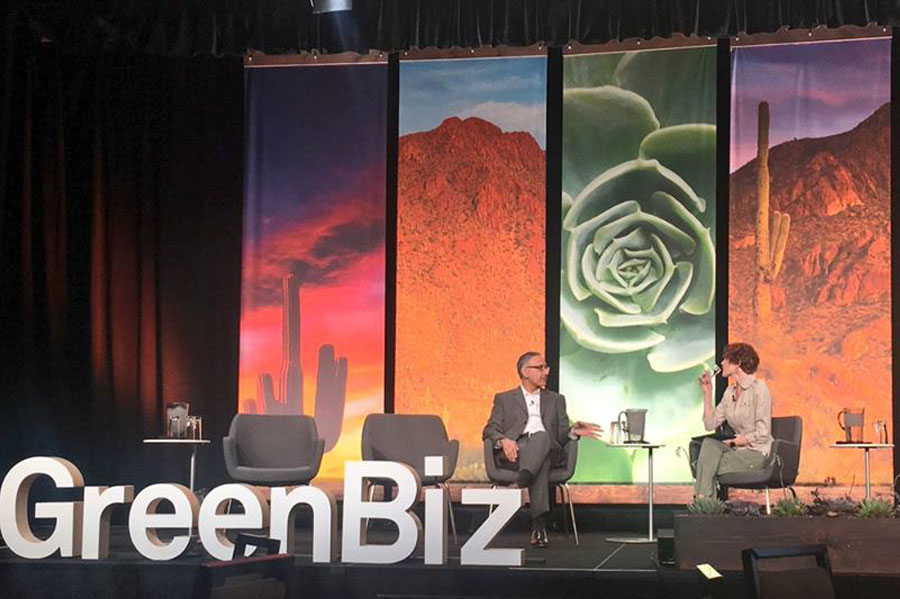
Amazon claims to have heard your frustrations. “Fundamentally, the experience around packaging is changing,” said Kara Hurst, Amazon’s head of worldwide sustainability, at GreenBiz 17. Hurst spoke about the company’s innovations around packaging to both enhance the customer experience and reduce waste.

Original Story: GreenBiz


What is Amazon Doing to Advance Sustainable Packaging?

Ever experience “wrap rage” when shopping online?

You wrestle with kitchen scissors through inches of sealed plastic to get that new pair of headphones free and think, “Why is there so much?” And have you ever removed a product from a box within a box within a box and think, “There has to be a better way”?

Amazon claims to have heard your frustrations. “Fundamentally, the experience around packaging is changing,” said Kara Hurst, Amazon’s head of worldwide sustainability, at GreenBiz 17. Hurst spoke about the company’s innovations around packaging to both enhance the customer experience and reduce waste.

Original Story: GreenBiz


0