


Finding Opportunity in a Changing World

As social entrepreneurs continue to push the boundaries of capitalism and seek solutions to the world’s largest problems, Tom Bird offers this advice: “Build your ‘stone, sponge, crispness’ skillset.”

Bird elaborates on that skillset in the interview below, but it’s a repertoire that has served him well. From a career in technology to decades on the front lines of microfinance and impact investing, Bird has developed an eye for opportunity in a changing world. His real-world experience, coupled with an M.B.A. from Stanford’s Graduate School of Business (GSB) and a graduate degree from Harvard Divinity School, has helped him guide companies, mentor entrepreneurs and nonprofits and build a new breed of business leaders. Real Leaders had a chance to catch up with Bird recently after he had completed a section of the Camino de Santiago in Spain.

If you like this, subscribe here for more stories that Inspire The Future.

You are an 18-year veteran of impact investing. How did you get your start?

After building and selling a Silicon Valley records and information management business in the 90s, my wife and I moved to the Boston area with our young sons. Big changes were all around and I was open to saying yes to things that I might not have earlier. A college friend invited me to a holiday party for the pioneering venture philanthropy firm New Profit, and after hearing Wendy Kopp from Teach for America and others speak that night, I was instantly hooked on the idea that lessons learned from business could be intentionally applied for social and environmental good. Around that time, I enrolled in a Master of Theological Studies program, which opened up access to the banquet table that is Harvard University.
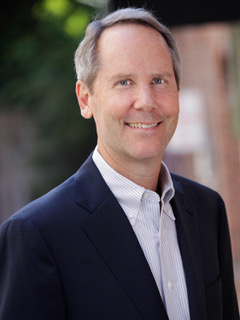
Tom Bird: “Build your ‘stone, sponge, crispness’ skillset.”

Over at the Kennedy School I took a class in Microfinance and started to compare and contrast venture philanthropy and what later came to be called impact investing by making grants to New Profit, and by adding a for profit investment in the microfinance firm MicroVest alongside my first investment in the social enterprise Care2. So, I started by being open, following my instincts to jump in, and then doing some critical analysis once I had some skin in the game with live projects to assess.        

What was an early impact investment and what did you learn from it?

Back in 2007, I met the founders of d.light while they were finishing up at Stanford’s GSB, and we hit it off instantly. Their original vision around replacing kerosene in the developing world (with what was later called “off-grid solar solutions”) was bold, well thought out, and really resonated. But the thing that got me over the hump was an assessment of their chances to successfully execute. Fast-forward ten years and d.light has been a true star in the impact world. Awards galore, 80 million lives touched, etc. etc. What I learned from them is that impact business stardom involves a circuitous route. There have been fits and starts, twists and turns, and some pretty hairy moments along the way. Even for a firm of d.light’s quality, impact business building isn’t linear.       

  

Tell us about the FARM Fund, your impact investing donor advised fund with ImpactAssets.

After several years of building a personal portfolio of seed stage impact investments, four Stanford GSB cronies approached me and said they liked what I was doing and wanted to help. They could see that the work was meaningful, but they all had full time gigs, and preferred to look over my shoulder rather than get too deep into the fray. So, the help offered was primarily in the form of adding cash rather than time. We agreed that financial returns did not need to accrue to us personally. The more we discussed the options, the more it became clear that the ImpactAssets donor advised fund product would be ideal to provide an administrative back end. Selective venture philanthropy projects could be supported (e.g. Global Giving Foundation) alongside the core impact investments. Portfolio financial returns would be available for recycling which created a sustainable flavor.

To manage the activities, we worked out a regular communications pattern with short quarterly written reports plus a “tracker” spreadsheet, and an annual dinner. The group has been able to keep a finger on the pulse of FARM, yet they are non-intrusive to the management efforts.

I’ll sometimes describe it this way: For an investor group that believes innovation and entrepreneurship can help meet global problems, the FARM Fund is a pooled, impact investment making, return recycling, donor advised fund, delivering blended returns unlike other vehicles that have a different feel and a significant toll.

You recently penned an article entitled, A Dad’s Story: How I learned to stop worrying and love the blockchain” that highlights how you and your sons are looking at blockchain through an impact lens. What are you finding out about this emerging technology and its relationship to impact?

Centralized power structures are often corrupt and favor the overdog. The decentralization inherent in blockchain may turn out to level the playing field for the underdog, and that is something I find worth supporting. But blockchain and other emerging technologies are pretty tough to understand for an older guy like me, so I need help. My 25- and 27-year-old sons are patiently teaching me (while sometimes pulling their hair out at my ignorance).

One concept you are exploring is “succession.”  With 18 years of experience, how do you pass on your knowledge of impact investing—whether to sons who have taught you about blockchain, or colleagues toe-dipping into impact investing? 

For a couple of years now I have been thinking of FARM as a “greenhouse.”  We’ve experimented and grown some things. The time has come to share “cuttings” to accelerate and provide leverage for others who want to come off the sidelines. The cuttings can be in financial or intellectual capital form. My hope is that those who run with the cuttings will add their own unique capabilities and far surpass what we have been able to accomplish with the original experiments.   

With your unique background in business, Silicon Valley and impact investing what’s the best advice you could give successful entrepreneurs who are looking to harness the power of business to generate a measurable, beneficial social or environmental impact alongside a financial return?

Continue to build your “stone, sponge, crispness” skillset. Stone as in relentlessness, grit, unstoppability which requires a clear understanding of your own motives. Sponge as in drink in vigorously but squeeze out the excess that you can’t use.  And be crisp in how you articulate the numbers. Just because you are doing good doesn’t mean you can be exempt from deeply understanding and communicating the math.

If you like this, subscribe here for more stories that Inspire The Future.
Finding Opportunity in a Changing World

As social entrepreneurs continue to push the boundaries of capitalism and seek solutions to the world’s largest problems, Tom Bird offers this advice: “Build your ‘stone, sponge, crispness’ skillset.”

Bird elaborates on that skillset in the interview below, but it’s a repertoire that has served him well. From a career in technology to decades on the front lines of microfinance and impact investing, Bird has developed an eye for opportunity in a changing world. His real-world experience, coupled with an M.B.A. from Stanford’s Graduate School of Business (GSB) and a graduate degree from Harvard Divinity School, has helped him guide companies, mentor entrepreneurs and nonprofits and build a new breed of business leaders. Real Leaders had a chance to catch up with Bird recently after he had completed a section of the Camino de Santiago in Spain.

If you like this, subscribe here for more stories that Inspire The Future.

You are an 18-year veteran of impact investing. How did you get your start?

After building and selling a Silicon Valley records and information management business in the 90s, my wife and I moved to the Boston area with our young sons. Big changes were all around and I was open to saying yes to things that I might not have earlier. A college friend invited me to a holiday party for the pioneering venture philanthropy firm New Profit, and after hearing Wendy Kopp from Teach for America and others speak that night, I was instantly hooked on the idea that lessons learned from business could be intentionally applied for social and environmental good. Around that time, I enrolled in a Master of Theological Studies program, which opened up access to the banquet table that is Harvard University.

Tom Bird: “Build your ‘stone, sponge, crispness’ skillset.”

Over at the Kennedy School I took a class in Microfinance and started to compare and contrast venture philanthropy and what later came to be called impact investing by making grants to New Profit, and by adding a for profit investment in the microfinance firm MicroVest alongside my first investment in the social enterprise Care2. So, I started by being open, following my instincts to jump in, and then doing some critical analysis once I had some skin in the game with live projects to assess.        

What was an early impact investment and what did you learn from it?

Back in 2007, I met the founders of d.light while they were finishing up at Stanford’s GSB, and we hit it off instantly. Their original vision around replacing kerosene in the developing world (with what was later called “off-grid solar solutions”) was bold, well thought out, and really resonated. But the thing that got me over the hump was an assessment of their chances to successfully execute. Fast-forward ten years and d.light has been a true star in the impact world. Awards galore, 80 million lives touched, etc. etc. What I learned from them is that impact business stardom involves a circuitous route. There have been fits and starts, twists and turns, and some pretty hairy moments along the way. Even for a firm of d.light’s quality, impact business building isn’t linear.       


Tell us about the FARM Fund, your impact investing donor advised fund with ImpactAssets.

After several years of building a personal portfolio of seed stage impact investments, four Stanford GSB cronies approached me and said they liked what I was doing and wanted to help. They could see that the work was meaningful, but they all had full time gigs, and preferred to look over my shoulder rather than get too deep into the fray. So, the help offered was primarily in the form of adding cash rather than time. We agreed that financial returns did not need to accrue to us personally. The more we discussed the options, the more it became clear that the ImpactAssets donor advised fund product would be ideal to provide an administrative back end. Selective venture philanthropy projects could be supported (e.g. Global Giving Foundation) alongside the core impact investments. Portfolio financial returns would be available for recycling which created a sustainable flavor.

To manage the activities, we worked out a regular communications pattern with short quarterly written reports plus a “tracker” spreadsheet, and an annual dinner. The group has been able to keep a finger on the pulse of FARM, yet they are non-intrusive to the management efforts.

I’ll sometimes describe it this way: For an investor group that believes innovation and entrepreneurship can help meet global problems, the FARM Fund is a pooled, impact investment making, return recycling, donor advised fund, delivering blended returns unlike other vehicles that have a different feel and a significant toll.

You recently penned an article entitled, A Dad’s Story: How I learned to stop worrying and love the blockchain” that highlights how you and your sons are looking at blockchain through an impact lens. What are you finding out about this emerging technology and its relationship to impact?

Centralized power structures are often corrupt and favor the overdog. The decentralization inherent in blockchain may turn out to level the playing field for the underdog, and that is something I find worth supporting. But blockchain and other emerging technologies are pretty tough to understand for an older guy like me, so I need help. My 25- and 27-year-old sons are patiently teaching me (while sometimes pulling their hair out at my ignorance).

One concept you are exploring is “succession.”  With 18 years of experience, how do you pass on your knowledge of impact investing—whether to sons who have taught you about blockchain, or colleagues toe-dipping into impact investing? 

For a couple of years now I have been thinking of FARM as a “greenhouse.”  We’ve experimented and grown some things. The time has come to share “cuttings” to accelerate and provide leverage for others who want to come off the sidelines. The cuttings can be in financial or intellectual capital form. My hope is that those who run with the cuttings will add their own unique capabilities and far surpass what we have been able to accomplish with the original experiments.   

With your unique background in business, Silicon Valley and impact investing what’s the best advice you could give successful entrepreneurs who are looking to harness the power of business to generate a measurable, beneficial social or environmental impact alongside a financial return?

Continue to build your “stone, sponge, crispness” skillset. Stone as in relentlessness, grit, unstoppability which requires a clear understanding of your own motives. Sponge as in drink in vigorously but squeeze out the excess that you can’t use.  And be crisp in how you articulate the numbers. Just because you are doing good doesn’t mean you can be exempt from deeply understanding and communicating the math.

If you like this, subscribe here for more stories that Inspire The Future.

Who Has The Guts To Change The World?

I saw this coming clearly. Five years ago I attempted to raise venture capital to start a free University. The opportunity was huge. You know a market is ripe for disruption when the price of something becomes outrageous in relationships to its value.

Welcome to the cost of college. It’s not a secret that college tuition rates zoomed past any rational connection to inflation because of low-cost government insured loans. These no-questions asked loans make it easy for colleges to maintain one of the most inefficient business models in history.

A quick look at college budgets reveal how relatively little is actually spent on classrooms, professors, research and teaching compared to building and maintaining huge inefficient campuses and scores of activities unrelated to education. Student demand was fueled by the public relations myth that college education would automatically lead to higher earnings in the good life. Of course higher education is correlated with all the things we want for children – higher earnings, happier marriages, greater health and longer lives. But correlation is not cause, and living a truly good and meaningful life is more complicated than earning a degree.

And spending as much as a quarter of a million dollars to learn what you can learn for virtually free doesn’t make much sense.

In fact, it’s outrageous. It’s outrageous because this craziness has created a generation of Americans with over $1 trillion in student debt. This is not the path to the good life. The fact is our 20 to 30 year-old children are not starting businesses, getting married, buying homes or becoming independent.

The primary economic reason for their ‘stuckness’ is that the soundtrack to their lives is the drumbeat of student debt.

The insane irony is that they are not even earning as much as their parents at the same age. I’m not simply an observer of these facts, I’m a fully engaged parent, coaching my three children between 25 and 30 to help them find their launch code to blast free. It isn’t easy even for the very capable and motivated.

The good news is that we are seeing the beginning of a new era of worldwide education.

For over 40 years we have known that the concept originally called “distance learning” can be more effective than in-person classroom teaching if some simple principles are followed. 1) a great, engaging, expert teacher using multimedia, 2) social learning with peers and 3) application of learning by doing. What educational researchers have discovered over the last 10 years is a way to combine online multimedia teaching, Skype tutoring, social learning where possible “learning-meet-ups.” All this both accelerates and deepens learning. Hallelujah! The educational revolution is marching ahead in full fury.

Universities and colleges are having business model meltdowns behind closed doors because they know a new generation of digitally savvy college students are simply not going to pay $50,000 a year for a college education.

When a major name brand university breaks ranks to create a low tuition option for a full bona fide degree earned largely online combined with a network of onsite experiences, hundreds of colleges will close. The university combatants are already circling each other in a worldwide cage fight to see who goes first. Already 200 universities ranging from Harvard and MIT to colleges in Europe, India and Australia are offering courses by partnering with education start ups liked EDx, Coursera, and Udacity. Imagine this… what if a university like Stanford got together with Google and multimedia creators like Disney to create courses taught by one of the world’s most charismatic experts.

What if the development and maintenance of these courses were paid for by large corporations whose brands were tied to certain subjects?

Like Johnson & Johnson on health related topics or GE for engineering classes. And what if Stanford partnered with Barnes & Noble to turn their declining bookstores into a network of Stanford student unions found in almost every city in America? And what if you could earn a first class four-year Stanford bachelors’ degree for say… $10,000? How many millions of students would choose this? One bonus for a school like  Stanford is that they have impressive athletic teams.

Imagine every basketball game being a home game no matter where they travel? Just think of how many T-shirts they could sell! The good news is that something like this going to happen. Education is one of the largest economic enterprises in the world. Using today’s technology to improve education and create a whole new business model is simply too tempting to ignore.

The question is who will have the leadership courage to bless the entire world with truly universal, first class education. I’m not using the words “leadership courage” lightly. There are many who believe a well-rounded education is the ultimate path to world peace.

You see, two of the outcomes from a university education are open-minded tolerance of people who are different than you and opportunity.

Open-minded people who have opportunity don’t want to fight; they want to build. The future we must build is one of sustainable abundance. For that, we need the full talent of our global brainpower. Everybody has a difference to make. My personal attempt to get something like this kicked off via a project called Citizen One was too far ahead of its time. But now there are others who are far more capable that me, who will literally change the world. I am rooting for them… how about you?

If you could change the world, what would you do?


Who Has The Guts To Change The World?

I saw this coming clearly. Five years ago I attempted to raise venture capital to start a free University. The opportunity was huge. You know a market is ripe for disruption when the price of something becomes outrageous in relationships to its value.

Welcome to the cost of college. It’s not a secret that college tuition rates zoomed past any rational connection to inflation because of low-cost government insured loans. These no-questions asked loans make it easy for colleges to maintain one of the most inefficient business models in history.

A quick look at college budgets reveal how relatively little is actually spent on classrooms, professors, research and teaching compared to building and maintaining huge inefficient campuses and scores of activities unrelated to education. Student demand was fueled by the public relations myth that college education would automatically lead to higher earnings in the good life. Of course higher education is correlated with all the things we want for children – higher earnings, happier marriages, greater health and longer lives. But correlation is not cause, and living a truly good and meaningful life is more complicated than earning a degree.

And spending as much as a quarter of a million dollars to learn what you can learn for virtually free doesn’t make much sense.

In fact, it’s outrageous. It’s outrageous because this craziness has created a generation of Americans with over $1 trillion in student debt. This is not the path to the good life. The fact is our 20 to 30 year-old children are not starting businesses, getting married, buying homes or becoming independent.

The primary economic reason for their ‘stuckness’ is that the soundtrack to their lives is the drumbeat of student debt.

The insane irony is that they are not even earning as much as their parents at the same age. I’m not simply an observer of these facts, I’m a fully engaged parent, coaching my three children between 25 and 30 to help them find their launch code to blast free. It isn’t easy even for the very capable and motivated.

The good news is that we are seeing the beginning of a new era of worldwide education.

For over 40 years we have known that the concept originally called “distance learning” can be more effective than in-person classroom teaching if some simple principles are followed. 1) a great, engaging, expert teacher using multimedia, 2) social learning with peers and 3) application of learning by doing. What educational researchers have discovered over the last 10 years is a way to combine online multimedia teaching, Skype tutoring, social learning where possible “learning-meet-ups.” All this both accelerates and deepens learning. Hallelujah! The educational revolution is marching ahead in full fury.

Universities and colleges are having business model meltdowns behind closed doors because they know a new generation of digitally savvy college students are simply not going to pay $50,000 a year for a college education.

When a major name brand university breaks ranks to create a low tuition option for a full bona fide degree earned largely online combined with a network of onsite experiences, hundreds of colleges will close. The university combatants are already circling each other in a worldwide cage fight to see who goes first. Already 200 universities ranging from Harvard and MIT to colleges in Europe, India and Australia are offering courses by partnering with education start ups liked EDx, Coursera, and Udacity. Imagine this… what if a university like Stanford got together with Google and multimedia creators like Disney to create courses taught by one of the world’s most charismatic experts.

What if the development and maintenance of these courses were paid for by large corporations whose brands were tied to certain subjects?

Like Johnson & Johnson on health related topics or GE for engineering classes. And what if Stanford partnered with Barnes & Noble to turn their declining bookstores into a network of Stanford student unions found in almost every city in America? And what if you could earn a first class four-year Stanford bachelors’ degree for say… $10,000? How many millions of students would choose this? One bonus for a school like  Stanford is that they have impressive athletic teams.

Imagine every basketball game being a home game no matter where they travel? Just think of how many T-shirts they could sell! The good news is that something like this going to happen. Education is one of the largest economic enterprises in the world. Using today’s technology to improve education and create a whole new business model is simply too tempting to ignore.

The question is who will have the leadership courage to bless the entire world with truly universal, first class education. I’m not using the words “leadership courage” lightly. There are many who believe a well-rounded education is the ultimate path to world peace.

You see, two of the outcomes from a university education are open-minded tolerance of people who are different than you and opportunity.

Open-minded people who have opportunity don’t want to fight; they want to build. The future we must build is one of sustainable abundance. For that, we need the full talent of our global brainpower. Everybody has a difference to make. My personal attempt to get something like this kicked off via a project called Citizen One was too far ahead of its time. But now there are others who are far more capable that me, who will literally change the world. I am rooting for them… how about you?

If you could change the world, what would you do?


0