Transforming The Way The World Views Failure

Fear of failure is an epidemic that stifles human potential and it’s time we rethink it.

Whether stemming from a lack of confidence or negative past experiences, the effect of fear of failure can be immobilizing, stopping most people before they even get started.

Over the years, I’ve coached hundreds of clients from all over the globe. My clients have been entrepreneurs, executives, artists and filmmakers. What I’ve learned is that almost everyone experiences fear of failure, regardless of how successful or accomplished they may be.

The truth is that we all fail far more often than we succeed, but because we are conditioned to constantly project success, our failures often go unseen, doing more damage than good.

I believe projecting success while never recognizing failure only perpetuates fear of failure. I believe that life’s biggest lessons can come from some of life’s biggest failures.

I believe failure allows us the opportunity to practice humility and compassion while building resilience and wisdom.

I believe fear of failure is an epidemic that stifles human potential and this is my attempt to inoculate it.

We Fail Forward: The Podcast On A Mission To Transform The Way The world Views Failure

On the show, we interview massively successful entrepreneurs, innovators and changemakers about their biggest failures. Our goal is to uncover how those failures have contributed to their success, shaped who they’ve become YOU the listener to play bigger and fail forward.

Each guest submits a “Resume of Failures” used as interview prep and then published on the website.

You can check them and more out at: wefailforward.org


Some Thoughts on the Challenges of Leadership in the Digital Age

Digitization brings about a new need for competent leadership. Today, we’ll take a look at the most dramatic changes.

Leadership in the digital age will be one of the defining themes of Global Female Leaders 2017. If you haven’t done so already, we invite you to take a look at our 2017 agenda in order to discover every highlight of this year’s event!

In the digital age, competent leadership may be the most important skill any company can cultivate. Because digitization changes companies. It changes working cultures and processes, customer behaviour and corporate communications. It also brings about a new need for, as well as new risks of corporate communications. Let’s just look at three of them!

Challenge 1: Digitization changes the working culture

It challenges employer-employee relationships.

This challenge has multiple facets. On the one hand, workers demand a digitized and modern work environment. In private, most of them use smartphones, social media and consumer electronics that fit their needs. Of course they want access to the most comfortable and hip devices at work, too. At the same time, employment changes too. We can see more and more freelancers, armed with laptops and Starbucks coffees, who will do project work and move on to the next job thereafter.

It challenges the way we communicate.

Digitization also changes the way we communicate. This goes especially for the younger generations who prefer text messages of meetings, but who also have new ideas on hierarchy and teamwork. This brings about a new potential for conflicts within an organization, since the expectations towards work can vary drastically between the members of the now four generations that work within most companies.

In essence, digitization diversifies the means of, expectations towards and ways to put into practice communications and work in general.

Challenge 2: Digitization changes customer behaviour and brings about the need to stay innovative

This is a big one! Similar to the expectations of employees, the expectations of customers are changing, too. Customers today are all about personalized products, about subscribing to platforms rather than buying commodities for good. They also want to talk their companies on Facebook and Twitter, read reviews on their products and chime in when they have ideas about product innovation.

This brings about the need for organisations to stay agile, innovative and fast. It brings about a new kind of competition, namely the race towards developing the most consumer-friendly business models and bringing them to market as fast as possible. Most of those are also data-driven and demand a high level of cooperation between the different units of organisation. Also, let’s not forget that many companies are forced to bring in new skills and know-how in order to branch out.

In essence, this puts pressure on old organizational structures, forces us to dissolve the boundaries between departments and change the way they work together.

Challenge 3: Digitization changes corporate communications

Employees as well as customers change how they interact with companies. And in turn, this changes corporate communications. It becomes more transparent and has to become more honest and open. Within this big shift leaders will have to adopt new strategies in order to guide their organizations towards a digital mindset.

Original Story: The Global Summit Series


Notes on Movement Building From a Convener

Movements happen when people who thought they were alone discover valuable strangers who become unlikely allies.

I am flying to Armenia tomorrow to keynote the Impact Investing for Development Summit (IID) convened by United Nations Development Programme (UNDP) and knowledge partner INSEAD Social Entrepreneurship Initiative. The Summit will bring together development agencies, sovereign funds from the Nordics, Eastern European and Middle Eastern impact investors so that development practitioners can figure out how to work seriously with impact investors. The reality of climate change and societal risk has led IID Summit participants to recognize that public funds and philanthropic funds are not enough to handle the task.

At the same time, we at SOCAP are convening a session in June in Manhattan to see what it will take to integrate impact investing with Wall Street at scale. That initiative, The Good Capital Project, (GCP) will be a two year online mapping project that will convene people from Wall Street, the financial sector, impact investing and the social capital market to catalyze collaboration and accelerate capital flows into purpose driven investments. After our first meeting in June, GCP participants will convene again at SOCAP in San Francisco in October, and on other event platforms as the participants require. These people may have never worked together before GPC, but SOCAP’s secret sauce is bringing the people out of their tents at the oasis; valuable strangers discovering they can be unlikely allies. Movement building, even among strangers, is right up our alley.

Written by: Kevin Jones

Original Story: SOCAP


How to Stand up For Yourself in a Gender Bias World

Right now, I am very busy teaching companies how to create gender synergy.  This requires a change of culture as well as a change of behavior of both men and women who want to work together more effectively.

The process of combining the strengths of blue brains and pink brains into a purple brain culture is actually fairly simple. But the forces of resistance are difficult to defeat because they are largely invisible.

We live in a world permeated with bias.

In virtually all human systems there is an advantaged group and everyone else who are to some degree disadvantaged. The advantaged group establishes the norms, expectations, and rules that maximize opportunities for themselves and frequently minimize opportunities for all others. Leaders of the advantaged group typically claim they have no bias and that “others,” who find it difficult to succeed under their rules, are lazy, stupid, unmotivated, or inferior. If this continues many members of the disadvantaged group lose their motivation to excel and thus confirm the stereotype tattooed on them by the people making the rules. This justifies continued bias from the advantage group toward the disadvantaged others.

Bias is not only unfair, it is a form of identity theft.

It literally robs people of their core motivations to grow in their capabilities and contributions because the rules for success are rigged against them.

I see this bias clearly and consistently in large organizations that have success rules for senior leadership that have favored men and alpha male behavior. It is so rampant in technology and science based companies that Megan Kelly just conducted a television show interviewing “Women of Silicon Valley” in which a group a very bright, accomplished and capable women gave their accounts of the choking impact of workplace gender bias.

The good news is I’m talking to more and more male leaders who sincerely want to extinguish bias and establish cultures that actually thrive on personal and cognitive diversity.  But it is not easy.  There is a backlash.  We have clear evidence that establishing quotas for women in leadership makes men angry and women feel patronized. We also know that bias training does not actually diminish bias. Bias is only diminished when members of the advantaged group have many positive experiences with members of the disadvantaged group.

So, the only way for males to genuinely support promoting more women in leadership is to have more women leaders.

The problem with the simple notion is that if the leadership culture maintains the norms and rules that reward Blue brain behaviors of competitiveness, decisiveness and muscular confidence AND demand that women adopt these same characteristics to succeed, we will lose the benefits of cognitive diversity. And the vicious cycle will continue.

It’s time to consider this…

Dr. Dan McAdams theory of personality proposes that our core personality is strongly driven by our genetics, which stimulate and regulate our neuro transmitters and hormones that shape our moods, perceptions, motivations, and social interactions. Our core personality traits tend to be binary. For example, we tend to either be pro-social (care for others) or pro-self (self-interested).  We tend to either enjoy and embrace new experiences or we tend to value the status quo. These genetic tendencies are very strong but can be overwhelmed by what McAdams calls our adaptive personality.

If we find ourselves in a social system that does not value our core personality we adapt or rebel. For example, a teenager whose core personality embraces novelty and minimizes risk, with highly conventional parents who are sensitive to threats and deeply value the status quo, will often adapt by either becoming secretive and sneaky or an in-your-face rebel.

Personality adaptations can be very positive. A thrill seeking teenager can become a courageous scientist who is delighted to shake up the status quo to advance science. A threat sensitive, structured thinker can become a valuable quality control expert at a nuclear power plant.

However, if we find ourselves in a highly biased social system we may feel we have to mal-adapt to survive.  So, if you really need your job and your boss is a sexist tyrant you may find yourself constantly finding ways to work around the daily minefield to keep your paycheck. If you keep this up for long the unfairness of the situation will cause chronic stress and may even lead to depression.

“Refuse to be discouraged when you find yourself in a disadvantaged position.”

In a less extreme situation in which you observe that men or people with other advantaged class credentials, like an Ivy League degree, are being more quickly promoted without merit you can lose your ambition. Of course losing your ambition is a self-fulfilling prophecy that confirms the bias of the very people who are treating you unfairly.

It is a sign of emotional health to want to feel valued and fulfilled.  Yet all of us find ourselves in situations where we feel neither.  If that environment is dominant in our lives we need active countermeasures to avoid acting in the way it justifies the prejudices of the cultural rule makers.

Here are three ways of being an advocate for your best potential self.

  1. Voice Your Vision.  It is critical that you have an agenda for your life and your career.  Otherwise you will spend your life reacting to other people’s agenda.  You will feel undervalued and exhausted. Instead, imagine yourself at the end of your life. What has been your life story?  What life choices did you make that you’re the most proud of.  What work did you do that was fulfilling? Just begin by making a list of words and phrases that describe the best career and life that you can imagine.  You’ll need to update this because as you live you will learn.  The most important thing is to have an agenda that will guide your choices, your view of opportunities, and most important what to say NO to.
  2. Optimize Your Strengths.  Pay attention to what you do well that you enjoy.  You can do this by keeping a Flourish Journal in which you write down at the end of each day something that you did well you enjoyed.  Then you ask yourself, “What was the secret to your success?”  This is a way of discovering your motivated talents.
  3. Stand up for Yourself.  We live in a biased world that is unlikely to change anytime soon.  Refuse to be discouraged when you find yourself in a disadvantaged position.  Instead seek to stand out…. not fit in. Ask for what you want when you want it. Don’t demand it. Just rather make it a clear request.  Stay calm, consistent and relentless. That’s what drives change.

One last thought… There is a current fad in large companies to establish women’s resource organizations, like the “Women of Wondertech.” Over time, it is common for these organizations to devolve into internal networking groups with speakers.  These groups tend to reinforce the view that women just like getting together to talk about their problems. The real opportunity for women’s resource groups is to become a force for change. These groups should have an agenda that advocates for policies such as family leave, childcare allowances, work from home, flex time, career advancement, sponsorship, and a host of other bias leveling practices that should be actively advocated for with the CEO. Use your women’s resource groups to ask for what you need and what you want.

The Bottom Line

Bias will only be overcome when disadvantaged people quit being silent or long-suffering victims. The next generation has already decided that change is necessary. The future will not wait. Now is the time for change.

 

The Digital Side of Leadership

Digital transformation has become the buzzword of our age, and while the economy is becoming ever more digital, the demands on management are constantly growing.

The expectations on managers in respect of their digitization skills are increasing, and this is expressed clearly in the vacancies that are waiting to be filled. And not just in the IT-related job descriptions: requirements are also tending increasingly towards digitization in many positions quite unrelated to IT. Most specialists are classically trained and have not experienced digitization in a focused manner or via training. In their leadership role, they are now being tested in a new and completely different manner.

What is digital competence?

The most important thing is the ability to continuously acquire and implement new knowledge. It’s also crucial in a complex world to keep track of the situation, identify problems and work towards solutions. With regard to the strategic alignment of a company, executives are in demand from the planning stage onwards: to set the course of the company with their expertise and know-how. Once digital transformations are implemented in the company, managers need to be able to support the strategy, lead the employees and, in the best case, to inspire them even.

A “digital” executive needs certain skills

Helping employees adapt to the new situation is one of the most important tasks of a manager in the digital environment. Specifically, this means that they need to ensure that their staff receive additional training quickly and reshape tasks so that the full potential of an employee comes into play.
The classic skills such as empathy, assertiveness and complexity management remain important, as well as technical skills. But in an environment where new jobs are being created constantly with new, modified requirements, digital competence is vital.

Going digital – getting there

Most companies offer their employees training, professional change management with external support. This gets employees fully involved and, at the same time, provides them the freedom to make and implement innovations. In doing so, they create new and sometimes unexpected opportunities. There is a downside, however: there is often too little space, time and budget available, and no one really knows for sure how much time remains for the transformation. This is certainly the greatest risk – not being fast enough. But where it succeeds, digitization will bring more flexibility into the labour market. The workplace itself plays an ever-smaller role, because nowadays it is possible to exchange data almost everywhere via digital channels. And this exchange remains very important – even in the digital age – because a manager still works in close cooperation with his or her employees, regardless of whether they possess these digital skills or not.

Andreas Wartenberg has 25 years of experience as a personnel consultant and fills management positions in the technology sector and other industries.


Bring Your Love to Work and Leadership

Bring your love to your career and leadership style.

Share your most valuable intangibles, such as your knowledge, to promote success of others. This is a key message I’ve been sharing for 15+ years, and now, I’m ready to introduce it to a new generation. It’s time for us to champion the idea that you can be successful, and at the same time, significant.


https://www.youtube.com/watch?v=Pk_DURk8M6k

Author: Tim Sanders


Become a Leader on Your College Campus Through Entertainment for Change

Blending social impact with invaluable leadership experience and a love for the arts.

In high school, many of us racked up volunteer hours because we either genuinely cared about community service or we wanted something else to put on our resume/college applications. After coming to college, how many people actually stayed involved in giving back to their community? In the midst of school life, social life, and catching up on sleep, it can be easy to forget about social and environmental issues that plague “the real world.”

Now, all that seems to matter is having leadership positions, case competitions, and job interviews. A new nonprofit startup, Entertainment for Change, allows you to blend both your academic goals with social impact work. Plus, who doesn’t like to be entertained?

From the founder, Jade Zaroff:

“Entertainment for Change has a mission to empower college students to use their artistic talents as an outlet for education, social impact, and self-expression. EFC plans on putting talent competitions infused with social/environmental messaging in colleges nationwide.

This chapter in your life as a college student is a chapter full of growth and foundations. You are figuring out your core values, exploring your passions, and turning them into careers…and simultaneously adapting and transitioning into a community bigger than yourself. No matter your school, there is no greater satisfaction than leaving a legacy at the place that had given you the tools to grow.

Each of us at Entertainment for Change have felt that sense of pride for our schools, and watching our mission come to life at the places we called home is incredibly fulfilling, and fun!

If you are interested in leaving your legacy and becoming an EFC Student Ambassador please Email: contact@entertainmentforchange.com

www.entertainmentforchange.com.

-Jade ”

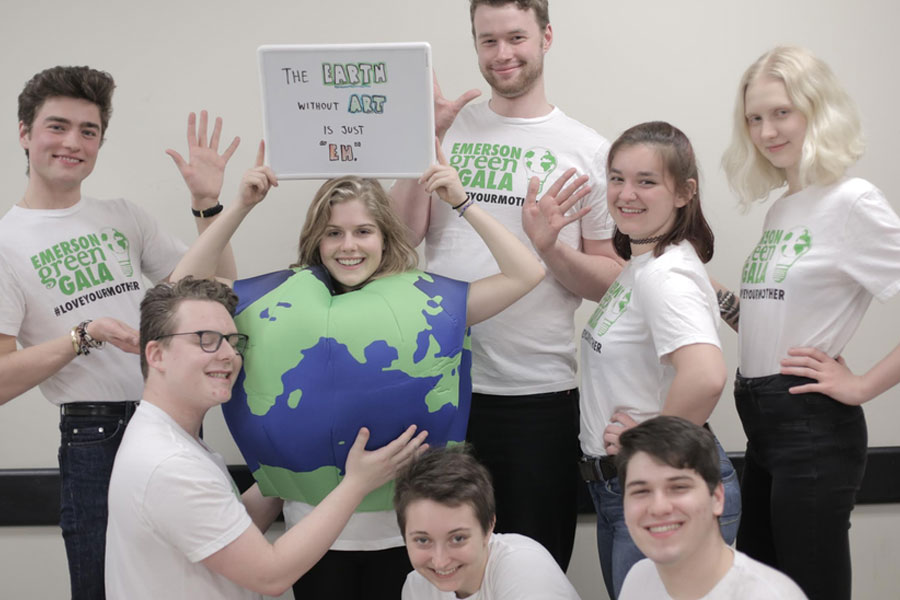
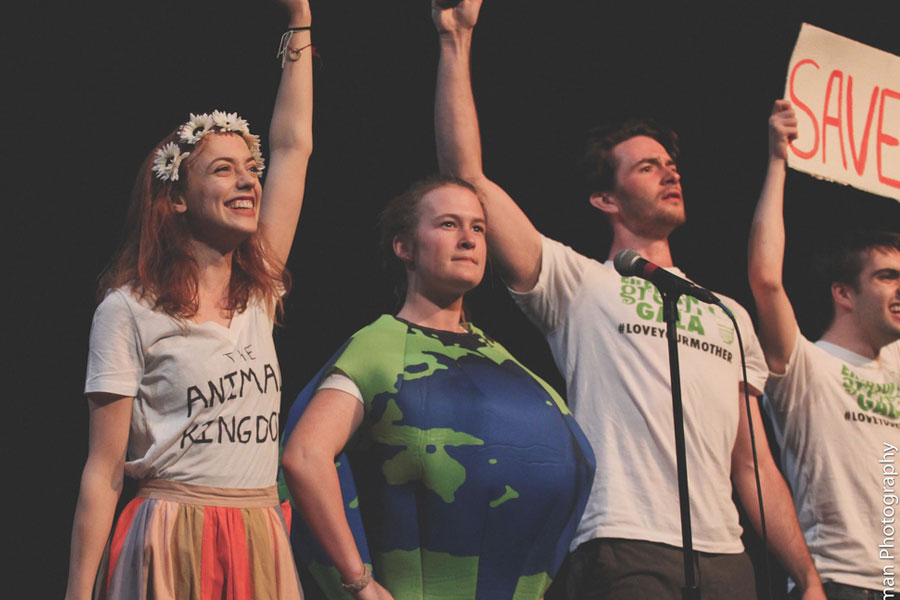
EFC allows college students to use their talents to spread awareness about current social and environmental issues. Jade Zaroff was inspired to found EFC after creating and producing the Green Gala at Emerson College three years ago, which now runs annually at the college. This nonprofit organization is currently aiming to expand its reach to universities nationwide, and needs ambitious college students to spread the word at their campuses. The first EFC collegiate competition will be taking place at Florida State University on April 9, 2017, and the 3rd Annual Emerson Green Gala will be April 14, 2017!

EFC competitions encourage students to use their passions and skills to spread awareness about issues that matter to them. However, these performances can’t happen without a passionate and hardworking student ambassador willing to take on the leadership position necessary to put this event on their campus!

Becoming a Student Ambassador will be a wonderful way to gain experience in leadership, marketing, fundraising, communication, production, networking, professionalism, and budgeting experience — and participating in the competition as a performer will allow you to compete for a $1000 cash prize.

Original Story: Odyssey


Leadership in the Spotlight

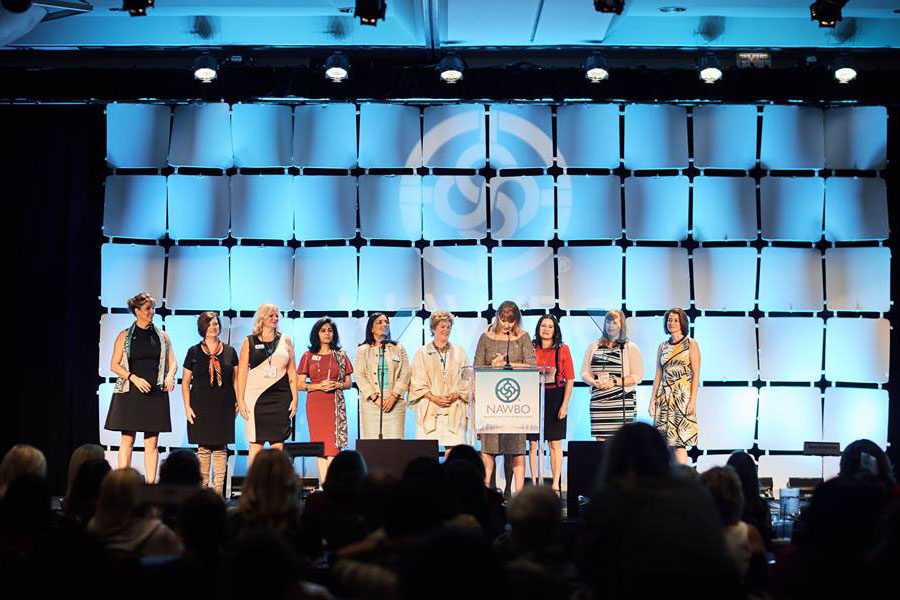
As women business owners, when we think about the topic of leadership the theme of this month’s issue of NAWBO ONE a lot of things come to mind.

We are leaders in our businesses, households and communities. We have friends, customers and vendor partners in prominent leadership positions in corporate America. And, of course, with election season in full swing, we think about our political leaders both male and female and the issues we care about most that we hope they’ll embrace and support.

As the voice of women business owners and with advocacy at the heart of our organization and its founding, NAWBO is particularly focused right now on our political leadership. We are advocating for more women to run for political office, and for more of those who make it into seats to get behind women-owned and small businesses issues.

To this end, we have released a 2016 public policy agenda to help women business owners who are part of our community and the elected officials we interact with to understand what we care about most issues that are critical to our personal and business health. The issues we have chosen to pursue benefit the majority of our NAWBO members while also increasing our visibility and credibility with elected officials, agency personnel, peer organizations and members of the media.

They include:

  • Access to Capital
  • Education and Workforce
  • Government Contracting
  • International Trade
  • Regulatory Reform
  • Taxes

Additionally, we have chosen to expand our agenda from last year to include other issues that impact women entrepreneurs, such as breast cancer, Alzheimer’s, pension reform and retirement planning. By broadening our focus, we increase our ability to build coalitions and credibility with leaders of both political parties.

A few weeks back, I was thrilled to participate in a town hall-style event in New Hampshire one day before one of the presidential debates. Hosted by the Job Creators Network (JCN) together with the Independent Women’s Forum and moderated by CNN Political Commentator Margaret Hoover, this event brought together local and national business leaders to discuss what women really want this election season is it issues like reproductive rights and the gender pay gap that typically get top billing in the media, or economic issues that impact job creation and opportunity, like a poll recently found?

The women I was proud to speak alongside, including Sabrina Schaeffer, Executive Director at the Independent Women’s Forum, and Teresa R. Rosenberger, President of Divine Strategies, a local business consultancy, focused on the economic hurdles women face to succeeding in business, highlighting the challenges of overregulation, overtaxation and a lack of access to capital. Click here to view a video of this discussion.

As always, I’d love to hear from you! What leadership qualities do you look for in your elected officials, in your own employees, in your customers, etc.? And what issues do you care about most this election season? Together, as leaders and advocates, we can make a difference.

Written by: Crystal Arredondo, NAWBO National Board Chair

Original Story: Nawbo


Equality: What Does it Mean?

Equality means different things for different people and generations.

For the women who founded NAWBO more than 40 years ago, it was about being able to take out a line of credit to start or grow their business without their husband, brother or father cosigning. For women business owners today, it’s about equality in pay, in the boardroom, in elected offices, in government procurement opportunities and more. And for women in other parts of the world, especially in developing nations, equality often takes on a completely different meaning—like the ability to work or receive an education.

Here are a few recent statistics from Makers (the largest video collection of women’s stories online) that tell the story:

  • In 2015, only half of the world’s working-age women were in the labor force, compared to 77 percent of working-age men.
  • Women with full-time jobs still earn only about 77 percent of their male counterparts’ earnings.
  • African-American women earn 64 cents and Latina women earn 56 cents for every dollar earned by a Caucasian man.
  • 62 million girls are denied an education all over the world. 
  • Every year, an estimated 15 million girls under 18 are married worldwide, with little or no say in the matter.
  • 4 out of 5 victims of human trafficking are girls. 
  • Around the world, only 22 percent of all national parliamentarians are female. That’s double the number in 1995, but still a marker of slow change.
  • Women currently hold 24, or 4.8 percent, of CEO positions at S&P 500 companies.

As women and women business owners, one of our greatest weapons in our fight for true equality is our voice which is even more powerful when combined together as a movement of thousands of smart, passionate NAWBO members from across the United States. Together, we can speak out on the issues that are most important to all of us, in our communities, in our states and in our nation’s capital. Learn more about this powerful NAWBO voice and how you can be part of it here.

This issue of NAWBO ONE features an equality theme. In it, you’ll revisit this summer’s NAWBO Advocacy Day where our members from across the country gathered in Washington, D.C. to meet with and learn from key political decision makers and have their voices heard. You’ll also read about how equality within our own businesses benefits us and makes us stronger.

Written by: Teresa Meares

Original Story: GreenBiz


Six Great Sustainable Building Ideas

Young architects from around the world have created some amazing sustainable structures that are helping to solve everyday problems, while also decreasing carbon emissions and utilizing natural materials. Below are six innovative and sustainable architectural solutions that are contributing to a better world.


http://www.instagram.com/p/BLE7gW2heEu/?taken-by=hi.its.gabor


http://www.instagram.com/p/BKkvJrugvHe/


http://www.instagram.com/p/BKrPI7djYCC/?taken-by=aussietruffles


http://www.instagram.com/p/BK48KFiAzsK/?taken-by=sigitkusumawijaya


http://www.instagram.com/p/BKnwNuPjqKS/?tagged=sustainablearchitecture


http://www.instagram.com/p/BC8OXasBf2P/?taken-by=partisansarchitecture