

The Difference Between ‘Minimum Wage’ and ‘Living Wage’

“What is the Difference Between ‘Minimum Wage’ and ‘Living Wage’? I went to Sri Lanka to find out.

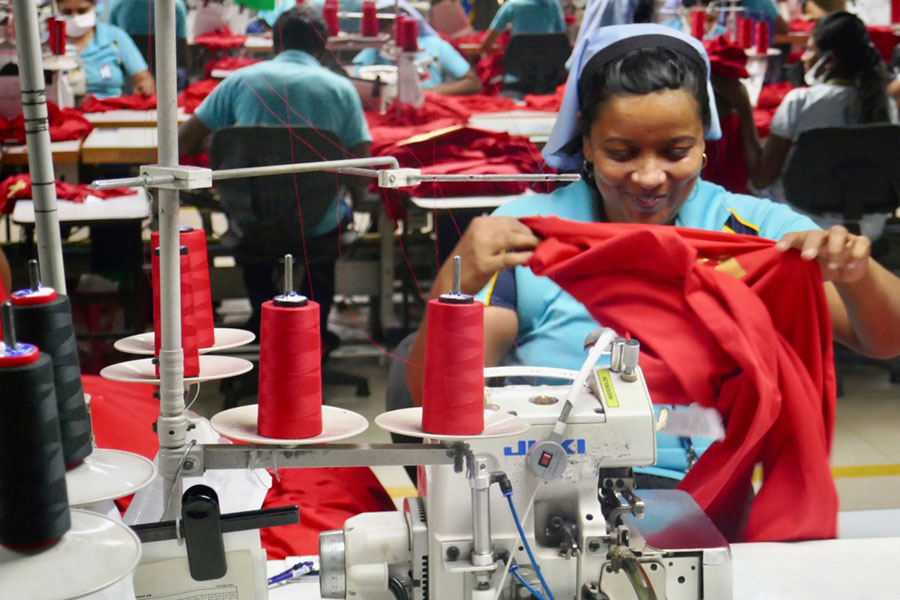
Five days, four design students, three factory tours and two garment worker visits, resulted in one unforgettable behind the scenes journey to Sri Lanka. As the Vice Chair of my family’s foundation, The Cordes Foundation, I traveled to Sri Lanka a few years ago with Remake, a non-profit focused on building the conscious consumerism movement. The purpose of this ‘Peace Corps for Fashion’-inspired trip was to encourage people who have the power to impact the fashion industry to experience the other side. The side that remains hidden beneath the beautiful images on magazine covers and runway shows.

Having previously worked for high-end designers and magazines, I began learning about the “not so glamorous” side of the fashion industry. When I read that 80% of the supply chain were women and 98% were not being paid a living wage, I felt compelled as a conscious consumer, investor and philanthropist to change these statistics. The Cordes Foundation was built with a mission to provide economic opportunities for women and therefore it became clear that ethical fashion would need to become a significant focus of our work.

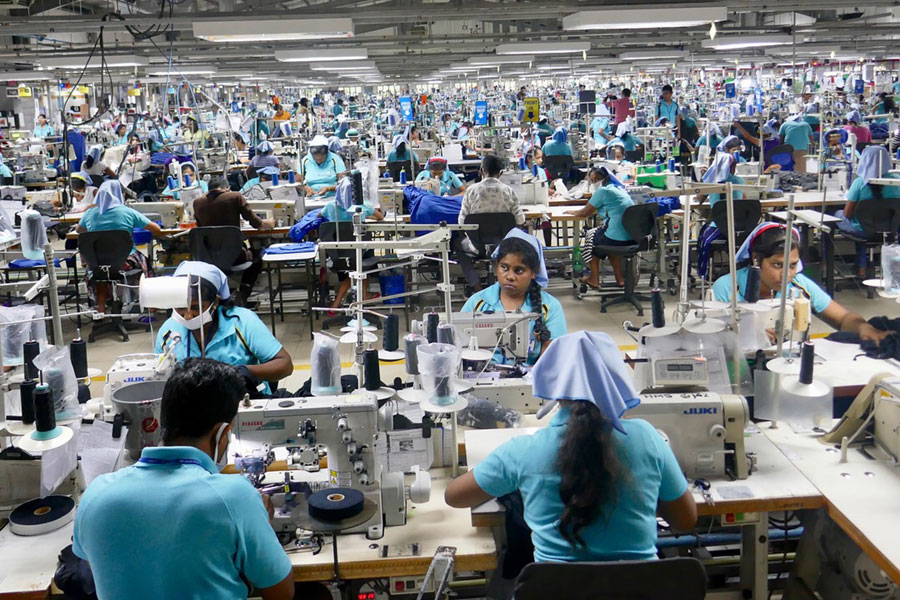
From watching the harsh, chemically-intense dye process of denim to speaking directly with the women who work endless hours to ensure our Western wardrobes are fully stocked, I returned to the US with a stronger understanding and appreciation for the people and process behind our clothes. I was particularly moved when one garment worker noted that a single t-shirt is touched by around 40 pairs of hands.

Another moving conversation was with activist Ashila Niroshine Mapalagama, Founder of Stand Up Lanka, a movement organized for and by garment workers to educate them on their rights, provide financial security and teach vocational training. A movement that she projects will include at least 4,000 members within the next 2 years. We didn’t expect her to tell us that workers are consciously drinking less water and sacrificing bathroom breaks to be able to keep up with production demand. Ashila also told us that the current minimum wage in Sri Lanka is 10,300 rupees (approximately $67), which she feels is far from the 20,000 rupees (approximately $130) considered to be a lowest “adequate” living wage.
To get a better feel for the hidden lives of the garment workers, we visited 30 women at their boarding house on a Sunday, their only day off. As we sat on the floor and shared a meal of chicken and rice using our hands, our translator helped carry a dialogue to quickly discover each other’s likes, dislikes and everyday routines. From there, a trusting bond grew which led to the sharing of more personal stories about their inadequate wages, harassment issues and family struggles.

It was one of the women’s stories about a routine toothache that took us by surprise. When her low salary didn’t provide her with enough income to pay her medical bill, she was forced to take out a loan. Unable to meet her monthly payments, she turned to the only other alternative she knew would make ends meet: sex work. This disheartening story was unfortunately more common than not. This unfair pay system was the product of a variety of stakeholders caught in a vicious cycle. As we took a closer look into how the cycle began, we heard from factory owners who helped put the situation into perspective.

“Value increases but cost is always reduced. I have to give 10% salary increases every year but can’t pass that on to the customer, so we have to find ways to work around it…” said one man who employs 6,000 workers at his factory. His “never say no to a customer” motto made him start looking for the newest innovations in places like China, a country which has an average monthly worker salary of $350 versus the $70-200 range for Sri Lankan workers.

While having the newest, trendiest product is not a life or death situation for shoppers, it can easily be made one for the people who make the products. Increasingly consumers want their products faster, better and cheaper, yet remain unwilling to pay a premium for these added values. These expectations from brands force them to demand lower costs from their suppliers, ultimately reducing the end wages of workers.

Are we as consumers inadvertently contributing to the problem? I think we are and it’s time to take action. Just how doctors tell you to watch nutrition labels, watch how you spend on fashion. Remaining conscious of your purchasing power makes a significant difference. Remember, there is a human side to every designer label.


The Difference Between ‘Minimum Wage’ and ‘Living Wage’

“What is the Difference Between ‘Minimum Wage’ and ‘Living Wage’? I went to Sri Lanka to find out.

Five days, four design students, three factory tours and two garment worker visits, resulted in one unforgettable behind the scenes journey to Sri Lanka. As the Vice Chair of my family’s foundation, The Cordes Foundation, I traveled to Sri Lanka a few years ago with Remake, a non-profit focused on building the conscious consumerism movement. The purpose of this ‘Peace Corps for Fashion’-inspired trip was to encourage people who have the power to impact the fashion industry to experience the other side. The side that remains hidden beneath the beautiful images on magazine covers and runway shows.

Having previously worked for high-end designers and magazines, I began learning about the “not so glamorous” side of the fashion industry. When I read that 80% of the supply chain were women and 98% were not being paid a living wage, I felt compelled as a conscious consumer, investor and philanthropist to change these statistics. The Cordes Foundation was built with a mission to provide economic opportunities for women and therefore it became clear that ethical fashion would need to become a significant focus of our work.

From watching the harsh, chemically-intense dye process of denim to speaking directly with the women who work endless hours to ensure our Western wardrobes are fully stocked, I returned to the US with a stronger understanding and appreciation for the people and process behind our clothes. I was particularly moved when one garment worker noted that a single t-shirt is touched by around 40 pairs of hands.

Another moving conversation was with activist Ashila Niroshine Mapalagama, Founder of Stand Up Lanka, a movement organized for and by garment workers to educate them on their rights, provide financial security and teach vocational training. A movement that she projects will include at least 4,000 members within the next 2 years. We didn’t expect her to tell us that workers are consciously drinking less water and sacrificing bathroom breaks to be able to keep up with production demand. Ashila also told us that the current minimum wage in Sri Lanka is 10,300 rupees (approximately $67), which she feels is far from the 20,000 rupees (approximately $130) considered to be a lowest “adequate” living wage.

To get a better feel for the hidden lives of the garment workers, we visited 30 women at their boarding house on a Sunday, their only day off. As we sat on the floor and shared a meal of chicken and rice using our hands, our translator helped carry a dialogue to quickly discover each other’s likes, dislikes and everyday routines. From there, a trusting bond grew which led to the sharing of more personal stories about their inadequate wages, harassment issues and family struggles.

It was one of the women’s stories about a routine toothache that took us by surprise. When her low salary didn’t provide her with enough income to pay her medical bill, she was forced to take out a loan. Unable to meet her monthly payments, she turned to the only other alternative she knew would make ends meet: sex work. This disheartening story was unfortunately more common than not. This unfair pay system was the product of a variety of stakeholders caught in a vicious cycle. As we took a closer look into how the cycle began, we heard from factory owners who helped put the situation into perspective.

“Value increases but cost is always reduced. I have to give 10% salary increases every year but can’t pass that on to the customer, so we have to find ways to work around it…” said one man who employs 6,000 workers at his factory. His “never say no to a customer” motto made him start looking for the newest innovations in places like China, a country which has an average monthly worker salary of $350 versus the $70-200 range for Sri Lankan workers.

While having the newest, trendiest product is not a life or death situation for shoppers, it can easily be made one for the people who make the products. Increasingly consumers want their products faster, better and cheaper, yet remain unwilling to pay a premium for these added values. These expectations from brands force them to demand lower costs from their suppliers, ultimately reducing the end wages of workers.

Are we as consumers inadvertently contributing to the problem? I think we are and it’s time to take action. Just how doctors tell you to watch nutrition labels, watch how you spend on fashion. Remaining conscious of your purchasing power makes a significant difference. Remember, there is a human side to every designer label.

The African Concept of Ubuntu Should be at the Heart of Human Rights

The African proverb “Umuntu ngumuntu ngabantu” can be translated to mean that to be human is to recognize the humanity of others. It’s from this proverb that the notion of Ubuntu is developed — a phrase commonly used in Southern Africa when appealing to people’s better halves when discussing problematic situations. 

The spirit of Ubuntu is essentially to be humane and ensure that human dignity is always at the core of your actions, thoughts, and deeds when interacting with others. Having Ubuntu is showing care and concern for your neighbor. It’s lending a helping hand and displaying an understanding of the dignity with which human beings ought to be treated — for the simple reason that they are human. Ubuntu exists because human beings exist and seeks to provide a code of conduct for the co-existence of human beings. Archbishop Desmond Tutu expounds on this human connectedness in his definition of Ubuntu, where he defines Ubuntu as, “My humanity is caught up, is inextricably bound up, in what is yours.”

Each year, on 21 March, we celebrate Human Rights Day in South Africa, where we pause to remember the importance of protecting our rights as humans beings. As a conscious member of society, I can never forget the courage of the South Africans who arose in unison on 21 March 1960 in Sharpeville, outside Johannesburg, in an attempt to proclaim their rights. The Sharpeville Massacre that killed 69 people is central to this public holiday as it reminds us of the cost to enforce human rights. The rally in 1960 was an outcry and outburst against the inhumane treatment by the Apartheid regime. Understanding how humans ought to be treated becomes imperative in ensuring that such events never happen again. Ubuntu shows us a way of acting humanely toward each other and can be a pivotal guide for society as we celebrate and enforce as human rights.

The South African Bill of Rights, which is the second chapter of the Constitution of the Republic of South Africa of 1996, embeds the rights of all people in our country in an enduring affirmation of the democratic values of human dignity, equality, and freedom. The South African Bill of Rights states: “Everyone has inherent dignity and the right to have their dignity respected and protected.” What becomes apparent when one indeed observes the state of our nation, particularly the significant challenges we face as a country — such as rampant unemployment, inequality, and poverty — is that we owe it to ourselves and our children to restore the human dignity of our people.

I think that the social ills that we experience in our communities, such as crime, gender-based violence, HIV/AIDS and human trafficking, need to be countered with a positive response from civil society —guided by Ubuntu. If each of us in our capacities, whether we represent governments, corporations, or communities, acknowledge our human connectedness, we would think first before we speak or act harshly. It’s encouraging when I see evidence of Ubuntu in our country, in campaigns around social problems and the guarding against hate speech and racial prejudice. It shows that the spirit of Ubuntu is, to a degree, prevalent in our society and can be further encouraged. 

In closing his tribute to former president Nelson Mandela and his family at Mandela’s memorial service in 2013, former U.S. President Barack Obama said, “There is a word in South Africa – Ubuntu – that describes his greatest gift: his recognition that we are all bound together in ways that can be invisible to the eye; that there is a oneness to humanity; that we achieve ourselves by sharing ourselves with others, and caring for those around us.”

The African Concept of Ubuntu Should be at the Heart of Human Rights

The African proverb “Umuntu ngumuntu ngabantu” can be translated to mean that to be human is to recognize the humanity of others. It’s from this proverb that the notion of Ubuntu is developed — a phrase commonly used in Southern Africa when appealing to people’s better halves when discussing problematic situations. 

The spirit of Ubuntu is essentially to be humane and ensure that human dignity is always at the core of your actions, thoughts, and deeds when interacting with others. Having Ubuntu is showing care and concern for your neighbor. It’s lending a helping hand and displaying an understanding of the dignity with which human beings ought to be treated — for the simple reason that they are human. Ubuntu exists because human beings exist and seeks to provide a code of conduct for the co-existence of human beings. Archbishop Desmond Tutu expounds on this human connectedness in his definition of Ubuntu, where he defines Ubuntu as, “My humanity is caught up, is inextricably bound up, in what is yours.”

Each year, on 21 March, we celebrate Human Rights Day in South Africa, where we pause to remember the importance of protecting our rights as humans beings. As a conscious member of society, I can never forget the courage of the South Africans who arose in unison on 21 March 1960 in Sharpeville, outside Johannesburg, in an attempt to proclaim their rights. The Sharpeville Massacre that killed 69 people is central to this public holiday as it reminds us of the cost to enforce human rights. The rally in 1960 was an outcry and outburst against the inhumane treatment by the Apartheid regime. Understanding how humans ought to be treated becomes imperative in ensuring that such events never happen again. Ubuntu shows us a way of acting humanely toward each other and can be a pivotal guide for society as we celebrate and enforce as human rights.

The South African Bill of Rights, which is the second chapter of the Constitution of the Republic of South Africa of 1996, embeds the rights of all people in our country in an enduring affirmation of the democratic values of human dignity, equality, and freedom. The South African Bill of Rights states: “Everyone has inherent dignity and the right to have their dignity respected and protected.” What becomes apparent when one indeed observes the state of our nation, particularly the significant challenges we face as a country — such as rampant unemployment, inequality, and poverty — is that we owe it to ourselves and our children to restore the human dignity of our people.

I think that the social ills that we experience in our communities, such as crime, gender-based violence, HIV/AIDS and human trafficking, need to be countered with a positive response from civil society —guided by Ubuntu. If each of us in our capacities, whether we represent governments, corporations, or communities, acknowledge our human connectedness, we would think first before we speak or act harshly. It’s encouraging when I see evidence of Ubuntu in our country, in campaigns around social problems and the guarding against hate speech and racial prejudice. It shows that the spirit of Ubuntu is, to a degree, prevalent in our society and can be further encouraged. 

In closing his tribute to former president Nelson Mandela and his family at Mandela’s memorial service in 2013, former U.S. President Barack Obama said, “There is a word in South Africa – Ubuntu – that describes his greatest gift: his recognition that we are all bound together in ways that can be invisible to the eye; that there is a oneness to humanity; that we achieve ourselves by sharing ourselves with others, and caring for those around us.”

5 Key Business Stakeholders Driving Change

Five years ago last month, the Rana Plaza tragedy in Bangladesh was a stark reminder of the need to improve corporate management of human rights. Half a decade on, we can reflect on some positive signs of progress on human rights from the corporate world and its wider stakeholders.

1. The corporate world is getting out of first gear

In 2017 the first ever Corporate Human Rights Benchmark (CHRB) assessed 100 leading food, apparel and extractive companies and found disappointing levels of human rights management and disclosure – with the average performer being a poor performer. However, this week a Progress Report from CHRB found encouraging signs that more companies are committing to investors to improve their absolute human rights performance and are implementing improvement plans. For example, it reported that law firms, specialist consultancies and advisors such as Freshfields Bruckhaus Deringer and ERM are witnessing increased demand for human rights support from major corporates, partly in response to the 2017 results.

If you like this, subscribe here for more stories that Inspire The Future.

Non-profit organisation Shift has also recorded a four-fold increase from 2015 to 2017 in the number of corporations submitting human rights reports and over 5,000 companies have now reported on their public commitments to avoid modern slavery in their supply chain. This all suggests that although progress is slow, the corporate world is headed in the right direction.

2. Investors pushing progress

Investors are playing an increasingly important role in this progress. Part of this has been using benchmarking to foster competition on human rights and create a ‘race to the top’. That is why CHRB is backed by Aviva Investors, APG Asset Management and Nordea and has been endorsed by the $5 trillion UNGP Reporting investor coalition.

Simply put, it is becoming a major investment risk to invest in companies that don’t respect human rights as they could face reduced share prices, restricted access to capital due to reputational damage and regulatory backlash. Issues such as modern slavery, worker safety and freedom of association can be material to the financial performance of these companies. Investors outside of the CHRB are already using the CHRB results to guide engagements, put expectations on companies and in some (confidential) cases, move to divest based on rankings.

3. The UN is providing a framework

Progress can only be made if everyone is pulling in the same direction, and that is why the establishment of the UN Guiding Principles on Business and Human Rights (UNGPs) seven years ago was a watershed moment for human rights.

Although the UNGPs are not without their shortcomings, the existence of an authoritative global standard for preventing and addressing the risk of adverse human rights impacts linked to business activity has been vital. It creates a framework that all companies have to measure themselves against and the CHRB Methodology is firmly grounded in the UNGPs.

4. Governments stepping up to the plate

National governments are also beginning to provide leadership. In 2015, the British government brought the issue to the fore with the introduction of its Modern Slavery Act, which required all major UK companies to report on the steps they are taking to eliminate slavery and human trafficking from their operations and supply chains.

Other governments are also taking action. The Australian government has indicated that it plans to release draft legislation for a Modern Slavery Act this year, while the California Transparency in Supply Chains Act has put increased attention on accountability and disclosure for retailers and manufacturers.

The issue of binding legislation for human rights due diligence is an increasingly hot topic, following the French Vigilance law and the ongoing efforts of the German government to assess the level of due diligence implementation (to inform the need for further legislation).

5. Civil society’s role is growing

There is always an important role for civil society to play in tackling human rights abuses. Now, more than ever before, social media platforms are being harnessed by NGOs to both aid victims and mobilise groups to take action. For instance, a video from a witness can both protect a victim from future exploitation and trigger a huge social media campaign in an instant. With civil society groups now having more tools at their disposal, they possess the ability to direct assistance, collect accurate information, campaign and lobby, raising their ability to bring about positive change in human rights issues.

While CHRB provides publicly available data and ranks companies on their disclosed performance, it relies on civil society to follow up and hold those companies to account where they fail to meet their own standards.

If you like this, subscribe here for more stories that Inspire The Future.

5 Key Business Stakeholders Driving Change

Five years ago last month, the Rana Plaza tragedy in Bangladesh was a stark reminder of the need to improve corporate management of human rights. Half a decade on, we can reflect on some positive signs of progress on human rights from the corporate world and its wider stakeholders.

1. The corporate world is getting out of first gear

In 2017 the first ever Corporate Human Rights Benchmark (CHRB) assessed 100 leading food, apparel and extractive companies and found disappointing levels of human rights management and disclosure – with the average performer being a poor performer. However, this week a Progress Report from CHRB found encouraging signs that more companies are committing to investors to improve their absolute human rights performance and are implementing improvement plans. For example, it reported that law firms, specialist consultancies and advisors such as Freshfields Bruckhaus Deringer and ERM are witnessing increased demand for human rights support from major corporates, partly in response to the 2017 results.

If you like this, subscribe here for more stories that Inspire The Future.

Non-profit organisation Shift has also recorded a four-fold increase from 2015 to 2017 in the number of corporations submitting human rights reports and over 5,000 companies have now reported on their public commitments to avoid modern slavery in their supply chain. This all suggests that although progress is slow, the corporate world is headed in the right direction.

2. Investors pushing progress

Investors are playing an increasingly important role in this progress. Part of this has been using benchmarking to foster competition on human rights and create a ‘race to the top’. That is why CHRB is backed by Aviva Investors, APG Asset Management and Nordea and has been endorsed by the $5 trillion UNGP Reporting investor coalition.

Simply put, it is becoming a major investment risk to invest in companies that don’t respect human rights as they could face reduced share prices, restricted access to capital due to reputational damage and regulatory backlash. Issues such as modern slavery, worker safety and freedom of association can be material to the financial performance of these companies. Investors outside of the CHRB are already using the CHRB results to guide engagements, put expectations on companies and in some (confidential) cases, move to divest based on rankings.

3. The UN is providing a framework

Progress can only be made if everyone is pulling in the same direction, and that is why the establishment of the UN Guiding Principles on Business and Human Rights (UNGPs) seven years ago was a watershed moment for human rights.

Although the UNGPs are not without their shortcomings, the existence of an authoritative global standard for preventing and addressing the risk of adverse human rights impacts linked to business activity has been vital. It creates a framework that all companies have to measure themselves against and the CHRB Methodology is firmly grounded in the UNGPs.

4. Governments stepping up to the plate

National governments are also beginning to provide leadership. In 2015, the British government brought the issue to the fore with the introduction of its Modern Slavery Act, which required all major UK companies to report on the steps they are taking to eliminate slavery and human trafficking from their operations and supply chains.

Other governments are also taking action. The Australian government has indicated that it plans to release draft legislation for a Modern Slavery Act this year, while the California Transparency in Supply Chains Act has put increased attention on accountability and disclosure for retailers and manufacturers.

The issue of binding legislation for human rights due diligence is an increasingly hot topic, following the French Vigilance law and the ongoing efforts of the German government to assess the level of due diligence implementation (to inform the need for further legislation).

5. Civil society’s role is growing

There is always an important role for civil society to play in tackling human rights abuses. Now, more than ever before, social media platforms are being harnessed by NGOs to both aid victims and mobilise groups to take action. For instance, a video from a witness can both protect a victim from future exploitation and trigger a huge social media campaign in an instant. With civil society groups now having more tools at their disposal, they possess the ability to direct assistance, collect accurate information, campaign and lobby, raising their ability to bring about positive change in human rights issues.

While CHRB provides publicly available data and ranks companies on their disclosed performance, it relies on civil society to follow up and hold those companies to account where they fail to meet their own standards.

If you like this, subscribe here for more stories that Inspire The Future.

Humans of Fashion Foundation Wants to End Sexual Abuse

A global platform to discuss prevalence and effects of sexual harassment and assault in the fashion industry, and connect those who have experienced it with support.

Fashion model Kristina Romanova and singer-songwriter/lawyer, Antoniette Costa, have cofounded a NGO that works to create a global platform that informs and connects those in the fashion industry who have experienced sexual harassment, abuse and assault. The pair offer pro bono and subsidized legal professionals, counselors and support.

If you like this, subscribe here for more stories that Inspire The Future.

The Humans of Fashion Foundation aims to create a safer workplace for all professionals in the fashion industry, from models and designers to stylists and makeup artists. By creating an app that delivers real-time reporting, the Humans of Fashion Foundation hopes to bring a revolutionary approach to the problem of sexual harassment and assault in the industry, and to start the conversation around this globally prevalent issue. Romanova and Costa want to encourage a fashion industry that is safer and to encourage a mentoring relationship between fashion veterans and younger generations.

“With recent high profile campaigns such as #metoo and #timesup, social media has become an empowering tool to facilitate a collective voice,” says Romanova. “Every human deserves to have his or her voice heard. Every human deserves to have his or her rights protected. But not everyone can afford it. Models arrive at bustling global fashion centers from diverse backgrounds, with diverse languages, big hopes and open hearts. They deserve good friends who will listen and offer them advice if they run into a problem.”

“In addition to the financial burden, not everyone knows how to navigate the system to get the help they need,” addsCosta. “We want to be the welcoming connection to assure dreams don’t end up on the floor – like a quick change of clothing before hitting the runway.”

Launching just before NY Fashion Week, the idea has attracted support from fashion industry leaders such as Sarah Goore Reeves, Paul Schindler, Panache Desai, and Caron Bernstein, who have all joined the advisory board.

If you like this, subscribe here for more stories that Inspire The Future.

Humans of Fashion Foundation Wants to End Sexual Abuse

A global platform to discuss prevalence and effects of sexual harassment and assault in the fashion industry, and connect those who have experienced it with support.

Fashion model Kristina Romanova and singer-songwriter/lawyer, Antoniette Costa, have cofounded a NGO that works to create a global platform that informs and connects those in the fashion industry who have experienced sexual harassment, abuse and assault. The pair offer pro bono and subsidized legal professionals, counselors and support.

If you like this, subscribe here for more stories that Inspire The Future.

The Humans of Fashion Foundation aims to create a safer workplace for all professionals in the fashion industry, from models and designers to stylists and makeup artists. By creating an app that delivers real-time reporting, the Humans of Fashion Foundation hopes to bring a revolutionary approach to the problem of sexual harassment and assault in the industry, and to start the conversation around this globally prevalent issue. Romanova and Costa want to encourage a fashion industry that is safer and to encourage a mentoring relationship between fashion veterans and younger generations.

“With recent high profile campaigns such as #metoo and #timesup, social media has become an empowering tool to facilitate a collective voice,” says Romanova. “Every human deserves to have his or her voice heard. Every human deserves to have his or her rights protected. But not everyone can afford it. Models arrive at bustling global fashion centers from diverse backgrounds, with diverse languages, big hopes and open hearts. They deserve good friends who will listen and offer them advice if they run into a problem.”

“In addition to the financial burden, not everyone knows how to navigate the system to get the help they need,” addsCosta. “We want to be the welcoming connection to assure dreams don’t end up on the floor – like a quick change of clothing before hitting the runway.”

Launching just before NY Fashion Week, the idea has attracted support from fashion industry leaders such as Sarah Goore Reeves, Paul Schindler, Panache Desai, and Caron Bernstein, who have all joined the advisory board.

If you like this, subscribe here for more stories that Inspire The Future.

0