

A Former Federal Building Becomes a New Front Door for Disability Services in New Mexico

How a 67,744-square-foot Albuquerque office lease helped UNM’s Center for Development and Disability create a more accessible, modern home for families, staff, and statewide care.

The Building Left Behind

At the corner of San Mateo and Montgomery in Albuquerque’s Northeast Heights, a former IRS building was facing a familiar question in commercial real estate: what happens when a large federal tenant moves out and leaves behind tens of thousands of square feet?

For UIRC, the Chicago-based ownership group, the assignment was clear. The 67,744-square-foot office building at 5338 Montgomery NE needed to be repositioned for a new future. SVN/Walt Arnold Commercial Brokerage, Inc., a full-service commercial real estate brokerage serving Albuquerque and the surrounding area, was engaged to release the space and attract private-sector occupancy.

At first, the answer came in pieces. SVN completed smaller, shorter-term leases. But the larger opportunity arrived when the University of New Mexico, represented by CBRE, presented a letter of intent for the entire building.

The prospective user was not just another office tenant. It was the UNM Center for Development and Disability, New Mexico’s University Center for Excellence in Developmental Disabilities Education, Research and Service, established in 1990.

“This was not just about filling a building. It was about creating a long-term home for essential services.”

A Long-Term Home for Essential Services

UNM CDD serves children and adults with developmental, intellectual, and physical disabilities throughout New Mexico, while also supporting families, professionals, and communities.

The relocation offered a rare chance to consolidate and modernize. Nearly 300 UNM CDD faculty and staff are expected to move into the building in June 2026. The new space will support autism programs, maternal child and early development services, medically fragile RN case management, NM LEND interdisciplinary training, diagnostic evaluation and intervention clinics, family engagement programs, clinical services, and one of the state’s largest disability-oriented libraries.

In a city shaped by movement, connection, and service—from Route 66’s long urban stretch through Albuquerque to the daily flow of families across the metro—the location matters. Albuquerque’s Route 66 corridor is being celebrated for the stories, traditions, and people that shaped the city, and this project reflects a similar local value: access should be practical, visible, and rooted in community.

The Long Road to Yes

The transaction took nearly two years.

The University of New Mexico initially explored leasing the building, then shifted into acquisition discussions, before ultimately signing a 12-year lease with options to renew and an option to purchase before completion of tenant improvements.

That process required patience from both sides. UNM needed institutional approvals, including regent approval. The landlord, which owned dozens of properties across the country, needed confidence in the structure, economics, and timing.

The most difficult issue was the tenant improvement cost. A building formerly occupied by a federal government tenant needed significant investment to become a modern, accessible, specialized home for UNM CDD. The landlord committed substantial capital, and UNM also had to approve and contribute a significant amount.

“The hardest part was keeping two large entities aligned over a long period of time.”

Mission Over Transaction

The deal moved forward because the parties stayed transparent, creative, and mission-focused.

CBRE’s Debbie Dupes and Cheryl Hart represented UNM CDD and worked closely with Walt Arnold and SVN to negotiate terms and finalize the agreement. Their knowledge of Albuquerque’s real estate landscape, institutional clients, and UNM CDD’s operational needs helped identify the building as the right long-term solution.

This was not a one-sided win. The landlord avoided a major vacancy. UNM CDD gained a modernized platform for growth. Families and caregivers gained the promise of a more accessible destination for services. And the building gained a new civic purpose.

“Everyone involved was focused on achieving a successful outcome.”

What the Building Becomes Now

When UNM CDD moves in, the property will become more than an office building. It will become a hub for care, training, research, and family support.

The Center offers expert care for children with speech, movement, and cognitive disabilities, and its broader mission includes education, advocacy, clinical services, and outreach to New Mexicans across the state.

Macia Mariotta, Executive Director of UNM CDD and Professor in the UNM Department of Pediatrics, described the move as an important advancement for the work of the Center. She noted that the new, modernized space will provide a platform for continued growth and help cultivate a truly accessible and welcoming environment for the people served and the staff who serve them.

“The property now thrives as a hub for essential community services.”

The Best Deals Solve Bigger Problems

For Walt Arnold, Managing Director and Office Leasing Broker at SVN/Walt Arnold Commercial Brokerage, the leadership lesson was clear: real estate can solve problems that are bigger than occupancy.

The best transactions require more than market knowledge. They require timing, trust, patience, and a willingness to hold a deal together when the process becomes long and complicated.

In this case, the result was a transformed building, a strengthened public-service platform, and a more accessible future for families across New Mexico.

Real leadership in real estate is measured not only by what gets leased, sold, or built—but by what becomes possible for people because a transaction happened.

This deal shows how an underused building can be repositioned into a long-term community asset.

Lasting Impact

  • 67,744-square-foot former IRS building repositioned for long-term community use
  • 12-year lease with UNM, with renewal options and an option to purchase
  • Nearly 300 UNM CDD faculty and staff expected to relocate in June 2026
  • Expanded platform for autism programs, developmental services, clinical support, training, and family engagement
  • Improved access near San Mateo and Montgomery, a high-traffic Albuquerque location
  • Former government building transformed into a hub for essential statewide services

The Real Leaders of Real Estate Behind the Deal

Walt Arnold of SVN/Walt Arnold Commercial Brokerage, Inc. served as Managing Director and Office Leasing Broker on the transaction. SVN/Walt Arnold Commercial Brokerage, Inc. is a New Mexico commercial real estate team serving clients throughout Albuquerque and the surrounding region.

Stories like this are exactly why the Real Leaders of Real Estate awards were created.

Have you worked on a commercial real estate deal in the last 36 months that created meaningful public benefit? Apply to be recognized as a leader in 2026 in your region and nationally. Submit your deal today.

Oxford Terrace: Preserving 132 Affordable Homes in South County San Diego

A historic textile mill in West Greenville is being transformed into a comprehensive domestic violence recovery campus—expanding shelter capacity, adding affordable housing, and creating a long-term support system for women and children rebuilding their lives.

A Market Under Pressure

In South County San Diego—one of the most expensive housing markets in the United States—affordable housing rarely has a guarantee of permanence.

So when Oxford Terrace, a 132-unit LIHTC community in Chula Vista, came to market, it represented more than a transaction. It represented continuity for families who depend on stable rents in a rapidly evolving region shaped by military presence, logistics growth, and large-scale redevelopment.

Built in 1972 and serving a mix of one, two, and three-bedroom households, the gated community sits within walking distance of schools, retail, and essential services—making it a critical housing resource for working families and military households across South County.

After a 13-month process, the property sold for $19.2 million, but the real story wasn’t the sale—it was what was preserved.

A Shared Mission

The seller, Alpha Project, a nonprofit organization, had a clear mission: ensure Oxford Terrace would remain within the affordable housing ecosystem.

On the other side, the buyer—a subsidiary of Foster Hamilton—shared that vision.

Graeme Henderson of Marcus & Millichap’s San Diego Del Mar office helped bring both parties together in a process that prioritized long-term community stability over short-term repositioning.

“This deal showed that collaboration between brokers and affordable housing entities can directly protect housing stock in one of the country’s most expensive regions, while serving a large military community.”

The Long Road to Preservation

While both buyer and seller were aligned in mission, the complexity came from process—not conflict between parties.

The transaction required extended coordination around HUD approvals and loan and bond assumptions, which stretched the timeline to more than a year.

Through it all, both sides remained committed to the same outcome: ensuring the property would continue serving its residents without disruption.

Where Alignment Changed Everything

Eventually, alignment across stakeholders—including HUD and financing partners—allowed the transaction to move forward.

The breakthrough wasn’t a single dramatic moment, but sustained coordination and shared intent between nonprofit and institutional partners.

That alignment ensured the property would not only remain affordable, but would also be positioned for long-term stewardship under new ownership..

What Was Protected

For the 132 households at Oxford Terrace—many of whom are military families and essential workers—the impact is stability.

Beyond stability, the new ownership has committed to capital improvements that will enhance both interior units and common areas, improving day-to-day living conditions while maintaining affordability protections.

Planned upgrades will elevate interior livability, shared community spaces, and long-term property quality.

In a region where redevelopment pressures continue to reshape neighborhoods, Oxford Terrace stands as a rare example of preservation paired with reinvestment.

Why Deals Like This Matter

For Graeme Henderson, the transaction reinforced a broader truth about affordable housing preservation:

In high-cost markets like San Diego, where military communities and working families are increasingly priced out, collaboration is not optional—it is essential.

Deals like Oxford Terrace demonstrate that when brokers, nonprofit sellers, and mission-aligned buyers work together, affordable housing does not have to be temporary—it can be sustained and improved over time.

Lasting Impact

  • 132-unit LIHTC community preserved in South County San Diego
  • Long-term affordability extended under new ownership structure
  • HUD-regulated housing stability maintained for military & working families
  • Capital improvements planned for interiors and shared community spaces
  • Preservation of affordable housing stock in a high-cost metro region
  • Example of nonprofit + investor + brokerage collaboration in housing preservation

The Real Leaders of Real Estate Behind the Deal

Marcus & Millichap (NYSE: MMI) represented the transaction, a national commercial real estate brokerage specializing in investment sales, financing, research, and advisory services.

Oxford Terrace is located at 555 Oxford Street in Chula Vista, California, and is one of the most significant affordable multifamily assets to trade in San Diego County in recent years.

Stories like this are exactly why the Real Leaders of Real Estate awards were created.

Have you worked on a commercial real estate deal in the last 36 months that created meaningful public benefit? Apply to be recognized as a leader in 2026 in your region and nationally. Submit your deal today.

From Mill to Mission: How a Greenville Industrial Site Became a Place of Healing and Housing

A historic textile mill in West Greenville is being transformed into a comprehensive domestic violence recovery campus—expanding shelter capacity, adding affordable housing, and creating a long-term support system for women and children rebuilding their lives.

When the Deal Became Something Bigger

In Greenville, South Carolina, the old Gordon Street Mill once stood as a relic of the region’s textile past—an industrial structure waiting for its next chapter. For Dustin Tenney of SVN Palmetto, alongside his partner Daniel Holloway, the assignment was straightforward on paper: find the right buyer to bring the property back to life.

But some deals carry a different weight.

When the team connected with M Peters Group and learned they were partnering with Safe Harbor, the conversation shifted immediately—from redevelopment potential to human impact.

This wasn’t just about restoring a building. It was about restoring lives.

A Need Greenville Couldn’t Ignore

Safe Harbor’s mission was rooted in Greenville’s urgent need: supporting women and children recovering from domestic violence. Their existing facility had outgrown its capacity.

Dustin reflected:

“Growing up in a single mother household, I knew how important it was to have the support of the community. This was personal—making sure these women had what they needed to get back on their feet.”

The vision for the Gordon Street Mill became something larger than preservation—it became a foundation for healing, dignity, and stability.

The Complexity Behind the Cause

Like many complex adaptive reuse projects, the challenge wasn’t one obstacle—it was coordination.

Tax credit approvals, zoning alignment, environmental reviews, structural reporting, and the careful wind-down of an on-site business all needed to move in sync.

Dustin and Daniel described it simply:

“It was just juggling multiple responsibilities like most real estate transactions—but everything had to align perfectly for the vision to work.”

Despite complexity and timing pressure, all parties stayed committed to the outcome.

When Everything Aligned

As due diligence progressed, everything came back as expected. Environmental and structural reports confirmed the building’s readiness for transformation. Financing tools, including New Markets Tax Credits, helped bring the vision together.

Dustin shared:

“It was almost as if the stars aligned for this building to become with purpose.”

A historic mill was now positioned to become something far greater than its past.

A Campus Built for Recovery

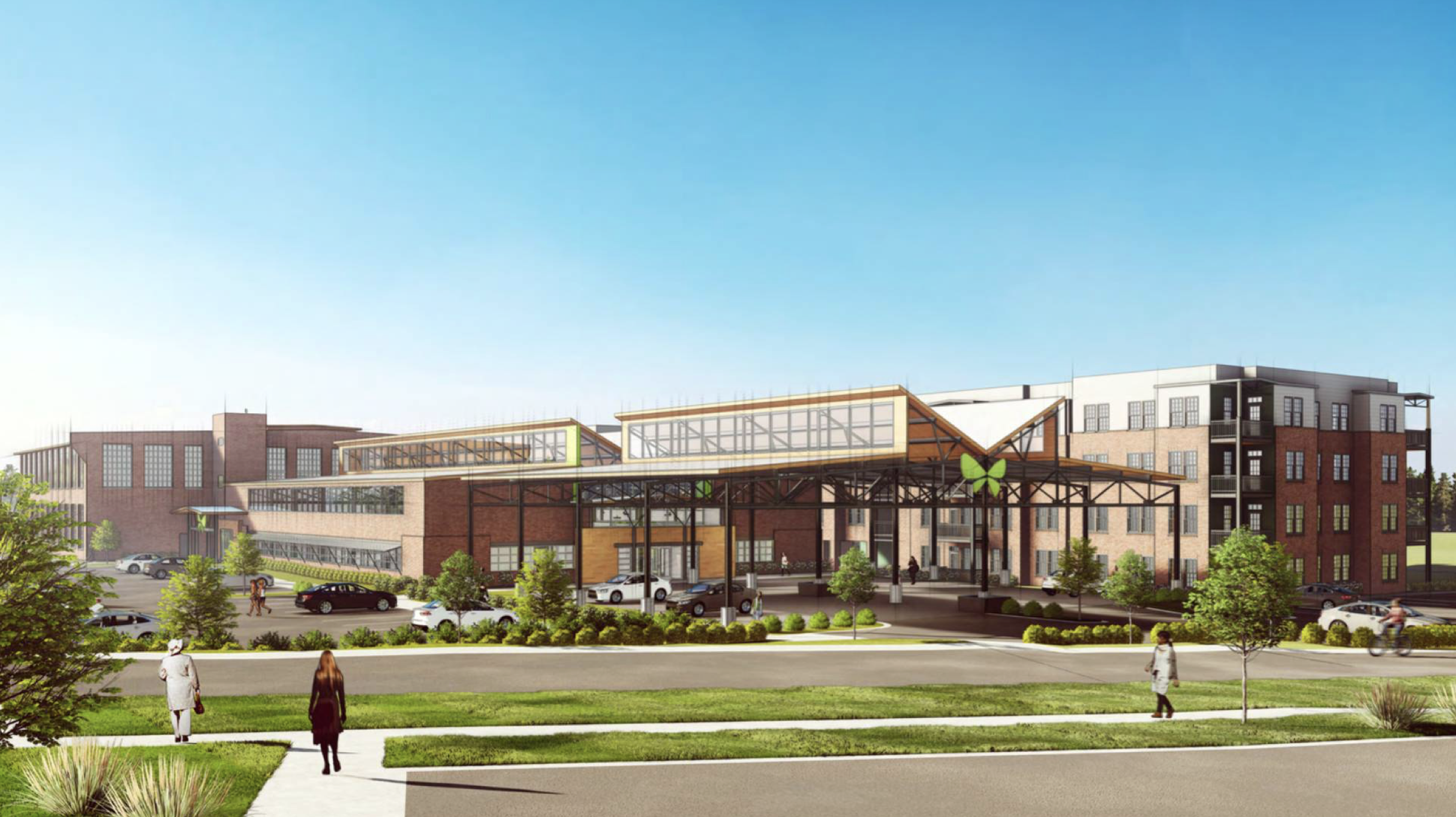
Today, the transformation of the historic Gordon Street Mill represents one of the most comprehensive domestic violence recovery campuses in South Carolina.

Once complete, the project will include:

  • A 45,000 sq. ft. domestic violence shelter and headquarters
  • Expansion from ~20 to 56–65 beds
  • Apartment-style living for families and survivors
  • On-site counseling, legal aid, and case management services
  • Adjacent 114–116 unit affordable housing development (“Gordon Street Lofts”)
  • 10 rent-free units for survivors transitioning to stability

This is more than redevelopment—it is long-term infrastructure for recovery and independence.

What This Deal Really Means

For Dustin and Daniel, the experience reframed the role of real estate professionals.

“We’re very blessed in commercial real estate. Usually we’re creating spaces people enjoy every day—but this project will make a mark for decades on those who are typically lost and forgotten.”

And ultimately:

“This deal isn’t about a transaction or a building. It’s about a place for the revitalization of women and their children—and a chance for a fresh start.”

Lasting Impact

  • Integrated counseling, legal, and case management services on-site
  • Delivered one of South Carolina’s most comprehensive survivor support developments
  • Preserved and repurposed a historic mill into a community asset

The Real Leaders of Real Estate Behind the Deal

Dustin Tenney and Daniel Holloway are commercial real estate professionals with SVN Palmetto. They specialize in advisory and investment sales with a focus on community-centered redevelopment and impactful real estate transactions across South Carolina.

Stories like this are exactly why the Real Leaders of Real Estate awards were created.

Have you worked on a commercial real estate deal in the last 36 months that created meaningful public benefit? Apply to be recognized as a leader in 2026 in your region and nationally. Submit your deal today.