Leveraging Technology for Social and Environmental Impact with Geunbae

Geunbae Lee is an Impact Design Fellow activating around human-computer interaction.

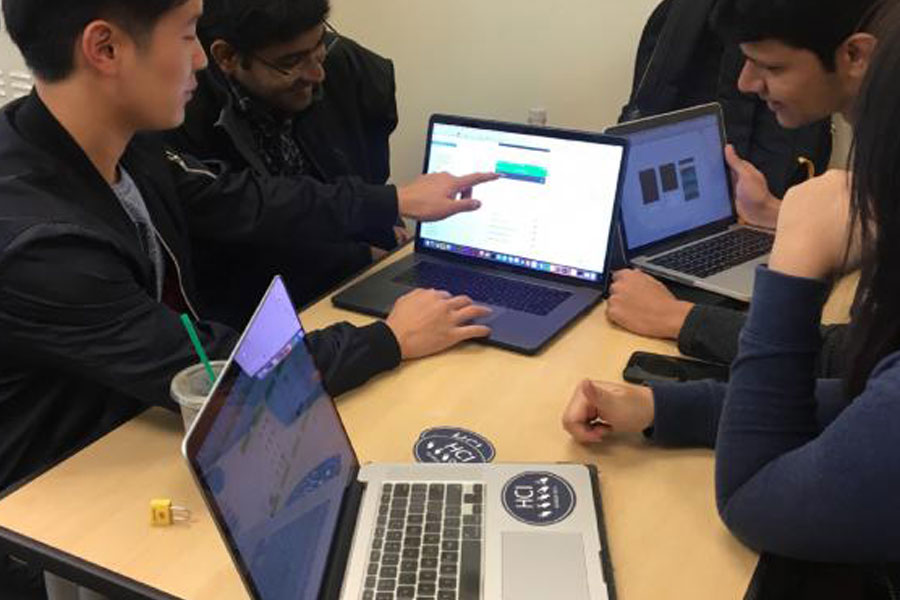
He, along with his team members Jayanth Mohana Krishna, Jessica Tsui, and Nishant Panchal are working on a project focused on home automation. They are creating a web platform for people to manage their connected devices through the Internet of Things. This project will reduce energy by helping people tailor their energy use to exact needs and will impact the old or disabled who run physical risks by forgetting to turn off stoves or feeling for switches in the dark. 

Learn more about his journey to designing for impact:

Why did you first decide to take action around impact design?
The reason I got into HCI and UX is because I wanted to make change in my community. Most of my previous and current projects revolve around trying to create a better user experience and to discover potential solutions that are far better than the ones that currently exist. I believe that the moment I put my feet forward into this field, I start to make an impact to the community and to individuals who value the products I shape. I thought applying for the Impact Design Fellowship was the next step for me. 

How did you know this was the right project for you to work on?
Frankly, I don’t think there’s any right or wrong projects to begin with as long as there’s purpose and problems that we want to tackle. I think it’s very important to have a clearly defined area and topic that the team is going for because without it, it’s like sailing a boat without a compass in your hands. In order for me and my teammates to figure out what kind of impact we should make in the community, we went through numerous brainstorming and team meeting sessions which helped out a lot. 

What do you think is the most critical issue facing the world today?
One of the critical issues I’ve personally discovered is cultural issues. There are cultural discriminations and gaps between the people in the community which are some of the issues that I’m very interested in solving. As an international student growing up in Canada, South Korea, and the United States I’ve experienced these problems, which led me to become more thoughtful about the issues. 

What advice would you give to someone launching their own project at school?
This really depends on what kind of project you and your most focused team members are trying to accomplish. For me, I initially wanted to make a project with 4 people in my team who could really focus and craft a good solution. To be honest, it made us stronger, more united, and definitely helped us to focus on each of our tasks as a team. I recommend to people looking to launch a project to first find out what kind of project they want to do. As you and your initial members brainstorm, you will definitely see what you need, who you will need, and why.

If you were given an extra hour every day, what would you do with it?
If I was given an extra hour every day, I would write blogs about my experience in the design world and spread my knowledge to others who are working hard like I am. I often write on Medium and so far I’ve gotten great feedback from students and designers all over the world. Writing is something that I don’t feel confident with because English is my second language, but I believe it’s an important skill to have. By practicing through writing blog posts, it will help me get to know more people and help for my own career development. 

Original Story: Net Impact


Enterprise Community Partners Merges Better Housing and Sustainability

 Enterprise Community Partners is a respected national organization working to create opportunity for low- and moderate-income people through affordable housing in diverse, thriving communities. An EcoDistricts Organizational Member, Enterprise and EcoDistricts are working together to incorporate principles of sustainability, equity and resilience into neighborhood-scale affordable housing development. 

How many employees work at Enterprise Community Partners?
Enterprise has 722 employees in 17 cities, 12 states and Washington, DC.

Why did you become an EcoDistricts Member?
Enterprise Community Partners became an EcoDistricts member for several reasons. First, EcoDistricts provides an important holistic framework for community developers to pursue sustainability goals while advancing the engagement of communities, residents and leadership in their planning. Second, the EcoDistricts network is an invaluable tool that connects us to stakeholders nationwide. Finally, EcoDistricts presents many learning opportunities for us and other members. Their conferences provide excellent examples of organizations across the country that are doing work in resiliency, healthcare and sustainability.

How are our resources and connections influencing your work?
Enterprise and EcoDistricts support many of the same community development groups. In this way, we are collaborating to bring together resources, grants and technical assistance to their training platforms.

The EcoDistricts resources and connections also help us at Enterprise to think more ambitiously about sustainability goals at the neighborhood scale. We’ve been a leader at incorporating sustainability goals and methods into the affordable housing and community development industry at the building level.

We launched in 2004 our Enterprise Green Communities Criteria to bring the improved health, economic and environmental benefits of sustainable construction practices to low-income families. This criteria is the first in the nation to address the unique needs of the affordable housing sector. EcoDistricts has helped us to think more broadly about how to institute our work at the neighborhood scale, which is reflected in our 2015 Enterprise Green Communities Criteria. The updated criteria takes into account buildings’ broader impacts on and connections to the neighborhood and includes Active Design elements to promote resident and community health.

What makes you and Enterprise Community Partners most excited about EcoDistricts?
We are looking forward to the EcoDistricts Summit in Atlanta this October 2017. It will be an opportunity to better get to know this great city and the amazing community activists there. We are also launching a new “Climate and Cultural Resilience” program and will be bringing those partners and their perspective to the Summit.

We will also bring our Enterprise Rose Fellows, a group of innovative change agents in communities across the country, many of whom are working on neighborhood sustainability issues. Launched in 2000, the fellowship is a career path for young architects to support public interest design, partnering emerging designers with community developers for three years. It’s designed to cultivate the next generation of architectural leaders bringing the economic, health and education benefits of quality design to low-income communities. The summit will showcase the good work that is being done nationally and help to accelerate the local work that’s happening.

How are you planning on utilizing the Member benefits in the coming year?
We look forward to participating in many of EcoDistrict’s networking events. In the past, these events have allowed our team to meet many other innovative organizations with ambitious sustainability goals. It’s been a great way to forge relationships and build partnerships with other groups that have similar or complementary missions.

Why are Equity, Sustainability and Resilience important to Enterprise Community Partners?
At Enterprise, our goal is to end housing insecurity, an issue that impacts nearly 19 million low-income families who are homeless or paying more than half of their monthly income on housing. We take a holistic approach to addressing this challenge and as such, equity, sustainability and resilience must be a part of the conversation.

Low-income communities often face the brunt of the damage caused by climate change. During extreme weather events, people of color in low-income communities are typically the first to be affected and the last to recover. Building more resilient, sustainable buildings and neighborhoods for low-income communities will become increasingly important as we continue to grapple with the effects of climate change.

This is why we believe that design excellence must be the norm in the affordable housing industry. Well-designed, sustainable development has the ability to bring its social, economic, environmental and health benefits to low-income communities nationwide.

Original Story: EcoDistricts


Leadership in the Spotlight

As women business owners, when we think about the topic of leadership the theme of this month’s issue of NAWBO ONE a lot of things come to mind.

We are leaders in our businesses, households and communities. We have friends, customers and vendor partners in prominent leadership positions in corporate America. And, of course, with election season in full swing, we think about our political leaders both male and female and the issues we care about most that we hope they’ll embrace and support.

As the voice of women business owners and with advocacy at the heart of our organization and its founding, NAWBO is particularly focused right now on our political leadership. We are advocating for more women to run for political office, and for more of those who make it into seats to get behind women-owned and small businesses issues.

To this end, we have released a 2016 public policy agenda to help women business owners who are part of our community and the elected officials we interact with to understand what we care about most issues that are critical to our personal and business health. The issues we have chosen to pursue benefit the majority of our NAWBO members while also increasing our visibility and credibility with elected officials, agency personnel, peer organizations and members of the media.

They include:

  • Access to Capital
  • Education and Workforce
  • Government Contracting
  • International Trade
  • Regulatory Reform
  • Taxes

Additionally, we have chosen to expand our agenda from last year to include other issues that impact women entrepreneurs, such as breast cancer, Alzheimer’s, pension reform and retirement planning. By broadening our focus, we increase our ability to build coalitions and credibility with leaders of both political parties.

A few weeks back, I was thrilled to participate in a town hall-style event in New Hampshire one day before one of the presidential debates. Hosted by the Job Creators Network (JCN) together with the Independent Women’s Forum and moderated by CNN Political Commentator Margaret Hoover, this event brought together local and national business leaders to discuss what women really want this election season is it issues like reproductive rights and the gender pay gap that typically get top billing in the media, or economic issues that impact job creation and opportunity, like a poll recently found?

The women I was proud to speak alongside, including Sabrina Schaeffer, Executive Director at the Independent Women’s Forum, and Teresa R. Rosenberger, President of Divine Strategies, a local business consultancy, focused on the economic hurdles women face to succeeding in business, highlighting the challenges of overregulation, overtaxation and a lack of access to capital. Click here to view a video of this discussion.

As always, I’d love to hear from you! What leadership qualities do you look for in your elected officials, in your own employees, in your customers, etc.? And what issues do you care about most this election season? Together, as leaders and advocates, we can make a difference.

Written by: Crystal Arredondo, NAWBO National Board Chair

Original Story: Nawbo


Bringing Google to the Next Level of Digital Maturity

Speaking with Strategic Leaders at Google, Ari tells us about his experiences in the past and his new position at Google. Additionally, he gives us an overview of the digital trends in 2017. Ari has over 15 years of experience in Banking, Insurance, Education, IT and the Telecommunications industry across Sales, Marketing and Operations roles in North America & Southeast Asia. He has been the catalyst for Digital Transformation & Innovation globally and will be part of Global Digital Leaders 2017!

Ari, you recently moved from AXA to Google in Indonesia. We congratulate and wish you all the best for this new and exciting career path. What are your plans in bringing Google to the next level of digital maturity?

My ongoing passion is to have global impact by bringing all the amazing innovations that Google is building in Silicon Valley to Indonesia, making them accessible to all. I hope to bring the most value to Google by bringing regional market knowledge and relationships to the organization. 

How did your previous role and experience prepare you for this?

Having had the opportunity to transform traditional organization’s mindset to leap frog through Digital Culture adoption has really been one of the best and satisfying learning opportunities in my career. Now, I feel very lucky to join Google at one of the best periods. Google itself is currently transforming from a Mobile First to AI (Artificial Intelligence) First focus for the next 10 years. It is a humbling opportunity to be at the forefront of innovation while also having impact to millions of people.

How do you plan to leverage and push Social Media for your business in 2017?

Social Media will continue play an important role to promote most businesses in 2017. The focus on producing and distributing engaging and relevant content for customers will primarily shift through short-form and long-form video storytelling. We are also seeing the global rise of Influencer Marketing, who can also educate Brands how to master engagement and storytelling to its consumers.

What are the top trends that you see happening in 2017 and how will these trends influence the future of digitalization?

For a lot of companies, 2017 will be the time they adopt Customer Centricity or Customer Experience (CX) metrics to be able to show how their Digital Transformation projects have impact to the business. And at the forefront of Digitalization, we’re seeing the shift from Mobile First to AI First, made possible through the advancements in the Machine Learning field. The focus here will be on how services can be delivered to consumers at a very personalized level never seen before. Think of a Digital Personal Assistant that understands and anticipates each of its customer needs. As this technology matures, it can help organizations to be truly customer centric at an almost magical level.


The concept of cultural change emerges again and again in the context of transformation, in your opinion why is it so important?

Top Leaders in the organization have the most important role in creating an effective Digital Culture which actively engages their employees with a mindset for risk-taking, agility and collaboration. Driving Digital Culture is so important because it is the only sustainable way to adapt in an always changing environment and to retain the top talents needed to succeed.

What do you think is the biggest obstacle to a successful implementation of digital transformation?

In a traditional organization, getting Leadership Buy-In who only wants to see significant short-term impact to the sales bottom line will be the hardest to start with. After that is achieved, the next challenge would be creating an effective Digital Culture across all functions and levels in the organization.

What kind of people, skills and experience does a company need in order to succeed in a digital project?

People with High-Curiosity, High-Persistency and High IQ. In an always changing era “Intellectual Humility” is a must for Digital Talent to succeed. Companies need to think creatively to attract these talents through authentic and engaging Employer Branding campaigns which reflect the company’s core values and mission to transform through Digital.

“Companies also need to show their willingness to invest in these Digital talents and let them take short-term risk through transformation projects in order to win for the long-run.”

How do you see the role of a CDO evolving in the long-run? And how do digital leaders take decisions in a complex business context?

CDO’s is mostly needed in the early stages of transformation to bring a clear focus and deliverables, while engaging the rest of the board to foster Digital Culture and Digital IQ across the organizations. CDO’s also need to exemplify how data driven decisions can be used across the organization to make sense of complex business situations. In the long run however, it is debatable whether CDO titles are needed. What is certainly needed is CEO, CMO, CFO, etc. that have a high Digital IQ.

Who are your digital heroes? Why?

My Digital Heroes are leaders who defy the status quo and having successfully transformed the mindset of organizations, industries and even societies through ambitious and sometimes high-risk visions. Yet they are able to execute them excellently with agility and collaboration. Basuki Tjahja Purnama or Ahok (Current Governor of Jakarta City) is on his way to transform a clogged and an inefficient megacity of 10 million into a smart city by 2020. He is defining what is possible when e-government and technology empowered society collaborate together to make a better livable city. Elon Musk (Co-Founder of Paypal, Founder of Tesla & Space X), I see him as the real life Tony Stark, progressing technology for the benefit of humanity. How many people can claim that they make Sci-Fi ideas into Science Reality? Well, Elon can.


Equality: What Does it Mean?

Equality means different things for different people and generations.

For the women who founded NAWBO more than 40 years ago, it was about being able to take out a line of credit to start or grow their business without their husband, brother or father cosigning. For women business owners today, it’s about equality in pay, in the boardroom, in elected offices, in government procurement opportunities and more. And for women in other parts of the world, especially in developing nations, equality often takes on a completely different meaning—like the ability to work or receive an education.

Here are a few recent statistics from Makers (the largest video collection of women’s stories online) that tell the story:

  • In 2015, only half of the world’s working-age women were in the labor force, compared to 77 percent of working-age men.
  • Women with full-time jobs still earn only about 77 percent of their male counterparts’ earnings.
  • African-American women earn 64 cents and Latina women earn 56 cents for every dollar earned by a Caucasian man.
  • 62 million girls are denied an education all over the world. 
  • Every year, an estimated 15 million girls under 18 are married worldwide, with little or no say in the matter.
  • 4 out of 5 victims of human trafficking are girls. 
  • Around the world, only 22 percent of all national parliamentarians are female. That’s double the number in 1995, but still a marker of slow change.
  • Women currently hold 24, or 4.8 percent, of CEO positions at S&P 500 companies.

As women and women business owners, one of our greatest weapons in our fight for true equality is our voice which is even more powerful when combined together as a movement of thousands of smart, passionate NAWBO members from across the United States. Together, we can speak out on the issues that are most important to all of us, in our communities, in our states and in our nation’s capital. Learn more about this powerful NAWBO voice and how you can be part of it here.

This issue of NAWBO ONE features an equality theme. In it, you’ll revisit this summer’s NAWBO Advocacy Day where our members from across the country gathered in Washington, D.C. to meet with and learn from key political decision makers and have their voices heard. You’ll also read about how equality within our own businesses benefits us and makes us stronger.

Written by: Teresa Meares

Original Story: GreenBiz


Green Sports Alliance Event Report 2016

The Highlights

The 2016 Summit marked the beginning of a new tradition: hosting the event at a sports facility, attendees were able to experience the Summit program in a whole new light. Minute Maid Park, home of the Houston Astros, provided an exciting atmosphere that tied into our roots in the sports industry. Houston’s professional sports teams have taken the lead in implementing sustainable strategies in venue operations and marketing campaigns that shape the overall fan experience.

Attendees were able to experience this firsthand throughout the Summit. Sports and sustainability industry leaders gathered in Houston this year to engage in advancing the greening of the sports industry. Built on the theme: Power of Partnerships, the Summit educated and empowered attendees to focus on teamwork and collaboration to help create healthy, sustainable communities where we live and play.

Full Report: Green Sport Alliance Event Report 2016


莎朗·斯通:变化不是损失,这是增益

  • 濒死体验提出的生命转化为莎朗·斯通的观点。她还击,并决定对世界的积极变化。
  • 目的有电源,而她相信每个人都可以使一个巨大的差异。
  • 和平是一些普通人会给我们,不穿西装的男人。
  • 我们今天看到的迁移危机无异于200年前,美国移民不同。

莎朗·斯通已经抵达米兰举办和平颁奖典礼。保镖和着迷客人成群结队环绕,组织者很难推回摄影师谁都是喊激增。“沙龙!沙龙!”,企图获得屡获殊荣的女演员的最佳击球。虽然每个人都认为她已被选为主办PILOSIO建设和平奖,因为她已经建立了一个闷热的职业生涯看起来 – 始终保证吸引观众 – 这个故事告诉她今天晚上是远离好莱坞精英的glamourized生活。一个故事,甚至可能是值得电影本身的。

死亡有将东西放入角度对许多人的奇特功效。有些人会忍受千钧一发后仍然受到创伤,而其他人将反弹比以前强。石属于后者。各地死亡两个显着的事件塑造了她的生活。第一次是在20年前,当她的邻居,伊丽莎白格拉泽,从输血得了艾滋病。二是更加个性化-幸存中风和大规模脑溢血。你以为在场景本能,由一个连环杀手在一个黑暗的地下室被猎杀,是可怕的?

如果你喜欢这个,订阅这里更多的故事,启迪未来。

斯通的脑溢血离开她没有短期记忆,无力无口吃说话,在她左腿的感觉,她的右耳听力损失的损失。她不能走在第一,它花了两年时间再次阅读。这是她职业生涯的结束,而是一些更深刻的开始 – 一个愿望,回馈世界,并帮助别人生存。

我已经在床上躺了一年左右,”斯通说。“当我蹒跚学步的儿子进了卧室,推过壁炉的工具,说:‘没有更多的妈妈!’ 这是我的大觉醒。我意识到,他需要他的母亲和他需要我去战斗更难。我做了“。

虽然最终失去儿子的监护权她的前夫,斯通继续采取两个儿子,并逐步回去工作。格拉泽在1994年去世,和石头已经倾注了她的时间与伊丽莎白格拉泽儿童艾滋病基金会和美国艾滋病研究基金会的工作。刚刚走出医疗照顾自己的,石使这个工作她的主要目的。

当被记者最近问她是否对艾滋病防治工作只是另一个宣传噱头,寻求关注,石回答说,“好了,20岁会是一个很长的宣传噱头。”

“目的有电,”斯通说:“我相信,每个人都可以使一个巨大的差异。有不有效果没有好的目的。如果你问宇宙是你最好的朋友,宇宙并不很难得到发挥,”她说。她回忆说,趴在神经重症监护2周911与人死亡围着她在病房后。在电视上,她看到飞机撞击世贸中心和世界各地展开后续的混乱。“我看着危机危机之后,但我的生活,”她说。“我没想到我以任何方式特别特别的,但我做出目的的承诺。”

该承诺的一部分已经共同举办诺贝尔和平奖音乐会,并帮助推动中东与诺贝尔和平奖获得者佩雷斯和平。她被授予和平峰会奖,2013年她与艾滋病毒/艾滋病患者的工作。“我相信,和平是知识产权,而不是一些无定形的概念,”她解释说。“和平不会从与红色领带在壁炉前聊天蓝色西装两个人来的。和平是一些普通人都会给我们。和平是我们创造的东西; 这是一个动作。”

斯通的行为都提出了数百万美元用于在全球各地的原因。她不避讳折他人精心策划会议到个人平台筹集资金。期间在达沃斯世界经济论坛非洲贫穷2005年面板,瑞士,她即席筹款蚊帐预防疟疾募集$ 1百万。今年上述PILOSIO建设和平奖在九月,石头突然从她在舞台上的讨论离开来挑战观众建立与她的学校在非洲。不到五分钟,她成功地说服了一群商人建立的28所学校。

由于是好莱坞女星,你成为一个全球公民。拍摄世界各地,成为一个全球性的图标给你独特的见解世界如何运作。

石已经被她的多元文化背景下是如何从各地的移民和难民当前的辩论没有不同的击打。

“当我们看到数百万流离失所者从叙利亚和中东地区转移到欧洲的一刻,是我们作为感谢我们自己的民族主义,因为我们可以吗?”她问。“我是美国的一个伟大的爱国者和热爱我的祖国,但我的家族传承是爱尔兰,斯堪的纳维亚和法国。我极其感激所有从我的遗产起源的国家。我们都是世界公民,我们每一个人。”

石奇观,她将是今天,如果历史已经不同了近200年前,判断她的祖先。“在19世纪40年代的爱尔兰饥荒,如果我的祖先被剥夺通道到美国,我就不会在这里今天我也不会提出数亿美元,以帮助阻止艾滋病危机,”她说。“到今天走转的人,在类似迁移的时间,就是否定我们自己的遗产。”

斯通喜欢在关于因果报应,宇宙命运的慷慨神秘的短语说话。这是由她自己的濒死体验,她设法存活并继续创造机会,并希望数百万的事实成型的世界观。对于我们这些谁包庇,我们应该与我们的生活做更多琐碎的感情,她有一些建议。“正如我们真的不希望参与,我们保持我们的生活和经历之外,因为他们太难受了所有的事情,他们将不可避免地最终在自己的后院。”最好的,我们都去找这些问题和处理这些问题,才找到我们。

如果你喜欢这个,订阅这里更多的故事,启迪未来。