Being Strong Can Make You Stupid!

Most of the time I walk around with the inner illusion that nearly everyone likes me. “After all,” I think, “what’s not to like?” Well, it turns out there is plenty not to like. It’s especially hard to like someone who assumes everyone thinks they are wonderful. Yah, there are plenty of people who think I am a little less than absolutely wonderful…but I am clueless. It’s true.

Research on self-awareness confirms that the person least likely to have a clear view of myself is me. We are all so filled with an inner story of who we are we miss how we actually show up to others. Confidence comes naturally to me. I didn’t have to work hard to develop it.

It was just always there. Confidence is great. But too much of it, I’ve found, is arrogance. And arrogance is repellent. In fact, arrogance makes you stupid. When you are really, really sure of yourself, you simply miss seeing the truth about things that matter. So what’s the answer to being so confident that I fall into arrogance? Well it’s not being less confident. It’s being more humble. Not humble in a “I am not that great” way but humble in the “I have a lot to learn” way.

Confidence balanced with humility can be a powerful strength. Without that balance I am just a jerk. The man who taught me this is Charlie Kim, the CEO of an unusual company named Next Jump. Next Jump is a New York City based ecommerce company that has set a new standard for recruiting and developing extraordinary employees. Charlie’s engineers come from the Ivy League’s top schools. They are all smart. They brim with strengths. But Charlie found that without balance, a strength can make you useless.

Not very many people in organizations seem to understand this today. Training people to use their strengths is a huge multibillion-dollar business. It all started with some research the Gallop organization did which they turned into books, assessments, and programs called thinks like Strength Finder.

The big idea is that people succeed because of their strengths…so discover your strengths and use them to accomplish great things. Sounds great doesn’t it? It certainly appeals to our narcissistic culture. Who doesn’t want to hear, “You are awesome and can become successful by pumping up your awesomeness.” It’s the ultimate self-serving psychological temptation. And that’s one reason it’s so popular.

Some brand of discover and develop your strengths is found in almost every company I come in contact with. In some companies this strengths-based culture is so strong both employees and leaders insist they only do things that use their strengths. They then warn others of their weakness with the subtle message of “deal with it” as if what makes me strong makes up for what makes me weak.

This is not a wise development. I have observed that in the real world the truism that people are hired for their strengths but fired for their weakness is the whole truth. Human beings have three great psychological weaknesses. These are the assassins of both our happiness as well as our achievement. Here they are:

  1. Deny …you have a problem.
  2. Blame …others for your failure.
  3. Rationalize …that failure, in this instance, doesn’t matter.

Most of us seem to be Olympians at excusing our weaknesses. But we don’t have to collect more gold medals for failure. Instead we can develop balance. In studying the research on personal strengths here are some of the most common balanced pairs: Assertive – Patient Analytical – Intuitive Focused – Flexible Charismatic – Authentic Committed – Open-minded Decisive – Reflective Directive – Collaborative Passionate – Prudent Innovative – Practical Confident – Humble Just give yourself a score on a 1 to 10 scale on each side of the list.

Then go to your most insightful, honest friend and ask them to score you. It just might increase your humility. In coaching high achieving powerful people for over thirty years what I’ve seen is that balance is the greatest strength of all. People who are 8 on decisive and 7 on reflective are far more successful than someone who is 10 and a 4 on the same scales. Most of our suffering is self-inflicted.

If you’re not getting the results you want consider what you might be doing to cause the results you are getting. Then make a balanced investment in developing your future self. What I’ve discovered is that I have no secret flaws. Everyone else sees me more clearly than my inner story of myself allows me to. Rather than fret about that I’ve discovered working on improving my balance is what makes me stronger. If life is a sport, balance is the core skill.


What’s Your Blue Ocean Strategy?

In today’s overcrowded market, companies compete head-on, resulting in bloody “red oceans” of rivals fighting over shrinking profits. Professor Renée Mauborgne and  W. Chan Kim, founders of the blue ocean concept, argue for creating uncontested market space. We asked Mauborgne about the benefits of this approach.   

How exactly did your Blue Ocean Strategy come about?

We have always shared an intellectual curiosity in understanding what it takes to stand apart and create strong profitable growth. In search of this answer, we looked back more than 100 years and across more than 30 industries. We asked ourselves which industries exist today that were prominent in 1900? It turns out that apart from basic industries such as cars and steel, there’s very few. Big growth industries in the past 30 years have included the computer industry, software, gas-fired electricity plants, cell phones and the café bar concept. Yet, in 1970, not one of those industries existed in a meaningful way.

The pattern continues as you dig further into the past. We have a hugely underestimated capacity to create new industries. It’s commonly assumed that the number of industries stays the same over time, but it doesn’t. If this is where the bulk of wealth has been created, then shouldn’t the field of strategy systematically explore and understand the path to new market space creation, what we call blue oceans? While our analysis did not reveal any permanently great companies or industries, what we did find is that companies, like industries, rise and fall based on the strategic moves they make. The strategic move that we found matters most is the creation and capturing of new market-space.

In industry, after industry, we observed high performing companies that did not compete – they made the competition irrelevant. They were not focused on benchmarking competitors and striving to beat them. Instead of accepting existing conditions in their industry, they challenged them and created a new demand. These insights did not square with the red ocean paradigm, which views industry conditions and demand as beyond a company’s influence. The current strategy paradigm failed to explain how to create and capture this lucrative and growing part of the market universe. This central void in the field of strategy inspired our research journey leading to the idea of “blue ocean strategy.”  

Is this business strategy sustainable? For instance, would you need to repeat a Blue Ocean Strategy every time the competition catches up with you?

Creating blue oceans is not a static achievement but a dynamic process. Once a company creates a blue ocean and its powerful performance consequences are known, sooner or later imitators appear on the horizon. However, a blue ocean strategy brings with it considerable barriers to imitation. The first barrier is often cognitive. Competitors are often blocked from imitating simply because of brand image conflicts, or the blue ocean strategy does not fit conventional strategic logic. As an example, for many years CNN was ridiculed by the industry as chicken noodle news by the established players.

The second barrier is organizational. Because imitation often requires companies to make substantial changes to their existing business practices, politics often kicks in, delaying for years a company’s commitment to imitate a blue ocean strategy. The third barrier includes the economic forces of blue oceans.

The high volume generated by a value innovation leads to rapid cost advantages, placing potential imitators at an ongoing cost disadvantage. The best way to defend blue oceans and to block new entrants into the market you have created, as long as possible, is to heighten these barriers with a constant improvement of your initial blue ocean strategy of value, profit and people.  

“Create companies that make a difference, where customers, employees and society wins.”

You suggest that organizations align these three strategy propositions – value, profit and people. How can this be done in a socially responsible manner?

First, let me back up and define what strategy is. Strategy is essentially the development and alignment of three propositions that seek to either exploit or reconstruct the industrial and competitive environment in which an organization operates.  For any strategy to be successful, an organization must develop a value proposition that attracts buyers; it must create a profit proposition that enables the company to make money out of the value proposition; and it must offer a people proposition that motivates the people working for, or with, the company to execute the strategy.

While the value and profit propositions essentially set out the content of a strategy – what a company offers to buyers and how it will benefit from that offering – the people proposition determines the quality of strategy execution. In this way, blue ocean strategy is about creating a win-win strategy where buyers, the company, and people win.

On one level, you can say that a company that offers a leap in value to buyers, rewards its shareholders through profit, and provides conditions for employees and partners to be inspired to execute the strategy, is being socially responsible, as it’s bettering all those who come into contact with that organization.

However, if an organization has a mission, beyond this, where it wants to be socially responsible in the sense of serving the community, then this could be built into its value, profit, and people propositions. With more and more buyers and employees caring about the socially responsible nature of companies, creating a blue ocean strategy that explicitly addresses this could help to make a strategy even “bluer.”  

How do businesses and individuals overcome a fear of the unknown in order to innovate their products and services?

They need to have confidence that there’s a systematic process for creating commercially compelling blue oceans. However, when most people think of creativity, imagination or innovation, they tend to feel threatened because all these require risk-taking. What blue ocean strategy set out to do was to de-risk the process of creating new markets, what we call “blue oceans,” so executives can responsibly engage in these actions in an opportunity-maximizing, risk-minimizing way.

To achieve this, during our research, we asked whether any systematic patterns existed in the way companies create new markets. This was key, because if there were patterns, a theory, tools and framework can be built which allow for the systematic pursuit of blue oceans. Our database of over 150 blue ocean strategic moves over the past 120 years confirmed that there are indeed patterns.

Based on these patterns, we developed the theory of blue ocean strategy and a set of tools and methodologies that executives could  apply in a systematic way to create blue oceans in an opportunity-maximizing, risk-minimizing way. While creativity has generally been thought of as non-systematic and unstructured, blue ocean strategy challenged that. 

The focus of our study is not on creativity by genius or of random occurrence, but on creativity that can be inculcated with a set of systematic tools and methodologies found through research. I believe that is one reason that our book Blue Ocean Strategy has had the impact that it has and has become a bestseller across five continents.  

With seven billion people on the planet by year-end, how will your business ideas influence the world at large?

I believe the power of blue ocean strategy ideas can only take on more salience as increasing numbers of these seven billion people enter the global economy and strive to have the same standards of living, and level of prosperity, as the people in the West have long enjoyed. At a most basic level, there is simply not enough water or energy to go around, and the pollution that this will unleash on our already fragile planet will wreak havoc on the environment. 

Without creativity in strategic thought and fundamentally new thinking on how we address the challenges this poses to the planet, we’re not going to overcome these strained structural conditions. I believe a blue ocean way of thinking offers the perspective, tools and framework that leaders of industry, and governments alike, can administer to address these challenges.  

Is prosperity attainable by a wider majority in the future, without being at the expense of some?

The future is something that only the heavens can answer. But if you asked my opinion on the ability of the world population to attain greater prosperity, my answer is yes. We need only to look at history to see this trend.  However, as history also reveals, those whose prosperity was based on exploitation lost in the long march of history, while those who helped create and raise the standards of living and pushed the boundaries of what was possible at the time were the greatest winners over an extended time.

To ensure you’re not a loser in the march to the future and will enjoy rising prosperity, you need to have a keen focus on how you and your organization will offer a leap in value to buyers, citizens, or people in general. Something that enriches their lives. That is what blue ocean strategy is all about.

How can you do well by doing good?

Too often those who attempt to do good, haven’t done well in economic terms. But it doesn’t have to be that way. I have seen countless occurrences in which breakthrough technologies have been created to solve major challenges in the developing world, such as brilliant innovations in health, but have never taken off. Why? The developers were so excited about what they were developing, which would solve some major need, that they failed to address what it would take to make it commercially viable in the market.

Their cost structure to produce it was either too high to make it viable, or its strategic price to recover costs was set well beyond what the market could bear. Local barriers to adoption also existed, such as distribution, refrigeration or financing that blocked the product from being successful in the market. Does that mean a gap between doing good and doing well need always exist? The answer is no. We precisely address this challenge through our blue ocean idea index.

The blue ocean idea index provides executives with tools to assess whether their idea to do good also aligns with what it takes to do well.  Through  it, executives can test if they have successfully addressed what it takes to offer a leap in utility, create a strategic price accessible to the target market, build a business model that generates profit at that strategic price, and addresses potential adoption hurdles in advance. I have faith that with blue ocean strategy, doing well and doing good can move in sync.  

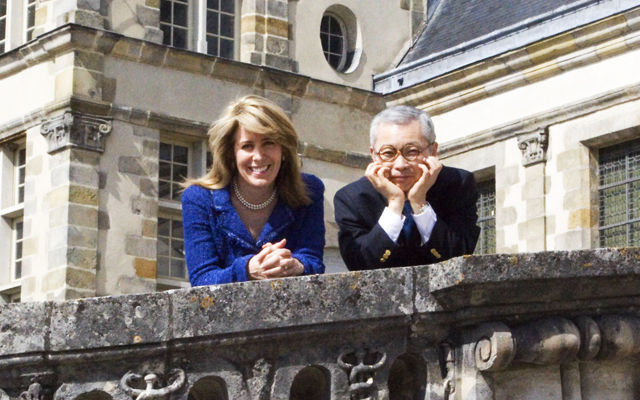
Renée Mauborgne is co-director of the INSEAD Blue Ocean Strategy Institute and a professor and distinguished fellow at INSEAD in Fontainebleau, France. She is the co-author, along with W. Chan Kim, of the international bestseller Blue Ocean Strategy: How to Create Uncontested Market Space and Make the Competition Irrelevant (Harvard Business Press).  

 

What’s Your Blue Ocean Strategy?

In today’s overcrowded market, companies compete head-on, resulting in bloody “red oceans” of rivals fighting over shrinking profits. Professor Renée Mauborgne and  W. Chan Kim, founders of the blue ocean concept, argue for creating uncontested market space. We asked Mauborgne about the benefits of this approach.   

How exactly did your Blue Ocean Strategy come about?

We have always shared an intellectual curiosity in understanding what it takes to stand apart and create strong profitable growth. In search of this answer, we looked back more than 100 years and across more than 30 industries. We asked ourselves which industries exist today that were prominent in 1900? It turns out that apart from basic industries such as cars and steel, there’s very few. Big growth industries in the past 30 years have included the computer industry, software, gas-fired electricity plants, cell phones and the café bar concept. Yet, in 1970, not one of those industries existed in a meaningful way.

The pattern continues as you dig further into the past. We have a hugely underestimated capacity to create new industries. It’s commonly assumed that the number of industries stays the same over time, but it doesn’t. If this is where the bulk of wealth has been created, then shouldn’t the field of strategy systematically explore and understand the path to new market space creation, what we call blue oceans? While our analysis did not reveal any permanently great companies or industries, what we did find is that companies, like industries, rise and fall based on the strategic moves they make. The strategic move that we found matters most is the creation and capturing of new market-space.

In industry, after industry, we observed high performing companies that did not compete – they made the competition irrelevant. They were not focused on benchmarking competitors and striving to beat them. Instead of accepting existing conditions in their industry, they challenged them and created a new demand. These insights did not square with the red ocean paradigm, which views industry conditions and demand as beyond a company’s influence. The current strategy paradigm failed to explain how to create and capture this lucrative and growing part of the market universe. This central void in the field of strategy inspired our research journey leading to the idea of “blue ocean strategy.”  

Is this business strategy sustainable? For instance, would you need to repeat a Blue Ocean Strategy every time the competition catches up with you?

Creating blue oceans is not a static achievement but a dynamic process. Once a company creates a blue ocean and its powerful performance consequences are known, sooner or later imitators appear on the horizon. However, a blue ocean strategy brings with it considerable barriers to imitation. The first barrier is often cognitive. Competitors are often blocked from imitating simply because of brand image conflicts, or the blue ocean strategy does not fit conventional strategic logic. As an example, for many years CNN was ridiculed by the industry as chicken noodle news by the established players.

The second barrier is organizational. Because imitation often requires companies to make substantial changes to their existing business practices, politics often kicks in, delaying for years a company’s commitment to imitate a blue ocean strategy. The third barrier includes the economic forces of blue oceans.

The high volume generated by a value innovation leads to rapid cost advantages, placing potential imitators at an ongoing cost disadvantage. The best way to defend blue oceans and to block new entrants into the market you have created, as long as possible, is to heighten these barriers with a constant improvement of your initial blue ocean strategy of value, profit and people.  

“Create companies that make a difference, where customers, employees and society wins.”

You suggest that organizations align these three strategy propositions – value, profit and people. How can this be done in a socially responsible manner?

First, let me back up and define what strategy is. Strategy is essentially the development and alignment of three propositions that seek to either exploit or reconstruct the industrial and competitive environment in which an organization operates.  For any strategy to be successful, an organization must develop a value proposition that attracts buyers; it must create a profit proposition that enables the company to make money out of the value proposition; and it must offer a people proposition that motivates the people working for, or with, the company to execute the strategy.

While the value and profit propositions essentially set out the content of a strategy – what a company offers to buyers and how it will benefit from that offering – the people proposition determines the quality of strategy execution. In this way, blue ocean strategy is about creating a win-win strategy where buyers, the company, and people win.

On one level, you can say that a company that offers a leap in value to buyers, rewards its shareholders through profit, and provides conditions for employees and partners to be inspired to execute the strategy, is being socially responsible, as it’s bettering all those who come into contact with that organization.

However, if an organization has a mission, beyond this, where it wants to be socially responsible in the sense of serving the community, then this could be built into its value, profit, and people propositions. With more and more buyers and employees caring about the socially responsible nature of companies, creating a blue ocean strategy that explicitly addresses this could help to make a strategy even “bluer.”  

How do businesses and individuals overcome a fear of the unknown in order to innovate their products and services?

They need to have confidence that there’s a systematic process for creating commercially compelling blue oceans. However, when most people think of creativity, imagination or innovation, they tend to feel threatened because all these require risk-taking. What blue ocean strategy set out to do was to de-risk the process of creating new markets, what we call “blue oceans,” so executives can responsibly engage in these actions in an opportunity-maximizing, risk-minimizing way.

To achieve this, during our research, we asked whether any systematic patterns existed in the way companies create new markets. This was key, because if there were patterns, a theory, tools and framework can be built which allow for the systematic pursuit of blue oceans. Our database of over 150 blue ocean strategic moves over the past 120 years confirmed that there are indeed patterns.

Based on these patterns, we developed the theory of blue ocean strategy and a set of tools and methodologies that executives could  apply in a systematic way to create blue oceans in an opportunity-maximizing, risk-minimizing way. While creativity has generally been thought of as non-systematic and unstructured, blue ocean strategy challenged that. 

The focus of our study is not on creativity by genius or of random occurrence, but on creativity that can be inculcated with a set of systematic tools and methodologies found through research. I believe that is one reason that our book Blue Ocean Strategy has had the impact that it has and has become a bestseller across five continents.  

With seven billion people on the planet by year-end, how will your business ideas influence the world at large?

I believe the power of blue ocean strategy ideas can only take on more salience as increasing numbers of these seven billion people enter the global economy and strive to have the same standards of living, and level of prosperity, as the people in the West have long enjoyed. At a most basic level, there is simply not enough water or energy to go around, and the pollution that this will unleash on our already fragile planet will wreak havoc on the environment. 

Without creativity in strategic thought and fundamentally new thinking on how we address the challenges this poses to the planet, we’re not going to overcome these strained structural conditions. I believe a blue ocean way of thinking offers the perspective, tools and framework that leaders of industry, and governments alike, can administer to address these challenges.  

Is prosperity attainable by a wider majority in the future, without being at the expense of some?

The future is something that only the heavens can answer. But if you asked my opinion on the ability of the world population to attain greater prosperity, my answer is yes. We need only to look at history to see this trend.  However, as history also reveals, those whose prosperity was based on exploitation lost in the long march of history, while those who helped create and raise the standards of living and pushed the boundaries of what was possible at the time were the greatest winners over an extended time.

To ensure you’re not a loser in the march to the future and will enjoy rising prosperity, you need to have a keen focus on how you and your organization will offer a leap in value to buyers, citizens, or people in general. Something that enriches their lives. That is what blue ocean strategy is all about.

How can you do well by doing good?

Too often those who attempt to do good, haven’t done well in economic terms. But it doesn’t have to be that way. I have seen countless occurrences in which breakthrough technologies have been created to solve major challenges in the developing world, such as brilliant innovations in health, but have never taken off. Why? The developers were so excited about what they were developing, which would solve some major need, that they failed to address what it would take to make it commercially viable in the market.

Their cost structure to produce it was either too high to make it viable, or its strategic price to recover costs was set well beyond what the market could bear. Local barriers to adoption also existed, such as distribution, refrigeration or financing that blocked the product from being successful in the market. Does that mean a gap between doing good and doing well need always exist? The answer is no. We precisely address this challenge through our blue ocean idea index.

The blue ocean idea index provides executives with tools to assess whether their idea to do good also aligns with what it takes to do well.  Through  it, executives can test if they have successfully addressed what it takes to offer a leap in utility, create a strategic price accessible to the target market, build a business model that generates profit at that strategic price, and addresses potential adoption hurdles in advance. I have faith that with blue ocean strategy, doing well and doing good can move in sync.  

Renée Mauborgne is co-director of the INSEAD Blue Ocean Strategy Institute and a professor and distinguished fellow at INSEAD in Fontainebleau, France. She is the co-author, along with W. Chan Kim, of the international bestseller Blue Ocean Strategy: How to Create Uncontested Market Space and Make the Competition Irrelevant (Harvard Business Press).  


People, Planet, Profits

We need leaders to come up with ridiculous ideas and impossible solutions, says Mark Van Ness, the founder of an innovative real estate company.

We need, Mark Van Ness believes, greater synergy between people, planet and profit, and it is clear old ideas are simply not working. He’s in good company as a recent Harvard Business Journal and the book Megatrends 2010 share this view.

The world has reached what Malcolm Gladwell would call a ‘tipping point’ in many areas. There is the global financial crisis, the rapid melting of polar caps, increasing rates of cancer at earlier ages and politicians globally who seem frozen by a paucity of new ideas. A tipping point, in case you never read Gladwell’s best-selling book, is an epidemiological term “given to that moment in an epidemic when a virus reaches critical mass. It’s the boiling point. It’s the moment on the graph when the line starts to shoot straight upwards.”

It’s the moment when what has always worked develops terminal failure syndrome.

It’s early in the morning, and property tycoon and social entrepreneur, Mark Van Ness is sitting talking, he is wearing a casual jersey and his hair is slightly ruffled. When he feels an idea is important, he leans forward and frowns slightly. As he is now. “When I was growing up I was exposed to silly ideas. I remember my father coming home for dinner; he said he had a meeting with someone who said they were replacing cash with blue plastic cards. At the time everything was either cash or check.

You should have heard the laughter at the dinner table. My mother said there is no way I will have a card with my money in it, it is absurd. Within 10 years it went from being a silly idea to the norm.” He gives another example. “My school did a field trip to my dad’s data-processing company, and a kid asked, can you program a computer to play chess? He said, technically you could if you had enough money and time, but there is no building in the world large enough to house such a computer.

The impossible soon became a common toy!” Crazy brilliance most often comes when we have our noses to the wall and adversity baying at our back. It happened with Winston Churchill when he became prime minister of Britain during the Second World War; he was the man for the moment, he was able to navigate through crisis in ways he could not quite achieve in peacetime.

FW de Klerk did it in South Africa when the economy of the country he was president of began splintering under sanctions pressure. He did the unthinkable, he released Nelson Mandela and not only brought previously unimaginable prestige to a pariah nation, but also became a model of how to avoid war. Van Ness has had to find the resources adversity impels in small and large ways. He was booted out of home at the age of 17 by his Catholic parents for not going to church one Sunday.

Fortunately he had been working three jobs a day after school since he was 15: working in the stock room of a tool manufacturing company when he wasn’t going door-to-door as a Fuller brush salesman or working in the evenings at a drive-through mini-market. By the age of 18, he had already saved enough to make his first real estate investment! Looking back, he is sanguine, “Growing up, one of the basic values we learned was self-sufficiency.

As the sixth of eight children, I knew that if I wanted a car when I turned 16, I had to start saving from the age of 11.” But finding himself on the street was, not surprisingly, a life-defining moment; faced with adversity, Mark began scanning his environment. “I had a friend whose father was a property investor. I liked his lifestyle – one day I would see him taking golf clubs out of his car in the middle of day and another day he helped paint one of his buildings, whereas my dad worked very long days.”

And so Mark went into real estate and after a few years formed Sperry Van Ness with a colleague, whom he later bought out. The business grew rapidly, and today its 150 offices transact several billion dollars a year, but today’s success cloaks an important story of challenge, setbacks and a process where shared values helped create value. In 1990, three years after Sperry Van Ness was formed, Mark decided to enshrine company values in what he called a Core Covenant.

“Initially we didn’t need to write our values because we were living them every day. Then when we expanded outside our region I hired someone else to manage it; I noted after some months that it did not convey our company values. So I pulled together senior advisers, managers and staff and had them define the values of the organization.

Today, the Core Covenant enhances our culture of collaboration, attracts and retains people in the organization and also helps resolve disputes. It is the basis of our competitive advantage.” He believes that companies that lack active values “will go the way of the American car companies that ignored the quality management movement. This time it’s about social and environmental sustainability.”

And investor attention has shifted to it: “Oil and tobacco companies, as examples, may appear great investments but are really very risky. In 100 years, oil will not be our primary source of fuel. There is a trend now for investors to gravitate to renewable energy, as an example.” Real leaders can inspire businesses and NGOs alike to operate more financially sustainable operations.

For example, is it more worthy to donate food to people or to teach them how to plant and harvest crops? One enslaves societies into dependency, the other transforms and liberates. Real leaders, he says, are operating in a way that is wise and sustainable for people, planet and profits. But even that is not enough to weather economic storms; only ‘absurd’ ideas do that. Sperry Van Ness quintupled in size from 2001 to 2007. And then the storm clouds of the global financial crisis began gathering and Sperry Van Ness was struck by lightning. Volume in the industry dropped 80 percent in one year.

“The challenge was to restructure enough to be profitable, with only 20 percent of the volume. Two presidents insisted it was impossible. Finally I sat down with the executive team and a white board and said we need to start a new company, as if the old one went out of business.

“We started with a clean slate and the only member of the executive team to get the vision was promoted to president. Kevin Maggiacomo implemented the vision and restructured the company to be profitable at 10 percent of the previous volume and yet provide more value than before!” Yet again adversity presented a door, and Mark Van Ness saw it as an opportunity and had the courage to turn the handle.   axis   Mark suggests that the way to optimize the success of any individual or organization is to use a basic axis (pictured above). “Be on a path where you are moving toward the top right quadrant, where you are prospering by doing good for people and the planet. This is where life works with much less effort and the only place that is sustainable.

The (top left quadrant) traditional charity model has great intentions, but perpetuates dependency and is not financially sustainable. “Some (bottom right quadrant) are living in the old world that justifies short-term profit at any cost, and may be producing that which is unsustainable or profit while harming society, like tobacco. “Look at educational systems (bottom left quadrant) that are losing money and failing society; globally we are failing children with educational systems.

But what if we had video games that assisted with basic math, calculus or problem solving? In Los Angeles, ‘The Entertainment Capital of the World,’ there are more than 100 languages spoken in the failing school system. If the local entertainment talent was redirected from violence (to the top right quadrant), they could produce non-language based video games that are edutainment, done in a way that kids enjoy learning.

This could be transformative for education globally! “We are still trying to teach kids in conventional outdated ways. What if we transformed education from boring to fun and easy to learn?” Radical = transformative. The need to strike a better balance between people, planet and profit is everywhere, and it is compelled by population growth.

“Look at the population graph for the last 10,000 years, it is a vertical spike, but for the first time ever, populations have doubled in our lifetimes and will treble before we die. That’s another six billion people this one little island we call earth has to support. Imagine the impact of adding two more Chinas, two more North Americas, two more Indias, two more Europes all in your lifetime!

“Think of the earth as an organization that plods along with low growth for years and then suddenly triples in size; it puts tremendous pressures on employees, leaders and existing systems, which become ineffective under the added strain. That is what the human race is looking at; if we don’t rethink and restructure all our systems and way of leading with an eye toward long-term social, environmental and financial sustainability, we will go out of business as a species.”


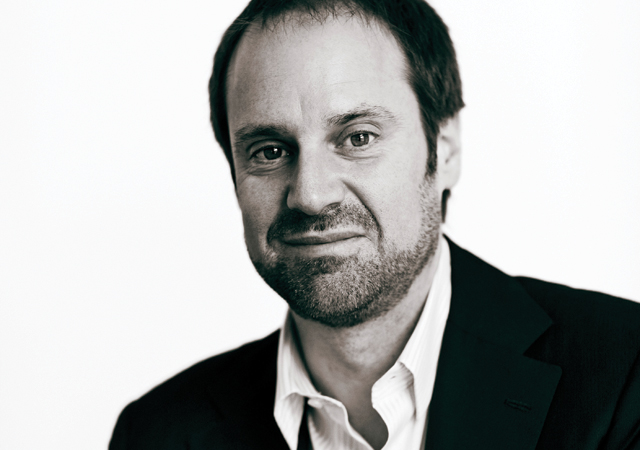
Jeff Skoll on Social Enterprise

The first president of eBay explains why he believes both social enterprise and impact investing provide the best model to deal with global challenges.

You are clearly a man with a vision – what makes you tick?

My vision was something that started when I was a kid. I used to read a lot, and by the time I was a young teenager, I started to realize that the world of the future might be a pretty scary and unsustainable place and even back then fears of new weapons, wars and diseases were top of mind for me. So my goal as a kid was to try and make a difference to the big issues facing the world, which I thought I would do by being a writer, writing stories that would get people interested in these issues and react accordingly.

As I grew up and became more immersed in business, I started to realize that I could not only make a contribution by writing stories about people making a difference but that I could also invest in people who were making a difference in the world, hence the Skoll Foundation. I could do more than just write stories, I could find writers, and help them tell their stories through different types of media, hence Participant, my media company.

I also learned that it made good business sense to invest in companies that were making a difference in the world, hence Capricorn, my investment management arm. Through all of this, my vision is for a peaceful, sustainable world… a world of prosperity. All the organizations that I’ve helped set up are working towards this aim.

Is there a right time to start “giving back”?

As a kid growing up, our family never really had a lot of money, we weren’t poor but philanthropy wasn’t really a concept that featured in our daily lives. But, things changed very quickly for me, thanks to eBay. From the time I started eBay with Pierre Omidyar to the time we went public was only two years.

To be honest, we didn’t have much time to think about “giving back” during those two years. So my “giving back” only really started after eBay. I do however believe that you don’t have to wait until you’ve done well before you start doing good. People should consider adopting a “doing good while doing well” theme into the way they run their businesses right now. It’s OK to do both at the same time and, in fact, it makes good business sense.

How do you see social enterprise evolving and what role do you believe it can play in addressing the many challenges and threats that we face?

The last nine years have seen a meteoric rise in social enterprise. If you were to do a Google search on social entrepreneurship seven  years ago, you would have had 10-15,000 hits. Now its more than 16 million. It’s grown considerably, and the number of NGOs being registered around the world is accelerating. I think this is because the traditional institutions of the world – government, church, business, traditional NGOs – haven’t been able to solve all the issues facing us as a planet and as a society… and the world gets more complicated every day.

Social entrepreneurs are one great vehicle for solving the problems that fall through the cracks of these institutions. Their growing importance in society from a “nice thing” to have to a “really important thing” to have is proof of the emergence of this sector. For example, in the United States a Social Innovation Fund has been set up by the Obama administration, and this shows the kind of progress that is being made.

When you hear the term “social entrepreneur” being described by the likes of Bill Gates, President Obama and Oprah Winfrey as “the next great thing,” you realize that in the next seven years the conversation around social enterprise will be elevated. I really believe that the social enterprise model has the potential to become the new normal.

“I realized in my thirties that I couldn’t wait until I was sixty before trying to make a difference”  

Impact Investing – investing for financial as well as social and/or environmental returns – seems to be gaining popularity as a new investment model. Do you believe it is possible to achieve financial and social and/or environmental returns?

All investing is really impact investing because it has an impact on our future in one way or another – for good or not so good. On the day that Lehman Brothers collapsed, we got word from one of our micro finance funds in Gambia that they were returning 28 percent so the contrast was incredible. With the Skoll Foundation we do these things called PRIs (Program Related Investments) and often these investments are as good, or better, than the traditional type of investing one does.

With Capricorn we invest in a number of companies that are oriented towards social good. The reason why investing in this idea makes sense is because you are investing into a growing consumer sentiment and awareness about these things. In the long-term, just by the definition of sustainable, these things will probably be around when others are not. Measurement is important – like any kind of investment, you need to be ruthless about what you are trying to achieve.

It’s more difficult to measure a social return on investment but if you set out with some metrics in mind, you are better able to assess how you’ve done and they provide an important benchmark. There’s a different conversation going on around investment right now, than there was, say, two years ago, when it was all about riding the financial engine.

The financial collapse over the last few years has got people thinking about how sustainable that model is and my experience has been that businesses rooted in addressing the bigger social issues do in the long-run outperform those that aren’t.

How do you believe Impact investors can achieve the greatest impact through their efforts?

It is a bit tough being an expert on all things. When you’re doing impact investing, having some areas where you are more knowledgeable can be helpful. For example, in the case of Capricorn, there’s a certain amount of environmental investing that we do that has run the gamut from palm oil in Tanzania to sustainable salmon farming in Scotland to solar and alternative power-oriented projects.

It’s helpful to have something in which you are personally interested or knowledgeable about. We start with a screening process that we have developed which includes major world issues, such as pandemics, water, nuclear and climate change. Then, other things come along that you wouldn’t normally expect.

For example, a deal on waste biomass conversion or some new kind of water transport. In short, you should be as entrepreneurial in impact investing as you would in any other form of investing – but it doesn’t hurt to have some kind of paradigm vis-à-vis the issues you are trying to impact and focus on those.

 eBay Foundation, Skoll Foundation, Participant Media, Skoll Global Threats Foundation …what’s next?

All of the organizations in the Jeff Skoll Group are at different stages – Participant alone is growing like crazy. We have 70 people there and have released 23 movies in the last five years. Right now, we have more than 40 in production. Trying to work out how we integrate these different entities so that each reinforces the other is important.

So, for Larry Brilliant at the Skoll Global Threats Fund to be able to draw on Capricorn to do due diligence on certain deals relating to climate change is invaluable. To be able to tell stories about the various social entrepreneurs we work with, and then through Participant build these into the campaigns we run, is important. For now, to be smarter and more collaborative in what we do as a group is the next challenge.


The Lakota Have No Word For “Authority”

Many people I know follow the principles passed down by the Native American tribe of the Lakotas.  The Lakotas are known for being a very peaceful tribe whose traditions are in many ways a powerful teaching for the future of our planet. In his book, Walking With Grandfather, by the legendary Lakota historian, James Marshall III writes that, “there is no word in the Lakota language for authority,” and they lean away from any of what we might consider commonplace notions of leadership. In fact, the elders have a saying about authority, says Marshall.

“Do you know how to ruin a chief, they say. Give him one follower.”

This notion intrigues me. Our modern western civilization concept of leader is one who has followers. Our concept creates a one up one down relationship between leader and follower that keeps people in a young and immature state. We revere leaders who are charismatic and able to inspire so many others to follow. Paradoxically, conscious leaders don’t want followers. They want people following the dictates of their own heart. Conscious leaders listen to their own heart and follow their own inner compass. And they want others to do the same.

And they make decisions in a different style. Consistent with the Lakota tradition, decisions are often made, not by vote, but through dialogue and deep listening. Among the Lakotas, often a question or a problem is brought to the council of elders who sit and deeply reflect together. The council has no authority. It fulfils its responsibility through the power of its wisdom. It is wisdom that emerges after much dialogue and discourse and if that wisdom resonates, it causes natural action to occur.

There is no standing on authority among the tribal leaders, nor on position power, and certainly not on the basis of threat and consequence. The council (leaders) simply offer their wisdom and guidance and it is accepted or not. In his book, Marshall writes, “the Lakota consider fortitude, generosity, bravery, 

and wisdom to be the four greatest virtues. In any mention of these virtues, wisdom is the last to be named.” It is the greatest of the four virtues and the one most difficult to achieve. It is not given to another, nor earned by appointment.

It is hard won through experience and awareness that wisdom is reflected in its impact on others. Wisdom is the essence of conscious leadership. What if you had no authority based on your role as leader. What if you had no power to hire or fire and that the only thing that caused others to be moved by your leadership was your wisdom and inspiration. How would you fare? This question gets at the source of power for a conscious leader. It is not positional power, nor threat or fear.

The source of power for a conscious leader is personal power. Personal power is the ability to guide, facilitate, and inspire. It requires a leader to have a compelling vision, deep fortitude, conviction, heart, courage, and a firm grasp on reality. It requires character and resolve. This is the stuff upon which great leaders and great companies are made and it is this form of power that is ultimately sustainable.

Interestingly, at the root of the word authority is the word “author.” Conscious leaders are the author of their own lives and they also are writers of the script of the future of their company or organization. They do not stand on the past. Instead, they write the future. They use the tool of imagination and they gain fuel from potentiality as opposed to relying on past success. Their authority is born out of inner strength, as opposed to the use of any other force. Here are some questions to consider as you seek to bring more wisdom to your own leadership:

  1. Where does your authority come from?
  2. How do you use it?
  3. How powerful are you and where are the sources of your power?
  4. Do you wield power like a sword and bludgeon people or do you use it to make a difference – to move people toward a shared and meaningful cause?
  5. What if all your outward power was stripped away? What if you had no power to hire and fire, or promote others? What would you be left with?


The Lakota Have No Word For “Authority”

Many people I know follow the principles passed down by the Native American tribe of the Lakotas.  The Lakotas are known for being a very peaceful tribe whose traditions are in many ways a powerful teaching for the future of our planet. In his book, Walking With Grandfather, by the legendary Lakota historian, James Marshall III writes that, “there is no word in the Lakota language for authority,” and they lean away from any of what we might consider commonplace notions of leadership. In fact, the elders have a saying about authority, says Marshall.

“Do you know how to ruin a chief, they say. Give him one follower.”

This notion intrigues me. Our modern western civilization concept of leader is one who has followers. Our concept creates a one up one down relationship between leader and follower that keeps people in a young and immature state. We revere leaders who are charismatic and able to inspire so many others to follow. Paradoxically, conscious leaders don’t want followers. They want people following the dictates of their own heart. Conscious leaders listen to their own heart and follow their own inner compass. And they want others to do the same.

And they make decisions in a different style. Consistent with the Lakota tradition, decisions are often made, not by vote, but through dialogue and deep listening. Among the Lakotas, often a question or a problem is brought to the council of elders who sit and deeply reflect together. The council has no authority. It fulfils its responsibility through the power of its wisdom. It is wisdom that emerges after much dialogue and discourse and if that wisdom resonates, it causes natural action to occur.

There is no standing on authority among the tribal leaders, nor on position power, and certainly not on the basis of threat and consequence. The council (leaders) simply offer their wisdom and guidance and it is accepted or not. In his book, Marshall writes, “the Lakota consider fortitude, generosity, bravery, 

and wisdom to be the four greatest virtues. In any mention of these virtues, wisdom is the last to be named.” It is the greatest of the four virtues and the one most difficult to achieve. It is not given to another, nor earned by appointment.

It is hard won through experience and awareness that wisdom is reflected in its impact on others. Wisdom is the essence of conscious leadership. What if you had no authority based on your role as leader. What if you had no power to hire or fire and that the only thing that caused others to be moved by your leadership was your wisdom and inspiration. How would you fare? This question gets at the source of power for a conscious leader. It is not positional power, nor threat or fear.

The source of power for a conscious leader is personal power. Personal power is the ability to guide, facilitate, and inspire. It requires a leader to have a compelling vision, deep fortitude, conviction, heart, courage, and a firm grasp on reality. It requires character and resolve. This is the stuff upon which great leaders and great companies are made and it is this form of power that is ultimately sustainable.

Interestingly, at the root of the word authority is the word “author.” Conscious leaders are the author of their own lives and they also are writers of the script of the future of their company or organization. They do not stand on the past. Instead, they write the future. They use the tool of imagination and they gain fuel from potentiality as opposed to relying on past success. Their authority is born out of inner strength, as opposed to the use of any other force. Here are some questions to consider as you seek to bring more wisdom to your own leadership:

  1. Where does your authority come from?
  2. How do you use it?
  3. How powerful are you and where are the sources of your power?
  4. Do you wield power like a sword and bludgeon people or do you use it to make a difference – to move people toward a shared and meaningful cause?
  5. What if all your outward power was stripped away? What if you had no power to hire and fire, or promote others? What would you be left with?


The Growth Agenda Of The Future is: Good, Grow, Gain

The popular and currently accepted MBA-approach view of business is as a stockholder wealth-creating machine.

MBA PowerPoints reveal a business logic mindset of Gain, Grow, Good. This business logic directs leaders to first think of a way to make money (Gain), then use a more-with-less business model to grow profitable revenue (Grow), and if there’s anything left over – to do some well-publicized, social responsibility (Good).

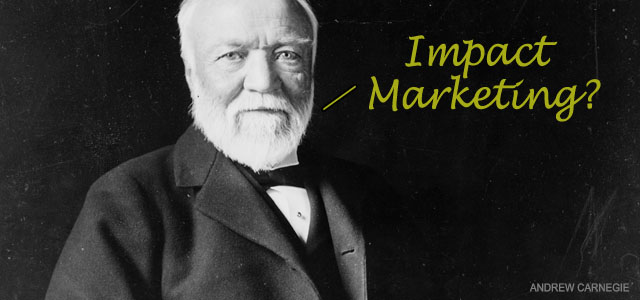
This is, in fact, the pattern of the old version of the American Dream. Start a business, create a monopoly to get really rich, and then retire as a philanthropist. This was Andrew Carnegies’ and Bill Gates’ pattern. It’s no longer relevant. This “gain first” approach to business no longer works because it kills daring motivation. In fact, a gain first business model creates risk averse cultures that become rigid, silo’d, and bureaucratic.

Trying to build fortresses around business models is a failed idea. The revolutionary forces of technology that have created a new reality in which all information is available to anyone, anywhere (think Google and mobile phones) has changed everything. Now any competitive advantage derived from a gain first mindset evaporates in months by competitors whose employees and consultants are as smart as yours (or even smarter).

The answer to this dilemma is found in the second new success factor. Think Good, Grow, Gain. It means that you, as a leader, begin with asking how much good you can do for people using the assets you have. No, this isn’t a not-for-profit agenda. In fact, it’s the growth agenda of the future. Creating unexpected value grows new demand and benchmark-breaking gains.

That’s exactly what the leaders we most admire are doing. Yet, this “do good first” thinking is such a foreign idea to the trained business mind that I’ve had to come up with a thinking model to jolt some new ideas. It looks like this: When I help retrain leaders’ minds to escape the prison of business-as-usual I teach them a process of answering questions about how they might first use their assets to create unique, innovative offerings that help customers experience a better life through one or more of these six sources of unique value above.

Once you’ve opened your mind to this model, you’ll begin to see how superbrands create consumer insistence (where customers accept no substitutes) and how they generate powerful attractive energy. Brands like Disney, Apple, Nike, and Starbucks inspire us with products and experiences while equally famous brands like Microsoft, HP, Denny’s, and Six Flags inspire only yawns. Just as Google, Harvard, and Oprah create mental energy by making people feel smarter and more capable, Yahoo, University of Phoenix, and Jerry Springer are well known but not for “good” reasons.

As I take leaders through the exercise of discovering the six ways of adding value, I see the light go on in their eyes; that making a difference is the surest way to make money in this constantly disruptive economy. I often see them blow open the cage of old, failed thinking and release their leaders’ personal sense of “unfinished business.” You see, our unfinished business is our personal TRUE work.

The work that most of us never get around to. The work we are designed to do and that our higher selves desire. Work that doesn’t just make us richer but also better. Once leaders understand their best path to personal success is the path that creates genuine value for humanity, their practical idealism kicks in and a new level of courage and conviction takes hold. Yet, even then, after a core mindshift to value-added leadership is set alight, leaders find it difficult to sustain escape-velocity.

The gravity of old ways of thinking and the pressure of short-term investors slows down, and even stops, real change. To boost the energy needed to change, I’ve developed a third step. It’s a revolutionary 21-day brain boot camp based on a set of very short and easy daily habits, designed to literally rewire a leader’s brain to tap their natural strengths and create value-added solutions to tough challenges.

It draws on the full power of new research around personal, positive, well-being to incite permanent change. What’s most rewarding is that these habits light up unique passions and talents of leaders, who want to lead better, but also live fuller lives. As I talk to audiences and work with leaders who believe they have “unfinished business,” I only ever have to ask them to look at their past accomplishments and current work and ask themselves, “Is this the best I can do?”

Those who can imagine that there is more, are those who will change the future, by creating it. For me, releasing a leader’s mind and the desire to be extraordinary is the payoff. You see, I believe that business is the most powerful institutional force that can create the future we want for our children. Imagine a world of sustainable abundance led by value-adding leaders, who redefine winning as the positive difference that only they can make.

Just imagine.  

Are you doing the best you can do? What is your unfinished business?


Leading to Win – Everything We’ve Been Taught about Leadership has Changed

For the past 35 years I’ve been helping leaders win. Winning is never easy. Especially now. And it’s not just because competition is more fierce and game-changing technology is being developed every nano second. Winning is hard because most of us don’t spend enough time critically thinking about what winning means to us. Instead we tend to accept others’ definition of winning and then start sprinting in a direction that has no finish line. This rarely leads to life’s biggest win—personal happiness and true contentment.

And increasingly, neither does it lead to winning at making money. So what does it mean to win? A research base of 250,000 business leaders over three decades confirms that humans have three prime motives. This is important. Our prime motive constantly directs our attention and focuses our energy on goals we believe will make us happy. Prime motive number one is distinguished achievement, attaining goals that set you apart.

Number two is beating your competition. And number three is enriching the lives of others, creating value for human beings. These are three very distinct motives each of which leads each of us to invest our daily energy very differently depending on how we define winning. It turns out that the general population divides in approximately three equal segments according to these three prime motives… but not so in business leadership. The higher up we look in organizations more leaders are primarily driven to achieve difficult goals or to beat the hell out of the competition. Fewer wake up in the morning fired up to create meaningful value for customers or to enrich the lives and capabilities of their employees. This has become a leadership problem.

And it’s getting worse. Today’s hyper competitive businesses can no longer count on winning by making money the old fashion way. That’s because everything we’ve learned about effective leadership has changed. It’s pretty simple. If you are a leader your thinking simply has to shift or realign with the new realities or you will fail, and no amount of hard work toward goals that no longer matter can save you. This change of mindset isn’t easy. We all rely on our old thinking habits because being open-minded to new, disturbing information is both unpleasant and inefficient.

And that’s the fundamental problem. Most leaders, especially those driven by achievement and competitiveness, have been seduced by efficiency… whatever the quickest, easiest way is to make money right now. In 1993 I led a project for the American Quality Foundation focused on making Total Quality Manage (TQM) normal business practice in the U.S. It was vital at the time. Japan was making great cars and electronics and the U.S. wasn’t. TQM was driven by engineers who figured out how to use statistics to reduce variance, cost, and people to more efficiently create reliable products.

By the mid-nineties this movement became known as business process reengineering, then Six Sigma, now lean thinking. But the world economy is “leaned out.” There are few advantages that persist from further efficiency. In fact many of the supposed gains through enterprise wide business processes have proven an illusion. We all know businesses cannot save their way to sustainable prosperity.

For that you need to create new value. Real value. Value that matters to human beings. It is only by creating a Unique Value Advantage (UVA) that an enterprise can sustain healthy financial margins to reinvest in motivated employees and make new bets on products, offerings, and markets that provide a steady source of growth. I call this Value Added Enterprise.

This requires leaders to have authentic empathy for both customers as well as employees so they can conceive of value that actually matters to human beings. This requires a different way of thinking—literally, reviving a different part of your brain that enables you to see and feel things that a cost-saving mindset filters out. In order to awaken the dead part of a leader’s brain I use a three step process. First, years of research has revealed that the top 3% of effective leaders do three things really, really well. They 1) set clear direction, 2) inspire and motivate their workforce and stakeholders, and 3) drive results.

The most compelling data on leadership behavior suggests that 97% of business leaders don’t do these three things well. In fact, only 10% of leaders do two of them well. Perhaps that’s why truly great leaders are rare. The interesting thing is that the rarest of the three essential qualities of great leadership is number two—inspiring others. Now we know that’s because people are most inspired by meaning rather than goals.

It’s true, the evidence is we are much more meaning-seeking beings than pleasure-seeking ones. And the root of human meaning is enriching the lives of other human beings, which translates into adding value. It’s even better if it’s unexpected value and best if it’s unique value. If you question that just consider a brief list of most admired leaders and ask yourself what they have in common:

  • Steve Jobs—Apple
  • Howard Schultz—Starbucks
  • Tony Hsieh—Zappos
  • Doug Conant—Campbell’s Soup
  • Mark Parker—Nike
  • Herb Kelleher—Southwest
  • Beth Comstock—GE
  • Sam Palmisano—IBM
  • Blake Mycoskie—TOMS

If you guessed that all these leaders are up to something more than making money, you’d be correct. Each one has created or revived a brand with a unique value advantage based on a value added strategy. Great leadership begins with clear leader intent that comes from the inner passion to make a customer’s life better.

Nothing less.

What is your company currently doing that is adding unique value to your customers?


Why the Corporation is Failing Us and How to Restore Trust in It

Trust and confidence in our economic and financial institutions has collapsed. The last few years alone have witnessed accounting, banking and corporate tax scandals; environmental disasters; financial crises, fraud and money laundering at unprecedented levels. The pace and scale of the failures is intensifying and look set to increase in the future. Colin Mayer, Professor of Finance at Saїd Business School, University of Oxford, has published an outspoken book Firm Commitment on the breakdown of trust – its causes, consequences and what we should do to fix it.

He places the corporation at the centre of this failure of trust and at the heart of our current problems. He argues that the corporation is no longer serving the interests of society at large and has been hijacked by one particular interest group, its shareholders. ‘The corporation is arguably the most important institution in the world – an institution that employs us and invests our savings, and is the source of economic growth and prosperity around the world,” explains Mayer.

“Yet the corporation has lost its purpose and become dominated by short-term financial concerns to the exclusion of all others and to the detriment of us as its customers, employees and communities.” This is not a theoretical debate but one of urgent importance for economies around the world and Mayer calls upon policy-makers and senior business figures to reform the corporation and he sets out a practical programme of measures focused on its ownership, values, governance, regulation and taxation. Some of the solutions he argues for are:

  • that corporations take responsibility for the consequences of their own conduct and to place control in the hands of long-term committed shareholders;
  • clearly articulated values with truly independent boards of directors responsible for ensuring that those values are adhered to;
  • tougher enforcement of regulation where corporations breach laws and threaten systemic stability but less intrusive regulation elsewhere;
  • the use of the corporate tax system to align the interests of corporations with those of society at large.

Many of the most successful corporations in the world today already display these characteristics. Tata, the Indian conglomerate, owner of Jaguar Land Rover and Corus Steel, is controlled by a foundation that is responsible for ensuring that its operating companies abide by the group’s principles and values. Bertelsmann, the media company, Carlsberg, the brewery, and Robert Bosch, the automotive components company, have similar arrangements.

“We can no longer look to regulation as the sole instrument to control the corporation’ says Mayer.  “Instead, re-establishing trust in the corporation is one of the most important policy issues of the 21st century.

Without it, economic policies will fail, environmental degradation will continue and financial systems will collapse. With it, we can achieve far greater levels of economic and social well-being than at present.”

Colin Mayer is the Peter Moores Professor of Management Studies at Saïd Business School at the University of Oxford and is a leading expert on issues of corporate governance and regulation. Mayer’s research is currently concerned with international comparisons of financial systems and corporate governance and their effects on the financing and control of corporations. Established in 1996 the Saïd Business School is one of Europe’s youngest and most entrepreneurial business schools with a reputation for innovative business education. https://www.sbs.ox.ac.uk/research/people/Pages/ColinMayer.aspx