I’m Done With “Leadership.” Here’s a Better Idea

I’ve been talking about leadership for the past 15 years. I’ve thought about it, analyzed it, read about it, played its games, taught it and written loads about it. Now I’m done. I’ve started talking about personal growth instead. But why?

Basically, the science of leadership is one huge, global, mumbo-jumbo of obvious facts and myths that nobody lives up to. There are too many examples of leaders in todays society who are incomplete, partial, and all too often, shamelessly corrupt. It seems as if the qualities and habits we coaches and professors speak about escape many of our today’s leaders.

If you like this, subscribe here for more stories that Inspire The Future.

The problem with the quest for leadership is that it has a defined goal: getting to the top. It’s become tempting to skip over some of the steps or avoid the many curves in the road on the way. It’s easy to be blinded by the drive to win. In a world full of frontiers and competitive barriers, where access to critical resources is blatantly unfair – let’s not forget that one percent of the world’s population holds over half the world’s wealth. It’s faster to trick your way to the top. Where’s the fun in this race if it’s rigged?

You can become a leader through a few convenient shortcuts: You could be born into a large family business and inherit the CEO’s position and control thousands of employees. You could marry into an aristocratic family or invest your entire childhood socializing with the big fish in your pond to gain an elite social position, without having any leadership instincts. You could make a ton of money overnight with new technology, or conquer million dollar magazine covers with saucy curves and pouty lips (inherited from your family). You could top the influence charts just because you found oil in your backyard. And of course, there’s also the all shady routes we could discuss too.

Personal growth, on the other hand, has no explicit target or result. There is no mark to achieve and brag about, and hardly any peer recognition on which to feed. Growing as a person isn’t a race against anyone. It’s a struggle against yourself. It’s never about winning. If anything, it’s about the courage it takes to lose, and stay lost while others look down on you.

Ironically, those who invest in their personal growth end up displaying all the traits we admire in ideal leaders: generosity, integrity, self-sacrifice, an absence of selfish or egotistic behavior, simplicity, wisdom, inspirational speech and great emotional grounding in the face of adversity. To these few individuals, leadership is an act of love and sacrifice for the well-being of others, rather than a chance to shine on the podium of popularity.

Is it still enough to merely be a leader? Is it more about being the best person you can be? Is it enough to make lots of money? Or is it more about serving a more significant purpose that transcends your little self?

But, who cares what I think? It’s ultimately your choice. What do you want your life to be about – leadership only, or about the personal growth you inspired in others by growing yourself?

If you like this, subscribe here for more stories that Inspire The Future.

I’m Done With “Leadership.” Here’s a Better Idea

I’ve been talking about leadership for the past 15 years. I’ve thought about it, analyzed it, read about it, played its games, taught it and written loads about it. Now I’m done. I’ve started talking about personal growth instead. But why?

Basically, the science of leadership is one huge, global, mumbo-jumbo of obvious facts and myths that nobody lives up to. There are too many examples of leaders in todays society who are incomplete, partial, and all too often, shamelessly corrupt. It seems as if the qualities and habits we coaches and professors speak about escape many of our today’s leaders.

If you like this, subscribe here for more stories that Inspire The Future.

The problem with the quest for leadership is that it has a defined goal: getting to the top. It’s become tempting to skip over some of the steps or avoid the many curves in the road on the way. It’s easy to be blinded by the drive to win. In a world full of frontiers and competitive barriers, where access to critical resources is blatantly unfair – let’s not forget that one percent of the world’s population holds over half the world’s wealth. It’s faster to trick your way to the top. Where’s the fun in this race if it’s rigged?

You can become a leader through a few convenient shortcuts: You could be born into a large family business and inherit the CEO’s position and control thousands of employees. You could marry into an aristocratic family or invest your entire childhood socializing with the big fish in your pond to gain an elite social position, without having any leadership instincts. You could make a ton of money overnight with new technology, or conquer million dollar magazine covers with saucy curves and pouty lips (inherited from your family). You could top the influence charts just because you found oil in your backyard. And of course, there’s also the all shady routes we could discuss too.

Personal growth, on the other hand, has no explicit target or result. There is no mark to achieve and brag about, and hardly any peer recognition on which to feed. Growing as a person isn’t a race against anyone. It’s a struggle against yourself. It’s never about winning. If anything, it’s about the courage it takes to lose, and stay lost while others look down on you.

Ironically, those who invest in their personal growth end up displaying all the traits we admire in ideal leaders: generosity, integrity, self-sacrifice, an absence of selfish or egotistic behavior, simplicity, wisdom, inspirational speech and great emotional grounding in the face of adversity. To these few individuals, leadership is an act of love and sacrifice for the well-being of others, rather than a chance to shine on the podium of popularity.

Is it still enough to merely be a leader? Is it more about being the best person you can be? Is it enough to make lots of money? Or is it more about serving a more significant purpose that transcends your little self?

But, who cares what I think? It’s ultimately your choice. What do you want your life to be about – leadership only, or about the personal growth you inspired in others by growing yourself?

If you like this, subscribe here for more stories that Inspire The Future.

Leading Through Emotion: Riding Your Personal Tsunami

Emotions are still misunderstood among business leaders. They are mostly unknown to almost everyone else in society too. Ironically, emotions seem to be most confusing to emotional experts themselves, if only because many of us tend to remain closed off behind our theories around emotion most of the time.

So here are four crucial things I have learned about emotion in my 20 years of examining this phenomenon. Anyone trying to lead should keep these points in mind:

  1. Emotion is wild in nature
  2. Emotion is like a wave that we need to surf, rather than suppress or block
  3. It’s more important to know how to come out of an emotion, than how to go into it
  4. All you need are three tools: attention focus, breath and (involuntary) movement

Firstly, emotion is wild in nature. It’s like a lion. Unpredictable, magnificent and invigorating, it can chew your head off in a split second. Daniel Goleman coined the expression “emotional intelligence” in the nineties, which was surely better than previous emotional stupidity or ignorance. Still, being intelligent about our feelings would make it sound like we can put them into boxes, label them, add them up or subtract them, plan them and control them.

But emotions, sensations and feelings are like a wild lion. If you put it in a cage, it’s no longer inspiring or thrilling, and it often ends up just sleeping around all day. Today, too much psycho mumbo-jumbo about caging and controlling emotions at will is written about and TED-talked on stage. Nice theory though.

If you’re serious about learning to handle emotion – both yours and your followers – you’re going to have to see them as the wild, unpredictable animals they are. You can befriend them, you can learn to trust them, and you can do marvelous, incredible things with them. But they may betray you in a split second at any moment for reasons you could never have anticipated. And when they do bite your head off and kill you, well, you’ll be born again to a bigger, better you.

Secondly, we need to surf the wave of emotion rather than block it. Every sensation in the body behaves like a wave of energy. It comes in, builds to a climax, and then pulls out. This may happen very slowly, over hours, days or even weeks – like all those complicated family conflicts we’re emerging from over the festive season! Or it may happen within a couple of seconds.

Like real waves in the ocean, you can surf a two-meter wave or find yourself riding a tsunami. Your ability to face the latter obviously stems from many hours spent on the board, mastering the slow, tiny waves first. The wild nature of these waves is from the complete randomness of how they arrive, where they arrive from, how fast they reach you, and how easily they can topple you over when least expected.

In our society, however, spurred on by ignorant psycho-babble about controlling or changing what we don’t like about ourselves, we try to stop the wave instead of surfing it. We get stuck, blocked, or disconnected. Our minds start turning round too quickly in never-ending circles and we behave compulsively, sabotaging our own goals and repeating old, well-known and severely self-reprimanded mistakes.

If you want to surf these waves of energy, you need to go soft instead of hard. As muscles and joints tense up with the increase of emotional energy, you need to soften them again. And yes, a mind that won’t shut up is behaving exactly like an emotionally charged muscle. Try to soften up and surf your way through the current of energy.

Which leads me to my third point: It’s more important to find your way out of an emotion than to get into it. It takes emotional experts a long, long time to learn this one!

It’s called “grounding,” and it means that once a sensation takes over your body, you have resources, techniques and (if needed) lifesavers, to help you come back down to the ground where you feel safe and sound. When other drivers anger you, breathe yourself back to calm. If shareholders and investors, through their own fears, pull out capital investments, breathe yourself back to calm optimism and positive thoughts.

A few well-known emotional experts think its super productive to take a client to their worst place of fear or pain during a seminar. It’s what we see in typical hotel facilities full of desperate souls manipulated into letting it all out. When all the crying, screaming and pouting is done, most of them can’t explain what they’ve learned, and some of can’t find their grounding for days or weeks afterwards.

More importantly, if you do touch on a sensitive wound from the past, with overflowing emotion you don’t know how to contain, it can scare you so much that you won’t want to go back there ever again. There is nothing scarier than getting stuck in a horrible emotion you can’t come out of. It makes you dependent on magical big-mouths who promise they can fix your problems, and can  end up costing a lot of money.

Practice with smaller emotions and sensations first. Build a tool box of resources that work for you and as you get good at coming back to the ground, try more intensive adventures. Never do anything that feels fundamentally wrong or unsafe, no matter how many people in the room are cheering you on.

And how do we surf our waves of wild, unpredictable emotion in such a way we can ground ourselves as often as needed? By learning to use our attention focus, breath and (involuntary) movement. Every meditation and mindfulness technique in the world is based on the use of these three tools.

Your attention must focus on the problem, the pain or the tension if you’re going to resolve it. Thinking of other things doesn’t help, and escaping only makes it bigger. Once you are looking at it, breathing can help you connect to the sensations it contains: size, texture, location, frequency, images and memories it brings back, etc. Finally, movement, especially the kind that is not ordered by our brain, but initiated by the body itself, will bring fluidity to unblock and surface emotions withheld there.

Leading through emotion is the only real way of leading people. We can only harness the best version of themselves when we give them the space and the opportunity to express their talent freely, which means emotions flow all over the place. So start by learning to manage your own emotions and surf your own waves… in time you will see others learn by following your example. And the better you get at managing tsunamis, the more people will follow you trustingly wherever you dare to go!

 

Crying in Movies Can Improve Your Leadership

I know you feel guilty or unproductive when watching a movie or TV series. We’re all hounded by the moral imperative to work, produce and earn our place in the world. But the truth is, movies help us grow on a personal level, and in so doing, make us better leaders.

Some say storytelling was a crucial factor in human evolution, particularly during the so-called Great Leap, 60,000 to 70,000 years ago, when our tools and hunting techniques became more sophisticated. Art and design emerged in everything we made. Passing along knowledge and know-how through myths and storytelling helped us learn from each other, copying and improving within a tribe, and eventually, as a species.

If you like this, subscribe here for more stories that Inspire The Future.

Once we began telling stories, we never stopped. In the digital era, we stream magnificent movies across the globe. New releases go viral instantly. Every journal and blog picks up on the same scenes and characters to share in the excitement and revel in the viral emotion across millions of screens. More than ever before, we pulse together to the rhythm of the same suspense, joy, fear and triumph.

What’s interesting about screen-enabled stories is that we can all react freely to them without being watched by anybody else. It’s like coaching over Skype versus face to face. When a client is alone in their office or home, and I’m no more than a talking head on their screen, another level of depth, intimacy and emotion takes place. At some instinctive level, my client’s body feels more alone and less threatened by a physical presence. It lets go of things you would typically keep close to your heart. This is what movies do for us so well.

Most executives have no clue what their bodies feel. They can’t remember the last time they cried. When asked how they feel their response is usually “fine” or “great.” They have become top executives in large companies or daring business owners precisely because their deeper feelings stay contained and hidden. No matter what danger or peril surround these men and women, they always feel “fine” or “great.” Until a scene in a film catches them by surprise!

It’s always the stories and situations that resonate with our unresolved emotions which pull a tear or jerk a shiver from us. Individual characters, challenges or twists in storylines resonate with our most profound, wild selves, with personal issues that most hinder our response to personal and professional situations. They move us in ways we will remember and refer back to for months; even years.

In watching stories about fathers and sons, daughters and mothers, lovers, friends or partners in crime, we awaken from our obliviousness to emotion. We resonate in surprising ways. We melt on some level to become more vulnerable and sensitive. And we grow into better people and better leaders.

If you like this, subscribe here for more stories that Inspire The Future.

Woman Beats Brain Tumor, Rows Across The Atlantic

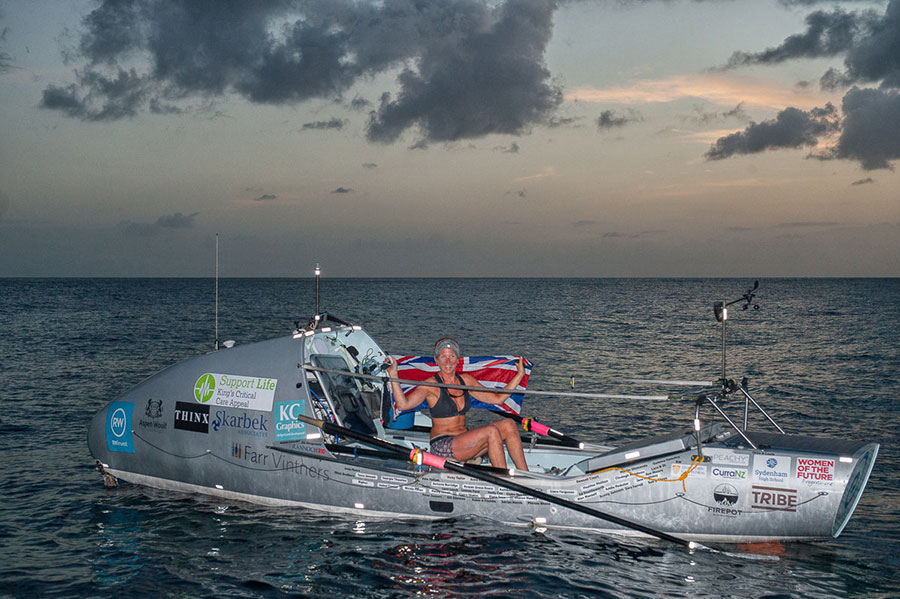
Briton, Kiko Matthews, 36, arrived in Port St.Charles, Barbados on 22 March, smashing the World Record as the fastest woman to complete a solo trans-Atlantic row. This, despite have had two brain tumours removed – the last, just 8 months ago.

Kiko, finished the 3,000-mile journey, from Gran Canaria, single-handed and un-supported in 50 days, breaking the previous record of 56 days.

In completing the challenge, Kiko has so far raised over £70,000, of her target of £100,000, for King’s College Hospital Intensive Care Unit who twice removed a brain tumour from her. In 2009, Kiko, was diagnosed with Cushing’s disease, a rare condition that made walking up stairs impossible. The tumour on her pituitary gland caused severe memory loss, psychosis, diabetes, osteoporosis, insomnia and muscle wastage. The second was removed in August 2017 whilst she was in training for the Atlantic crossing.

If you like this, subscribe here for more stories that Inspire The Future.

Having only learnt to row last year, Kiko, born and raised in Herefordshire, has rowed the Atlantic alone in 21-foot long Soma of Essex for up to 16 hours a day for seven weeks, slept in two hour shifts, dealt with 70-foot waves, sharks, hand and feet blisters and the least prevailing winds. She has been her own doctor, mechanic, skipper, friend and worst enemy in one of the toughest physical and mental challenges known to man. Only six women have previously completed the journey solo.

Kiko says, “The thought that eight months ago I was lying in hospital having my brain operated on and now I am here having rowed the Atlantic, I guess I am a bit proud. I have shown that anyone can attempt anything given the right attitude, belief, and support. I want to use my story to inspire women to challenge themselves.”

“I didn’t get scared by the adverse conditions, I just got on with things. What can you do about it? You have no choice but to carry on, like in life. It was temporary relentlessness. If I did ever get down, I thought of the people willing me on, I wanted to do it for them. The stories they sent me supported me incredibly. By the last two weeks, I was just totally content and at peace; I didn’t even listen to music,” she says.

On land, she has been virtually powered by a team of women, through her 100TogetHER initiative. The collaboration of women from all walks of life, have come together to support Kiko financially and with skills highlighting what can be achieved through community, challenge and collaboration and it’s their names which adorn the boat. Part of 100TogetHER is Britain’s most successful female Olympian, Katherine Grainger and Tracy Edwards – who skippered the first all-female crew in the Whitbread Round the World Yacht Race. She was also coached by Guin Batten, the 2000 Olympics silver medalist.

If you like this, subscribe here for more stories that Inspire The Future.

Which of These Three Would You Trust the Least?

I am very interested in how to improve human judgment. All leadership success, and yes, life success depends on it.

Harvard-based researchers have spent years proving that virtually all of us are irrationally biased.  We all have opinions that are not based on facts or direct experience but rather emotional thinking shortcuts. You see, thinking takes a lot of energy and discipline but our brains are built for efficiency so it is always designing shortcuts.  The name of these mental-shortcuts is stereotypes.

When we hold tight to stereotypes they become prejudices.  Once we have a prejudice we’re constantly selecting evidence to support our prejudice so we don’t have to go to the effort of opening our minds to new data or considering that, in this specific case, what is usually true is not true.

For instance as you consider the 3 photos at the top of this article, who might you want to avoid walking by on deserted street at midnight? If you are like most people in the Harvard research you would scamper away from the man in the hoodie. That would be foolish as the man in the sweatshirt is the famous great guy basketball star Kevin Durant who is known for his charity and loving kindness. The figure in the burka is not a terrorist but a British Muslim nurse.

And the handsome man in the suit is none other than Ted Bundy who raped and murdered 30 women. Trusting Bundy based on his looks and charm was tragically fatal for those who relied on their visual bias.

Simply put, prejudice limits our capacity to make smart decisions or see deeper truths. Yet these thinking shortcuts are difficult to tame.  Humans have spent thousands of years finding security, believing that our tribe offers protection from other tribes who want to kill us and take our stuff.  So when we see that people are a lot like us we tend to trust them. When we worry about people who do not seem to be like us with regards to how they look, what they like to eat, how they like to live, or to appear to have different standards and values, we seek to protect ourselves. This is the natural state of human emotions–and it is increasingly dysfunctional.

Although we reflexively have automatic preferences toward people who look like us, act like us, and seem to believe what we believe–that thinking is proving the be one of the most destructive challenges of our time.

Consider this. Never before in history have human beings been exposed to so many other human beings who are not like us. In 1950 2.5 billion people populated our planet. Today nearly 7.5 billion people fill the planet. And the variety of beliefs and cultures is astonishing.  This requires a new way of thinking. It requires open minds rather than defensive ones. Collaboration rather than competition. Innovation rather stagnation. Sustainability rather than exploitation.  

As many of you know, I constantly seek to surface unconscious bias that is so pervasive in our workplaces as I help women advance in leadership.  Nearly all organizations are built on an authoritarian model that unconsciously favors “strong-man” behavior. Most men have a strong belief that typical male behaviors of assertiveness and taking control are ideal leadership behaviors because that’s what they are biased to believe from working in business structures that favor those behaviors. So they tend to give women who act in these “male” ways more leadership opportunities.

The problem with this bias is our research (Apple to Zappos) clearly indicates that in today’s radically competitive business environment, old-school, stereotypical male leadership is more likely to fail than succeed.

What is true is that while hard power style seems to create efficiency it quashes innovation.  Hard power rewards obedience and group compliance.

Growth comes from opening our minds to new possibilities.  Economists have discovered that opportunity is usually a function of seeing what was previously unseen but is right in front of us.  That’s why the cognitive diversity that comes from seeking the ideas of people not like us is such a powerful driver of innovation, and value creation.

Our unconscious bias is psychological blindness. We literally don’t see opportunity when we are either judgmental or fearful.

The question I ask male executives when I am trying to get them to see the value that women who lead like women bring is “What might you be blind to?”

The evidence that organizations are more successful when at least 30% of senior leaders are female is overwhelming. One big reason is that women are more socially intelligent. This advantage drives them to be more inclusive and open to new or different ideas. It’s not that women are less biased to begin with. The edge they have is that they are less reactive, less impulsive and more empathetic. This helps them to stop and think before they dismiss the ideas, needs or values of  people different from them.

The bottom line:

We live in a complex, diverse world that our brains and emotions seek to simplify by separating people into groups of people like us and not like us.
Diversity challenges our biases that hard power leaders are unlikely to value.
Women have gender brain and social strengths that make them better suited to harvest the value of cognitive diversity through practical innovations.

However, the bias against women advancing to leadership in organizations inhibits women from using their strengths.

Leaders can dramatically increase the group intelligence of their senior leadership and organizational performance by making sure qualified women make up at least 30% of their C-level, VP’s and senior directors.

If your organization does not look like this, ask the most senior male leader you can connect with to read this and ask him to suspend his bias and consider the positive implications of it’s factual truth.


4 Ways to Coach People Doing Good to do Better

Glen Stewart wants to accelerate the passion you have to change the world.

He’s an executive coach and it’s his mission to maximize your potential to make the biggest difference possible – whether that’s by expanding microfinance, combating deforestation, fighting gender inequity or improving access to healthcare.

He wants to organize, mobilize, and galvanize a group of dreamers and doers: think of them as an army of positive change-makers.

If you like this, subscribe here for more stories that Inspire The Future.

One might call him a bleeding heart, but from an early age, Glen was keenly tuned into the power of human achievement and the difference a single person can make in the world. A globally engaged individual, he traveled as often as he could, and saw firsthand how leading with impact represents the greatest opportunity for lasting change.

In school, he studied how people learn and function best together as individuals and in teams and discovered that leadership training is often not enough. It was through his work as a master coach that allowed him to help professionals and individuals inside and outside of the boardroom discover, ignite, and realized their passion and purpose. His life work and biggest opportunity was to develop and coach leaders to create real, lasting impact in the world.

Glen Stewart

“Many executives say they want to make the world a better place,” he explains. “But they’re so focused on day-to-day operations, that the ‘big picture’ challenge of connecting their business to a mission-driven purpose is often overlooked or underserved – and this is where the greatest opportunity for gain lays.”

After years of working with people-centric companies, Glen started his own firm, Marquis Leadership, and he works with companies like Starbucks, Microsoft, Apple, REI, Expedia, and Seattle Children’s Hospital to help leaders identify the impact they want to make in the world and achieve better bottom line results while doing it.

“Many people don’t realize that finding your passion and focusing on meaningful impact ultimately drives better results,” he explains. “My purpose is to help leaders connect with something greater than themselves – to offer a roadmap for leaders to grow their potential and create a path to be their best selves, all while creating a lasting legacy they can be proud of.”

He works with a broad range of companies because he believes that there isn’t just one way of changing the world: a tech or investment company can create just as much impact as a university or hospital. Glen is a leadership coach, but he believes that the same lessons he teaches CEOs can apply to any individual who seeks to make a change in the world. Here’s his advice:

1. Turn off Your Autopilot: Become aware of your patterns, see yourself in real-time, and live and lead with intent. Ask yourself, what gets you up each morning? What change are you most passionate about creating in the world? Glen advises individuals not to be intimidated by their goals; one person with a vision can truly change the world. As Nelson Mandela said, “It always seems impossible until it is done.”

2. See What is in Front of You: Give yourself permission to notice the opportunities that continually present themselves. Vision is part dream and part action. Simply, you must not only dream it, you must do it. Consider exactly what your goals are and how you wish to achieve them. Think in 1-, 5-, and 10-year horizons.

3. Lead with Curiosity: Recognize your triggers, mind the gap, and allow your emotions to provide the data you need to make better decisions. An impactful life is one that never stops pursuing change. Your interests and priorities may change over time, as well. Check in with yourself, and make sure you’re still pursuing change you feel good about. Stay hungry.

4. Measure Your Impact: Many people forget this step, thinking instead, “I’ll know change when I see it.” Change doesn’t happen overnight, and it’s important to create benchmarks to measure your progress. Create short- and long-term goals and figure out a clear way of measuring achievement.

If you like this, subscribe here for more stories that Inspire The Future.

Every Investment Has Impact. What’s Yours?

For Liesel Pritzker Simmons, there’s no shortcut to raising the bar on impact investment performance. 

As Principal of Blue Haven Initiative, a family office she co-founded in 2012 with her husband Ian Simmons, this millennial is showing how investors of all ages can maximize the positive social and environmental impact of their investments while generating financial returns.

But it isn’t easy.

If you like this, subscribe here for more stories that Inspire The Future.

Whether it is analyzing a portfolio company prospectus or visiting entrepreneurs in sub-Saharan Africa, Pritzker Simmons applies a rigorous portfolio-management lens to every investment—whether for-profit or philanthropic capital—with the goal of aligning financial performance and public benefit. There’s no magic bullet or “Top 10” list for impact investing, says Pritzker Simmons. “It’s a highly personal endeavor, requiring people to think deeply about how portfolios should reflect their values and concerns.”   

As one of the first family offices created with impact investing as its mission and focus, Pritzker Simmons and the Blue Haven team are careful to ensure that philanthropic efforts and investment efforts are coordinated and complementary.  And they are playing the long game. Whether investing in a social enterprise, supporting research and education, or regularly reviewing its public equity portfolio, Pritzker Simmons, her husband and their advisors believe the future of investing will be reshaped by more informed investors.

We recently caught up with Pritzker Simmons. An excerpt of our interview follows:

Amy Bennett: Liesel, thanks again for your time. Let’s jump right in. How do you define impact investing? 

At Blue Haven Initiative, we start from the premise that every investment has an impact—good, bad, social, environmental and financial. From there, we do extensive research and seek to maximize the positive social and environmental impact of our investments while earning a market return. As a result, impact investing requires us to ask a lot more questions and do more rigorous due diligence in assessing the long-term risks and returns of our investments.

We’re a family office and we take this approach because we’re long-term investors. If we don’t consider environmental and social risk and returns, we’re not only putting our financial investments at greater risk, we’re not being good stewards of wealth for future generations. We don’t want to make a mess our kids will eventually have to clean up.

How does your philanthropic giving fit into your impact investment strategy?   

Blue Haven takes a Total Portfolio Management approach to impact investing. That means looking across asset classes and capital types. Our philanthropic capital is an important resource that we use as effectively as possible. We look for opportunities that markets really cannot address—civic engagement in voting, disaster relief, research and education—things that traditional investing typically doesn’t value as much as we think it should.  We prioritize our philanthropic spending for those kinds of opportunities. 

Philanthropy is one tool in the tool belt for impact and we use it for grants as well as concessionary investments where the impact equates to a non-risk-adjusted return. And it is part of a holistic process. We want to make sure that our investment portfolio is not working against our philanthropic goals. There is absolutely no point in funding climate change initiatives with your philanthropic dollars if you’re not trying to reduce your carbon footprint in your investment portfolio.  It doesn’t make any sense. 

We hear a lot about how donor advised funds are growing in popularity and democratizing philanthropy. And we know each other because you use ImpactAssets’ offering, the Giving Fund. How has it played a role in your impact investing?

The Giving Fund is the vehicle through which we do our philanthropic grant making and our concessionary investing. We want to spend time finding great organizations and companies to support without devoting a lot of time on the complexities of philanthropic administration. There’s really a great range of tools that impact investors use these days—from debt to equity, recoverable grants, C4 strategies—and ImpactAssets knows how to help us implement them.

In addition, the organization plays an important role in the impact investing ecosystem. Clients of ImpactAssets are among the most active impact investors in the world.  It’s an innovative and risk-taking community and you can see that in the number of deals that are done and the kinds of funds that are on the platform. It’s inspiring to be a part of it. 

Can you tell us about one of your favorite impact investments that you made through the Giving Fund? 

One example is our support of PRIME Coalition, an intermediary that facilitates very early-stage investments into game-changing climate-change companies. They find companies, vet them, and structure early-stage investments into them.  We’ve supported PRIME through an operating grant as well as providing funding that PRIME used to place equity into another venture. And we’ve also supported them by directly investing convertible debt into RedWave, a company that is developing technology to convert waste heat into renewable electricity. 

Millennials are enthusiastic but often inexperienced when it comes to impact investing. What’s the most important lesson you have learned as a pioneering impact investor that you can pass along to your fellow millennials?

I’ve learned that you can’t expect that impact investing is going to be faster, easier or cheaper than traditional investing.  It’s more complicated, idiosyncratic and rigorous. And that’s okay. If it were easy, everybody would have already done it.  You have to put time and energy and effort into impact investing, but it’s where the most exciting conversations are happening. And I think millennials know that.    

It’s also important for millennial investors to just get started with something and learn as they go. Don’t try to find perfection in one single investment or in one single fund. Don’t try to look for a website that rates every company perfectly and makes impact investing just a click away. Start small, piggyback off of investors that you think are smart, and learn that way. 

If you could deliver one message to investors of any age, what would that message be?

I would appeal to investors to take more responsibility for the total impact of their investments. If an investment has a negative impact socially or environmentally, somebody is going to have to clean up that mess. If not you today, then your grandchildren tomorrow. 

Get into the mindset of long-termism because a thoughtful and rigorous consideration of the environmental and social impact of your investments in the long run is just more informed investing. 

And if you believe that a better understanding of risk is smart in the long term, then you’re more than halfway to being an impact investor.

If you like this, subscribe here for more stories that Inspire The Future.

Every Investment Has Impact. What’s Yours?

For Liesel Pritzker Simmons, there’s no shortcut to raising the bar on impact investment performance. 
As Principal of Blue Haven Initiative, a family office she co-founded in 2012 with her husband Ian Simmons, this millennial is showing how investors of all ages can maximize the positive social and environmental impact of their investments while generating financial returns.

But it isn’t easy.

If you like this, subscribe here for more stories that Inspire The Future.

Whether it is analyzing a portfolio company prospectus or visiting entrepreneurs in sub-Saharan Africa, Pritzker Simmons applies a rigorous portfolio-management lens to every investment—whether for-profit or philanthropic capital—with the goal of aligning financial performance and public benefit. There’s no magic bullet or “Top 10” list for impact investing, says Pritzker Simmons. “It’s a highly personal endeavor, requiring people to think deeply about how portfolios should reflect their values and concerns.”   

As one of the first family offices created with impact investing as its mission and focus, Pritzker Simmons and the Blue Haven team are careful to ensure that philanthropic efforts and investment efforts are coordinated and complementary.  And they are playing the long game. Whether investing in a social enterprise, supporting research and education, or regularly reviewing its public equity portfolio, Pritzker Simmons, her husband and their advisors believe the future of investing will be reshaped by more informed investors.

We recently caught up with Pritzker Simmons. An excerpt of our interview follows:

Amy Bennett: Liesel, thanks again for your time. Let’s jump right in. How do you define impact investing? 

At Blue Haven Initiative, we start from the premise that every investment has an impact—good, bad, social, environmental and financial. From there, we do extensive research and seek to maximize the positive social and environmental impact of our investments while earning a market return. As a result, impact investing requires us to ask a lot more questions and do more rigorous due diligence in assessing the long-term risks and returns of our investments.

We’re a family office and we take this approach because we’re long-term investors. If we don’t consider environmental and social risk and returns, we’re not only putting our financial investments at greater risk, we’re not being good stewards of wealth for future generations. We don’t want to make a mess our kids will eventually have to clean up.

How does your philanthropic giving fit into your impact investment strategy?   

Blue Haven takes a Total Portfolio Management approach to impact investing. That means looking across asset classes and capital types. Our philanthropic capital is an important resource that we use as effectively as possible. We look for opportunities that markets really cannot address—civic engagement in voting, disaster relief, research and education—things that traditional investing typically doesn’t value as much as we think it should.  We prioritize our philanthropic spending for those kinds of opportunities. 

Philanthropy is one tool in the tool belt for impact and we use it for grants as well as concessionary investments where the impact equates to a non-risk-adjusted return. And it is part of a holistic process. We want to make sure that our investment portfolio is not working against our philanthropic goals. There is absolutely no point in funding climate change initiatives with your philanthropic dollars if you’re not trying to reduce your carbon footprint in your investment portfolio.  It doesn’t make any sense. 

We hear a lot about how donor advised funds are growing in popularity and democratizing philanthropy. And we know each other because you use ImpactAssets’ offering, the Giving Fund. How has it played a role in your impact investing?

The Giving Fund is the vehicle through which we do our philanthropic grant making and our concessionary investing. We want to spend time finding great organizations and companies to support without devoting a lot of time on the complexities of philanthropic administration. There’s really a great range of tools that impact investors use these days—from debt to equity, recoverable grants, C4 strategies—and ImpactAssets knows how to help us implement them.

In addition, the organization plays an important role in the impact investing ecosystem. Clients of ImpactAssets are among the most active impact investors in the world.  It’s an innovative and risk-taking community and you can see that in the number of deals that are done and the kinds of funds that are on the platform. It’s inspiring to be a part of it. 

Can you tell us about one of your favorite impact investments that you made through the Giving Fund? 

One example is our support of PRIME Coalition, an intermediary that facilitates very early-stage investments into game-changing climate-change companies. They find companies, vet them, and structure early-stage investments into them.  We’ve supported PRIME through an operating grant as well as providing funding that PRIME used to place equity into another venture. And we’ve also supported them by directly investing convertible debt into RedWave, a company that is developing technology to convert waste heat into renewable electricity. 

Millennials are enthusiastic but often inexperienced when it comes to impact investing. What’s the most important lesson you have learned as a pioneering impact investor that you can pass along to your fellow millennials?

I’ve learned that you can’t expect that impact investing is going to be faster, easier or cheaper than traditional investing.  It’s more complicated, idiosyncratic and rigorous. And that’s okay. If it were easy, everybody would have already done it.  You have to put time and energy and effort into impact investing, but it’s where the most exciting conversations are happening. And I think millennials know that.    

It’s also important for millennial investors to just get started with something and learn as they go. Don’t try to find perfection in one single investment or in one single fund. Don’t try to look for a website that rates every company perfectly and makes impact investing just a click away. Start small, piggyback off of investors that you think are smart, and learn that way. 

If you could deliver one message to investors of any age, what would that message be?

I would appeal to investors to take more responsibility for the total impact of their investments. If an investment has a negative impact socially or environmentally, somebody is going to have to clean up that mess. If not you today, then your grandchildren tomorrow. 

Get into the mindset of long-termism because a thoughtful and rigorous consideration of the environmental and social impact of your investments in the long run is just more informed investing. 

And if you believe that a better understanding of risk is smart in the long term, then you’re more than halfway to being an impact investor.

If you like this, subscribe here for more stories that Inspire The Future.

A Tribute to Will Marre: “Your Mission is My Mission”

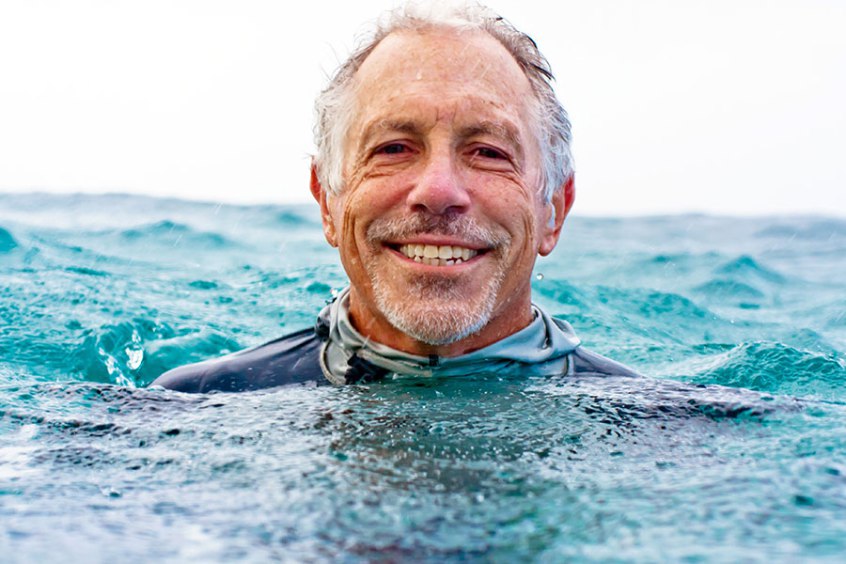
We received the news at Real Leaders this week that one of our longstanding contributors, Will Marre, had passed away. While saddened by the loss of such a dynamic leader, we have chosen rather to celebrate his life. 

Will passed away while engaged in one of the greatest passions of his life: surfing. Although absolutely robust in body, mind, and spirit, he suffered from a minor congenital heart defect to which he seemed to have finally succumbed. His passion and energy for unearthing the best human we could be was contagious, and is best understood by the fact that his family asked those attending his memorial service to wear bright, vibrant colors and comfortable shoes for a beach walk.

He was prolific in telling the world that “your mission is my mission” – spoken in many instances to the thousands of women he coached – in a strongly-held belief that we all have the power to shape our future for the better. “Women’s full contribution in leadership is a survive and thrive issue for the future of every human being,” he once said.

His Institute for Leadership Synergy aimed to train one million women in the next five years to become effective leaders. He believed in the synergy between the results-focused strengths of hard power and collaborative strengths of soft power – a trend that is proving successful at empowering teams in organizations around the world.

Will left enough thought-provoking leadership insight to last many lifetimes. Perhaps the legacy he leaves for those who admired and followed him should be one of social inheritance: “His mission is now our mission.”

Here we reflect on some of Will’s best wisdom from the past years:

How to Inspire Yourself When You’re the Victim of Bias

Psychologists have determined that our confidence grows when we believe that making our best efforts will result in achieving our goals. When the link between our effort and our results is broken we begin to lose our confidence and our motivation to keep trying.  Demotivation grows exponentially when we see other people achieving their goals without making the same efforts that we are.  It feels unfair… because it is.

Why is Donald Trump So Popular?

The world is a very confusing and scary place right now. The forces of violence and our economic well-being seem out of control. So when someone shows up brimming with insane levels of confidence (strength), and who promises to defend you against your greatest fears (empathy-warmth) they will get your attention.

Why Everything Bad Will Change for the Better

It is now very clear that the children of boomers will not pay their dues. That’s because they don’t want to join the club their parents have built. They have seen what mindless obedience to the “man” buys. It is not the life they admire or value. The accumulation of evermore stuff does not create happiness, satisfaction or even enjoyment.  They have discovered that travel can be more enriching when you sleep in a spare bedroom of an AirBnB than a five-star hotel. They were suckered into massive student loans for inadequate educations. They have little loyalty to employers who have no loyalty to employees.

The One Simple Thing You Can Do to Love Your Work

Let me encourage you. Don’t settle for a job. Don’t degrade your life for a career. What you do matters. You are designed perfectly to succeed at your true calling. And please believe me, with all the research I’ve conducted and all the coaching that I’ve done I can assure you what I am saying is not goofy, pie-in-the-sky.  Many, many, many people have it all and so can you.

How Men and Women Can Co-Create Unexpected Value

The deeper problem is that simply telling men they should  value women as leaders only adds energy to the stereotype that women need ‘special’ help because they are the weaker sex.  This kind of thinking is not confined to the ‘Mad Men’ era.
It’s the unspoken bias that stubbornly persists.

Two Million in Jail in the US. If You Were in Charge, What Would You Do?

Psychologists have learned that the biggest influence on our behavior is the personal story of our identity. If your identity was that you were destined for a meaningless grinding life or worse, jail, who do you think you might become? I have spent deep time with fellow human beings whose hope was stolen from them before they could even talk. I get exasperated when some self-righteous idiot politician points to a few who have somehow escaped an awful personal history to become a remarkable self-sufficient human being.

Your Moment of Truth – Why Do You Run?

I have found every success story has a moment of truth where you either go all in or shrink. There are small and mighty forces that are focused on positively changing the way we all think about the purpose of work, our economy, business and society.  The opposing force of the powerful status quo is well financed and very noisy. They are both powerful and stupid. They justify what is unjustifiable. Yes, we can defeat them.