What Can The Study of Leaders Teach us?

Let’s recall for a moment the history of Chrysler. In the late 1970s, the company found itself in a rather unattractive position – there were a vast number of unsold cars and quarterly losses approached $160 million. Bankruptcy threatened Chrysler’s existence.

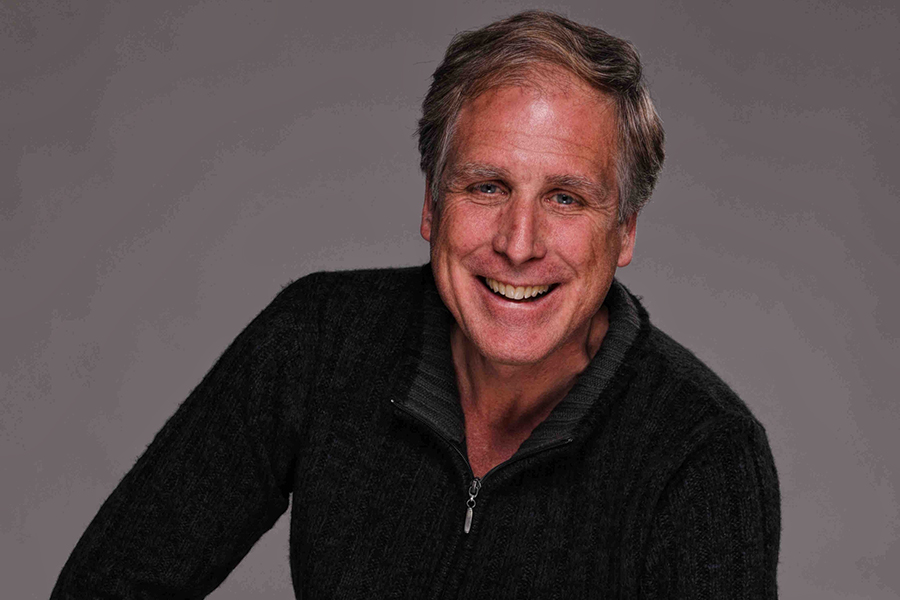
In November 1978 – not an easy period for the company – the legendary Lee Iacocca (pictured above) became the company’s CEO. What did he do? Well, nothing special, for true genius lies in simplicity, as they say. One of his first steps was to convene the Chrysler Dealers Council, where dealers were expected to state their complaints around the corporation’s activity.

Iacocca then undertook a surprising, yet effective symbolic step, by reducing his salary to $1 and at the same time persuading the U.S. Congress to give them a loan of $1.5 billion – which was fully paid up before the scheduled date. The result was the new “K-car,” which started Chrysler’s revival. Iacocca went on to transform Chrysler into one of the world’s leading automobile corporations.

However, how is the company doing today? Is Chrysler still the same trendy and desirable brand as it was during Lee Iacocca’s time? Alas, it’s most likely not. After Iacocca’s resignation, the company gradually began losing its leadership position, and at the end of his career Iacocca found himself dealing mainly with public appearances and various talk shows

We should feel free to hypothesize that the rise and fall (with some reservations) of Chrysler is connected to the arrival and departure of a Leader – Lee Iacocca. Yes, he achieved brilliant results, but unfortunately, he hadn’t accomplished a leader’s principal mission – preparing a worthy successor to leave behind. He most likely hadn’t created the right atmosphere inside Chrysler, which might have generated new leaders that ensured visionary future development.

General Electric Company experienced a somewhat different situation. Between 1981 and 2001 it was headed by the legendary Jack Welch, who grew the company’s market value from $14 to $410 billion. In 2001 he was replaced by Jeff Immelt. As Immelt’s career at General Electric began in 1982, there was no doubt that Welch’s role in mentoring him as a future leader was evident. As opposed to Lee Iacocca, Jack Welch left a worthy successor, a real leader. Nowadays, General Electric still retains a dominant position among the world’s greatest companies.

Let’s take a look at Apple. In 1985, the company’s leader, Steve Jobs, was obliged to resign from Apple, or, more precisely, he was discharged. For a while, most likely through inertia, Apple delivered rather good results, but then things took a turn for the worse. In 1997, the corporation’s Board of Directors decided to invite Jobs back. As a result, consumers started to experience, unique, innovative products and the company began its robust climb to one of the world’s most valuable company’s. In 2018, Apple’s market value briefly hit $1 trillion. Steve Jobs had prepared a good foundation for Apple’s future development.

The three companies above show that it was leaders who primarily influenced corporate success and development. This legacy of remarkable leaders, who have opened new opportunities for their companies and the world, is replicated elsewhere too: Jeff Bezos and Amazon, which gave us a new way to shop – through a convenient, online purchase service; Walt Disney gave humankind the magic world of fairytales and kindness; Larry Page and Sergey Brin created Google – making Internet search easy while, at the same time, creating one of the most expensive brands in the world.

You might say that these things will be created one day regardless. There may be some truth in that, but my point is that the creator of these wonders must be a leader too. From this, and countless other examples, we see with certainty that leaders are the moving force of history and progress – they influence our world mightily. By studying the unique and multifaceted characteristics of leaders, we can become leaders ourselves, and create a unique leadership style all of our own; bringing ideas to life, improving people’s lives and making them more worthwhile.


8 Leadership Trends For 2019

Leaders come in different shapes and sizes. They may subscribe to a single style of leadership or a combination of the best practices in people management.

Whatever the case, one thing that you have to consider as a team lead, manager or officer of your company is how your leadership principles are influencing the people around you. Your goal is to keep your followers or employees motivated, guided and engaged.

While the majority of companies, or a good 89% of them, agree that developing leaders is a worthy business activity, only 10% of C-suite executives think that their leadership programs produce results that are helpful for their organization.

Studies have shown that the most effective leadership initiatives are those that are appropriately directed. They also describe successful companies as being able to adapt their leadership development practices according to their business goals, needs or challenges.

Here are nine leadership trends that have the potential to make an impact in today’s workplace, including your organization.

1. The decrease of age-based seniority

It used to be that senior employees were the first to be promoted to leadership or managerial positions in many companies. However, the entry of millennials into the workforce merits that you re-evaluate your leadership development initiatives, especially since millennials are expected to make up 75% of the global workforce by 2025.

Instead of relying on age or length of service as the basis for promotion, you should come up with other ways to discover leadership talent or capacity across all of your employees, whether they’re Gen X, baby boomers or Gen Y. The key is using relevant strategies that can attract, engage, and retain workers across these generations.

2. Importance of relationships in employee engagement

You need to be the best manager you can be for your employees. There are several ways that you can promote workforce engagement, starting with building relationships with your employees. To realize this goal, you need to focus on specific soft skills, such as emotional intelligence and people skills – because employees feel comfortable toward someone who’s able to relate to their concerns, sentiments or challenges.

3. Redesign of management structure

Ideally, performance management processes should be two-fold. As a leader, you have to help your employees set clear goals and the means of measuring their progress over time.

In return, employees should feel welcome to give their honest assessment of your leadership style, so that everyone in the organization can help build a collaborative environment.

4. Investing in human capital

No matter how far-reaching technologies may become in the future, they cannot replace employees as the most valuable and capable asset of the company. Thus, it’s only wise that you invest in their further learning, because having employees who can work at their full potential will help grow your business.

At the same time, you should be in touch with the need for employees to experience a work-life balance. Free your employees from unnecessary meetings, after-work emails and additional activities to prevent them from feeling overwhelmed.

5. Defining the impact of effective leadership in business

As mentioned earlier, leadership only becomes significant when it’s in line with the thrusts of the organization. When you have a full understanding of what the company believes in and hopes to achieve, you will exert efforts to stay in that direction and, as a result, inspire the same kind of response among the members of your team. Moreover, a unified approach on how to accomplish business targets can set your company apart from the rest of the industry.

6. Improving the quality and level of coaching

There’s no question that coaching is an integral part of leadership development. Through mentoring, you get to know the individual talents in your organization as well as their attributes, including strengths and weaknesses. This will give you a chance to groom high performers for more challenging tasks or to rally behind underachievers, so they feel more included in the team.

For your coaching to matter, you’ll need to study your employees’ learning styles. Make sure that you’re sharing the right content through proper delivery channels to bring about authentic learning in the workplace.

7. Keeping a culture of agility

The rise of new technologies and creative minds are giving way to unprecedented shifts and disruptions in the market, which can prove to be challenging for businesses. These scenarios call for you to be strategically agile in your leadership style, so you can help your organization become more responsive toward emerging demands and opportunities.

In a culture of agility, you’re supposed to keep track of global trends and analyses how these may affect your industry. As a leader, you should be able to educate your employees about current market conditions and influence your employees to be more interested in new ideas, which can bring about improvements or innovations for the company.

8. Making use of technology

Having both the talent and the technology to serve customers is fast becoming a norm in many business organizations. In the same way, you should take advantage of technology to help you in different areas of talent management, such as training, assessments, and other employee development activities.

Through AI technologies, you can gather valuable amounts of data about your employees. These can range from determining your employees’ leave patterns to analyzing your agent’s speech nuances during client calls – all of which can give you insights on how to help your employees perform their tasks better.

Key Takeaways

The times we’re living in are evolving so fast that companies need to come up with brilliant solutions to avoid getting left behind. In 2019, your role as a company leader will be more crucial than ever, especially in addressing the demands and preferences of all types of working demographics. You’ll certainly need to keep building your leadership skills.

Thinkers And Doers Must Work Together – or We’ll All Fail Spectacularly

An urgency to ignite a step change in collaboration between the Thinkers and the Doers in our organizations struck me recently as I walked the shore of New London Bay on Prince Edward Island, Canada.
 
Two examples of Thinkers versus Doers include marketing versus sales and engineering versus production. Marketing creates programs to sell; sales actually go face to face with customers. Engineering designs production systems; production actually makes stuff.
 
Other opposing pairs like this exist within organizations, where one group thinks and then hands off its work to others who are tasked with executing it – but I’ll stay with these two groups for this post. 
 
These “hand-offs” are the root cause of at least 50 percent of the failures of new ideas. The hand-offs don’t work because the Thinkers don’t usually respect or really understand the hands-on work. The hand-offs don’t work because the Doers don’t respect the broader issues built into the ideas. The result is Thinkers make unreasonable requests, and Doers compromise on strategic intent to “just get the production out,” or “just get the sale at any price.” Here are three false cures for the Thinker-Doer divide:
 

1. Allow the Thinker team to have a representative on the Doer team.

 The theory is that if everyone is in the room, all will be good. This only works if the true decision makers from each department are involved. Usually, the representative is a lower level person who doesn’t have the understanding, authority or seniority to say No when a project isn’t realistic from the other team’s perspective.  


2. A briefing, along with a “walk through” or “drive along.” 

The theory is that a two-hour production briefing, plant walk-through or salesperson drive along can give the Thinkers all they need to know. Truth is, most Thinkers do their work because they believe they’re “superior in intellect,” and already know everything they need to know.
 

3. Invest more time in thinking harder. 

The theory is that if the Thinkers just think more, all will be right. The most common way of doing this is to hire a mega-consulting firm and apply 50 newly minted MBAs to the challenge. The truth is, no amount of thinking can comprehend the complexities of actually doing the work. 
 
What’s needed is a new type of organizational structure that more closely replicates small companies, who generally achieve 10-times the success in innovation as large companies (50% success for small companies versus 5% for large companies). With small companies, the Thinker is the Doer. By this, I mean that everyone has joint responsibility. Depending on the organization, it could be 50/50 Thinker/Doers, it could be 8/20 or 20/80. 
 
What matters is joint ownership by everyone on thinking and doing. The Thinkers need to own their thinking all the way to the finish point. The Doers need to take responsibility for problem-solving ways that ensure they execute against the broader business needs.
 
This means everyone who engineers also works in the factory. This means that everyone who develops marketing programs also sells them to customers.
 
As I made my way up from the shore, I realized that, for many, this kind of idea would sound delusional. They will say that it’s just not done that way; that our silos and departments are too valuable to be dissolved. They’d consider this type of change too much work. 
 
At our two sister companies: Eureka! Ranch and Brain Brew Custom Whisk(e)y, we’ve always had people work across disciplines. However, in 2019 we’ll take this to new levels. Maggie Nichols, Eureka! Ranch CEO and I are expanding cross-functional ownership to both work teams and companies. The potential for positive impact is exponential. 
 
Diversity – true diversity and engagement – has an exponential impact on the quality of innovation work.
 

3 Ways Neuroscience Can Help You Build a Powerful Team

The NeuroLeadership Institute (NLI) is a leading global research organization and a pioneer of bringing neuroscience to leadership. NLI advocates “using hard science to transform leadership effectiveness.” In my words, they make organizations more powerful. Neuroscience can help you build a powerful team, too.

Listening to Joe Wittinghill, GM Talent, Learning and Insights at Microsoft will give you a glimpse of the organization-wide impact that other companies including Amazon, Apple, Cisco, Disney, Marriott, Prudential, United Technologies, KPMG, and Travelers are seeing as members. These organizations rely on NLI not only to supply great research, but also to apply key findings to create powerful organizations.

They apply research in three key areas to help companies answer important questions:

Performance Management

  • What truly motivates people?
  • What drives better conversations?
  • How does ‘no ratings’ really work?
  • How do we fix feedback?

NLI advocates the importance of focusing on a growth mindset, which emphasizes progress over time as opposed to a fixed mindset, which is primarily/totally focused on a final result. Their research also indicates that intelligence (and power) can be expanded over time and refutes the view that intelligence is static.

Diversity and Inclusion

  • Why are diverse and inclusive organizations smarter?
  • How can we reduce bias?
  • What truly lifts inclusion?
  • How do we hire “the right fit”?

NLI also advocates that bias is natural, normal, and part of the non-conscious. To mitigate bias in decision making, research shows it is important to not only create awareness, but also to label biases when they surface and develop behavioral habits to offset them, particularly given their non-conscious nature. Teams become more powerful with varied behavior.

Leadership and Change

  • What is the science of behavior change?
  • How do we foster a growth mindset in everyone?
  • How do we drive effective learning at scale?
  • How do we fix leadership development?

Finally, NLI advocates fostering a toward/reward state of mind versus an away/threat state – something that is essential to motivating others and creating psychological safety. In other words, the strategy of managing by “FUD” (fear, uncertainty, and doubt) is demotivating and not effective in helping an organization grow.

Truly powerful organizations manage human capital with the same rigor and intensity that they manage financial capital. These organizations understand that the “softer side” of people management is really the “hard stuff” that matters most. Companies that rely on hard science to optimize their human capital will continue to lead the rest.


4 Key Elements to Transform Your Company Culture

Here’s a dismal statistic from a recent survey of executives: a full 25% noted that culture efforts initiated at their organization yielded no tangible results.
 
In any large or well-established organization, behaviors can become so entrenched that it’s nearly impossible to undo them. And stuck behaviors belie a stuck company culture.
 
We’ve all witnessed (or made) attempts to stop smoking or improve organizational skills. People don’t change their habits easily — even when they have excellent reasons to do so. But with persistence and attention, habits can indeed be changed, and cultures can and do evolve. And the simpler the approach you take, the more effective you’ll be.
 
Whatever role you play in your company — CEO, senior leader, middle manager or frontline worker — you have the power to evolve the company culture. Instead of accepting the culture as immovable, focus on and accentuate its best aspects. You will help your organization let go of the old patterns that stall growth and progress, and stand in the way of achieving key objectives. The key is selective, targeted alignment rather than an effort to radically repeal and replace.
 

Identify and Measure

Focusing on these four vital elements can help truly shift your company culture and bring out its best:
 
1. Traits: The set of shared characteristics that represent the “family resemblance” of your entire enterprise— the qualities that transcend subcultures, and are at the heart of the shared assumptions people bring to work, and their emotional connection to what they do.
 
2. Keystone behaviors: The few carefully identified things that some people do, day after day, that would lead your company to succeed if they were replicated at greater scale.
 
3. Authentic informal leaders (AILs): That small percentage of people in your company who have a high degree of “emotional intuition” or social connectedness stand out. Identify these, and you can cultivate them to help motivate employees and align with your goals.
 
4. Metrics: The integrated, thought measures used to track progress, encourage the self-reinforcing cycle of true, lasting change, and link to business performance.
 

Act with Clarity and Discipline

As a leader, you need to help those in your sphere of influence become aligned with the company strategy. That means acting with clarity and discipline and making difficult choices. It means narrowing your focus — to those resonant traits, compelling behaviors, influential “authentic informal leaders. Granted, it’s not easy. What would happen if, right now, you had to select the three keystone actions your company should take immediately to build a better culture? You can probably think of twelve, and you’ll probably have a good reason to include each one. But select just three or four: if you can’t narrow down that list, you and everyone in your organization will be overwhelmed.
  
Another reason to go with the few, not the many: it will be very difficult to measure any change with so many elements. You won’t even know which new behaviors have catalyzed new results. If you want to be effective at change or boosting performance, you need to focus your attention on the critical few.
 

Take a Simple, Focused Approach

Maintain a sharp focus on these four elements and you can reduce complexity and have a positive, informal, and lasting cultural impact on performance. This approach taps into the power of simplicity and takes the emotional dimension of human behavior into account. It also strengthens community connections by encouraging the workforce to look to peers and colleagues for insight, support, and encouragement. When people you trust and admire can model and enable a few key behaviors and then help others do the same, those behaviors will spread quickly — and stick.
 
Complexity is distracting. Comprehensiveness wastes energy. To carry everyone forward together, you need crystal-clear simplicity and a few elements. You don’t need a lot of targets to hit or results to generate. You need to unify your organization’s people around a common, clear cultural movement, driven by a core of keystone behaviors and positive emotions.
 
If you can identify and deploy those critical few elements within the cultural situation in your work environment, you will create clarity and meaning for others. People around you will be more likely to make an emotional, not just a rational, commitment to change. They will trust and respect your choice of direction, and look for ways to follow it. Whether you are a leader close to the front lines or a CEO, it’s likely that that your career will known for your ability to successfully shift a cultural situation. And as you inspire enthusiasm and creativity, you can build the kind of powerful company that people recognize for its effectiveness, and its innate value. 
 
Jon Katzenbach is the author of the bestselling “The Wisdom of Teams.” The founder of the Katzenbach Center at Strategy&, PwC’s strategy consulting business, he has been an advisor on organizations and culture for more than forty years and writes extensively on leaders, organizations and teaming. Gretchen Anderson is a director at the Katzenbach Center who works with client teams across the globe. James Thomas is a partner with PwC’s Strategy&, and leads the Katzenbach Center in the Middle East. Their new book is The Critical Few: Energize Your Company’s Culture by Choosing What Really Matters. 


Harnessing Your Fear Factor For Peak Performance

Patrick Sweeney says he used to be a wimp. Now he’s a full-time adventurer who has overcome his fears and is helping business leaders reach new heights by embracing theirs.

Patrick Sweeney gets asked one question over and over again: does anything scare him? The 50-year-old Irish-American is, after all, a self-styled “fear guru,” who learned how to embrace fear after overcoming a crippling dread of flying, and who now travels the world encouraging others to use the emotion to their advantage. Formerly a successful tech entrepreneur and CEO, Sweeney swapped a life of closing business deals in boardrooms for climbing mountains and embarking on thrilling expeditions. (He assures us that being a professional adventurer is a real job.) He’s also an in-demand thought leader whose dream is to help millions of people reach new heights by understanding and utilizing a raw and powerful emotion through knowledge of the latest neuroscience.

Sweeney’s fear of flying was caused by a traumatic event in his childhood. “When I was six my parents just flipped on the news and I saw this DC-9 in flames, a horrific crash at Boston’s Logan airport,” he recalls. “That initial fear frontier is like a seed inside your heart that grows into a whole tree of terror,” he says. “Once you recognize that, you can clip it one branch at a time, or you can chop down the whole tree. I took the quickest and most effective route – but the way I did it was also the most painful.”

Sweeney felled his fear tree after he was diagnosed with a rare case of leukemia. “I had a near-death experience,” he says. “I’d spent years focusing on business success and just when I thought I was conquering the world everything nearly got taken away from me. I realized that everything we have, including our body and mind, is just on loan to us, and could be taken away in the blink of an eye. I also realized that I needed to treat every day like it’s a gift. I understood that my fear had been holding me back, so I decided to overcome it and I took flying lessons. I got my pilot’s license and I fell in love with flight.”

CONQUERING THE FEAR FRONTIER

In addition to recovering from leukemia and conquering his biggest fear, Sweeney quit his job, abandoning the demanding lifestyle he believes contributed toward his illness. He decided to pursue his dreams and became an adventurer; in 2015 he was the first person to officially bike up to Mount Everest base camp. He also became increasingly fascinated by the powerful emotion he had tamed as a result of his serious illness. He interviewed dozens of psychologists and neuroscientists, so he could better understand fear, and today he talks to business leaders about his revelatory findings — that fear can be used as a source of power and strength to create a culture of courage.

According to Sweeney, several of the world’s top business leaders have built a constructive relationship with their own fear, using the emotion as fuel to power them toward their goals. He explains how this works. “When we get scared we have what’s called a ‘fight, flight or freeze’ response. Your survival instinct kicks in to say, ‘something is threatening our life so we’re going to do everything we can to survive,’ and that means shutting out anything that’s non-functional. That’s when we get superhuman powers.” Here Sweeney is referring to our physiological reaction to fear.

Upon the activation of our amygdala, the part of the brain that researchers believe controls our response to fear, our body reacts rapidly: our pupils dilate, our heart beats faster and our adrenal glands release adrenaline and other hormones. This “fear cocktail,” as Sweeney calls it, offers a moment of opportunity. Rather than fight, flee or stand there like a deer in the headlights, you can capitalize upon your heightened awareness, energy and sense of intuition. Sweeney teaches what he calls the BASE method (Breathe, Assess, Smile, Eliminate) to help people take control, tame their fear and be proactive when the amygdala takes over.

CAPITALIZING ON YOUR FEAR

Sweeney’s own experience as a chief executive gives him an understanding of how the fear factor can prevent people from reaching their full potential in a business environment. He believes it can hold people back from asserting their opinions in the boardroom, from pursuing bold new strategies or from spending money on potentially risky but potentially profitable acquisitions. He’s convinced that business leaders can increase their chances of success by positively embracing fear.

Sweeney says that several of the chief executives he has worked with have realized the benefits of his approach. “I worked with one CEO of a logistics company who said that he felt like he’d broken out of the cocoon he’d been trapped in. He felt constrained by his peers and his board and he wasn’t making decisions based on his unique knowledge of the market. He was doubting himself.” A few weeks after their session the CEO emailed Sweeney to report that he had accepted his fear and placed more faith in his intuition, a liberating experience.

Sweeney, who advises people to “scare themselves at least once a week”, is currently working on a book about his discoveries, titled “Fear as Fuel,” as well as spreading his message to business leaders and sports team through speeches and seminars. It’s on these occasions that Sweeney’s fearlessness occasionally goes missing. “Every time I speak I get the fear response,” says Sweeney, answering the question people can’t help but ask him. “But that fear has become something that’s a source of joy and excitement to me. It pushes me to peak performance.”

Rob Orchard is the co-founder and editorial director of the Slow Journalism Company and the publisher of “Delayed Gratification” magazine, which revisits the events of the preceding quarter after the dust has settled and makes a virtue of being “Last to Breaking News.” The publication is an antidote to PR-driven stories, knee-jerk reactions and churnalism. Previously, Orchard launched and ran magazines for Virgin Atlantic and created the Middle East’s biggest travel magazine.


Negotiation And The Power of Nice: 5 Actions

The average person makes 35,000 decisions a day. That’s about one every two seconds. Most of them don’t even register as conscious choices, but you are almost continually making micro-negotiations with yourself, your clients, and your employees.

Still reading? You made another.

The beginning of the year brings a flurry of important decisions for every leader. From signing promotions, bonuses, and contracts to working through mergers, every challenge is a sum of many smaller negotiations.

Before the burden of leadership turns to burnout, the tenets of principled negotiations can bring a new lens to your current problems. Expert negotiators and “leader leaders” at Shapiro Negotiations Institute have distilled nearly 30 years of experience into five memorable, actionable principles.

1.    Isolate the Problem by Separating Emotion

When we negotiate through emotion (anger, jealousy, even love), we selfishly put ourselves into the heart of the outcome. Promotions become less about principles and more about what individuals FEEL they deserve. As a leader, you can acknowledge emotion but help isolate the problem to build a stronger, rational discussion towards ideal outcomes.

2.    Find the Shared Value

What is essential to all parties? A leader establishes common ground to define shared values that guide successful negotiations. Money is one, but there are other goals – career objectives and project outcomes – that can reshape the bargaining. When in doubt, it’s safer to not speak for the other party. Use a Probing technique to ask open-ended questions and give all parties the opportunity to state what objectives or priorities they pursue. Chances are, you’ll be able to reevaluate the negotiation in a new light.

3.    Establish Criteria Early

Knowing which factors to evaluate will save excruciating headaches later in the process. Negotiations easily become complex and raise more questions than answers. Having clearly defined criteria creates flexibility to explore new directions while remaining faithful to the mandates of your objectives. When leading your team, this will empower creativity and encourage outside-the-box thinking.

4.    Seek Options Over Outcomes

Murphy’s Law. Things never go according to plan. As a leader, you must be equipped to adapt and pivot at a moment’s notice. If you enter any negotiation with one outcome in mind, you are giving yourself precisely one chance to win or lose. But, if you operate from a shared value and clearly defined criteria (points 2 & 3), you can focus on creating options. This makes your leadership more productive, flexible, and exponentially more valuable by opening up previously unimagined pathways to success for you, your team, and the organization.

5.    Redefine Loss

Negotiations induce stress and anxiety because they’re inherently combative – if you don’t get the outcome that you want, you feel like you’ve lost. Even in traditional bargaining, it’s easy to feel like you must sacrifice something to find a “win-win” compromise.

But you can look at this differently. You can redefine the terms of success and failure. Stepping back, you can evaluate any dilemma in a big-picture, holistic perspective. Consider bargaining with employees who want a promotion. They are likely defining loss concerning raw salary numbers, maybe with a specific amount or percentage in mind. They may be neglecting the big picture by focusing on salary alone.

As a leader, utilizing these principles, you can diffuse this potentially harmful negotiation by expanding the employee’s view to focus on the broader package. What are the implications and realities that come with it?

●    Perhaps a 15% increase is significantly more than the industry/company standard.

●    Or it comes with the promise of midyear or performance bonuses in the year ahead.

●    Plus a title change to reflect the growth and contributions made.

●    Plus a more in-depth discussion into career training that will help this employee connect with the skills and areas of expertise that provide deeply rewarding intrinsic joy.

The value goes beyond the limited focus many employees bring to the table. As a leader, you’ve redefined loss.

Don’t overthink every minor dilemma you encounter, but build a toolkit of principles that can cast a new light on old problems to illuminate the best solutions – even by creating brand new opportunities. There’s no singular blueprint to building a sustainable business or team. As a leader, that starts with you.

The Real Leaders 100 Top Impact Companies 2019

Business can be a force for good and here’s the proof: 100 companies that are growing by doing good.

The Real Leaders 100 Top Impact Companies, in collaboration with Big Path Capital and B Lab, is the first ranking of positive impact companies. The Awards rank the top companies applying capitalism for greater profit and greater good. These companies are driving a dynamic segment of the economy, bearing a new vision of capitalism that demonstrates that every transaction is an opportunity for both growth and a better world.

Given the plethora of published lists that already exist – the richest people, sexiest celebrities, fastest growing companies, biggest organizations or most popular startups – a group of like-minded visionaries including Real Leaders, realized that what the world really needs is a list of companies that are a force for good in the world. Not a feel-good, cumbayah, granola list either; rather, a list of real companies that have shown actual economic growth by including the greater good in their mission and business strategies. 

0