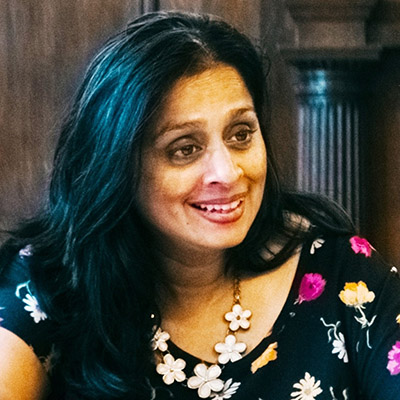
“What are you doing?” said Marianne Knuth’s friends. “You’re moving in the wrong direction – to Zimbabwe!?” They called her foolish for wanting to move to Southern Africa and start an educational program — Kufunda Learning Village.
There was no guarantee of support, infrastructure or financial help to make it happen. The decision to move was based on intuition. To Knuth, it just felt right.
When she arrived, Knuth couldn’t do anything about farming or sanitation, so she decided to focus on what she could do — facilitate. She wanted the local people to see the value of what they already knew about farming and other practical things, and have a positive approach to it. The turning point for her was when she celebrated a birthday in Zimbabwe together with her international friends and the local people. She realized that they had different skills and together they could do great things.
Knuth is half Danish and half Zimbabwean. She remembers well the moment when she decided to leave her international career and move to Zimbabwe. She has become increasingly reliant on her intuition and says that it has become the most important resource for herself, and anybody needing to trust themselves and develop self-confidence.
Kufunda is based on a typical African village. Its inhabitants were demoralized from the grinding poverty and stuck in a mental cycle that kept them in a mindset of scarcity. Now, after 15 years, Kufunda includes 30 farmers and 60 community members, including children and relatives. There is a Waldorf-inspired school to help children develop the emotional intelligence and self-awareness for personal growth. The village is designed by the local community to ensure real empowerment and to implement local knowledge that already existed.
Each person’s journey is important and It’s what makes Kufunda different from all the other initiatives that may look the same. “We see the person being left behind and want them to think out of the box,” says Knuth. “We try to give each individual self-confidence, instead of just academically-focused education. Kufunda helps community members rediscover their creativity and is a platform for their own projects to unfold. People are coming together and looking into the future, building a vision.”
Additionally, a strong relationship with the local councillors has been built and Kufunda’s success is now used as a model in other parts of the country.
“I think my personal courage comes from listening,” says Knuth. “I listen and learn. I’m fulfilling the destiny I was meant to carry out. I know in my gut and in my heart when I’m on track and I’ve learned to listen to my intuition, to my gut. When I’m on the right track I feel courageous, as if nothing can stop me. It becomes easier with age to learn to listen to yourself and to say no when something doesn’t feel right.”
“If I can give one recommendation,” she concludes. “Have trust in yourself. Trust your sense of right and wrong and when something doesn’t feel right, don’t rush ahead, but take a step back. Have the courage to stay until your path is clear.”
As Baby Boomers retire and our world begins the largest transfer of wealth in human history — an estimated $30 trillion — a significant part of these assets will go to the descendants of family-owned businesses. According to the Conway Center for Family Business, the largest portion of wealth in the United States resides with family businesses, and the U.S. Census Bureau reports that 90 percent of all businesses in North America are family owned.
But as inspiring as that sounds, research from the Family Business Alliance reveals only 30 percent of family businesses will actually transition to the second generation. About 12 percent will still be viable into the third generation, and a mere 3 percent of all family businesses continue operating with the fourth generation.
How do certain families bake in a leadership culture that helps their businesses remain viable for multiple generations? How can you emulate a leadership culture in your own family, whether you work a business together or not?
According to a 2015 Harvard Business Review article, “Leadership Lessons from Great Family Businesses,” family business leaders focus on the next generation — not just the next quarter. They usually put employees and customers first and dedicate their organizations and their personal time to social responsibility. At their core, family businesses have stronger values, dedicate greater resources to worker motivation and leadership, and measure success in ways other than just growth and profit. Their culture often encompasses a strategy akin to The Golden Rule.
In this exclusive interview, Real Leaders explores the leadership philosophy of Martin Luther King III, and shares his insight on how your family can grow and sustain a mission-aligned leadership culture that transcends your next generation and beyond.
The Martin Luther King family describes what family leadership looks like against a landscape of global problems and then helping us pivot to a more specific discussion on family business leadership.
MARTIN LUTHER KING III:
Civil rights advocate and global humanitarian
Oldest living child of civil rights leaders Martin Luther King Jr. and Coretta Scott King (age 10 when his father was assassinated)
Founder and president of Realizing the Dream, Inc.
Where to focus family leadership efforts.
There are monumental world issues that we should focus on as a society. Climate change is among the most important because if our water and air are polluted, then everything else is for naught. If we don’t find ways to address it, we’re going to all be in trouble.
Second is the eradication of poverty in the world and certainly, within our own nation. Our nation has an inordinate amount of poverty based on the amount of resources that exist here. My parents used to talk about the eradication of poverty, racism, and I’d say violence – although my dad used to call it militarism. Those triple evils are where leadership-oriented families must focus.
The King family’s leadership focus.
Society has embraced a culture of violence. It’s in our cinemas and in the gaming industry targeting our children. It’s in our homes as domestic violence. Leaders have to think about how to create a culture of non-violence because non-violence is sustainable. Our culture cannot sustain itself if we continue to operate this way.
If we can live a day in peace, why can’t we live a week in peace? If we can live a week in peace, why can’t we live a month? If we can live a month, why not a year? And if we can achieve a year, why not a lifetime?
So many people look to the United States for leadership, but we are the most divided we’ve ever been. We can’t focus on one political interest — we have to look at what serves humanity. Leaders need to help communities get above the noise and think at a different level.
As a family, we are focusing on peace, justice, and equity. While that’s furthering the legacy of my parents, it’s also the legacy of our family in general, and our 11-year-old daughter is working with us on it, too.
Role of individual leadership in moving the needle on world problems.
Start by deciding what kind of society you seek for yourself and your family, and then identify where you can make a contribution. Some of us are concerned about the climate, so they should focus there. Some are concerned with police brutality, so they should focus there. Some are concerned with reproductive rights, so they need to engage and get involved there. All of us have a contribution we can make.
Importance of listening to young people.
The truth is that young people are leading the rest of us. The Parkland students are a perfect example. They worked very hard to mobilize people around the country so that the needle can move on responsible gun legislation. These young people are totally engaged and leading us. I haven’t seen a movement like that since 1963 when 3,000 kids were arrested in Birmingham attempting to desegregate the city.
“No one person, no one organization can do all this work. It’s going to take a collective. Leaders need to help communities get above the noise and think at a different level.” — Martin Luther King III
Then we’ve got young people like Greta Thunberg leading us around climate issues. And even younger children like Little Miss Flint leading us around the water crisis in Flint, Michigan.
I go to schools and ask kids what they are worried about. Too often, they say they’re concerned someone will come into their school and shoot them. Think about that: Our children have to practice what to do if someone comes into the classroom shooting at them. Our society has accepted a culture of violence. Instead of focusing on eradicating violence, we are focused on teaching our children how to cope with it.
I’m inspired by children and how easily and naturally they take action. Unfortunately, adults don’t tend to get involved until they are affected by it directly. When there’s a catastrophe, we get engaged. But the kids are showing us that we can get engaged at any time. Adults just have to learn how to disagree without being disagreeable.
On encouraging a culture of leadership within families.
I’m always telling my daughter, Yolanda, that she has to be authentic. She’s been around leaders in her family for generations — parents, grandparents, great-grandparents, aunts, and uncles — we’re all involved. But I tell her she has to find her own authenticity. You don’t have to be like us. Be your best self. You’ve got to find your way.
She got a chance to speak at the March for Our Lives, and she went way beyond what I would have said because I am regimented by the laws of our land. At the event, she said she had a vision, her own dream (see sidebar, “Yolanda Renee King: I Have a Dream, Too.”) We did not help her with this speech or give her any guidance. She said, “I know what I want to say.”
Lessons learned from my daughter.
From day one, she’s had an interest in homelessness and poverty. I never pushed her, but I’m thankful she has this interest. Families that lead let their child be who they want to be. And what if your kid is not focused on being their best self? Exposure is everything. Every kid has a gift, and when they find their gift, they are motivated to work on it because it’s what inspires them.
Yolanda knows what’s happening and why there’s a need to focus on U.S. poverty. If a kid comes to school hungry, they won’t have the energy to do anything. Principals tell me they have many transient students. There are apartments out there where you get your first month’s rent free, so after that, they move. They are constantly moving because they can’t afford to stay, and the kids never get a chance to adjust. Many in our society are completely unaware that these kinds of things are going on. How do we inspire kids to be leaders until we fix these problems?
Some time ago, I visited a school in Sudan. The school was in a tent — in fact, the whole place was a tent village. Our sponsor provided us with a shiny black Mercedes to drive out there. We got out of the car, and the kids started running out and pointing at the car and then running back in and bringing out more children and pointing at the car. And I thought, “Wow, materialism has even made it out here to these kids in Sudan.” But then I realized that the car was so shiny they could see themselves reflected on it. They had never seen a mirror before and were seeing images of themselves for the first time.
You may think you know what’s going on, but it’s all a matter of perspective. American kids often don’t realize how bad other kids have it. Exposure helps them realize, and then from that comes the desire to help others. Parents want to protect their children’s innocence, and that is preeminent. But we still need to let them grow up. Leadership-oriented families expose their kids to things so the kids can embrace the problems and become part of the solution.
Hardest thing about living a consistent life of leadership.
Most challenging is staying authentic in a nation where everything is quickly changing. You have to maintain your values and not let society change who you are and who your family is. But you do have to compromise to stay relevant.
We are focused on creating partnerships to align people and families who can help us with what we want to achieve. That’s what it’s going to take. No one person, no one organization can do all this work. It’s going to take a collective.
That’s what leadership is about — building this collective of collaborators. My dad would have called it creating the beloved community. And that’s what my wife and I, and even Yolanda, are focused on right now: creating these collaborations to continue the legacy and unfinished work of my parents.
YOLANDA RENEE KING:
The only granddaughter of Martin Luther King Jr. and Coretta Scott King is an 11-year-old innocent who speaks the wisdoms of an old soul and solves the world’s problems in one interview.
Real Leaders: Like your grandfather, you have a dream, too. Tell us about your dream.
Yolanda Renee King: I have a dream that this will be a gun-free world. We really need to solve this conflict. With a lot of young activists around the world, I think we can do it. We’ve done the rallying, but now we need to campaign to Congress — and we need to find a way to get this issue to the UN.
What makes someone a good leader?
A real leader wants to make a difference. They aren’t just doing it because they have to or to impress people. If that’s why you’re doing it, you’re not a true leader in your heart. Maybe you’re doing things as a hobby, but it’s not your purpose.
A leader needs passion. For example, Greta [Thunberg] has passion for saving the environment. But you don’t need a world voice. You can start things in your own community because even if you’re just doing something for your family, or your little town, or your small school, that’s still making a difference. And that’s better than sitting down and doing nothing and watching the news and saying, “Oh, that’s too bad that happened. Oh, well.”
Even in the smallest ways, you must stay active because that’s making a difference. A small impact can spread, and a lot of people making a small impact can make one big difference.
What are some things that make your dad a good leader?
Well, I probably have to go through a long checklist. It makes him happy to help people and help the community. He’s not just doing it to follow in his parents’ footsteps; he does it because it’s his passion.
He is courageous and brave because not everyone is going to agree with what you say, and he doesn’t let that bother him. He just gets back up. And sometimes, he doesn’t even let the other person push him down. He has thick skin.
Most grown-ups are good people, and they try hard. But where do you think grown-ups could do better?
We have some problems today because of things the grown-ups did a long time ago. They made a mess and left it standing there, and now we’re picking up their mess.
Accidents happen, but some things, the grown-ups have been doing on purpose. They keep doing it, and they leave it and never come back to clean it up. And now, people who are totally innocent, it will impact their generation unless they clean up the grown-ups’ mess.
So maybe they could do better by cleaning up their own mess. Or stop causing the mess. It’s never too late.
If you could wave a magic wand and change some things in this world, what would you change first?
I would change for all of us to get along. If we have peace and justice, then we probably wouldn’t be shooting each other. And all that hatred and negativity would get sucked out of everyone. There would be no more impoverished communities if we had peace. So, I would do one big magic spell of peace because that one big spell would take care of everything.
This whole world is one big community if you think about it. We shouldn’t hate anyone because they are a human being. Most of our world problems are caused by people. If every person was treated with dignity and respect, that would solve most of the problems in our world.
PODCAST PEOPLE:A Summary from the Real Leaders Podcast
“Leadership is not a job title or how many followers you have or how many books you’ve read or written. It’s the ability that you have to become a better version of yourself and to lead others forward toward their possibility.”
John O’Leary is a keynote speaker, best-selling author, and host of the Live Inspired Podcast. His heartfelt discussions are teaching people around the world how to live inspired.
The following is a summary of Episode 118 of the Real Leaders Podcast, a conversation with keynote speaker John O’Leary. Watch, read, or listen to the full conversation below.
From Victim to Victor
John discusses the tragic but formative incident that changed his life when he was nine years old. An experiment with fire and gasoline created an explosion that burned 100% of his body, and he was given a less than 1% chance to live.
Despite the odds, John chose to triumph over his circumstances, but he emphasizes that he couldn’t compare his struggle to anyone else’s. He now uses public speaking as a means of inspiring others to transcend whatever might be holding them back.
“It is popular in a victim society to choose to remain beat down. Or, and here’s the invitation for all of us, you can choose to rise up. And every single time you walk into the room others may see what remains possible for them in their life. And ultimately, it’s your choice. It’s your individual choice and how you want to represent yourself in your life going forward, what an important choice it is to make to choose to be a victor.”
Listen to Episode 118 on Spotify, Anchor, Crowdcast, and Apple Podcasts
More than Comparative Happiness
Today’s culture of comparison is keeping many of us from feeling successful. John explains social media’s role in producing “comparative happiness,” and how its emphasis on self-interest leads to a genuine lack of fulfillment.
“My message is to make sure that we make our lives and our messages not only about us. I think if we do that, we get to the end of our life, and we realize we got to the very top of a ladder, and we had it leaned against the wrong wall. So we want to recognize the foundation of where that ladder rests, and make sure daily, as we climb, that we have it leaned against the right wall. Nothing would be worse than to become successful at things in life that do not matter.”
Advice for Living Inspired
Be aware of all you have to be grateful for
Have a vision of tomorrow that is far greater than the challenges today
Pursue your purpose
Lean into a network
The answer is “Yes”
“I think in the universe, work, professional journey, leadership, the answer to the question in front of you is ‘yes.’ Now go to work. Figure the thing out. “
The following is a summary of Episode 82 of the Real Leaders Podcast, a conversation with Classy co-founder and CEO, Scot Chisolm. Watch, read, or listen to the fullconversation below.
Stay Classy San Diego
Scot shares the humble origins of his social enterprise: a name inspired by the iconic line in Anchorman, and a group of guys in their 20s who wanted to spread some good in the world. They started off hoping to curate charitable events that would attract a younger crowd. But complications that arose with the money raised from their first unsanctioned pub crawl resulted in a greater opportunity to change the possibilities for giving in a much bigger way.
“The experience for us, trying to do what we call in our world a “third party event,” had so much friction. We were left saying, “Why does giving need to be so hard?” All that we wanted to do was make giving easier, more accessible, and even fun, especially for young people and the younger generation, because we felt like there was a disconnect between the way we wanted to give on our own terms, and the end product the organization was providing us.”
Listen to Episode 82 on Spotify, Anchor, Crowdcast, and Apple Podcasts
Transformation into Social Enterprise
Classy has evolved from something between a nonprofit and a for-profit into the social enterprise it is today. The site offers world-class online fundraising software and a full online fundraising platform for nonprofits of all sizes. Classy campaigns make fundraising more sustainable because they are attractive to a new generation that otherwise wouldn’t be contributing.
Some of the many avenues powered by Classy include websites, fundraising events, and peer-to-peer pages. However, they are all fully white-labeled for nonprofits’ use.
“We’re almost like WordPress is to a website or Shopify is to e-commerce. We’re behind the scenes. So we’d like to say philosophically, it’s their brand before ours. We’re not out there promoting ourselves. And I think that’s also been one of the key ingredients to our success, putting them in the forefront.”
Business Insight from Nonprofits
Scot sees so much activity in the nonprofit space that goes into quantifying and measuring a program’s impact. He believes businesses would benefit from undertaking similar efforts, and sees impact measurement as the future of all businesses and nonprofits.
“The work that organizations in the nonprofit sector are doing day to day on the ground is leading to innovations that eventually end up in the market. A lot of the nonprofit’s are actually trying to solve the root cause. And that’s where this impact measurement really comes in. What problem are you trying to tackle? And what’s the best way to tackle the problem?”
Classy has worked extensively to build an impact measurement framework and hosts impact awards of their own, the Classy Awards, which measure nonprofits on the merit of their impact.
Watch a segment of the conversation with Scot Chisolm on YouTube.
If this pandemic has taught us anything, it’s that we live in a VUCA world – we are experiencing volatility, uncertainty, complexity, and ambiguity in unprecedented ways. And we are finally talking about it.
Fueled by ambition, fear, or pragmatism, this pandemic’s massive disruption to the ordinary course of things has led to every organization shifting its strategy in some meaningful way. We have published extensively on the benefits of using scenario planning to make sense of and plan for disruption, and we’ve written about some of the more powerful no-regrets strategies that position companies for sustained success.
As companies have made strategic pivots, their employees have demonstrated flexibility and resilience while working from home and juggling competing responsibilities. Never has our physical and mental health been more critical to our well-being. Yet we’ve noticed a systematic under-investment in one of the most critical levers for sustained corporate success — leadership team health.
Healthy Teams Enable Rapid Scale
It’s well understood that to scale in any business climate, companies need a stellar strategy – an extraordinary product-market fit, a winning business model, and a differentiated approach to the market. Yet, success hinges on having a leadership team with strong execution capacity even with all of these things in place. That is, the ability to make high-quality decisions faster and more often than competitors. And the key to execution capacity is leadership team health.
Healthy leadership teams share these attributes:
They are aligned on their “why,” that is their shared purpose individually and as a team
They are clear on their “what,” their vision of where they are headed
They embrace a coordinated “how” by being committed to a shared roadmap, an operating system, and principles that guide them
They have a deep understanding of who they are individually, where their strengths and gaps are, and they are skilled at optimizing one another
With all of that in place – designed for the company’s people and strategy – they learn, grow, and scale together successfully.
When strategies change, and leaders are under more pressure than usual like in this moment, it’s time to check in on leadership team health. Because, more often than not, managing through disruption increases team health debt that, let’s face it, in many organizations was already higher than it should have been.
Team Health Debt
By team health debt, we mean mounting dynamics, such as conversations that never happen but should; decision-making that takes place in siloes; low levels of transparency; and low-quality dialogues when they do happen.
Teams suffering from team health debt might be very nice to each other – so nice that they don’t have the difficult strategic or personal conversations needed to succeed. They might find themselves in long, belabored, or meandering conversations that feel like they demonstrate transparency, but slow decision-making. Or, they might find themselves so busy focusing on the day-to-day, that they are tuning out, phoning it in, or otherwise disengaging from the level of relational development that is essential to mobilize strategy collectively.
The challenge of team health debt, like tech debt, is that it is not always a visible issue to all team members, despite its devastating impact. But once it’s paid back, the team can move to a higher level of performance, strategy execution, and even joy.
Unnecessary Tensions
It is essential to stay current on your team health payments. When you postpone a meeting to collaborate or deprioritize a tough conversation or don’t have the hard-hitting collaborative meeting to solve big strategic problems, you default, therefore incurring more team health debt. Teams who invest the time to be with one another, and take on the difficult dialogues not only pay down the debt but find themselves in a surplus where innovation and breakthroughs occur.
The easiest way to know if your team is suffering from high levels of team health debt is to look at how you address strategy and execution. Unhealthy teams see the world in black and white terms. They see binary choices where they don’t exist. And so, factions form, individuals, dig their heels in, and the quality of decision making suffers. On unhealthy teams, these misunderstood tensions are seen as trade-offs. They are not discussed openly, but exist just below the surface and toxify the team—slowing execution, causing poor decision making, and killing morale.
Product vs. go-to-market. Should you focus on technology and product development, as you did in the early days of the company, or on revenue generation? Of course, the answer is both, but if executives argue over resource allocation, roadmap clarity, or critical metrics and measurements, it’s likely that the underlying tension is unstated, over-rotation by essential leaders toward one side the other of this spectrum.
Autonomy vs. collaboration. As hiring ramps up – whether from 10 to 50 people or from 200 to 500 people – there’s a desire to ensure freedom and also address issues more holistically. If executives argue about roles, decision rights, and swim lanes or cross-functional decisions are delayed or made poorly, your team is likely stuck in this false choice.
Culture vs. growth. If your team asks, “How do we preserve our culture while we grow?” you’re probably not as clear as you should be about the company’s values, operating principles, and how individuals are empowered to live into them. In extreme circumstances, culture and growth are seen as trade-offs, which will undermine both.
Patience v.s action. “We need a bias toward action.” Or, “We have to be patient with the strategy, let the team do its job, and trust the process.” What if both are true? What if teams could discuss the areas where they should be patient and compare them to the places where the action is necessary?
Healthy teams see these tensions as opportunities for strategic dialogue and realities that can be optimized. They take a both/and approach rather than an either/or approach to resolving tensions – that is, they work together to understand how to get the best from both sides of the tension.
Imagine a team that has paid off its team health debt systematically, and has clear decision rights, structures, and agreements about which issues require urgency and require patience. Imagine a team that brings difficult conversations to the fore, resolves them, and builds relationships. Imagine a team with an updated simple, clear, and co-created purpose, vision, roadmap, and operating plan. How much more quickly could it scale? How much more fun could it be? What will be unleashed?
The Prescription
There are three core areas companies can focus on to improve team health, and to have a fast impact on strategy execution.
Individual Leadership — It all starts with individual leaders. Every executive leader should know their strengths and values and be clear about their areas of growth. They should see these continually evolving and be invested in exploring them in collaboration with others on the team. Each leader mastering their code builds both confidence and humility – necessary conditions for successful leadership.
Team Cohesion – Next comes team relationships. In a pandemic world where 5-star dinners, trust falls, and offsites are impossible, there’s an opportunity to focus on the deeper foundations of relationship – trust, vulnerability, and connection. When teams are wedded at a deeper level, they can more rapidly address issues, which means problems are discussed earlier and resolved more quickly, and better solutions are found. Updating the core foundations of a team in response to the pandemic – values, purpose, vision, roadmap, strengths, and operating systems – has the dual impact of providing a strategic or intellectual upgrade and doing so in a way that promotes strategic dialogue and builds connection.
Team Operating System — Just like computers, teams have operating systems that govern their functionality. In most cases, that operating system is not explicit – the rules are unclear for how the most important work gets done. We believe every team should design an operating system that identifies: the cadence of strategic and tactical meetings, the metrics or objectives, and key results (OKRs) to pay attention to; the rhythms and processes to ensure execution success; and the agreed-upon principles. With this operating system in place, the formula for strategy execution is transparent and continuously refined.
Improving Team Health During the Pandemic
The pandemic has shaken up strategies and execution. It’s an excellent time to ask whether you’ve sufficiently tended to team health–and whether there’s an opportunity to reduce team health debt during this moment of societal innovation, flexibility, and forgiveness.
By Doug Randall and Annette Templeton. Annette Templeton is a Partner at The Trium Group. For more than 20 years, she has helped individuals and organizations optimize performance through a transformative, strengths-based approach. She is an expert in developing effective cross-cultural business teams and implementing large-scale transformation programs across various industries.
The world is chaotic, noisy, and full of tragedy. Many of us know people who have become ill, or worse yet, have lost their lives. Families are separated, businesses shuttered, and jobs lost. The pandemic has changed global macro- and micro-economics, social order and preferences, acceptable business practices, workforce dynamics, and the list goes on. What I know is this: We will survive, but it will never be the same.
More than any time in recent history, we are living in a world of unknowns. We are a world in transition, and no doubt, your problem set has changed over the last few weeks and months. This is the time to develop great clarity around the near to mid-term time horizon. You must prepare to lead now so you’ll be well-positioned for the transition to a post-pandemic world. Here are five things to help order your world.
01 ENGAGE
Over-communicate, be more human, be kinder, and care more. Being remote isn’t an excuse to disengage. Your family, friends, and team need you to be present and engaged. Focus more than ever on being empathetic, helping, and serving. This is the time to broaden and deepen relationships, to listen and support — don’t miss this opportunity. Remember, you’re only on an island if you choose to burn the boat.
02 TEAM
Take care of your people. A CEO recently asked me what was the No. 1 thing he needed to do right now? I’ve said it before, “But for the people, there are no platforms, products, systems, services, culture, customers, or company.” Put simply, without the people, you have nothing to lead. Care for your people and do the right thing. Be a real human being, not just another suit. Remember: Leaders not accountable to their people will eventually be held accountable by their people.
03 UBIQUITY
Seek leadership ubiquity. If leadership doesn’t scale, neither will your organization. Leadership that isn’t transferable, repeatable, scalable, and sustainable isn’t leadership at all. Not everyone can be the CEO, but everyone can lead. Real leaders shine during times of crisis. Your people will step up if given a chance; give them that chance and do it now. If you tell people they’re not leaders often enough, don’t be surprised when they start to believe you.
04 FUTURE
Static thinking does little more than sentence your mind to a lifetime of mediocrity. Now more than ever, be quick and agile in thought and deed. The key to navigating the present is to understand the present is merely a springboard to the future. Therefore, don’t think snapshot — think filmstrip. Move thoughtfully, boldly, and quickly. Work your way through the present but have clarity around the desired future state. This, too, shall pass, and you must get prepared to lead in a post-pandemic world.
05 WORKFORCE DYNAMICS
Reimagine your team. If most of your workforce is still working remotely, reimagine the roles your people play and how they can unlock hidden value. Give them the freedom to team and collaborate differently. Permit them to take on new challenges and responsibilities. Stop the madness, and let this be your mantra: If it’s stupid, it’s not our policy. Now that the landscape has changed, it presents a unique opportunity to eliminate typical corporate dependencies, such as an overabundance of harmful processes, stupid rules, ridiculous meetings, trivial projects, and the like.
Real leaders shine during a crisis because leadership matters. Poor leadership cripples businesses, ruins economies, destroys families, loses wars, and can bring the demise of nations. The demand for real leaders has never been higher. When society misunderstands the importance of leadership or when the world inappropriately labels misleaders as leaders, we are all worse for the wear.
This means you are the single biggest threat wandering around in your ecosystem. This means you are the single biggest risk to your success in the workplace and with your spouse, children, and friends. If you are in a position of leadership, you will lead — you will either lead people toward the right things or lead them astray — but you will lead.
My encouragement to you is to lead well and help others lead well. This is the fastest path to a positive and productive future in a post-pandemic world.
PODCAST PEOPLE: A Summary from the Real Leaders Podcast
“Most people have the desire to change. They have the skill but what they don’t have is the permission. What we needed to do was actually create a culture that would allow people to have the behaviors of innovation.”
Lisa Bodell is a best-selling author, the CEO of FutureThink, and one of the top 50 keynote speakers worldwide. As a futurist and expert on the topic of innovation and simplicity, she is helping both individuals and businesses to ignite innovation.
The following is a summary of Episode 119 of the Real Leaders Podcast, a conversation with keynote speaker Lisa Bodell. Watch, read, or listen to the full conversation below.
The Mindset of a Futurist
Lisa explains that futurists are big-picture thinkers who consequently think beyond activity-driven quarters or years. As a result, they employ foresight to anticipate trends 5, 10, 20, or more years ahead.
“Futuring is about helping people reach their potential. The future isn’t about who you are, the future is about who you’re becoming. So you can start planning for that now.”
Listen to Episode 119 on Spotify, Anchor, Crowdcast, and Apple Podcasts
Kill a Stupid Rule
Through FutureThink, Lisa helps businesses pursue innovation, though the journey forward often requires companies to address what is actually holding them back. Oftentimes, innovation is less about generating new ideas and more about unexpected barriers. And sometimes these barriers are the rules built into company policy.
“We are taught to follow rules, not challenge them, and the companies that are more simplified and more innovative give permission to challenge and simplify those things. What became our number one tool was called ‘kill a stupid rule.’ It was not about having people come up with ideas, it was knocking down the things that were holding them back from doing it the first place.”
More Meaningful Work
Lisa states that many employees often can’t define what meaningful work is, because they spend the majority of their time bogged down by more mundane tasks, such as meetings and emails. It is human behavior, however, that most often prevents us from eliminating unnecessary work. This manifests accordingly as a fear of confrontation or direct feedback.
“Everyone has an agenda, a behavior, and everyone’s human. That’s why I say most of complexity is driven by behavior. Risk and fear and power and trust. No matter what organization we’re in, it’s the same thing.”
An overload of unnecessary tasks leaves employees overwhelmed, and consequently less productive. Beyond simplifying internal and obligatory thinking, the goal is to foster external, big-picture visions.
“Prouctivity is ‘you’re not being productive enough,’ simplicity is ‘I want to help you focus on what matters.’ Those are very very different.”
This is what I said to a CEO who didn’t understand why they needed to be nice to their employees.
In December 2019, I flew to Los Angeles to deliver a full day of training on “How to Build Inclusive Teams” to an executive team at a flourishing tech startup. My point of contact before arriving on-site was the company’s head of people; I’d yet to speak with the CEO or any other executive. Luckily, when setting the agenda, we put aside a full hour before the training to sit down with the CEO and get to know them.
The conversation started with the usual niceties. But not two minutes later, the CEO blurted out, “What’s the point of being nice to my employees?”
I was amazed, to say the least. Ultimately, after digging into their question, I responded with the following: “Every time you’re mean to someone, interrupt them or dismiss them in some way, you are shutting down the part of their brain that is making you money.”
Then they started to pay attention.
We all have nervous systems. When we feel unappreciated or belittled in some way, we start to think we aren’t valued in our role at the company, simply by the way someone is speaking to us. When this starts to happen, our nervous system puts us in a protective stance—we focus on ensuring we’re not further harmed or insulted. We begin to lose our ability to make clear decisions, see the big picture or get curious about what might be happening with a colleague or manager. We move into a reactive mode rather than a responsive and active listening state. When we are in a defensive position, our ability to create, innovate, produce, and execute diminishes considerably, and we enter survival mode.
But the truth is that any leader can motivate successfully through fear, insults, and humiliation, or through a masterful combination of psychological safety, appreciation, and recognition. Both styles will manifest results, build products, and deliver services.
So ask yourself: How many dollars are you giving up when you insult, dismiss, ridicule, or interrupt your teammates? Let’s break it down: A $160,000 yearly salary divided by 2,048 hours equals an hourly rate of $78.12. Now, let’s say you have a 9:00 a.m. meeting where you slam your hands on the conference table and yell at a direct report in front of everyone. You continue dismantling your direct report’s competence in public and ask another employee to solve the issue. You just threw $78.12 out the window because you’ve officially shut the employee’s nervous system down.
The direct report leaves for their 10:00 a.m. meeting, but is so upset—with you, with themselves or perhaps both—that they are not paying attention in the meeting, costing another $78.12. In their 11:00 a.m., they are now ruminating, fuming, or swimming in shame, losing another $78.12. The balance is now -$234.36, not including other people impacted by the first meeting.
The 9:00 a.m. meeting recurs weekly, and the dysfunctional dynamics repeat with some variation for months. In just one month, you’ve lost $937.44 from one employee by crushing creative, innovative ideas and solutions because the employee has shut down. Additionally, consider the medical costs for stress medications mitigating anxiety, or addressing depression.
Danielle Stewart, the lead consultant on Workplace Safety & Prevention Services’ (WSPS) Organizational Health Team, stated, “research from PricewaterhouseCoopers has shown an average of 230% return on every dollar invested in creating a mentally healthy workplace.”
Gallup’s data reveals that just three in 10 U.S. workers strongly agree that their opinions count. However, by moving that ratio to six in 10 employees, organizations could realize a 27% reduction in turnover, a 40% reduction in safety incidents, and a 12% increase in productivity.
Paul Zak’s data shows that “people at high-trust companies report: 74% less stress, 106% more energy at work, 50% higher productivity, 13% fewer sick days, 76% more engagement, 29% more satisfaction with their lives, 40% less burnout.
So, how do we solve this problem?
Recognition vs. Appreciation
As leaders, it is imperative to understand the strengths of each of the brain’s hemispheres.
Sarah Peyton explains it best in her book, “Your Resonant Self,” by saying that the left hemisphere (LH) is the functional aspect of who we are. The right hemisphere (RH) is the relationality of who we are. As employees striving to be successful, we need acknowledgment for both representations to bring our full, authentic selves to work.
When leading a team of any size, mastering your interactions and engagements with employees from both angles creates the level of performance and risk-taking every team aspires. The simplest way to begin is to separate “recognition” from “appreciation” and ensure that you’re embodying both when giving feedback.
Recognition happens in the LH and is primarily focused on behavior or performance. Appreciation focuses on their qualities or personal values.
Here is an example of feedback that encapsulates both: “It was awesome how you ensured that we made the deadline and kept everyone on track. [RECOGNITION] I appreciate your level of dedication to our clients and your sense of integrity to the team during these difficult projects [APPRECIATION].”
Speak from Both Hemispheres
Because our LH is the functional aspect of ourselves and the RH embodies our relational aspects, each hemisphere sees the world differently but causes us to speak differently, both to ourselves (our inner voice) and others.
When residing in our LH, we focus on problem-solving, seeing what’s missing or wrong at the moment, and then giving advice. When residing in our RH, we focus on the partnership and relationality of the interaction or engagement at hand. We access our feelings and needs from this place and our ability to self-reflect, be reflective, and have concern for ourselves and others.
Suppose we operate primarily out of our LH. In that case, we start to treat people as equations for accomplishment, solutions to problems or obstacles impeding results, just as the CEO I described in the beginning did. Operating out of our LH puts us at risk of losing sight of our employees’ humanity.
Leading from the Inside Out
I always tell my leaders their job is not to become therapists, but rather to become aware of each employee’s needs, values, and desires. Discover who they are (RH) and what they want (LH), they cater to their goals and rewards accordingly.
Accessing our full selves creates a cohesive team culture; it gives meaning and purpose to the team’s objectives and key results. When employees feel seen and heard, they feel empowered to execute, create, work harder, and show up longer. And when they are respected and warmly welcomed by both their leader and peers, their sense of commitment and drive increases. Finally, when they feel supported and engaged with their colleagues, their stress levels plummet, and their productivity flourishes.
PODCAST PEOPLE: A Summary from the Real Leaders Podcast
“I think at the end of the day, people pretty much don’t believe what you have to say. I don’t think people even listen to what you have to say. But I do think they listen to see if you believe what you have to say.”
Larry Winget is a professional speaker and bestselling author, trademarked the Pitbull of Personal Development and The World’s Only Irritational Speaker. He has addressed nearly 400 of the Fortune 500.
The following is a summary of Episode 117 of the Real Leaders Podcast, a conversation with the Pitbull of Personal Development, Larry Winget. Watch, read, or listen to the full conversation below.
The World’s Only Irritational Speaker
Winget considers himself a contrarian of the personal development industry:
“I went out and I sort of trashed all the motivational clichés that are out there and told people the truth: chances are if you’re not doing well, it’s cuz you’re lazy. Chances are you’re not working hard enough. Chances are you don’t have any core values. People don’t like you. People don’t trust you. You’re dishonest. You don’t have integrity, and you need to get off your butt and go to work.”
He has his own approach to inspire motivation, which comes with developing and sustaining core values.
“I believe I can make you so irritated with where you are, you will do anything that goes someplace else. We don’t change seeking comfort, we change to avoid pain. So if I understand the pain you’re going through and what it’s costing you and get you to agree with me, you’ll be willing to make that change. People don’t change because you want them to change. People change when they want to change because it’s so uncomfortable doing what they’ve been doing.”
Listen to Episode 117 on Spotify, Anchor, Crowdcast, and Apple Podcasts
Inspirational Irritational Quotes
“I believe this, if any one can do it, anyone can do it.”
“Regardless of what you want to stop doing in your life, it really comes down to this. Just stop.”
“We allow people to suffer in comfort. Most people don’t change their ways when they suffer in comfort. They change their ways when it hurts so bad that they’re not going to do it anymore.”
“If anything is going to take us down as a society, it won’t be Coronavirus, it won’t be politics, it’s going to be a sense of entitlement.”
PODCAST PEOPLE: A Summary from the Real Leaders Podcast
“So what does it mean for your business? It means that you show up as a whole human being. You’re not just a job title with a skill set. You’re showing up with your heart and your hands and your head. And your work is an expression of who you want to be and the difference you want to make in the world.”
Simon Mainwaring is a brand futurist, global keynote speaker, and best-selling author of We First: How Brands and Consumers Use Social Media to Build a Better World. He is also the founder and CEO of We First, a creative consultancy helping companies build brand reputation, profits, and social impact.
The following is a summary of #1 of the Keep It Real Series from the Real Leaders Podcast. This is a conversation with brand futurist and global keynote speaker, Simon Mainwaring. Watch, read, or listen to the full conversation below.
Meaningful Work
Simon discusses the importance of fulfillment in any given career, and consequently shares how he has found success to be an “inside-out” kind of job:
“There’s a big fundamental difference between people who go to work to do a job, and people who go to work to give their gift, to give their skills.The way that you’re fulfilled is that you fill yourself up from the inside, through what you give to others. You don’t get filled up by what others say about you from the outside. And that sounds very simplistic, but I swear to God, it is transformative in your life.”
Listen to #1 of the Keep it Real Series on Spotify, Anchor, Crowdcast, and Apple Podcasts
Rethinking the Business Model
Simon discusses the need to re-distribute our global business model. He emphasizes, however, that capitalism reimagined could be essential for improving the world on both a societal and ecological level.
“I am a deep, deep believer in capitalism. But I think the benefits of it need to be distributed more evenly so that it’s actually sustainable. And what you’re seeing right now is a breakdown, you’re seeing the natural ecosystem breakdown through climate crisis, ocean acidification, loss of biodiversity, and extreme weather and all these things that fall out of it. And you’re seeing that global social fabric breakdown, and Black Lives Matter, and all of these issues are a function of that.”
Responsibility comes with this new business opportunity, and it will have to be a gradual process of evolution:
“Only when you’ve got that coalition of all the different key players, can you start to build out a viable alternative to the way capitalism is being practiced. And a lot of people talk about how we’re trying to switch out the engine of capitalism as we’re hurtling down the road. But until we have all the parts, we don’t have an engine, it can’t actually operate as a viable alternative. And so I do think we will change where there’s sufficient pain. There’s a sufficient coalition, stakeholders that want the same things, and that we’re collaborating in new ways to make that happen.”
Environmental Optimism
The interconnectedness of environmental issues is a cause for hope in healing our planet:
“The same way all these issues are connected from climate, the same way they hurt us more because they’re connected, they can help us if we do the right thing, because they’re all connected. If we start to treat the planet more effectively, that’ll have a better effect on the environments in which we live and the species and biodiversity out there, and so on and so on. This connectivity can work in our favor, not just against us.”
What does success look like for you? @SimonMainwaring shares how you can look within to figure out what's most important.