DYPER is revolutionizing the disposable diaper industry with environmental ingenuity.
By Real Leaders
Diapers are the third-leading contributor to U.S. landfills by mass, taking up to 500 years to break down. The average child uses around 3,700 disposable diapers, and more than 27 billion of them end up in U.S. landfills each year.
A Sustainable Solution for Happy Bottoms and a Healthy Planet
That’s where DYPER founder and CEO Sergio Radovcic saw an opportunity to help reduce the negative impact of these baby basics on the planet. The Certified B Corp has been working since 2018 toward its goal of making a fully plant-based diaper that reduces fossil-fuel use and avoids landfills. Along the way, the company has grown its employee base over sixfold from 2019–22.
Radovcic, a father of three, started DYPER as an alternative to mainstream options made with chemicals and plastic. The vast majority of disposable diapers are constructed with two water bottles worth of plastic and sold in single packs with new plastic packaging.
“While there are no silver bullets to solving the plastic diaper dilemma, we feel it is our obligation to continuously look for solutions,” Radovcic says.
DYPER makes diapers and wipes with plant-based materials and avoids harmful chemicals and irritants such as chlorine, latex, alcohol, perfumes, PVC, lotions, TBT, and phthalates. Wood pulp from responsibly managed bamboo and eucalyptus forests is converted using closed-loop systems in accordance with OEKO-TEX STeP standards, and DYPER’s supply chain is independently audited.
Plants are renewable and more sustainable than using conventional plastic, which is made from chemicals sourced from fossil fuels. The company’s diapers were rated a Certified USDA BioPreferred 55% Product and degraded more than 70% in 180 days when tested. Plus, they come in eco-friendly packaging. The products have already made their way to major distributors, including Walmart, Target, and Amazon.
“Parents shouldn’t have to choose between their baby’s well-being and the environment,” Radovcic says. “By using materials such as paper, natural wax, and clay in our packaging and plant-based materials in our diapers, we hope to set an industrywide example that we can all reduce our reliance on plastics as a society.”
Breaking Free from Plastic: Embracing Plant-Based Power
A challenge remains, as 100% plant-based superabsorbent polymers, elastics, glues, and fastening systems are currently not available at scale or at the performance needed for daily use. Thus, the evolution of DYPER continues.
In addition to its main diaper packs, DYPER also makes charcoal-enhanced diapers, cloth diapers, and training pants. It introduced its first Impact Box in 2023, benefitting Hope for the Warriors, a nonprofit that supports service members, veterans, and families.
Thinking even bigger than diapers and wipes, DYPER has created additional programs centered around holistic care for babies and the planet:
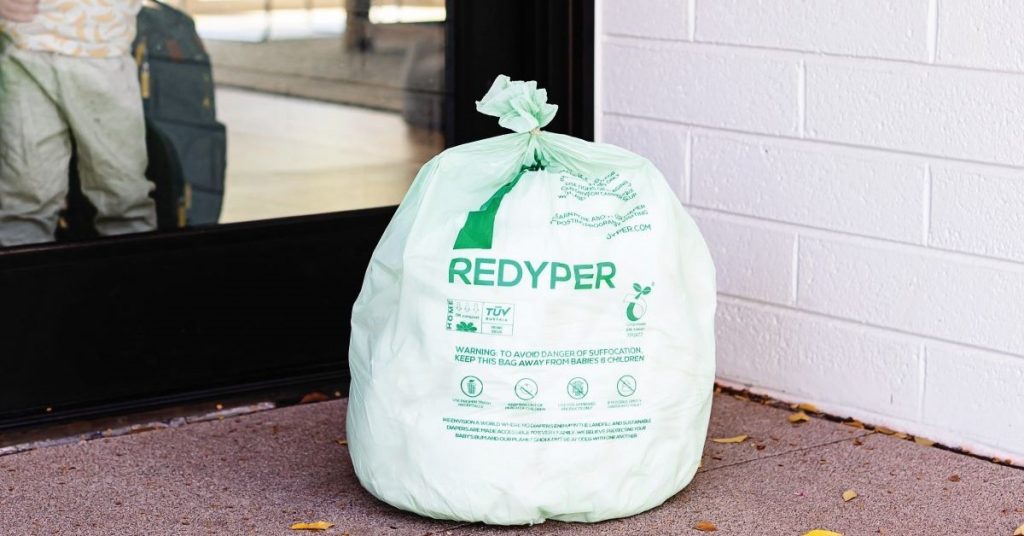
REDYPER: An opt-in program offers curbside pickup of soiled products in 22+ cities and growing, or they can ship them back for responsible disposal. To date, over 11.5 million pounds of dirty diapers have been diverted from landfills and converted into topsoil. Introduced in 2023 to select markets, Byochar technology also helps reduce landfill waste by converting soiled diapers and wipes into usable biochar at scale, ultimately transforming an environmental hazard into a carbon-neutral footprint without the use of offsets. Biochar is a carbon-rich product created through a heating process called pyrolysis, which allows for waste to be transformed into a reusable commodity that can improve soil, assist in air and water purification, and be an additive to paints and inks for improved pigment.
DYPER Health: At-home testing provides science-based insights, including a Baby Gut Health Kit, Children’s Advanced DNA Kit, Breast Milk Test Kit, and Adult Vaginal Microbiome Test Kit, with other tests in the works.
DYPER Card: A credit card offers qualified customers the ability to earn free diapers or a cash back investment into an EarlyBird savings account. When children are no longer in diapers, EarlyBird will allow a percentage of spending to be transferred into a minor custodial account for tax-optimized growth.
“We strive to be at the forefront of innovation and cater to the needs of modern parents,” Radovcic says.
How I’m helping reinvent the $59-billion supplement industry from the ground up.
By Katerina Schneider
I’m a mother of three — four if you count Ritual, the health and wellness company I founded in 2016. I was pregnant with my first daughter when I couldn’t find a prenatal multivitamin I trusted. The options recommended to me were high in heavy metals, contained artificial colorants, or were lacking in key nutrients we needed during that life stage.
The more I learned, the more I realized we need supplements, but it’s no surprise people have a hard time knowing which ones to trust. There was transparency in so many other industries, yet when it came to something people are putting in their bodies every day, there was none. That was the lightbulb moment. I knew we deserved better — not just for women’s health but for future generations.
Beyond Vitamins, Building Trust: Ritual’s Recipe for Success
I quit my job at four months pregnant, eager to bring an unprecedented level of transparency to the $59-billion supplement industry. But as I took meetings for Ritual’s first round of funding, a male investor told me I could start a company or start a family — but not both. This moment became ingrained in our founding story and immortalized as one of our company values: to embrace the nos. That no became fuel for me. It wasn’t the first no, and it certainly wasn’t the last. I was told there was no way we could earn the trust of women online. I was told no one would ever buy a prenatal multivitamin from an online company. I was told that no one would pay a premium for higher-quality ingredients. Every no made me more determined to reinvent the supplement industry from the ground up.
Informed Choices, Not Blind Faith: Ritual Empowers with Facts
We built the first visible supply chain of its kind, transparently sharing where our ingredients come from in the world and why they are there. We invested in scientific research and clinical studies to support the efficacy of our products, setting a goal to have clinical trials on all our products by 2030. We also pursued third-party certifications like USP Verification and Clean Label Project because we didn’t want our customers to just take our word for it.
None of this was required by the industry, but it was the right thing to do. We focused on not just creating transparent products but providing transparent information so our customers and community could make confident choices for their health. And it has paid off. Ritual is one of the most trusted brands in its category, one of few supplement companies to be a Certified B Corporation, and now we have one of the leading prenatal multivitamins.
Raising the Bar for All
But the reality is people are going to buy supplements for their specific needs outside the ones Ritual makes. My goal is that through strategic advocacy initiatives and urging Congress for stricter oversight, we can have a bigger impact beyond our products. We are advocating for a future where there are health protective measures on heavy metals, and terms like clinical study are clearly defined so that consumers don’t have to be their own advocates. That is the ultimate mission — to raise the bar not just for our products, but for the supplement industry at large, and to create a better future for my girls.
Katerina Schneider is the founder and CEO of the health technology company Ritual.
The UN asks companies to help accelerate progress on 5 Sustainable Development Goals.
By Real Leaders
Only 15% of the United Nations Sustainable Development Goals (SDGs) are on track for 2030, and the UN is calling upon the private sector to help improve that number.
The UN identified five action areas for companies: gender equality, climate action, living wage, finance and investment, and water resilience. These targets can accelerate progress across all 17 SDGs and are where the private sector can collectively make the biggest, fastest impact by 2030, the UN says. They also help build more resilient companies and can lead to positive corporate returns.
The UN’s Forward Faster initiative aims to increase accountability and transparency by calling for companies to publicly declare their commitments, highlight the actions they will undertake, and report on progress annually to the UN Global Compact, which provides a framework to guide all businesses regardless of size, complexity, or location.
Gender Equality
At the current rate, it will take over 160 years to achieve gender equality in terms of women’s economic empowerment and participation.
Companies can increase profitability and performance by ensuring inclusive workplaces and parity in their workforce. When women are empowered and included, economies grow, communities thrive, and businesses flourish. By taking action on gender equality, companies can gain important advantages:
When women serve as leaders and employees of companies, businesses benefit and performance improves.
On average across countries, long-run GDP per capita would be almost 20% higher if gender employment gaps were closed.
When boardrooms are gender balanced, enterprises are 2% more likely to have improved business outcomes.
Gender equality in the workplace can help unlock more than $12 trillion in new market value linked to the SDGs.
Action
Target 1: Equal representation, participation, and leadership across all levels of management by 2030.
Target 2: Equal pay for work of equal value by 2030.
Climate Action In order to limit global warming to 34.7°F above pre-industrial levels, emissions need to be cut in half by 2030.
Businesses can protect themselves from long-term volatility by working toward net zero and a just transition. Taking climate action will help future-proof businesses. Here’s how taking ambitious action in this area benefits companies:
Improve efficiency and cut operating costs by reducing energy usage and emissions. Strengthen companies’ reputation with customers, suppliers, investors, and regulators whilst reducing companies’ exposure to climate risks.
Stay one step ahead of policy changes and climate regulations.
Ensure businesses leave no one behind in the transition to an environmentally sustainable economy.
Action
Target 1: Set corporate science-based net-zero emissions reductions targets in line with a 34.7°F pathway with the goal of halving global emissions by 2030 and reaching net-zero by 2050 at the latest.
Target 2: Contribute to a just transition by taking concrete actions that address social impacts of climate change mitigation and adaptation measures in partnership with actors such as workers, unions, communities, and suppliers.
Living Wage Over a billion working people worldwide — one third of all workers — are estimated to earn less than they need to afford a decent standard of living.
Companies can reduce inequalities and build more resilient supply chains by ensuring a living wage across their workforce. By paying living wages, companies can improve productivity and gain important advantages:
Reduce staff turnover and absenteeism, increase retention and motivation, attract new talent, and increase staff productivity.
Improve supply chain relationships, performance, resilience, and transparency.
Create a pathway to tackle poverty and reduce inequalities.
Demonstrate a commitment to respecting and promoting the human rights of workers.
Action
Target 1: One-hundred percent of employees across the organization earn a living wage by 2030.
Target 2: Establish a joint action plan(s) with contractors, supply chain partners, and other key stakeholders to work toward achieving living wages and/or living incomes with measurable and time-bound milestones.
Finance and Investment The world will need to spend between $3–5 trillion annually to meet the SDGs by 2030.
Shifting corporate capital towards the SDGs is critical to closing existing financing gaps. Aligning financial strategies with the SDGs unlocks new revenue possibilities. By taking action in this area, companies can increase performance and gain new opportunities:
Attract investors and open up new avenues for capital investment
Protect long-term financial performance and avoid potential legal and reputational issues.
Identify and mitigate risks associated with environmental, social, and governance factors.
Attract top talent who prioritize purpose-driven work and seek employers committed to sustainability.
Expand into new markets and attract environmentally and socially conscious customers.
Action
Target 1: To the fullest extent possible, align corporate investment with SDG policies and strategies, set targets, and track and report on the amount and proportion of such SDG investments.
Target 2: Establish a corporate financing strategy linked to SDG investments and performance, and report on the amount and proportion of such SDG finance.
Water Resilience More than 2 billion people lack safe drinking water. It’s estimated there will be a 40% gap between available water and demand for water by 2030.
Companies can increase efficiency and reduce supply chain disruption while helping vulnerable communities in water-challenged regions. Building water resilience at your organization can improve business performance and accelerate growth. Taking ambitious action in this area will help businesses:
Reduce potential business risks caused by water challenges (operational and supply chain).
Enhance companies’ reputation in the communities you operate and with your investors.
Profoundly impact the ability to fulfill the UN human right to water and sanitation and broader SDGs.
Support ecosystems that capture, filter, and store water resources, while supporting biodiversity and helping reduce the impacts of climate change.
Action
Target 1: Build water resilience across global operations and supply chains and join hands to achieve collective positive water impact in at least 100 vulnerable prioritized water basins by 2030.
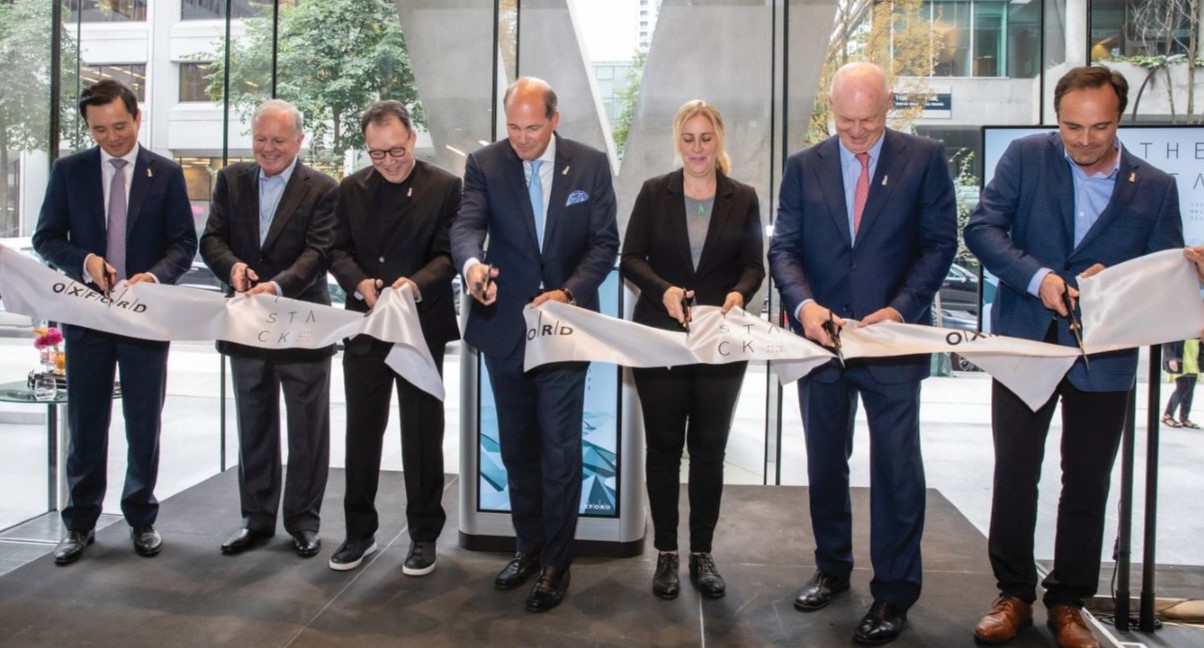
North America’s first zero-carbon commercial tower, The Stack, opened in September 2023 at 1133 Melville St. in downtown Vancouver, British Columbia. Co-owned by Oxford Properties and CPP Investments, The Stack is 37 stories tall, totaling 550,000 square feet of prime real estate. James K.M. Cheng Architects designed the unique, twisting stacked box aesthetic. The building was awarded the Canada Green Building Council’s Zero Carbon Building – Design Standard certification and is pursuing LEED v4 Core and Shell Platinum.
“The Stack is leading the real estate industry to new levels of sustainability,” says Andrew O’Neil, vice president of development for Oxford Properties.
Employee Haven
Employee experience and wellness were other priorities in The Stackʼs design, with architectural elements such as operable windows for natural ventilation, several outdoor terraces, and a landscaped pocket park that features a public art installation by Canadian contemporary artist Lawrence Paul Yuxweluptun. To foster active transportation and promote wellness, The Stack features a 5,000-square-foot fitness center, 250 bike parking stalls, and health-club quality end-of-trip facilities for those who want to bike, jog, or walk to work.
Tackling Decarbonization
Innovative features minimize carbon emissions and energy intensity, including low-carbon building systems, high-performance, triple-pane glazing, and solar panels. The Stack also deploys smart technology to provide insights on energy management, optimize building performance, and enable preventative maintenance.
“We can use the insights and learnings from this project across our portfolio and share best practices with the wider industry as we collectively tackle decarbonization as one of the most pressing issues of our times,” says Andrew O’Neil, vice president of development for Oxford Properties.
Taking Things Up a Notch
At 530 feet high, a 6,000-square-foot rooftop terrace offers unobstructed panoramic views of English Bay, Stanley Park, Burrard Inlet, and the North Shore Mountains with regular access as well as corporate events.
“We’re seeing in cities across the globe that providing employees with a high-quality workplace experience has been an integral part in successful return-to-office programs for firms looking to unlock the benefits of in-person collaboration,” says Ted Mildon, vice president of office leasing and operations at Oxford Properties.
Cleancult keeping your home and the planet free of waste
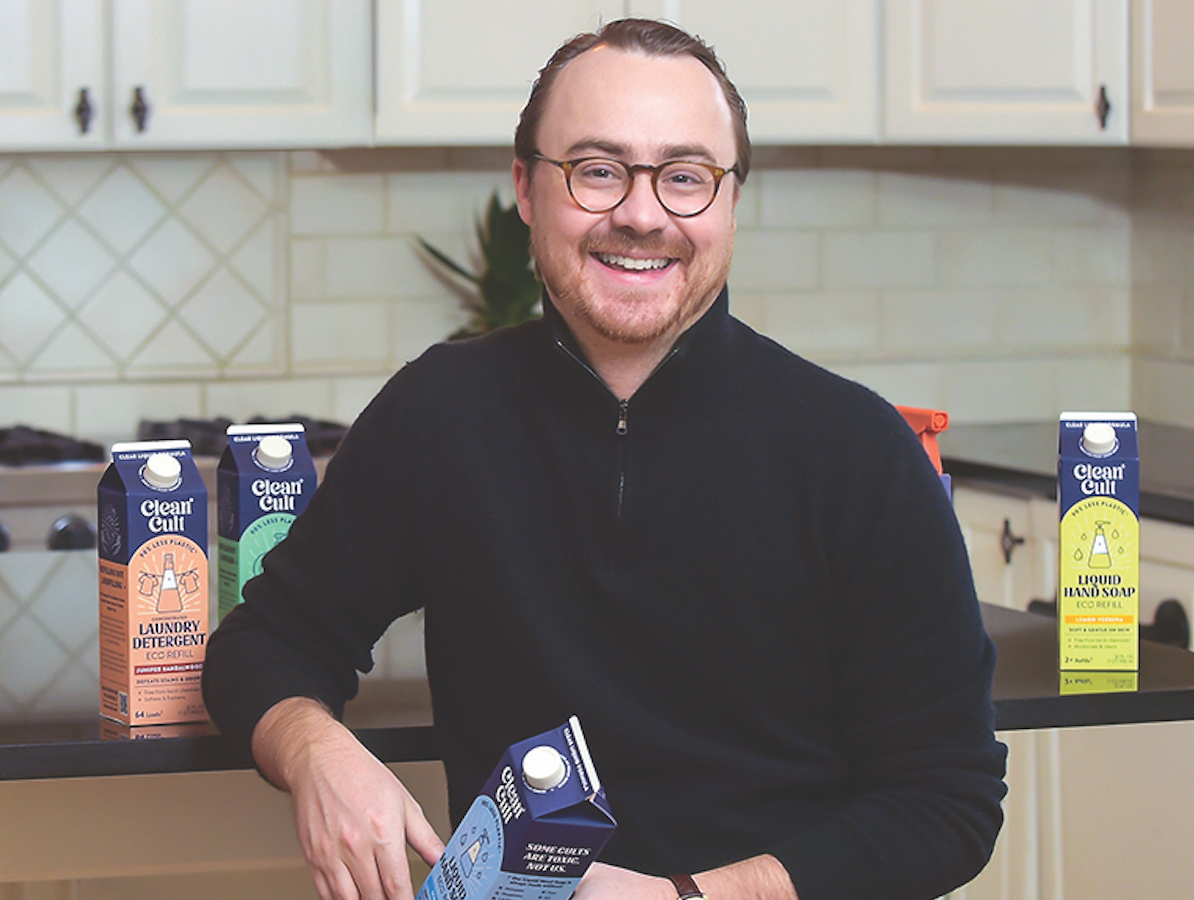
Ryan Lupberger is helping lead the movement to clean up the cleaning industry. The Colorado native grew up valuing natural products, and upon reading the ingredients in his laundry detergent, he was concerned to see so many unrecognizable ones.
Lupberger started researching and became even more disheartened when he learned that many of the chemicals allowed in the U.S. are banned overseas, and there is no regulatory body overseeing cleaning products in the U.S. So, he was inspired to start Cleancult, a natural cleaning product company, in 2019. Cleancult sells hand soap, dish soap, all-purpose cleaners, and laundry detergent.
“As we further our mission, the goal to bring accessible sustainable solutions to more and more people is not only a fundamental business model, but also an innate responsibility to our community and the cleaning industry,” Lupberger says.
Not only does Lupberger care about what is in the products, but he also has achieved zero-waste packaging, as opposed to the industry-standard single-use plastic bottles. After all, Americans dispose of 40 million tons of plastic every year, only 5% gets recycled, and it takes over 500 years to decompose.
Lupberger spent a year traveling the U.S. to find the best solution and ended up having his own machinery built to create a patented, recyclable cardboard refill packaging similar to milk cartons that consumers are encouraged to transfer into glass dispensers (which they can purchase from Cleancult) for at-home use. The company uses Forest Stewardship Council-certified paper. Recently, it also introduced refillable aluminum bottles. Cleancult has diverted over 7 million pounds of plastic from landfills and oceans.
While other eco-focused cleaning product companies sell concentrated liquids or powder alternatives, Lupberger sees Cleancult as preferred for consumers who don’t want to add a step or change to powder.
“We want to go after the 99%,” Lupberger says. “We have to meet them where they are with ready-to-use formulas and ready-to-use bottles.”
Cleancult’s Support for Innovative Waste Management Projects
Cleancult is an activator in the U.S. Plastics Pact, a global network working toward a goal of having all plastic packaging be reusable, recyclable, or compostable by 2025. The company is a member of the Sustainable Packaging Coalition to take action toward packaging sustainability. Plus, it joined rePurpose Global, and its Plastic Neutral Certification helps fund and support sustainable waste management projects that recover and remove as much plastic waste from the environment as it uses in its packaging.
Among these initiatives lies Sueño Azul, supporting a cooperative of waste workers who have revolutionized waste management practices in Bogotá, Colombia.
When Lupberger started Cleancult, he launched a direct-to-consumer (D2C) website. “I really hoped D2C would work long-term,” Lupberger says. However, he found the digital marketing and shipping costs to be challenging, especially during the Covid-19 pandemic.
So, in 2021, Lupberger shifted the company’s focus to retail sales, debuting in a handful of regional grocers. In 2022, Cleancult entered Walgreens, CVS, and Bed Bath & Beyond. This year, in its largest retail expansion yet, it hit shelves at 3,000 Walmart stores across the U.S., as well as on its online marketplace. Plus, Cleancult is available on Amazon.com’s marketplace. Lupberger has been pleased with the results, with sales growing 50% year over year for the business overall (while sales are flat on Cleancult’s website).
“Through key retail partners, including Walmart, we have grown the brand’s retail presence by 7,500% since 2019 and are excited to continue on this positive growth trajectory,” Lupberger says.
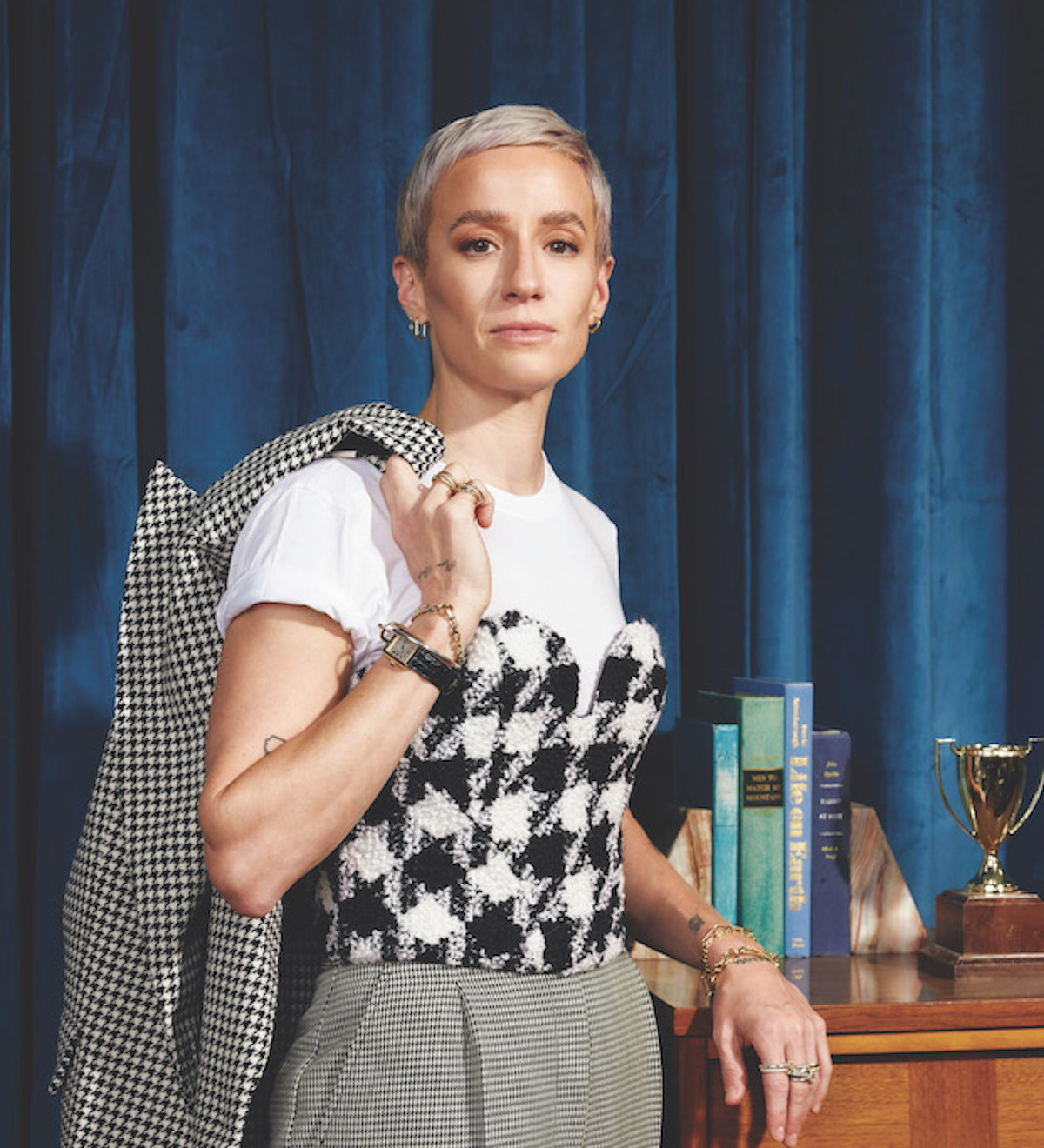
Retiring Soccer Megastar Megan Rapinoe kicks up her fight for equality in the world arena — and shares why businesses have no excuse but to close the gender pay gap now.
She has been cheered from the stands by pro soccer fans for 15-plus years. She has been called upon by Congress to testify in a historic fight for gender pay equality. And she has become synonymous with being a disruptor on both world stages. Megan Rapinoe may be hanging up her cleats this year, but her advocacy work is far from finished. In fact, she tells Real Leaders that she is just getting started.
Hanging Up Her Cleats: Rapinoe’s Transition to Full-Time Advocacy
Rapinoe will retire as one of the most influential athletes on the planet with two World Cup titles, an Olympic gold medal, and a Presidential Medal of Freedom, and one of the first soccer players to publicly come out as gay. Now, Rapinoe is taking the field for gender equality in full force and is kicking up her activism efforts for LGBTQIA+ rights and racial justice.
Known to passionately speak her mind, Rapinoe reflects with Real Leaders on her leadership lessons from the game, why businesses have no excuse but to close the gender pay gap now, the impact company she recently launched with her fiancée, WNBA legend Sue Bird, her desire to make politics “cool,” and a whole lot more. Rapinoe’s new chapter is shaping up to be her most impactful one yet, and in true Rapinoe fashion, she is embracing it with arms wide open.
Real Leaders: Congratulations on your upcoming retirement from pro soccer. How did preparing for and competing in four World Cups, including as co-captain in 2019, transfer into your leadership strategy in business?
Rapinoe: When you’re playing on a team that has been as successful as the U.S. Women’s National Team where you’re literally playing with and against the best players in the world all the time, you need to have a level of even aspirational confidence in yourself and your teammates. If you’ve made it to the World Cup on the Women’s National Team, you’ve run the gauntlet. You’ve been in a pressure cooker. You’re resilient.
I apply these same qualities — confidence, teamwork, performance under pressure — to leadership in business. For me, I was born with this amazing talent to be an athlete. Just as I grew into a leadership role on the team and tried to be the best player I could be, I’m trying to leverage these skills off the field as well.
Being a leader on a team or in a business means you have to be accountable to yourself and to your teammates. I’ve always been a team-first player, and that definitely carries over to my businesses outside of soccer. I want to be successful, of course, and I want everyone to be successful with me, and I want to be successful with them. I don’t think individual success actually exists, and the foundation of that belief came from playing on the biggest stage with my teammates. You need everyone to really win at anything.
RL: You helped lead the charge in the U.S. Women’s National Team’s class action gender discrimination lawsuit against the U.S. Soccer Federation, settled in 2022 with a promise for equal future pay with the men’s team. How is this affecting employee equity in business today? How would you characterize the progress that has been made, and what will it take to reach equal gender pay everywhere?
Rapinoe: We’re definitely experiencing a paradigm shift in how we understand the value and potential of women, which has been undervalued for so long. The Equal Pay Act became law six decades ago, and yet we still hear the statistics: Women make 82 cents for every dollar a man earns. For Black women and women of color, the gap is even greater. The wage gap has hardly moved in 15 years. It’s absurd. It’s not acceptable or sustainable, and finally it seems like enough people are starting to say “enough” — whether that’s U.S. women’s soccer, protesters, investors, or employees.
Our victory as a team was really momentous for women’s soccer and for all of women’s sports and the equal pay movement, but the average person doesn’t have the platform — much less the bandwidth or the ability or the freedom — to engage in a fight like we did. We need to ensure all working women and all marginalized groups are being paid equitably. As chief equality officer for Trusaic, my goal is to use my platform to bring awareness not only to the problem-because we all know by now that there’s a problem- but also to talk about the solutions.
And it’s not just about compensation, although obviously being paid fairly is important. For the team, it was also about equal investment and equal caring — that’s equal access to resources, investment in coaching, marketing, ticket sales, sponsorship, all of it. In a corporate setting, that looks like equal access to opportunity — who gets the new assignments, the great projects, who gets additional training and development, and who gets promoted.One thing I believe is that you have to create a space that signals to people that it’s safe before they even enter that environment. Maybe that’s diversity training, but it’s also: What are your hiring practices? How diverse is your workforce? Who do you do business with? What does your executive suite look like? Does everyone look exactly the same? Because that’s not going to signal to other people that there’s space for them there.
The pressure’s been turned up. We know investors are looking more closely at companies and their workplace practices, employees want to work for companies that pay fairly, and customers want to do business with companies that do the right thing. So the pressure is coming from a lot of places, and industries and companies should also put pressure on one another. There should be an element of holding their feet to the fire in this. Legislation and legal action are obviously part of that pressure too.
Companies hold the key to closing the wage gap. There are no longer any excuses. At this point, we have enough information and the tools, like Trusaic’s PayParity technology, for companies to get on the other side of this in a real, meaningful way.
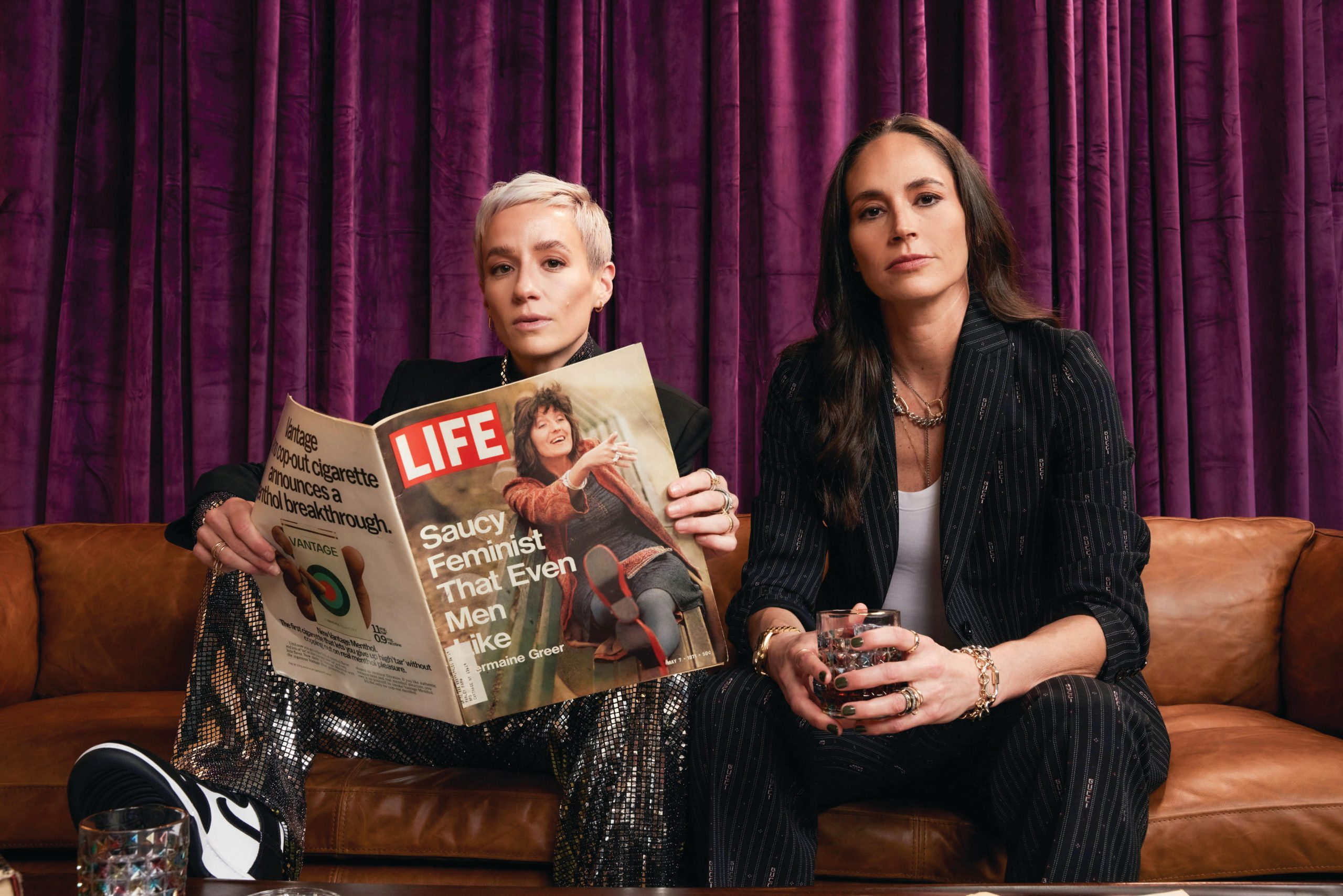
Megan Rapinoe and her fiancée, WNBA legend Sue Bird, recently announced their retirements from sports and co-founded A Touch More production company to give a voice to underrepresented groups.
RL: As a mission-oriented leader, what are your personal and professional missions right now? Rapinoe: My professional mission while I am still playing is to be the best teammate and the best player I can be and to leave the game in a better place for the next generation of players.
My personal mission is to use my platform to fight for gender equality, LGBTQIA+ rights, racial justice, and equal pay. I hope to inspire others through my advocacy and actions to join the fight for equality and justice and help create a more fair and inclusive world.
I am very selective about who I work with, and value alignment is something I take seriously in business. I became chief equality officer last year for Trusaic, which I know your publication recognized earlier this year. (Trusaic was a 2023 Real Leaders Top Impact Company.) They are a workplace equity technology company focused on achieving pay equity, which is obviously very close to my heart. And, of course, I’m involved with my own businesses as co-founder of A Touch More, the production company my fiancée, Sue Bird, and I have formed together to really change what kind of stories are being told and who is telling them.
RL: Speaking of co-founding A Touch More with Sue Bird, what are you learning about yourself and each other in this process? Rapinoe: A Touch More was actually created early in the pandemic as an Instagram Live show really just for fun. We had games and different guests. Sue produced the show and it was a blast. It really became about creating community in new ways under unprecedented circumstances. There was so much heaviness, and we just wanted to be a light however we could, even if it was just for a few hours.
So we kept that title for the production company, and our goal now is to create content that centers on stories of revolutionaries who move culture forward. If we can get eyes on these stories, we can broaden the cultural understanding of what it means to move in the world and to be successful when you don’t look a certain way or fit a certain mold. We want to partner with people and organizations and brands who want to do the same kind of thing: uplift the culture through powerful narratives.
We’ve never had any qualms about working together professionally. This experience just reinforces that we’re really passionate about the same things. We probably appreciate each other’s unique strengths even more, and we can pick each other up in those areas where the other one might fall short. It’s really cool to work with someone you love to advance your shared vision for the world. I truly think Sue’s brilliance is one of her most underrated qualities publicly.
RL: Do you and Bird have any other projects in the works together? Rapinoe: In terms of future projects, activism is probably always going to be at the heart of what we want to do. It’s what we both have always believed in as individuals, so it makes sense. We’ve both had these really influential platforms as athletes, and we know the impact we can make on the world together. It’s not about our story and our personal success. Everyone’s heard our story. We want to get eyes on things that we feel are really important and not getting enough attention, and we have the resources between us to turn up that light.
Fueling Change for Future Generations
RL: What areas of your work and mission excite you the most? Rapinoe: I’m really fueled by the opportunity to make a difference for the young athletes who look up to me, for women in the workforce, for trans kids, for marginalized groups that deserve to be championed and to be seen and heard.
I’m excited about finding ways to get more people interested and invested in politics to make politics “cool,” not necessarily in the traditional sense, but actually getting people to understand that politics is engaging with you, whether you’re engaging with it or not. So those could be the decisions that your school system, city government, and insurance company are making. If people realize that when they participate in politics at whatever level, then policies will better reflect the needs and desires of their communities. We can impact our ability to live a better life by being a little bit more involved. If we take the time to understand all the issues we can have a say in, we can hold our elected officials accountable, so that’s a big mission of mine.
RL: How can you leverage your personal brand as an advocate for the businesses you align with? Rapinoe: Many of the brands that approach me do so because they feel a connection to what I’m doing on the field or what I’m doing and saying off the field, probably some of both. So that might be finding a way to win or to push yourself to the highest level or taking a stand for things that matter — justice, equality, fairness. I’m obviously not shy about putting myself out there, and so I imagine the brands that want to work with me and the brands I want to work with feel the same.
For me, it’s how can I leverage my personal “brand” — who I am — for good? How can I make a difference? I’m fortunate to have people who do pay attention to what I say, so I feel a responsibility that comes with that — a responsibility to do what I can with that influence and try to make the world better, whatever that might look like.
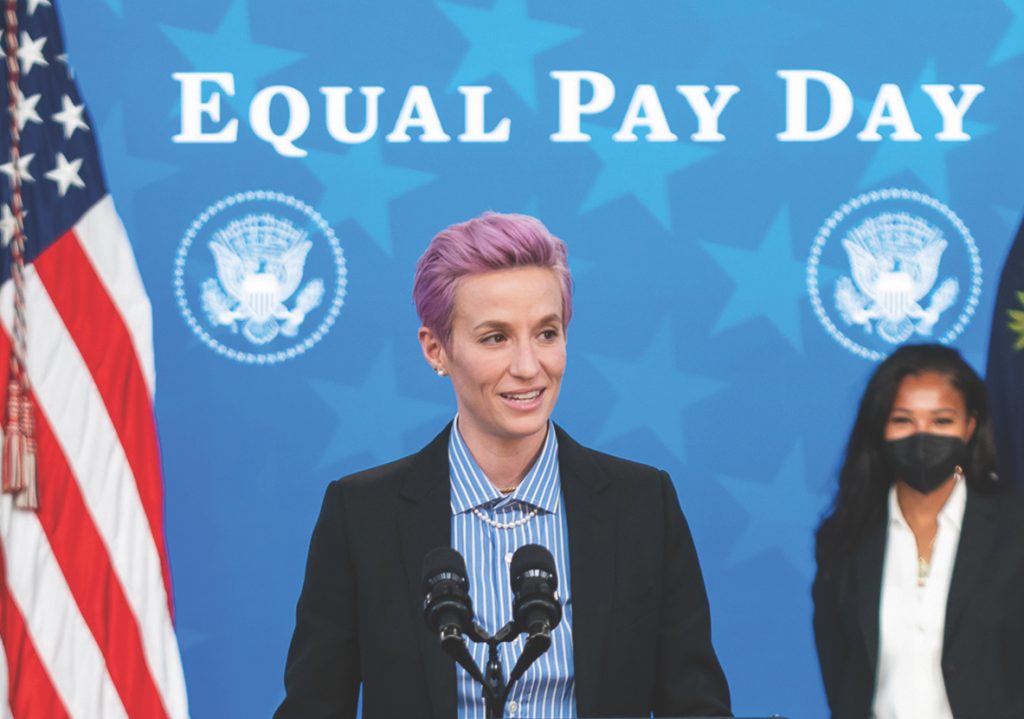
Megan Rapinoe delivers remarks during a virtual Equal Pay Day event Wednesday, March 24, 2021, in the South Court Auditorium in the Eisenhower Executive Office Building at the White House. (Official White House Photo by Adam Schultz)
RL: You’ve spoken publicly about impact investing. What led you to commit to it? Rapinoe: Values apply to every aspect of your life, not just some. My personal financial advisor and firm are really committed to impact investing. We definitely want to be successful and make money, but we also want to think about a new path forward. Doing the same things obviously isn’t working. I like to invest in companies that are disruptive and progressive and concerned with making a difference in people’s lives. My goal is to keep doing this. My portfolio includes Mendi, which is run by my sister, Rachael, and makes CBD products for athletes; Real, which is a mental health startup; and STATSports, which makes wearable technology for athletes. We are just getting started in this space. There will be more to come. I want to continue to carve out a path for women — who don’t acquire as much capital — to come together and build for everyone.
RL: Whose leadership has inspired you the most — in sports or otherwise? Rapinoe: My biggest influence on leadership is my mom, Denise Rapinoe. She has always been the leader of our family and like so many women, has worked tirelessly her entire life to provide for her family, herself, and anyone who needed her. My mother gave me the strength to be who I am today. She taught me how to stand up for what is right, fight for myself, and fight for others who need a helping hand. I absolutely would not be the person everyone knows today without her leadership.
RL: What is your definition of a real leader? Rapinoe: A real leader is someone who is confident and accountable and creates an environment where everyone feels seen and heard and like they have a place on the team. Being a leader is about being faced with the choice to make the right decision for the greater good and actually choosing it every time. A real leader is not afraid to challenge the status quo to make positive changes within their company, industry, or the world. I don’t think there’s one right leadership style. It’s about serving the person next to you and the people around you and giving them what they need. Real Leaders need to make a point of understanding the people they lead and then being intentional in their actions to support them and bring the very best out of them.
Rapinoe Embraces Her Next Chapter
RL: What’s next for you? Rapinoe: Knowing this year would be my last in soccer, I’ve just tried to really enjoy every moment and appreciate what a special opportunity I have had playing for so long. I’m so grateful for everything this game has given me and so honored to have represented my country for so many years, and it, of course, has opened up many other doors.
I definitely want to continue to use my platform to expand the conversation. It would be irresponsible of me not to. I want to push people and companies to re-imagine the status quo. We obviously need more women in leadership positions. We need more gay and trans people in leadership. We need a bigger commitment to pay equity and inclusion. It’s easy for everyone to say they agree with this until it comes time to actually invest in or hire or promote someone who doesn’t look like you. We’ve made some progress, but we certainly have a long way to go. I think a lot about how we can break down these barriers and open more doors for women, Black people and all people of color, gay people, and the people who live in intersecting spaces and have so much perspective to offer all of us.
I’d like to continue to be involved in more projects that get people energized about the civic process and more active in their communities. I don’t think enough people get involved when it’s not literally their skin in the game, but if you look at the intersectionality of everything, it is all of our skin in the game, so I hope to encourage people to speak up or to take positive action. The most important thing for anyone is to do something — and you don’t have to do it perfectly. You don’t have to have all of the answers, but don’t be scared into inaction because you don’t think you have it exactly right.
I feel strongly that the business of Megan Rapinoe can go in all kinds of different directions. I have a lot of irons in the fire. Soccer will always be that touchstone for me, but how can I use that foundation to enter other spaces? That might be fashion, technology, investing, or who knows? We’re just getting started.
Is your company or an individual manager’s reputation killing your recruiting efforts?
Potential candidates search the Internet and social media to learn what current and past employees are saying about the company?
If you want to enhance the company’s reputation, maybe Ben Franklin can help. He asked himself two questions that shaped his view for day’s activities.
In the Morning — What good will I do today?
In the Evening — What good did I do today?
Judging from his personal success, and his efforts to help others, I would say this daily activity was successful. Would managers look at their day’s activities differently if they asked themselves Ben Franklin’s two questions?
Would they look at hiring, motivating, and developing their team members differently?
Would they look for more creative ways to resolve employee issues?
Would they get valuable input from employees whose opinions had not valued before?
Would they ask more questions and make fewer demanding statements?
Would they foster a “we” workplace environment rather than a top down, I’m-the-boss attitude?
Would your employees be more respected for what they are “bringing to the table”?
These two questions can have a profound effect on employee selection, engagement, retention, and motivation. Workplace acceptance and validation can have a positive impact on the company, the employee and their family, and the community.
We have the power to change the world – one person and one day at a time.
The annual celebration of International Women’s Day, as we saw earlier this month, always invokes talk of change — whether it’s the progress that’s been made in advancing female rights and representation over the years or the extent of the work still to be done. But it’s not often that Women’s Day comes around at a time when the world is undergoing seismic, existential changes of the kind that only come around every hundred years or so.
The pandemic is the most obvious and direct example that’s changed the way we work. After over two years of successive waves that necessitated social distancing and stay-at-home orders, the office will never be the same again. Whether or not we as individuals like or dislike home working has become irrelevant – two years, remote or hybrid working is now the new normal. The idea of entire workforces undertaking a grueling commute to sit at a desk and work on a laptop as efficiently as they could at home already seems to be part of a bygone era.
Only thirty percent of British businesses expect to have their whole workforce back on-site within the following year. We can safely assume many, if not all, of these will be in industries that require a physical presence in at least some of their workforce.
However, it’s not just logistical attitudes to work that are changing right now. Over the course of the pandemic, something shifted in our collective consciousness regarding the environment. Research from Boston Consulting Group across eight countries found that around 70% of people reported a heightened awareness of the impact of human activity on climate change. This shift is becoming more evident in how we do business, with ESG now taking center stage on boardroom agendas. It’s also changing the shape of executive teams, with more Chief Sustainability Officers hired in 2020 than in the previous three years combined.
Riding the Changes
As leaders grapple with how to make sense of this ever-shifting landscape, many have taken the opportunity to make long-term changes. A transition towards more flexible working arrangements in the long term may entail leaders having to think differently about how work gets done. But there’s a recognition that employees want the quality of life that comes with being able to self-determine where and how they work.
This shift benefits everyone, but particularly for women, it offers an opportunity to change paradigms and begin to address the representation gap in leadership and key roles. It’s not simply about the somewhat simplistic idea that if women can work flexibly, they can better multi-task their domestic responsibilities. It’s about addressing some of the more insidious and deep-rooted biases that act as barriers to female representation in leadership and key positions.
For example, the idea that women taking time off for maternity leave creates an absence in the workplace that allows men to accelerate past them on the career ladder. In a workplace that places a lower priority on physical presence, this “absence” takes on far less significance and actually makes it easier for parents on maternity or paternity leave to maintain a meaningful connection.
Changing Mindsets
So as you can see, if we’re to use this current period of discontinuity to address representation issues, it requires a different kind of leadership and a mindset shift regarding how work gets done. Leaders need to craft a culture that optimises for different ways of working to be as inclusive as possible.
Doing so will create opportunities across the board, but particularly for women, it’s a chance to begin to address the gap in representation at the senior level. For firms, it’s an unprecedented chance to unlock the potential that women in leadership can bring, using inclusivity as a strategic tool to promote growth, innovation, and performance.
Creating an inclusive culture isn’t something that happens overnight or without a sustained, committed effort to drive change. We’ve identified five principles based on decades of helping companies craft cultures that support their performance goals. Firstly, leaders need to draw a clear line between business priorities and DEI objectives, which includes the strategic advantages of increasing female representation in leadership and other key roles and functions.
Secondly, leaders need to effect personal change, identifying their own biases and blind spots and being open about how their mindsets have shifted.
Next, the changes need to be disseminated throughout the organisation in a program of broad engagement, and there needs to be an exercise to attain systemic alignment to inclusivity across all policies, processes, and practices.
The final principle is representation – employees from all groups need to be able to look out across the workforce and see themselves reflected at all levels.
So this International Women’s Day can be about more than just talking about change. We’re all living a change right now, so let’s seize the chance to bring about a meaningful transformation that breaks down the remaining barriers for women in the workplace and supports a more inclusive organisation overall.
Hollywood couple Ashton Kutcher and Mila Kunis have raised over $6.8 million toward a goal of $30 million as of 4 March, a day after setting up a GoFundMe page seeking humanitarian aid for Ukrainian refugees.
Kunis, who was born in Chernivtsi, Ukraine in 1983, moved to the United States in 1991.
“I have always considered myself an American, a proud American… But today, I have never been more proud to be a Ukrainian,” Kunis said in an embedded video.
“The events that have unfolded in Ukraine are devastating. There is no place in this world for this kind of unjust attack on humanity.”
Kutcher, sitting by Kunis’ side in the video, said the funds would be used to provide refugee and humanitarian aid to Ukrainians affected by Russia’s invasion of the neighboring country.
“The principle challenge right now is logistics. We need to get housing and we need to get supplies and resources into the area,” said Kutcher. “And I have never been more proud to be married to a Ukrainian.”
The two actors, who married in 2015, have agreed to match up to $3 million of donations, with the ultimate goal of raising $30 million. They are partnering with short-term housing website Airbnb.org and Flexport.org, which organizes shipments of humanitarian aid to refugees.
Sven Lilienström, founder of the Faces of Democracy initiative, spoke with Laura Codruța Kövesi (48) about democracy, the newly established European Public Prosecutor’s Office (EPPO), and her fight against corruption, bribery, and money laundering in the EU member states.
Romanian-born Laura Codruța Kövesi was previously the head of the National Anticorruption Directorate in her country. The EPPO is the first supranational public prosecutor’s office in the world with the capacity to conduct cross-border investigations. The independent body was set up to prosecute and bring to justice offenses affecting the financial interests of the European Union, such as certain forms of subsidy fraud, corruption, and cross-border VAT fraud.
Ms. Kövesi, you are the head of the newly established European Public Prosecutors Office (EPPO). How significant are democracy and democratic values to you personally?
I grew up in a communist regime and I have still very vivid memories of what life was like. And then I was lucky enough to be part of the long transformation process of Romania into a democratic society, of which the accession to the European Union was one of the culminating points.
This is why for me democracy is not an abstract definition that I could have learned in school, together with a set of values upon which it is founded. It is a praxis, an engagement. I have a personal experience with how fragile and precious this way of organizing human society is, how hard we need to work to preserve it. So, to answer your question: to me, democracy is fundamental, just as the air I breathe.
The EPPO is the first supranational public prosecutor’s office in the world. When you took office, you spoke of a “historic moment.” Why does Europe need its own public prosecutor’s office, and how will its citizens benefit from it?
For the first time, a European Union body will investigate, prosecute and bring to trial criminal offenses. There is no precedent for this. No one but the EPPO can prosecute fraud against the EU budget committed after 1 June 2021 in the 22 participating Member States.
The establishment of the EPPO has many wide-ranging implications. For instance, I have no doubt that it will trigger further harmonization in the field of criminal law, which is at the core of national sovereignty.
From a citizen’s perspective, the EPPO is a concrete answer to an old grievance: by opening the borders, we have not only allowed people and companies to thrive, we have unfortunately also allowed criminal organizations to develop their operations and grow. The EPPO is the first adjustment we need to do in this respect.
We want to make the EPPO a center of excellence for the confiscation of criminal assets. I am convinced that the EPPO will be a game changer in the fight against cross-border VAT fraud.
Beyond its contribution to increasing the general feeling of security, the EPPO is the first really sharp tool to defend the rule of law in the EU. By applying the very simple principle of equality before the law, the EPPO will play a crucial role in making the trust of the European citizens in the Union stronger than ever.
Until 2018, you were the head of the National Anticorruption Directorate (DNA) in Romania. How exactly do you intend to fight corruption, bribery, and money laundering in the EU member states?
First, it needs to be well understood that the competence of the EPPO is limited to corruption, bribery, and money laundering in the participating Member States when affecting the financial interests of the European Union only! Furthermore, we have a complex structure and have to operate as a single office in 22 different judicial systems, according to 22 different criminal laws and criminal procedural laws. This to say that we have huge challenges ahead of us.
My experience as a prosecutor can be boiled down to a few simple principles: work hard, never give up, and always abide by the law. Only by working professionally, being consequent and by respecting the law all the time, you can gain and keep the trust of the citizens. I will follow these principles in my role as European Chief Prosecutor. The good thing is that, in fact, you are never alone. At the EPPO, just as at the DNA, I have a good and motivated team of courageous prosecutors.
At least some of the population wishes for more isolation and national autonomy. What do you say to people who maintain that prosecutorial investigations are the core of national autonomy?
Yes, they are. But we need to evolve if we want to be credible and efficient. Read the reports from Europol, talk to the practitioners about the practical difficulties they encounter in the fight against cross-border crime in general, and economic and financial criminality in particular.
What good does it make to keep these powers at national level when criminal organizations have reached turnovers comparable to those of the biggest global corporations? The truth is that we are badly behind the curve. Now we can either try to catch up or continue to pretend there is no problem.
Hungary, Poland, Denmark, Sweden, and Ireland form a group of countries that refuse to cooperate with the EU’s public prosecutor’s office. Is the EPPO in reality merely a “toothless tiger”?
This is not accurate. These Member States did not join the enhanced cooperation establishing the EPPO, so they are not part of EPPO. This does not mean that they refuse to cooperate with the EPPO.
We will work very closely with their respective national prosecution services. We are in touch with all of them and have, for example, already concluded a working arrangement with the Office of the Prosecutor General in Hungary. We can still investigate citizens and companies from those countries if they have committed crimes in a Member State that does participate in the enhanced cooperation of EPPO.
The actual power of the EPPO has to be measured against its action in the participating Member States. I am sure you will soon see that we are anything but a “toothless tiger.”
In your inaugural speech, you also stressed that fraud with public funds is “a serious threat to democracy.” Where exactly do you believe the danger lies, and do you think it is underestimated?
White collar crimes are under-reported, underestimated, often even tolerated, to the benefit of organized criminal organizations that aspire to subvert and replace legitimate authorities. In certain circumstances, these organizations do not shy away from resorting to extreme violence. It is not by coincidence that, when giving solemn in front of the European Court of Justice, I had invited representatives of the families of Daphne Caruana Galizia, Jan Kuciak and Martina Kusnirova. What these journalists were uncovering is the aspiration of fraudsters to capture the State. Once the State is captured, its institutions stop working for the common good, and democracy is subverted. This threat is very real, and very common.
I think it is underestimated because in most of the cases, it is not obviously violent. And also, because, culturally, we have grown accustomed to be more tolerant with corruption.
Before starting our operations, we did a survey among the participating EU Member States about the number of investigations within our scope of competence they have conducted in the last four years. In some countries there are hundreds, even thousands. In other countries, there are close to none. That makes me wonder about the priority given to this fight. Because I know that there are no clean countries.
What do you like to do most of all in your leisure time, and what objectives have you set yourself for the next years – professionally and privately?
Professionally, I have to admit that my current job is the most challenging I had so far. I want to put all my professional experience and energy in a successful mandate as European Chief Prosecutor: to win the trust of the citizens proving that EPPO is an independent, strong, and efficient institution and that the law is equal for everybody.
For my private life, I would like to spend more time with my family.