Are Our Leaders Oversexed?

In a sex-crazed society like ours it really is no surprise to learn our leaders are also obsessed with the pleasures of the flesh. It’s embarrassing, yes, but hardly news.

As angry debate over male libido takes over the media and social networks, I find myself wondering about the role of women in this. Are female leaders oversexed too?

Before you lunge for my throat, let me explain.

I’m excited about attending a discussion next week between Manuel Valls and Javier Vega de Seoane here in Madrid. The former French Prime Minister and the highly respected business leader will be moderated by prominent news anchor Susana Griso. Everybody agrees she is excellent at her job. But please take a moment to look her up on Google and tell me what her pictures spell out to you. What is your first impression?

If you like this, subscribe here for more stories that Inspire The Future.

She is not alone, of course. Look up anybody who stars on TV regularly and you will find the same low cut cleavages, sexy poses and pouting lips. Within Spain and outside of Spain too. Look up male TV stars too. Watch the younger ones doing a photo shoot at the gym to show off perfect six packs or to publicize underwear between more “serious” news reports.

Watch the news on any channel and look for a single woman who is spared from the pressure to present her body on a platter in an effort to keep viewers glued to the screen. These people shape our opinions and inform our thinking while they stimulate our lower instincts to keep us interested. Now this is what I call oversexed leadership.

But it’s not only the TV crowd. Female leaders are constantly criticized for their less-than-perfect looks. The last two decades have pushed women to remain eternally sexy at any age, pushing up our busts with expensive bras, slimming down our middle-age spread bottoms and pumping up our height on killer heels. Any woman will tell you it is exhausting and super uncomfortable. Except Victoria’s Secret models, of course!

And then I heard Agatha Ruiz de la Prada, renowned Spanish fashion designer, say that “when somebody is always dressed in a sexy way, they stop being sexy because they become boring”. I had to laugh. She is right on the money. What ARE we doing to ourselves??

Yes, we have a big problem. Men, women, transgenders and gender-neutrals alike. There is far too much pressure on sex to make it fun, enjoyable or spontaneous anymore. It has muted into a game of power, competition and success. When it was supposed to be about intimacy, shared complicity and profound connection.

Or did I get that wrong? If I did, I hope I never get it right.

If you like this, subscribe here for more stories that Inspire The Future.


All-female Police Motorbike Squad Fights Gender Crimes in Delhi

The squad of 600 policewomen will ride in pairs through the streets on state-of-art motorbikes, equipped with guns, pepper sprays and body cameras.

An all-female police motorbike squad is set to take to Delhi’s streets next month, a senior police official said, as reports of violence against women rise in the Indian capital.

The ‘Raftaar’ or ‘Speed’ squad of 600 policewomen will ride in pairs through the streets on state-of-art motorbikes, equipped with guns, pepper sprays and body cameras.

“Basically it is a robust street criminal containment strategy,” Delhi police spokesman Dependra Pathak told the Hindustan Times.

If you like this, subscribe here for more stories that Inspire The Future.

“There will be a specifically designed helmets with ear-pieces. The pillion will carry a weapon like an AK-47 rifle and the rider carrying a 9 mm pistol … They will have all the accessories to make them effective on the ground.”

Women and girls in India face multiple threats – from rape, abduction and murder over dowry to sexual harassment, acid attacks and child marriage.

An October poll by the Thomson Reuters Foundation found Delhi, along with Brazil’s Sao Paulo, was the world’s worst megacity for sex crimes against women, earning it the unsavoury title of India’s “rape capital”.

Reports of violence against women in Delhi have almost doubled since 2012, with 11,588 crimes, such as kidnapping and assault, recorded up to Nov. 15 this year, police data shows.

Public awareness of violence against women in Delhi, particularly sex attacks, has surged since the fatal gang-rape of a 23-year-old student on a bus in December 2012.

The case triggered a wave of public protests across the country, throwing a global spotlight on gender violence in the world’s second most populous nation.

Indian authorities enacted stricter punishments for gender crimes, and set up a 24-hour women’s helpline, fast-track courts for rape cases and a fund to finance crisis centres for victims.

Women’s desks in many of Delhi’s police stations have been established, thousands of police received gender sensitisation classes, and Delhi has more patrols, surveillance and checkpoints at night.

But research by Human Rights Watch (HRW) this month found that India’s criminal justice system continues to fail victims.

HRW said survivors of sex crimes often suffered humiliation at police stations and hospitals, police were frequently unwilling to register their complaints and victims and witnesses received little protection.

“While it is important to have a woman officer, particularly during testimony gathering in sexual violence cases, putting more women on patrol will not necessarily solve the problem,” said Meenakshi Ganguly, HRW’s South Asia director.

“What is needed is better training for the entire police force, so that survivors are treated with respect and dignity, that the investigation is properly done to ensure evidence-based convictions,” she told the Thomson Reuters Foundation.

By Nita Bhalla @nitabhalla, Editing by Katy Migiro.

If you like this, subscribe here for more stories that Inspire The Future.


7 Ways Companies Can Attract And Engage Millennial Employees

Employee engagement is hitting an all-time low with only 29% of Millennials reporting that they are engaged at work. Why is this an issue?

Actively disengaged employees cost the U.S. $483 billion to $605 billion each year in lost productivity. These low engagement numbers are leading to significantly low retention rates. Only 31% of Millennials see themselves staying with their current employer beyond five years. About 62% of all Millennials exit their company within two years of being hired.

The top three workforce management challenges faced by corporate America are retention, engagement, and recruitment. These statistics paint a challenging picture for managers, HR departments, and CEOs across America. But these statistics don’t have to be your company’s reality. How can you change the numbers in your favor for your organization? You can make an immediate impact to alter these statistics in your company by embracing and supporting what Millennials expect to find from their employer.

If you like this, subscribe here for more stories that Inspire The Future.

1. Meaningful work: While money is important to Millennials (they do want competitive pay), what is more important is having a meaningful and fulfilling job. Millennials who derive meaning from their work are more than three times as likely to stay with a company. And having a corporate social responsibility program isn’t enough—Millennials are looking for companies that weave purpose into core business model of the company.

2. Career progression: Millennials don’t leave companies—they leave their managers. How do you ensure that you don’t allow valuable assets to walk out your door? Begin offering them opportunities to progress in their career within your company. At least 51% of Millennials are concerned that they don’t have the key skills to succeed, so be sure to back up these opportunities by providing the training necessary for the employee to develop the skills.

3. Professional development: Millennials don’t want to spend their time just earning a paycheck; they want to invest time acquiring the skills and knowledge they need to grow both personally and professionally. This generation views work through an entirely different lens as compared to previous generations. They prioritize personal fulfillment and professional development (found rarely in the workplace anymore and widely varied at companies that do offer such opportunities) over cash bonuses and 401(k) programs (which are commodities that many companies do provide).

4. Flexibility: Among Millennials, 7% rank flexibility and work location as being in the top three most important factors in an ideal work environment. They want to work in the way that suits them best. Their extensive use of technology means that the line between work and home has become increasingly blurred. Millennials feel constrained by what they see as outdated traditional working practices.

5. Work/Life balance: One of the biggest distinguishing features between Millennials and previous generations is that work does not define them. Family, friends, and making a difference in their community are much bigger drivers for this generation. Fifty-four percent of Millennial employees have passed up, or are willing to give up, an opportunity for a promotion to better manage a work/life balance. Previous generations treated this balance as setting firm boundaries between work and non-work activities. However; this generation takes a very different view, believing that work/life balance is not setting boundaries. Work/life balance isn’t about the hours worked in a given day, but rather the productivity accomplished. Millennials have collectively shifted their focuses; employers must focus on striking a balance, too, if they hope to attract and engage this generation.

6. Innovation: Millennialsin general view innovation as the key purpose of business and just as important as profit. This is a real shift in business dynamics. Millennials want to create, and they want to be recognized for their ideas. They are actively seeking companies that support their desire to innovate. In fact, 66% of Millennials say innovation is critical when selecting a potential employer.

7. Collaboration: Millennials are a collaborative generation. This technology-native generation tweets, links, shares, and blogs with each other and the world in general with ease. Is it any wonder they expect a work environment that offers access to the best tools for collaboration? Ensure that your company integrates technology to enable employees to collaborate efficiently.

Keep in mind, Millennials don’t inherently want to be job-hoppers; however, they will leave if their companies are not giving them compelling reasons to stay. When they believe their needs are not being met and they see what appears to be a better opportunity, they have every incentive to take it. Taking the time to understand the key factors that drive Millennial engagement and retention is just the first step—implementing change is the next step.

Implementing these seven strategies in your company culture will help you successfully attract and engage Millennials in your organization. If you’re interested in learning more useful tips to help guide your organization, stay tuned for The Manager’s Guide to Unleashing the Intrapreneur launching Oct. 26, 2017. Get a sneak peek before the launch and download the first chapter for free here!

If you like this, subscribe here for more stories that Inspire The Future.


Eduardo Saverin, Facebook Cofounder

Eduardo Luiz Saverin was born in São Paulo, Brazil, to a wealthy Jewish Brazilian family. In 1993, the family immigrated to the U.S., settling in Miami.

Saverin attended Harvard University, where he graduated with a bachelor’s degree in economics. During his junior year at Harvard, Saverin met fellow Harvard undergraduate, Mark Zuckerberg. Noting the lack of a dedicated social networking website for Harvard students, the two worked together to launch The Facebook in 2004. As co-founder, Saverin held the role of chief financial officer and business manager.

In 2012, Business Insider obtained and released an exclusive email from Zuckerberg detailing how he cut Saverin from Facebook and diluted his stake. A lawsuit was filed by Facebook against Saverin, that was eventually resolved. Terms of the settlement were not disclosed and the company affirmed Saverin’s title as co-founder of Facebook. Saverin signed a non-disclosure contract after the settlement.

As of 2015, he owns 53 million Facebook shares (approximately 0.4% of all outstanding shares) and has a net worth of $8.7 billion, according to Forbes. He has also invested in early-stage startups such as Qwiki and Jumio.


Jeff Koons Partners With Kiehl’s For Missing & Exploited Children

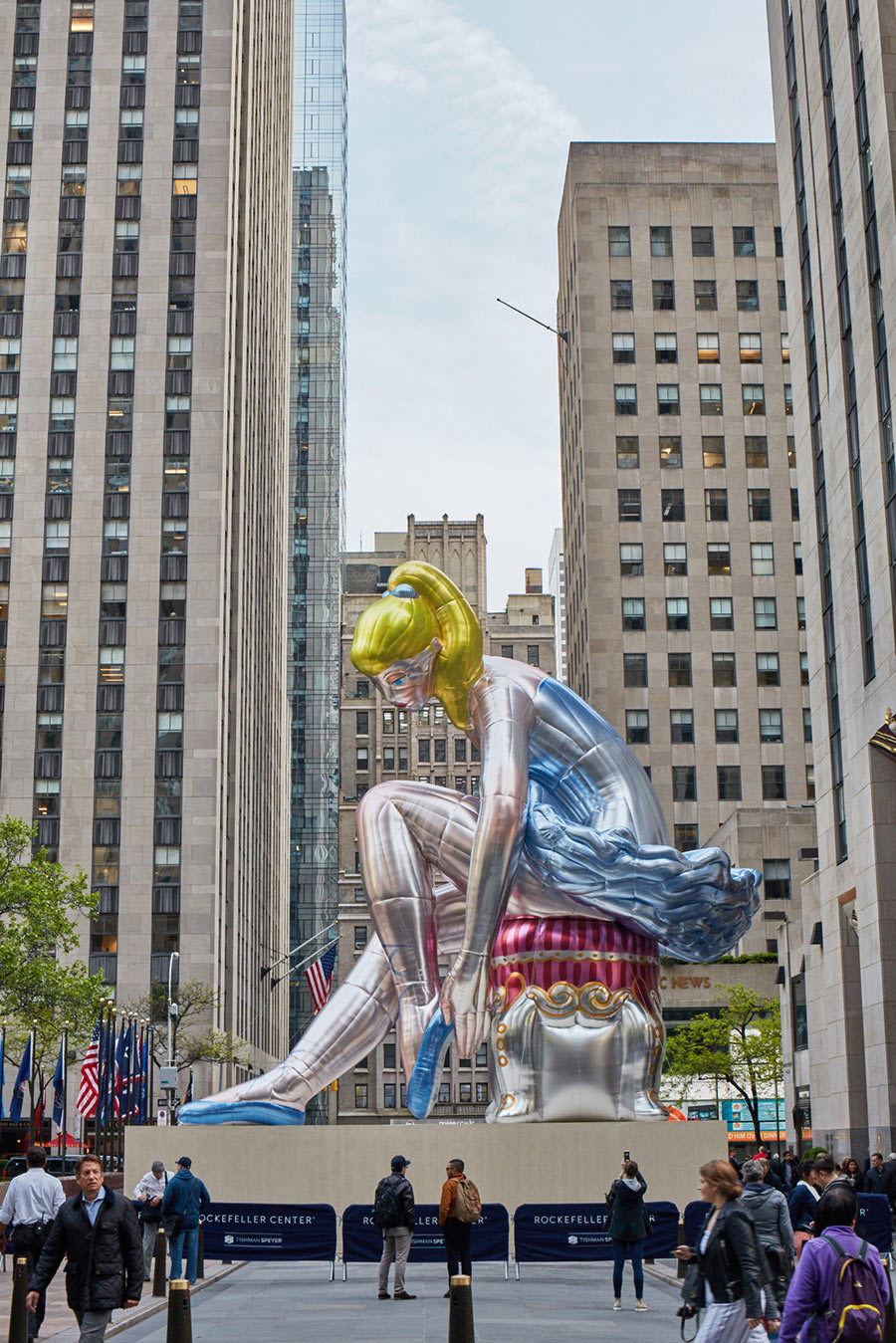
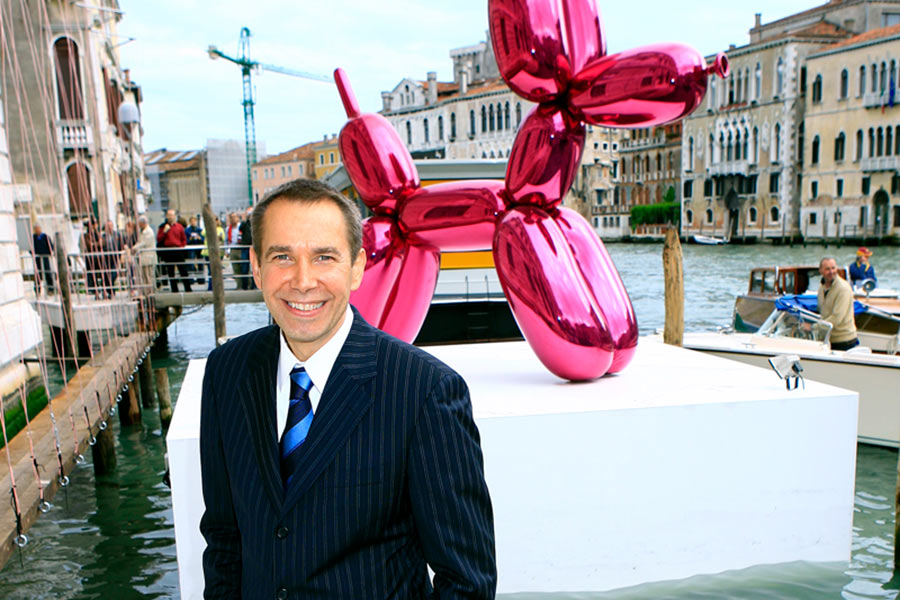
Earlier this year Jeff Koons’s Seated Ballerina, a large-scale public art installation, rose into the air outside the Rockefeller Center in New York. The inflatable nylon sculpture stood 45 feet high and aimed to raise funds and awareness around missing children.

Often referencing historical imagery and found objects, Koons based Seated Ballerina on a small porcelain figurine. The sculpture acts as a contemporary iteration of the goddess Venus, and symbolizes notions of beauty and connectivity. Its reflective surface mirrors its immediate environment and engages with each viewer. The work aims to bring awareness to National Missing Children’s Month in May, in an effort to support organizations like the International Centre for Missing & Exploited Children (ICMEC) that work tirelessly to create a safer world for children.

If you like this, subscribe here for more stories that Inspire The Future.

“We’re thrilled to continue what’s become a Kiehl’s tradition of partnering with Jeff Koons,” says Chris Salgardo, President, Kiehl’s USA.”With more than 465,000 reports of missing children last year in the United States alone, it’s gratifying to know that via this fourth partnership with Koons and the International Centre for Missing & Exploited Children, we are able to make a difference in the lives of our children.”

“We are honored to work with Jeff Koons, Kiehl’s and Tishman Speyer to present Seated Ballerina at Rockefeller Center,” said Casey Fremont, Executive Director of Art Production Fund. “We believe in the power of collaboration, and we are thrilled to present a public art project that raises awareness of the urgent need to protect children worldwide.”

Seated Ballerina, 2017 © Jeff Koons / Photo: Tom Powel Imaging


In honor of National Missing Children’s Month, Koons has also created a limited edition Seated Ballerina tin for the Midnight Recovery Collection. Kiehl’s will donate 100% of its net profits from the collection, up to $100,000, to directly benefit ICMEC. A fervent advocate for protecting children, Koons worked with ICMEC to co-found The Koons Family Institute on International Law & Policy in 2007 to combat child abduction and exploitation. He also serves on ICMEC’s Board of Directors. The installation highlights the longstanding relationship Kiehl’s has forged with Jeff Koons and ICMEC since 2011. Art Production Fund has also worked on a number of projects with Koons since 2009, donating a portion of sales from its Works on Whatever Collection to ICMEC.

If you like this, subscribe here for more stories that Inspire The Future.


Jeff Koons Partners With Kiehl’s For Missing & Exploited Children

Earlier this year Jeff Koons’s Seated Ballerina, a large-scale public art installation, rose into the air outside the Rockefeller Center in New York. The inflatable nylon sculpture stood 45 feet high and aimed to raise funds and awareness around missing children.

Often referencing historical imagery and found objects, Koons based Seated Ballerina on a small porcelain figurine. The sculpture acts as a contemporary iteration of the goddess Venus, and symbolizes notions of beauty and connectivity. Its reflective surface mirrors its immediate environment and engages with each viewer. The work aims to bring awareness to National Missing Children’s Month in May, in an effort to support organizations like the International Centre for Missing & Exploited Children (ICMEC) that work tirelessly to create a safer world for children.

If you like this, subscribe here for more stories that Inspire The Future.

“We’re thrilled to continue what’s become a Kiehl’s tradition of partnering with Jeff Koons,” says Chris Salgardo, President, Kiehl’s USA.”With more than 465,000 reports of missing children last year in the United States alone, it’s gratifying to know that via this fourth partnership with Koons and the International Centre for Missing & Exploited Children, we are able to make a difference in the lives of our children.”

“We are honored to work with Jeff Koons, Kiehl’s and Tishman Speyer to present Seated Ballerina at Rockefeller Center,” said Casey Fremont, Executive Director of Art Production Fund. “We believe in the power of collaboration, and we are thrilled to present a public art project that raises awareness of the urgent need to protect children worldwide.”

Seated Ballerina, 2017 © Jeff Koons / Photo: Tom Powel Imaging


In honor of National Missing Children’s Month, Koons has also created a limited edition Seated Ballerina tin for the Midnight Recovery Collection. Kiehl’s will donate 100% of its net profits from the collection, up to $100,000, to directly benefit ICMEC. A fervent advocate for protecting children, Koons worked with ICMEC to co-found The Koons Family Institute on International Law & Policy in 2007 to combat child abduction and exploitation. He also serves on ICMEC’s Board of Directors. The installation highlights the longstanding relationship Kiehl’s has forged with Jeff Koons and ICMEC since 2011. Art Production Fund has also worked on a number of projects with Koons since 2009, donating a portion of sales from its Works on Whatever Collection to ICMEC.

If you like this, subscribe here for more stories that Inspire The Future.


Girl Scouts To Bring 2.5 Million Girls Into STEM Pipeline By 2025

The organization is working to raise $70 million toward developing the next generation of female leaders in science, technology, engineering, and math (STEM) fields.

Girl Scouts of the USA (GSUSA) has announced a groundbreaking national initiative to reduce the gender gap in STEM fields by bringing millions of girls into the STEM pipeline over the next eight years. Building on GSUSA’s existing efforts, the Girl Scout STEM Pledge seeks to raise $70 million, impacting 2.5 million girls by 2025. GSUSA CEO Sylvia Acevedo broke the news in front of thousands of business leaders during her keynote interview with Salesforce CEO Marc Benioff at Dreamforce, Salesforce’s annual gathering and the largest software conference in the world.

If you like this, subscribe here for more stories that Inspire The Future.

Acevedo’s participation is part of Girl Scouts of the USA’s selection as a “Trailblazer” and nonprofit of choice at this year’s conference. By selecting the organization, Salesforce acknowledged Girl Scouts’ work in STEM and its ability to transform the lives of millions of girls across the country, in virtually every residential zip code, preparing the next generation of female leaders.

GSUSA is 2.6 million strong – 1.8 million girls and 800,000 adults – who believe in the power of every G.I.R.L. (Go-getter, Innovator, Risk-taker, Leader)™ to change the world. 

“Girl Scouts has the largest pipeline of future female leaders available, and no place is this more important than in STEM fields,” said Acevedo. “By working with individuals and companies that understand the importance of investing in all girls, we can fundamentally change the STEM pipeline and the future of its workforce. Girl Scouts is the only organization for girls with the expertise and reach to help pave the way for any young girl—no matter if she lives in Middle America or a major city—to break barriers and achieve any dream she may imagine. For millions of girls, this means excelling in STEM—and I’m incredibly proud that the Girl Scout STEM Pledge will make that dream a reality and change the dynamics of women in these exciting fields.”

The organization’s commitment to encouraging girls to discover and excel in STEM fields has yielded real results: Girl Scouts are almost twice as likely as non–Girl Scouts to participate in STEM activities (60 percent versus 35 percent), and 77 percent of girls say that because of Girl Scouts, they are considering a career in technology.

The announcement follows GSUSA’s extensive work to expand opportunities for girls in STEM. Earlier this year, the organization launched new programming that includes 23 new STEM and Outdoor badges. Over the next two years, GSUSA will launch 18 Cybersecurity badges and a series of Space Science badges. The new Girl Scout programming builds girls’ skills and encourages their interest in STEM and environmental conservation from an early age—areas girls are not typically encouraged to explore outside Girl Scouting.

If you like this, subscribe here for more stories that Inspire The Future.


10 Reasons Why Nobody Stopped Harvey Weinstein

Bias is a talent killer. It makes people small. It also emboldens powerful people to exploit anyone who is not in their favored group. After doing some deeper research, bias also seemed to answer the question, how might Harvey Weinstein have gotten away with being a sexual predator for decades? It’s all about bias and its evil twin, favoritism.

Here are 10 things we all need to know about our bias.

1. All of us are biased and prejudiced in favor of people whom we judge to be in ‘our group’ and against people we exclude from our group. This is human. Our brains are constantly sorting other people into potential enemies and friends who psychologically represent either threats or opportunities. The question is not whether we are biased. Rather it is whether we are self-aware enough to transcend our bias and see people as individuals rather than members of groups.

2. Virtually all humans seek belonging, acceptance and community. We mentally segregate groups by both exaggerating the positive, common characteristics of ‘our’ group and assign exaggerated negativity to the characteristics of people we lump into other groups. For instance, uneducated people become “stupid and lazy.” We also minimize differences within our group and emphasize how are ‘outsiders’ are different in ways that threaten our status or safety.

If you like this, subscribe here for more stories that Inspire The Future.

3. High status people tend to believe in the Just World Theory. This is a theory of life reflected in what was called the divine right of kings in the Middle Ages. This theory advocates the belief that people who are born to powerful and wealthy families have advantages and are chosen by God to rule over common people who are not favored by God. People who are poor or sick, or a member of an ethnic minority, are simply living out their destiny. (India’s caste system was/is an insidious concept woven into the culture by wealthy people who wanted a permanent servant class.)

Although democracy overthrew the justification of bias and class distinction by the divine right of kings, Americans reinvented is the Just World Theory to view white British and Northern European males as God’s favorite people and Africans as divinely created to be slaves to the “chosen” white males. Today the Just World Theory lives on through the myth that success and wealth is the result of good character and that poverty and misfortune comes only to those who are lazy and undeserving of better things. Under the Just World Theory people simply get what they deserve.

So, if you’re rich, healthy, and happy you deserve it and if you’re poor, abused, sick, black, or a single mother, somehow you deserve it. The Just World Theory absolves people with advantages of any moral responsibility to help those less fortunate. (This is the argument that Congressman and Jason Chaffetz made regarding the reason poor people can’t afford health insurance is because they spend their money on iPhones. 

4. High status people tend be both authoritarian, socially dominant and categorical (either – or) thinkers. Research shows that they are more likely to hold low opinions of low status people, and blame them for their low status.

5. Members of favored groups are more tolerant of the failures, mistakes and flaws of their group members than outsiders. (Thus, high status white males are less likely to be critical of Harvey Weinstein’s or Bill O’Reilly’s alleged sexual assaults and harassments because Harvey and Bill are also high status white males. It seems natural the good old boys protect good old boys…it’s the code. It also explains why members of a political party will be supportive and tolerant of the mistakes and flaws of their leader while being viciously critical of much smaller flaws and errors by members of the other party.)

High bias people also tend to overestimate the flaws, number, and severity of failures of the out-group. For example, researchers who do content analysis of news stories report that when male-led companies fail to perform, situational factors are cited as the primary cause. When female-led company’s struggle, the female CEO’s competence is questioned on average three times more than male CEO’s in similar stories.)

6. Individuals with high ego drive generally have psychological needs for admiration and power. Yet, research indicates that high ego drive results in personalities that tend to be both confident and insecure. When I first started coaching powerful executives I was amazed to find this combination of confidence and insecurity to be so common. I found that insecurity often comes from inner doubts about intrinsic self-worth. This seems to inflame a need to bolster one’s self-esteem by over-identifying with group status. Put simply, the inner logic of a powerful but insecure person is that “I must be superior because I am a member of a superior group.” This is why many members of an executive “club” such as a senior leadership team or Board of Directors are so reluctant to criticize incompetence or bad behavior of people like them. This represents a strong business case for leadership diversity.

7. Bias creates the most unjust effects when differences between a favored group and un- favored group are minimal. For instance, when qualifications for advancement are not clear or competing candidates’ performance have similar qualifications, the benefit of the doubt goes to members of the favored group. This “favoring the favorites” may explain why in technology companies, when one women is competing for advancement against three or more men, the chances of a woman winning the promotion is less than 10%. It just seems natural for members of the favored group to self-justify why they prefer people who are like themselves. (Self-justification is making up reasons to justify our biases.)

8. The ‘Bias Effect’ has been confirmed by social research experiments that people who feel their performance is being judged by biased people experience performance pressure which creates anxiety and hampers their performance. Over 200 studies have shown that people tend to behave according to the expectations of those in authority. When female students are told they must try harder on their math tests because women aren’t good at math, they make more mistakes than female students who are told nothing.

When random students are told they were selected to take a math test because they are part of a group that has been pre-selected because of innate mathematical ability, they outperform randomized students and control groups. Thus, working cultures that overtly or subtly communicate to women or minorities that they aren’t smart enough for science and technology jobs disempower the performance of un-favored employees.

9. Objectifying women hurts their performance. It’s true, sexual harassment is not just a legal or social problem, it also inhibits talent. In one of the weirdest experiments I’ve read about, female students were asked to wear their swim-suits to take a math test. These students performed measurably less than control groups of female students dressed normally. Interestingly males performed equally well in bathing suits or blue jeans. Although this experiment seems a bit extreme, it is true that when women are objectified or feel that sexual harassment is tolerated in the workplace, this added stress inhibits their engagement, contribution and self-determination.

10. Dismissive sexism occurs when men claim bias against women no longer exists. Dismissive sexists often become antagonist towards women’s leadership groups and women who challenge the status quo. (Dismissive racism follows the same pattern.) Patronizing sexism occurs when males approve of and support women who accept traditional roles and submissive styles. (Many women become co-dependent with patronizing men because it creates the illusion of enhanced status and security. This is the ‘Mad-Men’ effect)

What are your thoughts on the 10 points above? Do you have a #MeToo story? Share in the comments below.

If you like this, subscribe here for more stories that Inspire The Future.

 

What Does Entrepreneurship Mean in Other Cultures? I Found Out

As a millennial, I’m of the mindset that businesses should use their operations to make a profit and also impact their stakeholders. Whether that be through ethical supply chains, education, BOGO programs or the myriad social models that have sprung up in the past decade to make a difference in the world, triple bottom lines aren’t optional anymore – they’re a must.

With larger companies like Ben and Jerry’s, Patagonia and Tom’s all committing to social and environmental stewardship, it’s the perfect time for new waves of social enterprises to follow suit and create impact in areas they care about.

If you like this, subscribe here for more stories that Inspire The Future.

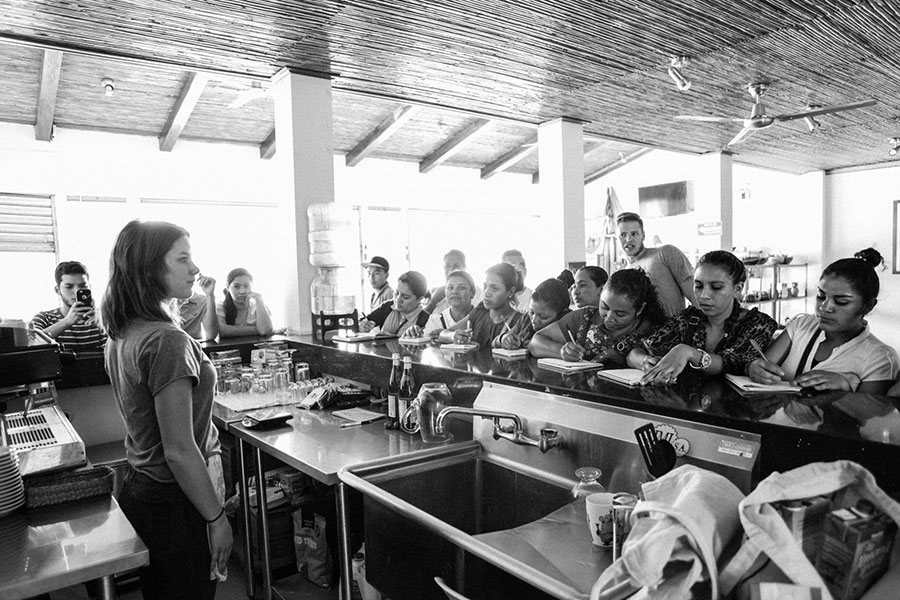
Living in the information age where data is instantaneously accessible, sites like Facebook, Whatsapp and Youtube, make me feel like nothing is private anymore and global communication isn’t a hindrance but the norm. Because my generation is privileged to have access to an international community, I decided to travel to Central America in search of local entrepreneurs and see how they approach social change. I wanted to step out of my American perspective and understand the mindset of citizens in countries that have gone through dictatorships, civil wars and economic struggles to see what people my age are doing to disrupt the system. What I found was remarkable.


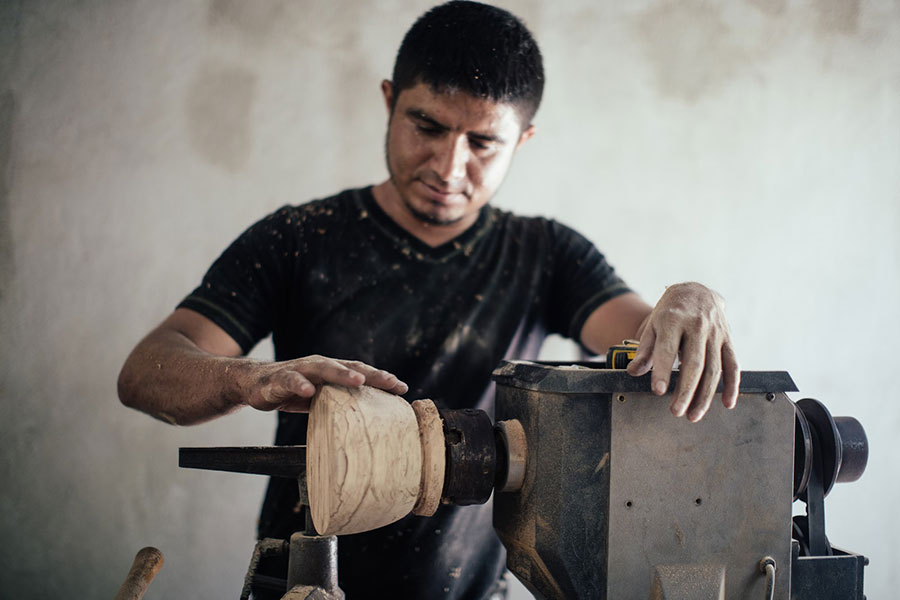
Itzawood: Ethically Sourced Woodwares.

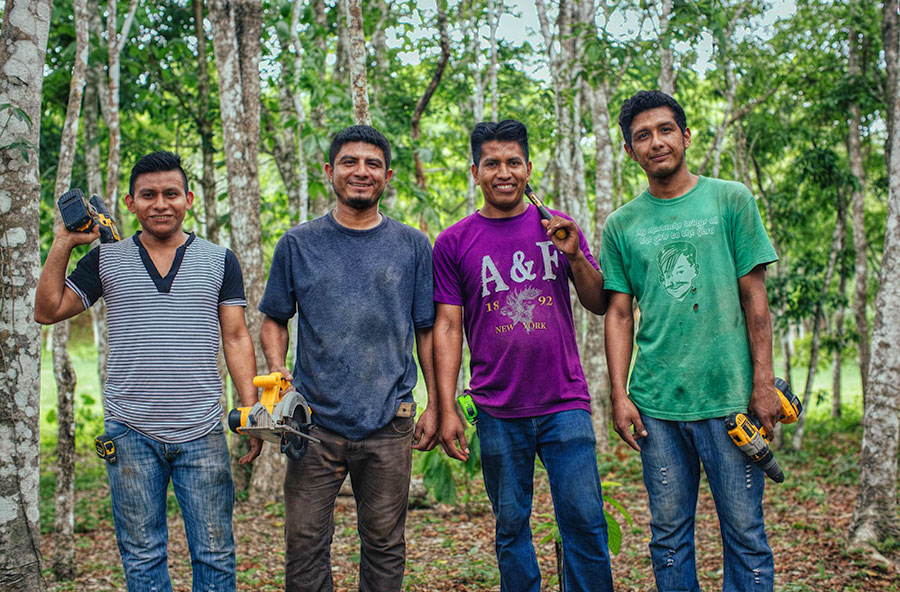
I began my travels in the Peten jungle in northern Guatemala and visited an entrepreneur using a carpentry school to create jobs, support schools and plant trees.

“I saw the effects of poverty first hand through my family’s non-profit, and we wanted to make a difference,” says Eliza Babarczy about Hearts in Action, a school they started with a focus on ecological education and job skills. Along with her sister Suzanne, they founded a social enterprise, Itza Wood, as a sustainable employment solution for the local community.

Through sales of their beautiful handmade wooden items for the kitchen, bathroom
and office, they have planted 50,000 trees, hired eight employees and helped educate 400 children. The company is now looking to expand to the United States. I want to stay in touch because their story is beautiful and their products are unique. Eliza, in particular, impressed me because she makes a 12-hour commute from Guatemala City, where she does sales and marketing, to the area every week to oversee the supply chain. Her tenacity and commitment to the cause are incredible and very different from my experience with businesses in America. To me, she is the epitome of an entrepreneur.


Kuli Kuli Inc: The Superfood Bar That is Changing Livelihoods.

In the hot plains of Chinandega, Nicaragua, Julio MonteAlegre and his workers are planting moringa. A superfood that is well known in Nicaragua but still growing in popularity in the United States. The crop is driving Julio’s company, Esentium, to create more impact for his local community of El Viejo.

I met Julio through Kuli Kuli foods, a social enterprise based in Oakland, California, that sells delicious bars and powders for smoothies. In just three years they have become the most significant moringa buyers in the world. After a Kickstarter campaign in 2013 that saw them become the biggest fundraiser for a food company, they began selling their bars in the Bay Area. They were approached by Wholefoods for national distribution and now source moringa from Ghana, Haiti and Nicaragua.

“It’s common knowledge that when you invest in a woman, you invest in a community,” explains Valerie Popelka, COO. “As a social enterprise, we need to be successful because we’ve seen so many failed aid and government projects, so we keep that in mind when working with our producers. We don’t want to overpromise and underdeliver.”

This is a company that is doing great things and scaling so quickly in so little time.
They impressed me because they have a great product and are committed to working with producers to ensure their supply chain is ethical. They even helped their suppliers become Fair Trade certified so that they could pay them better!


Vega Coffee: Roasted by Farmers in Nicaragua And Sent to Your Door.

My journey ended in Esteli, Nicaragua, where I was able to spend a week with a revolutionary coffee company. Vega was created in response to advantageous coffee supply chains with multiple intermediaries that siphon 90% of the profits from a bag of coffee while the producers who grew the beans received pennies on the dollar. Their solution? Train the farmers in coffee roasting and packaging and keep production 90% in the country.

“We kept thinking about this idea — farmer-roasted coffee — because it was such an obvious problem to us,” says CEO, Rob Terenzi. “If you look at a chart that compares the price consumers pay for a cup of coffee over the last five to seven years, to how much farmers are earning, the numbers are exactly inverse. Prices are going up, while farmers are earning less.”

Beyond the farmer training, Vega flies in coffee industry experts from around the world to teach different aspects of coffee making, many of who have never seen a coffee plant, and who tour coffee plantations to better understand the growing process.

By acknowledging the problems in the coffee trade and working with local stakeholders to change them, Vega is integrating the supply chain and disrupting a system that is centuries old. The result brings higher wages and financial security to local producers and supplies Western customers with fabulous coffee. If that isn’t a fresh approach to social impact in the global marketplace, then I don’t know what is.

If you like this, subscribe here for more stories that Inspire The Future.


Be Strong Documentary Tackles Bullying

Be Strong, a national, student-led youth empowerment organization dedicated to ending bullying in schools, is leading the charge to assure that no child lives with the isolation and fear of being bullied.

In an effort to spread awareness in schools and the community, the organization will begin broadcasting its bullying prevention documentary online, reaching millions of school officials, as well as students and their parents or guardians throughout the United States.

If you like this, subscribe here for more stories that Inspire The Future.

“Be Strong strives to inspire kids to act empowered and encourage change in their peers,” said Ashleigh Cromer, executive director of Be Strong. “This documentary is our attempt to meet students where they are and provide sustainable education and resources for change, in a digestible, actionable and entertaining way. Our youth are smart, open, inspiring and our most precious resource – I’m motivated by their resiliency and ability to connect in a way that’s comfortable for them.”

The 45-minute documentary will feature remarks and best practices for preventing and recovering from bullying by best-selling author, Broadway performer and motivational speaker Jessie Funk, and recording artists Linkin’ Bridge and Breaking Heights, along with Be Strong student leaders and several bullying victims whose inspirational stories of strength and perseverance have made national headlines.

“Every child should be able to attend school in a safe environment and feel comfortable and appreciated for who they are,” said Colin Brown, chairman and CEO of JM Family. “Empowering families and nurturing children are at the core of our philanthropy, which is why we are proud to partner with and support Be Strong.”

The Be Strong Documentary will generate much-needed awareness of the issue, including how to identify, prevent and end bullying, and identify support options available to help from a position of victory not victimization. Viewers will be encouraged to change the way bullying prevention is perceived, initiating hope and resilience to create long-term change.

“When schools take the time to implement research-based programming in this area, not only does it decrease bullying and cyberbullying – it also accomplishes the goals that educators care most about,” says Dr. Sameer Hinduja, co-director of the Cyberbullying Research Center and Be Strong board member. “Specifically, these efforts lead to a positive school climate, which then increases academic achievement, lowers absenteeism and truancy, reduces other problem behaviors on campus, and raises morale among both students and staff. I fully support the mission and impact of the Be Strong movement.”

If you like this, subscribe here for more stories that Inspire The Future.


0