Tony Robbins: Time to Rise

Here’s how to take back control of your life in 2024. 

By Tony Robbins

As we look ahead for 2024, one thing is clear: We are living in uncharted territory — a time when the economic, political, and social landscapes are changing at a record pace. We are all being touched by the events happening around the globe. No matter where you live or what you do for a living, what is happening is unlike anything we have ever experienced. 

While this is a time of massive uncertainty and endless complexity — if you’re prepared — it’s also a time of exponential opportunity. The winter season offers us the unique opportunity to grow, become more, give more, and share more. It can be the greatest season for any leader if you can develop an unwavering confidence amidst the storm. 

What Will Hold You Back

What will hold you back is only one thing: fear. Fear that you’re not enough or don’t know enough. Fear of failure, fear of rejection. Fear can hold you back in subtle and insidious ways. Fear can also outright paralyze you from taking action. 

The truth is, there is a part of you that will always be fearful — but you can’t let it be in charge because it will rob you of the life you deserve. It will cause you to miss the call — the call to become more, to experience that incredible nectar of growth, expansion, and contribution, meaning, impact, and achievement. The call to rise up and feel fully alive. 

As we move forward in 2024, to have the life you desire, you must feed the best part of yourself every single day, demand the best part of you, and not settle for less than you can be, do, share, create, or give. 

Here are five keys to help you to rise and make 2024 the best year yet. 


Feed your mind.

You need to feed your mind daily with substance — not social media or news. My original mentor, Jim Rohn, taught me that you must stand guard to the door of your mind. Bring something new to it; otherwise, you will keep operating off the same old beliefs, the same old thoughts, and the same old emotions that will not get you to the level you want. 

Growing up as a kid, I didn’t have any role models, so I found them in books. I read history, biographies of great leaders, businesspeople, philanthropists. I learned what made them successful and extracted the principles and applied them to my own life. 


Strengthen your body.

Strengthening your mind is crucial, but equally important is strengthening your body. The mind and body feed each other. Go on a sprint, lift some really heavy weights, go on a really long walk. The key is to push yourself. 

Every single day, I begin my morning by plunging into a pool of 56-degree water. And if I’m not home, I’ll jump into a nearby river. I don’t do that because it’s fun; I don’t do that because I want to do it. I do it because I’m training my body so that when I say go, we go. I don’t negotiate with my mind. 

Priming your physical body can set the stage for the change you want to drive in yourself mentally and emotionally.


Find a great role model.

If you want the best year of your life, you need to decide to find a great role model, someone who is already getting the results you want. 

Why? Because success leaves clues. 

One person that I identified in my own journey was Sir John Templeton, once called arguably one of the greatest investors of the 20th century by Money magazine. He started out with nothing, just like me, and became the first billionaire investor. 

Whom can you model? 


Surround yourself with high-level people.

Think about whom you spend time with. If you want to raise your game this year, you must get in proximity to someone who is playing the game at a higher level than you are. Proximity is power.

Say you’re playing a sport like tennis. If you’re always playing against someone worse than you, you’re never going to get better. Always surround yourself with people playing at a higher level. 


Pay it forward by giving more than you expect to receive.

In 2024, you must also find a way to add value to others. I truly believe that the secret to living is giving, and it’s what truly makes us alive and live not just a successful life, but a fulfilled one.

For me, feeding people and making sure families are nourished has been my passion for nearly five decades. I was fed by a stranger on Thanksgiving when I was just 11 years old. As a result, I started to feed others. Even when I did not have a dime to spare in my younger years, I managed to find a way to provide a meal or two for struggling families.  

You can find a way to give back too, no matter what your current situation is.

As we all look to rise out of fear in 2024, one gift I would like to give you is an opportunity to join me for my Time to Rise Summit. This is a completely free virtual event that I do every January as a way to give back. The goal is to help you create momentum in your life by arming you with the psychology, tools, and strategies to make 2024 the best year yet. Find details at https://timetorisesummit.com/join-now.

Looking forward to seeing you there!  

Tony Robbins is one of the world’s leading life and business strategists and ranked No. 1 on the 2023 Real Leaders Top 50 Keynote Speakers list.

7 Leadership Tips from Top Female Founders and CEOs

In the wake of research from Harvard Business Review, which discovered that women make better leaders in times of crisis, Real Leaders has highlighted some leadership lessons from female founders and CEOs who are at the top of their game.

1. Mary Barra / CEO, General Motors

Quote: “It’s okay to admit what you don’t know. It’s okay to ask for help. And it’s more than okay to listen to the people you lead — in fact, it’s essential.”

Why it works: Research by leadership development experts, Zenger Folkman, suggests that leaders who exhibit a preference for listening are rated as significantly more effective than those who spend most of their time talking.

Pro tip: According to “The 11 Laws of Likability” by Michelle Tillis Lederman, effective listening is the single most powerful tool for building and maintaining a climate of trust and collaboration.

DO

  • Maintain eye contact and focus on the speaker
  • Limit your talking
  • Confirm understanding, paraphrase, ask questions
  • Give non-verbal messages that you are listening (nod, smile)
  • Manage your emotions

DON’T

  • Interrupt or finish someone’s sentences
  • Assume you’re being attacked
  • Use condescending or aggressive language
  • Listen with biases or appear closed to new ideas
  • Jump to conclusions

2. Susan Wojcicki / CEO, YouTube

Quote: “Rarely are opportunities presented to you in a perfect way, in a nice little box with a yellow bow on top. ‘Here, open it; it’s perfect. You’ll love it.’ Opportunities — the good ones — are messy, confusing, and hard to recognize. They’re risky. They challenge you.”

Why it works: A successful leader should distinguish the difference between an opportunity that is worth seizing and could yield results, from an opportunity that isn’t aligned with the organization’s beliefs or will not benefit the business.

Pro tip: Smart Company recommends keeping up to date with industry trends and insights to stay ahead of the game by:

  • Subscribing to relevant publications
  • Setting Google Alerts for key industry terms
  • Joining groups and associations within your niche
  • Following other industry experts on social media

3. Ambika Singh / Founder & CEO, Armoire

Quote: “Recognizing how your employees work — and knowing that this takes individual attention — is important to being a successful leader.”

Why it works: Motivated employees are more likely to think creatively, go above and beyond, want to learn and grow, feel personally connected to the company, and ultimately drive the business forward.

Pro tip: Find out what kind of environment your employees thrive in by asking your

employees these three questions:

  • What is your favorite project you’ve ever worked on, and what made it your favorite?
  • What was the best team you were ever a part of and what made it the best?
  • Which of your former bosses brought out the best in you? What did

they do, or not do, that you appreciated?

4. Karen Young / Founder, Oui the People

Quote: “The simplest time management skill as an entrepreneur comes down to understanding what’s most important and knowing that it can change by the day or by the hour.”

Why it works: Learning how to manage your time effectively can help you feel more relaxed,

focused, and in control.

Pro tip: Too many emails? A study found that one in three office workers suffers from

email-related stress. Practice the “4 Ds” to avoid an anxiety-inducing email inbox:

  • Delete — old emails, emails with no value, spam, etc. can all be deleted.
  • Do — complete any action from an email that is urgent or where the task can be completed quickly.
  • Delegate — if the email can be better dealt with by someone else, delegate it.
  • Defer — set aside time later to respond to emails that may take longer to deal with.

5. Rowena Everson / Former CEO, Standard Chartered

Quote: “I like to find smart, capable people and set them up for success by giving them the information, tools, and connections they need. I’m clear in my expectations and value regular feedback. If I’m micromanaging, that’s usually a bad sign.”

Why it works: Micromanagement kills creativity, breeds mistrust, causes undue stress, and can demoralize your team. Setting clear expectations and offering timely feedback can make the world of a difference.

Pro tip: Tell your team what you want them to strive for — not how you expect them to do

it — by clarifying the following:

  • What you’re hoping to achieve
  • A time frame for the task to be completed
  • How success will be measured
  • How often you will be checking in with them

6. Tyler Haney / Founder, Outdoor Voices

Quote: “You need to have unbound enthusiasm for what you’re building. Energy is contagious, so your team and everyone you interact with feels it.”

Why it works: Leading by example doesn’t start and end with work performance; it comes down to the way you talk about your work and the emotions you express too. If negativity breeds negativity, the opposite is also true.

Pro tip: Founder of Small Business Trends, Anita Campbell, shares three quick ways to spread enthusiasm and inject positive energy into your day-to-day leadership:

  • Appeal to passions. Try to find out what each person on your team is passionate about and what motivates them.
  • Celebrate accomplishments. Nothing breeds success like an environment of success, so celebrate team and individual successes no matter how small.
  • Do something unexpected. Surprise your team with something nice, from bonuses to an afternoon off or an early finish.

7. Whitney Wolfe Herd / Founder & CEO, Bumble

Quote: “When you accept that failure is a good thing, it can actually be a huge propeller toward success.”

Why it works: Failing once, twice, or even hundreds of times doesn’t mean you’ve hit the end of the road — it means you’re one step closer to success. These experiences give us an opportunity to learn, find new solutions, and grow as individuals.

Pro tip: The author of Enlightened Entrepreneurship, Chris Myers, recommends these

three tips for accepting, processing, and learning from failure:

  • Don’t worry about what people may think; everyone is too preoccupied with their own lives to notice.
  • Instead of dwelling on the negatives, learn from the experience and use it as an opportunity to grow.
  • Accept that failure is part of the journey and keep moving forward; it is impossible for you to really fail.

3 Impactful Practices for Navigating Leadership

Women who arrive at the top should be able to thrive at the top. But instead, they’re judged to be lucky to survive — even more so with pandemic pressures overwhelming their already busy family and professional lives. So what does it take for women to flourish in leadership roles today? These two female CEOs, and one male, demonstrate what impactful leadership looks like today.

1. Leading with Head and Heart

Sandra Fenwick / Former CEO of Boston Children’s Hospital

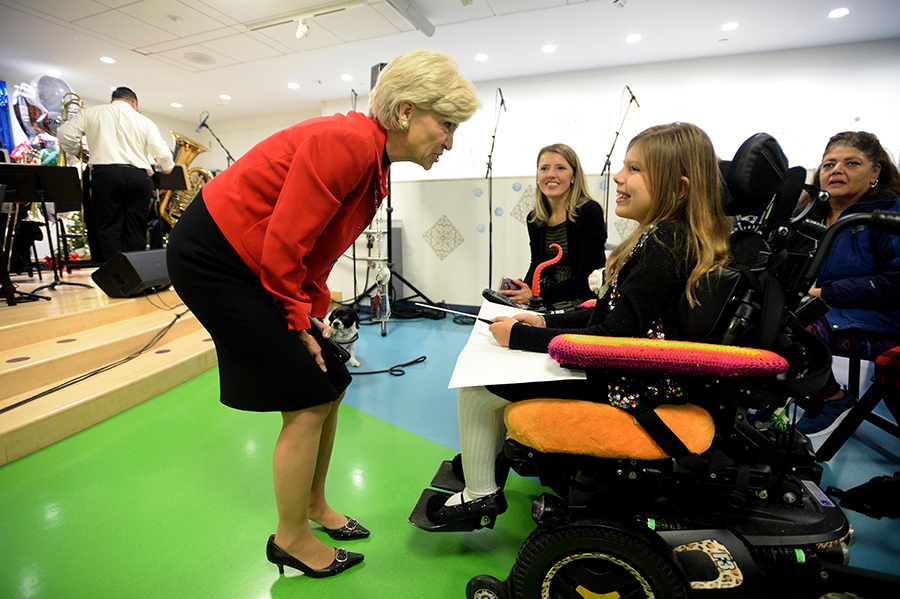
Fenwick led a team of 20,000 people dedicated to improving and advancing child health through their life-changing work in clinical care, biomedical research, medical education, and community engagement. She retired in March of 2021. Here is her advice for navigating leadership as your best self on what she calls your “journey of significance.” 

Learn to Be a Learner 

Leading from your best self is about what you do and how you do it. The three Cs are a great inner compass: curiosity, courage, and compassion. In my case, curiosity and courage make things better for people and patients. Doing it with caring and kindness and thinking about people is where compassion is essential. Either working with people or on behalf of people, it returns to using your head and heart. What you do and how you do it. 

Leading with compassion means caring about people, knowing them, their cares, awareness of human spirit, struggles, desires, their own goals. Then balancing the logic with the emotion. Thinking about how you can be a tough, hard businessperson but never forgetting the importance of the people you work with and the values that are part of those relationships. 

Doing things that improve the lives of people is what I love. I’m not a doctor. I decided not to go to medical school. I’m not a scientist, a researcher, so I’m not discovering things.

But I’ve always wanted to be in health care and help others. So it’s about doing it through others, enabling them to do their work, providing them with opportunities, supporting their work, supporting their development, providing them with the environment, the resources they need. So that has been my reward and my personal return: watching and seeing what can be done through other people. That is why people are such a part of my journey of significance. 

Align Best Self with Strategic Priorities 

I led a multidimensional turnaround at Boston Children’s, and one of my jobs was to set a strategy for a broken organization. We had to determine how to survive and thrive as an independent children’s hospital and one of the strong Harvard Medical School institutions. What needed to be done and in what order? 

The first thing I did was ask, “What do we have to do immediately?” I wrote this down on a piece of paper that I still keep under my phone: fix the finances; build a culture of trust, respect, and transparency; align the physicians and get them on board with our vision; create a strategy; fix the broken infrastructure; and communicate, communicate, communicate. I then walked down this list which included creating a culture of being the best place to work. I picked six things I needed to do immediately and got started. They’ve always been there for me. 

Don’t Go It Alone — Listen to Trusted Truth-Tellers 

Surround yourself with one or a couple of very trusted people who have your back, care about you, are loyal and dedicated to you as a person, but also are dedicated to the institution; they will tell you honestly how you are doing. Have somebody you trust explicitly; it could be a communications expert, general counsel, physician, or board member. When I’ve gotten into tough situations, I’ve leaned on all of them for different advice and perspective. It could be a piece of data, testing a different audience, gaining an unbiased opinion, and many other invaluable inputs. 

Remember Your Accolades 

Women like to ignore positive feedback, but when you learn you’ve done a good job, you need to hear it to know how others perceive your best self. So make that one of the practices and keep on doing it better. Ask for feedback, hear it holistically, and ask how to tweak it. Most of all: When you hear you did a good job, remember that you did! These are the best clues about you at your best.

2. No Time for Fear

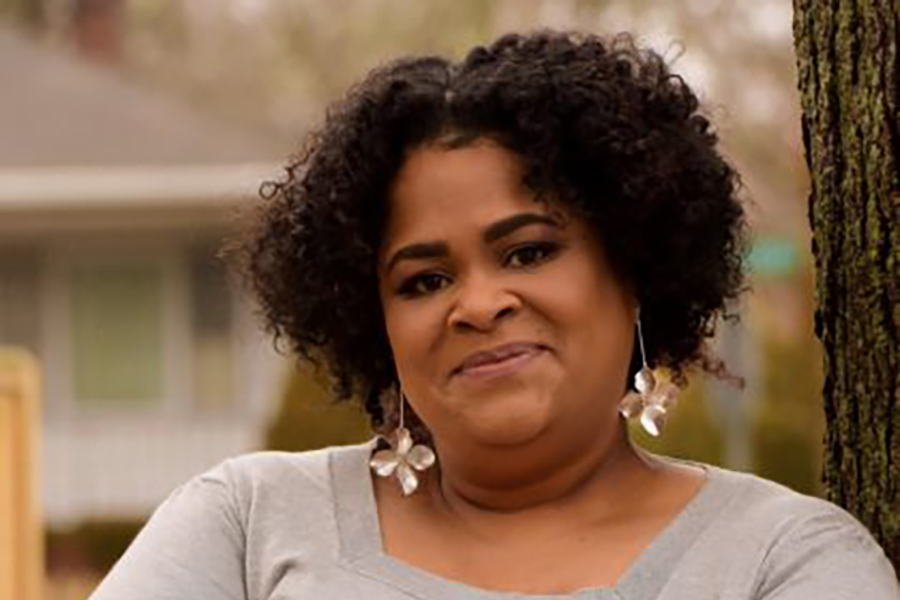
Natalie Martinez / CEO, Strong Women Strong Girls (SWSG)

As with any exemplary organization, it starts with an exemplary leader. CEO Natalie Martinez directly ties her courageous actions to the young women who will ultimately benefit from the results. In fact, she doesn’t allow herself to miss an opportunity to exhibit the fortitude she has spent a lifetime molding. Here, she shares tips on how to take courageous actions. 

The Courage to Do Things Differently 

In any position I’ve ever been in, my approach is never to do things just because that’s how it’s been done in the past. We should always bring a fresh approach and question everything. No matter the job or who the people are above me, no matter if I’m the only Black person in the room, I’ve had to say to myself, “This is the right thing to do.” I’ve had to dig deep within my gut, stand on what I believe in, and move forward in that way. I’ve also had the courage to sit in rooms with people I find intimidating to me and who are not like me and advocate for the right thing to do. It’s not always something provocative like improving diversity in an organization. It can be as simple as saying no to spending budget on something that will not benefit our program marketing. To challenge the status quo, I’ve had to lean into my skills and abilities that are not stamped by education or approved by a certain title or role but rather that come naturally to who I am. 

Devise and Protect a Strategic Plan 

Throughout my career, I’ve learned I have the ability to see organizational structure and know what is needed to make things come together to be successful. For example, at the start of the COVIDd-19 pandemic, I knew that we needed to do a strategic plan instead of  waiting for the pandemic to be over and not surviving. Because we had a strategic plan, we could message our funders and community partners what we were doing, so it protected us during a tumultuous time.

Allow Your Personal Experiences to Guide You to a Greater Mission 

I represent African Americans. That’s the perspective I come from and the knowledge and culture I draw from — but it hasn’t always been easy to be a woman of color in any room. Whether in a boardroom, at a roundtable discussion with other professionals, or leading a team with diverse backgrounds, I’ve often found myself in the minority. I’ve had to find the courage to be my authentic self and stand up for what I believe in. I must push program managers when they want to do curriculum a certain kind of way, push college mentors to bring everything they are doing back to the girls even though there is a social justice element to our work. I’ve gone through what these girls are going through, and I have that perspective. You don’t have to be from the background I came from to possess this ability. Recognizing your circumstances is key to it all. How do you use that thing in your toolbox? I look at the things in my toolbox, the grit that comes from being Natalie, and its pieces in my toolbox. At the end of the day, you must have a winning attitude. 

Keep Fighting Obstacles 

Less than 10% of fundraised dollars go to nonprofits created for people of color, and less than 1%  goes to nonprofits run by women of color. Black-led organizations have unrestricted net assets that are 76% smaller than their White-led counterparts. This gap in support for Black-led led organizations is the adversity that matters the most to the success of my organization. Being a woman of color and having to fundraise in Boston, where there is a ton of old money and old boys’ networks, has been excruciating. I came to my position with fundraising experience, but I didn’t have access to the philanthropic network that has been in place in the city for decades. I am a leader of a nonprofit that desperately needs operating dollars. The truth is, securing general operating support is all about establishing a trust relationship with the company or foundation, and this requires faith in leadership. This, for me, is funders saying, “I trust you as the leader to do whatever you need with these dollars.” To break through the bias about my identity and earn the faith of donors is a challenge I regularly face as I lead SWSG. I must keep fighting against these barriers to demonstrate that our organization is trustworthy and viable, and able to make an impact for the girls and women we serve. We do make an impact, and we will continue to!

3. Living and Leading Diversity

Dan Helfrich / chairman and CEO of Deloitte Consulting, US

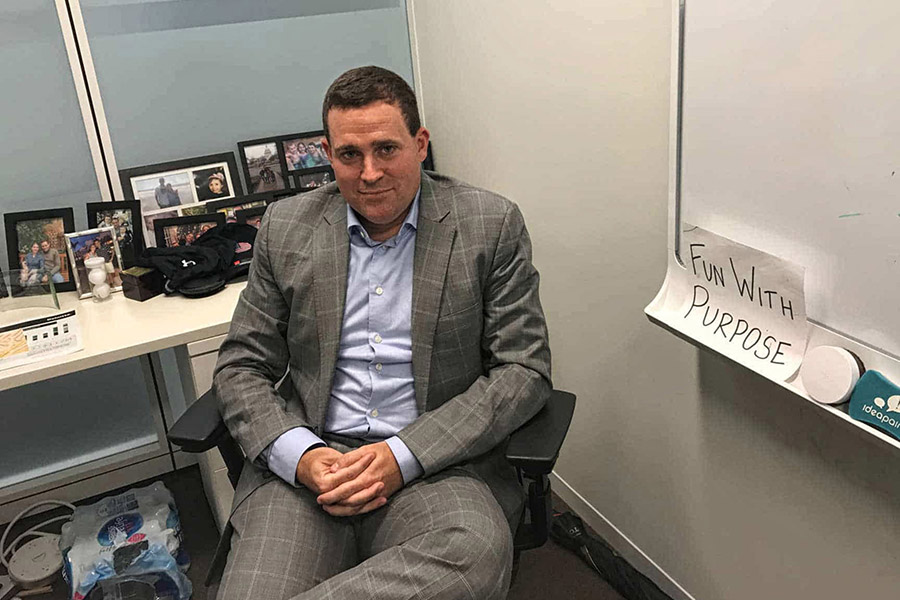
Helfrich leads a team of more than 70,000 professionals who help clients solve their most complex problems. He is also a proponent of creativity, uniqueness, and independent thinking. His values and behaviors started young, which he can clearly trace, as he states in this advisory to you. 

Leverage Your Personal Story to Embrace Diversity 

It comes from early in life. I came from a diverse family, including three adopted siblings, one of whom is Black. It comes from a life of being on team sports, a total melting pot of socioeconomics, class, personality, characteristics. I’ve been around a diverse range of people my whole life and have always seen teams that perform best when the unique aspects of all people are harnessed. As I began my professional life, I noticed professionally there were so many people mentoring and spending time with miniature versions of themselves. I found myself seeking completely different types of people and really benefiting as mentor and mentee in those two-way relationships. 

Recognize Where Others Are and Learn Their Stories 

Embrace your authentic self. Consider intention and ease. I have found in my own journey and in seeing others and helping others, particularly women, that the “ease” part is not easy. For many people, that is a practiced learned behavior versus something natural in many ways. It is revealed in the uniqueness of each individual’s — each woman’s — lived experience. Does it manifest itself in people, women, carrying challenges they have from a parenting standpoint? Sure. That is a common moment when women leaders are vulnerable about the pressures they feel to “do it all.” At times, the weight of that is impossible. But sometimes, we equate vulnerability and authenticity with motherhood at the expense of many other interesting things. In fact, I’ve had a couple of moments stick out to me where a woman has spoken out about the decision not to have children or not to be married and articulate the pressures that creates for them. I’ve heard people talk about the cultural nuances, from people of Asian heritage where cultural nuances around gender and the struggles they have had to be authentic to their cultural heritage while being role models for the type of leader they want to be with our culture at Deloitte and societal culture in the United States. 

Teach Allyship 

I do consider myself an ally. I don’t use the word often to describe myself. I deeply believe in the concept of allyship. I don’t use the word a lot myself because I believe it’s my job to be an ally for all. Am I an ally for women? Absolutely. Black people? Absolutely. LGBTQ members of my team? Absolutely. Particularly as a White male, particularly a White male in power, you are both setting a model and an expectation for the intentionality of supporting those different from you. If that intentionality is associated with allyship, that resonates with me. I tell our people all the time that it is not just OK to be a good person as it relates to diversity and inclusion. Sometimes I talk to people. What are you doing to move the needle? I hear: “I have great values.” “I have lots of friends who are women … gay…” “I make all my decisions in an inclusive way.” My powerful statement is that it is insufficient. There must be everyday intentionality to choices that drive equity, given that many people start from positions of nonequity. It is our role to lift them. 

Consciously Develop Your Skills as an Inclusive Leader 

Without question, read, listen, and follow the most diverse set of perspectives as possible and spend time with individuals inside and outside of work that are as diverse as possible. To me, it’s all about agile, dynamic leadership to the situation and the moment in society and the company. One of the best ways to make sure you don’t become a leader in a castle who has lost perspective in the world, or a leader in a castle surrounded by other leaders who have many of the same attributes as yourself, is by choosing intentionally to spend your time with as diverse an array of people as possible.

5 Tips for Building a Successful Public-private Partnership for Impact

Everywhere you look these days, companies, governments, and communities are talking about ‘better business,’ what it means, who it affects, and why it’s relevant. One example that shows this ethos in action is TRANSFORM — a unique joint initiative between Unilever, the UK’s Foreign, Commonwealth & Development Office (FCDO), and EY.

The initiative supports social entrepreneurs in South Asia and Africa to improve the lives of low-income households. Driven by the UN SDGs, in particular no.17, “partnerships for the goals,” it follows the mantra that no other UN SDG is possible without it – which is why it is so key for sustainable progression. Here are our five major learnings for building a successful public-private partnership.

1.    The Holy Trinity: 3 core organizations are the perfect balance

These core organizations should be responsible for the overriding vision and direction of the partnership and the relationships with suppliers, enterprises, and stakeholders. A leaner central body will strengthen the management of potentially conflicting processes, rules, and requirements all partnerships undoubtedly face.

2.    Start small

A committed group of kick-starters allows the core organizations to form trusted relationships, stress-test, and empower the initiative. Avoid getting overexcited about the PR – the successes built from a tight-knit foundation will speak for themselves. 

3.    Define a shared purpose

Ask yourself, where do the common values between the core organizations lie? How do you ensure this forms the foundation for a specific partnership goal? Remember, the optimal point you’re trying to hit is a vision with enough specificity that the whole team is clear and aligned while allowing enough room to explore different avenues and respond to crises.

4.    The Compatibility Test

Testing your area of collaboration helps build a pipeline by reviewing real projects and finding out where to set your boundaries. This is where reality starts to sink in, and the funding prospects are front and center of the conversation. Remember, if you encounter difficulties with the projects, you can always return to the mapping stage and redefine the shared values.

5.    Ground rules: balancing everyone’s needs

Make sure you prioritize the necessary requirements for each organization. Creating contractual templates means you’ll be best placed to deal with even the most unprecedented of events – for TRANSFORM, this meant a well-established blueprint for a rapid Covid-19 response. The model built on the collaboration’s firm relationships and frameworks meant that Unilever and the FCDO could launch the Hygiene & Behavior Change Coalition (HBCC), which provided funding, technical assistance, and hygiene products to over 20 NGOs in 2020.

TRANSFORM has shown that building a successful public-private partnership takes time, commitment, and resilience. The same is true of reaching the SDGs; no one organization can do it alone. We wanted to put the needs of society at the heart of our mission — and in the hands of some of the most exciting social entrepreneurs. We have shown that combining market-based ingenuity with the unique capabilities of business and government can offer a pathway to accelerated progress. If that’s not better business, I’m not sure what is.

How I Aligned Personal Values with my Staff and my Competitors for Greater Success

For many years, I had been searching for feedback and insight from a group of impact leaders.

Other CEO support groups I had joined had a completely different set of motivations and perspectives on leadership and success. Being an impact leader comes with its own unique set of challenges. It’s hard to manage a company with both profit and purpose embedded at its center because there’s a natural friction between them, almost by design.

One of the highlights within my Real Leaders Impact Collaborative group has been the discussion around culture and people. Many of my peers have young, mission-driven staff that desire better, flourishing communities and a healthier planet. Likewise, as a CEO, these priorities are things I aspire toward too. It’s one thing to advertise that you’re a B Corporation and are mission-driven, but the big challenge is always how to balance that with your business priorities. Collaborating with CEOs who find themselves in the same situation can help unlock solutions that may otherwise seem impossible. These suggestions don’t always offer an instant fix but sometimes show a path toward a future solution that you can begin working on now.

One example is a recent discussion we had on financing and capital and voting with your dollars to create positive social change. In theory, this idea is a no-brainer, but in practice, it’s tough.

I had come away from a staff meeting the week before where I’d expressed my dissatisfaction that our company 401ks might be better positioned in support of social impact investing opportunities and, in so doing, become better aligned with our company and staff values. Up to that point, our 401k policies had been done through a single company, with a very generic approach that recommended only one fund for us. By seeking social impact-aligned 401k funds, we furthered our mission as an impact company, but more importantly, we had the opportunity to educate our staff about the social power of their dollars.

The word “collaboration” was used freely many years ago to signal a new way of doing business, where like-minded companies and individuals would combine forces to magnify their social impact. It was a new idea that broke previous business rules focused solely on competition. There’s a risk that as collaboration becomes the norm, competition between impact companies again becomes the dominant factor in a crowded market of those vying for social impact consumer spending. There will always be some level of healthy competition between similar brands, but what I see at every event I attend is a sea of nodding heads when the speaker on stage talks about the importance and opportunities of embedding social impact in your business. This tells me that a common, unifying idea has the potential to create more cooperation and joint agendas rather than competition. People are ready to listen and entertain ideas like never before. We should find strength in that because working together can help open up the emerging social impact market to new opportunities for all of us.

Gen Z Demands Change in the Workplace. What Should Brands (and Employers) Keep in Mind?

From mental health benefits to stricter work-life boundaries, Gen Zers are changing the definition of a thriving workplace and demanding change at all levels of an organization.

Gen Z is a generation of unique thinkers who have changed how we live, work, and shop. Not only do they demand and expect their beloved brands to be socially and environmentally conscious, but they also insist on working for companies who are purposeful in advocating for ESG. As they enter the workforce, Gen Zers seek companies that demonstrate the same values they hold dear and are not afraid to hold them accountable when they don’t. 

According to a Deloitte report, 49% of Gen Zers said they made choices regarding the type of work they will do and the companies they are willing to work for based on their values and ethics.

As a very individualistic generation, Gen Zers are finding their own ways to move the needle for their generation and those to follow, including delegating to senior team members, asking for mental health days, establishing more work/life balance, and setting their own hours for more flexibility. For this group, championing change is non-negotiable. So how can businesses support this growing workforce to attract and retain talent? Below are five ways that Gen Z employees are demanding change in the workplace:

This group is hyper-aware of empty brand missions

According to data from Knit, only 25% of Gen Zers think brands are genuine in their efforts to make the world a better place. Organizations can no longer get by on surface attempts to appear authentic on social issues when an entire generation of workers won’t hesitate to call them out. As true digital natives, Gen Zers are more sophisticated and critical consumers of media than any generation before them. That means being hyper-aware of empty brand missions, greenwashing, and false company promises. Knit data also cites nearly a third of this generation has canceled a brand due to a recent marketing campaign, ad, or brand affiliation in the past. Unfortunately, the majority of Gen Zers don’t have faith that businesses are having a positive impact on the world. This group is unafraid to challenge the status quo and call companies out on unethical business practices. Businesses that implement authentic initiatives to narrow the gender wage gap, improve wealth inequality, dedicate resources to the mental well-being of employees and genuinely support environmental initiatives will draw the attention of young talent. 

Mental health initiatives are the norm, not a bonus

According to McKinsey, Gen Z is one generation more likely to report having been diagnosed with or struggling with a mental health condition than Gen Xers or Baby Boomers. Deloitte reported 46% of Gen Zers claimed to be stressed or anxious most of the time and cited the intense demands of their work environments as their primary reason for burnout. It is an epidemic, and this group is more likely to seek support and treatment than others in the past and recognizes the importance of self-care and support. That includes being prepared to walk away from a current job if these needs aren’t being met. This poses a significant retention problem for employers, with Knit reporting that 63% of Gen Z employees expect their employer to offer mental health benefits second only to a 401K. Employers will lose out if they don’t seriously consider developing safe, secure environments with strategies to help support mental and emotional well-being.

A bold, in-your-face approach to DE&I

This group demands a more transparent DE&I strategy and practices. They look beyond the next cubicle and into the highest board rooms for representation and understanding and have zero fear in holding those in charge accountable. The Gen Z generation is already a very diverse group and demands employers to be a progressive tool for social change. This includes not just hiring a diverse workforce but creating clear paths for promotions, professional development, and more for all employees equally. A well-crafted DE&I agenda must go beyond celebrating or acknowledging important dates and address systemic inequalities at the foundation. This will keep young employees engaged in the business and the company’s growth but will lead to more innovation, a positive work environment, and more revenue. In fact, according to McKinsey & Company, companies with more gender diversity were 21% more likely to experience more profitability than industry competitors, and those that were more culturally and ethnically diverse were 33% more likely to outperform. 

Commitment to work-life balance

According to the Deloitte report, 75% of Gen Z employees prefer hybrid or remote work. Flexible work often offers opportunities to save more free time for loved ones. It can positively impact mental health, which we know is a significant factor in deciding where to work. This group understands that work is often just a paycheck; that their well-being and work-life balance are necessary. A Microsoft study indicated that Gen Zers are leaving jobs over well-being and mental health, lack of work-life balance, and a lack of flexibility almost equally. Work-life balance can look different to each employee, and leading companies understand this. They offer various options, from flexible hours or remote work to unlimited vacation time to support this balance.

Gen Z inspires organizations to rethink workplace norms with their call to address mental health, work flexibility, learning and development opportunities, and a greater commitment from companies to implement ESG initiatives for a more positive impact on the world. Employers can attract and retain talent in the younger generations by aligning with these values, listening to their needs, and allowing Gen Z employees to have a seat at the table to discuss what matters in their work environments. In nurturing Gen Z employee relations, businesses can generate a more positive work environment, promote innovation, contribute to improved mental health and well-being, and, as a result, stands to claim a more significant market share. 

Our Belongingness Crisis: How We Organize Ourselves at Work

What do you think is the primary driver of people at work? The conventional wisdom is that it’s either their hopes for the trappings of promotion—more money, status, vacation time, maybe a parking spot—or their need for self-efficacy, creativity, and self-actualization.

I’ve asked this and other related questions to over six hundred people in a wide range of companies and organizations ranging from Fortune 100 companies, police departments, and psychology clinics to small businesses and nonprofits.

The interviews I’ve conducted have led me to a surprising revelation about our deepest motivations at work. The people I’ve spoken with in-depth about what wakes them up in the morning and propels them into an office, hospital, art studio, or sports arena do not show any of the above as the primary drivers of their intrinsic motivation.

Not So Fast

What, then, is the ultimate motivation for most people at work? Just as a vast trove of psychological research converges on our social relationships as the most critical ingredient of our long-term well-being, the primary motivations of the hundreds of people I’ve interviewed are social. 

The primary reason people join and stay in a company or organization is not that they want to earn more money and possess a high status (although they enjoy both) but because they wish to belong. Their deepest intrinsic desire they want to fulfill at work is to feel included, accepted, appreciated, and valued by a social group that, in their eyes, is worth belonging to.

An operations manager in a retail company described what it feels like not to experience this belongingness. “I felt alone because my boss had favoritism and spent much time outside the office with the sales manager. This caused unfair treatment and made me feel excluded.”

What does such treatment at work lead to at home? A sales associate in a biotech company told me how the failure of leaders to help her feel like she belongs and is appreciated could affect life outside of the office: 

It’s that isolation. It’s excruciating – that loneliness, that feeling of not belonging … It’s affecting every part of my life. It is because I go home and I’m like…I don’t do anything … I sit there, sad and depressed, and my kids will try to say, “Mom, let’s go here. Let’s do this.” And I say, ‘No, you guys go. Here’s some money, and I’ll be here.’

The need to belong plumbs the depth of our composition as human beings. A recent study found that a lack of belonging (in other words, ostracism), like for this sales associate, disables essential elements of psychological functioning, including a sense of meaningfulness in life

Believe it or not, even feeling rejected by a social group one despises—in another study, participants were manipulated into believing the KKK was ostracizing them—can be hurtful.

The Real Way We Organize Ourselves at Work

Researching and teaching leadership for over thirty years has led me to believe that the organizational chart that best reifies how organizations truly operate contains the CEO in a circle in the middle. Inches away in all directions are other circles—the people the CEO most trusts. Fanning outwards into other circles are the people they trust. 

Leaders play a critical role in helping people experience this sense of belonging. The security of the people you lead hinges on this feeling of being central to and valued by the social network that is the organization. 

Bring It Home

How can you foster this feeling of belongingness in the people you manage or lead? Here are three strategies that, based on my research, are worth giving a shot.

Scale kindness. The simple act of being kind and empathetic toward people is the first step. A lack of genuine caring is like air—you don’t notice it when it’s there every day, yet when it’s gone, it’s all you see.

A software engineer (yes, they have feelings, too) shared with me, “What reduced my feeling of belonging was [the senior leaders] not saying hello to you. Not making eye contact with you or having any small talk or discussions. The only communication you had was something that was demanding, like ‘I need this or ‘You need to do this.’ 

Facilitate opportunities for social connection. While enabling your team members to feel like they belong begins with common courtesy, that’s not where it ends. Bring them together in meaningful ways, whether brainstorming for a new project, hiking together, playing softball, or having a picnic. 

Bring people back to the office as soon and safely as you can. Now that social distancing measures are softening, it’s time to safely—and resolutely—rebuild the social connections people need to feel they are necessary—and belong—in your organization.

Will a Return to the Office Harm Diversity or Improve it?

JPMorgan CEO Jamie Dimon recently claimed that returning to the office will help improve diversity. And if he’s right, that’s an important argument for office-centric work. After all, extensive research shows that improving diversity boosts both decision-making and financial performance

Yet does office-centric work really improve diversity? Meta Platforms – the owner of Facebook and Instagram – decided to offer permanent fully-remote work options to its current employees and new job applicants as part of adapting to the post-pandemic environment. If Dimon is right, this shift should have undermined Meta’s diversity. 

In fact, Meta found the opposite to be true. According to Meta Chief Diversity Officer Maxine Williams, the candidates who accepted job offers for remote positions were “substantially more likely” to come from diverse communities: Black, Hispanic, Alaskan Native, Native American, people with disabilities, veterans, and women. Sandra Altiné, Meta’s VP of Workforce Diversity and Inclusion, said “embracing remote work and being distributed-first has allowed Meta to become a more diverse company.”

The numbers bear out these claims. In 2019, so before the pandemic, Meta committed to a five-year goal of doubling the number of Black and Hispanic workers in the US and the number of women in its global workforce. Frankly speaking, large companies usually tend to make bold promises, but underperform in executing on these commitments.

However – thanks to remote work – Meta’s 2022 Diversity Report shows that it attained and even outperformed its 2019 five-year goals for diversity two years ahead of its original plans. It substantially improved on other diversity metrics to which it didn’t commit in 2019: for instance, people with disabilities increased from 4.7% to 6.2% of Meta’s employees. 

Is Meta special in some way? Not at all. 

Do you think minority groups, such as African Americans, want more or less time in the office compared to white people? A Future Forum survey on this topic among knowledge workers – who can work fully remotely – found that 21% of all White knowledge workers wanted a return to full-time in-office work. 

What would be your guess as to how many Black knowledge workers wanted a return to full-time in-office work? The answer: only 3% of all Black knowledge workers would want to return to full-time work in the office. That’s a huge difference!

Another survey found that 38% of Black men and 33% of Black women wanted a fully flexible schedule. The comparable numbers for white men is 26% and white women is 25%. 

Plenty of other surveys show similar findings. For example, the Society for Human Resource Management last September found that half of all Black office workers wanted to work from home permanently, while only 39% of white workers did so.

What explains this enormous disparity? Well, unfortunately, Black professionals are still subject to discrimination and microaggressions in the office. They are less vulnerable to such issues when they work remotely much or all of the time.

In addition, Black professionals have to expend more effort to fit into the dominant cultural modality in the workplace, which is determined by traditional White culture. They have to do what is called code-switching: adjusting their style of speech, appearance, and behavior. That code-switching takes energy that could be spent better doing actual productive work.

Similar findings apply to other underprivileged groups. That includes not only ethnic and racial minorities or people with disabilities, but also women.

Since this data is widely available, why did Dimon make the false claim about returning to the office improving diversity? He might have fallen for the belief bias, a mental blindspot that causes us to evaluate truth claims based on how much we want to believe them, rather than the data. Another problem might be the confirmation bias, our mind’s tendency to reject information that goes against our beliefs.

While Dimon is absolutely wrong about diversity and remote work, that doesn’t mean it’s a panacea for underprivileged groups. Research shows minorities deal with bullying on video calls and harassment via chat and email, as well as other online settings. Another problem: surveys demonstrate that men frequently interrupt or ignore women in virtual meetings, even more so than at in-person ones.

How do you address such problems? Companies need to train staff – and especially managers – to conduct remote and hybrid meetings in a way that’s sensitive to diversity concerns. This will help your team build skills in avoiding such problems and especially help minorities feel supported as you build a more collaborative atmosphere.

For example, when bullying and interruptions happen in virtual meetings, managers need to learn how to address it in the moment. They can say something like, “Please let them complete their point before asking questions. Use the raised hand function so that we can come back to your suggestion afterward.” Similarly, managers also need to check with underrepresented staff about bullying in private team member communications, making it clear that any such behavior should be brought to their attention. In both cases, the manager needs to be trained to talk to the offender, explain why it’s inappropriate, and request that they change that pattern of behavior.

Stopping online harassment of minorities is not enough. One of the biggest challenges in remote work is decreasing connections among workers. 

For instance, research indicates that the number of connections made by new hires in the workplace decreased by 17% during the pandemic, compared to the period before the pandemic. Since the successful accomplishment of company goals often requires cross-functional collaboration, such loss of connections is worrisome. Fortunately, scholars found that connecting junior staff working remotely to senior staff during the pandemic worked very effectively to expand the network of junior staff. 

Research shows that one of the primary reasons minorities fail to advance stems from the lack of connections to senior staff in the form of informal mentoring and sponsorship. To address this program requires creating a formal hybrid and remote mentoring program, with a special focus on underprivileged staff. 

As an example, consider one of my clients, the University of Southern California’s Information Sciences Institute, which carries out basic and applied research in machine learning and artificial intelligence, networks and cybersecurity, high-performance computing, microelectronics, and quantum information systems. At ISI, we are implementing a formal mentoring program that will provide special support to minority groups. That means providing minority staff with two mentors, one from the same minority group and one representing the majority population. Doing so offers the minority mentee a diverse network of connections and experiences to draw on among both minority and majority staff. It provides mentees with the implicit knowledge and relationships they will need to advance, while the fact that each mentee has two mentors lightens the load on each mentor and makes the workload manageable. To help uplift the importance of the mentoring program, mentoring is included as part of the performance evaluation of each mentor. 

Creating a diverse, inclusive, and equitable culture in remote and hybrid settings requires recognizing problems and taking action to remedy them. An easy way to start advocating is to conduct internal surveys to determine those issues.

The best surveys will ask minority staff about their experiences with the problems outlined above and other diversity-related challenges. They’ll also request feedback about what the staff believe might be the most effective ways of solving these problems. Then, they’ll integrate the best solutions into plans to address the situation.

You have probably heard the famous phrase, “what gets measured gets managed.” Once you know the nature and extent of the problems, you can work to change them systematically, rather than only in one-off, ad-hoc situations. Measure the problem, create a plan to fix it, then measure how well you are improving it.

By following this path, and adopting best practices for diversity in hybrid and remote work, you’ll avoid Dimon’s failure to look at the data and patently false statements. Instead, like Meta, you’ll outperform your diversity goals and thus improve your company’s financial performance.

Your Hiring Brand

Some real-world examples of situations that are negatively affecting your Hiring Brand:

  • Manager turnover. A Midwest company hired a new Director of Human Resources whose LinkedIn profile shows six jobs in ten years.  How would you react to new policies or ideas if you thought the new person would stay only one-two years?
  • Abusive personality. A manufacturing company hired a new COO who quickly gained the reputation as “the screamer.”  Employees started voting with their feet, and turnover became a serious problem.
  • Ineffective management. A large retail store had an employee that management called “the bitcher” because he never said anything good about the company. Recently, he received his 10-year pin during one of their daily employee meetings.
  • Theft. An 800-person distribution company found that $60,000 had been stolen from their largest branch in an important market. The branch manager, who had major contacts in that marketplace, was the chief suspect. Three months after the discovery, the Regional VP had not even investigated or discussed the theft with the manager.

Today’s employees are tech savvy and impatient with the status quo. They respect people — not their title. If management does not effectively deal with performance issues, they can expect to be trashed on social media. That will have a lasting effect on your Hiring Brand.

How are you protecting your Hiring Brand?

Hiring is the Front door to Your Future Success

Today’s employees want to be validated for what they bring to the company. They want to learn and grow professionally, want more life-work balance, and a manager they can respect.  

Importantly, they want to know they are making a difference and contributing to something larger than themselves.

Employees are far more open about their needs and will turn off  or turnover if those needs are not meant. To meet these challenges, CEOs must look at the HR function differently. A supportive role is no longer acceptable. HR must have a seat where the strategic decisions are made.

HR is a supporting role if:

  • Your website identifies the key executives without including the head of HR.
  • Remote branches are “doing their own thing.”
  • HR is blamed for an increase in the employee turnover rate.
  • HR reports to the accounting or legal department.
  • Managers say, “we would have hired better if HR had gotten us better candidates.”
  • HR is not involved on the front-end of the company’s strategic decisions.
  • An executive drops a resume in HR’s desk and says “can you get the paperwork going? We just hired him/her, and they start in two weeks.”

If you answer “yes” to four or more, your company is at a significant disadvantage. One way to gain a competitive advantage is by splitting the HR department.

  • Vice President – People and Culture – this includes the recruiting, leadership and talent development and onboarding. This is an executive level position with the person reports directly to the President/CEO.
  • Human Resources – Administration – reports to the CFO and includes the important support functions like benefits, payroll, compliance, etc.

Hiring is the front door to your future success.  Make sure it is working properly for today’s business environment.

0