How to Build a Business and Still Have a Life

In the 17 years it took me to build Pacific Direct into a multimillion dollar business, I drove myself very hard. From the day I started, at 23, a second sense told me I had to keep myself in peak fitness to succeed. My trainers and my swimming costume were always packed and ready to go. I still run up escalators and if there are stairs, I take them.

In my last year of owning the company, I traveled 221 nights, sleeping upright on planes to save money on hotel rooms and and rarely staying in lodgings ranked higher than three stars. My body twitched with exhaustion, sending me messages to slow down and breathe. I was more stressed than I suspect I admitted.

If you like this, subscribe here for more stories that Inspire The Future.

My determination to succeed separated me from my family but, taking on board good advice from my elders, I made sure I never missed what I perceived to be a landmark childhood event. Sports days, nativity plays, and, of course, speech days.

Over this journey, not only did I learn many important business lessons along the way, but also valuable life and leadership skills too.

Build a positive culture

An open culture at work adds real value to the company. I believe all players work hard for each other and I’ve learned the team only works if no one is an island. Respect each individual as an individual. Every person adds value to the team effort; make sure they know this. Mistakes will always happen and that’s OK.

Ensure there are no witch hunts after by embedding a continual improvement process and mindset. It’s so much more valuable that everyone learns from any mistakes and everyone moves on without disrupting the momentum of the team.

Employ ‘smart and fast’

If you do make a miss-hire and your gut tells you so, act fast, release and always reach out to the next person you keep on file, just in case.

Recruit well — employ the best hires you can so that you can go further faster and expect greater returns. I’m a great believer that you save an awful lot of pain if you hire an expert. I do take great leaps of faith when I employ people and if I do make a mistake and take on someone who turns out not to be a team player, I know I must likewise make a swift decision to remove them.  

Go with your gut, but have a business plan

Pair your instinct with a way to review your business plan to remind you of your venture’s core business.

Second time round, I’m building a brand around my lifeline at Pacific Direct —  an aromatherapy brand to breathe renewed positivity into our busy lives. However, I honestly never saw the whole trend of mindfulness coming. My feeling was that someone needed to modernize aromatherapy and I knew first hand from dark times at Pacific Direct that therapy-grade essential oils do work. The Scentered mantra and ritual — Stop. Inhale. Reset — gives the customer a moment of time, which is just the best commodity anyone could possibly sell. At Scentered we sell well-being. I continue to make mistakes, but these teach me which paths not to progress and highlights which strategies are unaffordable. I follow my gut, and it serves me well. If you don’t, you are likely to live to regret it and who has time for regrets? Learn from a review but move on fast and recover quickly from mistakes so you can learn from yet another error.

Take one (fast) step at a time

Business is a race, so you need a relentless desire to continuously improve. Focus on one thing at a time, irrespective of all the other demands that come your way. It is better to do one thing well rather than a leave a couple of tasks half-baked. I read, “The Power of Focus” and realized what a huge amount of energy I wasted trying to juggle too many options. Learn to say no; it is the most important skill. It also enables me to be brutally direct in my desire to milk every moment out of every opportunity.

Find reasons to celebrate, innovate

Celebrate even when times are tough. Look for incremental innovations that keep you one step ahead of the rest. I believe that you are what you choose to be in life and you can choose to surround yourself with people, lessons, tactics and methods for coping with tough-life challenges. Reward yourself especially in the tough times as small rewards go a long way. There is always something happening, somewhere, to celebrate. Find it and build on a new potential.

Keep fit, healthy and rested 

Your body tells you when you need sleep. Listen to it! Money does not buy you health and well-being; you must work at these things. Make choices to eat healthily and exercise daily. I often walk (very fast) between meetings. I get calls done and I stretch my legs at the same time. Learn to get more value out of everything you do and remember there is no such thing as perfect; just be grateful for every healthy day. Get up early so you’re then ahead in this race, this game called business. If it is not fun, make it so.

Have humility but don’t lack confidence

Read everything about your industry and strive to be an expert. Be engaged, be aware and notice the small things. I truly believe that you can build and drive confidence through well-being. When you’re fit and healthy — and you know you’re looking good and you feel good about your inner and outer self — you’ll be more able to take chances, put yourself into challenging places and expose yourself to seemingly uncomfortable environments, to achieve significantly positive outcomes, especially in the tougher times. I find this enormously energizing and empowering. A positive mindset is pivotal to leading a life full of exciting experiences and meeting interesting people.

By Lara Morgan – a motivational speaker, entrepreneur, Co-Founder and CEO of British-based portable aromatherapy brand Scentered.me.

If you like this, subscribe here for more stories that Inspire The Future.

The Food Chain Revolution That Will Change The Way People Shop

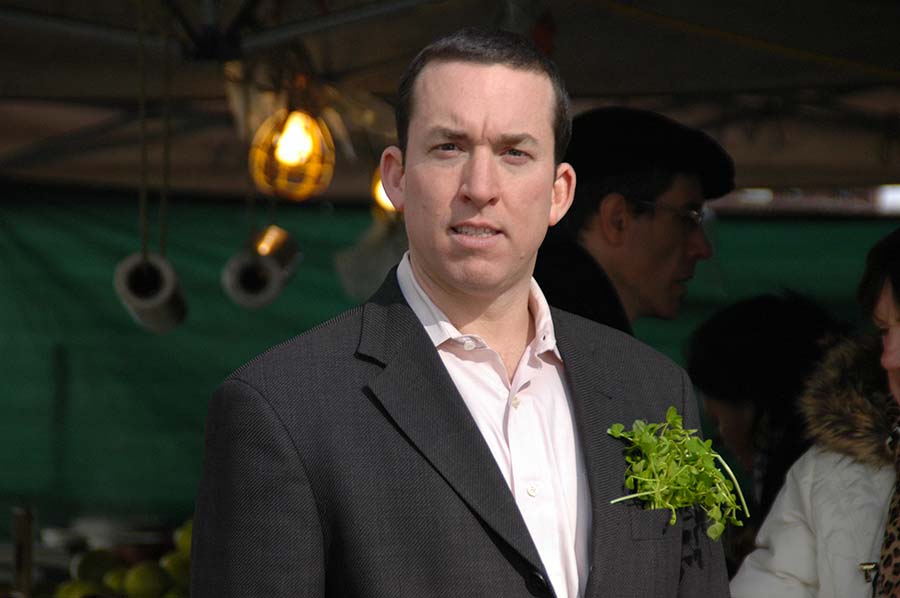
What happens when a successful software company CEO decides he’s going to trade in his tie for a trowel and build greenhouses in order to improve the environmental impact of the food supply chain? 

“My wife suggested the existence of our three kids and sizable mortgage was a good reason not to do it,” says Paul Lightfoot, laughing at the memory. “A few of my mates said, ‘No. You’re not doing that.’ In the end, my wife was a good sport and let me go for it, and my mates… they meant well, but they were wrong.” 

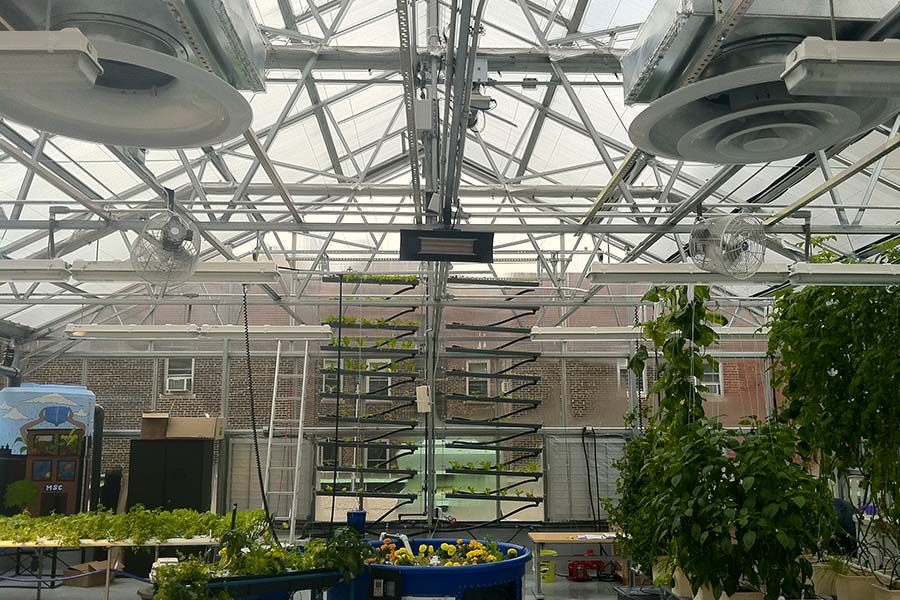
How wrong? Today Paul is the CEO of BrightFarms which designs, finances, builds and operates hydroponic greenhouse farms at grocery retailers. Having partnered with multiple, major supermarkets chains, BrightFarms is revolutionizing the food supply chain sector by eliminating time, distance and costs not to mention giving consumers healthy choices, supporting farmers and providing Paul with a meaningful way to live. 

Trigger Happy

“If I was looking for a specific trigger for how all this started, I would have to say that it was insight into a business model I had from a friend who broke open the rooftop solar industry by signing long-term, fixed price contracts with buildings,” Paul explains. “That idea stayed in my head for years. When I met Ted Caplow, the founder of what was then called BrightFarms Systems LLC, and heard he was building small scale, educational urban greenhouse farms, I thought the model could be applied to what he was doing.”  

With this in mind, early one Sunday morning Paul drafted up a plan for Ted that showed how he could use a long-term, fixed price contract model to supply grocery stores with produce from his greenhouses. Ted agreed the design was solid, but he wasn’t an entrepreneur; he wasn’t the man for the job. But you know who was? Paul. As so it was, Paul defied his friends advice and with his wife’s (diffident) blessing, got his hands dirty.  

Supply and Demand

While specialty food stores and companies like Whole Foods have already won their niche (expensive food for rich people), BrightFarms is focused on the supermarkets that sell food to the rest of America, which simply put, want fresh, delicious food they can trust and that they can trust will make them healthy.” 


“In order to change the food supply chain, we are going where we have the chance to do something truly innovative,” says Paul. “In the past, all supermarkets really cared about were price, appearance and shelf life; there was never any thought given to taste or nutrition or impact on the environment. These are huge factors now; taste is correlated to freshness and that gives local a huge boost. Our greenhouses grow year-round local produce that prioritizes the farmers, the food quality, our health and our environment.”  

What else is positively affected is the supermarket’s bottom line. By growing at, or near retailers, BrightFarms eliminates the heavy costs of shipping and fuel consumption. Additionally, fresher food = longer shelf lives = less shrinkage = higher gross margins. Add to that equation a long-term, fixed-price contract that protects the retailer from volatile prices, rising oil costs and inconsistent supplies and the operation is a recipe for success. 

Farmer, Meet Framework

While the term ‘local’ can no longer be tossed aside as an ephemeral idea – you can’t shake a wok near a chef who doesn’t eschew a farm-to-table ethos – challenges abound for the practical application of combining the farming spirit with the business acumen.  

“It’s been a challenge to cross-pollinate the business of industry and growers,” admits Paul. “I thought when I started that I would hire the best growers in the world and be off to the races, but I recognized they aren’t business people. We’re trying to get growers to use their knowledge and skills within a framework of planning and data-centricity. I think we’re doing well but it’s still not as good as I would like it to be.” 


Another challenge was convincing supermarkets to alter their time-honed way of thinking.  

“It was surprising that it was so difficult,” admits Paul. “We came in and explained, ‘the next time a soil virus wipes out romaine in Yuma, Arizona and all of your competitors have stock-outs, you’re not going to.’ We had to help them understand how our products would help them stand out from their competitors, improve customer loyalty and attract new customers because local was such a big demand.” 

Good Words Work

Paul’s proclivity for spreading the good word is evidenced in his TED talk, “A Produce Supply Chain Revolution,” (which has been viewed more than 50,000 times), as well as his busy schedule delivering speeches at conferences such as Agriculture 2.0, Food Industry Sustainability Summit, Harvard Business School PAPSAC, Cornell Entrepreneurship Conference, Green Tech Monster and Greentopia.  

In 2014, “Fast Company” named Paul to its list of ‘1000 Most Creative People in Business,’ but what really affected him, was the recognition YPO bestowed on him in 2011 as winner of the CSR Award for Environmental Sustainable Business Practices. 

“At that time, I was still raising capital for BrightFarms and so in a lot of ways, the award gave me early credibility,” says Paul. “… maybe even earlier than I deserved.” 

By Deborah Stoll


Building an Anti-poverty Hub of Hope

“Very often, a lack of jobs and money is not the cause of poverty, but a symptom,” said President Lyndon Johnson in 1965, one year after declaring a war on poverty.

“The cause may lie deeper, in our failure to give our fellow citizens a fair chance to develop their own capacities, in a lack of education and training, in a lack of medical care and housing, in a lack of decent communities in which to live and bring up their children.”  

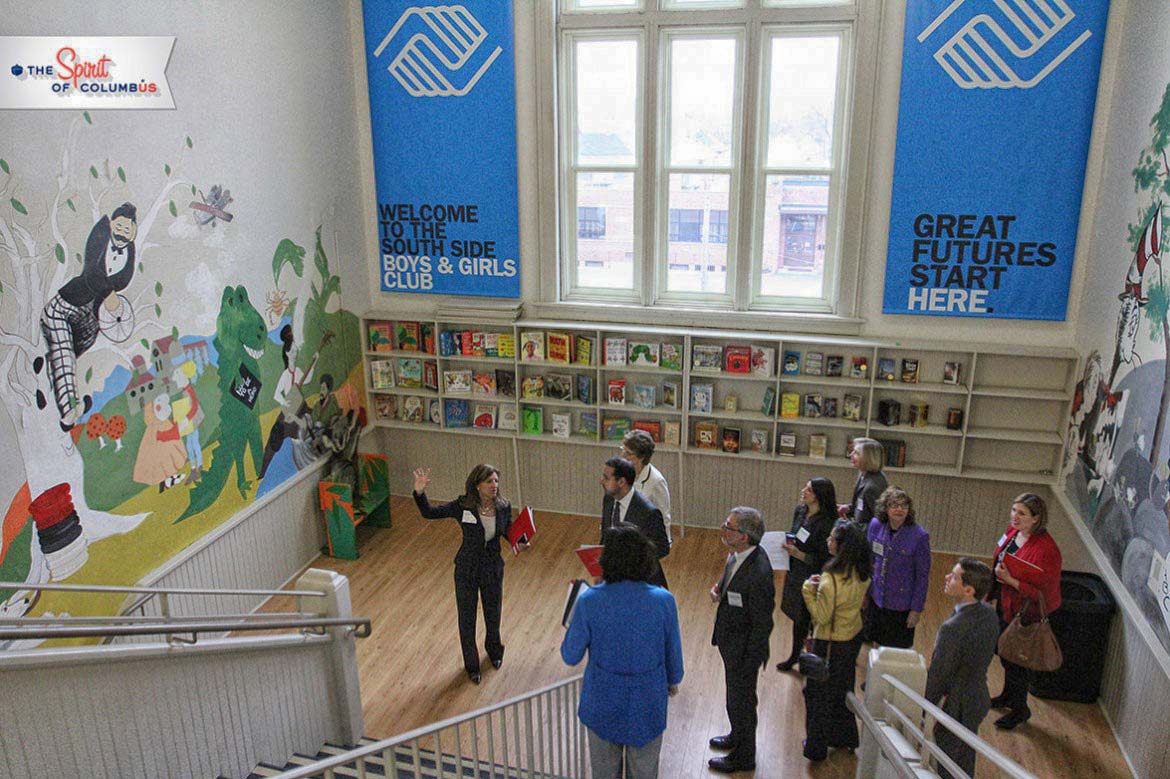
Unfortunately, this sentiment is as relevant today as it was 51 years ago. But on the South Side of Columbus, Ohio, USA, Chairwoman of the Board of Donatos Pizza, Jane Grote Abell, has created a national model to confront Johnson’s prescient remarks.  

It’s Elementary

The South Side is Jane’s old neighborhood, she grew up here on Thurman Avenue right behind her family’s first pizza restaurant. Once a robust, hard-working middle class community, it is now a place where one in four houses are boarded up, unemployment is at 22.5 percent and 40 percent of the kids move schools every year when their families lose their home.  

“These are really great people who have fallen on hard times,” says Jane, who in response, has founded Reeb Avenue Center with her friend, fellow activist and South Side family business owner Tanny Crane. The idea was a direct reaction to (then) Mayor Coleman’s asking Jane’s dad, Jim Grote – a quiet philanthropist for whom giving back is an inherent part of his narrative – to help champion a revitalization of the neighborhood. Jim knew it was something that would interest his daughter and Jane knew her friend Tanny would want to get involved and together with local community leader John Edgar they formed something of a philanthropic think tank. 

But it wasn’t until a 67,000 square foot, 110 year-old building that was once an elementary school lying fallow for five years fell into the mayor’s hands that the idea of creating a national model of a holistic, non-profit, community social-services center really started.  

“We looked at the situation as one would look at any business strategy,” explains Jane. “The very first thing we did was go door to door to the 2,700 families in the neighborhood to ask what they needed. As is often the case with even the most well-meaning people, what’s needed by a community isn’t necessarily aligned with what someone from the outside thinks is needed. What came out of it were five things: education, jobs, safety, health and affordable housing.” 

So Jane and Tanny put together a 20 person team including members of the neighborhood city commission, city council and private donors to start filling these buckets of change with palpable action.

A team was put into place to focus on housing and safety and blueprints for a free health clinic were drawn up. But when Mayor Coleman acquired an old elementary building, Jane and Tanny knew this was their opportunity to complete the circle, using the former educational institution to fulfill the education and jobs quotient.  

After USD12.5 million in renovations, including a near USD2 million donation from the Grote family, the Reeb Avenue Center opened in 2014 and houses 14 different non-profits, all focused on either helping people find jobs or education, with intentional pathways between tenants to serve the holistic needs of every visitor. In spring of 2016, members of the Obama administration paid a visit to Reeb and reported, “The good people in Columbus are leading the nation on the important work of giving all young children and their families- the high-quality early learning experiences they need to grow, learn, and thrive.” 


A Peek Inside Reeb

A bird’s view of the robust and visionary activity inside Reeb looks a little something like this:  

  • The Boys and Girls Club of Columbus provides youth development programming, which is particularly relevant given that 25 percent of youth ages 6-18 are not in school, are not high school graduates and are not employed.
  • Alvis, DigitalWorks and other partners offer job training, GED (general education diploma) classes and adult education, all of which increases employability.
  • South Side Learning & Development Center meets the early learning needs of infants through
  • pre-kindergarten, with rooms for second shift care, meeting the critical needs of working families and employers.
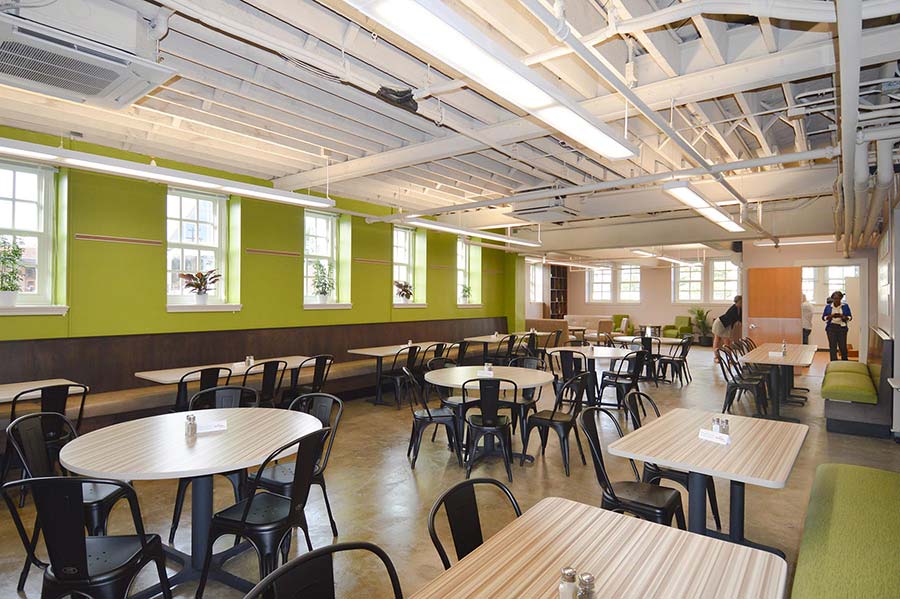
  • Mid-Ohio Foodbank and Community Development for All People collaborate on a food program that includes South Side Roots Café, a food market and kitchen operations for the building. The pay-what-you-can café offers the option to earn meal points by volunteering in the building, paying it forward or paying the subsidized prices.
  • St. Stephen’s Community House’s Family-to-Family program provides support to families suffering from abuse and neglect. 
     

“I think my biggest ‘ah-ha’ moment was seeing these non-profits excited about working together,” says Jane. “It is no secret that in the non-profit world, everyone, no matter their mission, is fighting for the same dollar. The beautiful symmetry of a place like Reeb is that it eliminates the competition by creating a space where everyone works together to support the community.”  

Co-creating a sustainable community has also allowed non-profits savings on their P&Ls – instead of having to invest in bus passes to get people from their GED training downtown to get food and then across town for drug and alcohol counseling, all they have to do is walk across the hall. Additionally, these non-profits are now mission driven outside of their silos; being in such close proximity to each other has opened their eyes to the ways in which they can work together to make a real difference. When you are able to offer someone the next piece of the puzzle to help them succeed in life, right then and there, the chances for success grow exponentially, impacting individual lives, entire families and whole communities.  

How Do We Really Talk About Ending Poverty?

“We won’t know the full scope of Reeb’s success until the next generation or the one after that, but we hope that our model – that of a collaborative society where non-profits work together – can inspire others to do the same,” says Jane. “While we also hope that we no longer have to have homeless shelters and food banks, for the time being, there are plenty of empty school buildings out there.” 

By Deborah Stoll


The Liquid Energy Machine That Could Power our Future

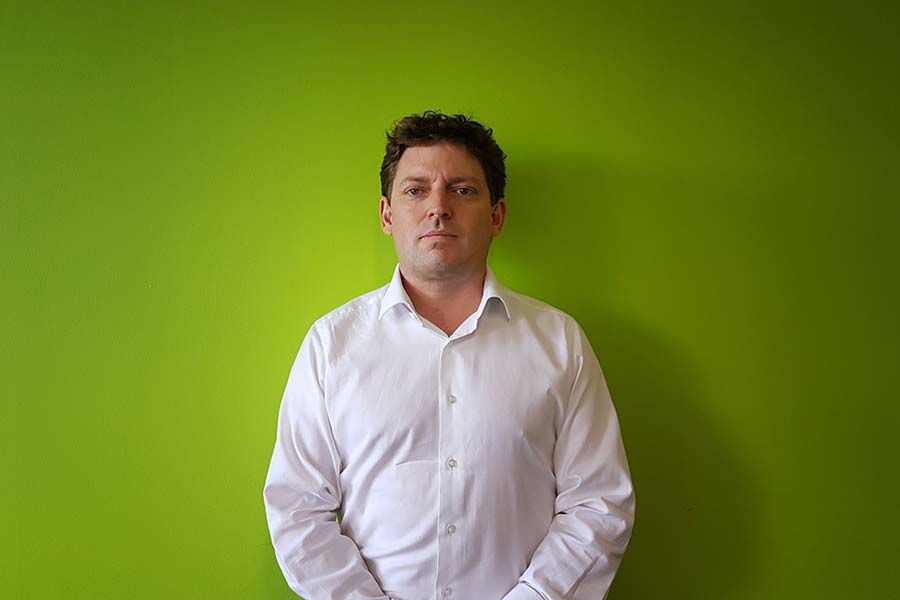
“I am quite a passionate person,” admits Scott McGregor (above) when discussing the global ramifications for his large scale energy storage technology redT energy storage, “but I try to keep that under wraps.” 

This might sound like a curious disposition for someone at the head of ushering in what promises to be nothing short of an industrial revolution; why not crow about it, shout the amazingness from the rooftops for all to hear? Because as CEO and Founder of redT, Scott understands that having a business-first paradigm for something that also does good, means success will allow him to make a difference in the world, whereas turning that paradigm on its head might mean things not necessarily fostering the same result.  

“The fact that redT’s technology is fully recyclable and is as green as can be, is not how I market the company,” explains Scott. “Half of our customers aren’t concerned about the environmental ramifications, they’re buying it because it’s going to make and save them money; the other half will be attached to the renewables aspect. Either way, it’s a win-win for all.” 

So what exactly is redT?

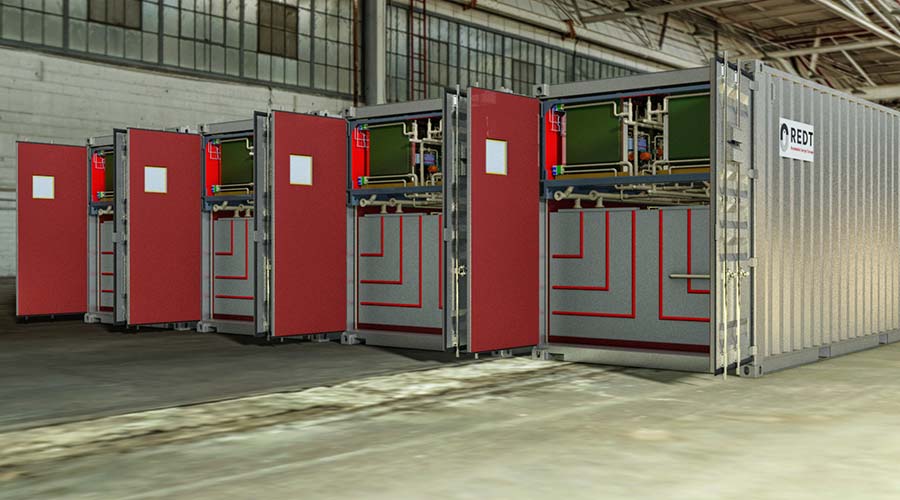
‘Simply’ put, it’s a machine that stores energy in liquid form that never runs out and never degrades. 

So it’s a battery?

No. Scott tries to ban the use of the term ‘battery’ and here is why: consider, if you will your cellphone battery – the more you use it, the faster it breaks down, right? In order to create something that circumvented this, Scott spent the past 15 years perfecting the first machine of its kind in the entire energy infrastructure sector that doesn’t wear out by using a resource based on vanadium redox flow battery technology. 


What is that?

It’s super technical, but for our purposes, the liquid is 70% water with its main active component vanadium, which is the 23rd most available resource in the world. It’s a mineral. And there is plenty of it.

“It’s a long journey bringing an energy product to market,” says Scott with the smile of someone for whom the time to set his baby free has finally arrived. “We launched our proprietary energy storage technology in 2012 but decided not to sell it into the market yet; instead, we worked with Jabil – the world’s biggest manufacturer before bringing it to market in November 2016 at the cheapest price.” 

A Gateway Technology

While redT is not a consumer device, it contains all the properties of having a substantial effect on sustainable energy overall. Renewable generation, i.e. solar and wind, can only go so far without storage. In countries like the United States, Australia and Japan, grids have become too busy to plug into and with no way to store energy, it disappears, unused, into the ether. Imagine if that energy could be stored for times when the sun isn’t shining and the wind isn’t blowing … we could then truly harness the power of our natural elements. 

“Energy has been around for hundreds of years,” says Scott. “We have never been able to properly store it; we’ve produced it and then just burned through more and sent it on down the line. Until now.” 

Off the Grid and Out of Government

And if you think the effects of on-grid countries are going to be substantial, the implications for off-grid places like Africa and the Caribbean, will be nothing short of revolutionary. 

“There are 700 million people in Africa without regular power,” says Scott. “This technology will have an impact not just on climate change, but on the industrialization of all of those people. A lot of money has gone into building solar in Africa, putting batteries next to the grids, but two years later those batteries are dead and have to be replaced. These villages don’t have the money to buy more and even if they did, those new batteries are only going to last a few more years and need to be replaced again.” 

Many countries have recognized that granting money to Africa in terms of aid is an unsustainable and politically unstable way to develop the country, they are now looking at investing in infrastructure; and that means energy.  

“Developing Africa as a market is a perfect way to deploy finance while allowing the country to develop itself,” says Scott. “Governments can invest using debt, too – by providing loans to build solar and storage on mini-grids, they can earn money on the provision of that power.”  

Additionally, redT has the potential to eliminate government where implementing renewables are concerned. 

“Government has been instrumental to kicking off the renewables sector,” says Scott, “but we’re reaching a tipping point where it’s becoming less relevant. Solar is so cheap that it no longer requires subsidies. We’re seeing people buying solar and storage and saying ‘so long’ to the grid. We are going to need competition regulation to control the possibility of abnormal profits, but beyond that, the sector will no longer need to rely on (inefficient) government policies.”  

Parity People

Named one of “Financial Times” top 50 LGBT business leaders, Scott’s low-key demeanor belies his dedication to eradicating intolerance in some of the harshest parts of the world. 

“I have been out most of my career with no fuss,” says Scott. “I’ve run businesses in Malaysia and Africa where I work and where homosexuality is illegal and it’s important to be a role model. The reach you have as a CEO to demonstrate the normalcy of whatever diversity group you’re from is imperative.” 

As a married man (Scott and his husband have been together for 13 years) with one child and another on the way, Scott’s personal life, philanthropic activities and business acumen, all fall under the Australia phrase he references, ‘quiet achiever’.  

“I am not sure if parity will happen in my lifetime, I think it will go forwards and backwards; we need to be realistic,” says Scott. “If redT works, it will be successful. I try to embrace it like a tough Australian … but the ‘tree-hugging’ aspect is why I wake in the morning. I think if you take a disciplined, aggressive approach to doing good, you can have a massive impact.” 

By Deborah Stoll


0