Losing Is Normal

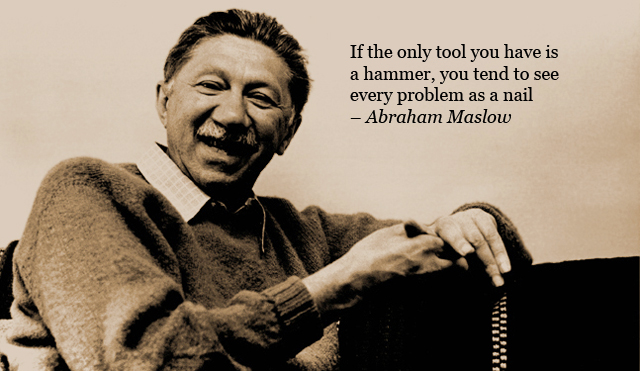
I just finished reading Eleven Rings, the book by the brilliantly successful basketball coach Phil Jackson (pictured above). True stories are always the most interesting ones to me and it was fascinating to read his story of winning an NBA championship as a player and coaching his teams to win 10 more. One thing that stood out is that losing is normal!

Professional sports are not just competitive, they are radically so. By that I mean there is only one world champion In many ways it’s the ultimate zero-sum game. For every one winner there are scores, or even hundreds, of losers. And winning is extremely difficult. Winning consistently is almost impossible. That’s because when you get to the championship level of pro sports the talent is so even that luck is often the final differentiator.

I know, you probably don’t want to hear that, yet when you read the story of all the championship seasons, what is remarkable is the number of games lost by one point, two points or in overtime. It’s astonishing how often a single missed free-throw or a careless pass can make the difference between winning the game or a championship.

What struck me was how many times Jackson’s teams lost in the playoffs or the finals – often with the same players he would win championships with. Still, he won 10 NBA champions coaching teams with a few great stars and a constantly changing cast of role players who had to play the best basketball of their lives. The leadership lessons and the importance of personal resiliency in the face of failures were striking. Here are some of the things that struck me.

1. When you win is far more important that how often you win. Many teams who win 50 or 60 games during a regular season never make it to the finals. When it really counts they collapse. In life, not all goals or relationships are equal. Some are life-changing. In sport it’s easy to know what games are the most important. In life, it requires reflection. The only way I know how to keep my head in the game of life is to ask myself each day what’s matters most that will matter a year from now, and then make that my priority.

2. Being excellent at the detail is often the difference between success and failure. In sport the bounce of a ball often separates victory from defeat. All you can do is put yourself in a position to win if the ball bounces your way. Being excellent at the important details of life and leadership is usually the difference between happiness and regret. We don’t control all the big things in our lives. Sickness, betrayal, job loss, business failure and plenty of other nasty things are beyond our control. The one thing we do control is our response to everything that happens. And therein lies our power to turn losing into winning.

3. Spirituality matters. Perhaps the most powerful element of Phil Jackson’s story was his commitment to spirituality. Phil became famous as the “Zen” coach, and for good reason. He’s a sincere believer in the power of unseen energy to bind people together and create a deep level of relationship chemistry. He believes this is so vital to team success that before every game his entire team would sit in a dark room in silent meditation.

Every season he gave spiritual books to his players to read as they traveled the country. He never forced his beliefs on his team but he had the courage to invite everyone to participate. Most of his players thought he was a little weird yet recognized the positive impact of the silent energy their joint meditation created. It’s important to note of course that Jackson wasn’t trying to convert anyone to any religious dogma or even a philosophy.

What he was tapping into is now considered brain science. Our thought patterns create electrical energy. Our thoughts influence the electrical energy in the brains of others and together, people create group patterns of thinking and feeling. In sports this is know as team chemistry. It is often the difference between winning and losing.

What Jackson wanted his players to do is to be intentional about creating positive team chemistry.

To do this he sometimes had them practice scrimmage in silence. He always had them sit together in silence before the game and invited them to meditate on their roles and how they might support each other’s strengths. Since this is not common practice, it took a lot of courage to institute this way of being together.

4. A major leadership lesson for me is that great leaders teach people how to learn from losing. 

One thing for sure is that we will all lose and continue to lose throughout our lives. By losing I simply mean that things never go as planned… that small disappointments are normal and large disappointments are to be expected. What matters is not that we have faced difficulty but that we stay on our path. And I believe that ultimately our paths are as individual as our fingerprints. Our paths are not easy. Losing is normal. It’s how we respond that makes us extraordinary.

Yet we all have one thing in common. As Aristotle once explained, “Our best life is one in which we fulfill our nature in the pursuit of noble purpose.” For Phil Jackson his noble purpose was not to win an astonishing 11 championships. That was simply the effect of what he was up to… which was to help extraordinary athletes experience the miracle of genuine oneness.

Jackson believes that when we transcend our individual egos to accomplish something amazing together, we experience human connectedness in ways that are far more meaningful than winning. Is this just mumbo-jumbo? What do you think?

 

Who Has The Guts To Change The World?

I saw this coming clearly. Five years ago I attempted to raise venture capital to start a free University. The opportunity was huge. You know a market is ripe for disruption when the price of something becomes outrageous in relationships to its value.

Welcome to the cost of college. It’s not a secret that college tuition rates zoomed past any rational connection to inflation because of low-cost government insured loans. These no-questions asked loans make it easy for colleges to maintain one of the most inefficient business models in history.

A quick look at college budgets reveal how relatively little is actually spent on classrooms, professors, research and teaching compared to building and maintaining huge inefficient campuses and scores of activities unrelated to education. Student demand was fueled by the public relations myth that college education would automatically lead to higher earnings in the good life. Of course higher education is correlated with all the things we want for children – higher earnings, happier marriages, greater health and longer lives. But correlation is not cause, and living a truly good and meaningful life is more complicated than earning a degree.

And spending as much as a quarter of a million dollars to learn what you can learn for virtually free doesn’t make much sense.

In fact, it’s outrageous. It’s outrageous because this craziness has created a generation of Americans with over $1 trillion in student debt. This is not the path to the good life. The fact is our 20 to 30 year-old children are not starting businesses, getting married, buying homes or becoming independent.

The primary economic reason for their ‘stuckness’ is that the soundtrack to their lives is the drumbeat of student debt.

The insane irony is that they are not even earning as much as their parents at the same age. I’m not simply an observer of these facts, I’m a fully engaged parent, coaching my three children between 25 and 30 to help them find their launch code to blast free. It isn’t easy even for the very capable and motivated.

The good news is that we are seeing the beginning of a new era of worldwide education.

For over 40 years we have known that the concept originally called “distance learning” can be more effective than in-person classroom teaching if some simple principles are followed. 1) a great, engaging, expert teacher using multimedia, 2) social learning with peers and 3) application of learning by doing. What educational researchers have discovered over the last 10 years is a way to combine online multimedia teaching, Skype tutoring, social learning where possible “learning-meet-ups.” All this both accelerates and deepens learning. Hallelujah! The educational revolution is marching ahead in full fury.

Universities and colleges are having business model meltdowns behind closed doors because they know a new generation of digitally savvy college students are simply not going to pay $50,000 a year for a college education.

When a major name brand university breaks ranks to create a low tuition option for a full bona fide degree earned largely online combined with a network of onsite experiences, hundreds of colleges will close. The university combatants are already circling each other in a worldwide cage fight to see who goes first. Already 200 universities ranging from Harvard and MIT to colleges in Europe, India and Australia are offering courses by partnering with education start ups liked EDx, Coursera, and Udacity. Imagine this… what if a university like Stanford got together with Google and multimedia creators like Disney to create courses taught by one of the world’s most charismatic experts.

What if the development and maintenance of these courses were paid for by large corporations whose brands were tied to certain subjects?

Like Johnson & Johnson on health related topics or GE for engineering classes. And what if Stanford partnered with Barnes & Noble to turn their declining bookstores into a network of Stanford student unions found in almost every city in America? And what if you could earn a first class four-year Stanford bachelors’ degree for say… $10,000? How many millions of students would choose this? One bonus for a school like  Stanford is that they have impressive athletic teams.

Imagine every basketball game being a home game no matter where they travel? Just think of how many T-shirts they could sell! The good news is that something like this going to happen. Education is one of the largest economic enterprises in the world. Using today’s technology to improve education and create a whole new business model is simply too tempting to ignore.

The question is who will have the leadership courage to bless the entire world with truly universal, first class education. I’m not using the words “leadership courage” lightly. There are many who believe a well-rounded education is the ultimate path to world peace.

You see, two of the outcomes from a university education are open-minded tolerance of people who are different than you and opportunity.

Open-minded people who have opportunity don’t want to fight; they want to build. The future we must build is one of sustainable abundance. For that, we need the full talent of our global brainpower. Everybody has a difference to make. My personal attempt to get something like this kicked off via a project called Citizen One was too far ahead of its time. But now there are others who are far more capable that me, who will literally change the world. I am rooting for them… how about you?

If you could change the world, what would you do?


How Lucky People Get Lucky

I was having a coaching session with an executive yesterday who told me an interesting story about luck and leadership. He said that when he was a young man he had lunch with a very successful business leader who gave him advice that changed his career and his life.

The business leader said he always asked one question to anyone he was trying to hire. The questions was “are you lucky?” He said when people answered the question “no, not really” he avoided working with them or hiring them. On the other hand, he said he rarely made a mistake by hiring anyone who thought they were lucky.

Now we know why your personal view of your own luck is a pretty good predicator of how successful you really are.

Yes, there are people who study luck, mostly economists. They loosely define luck as the amount of positive opportunities an individual might have within a given period of time. It turns out there are many factors that create a high number of positive opportunities. The most unfair of these is height. It’s probably no surprise that tall and handsome men and pretty women seem to have more opportunities than more average folk. But that shouldn’t discourage us. After all, Dustin Hoffman has a great career in Hollywood even though he is short and, well, rather dumpy looking.

So what are the things that you control that make you not only feel lucky but actually more fortunate? 

First, and most importantly, luck is the result of an opportunity-seeking orientation. Economist have discovered that people who see the world through a lens of opportunity rather than a filter of risk actually do have more opportunity. Opportunity seekers talk to more people about a wider variety of subjects than average people. This kind of open-minded communication with strangers and new acquaintances simply open doors that were never knocked on by people who don’t consider themselves lucky.

Second, lucky people tend to be intensely curious. They have diverse friends, travel off the beaten track, read on a wide variety of subjects and generally have unquenchable thirst for new information. Above all, they maintain an open mind. It’s not easy to consider facts and evidence contrary to your current opinion but that’s what lucky people do.

Third, they are creatively persistent. Persistence without creativity or without learning from the obstacles that lie in your path is simply stubbornness. Stubbornness does not lead to luck but rather stress and failure. People who are creatively persistent are always looking for new ways to achieve their goals or better their lives.

These people hold tightly to their vision but loosely to their plan.

They are agile and adaptable which makes them pay close attention to what is happening, rather than what they want to make happen. This allows them to adjust their methods and focus their energy on what’s working. This kind of creative persistence actually makes them lucky.

The generally accepted folk wisdom about good fortune is that we “make our own luck.” Perhaps most people interpret that as simply working hard. But hard work alone doesn’t produce good fortune. There are plenty of people woking very hard in coal mines, would we consider them lucky? Yet, we indeed do make our own luck. Just consider your own life. When you’ve been really fortunate has it been the result of you seeing opportunity, being open-minded and creatively persistent? Is there any area in your life when you feel stuck or even unlucky?

What opportunity might you seize right now to improve your luck?

Seize it.


When More is Less, or Don’t Leave a Horse Alone

I grew up on a ranch. Dad always taught me to never leave a horse alone in the hay barn. The reason, he explained, was that horses would eat themselves to death. That’s right, if horses can get access to a lot of easy to eat feed they will quit eating only when their bloated stomachs burst.

For this reason Dad never considered horses all that smart. I have found it’s not all that uncommon for human beings act a lot like horses around money. There’s been a lot of recent research on whether money can buy happiness. The answer is a little murky.

Some research suggests that for Americans’ $75,000 a year pays for an enough of the good life to reduce stress and produce a sense of security and optimism. This research indicates that increasing income over that amount has a decreasing impact on additional life satisfaction. In other words, more money helps a little but not all that much.

What becomes much more important once our needs are met is the quality of our personal relationships, the satisfaction of our work, and the joy of our lifestyle.

Newer research says that making more money can increase your happiness a lot if you know what makes you happy. In this research it’s not about how much money you make so much as what you spend your money on that determines your happiness. Spending money on experiences that broaden your mind, stimulate new knowledge and positive feelings is high on the list of happy activities.

So is charity… people who spend significant amounts of their income on relieving suffering or solving serious human problems report higher levels of intrinsic self-worth and life satisfaction. The sad fact is that a relatively small group of super wealthy people spend their time helping others or improving their inner life from their outer life experiences. Their most favorite activity is making more money and spending more money on stuff.

Here are the three most common pitfalls about how money can make us miserable or how we can act like horses in the barn full of hay.

1. Your money owns you. Years ago I had a friend who worked for a billionaire heiress. Her father had made an enormous fortune from a business that just wouldn’t stop spewing money. The heiress spent nearly all of her time keeping track of all her stuff. She owned houses all over the world filled with furniture she rarely used. She had yachts in two oceans and enough clothes to fill several department stores.

She had a staff whose jobs was to keep all these possessions form falling into disrepair and help her find the latest version of nearly everything. Managing these people and making decisions was her full-time job. All this made her very stressed-out and my friend reported she was almost never in a good mood because she was always worried about something she owned or wanted to own.

2. Social comparison. Social research confirms that the one common measure that human beings use to gauge their well-being is how they’re doing compared to their neighbors. That’s one reason why people who live in ghettos can be very happy. They may not be rich but compared to the people they live around they’re not so bad off.

One mistake newly successful people often make is moving to a neighborhood they can barely afford. Although they were once happy with their $30,000 car now they seem miserable because all their neighbors have $50,000 cars. Trying to keep up with the richer “Joneses” is a prescription for continuous stress.

3. Untamed ambition. Humans are meaning-seeking beings. And that makes us feel good about ourselves… but not that good. There will always be people with more status or more stuff which threatens our inner peace if it’s built on validating ourselves by what we accomplish, where we live or what we drive. Yet research confirms that much of our ambition is built on a never ending drive to achieve or to compete. Those are very useful motives but are poor foundations for experiencing deep life satisfaction.

In worldwide research, the happiest people are those whose lives reflect their inner values and their choices bring them closer to their circle of loved ones whether they are family or friends. We are all motivated by the things we want but do not have.

The wisest among us are continually making sure the things that they want are relevant to their genuine happiness. Continually seeking more of what you used to not have… Now that is what a very dumb horse would do.


What’s Your Promise?

When I was in eight grade, I read 25 biographies of great leaders. They ranged from Alexander the Great to Benjamin Franklin. One thing I noticed even at that age is that they all had one thing in common. They accomplished something significant, in some cases, world changing, because they had the will to do it.

The other surprising truth was that they almost all operated on vision, rather than a specific plan. What this means is that they all seemed to have an inspiring idea of what they wanted to accomplish, but developed their strategies by paying close attention to developing circumstances as they happened.

As I got older and began to work with business leaders, I was disappointed to discover that few of them had a big inspiring idea… at least not one that emerged from their soul. In fact, most of them have been controlled by their boards or financial analysts whose expectations are almost solely focused on growth and profits rather than creating value. This reduces most leaders into managers struggling to compete in a “me too” world.

What I’ve come to believe is that if you really want to do something significant you have to stand for something, believe in something, be driven by something that is bigger than just making money or even success as others define it. 

Over time, I’ve come to describe this drive as your “promise.” Your promise is bigger than a vision. It is a specific commitment to make a difference… a difference that drives you. It turns out that to be driven by a personal promise is not impractical or foolish. In fact, virtually all business leaders who we truly admire are up to something bigger than simply making money.

They are driven to create unique value… value that matters to human beings. This is true regardless of whether these leaders are creating robust and elegant computers or inventing new life-changing devices or inventing micro finance to help lift the desperately poor to self-sufficiency. What these few business leaders have in common is that they understand that business is a powerful vehicle for both self-expression and moral ambition.

The other distinctive quality of these leaders is that they oppose conventional thinking. They ignore benchmarks. They over-invest in a few things that really matter and strip away everything that doesn’t. They rarely pay attention to the stock price of their company and often tell investors who may not like what they’re doing to invest elsewhere. I find these leaders to be frequently envied but rarely copied. Perhaps the reason for this is that you can’t copy someone else’s promise. It doesn’t work that way.

Leaders who have a promise to keep always face moments of truth when their bankers, investors and boards question them. During these moments of siege leaders will fold if they don’t display the confidence that only comes from an intrinsic commitment to an ideal that is bigger than themselves. They would simply remain dreamers – people with bright imaginations but low resolve. One thing I’ve learned from leaders driven by an inner promise is that they’re more effective, more successful and more inspiring then ordinary leaders. It’s not because they’re smarter, but because they are relentless in finding solutions to the problems that stand in their way.

After coaching leaders for over 30 years, I’m convinced that the source of our promise comes from the deepest intrinsic part of our essential being. Discovering our promise takes more than self-awareness. It requires soul-awareness. So how about you?

If you could change anything and it would work… what would it be? There are six great needs in the world today; six great causes that are at the core of vital human need. These are:

1. Ending ignorance through education

2. Ending poverty though self-sufficiency

3. Conquering disease and improving total health

4. Ending violence and creating peace

5. Ending oppression and promoting human rights

6. Preserving our natural environment and creating sustainable abundance

Do any of these causes inspire you? I’m not suggesting you start a nonprofit. It seems we have enough of those. What I am asking is how might you, with your talent, skills and experience, turn your career or your business into a means of creating value that addresses the real needs of our time? In helping many leaders find their promise let me assure you – this does not require taking a vow of poverty only a vow of purpose.

So…

If you could state your promise… the “give” that you could give to the world, what would it be?


Take the Personal Leadership Quiz

Whether you run a company, a consulting practice or just your own life, you are a leader. We all are.

The work of leadership consists of three things.

First, you must have a clear direction… a vision of what you want to accomplish. Second, you must be able to engage and motivate others. There are virtually no worthwhile accomplishments that can be attained without influencing others. Third, you must be able to set and achieve goals that are milestones in the pursuit of your vision.

As you can see, whether you run large enterprises, are an artist or focusing at being a parent, you must do all these three things well to be effective. Yet, there is more to life than simply being effective. Fifty years of research on life satisfaction has taken scholars to where it all started… the work of Abraham Maslow.

Maslow is most famous for developing a hierarchy of needs. In his view, people were always motivated by what they didn’t have. His range of motivations started with physical needs, graduated to social connection, and culminated with something he called self-actualization. Self-actualization occurs at the intersection between effectiveness and happiness. His work was considered to be a breakthrough because he was the first prominent psychologist to study very high functioning people.

The connection between Maslow’s research and leadership is profound. I’ve seen this over my 30 years of working with leaders and coaching them in both their professional and personal lives.

Just as Maslow discovered that only 10% of the population was coming to self-actualization, I have also observed that relatively few leaders are consistently both effective and happy. I use the word happy here because its core definition contains both contentment and optimism. Today many clients are resistant to the idea that self-actualization is an attainable goal. They complain that the pressures of business competition or the competing commitments of modern life are so intense that coping is the best they can do. Self-actualization is something to be achieved in retirement when the bonfire of life has settled into embers. That’s missing the point. Self-actualization isn’t the destination… it’s a means to a well-lived life.

It’s the substance of great leadership. The point of our challenges is that they drive us to self-actualization… doing our best and becoming our best. In order to get this point across, I’ve developed a simple quiz based on Maslow’s eight markers of the self-actualizing person. It just takes a minute… and see where you are.

Respond to each statement using the following scale: 1 = almost never true 2 = rarely true 3 = frequently true 4 = almost always true (You may notice this is a four-point scale. There is no middle, ‘sometimes true’ statement. That’s because four point scales have proven to be more accurate because they force people to make a clear choice rather than default to an “I am not sure” response. The result is more actionable data.

1. I experience my life vividly. I feel genuine emotions daily and am fully present at important moments throughout the day. (1-2-3-4)

2. I make choices that pust me out of my comfort zone that foster my personal growth and development. (1-2-3-4)

3. I am attuned to my inner nature and act with integrity with what I value, believe and feel. (1-2-3-4)

4. I am honest with myself and take full responsibility for the consequences of my decisions without excuses. (1-2-3-4)

5. I  have the courage to not manipulate or bully others when I am not getting what I want. (1-2-3-4)

6. In any situation I’m willing to both stand out and fit in based on who I truly am rather than the expectations of others. (1-2-3-4)

7. I have an ongoing process for reaching my potential by constantly learning and doing the work necessary to fulfill my self-vision. (1-2-3-4)

8. I frequently have peak experiences in which I feel authentic closeness to others and being extraordinarily effective in my work. (1-2-3-4)

After you answer each question on the 1 to 4 scale, add up your total. If you score 24 or above… congratulations.

You swim in the pool of high-functioning leaders and individuals. If you score below 24, perhaps it’s a little more clear on what you might work on to get in the pool.

But here is the hard truth…the research on self-knowledge with over 50,000 leaders show that the person who has the most inaccurate view of you is you!

So, to gain deeper insight… after you answer these questions, have someone that knows you well answer these same questions in terms of how they experience you. Do they see you the same way you see yourself? That might give you a clear starting point on what to work on that will both increase your success and your happiness, which is my hope for everyone.


Are You A Dandelion or An Orchid?

About 80% of us are resilient to stress. We can find ways to survive, cope, and even thrive no matter what life throws at us. Science writer David Dobbs calls us “dandelions.” We can grow in a crack in the cement. We are considered normal. We make sure the lights go on, planes don’t crash, and see to it that most families and organizations work.

For the most part we are calm, reliable, and sensible. We get our work done. We color inside the lines. We can grow anywhere. When we fail we pick ourselves up, show up and do our work. About 15% of dandelions are super-thrivers who will excel no matter what. They work hard for stupid bosses and endure mean spouses and learn from lazy teachers.

But not everyone is a dandelion. Although being a dandelion is considered normal, it’s just not the only way to be. University researcher Bruce Ellis and Dr. Thomas Bryce have been combining genetic research with experiments on learning and performance, and what they found might revolutionize how you look at people who are abnormal. In fact, you may just begin to see them as extraordinary.

It turns out about 20% of us are extra sensitive to our social environment. That means how others treat you, whether you are encouraged, supported, and nurtured makes a critical difference in whether you thrive or become a problem. But (and here’s the big deal) a large percentage of the super sensitive group achieve the extraordinary when they have a positive advocate or a nurturing environment.


(adsbygoogle = window.adsbygoogle || []).push({});

You see unlike dandelions they need special treatment. Someone with super sensitive genes are known as “orchids.” They can thrive beautifully in a hothouse with just the right amount of water, nutrients, heat and light. But orchids don’t grow out of cracks in driveways. As children they either wither around mean, judgmental, competitive people, or they fight back, often with violence.

Orchids frequently suffer from a high number of challenging conditions – ADHD, depression and dyslexia are common. Nevertheless, they are called orchids for a reason. Famous ADHD orchids include Galileo, Walt Disney, Dwight Eisenhower, Stephen Hawking, and, of course, Robin Williams. Abraham Lincoln, Michelangelo, Mark Twain, Winston Churchill and Buzz Aldrin are just a few extraordinary orchids who battled depression. And Bill Gates, Edison, Henry Ford, Ted Turner, Muhammad Ali, DaVinci, Richard Branson, John Chambers, and John Lennon have transcended their dyslexia. So what’s the point?

Well for both leaders and parents it’s this. Emerging research indicates that this list of super-achieving orchids isn’t just happenstance. New experiments are showing that people with a super sensitive genetic make-up definitely do worse in adverse environments but absolutely zoom in supportive ones.

By zoom, I mean orchids zoom past dandelions on a host of performance measures. While not everyone with ADHD, depression, and dyslexia is a genius, a disproportionate number may be extraordinary. The lesson for leaders and parents is that one sure way to fail is to treat everyone the same.

As successful sport coaches know, great players have different needs than good players. And exceptional talent is often found in orchids who need exceptional support. What’s exciting is that research is showing that a supportive environment can be just one positive, nurturing person who is a patient gardener in a field of weeds.

To make the dandelion and orchid theory unforgettable, please watch this short, heart-inspiring video: Shy Boy and his Friend Shock the Audience with The Prayer Unbelievable. You’ll see a dandelion and an orchid paired up to do something absolutely amazing in the face of immense pressure and a hostile world, so perfectly embodied by Simon Cowell.

After watching, ask yourself, “Do I have an orchid on my team? How about in my home? How might I be a patent gardener?”

Will’s book, Working to Win,  focuses on how to raise your self-awareness so you change a few essential habits enabling you win more often at the game of life.


Outrageous Generosity

Last night I got a note from Charlie Kim, the amazing CEO of Next Jump. He told me that he had given 10,000 square ft. of Manhattan office space in his building to a nonprofit called Summer Search. This nonprofit has 14 full-time employees who help find mentors and jobs for inner-city youth.

These high school students come from terrible backgrounds with little support, surrounded by crime. Summer Search’s graduates go on to college and graduate at an 85% success rate. Charlie’s group of high-tech wizard employees who were educated in America’s finest universities will serve as mentors.

The students who will intern and study in Charlie’s free office space will also have access to his state-of-the-art employee gym as well as his custom nutrition program offered to all employees. What is this costing Charlie? Well plenty of money… Manhattan office space doesn’t come cheap. Also he doesn’t know whether or not having his employees serve as mentors may cost him some productivity.

He hopes it doesn’t, but let’s face it… this is an experiment. I am pretty inspired by Charlie. What if every for-profit business adopted a worthy nonprofit business to share office space with, share their business prowess, help mentor employees, and share some resources? Imagine having thousands of businesses magnify the impact of smart charities. Now that would be a revolution! So my question is… what is your office space?

What resources do you have that might help solve a problem for others in need? This is something you wouldn’t get paid money to do. In fact it might cost you. I’m talking about giving something more valuable than just time and money. It’s your brains, expertise, creativity and energy. I know… who has the time to do that? Most of us think that giving our time to charity is something we will get to when we retire. But that’s old thinking.

Making your difference is a way of life, not a future chapter in a perfect book of your life. Someone told me that we all have time to do exactly what we want to do. He said that if we just gave up one night a week of watching television to do something more remarkable that in the course of a year we could make quite a difference. I think he’s right. I also think all of us have “office space” resources that we can invest in people who have no investors. Charlie Kim has quite an original perspective on capitalism.

He actually runs his company to make the biggest difference to human beings he can imagine. And it’s been working since he founded his company in 1994. Charlie’s not some superman; he is just a leader who’s clear on what his life is really about. Quite an example. So how about it… what’s your office space?


The One Talent That Makes All Others Bigger

Most of us think of talent as a special ability to excel at something we learned in school. We might think of talent as being great at mastering math or science or writing… or we might consider useful skills such as selling, organizing or project managing as a talent.

Of course, we think of singing, painting and artistic abilities as talents too.

There are lots of others – creativity, inventing, leading others – but I recently learned about a talent that we can develop more  that will amplify any talent we already have. Anyone can develop this talent and anyone who does will begin a journey that moves them from average to invaluable.

I learned about this talent from listening to Hall of Fame basketball star Jerry West. As general manager of the LA Lakers he advised a hardworking, but moderately skilled player, Mark Madsen, that energy and enthusiasm were talents. West told Madsen that the most valued contribution he could make to the star-laden Lakers was to play his minutes with unleashed energy and focused passion.

If he could do that without making wild errors, his contribution would be invaluable. Madsen was inspired. He developed more on-demand energy by focusing on his fitness, diet, and especially sleep. He focused his mind to notice and appreciate the small positive things his teammates did when they excelled. He was quick to affirm and encourage them with specific feedback.

Although Madsen had very unexciting basketball skills his dedication to developing his energy and enthusiasm talents made him invaluable to the world champions.

When you think about it, if a professional basketball player with average athletic ability can become invaluable to his teammates by becoming great at energy and enthusiasm, then we can certainly impact the performance of our teams and families by doing the same.

If you want more energy, focus on your fitness, diet, and sleep. If you want more enthusiasm, recognize and encourage others when they contribute, achieve a goal or show a strength. Energy + enthusiasm are universal talents that we can all develop more of. So, what if you did?

Challenge:  What would happen if you increased your energy and enthusiasm by 50%…  to you, your teammates, your family or friends?

Just Start. And let me know how your challenge is going below.


The Only Rule You’ll Ever Need

There really is only one rule that matters. We could pretty much eliminate all our laws, end regulations, rules and every constraint on human behavior if we would all just do one thing.

It’s a simple rule. It’s not hard to understand or even comply with. But… we don’t. At least not often. As a result we have oceans of unnecessary suffering, millions of premature deaths, and a world where we are often on guard, suspicious and disappointed. One area of life where this rule is broken most often is in business.

In fact, leaders who break it are often rewarded with massive amounts of money and even get their smiling faces on important magazine covers. This rule is almost never discussed in our business schools. In fact, the opposite is enthroned semester after semester. Let me end the suspense.

The simple rule is the Golden Rule. You know… treat others as you would like to be treated. That’s it. Now, consider its impact. If we lived and led by this rule, what would be different? Everything. This is not just a Christian rule. It’s the essence of morality expressed at the core of the 17 largest religions in the world.

The Golden Rule is the opposite of the “I don’t give a damn about anyone else” business model. It seems we’ve all been misled about what capitalism philosopher Adam Smith was saying about the power of self-interest. He never proposed that if everyone acted selfishly the balance of our competing interests would create a world of abundance. His view on creating the best society required all people, especially business leaders, to be driven by something he called “moral sympathy” (we might call it moral empathy.)

He wrote that all people have the ability to imagine how our decisions affect the lives of others. Indeed, he wrote that the single human endowment of moral sympathy was essential to the growth of capitalism. Otherwise it would degrade into the exploitation of the poor by the powerful. What Smith realized was that to create a free and abundant society, self-control was essential. Otherwise, laws and regulations would be corrupted to benefit the few to exploit the many.

Ironically, this imbalance of wealth and power would cause economies to slow because average people wouldn’t earn wages, save capital and invest in new enterprises or buy the products they were producing. What some scholars have observed is an “invisible hand” that creates economic growth, the invisible power of moral sympathy — the Golden Rule. But this idea was lost when economists hijacked capitalism and legitimized naked self-interest and created an “invisible hammer.” This hammer allows us to sleep at night while factories in faraway countries burn up a thousand garment workers at a time.

Consider this: would you want your daughter to work in these unsafe, unsanitary sweat shops? Would you want your young children to be growing up in a hyper-polluted Chinese city so their lungs were literally gray instead of a healthy pink? Well, if we don’t want our children to suffer, why are we so willing to simply shrug off this merry-go-round of global exploitation? I know some “John Galt” types say that poor country workers earn more in these inhumane factories than the grinding poverty of their rural farms. This, they claim, is the price of progress.

They claim that these harsh conditions are simply a path to middle class and must be paid by generations. I wonder. What if we live in a breakthrough age of disruptive innovation where we can actually create a market-based economic system that enables tens of millions to leap-frog out of suffering in one leap? What if global companies invested half of their two trillion dollars of stagnant cash locked away in their treasuries on educating the poor labor force to be more self-reliant and more capable of adding value?

What if we co-created inexpensive, sustainable, clean, and safe factories where production waste was minimized and speed came through process innovation instead of forcing people to row harder? What if enough leaders decided to use their ingenuity and capital to create a more revolutionary business model where the value added at each step in the supply chain added value to both the work force as well as to the product?

Such innovative courage is not far-fetched. Henry Ford ignored his contemporary industrialists by insisting on hiring and training thousands of African Americans to build the highest technological product of the age. Then in one leap he raised the average wage from $1.50 to $5.00 a day so that workers could buy the product they were building.

At the time The Wall Street Journal complained that Ford was applying biblical principles where they didn’t belong — whatever. Isn’t it time for another courageous I’m-not-going-to-stand-for-this anymore leadership moment? What if we imagined that our daughters and granddaughters worked in the factories that made our clothes, shoes, and phones? What might we do? That’s the question we need to ask.