Meet The Virtual Vigilantes Busting Human Traffickers From Their Laptops

When not detecting intelligence threats to oil rigs and dams, Sergio Caltagirone spends his spare time hunting a different kind of predator – traffickers trading in human beings, from war-torn Syria to sleepy U.S. suburbs.

The Seattle-based computer scientist, who previously worked for the U.S. Department of Defense, Microsoft and NASA, is one of a new breed of digital hacker sleuths who are saving lives by tracking down traffickers and rescuing victims on the internet.

“It’s just like any other business in the world,” said Caltagirone, who set up the Global Emancipation Network (GEN) with his wife, Sherrie, two years ago, to analyse data to help law enforcers counter human trafficking.

If you like this, subscribe here for more stories that Inspire The Future.

“If you know how to find it, you will see it almost everywhere – almost every major site has some component of trafficking in it,” said Caltagirone, whose day job is with the industrial cybersecurity firm Dragos.

Opinion is divided over the rise of hacker sleuths who deploy their cutting-edge knowledge, skills and experience to support governments that often lack the time, motivation and innovative tools to tap into criminal slavery networks.

Human trafficking is among the world’s largest international crime industries, with about 25 million people trapped in forced labour generating illicit profits of $150 billion a year – and one which is moving increasingly online.

The U.S.-based National Center for Missing and Exploited Children said in 2017 that almost three-quarters of suspected child trafficking reports it received from the public involved the sex advertising website Backpage.com.

Backpage – described by campaigners as the country’s largest online marketplace for child sex trafficking – was shut down in April and its founders were charged in a 93-count indictment, including knowingly facilitating prostitution.

But the years of lobbying that preceded the crackdown showed how authorities with limited digital expertise struggle to stop criminals who use technology at every stage of their business, from recruiting via social media to tracking victims via webcam.

“You have to know exactly where to go,” said Sharon Nimirovski, head of White Hat, an Israeli cyber security firm staffed by former military intelligence agents.

“You have to go undercover and live the hacker cyber scene, know its structure and pretend to be someone you are not in order to retrieve the data that you are looking for.”

While the precise methods used by hacker activists are veiled in secrecy, Nimirovski said his team has used false digital identities to infiltrate hidden cybercrime sites to gather information on paedophiles.

“Just like the police work in the physical world, White Hackers act in the digital dimension,” he said, adding that his White Hat Hackers – or hackers working for good – share the criminal evidence they unearth with authorities.

DARK WEB

GEN, which is run by volunteers, collects text and images from the open and dark web – a part of the internet invisible to search engines and only reachable using specialised software – to look for patterns that could indicate trafficking.

It shares this suspicious online activity for free, via its Minerva platform, with law enforcement, researchers and anti-trafficking charities that often do not have the capabilities to trawl the online black market and message boards.

The software allows investigators to search through data from millions of – often hidden – internet pages using keywords, usernames and phone numbers to find out what other sites their suspects visit and who else they communicate with, GEN said.

Digital evidence gleaned from visa blacklists, bitcoin transactions and sex ads can help to bust traffickers by predicting where victims might go, via which routes and who is likely to buy or sell them, experts say.

“The earlier you move into the kill chain, the more effective your disruption becomes, and the more people you ultimately save,” said Caltagirone, GEN’s technical director.

One of the routes GEN is tracking closely is that of people moving to Eastern Europe from Syrian refugee camps, often in the hope of finding lucrative jobs advertised on fake websites.

“Of course these victims are going to be very willing,” said Caltagirone, highlighting how technology has not only made it easier for migrants to reach Europe, but also enabled criminals to trick people into trafficking themselves and their families.

“This is where you’ll get parents who sold their children.”

ONLINE VIGILANTISM

Yet caution is required as hackers may not have the training needed to collect evidence that is admissible in court, said Nazir Afzal, a lawyer and former British chief prosecutor who fought major cases involving sexual slavery and child abuse.

“If, in some (human trafficking) cases, hacking leads to the early detection of a big vulnerability – that’s fine, I suppose,” said Rob Wainwright, a cyber security expert and ex-head of Europe’s policing agency Europol.

“But we have to be very careful about encouraging online vigilantism,” he added. “We have to do things in the right way.”

But others say that private digital sleuths can play a vital role, particularly when working together with the police.

“Law enforcement, in many countries, either lack the financial resources or human resources or both needed to perform cybercrime investigations efficiently and swiftly,” said Joyce Hakmeh, a cybercrime expert with the think tank Chatham House.

“Most, if not all, cybercrime investigations require public-private partnerships and getting the right experts on board,” she said in emailed comments, adding that ethical hackers working with the police can have a big impact in cracking cases.

GEN is confident that cyber hackers have a key role to play in combating trafficking – and boosting prosecutions, which numbered about 9,000 in 2016, according to the U.S. government.

“We’re not here to save the world,” said Caltagirone. “But GEN is here to make people who are saving the world even better at doing it.”

By Inna Lazareva, Additional Reporting by Kieran Guilbert, Editing by Katy Migiro.

If you like this, subscribe here for more stories that Inspire The Future.

Experts Question Wisdom That More Food Means Less Hunger

Increasing food production through intensive farming will not necessarily end world hunger, experts said on Thursday in a finding that flies in the face of established policy.

The United Nations has said countries must double the productivity and incomes of small-scale food producers by 2030 to eliminate hunger and ensure all people have access to food.

If you like this, subscribe here for more stories that Inspire The Future.

“The underlying assumption is that this creates food security on one hand and also improves the livelihoods of smallholders. But we really need to question that,” said Adrian Martin, a professor at Britain’s University of East Anglia.

One in nine people already do not have enough food and the world population is expected to reach 9.8 billion by 2050.

Martin, and a team of international researchers, reviewed 53 studies on intensive farming in low- and middle-income countries and found few benefits for poor farmers and the environment.

Intensive farming increases productivity through chemical fertilisers and pesticides, among other activities.

The group’s research, published in Nature Sustainability, found “scant evidence” of success and said such methods “rarely” lead to positive results.

“It surprised me how few examples we found that were really positive,” Martin told the Thomson Reuters Foundation in a phone interview.

Poor farmers instead face a “double whammy” – least likely to afford new crops and most likely to suffer from environmental damage, he said.

In Bangladesh, investors and large landowners profit from salt-water shrimp production but poorer farmers suffer from soil salinisation that undermines their rice production, he said.

Rwandan smallholders had to switch to government-regulated crops but could not then afford extras such as fertiliser, the paper said.

Intensive farming might increase production in the short-term but reduce it in the long run because intensification often undermines vital underlying conditions for growth, Martin said.

It also replaces complex local knowledge with “a one-size-fits-all” approach, advocacy group Alliance for Food Sovereignty in Africa said in a statement to the Thomson Reuters Foundation.

“Experience in Africa shows this path leads to poverty, poor health, a degraded environment, high-risk business ventures, loss of biodiversity, and weakened resilience,” it added.

The latest research “identifies the importance of seeing the bigger picture,” said Phil Stevenson, a professor at the University of Greenwich’s Natural Resources Institute in Britain who was not involved in the research.

“(It showed) that it isn’t just about producing more food… especially if you don’t consider what the fallout of that could be,” he said by phone.

Both Martin and Stevenson suggest instead “an ecological intensification of agriculture” that has fewer chemical inputs and relies more on natural processes, such as pollination.

“The approaches we’ve used up to now, which have largely relied on, for instance, fungicide and pesticides, we’ve reached a point where they’re no longer delivering,” said Stevenson.

“We need to change the way we produce food.”

If you like this, subscribe here for more stories that Inspire The Future.

By Thin Lei Win @thinink, Editing by Lyndsay Griffiths.

As World Cup Kicks Off, FIFA Urged to Fight Iran’s Ban on Women in Stadiums

An Iranian football fan demanded that FIFA’s president put pressure on her home country to overturn a ban on women attending stadium matches as the World Cup kicks off in Russia.

Maryam Qashqaei hopes the world’s biggest single-event sporting competition will galvanise support for an online petition she plans to present to FIFA President Gianni Infantino.

If you like this, subscribe here for more stories that Inspire The Future.

The Islamic Republic has long barred women from attending male soccer matches and other sports fixtures, partly to protect them from hearing fans swear.

“This is a very basic right – how embarrassing is this for our nation and society,” Qashqaei told the Thomson Reuters Foundation by phone from Moscow, where she is cheering on her country’s team.

“As an Iranian woman, I’ve never seen a single game played in my home country. Women are passionate sports fans just like men, and deserve to cheer on their teams in the stadiums.”

Infantino said in May Iranian President Hassan Rouhani had told him there were plans to allow women to attend football matches in the country soon.

Qashqaei’s petition has so far attracted more than half the target of 100,000 signatures – the number of seats in Tehran’s Azadi stadium.

“I hope FIFA can put pressure and create this change. Iranian women inside Iran just want to go and watch football – they risk everything to do it,” said Qashqaei, who is using a pseudonym to protect her identity for fear of reprisals.

In April, female football fans donned fake beards and wigs to attend a major match in the Azadi stadium.

The Iranian group OpenStadiums, which is campaigning for the right of women to attend sports fixtures in the Islamic Republic, said some women were arrested near the stadium in March during the Esteghlal-Persepolis match.

Qashqaei said she had seen many Iranian women in Russia for the World Cup, which left her feeing very proud but also frustrated.

She said Iran was the only country in the tournament that barred women from stadiums.

Saudi Arabia last year overturned a ban on women watching sporting events, one of a series of reforms in the deeply conservative Sunni Muslim kingdom.

By Heba Kanso @hebakanso, Editing by Emma Batha and Claire Cozens.

If you like this, subscribe here for more stories that Inspire The Future.

Lawmaker Urges More U.S. Support For Businesses That do Good

A lack of U.S. government support is holding back businesses that seek to do good as well as making a profit, according to a Republican congressman who says the private sector often does a better job of solving society’s problems.

Tom MacArthur introduced a bill to Congress in 2016 seeking to establish a commission to examine how government could support social enterprises – businesses that deliver social or environmental benefits – but progress has stalled.

“Leveraging the power of the market to solve social problems using private capital is something everyone should be able to get behind,” he told the Thomson Reuters Foundation in an email.

If you like this, subscribe here for more stories that Inspire The Future.

“It promotes radical accountability by bringing the private sector’s insistence on measurable results and fiscal soundness to bear – something that government programs fail at miserably.”

MacArthur said the sector was flourishing in the United States even without the support he is calling for.

Examples include the Bombas sock company, which donates one pair to a homeless shelter for every pair sold, and Branded, a company named after markings traffickers make on victim’s skin that teaches survivors to become jewellery makers.

However, he said a lack of data – no one knows how many social enterprises there are in the United States – was holding back legislation that could boost the industry.

Proper data “would help lawmakers appreciate just how far this sector has advanced, and help us make the case that lawmakers need to be paying more attention,” he said.

The first national directory, compiled by a Vermont University academic and published in April, includes 1,000 social enterprises.

In Britain, with a population a fifth that of the U.S., there are 70,000 businesses employing nearly 1 million people last year, according to membership organisation Social Enterprise UK.

“We run the risk of missing a huge opportunity,” said MacArthur, whose social enterprise bill was referred to the House of Representatives Committee on Oversight and Government Reform in 2016 and has since stalled.

“Social entrepreneurs want to solve the problems facing all of us, and they want to do it in creative, financially sustainable ways.”

If you like this, subscribe here for more stories that Inspire The Future.

By Lee Mannion @leemannion, Editing by Claire Cozens. 

Sundance Wants Women to Swap Casting Couch For Director’s Chair

Women must get off the casting couch and into the director’s chair if Hollywood is to move on from the #MeToo sexual harassment scandal, filmmakers said at the British opening of the Sundance Film Festival.

Most films showcased at the British offshoot of the U.S. festival are directed by women, in a selection that champions female voices at a time of deep industry disquiet.

But the big message at the opening event was all about jobs – more directors, more critics, more financiers must be female – if Hollywood is to emerge truly reformed.

If you like this, subscribe here for more stories that Inspire The Future.

“There is talent all around us and you can’t just look at a small sliver of the population to tell everyone’s story,” director Amy Adrion told the Thomson Reuters Foundation

Adrion, who directed a timely documentary about the dearth of female directors in Hollywood, said the #MeToo scandal had stoked discussion about equality but the number of women behind the camera was yet to increase.

Women directed only 8 percent of the top 100 grossing films in the United States in 2017, according to the California-based Center for the Study of Women in Television and Film.

Employing more women at the top would have a knock-on effect on the rest of the industry, said Adrion, whose “Half the Picture” documentary has its European premiere at the festival.

“When women are hired as directors, they tend to hire more women in key crew positions,” she said.

SKATEBOARD TO SEX ABUSE

Crystal Moselle, director of “Skate Kitchen” – which tells the story of a female teenage skateboarding crew in New York – said more women should work as film critics, too.

“We need more diversity … at a different level to make the decisions of who is going to see these films,” she said.

Stories like hers featuring teenage girls talking about tampons might not interest older men so reviewers need to come from a wider pool, she said.

Hollywood was rocked last year by allegations of sexual misconduct against movie mogul Harvey Weinstein, in a scandal that has implicated other leading industry figures.

On Wednesday, Weinstein was indicted on charges of rape and a criminal sexual act in New York in the first case to emerge from a slew of sexual misconduct allegations against him.

His legal team said he would plead not guilty.

The Weinstein scandal has prompted women from all walks of life to share their experiences of sexual harassment and abuse in a global campaign under the hashtag #MeToo.

Jennifer Fox director of “The Tale”, a semi-autobiographical movie about child sexual abuse, had thought her story was “private and personal” then realised:

“Here I am, admitting in my 40s, that I belong to a larger world in which bad things happen to women, a lot of women.”

WOMEN AT THE TOP

Festival organisers said the #MeToo campaign had only amplified Sundance’s long-running support of women in film.

“We’ve been doing this for a long time, we have a legacy for showing many films by women and diverse voices,” said John Cooper, director of the Sundance Film festival.

Kate Kinninmont, who heads Women in Film & Television UK, which groups women working in the creative media, said the sector was changing, even if female directors remained an “endangered species”.

“Ultimately, fundamental change will only happen when there are more women making the decisions at the top of the industry. But I’m hopeful… Finally, when we speak people are listening.”

By Umberto Bacchi and Adela Suliman; editing by Lyndsay Griffiths.

If you like this, subscribe here for more stories that Inspire The Future.

Rebooting Food: Finding New Ways to Feed The Future

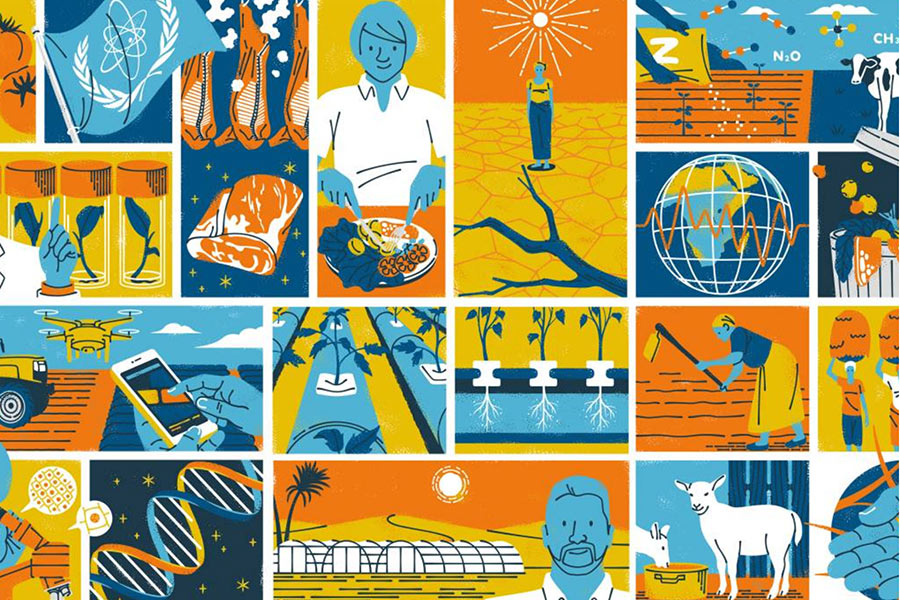
Banana trees that fit inside a test tube. Burgers made without a cow in sight. Fish farmed in the desert. Robots picking fruit. Welcome to the brave new world of food, where scientists are battling a global time-bomb of climate change, water scarcity, population growth and soaring obesity rates to find new ways to feed the future.

With one in nine people already short of enough food to lead a healthy, active life, supporters pushing for a Second Green Revolution argue without major changes hunger will become one of the biggest threats to national security and human health. To tackle this looming crisis, scientists and agricultural experts are looking to the future – and back to the past – to find innovative ways to produce food.

If you like this, subscribe here for more stories that Inspire The Future.

But they admit getting billions of farmers globally – and consumers – to change will be a battle.

Bruce Campbell, director of the CGIAR Research Program on Climate Change, Agriculture and Food Security (CCAFS) – a global network of scientists – said agriculture had to change to meet global goals on climate change and ending poverty and hunger.

“You need a revolution in the agriculture and food system within the next decade because without it, we’re never going to achieve any of the really important (global) goals that we’ve set,” Campbell told the Thomson Reuters Foundation.

A visit to a series of white, low-rise United Nations-backed laboratories 35 km (22 miles) outside Austria’s ornate capital Vienna provides a glimpse into the food of tomorrow’s world.

Here, in laboratories and greenhouses packed with genetic sequencing machines, robotic equipment and plants and insects of all sizes, scientists are using nuclear technology to stop insects reproducing and to spur disease-resistant banana trees.

Sub-Saharan Africa has for decades struggled to control bloodsucking tsetse flies that kill more than 3 million cattle and other livestock each year.

Meanwhile in Southeast Asia and Australia, the fungal disease fusarium wilt threatens to wipe out bananas, a global favourite rich in micronutrients.
But the labs, set up by the U.N. Food and Agriculture Organization (FAO) and the International Atomic Energy Agency (IAEA), have helped Senegal almost eradicate tsetse flies in one area and created bananas that can stand up to pest threats.

“Under climate challenge … we face many challenges in agricultural production. One of the major issues is more and emerging diseases for plants and animals, and insects,” said Qu Liang, director of the joint FAO/IAEA division.

Scientists are also working on other innovations – from gene editing of crops and lab-grown meat to sensors on drones and tractors – that could help to reboot the world’s food system and fundamentally change how food is grown, distributed and eaten.

But technology is only part of the answer, experts caution. Finding sustainable ways to overcome escalating challenges will require everything from delving into culture and tradition to rethinking subsidies and politics around food, they say.

However almost everyone agrees that change is needed.

“Our agri food system is at a critical stage. It must be re-shaped,” Shenggen Fan, director general of the Washington-based International Food Policy Research Institute (IFPRI), told the Thomson Reuters Foundation.

Food monopolises a huge share of scarce resources, Fan said, and numbers bear this out.

Crops take up 11 percent of the land surface, livestock grazing covers 26 percent of ice-free land, and farming accounts for about 70 percent of all water used, according to the Organisation for Economic Co-operation and Development (OECD).

Livestock generate more greenhouse gas emissions than transport, according to the FAO, accounting for about 14.5 percent of world emissions.

Faced with growing climate concerns, many people – including billionaire philanthropist Bill Gates – are pushing for a Second Green Revolution to develop crops that can be grown in droughts and resist new pests and diseases.

The first Green Revolution, which peaked in the 1960s, dramatically boosted harvests in poor parts of the world by introducing high-yielding seeds, fertilisers and irrigation which helped stave off famine in hungry parts of the world.

But the industrial farming era it spurred has failed both consumers and the environment, critics say, by leading to a food system that cripples the environment, contributes to climate change, and concentrates wealth in multi-national companies.

“We live in a changing world and we are limited in resources, in terms of land, water, fertiliser,” said Ivan Ingelbrecht, head of the plant breeding and genetics laboratory in Vienna.

“So having sustainable food production systems is very important,” he said, holding a test tube containing a miniature banana tree in his hand.

One problem, experts say, is that agricultural practices can be hard to change. Nearly 2.5 billion people are involved in small-scale farming, managing about 500 million small farms, according to the International Fund for Agricultural Development (IFAD).

“Agriculture has kind of been stuck for the last 500 years,” said Andy Jarvis, research director at the Colombia-based International Centre for Tropical Agriculture (CIAT).

Machinery and better crop varieties have made agriculture more productive but fundamental problems remain, from reliance on heavy manual labour to difficulties managing pests and diseases, he added.

The world’s population, meanwhile, has grown both in size and bulk, with no signs of the upward trend abating. Of the world’s 7.6 billion people – a population projected to reach 9.8 billion by 2050 – about 815 million people go hungry daily while 2 billion are overweight or obese, sending health costs soaring. Among them is Yatzyri Martinez, aged six from Mexico City, who weighs 38 kg (84 pounds), loves spaghetti and fast-food snacks, and comes from a family plagued by type 2 diabetes.

Salvador Villalpando, a specialist doctor who treats her at a child obesity clinic at the Federico Gomez Children’s Hospital in Mexico, one of the world’s fattest nations, said keeping people from becoming obese is the aim.

“When you get to treat obesity, you’re one day too late,” he said.

Mexico is not alone. Adult obesity rates are increasing in all of the United Nation’s 193 member states, including in sub-Saharan Africa and South Asia where the focus for decades was eradicating hunger. Globally, about 40 percent of adults are overweight and 13 percent obese, says the World Health Organization (WHO), with the surge in obesity in the last three decades presenting a major public health epidemic in both poor and rich nations.

Growing demand for meat and dairy as countries become wealthier is placing a heavier demand on world food systems, driving climate change as land is stripped of forests and ploughed. The volume of food transported around the world also is exacerbating global warming.

However, calls to use more pesticides and fertilisers to get more food from the same land are based on wrong assumptions, said Emile Frison of the International Panel of Experts on Sustainable Food Systems (IPES-Food). He said there is already enough food available to feed the planet today and in 2050 – but it’s in the wrong places or wasted.

Globally, one third of all food produced – worth nearly $1 trillion a year – is binned or otherwise wasted, according to the FAO.

“It’s a matter of access, of waste, of consumption models that are unsustainable. Recommending a technology fix approach is certainly going in the wrong direction,” Frison told the Thomson Reuters Foundation.

James Rogers, CEO of Apeel Sciences, a California-based start-up company, agrees the planet is producing more than enough calories to feed everyone. But he believes technology can help resolve some key issues, particularly food waste. His company produces a plant-based coating that comes in powder form and, when applied with water, can double the shelf life of fruit and vegetables without refrigeration so farmers in remote areas can get them to market without spoilage.

The coating is being tested on mangoes in Kenya and cassava in Nigeria, funded by the Bill & Melinda Gates Foundation. Technology is also helping meet the growing demand for meat, without more emission-producing livestock. The ideas harken back to predictions former British Prime Minister Winston Churchill made in a 1931 essay. “Fifty years hence we shall escape the absurdity of growing a whole chicken in order to eat the breast or wing by growing these parts separately under a suitable medium,” he wrote.

Impossible Foods and Beyond Meat, companies that produce high-tech burgers that taste like the real thing but contain only plants, are winning investment from backers as diverse as Gates and Tyson Foods, the largest U.S. meat processor. Memphis Meats, meanwhile, is growing meat from animal cells in laboratories, something advocates call ‘clean meat’ because it is better for the environment. Its backers include Virgin Group boss Richard Branson.

If you like this, subscribe here for more stories that Inspire The Future.

Such alternative meats offer “a far more efficient way” to feed demand for tasty protein while cutting environmental damage, said Bruce Friedrich, executive director of The Good Food Institute (GFI), which supports alternative meat companies and lobbies on their behalf.

“Plant-based meat and clean meat would be cheaper, more efficient, and would not have bacteria or drug residue contamination. They would be better in every conceivable way,” Friedrich told the Thomson Reuters Foundation.

To grow enough food despite increasing water scarcity – agriculture today sucks up about 70 percent of global freshwater used each year – farmers are also looking to technology.

By tweaking a gene found in all plants, for instance, a team of international scientists have tricked tobacco plants into partially closing their stomata, microscopic pores in the leaf that let water evaporate. The plants grew with a quarter less water and little impact on harvests, said Steven Long, a crop sciences professor at Britain’s Lancaster University.

Researchers hope the tweak will work as well in cowpea and soybean, main sources of protein in developing countries, and in rice, a major staple food. Despite the benefits of such innovations, some critics fear they could widen the divide between farmers who can access innovation and those who cannot.

Farms which rely mainly on family labour produce the bulk of food in developing countries but many cannot afford the latest agricultural technologies.

Many farmers also live in countries that lack access to reliable weather information, which can make planting and harvesting crops a risky endeavour, experts say.

Agriculture’s technological revolution, in its current form, is neither inclusive nor democratic, said CIAT’s Jarvis, in part because few of the innovations are aimed at small-scale farmers. What those farmers grow is “not a monoculture of 20 hectares of lettuce production in California or Europe but half-hectare plots of maize,” he said. But farmers do have mobile phones, so finding ways to use them to improve farming is essential, added Jarvis, who co-founded the CGIAR Platform for Big Data in Agriculture.

One company bringing technology to small farmers is Hello Tractor in Nigeria, known as “Uber for tractors”.

Founded by Jehiel Oliver, a former American investment banker, it started by selling two-wheel tractors equipped with GPS antennae – but most farmers found the prices too steep.

Hello Tractor now uses mobile phones to link those able to buy tractors with farmers who want to use tractor services. “Most farmers can’t afford to own a tractor and most tractor owners struggle to identify customers within rural, disjointed markets,” Oliver said in an email.

A Kenya start-up, meanwhile, is banking on mobile phone technology to help small-scale farmers get much-needed credit from banks. FarmDrive, founded by two Kenyan computer scientists – both women who grew up in farming families – aims to help farmers who need loans use satellite images and sensors to paint a detailed picture of their potential yields and risks.

In December, FarmDrive teamed up with Safaricom, Kenya’s biggest telecoms company that set up the revolutionary mobile money platform M-Pesa. Now Safaricom’s DigiFarm mobile platform offers small farmers everything from discount vouchers for fertiliser to help getting small loans or training, all in one place.

Using the new platform, FarmDrive reached 10,000 farmers in four months, compared to just 5,000 farmers in two years when the company was working alone, co-founder Rita Kimani said.

“It’s showing the possibility of partnerships … and that’s really how we are going to solve the challenges the farmers face. One tool or one organisation is not going to solve everything,” she said.
Others are coming up with more unusual solutions.

The Sahrawi refugee camps in western Algeria, near the border with Mauritania, Western Sahara and Morocco, might seem an unusual spot to try hydroponic farming, in which plants are grown in water rather than soil.

Land around the camps is arid, isolated and prone to sandstorms and extreme swings in temperature – and the 173,000 Sahrawis from Western Sahara, stuck in the camps for the past four decades, are nomads who prefer meat and milk. But the pastoralists are now using bare-bones hydroponics units of metal and plastic to grow mats of barley as animal feed.

The plants – the only green thing visible for miles – are ready to use in just seven days, and are grown with just a tenth of the water needed for traditional crops. “As refugees, we are poor people and can’t afford expensive things like fertilisers and hybrid seeds,” said Taleb Brahim, one of the brains behind the project.

Nearly 2,000 km (1,240 miles) east, in Ouargla in southern Algeria, date and palm farmers are similarly turning to an unusual strategy – rearing fish in the Sahara.

The switch is part of the North African nation’s push to increase fish production as catches from the Mediterranean Sea dwindle. The project aims to help farmers not only earn cash selling fish but also boost their harvests by using nutrient-rich water from fish ponds on crops.At the Coopedota cooperative in Costa Rica, meanwhile, sustainable techniques such as reducing chemical sprays, planting more shade trees, and cutting energy and water consumption have brought an added benefit for farmers.

Beyond cutting costs and improving efficiency, they now sell the world’s first officially certified carbon neutral coffee. Farmers hope customers will pay a premium.

“We can put our coffee in the international market and if the market is at $120, we might get $180 or $200,” said grower Fernando Solis Arguedas, a third generation coffee farmer. In developing countries about 40 percent of food grown is spoiled or lost after harvest. Then another 40 percent of what gets to retailers or consumers in developed countries is wasted, according to the FAO.

Cutting that waste is crucial to reducing climate change and growing demands on limited water and land, experts say. And now chefs are moving to the forefront of the effort.
In the leafy seaside town of Brighton, Silo, Britain’s first zero-waste restaurant, turns leftover whey from making cheese into sauce, bread crust into miso soup and inedible parts such as egg shells and bones into compost.

Michelin-starred chef Massimo Bottura of Italy opened a new restaurant in central London last year, the Refettorio Felix, that doesn’t welcome wealthy diners but caters for the poor with meals cooked from supermarket scraps. In Leeds, in northern England, Adam Smith’s The Real Junk Food Project started out as a single cafe in 2013, taking food destined for landfills to local schools to support low-income families and teach pupils about food waste.

It has since ballooned into a network of more than 120 eateries and stores, including Britain’s first pay-what-you-like food waste supermarket, offering anything from zucchini to breakfast cereals.

Smith says he hopes one day the network will go out of business, as food waste is reduced from field to plate.

“Ideally the measure of success … would be that we would no longer be here,” he said.
Richard Horsey, co-author of “Ugly Food: Overlooked and Undercooked”, thinks part of achieving that is persuading people to diversify what they cook and include things they might bin.

He lists octopus, pigs’ trotters and wild rabbit as some of the ingredients often overlooked in Anglo-Saxon food cultures.

“I really do think that if you can make a change to what people are putting on the table every evening, that’s where the numbers are, that’s where the impact is,” he said. A more diverse diet is also is a resilient one, experts say.

Historically, farmers cultivated at least 7,000 plants to eat but today 60 percent of global calories come from just three plants – wheat, rice and maize.

Helping Asia – known for its insatiable appetite for rice – eat more millet, a forgotten rural diet staple that is rich in protein and can grow in salty soil – could help keep harvests sufficient as climate change takes hold, experts say.

Buyers in Taiwan, Japan, South Korea and Hong Kong are already eating less rice, while India is pushing millets as a way to reduce a stubbornly high rate of malnutrition. Technological advances hold promise to make food systems work better. But experts warn there are no quick wins when it comes to reshaping something as fundamental as food and agriculture.

“Technologies are just a tiny part in the whole puzzle,” said Tom Anyonge, lead technical specialist for IFAD. Policies, institutions and food systems also need shifts if technology is to achieve its potential, he said.

He pointed to M-Pesa, which lets mobile phone users transfer or borrow money, pay bills and save via texts. Launched by Kenya’s Safaricom in 2007, it now has nearly 28 million users in a nation of 45 million and has been expanded or mimicked across Africa. Its success is due not just to the pioneering technology but to efforts behind the scenes to make it work, Anyonge said.

Those include improving mobile coverage, opening up Kenya’s telecoms sector, and enacting laws allowing partnerships between mobile companies and banks. “It would have stayed as a good idea” if not for that help, he said. “You need to touch on so many other things beyond technology.” IFPRI’s director-general Fan agrees. Innovations are key to rebooting the food system – but they should not be limited to just technological ones, he said.

“Innovation in policies, innovations in institutions, innovations in even new thinking, open-mindedness, will be important,” he said.

By Thin Lei Win. Editing by Belinda Goldsmith and Laurie Goering

If you like this, subscribe here for more stories that Inspire The Future.

Fashionably Late: Saudi Arabia Hosts First-ever Fashion Week

Fashionable women, dark-haired Saudis and blonde Eastern Europeans alike, fill the gold-trimmed halls of Riyadh’s Ritz-Carlton Hotel, marking the start of Saudi Arabia’s first-ever fashion week.

Models and makeup artists preparing for the inaugural Saudi episode of Arab Fashion Week that took play in early April said they were surprised the event was taking place in the deeply conservative Muslim kingdom.

“We are so excited because this is the first fashion week in Saudi Arabia, so we are making history,” model Anita Dmycroska said.

Strict social restrictions have eased dramatically under Crown Prince Mohammed bin Salman, who has reined in religious police, introduced public concerts and lifted bans on cinemas and women driving.

If you like this, subscribe here for more stories that Inspire The Future.

Yet, restrictions persist. Tuesday’s reception was open to men and cameras, but only women are permitted at catwalk events and outside photography is barred.

Women in public places in Saudi Arabia, the birthplace of Islam, wear abayas – loose-fitting, full-length robes symbolic of piety.

With recent reforms, women in some cities have begun to don more colourful abayas, sometimes trimmed with lace and velvet or left open to reveal long skirts or jeans.

No abayas will feature on the catwalk. The event hosts invitation-only fashion viewings and a Harvey Nichols pop-up store in a tent that was still being erected hours before the first show.

Another tent holds the catwalk, featuring designers from Brazil, Lebanon, Russia, Saudi Arabia, the United States and the United Arab Emirates.

MAKING THE KINGDOM FASHIONABLE

The event, initially scheduled for last month, was postponed because of delays in issuing visas. Industry figures from Italy, Russia and Lebanon flocked to Riyadh, many for the first time, to admire the work of local and international designers.

Layla Issa Abouzeid, Saudi Arabia country director for the Dubai-based Arab Fashion Council (AFC) organising the event, said 1,500 people were expected to attend, including 400 from abroad.

She hopes the event will bring revenue into the kingdom and highlight local talent.

“People go to Paris during Paris Fashion week, the hotels are completely fully booked,” she said. “I want to create the same demand in Saudi Arabia, twice a year. I want to create a platform for the local designers to go worldwide.”

Lebanese designer Naja Saade came to Riyadh to display his couture collection. “I’m very proud to participate in this first edition of Arab Fashion Week in Saudi Arabia, because it’s a part of the revolution of the women in this country,” he said.

By bringing talent from Europe and placing international brands on the same catwalk as Arab brands, he hopes to elevate local fashion designers.

AFC wants to introduce fashion courses, internships and scholarships to Saudi Arabia and develop a fashion district in Riyadh. Jacob Abrian, AFC founder and chief executive, said many Arabs have had to leave their countries to have fashion careers, but this recurring event allows them to stay in the region.

“I was always asking myself, why do us Arabs have to travel abroad to find our future? Why can’t we find our future in our own countries?”

By Sarah Dadouch, editing by Larry King.

If you like this, subscribe here for more stories that Inspire The Future.

Versace And Furla Join Designer Labels Ditching Fur

Italian fashion house Versace and handbag and accessories maker Furla said they would stop using real fur in their creations, joining a growing list of luxury labels turning their backs on the fur industry.

Fashion houses around the world are bowing to pressure and using alternatives to real fur amid pressure from animal rights groups and changing tastes of younger customers, who are increasingly aware of the environmental issues linked with the clothes they buy.

If you like this, subscribe here for more stories that Inspire The Future.

Donatella Versace, the artistic director and vice-president of Versace, said that she did not want to kill animals to make fashion and that it “it doesn’t feel right”, speaking in an interview with The Economist’s 1843 magazine.

People for the Ethical Treatment of Animals’ (PETA) Senior Vice President Dan Mathews said in an emailed statement that it was “a major turning point in the campaign for compassionate fashion”, adding that he looked forward to seeing a “leather-free Versace next”.

The animal rights group recently campaigned at the Pyeongchang Winter games for an end to the fur trade.

Furla on Thursday committed to replacing all fur with faux-fur for both menswear and womenswear starting from its Cruise 2019 collection.

Italian fashion group Gucci, part of Paris-based luxury conglomerate Kering, said in October it would stop using fur in its designs from its spring and summer 2018 collection joining Armani, Hugo Boss, Tommy Hilfiger, Calvin Klein and multi-brand online luxury retailer Yoox Net-A-Porter .

British designer Stella McCartney has long followed a so-called “vegetarian” philosophy, shunning not only fur, but also leather and feathers.

By Giulia Segreti; Additional reporting by Sarah White in Paris; Editing by Elaine Hardcastle.

If you like this, subscribe here for more stories that Inspire The Future.

Artist Live Streams Beijing Smog to Raise Awareness

Chinese artist Liu Bolin, known as “the invisible man” for using painted-on camouflage to blend into the backdrops of his photographs, says his latest project aims to put the spotlight on China’s air pollution problem.

As north China battles with poor air quality, Liu said the recent pollution warnings inspired him to show live video of the smog in the capital, Beijing.

If you like this, subscribe here for more stories that Inspire The Future.

To do that, Liu walks around wearing an orange vest with 24 smartphones attached on the front and back, live-streaming scenes of smog which he calls “a disaster.”
“As an artist, to discuss it with images is what I think we should do,” Liu told Reuters Television.

The artist, who is also a sculptor, has won international recognition with exhibitions in Asia, Europe, the Middle East, the United States and Latin America. Liu’s previous “Hiding in the City” series featured him hidden in plain sight against monuments, murals, buildings and scenes of daily life in Beijing, Venice, New York and elsewhere.

The invisibility theme was done as a protest against the demolition of Liu’s studio when authorities razed an artists’ village in Beijing. But then he fell in love with this way of presenting his ideas.

His latest work is titled “Today Even Numbers Banned”, a reference to Beijing’s odd-even licence plate system for restricting the number of vehicles on roads when pollution levels are high.

China’s environmental watchdog regularly issues warnings about choking smog spreading across cities and orders factories to close, residents to stay indoors and curbs traffic and construction work.

Some Beijing residents were puzzled by the sight of Liu and his orange smartphone vest, but they approved of his efforts to raise awareness of the smog problem.

“I think this is pretty good. I don’t quite understand his art form, but his work can make more people know about smog in Beijing, right?,” said 27-year-old Xu Chenglong. 

If you like this, subscribe here for more stories that Inspire The Future.

U.S. Entrepreneur Wins Award For Making Government ‘Less Insulting’

Jennifer Pahlka believes that coding can help deliver a better U.S. government that works to help reformed felons earn an honest living and public servants frustrated by poor technology.

After seeing the challenges working in child welfare, she founded San Francisco-based non profit Code for America in 2009 to create user-friendly websites that make it easier to navigate systems to access state benefits or services.

If you like this, subscribe here for more stories that Inspire The Future.
“People need help for a very wide range of reasons and they’ve hit a rough spot and they just need a little bit of help,” she told the Thomson Reuters Foundation at the Skoll World Forum, an annual gathering of 1,200 social entrepreneurs.

“We need to help these people in a much less burdensome, and frankly, less insulting way. We can give them that help in a way that is dignified and respects their time.”
Pahlka was in Oxford – where Ebay billionaire Jeff Skoll established a centre for social entrepreneurship in 2003 – to collect an award, one of six Skoll winners this year.

The Skoll Centre at Oxford University aims to increase the impact of social entrepreneurs by helping them to set up new ventures, training leaders and carrying out research, from health to climate change to education.

Britain is seen as a global leader in the growing social enterprise sector, home to about 70,000 businesses set up to address social and environmental issues that employ nearly 1 million people, according to industry body Social Enterprise UK.

Pahlka said her organisation is unusual. “Most social enterprises work around government,” she said. “They are essentially trying to supplement where government is failing. We take the approach of strengthening government itself to get these social outcomes.”

Code for America’s websites reduce the time-consuming bureaucracy of form filling that might deter applicants to about 10 minutes, she said, and they are designed for smartphone users to cater to the millions who do not have a computer at home.
One innovation is Clear My Record, which allows users to get rid of criminal offences on their data record that might prevent them accessing employment, benefits or credit.
Pahlka was inspired by the election of U.S. President Barack Obama, whose online campaign mobilised masses of young voters as well as donations.

“The thinking was, if the Internet can help get a president elected, can it help him govern better?” Pahlka asked. “The application of modern tech and modern approaches to problem solving can’t be limited to politics. It has to help us do a better job, using tax dollars to get the outcomes that we intend.”

Pahlka went on to work for Obama as his deputy chief technology officer in 2013 and helped found the United States Digital Service, which helps federal agencies improve their websites and simplify digital services.

“Public servants who help people get food assistance or take care of a kid who needs to be in a foster home – those people need tools to do their jobs,” she said. “We weren’t – and still in many case aren’t – helping those people do those jobs.”

Code for America aims to help more than 500,000 people in need with more effective government services in more than 70 cities, states and counties in 2018.

By Lee Mannion; Editing by Katy Migiro. 

If you like this, subscribe here for more stories that Inspire The Future.
0