Maria Menounos: A New Picture of Health

Maria Menounos says real leaders must be CEOs of their own health — and that means making health care one of your best skill sets.

By Carla Kalogeridis

After having an intracranial tumor removed in 2017 and successfully battling stage 2 pancreatic cancer in 2023 — both of which she attributes in part to an accumulation of poor health choices including not prioritizing her health — Maria Menounos is on a mission. Her message: Leaders must be CEOs of their own health.

Menounos is best known for her work in the entertainment world. She was a TV correspondent and host (Entertainment Tonight, Extra, E!News, Today, Access Hollywood), presenter (Miss Universe pageant, Eurovision Song Contest), actress, bestselling author, entrepreneur, award-winning journalist, and host of the daily podcast Heal Squad.

She describes her earlier life as a whirlwind of 18-hour days, driven determination, high stress, and poor eating. Taking care of herself was not on the priority list — until her body just couldn’t keep pace any longer. Her health traumas led her to what she considers her higher purpose.

For Menounos, it took a brain tumor to open her eyes.

“I knew I had to make changes; I just didn’t know how,” she tells Real Leaders. “I was trapped in an old dream. I wasn’t really happy anymore. I wasn’t fulfilled. But I was doing great.”

At the time, she was hosting E!News. “I was doing like 50 jobs at once,” she recalls. “The first thing I remember waking up from surgery was thinking, ‘What the f— was I doing? I was trying to keep up with people. I don’t need this. This doesn’t define me at all.’”

Menounos describes it as “a rebirth moment.”

“I knew it was my chance to make changes in my life. My body was screaming for help for so long, and I would just shush it, like, ‘Body, be quiet. I’ve got to go back to work.’ My priorities were not in place.” 

Menounos knows her story is not unique. “It’s a general issue with high performers. We must go from illiterate health kindergarteners to being CEOs of our health. Kindergarteners don’t know anything. They just do what their friends are doing. Likewise, we tend to follow what we hear about health without any research, and that’s just not serving us. With all the things happening to our air, our water, our food supply, that’s just not good enough anymore. Unfortunately, there is no health literacy, and we are farming out our health decisions to doctors without really understanding what they’re fully capable of and what their expertise is.”

Growing up, Menounos says she loved being with older people because she wanted to learn from their mistakes and avoid making the same ones. “Similarly, my goal is to affect people with what I’ve learned so they can start implementing little things in their life that will make a big difference down the road. Health trauma is so often an accumulation of poor choices. It’s trauma that takes us to the places where we are forced to learn, but I really want to help people find this message without the trauma.”

She points out that leaders hear all the time about work-life balance, but they don’t realize that the balance comes from taking care of themselves. “All we know how to do is win and succeed,” she says. “From the time we are little kids, we are taught to get good grades so that we can go to a great college, get a huge job, make a lot of money. But nowhere in that equation is anyone talking about your health and getting enough sleep, making sure your circadian rhythm is balanced, your hormones are balanced.”

Health Literacy as a Business Skill

Menounos says that to be a real leader and take the best care of your people, you need to develop health literacy as one of your business skills.

“Health literacy is so important because your people need to know that you care about them,” she says. “It’s not normal to do the job of 10 people just because computers have made it possible. We’re taking in so much, and our brains are exhausted and fried. You’re not going to get the best work out of people. Health is just one of those things that you can’t delegate — not anymore.”

Menounos says real leaders show people that succeeding isn’t the only thing. “What you need is 360-degree succeeding,” she says. “It’s really feeling fulfilled — achieving, of course, and doing something meaningful — but also taking care of yourself. If leaders show their people that it is OK to prioritize their health, and other people do the same, then we have a whole new health care system.”

Menounos recalls being terrified to take a day off from work, terrified to not be at the morning meeting. “Living like this, how are you supposed to fit health care into your life? Your employees will work so much harder for you if you give them the freedom and flexibility to take care of themselves,” she says. “Real leaders don’t say that productivity is the most important thing. This is a new area that leaders need to tackle, and they’re going to benefit from it too.”

Your Thoughts Are Your Body

One important step to being CEO of your health, she says, is to learn to manage your thoughts. “It’s a hard pill to swallow, but our thoughts become things,” she says. “As much as we want to avoid the idea that we are contributing to our health, from everything I’ve studied and everyone I’ve learned from, your brain doesn’t know the difference between perception and reality. So, you can tell the brain anything you want — good or bad — and that has a huge impact on what you’re going to experience. The relationship between mental and physical is one thousand percent real. Changing your thinking can change your reality.”

Menounos does a great deal of work on meditation and the mind-body connection, studying people like Dr. Joe Dispenza and Gabby Bernstein. “I want full mind-body-soul healing. I realize what a massive task and undertaking I’m asking of Dream Big Maria. But I’m learning that things bubble up to the surface to be healed. Sometimes you’re trapped in an old dream, and you don’t even realize it. You’ve got to listen and follow the breadcrumbs.”

The Servant Leader Mistake

Menounos says high achievers often think of themselves as servant leaders, and to them, that means putting themselves at the bottom of the list. “But are you going to be valuable to those people you serve when you go down?” she points out. “What are your employees supposed to do — keep pumping you for information while you’re in your hospital bed?”

She recognizes that coaching your people to take care of themselves can be a delicate conversation. “The message about how to take care of yourself must be applied to the right person at the right time. If you’re young and you want to succeed, you’re going to have to work hard. I’m a believer in working hard. But get your sleep, eat right, wear blue light glasses. Good health is an accumulation of choices.”

Menounos believes her health issues were the result of an accumulation of bad choices, extreme stress, and working in a toxic environment. “Now I’m accumulating so many more good choices, and I’m trying to turn that train back,” she says. “Young leaders today can start out making good choices. I thought it was cool to be a workaholic. What an idiot I was. Now, I prioritize my well-being at all costs. I don’t want another brain tumor to learn this lesson all over again.” 

Where to Start

Maria Menounos’ message for real leaders:

“You cannot lay your care at anyone’s doorstep but your own. You must become an expert who knows what each doctor you deal with is good at and what they’re not good at. It’s hard work to be healthy these days. But you must do this in a way that sets an example for your employees, and then allow them to follow your example.”

Menounos clarifies that she is more critical of the medical system than of doctors themselves. “Doctors are amazing, but most of them are amazing at a few things,” she says. “As Tony Robbins puts it, ‘Doctors can be sincere, but they can be sincerely wrong.’”

She underscores that the smart play is to take charge of your own health plan. “When you get an opinion, you’ve got to get another opinion. Get multiple opinions until you feel good. You need to know your surgeon has done this thousands of times — not one time, not 10 times.”

Menounos admits that asking questions is hard. “People come into doctors’ offices with their Google stuff, and doctors get really abrasive,” she says. “So now you’re fighting egos when all you’re wanting to do is to be an advocate for yourself. You have to ask the right questions: How many of these surgeries have you performed? How long have you been doing this? What possible things could go wrong? Their experience is the No. 1 thing, but you must ask about it in a nice way.

“Nurses and doctors are overstretched,” she continues. “They’re exhausted. By the time they see you, they’ve already dealt with a lot of cranky people who have been mean to them. So, you must find a way to massage egos and communicate and get what you want, which is a good outcome.”

Earn the Gift of Discretionary Effort

The Secret to 21st Century Leadership

By Karla Brandau

A leader is one who knows the way, goes the way, and shows the way.”  – John C. Maxwell

Wake-Up Call

Great leaders do not sugarcoat the truth. When the past recession hit, one CEO of a large manufacturing company confronted the realities and knew something had to change for his company to survive. Peering over his reading glasses, he looked across the desk at one of his employees and said, “Nothing in this company is sacred. Everything will be evaluated and put on the chopping block in order to maintain profitability. This economy is but a wake-up call. We will survive.”

Leadership teams across the world hear the wake-up call whenever an economic recession hits, but the quickly changing landscape of the 21st century requires continuous refocus to survive as an organization. The constant evaluation of organizational performance includes leadership practices.

The most recent worldwide economic downturn was not a mere fluctuation in the market, but was revolutionary, causing seismic shifts in business procedures and in organizational social structures that affect profitability, economic sustainability, and discretionary effort. The recession caused organizations to look at the principles that guide their leadership teams to enable them to better navigate the complexity of their workplace culture amid the uncertainties of the global economic environment.

Outdated People Practices

A current deterioration of business results may be attributed to changing market conditions or to the inability to compete with the improved products and services offered by competitors. These may be factors in such a complex issue as market success, but we maintain the real culprit is failure to create an environment where discretionary effort is freely given by every employee on a daily basis.

As your leadership team evaluates your people practices that discourage discretionary effort, you may observe that some practices are outdated because they were designed from the implicit social contracts of the 20th century. While these people policies worked at one time, most of them are declining in their effectiveness, especially with the new workers entering the workforce.

One of the 20th century declining people philosophies is “do more with less.” Companies under pressure to improve the bottom line try to improve revenues by letting people go and by putting extreme stress on machinery, supply chains, and workers to produce the maximum amount possible in the least amount of time with as few resources as possible. These strategies work for only a limited time.

The people practice of pushing people to work harder and to give more is a temporary solution that more than enough employees are willing to deliver when occasionally asked. However, if the organization asks for the same maximized effort every week, there are consequences. Workers become tired and make mistakes. Their home lives become unbalanced and employees’ families can experience resentment. Employees could be asked to temporarily overlook safety or quality procedures not overtly noticeable to a customer but compromises the integrity of the products. What if, however, while temporarily overlooking safety or quality, a severe problem surfaces with the product or an employee gets seriously hurt at work?

A problem with the do-more-with-less approach is that it assumes increased demand can be met simply by squeezing more out of the system. The hidden reality is that every system has built-in inefficiencies, and when leadership teams start looking for wastefulness and ineffectiveness, they set countless improvements in motion.  

21st-Century People Practices

Simultaneously with the discovery and elimination of inefficiencies, leaders can start the process of establishing a culture that earns the gift of discretionary effort on a regular basis. Discretionary effort is the key to 21st-century productivity, and economic sustainability. The gift of discretionary effort is built on valuing human dignity, creating safety and security, extending social acceptance, and rationally aligning each individual employee with company purposes.

What is discretionary effort? Cultivation of discretionary effort is both an individual and a collective process to improve the level of energy and innovation that flows within an organization. It is neither a quick fix nor an expensive and resource-depleting process, and when done in a measured and incremental way, discretionary effort is a breakthrough improvement.

Traditional literature defines discretionary effort as the difference between the level of effort a worker is capable of bringing to an activity or task and the minimum effort required to do the work and get a paycheck. This minimum level of effort can be made by employees who are competent at their jobs but who are relatively unengaged in the overall goals of the company.

For example, experienced and knowledgeable workers may only be giving the minimum level of effort as they do routine work required by their job description: processing invoices, making sales calls, writing proposals, and completing work of a supportive nature such as coordination, follow-up, rework, rewrites, and clarifications. How would the results of their work be different if they understood the goals of the company and were giving discretionary effort instead of the minimum required to get a pay check?

Giving discretionary effort is a voluntary act. When an employee gives the company discretionary effort, it is an intentional, free-will choice. Before discretionary effort contributions are observable, they exist as potential in the mind of every employee as ideas to improve what is happening. These ideas represent great power waiting to be tapped that increase resources and reduce costs as workers add value to the tasks they perform. Leadership teams often think doing more with less is about computers, technology, and waste reduction strategies. Doing more with less includes this hidden gem of teaching managers how to earn the gift of discretionary effort from employees as opposed to demanding or forcing extra effort and long hours.

What Does it Mean to Earn the Gift?

Every employee has gifts or talents that are not visible on a resume or in a hiring interview. Some of these are gifts of character such as determination, purpose, and resilience. Think of the talents of employees wrapped in beautiful boxes sitting around them on the floor and on their desks. With this analogy, your entire office building would be filled with impressively wrapped packages waiting to be unwrapped as if it were a birthday party where the “gifts” are regularly unwrapped. The workers give these packages to you and their coworkers as your leadership team works with the concepts in this book and implements the Discretionary Effort Leadership Model.

Earning the gift of discretionary effort from employees begins with the members of your leadership team living and breathing the five levels of the Discretionary Effort Leadership Model themselves. As the leaders practice integrity and unwrap their own gifts of discretionary effort, their direct reports will see the positive results and want to imitate the leaders’ examples. In an environment of mutual confidence and trust, managers are respected and are in a position to earn the gifts of discretionary effort from employees.  When discretionary effort is modeled by management and is engrained in the culture, workers freely unwrap their gifts of discretionary effort as needed because they feel safe, respected, and trusted. 

A man at one company where we consulted told us, “My company has had my hands for over 30 years. You know, they could have had my head as well.” This quote illustrates two things. First, some companies do not place appropriate value on the gifts of the individual employee. Second, most workers want to contribute at higher levels than their environments allow. Discretionary effort is earned by recognizing workers as resources that can bring value beyond the obvious academic discipline and skills for which they were hired.

The Ross Brandau Discretionary Effort Leadership Model helps leaders earn the gift of discretionary effort and the release of knowledge that resides in the brains of employees on a daily basis, both of which help the company move forward to increased economic sustainability.

Figure 1.The Five Leadership Levels

When implemented, the five leadership levels outlined in the model make it possible for leaders at all levels of the organization to earn the gift of discretionary effort from employees on a regular basis. Notice that a work environment of integrity and gratitude provides a solid foundation for the implementation of the five levels.

The five levels of Discretionary Effort Leadership are:

1.      Safety and Security. Leadership Level 1 provides a safe and secure working environment for employees. Rules are followed, validated, improved, refined, and recognized on a daily basis at an individual level throughout the organization. Employers place a high worth on the security of every worker. The focus on security provides an environment free from bodily harm. A safe and secure environment is essential in order for employees to concentrate on continuous improvement. Employees need to be free to work rather than worry about safety and security issues.

2.      Social Acceptance. Leadership Level 2 describes the cultural norms and behaviors that recognize the human dignity of all employees. Everyone is recognized as a value-added part of the whole, or part of the family. Employees want to feel they are part of the core group. The more they feel part of the whole team, the more success will develop as they voluntarily contribute their discretionary energy.

3.  Rational Alignment. Leadership Level 3 is critical to the functioning of the entire organization. It is here that values, vision, and mission statements flow into long-term objectives and deadlines. Employees logically align with the values, vision, and mission of the organization and then rationally make daily work plans to reflect their stewardship. The daily tasks must rationally align with work output needed to move projects from theory into reality.

At this point in the process, it is important to assess the company systems, policies, and procedures to ensure the first three levels are not being inadvertently sabotaged. If the company is structurally sound and the first three levels are carefully implemented, the fourth and fifth levels will happen naturally.

4.      Emotional Commitment. Leadership Level 4 describes the difference between engagement and emotional commitment. Manifestations of low emotional commitment hinder and impede the flow of discretionary effort individually and collectively. Modeling emotional commitment clears the way for objective, value-added solutions where employees collaborate to solve complex problems and communicate to overcome misunderstandings.

5.      Authentic Contribution. The entire organization will recognize a victory when employees move to Leadership Level 5. At this level all team members take ownership and treat the business as their own. Employees take on the feel of partners in the organization.

Understanding how these five levels work is the key to organizational profitability and economic sustainability. 

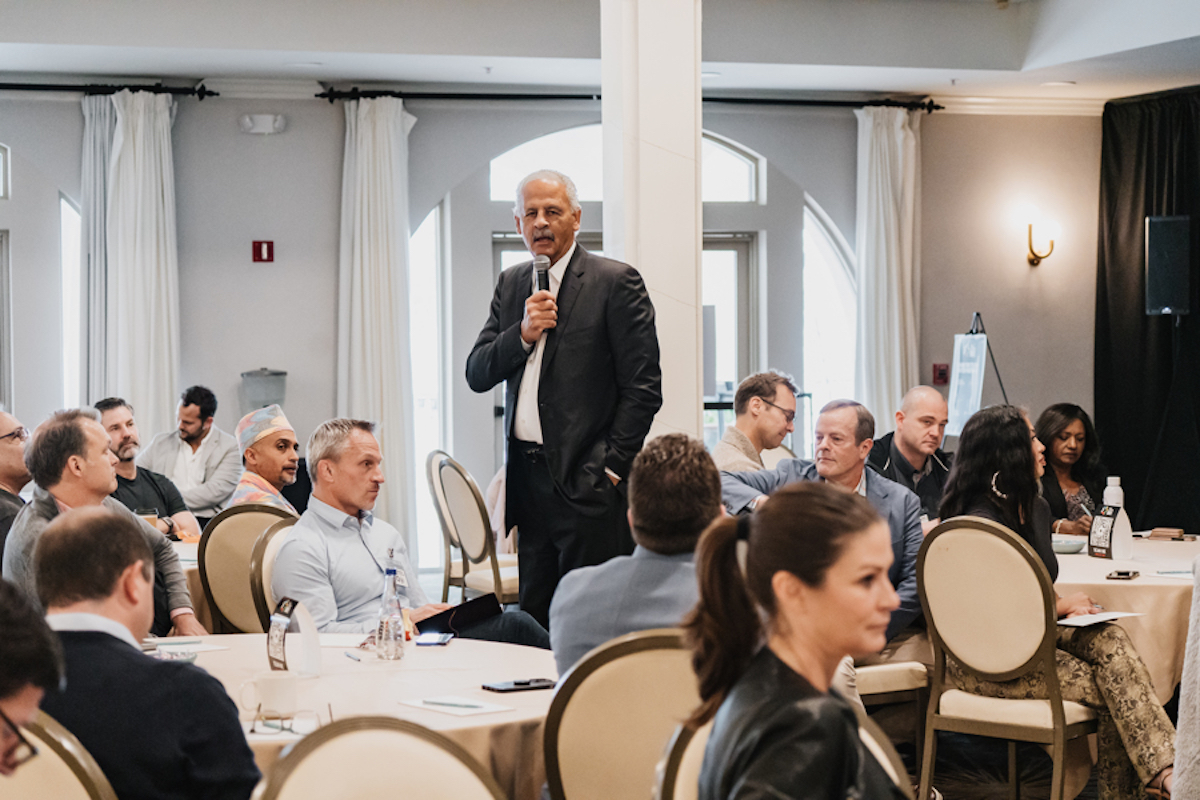
Stedman Graham: It’s the Age of Self-Leadership

Self-leadership is part of the leadership landscape, and you can’t change your circumstances until you first change yourself.

By Stedman Graham

I often say in my speeches that there could not be a better time in the history of our world to be living because, through technology, we have access to a global village.

Just by using our mobile devices and electronics, we can learn, build, develop, and create opportunities. We have the ability to self-empower and have information relevant to our development, identity, and purpose in life — if we understand how to work on ourselves. 

If you’re looking for relevancy, resources, and opportunity, it must start with yourself. Knowing who you are is the first step to your future. This is the pre-work necessary for self-leadership.

Self-leadership is connected to self-discovery, which is connected to constant education. This type of learning about yourself — deep, rich self-experience — develops new learned behaviors that keep you on track for a better, more meaningful existence. It is the successes and failures of self-discovery that lead you forward. 

Often, these words can blur together: self-determination, self-direction, self-empowerment — all ways of saying the same thing: You cannot love anyone else until you first love yourself. This core principle of life is at the heart of self-leadership too. You cannot lead anyone else until you first lead yourself. 

Leadership skills are important at all levels of engagement. It is difficult to have strong leadership without purpose and direction, a process for thinking, improved performance, and continual growth.

The key to self-leadership today is that we should always be in a constant state of growth. Nobody is perfect, and no one is expected to do everything right, but most do not know that — if we can fall down, pick ourselves up, start over and over again, and learn from our failures — we have a chance to reach our potential. It took me years to understand that the process of success is the same for everyone. The difference is some people know it and some people don’t. Everything is a process. 

No matter if you are a CEO, business owner, executive employee, or volunteer worker, we all have the opportunity to improve our lives and build more value in our personal and professional development. The value we give to ourselves is the value the world gives us. The world sees us as we see ourselves. Again, going back to self — you cannot change your circumstances until you first change yourself. 

Self-leadership is part of the leadership landscape.

It sets the tone for strategies for overcoming roadblocks. It helps us become authentic in our journey for success and achievement. It helps us manage, learn from others, and unleash our talents, abilities, and potential. We can improve our lives because we are building from a solid foundation of passion, purpose, and intent. Self-leadership helps us value our time, work on things that matter and that are important to us, and eliminate time wasters. As we eventually learn orders at the highest level of development, our organizational skills increase because we focus on outcomes that make us feel good about ourselves. 

Setting goals based on our vision becomes a process for execution and making things happen that are fulfilling and rewarding. We get to define, plan, and prepare with direction — as opposed to being caught up with external environmental conditions that have little or no meaning, can easily disappear, and cannot be sustained because we are simply reacting. 

In today’s environment, it is so important to have a clear vision of who you want to be and where you want to go.

The next important question to ask yourself is: How are you going to gain enough of the necessary information and experience to achieve your vision? That is a lifelong journey. Clarity today is so important because we have so much information that it can be overwhelming to focus on how to prioritize and put things in sequence and alignment. 

We often have so many options that we cannot minimize distractions. Social media, external world affairs, and day-to-day family challenges all must get done as well as taking care of ourselves. I never thought of those as skills, but in our modern society, it requires a lot of new skill development to navigate everything in our lives. “A leader is one who sees more than others see, who sees farther than others see, and who sees before others do.” — Leroy Eims 

Self-leadership makes you appreciate what you have because everything starts with you.

Happiness doesn’t come from big pieces of great success but from small daily achievements. Your opportunities to achieve what you want always come from small steps, one at a time. You work every day, piece by piece, layer by layer. “The best way to predict your future is to create it.” — Abraham Lincoln

The more we understand these principles, the more we can accomplish in our lives and the more we can help those around us. We can channel the best of who we are to achieve success for ourselves and those we can lead. “I long to accomplish a great and noble task, but it is my chief duty to accomplish small tasks as if they were great and noble.” — Helen Keller 

Self-leadership, to be effective, must answer these questions: What do you enjoy doing most? What gives your life meaning? What gives you peace of mind? What do you look forward to doing more than anything else? What would you do with your life even if you didn’t get paid for it?

Adding a value system to those things most important to you creates more opportunities to go deeper in our development. Self-leadership can be a difficult process and journey because it requires us to look at the positive and negative in our lives. The continuous journey of self-actualization can become a never-ending development process. That’s why it is so important to build in time for ourselves to become more productive and contribute more to ourselves and others. 

Considering all these issues is important to realizing the process of self-leadership. Our ability to evolve will depend on us. It is an inside job.

We keep working on ourselves, we go deeper and deeper in our development, and it does pay off. “You are not your circumstances, but you are your possibilities.” — Pat Healey

Tony Robbins on How to Make Tough Decisions

By Tony Robbins

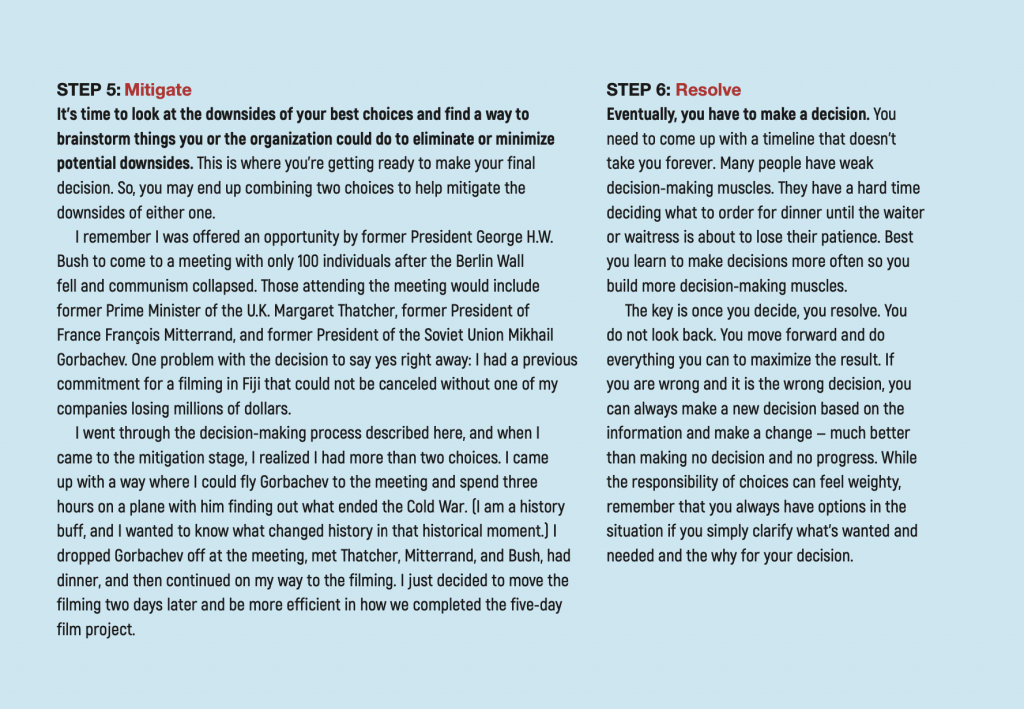
Great leaders are great decision-makers. Anyone can make easy decisions with obvious outcomes, but what makes somebody a really effective leader is their capacity to make tough decisions. You know what I’m talking about. The decisions where there is tremendous uncertainty; where you are trying to make the right choice, but you can’t know for sure what it is. Sometimes, it’s about making a choice so you can move the ball forward, find out whether it is the right choice or not, and adapt accordingly.


Life is filled with choices. Real leaders understand that to move things forward, they must make tough decisions. At times, the fear of making the wrong decisions grips us so tightly we opt for indecision, allowing the fear of failure to immobilize us and impede our progress. To break the cycle, leaders can adopt simple principles and processes that I — and many of the executives I coach — rely on. These tools are simple, but practical steps for making those necessary tough decisions. Let’s explore four of the simple principles I adhere to when making challenging decisions.

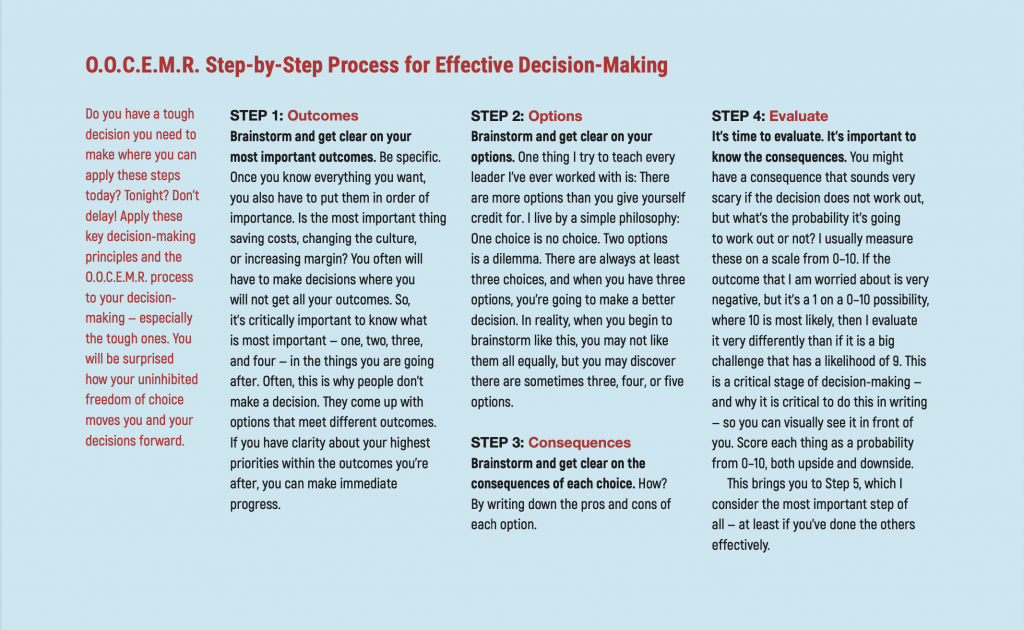
All decision-making should be done in writing.


If you attempt to do everything in your head, your brain will often end up looping over the same conflicting thoughts. Instead of getting resolved, every possible new idea can create more stress because your mind keeps comparing it back to the first thought. What can break this pattern is the use of a visual element. Remember the idea that a picture is worth a thousand words.

Take a moment to jot down your thoughts about the decision you are grappling with, your desires, and your concerns. Frequently, what seems intricate in our minds becomes remarkably clear and more straightforward when on paper.

Be clear about what you want and/or what the organization wants and needs.


The foundation of exceptional decision-making lies in clarity. To make effective choices, you must first gain crystal-clear clarity about your and your organization’s goals, values, and priorities. Ask yourself: What is the ultimate outcome that I am after through this decision?

This will provide clarity. Clarity is power. When you know what you want (your outcome) and your why (your purpose), decision-making becomes simplified.

Decisions are made on probability.


No one has a crystal ball to tell them with 100% certainty they’ve made the right decisions. It’s about taking inventory of the information available and making the best choice possible. Again, leaders are decision-makers, and they will often have to step into their decisions without total certainty that it’s going to work out. This is what sets them apart from everyone else. They’re willing to take action when everyone else is paralyzed by uncertainty.

Often, tough decisions are less about making the “right” choice and more about making a choice that can move the ball forward and discovering if it’s right or not. With indecision, we will never know what is right. If you wait to have all the information necessary to make a decision, the opportunity that the decision offered is usually gone, and you are living life like the average person versus the leader you’re meant to be. If you make a decision that turns out to be wrong or not the best choice, you can change things. The important part is making a decision to start with.

All decision-making is a clarification of what you and your organization value most.


Each decision we make should point to our values. It can be a tough choice you’re making, but if it aligns with what matters most to you and the organization, you are propelling yourself in the right direction.

There’s nothing worse than making a decision based on fear rather than what feels right in your heart. When faced with tough decisions, don’t let your limiting beliefs trap you into fear-based decision-making. My core belief is that a decision made from fear is almost always the wrong decision. Thoughts like “I’m worried this won’t work out because …” or “I don’t want to try this because …” need to be confronted. The easiest way is by expanding your options and exploring alternative choices or paths.

Seek out diverse perspectives, gather information quickly, and challenge your assumptions. By doing this, you can open the door to innovative solutions and unforeseen opportunities. Once you have your mind in the right place and all the information gathered, you need a logical and repeatable process to get those decisions made and you need a deadline. Otherwise, you’ll get lost in paralysis by analysis.

The Only 3 Meetings You’ll Ever Need

By Scot Chisholm

I’ve been a founder and CEO for nearly 20 years, and I’ve read countless books on management and leadership. My conclusion? Most meetings are a waste of time and money — but there are three meetings you shouldn’t operate without.

1 All-Hands Meeting

This is your most important meeting. Don’t waste it.

Who: Include everyone on the team. No one should be left out.

Why: It aligns the entire team on direction and progress.

When: Convene monthly (one hour) or quarterly (two hours).

Agenda

Where you’re going: Find ways to talk about the longer-term vision and goals.

How you’re doing: Share progress against monthly, quarterly, and annual goals.

Why it matters: A customer story shows the impact you’re having. A team member demonstrates your values.

2 Top-Goal(s) Meeting

Schedule a meeting to review progress against your annual goals (three maximum). You can also break it up into three separate meetings.

Who: Invite key people who are responsible for the goal (fewer than seven).

Why: It tracks progress against your top three most important items.

When: Meet biweekly (one hour per goal).

Agenda

How you’re doing: Each goal should have one main owner who leads the update to the group. 

If you’re behind: Dedicate the meeting to creating a plan to get back on track.

If you’re ahead: Talk about upcoming risks and how to mitigate early –– or just end the meeting early.

3 One-on-One Meeting

Plan a meeting with each person on your team. If you have a large team, it’s only with your direct reports.

Who: Have just you and the person.

Why: It tracks progress against individual goals and offers help.

When: Meet biweekly, or weekly if you feel it’s necessary (30 minutes to one hour).

Agenda

How you’re doing: The person should start by giving an update on their goals.

If they’re behind: Offer help. Create a plan together in the meeting to get back on track.

If they’re on pace: Use the time for other items, but let the person set the agenda.

Scot Chisholm founded software company Classy (acquired by GoFundMe), serving as CEO for over 10 years and leading it to 300+ people and billions in platform donations. More recently he founded Haskill Creek, a new spin on the traditional pharmacy. He coaches founders/CEOs, helping them transition to high-impact leaders.

F*ck the Feedback Sandwich

If you make a sandwich out of anything, make it a clarification of your goals and your belief in the other person.

F*ck the feedback sandwich.

That’s right. I said it. I may not be the first to say it, but I’m taking a bold stance against the feedback sandwich even though it didn’t really do anything bad to me at all. I just think it’s a bunch of bologna.

What is a feedback sandwich? For those who don’t know, it’s a communication technique used in business settings in which you share something good, followed by the hard thing that is the whole point of the conversation anyway, followed by another positive thing about that person. You are sandwiching the negative feedback fixings of the sandwich between two slices of positivity bread. It softens the blow. It makes it easier to deliver. And it confuses the crap out of the person you’re delivering the message to.

“Did he really just feedback sandwich me?”

“Did I even do something bad?”

“Maybe I’m actually crushing it.”

As anyone who has eaten a real sandwich knows, while the bread is what officially makes a pile of ingredients a sandwich, it’s the inner contents that give that sandwich its unique essence. And the real point of the feedback sandwich is the meat, veggies and/or cheese—not the bread. 

The squishy positivity bread is added as a way to soften the impact of what needs to be said. The feedback sandwich is used as a way to comfort the vast majority of us who are conflict-averse. But I am going to suggest that softening the blow is counterproductive because it undermines your ability to work your way out of the conflict or to help your team improve. It sabotages the whole purpose of the conversation.

Saying the Hard Thing 

In the highest levels of business, saying hard things is a necessary task. That is a big part of what separates good teams from great teams. 

I’m currently writing a book on the most iconic entrepreneurs of our time (Musk, Jobs, Bezos, and Gates) and how their dark sides drive innovation. In my research, I have come across a grand total of zero feedback sandwiches deployed by these men. They say the hard thing all day long, loud and clear. They are vocal when the work isn’t up to their standards. Actually, to be more precise, they are often emotionally volatile when work doesn’t meet their standards. They seem to want the pain to be felt when good work is not done. It’s almost like giving out a ‘lashing’ when team members don’t get it right. I’m not saying this is admirable, but it’s the way they get things done. 

Fearlessly relaying negative/constructive feedback is an important part of these men’s leadership strategy. Accountability comes in the form of pain and difficulty when you don’t do what you say you will do. At times this can skew abusive—which I absolutely do not condone—but there is a hidden wisdom here that helps drive performance. The message is that if you don’t do a good job, there will be consequences. When you are off-track in my organization, you will feel tension, and the only way to resolve the tension is to do great work. To be clear, this strategy doesn’t work for the majority of teams. Most normal, well-adjusted people will have a challenging time in these environments. And for each of these four founders, there is a long line of people who have been traumatized by working under them. But for certain hardcore folks, extreme tactics can actually drive them to do great work.

I recognize that we’re venturing into tricky territory here. I would never advise someone to be more emotionally volatile, nor would I ever advise them to unleash their anger on their employees or say harmful things when good work isn’t done. I would never condone that.

But I do think there’s value in understanding how and why unapologetic feedback drives innovation. 

Don’t Hold Back the Emotional Impact 

A hallmark of good feedback is the ability to communicate the emotional impact of the person’s work or behavior. Some of you may know that I am a huge fan of Nonviolent Communication. Definitely check out my post on the topic if you haven’t or aren’t already familiar with NVC. In NVC, a big part of the process is to share how the person’s behavior impacted you emotionally. For example: When you were 10 minutes late to the meeting, I felt angry and disappointed. Or, When you send emails to clients with typos, I feel embarrassed. There is wisdom in sharing the emotional impact. Emotions have the power to inspire change. Emotions have the power to motivate. Emotions get people to do things differently. When we speak with our emotions, our words hit on a deeper level. 

The whole purpose of sharing feedback is to bring awareness to another person in order to drive change. When the impact is shared, it can really jolt the recipient into change. It can inspire or motivate them to really shift counterproductive behavior.

Musk, Jobs, Bezos, and Gates do this at the far extreme end of the spectrum. It can be abusive. It can be cruel. It can be bullying. It’s not a pretty picture. But it does really inspire their team to do great work. Again, I’m not condoning this. But sometimes looking at the most extreme examples can help us to find the wisdom to apply in a more balanced or moderate way. 

I believe the sweet spot is to be able to share the emotional impact directly and compassionately, but without sugar-coating it. Share the anger, the concern, the disappointment. Let it be felt fully. Don’t hide this part. This person did something and it had a negative impact. But the key is to share this in a way that is respectful and considerate of the other person. We can totally share our anger in a way that is kind and respectful, and that is the magic of NVC.

To recap: the major problem with the feedback sandwich is that it minimizes the emotional impact of the counterproductive behavior. It keeps us from truly addressing the thing that needs to change. If we were going to upgrade the sandwich, if we decide to bring in any ‘bread’ at all, what kind of bread might you bring in?

I think the first worthy slice of bread is a clarification and reiteration of the person’s goals. This ensures accountability and a mutual same-page-ness of what they are working towards with you. It reinforces a sense of shared aspiration. 

The second worthy slice is a statement of your belief in this person. You can wrap up the conversation by stating your trust and faith in their ability to do better. You believe that they can achieve their goals.

Those are the only two slices of bread that I would recommend in a feedback sandwich.

Beyond that, it’s all about honesty. Be clear, be straightforward, and don’t water it down. You are taking the time to have a difficult conversation with someone. Do not try to spin this into a positive conversation. Just say the hard thing.

It’s not supposed to feel great. It’s supposed to be potentially painful. It’s supposed to be awkward. It’s supposed to be uncomfortable. Being a leader is all of those things. Your ability and willingness to sit in the discomfort of tough conversations are directly correlated to your ability to succeed as a leader and founder. It’s also a prime motivator for your team to continue to improve.

Next time you have something difficult to say, just say it and leave the rest of the bologna behind.

If you want to hear more from Matt, subscribe to his newsletter The Unlock. It’s an email sent out every other week where bold leadership insights meet unfiltered wisdom.

Is Your Operation Future-Friendly? 

Follow these 4 steps to become a future friendly purposeful business that will last.

By Desirée Bombenon

Incorporating purpose and sustainability into a business operation are key components to acquiring and retaining talent as well as securing partnerships. As recently as 10 years ago, we would not have been highlighting this as a major strategic move for a company — but the shift has happened. 

We see the world differently, and only organizations that can adapt to the changing conditions and adopt the definition of future-friendly will be relevant, not because of their product or service, but because of how they operate. 

Here’s how to start the road to a purposeful and sustainable business.

1 Leadership Acceptance

You cannot have team buy-in without authentic leadership acceptance for the shift in how your business will operate. Commitments of time, energy, and thoughtfulness must go into re-imagining a different business model, and leadership is key to execution.

2 A Guiding Coalition

People will follow other people whom they have a deep respect and trust for. Develop a team of influencers who can carry the message and create excitement in all divisions of the company. When the purpose and mission are articulated by a trusted peer, they are more likely to be accepted and supported by the team.

3 Sustainability as a Strategy

When developing your company strategy, sustainable practices should be part of the blueprint. Companies normally review or revamp their strategy every three years — or fewer if working with sprint strategies. When planning the next few years, build in a budget and program for sustainability. Whether it is digitization or a recycling program, it doesn’t need to have a huge cost. Some companies have implemented roles like chief sustainability officer or sustainability champion. 

4 Measurable Impact

There is nothing more powerful than seeing the outcomes of your work. The same goes for sustainable practices. There are many ways to start measuring impact. Once you see the results and difference you are making not only in your company but with the community, share that information with your team and customers. These meaningful practices tie back into your overall corporate social responsibility and the values and beliefs by which your organization operates. 

In addition, there are many support systems and models out there. Becoming a Certified B Corporation is one way to start the process. Other steps forward include setting targets for measurable environmental, social, and governance impact and focusing on outcomes, no matter how small. 

The United Nations Global Compact (UNGC) also has a multitude of resources and supports to help businesses start the process of sustainable practices. The UNGC 10 Principles provide a checklist focused on four pillars: human rights, labor, environment, and anti-corruption. 

Whatever you’re considering doing to become purposeful and sustainable, start now. Your business’s future depends on it. 

Desirée Bombenon is CEO and chief disruption officer of SureCall and a diversity board council member for the Women’s Executive Network. She has over 30 years of business operational experience.

Inspiring Purpose-Driven Teams

Accelerate your impact and your bottom line by attracting and building a people-first culture.

Imagine a world where work is additive to people’s lives. They take home a sense of inspiration and belonging to their families, friends, and communities, setting off a positive ripple effect.

Leaders have the power to perpetuate this cycle of good — and it’s not fluffy stuff. It’s good for business.

Companies that effectively deliver on their employee value proposition can decrease annual employee turnover by nearly 70% and increase new hire commitment by about 30%.

In a recent study, happiness led to a 12% spike in productivity, while unhappy workers proved 10% less productive.

Companies with engaged employees outperform those without them by 202%.

About 75% of Americans would not take a job with a company that has a bad reputation, even if they were unemployed.

Define Your Employee Value Proposition (aka What’s In It For Them?)

The standard hiring process starts with employers vetting candidates. But candidates are also deciding if they want to invest their professional talent and time into a specific employer. As such, the exchange needs to be two-directional. Ask, “Why would a candidate want to work here?”

 What can you define and share with candidates to help them understand what their experience will be at your company? This includes tangible things like pay, benefits, and work expectations, as well as intangible things, like the ecosystem of support, recognition, values, culture, purpose, learning opportunities, etc. Collectively, this is your employee value proposition, of which company culture is one component. 

10 Ways to Strengthen Company Culture

Build trust. Hire great people, equip them well, then trust them to do their jobs. No need for lots of extra rules when implicit trust (not subservience) is foundational to your culture.

Lead with empathy. Take time to understand where people are coming from.

Vulnerability can be a superpower. Be open and transparent so that your employees know you are human too.

The best leaders don’t have all the answers. Regularly invite in ideas, solutions, and collaboration from your team.

Live your company values. When you show up this way, you attract employees who naturally and authentically live similar values.

People need to feel heard. Create an environment where they feel comfortable sharing what’s working, what’s not, and what they need or can contribute.

Create an environment where mistakes are OK. Build opportunities for learning.

Personalized outreach really matters. Show that you see people as individuals by checking in and voicing your appreciation.

Show up to work as your authentic self. Buck the old way of authoritative leadership in favor of inspiring leadership.

Little things make a big difference. You don’t need to do it perfectly. Everything you choose to do will add up to something much larger.

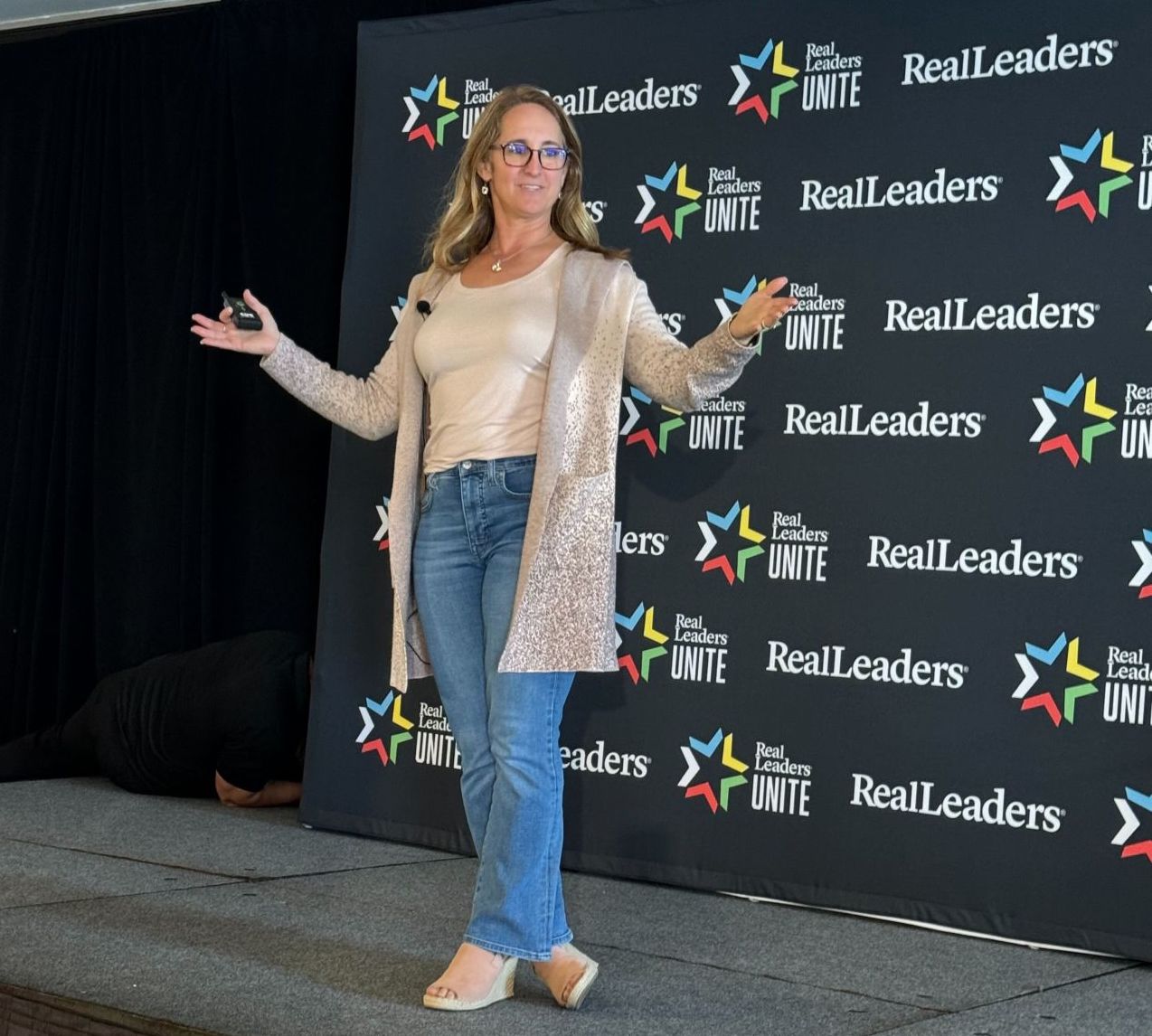
Peggy Shell is the founder and CEO of Creative Alignments, a Time-Based Recruiting® company that partners with companies creating a great place to work. Creative Alignments is a Real Leaders Top Impact Company Award winner and sponsor of Real Leaders UNITE. Click here to see her post about her experience there.

Clothed in Conviction

This CEO is calling for a radical waste reduction in the apparel industry.

By Kathryn Deen

Clothes are not trash. That’s the message Dan Green is working to spread because quite frankly, the United States is doing a bad job of recycling clothes, he says. Green is on a mission to keep clothes out of landfills by radically changing how unwanted clothing is collected and reused.

Green co-founded Helpsy, the only clothing collection company in the U.S. that has earned both Certified B Corp and Public Benefit Corporation distinctions.

Helpsy collects clothing, shoes, and accessories for reuse, recycling, and upcycling to help local communities, nonprofits, and the planet. The company keeps more than 30 million pounds of clothes out of the trash each year, diverting over 250 million pounds of carbon emissions annually.

More Than Recycling: Helpsy’s Impact on Jobs, Communities, and Carbon Emissions

“Together with our 1,200 East Coast partners, we convert discarded clothing into thousands of American jobs and millions in payments to businesses and community organizations,” Green says. “We prevent the emission of hundreds of millions of pounds of carbon dioxide and the use of billions of gallons of water while saving municipalities more than $1 million in waste disposal fees each year.”

A former portfolio manager on Wall Street, Green co-founded Helpsy with friends Alex Husted and Dave Milliner. Together they bought 11 companies primarily in clothing collection since 2017. They also invested in technology to modernize systems and utilize data to predict when and which collection points should be serviced to maximize the community’s satisfaction and minimize the economic and environmental costs of running trucks around.

“We exist to extend the life of clothing,” Green says. “We need to get out and let more people know that there are alternatives to the trash. It’s still unfortunately very normal for people to throw clothes in the trash — and we’re hoping to make that less and less socially acceptable.”

Beyond Goodwill: The Future of Clothing Reuse Starts with Helpsy

Helpsy collects unsold goods from a couple hundred thrift stores, does a few hundred drives each year with municipalities and charities, and in a newer initiative, it sells sorted, branded clothing to about 600 thrift stores.

“Clothing is the only major stream of waste that is growing on a per capita basis in a real way,” Green says. “We have to get over the mental hurdle that reuse does not destroy your brand and in fact enhances your brand.”

Green says the company has had big ups and downs. One stumbling block was when Helpsy tried to do direct-to-consumer e-commerce but did not get enough response to continue it. As for a bright spot, Helpsy realized its goal of providing benefits and stock options for all 145 of its employees. In another highlight, Helpsy expanded its reach with facilities in New York, Boston, and New Jersey, as well as trailers in Maryland and South Carolina.

“My family is very deeply rooted in social justice and making sure you leave the world a better place — that’s the point of your life,” he says. “We look forward to a future where used clothing is the first place people shop.”

How Your Inner Circle Affects Your Wealth

Spend more time with people who will support your money-building path.

By Tom Wheelwright

Years ago, I lived in a solidly middle-class neighborhood. My family and I were happy there, but I started to notice something interesting on Sundays. When we went to church, I could see a big difference between the people who lived in my neighborhood and people who lived in a neighborhood about a mile and a half down the road: money. 

The difference wasn’t so much in the amount of money people had. Both neighborhoods were doing well by most standards. The difference had more to do with mindsets around money.

People in my neighborhood focused on money a lot but not always in a healthy way. Money was more a source of stress than joy. Meanwhile, people in the neighborhood down the road had a very different attitude. Money seemed to be less important to them, yet they had plenty. They also seemed to be having a lot more fun.

It made me think a lot about what kind of relationship I wanted to have with money and who I wanted to spend my time with. Ultimately, I sold my house and moved into the neighborhood down the road. That move made a huge difference in my life.

Surrounding Yourself with Success: How My Community Transformed My Financial Reality

The new address meant I started spending more time with people with an attitude toward money unlike any I had ever experienced. They viewed money as a tool to help them achieve their goals rather than just a source of stress or something to accumulate for its own sake. They understood how to build wealth through entrepreneurship and investments. They looked at the world with an abundance mindset and were curious about learning new things and giving back. 

Over time, I started to adopt this view. I became more comfortable asking questions about different kinds of investments and curious about how entrepreneurship works. I had people to talk with who encouraged these interests and introduced me to resources and people who could help me in these areas. Ultimately, it transformed my mindset around money.

Level Up: Make Change, Be Intentional

If you’re looking to build more wealth, it’s important to look at the people you spend the most time with. Do they model the kind of life you desire? If not, it may be time to make a change.

This isn’t some sort of woo-woo manifestation technique, and moving didn’t come with a membership to a secret wealth-building society. This is about creating an environment that will support you in your pursuit of specific goals. When you surround yourself with people who are successful with money and understand how to build wealth and impact through entrepreneurship and investments, you give yourself a different view of the world and what opportunities are available.

In today’s fast-paced world, the importance of having a supportive network of people around us cannot be overstated. The people we associate with can have a significant impact on our beliefs, actions, and ultimately, our results. While you may not need to move, you do need to be intentional with whom you spend your time and energy. When you do, you’ll begin to find yourself making more money and effecting more change. 

Building Your Support Team

How do you spend more time with people who will support your wealth-building impact path? Here are five time-tested options that don’t require hiring a real estate agent.

1 Expand your network.

Attend local networking events in your industry or niche and join professional associations that offer opportunities to spend time with people who have achieved financial and career success. 

2 Attend conferences, workshops, and seminars about entrepreneurship or investing.

You’ll learn from experts and connect with like-minded people who are serious about their wealth journey.

3 Volunteer to serve on the board of a charitable organization.

This is not only a great way to make a difference in your community, but it also is likely to connect you with people who share your values and goals.

4 Connect online.

If you can’t find the right groups locally, look for social media groups and other online communities where entrepreneurs and investors hang out. Join the discussion forums and start building relationships. 

5 Hire professional advisors.

A CPA, investment advisor, and attorney can provide strategic recommendations that more than pay for the cost of their services. They also will help you continue to expand your thinking when it comes to your wealth strategy.

Tom Wheelwright is a CPA, visionary, and best-selling author behind multiple companies that specialize in wealth and tax strategy. He is also an expert and published author on partnerships and corporation tax strategies, a platform speaker, and a wealth education innovator. You can find his book Tax Free Wealth here.

0