In the Mood for Sustainable Funds? How Feeling Pessimistic Can Influence Where Investors Put Their Money

Think about the last time you bought something expensive to make yourself feel better after a disappointment or when you treated yourself to a fancy and expensive dinner after some accomplishment.

Emotions have a strong influence on purchasing decisions. More often than we realize, we make these decisions based on emotions rather than rational calculations and facts. It is well documented that financial decisions are also influenced by emotions.

In low-mood periods, people are more pessimistic about a firm’s prospects, which is associated with decreases in stock market prices.

Because of the growing popularity of assets with a strong focus on environmental, social, and governance (ESG) goals — companies with corporate policies that encourage them to act responsibly — we wanted to look at what role emotions can play in determining people’s preference for sustainable investments.

Why Investors Choose Sustainable Investments

There are several reasons why people may want to invest in sustainable assets. Some may be “social signaling” — they like to talk about how their investments are socially responsible.

Another reason can be found in how someone was raised. An individual’s propensity to invest in socially responsible assets is influenced by having parents owning similar assets or growing up in a family that values environmental sustainability.

The “warm glow effect,” which is a good feeling experienced through the act of giving, also explains why investors choose ESG assets. Investors experience positive emotions when choosing sustainable investments, irrespective of the investments’ impact.

But does an investor’s mood influence their preference for sustainable investments? There are several reasons why emotions might affect where people put their money.

The Role of Mood in Our Investment Decisions

There are two competing theories when it comes to examining the role of mood and sustainable investment.

The first is based on the idea that sustainable assets are generally less risky. In this sense, assets considered completely or mostly sustainable have been shown to outperform less sustainable assets in crises, as investors see them as more trustworthy and having fewer structural, legal, and reputational risks.

This theory is also based on the idea that a lower mood leads to more risk-averse behavior. That is, when someone is sad, depressed, or angry, they tend to become more cautious when making investment decisions and choose investments with lower risk.

A second and competing theory is based on the idea that a positive mood promotes prosocial behaviors and greater altruism. Investors with lower mood tend to focus on themselves and less about others. As such, they have less preference for sustainable investments.

Happier investors, on the other hand, may be more altruistic and favor sustainable investments because it benefits others (for example, community, workmates, and the environment). Our research has tested these theories, documenting evidence consistent with investors’ greater risk aversion.

More specifically, we found that a worse mood is associated with greater investment in sustainable assets. This is arguably due to a greater risk aversion pushing investors to favor sustainable investments that they perceive as less risky.

How to Identify Sustainable Funds and Test Investors’ Mood

To identify sustainable versus non-sustainable funds, we used the Morningstar Sustainability rating. This rating is intended to help investors better understand and manage total ESG risk in their investments. A higher sustainability rating is associated with a lower ESG risk.

To capture the change in the average mood of households for a given month, we used a metric called “onset and recovery” (OR). This metric measures the change in the monthly percentage of seasonally depressed individuals who are actively experiencing symptoms.

Higher OR indicates an increase in symptomatic depression cases and, therefore, lower mood on average. For the Northern Hemisphere, OR is high during autumn (September), low during spring (March), and moderate during summer and winter. Southern Hemisphere countries experience the same pattern in reverse.

We contrasted OR levels in relation to investment in sustainable equity mutual funds in 25 countries over the 2018–2021 period. In general, mutual funds with high sustainability ratings tended to attract more capital, suggesting that investors value sustainable investments.

More importantly, however, we found that when there was an increase in the percentage of seasonally depressed individuals, capital inflows into high-sustainability funds increased relative to low-sustainability alternatives (an extra 0.070% per month or 0.84% per year).

For an average mutual fund with a size of $100 million, this additional capital inflow equates to $840,000 per year. This negative association is consistent with a risk-aversion interpretation, supporting the conclusion that lower mood leads to more sustainable investments as investors perceive them as being less risky.

Our study comes with a caveat. Given the features of our data, we cannot test if the investors’ mood improves after investing in sustainable funds. This would not only confirm that sustainable investments are a safer option, but also that investing in them will boost people’s mood.

So, is sadness good for the environment and society?

Our research explores a potential channel that could explain people’s preference for sustainable investments. Our findings suggest that when it comes to investing in sustainable equity mutual funds, investor risk aversion triggered by negative moods was a more likely cause of increased investing than the potential happiness connected to their pro-social behavior.

This does not imply that sadness is good for the environment or society; it rather confirms that investors consider sustainable investments a safer option.

Less Is More: How the Scarcity Mentality of the 1940s Can Offer Solutions to Today’s Crises

Supply chain issues and shortages of raw materials have become a reality as the fallout from the Ukrainian war affects global commodities, and natural resources become increasingly difficult to source. But the world has been here before.

During the Second World War, material scarcity bred innovation and established responsible practices that lasted for decades. Can reviewing your product with a scarcity mindset create a new trend or even streamline your production process for greater success?

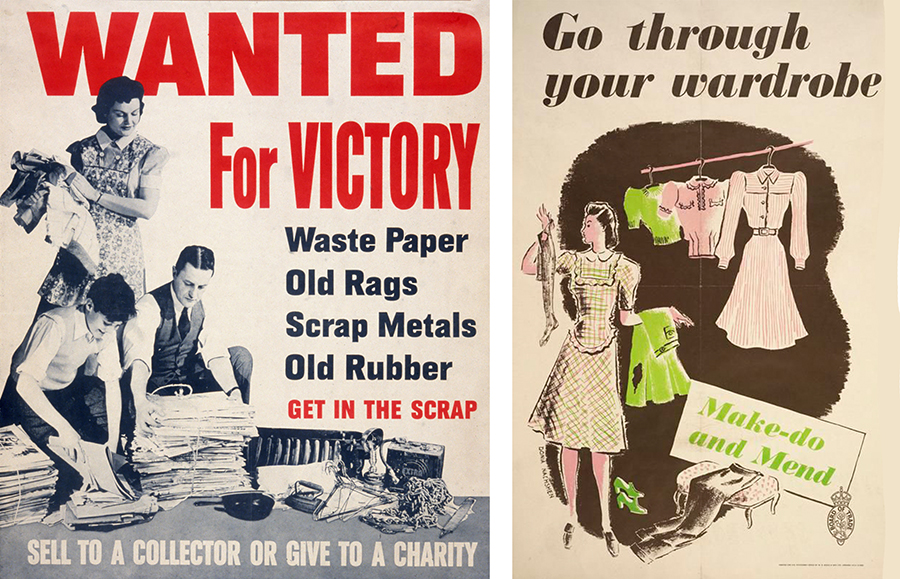
The Second World War was an unlikely time for a social design experiment. In a worldwide crisis, the government of the United Kingdom decided to support a socialist idea to make sure its population would not only be fed, but also properly housed and dressed to make it through the war years. Known as the Utility Scheme, the concept was based on a Utopian idea of providing good design for the masses and educating them on modem living in the process.

Scarcity is an ambiguous concept. It is most commonly associated with something negative, as in a shortage or lack of desired items or necessary materials. It may be due to poverty, unequal distribution of wealth, corruption, or the depletion of natural resources. It can also occur when the supply chain of products and materials is temporarily disrupted because of political crises such as war and boycotts or natural disasters such as floods or earthquakes. Yet the notion of scarcity is also applied, more manipulatively, in capitalist consumer culture and marketing strategies. It is the very concept on which the attractiveness of limited editions and exclusive brands is based. In these instances, scarcity is introduced on purpose to make a product or service more desirable, precisely because it’s designed to be rare and only available to a few lucky insiders.

During the Second World War, scarcity suddenly became part of the daily lives of every upper-, middle- and working-class citizen in the countries involved. Because of disrupted trade routes, the supply of resources was severely limited. Moreover, the war industry demanded that the majority of materials go into the manufacture of weapons, uniforms, and transportation vehicles, while workers and factories were assigned to produce for the military instead of the consumer market. There were immediate shortages of raw materials such as wood, metal, rubber, cotton, wool, and silk, and as the war industry was prioritized, scarcity was most acute in consumer goods. Prices of new and second-hand products rose drastically as retailers and manufacturers ran out of stock.

The rationing of clothing began in June 1941 and would last until 1952, some years after the war had ended, and most scarcity issues were resolved. As rationing alone proved insufficient to solve the shortages and price raises, a comprehensive plan was devised to make sure that enough clothes would be available for the entire population. The clothing plan was part of the Utility Scheme, which also included footwear, furniture, crockery, and other daily goods such as pencils and cigarette lighters. It was planned, organized, and controlled by the British Board of Trade, which installed and worked closely together with several commissions comprised of people from the industry and the state.

The intentions of the Board of Trade, however, were very broad. It was not only concerned with supplying the bare necessities to those in need but aimed to produce good quality products for everyone. These goods were to be made with as little material and labor as possible, and according to what its advisors considered principles of good design. As opposed to providing only a cheap, temporary solution, Utility products were made to be durable and modern in an attempt to educate the public on modern taste.

The Utility designs were characterized by straight lines, a slim silhouette, and little or no embellishment. The women’s clothes tended to be practical and were influenced by the look of uniforms, anticipating the different roles that women fulfilled during the war. To save material, unnecessary pleats were not allowed, and neither were double-breasted jackets and long socks for men. Things like buttons, buckles, zippers, and elastic were limited because metal and rubber were needed for the war industry.

Skirts were to be knee-length, coats were kept short, and boys under thirteen were not allowed to wear long trousers. Extra pockets were discarded, as were decorative elements such as embroidery, applique, or lace. Men’s suits had small collars, no flaps over the pockets of the jacket, no turn-ups on the bottoms of trousers, no slits, and buttons on the cuffs. Colors, however, were not restricted. Fabric prints for dresses, for example, were often small, busy patterns of colorful flowers that were easy to put together without having to waste fabric to make the motif connect in a repeat pattern. The Board of Trade estimated that all these regulations saved millions of yards of cloth.

As one would expect, not everyone was convinced that austerity measures and fashion would go well together. The name Utility did not help, as it conveyed a sense of drab uniforms or purely functional clothing that had nothing to do with fashion. Since both the trade and the British public were initially apprehensive of the Utility Scheme, the Board of Trade invited well-known designers of the time to design a range of items, including a topcoat, dress, blouse, skirt, and suit. The involvement of these esteemed designers and the favorable reports their work received from magazines such as Vogue and Harper’s Bazaar helped promote Utility clothing to the public.

Aside from the few new garments that one could buy on coupons, people were urged and often had no other choice than to endlessly repair, recycle, and share whatever was available. The British government issued leaflets with instructions on how to repair damaged textiles and how to alter clothes. There were items on how to line coats with pieces of recycled textile to make them warmer for the winter and how to fashion a jacket and skirt out of an old men’s suit. Children’s clothes made of pillowcases or blouses made of handkerchiefs were not uncommon. As natural and artificial silks were much sought after, parachute nylon sometimes proved an acceptable substitute material for making wedding dresses or lingerie.

The British government was able to turn a material crisis into a temporary, rather successful solution. It took control over the total functioning of the commodity network, determining the fate of designers, manufacturers, and retailers alike, some of whom were put out of work or were forced to radically change their practices.

Today it is often assumed that the market will take care of solving our problems, whether they are environmental, social, or economic. Yet, so far, the majority of commercial design and technological innovation has not been deployed to target the long-term challenges humanity is facing but is actively engaged in aggravating them. The Utility Scheme shows that in a time of acute crisis, it is necessary to not only look at the design and production of scarce goods but also to reconsider the political, economic, and social systems and conventions that surround them.

Are Productivity Paranoia and Lack of Trust the Real Obstacles to Hybrid and Remote Work?

Do bosses trust employees to be productive when working out of the office? 

Microsoft released a new study, where it found that 85% of leaders say that the “shift to hybrid work has made it challenging to have confidence that employees are being productive.” More concretely, 49% of managers of hybrid workers “struggle to trust their employees to do their best work.” This lack of trust in worker productivity has led to what Microsoft researchers termed productivity paranoia: “where leaders fear that lost productivity is due to employees not working, even though hours worked, number of meetings, and other activity metrics have increased.”

That data aligns with a new report by Citrix based on a global survey of 900 business leaders and 1,800 knowledge workers – those who can do their job remotely. Half of all business leaders believe that when employees are working “out of sight,” they don’t work as hard. And 48% of the business leaders installed monitoring software on the computers of their employees to check on their work. No wonder only 49% of employees say that they trust their employer.

The perspective of this traditionalist half of business leaders align with Elon Musk’s demand that all Tesla and SpaceX employees be “visible” in the office and work full-time in-person – including knowledge workers. That’s based on Musk’s belief that remote workers are “phoning it in” and only “pretend to work.” 

Musk’s demand for improving productivity via full-time in-office work for knowledge workers is something to which other traditionalist leaders aspire. Indeed, a survey done by Microsoft shows that 50% of the bosses of knowledge workers intend to force them into the office by Spring 2023. According to a Future Forum survey, this skepticism toward work from home tends to come from older leaders in their 50s and 60s. Leaders under 50 are much more accepting of hybrid and remote work and focus on how to do it well.

Is the belief of this traditionalist, older half of the business leadership that workers are more productive in the office based on the facts? Not at all.

Already before COVID, we had peer-reviewed research demonstrating that remote work improved productivity. A NASDAQ-listed company randomly assigned call center employees to work from home or the office for 9 months. Work from home resulted in a 13% performance increase, due to a combination of fewer sick days, and a quieter and more convenient work environment. Those working from home had improved work satisfaction and a 50% lower attrition rate. A more recent study with random assignment of programmers, marketing, and finance staff found that hybrid work, similarly to remote work, reduces attrition by 35% and resulted in 8% more code written.

COVID resulted in the proliferation of studies of remote work productivity. For example, a survey by Mercer of 800 HR leaders in August 2020 reported that 94% found that the staff at their companies were more or equally productive working remotely compared to working in the office prior to the pandemic shutdowns. A two-year survey by Great Place to Work of more than 800,000 employees showed that the shift to working remotely in the pandemic boosted worker productivity by 6% on average. 

A study using employee monitoring software confirmed that the shift to remote work during COVID improved productivity by 5%. In a University of Chicago research paper, scientists found that nearly six in ten of their survey respondents reported higher productivity when working remotely, while only 14% proved less productive. On average, remote work productivity was over 7% higher than in-office productivity. 

That shouldn’t be surprising. A major benefit from remote work comes from doing away with the daily commute. Workers on average devote approximately 35% of their saved time from not commuting to their primary job, according to research at the University of Chicago. Given that people spend an average of nearly an hour per day on commute travel alone, and additional time on other commute-related tasks, this adds up to substantial additional time worked.

Indeed, a research study from Harvard University published in the National Bureau of Economic Research finds a large increase in the amount of time worked by remote workers compared to in-office workers. Evaluating the impact of the lockdowns in 16 large cities in North America, Europe, and the Middle East on knowledge workers, the researchers found an increase in the average workday of 8.2%, or 48.5 minutes.

Another benefit stems from greater flexibility to do work tasks at times that work for us. We know from research that all of us have different levels of energy throughout the day when we are best suited for various activities that don’t necessarily match the typical rhythms of a 9-5 schedule. By doing specific work tasks at various times, we can get more done.

And more recent research showed that remote work productivity actually increased throughout the pandemic. Stanford University researchers doing a longitudinal study comparing productivity at different time periods found that remote workers were 5% more efficient than office-based ones in the summer of 2020. But this number improved to 9% by summer 2022. Why? Because all of us learned how to be better at remote work.

And really, are workers all that productive in the office? Studies show that in-office employees only work between 36% and 39% of the time. What about the rest of their time in the office? They’re shopping on Amazon, checking social media, and may even be searching for new positions, especially if their bosses are forcing them to come to the office full-time.

This extensive evidence is widely available to anyone who Googles remote work productivity and looks at all the results on the first page. Leaders are taught to make data-driven decisions

So why do so many leaders continue to ignore the data and stubbornly deny the facts? The key lies in how leaders evaluate performance: based on what they can see. 

As the Harvard Business Review points out, leaders are trained to evaluate employees based on “facetime.” Those who come early and leave late are perceived and assessed as more productive. 

According to the MIT Sloan Management Review, even before the pandemic, the focus on presence in the office undermined effective remote work arrangements. Thus, researchers found that remote employees who work just as hard and just as long as those in the office in similar jobs end up getting lower performance evaluations, decreased raises, and less promotions.

This tendency did not change much in the pandemic for the older managers who learned how to lead long before the era of remote work. That’s because of the anchoring bias, a dangerous mental blindspot – a cognitive bias – that comes from our tendency to be anchored to our initial information about a topic. 

Thus, if leaders are taught to evaluate productivity based on simple presence in the office, they will tend to stick to that information. They’ll do so even when presented with new evidence about higher productivity among remote workers. 

A related mental blindspot, the confirmation bias, caused these traditionalist leaders to ignore information that goes against the beliefs to which they’re anchored, and seek information that confirms their anchors. For example, they’ll seek out evidence that in-office workers are more productive, even when there’s much stronger evidence that remote workers exhibit higher productivity. In other words, these leaders trust their own gut reactions, internal impressions, and intuitions over the facts, thus failing to develop self-awareness of how their mental processes might steer them to make bad decisions.

The consequence of this trust in false impressions of which type of work is more productive is leading to the unnecessary drama of forcing workers back to the office. And those older, traditionalist bosses who do so will continue to lose workers as part of the Great Resignation. A Society for Human Resources survey in June 2022 found that 48% of respondents will “definitely” seek a full-time remote position for their next job. To get them to stay at a hybrid job with a 30-minute commute, employers would have to give a 10% pay raise, and for a full-time job with the same commute, a 20% pay raise. Given the significant likelihood of a recession in the near future, which will limit the ability of employers to offer pay raises and lead to a focus on actual productivity over false gut-based intuitions, we can expect a greater shift to more hybrid and remote work going forward.

Another problem of this false belief is proximity bias. That term describes how managers have an unfair preference for and higher ratings of employees who come to the office, compared to those who work remotely, even if the remote workers show higher productivity. The face-to-face interactions between managers and employees lead to managers having more positive impressions of these employees due to cognitive biases such as the mere-exposure effect. This mental blindspot describes our predilection to have more favorable attitudes toward whatever we see more often, whether people or things, without any basis for this favorable attitude other than mere exposure.

To succeed in our increasingly hybrid and remote future will require retraining managers in evaluating performance and addressing proximity bias. Companies will have to teach them to trust the data over their own gut reactions. They’ll also have to learn a new approach to performance evaluations, one customized to hybrid and remote work.

Instead of observing presence in the office and giving an annual performance evaluation informed by proximity bias, leaders will have to measure deliverables at much more frequent intervals. Ironically, even before the pandemic, we had extensive research that demonstrated the importance of transitioning away from large-scale annual performance reviews. Now, leaders who want to successfully navigate the disruption caused by hybrid and remote work will need to provide brief performance evaluations at their regular weekly one-on-one meetings with their team members.

What will that involve? Leaders would ask each of their team members to determine three to five SMART (Specific, Measurable, Achievable, Relevant, Time-Bound) goals for each week. 

Prior to the upcoming one-on-one each week, the employee would send a brief report of a paragraph or two on how they did on the goals for that week, what kind of problems they had and how they solved them, and a brief self-evaluation. Then, at the one-on-one meeting, the leader and team member discuss the report and determine goals for next week. The leader also coaches the team member on solving problems and approves or revises the self-evaluation, which gets fed into a continuous performance evaluation system.

This approach helps leaders accept and appreciate the reality of which of their team members is more productive while addressing the pitfalls of proximity bias. It also helps team members know where they stand and addresses their fears around lack of career mobility due to proximity bias from their supervisor. And most importantly, it builds up trust between leaders and their employees. A Gallup survey showed that 75% of employees leave to a significant extent due to a poor relationship with their boss.

In short, by aligning performance evaluations with best practices for hybrid and remote work, companies will boost productivity, improve retention, and address proximity bias, while building trust between bosses and staff. My clients have already reaped substantial benefits from doing so. 

For example, the Fortune 200 high-tech manufacturer Applied Materials has developed a culture of “Excellence from Anywhere” to address proximity bias and focus on the outcomes rather than where work is done. Another client is the University of Southern California’s Information Sciences Institute, which carries out basic and applied research in machine learning and artificial intelligence, networks and cybersecurity, high-performance computing, microelectronics, and quantum information systems. It has taken a leadership position in hybrid and remote work by offering flexibility and focusing on building trust through a transparent and collaborative process of determining the future of work. 

In both organizations, leaders had to overcome their personal discomfort and push back against their intuitions to help themselves grow as leaders well-positioned to lead their teams in hybrid and remote settings. Any leaders who want to survive and thrive in the post-pandemic environment will need to do the same, or they will be outcompeted by more fit competitors in the future of work.

Put Aside Your Pajamas For Zoom Meetings and Show Up Confidently With These Great Speaking Tips

I’m very body-conscious and always try to hide behind a lectern when speaking. What can I do to help myself walk confidently around a stage?

Lecterns can come in handy when attempting to hide a lousy outfit or a less than Fitness Today cover photo profile. I’m not crazy about speakers moving around a stage. It can annoy the audience to “contact trace” you and takes power away from your focused content. That said, when you must move around physically, remember that your thoughts and content are also moving around. Being immersed in your content and inspired by your message will help remove self-conscious moving.

Being more interested in what you have to say than how you are standing or walking will convey itself to the audience. Don’t ever forget the No. 1  precept — that a high percentage of effective communication is non-verbal. Your message is being transmitted from one heart to another, or from one mind to another. Hand gestures should only be used like punctuation marks; the way they are used when writing a sentence. Otherwise, keep your hands behind your back, in your pockets, or neatly folded in front. 

As I move from Zoom to in-person events again, what bad online habits should I be aware of?

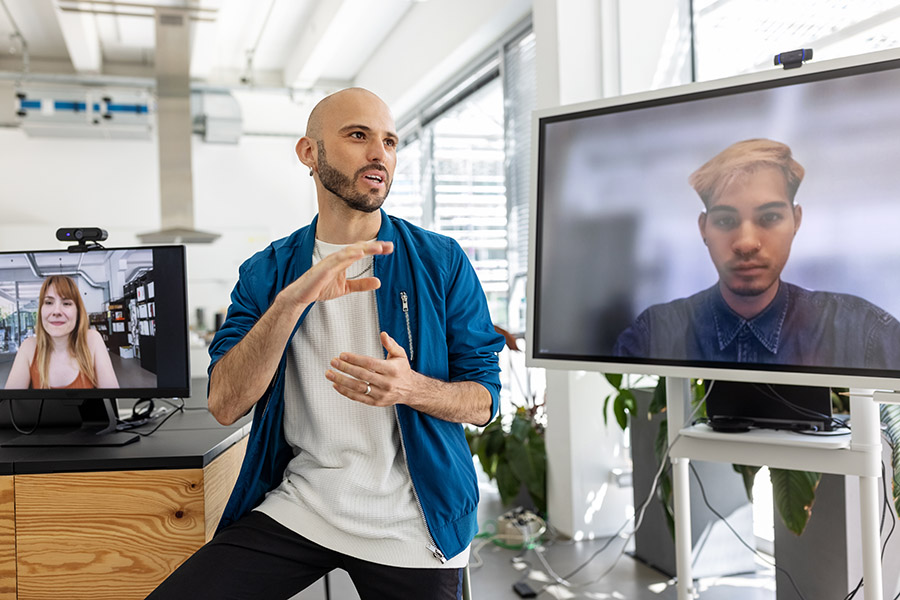
Zoom has made us lazy in many respects. Since Zoom participants are usually all in the same boat regarding clothing and staging, they have been forgiven for a certain casualness and even sloppiness. In-person events are back and make us aware that pandemic patience can run short in live meetings. In Zoom, being late can be blamed on poor connectivity. Being late to an in-person meeting may be noted in your personnel file. On Zoom, you can discreetly shield your notes and content, or even share it live. In person, there aren’t as many places to hide, and your presentation may have to be revised to suit a live venue.

Clothing in the office has undoubtedly been relaxed, but wearing pajamas or athletic gear might be embarrassing. Don’t forget that on Zoom, you have a mic to make sure everyone can hear you. At an in-person meeting, you must ensure your voice is strong and confident, and you may have to ask if everyone can hear. Being away from in-person meetings for so long has made many people value them more. People need people for good mental health, and being on Zoom all the time presented a false proposition that being remote could be a replacement for that. It feels good to be back!

10 Business Leadership Lessons For Politicians

Politicians are not the best role models. Often, they are self-serving individuals obsessed with their own job security.

Social media lets us watch them say one thing and do just the opposite. Rather than lead effectively, politicians simply call each other names. The world would be a better place if politicians remembered these 10 leadership principles.

  1. Tunnel vision – do not surround yourself with people who only think like you. Add diversity to broaden your scope.
  2. Likeability – you cannot always be the nicest person in the room.
  3. Decisions – don’t let your ego get in the way of a good decision.
  4. Trust – if your team does not trust you, then you are just a bully.
  5. Followers – 20-30% of the people will follow anyone.
  6. Communication – talk is cheap – action pays the bills.
  7. Respect – it is earned over many years but can be lost in seconds.
  8. Leadership – lying and creating fear is not leadership. It is chaos.
  9. Courage – do the right thing. Make the tough decisions even if it means losing some of your status.
  10. Integrity – stand up for what you believe. Be the role model you want your children to follow.

Let’s hope more politicians remember that they are role models for current and future generations.   

Rethinking Humanitarian Funding: How the World’s First Humanitarian Impact Bond Delivered Physical Rehabilitation to Conflict Communities

The International Committee of the Red Cross (ICRC) created the world’s first humanitarian impact bond in 2017 to help transform how vital services for people with disabilities are financed in conflict-hit countries. Now, at the end of its five-year initial run, this innovative approach has delivered on its promise.

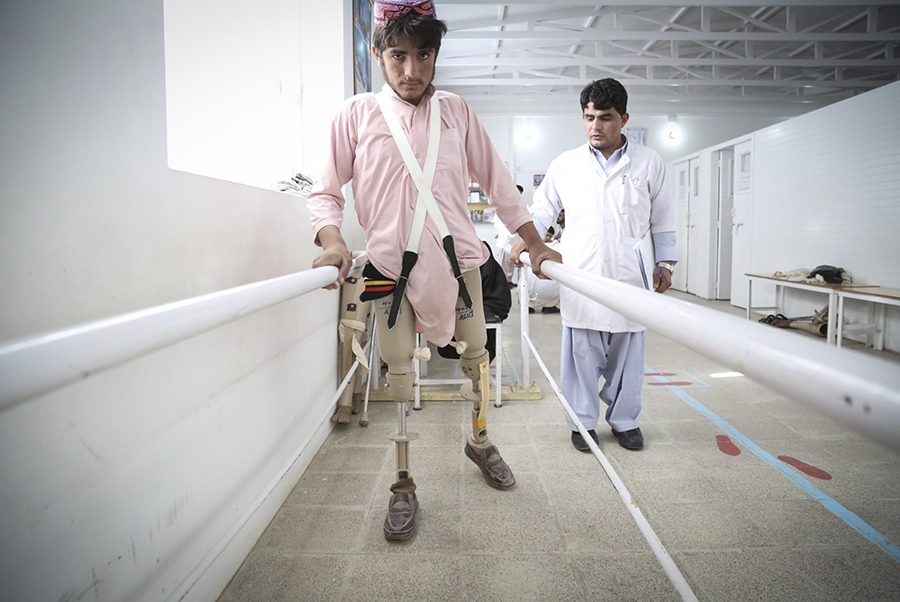
Over 3,000 people with disabilities have benefited from physical rehabilitation services in the Democratic Republic of Congo (DRC), Mali, and Nigeria, thanks to the first humanitarian impact bond, which has proven to be an efficient tool to raise project-driven funding at a time of growing global needs.

The initial capital raised — $27 million — was used to build and run three new physical rehabilitation centers in Africa (Nigeria, Mali, and the Democratic Republic of Congo) and provided services to thousands of people. The payment-by-results program also included training for new staff and the testing and implementation of new efficiencies.

The innovative funding mechanism was created to encourage private sector social investment and support the ICRC’s health programs. The rising number of global conflicts and a growing ICRC annual budget were the driving forces for this innovative funding model.

When confronted with their funding problem, ICRC could have looked at what others had done before or chosen to create something new. The decision to innovate has created a funding model that could offer solutions to social impact funding everywhere.

“Today’s humanitarian challenges are immense, causing suffering for many millions of men, women, and children around the world,” says Peter Maurer, ICRC president. “This funding instrument is a radical, innovative but at the same time, logical step for us. It’s an opportunity not only to modernize the existing model for humanitarian action but to test a new economic model, designed to better support people in need.”

The humanitarian impact bond is legally known as the Program for Humanitarian Impact Investment. It’s not strictly a bond but a private placement. The initial payments by social investors New Re, part of Munich Re Group, and others identified by co-sponsor Bank Lombard Odier, enabled the ICRC to run the activities at each rehabilitation center and expand the ICRC’s Physical Rehabilitation Program.

With the completion of the program’s fifth year, “outcome funders” — the governments of Belgium, Switzerland, Italy, the UK, and the la Caixa Foundation — will pay the ICRC according to the results achieved. These funds will be used to pay back the social investors partially, in full, or with an additional return, depending on how well the ICRC performed in terms of the efficiency of the new centers.

Independent auditors will now verify the ICRC’s reported efficiency in the three new centers based on how many people received mobility devices as compared to existing centers that did not form part of the program. If above the benchmark, the social investor will receive its initial investment plus an annual return. If the performance of the new centers is below the benchmark, it will lose a certain amount of the initial investment.

Of the 90 million people with physical disabilities who need a mobility device worldwide, only 10%, on average, have access to adequate physical rehabilitation services, leading to both social and economic exclusion.

An estimated 29 million people — about 14 per 100 of the population — live with a disability in Nigeria, and physical rehabilitation services are not available for many of them. In the North-East of the country, conflict and violence have left many without access to essential health care services, forcing people to travel 600 miles to reach a facility with adequate care.

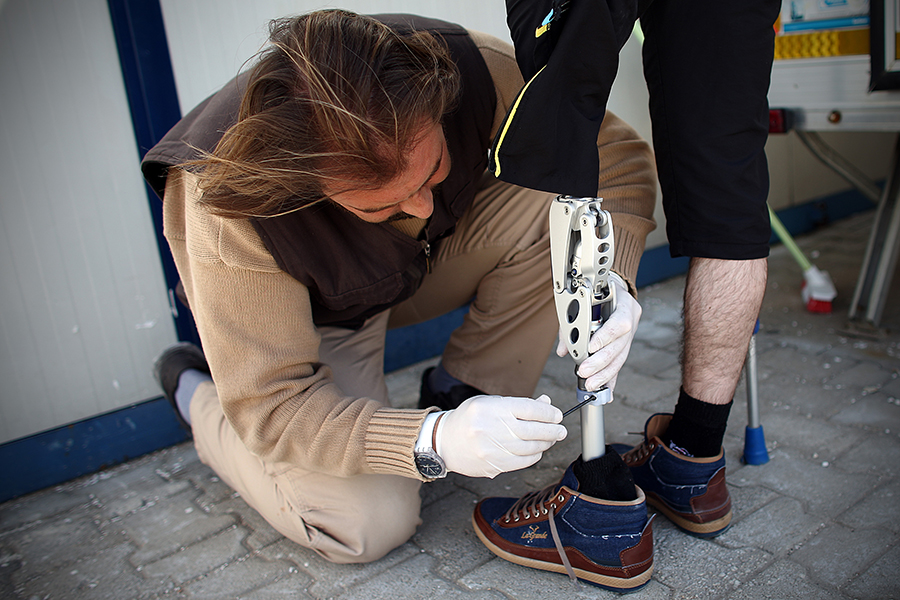
The ICRC is the world’s largest provider of physical rehabilitation services in developing and fragile countries. In 2016, the Physical Rehabilitation Program operated 139 projects in 34 countries, helping almost 330,000 people with physiotherapy and mobility devices, including wheelchairs, artificial limbs, and braces.

The center has already had an immense impact on patients like Bintu Umar, whose leg was amputated in 2009 after an attack on her village. “When I didn’t have the prosthetic leg, some activities were challenging for me. But thanks to the leg, I can assist my parents. I also do household chores now.”

When Insurance Companies Give You Lemons — Make Lemonade

A leading innovator in the insurance space is a B Corporation called Lemonade. This startup insurer builds its business on a give-back system that allows customers to select nonprofits that receive any unused premiums.

Lemonade Cofounder and CEO Daniel Schreiber says donating that money rather than keeping it as profit has produced more than $1 million in donations in 2020 (and over $2.3 million in 2021). It’s a practice that he says goes against the industry’s traditional relationship with customers.

“I don’t think about what we’re doing as being charitable in the traditional sense of the word,” he says. “We do give money to charity, we do partner with charities, and in so doing, we are solving an absolute business challenge, which is that insurance companies are deeply distrusted.”

Lemonade has built trust with customers looking for a new way to insure their homes and lives. Schreiber says Lemonade’s intention to do insurance differently gets at the conflict inherent in the product. 

“There is an asymmetry of power: You’ve given me the money; I have it. You feel disadvantaged because it’s not a level playing field. I’ve been collecting your premiums for the last ten years, and now you’re trying to get them out. There is an asymmetry of information: You don’t really know what the policy says; I do,” he says. “That’s what we were contending with in founding Lemonade: How do you create a trusting and trustworthy brand in a domain where the business fundamentals are designed for conflict of interest?”

While launching Lemonade, Schreiber talked with a Nobel Laureate in game theory and another with a Nobel Prize in behavioral economics. “We ultimately concluded that the problem isn’t with the players; it’s with the game. There’s something structural about insurance that produces these predictable results,” he says. “The fundamental problem is I make money by denying your claim. So I have a fundamental interest in you not being paid. I’m simplifying things, but it’s a zero-sum game: One of us is going to be $1,000 richer, one of us is going to be $1,000 poorer, and so long as that’s the case, there’s a problem.”

Schreiber says incorporating a new component — the Giveback program — serves as a game-changer. “By adding a nonprofit to the room, we change the very fundamentals of the dynamics and other incentives. We tell you upfront that our profit is not going to depend on how many claims we pay,” he says. “If there’s money left over, it will go to a charity of your choice. That changes my incentive because I don’t make money by denying your claim.”

Like Burnham Benefits, Lemonade shows that it’s possible to incorporate a stakeholder-minded and profitable way of doing business in a traditional industry and find a receptive and appreciative customer audience. “I think people should work hard at creating that kind of win-win,” Schreiber says. “It’s good to be able to build a business model where the act of giving something to the wider community isn’t at the expense of your shareholders.”

Is Hiring Your Weakest Link? Here Are Some Reasons Why

Does this sound familiar?…

  • You have a “B” manager trying to hire “A” players.
  • Managers make their hiring decision based on the first impression.
  • Manager and candidate bond because of similar likes (i.e., sports, college football, etc.), rather than the candidate’s qualifications.
  • The manager says: “Please sit down while I read your resume.”
  • The manager hires based on “I’m a good judge of character.”

This happens every day — even in the best companies. Too often, well-intentioned managers are the weak link in your hiring process. And the cost is enormous, including lost sales, poor customer service, safety issues, lower employee engagement, etc.

Training, while important, may not be the solution because most managers resort back to their old habits. How to help hiring managers:

  1. Job descriptions are sooo yesterday. They are essential, but not strategic. They provide only basic info — work history, education, and the job’s duties and responsibilities, etc. Have the manager complete a Job Outlook form. Prior to starting the hiring process, capture the hiring managers’ strategic thoughts about the open position in writing and with their signature.
  2. Review your pre-hire assessments. Are you using yesterday’s tools for a vastly different business model (i.e., remote workers, Zoom meetings, work/life balance issues, etc.)?
  3.  Understand that there are two types of onboarding. The formal one is where the candidate learns about the company’s vision, mission, procedures, benefits, and products. The informal onboarding is where the current employees teach the new person “the ropes.” If not aligned, it will directly affect the new employee’s success with the company.

Why Self-Awareness Is Important for Leaders, and How to Develop This Critical Skill

Self-aware leaders know how their values, beliefs, and personal histories shape their perceptions of reality, leading to a better understanding of those around them. But learning how to be self-aware as a leader is a challenging process. Start with these steps.

Everyone alive has their own perception of reality. That much is hard to deny, as people can’t help but perceive the world through their own personal lens. Recognizing and appreciating the differences in these various perceptions can be difficult when we can’t perceive each other’s unique views, but this ability is foundational in developing self-awareness — a critical skill for today’s leaders.

Self-aware leaders understand how their individual values, belief systems, and personal histories shape their perceptions of reality. They regularly take inventory of themselves and those they’re tasked to lead. It might seem obvious, but self-awareness is all about self-reflection: weighing your behaviors in relation to your values and those around you. Without this critical skill, you risk allowing biases to sneak into your decision-making and might even instill fear and stress within your internal hierarchy. Without some level of awareness of self and the value of others’ uniqueness, it becomes impossible to build a diverse, innovative, and motivated team.

Recent struggles in nearly all industries over the last few years have certainly helped move the needle of self-awareness for leaders. No doubt you’ve found yourself on some kind of inner journey during these hard times, reflecting on what’s most important in life and making adjustments accordingly. It stands to reason that the same level of contemplation would benefit you in the workplace and inform and improve your interactions with employees and peers.

It’s easy for any of us to fall back into survival mode when faced with struggles such as inflation, supply chain delays, talent shortages, and so much more. But it’s also important to make sure that some of that self-reflection sticks with you through the hard times: It will make you a better leader.

How to Become More Self-Aware as a Leader

Learning how to become more self-aware is a challenging process for everyone who undertakes it. More often than not, you have to get out of your own way to make progress on this front. But it’s well worth the effort, as self-awareness can often lead to much more effective leadership and team management.

Here are three ideas to get started on your journey to becoming a more self-aware leader:

1. Embrace a learning mindset.

Ego is the enemy of good leadership. Though it might enable you to act more decisively, an overdeveloped or inflated ego can be a problem — even going so far as limiting your growth and blinding you to your natural limitations. Therefore, the first step to self-awareness is coming to terms with the fact that no leader knows everything or ever will know everything. Every leader will be wrong sometimes, including you. When you abandon your ego and embrace a learner’s mindset, you tap into your curiosity and begin to view every new challenge or experience as an opportunity to grow.

It’s just as important to make the same allowances for your team. Every so often, it’s good to let go and allow team members to innovate on their own. You’d be surprised at what employees can learn and accomplish without your involvement in every decision. They might even find some great answers to team problems. This isn’t to say you should wash your hands of all duties; it’s still important to lead with good intent and explain any risks and limits they need to work around. But trust team members to develop their own ideas and solutions. Be self-aware enough to know that good ideas can come from everywhere.

2. Enlist the help of someone you trust.

Sometimes, even the best of us get too close to a situation to see it clearly, especially when it comes to self-reflection. It can be difficult to “observe” yourself. It’s common for biases and insecurities to sneak in and skew our perspective. You might overlook or overly focus on your faults. These are only a few reasons why all great leaders need mentors. A mentor can be a boss, a respected colleague, or even a friend if they’re able to reflect on you with a kind and critical lens. Even when you’re the mentor offering support to mentees, enlisting the help of a mentor or coach can be beneficial to you professionally and personally. The people you trust and respect most are often able to offer unbiased observations of your behaviors and pose challenging questions about your decisions.

As mentors themselves, self-aware leaders use their understanding of emotions, personality differences, and individual needs to inspire and motivate each member of their teams. A mentor offers the same opportunity for you to learn how to receive and provide feedback in a manner that’s both constructive and empathetic — not patronizing or disrespectful. By asking a mentor to help you in self-reflection, you’re opening yourself up to criticism on a regular basis. It’s not necessarily comfortable, but it will allow you to glean how to do the same for the variety of people on your team with greater tact and compassion.

3. Take a practical view of personality assessments.

A lot of leaders view assessments such as the Myers–Briggs Type Indicator or the DiSC assessment as “The Truth.” If the test says you’re an INFJ, then you’re an INFJ — and should approach all situations or challenges as such, no matter the context. The problem is that the letters only tell you who you are now, not who you can be. Though personality tests are no doubt informative and often helpful in self-reflection, round out your understanding of yourself with other assessments, including the Leadership Circle Profile. A systematic development assessment such as the LCP can offer more direction on how to expand your mindset and become a more self-aware leader.

The LCP stands out from other assessments because it measures both your creative competencies and reactive tendencies, giving you a snapshot of your root behaviors and mindset. This focus can help you figure out what might be getting in the way of your intended leadership impact and identify any deeply held perceptions (or misconceptions) of your leadership ability. Perhaps you’re unaware of your aggressiveness or self-protection, but there’s a way to find out. With that information, you can move forward to make the necessary adjustments and become the best “you” you can be.

The self-awareness of leaders is often directly tied to success. “Knowing thyself” is a critical leadership skill that helps foster trust and build a culture where individuals across multiple backgrounds, ethnicities, genders, and ages can thrive — including you. As a leader, you can learn to connect with yourself and others in new ways that can benefit you, the company, and employees all at once. Don’t be scared to let go of your ego and explore something new about yourself; you might be surprised by what you discover.

How the World’s Largest Family Businesses Are Proving Their Resilience

Like many businesses, family-owned enterprises have had their share of challenges in the current economic landscape.

As each continues to make its way through the many obstacles presented by the COVID-19 pandemic, the 2021 EY and University of St. Gallen Family Business Index reveals just how vital family enterprises are for the global economy’s health. The resilience of these family businesses becomes even more evident as they continue to lead in job creation and opportunities within their communities.

Paul Dickerson, CEO of CREDO and a longtime leader of his family business SWEPCO, explains that most family businesses are resilient because they take the long view, focusing on decades and generations rather than meeting Wall Street’s quarterly earnings report. “Most are well diversified and global, keeping their debt low. Their offices aren’t lavish, but their factories are first-rate. Cash is king, and family enterprises reinvest earnings back into the company.” Dickerson’s family enterprise is an 88-year-old manufacturer of protective coatings and high-performance industrial lubricants with plants in the United States, Canada, and Europe.  

The family businesses represented in the Index collectively generate $7.28 trillion in revenue and employ 24.1 million people worldwide. That constitutes the third-largest economic contribution in the world (after the United States and China) by revenue — despite the global economy shrinking by 3.5% in 2020. This revealing trend magnifies how family businesses are vital to the future health and growth of every country’s economic well-being and post-pandemic recovery — and the trend shows no signs of slowing.

A Pandemic Brings Out the Best

For all the challenges COVID-19 presented, family businesses had the opportunity to showcase their agility, commitment to innovation, and sense of social responsibility by pivoting during the pandemic.

Carlos DeAldecoa Bueno, president of Eximius Coffee, owns a coffee storage and processing plant and the largest liquor distillery in Texas. During the pandemic, he put the entire distillery operations on hold and shifted production and bottling lines to manufacture hand sanitizer. “Carlos donated $200,000 worth of hand sanitizer to first responders, nonprofits, and the community in Texas,” says Dickerson, “and shipped over 80,000 gallons (about 30,000 liters) of hand sanitizer throughout the United States.”

The Family Business Index revealed numerous scenarios of family-owned enterprises pivoting during the pandemic — including restaurants creating makeshift drive-through lines to serve families affordable meals during the food shortage to owners not drawing a salary to make sure their people had paychecks.

Building Success Across Generations

The success of family businesses often comes down to the planning and vision of the first generation, with the next generation building on that legacy while following its own approach. Of course, success takes time, and although the COVID-19 pandemic has made the next generation’s survival more difficult, the Index cites 75% of the family businesses are over 50 years old. However, youth is not necessarily an impediment to the growth or the scaling of a family business.

Most of the reasons a family business doesn’t survive are preventable with proper succession planning and a strong commitment by family leadership. But scaling a business beyond its founders is tricky. At 30, Tze Boon Ong (pictured above), chairman of the board at ONG&ONG, took over the family architecture business after the death of his parents. To survive, Ong believes it essential that each new generation have a hunger for not just keeping the company alive but looking to innovate, grow, and steer the business in a revolutionary direction. Ong says success for him will be “in making my role obsolete — then I know I’ve done my family company a service.”

Sustaining the Focus on Gender Diversity

The 500 largest family businesses have 4,418 board seats; family members hold 1,041. Of those, 17% are female and 83% male. The share of companies with female family members on boards is 31% and is on par with global industry benchmarks.

Gender diversity among chief executives is equally challenging to family businesses and non-family firms. Five percent (27) of the family businesses on the Index have female CEOs, comparable with industry benchmarks of 8% (41) of Fortune Global 500 companies. Moreover, female CEOs are marginally more likely to be family members than external appointments.

Change starts with intention, Dickerson says, and finding talented female business leaders and creating the conditions for success must be a stated business objective. “I encourage family leaders to have a courageous conversation and then make hiring, retaining, and promoting women leaders part of their 5- to 10-year strategic plan. Next, appoint a task force to promote female leadership in the business, family council, and other family governance structures.”

Beyond being the right thing to do, Dickerson believes it’s smart business. “In the war for top talent, neglecting 50% of the candidates (women) will be a huge disadvantage. We have a long way to go, but I believe there is room for optimism. As this generation of leaders retires, attitudes toward women in leadership will shift.”

What NextGen Brings to the Table

The average family business board member is 61 years old, but the next generation brings more age diversity and new leadership to boards. One in five businesses on the Index has a next-generation member (40 or younger) on the board or on the management team. This represents a significant opportunity for boards to diversify and extend their talent pool.

“Embrace the next generation of leaders and the entrepreneurial spirit they offer,” Dickerson tells his peers. “Tap into their vision for the business; they are the pathway to renewal and rebirth of the family business. Over time, the core business normally looks little like its founding one. And turbulent times often accelerate this transition.”

Dickerson advises family businesses to formalize their internship programs, utilize innovation sprints as a source of new ideas, and let NextGen run with the strong concepts developed and see what they can do.

More than Profit

Environmental, social, and governance (ESG) is no longer a passing trend, especially for the next generation of family-owned business leaders. Presently, the total valuation of ESG assets is around $30 trillion. That’s more than 25% of the managed assets in the entire market.

A good proportion of the family businesses on the Index report formal ESG metrics, including 53% (264) reporting at least once on the GRI Sustainability Disclosure Database. Fifty-one percent of those companies come from EMEIA (Europe, Middle East, India, and Africa), followed by 30% from the Americas, and 19% from Asia-Pacific. The United States has the highest number (42) of family companies that contributed to the GRI database.

Employees, customers, investors, and other stakeholders demand that companies play a more active role in addressing the world’s greatest challenges. As a result, NextGen family business owners will most certainly make ESG a top priority.

Stable and Agile: Families Find the Right Balance

The 2021 EY and University of St. Gallen Family Business Index reveals how important family enterprises are for the health of the global economy. Despite the pandemic, the largest 500 family businesses globally have proven their economic dominance and resilience. Longevity and stability have mattered as these businesses have managed their long-term business outlook with an ability to pivot in the short term. Being ready to value more diversity and skills from both the next generation of leaders and women leaders is a small step for them — particularly when talent is the key to addressing ESG, innovation, and future consumers.

“It is no surprise how family businesses can now attract top talent in the marketplace,” says Dickerson. “Many accomplished difference makers are tired of constant change in their firms; they long for stability, family comfort, and putting down roots.”

0