

Luxury Collection Offers DNA-infused Fragrance and a Suit Made From Case Files

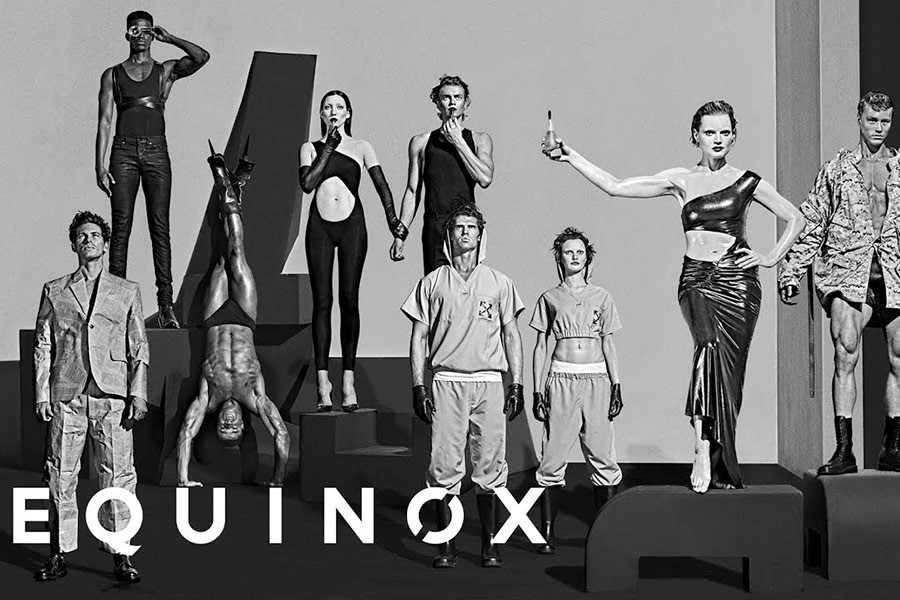
Equinox, the high-performance lifestyle leader, has unveiled an unprecedented new take on its acclaimed “Commit To Something” campaign with “Commitment, A Collection by Equinox,” featuring seven one-of-a-kind luxury goods inspired by the passion and persistence of some of the most committed people and organizations on earth. 

In an on-demand world where everything is a swipe away and anything can be bought if the price is right, Commitment, A Collection by Equinox was conceived to subvert our typical perceptions of luxury.  From “The Truth Lipstick” to “Eau de Blood, Sweat and Tears,” each product serves as beautiful proof of commitment in a noncommittal world. The catch? Nothing is for sale.

If you like this, subscribe here for more stories that Inspire The Future.

Designed by some of the world’s most provocative fashion forces including Off-White’s Virgil AblohShayne Oliver, Y/Project and Eckhaus Latta, the products explore the real-life stories behind The Washington Post’s truth-seeking journalists, the gay civil rights pioneers of The Stonewall Inn, marathoner/activist Kathrine Switzer, and other fiercely committed people and organizations.

“We’re living in a time where commitment has become a relative rarity, so the stories we’re sharing as part of this year’s campaign feel especially important as a catalyst for inspiring others to accomplish their own goals—both inside and outside the four walls of our clubs,” said Vimla Black Gupta, Chief Marketing Officer of Equinox Fitness Clubs.

Throughout 2018, several of the items from the collection will be auctioned off, with proceeds donated to nonprofit organizations of importance to the people and organizations behind each, including Equinox’s longtime charitable partners, Memorial Sloan Kettering Cancer Center and The Heroes Project.

With designers curated by stylist Mel Ottenberg, Equinox commissioned the production of these one-of-a-kind items:

1. The Truth Lipstick: Made from blank newspaper pages from The Washington Post. Symbolizes the organization’s commitment to free press and journalistic integrity. Lipstick Case designed by Mel Ottenberg.

2. The Law Suit: Designed by Eckhaus Latta, and made from case files of lawyer James Thornton, founder of nonprofit ClientEarth who, over four decades, has committed to fighting for the environment because it can’t fight for itself.  Symbolizes Thornton’s commitment to solving the greatest challenges faced by our planet.

3. Stonewall Stilettos: Designed by Shayne Oliver, and made from the actual pleather from the banquettes at The Stonewall Inn.  Symbolizes the commitment of early activists fighting for LGBTQA rights.

4. The Shades of Humanity: Designed by Adam Selman, and made from the camera lens of 2016 Instagram photographer of the year, Ruddy Roye. Symbolizes Ruddy Roye’s commitment to capturing the stories that often go unseen.

5. Eau De Blood, Sweat & Tears: Bottle designed by Rafael de Cardenas/Architecture at Large with a custom scent by 12.29, the fragrance was infused with the actual DNA of Kathrine Switzer, the first woman to run the Boston Marathon. Symbolizes Switzer’s commitment to equal rights for all female athletes.

6. The Scrubs Sweatsuit: Designed by Off-White’s Virgil Abloh, and inspired by the workwear of dedicated oncologists like those at Memorial Sloan Kettering, who patient by patient, are committed to fighting the war on cancer daily. 

7. The Real Camo Jacket: Designed by Y/Project (Glenn Martens) and made using actual material from the uniforms of four Heroes Project veterans, celebrating our partnership with the Heroes Project.  Symbolizes The Heroes Project’s commitment to wounded veterans, who changes lives by empowering and enabling these veterans to climb the world’s seven summits. Materials donated by Charlie Linville (Jacket from his Battle Dress Uniform, including name patch, piece of his boot that he was wearing when he stepped on an IED and lost his leg, piece of rope that went to the top of Everest, belt buckle from dress uniform); Brad Ivanchan (belt when in combat); Carlos Torres (Jacket from his BDU’s, including his name patch); Kionte Storey (Bracelet from when he was in combat).

If you like this, subscribe here for more stories that Inspire The Future.
Hollywood’s Hiring Freeze: Female, Black & Asian Directors Rarely Worked in 2017 Films

The upcoming Golden Globe Awards will present yet another man its Best Director award, giving the cold shoulder to female directors such as Greta Gerwig, Dee Rees, Patty Jenkins and Kathryn Bigelow.

But a new report on films from 2007 to 2017 reveals a larger problem than a lack of award nominations for female directors. Diversity in the director’s chair is virtually nonexistent, and gender in the executive ranks of major companies remains grossly imbalanced. 

The report, entitled “Inclusion in the Director’s Chair?” analyzes new data on movies released in 2017. Authored by Professor Stacy L. Smith and the USC Annenberg Inclusion Initiative, the report is the most comprehensive intersectional analysis of directors of motion pictures to date, combining data on the gender, race and age of 1,223 filmmakers working on 1,100 top-grossing films released between 2007 and 2017. The analysis also focuses on women in executive and leadership ranks at major media companies. The results reveal that for female, Black and Asian directors, the doors to Hollywood remain mostly closed.

If you like this, subscribe here for more stories that Inspire The Future.

Only 4% of all directors across the 1,100 top films from 2007 to 2017 were female, a ratio of 22 males to every one female director. Moreover, only four Black females, two Asian females, and one Latina have worked as directors on those 1,100 films over the span of 11 years analyzed. There has been no change over time.

“Hollywood’s ‘female director problem’ has been the source of much dialogue over the past several years. The evidence reveals that despite the increased attention, there has been no change for women behind the camera,” said Dr. Smith. “Mere conversation is not the answer to these problems—and the time for conversation is up. Until major media companies take concrete steps to address the biases that impede hiring, nothing will change.”
The majority of female directors (83.7%) worked on only one top-grossing film across the time frame, including all four of the Black female directors. Slightly more than half (55.3%) of male directors only worked once over the 11-year sample. Notably, the 8 female directors added to the list in 2017 are all new to the study—which the authors state is another indicator that little progress has been made.

“As we said last year, most female directors are ‘one and done’ when it comes to helming popular films, particularly women from underrepresented racial/ethnic groups,” said Dr. Smith. “In 2017 none of the women entering the ranks of 100 top film directors appeared in our study previously. This is not true progress. Real change means that we see women working across multiple years and that the number of opportunities for female directors expand each year.”
The number of films directed by both males and females over the 11-year time frame was assessed. Male directors worked on as many as 15 films, while females did not exceed 4. One explanation for this disparity is the age at which directors work. Men create films over a span of nearly 60 years, from their 20s to their 80s. Women, however, work across only four decades, from their 30s to their 60s.

The study also explores the small percentages of Black and Asian directors working behind the camera. Only 5.2% of the 1,223 directors of 1,100 top films were Black, and 3.2% were Asian. This translates into 31 individual Black directors and 20 Asian directors of popular movies released from 2007 to 2017. Again, no change over time was observed.

The researchers suggest that the lack of opportunities for Black directors is tied to who appears in the films they direct. For Black directors, 81% of the movies they helmed had a Black actor among the two top-billed cast. “Hiring patterns that rest on ‘matching’ director race to the race of the top cast partially explain why we see little change over time,” said Dr. Smith. “The identity of the director must be uncoupled from industry expectations about what kind of stories he or she can tell if any progress is to be made.”

The report details the number of films by female, Black, and Asian directors released by each of the major film distributors over the 11 years studied. Warner Bros. released the most female-directed films, with 12 movies between 2007 and 2017. Lionsgate topped the list for Black directors, putting out 18 movies—15 of which were helmed by Tyler Perry. Universal released 13 movies with an Asian director between 2007 and 2017, the leader in that category. Importantly, Disney did not release a single movie with a Black director from 2007 to 2017.

Women are Underrepresented in the Executive Ranks at Major Media Companies
The new report also includes a profile of the executive ranks at seven major entertainment companies. Across all seven corporations, 18.8% of the board members are female, along with 17.9% of the C-suite positions (CEO, CFO, CTO, etc.). Looking more closely at film executives in particular, 31% of those ranks are filled by women. In the executive ranks, females are more likely to appear in EVP, SVP, and VP positions than at the apex of organizations in President or Chairperson jobs.

“It is no surprise that an industry which does not hire female directors also lacks women in leadership roles across the organizations that finance and distribute content,” said Dr. Smith. “Inclusion is not a one-time problem to be solved, it is a systemic issue that must be addressed by individuals at all levels of these companies. If these companies are going to meet the push for 50/50 by 2020, this data shows how far they have to go.”

Other report highlights include an assessment of the genre of films made by women, Black, and Asian directors. The authors also offer solutions for consumers and shareholders to address the ongoing disparities behind the camera. The report is the latest from the Annenberg Inclusion Initiative, and can be found online here.

If you like this, subscribe here for more stories that Inspire The Future.
 

Biggest Reef in Americas Says “No!” to Offshore Oil

Belize has made history by unanimously passing the Petroleum Operations (Offshore Zone Moratorium) Bill, 2017 which will place an indefinite moratorium on offshore oil in Belize’s marine territory.

This decision has been welcomed by Oceana, WWF, and other members of the Belize Coalition to Save Our Natural Heritage as a landmark step forward to protect the Belize Barrier Reef and strengthen marine conservation worldwide.

This action is historic given Belize’s economic dependence on its natural resources and will safeguard invaluable marine environments including the second longest barrier reef in the world, which runs along Belize’s coast. Just as importantly, this law recognizes and respects the collective leadership and persistent involvement of tens of thousands of Belizeans for more than seven years on the issue of offshore oil.

If you like this, subscribe here for more stories that Inspire The Future.
Oceana has been an unwavering supporter of this call of the Belizean people since it began in the aftermath of the BP oil spill in the Gulf of Mexico in April 2010 and within the reality that Belize’s entire offshore area had already been sold as oil concession licenses. Following today’s proceedings, Oceana’s Vice President for Belize Janelle Chanona said, “This is truly ‘The People’s Law’. Belizeans have remained steadfast in their opposition to offshore oil since they became aware that marine assets were at risk of irreversible damage from the offshore oil industry.”

This news brings hope that the Belize Barrier Reef, a UNESCO World Heritage Site, will no longer be considered a “Site in Danger” as oil was identified as direct threat to the site’s integrity. “We urge Belize’s government to follow today’s historic announcement with the additional actions needed to ensure the site is removed from UNESCO’s in danger list,” said Nadia Bood from WWF.


Oceana is the largest international advocacy organization dedicated solely to ocean conservation and is rebuilding abundant and biodiverse oceans by winning science-based policies in countries that control one third of the world’s wild fish catch. With more than 200 victories that stop overfishing, habitat destruction, pollution and killing of threatened species like turtles and sharks, Oceana’s campaigns are aimed at delivering results. A restored ocean means that one billion people can enjoy a healthy seafood meal, every day, forever.

If you like this, subscribe here for more stories that Inspire The Future.
 

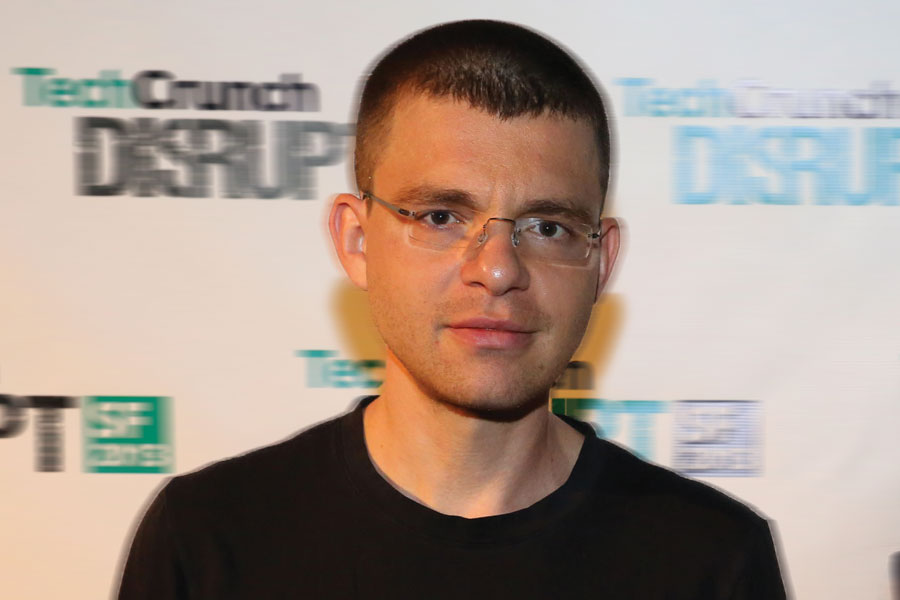
Max Levchin, Cofounder of PayPal

Maksymilian Rafailovych “Max” Levchyn was born in in Kiev in 1975 to a Ukrainian Jewish family. In 1991 he moved to the United States under political asylum and settled in Chicago. 

In an interview with Emily Chang of Bloomberg, Levchin discussed overcoming adversity as a child. He had respiratory problems and doctors doubted his chances of survival. He took up the clarinet to help expand his lung capacity. He survived, and went on to earn a bachelor’s degree in computer science at the University of Illinois. 

If you like this, subscribe here for more stories that Inspire The Future.

In 1998, Levchin and Peter Thiel founded Fieldlink, a security company that allowed users to store encrypted data on their PalmPilots and other PDA devices in order for handheld devices to serve as “digital wallets.” After having changed the company name to Confinity, they developed a popular payment product known as PayPal and focused on the digital transfers of funds by PDA. In 2000, the company merged with X.com and by 2001 adopted the name PayPal after its main product.

PayPal went public in early 2002, and was subsequently acquired by eBay. Levchin’s 2.3% stake in PayPal was worth approximately $34 million at the time of the acquisition. He was named by the MIT Technology Review as one of the top 100 innovators in the world under the age of 35, and Innovator of the Year. He is primarily known for his contributions to PayPal’s anti-fraud efforts and is also the co-creator of the Gausebeck-Levchin test, one of the first commercial implementations of CAPTCHA.

As of January 2016, Levchin is the CEO and cofounder of Affirm, a financial technologies company.

If you like this, subscribe here for more stories that Inspire The Future.

From Heroin to Hope Dealer

“But Dad, you’re a successful drug addict.” Those words spoken by my teenage son, Nick, chilled me to the bone. The charade I’d lived for more than a decade was crumbling. My son was following in my footsteps, using a drug that could kill us both.

I need to do something before one of us went to prison – or worse. But first, I need to snort the two bags of heroin he just left me so I won’t be dope sick.

You can’t read the news without hearing of the opioid pandemic sweeping our country. You may wonder how it starts – and who an addict really is. My name is Tim Ryan and I’m an alcoholic and drug addict. I know addiction better than most, because I lived it for 30 years. You name it, I’ve done it – booze, LSD, angel dust, cocaine, crystal meth, amphetamines and heroin.

But if you saw me years ago, you wouldn’t peg me as an addict. Addicts aren’t world-class barefoot water skiers or six-figure tech recruiters with office space in downtown Chicago, right? Addicts don’t own large houses in the suburbs, marry beautiful wives, and raise four kids. Yet that was my world and I was in control – until I wasn’t.

Most boys grow up wanting to be a rock star, pro athlete or firefighter. Not many dream of becoming a felon with drug charges. But I thank God daily for the prison where I started to recover my life. It was here that I outlined a business plan for my non-profit, A Man in Recovery Foundation. I shared a cell with gang leaders, humbled and grateful for another day to breathe.

When I left prison I got busy helping anyone I could. I started groups for addicts and formed one where loved ones of addicts could join to get support and talk openly. I met with law enforcers and legislators, creating programs to put people into treatment instead of prison. I got calls from the media and was on national news.

And for the first time in my life, I acted like a parent to my children – and not a friend. Nick, my son that I introduced to heroin, bounced in and out of jail and treatment centers as he continued to battle his own demons. Visiting him at a center, I saw him experience a small taste of recovery. He said, “Dad, once I get clean, we’ll go on the speaking circuit together and save lives.” 

Addiction affects and involves entire communities, and as an addict, I knew that we were short on solutions and hope. As an addict speaking to addicts, the world started to listen.

As my recovery strengthened, Nick’s began falling apart. When I got the call that he’d overdosed, I flashed back to his words: “Dad, you are a successful drug addict.” I wanted to respond, “Nick, there is no successful drug addict.” But it was too late. When I saw his cold, lifeless body on a hospital gurney with tubes coming out of his mouth, my former self would have reached for the drugs. Instead, all I could think was, “I need to get to a meeting.” Some people let their losses bury them. There are moments I want to do that. But I can’t. I’m relentless in my pursuit of finding solutions to the opioid epidemic, because I couldn’t save Nick. And I’m living, breathing proof that recovery works. I’ve attended hundreds of funerals, and as sick as I am of burying people, I will attend hundreds more if I can guide one person into recovery. Addressing our opioid epidemic starts with helping the addict next door – or yourself. We cannot hide from this problem, because it touches us all. Reach out today.  

www.TimRyanSpeaks.com

If you like this, subscribe here for more stories that Inspire The Future.

Meryl Streep’s Non-negotiable Demands For U.S. Women

With high-profile sexual harassment scandals proliferating and millions joining the viral #MeToo social movement, speakers at the 13th annual Massachusetts Conference for Women took on this major social tipping point.

Academy Award winning actress Meryl Streep announced that she and other women in the entertainment industry plan to soon issue “non-negotiable” demands to improve the American workplace, including equal representation in board rooms, entertainment and other industries. “We are after 50/50 by 2020,” Streep said. “Equal means equal. And if it starts at the top, none of these shenanigans would have filtered down and it wouldn’t have been tolerated.”

If you like this, subscribe here for more stories that Inspire The Future.

The two-day event, attracting a record audience of 16,000, started on the day TIME Magazine featured “The Silence Breakers” on the cover of its annual “Person of the Year” issue, recognizing those who are stepping forward to confront their harassers.“It’s such an interesting moment, because this conversation about why this is so widespread, this is really worth having and it’s fantastic,” Streep said. “I can’t help thinking it’s just a door that’s opening to a better world.”

Massachusetts Governor Charlie Baker and Boston Mayor Martin J. Walsh also addressed the Conference. Other keynote speakers included stage, television and Academy Award-winning actor Viola Davis, fashion designer, philanthropist and author Diane von Furstenberg, and Adam Grant, top-rated Wharton Professor and best-selling co-author, with Sheryl Sandberg, of “Option B: Facing Adversity, Building Resilience, and Finding Joy,” also headlined the event.

Themed “The Power of Us: Amplify Your Voice,” the annual nonpartisan, nonprofit Conference, brings together thousands of professionals to connect, renew, and find inspiration in community. The event features more than 150 thought leaders and industry experts from across the country in the fields of leadership, building networks, branding, philanthropy, finance, work-life balance, happiness and civility in the workplace and life.

For the third year, the Conference presented its Workplace Summit, designed to promote gender partnerships and advance equity within workplaces, featuring Adam Grant, cultural innovator Verná Myers, and other thought leaders. The third annual Opening Night at the Conference, on December 6, featured Gloria Steinem, Bethenny Frankel, Skinnygirl founder, author, and branding guru; Barbara Lynch, restaurateur and award-winning chef; Cindy Guerra Robbins, President, Chief People Officer for salesforce.com; and spoken word poet Sarah Kay.

“We are proud to have become the must-attend event for women, men and anyone who advocates for societal, workplace and political equality for women,” said Gloria Larson, President of the Massachusetts Conference for Women Board. “We are confident that attendees will take the extraordinary experiences and learnings from the Conference, the Workplace Summit, and Opening Night, and apply them to their lives and in their communities all year long.”

If you like this, subscribe here for more stories that Inspire The Future.


Nearly 21 Million People Now Have Access to HIV Treatment

About 20.9 million people now have access to the antiretroviral therapy, according to a new report by the UN agency leading the global push to end AIDS, spotlighting that this remarkable progress has been made possible by people living with HIV demanding their rights, strong leadership and financial commitment.

“People, no matter what their health needs, require comprehensive health solutions that are accessible, available, acceptable and of good quality,” Michel Sidibé, the Executive Director of the Joint UN Programme on HIV/AIDS (UNAIDS), said in the foreword of the agency’s new report, Right to health, which was launched yesterday in South Africa.

Mr. Sidibé cited South Africa as an example of a dramatic scale-up of HIV treatment, saying that while in 2000, the country had 90 people on treatment, today, there are more than four million.

If you like this, subscribe here for more stories that Inspire The Future.

“Today, South Africa has the biggest life-saving treatment programme in the world […] This is the kind of acceleration we need to encourage, sustain and replicate,” he said.

The rising treatment helps keep more people living with HIV alive and well. As treatment access has increased for pregnant women living with HIV, new infections among children have been rapidly reduced by almost half worldwide, according to UNAIDS.

The new report highlights the gaps in accessing to health, while also providing some innovative examples of AIDS response.

One challenge is to ensure 17.1 million people, including 1.2 million children, have access to HIV treatment, especially in the countries where new HIV infections are rising.

In that regard, the report points out that new HIV infections are rising at a rapid pace in countries that have not expanded health services to those most affected. Wherever the right to health is compromised, HIV spreads, says UNAIDS.

In eastern Europe and Central Asia, for example, new HIV infections have risen by 60 per cent since 2010, and AIDS-related deaths by 27 per cent.

While in sub-Saharan Africa, the majority of new HIV infections are among young women and girls aged between 15 and 24 years.

The report “has been giving a voice to people living with HIV and giving affected communities and civil society the means to demand their right to health,” stressed Mr. Sidibé.

He further called on Governments to respect, protect and fulfill the right to health of everyone and reiterated the world’s commitment to Sustainable Development Goal 3, to ensure good health and well-being for all.

If you like this, subscribe here for more stories that Inspire The Future.


Nespresso Invests in Post-conflict Colombian Coffee

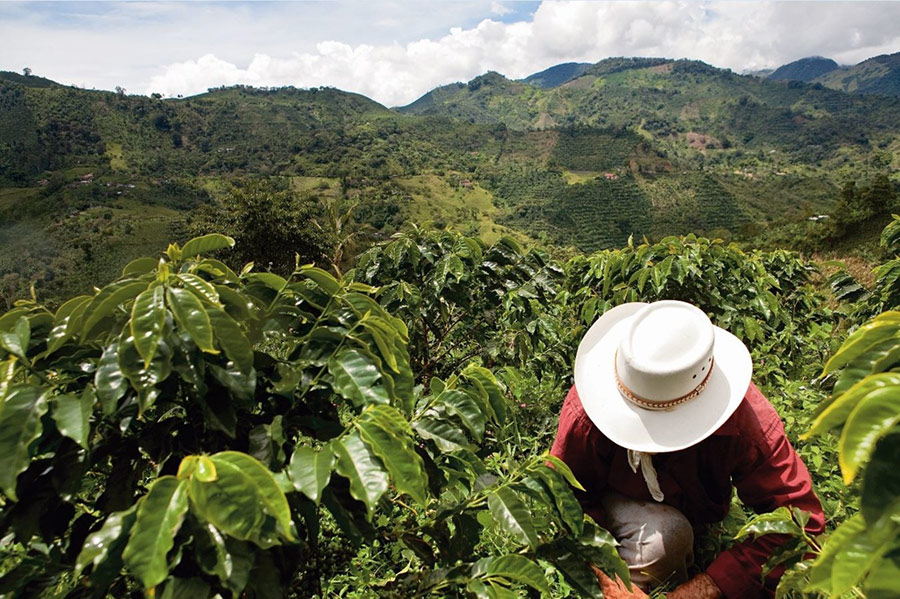
Nespresso has announced it will expand its coffee-sourcing program for the first time into several former conflict zones as part of a $50 million investment in sustainable high-quality coffee cultivation in Colombia.

President Juan Manuel Santos addressed the Nespresso Sustainability Advisory Board where he welcomed the company’s commitment. He cited the investment as an important contribution to the development of post-conflict areas.

The pledge builds on Nespresso’s long-term commitment to Colombian coffee and its efforts to improve production in regions previously impacted by the conflict, including reviving the industry in areas where production was lost. It follows Nespresso’s limited-edition Aurora de la Paz (Dawn of Peace), a coffee sourced from the region of Caquetá and launched earlier this year as a symbol of the opportunity that peace presents for coffee farmers.

If you like this, subscribe here for more stories that Inspire The Future.

Early indications suggest that Nespresso will source up to five times more coffee from Caquetá in 2018, as it expands its efforts into areas that were inaccessible before the peace accord. The extension of the programme will see coffee-sourcing for the first time from San Vicente del Caguán, a community that found itself at the centre of the armed conflict. This region has unique climate, with Arabica coffees grown at a low altitude and low temperatures. Combined with the high humidity, this characterizes the coffee with rich, fruity notes and fine acidity. 

President Santos said: “Colombian coffee is the finest in the world. I welcome Nespresso’s commitment to our country, which highlights the many opportunities that peace opens for Colombia.”

Nespresso‘s agronomists have already started working with more than 500 producers in the Caquetá region in order to implement its AAA Sustainable Quality™ Program. The program works directly with farmers to improve their productivity, quality and sustainability by sharing good practice, providing technical assistance, and improving standards in farmers’ environmental and social welfare.

Key achievements of this program have included the support of 10’000 AAA coffee farmers to become certified by The Rainforest Alliance, Fairtrade International and Fairtrade USA, helping farmers to build resilience to climate change by driving the reforestation of one million native species of trees on farms by the end of 2017, co-investing in water management systems in 25 critical water basins and the introduction of a retirement savings scheme for 2000 farmers in Caldas together with Colpensiones and the Fairtrade International Organization

Jean-Marc Duvoisin, CEO of Nespresso, said: “Quality coffee, and the premiums that farmers can earn, present a very strong opportunity for the long-term sustainability and resilience of coffee farming communities. We are delighted to bring this incredible coffee to the world.”

If you like this, subscribe here for more stories that Inspire The Future.


Watch: Formula E Car vs. Cheetah. Which is Quicker?

Formula E goes wild in a race against a cheetah to highlight the impact of climate change on endangered species.

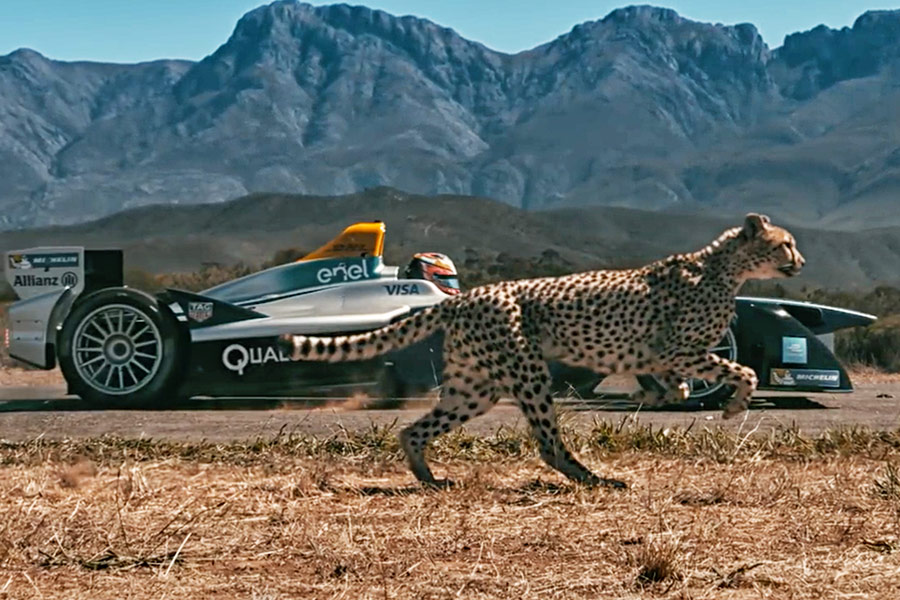
The fully-electric Formula E car took a walk on the wild side, lining-up against a cheetah in a head-to-head race to highlight the impact of climate change on a species increasingly under threat.

https://youtu.be/mMtTEamRLnc

Both sleek and agile machines, on four legs and four wheels, sat side-by-side on a landing strip in a remote part of the Western Cape on the southern tip of Africa, to determine which was quicker off the mark in a drag race.

If you like this, subscribe here for more stories that Inspire The Future.

The world’s fastest land animal and the Formula E car both reach speeds of 0-100km/h (62mph) in approximately three seconds. Who’ll come out on top between Techeetah driver Jean-Eric Vergne and a cheetah on home soil?

The Montreal E-Prix race winner and the cheetah were pitted against each other ahead of the new season of the FIA Formula E Championship to bring attention to the disastrous effects of climate change and the danger it poses to the natural habitat of cheetahs and other wildlife.

Formula E aims to provide a solution. It’s more than just a race on the track, the series is a catalyst for change – to accelerate the uptake of electric vehicles on a global scale and making our society cleaner for future generations.

There are now just 7,000 cheetahs remaining in the wild. The species is wide-ranging and sparsely distributed and needs large landscapes to survive, making it particularly vulnerable to habitat loss and fragmentation – threats that are exacerbated by a changing climate.

The film was overseen by conservation experts and animal welfare organizations, and is released in partnership with Animal Issues Matter, Cheetah Outreach and Endangered Wildlife Trust.

Alejandro Agag, Founder & CEO of Formula E, said: “We knew the similarities in performance between the Formula E car and a cheetah, so we were curious to see the outcome. But, what’s even more important is to determine the outcome for the future for not only us, but the cheetah and other animals we share our planet with. We only have one planet and we must address the issues we currently face from the source and electric cars can play a key role in reducing C02 emissions worldwide. It was a close race… I won’t spoil it and give away the end result. You’ll have to watch the video to see that!”

www.fiaformulae.com

If you like this, subscribe here for more stories that Inspire The Future.


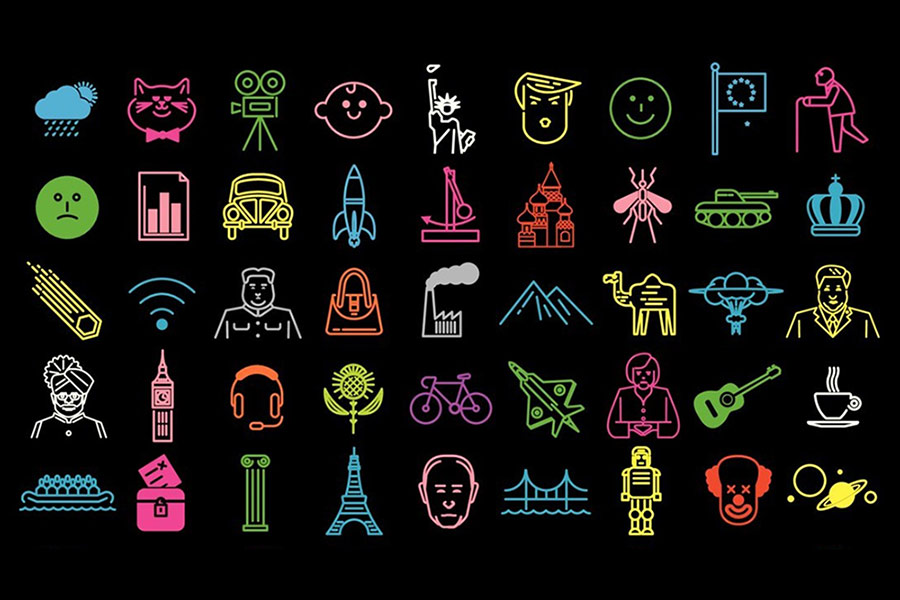
The World in 2018: Key Global Themes to Watch

The World in 2018, the annual publication from The Economist, predicts that 2018 will be a nerve-jangling year as people across the world attempt to escape the tensions of politics and the frenzies of technology. 

But the world can also look forward to an economy growing at a respectable pace and the distraction of global events including the Winter Olympics and the World Cup.

Daniel Franklin, editor of The World in 2018, said: “It will be a critical year on many fronts, including North Korea’s nuclear challenge, the Brexit negotiations, China’s economic reforms and America’s mid-term elections as well as the presidential polls in Brazil and Mexico. We will see intriguing battles for influence, ideas and leadership.” Twelve global themes for 2018 are:

1. Trumpism v Macronisme
We will see competing open v closed world views. While President Donald Trump focuses on his inward-looking “America first” agenda, France’s President Emmanuel Macron promises a new kind of pro-globalisation social contract, one that boosts competition and entrepreneurship while protecting workers who lose out. Mr Macron will emerge as a modern-day equivalent of Teddy Roosevelt, the American president most associated with the Progressive Era.

If you like this, subscribe here for more stories that Inspire The Future.

2. Election game-changers: Brazil, Mexico, Italy and the US mid-terms
Once every 12 years elections in Latin America’s two giants, Brazil and Mexico, coincide; there and in other countries in the region’s big election year voters will demand political renewal and an end to corruption. A messy election in Italy could constrain the country’s economic recovery. In America, the Democrats could triumph in a close contest for the House of Representatives, opening the way for the possible impeachment of Donald Trump.

3. The political and economic cocktail of the Winter Olympics in South Korea and the World Cup in Russia
Two competitions will capture the world’s attention. South Korea will put on the Winter Olympics in the shadow of the North’s nuclear brinkmanship. Russia will stage the FIFA World Cup at a sensitive time in the country’s relations with the West and shortly after an election that will give Vladimir Putin another term as president. In both events, sport will compete with politics.

4. Long good-byes from leaders in Japan, Cuba and Saudi Arabia
Japan’s Emperor Akihito prepares to bow out, Cuba’s President Raúl Castro steps down, Saudi’s King Salman may abdicate. But many leaders who have overstayed their welcome (such as Nicolás Maduro in Venezuela) will try to cling to office.

5. Synchronised global economic growth, at last
Ten years after the start of the Great Recession, a sense of widespread wellness will begin to take hold in the world economy. To many it may feel as if 2018 is just the beginning of the real recovery, but it may in fact be approaching the end: the world economy tends to tip into a recession every eight to ten years, and the last one ended in 2009. The most likely cause of the next dip? Central banks tightening policy too much, too quickly.

6. Crunch time for critical global diplomacy: Brexit, NAFTA and North Korea
Fraught Brexit talks will reach a climax in the autumn of 2018, when a divorce settlement between Britain and the European Union needs to be reached if there is to be time for parliaments to ratify it by the scheduled departure date of March 2019; the chances of a no-deal Brexit are high. The year will show whether NAFTA can survive Donald Trump’s protectionist push. And – most important of all – Mr Trump will have to decide whether to deter or contain a nuclear North Korea seeking the capability to strike the United States.

7. The march of the acronyms: GDPR, MiFID2, COP24, GNH, Remote ID, 5G, AI
New European rules on data (GDPR) and finance (MiFID2, PSD) come into force. A climate-change conference in Poland (COP24) will take stock of progress on the Paris accord. Bhutan starts an intriguing experiment of applying its “gross national happiness” (GNH) to business. And in key tech developments, commercial drones develop faster thanks to rules on remote ID, the next generation of mobile technology (5G) will make its debut at the Winter Olympics and artificial intelligence (AI) will march on into more and more areas.

8. The coming “techlash”
Politicians will turn on the technology giants—Facebook, Google and Amazon in particular—saddling them with fines, regulation and a tougher interpretation of competition rules, in a 21st-century equivalent of America’s antitrust era. There will be broader pressure for transparency about the origin and accuracy of online content. And the tech behemoths’ acquisitions will come under greater scrutiny, as antitrust authorities take a harder line on attempts to squash would-be competitors by buying them.

9. Asian countries top of the league
Asian countries will be world champions in 2018—probably not in football, but in a variety of other areas. Bhutan is forecast to top the league in economic growth; China could overtake Italy to be number one in terms of UNESCO-listed world-heritage sites; and India plans to complete the world’s tallest statue, of Vallabhbhai Patel, a founding father of modern India, in Vadodara in the western state of Gujarat.

10. Signs of the times, from “peak baby” to new adventures in space and at sea
Telling trends of 2018 will include, in demography, a dip in the number of babies born around the world; the rise of private space ventures reflected most dramatically in SpaceX’s plan to send tourists around the Moon; consumers’ preference for oversized cars demonstrated in sport utility vehicles and their close cousins overtaking all other types in sales of new vehicles; and the trend towards gigantism at sea shown in the launch of Prelude FLNG, the world’s biggest vessel, displacing as much water as six aircraft carriers.

11. A new era for medicine
Medical historians of the future will describe 2018 as the year that “advanced” medicines—therapies working upstream on DNA—started to become a reality. The most important landmark will be the approval of the world’s first RNA interference drug, heralding the arrival of a new class of drug. Advances will also come in gene therapies and gene-editing. With luck, too, an old era will end, with the final eradication of polio.

12. Word of the year: Supercalifragilisticexpialidocious
“Mary Poppins Returns”, starring Emily Blunt, will come out in 2018, timed to coincide with the centenary of women’s suffrage in Britain. Its fiery suffragette Mrs Banks would no doubt cheer the political progress women have made since 1964 when the original film appeared – and march onwards with the influence women will have on America’s mid-terms.

www.theworldin.com

If you like this, subscribe here for more stories that Inspire The Future.


0