Account Issues Redirect Page

[et_pb_section fb_built=”1″ admin_label=”Hero” _builder_version=”3.22″ use_background_color_gradient=”on” background_color_gradient_start=”#fe5b48″ background_color_gradient_end=”#b80572″ background_image=”https://old.real-leaders.com/wp-content/uploads/2019/07/geometric-bg-overlay-01.jpg” background_blend=”overlay” box_shadow_style=”preset3″ box_shadow_vertical=”-200px” box_shadow_blur=”0px” box_shadow_color=”#F8FBFE” box_shadow_position=”inner” custom_padding=”10%|||” animation_style=”zoom” animation_direction=”bottom” animation_intensity_zoom=”8%” animation_starting_opacity=”100%”][et_pb_row _builder_version=”3.25″][et_pb_column type=”4_4″ _builder_version=”3.25″ custom_padding=”|||” custom_padding__hover=”|||”][et_pb_text _builder_version=”3.26.3″ text_font=”Nunito Sans||||||||” text_text_color=”#ffffff” text_font_size=”18px” text_line_height=”1.8em” header_font=”Nunito Sans|700|||||||” header_text_align=”center” header_text_color=”#ffffff” header_font_size=”45px” header_line_height=”1.3em” header_2_font=”||||||||” text_orientation=”center” max_width=”700px” module_alignment=”center”]

Your Request Has Been Received

Please allow customer service up to 48 hours to solve your issue and respond. In the meantime, enjoy this quick interview with gDiapers!

[/et_pb_text][et_pb_video src=”https://www.youtube.com/watch?v=6DgfsVkxqSE&t=35s” image_src=”//i.ytimg.com/vi/6DgfsVkxqSE/hqdefault.jpg” _builder_version=”3.26.3″ box_shadow_style=”preset1″ box_shadow_vertical=”30px” box_shadow_blur=”30px” box_shadow_color=”rgba(34,56,101,0.1)” max_width=”700px” module_alignment=”center” custom_margin=”80px|||” thumbnail_overlay_color=”rgba(0,0,0,0)” play_icon_color=”#FFFFFF”][/et_pb_video][/et_pb_column][/et_pb_row][/et_pb_section]

The Anti-CEO Playbook

Profit, money, shareholders: these are the priorities of most companies today. But at what cost?

In an appeal to corporate leaders worldwide, Chobani founder Hamdi Ulukaya calls for an end to the business playbook of the past — and shares his vision for a new, “anti-CEO playbook” that prioritizes people over profits. “This is the difference between profit and true wealth,” he says.

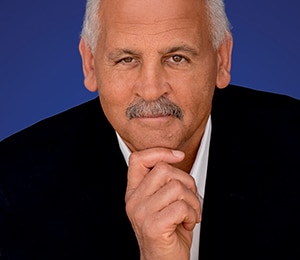
Stedman Graham: Why I Care so Much About Leadership

For more than 30 years, I have been writing books, teaching in colleges, working in communities, leading non-profits and speaking at workshops throughout the world. In all that time, I have come to know one thing: leadership is everything. The needs of the 21st century cannot be met by followers.

The world is changing at warp speed, and people must be able to stand on a solid platform of self-awareness, equipped with the tools required for self-leadership that allow them to adapt to the ever-changing technologies, ideologies and circumstances of their lives. I want to change peoples’ mind-set from that of a follower to that of a leader. My program produces results: people become self-motivated leaders in their lives, inspired by their dreams and their values. Further, they inspire themselves to succeed, no longer dependent on outside forces for motivation or discipline.

People who understand Identity Leadership develop the capacity to reassure and motivate themselves. They are self-reliant. They learn to self-execute valuable, thoughtful actions, often creating innovative ideas that revolutionize their personal and professional effectiveness. The world needs leaders who understand the importance of self-awareness, self-discipline and self-leadership.

We need people who know themselves to lead organizations away from the idea of commerce for commerce’s sake, to the new paradigm of success based on integrity; with self-actualized individuals at the helm.

www.StedmanGraham.com


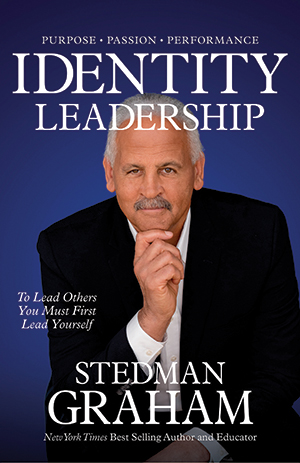
Stedman Graham’s new book “Identity Leadership” is a personal and prescriptive guide based on his philosophy that a leader cannot lead others until they first lead themselves — the more you work on yourself, the more you can give to those around you. Graham examines why self-awareness matters, how leaders lead, and the importance of communication. He then shows how to step into your role as a leader and create an identity leadership plan. Key to the journey is believing in yourself, knowing your competence, and continually challenging yourself — and being patient
with yourself.


What Top Leaders Are Saying About Stedman Graham’s Identity Leadership:

Stedman Graham is one of today’s leading authorities on emotional intelligence (Identity Intelligence). He makes you focus on the true leader within yourself. David M. Reynolds, Associate Director, Merrill Lynch

Stedman is an artist with unique communication skills that effectively helps reach individuals on levels they have possibly never previously experienced. I believe that the candor, openness of communication, “tough talk,” and practical discussion around skill development will lead to remarkable maturation, an appreciation of greater personal accountability and personal development.  Mike Fox, CEO of the Muhammad Ali Center


Akon: The Necessity of Financial Services

Financial services are important because they help us start businesses, create economic flow, and bring communities together by facilitating transactions with those around us.

More meaningfully, they allow us to invest in a better future for ourselves and our families. Right now, there are over two billion people who do not have access to financial services. Their opportunities are limited in every way. BitMinutes is changing that by providing a widely accessible financial platform to over four billion mobile phones.

CLICK HERE FOR A SPECIAL REAL LEADERS SUBSCRIPTION OFFER FOR AKON SUPPORTERS: 60% OFF! USE CODE “AKON60” AT CHECKOUT

Why Are Universal Prepaid Minutes Groundbreaking?

BitMinutes (BMT’s) break down barriers between telecommunications ecosystems. These universal prepaid minutes can be exchanged between friends and family and used to top off mobile phones worldwide, regardless of carrier. By unifying all mobile phone users in areas serviced by BitMinutes and allowing them to conveniently engage in buying, selling, and trading BTM (And, consequently, Akoin), BitMinutes ensures consistent community adoption.

Prepaid minutes are rapidly becoming an informal currency of exchange between people and organizations in developing countries like Nigeria and the Philippines. People use the minutes to make calls, but they also settle small debts or pay utility bills in places where utilities accept bill payment via mobile phone.

A mobile phone operator’s prepaid minutes are only good for use within their ecosystem. In places like Kenya where one mobile operator dominates, that is less of an issue. However, in most countries, the mobile phone market is fragmented. Having a universal prepaid minute, like the BMT, massively upgrades the value and usefulness of prepaid minutes as an “informal” currency of exchange.

In Nigeria, BMTs have an additional value that will soon be available in more countries: BMTs may be converted back into cash to be deposited into a bank account. No other prepaid minute has that ability! That immediate convertible value means there is less risk for BMT purchasers to buy and save BMTs in their mobile wallet for future use.

CLICK HERE FOR A SPECIAL REAL LEADERS SUBSCRIPTION OFFER FOR AKON SUPPORTERS: 60% OFF! USE CODE “AKON60” AT CHECKOUT

Holding BMTs for Future Use Earns Rewards Via Mobile Mining

As an additional incentive, BMT purchasers who hold their tokens in their wallet or account also earn extra BMTs as rewards whenever they use their BitMinutes app or their online account. Each day, when a BMT holder opens his or her account, they will receive a bonus which could add up to 1% of their current account balance each month (over 12% annually.)

This mobile mining activity rewards loyalty and is designed to encourage BMT ownership because maintaining a BMT balance will serve as collateral for microloans, a service that BitMinutes and Akon are building to encourage grassroots entrepreneurship in developing economies. BMT ownership and management will also play a key role as one element of a dedicated credit scoring algorithm for residents of under-served economic communities.

Facilitating more economic activity and opening up more avenues for economic entrepreneurship in developing economies is the key to breaking barter-based cycles of poverty that keep these communities from acquiring wealth. “People with aspirations cannot access capital they need to launch local businesses or build on a promising start-up opportunity. Even small amounts of funding are crucial.

What BitMinutes Means for the Akoin Platform

At Akoin, we’re excited to integrate BitMinutes’ new mobile mining feature and incredibly eager to facilitate exchange between prepaid cell phone minutes (a commodity our communities are already comfortable trading) and the Akoin currency. BitMinutes’ stability and convertibility into cash  will create immense value for Akoin users.

Oprah Winfrey: “I Don’t Believe in Failure”

Oprah Winfrey holds a fascinating role in American life, with a celebrity status that goes beyond entrepreneur, TV personality and wellness guru. Most will agree that she Is certainly inspirational. She shares her greatest lesson, her hopes for the future and what she would have done differently.


What is the greatest lesson you’ve learned throughout your life and career?

My greatest lesson came from Maya Angelou, when I first met her. After I’d known her for a while, she said, ‘Baby, you know, you need to know that when people show you who they are, you believe them the first  time. Your problem is it takes you 29 times to see the same lesson coming in a different skirt, wearing a different pair of pants.’  That has been one of my greatest wisdom teachings – to assess from people’s behavior, their actions; and not just towards me, but towards other people; who they are and how they behave. Because if people talk about other people, they’ll talk about you. So, I think in business and in personal  relationships, that’s always been my greatest lesson. Also staying  grounded, you know, has been really great for me.

You’re on top of the world right now. What humbles you?

When I was called by the Golden Globe Awards and was told they wanted me to accept the Cecil B. DeMille award in January 2018, I said, ‘I shouldn’t be the person to get it.’ You know why? I was working with Reese Witherspoon at the time, and happened to just say to her in the make-up room one morning, ‘So how many movies have you done?’ She said, ‘Oh honey child, I don’t know. It’s been so many.’ And then I  thought, ‘I hope she doesn’t ask me because I think it’s been five.’ [laughs] I didn’t understand why they wanted to give me an award. Then, they explained that it was about overall entertainment. Now, what I was able to do with The Oprah Show and the cultural statement we were able to make throughout the world, I feel very, very proud of, but I think that when it comes to films, that I’m really the new kid on the block. I always feel when I’m acting I’m out of my box. It’s the most intimidated I ever feel.

What wisdom would you pass on to future generations of people in Hollywood who want to make films?

The way to make movies is to do stuff you love. For 25 years I worked on The Oprah Show, and Stedman [Graham – her partner] will tell you there were nights when I came home and it was hard to even take off my clothes because I knew I was going to be  getting up four hours later. But I never really felt exhausted, like  depleted. I felt exhausted, but I never felt depleted. Do the work  that comes straight from the soul of you, from your background, from stories that you’ve grown up with, from stories that bring you passion. The key to fulfillment, success,  happiness and contentment in life is when you align your personality with what your soul actually came to do. I believe everybody has a soul and has their own personal spiritual energy. So when you can use your  personality to serve whatever that thing is, you can’t help but be  successful.

If you do films that come from your soul, work or art that comes from inside you, you can’t miss. When you’re doing stuff that you think might make money, that may be a hit, or you think may bring you some level of attention or success, it usually doesn’t. All the great, wonderful experiences of my life that have  brought me to this moment have come from working from the interior of myself. That’s why it feels so authentic, because it actually is.  When you do that, you’ll win.


Oprah’s Life Lessons

Work together in the service of something greater than yourself. My deepest satisfaction and biggest rewards have come from exactly that –  picking a problem and doing something about it, because to somebody who’s hurting, something is everything. Vote. Pay attention to what the people who claim to represent you are doing and saying in your name. They represent you and if they’re not doing right by you and their policies are at odds with your core beliefs, then you have a responsibility to send them packing. Remember that people died for your right to vote, so don’t let their sacrifice be in vain. Eat a good breakfast, pay your bills on time, recycle, make your bed, aim high, say thank you to people and actually mean it. Ask for help when you need it and put your phone away at the dinner table (just sit on it). Know that what you tweet and post on Instagram today might be asked about in a job interview tomorrow or even 20 years from today. Be nice to kids, elders and animals. Know that it’s better to be interested than interesting.


You’ve always given great advice to everyone else. As you review your life, what advice would you give to a seven-year-old Oprah or a 13-year-old Oprah?

Age seven, I was so sad. At seven, all of my real love came from my teachers. You have no idea of the power of noticing another human  being and what it feels like when somebody knows that they’ve been seen, truly seen. It’s the greatest gift you can give, and from all those years of The Oprah Show, the greatest lesson I learned was that after every show, someone would invariably say, in one way or  another, ‘How was that?’ I would  finish an interview with a father who killed his twin daughters, I’d finish an interview with Barack Obama, George Bush or Beyoncé. They’d all say the same thing: ‘How was that?’ I started to see this common thread in humanity – where everybody wants to know how they did. ‘Did I do okay?’ ‘Did you  hear me?’ ‘Did what I say mean something to you?’ Recognizing this in other people has helped me to become a person of compassion, a person of understanding, a person who can interview anybody about anything because I know that at the core of  them is the same as the core of me. People just want to be heard.

There has been much social activism in America over the past year. Do you feel we are moving in a better direction yet?

From thousands and thousands of interviews and watching people in their dysfunction, when something negative is brewing, the direct opposite reaction is also possible. Because for every action, there is an equal and opposite reaction. When something as big as the Harvey Weinstein scandal started to unfold, I  thought, ‘Whoa, whoa, whoa!’ With each day’s new revelation, I thought, ‘Here’s an opportunity for something powerful. How do we use this moment to elevate what is happening instead of continually victimize ourselves?’ There isn’t a culture, race, religion or workplace that hasn’t been affected by this particular issue. People didn’t feel they could speak up. There are so many women who have endured so much and remained silent and kept going because there was no other recourse. Now that we’ve all joined as one voice, I think that it feels like empowerment to those women who never had it.

The Top 10 States for Women Entrepreneurs

Unless you’re living under a rock, ever since the Harvey Weinstein scandal, daily news reports are detailing a never-ending litany of sexual harassment cases toward women in the workplace. 

The daily barrage of #MeToo posts describing women’s inappropriate treatment in the workplace, is, sadly, the new normal. With that in mind, now may be the time for women to start businesses of their own. In fact, they’ve already accomplished that and more: according to research, the number of female-owned businesses grew five times faster than the national average in the last nine years. In the U.S., the number of all women-owned firms grew by 45% as opposed to a nine percent increase among all firms between 2007-2016.

If you like this, subscribe here for more stories that Inspire The Future.

While that figure is impressive, not all states are created equally when it comes to a favorable business climate for female entrepreneurs. Female business owners face their own unique set of challenges and obstacles in today’s professional environment. Establishing a business in a location most receptive to female entrepreneurs can be tremendously helpful.

Fit Small Business, an online publication serving small owners, helped identify which states are the most favorable to female entrepreneurs. The publication assembled publicly-available data from leading sources including the U.S. Census Bureau, Womenable and American Express Open – and thoroughly analyzed it to determine the best states for female entrepreneurs. The good news is that the Top 10 states for female entrepreneurs are scattered throughout the country. 

Top 10 States for Women Entrepreneurs:

#1  Georgia

#2  Florida

#3  Maryland

#4  California

#5  Colorado

#6  Virginia

#7  New York

#8  Texas

#9  Hawaii

#10 New Mexico

The following six categories were chosen to help to determine a state’s desirability for female business owners:

1. Percentage of women-owned firms out of total businesses in a state
2. Percentage of a state’s business revenues coming from women-owned firms
3. Women economic clout in each state
4. Trend in net number of women-owned firms per day
5. Percentage of women-owned firms with paid employees
6. Percentage of employees in the state that are working in women-owned firms

“While news stories these days portray a dismal outlook for women in the workplace, we were encouraged to discover that female entrepreneurs are receiving more supportive treatment in a variety of states across the country,” said Managing Editor Priyanka Prakash.

If you like this, subscribe here for more stories that Inspire The Future.

Podcast For Parents Guide

[et_pb_section fb_built=”1″ _builder_version=”3.0.47″][et_pb_row _builder_version=”3.0.48″ background_size=”initial” background_position=”top_left” background_repeat=”repeat”][et_pb_column type=”4_4″ _builder_version=”3.0.47″][et_pb_image src=”https://old.real-leaders.com/wp-content/uploads/2019/03/RLP-PodcastForParents.png” url=”https://docs.google.com/presentation/d/1nhxwd0y6ew69ASBSPdOvqsf6us7uPuHrfPcREKS–oU/edit?usp=sharing” url_new_window=”on” _builder_version=”3.20.1″][/et_pb_image][et_pb_text _builder_version=”3.20.1″][/et_pb_text][/et_pb_column][/et_pb_row][et_pb_row _builder_version=”3.20.1″][et_pb_column type=”4_4″ _builder_version=”3.20.1″][et_pb_blurb use_icon=”on” animation_style=”bounce” title=”So Easy Your Grandma Could Do It!” _builder_version=”3.20.1″ font_icon=”%%0%%” header_font=”|700||on|||||” header_text_align=”center” body_font=”||||||||”]

Click on the image above to listen to the Real Leaders Podcast on Facebook, iTunes or Spotify in just 3 clicks!

[/et_pb_blurb][/et_pb_column][/et_pb_row][/et_pb_section]

Two Types of Leadership And How To Use Both

Conventional wisdom says there are two kinds of leaders. Transactional leaders solve immediate problems: they make expedient deals, please people and keep the enterprise moving. But they falter at complex problems where the solutions are uncertain and the parameters are murky.

For that, you need strategic leaders: people who can transcend limits and achieve extraordinary goals, not once or twice, but routinely and repeatedly.  

The times clearly call for that kind of leader. And it’s becoming clear, from studies of the mind (the locus of mental activity) and the brain (the physical organ) that there is a way to train yourself to make decisions more strategically.

Imagine any complex moment of choice facing you as a leader. It could be an ethical dilemma (whether to fudge numbers or pay a bribe), a recruitment for a complex position (or a layoff), or an investment opportunity that could either solidify the enterprise’s future or squander it. How do you ensure you make the right choice this time – and build your capacity to make the right choice in the future?

The way you think about other people, at that moment of decision, makes a difference. You could focus on what you want, what they want, and giving everyone what they want. Psychologists call this type of mental activity subjective valuation; it activates and strengthen the “low ground,” as we call it, of your mind and brain. The low ground is essential for anyone in an accountable role. But it’s limited.

To influence effective change, in your organization or the world around you, you need to activate the “high ground” of your mind and brain. Instead of thinking about what people want, you think about what they are thinking, and what they’re likely to do next. Psychologists call this “mentalizing,” and for many people, it’s a bit uncomfortable. Indeed, it’s associated with people of low status. But when you’re an executive leader, thinking in this way, you galvanize your influence and effectiveness.

So the next time you have a major decision, don’t just think about how to make people happy – including yourself. Think about what has led others to the position they hold. That will help you strengthen the high ground of your mind and brain, and thus to build strategic leadership into a habit. The experience of this type of leadership can be compared to listening for a voice within yourself: a kind of “wise advocate,” seeing you as others do, but also looking out for your deepest fulfillment.

The more prowess you gain as a leader, the stronger this voice becomes – and the easier it is to take on a similar voice of strategic influence in the organization around you.

This is an adaption from the book “The Wise Advocate” by Art Kleiner, Jeffrey Schwartz and Josie Thomson.

Kleiner is the editor in chief of strategy+business, the management magazine published by PwC. Schwartz is a research psychiatrist at UCLA School of Medicine and a leading expert in neuroplasticity and Thomson is an award-winning executive coach, speaker, author, and two-time cancer survivor. 

The Two-wheel Trend in Africa Turning Youth From Crime

It started with a chance encounter – stumbling across some second-hand BMX bikes from the U.S. in a shop in Nigeria. After throngs of young Nigerians watched some internet videos of their American counterparts performing tricks, a 1980s fad has spawned a burgeoning bike scene in the city’s capital, Lagos, that is helping to transcend socio-economic backgrounds.

Six years Star Boy, aka Matthew Temitope, a mechanic in Lagos, stumbled across some vintage 1980s freestyle BMXs in a market in Lagos. After watching videos online with his friends on mobile phones and in internet cafes, they began to try some of the tricks for themselves. An American craze, with its heyday back in the 1980s, was back – changing lives in Africa.

“We were all inspired by watching the professionals in their videos,” says Star Boy. We were all amazed, like ‘wow!’ If it wasn’t for this we’d be out doing sh*t,  going to clubs, getting drunk and causing trouble. Now we have our bikes to express our feelings. When I feel upset, I just get my bike, hit the streets and do some tricks.”

There are no skateparks or bike tracks at which to practice, instead Star Boy and his friends simply use what they have at their disposal on the streets. The riders come from a variety of backgrounds. KK Money, aka Ibrahim, works as a teacher and sees parallels between his career and a passion for sport. “I love imparting knowledge. If I could teach a student one lesson that BMX has taught me, it would be: If you fall off a horse, climb back on. Once you get that right, it’s forever. It’s taught me commitment, that yes, I can do it.”

SKing, whose real name is Segun Adosu, says that BMX saved him from a life of gangsterism and is grateful for stumbling across his new obsession almost by chance. “My new bike had BMX written on it and I wanted to know what it meant, so I searched Google. I saw a ton of videos and I’ve been in love ever since.”

Bikes and parts are not available except from international mail order which makes it too expensive, but that hasn’t dampened the enthusiasm. BMX has become life to these guys and they’re not afraid to let it show. They are riding for the purest of reasons and the scene has brought people together from the heaviest of slums to the upper middle class.

Mythbuster: DJ’s Are Only About Hype

Alan Walker is a 21-year-old Norwegian DJ who made his big breakthrough with the song “Faded” in 2015, the video of which has already garnered more than 2.1 billion views on YouTube.

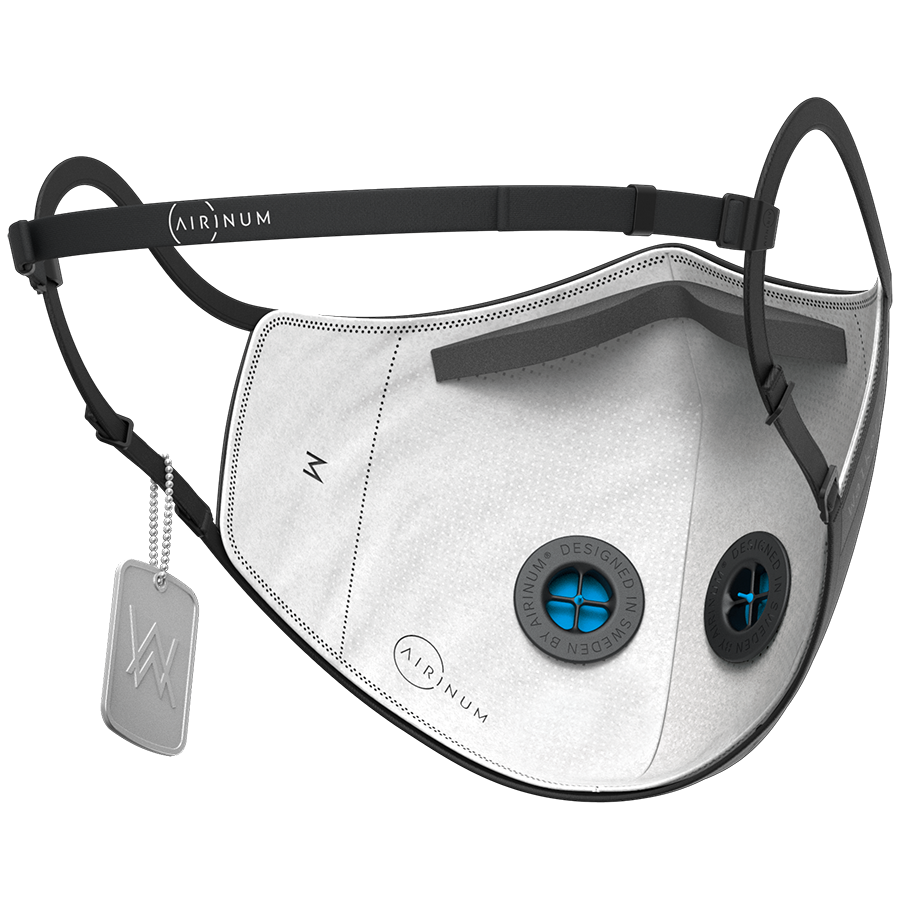
In December 2018, he decided to turn his trademark image of hoodie and face mask to good use by launching a particle filter mask with Swedish brand Airinum to highlight the lack of clean air in many major cities.

“I’ve always wanted to use my position to make a difference, and when I met the team at Airinum I started to realize how big of an issue polluted air really is. I felt it was right to stand up for something important – the topic of climate change and the alarming consequences it brings,” says Walker, who has built his whole image around wearing a mask. We take around 20,000 breaths every day. When we breathe poor quality air, it can severely damage our health and contribute to asthma, respiratory diseases, cancer, strokes and even death.

“I once heard a saying: “sometimes what’s simple is what’s best. That’s the definition of ‘Faded.’” – Alan Walker

The simple act of breathing is killing seven million people a year and harming billions more. This alarming fact inspired Fredrik Kempe to co-found Airinum, to produce the Urban Air Mask, a fun and iconic fashion accessory that now has serious, lifesaving work to do.

0