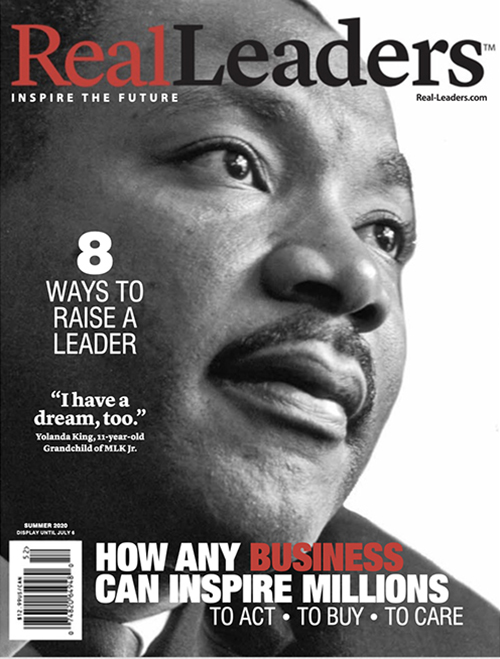
Tutu and King: Two Kinds of Nonviolence

This article written by Charles Krauthammer originally appeared in his syndicated column on January 17, 1986, three days before the first national holiday honoring the birthday of the Rev. Martin Luther King, Jr.

In 1987 Krauthammer won the Pulitzer prize for commentary and this was his winning entry:

The accepted wisdom in South Africa, Lionel Abrahams, a literary critic, told Joseph Lelyveld of The New York Times, has it that “nothing will do but that hard black men come to grips with hard white men, to which end the soft men between must clear out of the way.”

If you like this, subscribe here for more stories that Inspire The Future.

In revolution, the soft men between must always clear out of the way. Revolution is not for moderates. From Alexander Kerensky to Arturo Cruz, nothing changes: the man of qualms, of balance, of ambivalence is lost.

Bishop Desmond Tutu — Nobel Peace Prize winner, anti-apartheid activist and leading spokesman for nonviolence in South Africa — is not a hard man. “I am the marginal man between two forces, and possibly I will be crushed,” he admits. “But that is where God has placed me, and I have accepted the vocation.”

The miracle of Martin Luther King, Jr., what set him apart even from Desmond Tutu, was the militance of his moderation, the steel will with which he insisted not just on his ends but on his means.

In a revolution, unwavering pursuit of ends is no great distinction. Everyone has an idea about destination. But only great, hard men are sure exactly of the path. Men like Lenin, Mao and Ho Chi Minh. (The list is depressingly long.)

Or like Gandhi, who believed with religious certainty that satyagraha, truth-force, was the way to freedom. And like King, who never wavered in his commitment to nonviolence, and who understood that for the moderate to survive in revolutionary times he must stick as hard by his means as the hard men at the extremes do by theirs.

Tutu is also deeply personally committed to nonviolence, and has shown extraordinary personal courage in its service. At least twice he has risked his life to save a suspected informer from a murderous mob. Last August in Daveyton, he stood alone between black demonstrators and heavily armored South African troops and negotiated a solution that averted certain violence.

Tutu’s nonviolence, however, seems more a personal choice. “I wouldn’t, myself, carry guns or fight and kill. But I would be there to minister to people who thought they had no alternative.” Asked two days ago whether there is any justification for violence, he replied, “If I were young … I would have rejected Bishop Tutu long ago.”

Personal choices are not forced on others. Instead, says Tutu, tactics are not even his domain. “I am an idealist. It is unfair to ask an idealist how he will move toward a utopian goal.”

King was forever telling people how to move. His means were as inseparable a part of his being and his message as his ends. King made nonviolence the cornerstone of his philosophy of social action. Tutu’s two books, “Crying in the Wilderness” and “Hope and Suffering,” are a passionate, prophetic call for reconciliation and negotiation. But of the books’ 62 speeches, sermons and writings, not one is devoted to the theory and practice of nonviolence. For Tutu, nonviolence is a discipline, a matter of conscience. For King, it was that and more: a weapon, a matter of hard political strategy.

Tutu is King’s natural heir. On Monday, the first annual holiday commemorating King’s birth, that kinship receives ratification from King’s living memorial, the Martin Luther King Center for Non-Violent Social Change. It will award Tutu its 1986 Non-Violent Peace Prize.

To compare Tutu to King is therefore inevitable, though it is perhaps unfair. First, because King was a great political leader and Tutu does not pretend to be one at all. “I am just a religious leader standing in for the real leaders of our people who are in jail and exile,” he says. “If I am a leader it is only by default.”

But more important, because South Africa is not America. There is no Kennedy, no Johnson. No franchise. No white public ready to be galvanized to action by scenes of Southern violence. South Africa is all South, old South.

Tutu knows that well. “Nonviolence presupposes a minimum moral level. And when that minimum moral level does not operate, I don’t think nonviolence can succeed.” The oppressor society must be capable of “moral revulsion.” It happened in Gandhi’s Britain and King’s America. “I don’t see that happening here,” says Tutu.

The Pretoria regime won’t talk to him. And the young black militants want him out, says Tutu, so they can “get on with the revolution” without him. The hard men want the soft men to move.

King would not be moved. True, he was more fortunate than Tutu in his choice of birthplace. America had the capacity for shame that is the necessary condition for the success of nonviolence. But it is also a sufficient condition. The ground needs a figure. Nonviolent revolution needs a hard man to lead it. America was even luckier than King for his choice of birthplace. Monday, we give thanks for that good fortune.

If you like this, subscribe here for more stories that Inspire The Future.

“Sustainability” is so last year. Here’s What’s New

This week, Real Leaders is at the Sustainable Brands New Metrics ’19 event in Philadelphia. We explored the growing range of tools and tricks needed to keep up with demand for next-level goals such as plastic-neutrality, 100% circularity and properly quantified social and product impacts. Here are the main trends you need to know.

How are companies chipping away at the next generation of big, hairy, audacious goals. Read on:

A comprehensive look at IKEA’s new holistic impact measurement system

With the approach of the “4P” program — which focuses on people, planet, profit, and perception — IKEA is moving towards meeting its sustainable goals for 2030. During his Tuesday morning keynote, Peter Jones, Head of Sustainability Analytics and Impacts at IKEA, gave an overview of the program that the company is spearheading, regarding the impact and their journey to becoming a sustainable brand by 2030.

IKEA has been imagining a future for value creation and as Peter pointed out, the first task is to measure what the company is promising. Jones pointed out that some impacts are easier to measure than others, but the company has defined 9 KPIs under its People and Planet Positive initiative that are centered around three areas:

In a subsequent session on Wednesday morning, Jones was joined by his colleagues — Annamaria Malegh, Global Sustainability Analytics Leader Social & Behavior at IKEA; and Jorge Castro, Sustainable Impact Leader — for a candid discussion. One of the questions from the audience was about the increase in sales IKEA had when it began its sustainability campaigns. Malegh mentioned that one of the main components of IKEA products is always the design, so that is what the company led with; but also that half of IKEA’s product range has some sustainable features — whether in terms of material, quality, source or social/entrepreneurial innovation.

Selling based on sustainability depends on the maturity of the consumers understanding of sustainability; for some, the bar is just on whether the product is non-toxic or sourced fairly. Giving more information on sustainability to their customers has helped sales globally by approximately 15-20 percent.

Defining, setting and achieving plastic-neutrality targets

Although a wonder material, the enduring nature of plastic has become one of the biggest environmental concerns crippling our planet. In this engaging panel, leading industry experts shared insights on how they are defining and/or dealing with plastic neutrality for their companies and industries. The panelists represented different stakeholders in plastic innovation, and how it varies for companies in terms of product, manufacturing, packaging and use amongst employees. The panel, moderated by Salterbaxter’s Philip Clawson, had several key highlights:

Innovative software consultancy

As pointed out by James Sullivan, Head of Global Sustainability Innovation at SAP, the software giant is helping other businesses recognize the value in plastic neutrality, while providing them resources required for action. Last year, it launched the Plastics Cloud to push the 2030 Agenda for Sustainable Development through materials and better data collection and management. Sullivan said SAP is involved in plastic waste because it believes that resource productivity is at the heart of the connected intelligent enterprise — a critical part of a zero-waste world. So, with a goal of creating value on many fronts for and with their customer companies, SAP set out to find answers for this humongous problem. The company has done research on understanding consumer behavior with respect of plastic consumption and has worked on design thinking with their customers.

Sustainability strategy firm

While highlighting the gaps businesses are facing in terms of taking the total action for plastics, Valutus founder Daniel Aronson pointed out that there is a problem in how we define and compare different types of plastics, as they have a different effect. He said it is important to quantify not just by weight but by the impact of the type of plastic, so that we have a clear picture of what data we have and what is missing. Aronson and his team developed an enormous data table help companies quantify plastic’s true impact. He said that with our conflicting approaches to plastic usage, the fact that we look at how much but not how bad makes it hard to get from where we are to where we need to go. He stressed the need for standardization in this regard.

Product-based company

John Pflueger, Principal Environmental Strategist at Dell, described how Dell replaced its 2020 sustainability targets with a 2030 strategy, which has more extensive metrics — including a moonshot goal of going completely circular. He said that Dell has been looking into the problem of plastics for almost a decade; and in 2013, committed to use 50 million pounds of recycled plastics in its products by 2020 — a target that was doubled to 100 million in 2017. They are piloting session to close the loop for their take-back systems. The company is exploring alternative materials, including ocean plastics, in its bid to achieve circularity.

Flueger mentioned that Dell is committed to one-to-one material recovery by 2030, amplifying its current take-back program 10-12 times. He said its goal for all of its packaging to be made entirely of renewable and all recyclable materials is proving one of the most difficult tasks.

Pioneering plastic offsets

Svanika Balasubramanian, co-founder of RePurpose, introduced her startup — which is creating the world’s first offset mechanism for plastics, and offering companies solutions and certification for plastic neutrality. While her team was looking for solutions, they found many people across Southeast Asia are working on solutions around informal recycling — for example, through waste pickers. RePurpose started with the idea that while companies are taking actions for the future and transiting to a circular economy, they could offset their plastic impacts by investing in companies and initiatives that are working on solutions on the ground to support and strengthen them. As customers are demanding solutions today, RePurpose is working with businesses that have defined their plastic-neutrality goals by creating a pool of money in the form of a “plastic-neutral fund,” which is being used to fund solutions and innovation, and is feeding back data to companies, hence closing some loops.

Certified TBL Orgs: The world’s first triple-bottom line certification credential

On Tuesday afternoon, Mark McElroy, CEO of SustainAccounting LLC; and Jane Hwang,President & CEO of Social Accountability International (SAI), used their keynote to announce their partnership and launch the world’s first triple-bottom-line (TBL) certification credential. While prior guidance has encouraged context-based sustainability reporting for a number of years, there has been no specific accounting guidance or standard to achieve this goal. The new TBL certification credential will fill the existing gap, offering a context-based accounting tool to assist rigorous and actionable sustainability performance measurement and reporting.

What is the TBL accounting framework?

The term “triple-bottom line accounting” was coined by John Elkington in the 1990s as a way to interpret the performance of corporations in more than just economic or financial terms. While this concept was not new, Elkington capitalized on it by looking at the carrying capacity of all types of capital — natural, economic, and social capital.

Why now? The history of context-based sustainability reporting

The expansion to context-based TBL (CTBL) thinking began in 2002, when the Sustainability Context Principle was introduced in GRI’s G2 Standard. This principle has persisted over the years and survived many revisions of the GRI reporting standard; it remains a central core sustainability accounting principle today. But, no guidance on how to actually do context-based TBL accounting was ever developed. 

How standardized social outcomes demonstrate corporate impact

Wrapping up the final day of New Metrics, Sustainability Communicator & Media Architect Nick Aster facilitated a conversation between Jason Saul, CEO of Mission Measurementand founder of the Impact Genome Project®; and Arlene Isaacs-Lowe, Global Head of CSR atMoody’s. Saul walked us through the research and development of The Impact Genome® — a platform that standardizes the way social programs measure, evaluate and report outcomes; and Isaacs-Lowe explained how this valuable tool is being used by companies to inform and target their sustainability and philanthropy program initiatives.

The problem: Previous efforts standardizes metrics, not outcomes 

“Effectively measuring social impact is challenging, because no standards exist — no one can compare apples to apples,“ Saul said. He explained that previous attempts to quantify social impact fell short because:

  1. They tried to standardize at the wrong level — forcing standardization at the level of the metric, not the level of outcome. For example, if we’re trying to reduce poverty, measuring the number of people trained or getting a subsidy does not tell us if people actually become financial stable due to those efforts. 
  2. There is no standard-setting body in this field to say what outcomes should be measured.
  3. There are no benchmarks, making it hard to incentivize measurement when we don’t know the cost per unit of outcome. We don’t know “good” means.

The solution: The Impact Genome measures outcomes, sets benchmarks

Saul explained how The Impact Genome provides the missing metrics, stating that, “through the Impact Genome, we’ve developed evidence-based standards and now have benchmarks for common outcomes across the most critical social impact areas. Organizations find value in the common language of the standard outcomes, benchmarks to understand their cost per outcome; data to build grantee capacity, demonstrate ROI and drive ultimately more impact.” 

www.sustainablebrands.com

Richa Agarwal is pursing graduate studies in environmental sustainability at the University of Pennsylvania. Prior to Penn, Richa worked with an environmental think tank in India, on topics of waste management and circular economy for India and Tanzania. She is interested in topics of global supply chain for post consumer used goods, finding partnerships between private organizations and NGOs/think tanks, and going zero waste.

Leila Goldmark is a sustainable business entrepreneur; founder & President of Green Rainbow Revolution (GRR) — an e-commerce retail business that specializes in sourcing modern, eco-friendly, ethically produced arts and school supplies, educational toys, and lifestyle goods for kids of all ages.

Agents Of Change Summit Special

[et_pb_section fb_built=”1″ _builder_version=”3.22″][et_pb_row _builder_version=”4.0.6″ min_height=”93px”][et_pb_column type=”4_4″ _builder_version=”4.0.6″][et_pb_text _builder_version=”4.3″ hover_enabled=”0″]

Welcome to old.real-leaders.com your #1 source for impact leaders sustaining the planet, people, and profits. If you attended the Agents of Change Summit we are giving away 4 digital magazines for free.

[/et_pb_text][/et_pb_column][/et_pb_row][et_pb_row _builder_version=”4.0.6″][et_pb_column type=”4_4″ _builder_version=”4.0.6″][et_pb_image src=”https://old.real-leaders.com/wp-content/uploads/2019/11/Paul-SDG.gif” align=”center” _builder_version=”4.0.6″ width=”62%” border_radii=”on|4px|4px|4px|4px” border_width_all=”5px”][/et_pb_image][/et_pb_column][/et_pb_row][et_pb_row _builder_version=”4.0.6″][et_pb_column type=”4_4″ _builder_version=”4.0.6″][et_pb_text _builder_version=”4.3″ hover_enabled=”0″]

Click a cover below to receive a free magazine!

[/et_pb_text][/et_pb_column][/et_pb_row][et_pb_row column_structure=”1_4,1_4,1_4,1_4″ _builder_version=”4.0.6″][et_pb_column type=”1_4″ _builder_version=”4.0.6″][et_pb_image src=”https://old.real-leaders.com/wp-content/uploads/2019/11/Cover-relaunch-1.jpg” url=”https://realleaders.memberful.com/checkout?plan=35209&coupon=BransonFriday” _builder_version=”4.0.6″ width=”100%” animation_style=”fold” box_shadow_style=”preset2″ box_shadow_horizontal=”17px”][/et_pb_image][et_pb_text _builder_version=”4.0.6″]

Richard Branson

[/et_pb_text][/et_pb_column][et_pb_column type=”1_4″ _builder_version=”4.0.6″][et_pb_image src=”https://old.real-leaders.com/wp-content/uploads/2019/11/Jane-Godall-Screenshot-Cover.png” url=”https://realleaders.memberful.com/checkout?plan=43785&coupon=JaneFriday” url_new_window=”on” _builder_version=”4.0.6″ animation_style=”fold” box_shadow_style=”preset2″ box_shadow_horizontal=”17px” box_shadow_spread=”-4px”][/et_pb_image][et_pb_text _builder_version=”4.0.6″]

Jane Goodall

[/et_pb_text][/et_pb_column][et_pb_column type=”1_4″ _builder_version=”4.0.6″][et_pb_image src=”https://old.real-leaders.com/wp-content/uploads/2019/11/Polman-2019-2.jpg” url=”https://realleaders.memberful.com/checkout?plan=41021&coupon=PolmanFriday” _builder_version=”4.0.6″ animation_style=”fold” box_shadow_style=”preset2″ box_shadow_horizontal=”17px”][/et_pb_image][et_pb_text _builder_version=”4.0.6″]

Paul Polman

[/et_pb_text][/et_pb_column][et_pb_column type=”1_4″ _builder_version=”4.0.6″][et_pb_image src=”https://old.real-leaders.com/wp-content/uploads/2019/11/Spring-2018-scaled.jpg” url=”https://realleaders.memberful.com/checkout?plan=35208&coupon=WatsonFriday” _builder_version=”4.0.6″ animation_style=”fold” box_shadow_style=”preset2″ box_shadow_horizontal=”17px”][/et_pb_image][et_pb_text _builder_version=”4.0.6″]

Emma Watson

[/et_pb_text][/et_pb_column][/et_pb_row][et_pb_row _builder_version=”4.0.6″][et_pb_column type=”4_4″ _builder_version=”4.0.6″][et_pb_text _builder_version=”4.0.6″]

Share with your friends and followers!

[/et_pb_text][/et_pb_column][/et_pb_row][/et_pb_section]

MPOWERD Launches New Solar Bike Light

The solar light accessory company revealed its latest consumer product for eco-friendly bikers.

MPOWERD CEO Seungah Jeong and Founder John Salzinger have launched their latest Luci light in an Indiegogo crowdfunding campaign for the first-ever modular Solar Bike Light. They are bringing clean energy to clean transportation. The Luci Bike Light is an innovative take on the bike light: rugged yet modern, durable yet sleek, and ideal for the adventurous commuter. Luci Bike Light includes a front and backlight that connect through an industrial strength magnet, is rechargeable via solar or USB, and shines up to 100 lumens. It is scheduled to ship in May 2020. 

Each purchase allows MPOWERD to continue deploying lights to those who do not have reliable access to electricity. As an example, MPowerD just shipped 77,000 lights to California for those affected by the fires and power outages. 

You can watch a Real Leaders interview with MPOWERD’s CEO Seungah Jeong and Founder John Salzinger below.

Turning Passion into a Lifesaving Patent

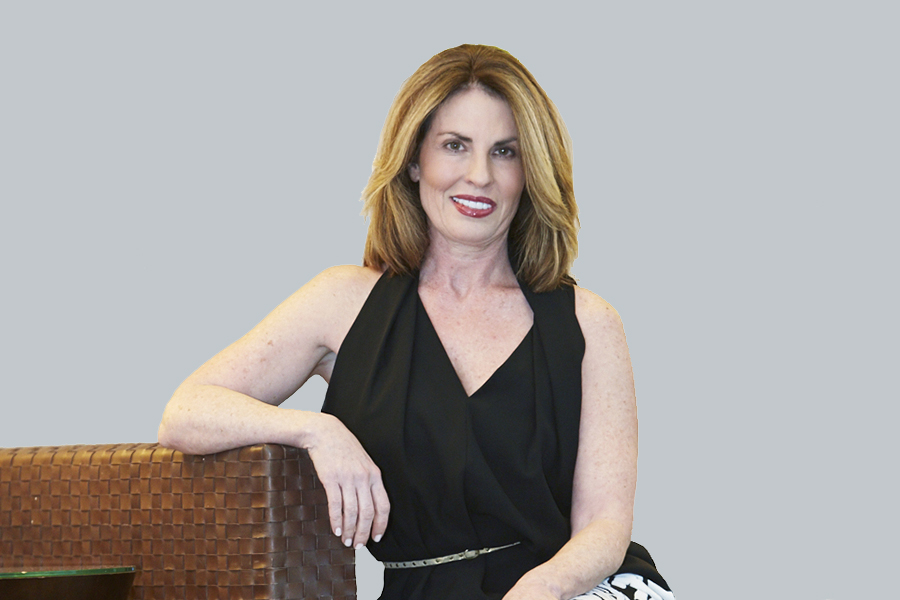
Kim Highfield is a lifelong entrepreneur and founder of SportPort — a producer of women’s athletic apparel. After becoming aware of the potential dangers of cellphone radiation, she developed a patent for protective pockets in clothing that blocks electric and magnetic fields (EMF). Her technology recently went national and proves that intelligent design, paired with women’s health, can be profitable.

Highfield first learned to be an entrepreneur at six-years-old dancing at family events. “Dad paid me a quarter per dance because I was good at imitating Shirley Temple,” she recalls. “It was my first lesson in business — don’t be afraid to put yourself out there if you feel you have something to share.”

As proprietor of women’s athletic apparel company SportPort, Highfield is now scaling operations based on her patent for EMF-resistant clothing design and her original patterns and florals. She spent nearly a decade in personal study and two years in formal R&D to create the first EMF-resistant SportPort bra.

“Entrepreneurs face intense obstacles every day and adaptability is key to success,” Highfield notes. “I don’t have a fashion or legal degree. I was successful in the world of design and patent processing because of my passion to conduct my own research, based on ideas that I believed in.”

Family has always played a pivotal role in Highfield’s drive, in both her personal and professional life. “I began researching everything around cellphone radiation after my mother got cancer,” Highfield recounts. “I believe in actively pursuing knowledge around a problem to help solve it — we should adopt this same attitude in business. During the time of my mother’s illness, I also studied pediatric psychology to understand the issues and organize programs for my sons, both of whom were diagnosed with learning disabilities. Through these efforts I was able to help raise their IQs by 15 points to an above-average range. It was something the doctors didn’t think possible.”

Anything I set out to achieve comes from the heart.” — Kim Highfield

Highfield’s passion for unearthing solutions and strong desire to succeed (she’s also a former athlete) has translated into business success and innovation. Her concern for the health of athletes exposing themselves to prolonged periods of cellphone use inspired an idea. She used her years of visual arts training and collaborated with some of the industry’s top artisans, patterners, and compressors to create a lifesaving garment.

“When I started to become aware of the risks cellphones pose when placed against the body, especially soft tissue, I realized a true need in women’s athletic apparel that was lacking — a cellphone pocket that would function for both convenience and also protect our bodies from harmful EMF radiation.

“I’ve been able to share a room with industry leaders because I’m not afraid to experiment in new directions,” she continues. “My passion for new ideas, has always translated into long hours of research around those ideas, so I come to the table equipped with data, professional opinion, and most importantly, direction.”

For Highfield, the road from passion to patent is paved with preparation. “It’s important to have the passion to get you through those down times,” she concludes. “My need to find a safe solution for women who exercise and carry their cellphone is why SportPort exists today.”

The Man Who Brought Silicon Valley Innovation to Law Enforcement Intelligence

Each day, throughout the United States and around the world, teams of law enforcement personnel strive to serve their communities by providing much needed, sometimes life-saving services. Despite the data-rich environments they work in, they don’t always have the proper resources to turn these insights into active crime-fighting or community building projects. 

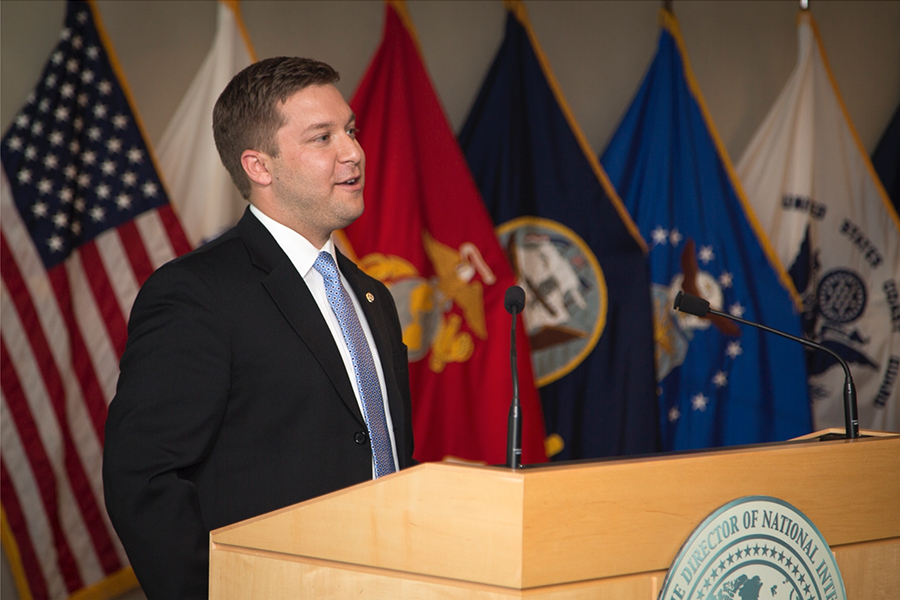
The current age of rapid digital innovation is overflowing with data analytics and agile workflows. This has created immense value for the private sector, but states and local municipalities in the U.S. often lack the resources and expertise to take advantage of these trends. Recognizing both the complexity and the opportunity of the situation, Benjamin Smith founded Directorate 2, a boutique intelligence consultancy that serves the law enforcement community. “I’m fascinated with failure and experienced with success,” says Smith, who is a longtime army veteran, ex-policeman, and member of the U.S. Intelligence Community.

His work with Palantir Technologies that specializes in analyzing the hundreds of small moments that might go into a terror attack and joins the dots for law enforcement agencies earned him a place among the 30 intelligence officers to ever receive the Galileo Award — the U.S. Government’s highest award for digital innovation.  

“What we find in local government is the same thing we find in private enterprises — layering analytics on top of legacy workstreams, rather than rethinking how work should flow through the system, or which questions we want to answer,” says Smith. “Ideally, we should structure workflows to reflect the organizational architecture that we hope to have in the future, not what we’ve had in the past.”

While education and training have always been solid foundations for law enforcement, they are even more relevant during times of modernization. Conventional law enforcement training has typically been an instructor leading a classroom of employees. Smith believes this training model is expensive and thinks it’s partially responsible for the lack of enthusiasm among law enforcement agencies to adapt to newer systems. “Many local governments can’t afford to bring in data consultants to do this work, so we’ve leveraged online learning platforms to minimize the cost,” he explains.

Advanced training technologies and techniques can prepare officers with a combination of knowledge and skills that improves the effectiveness of law enforcement and directly benefit communities. On a national level, Smith’s work has raised eyebrows at the highest level. James Clapper, former director of National Intelligence, has said of Smith: “Benjamin’s innovative ideas have shaped the future of intelligence in the United States.” 

One of Smith’s secret is to train everyone, not just the analysts. Beyond his ongoing passion for educating others, he has served as an analytic coach and mentor to colleagues, trained foreign intelligence agents abroad, and even taught undergrads at George Mason University. 

Always with an eye on the future, Smith founded the U.S. Central Command’s “Forecasters Club,” which does reference class forecasting in the Intelligence Community’s prediction markets — a method of predicting the future by looking at similar past situations and their outcomes. 

“We know that bad analytics don’t look bad, they look ‘Ok,’” says Smith. “An organization should love the analysis it creates and constantly be asking for more. If that’s not happening, then you’re leaving a lot on the table.”

www.directorate2.com

You Can’t Spell Health Without Heal

What does it take to turn courageous ambition and bold dreams into reality? Perseverance and a will to forge ahead in the face of life’s inevitable obstacles are some solutions. In line with our mission to celebrate success and inspire others to persist in achieving their goals, we highlight Sylvia Feliciano, a global trailblazer changing the face of leadership.

Feeling unfulfilled and uninspired by society’s definition of success, Feliciano decided to seek more from life than just personal achievement. She found it in a place she didn’t expect — a yoga studio. After trying yoga nidra — a state in which the body is completely relaxed, and the practitioner becomes systematically and increasingly aware of the inner world — she discovered something different about herself. “In this healing state, I realized the power of unshakeable peace and equanimity — no longer being controlled by limiting beliefs, emotions or feelings,” she recalls. The unexpected discovery of her true nature changed her so profoundly that she decided to share it with others.

During a yoga teacher training course, Feliciano came to realize her unique gift: her voice — a voice that she had unknowingly used to heal herself and others throughout her entire life. She had first expressed it through song as a member of a youth church choir, then through workplace projects around race and social justice. Now, she uses it as a guide to inner peace through her yoga company Solace Mind.

Feliciano launched her business to bring healing to others and to shed awareness on underrepresented demographics in the world of yoga who face trauma — people of color, children, and the military. She also provides stress management workshops as an enhancement to workforce and community wellness programs.

All that I am and all that I ever want to be depends solely on me. — Sylvia Feliciano

Feliciano began her journey of personal empowerment through a formal education and traditional measures of success. Fortunately, it will not end that way. “I have realized that taking home hefty paychecks will not be my professional legacy,” she says.

“My greatest professional achievements have been the calls for mentorship and guidance and the nods of respect from colleagues who knew I could relate directly to people in need through a shared life experience.”
Feliciano’s yoga community consists of people in need from all religions, racial backgrounds and economic groups. Many suffer from everyday stress, trauma, PTSD, depression, anxiety, and sleep disorders. Some are military personnel, high-flying jetsetters, single mothers, suburban fathers, and those from marginalized communities who have never been taught emotional intelligence or how to access self-care.

Sylvia has made a career of speaking up for those in need, but she’s not trying to be a voice for the voiceless; she believes there is no such thing. “I have been told that my true gift is that I create safe spaces for people to use their own voice,” she says.

Solace Mind is Sylvia’s way of teaching people how to nurture and restore themselves back to their true nature. “Learning to accept ourselves just as we are, with no judgement, is truly transformative. Solace Mind is my way to show people how to heal themselves — to find that personal empowerment that is present in every body and every mind.”

Confirmation Page

[et_pb_section fb_built=”1″ _builder_version=”3.29.3″][et_pb_row column_structure=”2_5,3_5″ _builder_version=”3.29.3″][et_pb_column type=”2_5″ _builder_version=”3.29.3″][et_pb_image src=”https://old.real-leaders.com/wp-content/uploads/2019/10/Leadership-Is-Everything-2.png” _builder_version=”3.29.3″][/et_pb_image][/et_pb_column][et_pb_column type=”3_5″ _builder_version=”3.29.3″][et_pb_text _builder_version=”4.0.11″ text_font=”Helvetica|600|||||||” text_font_size=”26px”]

Confirm Your Email 

[/et_pb_text][et_pb_divider _builder_version=”4.0.3″][/et_pb_divider][et_pb_text _builder_version=”4.4.1″ hover_enabled=”0″]

The Real Leaders newsletter symbolizes world peace, cultural diversity, ecology, and global awareness through leadership stories.

Here’s what you can expect:

Every Friday morning you will receive our WoW (words of wisdom) newsletter packed full of leadership strategies and inspiration to unleash your impact.

We have sent a confirmation link to your email address. Please verify your inbox. If you cannot find it, please check your spam and mark it as “non-spam” to continue receiving free digital magazines.

Upon confirmation you will receive our Real Leaders Impact Awards, special section a ranking of the 100 top impact companies who demonstrate that what’s good for people, and good for our ecosystems, is also good for business.

Click the red mail button to share with a leader who could learn more about their impact below!


[/et_pb_text][/et_pb_column][/et_pb_row][/et_pb_section]

Ethiopian Prime Minister Wins Nobel Peace Prize 2019

The Norwegian Nobel Committee has decided to award the Nobel Peace Prize for 2019 to Ethiopian Prime Minister Abiy Ahmed Ali for his efforts to achieve peace and international cooperation, and in particular for his decisive initiative to resolve the border conflict with neighboring Eritrea. The prize is also meant to recognise all the stakeholders working for peace and reconciliation in Ethiopia and in the East and Northeast African regions.

When Abiy Ahmed became Prime Minister in April 2018, he made it clear that he wished to resume peace talks with Eritrea. In close cooperation with Isaias Afwerki, the President of Eritrea, Abiy Ahmed quickly worked out the principles of a peace agreement to end the long “no peace, no war” stalemate between the two countries. These principles are set out in the declarations that Prime Minister Abiy and President Afwerki signed in Asmara and Jeddah last July and September. An important premise for the breakthrough was Abiy Ahmed’s unconditional willingness to accept the arbitration ruling of an international boundary commission in 2002.

Peace does not arise from the actions of one party alone. When Prime Minister Abiy reached out his hand, President Afwerki grasped it, and helped to formalise the peace process between the two countries. The Norwegian Nobel Committee hopes the peace agreement will help to bring about positive change for the entire populations of Ethiopia and Eritrea.

In Ethiopia, even if much work remains, Abiy Ahmed has initiated important reforms that give many citizens hope for a better life and a brighter future. He spent his first 100 days as Prime Minister lifting the country’s state of emergency, granting amnesty to thousands of political prisoners, discontinuing media censorship, legalising outlawed opposition groups, dismissing military and civilian leaders who were suspected of corruption, and significantly increasing the influence of women in Ethiopian political and community life. He has also pledged to strengthen democracy by holding free and fair elections.

In the wake of the peace process with Eritrea, Prime Minister Abiy has engaged in other peace and reconciliation processes in East and Northeast Africa. In September 2018 he and his government contributed actively to the normalisation of diplomatic relations between Eritrea and Djibouti after many years of political hostility. Additionally, Abiy Ahmed has sought to mediate between Kenya and Somalia in their protracted conflict over rights to a disputed marine area.

There is now hope for a resolution to this conflict. In Sudan, the military regime and the opposition have returned to the negotiating table. On the 17th of August, they released a joint draft of a new constitution intended to secure a peaceful transition to civil rule in the country. Prime Minister Abiy played a key role in the process that led to the agreement.

Ethiopia is a country of many different languages and peoples. Lately, old ethnic rivalries have flared up. According to international observers, up to three million Ethiopians may be internally displaced. That is in addition to the million or so refugees and asylum seekers from neighbouring countries. As Prime Minister, Abiy Ahmed has sought to promote reconciliation, solidarity and social justice.

However, many challenges remain unresolved. Ethnic strife continues to escalate, and we have seen troubling examples of this in recent weeks and months. No doubt some people will think this year’s prize is being awarded too early. The Norwegian Nobel Committee believes it is now that Abiy Ahmed’s efforts deserve recognition and need encouragement.

Paul Polman Gives an Impassioned Speech at the UN And Calls For More Real Leaders

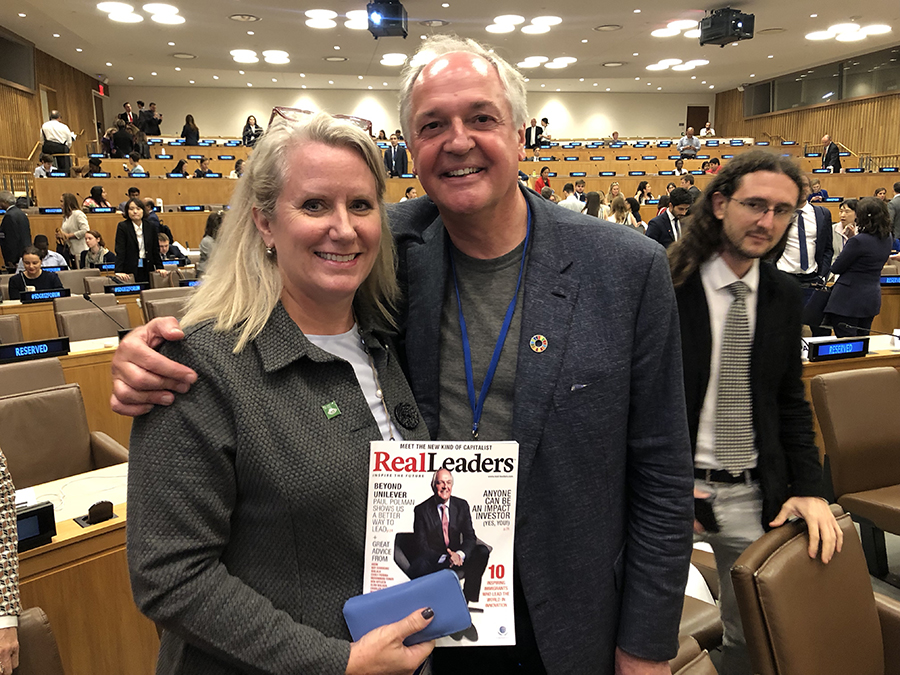
Paul Polman, SDG Advocate and Co-Vice Chair of the UN Global Compact Board, made a passionate call-to-action to the compannies everywhere at the 2019 SDG Business Forum, held in New York in September. Real Leaders was there.

Co-hosted by the International Chamber of Commerce (ICC), the United Nations Department of Economic and Social Affairs (UN DESA), and the United Nations Global Compact, the SDG Business Forum — now in its fourth year — gathered nearly 600 stakeholders to dive deep into sustainable financing, the future of business and scaling ambition for a sustainable world.

To read our exclusive interview with Paul Polman and to learn more about becoming a real leader yourself, subscribe here.

0