Why Daymond John Says Leaving Your Kids Money Makes Them Poor

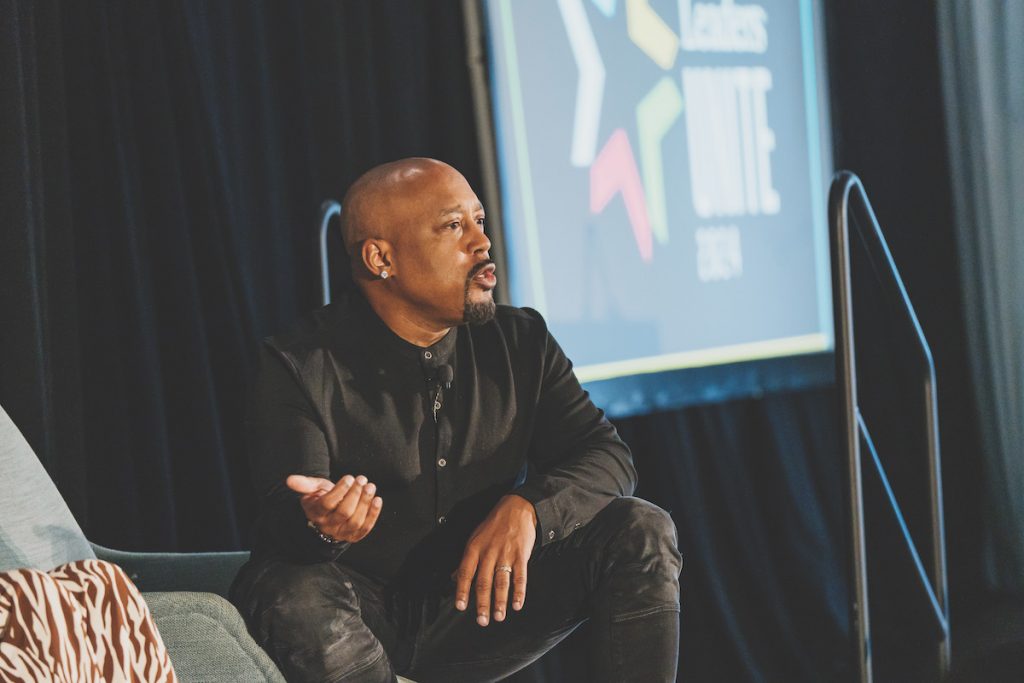
Forget the mansions and trust funds. Daymond John—the People’s Shark—says he’s not leaving his daughters a dime. In an age where “generational wealth” is often the buzzword of success, Daymond is preaching a harder truth: Legacy is earned, not inherited. In a wide-ranging interview on the Real Leaders Podcast, he breaks down what real wealth looks like, and why it’s measured not in dollars, but in discipline, intention, and impact.

1. The Myth of Leaving It All Behind
“I’m not leaving my children anything,” Daymond says. “You give them everything in the world, you make them the poorest people in the world.” His philosophy is simple: when children grow up with too much comfort, they miss the lessons that come from struggle. Daymond, who built FUBU from nothing, wants his kids to inherit a mindset, not a bank account. His legacy isn’t about material handouts—it’s about creating people of value who understand what it takes to build.

2. The Power of Daily Intentionality
Every morning and every night, Daymond reads his goals. Ten of them, six short-term and four long-term, spanning up to 20 years into the future. “That’s the last thing I think about when I go to sleep,” he says. This routine isn’t just motivational fluff—it’s the foundation of his discipline. “If I can make it, anybody can make it,” he insists. From a self-proclaimed C-student who repeated 7th grade to a business mogul, his consistency is proof that intentionality compounds into impact.

3. Work-Life Harmony, Not Balance
“There’s work-life harmony, not work-life balance,” he explains. Daymond rejects the myth of perfect balance and instead promotes “stealing time” for what matters most. Whether it’s walking on the beach, Peppa Pig tea time with his daughters, or watching a show with his wife, he schedules these moments with as much care as business meetings. “Those things collect over the year, and you realize you stole a hundred, two hundred different times away with those that you love.”

4. True Leadership is Service
Daymond sees leadership not as a hierarchy, but as service. “If you serve from a genuine place, people want to fight for you,” he says. That sincerity drives loyalty and scale. “The only way to grow is to replicate yourself. If you don’t empower others, they’ll leave or become your competition.” Leadership, in his words, is about being human, being vulnerable, and being generous—even if it’s as small as making a phone call or saying hello.

5. The Real Legacy: Discipline, Not Dollars
Daymond isn’t interested in producing entitled heirs; he wants to raise leaders. “What’s important to me is longevity,” he says. His drive isn’t about accolades or comfort—it’s about walking his daughters down the aisle, seeing his grandkids grow up, and ensuring the next generation carries forward a standard, not a sum. “That carpet doesn’t give a shit about anything else,” he says of opportunity, “it just wants to know you’re going to wake up before everybody and go to sleep after everybody.”


Want more real talk from real leaders? Follow us for interviews that dig deeper than the headlines—because the future deserves more than surface-level success.
Why Daymond John Says Leaving Your Kids Money Makes Them Poor

Forget the mansions and trust funds. Daymond John—the People’s Shark—says he’s not leaving his daughters a dime. In an age where “generational wealth” is often the buzzword of success, Daymond is preaching a harder truth: Legacy is earned, not inherited. In a wide-ranging interview on the Real Leaders Podcast, he breaks down what real wealth looks like, and why it’s measured not in dollars, but in discipline, intention, and impact.

1. The Myth of Leaving It All Behind
“I’m not leaving my children anything,” Daymond says. “You give them everything in the world, you make them the poorest people in the world.” His philosophy is simple: when children grow up with too much comfort, they miss the lessons that come from struggle. Daymond, who built FUBU from nothing, wants his kids to inherit a mindset, not a bank account. His legacy isn’t about material handouts—it’s about creating people of value who understand what it takes to build.

2. The Power of Daily Intentionality
Every morning and every night, Daymond reads his goals. Ten of them, six short-term and four long-term, spanning up to 20 years into the future. “That’s the last thing I think about when I go to sleep,” he says. This routine isn’t just motivational fluff—it’s the foundation of his discipline. “If I can make it, anybody can make it,” he insists. From a self-proclaimed C-student who repeated 7th grade to a business mogul, his consistency is proof that intentionality compounds into impact.

3. Work-Life Harmony, Not Balance
“There’s work-life harmony, not work-life balance,” he explains. Daymond rejects the myth of perfect balance and instead promotes “stealing time” for what matters most. Whether it’s walking on the beach, Peppa Pig tea time with his daughters, or watching a show with his wife, he schedules these moments with as much care as business meetings. “Those things collect over the year, and you realize you stole a hundred, two hundred different times away with those that you love.”

4. True Leadership is Service
Daymond sees leadership not as a hierarchy, but as service. “If you serve from a genuine place, people want to fight for you,” he says. That sincerity drives loyalty and scale. “The only way to grow is to replicate yourself. If you don’t empower others, they’ll leave or become your competition.” Leadership, in his words, is about being human, being vulnerable, and being generous—even if it’s as small as making a phone call or saying hello.

5. The Real Legacy: Discipline, Not Dollars
Daymond isn’t interested in producing entitled heirs; he wants to raise leaders. “What’s important to me is longevity,” he says. His drive isn’t about accolades or comfort—it’s about walking his daughters down the aisle, seeing his grandkids grow up, and ensuring the next generation carries forward a standard, not a sum. “That carpet doesn’t give a shit about anything else,” he says of opportunity, “it just wants to know you’re going to wake up before everybody and go to sleep after everybody.”


Want more real talk from real leaders? Follow us for interviews that dig deeper than the headlines—because the future deserves more than surface-level success.

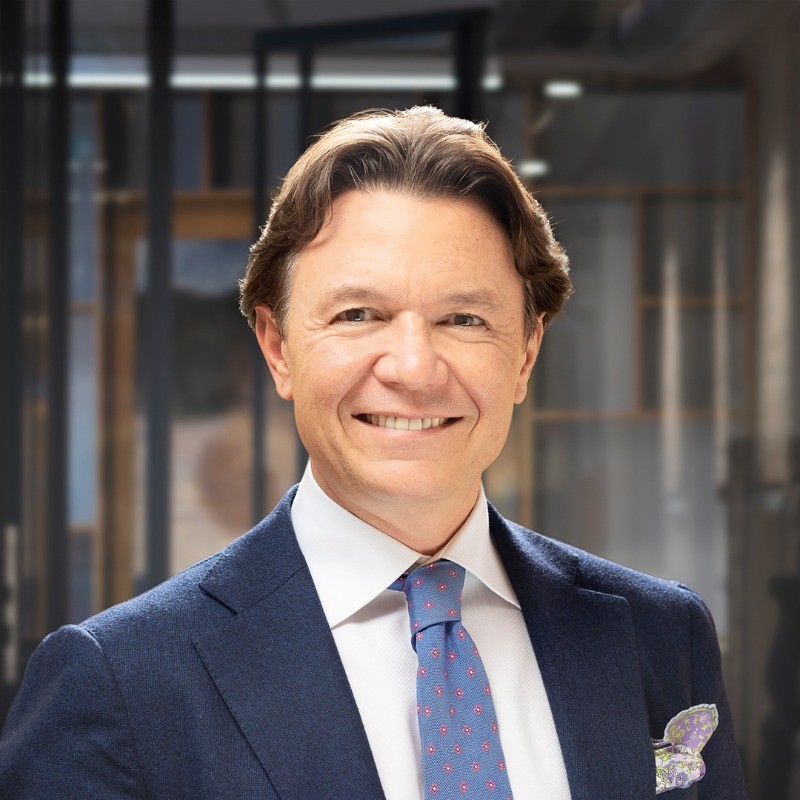
Q&A with Beko CEO Hakan Bulgurlu

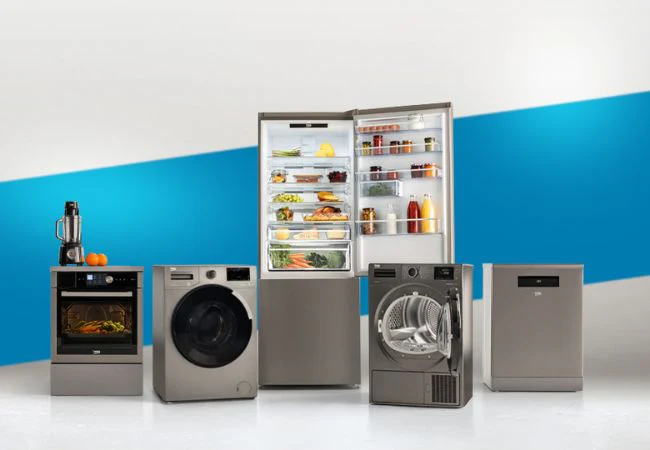
Beko ranked No. 1 on the 2025 Real Leaders Top Impact Companies list for brightening homes with green solutions and heartfelt care.


A global leader in home appliances, Beko offers a portfolio of 22 brands and 55,000 employees worldwide with expected sales of more than $11.9 billion. With subsidiaries in 58 countries and 46 production facilities in 14 countries, it strives to be a responsible partner to the industry, regulators, and, most importantly, consumers, seeking to raise standards, address efficiency, and drive innovation in the service of the planet and people. Here, Beko CEO Hakan Bulgurlu shares his knowledge and experience with Real Leaders.


Real Leaders:
How do you thrive in the impact space?

Hakan Bulgurlu: It’s all about achieving sustainable goals without sacrificing economic value. Sustainability is no longer a whim or a luxury. The real business players know that and are quickly trying to close the gap between their impact and their ambitions. We embrace sustainability as a business model and inspire sustainable lives throughout our value chain. 


RL: What milestones have you achieved this year?

Bulgurlu: We completed a significant transaction with Whirlpool and launched Beko Europe, joining Whirlpool’s European major domestic appliance business and Beko’s major domestic appliance, consumer electronics, air conditioning, and small domestic appliance businesses into a newly formed European appliance company. We acquired full ownership of Whirlpool’s Middle East and North Africa operations. We have also celebrated the official opening of our first manufacturing hub in Egypt. Beko Industrial Park is an over $110-million investment and will diversify Beko’s product offerings and strengthen its market presence. 


RL: What is the biggest challenge you’ve overcome?

Bulgurlu: We are currently facing maximum headwinds; weak demand has led to a contraction for the third year in a row in our industry. Still, in this environment, we have managed to maintain our growth.


RL: What is your best strategy for finding investors?

Bulgurlu: Showcasing a solid track record of joining forces with companies via strategic partnerships and joint ventures enhances investor confidence. A laser focus on innovation and sustainability resonates well with potential investors.


RL: What is your long-term, mission-oriented dream?

Bulgurlu: Our purpose is to advance sustainability in an otherwise slow-to-change industry, to decarbonize as fast as possible, and to inspire others to learn how to survive with nature and take action along the way. I believe leaders should be on the right side of history.


RL: What is your best advice for fellow impact CEOs?

Bulgurlu: I strongly advocate that anyone in the business world should embrace a responsible business mindset and prioritize building resilience. In today’s landscape, a CEO’s ability to infuse purpose into their organization and lead by example is paramount.


Q&A with Beko CEO Hakan Bulgurlu

Beko ranked No. 1 on the 2025 Real Leaders Top Impact Companies list for brightening homes with green solutions and heartfelt care.


A global leader in home appliances, Beko offers a portfolio of 22 brands and 55,000 employees worldwide with expected sales of more than $11.9 billion. With subsidiaries in 58 countries and 46 production facilities in 14 countries, it strives to be a responsible partner to the industry, regulators, and, most importantly, consumers, seeking to raise standards, address efficiency, and drive innovation in the service of the planet and people. Here, Beko CEO Hakan Bulgurlu shares his knowledge and experience with Real Leaders.


Real Leaders:
How do you thrive in the impact space?

Hakan Bulgurlu: It’s all about achieving sustainable goals without sacrificing economic value. Sustainability is no longer a whim or a luxury. The real business players know that and are quickly trying to close the gap between their impact and their ambitions. We embrace sustainability as a business model and inspire sustainable lives throughout our value chain. 


RL: What milestones have you achieved this year?

Bulgurlu: We completed a significant transaction with Whirlpool and launched Beko Europe, joining Whirlpool’s European major domestic appliance business and Beko’s major domestic appliance, consumer electronics, air conditioning, and small domestic appliance businesses into a newly formed European appliance company. We acquired full ownership of Whirlpool’s Middle East and North Africa operations. We have also celebrated the official opening of our first manufacturing hub in Egypt. Beko Industrial Park is an over $110-million investment and will diversify Beko’s product offerings and strengthen its market presence. 


RL: What is the biggest challenge you’ve overcome?

Bulgurlu: We are currently facing maximum headwinds; weak demand has led to a contraction for the third year in a row in our industry. Still, in this environment, we have managed to maintain our growth.


RL: What is your best strategy for finding investors?

Bulgurlu: Showcasing a solid track record of joining forces with companies via strategic partnerships and joint ventures enhances investor confidence. A laser focus on innovation and sustainability resonates well with potential investors.


RL: What is your long-term, mission-oriented dream?

Bulgurlu: Our purpose is to advance sustainability in an otherwise slow-to-change industry, to decarbonize as fast as possible, and to inspire others to learn how to survive with nature and take action along the way. I believe leaders should be on the right side of history.


RL: What is your best advice for fellow impact CEOs?

Bulgurlu: I strongly advocate that anyone in the business world should embrace a responsible business mindset and prioritize building resilience. In today’s landscape, a CEO’s ability to infuse purpose into their organization and lead by example is paramount.


Q&A with Salas O’Brien CEO Darin Anderson

Salas O’Brien ranked No. 2 on the 2025 Real Leaders Top Impact Companies list in recognition for engineering a better built environment.

Salas O’Brien is an employee-owned engineering and technical services firm focused on advancing the human experience through the built environment. It operates at the center of important global issues, including sustainability, energy efficiency, resilience, and decarbonization, helping clients in critical markets achieve operational goals while advancing team members through growth and opportunity. Here, Salas O’Brien CEO Darin Anderson shares his knowledge and experience with Real Leaders.

Real Leaders: How do you thrive in the impact space?

Darin Anderson: In a competitive market, finding and keeping top talent is essential, so we make sure our team members are rewarded well and equitably for their contributions and have no limits to their professional growth or rewards. Employee ownership is open to everyone, and it’s truly been a game-changer. Our people don’t just act like owners — they are owners.

RL: What milestones have you achieved this year?

Anderson: At the start of 2024, we announced a strategic minority investment from Blackstone, providing us with the resources to amplify our impact while remaining super majority employee-owned. We also broke into the top 50 of Engineering News-Record’s Top 500 Design Firms. Additionally, we achieved an exceptional +50 eNPS score, 250% three-year revenue growth, and 99% leadership retention over 15 years. 

RL: What is the biggest challenge you’ve overcome?

Anderson: Filling the pipeline of talent required to deliver on the demand for our services — both the sheer number of professionals and the level of technical expertise needed — continues to be a big challenge for us and our industry peers. Through Q3 2024 we’ve hired over 400 team members, which is nearly 10% of our entire team member base. We streamlined our candidate sourcing processes, and this is helping us reach a greater range of military and early career individuals through programs like Hiring our Heroes, The Honor Foundation, and relationships with historically Black colleges and universities with strong engineering and technical programs. 

RL: What is your best strategy for finding investors?

Anderson: We seek out like-minded partners who share our values and vision for success. I always ask three questions: Are they a healthy, vibrant, and strong organization? Do their leaders care, and are they in this for the long run? Are we stronger and better together? My goal is to make sure we have the healthiest environment possible for our team members and that we’re delivering meaningful projects that support our clients’ goals. If there isn’t alignment, we move on.

RL: What is your long-term, mission-oriented dream?

Anderson: Our long-term vision is to be a model organization for the world — transparent, vibrant, nimble, and accountable. We aim to create an equitable environment with no limits for anyone to achieve success, while creating a better future through our work, ensuring hospitals have reliable power, improving food quality in pharmaceutical production, and finding ways to preserve our precious resources.

RL: What is your best advice for fellow impact CEOs?

Anderson: Be clear on what success looks for you and your organization, take care of the people around you, share the rewards equitably, and surround yourself with great people and partners in life.

Q&A with Salas O’Brien CEO Darin Anderson

Salas O’Brien ranked No. 2 on the 2025 Real Leaders Top Impact Companies list in recognition for engineering a better built environment.

Salas O’Brien is an employee-owned engineering and technical services firm focused on advancing the human experience through the built environment. It operates at the center of important global issues, including sustainability, energy efficiency, resilience, and decarbonization, helping clients in critical markets achieve operational goals while advancing team members through growth and opportunity. Here, Salas O’Brien CEO Darin Anderson shares his knowledge and experience with Real Leaders.

Real Leaders: How do you thrive in the impact space?

Darin Anderson: In a competitive market, finding and keeping top talent is essential, so we make sure our team members are rewarded well and equitably for their contributions and have no limits to their professional growth or rewards. Employee ownership is open to everyone, and it’s truly been a game-changer. Our people don’t just act like owners — they are owners.

RL: What milestones have you achieved this year?

Anderson: At the start of 2024, we announced a strategic minority investment from Blackstone, providing us with the resources to amplify our impact while remaining super majority employee-owned. We also broke into the top 50 of Engineering News-Record’s Top 500 Design Firms. Additionally, we achieved an exceptional +50 eNPS score, 250% three-year revenue growth, and 99% leadership retention over 15 years. 

RL: What is the biggest challenge you’ve overcome?

Anderson: Filling the pipeline of talent required to deliver on the demand for our services — both the sheer number of professionals and the level of technical expertise needed — continues to be a big challenge for us and our industry peers. Through Q3 2024 we’ve hired over 400 team members, which is nearly 10% of our entire team member base. We streamlined our candidate sourcing processes, and this is helping us reach a greater range of military and early career individuals through programs like Hiring our Heroes, The Honor Foundation, and relationships with historically Black colleges and universities with strong engineering and technical programs. 

RL: What is your best strategy for finding investors?

Anderson: We seek out like-minded partners who share our values and vision for success. I always ask three questions: Are they a healthy, vibrant, and strong organization? Do their leaders care, and are they in this for the long run? Are we stronger and better together? My goal is to make sure we have the healthiest environment possible for our team members and that we’re delivering meaningful projects that support our clients’ goals. If there isn’t alignment, we move on.

RL: What is your long-term, mission-oriented dream?

Anderson: Our long-term vision is to be a model organization for the world — transparent, vibrant, nimble, and accountable. We aim to create an equitable environment with no limits for anyone to achieve success, while creating a better future through our work, ensuring hospitals have reliable power, improving food quality in pharmaceutical production, and finding ways to preserve our precious resources.

RL: What is your best advice for fellow impact CEOs?

Anderson: Be clear on what success looks for you and your organization, take care of the people around you, share the rewards equitably, and surround yourself with great people and partners in life.

Let There Be Light: Spotlight on Solar Sister

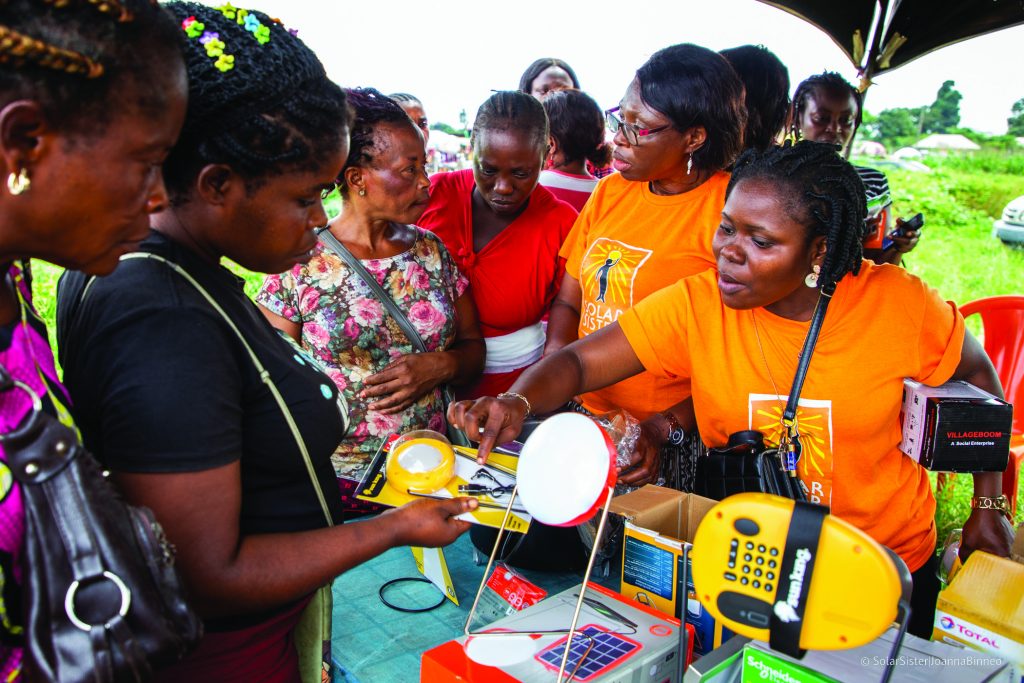
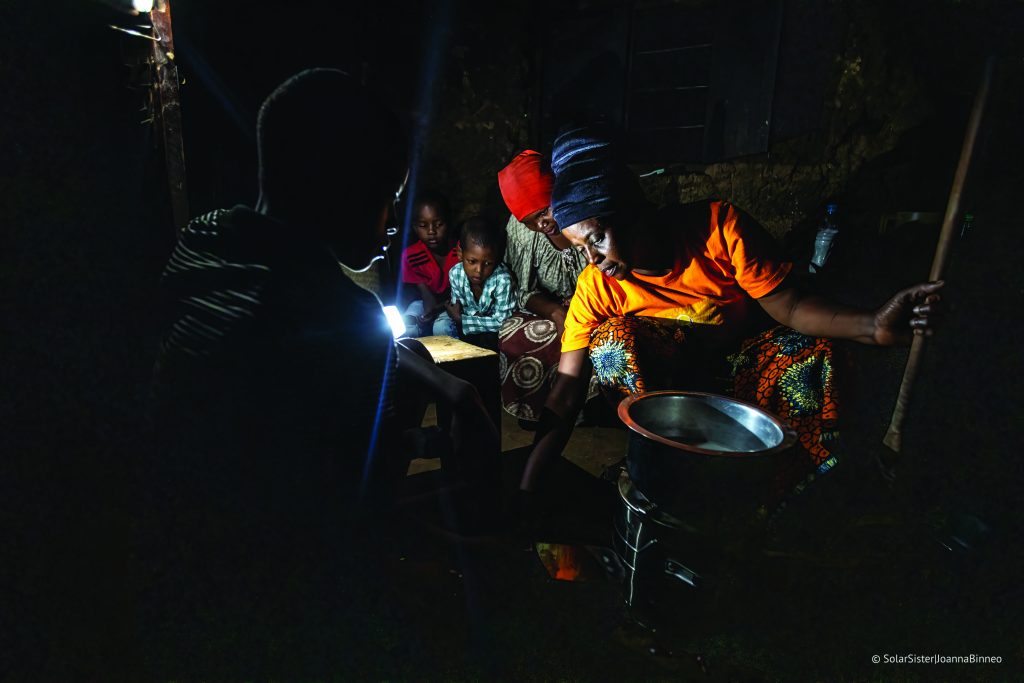
Solar Sister fights energy poverty across sub-Saharan Africa by recruiting, training, and supporting women entrepreneurs to create clean energy distribution businesses. It all started when Katherine Lucey, a former American investment banker, encountered Rebecca, a Ugandan farmer. Rebecca was using a solar lamp to illuminate her chicken coop, leading to increased egg production. As her sales grew, Rebecca built a profitable farm, elevated her family’s living conditions, and established a school for the community. If one woman could make such an impact with a solar panel, Lucey wondered what the scalable impact could be for a whole network of women. 


Lucey met Neha Misra, an Indian energy economist who witnessed the ripple effect of female-led solar energy initiatives in India. Together, they laid the groundwork for a social enterprise that empowers local women to distribute clean energy solutions via affordable, small solar lamps, home systems, and clean cookstoves in remote communities. Solar Sister was founded in 2009. After initiating a pilot program in Uganda, it expanded into Tanzania and then Nigeria. In 2022, Solar Sister merged with Livelihoods Kenya and expanded into Kenya. By 2024, the organization reached over 10,000 entrepreneurs and more than 4.5 million people with clean energy, mitigating 1.5 million-plus tons of carbon dioxide. It has about 125 full-time employees.

“It’s not just about numbers; it’s a story of resilience and empowerment in regions scarred by conflict and challenges,” says Solar Sister communications manager Joanna B. Pinneo. “Solar Sister’s unique model has been implemented in war-torn areas and has supported women from all backgrounds, from people with disabilities to internally displaced persons and refugees.”


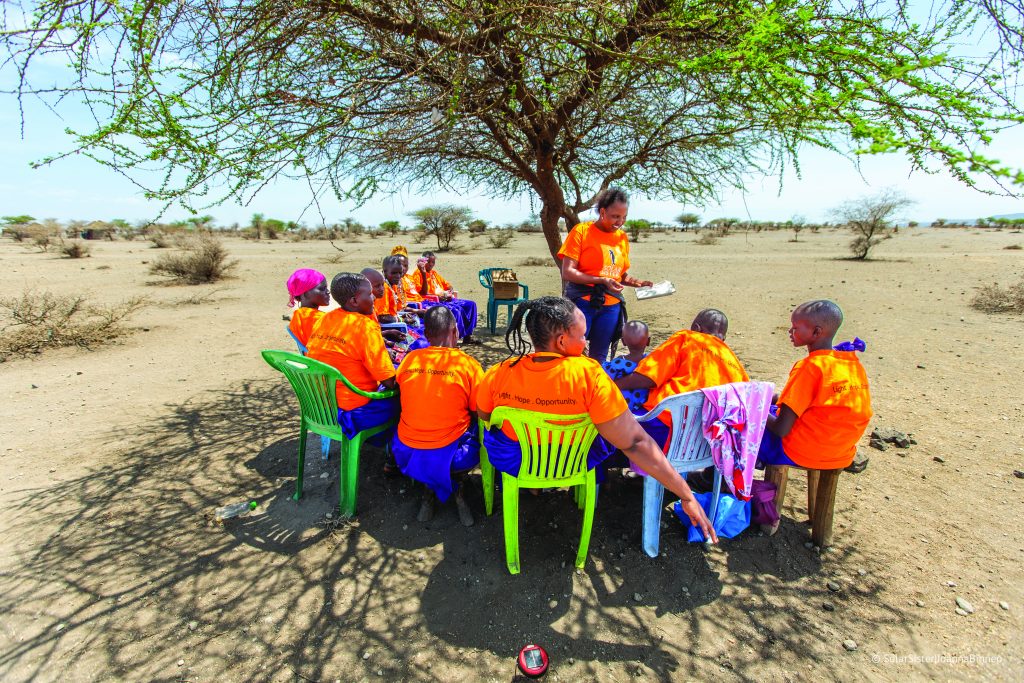
Solar Sister provides its entrepreneurs with a startup toolkit, 12 months of core training, and monthly mentoring meetings. Those who complete the advanced training curriculum are given access to a revolving zero-interest-rate credit mechanism where they can purchase solar products through a 30-day loan of up to $200. Advanced entrepreneurs receive additional marketing materials and IDs.


“We continuously support women to ensure that they can overcome seasonal challenges and feel connected to their Solar Sister family,” Pinneo shares. “The secret behind Solar Sister’s model is that our support is ongoing, and we offer continued chances for Solar Sister entrepreneurs to progress and grow.”

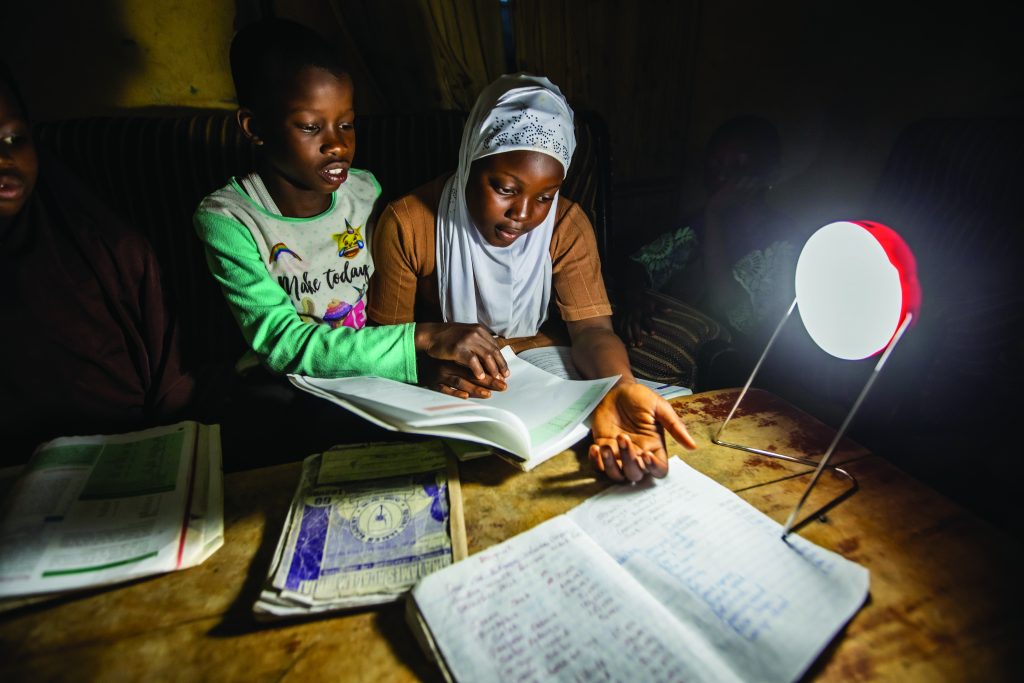
Through the sale of over 980,000 clean energy products, including 62,000-plus cookstoves, Solar Sister entrepreneurs have illuminated homes and significantly reduced indoor air pollution, which in turn reduces the risk of illness and premature death. Lack of energy is a daunting reality for what is approaching a billion people across the African continent who lack access to clean cooking fuels and technologies, according to the World Health Organization. Many are also still living in the dark, as over 40% of the population still lacks access to energy, the WHO reports. Access to energy has multi-dimensional impacts on education, health, community resilience, climate resilience and adaptability, income generation, and improved livelihoods.


Solar Sister identified its target customers as women making daily miles-long walks into town to fill up a soda bottle with kerosene and return home to pour it into their lamps. Spending up to 20 hours a week collecting fuel for energy use prevents women from participating in income-generating activities. Plus, young girls are often removed from school for firewood collection. With all that in mind, Solar Sister identified its target entrepreneurs as women.

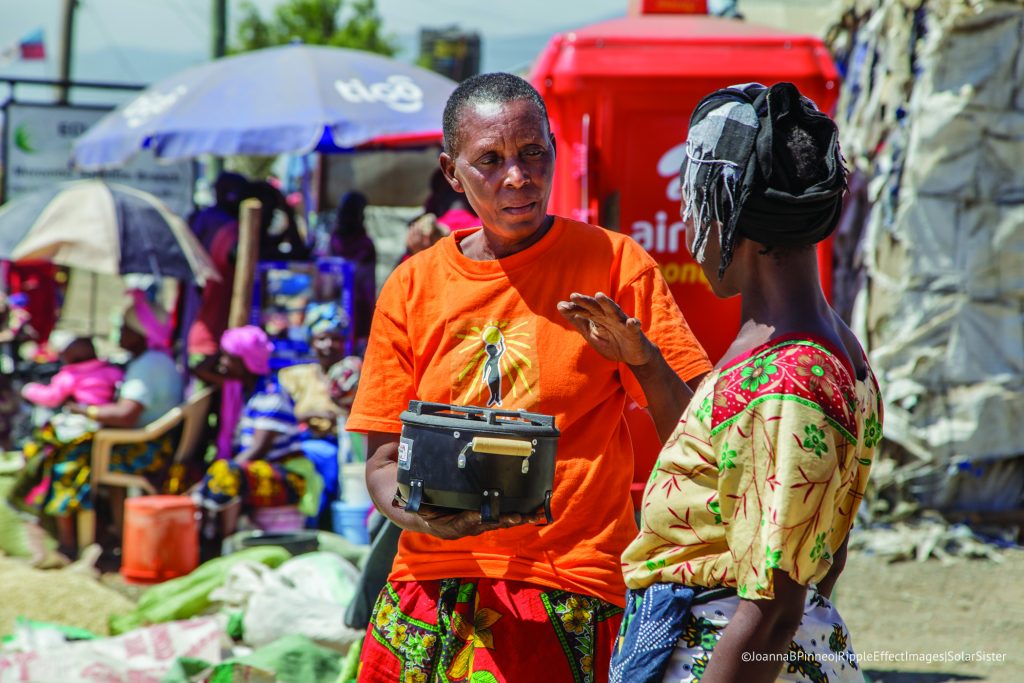
“We have found that the decision to include women was brilliant and that the women are fantastic salespeople,” founder and CEO Lucey says. “I’d say they go beyond being just agents, entrepreneurs, or salespeople. They are evangelical about bringing clean energy to communities. They know themselves what it means to have light. They know themselves what it means to cook on a stove to reduce the amount of smoke inhalation in their homes.”  


Because the women know it personally, they reach out to their families, friends, and neighbors and distribute these products with an authentic understanding of the benefits. 

“So rather than coming in and saying, ‘We have this panel with this many specs and all that, they come in they talk about, my son is No. 1 in school this year, and the reason is that he’s able to study at night,’” Lucey shares. “The other women want that as well for their children.” 

Let There Be Light: Spotlight on Solar Sister

Solar Sister fights energy poverty across sub-Saharan Africa by recruiting, training, and supporting women entrepreneurs to create clean energy distribution businesses. It all started when Katherine Lucey, a former American investment banker, encountered Rebecca, a Ugandan farmer. Rebecca was using a solar lamp to illuminate her chicken coop, leading to increased egg production. As her sales grew, Rebecca built a profitable farm, elevated her family’s living conditions, and established a school for the community. If one woman could make such an impact with a solar panel, Lucey wondered what the scalable impact could be for a whole network of women. 


Lucey met Neha Misra, an Indian energy economist who witnessed the ripple effect of female-led solar energy initiatives in India. Together, they laid the groundwork for a social enterprise that empowers local women to distribute clean energy solutions via affordable, small solar lamps, home systems, and clean cookstoves in remote communities. Solar Sister was founded in 2009. After initiating a pilot program in Uganda, it expanded into Tanzania and then Nigeria. In 2022, Solar Sister merged with Livelihoods Kenya and expanded into Kenya. By 2024, the organization reached over 10,000 entrepreneurs and more than 4.5 million people with clean energy, mitigating 1.5 million-plus tons of carbon dioxide. It has about 125 full-time employees.

“It’s not just about numbers; it’s a story of resilience and empowerment in regions scarred by conflict and challenges,” says Solar Sister communications manager Joanna B. Pinneo. “Solar Sister’s unique model has been implemented in war-torn areas and has supported women from all backgrounds, from people with disabilities to internally displaced persons and refugees.”


Solar Sister provides its entrepreneurs with a startup toolkit, 12 months of core training, and monthly mentoring meetings. Those who complete the advanced training curriculum are given access to a revolving zero-interest-rate credit mechanism where they can purchase solar products through a 30-day loan of up to $200. Advanced entrepreneurs receive additional marketing materials and IDs.


“We continuously support women to ensure that they can overcome seasonal challenges and feel connected to their Solar Sister family,” Pinneo shares. “The secret behind Solar Sister’s model is that our support is ongoing, and we offer continued chances for Solar Sister entrepreneurs to progress and grow.”

Through the sale of over 980,000 clean energy products, including 62,000-plus cookstoves, Solar Sister entrepreneurs have illuminated homes and significantly reduced indoor air pollution, which in turn reduces the risk of illness and premature death. Lack of energy is a daunting reality for what is approaching a billion people across the African continent who lack access to clean cooking fuels and technologies, according to the World Health Organization. Many are also still living in the dark, as over 40% of the population still lacks access to energy, the WHO reports. Access to energy has multi-dimensional impacts on education, health, community resilience, climate resilience and adaptability, income generation, and improved livelihoods.


Solar Sister identified its target customers as women making daily miles-long walks into town to fill up a soda bottle with kerosene and return home to pour it into their lamps. Spending up to 20 hours a week collecting fuel for energy use prevents women from participating in income-generating activities. Plus, young girls are often removed from school for firewood collection. With all that in mind, Solar Sister identified its target entrepreneurs as women.

“We have found that the decision to include women was brilliant and that the women are fantastic salespeople,” founder and CEO Lucey says. “I’d say they go beyond being just agents, entrepreneurs, or salespeople. They are evangelical about bringing clean energy to communities. They know themselves what it means to have light. They know themselves what it means to cook on a stove to reduce the amount of smoke inhalation in their homes.”  


Because the women know it personally, they reach out to their families, friends, and neighbors and distribute these products with an authentic understanding of the benefits. 

“So rather than coming in and saying, ‘We have this panel with this many specs and all that, they come in they talk about, my son is No. 1 in school this year, and the reason is that he’s able to study at night,’” Lucey shares. “The other women want that as well for their children.” 

Tip of the Iceberg: Southeastern Grocers and Relocalize Partnership


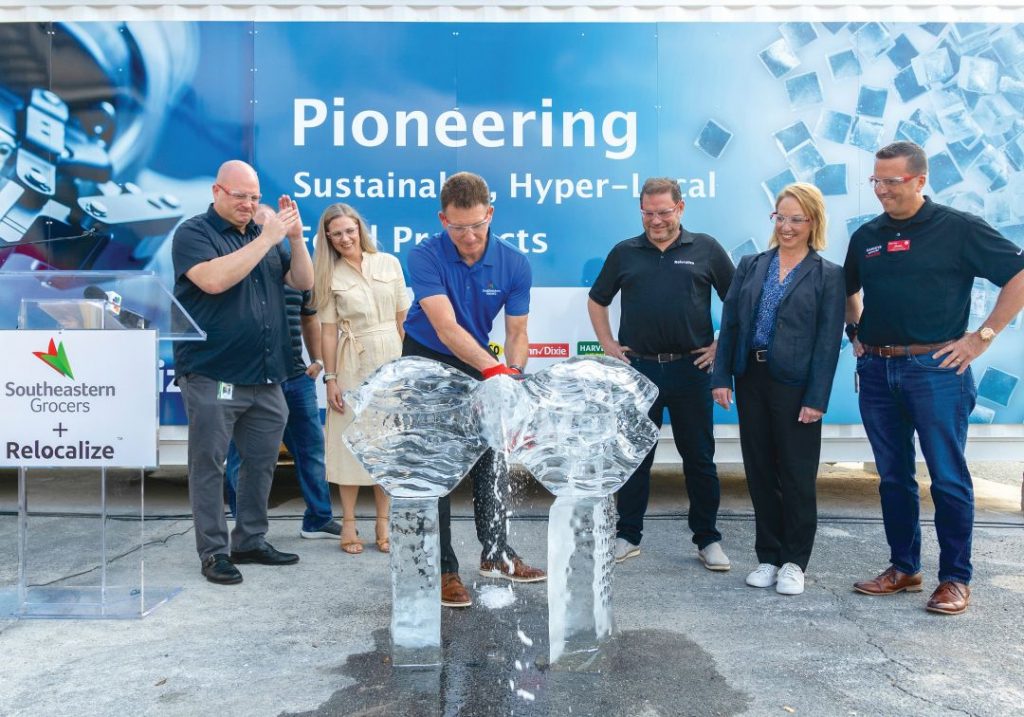
Southeastern Grocers (SEG) and Relocalize partnered to pilot ice manufacturing in the world’s first autonomous micro-factory, which was recognized by Real Leaders with an Impact Award for Best Collaboration. The partnership helps eliminate middle-mile logistics and reduce global greenhouse gas emissions, water waste, and plastic pollution.


Southeastern Grocers is an omnichannel retailer and one of the largest conventional supermarket companies in the U.S. with brands like Winn-Dixie and Harveys Supermarkets. This innovative and automated manufacturing process empowers the grocer to scale production and create waste-reduction solutions through the full lifecycle of the product.

“Our collaboration with Relocalize has allowed us to push the boundaries on what’s possible in our industry,” Dewayne Rabon, chief merchandising officer for Southeastern Grocers, tells Real Leaders. “By pioneering this revolutionary approach to ice production with the world’s first AI-powered micro-factory, we’ve enhanced the quality of our products and significantly reduced waste and carbon emissions.”

Here’s how it works: Relocalize sells automated food production platforms as a service (PaaS) to grocery and convenience retailers. These micro-factories (RELOs) are located at retailer distribution and fulfillment centers, where they produce CPG products on-demand for 100–200 retail stores. Each RELO performs all the processes of a traditional factory (e.g., production, processing, material handling, packaging, palletizing, inventory management, food safety) at about 1/20th scale. By eliminating middle-mile transportation and 100% of production labor with robotics, the retailer is supplied with fresher products at a much lower environmental and economic cost. Relocalize says its goal is to disrupt the $1+ trillion ice and beverage CPG category by hyper-localizing production to eliminate transportation CO2 and waste. 


“We set out on a mission to decarbonize food supply chains,” says Wayne McIntyre, CEO and co-founder of Relocalize. “Fully autonomous, hyper-local food manufacturing is now a reality. This ice microfactory represents a fundamental shift in how packaged food is produced and distributed, ushering in the era of the one-step food journey from production to consumption.”

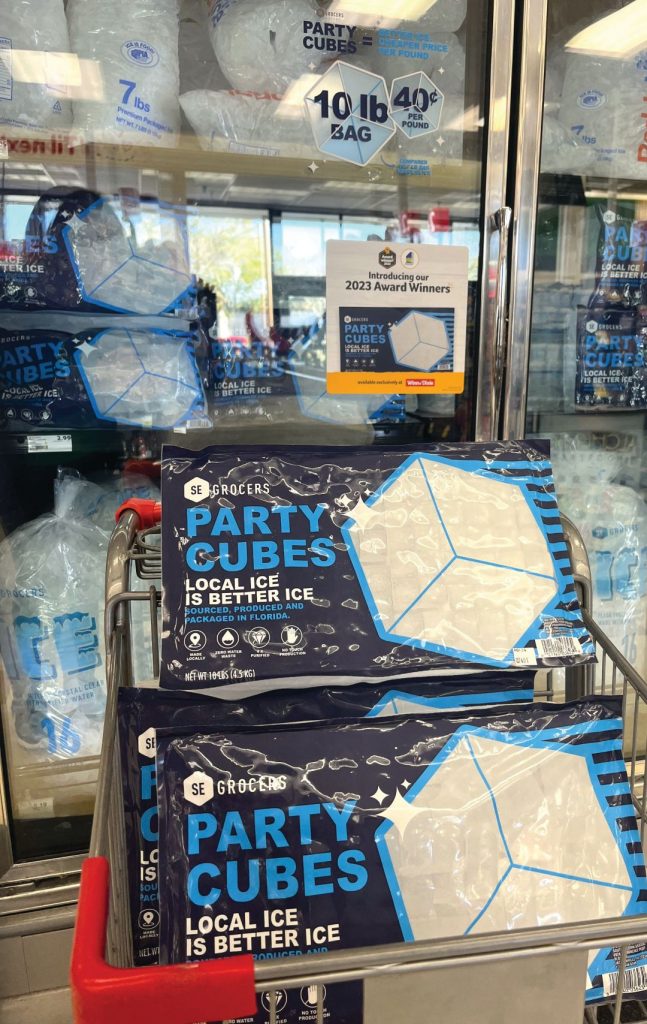
Through the partnership, SEG has introduced Party Cubes, which the duo says is the world’s first hyper-local, certified plastic-negative, packaged ice produced on-demand. The partners say this super-premium cubed ice stores better and costs less for consumers compared to traditional bagged ice, and the smaller, leak-proof packaging is 100% recycle-ready. For every one pound of plastic used in packaging, Relocalize will remove and recycle two pounds of ocean plastic. The process produces zero water waste (compared to 50% normally) and reduces trucking carbon dioxide emissions by 90%.

Highlights of the SEG-Relocalize Partnership

  • 100% of production labor is self-contained to the microfactory at one of SEG’s distribution centers in Jacksonville, Florida.
  •   Packaging is 100% recycle-ready and plastic-negative.
  •   Relocalize removes 2 pounds of ocean plastic for each pound of plastic used.
  •   Ice quality is improved and costs are reduced compared to traditional bagged ice.
  •   It produces zero water waste and reduces trucking CO2 emissions by 90%.

Tip of the Iceberg: Southeastern Grocers and Relocalize Partnership


Southeastern Grocers (SEG) and Relocalize partnered to pilot ice manufacturing in the world’s first autonomous micro-factory, which was recognized by Real Leaders with an Impact Award for Best Collaboration. The partnership helps eliminate middle-mile logistics and reduce global greenhouse gas emissions, water waste, and plastic pollution.


Southeastern Grocers is an omnichannel retailer and one of the largest conventional supermarket companies in the U.S. with brands like Winn-Dixie and Harveys Supermarkets. This innovative and automated manufacturing process empowers the grocer to scale production and create waste-reduction solutions through the full lifecycle of the product.

“Our collaboration with Relocalize has allowed us to push the boundaries on what’s possible in our industry,” Dewayne Rabon, chief merchandising officer for Southeastern Grocers, tells Real Leaders. “By pioneering this revolutionary approach to ice production with the world’s first AI-powered micro-factory, we’ve enhanced the quality of our products and significantly reduced waste and carbon emissions.”

Here’s how it works: Relocalize sells automated food production platforms as a service (PaaS) to grocery and convenience retailers. These micro-factories (RELOs) are located at retailer distribution and fulfillment centers, where they produce CPG products on-demand for 100–200 retail stores. Each RELO performs all the processes of a traditional factory (e.g., production, processing, material handling, packaging, palletizing, inventory management, food safety) at about 1/20th scale. By eliminating middle-mile transportation and 100% of production labor with robotics, the retailer is supplied with fresher products at a much lower environmental and economic cost. Relocalize says its goal is to disrupt the $1+ trillion ice and beverage CPG category by hyper-localizing production to eliminate transportation CO2 and waste. 


“We set out on a mission to decarbonize food supply chains,” says Wayne McIntyre, CEO and co-founder of Relocalize. “Fully autonomous, hyper-local food manufacturing is now a reality. This ice microfactory represents a fundamental shift in how packaged food is produced and distributed, ushering in the era of the one-step food journey from production to consumption.”

Through the partnership, SEG has introduced Party Cubes, which the duo says is the world’s first hyper-local, certified plastic-negative, packaged ice produced on-demand. The partners say this super-premium cubed ice stores better and costs less for consumers compared to traditional bagged ice, and the smaller, leak-proof packaging is 100% recycle-ready. For every one pound of plastic used in packaging, Relocalize will remove and recycle two pounds of ocean plastic. The process produces zero water waste (compared to 50% normally) and reduces trucking carbon dioxide emissions by 90%.

Highlights of the SEG-Relocalize Partnership

  • 100% of production labor is self-contained to the microfactory at one of SEG’s distribution centers in Jacksonville, Florida.
  •   Packaging is 100% recycle-ready and plastic-negative.
  •   Relocalize removes 2 pounds of ocean plastic for each pound of plastic used.
  •   Ice quality is improved and costs are reduced compared to traditional bagged ice.
  •   It produces zero water waste and reduces trucking CO2 emissions by 90%.

0