If you’re a company leader grappling with getting more from your employees without compromising quality or increasing costs, look toward Denmark
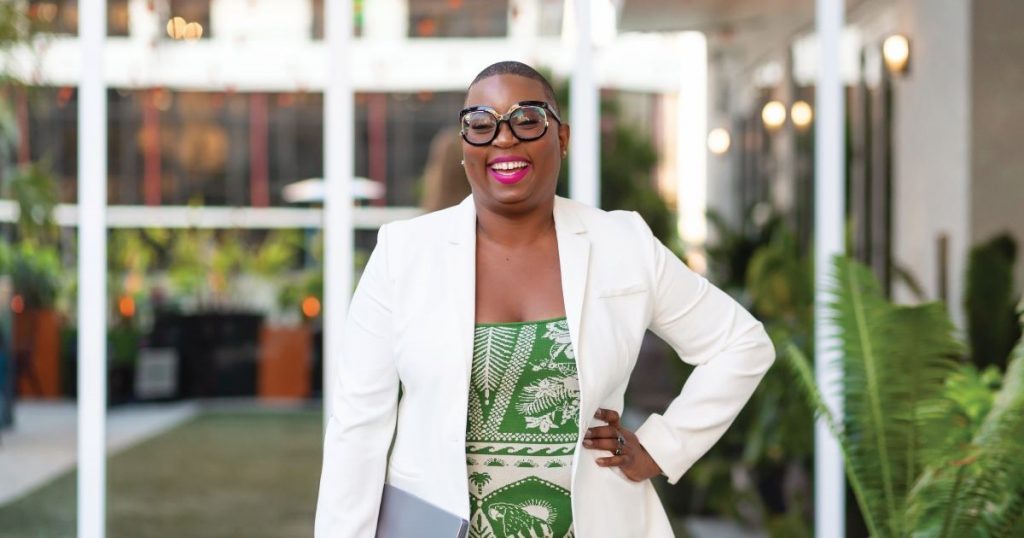
Clothes are not trash. That’s the message Dan Green is working to spread because quite frankly, the United States is doing a bad job of recycling clothes, he says. Green is on a mission to keep clothes out of landfills by radically changing how unwanted clothing is collected and reused.
Green co-founded Helpsy, the only clothing collection company in the U.S. that has earned both Certified B Corp and Public Benefit Corporation distinctions.
Helpsy collects clothing, shoes, and accessories for reuse, recycling, and upcycling to help local communities, nonprofits, and the planet. The company keeps more than 30 million pounds of clothes out of the trash each year, diverting over 250 million pounds of carbon emissions annually.
More Than Recycling: Helpsy’s Impact on Jobs, Communities, and Carbon Emissions
“Together with our 1,200 East Coast partners, we convert discarded clothing into thousands of American jobs and millions in payments to businesses and community organizations,” Green says. “We prevent the emission of hundreds of millions of pounds of carbon dioxide and the use of billions of gallons of water while saving municipalities more than $1 million in waste disposal fees each year.”
A former portfolio manager on Wall Street, Green co-founded Helpsy with friends Alex Husted and Dave Milliner. Together they bought 11 companies primarily in clothing collection since 2017. They also invested in technology to modernize systems and utilize data to predict when and which collection points should be serviced to maximize the community’s satisfaction and minimize the economic and environmental costs of running trucks around.
“We exist to extend the life of clothing,” Green says. “We need to get out and let more people know that there are alternatives to the trash. It’s still unfortunately very normal for people to throw clothes in the trash — and we’re hoping to make that less and less socially acceptable.”
Beyond Goodwill: The Future of Clothing Reuse Starts with Helpsy
Helpsy collects unsold goods from a couple hundred thrift stores, does a few hundred drives each year with municipalities and charities, and in a newer initiative, it sells sorted, branded clothing to about 600 thrift stores.
“Clothing is the only major stream of waste that is growing on a per capita basis in a real way,” Green says. “We have to get over the mental hurdle that reuse does not destroy your brand and in fact enhances your brand.”
Green says the company has had big ups and downs. One stumbling block was when Helpsy tried to do direct-to-consumer e-commerce but did not get enough response to continue it. As for a bright spot, Helpsy realized its goal of providing benefits and stock options for all 145 of its employees. In another highlight, Helpsy expanded its reach with facilities in New York, Boston, and New Jersey, as well as trailers in Maryland and South Carolina.
“My family is very deeply rooted in social justice and making sure you leave the world a better place — that’s the point of your life,” he says. “We look forward to a future where used clothing is the first place people shop.”
Syndio’s software platform exposes workplace inequities and offers solutions.
By Real Leaders
Companies and their management face immense pressure from employees, investors, and legislators demanding more transparency and progress toward diversity and pay equity goals. Yet many organizations lack the data to turn those promises into real results they can show.
Unmasking the Bias: Can Software Really Solve the Pay Equity Problem?
Syndio is a unique software as a service that offers companies a way to identify pay inequities based on race, gender, or other categories, fix those issues, and stay in compliance over time. Not only does it help close pay and opportunity gaps, but it also mitigates legal risk and turns diversity, equity, and inclusion (DEI) goals into tangible outcomes.
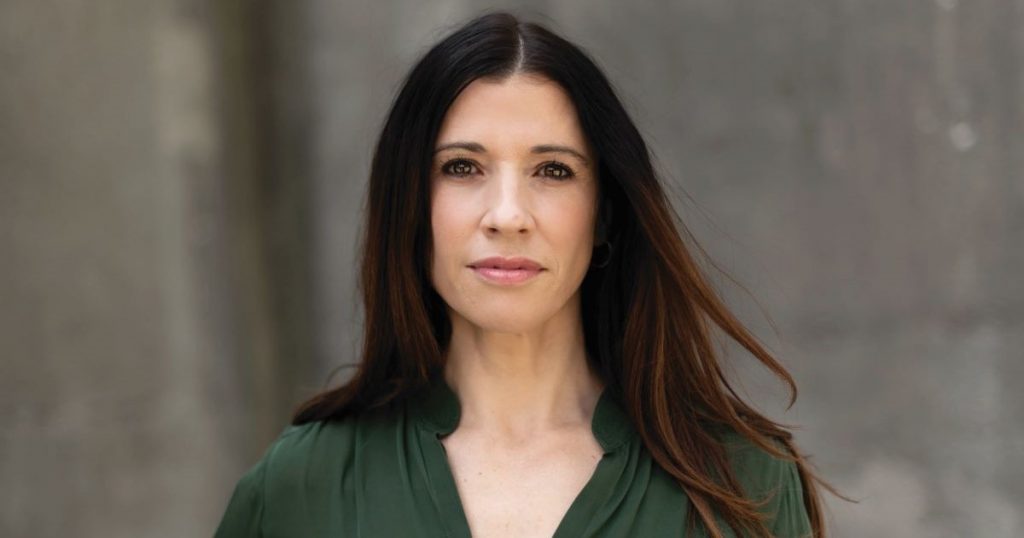
“The purpose of our company is to close the wealth gap,” says Maria Colacurcio, Syndio CEO. “Right now, like it or not, there’s still a huge disparity, and while it’s not illegal to pay people differently, you have to have good reasons why you do that. Some companies say they pay for tenure, time, and role, or education, or a certain set of skills or particular experiences that really parlay themselves into high performance for a company.”
She continues, “All those things are just fine, but on the flip side, a lot of companies are still finding disparities that are because of something like gender or race. The pay gap is still very real, and what’s great is now there’s technology to solve that. That’s what our whole mission is about.”
From Data to Dollars: Syndio’s Measurable Impact on Workplace Pay Equity
Since its founding in 2006, Syndio has put over $160 million back in the pockets of people who weren’t getting it due to gender, race, or other factors. Syndio has experienced significant growth from 2019-22, including a 538% revenue hike and a 600% increase in employees.
“The way leaders can meet their representation goals and begin to close the pay gap is by getting clear on how people move throughout the organization,” Colacurcio says. “Companies won’t solve the gap in one year or even five years. The important thing is to analyze it and create a plan to attack it.”
“Syndio‘s Workplace Equity Platform has been a critical tool for us to focus our strategies and efforts in DEI,” says Molly Gellerman, Domino’s vice president of Inclusion and Diversity, HR Digital Transformation, and HR Operations. “I love being able to see how we measure up against qualified applicant pools for our jobs and narrow data for senior leaders to specific and actionable areas of improvement.”
Kate Harkess, Sellen Construction’s chief people officer, agrees. “On our DEI roadmap, we knew we wanted to establish pay equity, but what we didn’t know was that Syndio insights would benefit other dimensions of DEI,” she says. “With Syndio, we have become more intentional about building equity in other talent strategies, like development, promotions, and engagement.”
Syndio’s Workplace Equity Platform is a suite of products and services that help companies measure and improve a variety of facets of workplace equity — from bringing in talent fairly to compensating, retaining, and promoting them equitably. It includes the following:
PayEQ This always-on view of pay equity helps companies analyze, resolve, and prevent pay disparities due to gender, race, ethnicity, or other demographics. Pay Policy Analytics, an extension of PayEQ, allows companies to support fair compensation by going beyond pay equity analyses to examine the impact of pay policies on compensation, identify the root causes of inequity at the policy level, and build better compensation models.
Pay Finder It helps hiring teams set fair starting salaries and stop pay inequity before it starts, combining internal pay data with market-informed salary ranges to provide a holistic view of what’s fair and competitive for each individual candidate.
OppEQ Companies can analyze representation and benchmark against internally and externally available talent so they can set data-backed goals for improvement and find the root causes of their diversity gaps overall and in leadership. OppEQ Promotions was launched in 2023 to help companies analyze promotions, uncover inequities, and drive accountability for equal access to opportunities.
Expert advisors A team of data scientists, technology experts, and legal professionals specialize in workplace equity and provide ongoing best practice advice — from global legal compliance and DEI goal setting to environmental, social, and governance, and human capital disclosures.
“Syndio challenged the market to see pay equity as more than just a one-time analysis,” Colacurcio reflects. “We showed that with an always-on software solution, you can identify the cause of pay inequity and root it out to the benefit of employees and employers.”
She continues, “But we knew that was simply table stakes for a larger platform that tackles workplace equity across the entire employee life cycle. In our next phase, we are bringing cutting-edge analytics to starting pay, promotions, movement, attrition, and performance. Companies look at much more than just pay when assessing their people, and they deserve an analytics platform to help them do that.”
If you’re a company leader grappling with getting more from your employees without compromising quality or increasing costs, look toward Denmark
Clothes are not trash. That’s the message Dan Green is working to spread because quite frankly, the United States is doing a bad job of recycling clothes, he says. Green is on a mission to keep clothes out of landfills by radically changing how unwanted clothing is collected and reused.
Green co-founded Helpsy, the only clothing collection company in the U.S. that has earned both Certified B Corp and Public Benefit Corporation distinctions.
Helpsy collects clothing, shoes, and accessories for reuse, recycling, and upcycling to help local communities, nonprofits, and the planet. The company keeps more than 30 million pounds of clothes out of the trash each year, diverting over 250 million pounds of carbon emissions annually.
More Than Recycling: Helpsy’s Impact on Jobs, Communities, and Carbon Emissions
“Together with our 1,200 East Coast partners, we convert discarded clothing into thousands of American jobs and millions in payments to businesses and community organizations,” Green says. “We prevent the emission of hundreds of millions of pounds of carbon dioxide and the use of billions of gallons of water while saving municipalities more than $1 million in waste disposal fees each year.”
A former portfolio manager on Wall Street, Green co-founded Helpsy with friends Alex Husted and Dave Milliner. Together they bought 11 companies primarily in clothing collection since 2017. They also invested in technology to modernize systems and utilize data to predict when and which collection points should be serviced to maximize the community’s satisfaction and minimize the economic and environmental costs of running trucks around.
“We exist to extend the life of clothing,” Green says. “We need to get out and let more people know that there are alternatives to the trash. It’s still unfortunately very normal for people to throw clothes in the trash — and we’re hoping to make that less and less socially acceptable.”
Beyond Goodwill: The Future of Clothing Reuse Starts with Helpsy
Helpsy collects unsold goods from a couple hundred thrift stores, does a few hundred drives each year with municipalities and charities, and in a newer initiative, it sells sorted, branded clothing to about 600 thrift stores.
“Clothing is the only major stream of waste that is growing on a per capita basis in a real way,” Green says. “We have to get over the mental hurdle that reuse does not destroy your brand and in fact enhances your brand.”
Green says the company has had big ups and downs. One stumbling block was when Helpsy tried to do direct-to-consumer e-commerce but did not get enough response to continue it. As for a bright spot, Helpsy realized its goal of providing benefits and stock options for all 145 of its employees. In another highlight, Helpsy expanded its reach with facilities in New York, Boston, and New Jersey, as well as trailers in Maryland and South Carolina.
“My family is very deeply rooted in social justice and making sure you leave the world a better place — that’s the point of your life,” he says. “We look forward to a future where used clothing is the first place people shop.”
Syndio’s software platform exposes workplace inequities and offers solutions.
By Real Leaders
Companies and their management face immense pressure from employees, investors, and legislators demanding more transparency and progress toward diversity and pay equity goals. Yet many organizations lack the data to turn those promises into real results they can show.
Unmasking the Bias: Can Software Really Solve the Pay Equity Problem?
Syndio is a unique software as a service that offers companies a way to identify pay inequities based on race, gender, or other categories, fix those issues, and stay in compliance over time. Not only does it help close pay and opportunity gaps, but it also mitigates legal risk and turns diversity, equity, and inclusion (DEI) goals into tangible outcomes.
“The purpose of our company is to close the wealth gap,” says Maria Colacurcio, Syndio CEO. “Right now, like it or not, there’s still a huge disparity, and while it’s not illegal to pay people differently, you have to have good reasons why you do that. Some companies say they pay for tenure, time, and role, or education, or a certain set of skills or particular experiences that really parlay themselves into high performance for a company.”
She continues, “All those things are just fine, but on the flip side, a lot of companies are still finding disparities that are because of something like gender or race. The pay gap is still very real, and what’s great is now there’s technology to solve that. That’s what our whole mission is about.”
From Data to Dollars: Syndio’s Measurable Impact on Workplace Pay Equity
Since its founding in 2006, Syndio has put over $160 million back in the pockets of people who weren’t getting it due to gender, race, or other factors. Syndio has experienced significant growth from 2019-22, including a 538% revenue hike and a 600% increase in employees.
“The way leaders can meet their representation goals and begin to close the pay gap is by getting clear on how people move throughout the organization,” Colacurcio says. “Companies won’t solve the gap in one year or even five years. The important thing is to analyze it and create a plan to attack it.”
“Syndio‘s Workplace Equity Platform has been a critical tool for us to focus our strategies and efforts in DEI,” says Molly Gellerman, Domino’s vice president of Inclusion and Diversity, HR Digital Transformation, and HR Operations. “I love being able to see how we measure up against qualified applicant pools for our jobs and narrow data for senior leaders to specific and actionable areas of improvement.”
Kate Harkess, Sellen Construction’s chief people officer, agrees. “On our DEI roadmap, we knew we wanted to establish pay equity, but what we didn’t know was that Syndio insights would benefit other dimensions of DEI,” she says. “With Syndio, we have become more intentional about building equity in other talent strategies, like development, promotions, and engagement.”
Syndio’s Workplace Equity Platform is a suite of products and services that help companies measure and improve a variety of facets of workplace equity — from bringing in talent fairly to compensating, retaining, and promoting them equitably. It includes the following:
PayEQ This always-on view of pay equity helps companies analyze, resolve, and prevent pay disparities due to gender, race, ethnicity, or other demographics. Pay Policy Analytics, an extension of PayEQ, allows companies to support fair compensation by going beyond pay equity analyses to examine the impact of pay policies on compensation, identify the root causes of inequity at the policy level, and build better compensation models.
Pay Finder It helps hiring teams set fair starting salaries and stop pay inequity before it starts, combining internal pay data with market-informed salary ranges to provide a holistic view of what’s fair and competitive for each individual candidate.
OppEQ Companies can analyze representation and benchmark against internally and externally available talent so they can set data-backed goals for improvement and find the root causes of their diversity gaps overall and in leadership. OppEQ Promotions was launched in 2023 to help companies analyze promotions, uncover inequities, and drive accountability for equal access to opportunities.
Expert advisors A team of data scientists, technology experts, and legal professionals specialize in workplace equity and provide ongoing best practice advice — from global legal compliance and DEI goal setting to environmental, social, and governance, and human capital disclosures.
“Syndio challenged the market to see pay equity as more than just a one-time analysis,” Colacurcio reflects. “We showed that with an always-on software solution, you can identify the cause of pay inequity and root it out to the benefit of employees and employers.”
She continues, “But we knew that was simply table stakes for a larger platform that tackles workplace equity across the entire employee life cycle. In our next phase, we are bringing cutting-edge analytics to starting pay, promotions, movement, attrition, and performance. Companies look at much more than just pay when assessing their people, and they deserve an analytics platform to help them do that.”
Sama ranked No. 48 on the list of 2024 Real Leaders Top Impact Companies.
By Real Leaders
About: Sama is a globally recognized leader in data annotation and model validation solutions for enterprise AI models that require the highest accuracy. The company pioneered an impact model that harnesses the power of markets for social good and meaningfully improves employment and income outcomes for those with the greatest barriers to formal work.
Real Leaders: How does Sama thrive in the impact space?
Wendy Gonzalez: Every decision that you make has multiple facets. That makes every judgment call that much harder. External validation can also help you to be aware of your different bottom lines. By registering as a public benefit corporation, for example, your company will be legally bound to consider your stated mission. B Corp Certification, which requires reporting, can also be a great way to accomplish this. It is no longer enough to simply say you are dedicated to impact. Instead, thriving requires constantly measuring and monitoring specific metrics.
RL: What milestones did the company achieve in 2023?
Gonzalez: In 2023, Sama released Platform 2.0, which is a re-engineered computer vision platform to reduce the risk of machine learning algorithm failures. Platform 2.0 can deliver a 99%-client-acceptance rate for AI training data through SamaAssureTM, the industry’s highest quality guarantee, with an annotation delivery rate of up to 300+ million frames, 850+ million shapes and 10 billion annotation points a month. Sama also released its first impact report since becoming a public benefit corporation. In 2022, the company created 1,622 new entry-level jobs, a single-year record. Among these new hires, 35% were unemployed in the six months prior to joining Sama, and 56% were living below the international poverty line. In terms of third-party awards, Sama won a 2023 Business Intelligence Group Innovation Award for its work with food waste reduction company Orbisk; it made the Inc. 5000 list of America’s fastest growing private companies for the fourth year in a row.
RL: What is the biggest challenge Sama overcame?
Gonzalez: As it was for many, spring 2020 was extremely difficult. First, our founder, Leila Janah, passed away after a battle with epithelioid sarcoma, a rare form of cancer. Just eight weeks later, the world began shutting down in the COVID-19 pandemic. As an impact sourcer focusing on hiring people who may otherwise not gain formal employment or who are from low-income communities, moving to remote working was incredibly difficult. For example, we worked with the Kenyan government and ISPs to put high-speed connections into slums in Nairobi, and we did the same in rural Uganda. We delivered battery packs and laptops via tuktuk. We set up hotels for people to get connected when these solutions didn’t work. Like many things at Sama, these efforts also had a ripple effect — they helped our employees’ children to go to school and, by keeping people employed, also ensured they could ride out the pandemic. We came out of 2020 stronger as a company and continued our growth even in those tough times.
RL: What is the company’s best strategy for finding investors?
Gonzalez: It’s simple: Find investors who understand your mission. When Sama decided to convert to a for-profit company, we did so because we wanted to sustain our mission and create a critical mass of funding to make the necessary investments to do that. There are now impact investors, including one of our own investors, Rubio Impact Ventures, specifically looking for companies that are making a difference somehow. Do your research and contact those who are most aligned with your mission, who have previous experience in a similar space, and who have the right tools to get you to the next level. Having a positive relationship with your investors is easier to build when you are on the same page.
RL: What is Sama’s long-term, mission-oriented dream?
Gonzalez: To create a market where social enterprises are part of the standard and social impact criteria are part of the buying process for all businesses. Regulation will catch up, but we need investors and customers to demand this. Those demands will create a feedback loop that constantly reinforces the need for social enterprises and helps them grow. At Sama, we believe business is a force for social change. With issues like alleviating global poverty having been stalled by the COVID-19 pandemic, there is no time to waste in building a better global ecosystem that gives everyone a seat at the table. To that end, Sama’s majority shareholder, the Leila Janah Foundation, supports social enterprises in Kenya and Uganda through initiatives like the Give Work Challenge (GWC), which runs twice a year for both extant and new businesses, and the Growth Fund, which supports former GWC winners with an additional grant. These programs and others like them are helping to build wealth and financial independence in Africa and around the world.
The UN asks companies to help accelerate progress on 5 Sustainable Development Goals.
By Real Leaders
Only 15% of the United Nations Sustainable Development Goals (SDGs) are on track for 2030, and the UN is calling upon the private sector to help improve that number.
The UN identified five action areas for companies: gender equality, climate action, living wage, finance and investment, and water resilience. These targets can accelerate progress across all 17 SDGs and are where the private sector can collectively make the biggest, fastest impact by 2030, the UN says. They also help build more resilient companies and can lead to positive corporate returns.
The UN’s Forward Faster initiative aims to increase accountability and transparency by calling for companies to publicly declare their commitments, highlight the actions they will undertake, and report on progress annually to the UN Global Compact, which provides a framework to guide all businesses regardless of size, complexity, or location.
Gender Equality
At the current rate, it will take over 160 years to achieve gender equality in terms of women’s economic empowerment and participation.
Companies can increase profitability and performance by ensuring inclusive workplaces and parity in their workforce. When women are empowered and included, economies grow, communities thrive, and businesses flourish. By taking action on gender equality, companies can gain important advantages:
When women serve as leaders and employees of companies, businesses benefit and performance improves.
On average across countries, long-run GDP per capita would be almost 20% higher if gender employment gaps were closed.
When boardrooms are gender balanced, enterprises are 2% more likely to have improved business outcomes.
Gender equality in the workplace can help unlock more than $12 trillion in new market value linked to the SDGs.
Action
Target 1: Equal representation, participation, and leadership across all levels of management by 2030.
Target 2: Equal pay for work of equal value by 2030.
Climate Action In order to limit global warming to 34.7°F above pre-industrial levels, emissions need to be cut in half by 2030.
Businesses can protect themselves from long-term volatility by working toward net zero and a just transition. Taking climate action will help future-proof businesses. Here’s how taking ambitious action in this area benefits companies:
Improve efficiency and cut operating costs by reducing energy usage and emissions. Strengthen companies’ reputation with customers, suppliers, investors, and regulators whilst reducing companies’ exposure to climate risks.
Stay one step ahead of policy changes and climate regulations.
Ensure businesses leave no one behind in the transition to an environmentally sustainable economy.
Action
Target 1: Set corporate science-based net-zero emissions reductions targets in line with a 34.7°F pathway with the goal of halving global emissions by 2030 and reaching net-zero by 2050 at the latest.
Target 2: Contribute to a just transition by taking concrete actions that address social impacts of climate change mitigation and adaptation measures in partnership with actors such as workers, unions, communities, and suppliers.
Living Wage Over a billion working people worldwide — one third of all workers — are estimated to earn less than they need to afford a decent standard of living.
Companies can reduce inequalities and build more resilient supply chains by ensuring a living wage across their workforce. By paying living wages, companies can improve productivity and gain important advantages:
Reduce staff turnover and absenteeism, increase retention and motivation, attract new talent, and increase staff productivity.
Improve supply chain relationships, performance, resilience, and transparency.
Create a pathway to tackle poverty and reduce inequalities.
Demonstrate a commitment to respecting and promoting the human rights of workers.
Action
Target 1: One-hundred percent of employees across the organization earn a living wage by 2030.
Target 2: Establish a joint action plan(s) with contractors, supply chain partners, and other key stakeholders to work toward achieving living wages and/or living incomes with measurable and time-bound milestones.
Finance and Investment The world will need to spend between $3–5 trillion annually to meet the SDGs by 2030.
Shifting corporate capital towards the SDGs is critical to closing existing financing gaps. Aligning financial strategies with the SDGs unlocks new revenue possibilities. By taking action in this area, companies can increase performance and gain new opportunities:
Attract investors and open up new avenues for capital investment
Protect long-term financial performance and avoid potential legal and reputational issues.
Identify and mitigate risks associated with environmental, social, and governance factors.
Attract top talent who prioritize purpose-driven work and seek employers committed to sustainability.
Expand into new markets and attract environmentally and socially conscious customers.
Action
Target 1: To the fullest extent possible, align corporate investment with SDG policies and strategies, set targets, and track and report on the amount and proportion of such SDG investments.
Target 2: Establish a corporate financing strategy linked to SDG investments and performance, and report on the amount and proportion of such SDG finance.
Water Resilience More than 2 billion people lack safe drinking water. It’s estimated there will be a 40% gap between available water and demand for water by 2030.
Companies can increase efficiency and reduce supply chain disruption while helping vulnerable communities in water-challenged regions. Building water resilience at your organization can improve business performance and accelerate growth. Taking ambitious action in this area will help businesses:
Reduce potential business risks caused by water challenges (operational and supply chain).
Enhance companies’ reputation in the communities you operate and with your investors.
Profoundly impact the ability to fulfill the UN human right to water and sanitation and broader SDGs.
Support ecosystems that capture, filter, and store water resources, while supporting biodiversity and helping reduce the impacts of climate change.
Action
Target 1: Build water resilience across global operations and supply chains and join hands to achieve collective positive water impact in at least 100 vulnerable prioritized water basins by 2030.
The UN asks companies to help accelerate progress on 5 Sustainable Development Goals.
By Real Leaders
Only 15% of the United Nations Sustainable Development Goals (SDGs) are on track for 2030, and the UN is calling upon the private sector to help improve that number.
The UN identified five action areas for companies: gender equality, climate action, living wage, finance and investment, and water resilience. These targets can accelerate progress across all 17 SDGs and are where the private sector can collectively make the biggest, fastest impact by 2030, the UN says. They also help build more resilient companies and can lead to positive corporate returns.
The UN’s Forward Faster initiative aims to increase accountability and transparency by calling for companies to publicly declare their commitments, highlight the actions they will undertake, and report on progress annually to the UN Global Compact, which provides a framework to guide all businesses regardless of size, complexity, or location.
Gender Equality
At the current rate, it will take over 160 years to achieve gender equality in terms of women’s economic empowerment and participation.
Companies can increase profitability and performance by ensuring inclusive workplaces and parity in their workforce. When women are empowered and included, economies grow, communities thrive, and businesses flourish. By taking action on gender equality, companies can gain important advantages:
When women serve as leaders and employees of companies, businesses benefit and performance improves.
On average across countries, long-run GDP per capita would be almost 20% higher if gender employment gaps were closed.
When boardrooms are gender balanced, enterprises are 2% more likely to have improved business outcomes.
Gender equality in the workplace can help unlock more than $12 trillion in new market value linked to the SDGs.
Action
Target 1: Equal representation, participation, and leadership across all levels of management by 2030.
Target 2: Equal pay for work of equal value by 2030.
Climate Action In order to limit global warming to 34.7°F above pre-industrial levels, emissions need to be cut in half by 2030.
Businesses can protect themselves from long-term volatility by working toward net zero and a just transition. Taking climate action will help future-proof businesses. Here’s how taking ambitious action in this area benefits companies:
Improve efficiency and cut operating costs by reducing energy usage and emissions. Strengthen companies’ reputation with customers, suppliers, investors, and regulators whilst reducing companies’ exposure to climate risks.
Stay one step ahead of policy changes and climate regulations.
Ensure businesses leave no one behind in the transition to an environmentally sustainable economy.
Action
Target 1: Set corporate science-based net-zero emissions reductions targets in line with a 34.7°F pathway with the goal of halving global emissions by 2030 and reaching net-zero by 2050 at the latest.
Target 2: Contribute to a just transition by taking concrete actions that address social impacts of climate change mitigation and adaptation measures in partnership with actors such as workers, unions, communities, and suppliers.
Living Wage Over a billion working people worldwide — one third of all workers — are estimated to earn less than they need to afford a decent standard of living.
Companies can reduce inequalities and build more resilient supply chains by ensuring a living wage across their workforce. By paying living wages, companies can improve productivity and gain important advantages:
Reduce staff turnover and absenteeism, increase retention and motivation, attract new talent, and increase staff productivity.
Improve supply chain relationships, performance, resilience, and transparency.
Create a pathway to tackle poverty and reduce inequalities.
Demonstrate a commitment to respecting and promoting the human rights of workers.
Action
Target 1: One-hundred percent of employees across the organization earn a living wage by 2030.
Target 2: Establish a joint action plan(s) with contractors, supply chain partners, and other key stakeholders to work toward achieving living wages and/or living incomes with measurable and time-bound milestones.
Finance and Investment The world will need to spend between $3–5 trillion annually to meet the SDGs by 2030.
Shifting corporate capital towards the SDGs is critical to closing existing financing gaps. Aligning financial strategies with the SDGs unlocks new revenue possibilities. By taking action in this area, companies can increase performance and gain new opportunities:
Attract investors and open up new avenues for capital investment
Protect long-term financial performance and avoid potential legal and reputational issues.
Identify and mitigate risks associated with environmental, social, and governance factors.
Attract top talent who prioritize purpose-driven work and seek employers committed to sustainability.
Expand into new markets and attract environmentally and socially conscious customers.
Action
Target 1: To the fullest extent possible, align corporate investment with SDG policies and strategies, set targets, and track and report on the amount and proportion of such SDG investments.
Target 2: Establish a corporate financing strategy linked to SDG investments and performance, and report on the amount and proportion of such SDG finance.
Water Resilience More than 2 billion people lack safe drinking water. It’s estimated there will be a 40% gap between available water and demand for water by 2030.
Companies can increase efficiency and reduce supply chain disruption while helping vulnerable communities in water-challenged regions. Building water resilience at your organization can improve business performance and accelerate growth. Taking ambitious action in this area will help businesses:
Reduce potential business risks caused by water challenges (operational and supply chain).
Enhance companies’ reputation in the communities you operate and with your investors.
Profoundly impact the ability to fulfill the UN human right to water and sanitation and broader SDGs.
Support ecosystems that capture, filter, and store water resources, while supporting biodiversity and helping reduce the impacts of climate change.
Action
Target 1: Build water resilience across global operations and supply chains and join hands to achieve collective positive water impact in at least 100 vulnerable prioritized water basins by 2030.
Pharrell Williams is closing the opportunity gap for entrepreneurs of color.
By Real Leaders
Pharrell Williams knows music. One of the most influential musical artists and producers in hip-hop, R&B, and pop, Williams has created chart-topping hits for household names, earning 13 Grammy Awards and six Billboard Music Awards. (Cue the mega-hit song Happy.)
Then there are his latest accomplishments in fashion design (Louis Vuitton’s men’s creative director), film production (Hidden Figures co-producer), and several other companies the serial entrepreneur helped found or collaborate with. But what’s music to Williams’ ears lately is not his own success as much as helping others succeed. He is determined to help Black and Hispanic entrepreneurs propel their startups through his budding nonprofit, Black Ambition.
Williams emphasizes that ambition is limitless, but access is not. Even today, Black and Hispanic founders in the U.S. receive less than 3% of all venture capital allocated. That’s why he is investing capital and resources into Black and Hispanic high-growth startups, working to close the opportunity and wealth gap for entrepreneurs who have historically been left out of traditional investment funnels.
“We can do and be anything we want to,” Williams tells Real Leaders. “We just need the support, we need the resources, and we need the tutelage and the guidance.”
Founded in 2020, Black Ambition wrapped up its third annual awards program in November. To date, the nonprofit has given out nearly $10 million to over 100 Black and Hispanic founders through a general prize track and a track for historically Black colleges and universities (HBCUs). Black Ambition has supported an additional 500-plus entrepreneurs with mentorship to strengthen their ventures. To say that Williams is happy with Black Ambition’s impact would be an understatement.
“You gotta pinch yourself because man, this is really happening,” Williams says. “These people are real. The dream is coming true.”
Black Ambition does not only give prize money. As critical as those funds are, the organization also provides other support to set up entrepreneurs for continued success. Semifinalists participate in several months of programming that includes mentorship, resources, community, and networks. Williams feels that he is answering a calling.
“I’ve learned from the mistakes that I’ve made, and I realized how much I paid dearly for it,” Williams says. “And I realize how many good things I’ve done and how they affect things in a much more exponential way. When you see all the parallels and all the patterns, you start to realize there’s this overarching goal of doing good and doing well. It’s a karma credit score. I’m just paying my tithes to the universe, not only leaving the door open, but doing my absolute best to share the codes in the most universal way possible.”
Anti-Systematic Gravity
At its core, Williams defines Black Ambition as anti-systemic gravity, a push to help Black and Hispanic startups gain momentum despite the challenges. It’s a need he witnessed first-hand growing up in the projects in Virginia Beach.
“As a child, I don’t know that I ever had ambitions to be an entrepreneur,” he says. “I had never heard of the word, and I didn’t grow up in a community that had that kind of mentality. Entrepreneurship was not something that we understood to be within the realm of possibility, and there was a hundred million percent no Black Ambition as a construct.”
He continues, “There were lots of Black-owned companies in Virginia Beach and Norfolk. They just would never celebrate it the way we celebrate it now. You didn’t hear about the person who owns the tire company or the landscaping business and was totally crushing it or the person who owns a swath of gas stations. The way that we herald it now is amazing, but we should have been doing that all along. Gravity pulls our race down, and we don’t even know it. Disproportionate access to health care, education, and representation — that’s a gravitational force that pulls down on marginalized people more so than it does for our White siblings.”
Williams considers himself fortunate to have been able to break through this gravitational pull. Born to a handyman and a teacher, the college dropout turned to music to cope with neighborhood shootings and hardships. “Music was one of the greatest distractions,” he says. “The music got us by.”
His career kicked off when he was discovered at a high school talent show by music industry veteran Teddy Riley. Williams later partnered with a friend to establish the production company The Neptunes, promoting and selling the work of pop, hip-hop, and R&B artists, as well as forming an R&B group with the same name.
“When I got into the music industry, eventually I realized, OK, you’re going to be your own publisher, so that’s a business,” he says. “As a musician, you’re making music, so you are making a product, and that product has to be managed. You are going to be known for the person who is supplying this product. The instruments that you use are what help you create or conjure this music. So, you start thinking entrepreneurially just by being a musician.”
Williams produced explosive hits for Jay-Z, Beyonce, Britney Spears, Nelly, Gwen Stefani, Madonna, Jennifer Lopez, Ed Sheeran, and other household names, and while the music side came naturally to him, some of the business side did not.
“The first 10 years, I made so many terrible investments, but I didn’t have anyone around to vet these opportunities and tell me, ‘OK, this is worth your time, this is worth your space,’ and most importantly, ‘this is also worth your financial investment,’” Williams says. He is ensuring that Black Ambition fills that role for entrepreneurs today.
“This is My Purpose”
Williams and his team are forging a way for Black and Hispanic entrepreneurs to “build uninterrupted.” It’s a phrase he uses often within Black Ambition.
“Building uninterrupted means that there is no historical and-or systemic gravity on your concept, that it is able to free float, and exist, and build on its own,” he says. “You’re uninhibited by any kind of gravitational force.”
To help create those opportunities, Williams put Felecia Hatcher at the helm of Black Ambition. As CEO, Hatcher has helped entrepreneurs connect to over $100 million in funding over the past eight years, earning honors from the Obama White House, Harvard, and Comcast, to name a few. She is an author, speaker, business owner, and co-founder of the Black Tech Week conference and The Center for Black Innovation. “Black Ambition is lucky to have her, but so are all of these entrepreneurial minds,” Williams says. “I always look to her. You listen to her speak, and you feel like you can do anything.” (Read Real Leaders’ Q&A with Hatcher.)
Black Ambition also has formed several strong partnerships with leading brands and organizations including Adidas, the Lennar Foundation, the Chan Zuckerberg Initiative, the Visa Foundation, Heineken, and Chanel. Plus, the nonprofit offers its awardees bi-weekly office hours with proven leaders in marketing, public relations, and brand building with Heineken, Snapchat, Netflix, and others.
“You need as many incredibly well-educated, well-experienced eyes around you at all times, and they should be better than you because if they aren’t better than you, then you’re never going to be better than what you are,” Williams says. “When you get a handful of them around you, wow, you’re about to be lifted.”
Winning recipients attend town hall meetings with Williams and receive life coaching and therapeutic workshops in groups and one-on-one, setting up a holistic career approach.
“It takes a village,” Williams says. “You just need the right people. You need the right energy — and that energy is curiosity, it is ambition, and it is the desire to see the person next to you do well. It is a devotion and a diligence with respectful reciprocation.”
As for fielding the prize applicants, Black Ambition looks for unique and innovative businesses to propel, primarily in the fields of technology and consumer products and services, but also in health care, media and entertainment, and Web 3.0.
“The purpose of a business should be based on its necessity,” Williams says. “It should exist because we need it and we don’t have it. Or if we already have it, it’s because this is the superior version and this is going to change the game. Other than that, it’s just fodder. We don’t need another edition of the same. We need something that is going to level us up.”
In 2023, Black Ambition introduced the So Ambitious HBCU Tour in partnership with Techstars and Thurgood Marshall College Fund. The tour brings entrepreneurial training to historically Black colleges and universities to create new wealth pathways and opportunities for undergraduate and graduate entrepreneurs. Students create real companies with the help of mentors, investors, and experienced entrepreneurs and the support of incubator and accelerator programs, business pitch competitions, boot camps, and access to capital. The tour is targeting Alabama, Florida, Virginia, Louisiana, Maryland, Texas, Georgia, and Washington, D.C.
“It looks so promising,” Williams says. “You see the support we’re getting, the kinds of partnerships we’re forming, and the people who are getting involved, the really creative Black and Brown ideas that are coming in — it’s really inspiring.”
A man of faith, Williams feels divinely aligned with his work for Black Ambition. “I believe that this is my purpose,” Williams says. “I believe that I’m supposed to share the codes, and I believe that there needs to be this organization that helps to share the codes by doing some funding and also really serious strategic advice and mentorship.”
Williams points out the need for Black Ambition to be amplified. “I see a future with Black Ambition chapters or offices all over the world because the Black and Brown diaspora isn’t just in America,” he says. “No matter what position we play in this world, we need to know that we can be anything, and that is the ultimate Black Ambition.”
Removing Barriers, Accelerating Success
Black Ambition CEO Felecia Hatcher gets real about the challenges of Black and Hispanic startups.
Real Leaders: What is Black Ambition, and what are you as an organization set out to accomplish?
Felicia Hatcher: Pharrell was the ultimate visionary creating Black Ambition, and when you think about vision, you also think about how expansive vision can be when it’s tied to legacy. So, I think of all the amazing things that he has done and has yet to do. The entrepreneurs impacted by his vision will be a part of his greatest legacy because those are the ripple effects.
We have 100 entrepreneurs that we’ve invested in up until this point at the three-year mark. A lot of organizations that do similar work have only dreamed of impacting as many entrepreneurs as fast as we can. We understand the premise that not only are we trying to close the wealth gap, but wealth has a need for speed — and a lot of people have gotten really, really comfortable wasting the time of Black and Hispanic entrepreneurs. We know that time is infinitely more valuable than money. So, once they waste that money, waste that time, they cannot get it back.
So, with Black Ambition, we do a few things. One, we’re getting them the resources faster, we’re getting them the money faster, so that they can go out into the marketplace, make decisions, hire people faster, and have a faster impact upon their communities while building really good companies. I think of all the success that the founders have had. We’ll reach the point where we’ve invested just about $10 million into these companies in 2023. They’ve gone on to raise over $92 million in the past three years with all the entrepreneurs that we interface with, and that’s no small feat when you look at the number of less than 3% of all companies actually receiving venture capital investment are Black and Hispanic.
What keeps me up at night is, if this initiative was never founded, these brilliant companies would not have been able to have the impact that they’ve had as well as the ripple and network effect. There are just so many people who stand in the way of this greatness being able to happen, which is the problem that we’re fighting every single day.
RL: What have been some of Black Ambition’s biggest challenges so far?
Hatcher: There are a lot of challenges when you’re building a program that also spans quite broadly in whom we serve — not just early entrepreneurs who are a little bit more seasoned, but then we also fund and support HBCU students. Pharrell and I feel that HBCUs are some of the most fertile but untapped grounds for talent, but that also comes with a level of additional support that’s needed sometimes because they’re very young entrepreneurs who haven’t done significant time in corporate and then decided to leave corporate America and launch a startup, which is what we see oftentimes with our early-stage startups. We make sure that they have the soft skills, support, and training that they need as well as mentorship and programmatic support so they can be globally competitive with what they’re building. We also teach them to be very good stewards of the relationships that often come from Pharrell.
In the business world, everything is a relationship game, whether you like it or not. Being able to be good stewards of those relationships, especially when you’re building a program at scale, is something that we are very careful with, and then really trying to instill that in the entrepreneurs we’re introducing them to, which he has cultivated over the years and we’ve cultivated as an organization.
The other part is funding for the organization. A lot of organizations that made very big commitments in 2020 have walked them back in a moment when we need additional capital. Funding for Black entrepreneurs and startup founders specifically is down 45% in the last year. In a time where the economic climate is a little shaky, those entrepreneurs need capital even more. Having great, strong institutional partners that have been with Black Ambition from the beginning is critical, but then we also have to navigate that day to day to make sure we’re building a sustainable organization that can continue to fund those entrepreneurs at the level in they need and which we’ve deemed to be catalytic for those entrepreneurs. It’s definitely a challenge we navigate every single day.
RL: What does Black Ambition look for in its applicants?
Hatcher: We look at their risk tolerance, how they’re able to navigate crises and change, and their ability to lead as a whole — so what makes them a great leader that not only will allow them to build teams but also to leverage Black Ambition’s initial investment to bring on additional investors. We also look at a level of resource magnetism: Do they have it? Can they attract the resources, people, and buy-in that they need to continue to build a thriving startup in their communities?
Then, we look at the usual stuff — product market fit, the market potential as a whole, the viability of being able to scale and be very good stewards of the resources.
Ultimately, what we’ve been building with Black Ambition with Pharrell’s vision is like a rocket ship for these entrepreneurs. Not every entrepreneur is ready to move and scale as fast as they think they are, so we’re also looking at some characteristics that represent that they can get on the rocket ship that all entrepreneurs hope for and then be able to take it, do something with it, and then ultimately be massive contributors back into the Black Ambition community.
RL: Is impact a common thread among Black Ambition’s winning companies?
Hatcher: When you look across our portfolio of entrepreneurs that we’ve invested in, they’re all for-profit companies, but they have the heart and soul of social impact entrepreneurs. They’re all building something much bigger than themselves with some sort of direct impact back to their communities. It’s an unstated thing that we look for in our selection process.
Community X is one of the companies that immediately comes top of mind because they built a platform that allows people to quickly sign petitions and make donations for big moments that require a lot of capital and advocacy to happen. They were our 2022 Black Ambition Prize winner. Then we have quite a few other companies solving some big problems, whether it’s in the reproductive health space for women, feminine hygiene products, or our 2021 Black Ambition Prize winner, Logistics, who is a construction software management company in the green tech space. So we are seeing these companies not just solving and getting into high-growth areas, but then also monetizing with an impact back into the community.
Support Black Ambition
Black Ambition is a nonprofit initiative launched by Pharrell Williams in 2020 that provides Black, Latino, and HBCU-affiliated entrepreneurs with prize money, high-quality mentorship, and connections to diverse entrepreneurial and investor networks and resources. Learn more at blackambitionprize.com.
Meet the 2023 Black Ambition Winners
Selected from 2,000-plus applicants, over 250 semi-finalists participated in the 2023 Black Ambitionist Mentor Program, a 12-week entrepreneurial curriculum. The top 36 finalists each received a minimum of $20,000 in prize awards, totaling $3.2 million. The final eight pitched live on stage to compete for the $1-million grand prize at Black Ambition’s third annual Demo Day in November 2023. Expert IEP, a parent-facing app that optimizes existing Individualized Education Plans with predictive AI for children diagnosed with a disability, won the $1-million grand prize; ECOMSPACES, a one-stop-shop for e-commerce solutions ranging from product photography to order fulfillment, earned the $250,000 top prize; and Monocle, a social e-reader that creates a community-focused reading experience, received the $200,000 HBCU grand prize.
Pharrell Williams is closing the opportunity gap for entrepreneurs of color.
By Real Leaders
Pharrell Williams knows music. One of the most influential musical artists and producers in hip-hop, R&B, and pop, Williams has created chart-topping hits for household names, earning 13 Grammy Awards and six Billboard Music Awards. (Cue the mega-hit song Happy.)
Then there are his latest accomplishments in fashion design (Louis Vuitton’s men’s creative director), film production (Hidden Figures co-producer), and several other companies the serial entrepreneur helped found or collaborate with. But what’s music to Williams’ ears lately is not his own success as much as helping others succeed. He is determined to help Black and Hispanic entrepreneurs propel their startups through his budding nonprofit, Black Ambition.
Williams emphasizes that ambition is limitless, but access is not. Even today, Black and Hispanic founders in the U.S. receive less than 3% of all venture capital allocated. That’s why he is investing capital and resources into Black and Hispanic high-growth startups, working to close the opportunity and wealth gap for entrepreneurs who have historically been left out of traditional investment funnels.
“We can do and be anything we want to,” Williams tells Real Leaders. “We just need the support, we need the resources, and we need the tutelage and the guidance.”
Founded in 2020, Black Ambition wrapped up its third annual awards program in November. To date, the nonprofit has given out nearly $10 million to over 100 Black and Hispanic founders through a general prize track and a track for historically Black colleges and universities (HBCUs). Black Ambition has supported an additional 500-plus entrepreneurs with mentorship to strengthen their ventures. To say that Williams is happy with Black Ambition’s impact would be an understatement.
“You gotta pinch yourself because man, this is really happening,” Williams says. “These people are real. The dream is coming true.”
Black Ambition does not only give prize money. As critical as those funds are, the organization also provides other support to set up entrepreneurs for continued success. Semifinalists participate in several months of programming that includes mentorship, resources, community, and networks. Williams feels that he is answering a calling.
“I’ve learned from the mistakes that I’ve made, and I realized how much I paid dearly for it,” Williams says. “And I realize how many good things I’ve done and how they affect things in a much more exponential way. When you see all the parallels and all the patterns, you start to realize there’s this overarching goal of doing good and doing well. It’s a karma credit score. I’m just paying my tithes to the universe, not only leaving the door open, but doing my absolute best to share the codes in the most universal way possible.”
Anti-Systematic Gravity
At its core, Williams defines Black Ambition as anti-systemic gravity, a push to help Black and Hispanic startups gain momentum despite the challenges. It’s a need he witnessed first-hand growing up in the projects in Virginia Beach.
“As a child, I don’t know that I ever had ambitions to be an entrepreneur,” he says. “I had never heard of the word, and I didn’t grow up in a community that had that kind of mentality. Entrepreneurship was not something that we understood to be within the realm of possibility, and there was a hundred million percent no Black Ambition as a construct.”
He continues, “There were lots of Black-owned companies in Virginia Beach and Norfolk. They just would never celebrate it the way we celebrate it now. You didn’t hear about the person who owns the tire company or the landscaping business and was totally crushing it or the person who owns a swath of gas stations. The way that we herald it now is amazing, but we should have been doing that all along. Gravity pulls our race down, and we don’t even know it. Disproportionate access to health care, education, and representation — that’s a gravitational force that pulls down on marginalized people more so than it does for our White siblings.”
Williams considers himself fortunate to have been able to break through this gravitational pull. Born to a handyman and a teacher, the college dropout turned to music to cope with neighborhood shootings and hardships. “Music was one of the greatest distractions,” he says. “The music got us by.”
His career kicked off when he was discovered at a high school talent show by music industry veteran Teddy Riley. Williams later partnered with a friend to establish the production company The Neptunes, promoting and selling the work of pop, hip-hop, and R&B artists, as well as forming an R&B group with the same name.
“When I got into the music industry, eventually I realized, OK, you’re going to be your own publisher, so that’s a business,” he says. “As a musician, you’re making music, so you are making a product, and that product has to be managed. You are going to be known for the person who is supplying this product. The instruments that you use are what help you create or conjure this music. So, you start thinking entrepreneurially just by being a musician.”
Williams produced explosive hits for Jay-Z, Beyonce, Britney Spears, Nelly, Gwen Stefani, Madonna, Jennifer Lopez, Ed Sheeran, and other household names, and while the music side came naturally to him, some of the business side did not.
“The first 10 years, I made so many terrible investments, but I didn’t have anyone around to vet these opportunities and tell me, ‘OK, this is worth your time, this is worth your space,’ and most importantly, ‘this is also worth your financial investment,’” Williams says. He is ensuring that Black Ambition fills that role for entrepreneurs today.
“This is My Purpose”
Williams and his team are forging a way for Black and Hispanic entrepreneurs to “build uninterrupted.” It’s a phrase he uses often within Black Ambition.
“Building uninterrupted means that there is no historical and-or systemic gravity on your concept, that it is able to free float, and exist, and build on its own,” he says. “You’re uninhibited by any kind of gravitational force.”
To help create those opportunities, Williams put Felecia Hatcher at the helm of Black Ambition. As CEO, Hatcher has helped entrepreneurs connect to over $100 million in funding over the past eight years, earning honors from the Obama White House, Harvard, and Comcast, to name a few. She is an author, speaker, business owner, and co-founder of the Black Tech Week conference and The Center for Black Innovation. “Black Ambition is lucky to have her, but so are all of these entrepreneurial minds,” Williams says. “I always look to her. You listen to her speak, and you feel like you can do anything.” (Read Real Leaders’ Q&A with Hatcher.)
Black Ambition also has formed several strong partnerships with leading brands and organizations including Adidas, the Lennar Foundation, the Chan Zuckerberg Initiative, the Visa Foundation, Heineken, and Chanel. Plus, the nonprofit offers its awardees bi-weekly office hours with proven leaders in marketing, public relations, and brand building with Heineken, Snapchat, Netflix, and others.
“You need as many incredibly well-educated, well-experienced eyes around you at all times, and they should be better than you because if they aren’t better than you, then you’re never going to be better than what you are,” Williams says. “When you get a handful of them around you, wow, you’re about to be lifted.”
Winning recipients attend town hall meetings with Williams and receive life coaching and therapeutic workshops in groups and one-on-one, setting up a holistic career approach.
“It takes a village,” Williams says. “You just need the right people. You need the right energy — and that energy is curiosity, it is ambition, and it is the desire to see the person next to you do well. It is a devotion and a diligence with respectful reciprocation.”
As for fielding the prize applicants, Black Ambition looks for unique and innovative businesses to propel, primarily in the fields of technology and consumer products and services, but also in health care, media and entertainment, and Web 3.0.
“The purpose of a business should be based on its necessity,” Williams says. “It should exist because we need it and we don’t have it. Or if we already have it, it’s because this is the superior version and this is going to change the game. Other than that, it’s just fodder. We don’t need another edition of the same. We need something that is going to level us up.”
In 2023, Black Ambition introduced the So Ambitious HBCU Tour in partnership with Techstars and Thurgood Marshall College Fund. The tour brings entrepreneurial training to historically Black colleges and universities to create new wealth pathways and opportunities for undergraduate and graduate entrepreneurs. Students create real companies with the help of mentors, investors, and experienced entrepreneurs and the support of incubator and accelerator programs, business pitch competitions, boot camps, and access to capital. The tour is targeting Alabama, Florida, Virginia, Louisiana, Maryland, Texas, Georgia, and Washington, D.C.
“It looks so promising,” Williams says. “You see the support we’re getting, the kinds of partnerships we’re forming, and the people who are getting involved, the really creative Black and Brown ideas that are coming in — it’s really inspiring.”
A man of faith, Williams feels divinely aligned with his work for Black Ambition. “I believe that this is my purpose,” Williams says. “I believe that I’m supposed to share the codes, and I believe that there needs to be this organization that helps to share the codes by doing some funding and also really serious strategic advice and mentorship.”
Williams points out the need for Black Ambition to be amplified. “I see a future with Black Ambition chapters or offices all over the world because the Black and Brown diaspora isn’t just in America,” he says. “No matter what position we play in this world, we need to know that we can be anything, and that is the ultimate Black Ambition.”
Removing Barriers, Accelerating Success
Black Ambition CEO Felecia Hatcher gets real about the challenges of Black and Hispanic startups.
Real Leaders: What is Black Ambition, and what are you as an organization set out to accomplish?
Felicia Hatcher: Pharrell was the ultimate visionary creating Black Ambition, and when you think about vision, you also think about how expansive vision can be when it’s tied to legacy. So, I think of all the amazing things that he has done and has yet to do. The entrepreneurs impacted by his vision will be a part of his greatest legacy because those are the ripple effects.
We have 100 entrepreneurs that we’ve invested in up until this point at the three-year mark. A lot of organizations that do similar work have only dreamed of impacting as many entrepreneurs as fast as we can. We understand the premise that not only are we trying to close the wealth gap, but wealth has a need for speed — and a lot of people have gotten really, really comfortable wasting the time of Black and Hispanic entrepreneurs. We know that time is infinitely more valuable than money. So, once they waste that money, waste that time, they cannot get it back.
So, with Black Ambition, we do a few things. One, we’re getting them the resources faster, we’re getting them the money faster, so that they can go out into the marketplace, make decisions, hire people faster, and have a faster impact upon their communities while building really good companies. I think of all the success that the founders have had. We’ll reach the point where we’ve invested just about $10 million into these companies in 2023. They’ve gone on to raise over $92 million in the past three years with all the entrepreneurs that we interface with, and that’s no small feat when you look at the number of less than 3% of all companies actually receiving venture capital investment are Black and Hispanic.
What keeps me up at night is, if this initiative was never founded, these brilliant companies would not have been able to have the impact that they’ve had as well as the ripple and network effect. There are just so many people who stand in the way of this greatness being able to happen, which is the problem that we’re fighting every single day.
RL: What have been some of Black Ambition’s biggest challenges so far?
Hatcher: There are a lot of challenges when you’re building a program that also spans quite broadly in whom we serve — not just early entrepreneurs who are a little bit more seasoned, but then we also fund and support HBCU students. Pharrell and I feel that HBCUs are some of the most fertile but untapped grounds for talent, but that also comes with a level of additional support that’s needed sometimes because they’re very young entrepreneurs who haven’t done significant time in corporate and then decided to leave corporate America and launch a startup, which is what we see oftentimes with our early-stage startups. We make sure that they have the soft skills, support, and training that they need as well as mentorship and programmatic support so they can be globally competitive with what they’re building. We also teach them to be very good stewards of the relationships that often come from Pharrell.
In the business world, everything is a relationship game, whether you like it or not. Being able to be good stewards of those relationships, especially when you’re building a program at scale, is something that we are very careful with, and then really trying to instill that in the entrepreneurs we’re introducing them to, which he has cultivated over the years and we’ve cultivated as an organization.
The other part is funding for the organization. A lot of organizations that made very big commitments in 2020 have walked them back in a moment when we need additional capital. Funding for Black entrepreneurs and startup founders specifically is down 45% in the last year. In a time where the economic climate is a little shaky, those entrepreneurs need capital even more. Having great, strong institutional partners that have been with Black Ambition from the beginning is critical, but then we also have to navigate that day to day to make sure we’re building a sustainable organization that can continue to fund those entrepreneurs at the level in they need and which we’ve deemed to be catalytic for those entrepreneurs. It’s definitely a challenge we navigate every single day.
RL: What does Black Ambition look for in its applicants?
Hatcher: We look at their risk tolerance, how they’re able to navigate crises and change, and their ability to lead as a whole — so what makes them a great leader that not only will allow them to build teams but also to leverage Black Ambition’s initial investment to bring on additional investors. We also look at a level of resource magnetism: Do they have it? Can they attract the resources, people, and buy-in that they need to continue to build a thriving startup in their communities?
Then, we look at the usual stuff — product market fit, the market potential as a whole, the viability of being able to scale and be very good stewards of the resources.
Ultimately, what we’ve been building with Black Ambition with Pharrell’s vision is like a rocket ship for these entrepreneurs. Not every entrepreneur is ready to move and scale as fast as they think they are, so we’re also looking at some characteristics that represent that they can get on the rocket ship that all entrepreneurs hope for and then be able to take it, do something with it, and then ultimately be massive contributors back into the Black Ambition community.
RL: Is impact a common thread among Black Ambition’s winning companies?
Hatcher: When you look across our portfolio of entrepreneurs that we’ve invested in, they’re all for-profit companies, but they have the heart and soul of social impact entrepreneurs. They’re all building something much bigger than themselves with some sort of direct impact back to their communities. It’s an unstated thing that we look for in our selection process.
Community X is one of the companies that immediately comes top of mind because they built a platform that allows people to quickly sign petitions and make donations for big moments that require a lot of capital and advocacy to happen. They were our 2022 Black Ambition Prize winner. Then we have quite a few other companies solving some big problems, whether it’s in the reproductive health space for women, feminine hygiene products, or our 2021 Black Ambition Prize winner, Logistics, who is a construction software management company in the green tech space. So we are seeing these companies not just solving and getting into high-growth areas, but then also monetizing with an impact back into the community.
Support Black Ambition
Black Ambition is a nonprofit initiative launched by Pharrell Williams in 2020 that provides Black, Latino, and HBCU-affiliated entrepreneurs with prize money, high-quality mentorship, and connections to diverse entrepreneurial and investor networks and resources. Learn more at blackambitionprize.com.
Meet the 2023 Black Ambition Winners
Selected from 2,000-plus applicants, over 250 semi-finalists participated in the 2023 Black Ambitionist Mentor Program, a 12-week entrepreneurial curriculum. The top 36 finalists each received a minimum of $20,000 in prize awards, totaling $3.2 million. The final eight pitched live on stage to compete for the $1-million grand prize at Black Ambition’s third annual Demo Day in November 2023. Expert IEP, a parent-facing app that optimizes existing Individualized Education Plans with predictive AI for children diagnosed with a disability, won the $1-million grand prize; ECOMSPACES, a one-stop-shop for e-commerce solutions ranging from product photography to order fulfillment, earned the $250,000 top prize; and Monocle, a social e-reader that creates a community-focused reading experience, received the $200,000 HBCU grand prize.
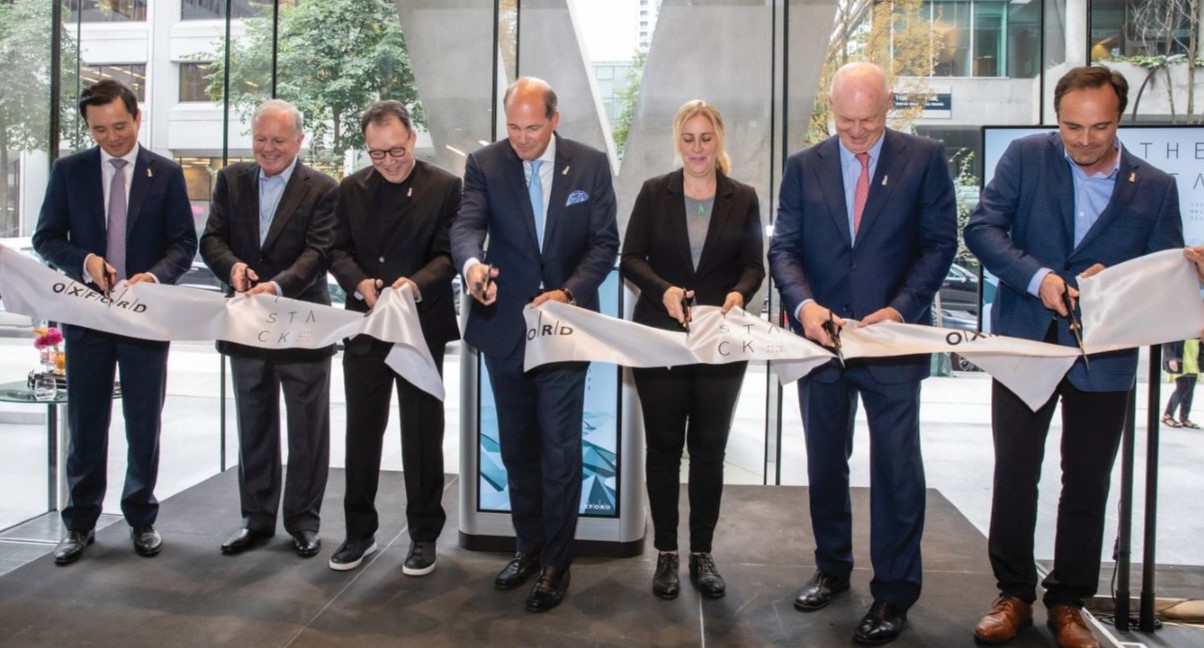
North America’s first zero-carbon commercial tower, The Stack, opened in September 2023 at 1133 Melville St. in downtown Vancouver, British Columbia. Co-owned by Oxford Properties and CPP Investments, The Stack is 37 stories tall, totaling 550,000 square feet of prime real estate. James K.M. Cheng Architects designed the unique, twisting stacked box aesthetic. The building was awarded the Canada Green Building Council’s Zero Carbon Building – Design Standard certification and is pursuing LEED v4 Core and Shell Platinum.
“The Stack is leading the real estate industry to new levels of sustainability,” says Andrew O’Neil, vice president of development for Oxford Properties.
Employee Haven
Employee experience and wellness were other priorities in The Stackʼs design, with architectural elements such as operable windows for natural ventilation, several outdoor terraces, and a landscaped pocket park that features a public art installation by Canadian contemporary artist Lawrence Paul Yuxweluptun. To foster active transportation and promote wellness, The Stack features a 5,000-square-foot fitness center, 250 bike parking stalls, and health-club quality end-of-trip facilities for those who want to bike, jog, or walk to work.
Tackling Decarbonization
Innovative features minimize carbon emissions and energy intensity, including low-carbon building systems, high-performance, triple-pane glazing, and solar panels. The Stack also deploys smart technology to provide insights on energy management, optimize building performance, and enable preventative maintenance.
“We can use the insights and learnings from this project across our portfolio and share best practices with the wider industry as we collectively tackle decarbonization as one of the most pressing issues of our times,” says Andrew O’Neil, vice president of development for Oxford Properties.
Taking Things Up a Notch
At 530 feet high, a 6,000-square-foot rooftop terrace offers unobstructed panoramic views of English Bay, Stanley Park, Burrard Inlet, and the North Shore Mountains with regular access as well as corporate events.
“We’re seeing in cities across the globe that providing employees with a high-quality workplace experience has been an integral part in successful return-to-office programs for firms looking to unlock the benefits of in-person collaboration,” says Ted Mildon, vice president of office leasing and operations at Oxford Properties.