The Power of The Founder’s Mentality

Matthew McCarthy, North American Vice President of Unilever, takes us back to his college days working for his father’s small print business, to fill us in on the importance of the founder’s mentality.

Now with Unilever, he sees the founder’s mentality come through in the form of passion from his business partners. Get the scoop on the importance of believing in your product.

https://wisdomcapture.wistia.com/medias/e54oegsuf4?embedType=async&videoFoam=true&videoWidth=640


Watch more Wisdom Capture videos here


Kate Hudson’s Fabletics Empowers Women to Lead

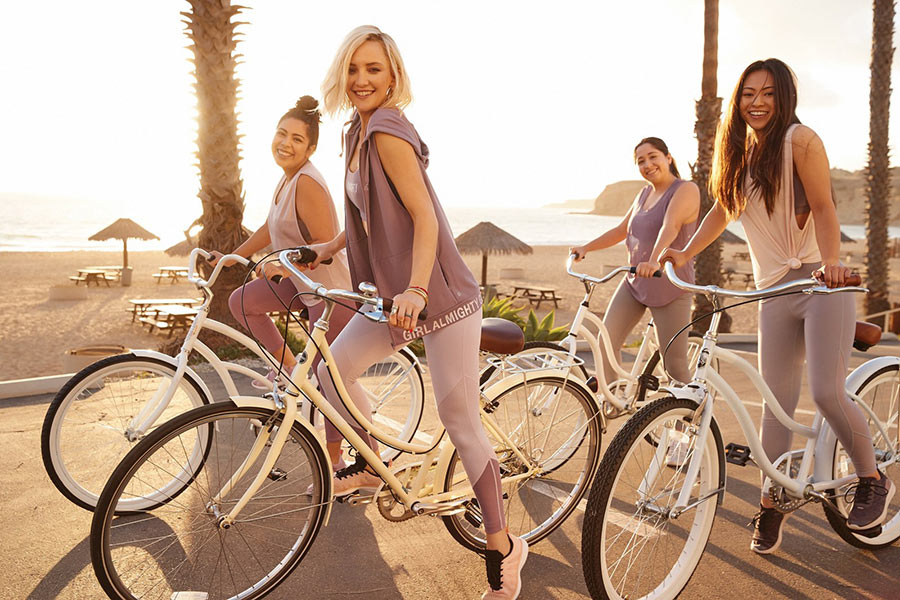
Fabletics, an active-lifestyle brand co-founded by Kate Hudson in 2013, has launched a global capsule collection to benefit the United Nations Foundation’s Girl Up initiative.

For over a year and a half, Fabletics and Girl Up have joined forces to support a common mission – to make girls leaders of tomorrow through the empowerment of girls worldwide. Since the launch of Girl Up in 2010, the organization has funded United Nations programs that promote the health, safety, education, and leadership of girls globally and has built a community of over half a million passionate advocates.

If you like this, subscribe here for more stories that Inspire The Future.

Inspired by Kate Hudson’s vision for Fabletics to be a fashion-focused activewear brand with the mission to empower women by making a healthy, active lifestyle accessible to everyone – the capsule collection embodies this message through branding select styles with “Girl Almighty” to inspire girls and women to stand up and celebrate each other regardless of size, shape, age or ability.

“It has been a truly rewarding experience to work closely with the organization and the girls to create a collection that spreads the message that girls and women are the fearless leaders of tomorrow,” says Hudson.

The Girl Almighty collection will support Girl Up’s SchoolCycle initiative, donating 20% of net proceeds to reach Fabletics’ goal of $50,000. Girl Up’s SchoolCycle initiative works with UNFPA to give girls bikes in developing countries – along with spare parts and maintenance training – so they can continue their education and travel quickly and safely to and from school, as well as give them independence and mobility to create a better future for themselves, their families and communities.

Girl Up is “by girls, for girls” – girl-led and girl-driven – and engages girls to take action to achieve global gender equality and change our world. It’s a shining example of the positive action that takes place when organizations, celebrities and business join forces for good.

If you like this, subscribe here for more stories that Inspire The Future.

Men Spend More on ‘Green’ Fashion Than Women

In a world motivated by social cred and “likes,” it comes as no surprise that U.S. consumers on average spend roughly $250 a month on clothes, shoes and accessories. But what you might not expect is that men outspend women when it comes to their closet.

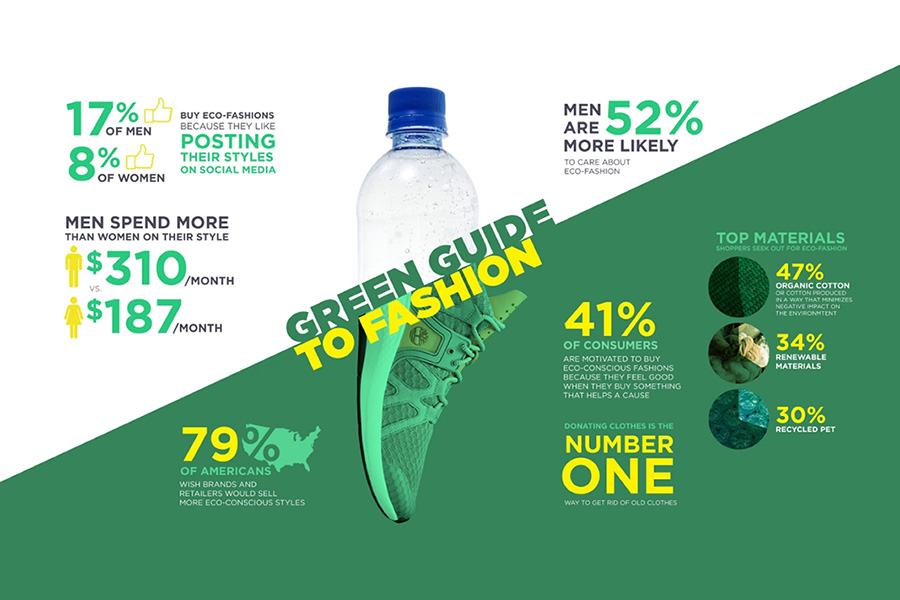
Men spend an average of $310.50 per month on their wardrobe, compared to $187.20 for women and they are also 52% more likely than women to say they care a lot about eco-conscious fashion. Just in time for Earth Day, outdoor lifestyle brand Timberland shines a spotlight on what consumers value most when it comes to “going green” with their wardrobe.

If you like this, subscribe here for more stories that Inspire The Future.
 

Timberland surveyed 1,000 men and women in the U.S. to understand the importance of the environmental impact of their style choices. The motivations behind men’s and women’s behaviors varied, but overall two-out-of-three (67%) consumers report they care at least a little about eco-conscious fashion, with more than half (55%) of consumers saying at least some of their current wardrobe is eco-conscious. 

A few highlights from the 2018 Timberland Wardrobe Values Survey include:

  • A more responsible #OOTD: Two-in-five (41%) consumers say they are motivated to buy eco-conscious fashions because they feel good when they buy something that helps a cause, with another top motivator being knowing the product minimizes its negative impact on the environment (36%).
  • Green humblebrag: For men, the motivation to buy eco-conscious fashions seems to be less altruistic and more self-interested. Roughly 30% buy eco-conscious clothes because they want other people to know they care about the environment (28% vs. 17% of women). In addition, for 17% of men, wearing eco-conscious fashions brings social cred, as they say they are motivated to buy eco-fashions because they like posting their styles on social media (vs. 8% for women).
  • What’s in your wardrobe?: Despite the differences in their wardrobes, men and women tend to agree on the top materials they seek out when shopping for eco-fashion: organic cotton or cotton produced in a way that minimizes impact on the environment (47%); renewable materials (e.g., bamboo, hemp, wood pulp) (34%) and recycled PET (e.g., plastic bottles) (30%).
  • Giving new life to old clothing: Donating clothes to charity is the No. 1 way to get rid of clothes, according to 70% of consumers, with 36% giving clothes away to friends or family and 28% choosing to recycle them. But women have the edge on men when it comes to disposing of clothes in an environmentally-responsible way, and are 14 percent more likely than men to donate old clothes (74% vs. 65%), whereas men are 82 percent more likely than women to throw their old clothes away (31% vs. 17%).
  • Seeing green: Consumers say the top factor preventing them from buying eco-conscious fashions is that they seem more expensive than other products (38%), with not knowing “where to find them” close behind, at 33%. But the interest is clear: nearly four-in-five (79%) consumers wish brands and retailers would offer more eco-conscious styles.
If you like this, subscribe here for more stories that Inspire The Future.
 

Soup, Beer & Soap From Food Waste? Dutch Shoppers Say Yes

“We sold about 700 items in one week. It’s double what we sell for organic products”

First it was a supermarket aisle free of plastics, now the Netherlands has notched up another novel solution in its fight against waste and pollution – products made with food that otherwise would be chucked in the bin.

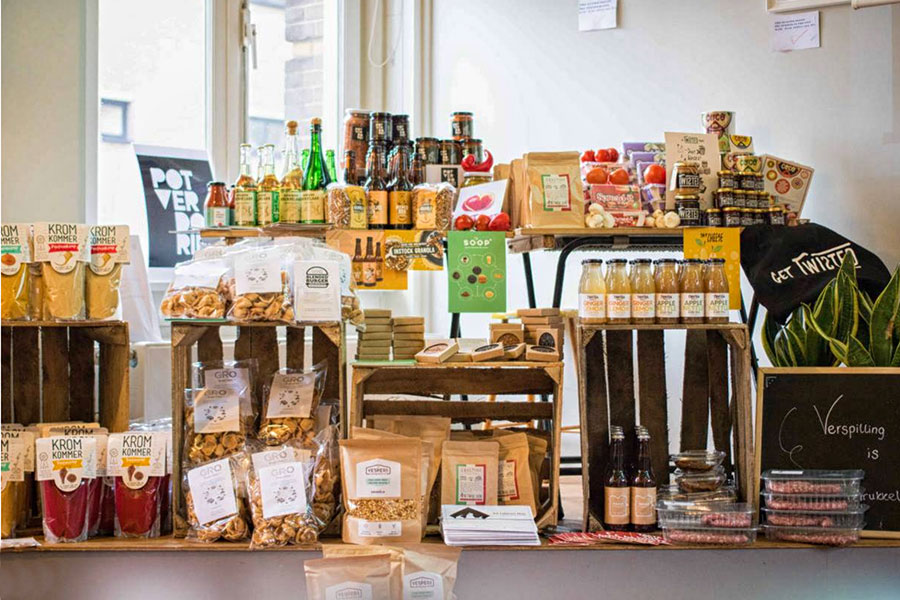
Soups and chutneys made from wonky vegetables, beer from stale bread, cider from blemished apples and soaps from discarded orange peels are selling fast in the Wageningen branch of Jumbo, one of the biggest Dutch supermarket chains.

If you like this, subscribe here for more stories that Inspire The Future.

First-week sales have surpassed expectations, said George Verberne, an entrepreneur who runs the branch, about 90 km (56 miles) north of the capital, Amsterdam.

“We sold about 700 items in one week. It’s double what we sell for organic products,” he told the Thomson Reuters Foundation in a phone interview.

“I’m proud and very happy we’re the first to do it.”

Verberne and 18 Dutch companies launched the Verspilling is Verrukkelijk or “Waste is Delicious” initiative last week, supported by a local university as part of a new national programme, United Against Food Waste.

The government is aiming to halve the amount of food thrown away by its 17 million people to become the first country in Europe to meet this global development goal by 2030.

Globally, one third of all food produced, worth nearly $1 trillion, is thrown away every year, according to the United Nations Food and Agriculture Organization (FAO).

Critics say this is not only unethical in a world where hunger levels are rising but also environmentally destructive.

The Dutch organic chain Ekoplaza set up in February what it said was the world’s first plastics-free supermarket aisle, which has led to calls for others to follow suit.

TOO BIG, TOO CROOKED

The idea of selling food whose appearance does not meet supermarket standards was born when Verberne saw a presentation on food waste by Toine Timmermans of Wageningen University & Research, and offered to help.

Timmermans, who has worked on sustainable food issues for 15 years, asked for shelf space to showcase products made from waste and see how consumers responded.

At least 200 entrepreneurs across Europe offer products using surplus food, but they tend to be small and have limited impact, he said in a phone interview.

“If you want to solve food waste and achieve sustainable food systems, you need to work with people who have access to the market, like retail stores,” he said.

Researchers from the university will monitor sales over the next six months to learn how best to expand the products.

Chantal Engelen, co-founder of soup-making Kromkommer, one of 18 companies participating in “Waste is Delicious”, said about 30 percent of carrots get rejected because they have two legs, are too big or too crooked.

“We buy them straight from the grower for a fair price and turn them into healthy food,” she said, adding that their ultimate aim is to change consumer behaviour so that the reject carrots are sold in shops and Kromkommer’s work become obsolete.

The Netherlands is a small nation but it is one of the world’s largest agricultural exporters.

“Waste is Delicious” said it plans to expand to three more supermarkets in the next few months.

Timmermans is glad to see that higher pricing than established brands has not deterred customers.

“We cannot sell for less, because for the social innovators, this is their source of income,” he said.

“So working together and the message, ‘by buying this, you’re contributing to a better world’ is a very important one.”

Verberne believes wonky vegetables have a bright future.

“A lot of colleagues called me and sent me emails asking, “how does it work? Can I also do something like this?’,” he said. “I think we have to do this. This planet deserves it.”

By Thin Lei Win @thinink, Editing by Katy Migiro.

If you like this, subscribe here for more stories that Inspire The Future.

Doing Something “Like a Girl” Should Mean “Amazing”

You run like a girl” or “you throw like a girl” are common insults we’ve all heard or said at one point. The #LikeAGirl campaign aims to change the negative perception of the phrase and make “like a girl” a declaration that means downright amazing. 

Feminine care company, Always, launched the global campaign to help girls as they enter a formative and sensitive time of their lives – puberty. A survey by Research Now found the start of puberty and their first period mark the lowest moments in confidence for girls. Harmful words can add to that drop in confidence. 

If you like this, subscribe here for more stories that Inspire The Future.

Always has been empowering girls through puberty education for over 30 years and reach between 17 and 20 million girls globally every year. With this campaign, they wanted to champion girls’ confidence by taking a stand and turn “Like a Girl” into a phrase that represents the strength, talent, character and downright amazingness of every girl. They also want to encourage conversation to help rethink and redefine the common words and phrases used in society that imply girls are weak or inferior. Many use these phrases unthinkingly and don’t realize the impact these words can have on a girls confidence, particularly at one of her most impressionable times of her life.

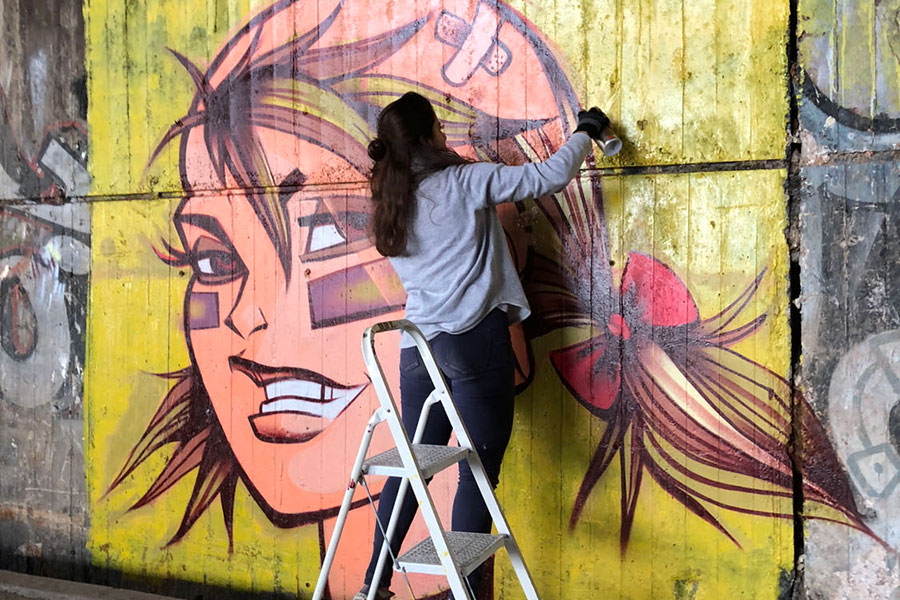
To further help shed light on the issue, and to inspire girls to keep doing things #LikeAGirl, Always partnered with three women in male-dominated fields in Lebanon in November 2017: graffiti artist Lynn Acra, calisthenics gymnast Eva-Maria Mahfouz and programmer Rayan Al Zahab, to encourage Lebanese girls to follow their dreams. The new #LikeAGirl video brings a fresh approach to the campaign, following the three girls through a day in their lives.

From sketching and prepping for a graffiti project, to daily strength trainings, coding and more, the girls are seen in real-life situations that capture how intense but rewarding their chosen professions and hobbies are.

“Some guys just looked at me and laughed. They said: You’re a girl, you can’t do it. But now I just feel like I’m laughing at them because I can do it,” said Acra.

“I’m touched by our #LikeAGirl campaign, because every girl is capable of greatness and we must continue to empower them to grow into strong, amazing women tomorrow,” says Edgar Sandoval, Vice President of Global Feminine Care at Procter & Gamble – who is a father of three young girls himself.

Some Key Findings of the “Always Puberty & Confidence Study”: 

CONFIDENCE

  • More than half of girls (about 1 out of 2 or 56%) claimed to experience a drop in confidence at puberty.
  • Lowest confidence moments for girls were when puberty started and when they got their first period; a close second were starting middle and junior high school.
  • Hispanic females cited the largest drop in confidence at puberty (60%), while fewer African American girls (50%) claimed to have a drop in confidence than Hispanic or Caucasian girls.
  • Girls who saw a drop in confidence during puberty are more likely to claim they started puberty either before or after their friends.
  • The advice most females would give to their younger selves is “you’re not alone” and “you’re not as awkward as you feel.”

LIKE A GIRL

  • The majority (89%) of females aged 16-24 agree that words can be harmful, especially to girls.
  • Only 19% of girls have a positive association toward the phrase “like a girl.”
  • More than half (57%) of females think there should be a movement to change the negative perception of the phrase “like a girl.”

The study was conducted using the Research Now Panel that surveyed 1,300 American Females aged 16 to 24 years old. There was a nationally representative sample group of 1,000 females as well as an additional boost of 150 African American and 150 Hispanic American females. 

If you like this, subscribe here for more stories that Inspire The Future.

Every Investment Has Impact. What’s Yours?

For Liesel Pritzker Simmons, there’s no shortcut to raising the bar on impact investment performance. 

As Principal of Blue Haven Initiative, a family office she co-founded in 2012 with her husband Ian Simmons, this millennial is showing how investors of all ages can maximize the positive social and environmental impact of their investments while generating financial returns.

But it isn’t easy.

If you like this, subscribe here for more stories that Inspire The Future.

Whether it is analyzing a portfolio company prospectus or visiting entrepreneurs in sub-Saharan Africa, Pritzker Simmons applies a rigorous portfolio-management lens to every investment—whether for-profit or philanthropic capital—with the goal of aligning financial performance and public benefit. There’s no magic bullet or “Top 10” list for impact investing, says Pritzker Simmons. “It’s a highly personal endeavor, requiring people to think deeply about how portfolios should reflect their values and concerns.”   

As one of the first family offices created with impact investing as its mission and focus, Pritzker Simmons and the Blue Haven team are careful to ensure that philanthropic efforts and investment efforts are coordinated and complementary.  And they are playing the long game. Whether investing in a social enterprise, supporting research and education, or regularly reviewing its public equity portfolio, Pritzker Simmons, her husband and their advisors believe the future of investing will be reshaped by more informed investors.

We recently caught up with Pritzker Simmons. An excerpt of our interview follows:

Amy Bennett: Liesel, thanks again for your time. Let’s jump right in. How do you define impact investing? 

At Blue Haven Initiative, we start from the premise that every investment has an impact—good, bad, social, environmental and financial. From there, we do extensive research and seek to maximize the positive social and environmental impact of our investments while earning a market return. As a result, impact investing requires us to ask a lot more questions and do more rigorous due diligence in assessing the long-term risks and returns of our investments.

We’re a family office and we take this approach because we’re long-term investors. If we don’t consider environmental and social risk and returns, we’re not only putting our financial investments at greater risk, we’re not being good stewards of wealth for future generations. We don’t want to make a mess our kids will eventually have to clean up.

How does your philanthropic giving fit into your impact investment strategy?   

Blue Haven takes a Total Portfolio Management approach to impact investing. That means looking across asset classes and capital types. Our philanthropic capital is an important resource that we use as effectively as possible. We look for opportunities that markets really cannot address—civic engagement in voting, disaster relief, research and education—things that traditional investing typically doesn’t value as much as we think it should.  We prioritize our philanthropic spending for those kinds of opportunities. 

Philanthropy is one tool in the tool belt for impact and we use it for grants as well as concessionary investments where the impact equates to a non-risk-adjusted return. And it is part of a holistic process. We want to make sure that our investment portfolio is not working against our philanthropic goals. There is absolutely no point in funding climate change initiatives with your philanthropic dollars if you’re not trying to reduce your carbon footprint in your investment portfolio.  It doesn’t make any sense. 

We hear a lot about how donor advised funds are growing in popularity and democratizing philanthropy. And we know each other because you use ImpactAssets’ offering, the Giving Fund. How has it played a role in your impact investing?

The Giving Fund is the vehicle through which we do our philanthropic grant making and our concessionary investing. We want to spend time finding great organizations and companies to support without devoting a lot of time on the complexities of philanthropic administration. There’s really a great range of tools that impact investors use these days—from debt to equity, recoverable grants, C4 strategies—and ImpactAssets knows how to help us implement them.

In addition, the organization plays an important role in the impact investing ecosystem. Clients of ImpactAssets are among the most active impact investors in the world.  It’s an innovative and risk-taking community and you can see that in the number of deals that are done and the kinds of funds that are on the platform. It’s inspiring to be a part of it. 

Can you tell us about one of your favorite impact investments that you made through the Giving Fund? 

One example is our support of PRIME Coalition, an intermediary that facilitates very early-stage investments into game-changing climate-change companies. They find companies, vet them, and structure early-stage investments into them.  We’ve supported PRIME through an operating grant as well as providing funding that PRIME used to place equity into another venture. And we’ve also supported them by directly investing convertible debt into RedWave, a company that is developing technology to convert waste heat into renewable electricity. 

Millennials are enthusiastic but often inexperienced when it comes to impact investing. What’s the most important lesson you have learned as a pioneering impact investor that you can pass along to your fellow millennials?

I’ve learned that you can’t expect that impact investing is going to be faster, easier or cheaper than traditional investing.  It’s more complicated, idiosyncratic and rigorous. And that’s okay. If it were easy, everybody would have already done it.  You have to put time and energy and effort into impact investing, but it’s where the most exciting conversations are happening. And I think millennials know that.    

It’s also important for millennial investors to just get started with something and learn as they go. Don’t try to find perfection in one single investment or in one single fund. Don’t try to look for a website that rates every company perfectly and makes impact investing just a click away. Start small, piggyback off of investors that you think are smart, and learn that way. 

If you could deliver one message to investors of any age, what would that message be?

I would appeal to investors to take more responsibility for the total impact of their investments. If an investment has a negative impact socially or environmentally, somebody is going to have to clean up that mess. If not you today, then your grandchildren tomorrow. 

Get into the mindset of long-termism because a thoughtful and rigorous consideration of the environmental and social impact of your investments in the long run is just more informed investing. 

And if you believe that a better understanding of risk is smart in the long term, then you’re more than halfway to being an impact investor.

If you like this, subscribe here for more stories that Inspire The Future.

A Tribute to Will Marre: “Your Mission is My Mission”

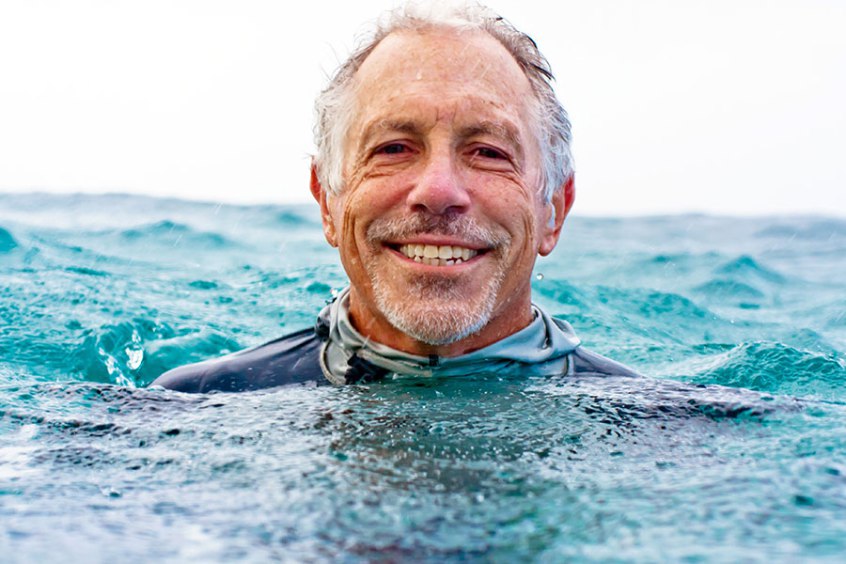
We received the news at Real Leaders this week that one of our longstanding contributors, Will Marre, had passed away. While saddened by the loss of such a dynamic leader, we have chosen rather to celebrate his life. 

Will passed away while engaged in one of the greatest passions of his life: surfing. Although absolutely robust in body, mind, and spirit, he suffered from a minor congenital heart defect to which he seemed to have finally succumbed. His passion and energy for unearthing the best human we could be was contagious, and is best understood by the fact that his family asked those attending his memorial service to wear bright, vibrant colors and comfortable shoes for a beach walk.

He was prolific in telling the world that “your mission is my mission” – spoken in many instances to the thousands of women he coached – in a strongly-held belief that we all have the power to shape our future for the better. “Women’s full contribution in leadership is a survive and thrive issue for the future of every human being,” he once said.

His Institute for Leadership Synergy aimed to train one million women in the next five years to become effective leaders. He believed in the synergy between the results-focused strengths of hard power and collaborative strengths of soft power – a trend that is proving successful at empowering teams in organizations around the world.

Will left enough thought-provoking leadership insight to last many lifetimes. Perhaps the legacy he leaves for those who admired and followed him should be one of social inheritance: “His mission is now our mission.”

Here we reflect on some of Will’s best wisdom from the past years:

How to Inspire Yourself When You’re the Victim of Bias

Psychologists have determined that our confidence grows when we believe that making our best efforts will result in achieving our goals. When the link between our effort and our results is broken we begin to lose our confidence and our motivation to keep trying.  Demotivation grows exponentially when we see other people achieving their goals without making the same efforts that we are.  It feels unfair… because it is.

Why is Donald Trump So Popular?

The world is a very confusing and scary place right now. The forces of violence and our economic well-being seem out of control. So when someone shows up brimming with insane levels of confidence (strength), and who promises to defend you against your greatest fears (empathy-warmth) they will get your attention.

Why Everything Bad Will Change for the Better

It is now very clear that the children of boomers will not pay their dues. That’s because they don’t want to join the club their parents have built. They have seen what mindless obedience to the “man” buys. It is not the life they admire or value. The accumulation of evermore stuff does not create happiness, satisfaction or even enjoyment.  They have discovered that travel can be more enriching when you sleep in a spare bedroom of an AirBnB than a five-star hotel. They were suckered into massive student loans for inadequate educations. They have little loyalty to employers who have no loyalty to employees.

The One Simple Thing You Can Do to Love Your Work

Let me encourage you. Don’t settle for a job. Don’t degrade your life for a career. What you do matters. You are designed perfectly to succeed at your true calling. And please believe me, with all the research I’ve conducted and all the coaching that I’ve done I can assure you what I am saying is not goofy, pie-in-the-sky.  Many, many, many people have it all and so can you.

How Men and Women Can Co-Create Unexpected Value

The deeper problem is that simply telling men they should  value women as leaders only adds energy to the stereotype that women need ‘special’ help because they are the weaker sex.  This kind of thinking is not confined to the ‘Mad Men’ era.
It’s the unspoken bias that stubbornly persists.

Two Million in Jail in the US. If You Were in Charge, What Would You Do?

Psychologists have learned that the biggest influence on our behavior is the personal story of our identity. If your identity was that you were destined for a meaningless grinding life or worse, jail, who do you think you might become? I have spent deep time with fellow human beings whose hope was stolen from them before they could even talk. I get exasperated when some self-righteous idiot politician points to a few who have somehow escaped an awful personal history to become a remarkable self-sufficient human being.

Your Moment of Truth – Why Do You Run?

I have found every success story has a moment of truth where you either go all in or shrink. There are small and mighty forces that are focused on positively changing the way we all think about the purpose of work, our economy, business and society.  The opposing force of the powerful status quo is well financed and very noisy. They are both powerful and stupid. They justify what is unjustifiable. Yes, we can defeat them.

David Yurman Joins Executive Producing Team For ‘Gender In Hollywood’

A new film will examine Hollywood’s gender bias through personal stories, leading research, and celebrity accounts. David Yurman is joining executive producer and Academy Award- winning actor and advocate Geena Davis in the upcoming feature-length documentary ‘Gender In Hollywood’ (working title).

The film examines Hollywood’s gender bias through first-hand accounts from some of Hollywood’s leading industry professionals both in front of and behind the camera, shining a spotlight on the broader effects of bias on consumers of entertainment around the globe.

If you like this, subscribe here for more stories that Inspire The Future.

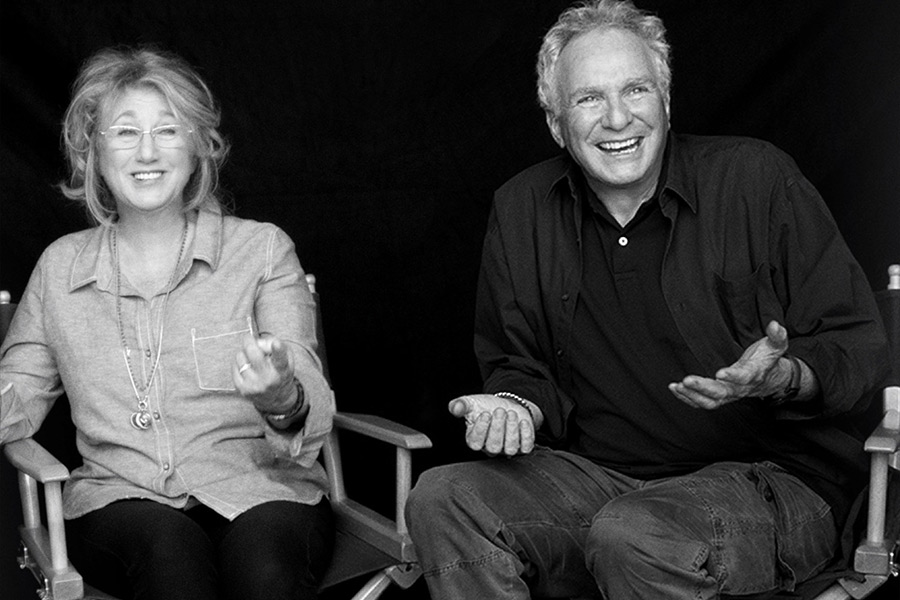
“David Yurman (pictured with his wife Sybil, above) is committed to helping raise awareness about the need for gender parity, and is honored to be a part of the documentary, which is a powerful platform to spread this message,” said David Yurman. “It is a natural fit.”

The David Yurman brand has long been a proponent of female empowerment. 75 percent of the David Yurman executive committee are women, and the company is almost 70 percent female.

“We are a company of women, led by women and co-founded by a woman,” said Sybil Yurman, co-founder David Yurman. “Since 1980 we have strived to elevate and celebrate women throughout all levels of the company.”

Through the candid testimony of high-profile actors, directors and studio executives, the film connects the dots between the disparity onscreen and the lack of opportunity women face behind the scenes, telling the story of systemic discrimination throughout Hollywood’s history. Interviewees include Geena Davis, Shonda Rhimes, Jessica ChastainZoe SaldanaJudd ApatowYara ShahidiPaul FeigChloe Grace MoretzGillian AndersonJackie CruzSharon StoneAlan Alda, and Lena Dunham.

Cutting-edge data from The Geena Davis Institute on Gender in Media is used to support the narrative of the film. The institute is the only research-based organization working behind the scenes in the media and entertainment industry to influence the need to dramatically improve gender balance, reduce stereotyping and create diverse female characters in entertainment targeting children.

“Unconscious gender bias directly correlates to the way women are represented on screen,” said Geena Davis. “When we look at how this documentary will add to the discussion about gender inequality, we hope one of the key takeaways is that a solution is only possible if both women and men in this industry work together to create change.”

Ku-Ling Yurman, independent filmmaker and daughter-in-law of David and Sybil, will act as an executive producer on the film. An alum of the American Film Institute, Ku-Ling has taken on many roles in the television/film industry.

“I first experienced institutionalized inequality when I was in film school, and quickly realized it spans all industries,” said Ku-Ling Yurman. “Our objective with this documentary is to bring about actual change. We have a collective responsibility to take ownership of this issue and activate a higher standard for gender equality.”

The film is directed by Tom Donahue (Casting By, Thank You for Your Service) and produced by CreativeChaos vmg and New Plot Films in association with the Geena Davis Institute on Gender in Media and Artemis Rising Foundation. Filming began in 2016.

In addition to Geena Davis and Ku-Ling YurmanRegina K. ScullyMadeline Di NonnoSteve EdwardsPatty Casby, and Jennie Peters are executive producers on the film. Ilan Arboleda and Kerianne Flynn are set to produce.

“Since we started the film a year and a half ago, we have conducted more than 100 interviews with some of the leading voices on the issue both inside and outside of Hollywood. Their candid testimony has not only detailed the systemic roadblocks that women face as storytellers and artists in Hollywood, but also has illuminated possible pathways toward lasting parity, “said director Tom Donahue.

If you like this, subscribe here for more stories that Inspire The Future.

Costa Rican Pineapple Buyers Can Now Guarantee They’re Deforestation-Free

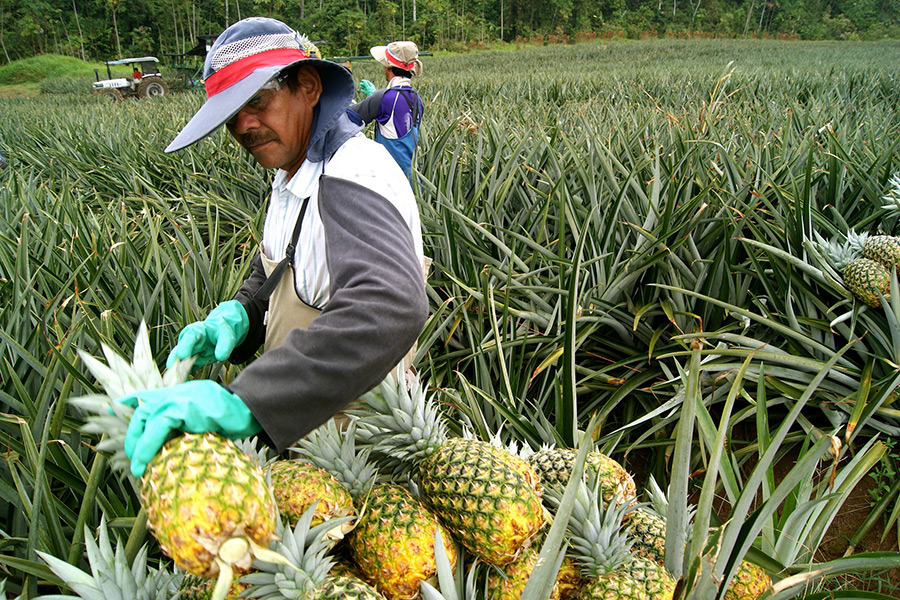
As consumers become increasingly concerned about the environmental impact of agro-commodity production, with the click of a button, companies buying pineapples from Costa Rica – one of the world’s largest producers of the fruit – can now see if their suppliers are engaged in deforestation or not, with help from the United Nations’ Green Commodities Programme.

The Land Use Change Monitoring System within Production Landscapes (MOCUPP), developed with support from the United Nations Development Programme’s (UNDP) Green Commodities Programme, is the world’s first to overlay satellite images with land registry records on an annual basis for an entire national territory. Now, every year, the system will produce images showing forest loss and gain from pineapple production in Costa Rica, with more agro-commodities soon to be added to the system.

If you like this, subscribe here for more stories that Inspire The Future.

This new tool is free for commodity buyers to use. Buyers can easily check if their producers are engaged in illegal deforestation, or if they are increasing deforestation cover. The system allows buyers to check this using their own internal records. This avoids any risk related to commercial confidentiality agreements, as there is no need to provide geo-positioning data to any government entity.

Pineapple farmers producing for export who are doing the right thing also stand to benefit. The new tool allows them to show that their farms are deforestation-free, enabling them to benefit from incentive schemes such as the Payment of Ecosystem Services by the National Forestry Financing Fund.

Costa Rica is one of the world’s biggest pineapple-producing countries. MOCUPP is part of a wider national effort to tackle serious social and environmental concerns in this critical sector, worth US$800 million to the national economy.

Already, MOCUPP has developed imagery showing the rapid spread of pineapple cultivation in Costa Rica between 2000 and 2015. It reveals that over the past 15 years, the country has lost more than 5,000 hectares of forest cover, the size of over 3,000 football pitches, due to the expansion of pineapple farming.

The system is also currently developing baselines and annual monitoring for other agro-commodities, including pasture and palm oil plantations. The aim is that by 2020, all of Costa Rica’s major commodity exports will be monitored on an annual basis for deforestation activity. An annual set of images generated by MOCUPP will be published through the National Territorial Information System web tool, accessible by the public. Meanwhile, property records where forest loss or gain has occurred will be made available to authorities and private sector buyers.

The Ministry of Environment, the National Registry, the National Geographical Institute and the Center of High Technology of Costa Rica, with support from the UNDP Green Commodities Programme, UNDP REDD and the Global Environment Facility developed the system.

It has generated keen interest from the governments of ParaguayMadagascarMorocco and Côte d’Ivoire, who are also facing the challenge of reducing deforestation from valuable commodity supply chains. The UNDP Green Commodities Programme is now working with these countries to replicate this system.

If you like this, subscribe here for more stories that Inspire The Future.

World’s Most Sustainable Home Will be Around in 200 Years

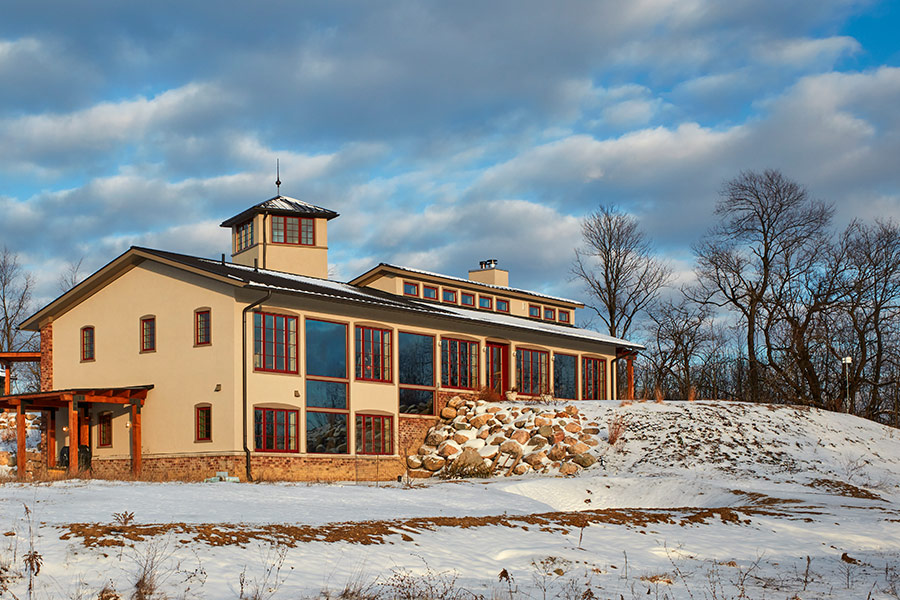
Tom and Marti Burbeck – in search of truly sustainable living – brought together an architect, builder, green building project consultant and multiple building science engineers to design and build their new home, Burh Becc at Beacon Springs.

They have succeeded in creating a home that will still be standing 200 years from now and will still be regenerative to the surrounding ecosystem. In late 2017, their home at Beacon Springs Farm, Michigan, became the second house in the world to achieve a Living Certified ruling via the Living Building Challenge™ certification by the International Living Future Institute. The Burbeck’s hope their truly restorative farmhouse inspires others to reimagine common building techniques.

If you like this, subscribe here for more stories that Inspire The Future.

Tom Burbeck describes the Living Building Challenge (LBC) as a green building certification program that “establishes the highest possible standards for residential building sustainability.” He and Marti learned about the LBC certification while seeking to design their farmhouse to have minimal environmental impact.

The 2,200 square foot (main floor living space) home borrows from the characteristics of 200-year-old Tuscan farmhouses, with a 2,400 square foot barn and workshop. The buildings sit at the center of 15 acres of depleted farm land. A 20-person design/build team, led by the Burbecks, spent five years executing the project.

Marti Burbeck said creating a sustainable living environment was just the next challenge on the list for her and her husband to tackle in life. “As we looked at the criteria for LBC certification we thought, why not go for it?” she said. “If our goals include helping to change peoples’ relationship with the environment and to change building philosophies, we should start with our own project, and then become advocates.” 

“Since the 1960s, the number of U.S. households has grown from 53 million to about 126 million last year,” said Michael Klement, one of the members of the design team. “We have to rethink the relationship between humans, buildings and the environment. Our current model is too destructive. We’re depleting our resources and creating an unacceptable amount of economic disparity. The Living Building Challenge forced us to recalibrate how we design a home and build like nature intended. This is our ‘moon shot’ in the building industry,” Klement added.

“The LBC certification comprises seven performance categories – site, water, energy, health, materials, equity and beauty,” explained Eric Doyle, the senior project manager of Catalyst Partners. “These are subdivided into a total of 20 imperatives, each of which focuses on a specific sphere of influence, such as urban agriculture, net positive water, net positive energy and responsible industry.” For example, to receive full “Living” certification a building cannot use any materials such as formaldehyde, halogenated flame-retardants, lead, mercury, phthalates or PVC/vinyl.

“The materials imperative was the most challenging project component I’ve come across in my 21 years in the green building industry,” said Bob Burnside, CEO of Fireside Home Construction. “Multi-component mechanical, electrical and appliance products were the toughest. 

Below are more examples of how the home earned the international credential.

Urban Agriculture

  • Uses permaculture farming methods to reverse the harsh impact commodity farming has had on land immediately surrounding the farmhouse. Permaculture uses an integrated system of design encompassing agriculture, horticulture and ecology.

  • Restores the oak-hickory savanna once common to the area.

  • Provides healthy food for the local community, especially for those with limited access to fresh produce.


Water Conservation

  • Achieves net-positive water through a rainwater and snow harvesting system, capturing runoff from the roofs to supply 7,500 gallons of in-ground cisterns, currently for non-potable water. A new well provides potable water to comply with Michigan building codes, with a future-ready potable rainwater filtration system.

  • Waste water is returned to the aquafer. Black water from low-flush toilets and the kitchen sink, and graywater drains to a traditional septic system and drain field. A future-ready greywater system for reclaiming water from baths, sinks and washing machines will enable drainage to a shallow leach field and rain gardens.


Net-Positive Energy

  • A passive solar house design, with a very tight thermal envelope and a tall cooling tower, minimizes house loads required for heating and cooling.

  • A 16.8-kilowatt photovoltaic system provides electricity to the house and the grid using 60 solar panels covering the south plane of the barn roof.

  • A closed-loop geothermal system provides radiant floor heating during winter, forced air heating during shoulder seasons and potable water pre-heating.

  • During the required 12-month LBC audit period, the house generated 20,270 kWh of electricity, and used 15,987 kWh, producing 26 percent more energy than it used. In total 4,283 kWh were pushed back to the electric utility grid, moving the home past net-zero into net-positive.


The Burbecks now plan to focus on hosting educational workshops and house tours with Architecture Resource, Fireside Home Construction, and Catalyst Partners to educate the community, building industry, government officials and NGOs about sustainable living and the Living Building Challenge. 

In 200 years, who knows what the landscape in this small Michigan community will look like, but the Burbecks do know one thing: this home will still stand as a beacon of sustainability for all interested in playing a part.

If you like this, subscribe here for more stories that Inspire The Future.