Leveraging Change for Good


When we hear the word “change,” it can evoke powerful feelings spanning from fear to excitement with the anticipation of the unknown. 

For some people, depending on their perspective and circumstances, change can be truly paralyzing, but for others, it can spur on creativity and engagement.

Wise leadership is essential during challenging times and requires the ability to know how to inspire others throughout a wide spectrum of circumstances, from lessening anxieties within an organization to channeling either negative or positive energy into a purpose-driven plan that creates exciting momentum. 

If you’re a far-sighted business leader who can see positive opportunities within change, you can set the tone by uniting people to share what they consider as their positive purpose to help achieve favorable results. If your leadership view is more immediate and fearful, your narrow focus tends to skip personal expression and solely chases short-term financial goals — which can slow down momentum because it lacks collective purpose and acceptance.  A key question during tumultuous times is, “How do we unite those with opposing viewpoints and strong opinions?”

This question can be especially relevant during times of political unrest, when many people are experiencing a lack of control over their changing circumstances. The answer is often found in leveraging any change that individuals value and which they can respond to with optimism. This requires some surveying, respectful team discussions, and perhaps a vision board to co-create a unity plan!

Outstanding examples of those leaders who knew how to leverage change for good within their organizations can be found in the winners list of the Top Impact Companies of 2025! We congratulate and appreciate every impact business who made the list. Support them in any way you can.

CEO Shelley Zalis, of The Female Quotient, is a great example of how to turn challenging topics into positive perspectives, which can change behavior. Read her inspiring cover story interview from the spring edition to find out the one goal you should achieve in your lifetime.

The common thread among many of these purpose-driven CEOs is leveraging their team’s input for positive change, creating mutually beneficial outcomes.

The process of change can be the same in “normal times” as well as in turbulent times. When a CEO is trying to shift thinking or adopt a new program, they can get their team to rally around a collective North Star vision if the players help co-create the vision that provides the change for good.

I’ve learned not to get discouraged by the people who resist change that I view as positive. Instead, I focus on supporting the 10% or 20% who are early adopters. They, in turn, bring the others around over time. 

As Charles Darwin once said, “It is not the strongest of the species that survives, nor the most intelligent, but the one most responsive to change.” Patience and persistent input, aligned with a spirit of uniting for the greater good, will keep the wheels of change in constant motion while keeping people connected. 
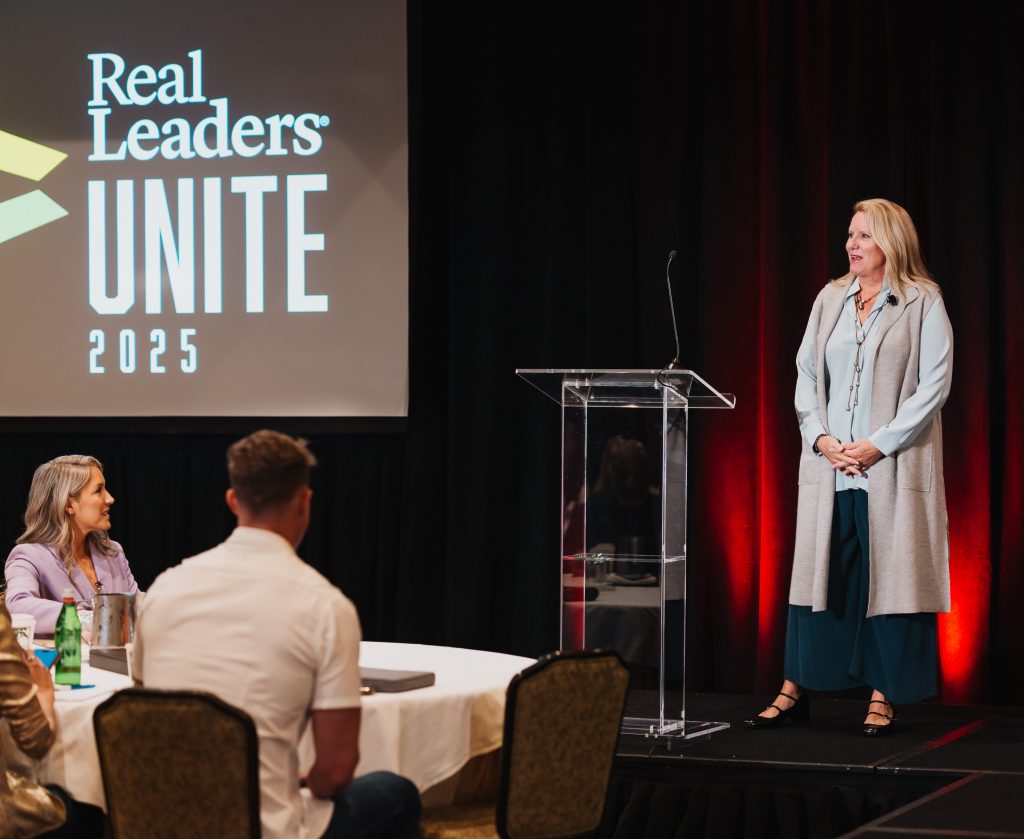
Leveraging Change for Good


When we hear the word “change,” it can evoke powerful feelings spanning from fear to excitement with the anticipation of the unknown. 

For some people, depending on their perspective and circumstances, change can be truly paralyzing, but for others, it can spur on creativity and engagement.

Wise leadership is essential during challenging times and requires the ability to know how to inspire others throughout a wide spectrum of circumstances, from lessening anxieties within an organization to channeling either negative or positive energy into a purpose-driven plan that creates exciting momentum. 

If you’re a far-sighted business leader who can see positive opportunities within change, you can set the tone by uniting people to share what they consider as their positive purpose to help achieve favorable results. If your leadership view is more immediate and fearful, your narrow focus tends to skip personal expression and solely chases short-term financial goals — which can slow down momentum because it lacks collective purpose and acceptance.  A key question during tumultuous times is, “How do we unite those with opposing viewpoints and strong opinions?”

This question can be especially relevant during times of political unrest, when many people are experiencing a lack of control over their changing circumstances. The answer is often found in leveraging any change that individuals value and which they can respond to with optimism. This requires some surveying, respectful team discussions, and perhaps a vision board to co-create a unity plan!

Outstanding examples of those leaders who knew how to leverage change for good within their organizations can be found in the winners list of the Top Impact Companies of 2025! We congratulate and appreciate every impact business who made the list. Support them in any way you can.

CEO Shelley Zalis, of The Female Quotient, is a great example of how to turn challenging topics into positive perspectives, which can change behavior. Read her inspiring cover story interview from the spring edition to find out the one goal you should achieve in your lifetime.

The common thread among many of these purpose-driven CEOs is leveraging their team’s input for positive change, creating mutually beneficial outcomes.

The process of change can be the same in “normal times” as well as in turbulent times. When a CEO is trying to shift thinking or adopt a new program, they can get their team to rally around a collective North Star vision if the players help co-create the vision that provides the change for good.

I’ve learned not to get discouraged by the people who resist change that I view as positive. Instead, I focus on supporting the 10% or 20% who are early adopters. They, in turn, bring the others around over time. 

As Charles Darwin once said, “It is not the strongest of the species that survives, nor the most intelligent, but the one most responsive to change.” Patience and persistent input, aligned with a spirit of uniting for the greater good, will keep the wheels of change in constant motion while keeping people connected. 
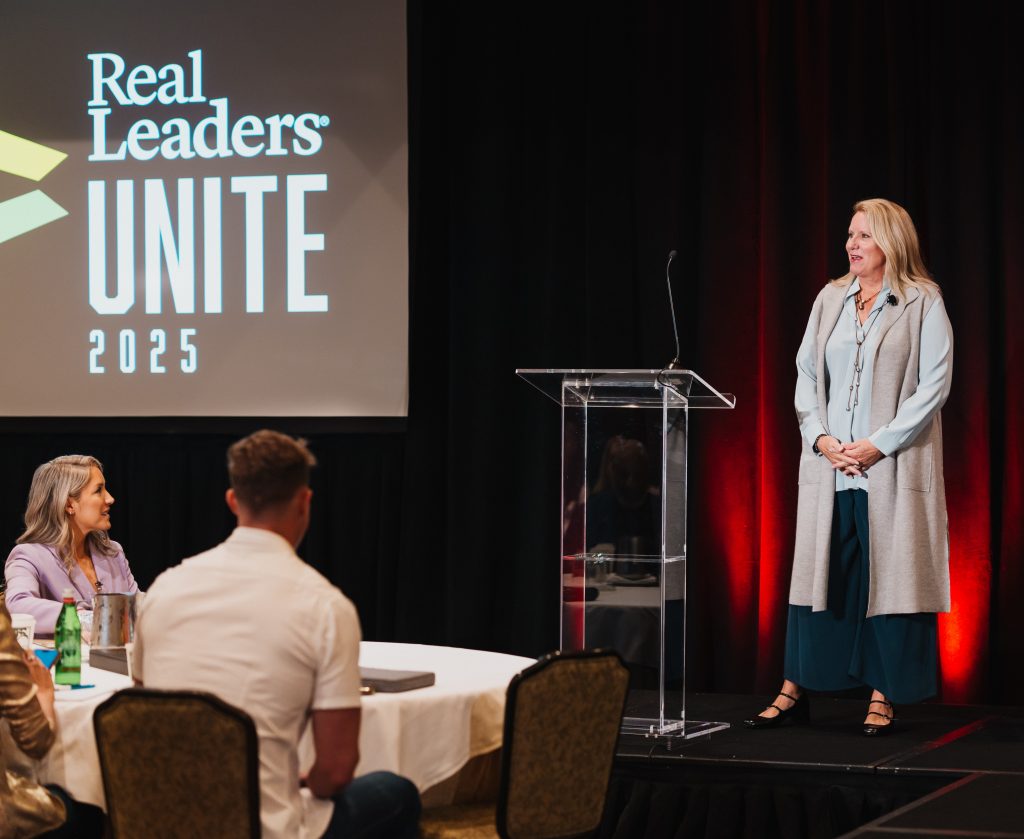
Stand Tall With Courage

Photo Credit: Stacy Keck


“Life shrinks or expands in proportion to one’s courage.” — Anaïs Nin


What do the words “stand tall” mean to you? There are so many complexities and interpretations around those words, and they can have significant impact.

In the addiction world it can mean not veering off your course for survival. In battle it can mean holding the line for mass protection. In business it can mean not compromising your principles and values and staying true to your mission. Regardless, those two fundamental words have monumental power because all their applications are grounded in courage. As a real leader who can alter the course of your company and its employees’ health and fiscal stability, standing tall means everything. 

So why do we let our courage slip? Is it based on our own fears or uncertainties? If we ask ourselves that question and answer truthfully, it can help us achieve courageous leadership and immense rewards. Why? Because fear of the unknown can shrink us, and the courage to stand tall can expand us.

I urge everyone, especially in today’s challenging world, to take a solid, values-based position on what you know is right and stand tall in it. Speak and live your truth with conviction and fortitude. The more courageous leaders who figure this out and act on it, the better business and society will be. Think about it: Will we ever be able to say we know what courageous leadership feels like unless we try it? To never try is cowardly, and who wants to stay anchored in fear? On the flip side, if we truly don’t know where or how to begin, that’s okay because there are endless opportunities to learn, connect, and grow your leadership with courage. 

In the fall 2025 edition of Real Leaders magazine, Mel Robbins shares how she turned her setbacks and fears into her greatest strength, which helped her build a highly successful business within the impact coaching community. Also in this edition, you can get inspired by real leaders Mike and Kass Lazerow — serial entrepreneurs, investors, and cofounders of Golf.com and Buddy Media; they tapped into the power of courage collaboratively by surrounding themselves with like-minded, purpose-driven people. 

This focus on courage is growing worldwide. Business as a force for good has gained tremendous momentum and financial success over the past decade through the courage of those who stand tall in their commitment to a better way. 

Let me know how you are standing tall. We love sharing your inspiring stories.

Julie Van Ness, CEO

Julie@old.real-leaders.com

Stand Tall With Courage

Photo Credit: Stacy Keck


“Life shrinks or expands in proportion to one’s courage.” — Anaïs Nin


What do the words “stand tall” mean to you? There are so many complexities and interpretations around those words, and they can have significant impact.

In the addiction world it can mean not veering off your course for survival. In battle it can mean holding the line for mass protection. In business it can mean not compromising your principles and values and staying true to your mission. Regardless, those two fundamental words have monumental power because all their applications are grounded in courage. As a real leader who can alter the course of your company and its employees’ health and fiscal stability, standing tall means everything. 

So why do we let our courage slip? Is it based on our own fears or uncertainties? If we ask ourselves that question and answer truthfully, it can help us achieve courageous leadership and immense rewards. Why? Because fear of the unknown can shrink us, and the courage to stand tall can expand us.

I urge everyone, especially in today’s challenging world, to take a solid, values-based position on what you know is right and stand tall in it. Speak and live your truth with conviction and fortitude. The more courageous leaders who figure this out and act on it, the better business and society will be. Think about it: Will we ever be able to say we know what courageous leadership feels like unless we try it? To never try is cowardly, and who wants to stay anchored in fear? On the flip side, if we truly don’t know where or how to begin, that’s okay because there are endless opportunities to learn, connect, and grow your leadership with courage. 

In the fall 2025 edition of Real Leaders magazine, Mel Robbins shares how she turned her setbacks and fears into her greatest strength, which helped her build a highly successful business within the impact coaching community. Also in this edition, you can get inspired by real leaders Mike and Kass Lazerow — serial entrepreneurs, investors, and cofounders of Golf.com and Buddy Media; they tapped into the power of courage collaboratively by surrounding themselves with like-minded, purpose-driven people. 

This focus on courage is growing worldwide. Business as a force for good has gained tremendous momentum and financial success over the past decade through the courage of those who stand tall in their commitment to a better way. 

Let me know how you are standing tall. We love sharing your inspiring stories.

Julie Van Ness, CEO

Julie@old.real-leaders.com

Character — It’s What Matters Most

“Character, in the long run, is the decisive factor in the life of an individual and of nations alike. ” —Theodore Roosevelt


By Julie Van Ness


What’s your definition of a real leader?

That’s the question that we have asked global business leaders on our Real Leaders Podcast and in our magazine for over a decade. The answers have been insightful, and most share this winning combination: (1) the importance of caring for something greater than themselves, (2) the willingness to do the work necessary to achieve a positive outcome for the greater good, and (3) doing it in a financially sustainable and scalable way. 

In our sixth annual Real Leaders of Impact Investing edition, you’ll discover some of the top impact investors in the world and how they choose who, what, and when they invest (p. 56).

You’ll also discover our exclusive interview with impact investing pioneer Jacqueline Novogratz, CEO of Acumen, who talks about the importance of cultivating moral imagination, avoiding the conformity trap, and practicing courage (p. 48): “The world continues in the short-term to reward the shiny, but in the long-term, it pays off on character.”

The key to being a successful impact investor is the ability to invest in a leader who is likely to perform long-term. This ability to qualify a leader is important to all of us as we choose whom we want to work for, hire, and represent us in organizations and government.

The most articulate salesperson may shine in short pitches but cannot withstand the scrutiny of closer due diligence.

We’re reminded of the old saying that if it sounds too good to be true, it probably is. Do I trust this person? What does their past tell me about them? What is their litigation or bankruptcy history? Have they been successful in something comparable before? How resilient are they? What is their reputation? Would I be happy working for them? These are the kinds of questions that help us to determine one’s character and values, and character is ultimately what matters the most. 

Investors often lose money when they become enamored with the product or service but overlook the questionable character and reputation of the leader. Many of us have made this mistake in personal or business relationships, but when the stakes are high, mistakes can be devastating. 

Today, I pose this question to you: What’s your definition of a real leader? Think carefully about your response, as your description can serve as a guiding light when selecting leaders for your own life and for our world.

You can access the latest Real Leaders Magazine on shelves or on Real Leaders Website July 1.

Character — It’s What Matters Most

“Character, in the long run, is the decisive factor in the life of an individual and of nations alike. ” —Theodore Roosevelt


By Julie Van Ness


What’s your definition of a real leader?

That’s the question that we have asked global business leaders on our Real Leaders Podcast and in our magazine for over a decade. The answers have been insightful, and most share this winning combination: (1) the importance of caring for something greater than themselves, (2) the willingness to do the work necessary to achieve a positive outcome for the greater good, and (3) doing it in a financially sustainable and scalable way. 

In our sixth annual Real Leaders of Impact Investing edition, you’ll discover some of the top impact investors in the world and how they choose who, what, and when they invest (p. 56).

You’ll also discover our exclusive interview with impact investing pioneer Jacqueline Novogratz, CEO of Acumen, who talks about the importance of cultivating moral imagination, avoiding the conformity trap, and practicing courage (p. 48): “The world continues in the short-term to reward the shiny, but in the long-term, it pays off on character.”

The key to being a successful impact investor is the ability to invest in a leader who is likely to perform long-term. This ability to qualify a leader is important to all of us as we choose whom we want to work for, hire, and represent us in organizations and government.

The most articulate salesperson may shine in short pitches but cannot withstand the scrutiny of closer due diligence.

We’re reminded of the old saying that if it sounds too good to be true, it probably is. Do I trust this person? What does their past tell me about them? What is their litigation or bankruptcy history? Have they been successful in something comparable before? How resilient are they? What is their reputation? Would I be happy working for them? These are the kinds of questions that help us to determine one’s character and values, and character is ultimately what matters the most. 

Investors often lose money when they become enamored with the product or service but overlook the questionable character and reputation of the leader. Many of us have made this mistake in personal or business relationships, but when the stakes are high, mistakes can be devastating. 

Today, I pose this question to you: What’s your definition of a real leader? Think carefully about your response, as your description can serve as a guiding light when selecting leaders for your own life and for our world.

You can access the latest Real Leaders Magazine on shelves or on Real Leaders Website July 1.

Uniting Mission-Aligned Leaders

By Julie Van Ness

Growing up, I used to hear the saying, “Choose your friends, choose your future,” and I often wonder what life would have been like if I had not followed that sage advice.

I firmly believe that in today’s world — even more than ever — the same mindset has tremendous value in the business world. Whom you align with — and whom you choose not to align with — are equally important decisions with game-changing outcomes that will create a ripple effect throughout your professional and personal life. The journey to find those who are mission-aligned with purpose-driven values, strong ethics, and character can be a daunting challenge.

But one thing is for certain: By uniting and acting together, we become an irresistible force for good.

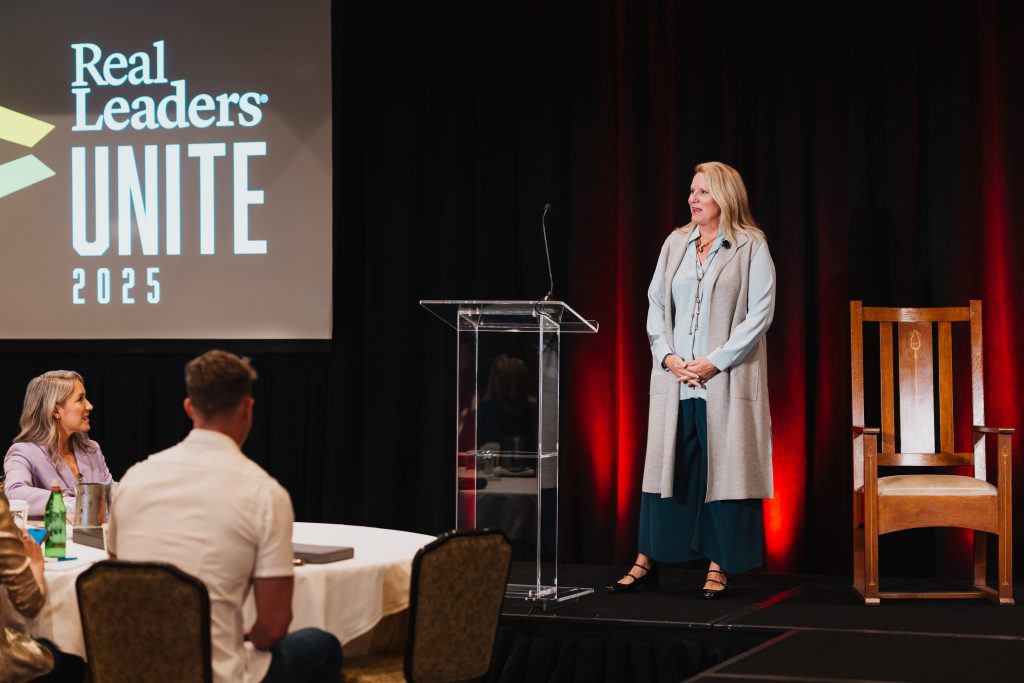
Through the Real Leaders community, many people have found multiple ways of connecting to elevate their purpose, surrounded by supportive, creative, and dedicated peers. An outstanding example of this purposeful mindset was at the Real Leaders UNITE event in early February 2024. This annual gathering of award-winning impact leaders is one of the few opportunities for mission-aligned leaders to connect and collaborate.

Lessons were learned from highly respected leaders including Stedman Graham, who guided our understanding of identity leadership; Lisa Bodell regarding radical simplification; Shark Tank’s Daymond John on raising capital and the do’s and don’ts of investor pitches; Tamara Loehr discussing building your personal brand to drive growth and impact; Shadi Bakour on the power of collaboration; and Peggy Shell on cultivating impactful teams, among many more.

There were also global high-profile celebrities and business leaders who care about social entrepreneurship, such as Pharrell Williams, who by video shared his words of advice and the latest news about his phenomenal nonprofit organization Black Ambition, which is helping close the opportunity gap for entrepreneurs of color and was the cover story in our Real Leaders Spring 2024 edition.

“Each and every one of you has the power, the will, and the capacity to make a difference in the world in which you live in.”
— HARRY BELAFONTE


In a room filled with voluminous wisdom, everyone witnessed a collective spirit to leverage our business model and make the world a better place.

Every one of us has the choice of playing a small, medium, or tremendously large role in progress
— or doing absolutely nothing. I think singer Harry Belafonte nailed it before he passed away
in 2023 when he referred to “the power, will, and the capacity to make a difference,” which is why choosing whom you align with, what events you attend, and what you learn from those experiences truly matters.

Most of us see positive changes occurring within the business community, so let’s push those doors open even wider to include more newcomers, voices, choices, and solutions. There are no boundaries that we can’t collectively advance to create a far better future.

Julie Van Ness, Real Leaders CEO

Uniting Mission-Aligned Leaders

By Julie Van Ness

Growing up, I used to hear the saying, “Choose your friends, choose your future,” and I often wonder what life would have been like if I had not followed that sage advice.

I firmly believe that in today’s world — even more than ever — the same mindset has tremendous value in the business world. Whom you align with — and whom you choose not to align with — are equally important decisions with game-changing outcomes that will create a ripple effect throughout your professional and personal life. The journey to find those who are mission-aligned with purpose-driven values, strong ethics, and character can be a daunting challenge.

But one thing is for certain: By uniting and acting together, we become an irresistible force for good.

Through the Real Leaders community, many people have found multiple ways of connecting to elevate their purpose, surrounded by supportive, creative, and dedicated peers. An outstanding example of this purposeful mindset was at the Real Leaders UNITE event in early February 2024. This annual gathering of award-winning impact leaders is one of the few opportunities for mission-aligned leaders to connect and collaborate.

Lessons were learned from highly respected leaders including Stedman Graham, who guided our understanding of identity leadership; Lisa Bodell regarding radical simplification; Shark Tank’s Daymond John on raising capital and the do’s and don’ts of investor pitches; Tamara Loehr discussing building your personal brand to drive growth and impact; Shadi Bakour on the power of collaboration; and Peggy Shell on cultivating impactful teams, among many more.

There were also global high-profile celebrities and business leaders who care about social entrepreneurship, such as Pharrell Williams, who by video shared his words of advice and the latest news about his phenomenal nonprofit organization Black Ambition, which is helping close the opportunity gap for entrepreneurs of color and was the cover story in our Real Leaders Spring 2024 edition.

“Each and every one of you has the power, the will, and the capacity to make a difference in the world in which you live in.”
— HARRY BELAFONTE


In a room filled with voluminous wisdom, everyone witnessed a collective spirit to leverage our business model and make the world a better place.

Every one of us has the choice of playing a small, medium, or tremendously large role in progress
— or doing absolutely nothing. I think singer Harry Belafonte nailed it before he passed away
in 2023 when he referred to “the power, will, and the capacity to make a difference,” which is why choosing whom you align with, what events you attend, and what you learn from those experiences truly matters.

Most of us see positive changes occurring within the business community, so let’s push those doors open even wider to include more newcomers, voices, choices, and solutions. There are no boundaries that we can’t collectively advance to create a far better future.

Julie Van Ness, Real Leaders CEO

Female Iranian Motorcross Rider Challenges The Norm

Behnaz Shafiei is a 29-year-old Iranian motocross trailblazer who has been challenging gender norms since refusing to submit to an arranged marriage at age 16.

She uses her sport to advance women’s rights – including the right for a woman to ride a motorbike on public streets in Iran, where it’s currently banned. Her vision is to develop an Iranian women’s team and has single-handedly trained 117 women and teenage girls in the past year.

Shafiei has been riding motorbikes since age 15, disguised as a boy and practicing after dark between 9 pm and 3 am to avoid revolutionary guards. “Remember that American women fought for nearly 100 years before they were allowed the vote in 1920,” she says. “Since then, America has only inched closer to gender equality in business, politics, the arts and sports.”

www.shirzanan.org

Female Iranian Motorcross Rider Challenges The Norm

Behnaz Shafiei is a 29-year-old Iranian motocross trailblazer who has been challenging gender norms since refusing to submit to an arranged marriage at age 16.

She uses her sport to advance women’s rights – including the right for a woman to ride a motorbike on public streets in Iran, where it’s currently banned. Her vision is to develop an Iranian women’s team and has single-handedly trained 117 women and teenage girls in the past year.

Shafiei has been riding motorbikes since age 15, disguised as a boy and practicing after dark between 9 pm and 3 am to avoid revolutionary guards. “Remember that American women fought for nearly 100 years before they were allowed the vote in 1920,” she says. “Since then, America has only inched closer to gender equality in business, politics, the arts and sports.”

www.shirzanan.org

0