Brand “Me” — or the Power of Self-Marketing

Has the following ever happened to you? One of your co-workers got the promotion you wanted, even though their professional credentials and achievements at work were not as good as yours. Unfair? Perhaps. But maybe it was simply because your colleague was better at “selling” their achievements than you.

As an entrepreneur, I have noticed time and again that there are two types of people: There are employees who quietly and modestly go about their work, but whose performance (unfortunately!!) doesn’t gain the recognition it deserves because their boss doesn’t even notice what they really do. Then there are others who have learned a lesson from chickens! Yes, you read that correctly. Chickens cluck every time they lay an egg. And that is exactly what you should learn to do.

And what is true for employees is even more so for the self-employed and for entrepreneurs – both small and large. At a time when we are flooded with information through the media and online, it is less important than ever before to simply be good at something. Anyone who believes that “quality will prevail on its own,” “the cream will always rise to the top,” or “you shouldn’t blow your own trumpet” will have to accept it as they are passed over for promotion by colleagues who know how to build “the brand me.”

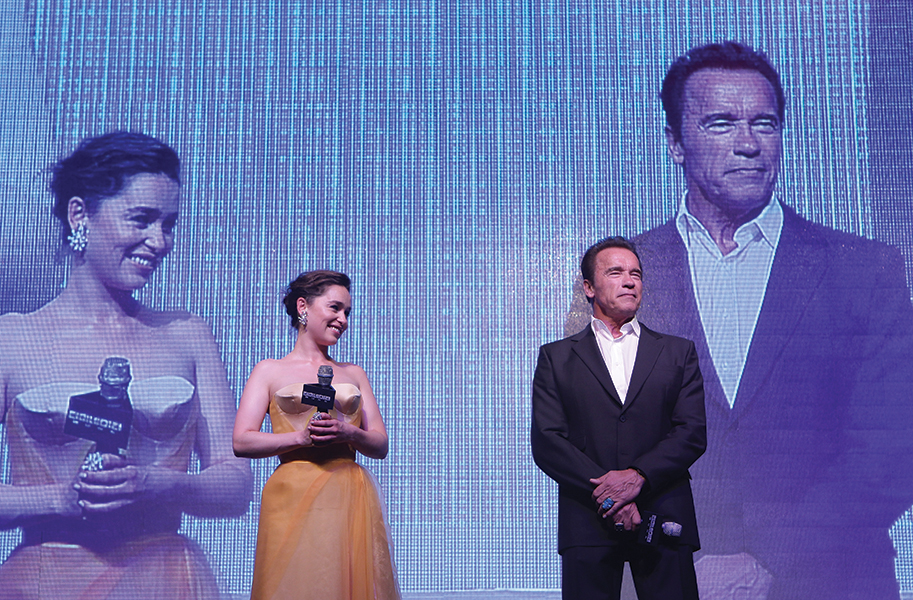
“You can have the greatest movie in the world, but if you don’t get it out there, if people don’t know about it, you have nothing. It’s the same with poetry, with painting, with writing, with inventions!” These are the words of Arnold Schwarzenegger, who, at the beginning of his career, took a stroll through downtown Munich wearing nothing more than a skimpy pair of posing briefs. He had asked a friend to call some journalists: “You remember Schwarzenegger who won the stone-lifting contest? Well, now he’s Mr. Universe, and he’s at Stachus Square in his underwear.” The next day he was in the newspapers. Schwarzenegger is one of the most famous people in the world. He owes his unusual career – as a bodybuilder, Hollywood star, politician and entrepreneur – to his sales talent. There have been many bodybuilders since with bigger muscles than Schwarzenegger, but none of them were so good at selling. That’s why you don’t know their names, but you know his. 

Some people believe it is enough to be “good” at something because quality will eventually prevail on its own. That is naive. If that were the case, companies such as Mercedes or Apple could have stopped their advertising and PR campaigns decades ago. 

 “Wherever I go and wherever I stay, 

There’s always a picture of me on display, 

On top of the desk, or out in the hall, 

Tied around a neck, or hung on a wall.

Women and men, they play a strange game, 

Asking, beseeching: ‘Please sign your name.’ 

From the erudite fellow they brook not a quibble 

But firmly insist on a piece of his scribble.

Sometimes, surrounded by all this good cheer, 

I’m puzzled by some of the things that I hear, 

And wonder, for a moment, my mind not hazy, 

If I and not they could really be crazy?”

But no one becomes truly famous by chance or against their will, at least not over years and decades. In my book How People Become Famous, I take the examples of twelve famous figures to show that, although they all complained from time to time about the annoying side effects of fame, they also all consciously strove for it and spent a lot of time and energy on self-promotion.

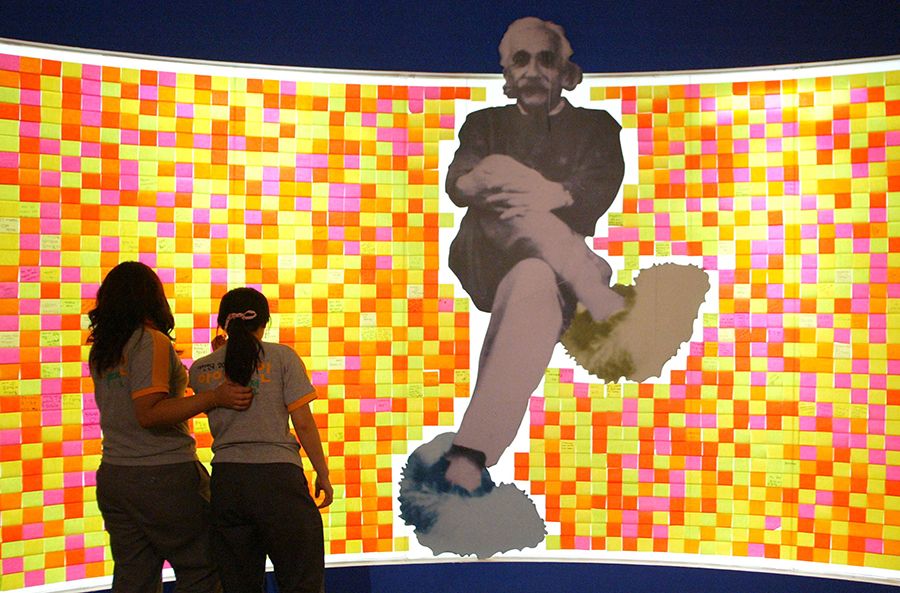
Take Einstein again: The photo of him sticking his tongue out at the world became famous. It was taken on his 72nd birthday and shows his successful transformation from man to metaphor. Einstein himself chose a detail from the photo, had the image cropped, printed and sent to friends and colleagues. The image became his ultimate trademark and a pop motif for posters, buttons and T-shirts. 

Einstein cultivated the image of the scientist who attached little importance to clothing, hated collars and ties, did not comb his long hair, wore no socks and left his shirts open. Asked about his profession, he once quipped, “Fashion model.” Rumor has it that as soon as photographers approached, Einstein mussed up his hair with both hands to restore his quintessential image as an eccentric professor. 

Einstein certainly didn’t become famous for the theory of relativity, because 99.99 percent of the people who cheered him whenever he appeared in public didn’t understand it. Then there’s Stephen Hawking, who became the most famous scientist of recent decades, despite the fact that he never won the Nobel Prize. He once confessed: “To my colleagues, I’m just another physicist, but to the wider public I became possibly the best-known scientist in the world.” He understood the art of self-promotion like no other scientist since Einstein. Hawking – unlike most other scientists – was not prepared to settle for a life writing technical essays that would only ever be interesting and comprehensible to his scientific peers or giving lectures at specialist conferences. 

When negotiating with publishers, he demanded that his next book should be available in airport bookstores all across America: “If I was going to spend the time and effort to write a book, I wanted it to get to as many people as possible.” That in itself is an unusual attitude for a theoretical physicist. In fact, his book A Brief History of Time spent 147 weeks on The New York Times bestseller list and a new record 237 weeks on the London Times bestseller list. It has been translated into forty languages and sold ten million copies. How many people ever fully understood the book is another question. 

Hawking, with great self-awareness, once explained: “Undoubtedly, the human interest story of how I have managed to be a theoretical physicist despite my disability has helped.” A marketing genius, he built himself into a brand, turning the disadvantage of his disability into a distinctive brand feature. He even patented the computerised voice he used to communicate.

You don’t have to aim to become as famous as Einstein, Hawking or Schwarzenegger. But you can certainly learn a lot from them. Above all, this: It’s not enough to be good. You also have to make sure that others take notice. Do something good – and talk about it!

How to Set Goals – and Achieve Them!

Have you ever really thought about how you formulate your goals? Do you draw up clear, written goals that are expressed so that you also set unambiguous deadlines for whether and when you want them to be achieved?

Or are your goals vague, such as “I want to be happy.” Sure, that’s a nice wish, the kind of thing everyone wants, but it’s not a clearly defined goal. Do you know what you really, specifically want? 

Numerous scientists and researchers have investigated the correlation between clear goals and success. One of the most important theories is the Goal-Setting Theory developed by Edwin Locke (University of Maryland) and Gary P. Latham (University of Toronto). In 90 percent of goal-setting studies, the two researchers found that specific, more challenging goals led to better outcomes than vague or abstract goals. Their research considered both the difficulty and the specificity of the goals people set, and their findings confirm that people who set themselves no goals, unambitious goals, or vaguely formulated goals will achieve less in life than people who set themselves specific challenging goals.

Locke and Latham’s Goal-Setting Theory is based on studies involving 40,000 participants in eight countries in both field studies and experiments. Locke and Latham said that ambitious and specific goals are essential, primarily because they focus a person’s attention on activities that move them closer to their goals and increase the intensity of effort and time spent working toward an objective. The researchers found that people who had difficult and specific goals were more determined and worked longer to achieve them than people without such goals.

I have long suggested that people should write down their desires and goals. It’s an approach I use myself, and its benefits have been proven by a study involving graduates from Harvard’s MBA program. The students were asked if they had set clear, written goals for their future. In response, 84% said they had no specific goals at all, while 13% had formulated goals, but they were “not committed to paper.” Only 3% had clear, written goals and plans to accomplish them. Ten years later, the researchers interviewed the same graduates of that class. The 13% who had set goals (in their heads) earned twice as much as the 84% who had no goals at all. But the 3% who had clear, written goals were earning ten times as much as the other 97% put together.

You could, for example, get yourself a notebook where you can formulate your goals and desires at the beginning of each year. Although it’s extremely important to write down your goals, that’s by no means enough, of course. The more often you focus on your goals, the more they become imprinted in your subconscious. For example, you can do a daily relaxation exercise and, at the end of the exercise, imagine your wishes as already fulfilled as you recite your goals to yourself with your inner voice. This will allow your desires and goals to imprint themselves on your subconscious, take root there, and you will quickly notice how things begin to change in the external reality of your life.

The important thing is to set ambitious goals. “The lesson I have learned throughout all this is that no goal is beyond our reach, and even the impossible can become possible for those with vision and belief in themselves,” said the British billionaire Richard Branson.

How often have you put aside an idea because you told yourself – or because others convinced you – it was “unrealistic”? Why don’t you dare to dream of bigger things that are seemingly beyond your reach? People like Richard Branson are practical dreamers. What makes them different from other people? Branson says that you must have a vision and believe in yourself. Listen to yourself: Is there something you have perhaps been secretly dreaming about for years? 

The second prerequisite – again according to Branson – is believing in yourself. Many people lack self-confidence. But self-confidence is like a flower that grows if you nurture and tend it. Be self-critical, yes, but don’t put yourself down. Visualize the things you’ve already accomplished and are proud of, such as major challenges you’ve already overcome in life. Refuse to listen to the advice of “well-meaning” friends and acquaintances who have long since buried their dreams. This sort of advice will only fertilize your doubts. By aiming higher and systematically strengthening your self-confidence, you will enable yourself to achieve things you would once have considered impossible.

Your success in life depends on whether you set goals and how ambitious your goals are. “The greater danger for most of us lies not in setting our aim too high and falling short, but in setting our aim too low and achieving our mark,” said Michelangelo, the Italian painter, sculptor, and architect.

Imagine how painful it must be to have to ask yourself as you get older whether you couldn’t have achieved far more in your life if only you had dared to aim higher? Most people never accomplish any great successes because they never aim high for great goals. Imagine aiming for an ambitious goal and achieving it. That’s a good feeling. You know your plans have worked out. But now, ask yourself whether you might not have been able to achieve an even more ambitious goal. What are the chances that your plans still would have worked out? When in doubt, it’s always better to set your goals higher than seems achievable to you, rather than contenting yourself with what is easily and safely within reach.

So make sure you bear Michelangelo’s advice in mind – it might change your life. Why don’t you aim higher? Are you scared that you might not achieve everything you aim for? Then you have already failed because you are unlikely to achieve more than you believe yourself capable of. “Nobody knows how far his strength will take him until he has tested it,” observed Johann Wolfgang von Goethe.

Becoming A Billionaire Without A Business Plan

Most startups need a business plan because they depend on venture capital funds or banks for financing.

Understandably, pitching a business idea to potential investors typically requires a business plan. But how decisive are business plans in determining the success of an entrepreneur? It’s a good question and one that by no means only applies to startups.

“Sometimes You’ll Have To ‘Zig’ When The Blueprint Says ‘Zag.’”

In his autobiography, Michael Bloomberg, No. 9 on the Forbes list of the richest people in the world with assets of $55 billion, details the earliest days of his company. One of his key insights is that rigid planning can do more harm than good: “You’ll inevitably face problems different from the ones you anticipated. Sometimes you’ll have to ‘zig’ when the blueprint says ‘zag.’ You don’t want a detailed, inflexible plan getting in the way when you have to respond instantly.” While his competitors were still busy trying to come up with the perfect final design, he was already working on the fifth version of his prototype. “It gets back to planning versus acting. We act from day one; others plan how to plan—for months.” Bloomberg stressed that making forecasts about new business ideas is mostly a useless and meaningless task. “The noise in the assumptions you have to make is so great, and the knowledge you have of strange areas so limited that all the detailed analysis is usually irrelevant.”

“If You Plan, You Lose. If You Don’t Plan, You Win.”

The Chinese entrepreneur Jack Ma is just as skeptical as Bloomberg when it comes to rigid business plans. Worth $34.6 billion, the founder of Alibaba is now the richest man in China. When he was trying to get his business off the ground, he approached venture capitalists in Silicon Valley to raise money. The investors he met expected him to present a fully developed business plan. But, much like Bloomberg, Jack Ma did not have a business plan. His motto was: “If you plan, you lose. If you don’t plan, you win.”

But from the outset, he thought big and set very ambitious goals. Shortly after he founded his company, he told a journalist: “We don’t want to be number one in China. We want to be number one in the world.” He was so convinced of his future success that he even had a meeting filmed in his modest apartment in February 1999—as a document for the company’s later history. During the small meeting, he posed the following question: “In the next five or ten years, what will Alibaba become?” Answering his own question, he said, “our competitors are not in China but in Silicon Valley… We should position Alibaba as an international website.”

Google’s Founders Started Without A Business Plan

Larry Page and Sergej Brin, worth $50.8 and $49.0 billion, are ranked No. 10 and No. 14 on the Forbes list of the richest people in the world. They also have some things in common with Michael Bloomberg and Jack Ma. They didn’t have a fully fleshed-out business plan when they started, and they changed their business model again and again. The two creators of Google, both born in 1973, had a bright idea—they wanted to build the best search engine in the world. According to the book, The Google Story, “Neither of the guys had a clear idea of how the company would make money, though it seemed to them that if they had the best search engine, others would want to use it in their organizations.”

Pivoting

Are all of these examples just exceptions? Just how important are business plans? A 2010 scientific study compared the growth of more than 11,000 companies. The study found that planning improved business performance. However, the study also demonstrated that this applies more to established companies than startups. And the researchers stressed that for any business plan, setting goals and being willing to change the business model is more important than trying to predict business developments in detail.

An important concept in terms of understanding the success of many startup companies in Silicon Valley is “pivoting.” This involves being prepared to radically change the original business model at a moment’s notice. The goal is not to implement an original concept and prove how good the initial plan was. The goal is to establish a strong market position. If that means abandoning the plan and giving the company a completely new and different direction, then it’s time to pivot.

How to Achieve Professional Success: Strengthen Your Strengths, Don’t Work on Your Weaknesses

Books on professional success often say that it is more important to strengthen your strengths rather than improve your weaknesses. On the one hand, they’re right; on the other, this doesn’t go far enough.

It sounds logical – and it is: You shouldn’t waste your time trying to be good at things you never stand a chance of being among the best at. It is far more efficient to focus on your strengths and become even better in these areas. If you heard me sing and I asked you to rate me on a scale of minus 10 to plus 10, you would probably give me a minus nine if you were charitable and a minus ten if you were honest. I believe that, with a lot of hard work and perseverance, I could improve by 10 points over the next few years. That is an enormous improvement. But where would that get me? Would that get me any form of recognition? Well, my friends, who knew that I started as a minus 10, would pat me on the back and congratulate me. But for everyone else, I’d still be a zero: no one would hire me as a singer; I wouldn’t be able to earn a single dollar with my singing, let alone win a prize. Would it be worth the effort?

Strengthening your strengths

This requires an alternative scenario: Let’s take an activity where I am good, e.g., a keynote speaker. The fact that I regularly receive invitations from all over the world to give lectures indicates that I am good in this field. Probably most people would give me an 8 or 9 on our scale of minus 10 to plus 10 – at least if they experienced me at my best, on a day when I am on top of my game. Professionals, however, i.e., the world’s best speakers, would probably be more critical and perhaps give me a five or a six. If I focused all of my time and energy on improving my skills as a speaker rather than working on my abilities as a singer, I might improve by 3, 4, or even 5 points – and I would be one of the best speakers on the circuit. People would want to hear me speak, and I could earn a lot of money giving talks. 

So, the idea that we should focus on strengthening our strengths rather than working on our weaknesses has a lot going for it. Nevertheless, I would like to make an essential qualification. As Geoffrey Colvin demonstrates in his book Talent is Overrated, it is not talent but “deliberate practice” over years and decades with unrelenting self-discipline that is the main reason for people’s success. The length of time spent practicing, and the intensity and method of practice vary considerably between the best performers and average experts in their field. 

The secret of elite performers

But it is not only the length of time and the intensity of the practice that counts, but also the type of practice. What many people understand by ‘practice’ has nothing to do with the “deliberate practice” of which Colvin speaks. Performing a particular activity in the same or similar way over and over again does not, of course, lead to the kind of dramatic improvements necessary to achieve excellence. Instead, a key feature of “deliberate practice” is that great performers concentrate on a very specific aspect of what they do and focus on that until they make significant progress. They identify very specific sub-areas that need improvement and approach them systematically. True masters of their trade focus their practice on those specific aspects and work on them, single-mindedly, relentlessly until no further improvement is possible.

Learn from the superstar Andrea Bocelli  

Once you have identified a particular strength, you may need to hone in on any residual weaknesses and work on them. This is precisely what Andrea Bocelli did. He is not only one of the most successful Italian singers of all time, but he is also one of the few who have established themselves on a global stage in both pop and classical music. He has performed in front of presidents of the United States and several popes and filled concert halls worldwide. His albums have reached the upper echelons of the charts, received multiple platinum awards, and won major music prizes such as the World Music Award, ECHO, Classic Brit Awards, a Bambi in the field of classical music, and a Billboard Award. He has also been nominated for several Grammys.

Although Bocelli, who was born with an eye disease and went completely blind at the age of 12, earned praise for his singing from those around him early in his life, he remained self-critical. For his friends and acquaintances, he was the greatest – and increasingly for other people too. In his autobiography, however, he writes that he subjected his songs to critical analysis and came to a conclusion, “that they did lack a certain originality and, probably, even strength.” 

A piano tuner told the singer to take singing lessons

One day a piano tuner said to him: “Forgive my frankness, but I feel it is my duty to tell you that, with your voice, you could go a long way if only you entrusted yourself to a good singing teacher.” Bocelli was amazed. For years, no one had spoken to him about studying singing. The piano tuner recommended an exceptional teacher, Luciano Bettarini, who had trained numerous opera singers, including Franco Corelli. Other singers might have been offended to have a piano tuner recommend that they take singing lessons. Bocelli, however, listened to the advice he was given and contacted Bettarini.

After Bettarini had heard him sing, he said: “You have a voice of gold, my son!” before adding, “But you do the exact opposite of what you should do when singing. Proper study would not only improve your interpretative qualities, but it would strengthen your voice; in short, it would put you in a new league. What I mean, to be frank, is that to the ear of the uninitiated, you may sound surprising, but to the ear of an expert, the defects of your voice are egregious.” Nobody had ever spoken to Bocelli this way before, but he was eager to learn and from that day on took lessons with the maestro. Thus, Bocelli did the two things that matter: He focused on his strength – singing – and dedicated himself to systematically improving the weaknesses of his voice. 

I try to learn from Bocelli’s example. I often give lectures in Asia and the United States – in English. I have no natural talent for foreign languages. Even at school, I was better at maths, physics, and chemistry and awful at French. So, I had to work on my English. For a few months now, I’ve been taking a – very expensive – course three times a week with a leading coach to help me improve my pronunciation in English and reduce my German accent. So, within a field of strength, I am working on my weaknesses. And after my last lecture in China, I gave the recording to one of the best rhetoric trainers in Germany. I asked him to critically analyze the weaknesses in my delivery.

So, yes, strengthening your strengths is a good idea. But if you don’t self-critically and persistently focus on your weaknesses within your area of strength, you will never be one of the best. 

The Art of a Successful Life

How often do you take the time to think about yourself — your desires, hopes, and goals — in the context of the wisdom of the ages? Here’s leadership advice and insight from 9 people who did exactly that — and became wildly successful.

01 Arnold Schwarzenegger, Austrian-American bodybuilder, actor and politician

No matter what you do in life, selling is part of it. People can be great poets, great writers, geniuses in the lab. But you can do the finest work and if people don’t know, you have nothing! In politics it’s the same: No matter whether you’re working on environmental policy or education or economic growth, the most important thing is to make people aware.” — Arnold Schwarzenegger

Back when Schwarzenegger was just starting out, he stood at a heavily frequented plaza in Munich in his bodybuilding briefs and asked a friend to call a few journalists and say: “You remember Schwarzenegger, who won the stone-lifting contest? Well, now he’s Mr. Universe, and he’s at Stachus square in his underwear.” A couple of editors thought that was funny enough to send photographers. The next day, he was in all of the newspapers. Schwarzenegger went on to become one of the most famous people in the world. Wherever you go, people know his name, know who he is. Above all, he owes his unique career — as a bodybuilder, movie star, politician and entrepreneur — to his sales talent. After he first became successful, lots of bodybuilders tried to follow in his footsteps. Some of them even had more muscles than he did, but none of them were as good at selling themselves. That’s why you don’t know their names — but you know Schwarzenegger. 

Some people think it’s enough to be good at what they do, because quality is bound to rise to the top eventually. That is simply naive. If it were the case, Mercedes could have stopped all of its advertising and PR decades ago. Warren Buffett is a brilliant investor, but he knows how important it is to sell his performance. That’s why every year in Omaha, he and his partner Charlie Munger turn his company’s annual general meeting into a huge show — a kind of capitalist Woodstock. Then there’s Madonna, who all experts agree is only an averagely gifted singer. How was it that she became the best-paid singer in the world for so many years, earning hundreds of millions of dollars? Because she understood better than her rivals how best to sell herself and build a brand. The British billionaire entrepreneur Richard Branson confesses: “I have spent so much of my life being happy about promoting myself and Virgin. Advertising, publicity, promotion — call it what you will — works. There is so much competition in the world that if you have something to sell, no matter what, you have to get it noticed.”

02 Coco Chanel, French fashion designer

“Money is the key to freedom.” — Coco Chanel

Do you despise money? Do you associate it with negative concepts such as egotism, materialism, and greed? Or do you associate it with positive concepts such as energy and freedom? The successful fashion designer Coco Chanel said: “Money that is earned is merely material proof that we were right.” She considered money a key to freedom and a symbol of independence. What does money mean to you? If you don’t have any, maybe it’s because you mentally reject money? If you don’t like money, money won’t like you either.

03 Jack Ma, Alibaba founder

“If you only regret the fact you failed, but not the reasons for it, you’ll always be in a state of regret.” — Jack Ma

It is often said that experience makes one wise. This isn’t true; if it were, then most people would be a lot smarter than they actually are. Experience only makes you wise when you analyze it correctly and draw the right conclusions from it. This includes, above all — as Alibaba founder Jack Ma says — understanding the causes of failures and setbacks. Anyone who doesn’t understand these causes will continue to make the same mistakes. “Mistakes have to be made today in order to grow and run better tomorrow,” Ma says. “Just don’t keep making the same mistake.”

04 Stephen Hawking, British physicist

“Disabled people should concentrate on things that their handicap doesn’t prevent them from doing and not regret those they can’t do. In my case, I have managed to do most things I wanted.” — Stephen Hawking

Stephen Hawking suffered from amyotrophic lateral sclerosis, a disease of the motor nervous system. Doctors predicted that he would live for only a few years. Not only was he confined to a wheelchair, he also lost his ability to speak and had to use a speech computer to communicate verbally. Despite everything, he became perhaps the most famous scientist in the world, was married twice, traveled the world, met leading scientists and politicians, and wrote international bestsellers. The key to all this was his inner attitude. Above all, he saw the positive sides to his disability. In his autobiography, he wrote that because of his disability, he did not have to give lectures or teach first-year students and did not have to participate in tedious and time-consuming committee meetings, but could devote himself fully to his research. How much can you achieve if you succeed in taking the same attitude to problems and difficulties?

05 Catherine Kaputa, American marketing expert

“Despite things we’ve been told like, ‘talent wins out,’ the reality is more that ‘visibility wins out.’ Talent and ability are important, but visibility alone may explain the difference between a professional who is in demand and earns a large salary and another professional who is just getting by. The truth is that people who have a reputation outside the company’s walls have more value.” — Catherine Kaputa

People who are no good at self-marketing think it unfair that they earn less and don’t get considered for promotions. They probably also say they are no good at putting themselves center stage and are always ready with examples of grandstanders who are not particularly competent but are good at promoting themselves. In fact, performance is always the basis for success in the long run. Braggarts may sometimes be successful for a while, but not in the long run, because other people realize at some point that appearances are deceptive. In truth, people who are not able to showcase their achievements in the right light and make themselves a brand are lacking a key skill in getting ahead in professional life. As long as you don’t change your attitude on this issue and refuse to develop strategies to increase your visibility, you will have to live with others passing you by.

06 Howard Schultz, founder of Starbucks

“So many doors slammed on me that I had to develop a thick skin and a concise sales pitch for a then newfangled machine called a word processor … I sold a lot of machines and outperformed many of my peers. As I proved myself, my confidence grew. Selling, I discovered, had a lot to do with self-esteem.” — Howard Schultz

Howard Schultz came from a working-class background and worked his way to the top. He started as a door-to-door salesman, a job that forced him to develop self-esteem and a high tolerance for frustration, essential prerequisites for his overwhelming success as an entrepreneur later on. A thick skin and confidence — these are the two single most important qualities a good salesperson needs. The first lesson any salesperson has to learn is how to cope with rejection. Never give up, no matter how often you hear the word “no.” To be good at selling, you have to be the sort of person who enjoys transforming a prospective customer’s “no” into a “yes” rather than accepting it as a final answer. And don’t get frustrated if your offers are rejected more often than they are accepted. Your tolerance for frustration is a decisive factor in how much you will earn in sales. Confidence and self-esteem are also important because in the end you’re not just selling a product, you’re selling yourself. If you don’t believe in yourself, you’ll have trouble convincing others to believe in you.

07 Native American Hopi tribe proverb

“The one who tells the stories rules the world.”

Have you ever noticed that politicians and entrepreneurs who are great speakers are usually also great storytellers? The same applies to good salespeople, who can always tell good stories to their customers. When a company offers its shares for sale to the public for the first time, investors expect the company to have a good story to tell. Pupils and students prefer to listen to teachers or professors who succeed in packing information into good stories. And whole nations form an identity based on the dominant narrative of their history. Why is this the case? Because most people find it much easier to memorize stories than abstract theories. A vast majority of us don’t think in theories; we prefer to think in stories. If you want to convince other people, then you’ll need to package your message in a good narrative.

08 The Talmud

“Who is wise? One who learns from all.”

There are many different people who have something to teach you. Watch other people — the successful ones and the ones who fail. You can learn from both kinds by figuring out the reasons why the first group are successful, and the latter fail. You can learn even from those you consider yourself superior to in one regard, for example intellectually. They might in fact be streaks ahead of you in other ways. Constantly trying to lecture those around you will make you far less successful than being keen to learn something from everybody you meet.

09 David Ogilvy, British advertising guru

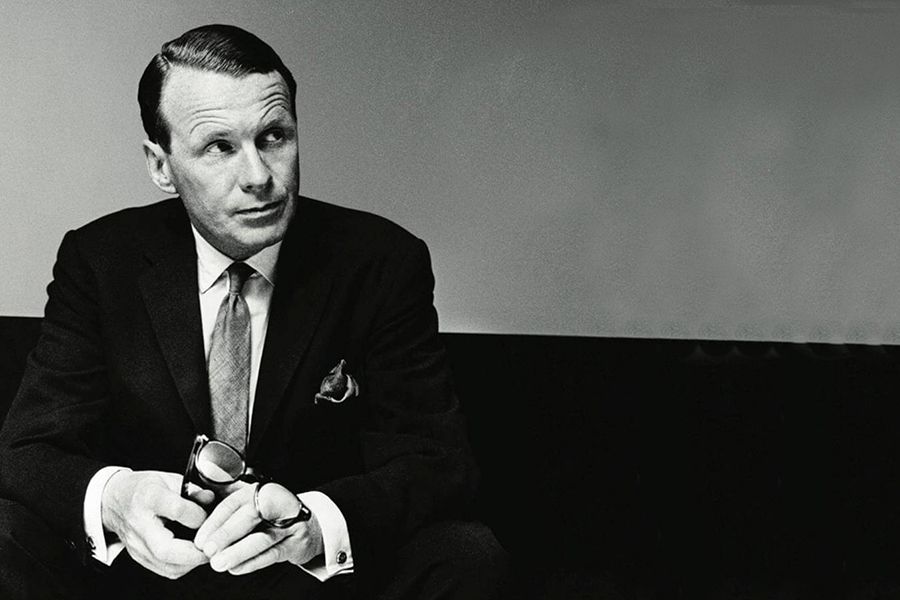
“I always tell prospective clients about the chinks in our armor. I have noticed that when an antique dealer draws my attention to flaws in a piece of furniture, he wins my confidence.” — David Ogilvy

How can you gain other people’s trust? If you try to hide your mistakes and weaknesses, you’ll find it hard to get others to trust you. We live in an age of skepticism. People are less likely than ever to trust those who promise them the moon. If you tell your customers about any faults in the products or services you’re offering them, they’re far more likely to give credence to the promises you make about their advantages and benefits. Every time you disclose a weakness of your own accord, you’re making a deposit in your trust account.

Why CEOs Need To Be Able To Deal With Conflict

Nobody likes arguments. Except for the most died-in-the-wool troublemakers, we all try to avoid them. Arguments cost time and energy—in any given situation, it’s always a good idea to ask whether an issue is worth arguing about. Nevertheless, people who avoid arguments at any cost will never make an impact or drive change.

At the managerial level, in particular, there are two different personality types: the ‘cuddly,’ harmony-seeking boss who would prefer everybody to agree on everything, and who above all wants to be liked by his or her staff; and the tough, success-oriented executive who is quite prepared to put up with significant clashes of interest within the company for the sake of change and progress.

Manager Of The Century

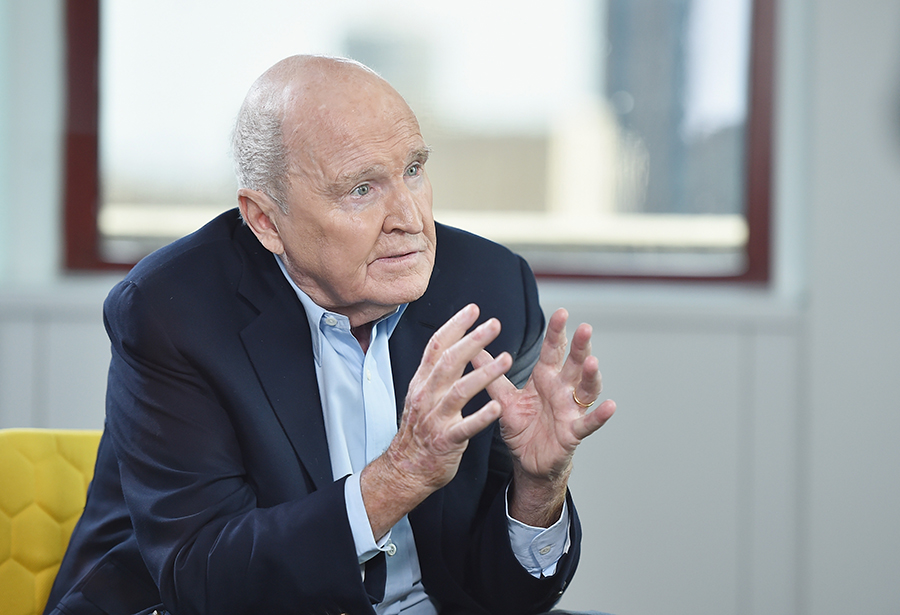
Jack Welch (above) is a prime example of the second type. In his 20 years as CEO of General Electric (GE) from 1981 to 2001, he increased its turnover from $27 billion to $130 billion, while annual profits went up by 600% to $12.7 billion. In late 2000, GE was the most valuable company globally, with a market capitalization of $475 billion. He also cut GE’s workforce of 400,000 employees by a quarter. Unsurprisingly, his style of leadership led to heated arguments and massive confrontations. In 1999, Welch was voted “Manager of the Century” by Fortune magazine. His leadership principles are well worth examining.

One of Welch’s most striking characteristics was his willingness to take on anybody in an argument. Of course, he did not start arguments for the sake of it, but he soon realized that the only way forward for the giant yet sclerotic corporation was by completely overhauling its fossilized structures. He knew that to make his company fit for the future, he would have to take on and overcome powerful special interest groups, ingrained nepotism, excessive bureaucracy, and laziness.

In his first two years as CEO, Welch sold the company’s 71 divisions and product lines, increasing productivity dramatically and triggering huge resentment. Many other executives might not have gone ahead with these radical changes in the face of such hardline opposition. 

When Welch sold off GE’s housewares division, he was bombarded with angry letters from outraged employees. “If email had existed,” Welch commented, “every server in the company would have been clogged up.” The letters all expressed similar sentiments: “What kind of a person are you? If you do this, it’s clear you’ll do anything!” 

In the space of five years, Welch fired 118,000 employees from unprofitable divisions. “Throughout the company, people struggled to come to grips with the uncertainty,” Welch observed. Instead of hiding away, he confronted his workforce openly, holding fortnightly round-table discussions with around 25 employees at each meeting. “I wanted to change the rules of engagement, asking for more—from fewer. I was insisting that we had to have only the best people.”

Always Stand Firm

Welch did not just confront the executives and employees within his own company. He also took on union leaders, mayors, and politicians trying to put pressure on him. On a visit to Massachusetts’s governor, Welch’s host voiced his hope that GE would create more jobs in his state. “Governor,” Welch replied, “I have to tell you. Lynn is the last place on Earth I would ever put any more work.” The plant in Lynn had been the only one to hold out against the national contract GE had signed with the unions. “Why should I put work and money where there is trouble when I can put up plants where people want them and deserve them?”

Fortune magazine named Welch as number one among the “Ten Toughest Bosses in America.” The magazine ran a feature article on Welch and printed numerous comments from employees who wished to remain anonymous, including: “Working for him is like a war. A lot of people get shot up; the survivors go on to the next battle.” The article claimed that being bombarded with questions by Welch was similar to a physical attack. On the other hand, he was generous with praise, acknowledging good work and rewarding outstanding employees with bonuses. 

He refuted any criticism of his “tough” approach. In his autobiography, he confesses: “I shouldn’t have agonized as long as I did on so many people who weren’t going to cut it. The consistent lesson I’ve learned over the years is that I have been too cautious in many cases. I should have torn down the structures sooner, sold off weak businesses faster than I did.”

Honest Communication

Welch was equally uncompromising towards employees who did not share GE’s corporate values, no matter how good their results were for their bottom line. His advice to other executives was not to fire them surreptitiously, using excuses along the lines of “Charles left for personal reasons, to spend more time with his family.” Instead, he recommended being upfront about the fact that an employee had been fired for their refusal to comply with the company’s values. “You can be sure that Charles’ replacement will act differently, not to mention anyone else doubting your commitment to the values.”

Welch could not stand whiners who always complained about everything that was wrong with the company and about not being valued and appreciated enough. Bosses whose employees acted in this way had only themselves to blame, he claimed, because they had created a culture of entitlement and fostering “a classic entitlement culture, in which your people have the deal exactly backward. They think you work for them.” His advice to “soft” executives was: “You are running a company, not a social club or a counseling service.” He recommended they change the culture within their company as fast as possible and told them to stand their ground: “Without doubt, you will hear yelps of pain as you dismantle your entitlement culture. Indeed, some employees that you like and value may leave in protest. Take the hit and wish them well.”

Above all else, Welch preached a culture of communication. That was the only way, he said, to ensure that each employee knew what was what and whether their performance was up to scratch. Many companies made the mistake of indulging “the very human tendency to soften hard, urgent messages with false kindness or phony optimism.” Too many bosses pulled their punches and were not prepared to “come right out and tell underperformers how badly they are doing until they fire them in a burst of frustration.” Managers prided themselves on being too “kind” or too “nice” to tell their employees “exactly where they stand—in particular, the real losers.”

This is because so many managers and executives are either unable or unwilling to stand their ground. It is easier to avoid arguments than to fight them out. Fighting costs time and energy and often involves risk because the outcome of an argument is always open. However, most people instinctively sense when they are dealing with somebody who is overly concerned with achieving harmony, consensus, and conciliation. Rightly, this trait is regarded as a weakness.

Seeking harmony is a good thing. But as with most good things, you can have too much of it. An exaggerated yearning for harmony usually results from fear. People who are scared of rubbing others the wrong way and are afraid of disagreement and disapproval often suffer from low self-esteem. Lacking the confidence to think that they can win an argument, they avoid arguments altogether. By doing so, they have already lost. People with low self-esteem, who are usually reluctant to stand their ground and engage in confrontation, will rarely win the respect of others. After all, anyone who sees weakness in themselves will be regarded as weak by others.

6 Common Mistakes Leaders Make When Making a Decision

The reason Warren Buffett and Charlie Munger are so successful is because they have thought so deeply about decision-making processes.

Business leaders are decision-making machines. They make decisions all day long, which is, after all, what they get paid for. Nevertheless, there are six common decision-making traps they fall into. And it is no coincidence that four of these six mistakes were identified by Warren Buffett and his partner Charlie Munger. After all, they have been hugely successful because they have thought so deeply about decision-making processes.

Mistake 1: Perfectionism

Warren Buffet once said: “A friend of mine spent twenty years looking for the perfect woman; unfortunately, when he found her, he discovered she was looking for the perfect man.” Perfectionism is great as long as it drives people to do their best. However, it can turn into a serious obstacle if it is used as an excuse to hesitate and vacillate. Isn’t it far better and more realistic to accept that there’s no way to be perfectly prepared for every decision? And doesn’t it make sense to recognize that external circumstances will never be ideal?

Mistake 2: Making NO Decision Can Also Be A Mistake

“Our biggest mistakes were things we didn’t do, companies we didn’t buy,” explained Warren Buffett’s partner Charlie Munger. Some people believe that the best way to avoid making a significant mistake is to avoid making a decision at all. They are wrong. Even deciding not to make a decision is a decision – to do nothing. In some cases, doing nothing could well be the right decision. But it could also be a huge mistake. 

Mistake 3: Believing That Collective Decisions Are Better

“My idea of a group decision is to look in the mirror,” commented Warren Buffett. Decisions made by committee aren’t necessarily better than decisions made by individuals. Many people lack the gumption to take responsibility and act decisively. They prefer to go with whatever “the team” decides, so they won’t have to shoulder the blame if things start to go wrong. 

Mistake 4: Kicking A Decision Into The Long Grass

On the subject of decision-making, the German poet Johann Wolfgang von Goethe observed: “He who deliberates lengthily will not always choose the best.” Many people go back and forth over every possible permutation of a problem without ever coming to a decision. Eventually, they find that a decision needs to be made one way or another. But are such forced decisions any better than the decisions they would have made at an earlier point in time? Is it possible to learn to make decisions more quickly?

First and foremost, it is essential to have a clear understanding of the desired outcome. When someone bases a decision on a vaguely defined result, they will find it harder to decide quickly when the time comes. Having a clear sense of priorities also helps. Once priorities are clearly defined, it is easier to arrive at a decision far more quickly because it is obvious which elements of any question are most essential and which are less so.

Mistake 5: Overanalysing And Not Listening To Gut Feeling

Scientific studies have confirmed that exceptionally successful individuals often rely on gut feeling. Arnold Schwarzenegger agrees: “Don’t overthink. If you think all the time, the mind cannot relax. This doesn’t mean that you shouldn’t use your brain, but part of us needs to go through life instinctively. By not analyzing everything, you get rid of all the garbage that loads you up and bogs you down.” Researchers have found that people frequently make better decisions when they spend less time weighing up which course of action to take. At first glance, this may seem surprising. But everyone has intuition and an analytical mind. Intuition is the sum of all of the things we have ever experienced—the product of implicit, unconscious learning processes.

Anyone who believes that they need to analyze everything as thoroughly as possible will gradually lose the ability to listen to what their gut feeling is telling them. A survey of 83 Nobel Prize winners in science and medicine revealed that 72 strongly emphasized the role intuition had played in their success. Sometimes intuition takes the form of a spontaneous flash of inspiration, but sometimes it also needs a certain incubation period, which is what Schwarzenegger is referring to above. The Nobel Prize Laureate in Medicine, Konrad Lorenz, put it this way: “If you press too hard…nothing comes of it. You must give a sort of mysterious pressure and then rest, and suddenly BING!…the solution comes.” 

Mistake 6: Making Decisions Without Using Checklists

With some decisions, it is essential to listen to your intuition. For other decisions, checklists are crucial. “I’m a great believer in solving hard problems by using a checklist. You need to get all the likely and unlikely answers before you; otherwise, it’s easy to miss something important”, explained Charlie Munger. When it comes to routine processes, particularly those where it’s vital that nothing goes wrong or gets missed, checklists are indispensable tools.

For example, airline pilots are not allowed to take off before they have completed a series of extensive lists. Air accident investigations have shown that, in many cases, crashes could have been prevented had pilots fully adhered to their checklists. Numerous scientific studies also show that error rates during surgical procedures are much lower when surgeons follow predefined checklists. After all, what is a checklist? It’s the result of learning from past mistakes that should now be avoided wherever possible.

0