What Can The Women of Iceland Teach us About Leadership?

“Women of Iceland” is the first book of a trilogy featuring intimate photographs and personal interviews with courageous women stepping first to shape the frontier of a changed world. There is clearly something happening with the women of Iceland.

From her Viking history to the famous strike of 1975 and hosting the globe’s first democratically elected woman President, to her transformation of finance through feminine values, and now leading the world’s first ever comprehensive gender pay equity legislation – what is it about this small fishing island that brought her to the frontier of feminine and gender equality? The following are selected interview excerpts from: “Women of Iceland in Their Power: Courageous Vulnerability Book.”
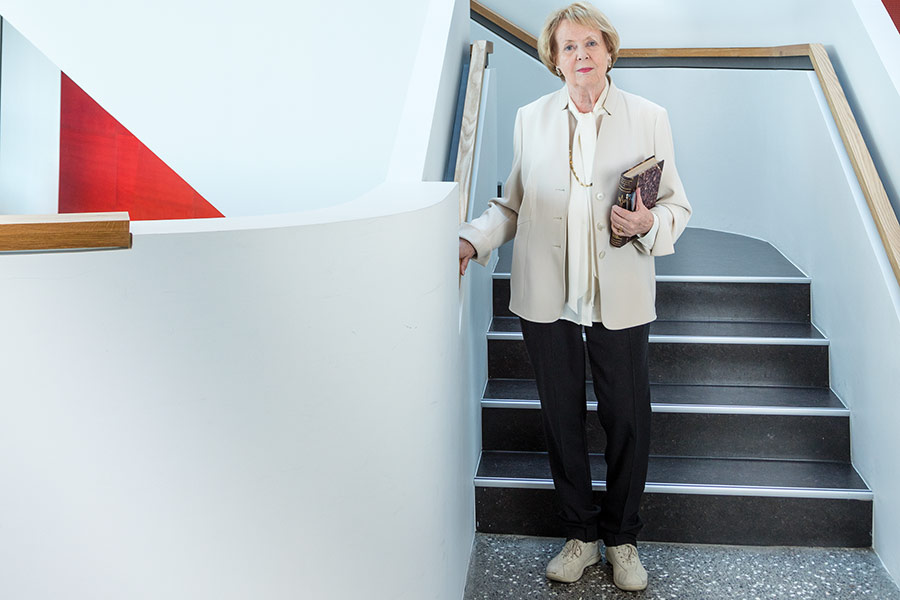
Vigdís Finnbogadóttir stands in the newly opened Vigdís International Centre for Multilingualism and Intercultural Understanding. She holds her Sustainable Development Goal (SDG) object: Her favorite and the most famous Icelandic “Laxdæla Saga” book re-printed in the 1930’s. Global Goal #4: “Quality Education.” When asked about all 17 Global Goals, Vigdís went through them all one by one, and declared the solution to each was clearly quality education. Photo: Ralph Reutimann Photography.

The Mother of Iceland.

Vigdís Finnbogadóttir (pictured above) served as the first woman President of Iceland and the first democratically elected woman in the world. She paved the way for generations of women in Iceland and worldwide to consider, many for the first time: “If she can do it, why can’t I?”

At 87 years young, and serving as the UNESCO Goodwill Ambassador of Languages, Vigdís has continued to tirelessly champion linguistic diversity, women’s rights and education worldwide; and last year, with the support of the people of Iceland launched her next venture – the newly opened Vigdís International Centre for Multilingualism and Intercultural Understanding. She shares her approach to leadership, philosophy on life and how she is keeping the conversation going.

I have dedicated my life to analyzing and preserving the languages of the world. Without them, you lose the ability to think and express yourself. The Icelandic language hasn’t changed in centuries and can be traced back to the Middle Ages. The Icelandic Sagas – prose and narrative on the early struggles and conflicts found in thirteenth and fourteenth century societies –  convey the full range of human emotions. One of these sagas tells the story of strong women, who in an age of slavery set their slaves free, knowing that by doing so would make them friends, not enemies.

In many cases, women actually don’t know they are strong, and neither do the men. I was given important duties by my mother when I was young and it made me realize that I was a responsible person. As a teenager, a group of boys included me in their discussion group on history, literature and art. It was an unusual act at the time, but one that gave me an impression that I was welcome and valued.

The greatest joy in life is being alive – if you can handle life, that is. This means offering the best of yourself to society: Your honesty, ambition, mind and love for people. Being curious and wanting to use your eyes and ears will make you what you are.

I am uncomfortable with the term “leader,” if it is placing one above the other. It should be handled by people who are strong and can be trusted. I look for positive leadership – something creative, that inspires, with ideas that can be applied for good. When I was President and arrived in Reykjavík in the official car, children would ask me if this big car was mine. “No,” I would answer, “It is yours. You own it!” They would look at me in amazement. It is so important that as public leaders we know we are only there to serve the people. Leadership is also about going ahead and having people follow you. Popularism is like the flu,
if it gets too strong it can be bad for society.

The Icelandic concept of a role model is encapsulated in the word “fyrirmynd.” It’s more powerful than simply trying to copy someone’s actions – it has less to do with playing a “role” and more to do with authenticity and what is good for people.  Some people have the gift of great speechmaking and become great leaders, but many who haven’t got oratory skills never become one, despite being qualified. We must not underestimate the power
of language.

As President, my office door was open once a week to hear people’s problems. It might have been a problem as small as a car license, but the fact someone was prepared to listen was the important point.

In 1975, before I had decided to run for President, the United Nations declared that year International Women’s Year, to raise awareness on subdued women around the world. In Iceland, there was discontent about the unfair wage gap and women began meeting in public places regularly to discuss issues, sing songs and socialize.

Suddenly, the whole country was shut down at certain hours, because all the factories, businesses and restaurants relied on women to keep them going. The women’s strike made world news, and in 1980, when presidential elections came around, someone said, “we cannot have this election without a woman.” Imagine my surprise when I started seeing my name in the newspapers. I resisted at first, but when someone made me see this role as being a spokesperson for others, it helped change my mind.

During my campaign I received a telegram from the entire crew of a fishing ship. It was signed by everyone, from the captain to the mechanic below deck. They asked me to be their president. It touched me deeply, as I knew why they had sent it – they were acknowledging the fact that women run everything ashore while they’re at sea. It was also an acknowledgment that we are the ministers of finance, ministers of education and the architects of our homes, with the specialized skills to successfully run a household and life. It was interesting being the only woman moving in a male political world. While men got away with just polishing their shoes and putting a handkerchief in their jacket pockets, I had more of a problem with what to wear. The one thing I insisted on was wearing high heels; not for any fashion statement, but because I thought it important to look a man in the eye, not up to him.
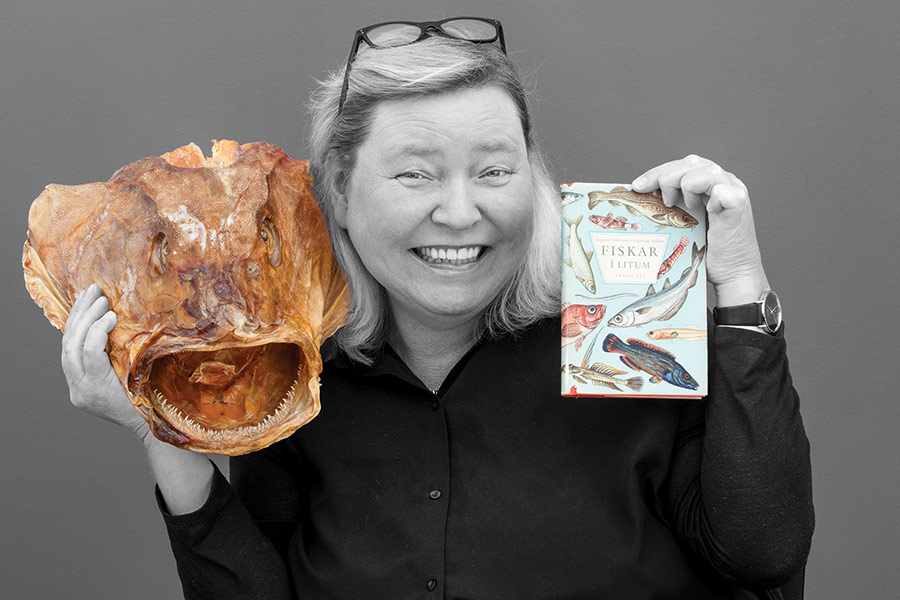
Katrín Pétursdóttir holding her SDG objects: a friendly dried cod head reminding how she created her own path “in the head hunting business!” and “Fiskar í Litum” a cherished childhood book she memorized about the fish of the sea, from her father. Global Goal #14: “Life Below Water.” Photo: Ralph Reutimann Photography.

If You Can’t Beat ‘em, Eat ‘em.

Katrín (kata) Pétursdóttir is the CEO of the world’s largest fish oil company LYSI, founded in 1936 by her grandfather. It exports Omega-3 brain-boosting supplements globally.

Nothing goes to waste in our factories, every part of the fish is used for something. It’s an ideology that should be applied to business in general – a consideration for nature, making money and giving back. Despite the company being founded by my grandfather I bid on it and purchased it in 1999; a family business does not always mean getting something for free. I always choose to prove things on my own, first.

My mother taught me to believe in my ambition and to not lack courage when doing something I believed in. She would tell me that waiting is the same as losing, and I pushed through many uncomfortable situations at an early age because I believed I could do it.

I made my fortune in the “head hunting business!” When I first went into the fish business, I asked my mama to join me as my partner, and we secured a small factory in Nigeria, where we opened a new market to sell Icelandic fish heads. We convinced the Icelandic fishermen that the fish heads being thrown away had value. We paid them for it and started producing fish oil health products. The hardest part was convincing people that something regarded as waste could actually generate income. Interestingly, Nigerians saw nothing wrong with an Icelandic women doing business in their community. I found more resistance from men on an international level when attending conferences and meetings. After an encounter with a businessman who got offended by the fact that a woman had turned up for his meeting, we considered taking male businessmen along with us, but decided we weren’t prepared to respect other people’s discriminations. We now do business the Icelandic way.

My strength comes from my mother, who died from a car accident in Spain many years ago. Each year on her birthday, we celebrate the occasion with friends and share stories of her life. It’s a constant reminder of a beautiful life and that we all need to make the most of ours. Women have started bringing their daughters to these gatherings now – to continue the legacy and impart wisdom.

Honesty is the hallmark of a good leader. You should keep to the rules, yet still have the flexibility to develop a company that is unique. Being aware of the surrounding community and how you fit into it, is one way of earning respect, and respecting the environment by using renewable energy and not wasting anything is another. It makes me SO angry when I see others polluting the oceans. If we do not respect the ocean, neither we nor the fish will last. It’s about thinking differently. This is something I always try to do. And the secret to a good and happy life? Stay honest to yourself. And drink fish oil every day! My team and I do this every morning.
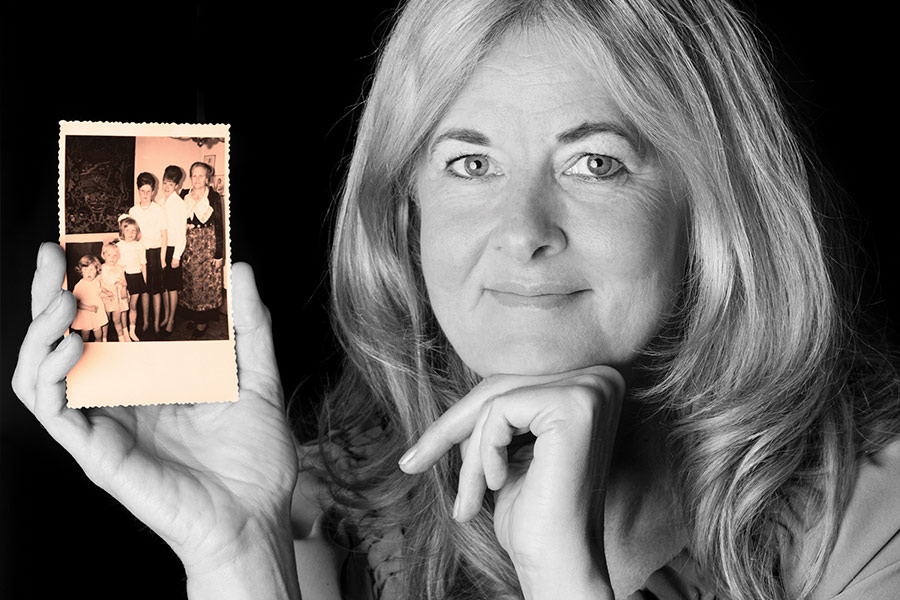
Katrín Olga holding her SDG object: a family photo, showing her female family lineage going back four generations. Global Goal # 5: “Gender Equality.” Photo: Ralph Reutimann Photography.

Take me to The Edge.

The first women Chair of the Icelandic Chamber of Commerce in its 99 years of operation, Katrín Olga, gives her views on gender, business, leadership and what more we need in the world right now. Having sold the company she successfully grew and exited, Katrín is also Vice Chairman of Iceland Growth Forum, Board member of Icelandair Group; and looking for her next great business adventure.

I have an urge to go further and be challenged in life. I’m tired of being the polite woman people expect me to be. Women need to find the courage to go out into the streets to get things moving. Iceland was once a leader in technology and an early adopter of innovation, but we’ve become a little afraid lately of moving on. We’re always thinking in four-year periods, based on our election cycle – and not 20 or 30 years ahead, like we should be. We’ve always had strong women in Iceland. Those married to fishermen where the managers at home because their husbands were away at sea for months. We’re also demanding and not accepting of certain things, such as lesser pay for women during maternity leave.

I live by the motto: What you’ve been doing is an indication of what you can do. Because we rank so high in the world as a leader in women’s rights, it doesn’t mean Iceland is perfect. In daily life there is still frustration. For example, there are no women-run companies on the local stock exchange and we should ask why this is so. Maybe my generation is the pioneer in this and change will come for our daughters. Gender diversity should bring about a realization that there’s another way to think about the world – that can help move it forward. Have women been too timid in putting this idea forward? There are two ways to change things – work within the system or destroy it completely. I chose to work from within, but I’m disappointed that it hasn’t worked so well. Destroying the system would have meant sacrificing myself too, so the question is how you change the system without doing this.

I’ve tackled empowerment the professional way; read huge amounts of data and studied McKinsey reports that show increased profits for gender diverse companies. I become angry and despair. Ultimately, you have to “walk your talk” to prove your point, not just be an explorer. There is still a fear that going public with my views would destroy me, not support me. There are two things that I burn for: equality and a farsighted vision for the future. Wouldn’t it be wonderful if a country become a leader by harnessing all the positive things in the world?

You first need to paint a picture of what this looks like; create a vision. The Fourth Revolution is here and disrupting systems. Truck driving jobs in the U.S. are being threatened by automated driving software. Threats and opportunities alike must be highlighted if we are to thrive, not just the exciting, futuristic stuff.

The future I envisage is one where we all stop thinking a certain way – just because we’ve always thought like that – where we stop being afraid and resistant to change.

Why are our kids still being taught to think like us in schools? Why aren’t hospitals treating patients like customers? Why is technology doing away with a need for some personal interactions?
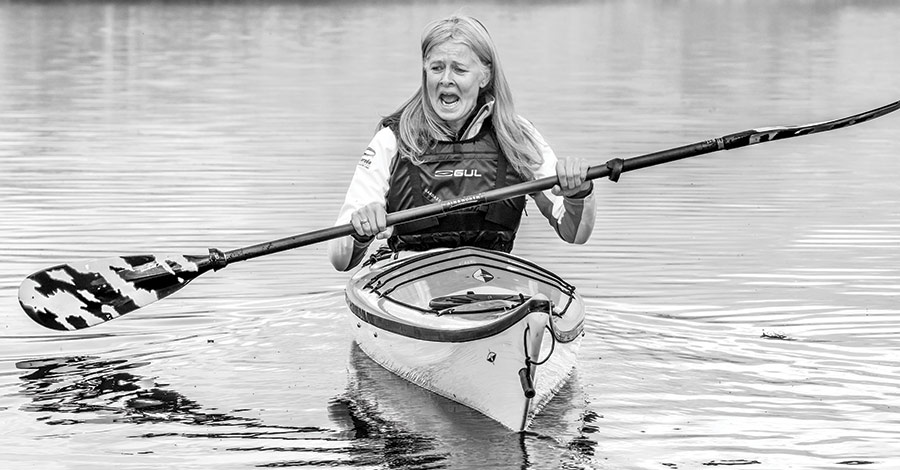
When asked where she was fearless, Katrín without hesitation said,“I’m fearless in business. I love business! And feel completely at ease here.” When asked where she felt vulnerable: “Definitely in a kayak, out in nature where I’m not in control.” Stepping into her courageous vulnerability, Katrín was willing for the first time to kayak, showing the true spirit of the Viking heritage and the Women of Iceland’s courage and vulnerability. Photo: Ralph Reutimann Photography.

Big change in the world has historically happened through catastrophe, maybe this will be what it takes. Each company should ask what they’d do in a worst-case scenario because this will force them to plan ahead. Be afraid if you’ve been in a comfort zone for too long, it means you’re no longer one step ahead of the competition. Courageous vulnerability is needed. You have the choice to become a victim or a warrior in life, and how you react after a disappointment is crucial. Rather, become the warrior.

Being involved in business can be very creative – you can create a product, process or relationship. Whatever personality you are, you’ll find something that resonates with who you are. Business shouldn’t be something you’re restricted to because of education or qualification and being a leader doesn’t mean you should be an expert who knows everything. Learn how to let go and delegate – it’s been one of my biggest lessons. I sometimes ask myself sometimes what I’d like to leave behind when I leave this earth.

I was reminded of this responsibility recently when my 22-year-old niece picked up a copy of The Most Powerful Women in Iceland list and said, “I will be here one day.” It made me realize the power of my role modeling. I want to be a good role model for other women who are stepping forward first into business, so it’s not so hard for them; and so that we are truly treated equally. I champion women’s equality in all that I do, and sometimes I am criticized for this. I want to be brave enough to be myself, without holding anything back. I want to be taken to the edge!

Iceland has the potential to become the first country to achieve full gender equality. This is an untapped resource. Boys and girls need to be open minded. Put your heart and passion into things, it makes things easier. I’m hopeful for a bright future – looking at data I see a world that is doing better than the past in many ways – despite the despair we see in our news every day. Looking at the wisdom and confidence in our young people, I can’t see them letting us down by allowing the fears of today become the reality of tomorrow.

Women of Iceland is co-produced by Ralph Reutimann and Amber Nystrom. www.RalphReutimann.com/women-of-iceland.
Indigenous Heroes: Ancient Wisdom From Guardians of The Earth

Every two years, the UN Development Program (UNDP) Equator Initiative awards the prestigious and highly competitive Equator Prize. The prize recognizes outstanding community initiatives from across the planet advancing innovative models for tackling poverty, environment, and climate challenges. Solutions are as diverse as the development challenges they face. What unites them is that each shows the power of people to bring about change while protecting the planet.

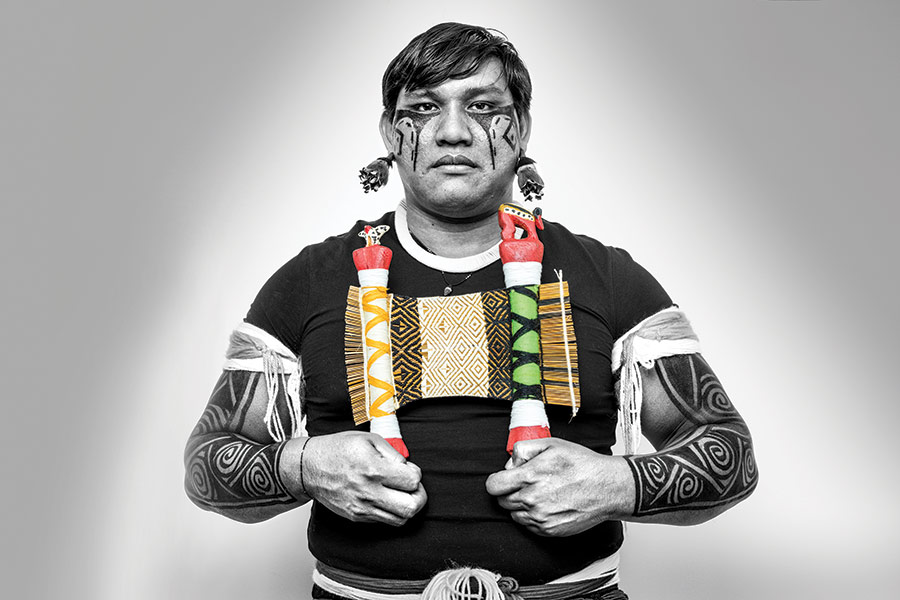
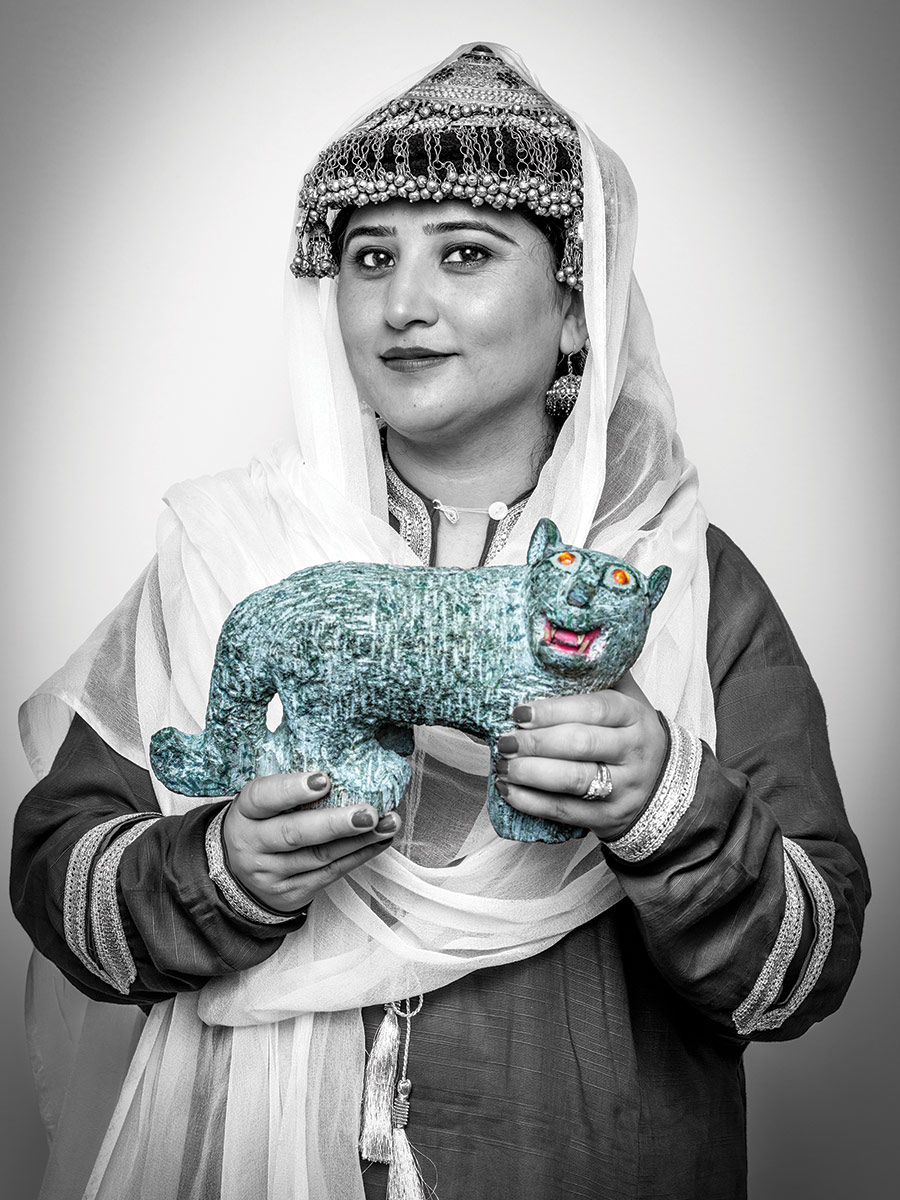
The Sustainable Development Goals (SDG) Indigenous Heroes, “SDG Heroes,” is a unique photographic series produced in collaboration with The United Nations Development Programme (UNDP) and Ralph Reutimann Photography. It celebrates local and global leaders at the forefront of meeting the 17 United Nations Sustainable Development Goals. Each of the SDG Heroes holds a personal object symbolizing the single SDG Goal they feel is most vital for them. The series celebrates indigenous SDG Heroes as guardians of ancient wisdom for people and the Earth.

If you like this, subscribe here for more stories that Inspire The Future.

“One of the intense pleasures of travel is the opportunity to live amongst peoples who have not forgotten the old ways, who still feel their past in the wind, touch it in the stones polished by the rain, taste it in the bitter leaves of plants.

Just to know that, in the Amazon, Jaguar shamans still journey beyond the Milky Way, that the myths of the Inuit elders still resonate with meaning, that the Buddhists in Tibet still pursue the breath of the Dharma is to remember the central revelation of anthropology: the idea that the social world in which we live does not exist in some absolute sense, but rather is simply one model of reality, the consequence of one set of intellectual and spiritual choices that our particular cultural lineage made, however successfully, many generations ago.

All these people teach us that there are other options, other possibilities, other ways of thinking and interacting with the Earth. This is an idea that can only fill us with hope.

We share with these peoples a sacred endowment, a common history written in our bones. The myriad cultures of the world are not failed attempts at modernity, let alone failed attempts to be us. They are unique expressions of the human imagination and heart, unique answers to a fundamental question: What does it mean to be human and alive?”

Wade Davis – Explorer In Residence, National Geographic Society

^ 1. Yakagi Kuikuro Mehinaku

(Pictured above) Xingu Indigenous Land Association, Brazil

Global Goal #15 is important to me: Life on Land. Although, I prefer to see it as “Life on Earth.” The planet was the work of a creator and was made for life of many species. Today, it’s being disrespected by humans. Natural resources are being destroyed, water and air polluted. I see a future without life. It’s disheartening when I see big machines destroying the forest. I can imagine the despair of animals – whose house is being destroyed. Capitalists must learn to value this world, not just think about money for their pockets. The object I’m holding is a Hãda (comb) that is important to my people. With it we are combing our hair when we dance to celebrate life on Earth.

Photograph: Ralph Reutimann

^ 2. Naila Rizvi

Balistan Wildlife Conservation Development Organization, Pakistan

The object I’m holding is a snow leopard, now an endangered species. We want to resolve the conflict between snow leopards and communities, and provide incentives to farmers who kill them because they kill livestock. Our area is famous for snow leopards and our organization focuses on providing incentives such as livestock compensation, predator-proof corrals, awareness, and girls’ education to poor farmers. If people get education there is a better chance they will protect wildlife. We need to maintain our ecosystem and balance nature with our needs, because nature is the basis for all life. My chosen SDG goal is #15: Life on Land.

Photograph: Ralph Reutimann

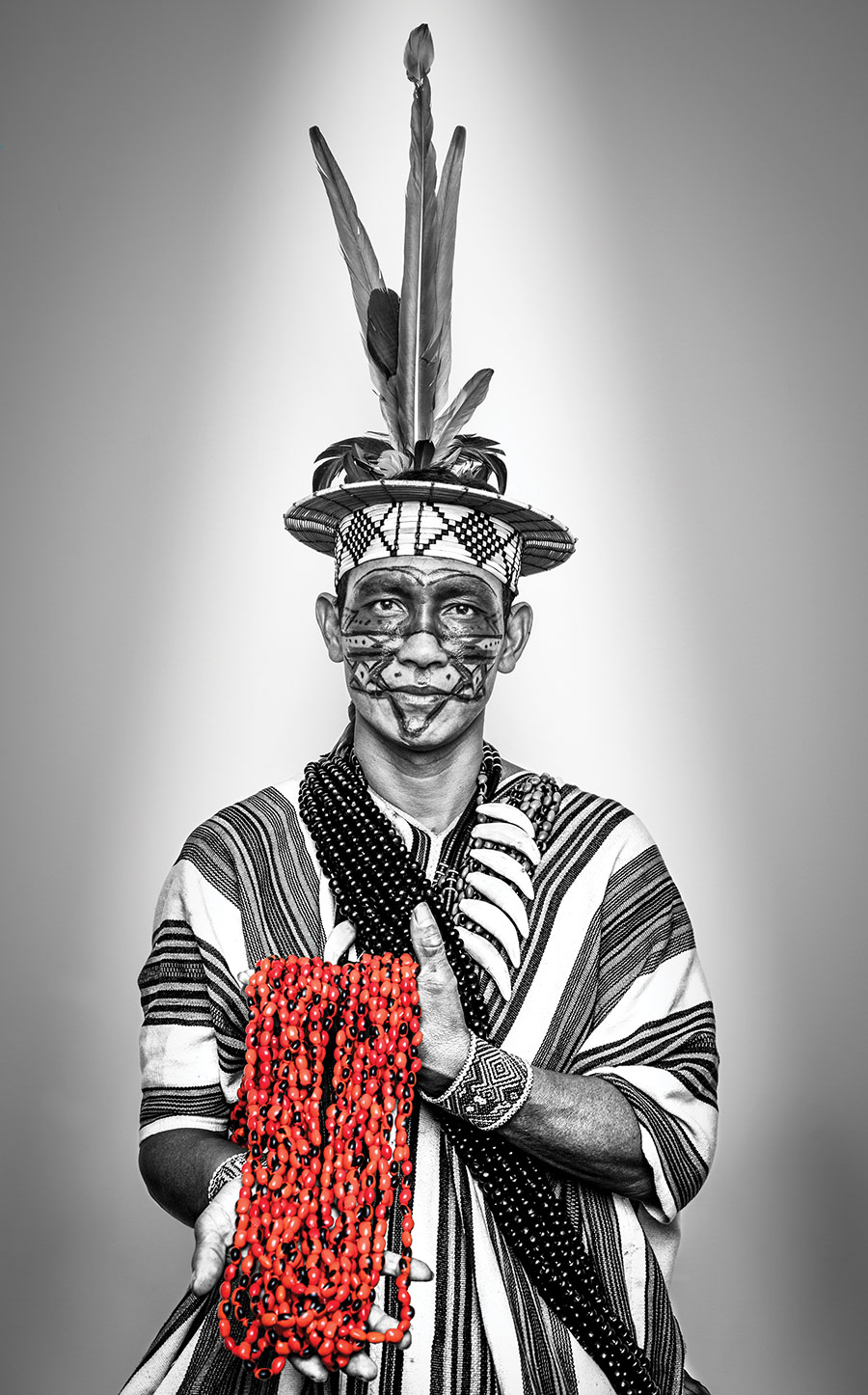
^ 3. Maldete (Benki) da Silva Pianco

Association of Ashaninka People of the Amônia River, Brazil

Nature today offers us everything. These necklaces are part of our living culture because we use all the fruits in the forest for adornment. They are our riches and beauty. It’s also a way of showing that we are always with something alive on our body. It’s a spiritual embodiment of value with nature. We depend on the land, and the land depends on people at the same time. We have a diversity of species too, that must be cared for permanently, because from that we get our survival. The world today is falling into a bankruptcy, that is being matched in our spiritual realm. We not only seek the defense of indigenous people, but of all humanity – the planet that generates the survival of us all. Every human should assume their role, don’t wait for something to become an issue first.

Photograph: Ralph Reutimann

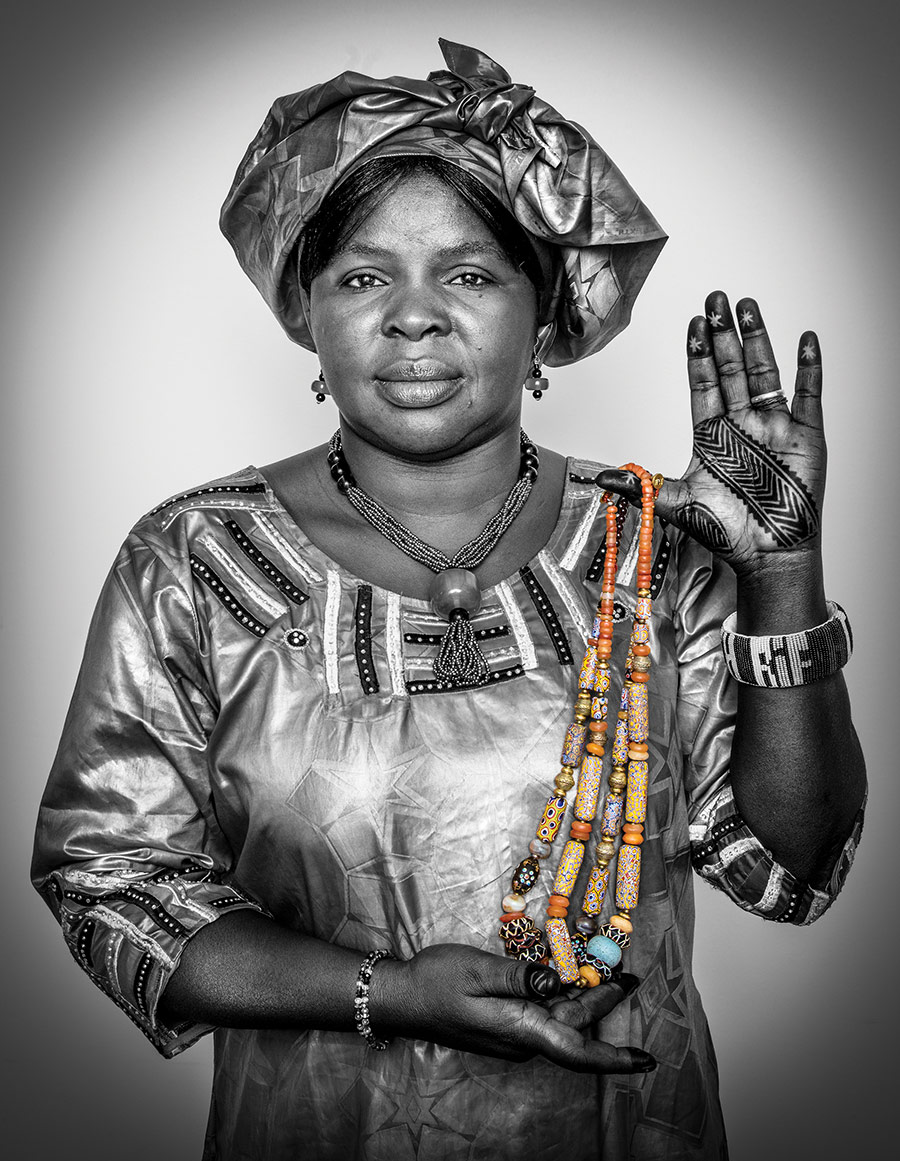
^ 4. Aoua Cherif Doumbia  

The Mali Elephant Project, Mali

My focus is on protecting, restoring and promoting sustainable use of terrestrial ecosystems. Sustainably managed forests can combat desertification, halt and reverse land degradation and biodiversity loss. My chosen SDG goal is #15: Life on Land. The Gourma people exist on agro-pastoral activities and are very dependent on natural resources. The necklace I hold symbolizes the alliance between all ethnic groups that use the same resources in the same areas. It’s an object of adornment worn by a woman that represents the source of all life on earth. Our project has sensitized 7,968 households around environmental protection, which includes elephant poaching, the occupation by humans of elephant habitats and the harmful effects of bush fires and tree cutting.

Photograph: Ralph Reutimann

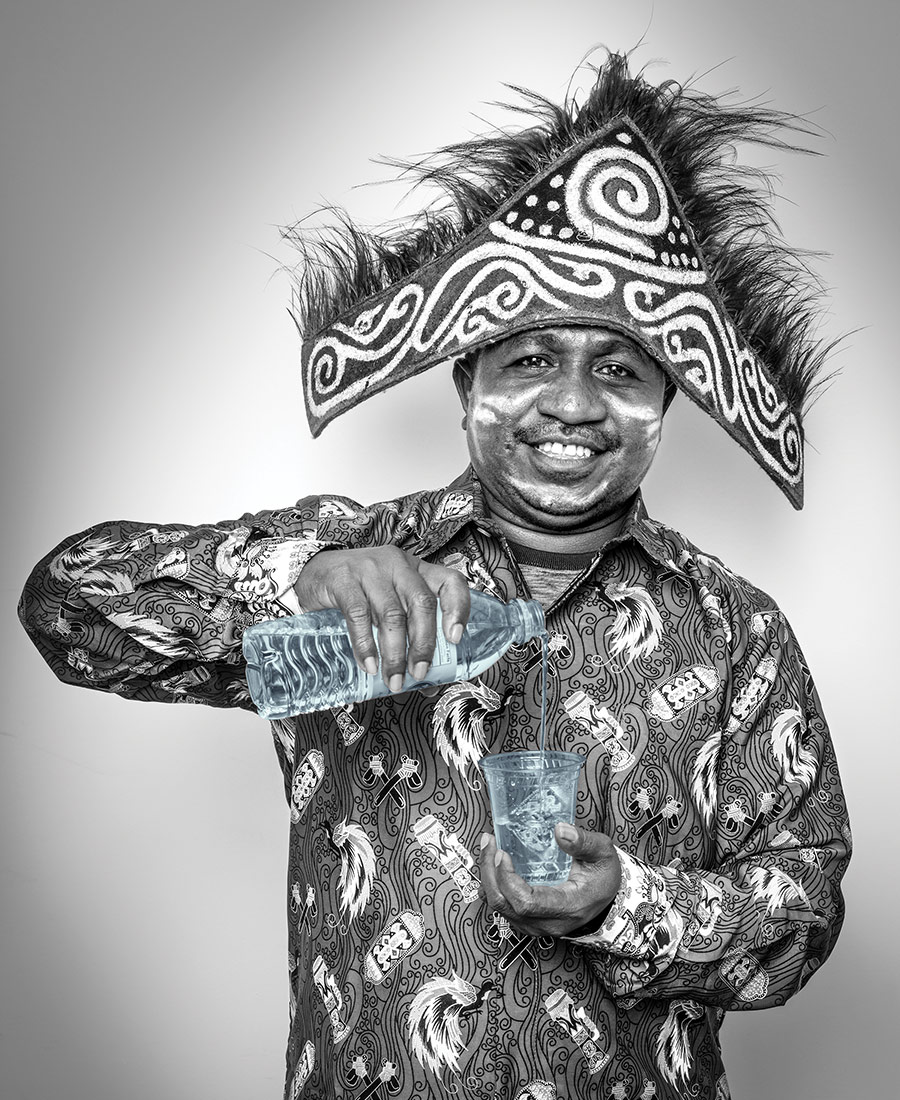
^ 5. Kristian Sauyai  

Local Homestay Business Association of the Raja Ampat District, Indonesia

Life at sea is important. I’m the son of a fisherman and this life is inherited from our parents. The sea is the source of our life and the tourism associated with it has made a difference to our family. We must keep it beautiful and sustainable because we feel the changes that occur in our oceans, as does the environment and society at large. My chosen SDG goal is #14: Life Below Water. Water is important for both humans and animals. It’s important for water to be kept clean so that it doesn’t threaten life at sea. If it does, it threatens our incomes too. If the sea becomes broken our life will become hard. We are just like the seals – who also eat from the ocean.

To learn more about the Equator Initiative and all 31 2017 Equator Prize Winners, please visit: www.equatorinitiative.orgTo learn about the SDG Indigenous Heroes photo series, please visit: RalphReutimann.com/sdg

If you like this, subscribe here for more stories that Inspire The Future.

The Hero’s Journey: Finding True North When The World’s Compass is Broken

Imagine being at a “Jeffersonian Dinner” salon, with 13 people around a cozy table. This elegant salon design ensures everyone has a single conversation, centered for the first half of the dinner around a single question of purpose. This evening’s question is: “Where are you on your Hero’s Journey, and how may we help you in your next great leap?”

Some in the salon are deeply practiced in the Hero’s Journey; others are hearing this expression for the first time. The host asks us all to engage with a “beginners mind,” open to wonder, awe and all possibility. She also invites us to step into our own courageous vulnerability – where we marshal courage to simultaneously allow the vulnerability of stepping into the unknown of exploring our next Call to Great Adventure. She quotes Joseph Campbell, Maya Angelou and Paulo Coehlo, and then pulls out a one-liner from a Brené Brown TED talk reminding us, “If we want greater clarity in our purpose or deeper and more meaningful spiritual lives, vulnerability is the path.”

If you like this, subscribe here for more stories that Inspire The Future.

We decide to give it a go. Our host then shares the “why” behind the salon, and an initiation into our evening’s journey: “We as humanity stand at a precipice that may be our most beautiful, and is certainly our most dangerous. The choices at this crossroads will determine history. The path we choose now, individually and collectively will be remembered by generations to come; and will incite our daughters, grandsons and great grandchildren to thank or curse us based on the courage and rightness of our actions in this lifetime, and in the next pivotal decade. Many of the stabilities and prior mileposts in our communities and cities, and in our nations and our world are disintegrating; many are being actively disrupted – for reason, and will soon vanish entirely. 

Your sacred space is where you can find yourself over and over again. – Joseph Campbell

What is the role of the Hero’s Journey at the crossroads that you and our world must face? It serves as a living, internal map for those among us who answer the call to serve something greater than ourselves. The Journey is of overcoming our fears and self-doubt in order to bring our service and unique gifts to the world. We are faced with our own internal demons and are provided gifts and mentors along the way. When we are in alignment with the path that is ours alone to walk, serendipities increase, and doorways open. “Boldness has genius, power, and magic in it,” says Goethe.

The Hero’s Journey is not a prescription. It’s a universal human frame that has existed throughout all time. It enables us to see and experience the immutable truth that only through our own transformation will we re-find our own True North and bring change and healing to a broken world.

In its simplified form, there are three major stages to the Hero’s Journey. The Call to Great Adventure is where the universally represented Hero, Heroine – ie, the human, is living their ordinary life and something happens to knock them off their path: a stranger enters, a major challenge or tragedy befalls, or a beautiful opportunity emerges that invites, or even forces a change in life direction.

The Call, once received – does not go away, even if we resist (vigorously!).  For Star Wars fans, think about Luke and Rey being asked to step up to their Jedi heritage; and their burned down villages after multiple, humble refusals of the Call.

Our host pauses, with a touch of a mischievous smile to add: “We can resist all we like, but the Universe, and if we are so lucky to understand it, our true Jedi Calling – are not forces to be denied.”

Amber Nystrom’s mom recalls that Amber hosted her first salon at age three in the chicken coop, with a cat, stuffed animal frog, and the chickens as those she sought to unite in common action. She is a Master Teacher of the Hero’s Journey, working with select global leaders to realize and fulfill their purpose. From January, 2018 you can download her comprehensive Heroes Journey Guidebook: HeroesJourneyGuide.com. The guide interconnects support for the individual and collective “Heroes” Journey that we as humanity now must embrace. To see her creative work with women, impact and the United Nations SDGs visit: www.RalphReutimann.com

She continues in her initiation into what we are increasingly seeing may be a salon that is itself a Call to (our next) Great Adventure: “Stage two is Crossing the Threshold, or Entering the Abyss, where “enemies” (our own shadows) and mentors arrive to challenge, and help us on our journey. This stage is often called the Journey of the Dark Night of the Soul, as it can be a harrowing experience to face our own demons, self-doubts and feelings of unworthiness that when we are honest, we all harbor. Through both courage and vulnerability we rise to not only face our fears, but embrace our dragons.

You enter the forest at the darkest point, where there is no path. –  Joseph Campbell

At last we cross the threshold, we find our bliss, which is our unique purpose; the universal holy grail. To complete this third and final stage of Coming Home, we must then put our gift into action to transform ourselves and the lives of those around us, whether our family, community – or a galaxy, not too far away.  Our host ends our salon introduction, with a quotation from the “Power of Myth,” by Hero’s Journey god-father, Joseph Campbell: “‘And where we had thought to slay one another, we shall slay ourselves. Where we had thought to travel outward, we will come to the center of our own existence.  And where we had thought to be alone, we will be with all the world.’”

Author’s Post-Script

As the dinner waned, we found ourselves asking questions with a fresh infusion of collective light. What are the aspects of my life of which I am most proud? What are the moments, decisions and actions I feel reflect the best of who I really am, personally and professionally? When I recall my greatest joys and curiosities as a child, what do I see? Am I choosing a path where I feel that when my time on Earth is done my decisions and life have brought me peace? “It is my hope,” our host added to cap the several hour salon, “that this evening we together have recognized where we thought we had been alone, now we are all with each other.”

If you like this, subscribe here for more stories that Inspire The Future.

The Hero’s Journey: Finding True North When The World’s Compass is Broken

Imagine being at a “Jeffersonian Dinner” salon, with 13 people around a cozy table. This elegant salon design ensures everyone has a single conversation, centered for the first half of the dinner around a single question of purpose. This evening’s question is: “Where are you on your Hero’s Journey, and how may we help you in your next great leap?”

Some in the salon are deeply practiced in the Hero’s Journey; others are hearing this expression for the first time. The host asks us all to engage with a “beginners mind,” open to wonder, awe and all possibility. She also invites us to step into our own courageous vulnerability – where we marshal courage to simultaneously allow the vulnerability of stepping into the unknown of exploring our next Call to Great Adventure. She quotes Joseph Campbell, Maya Angelou and Paulo Coehlo, and then pulls out a one-liner from a Brené Brown TED talk reminding us, “If we want greater clarity in our purpose or deeper and more meaningful spiritual lives, vulnerability is the path.”

If you like this, subscribe here for more stories that Inspire The Future.

We decide to give it a go. Our host then shares the “why” behind the salon, and an initiation into our evening’s journey: “We as humanity stand at a precipice that may be our most beautiful, and is certainly our most dangerous. The choices at this crossroads will determine history. The path we choose now, individually and collectively will be remembered by generations to come; and will incite our daughters, grandsons and great grandchildren to thank or curse us based on the courage and rightness of our actions in this lifetime, and in the next pivotal decade. Many of the stabilities and prior mileposts in our communities and cities, and in our nations and our world are disintegrating; many are being actively disrupted – for reason, and will soon vanish entirely. 

Your sacred space is where you can find yourself over and over again. – Joseph Campbell

What is the role of the Hero’s Journey at the crossroads that you and our world must face? It serves as a living, internal map for those among us who answer the call to serve something greater than ourselves. The Journey is of overcoming our fears and self-doubt in order to bring our service and unique gifts to the world. We are faced with our own internal demons and are provided gifts and mentors along the way. When we are in alignment with the path that is ours alone to walk, serendipities increase, and doorways open. “Boldness has genius, power, and magic in it,” says Goethe.

The Hero’s Journey is not a prescription. It’s a universal human frame that has existed throughout all time. It enables us to see and experience the immutable truth that only through our own transformation will we re-find our own True North and bring change and healing to a broken world.

In its simplified form, there are three major stages to the Hero’s Journey. The Call to Great Adventure is where the universally represented Hero, Heroine – ie, the human, is living their ordinary life and something happens to knock them off their path: a stranger enters, a major challenge or tragedy befalls, or a beautiful opportunity emerges that invites, or even forces a change in life direction.

The Call, once received – does not go away, even if we resist (vigorously!).  For Star Wars fans, think about Luke and Rey being asked to step up to their Jedi heritage; and their burned down villages after multiple, humble refusals of the Call.

Our host pauses, with a touch of a mischievous smile to add: “We can resist all we like, but the Universe, and if we are so lucky to understand it, our true Jedi Calling – are not forces to be denied.”

Amber Nystrom’s mom recalls that Amber hosted her first salon at age three in the chicken coop, with a cat, stuffed animal frog, and the chickens as those she sought to unite in common action. She is a Master Teacher of the Hero’s Journey, working with select global leaders to realize and fulfill their purpose. From January, 2018 you can download her comprehensive Heroes Journey Guidebook: HeroesJourneyGuide.com. The guide interconnects support for the individual and collective “Heroes” Journey that we as humanity now must embrace. To see her creative work with women, impact and the United Nations SDGs visit: www.RalphReutimann.com

She continues in her initiation into what we are increasingly seeing may be a salon that is itself a Call to (our next) Great Adventure: “Stage two is Crossing the Threshold, or Entering the Abyss, where “enemies” (our own shadows) and mentors arrive to challenge, and help us on our journey. This stage is often called the Journey of the Dark Night of the Soul, as it can be a harrowing experience to face our own demons, self-doubts and feelings of unworthiness that when we are honest, we all harbor. Through both courage and vulnerability we rise to not only face our fears, but embrace our dragons.

You enter the forest at the darkest point, where there is no path. –  Joseph Campbell

At last we cross the threshold, we find our bliss, which is our unique purpose; the universal holy grail. To complete this third and final stage of Coming Home, we must then put our gift into action to transform ourselves and the lives of those around us, whether our family, community – or a galaxy, not too far away.  Our host ends our salon introduction, with a quotation from the “Power of Myth,” by Hero’s Journey god-father, Joseph Campbell: “‘And where we had thought to slay one another, we shall slay ourselves. Where we had thought to travel outward, we will come to the center of our own existence.  And where we had thought to be alone, we will be with all the world.’”

Author’s Post-Script

As the dinner waned, we found ourselves asking questions with a fresh infusion of collective light. What are the aspects of my life of which I am most proud? What are the moments, decisions and actions I feel reflect the best of who I really am, personally and professionally? When I recall my greatest joys and curiosities as a child, what do I see? Am I choosing a path where I feel that when my time on Earth is done my decisions and life have brought me peace? “It is my hope,” our host added to cap the several hour salon, “that this evening we together have recognized where we thought we had been alone, now we are all with each other.”

If you like this, subscribe here for more stories that Inspire The Future.

0