Jaden Smith Brings Clean Water to Flint

Actor and rapper Jaden Smith is tapping into uncharted waters to lead a community effort.

Flint, Michigan faced a water crisis when the city switched its new water source to the Flint River in 2014. Without corrosion controls, the city’s old pipes leached lead into Flint’s water, transforming the city’s water into poison.

Five years later, Flint’s citizens are still apprehensive of their tap water, relying instead on bottled water. While this may have solved the problem of potable water, it hasn’t helped the city’s environmental impact.

Enter Jaden Smith, who has transcended his celebrity status to support environmental advocacy and social entrepreneurship with his company JUST Water. Specializing in bottled water manufacturing, JUST Water values sustainability and community above all. The JUST Water bottles are 100% recyclable and made entirely from sustainable materials — paper, plant-based plastic, and sugarcane. These renewable resources are less toxic than traditional plastic bottles and result in less carbon emissions.

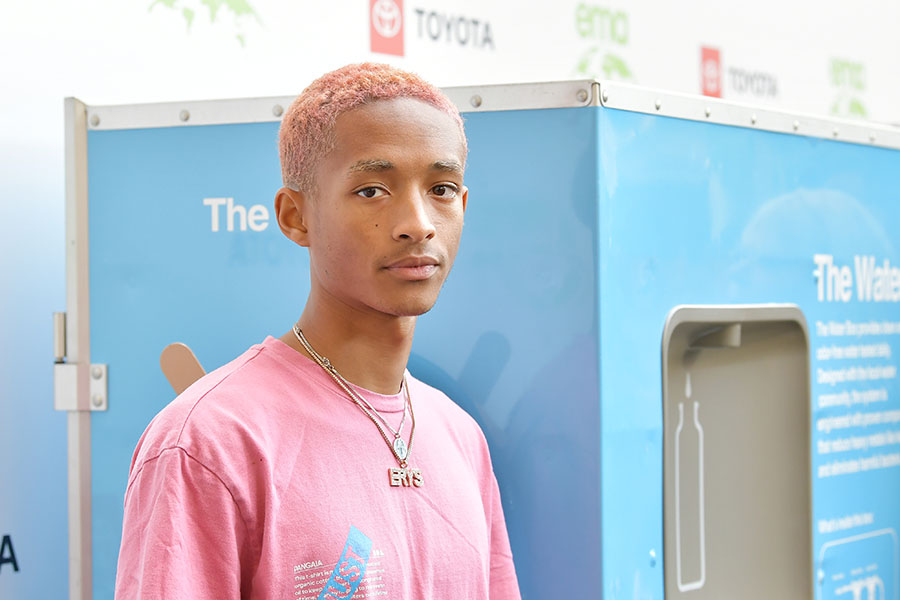
Seeing the opportunity to make a difference, Jaden and JUST have brought their pledge of clean, sustainable water to Flint, partnering with the local First Trinity Baptist Church to create “The Water Box.” This is a smaller version of the filtration system used at the JUST Water plant which reduces contaminants—primarily lead—from the water supply. The mobile filtration system generates more than ten gallons of filtered water a minute, giving Flint’s residents a water source they can trust — something they haven’t had for years.

Bringing Back Compassion and Empathy to the Business World.

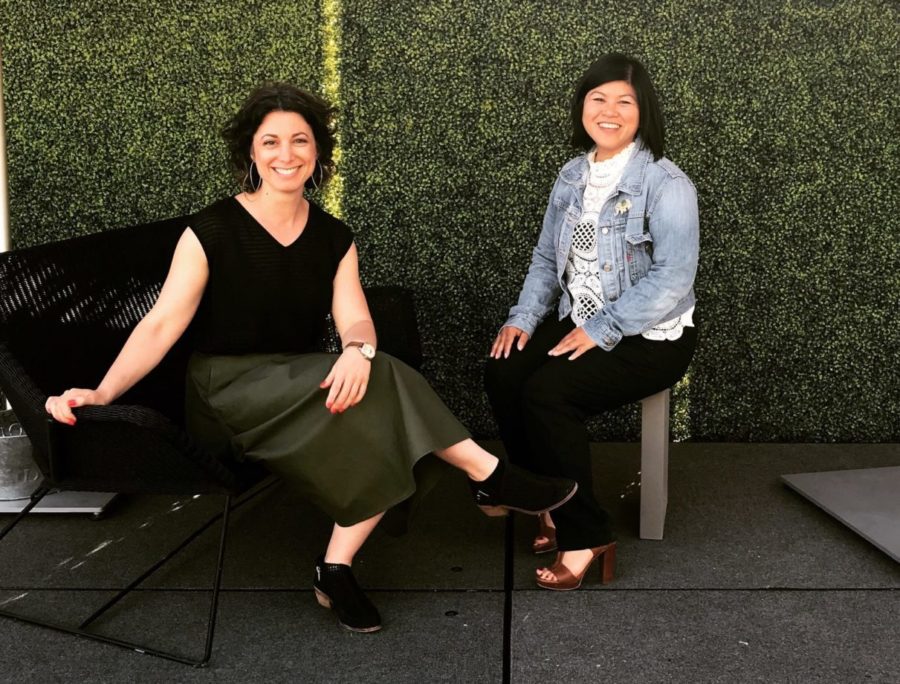
Melissa Center and Tanny Jiraprapasuke have combined a passion for storytelling and a commitment to empowering marginalized voices to make an impact in the workplace.

Their business, Whole Self Systems, is a socially and culturally-driven training company seeking a better future by activating equanimity, diversity, and compassion in a business setting. While the company wasn’t intended to be a direct response to the #MeToo movement, Whole Self Systems offers a new kind of communications training that empowers women in the workplace and poses a solution to both male and female insecurities that have arisen in the current political climate.  

When leadership comes from a place of only seeking status and profit, it often results in a profound imbalance of values. According to Melissa, “It’s this hierarchal imbalance that perpetuates toxic masculinity culture, the 1% issue, and the silencing of sexual harassment in the workplace.” By training emerging leaders and their teams to better communicate with each other, Whole Self Systems endeavors to change the outlook of the current corporate paradigm. Where manipulation, greed, fear, division, and deceit once prevailed, Melissa and Tanny intend to replace it with trust, consciousness, generosity, service, and most importantly, empathy.

        “We want employers and employees to see other people as people,” Tanny explains, “and not just as a dollar sign or production machine.”

The need for improved communication is especially urgent due to the demands of our modern world. “Firstly, technology removes accountability. People can say whatever they want to each other without immediate interpersonal feedback,” Melissa says. “Overall we are losing our internal compass for person-to-person communication. The more we rely on our devices, the more we lose touch with the ability to recognize and respond to each other’s needs.”

Using their backgrounds in Mindfulness and Empathetic Storytelling Technique (TM), Melissa and Tanny help clients cultivate this internal compass and relearn a lost element of humanity. The mindfulness component brings awareness to thoughts, emotions, and in-the-moment experiences. This allows space for the individual to respond compassionately, versus reacting irrationally.

“At the end of the day, everyone wants to be seen and heard,” Tanny concludes. This is what will lead to a happier and more productive workplace that inspires creative innovation.

The Plastic Pollution Solution

Two surfers are navigating uncharted waters to keep our oceans clean.

When Andrew Cooper and Alex Schulze planned a surfing trip to the legendary waves off the coast of Bali, Indonesia, they never imagined the impact this vacation would have.

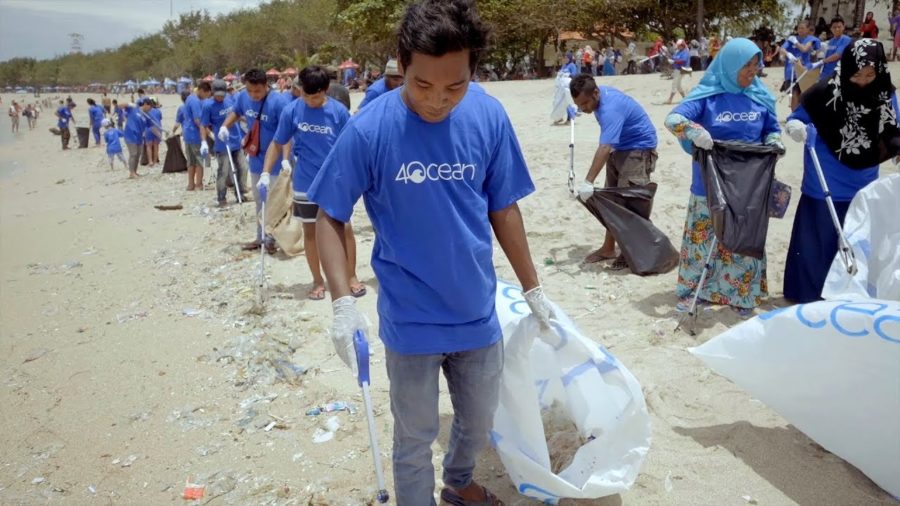
While Bali’s waves may have been just what these surfers had always dreamed of, Bali’s waters themselves were more of a nightmare. The beaches were covered in garbage, and fisherman parted seas of trash each day, catching much more plastic than fish. Without a waste management infrastructure, plastic caught in fishing nets was simply dumped back into the ocean. Plastic only continued to accumulate, leaving the water contaminated and the fisherman unable to earn a decent living.

Seeing this gave Cooper and Schultze an idea. What if plastic was, in fact, what the fisherman set out to catch each day? While there may have been a shortage of fish, there was no shortage of garbage. There just needed to be a market for it.  

Flash forward a couple of years and this idea is now 4ocean, a global ocean cleanup company funded entirely through the sale of 4ocean sustainability products and the 4ocean bracelet, made from post-consumer recycled glass and plastic. The sale of each bracelet promises the removal of at least one pound of trash from the ocean. Currently 4.5 million pounds of trash have been successfully removed, clearing the coastlines of 27 different countries.

After Bali, the 4ocean team set up operations in Haiti where they aim to pull 3,000 pounds of plastic a day. Their first priorities are locations that do not have infrastructure for recycling or waste management and which consequently use a high volume of single-use plastic.

With their ever-growing team, Cooper and Schultze have created a sustainable economy for ocean conservation, employing over 300 people across the globe, and working in conjunction with 15 different nonprofit organizations supporting marine conservation. Dedicated to sustainable innovation, 4ocean’s ultimate goal is to promote awareness regarding the problems of single-use plastic and the necessity of educating consumers so as to prevent future plastic pollution and keep our oceans clean.

Reduce, Reuse, Recycle, Refuse

Recycling has become a capitalist war…. one that nobody wins.

“Reduce, reuse, recycle” is the mantra we’ve lived by for years, but it has come to encourage an over-zealous recycling campaign that has been doing more harm than good.

Americans tend to recycle for a clear conscience, which means throwing as much as we can in recycling bins, assuring ourselves that we’re being good Samaritans by opting to not use the trash. But recycling isn’t as simple—or nearly as easy—as we’re been lead to believe. And much of what we toss out isn’t actually reusable. We throw dirty and contaminated containers away, assuming some environmental enthusiast on the other end will lovingly sort our yogurt containers and pizza boxes. For a while, there was someone on the other end to do just that—the many Chinese workers at manufacturing plants overseas. But this is no longer the case.  

Until recently, China and its endless demand for materials was our biggest market for recycled goods. But after years of low-quality, contaminated materials, China has raised its standards, leaving the US in a bind regarding what to do with tons of the allegedly “reusable” waste we generate each day.

Without a foreign market for our recyclables to generate a profit, the cost of recycling programs has skyrocketed. Recycling companies claim they can’t break even selling used materials because of the costs that go into processing them, which means charging more for recycling services and often adding additional contamination fees for recycled materials mixed in with the trash. Before China changed its policies, contamination was never an issue. This poses the question: Is contamination the only issue, or are recycling companies capitalizing on an opportunity to make a greater profit now that they have a monopoly?

In any case, exorbitant recycling rates have left many small and mid-sized municipalities unable to afford recycling. Even though their citizens still sort recyclables from the trash, it all ends up in the same place, taking up much more space in landfills and increasing a toxic build-up of methane gas. And for the communities that can’t morally bring themselves to throw recyclables away, many are incinerating them, which releases emissions into the atmosphere that create a health risk.  

Currently it’s still cheaper to generate new materials instead of taking the time and energy to recycle used ones. The solution lies in the problem. Without a second thought, we are mass-producing and mass-consuming materials that end up straight in the trash. What we need is the capacity to engineer 100% recyclable packaging materials that can truly be reused, and a domestic market for recycled goods that could begin a circular approach to American Waste Management, and a sustainable form of consumerism.

The only question remaining is: Who, or what, is stopping us?

Designer Virgil Abloh Teams up With Evian to go Beyond Plastic

Casual couture king Virgil Abloh is joining the Evian empire to make sustainability fashionable — in more ways than one.

Known among the fashion community for his avant-garde approach to haute couture, American fashion designer, entrepreneur and DJ, Virgil Abloh, is using his international fame to help another brand on the frontier of sustainable consumer practice. Recently crowned as the creative advisor for Evian Natural Spring Water, Abloh’s designs will be featured on the water brand’s plastic bottles, which are expected to be made from 100% recycled plastic by the year 2025.

With a long history of design collaborations with the fashion community, this type of partnership is nothing new for Evian. But with Abloh onboard, Evian hopes the appeal will be much wider among consumers than with former partners.

SUBSCRIBE TO REAL LEADERS FOR MORE INSPIRATIONAL STORIES

Revolutionizing the fashion industry with his ironic approach to haute couture, Abloh is known for bringing streetwear to the upper echelons of the clothing world, making “high fashion” a more attainable, mainstream aesthetic. He calls fashion into question with his signature “quotations,” that appear in many of his designs. Along with his ever-present Helvetica fonts and deliberate hazard stripes, his quirky style has gained him a global following — one he intends to bring along on his new journey toward sustainability and environmental awareness. The ultimate goal? For Evian to become a 100% recyclable company in the next six years, with carbon neutral production, lower emissions and recycled plastics bottles—no more waste.

Following in Evian’s footsteps, Abloh has made it clear that he will pursue sustainability in his own clothing company, Off-White. His partnership with Evian is likely the first of many steps he will be taking as an influencer of environmental awareness within consumer culture.

Already the partnership has looked beyond plastic, launching a line of reusable glass water bottles dubbed “Rainbow Inside,” showcasing Abloh’s legendary quotes. Abloh and Evian are both champions of innovation, in both aesthetic and environmental awareness. They remind us how precious our natural resources truly are, with their new campaign slogan: “One Drop Can Make a Rainbow.”


16-year-old Girl Inspires Climate Strikes Across The World

Thousands of students in 105 countries are skipping class today. They’re concerned about something more pressing than good grades and perfect attendance – the future of our planet.

Scandinavian teenager, turned environmental activist, Greta Thunberg, decided to take a stand last year, noting that by the time she is an adult, the state of our planet may be irreparable. Staked out on the front steps of the Swedish Parliament with a handmade sign reading “School Strike for Climate,” her small act of defiance has triggered a global movement to discredit those with political agendas that are harmful to the environment and to shake off the procrastination we’ve seen for decades around global environmental policy. Thunberg wants to inspire politicians to take aggressive action.

She hasn’t gone unnoticed by the powers that be, either. Yesterday she was nominated for the Nobel Peace Prize. If she wins, she’ll join another youth activist, Malala Yousafzai, who won the Nobel Peace Prize in 2014 at age 17 for her struggle in recognizing the right of all children to be educated.  

The United Nations Intergovernmental Panel on Climate Change (IPCC) recently published a report that suggested that no industrial nations will achieve goals of the Paris Accord agreement, that aims to limit the earth’s temperature by 2 degrees celsius. We’re currently on track to reach 3.2 degrees, which scientists say will be warm enough to melt the polar ice sheets, creating an unimaginable shift in our weather. It has the potential to displace over 400 million people by 2050. Acting to avert climate change and the looming threat of greenhouse emissions, thousands of young activists around the world, inspired by Thunberg, are determined to convince world leaders of the dire situation, especially those unwilling to take bold steps before it’s too late.

Her online campaign, #FridaysForFuture, has caused pupils to skip school each week across the world and has gained widespread attention. Her blunt approach to remedying the environmental damage she sees around her has started a movement that seems unstoppable. 

Some politicians claim these youths are squandering their education and say they should instead be in school, pursuing future careers as scientists or engineers – that might one day solve the very problems they are striking against. But the real problem is that we’ve been handing the climate crisis to future generations since greenhouse emissions began. To people like Thunberg, the education we’ve been given thus far has only resulted in procrastination, and a delay in real action that we desperately need.

Inspired by Thunberg spirit, young climate activists across the world are taking a break from school to stand with their young leader. There’s a realization amongst them that there isn’t enough time to wait for graduation, and a qualification that allows them to save the world. Through their protest these young students are calling politicians out on their hypocrisy; if world leaders claim to be so worried about the future of youth, then why aren’t they prioritizing an environmental agenda that will guarantee their future?  


0